Species Profile
Cedar Waxwing
Bombycilla cedrorum
Quick Facts
Conservation
LCLeast ConcernAlso known as: Cedar Bird
Think you've spotted a Cedar Waxwing?
Upload a photo and we'll confirm it instantly
Confirm with a PhotoGallery
Appearance
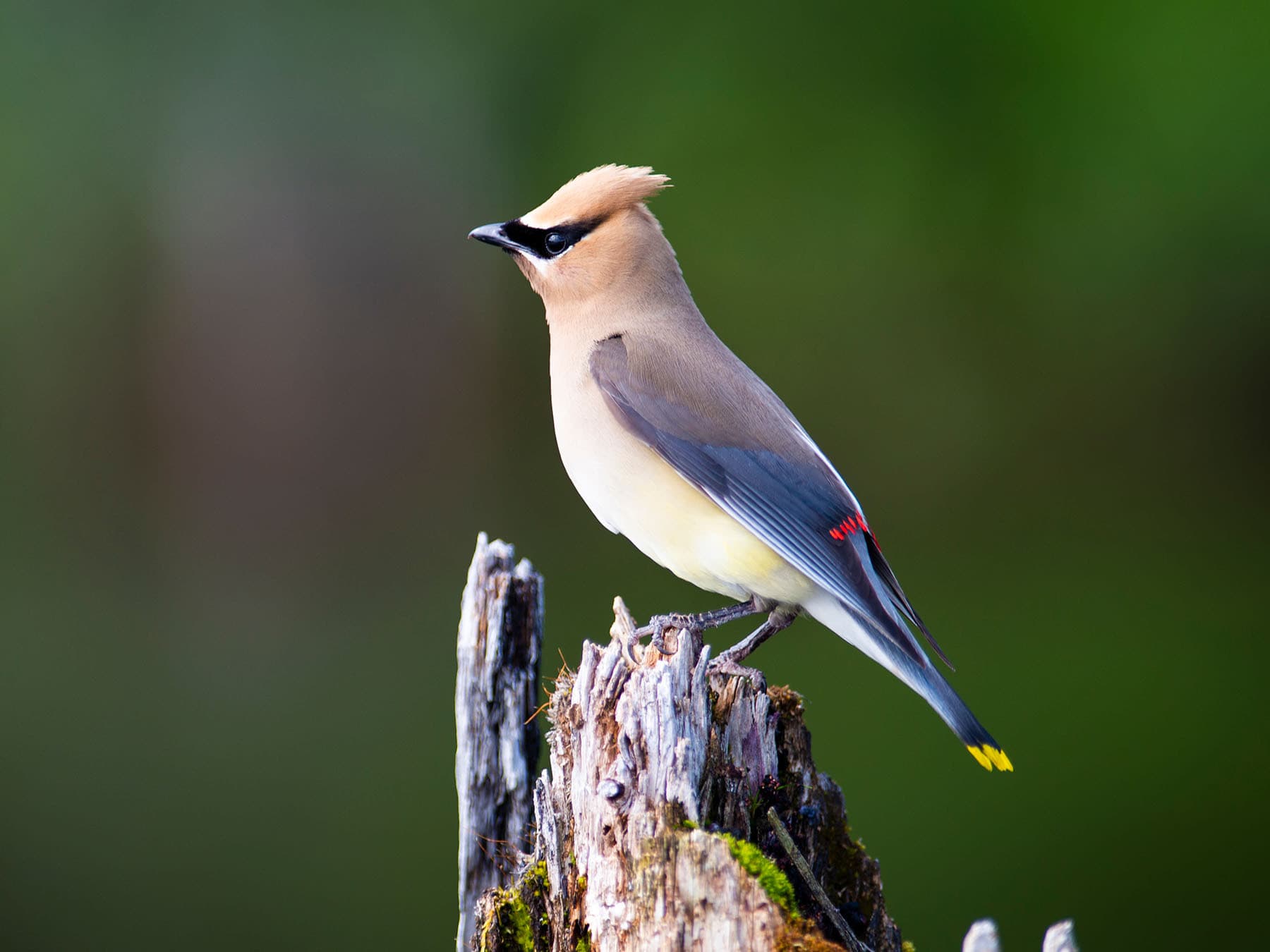
Cedar Waxwings are sleek, medium-sized songbirds with a distinctive crest and silky plumage. Their bodies are primarily pale brown, transitioning to soft gray on the wings and tail. The tail is tipped with bright yellow, and adults often have small red waxy tips on their wing feathers.
Both sexes look similar, with a black mask outlined in white, a pale yellow belly, and a yellowish undertail. Juveniles are streakier and lack the adult's sleek appearance and bright wing tips.
Identification & Characteristics
Colors
- Primary
- Brown
- Secondary
- Yellow
- Beak
- Black
- Legs
- Black
Attributes
Understanding Attributes
Rated 0–100 based on research and observation. A score of 50 is average across all bird species. These attributes are relative and don't necessarily indicate superiority.
Habitat & Distribution
Cedar Waxwings inhabit a variety of wooded and semi-open habitats across North America, from southern Canada to the northern parts of Central America. They show a preference for areas with fruiting trees and shrubs, including orchards, parklands, and suburban gardens.
During winter, they are more widespread in the United States and can be found in large numbers in the southern states. In summer, their breeding range extends further north into Canada and Alaska.
Distribution
Where to See This Bird
Explore regional guides for locations where this bird has been recorded.
United States
Montana
Nebraska
Georgia
Illinois
Iowa
Idaho
Kansas
Nevada
Indiana
Louisiana
Kentucky
Maryland
Maine
Massachusetts
Michigan
New Jersey
North Carolina
Minnesota
Missouri
Mississippi
Arkansas
Alabama
North Dakota
California
District of Columbia
Colorado
Connecticut
Delaware
Florida
New Hampshire
Oklahoma
Ohio
New York
Oregon
Utah
Pennsylvania
Rhode Island
South Dakota
South Carolina
Tennessee
Texas
Virginia
Vermont
Washington
Wisconsin
West Virginia
Wyoming
Canada
British Columbia
Alberta
Manitoba
New Brunswick
Newfoundland and Labrador
Nova Scotia
Ontario
Saskatchewan
Prince Edward Island
Quebec
Diet
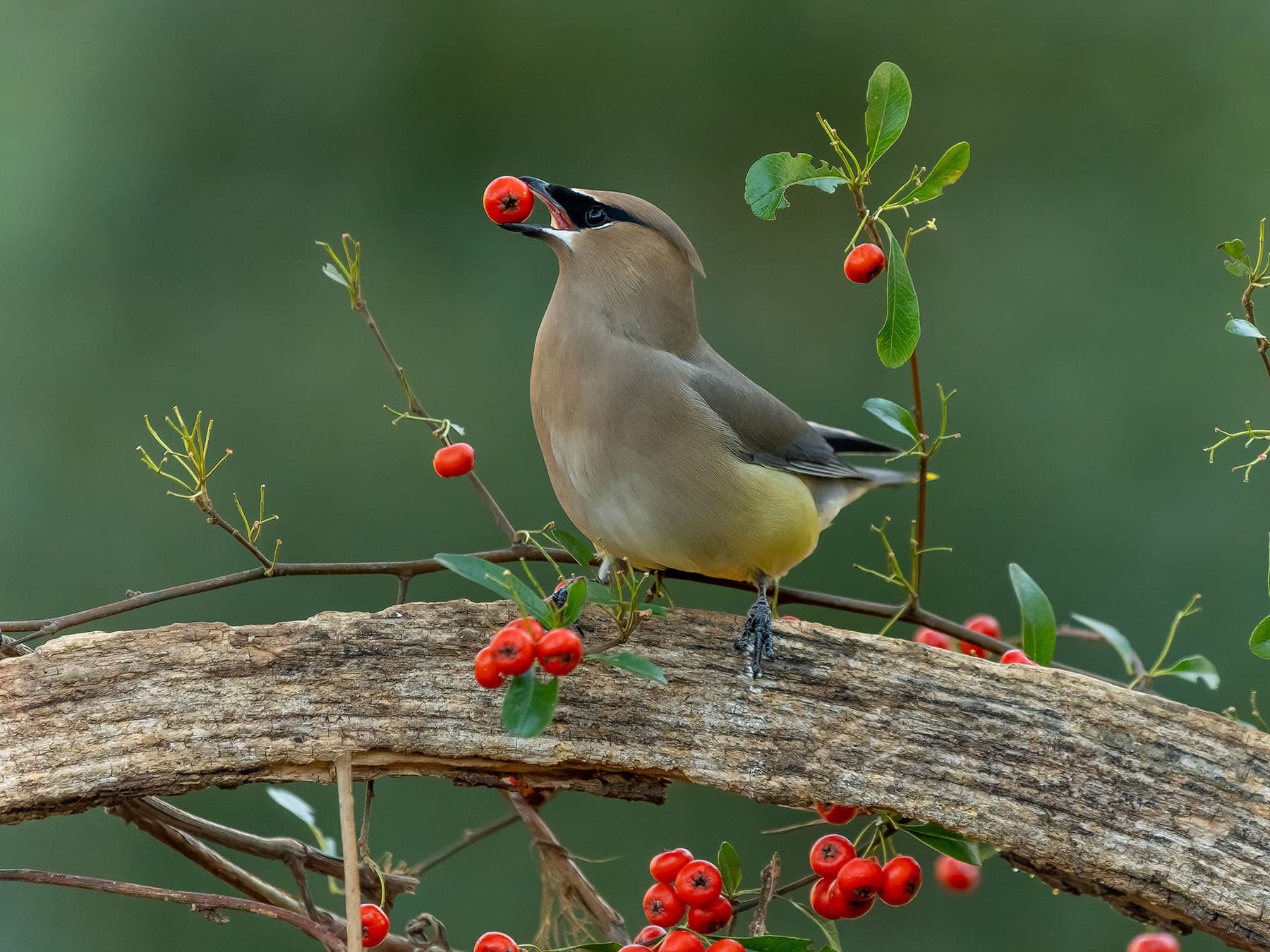
Cedar Waxwings are primarily frugivorous, with a strong preference for berries, especially cedar berries, hence their name. They also consume insects, particularly during the breeding season.
Their ability to subsist on a diet of sugary fruits is unique among North American birds, aided by a specialized liver that processes sugar efficiently.
Behaviour
Cedar Waxwings are highly social, often seen in large flocks, especially when foraging. They are known for their cooperative feeding behavior, passing berries beak-to-beak down a row of birds.
These birds are also skilled flycatchers, sallying out from perches to catch insects in mid-air.
Calls & Sounds
Cedar Waxwings are not known for melodious songs but rather for their high-pitched, thin, and buzzy calls.
Their most common vocalization is a high 'seee' or 'sree,' often described as sounding like a tiny, squeaky dog toy. In flocks, they produce a chorus of trills and buzzy notes.
Nesting & Breeding
Cedar Waxwings typically form monogamous pairs during the breeding season, which runs from late spring to early summer. Courtship involves a charming ritual where birds pass small objects like flower petals or insects back and forth.
Nests are built in trees, often on a horizontal branch, using grasses, twigs, and plant fibers. Females lay 3-5 pale blue-gray eggs with dark spots. Both parents contribute to nest building and incubation.
Incubation lasts about 12-14 days, with nestlings fledging after another 14-18 days. Parents continue to feed fledglings for several days after they leave the nest.
Conservation
Cedar Waxwings are currently listed as Least Concern due to their large range and stable population. However, they face threats from window collisions in urban areas and pesticide use that affects their insect prey.
Conservation efforts focus on maintaining diverse habitats with native fruit-bearing plants.
Birdwatching Tips
- Look for flocks in fruiting trees or shrubs, especially in winter
- Listen for their high-pitched, trilled calls
- Watch for their distinctive flight pattern: quick and direct with sudden changes in direction
- In North America, check parks and suburban areas with berry-producing plants
Did You Know?
- Cedar Waxwings can become intoxicated from eating overripe fermented berries.
- They are one of the few North American birds that can survive on a diet of fruit alone for several months.
- The red tips on their wings are not feathers but waxy secretions that may signal age or status.
Community Photos
Be the first to share a photo of the Cedar Waxwing
Upload a Photo
Identify Any Bird Instantly
- Upload a photo from your phone or camera
- Get an instant AI identification
- Ask follow-up questions about the bird
Monthly Birds in Your Area
- Personalised for your location
- Seasonal tips and garden advice
- Updated every month with new species