


Japanese Waxwing
Japanese Cedar Bird · Bombycilla japonica
By the Birdfact teamChecked by Nathan Cope
On this page12 sections
How to recognise it
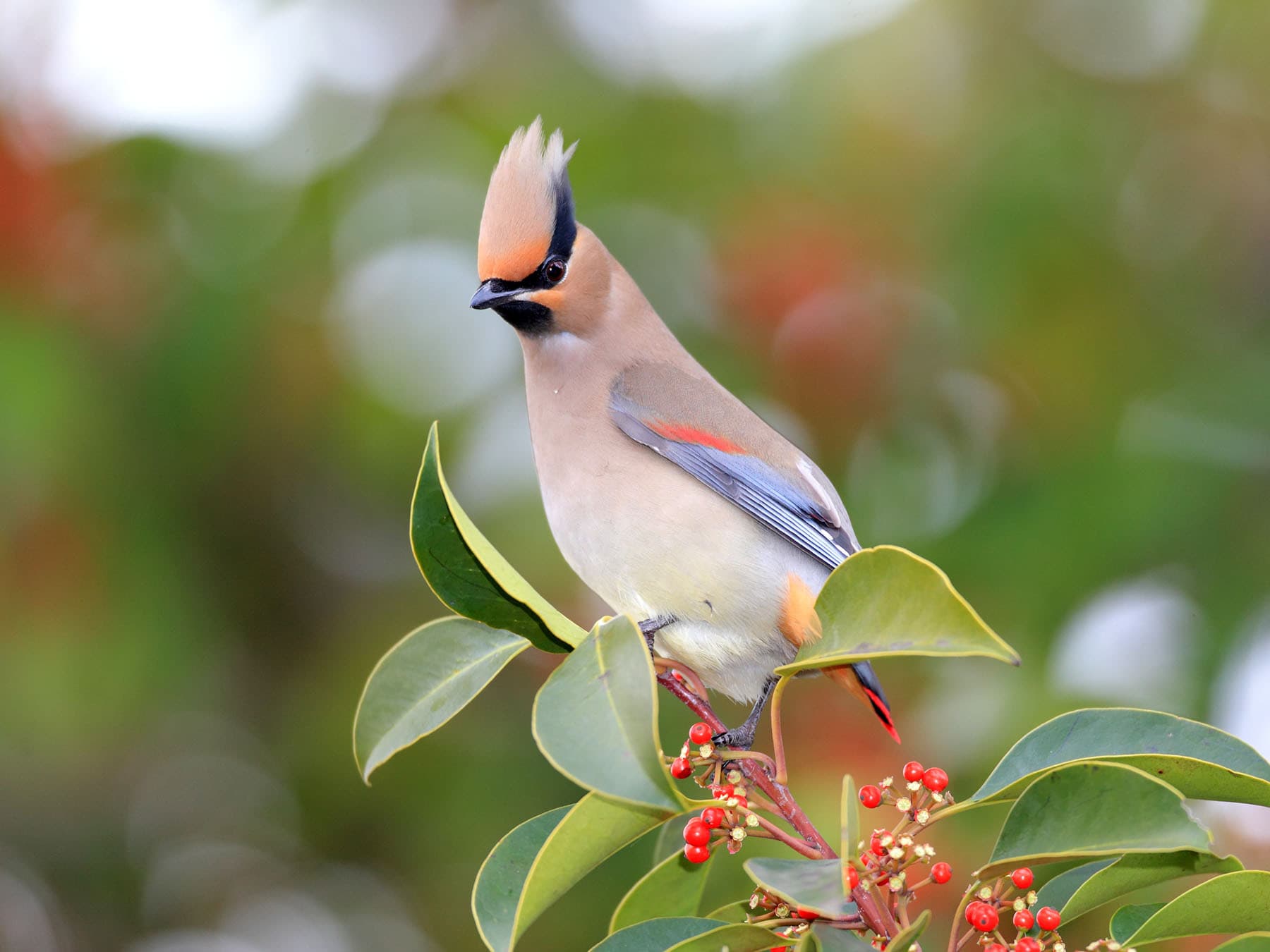
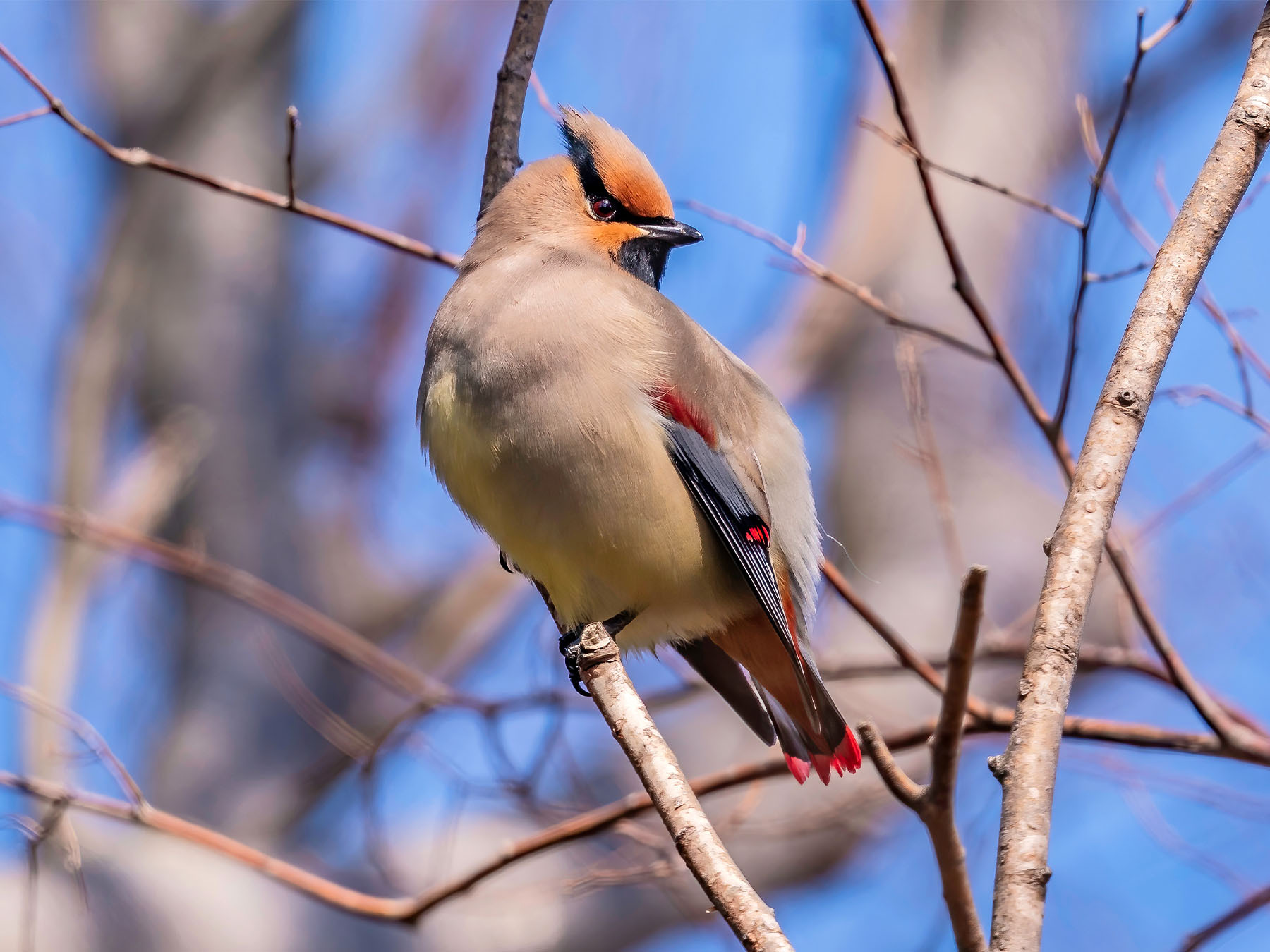
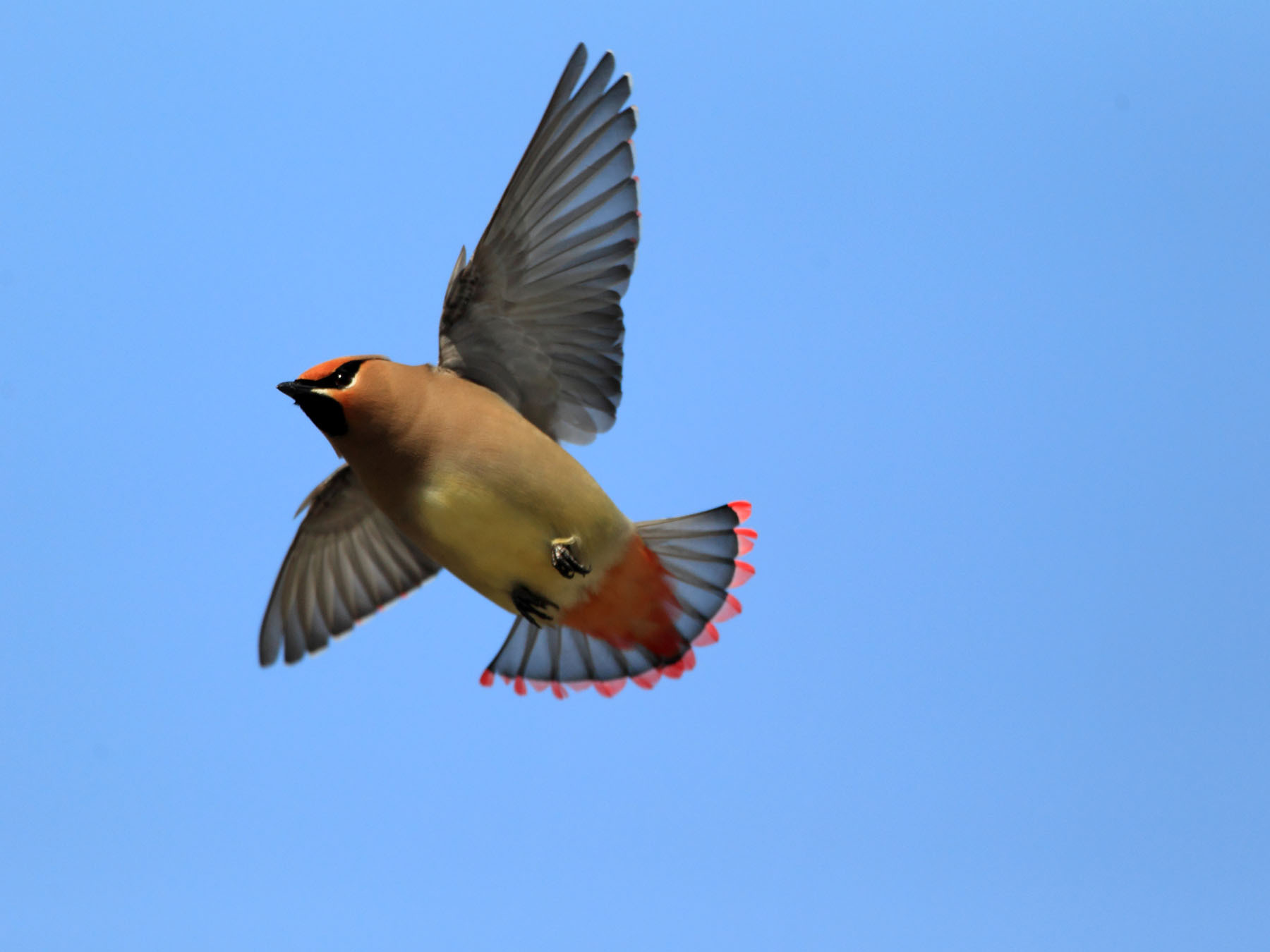
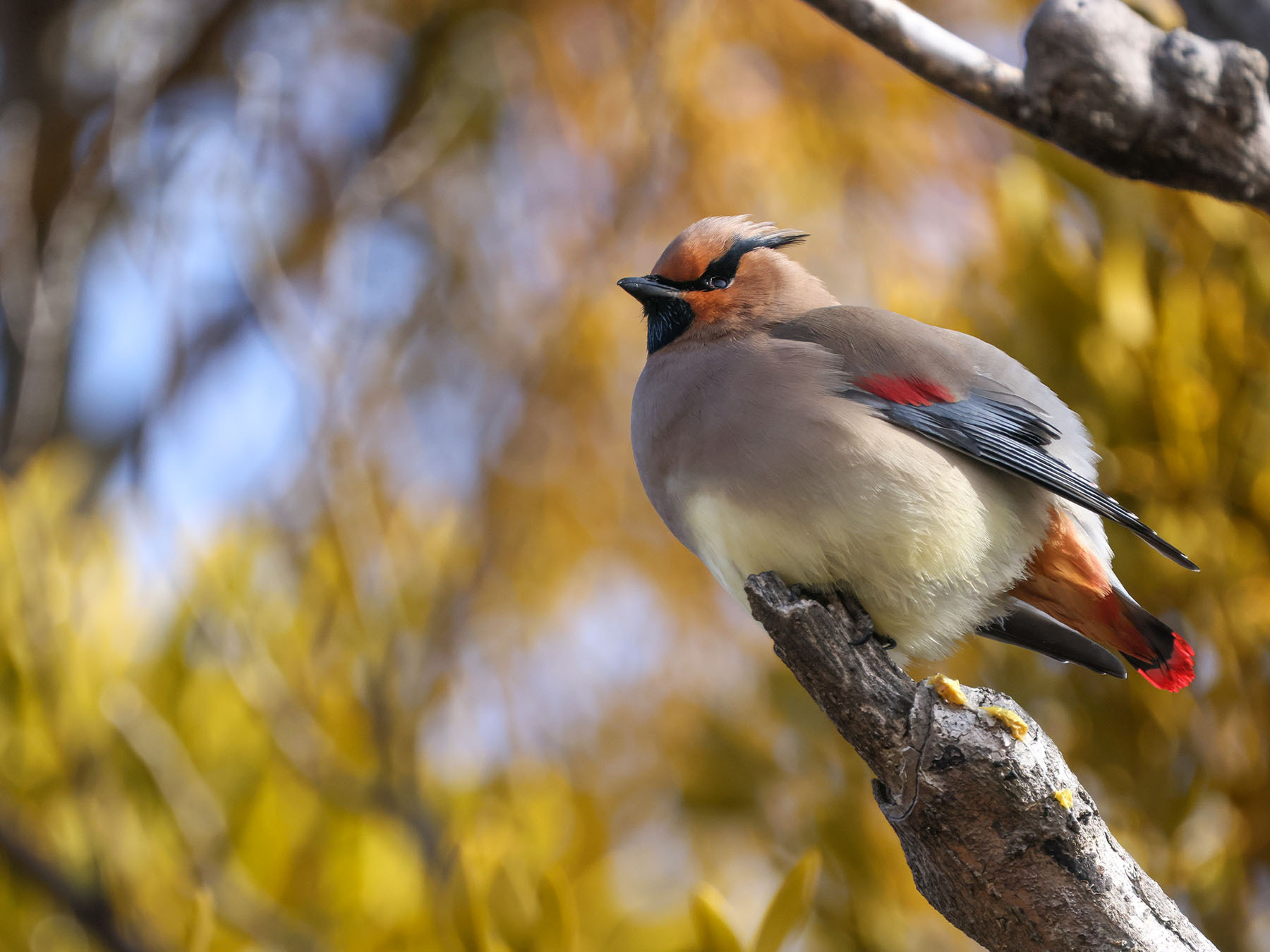
The Japanese Waxwing is a sleek, medium-sized bird with a distinctive crest and silky plumage. Its body is primarily greyish-brown, with a black mask and chin and a yellow-tipped tail. The wings feature striking white and yellow markings.
Both sexes look similar, with adults displaying bright red waxy tips on their secondary feathers. Juveniles lack these waxy tips and have a more muted overall colouration.
Its size
Adults- Length
- 18–21 cm
- Wingspan
- 32–35 cm
- Weight
- 40–55 g
Its song and calls
Japanese Waxwings produce high-pitched, trilling calls that sound like 'sree-sree-sree'. Their vocalisations are often described as thin and reedy, lacking the complexity of many songbirds. In flight, they emit a soft, buzzy 'bzeee' sound, which helps maintain flock cohesion.
When and where to see it
The Japanese Waxwing is not recorded regularly in the UK, Ireland, the United States or Canada.
Worldwide: recorded regularly in 5 countries
Countries where it was recorded in at least 3 of the 6 years 2019–2024. Linked countries have their own bird list.
Data: EOD – eBird Observation Dataset (Cornell Lab of Ornithology), accessed via GBIF.org, CC BY 4.0. Records from 2019–2024, aggregated and filtered by Birdfact. How these lists are made
Tips for seeing it
- Look for flocks in fruiting trees, especially in winter
- Listen for their high-pitched, trilling calls
- Observe their distinctive silhouette with a prominent crest
- Watch for their acrobatic feeding behaviour as they reach for berries
What it eats
Japanese Waxwings primarily feed on berries and small fruits, showing a particular fondness for mistletoe berries. They supplement their diet with insects, especially during the breeding season. Their ability to subsist on fermented berries allows them to survive harsh winter conditions.
Nesting and breeding
Breeding occurs from late May to July, with pairs forming monogamous bonds. Japanese Waxwings construct cup-shaped nests in trees, typically 3-10 meters above ground, using twigs, grass, and moss.
Females lay 3-5 pale blue eggs with dark spots. Both parents share incubation duties, which lasts about 14 days. The eggs are oval-shaped and have a smooth, slightly glossy surface.
Nestlings are altricial and fledge after approximately 14-16 days. Parents continue to feed the young for several weeks after they leave the nest.
Behaviour
Japanese Waxwings are highly social, often seen in flocks outside the breeding season. They exhibit a gentle, unhurried demeanour when foraging, plucking berries with deliberate movements. During courtship, pairs may pass small objects back and forth, a behaviour known as 'gift-giving'.
Conservation
Currently listed as Near Threatened, Japanese Waxwings face threats from habitat loss due to deforestation and urban development. Climate change may also affect their migration patterns and food availability. Conservation efforts focus on preserving their woodland habitats and urban green spaces.
Similar birds
Often mistaken for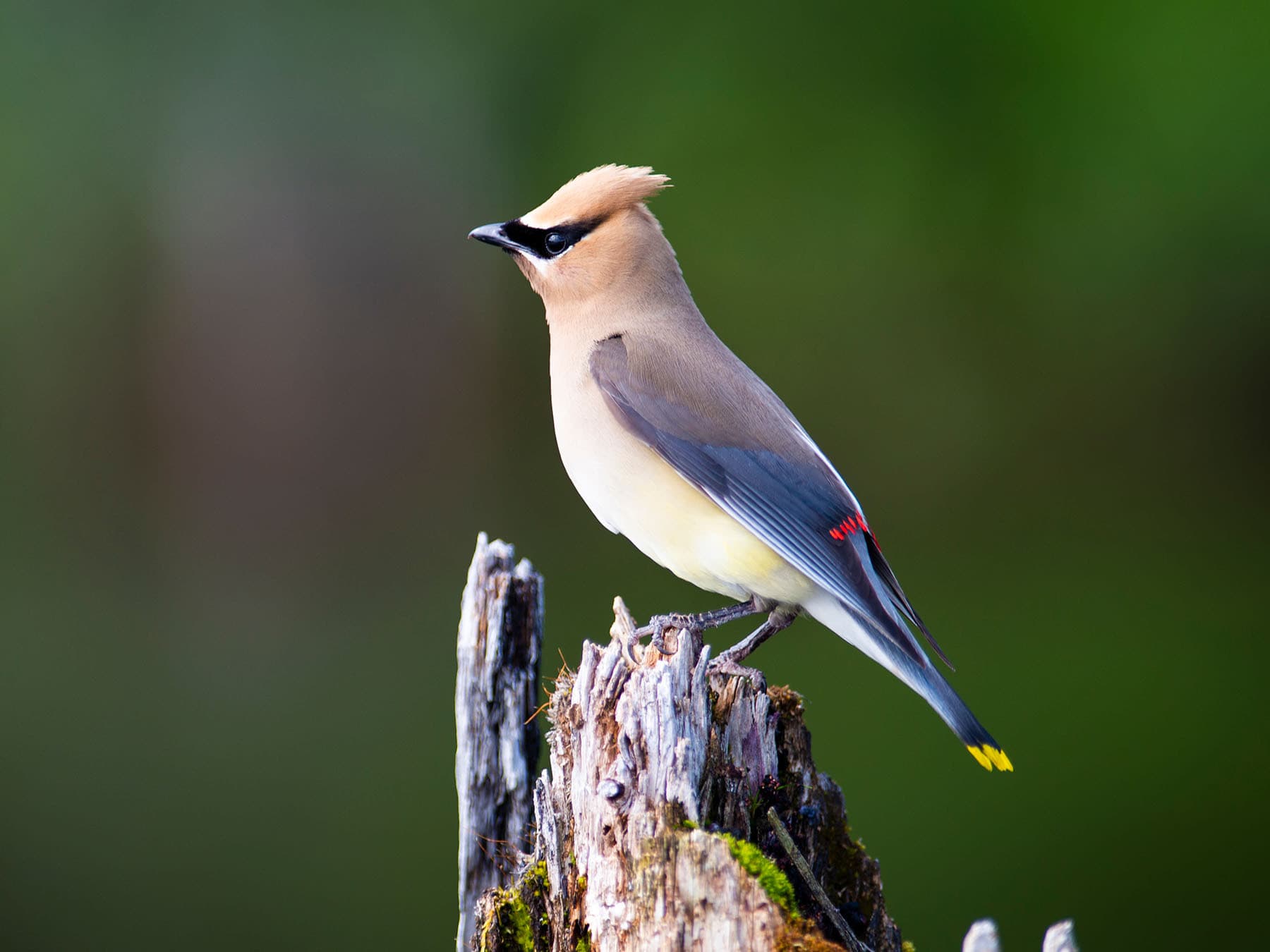
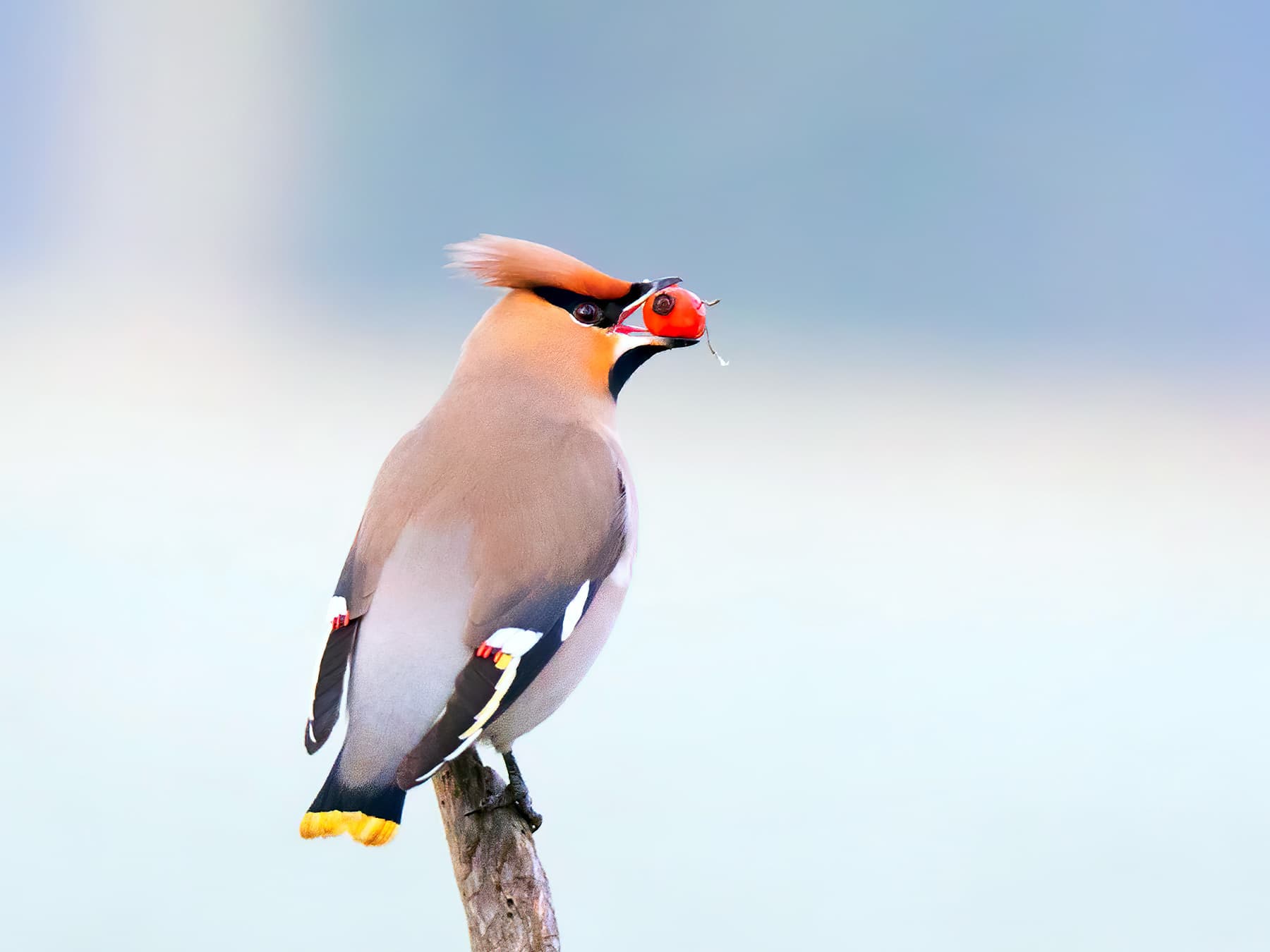
More photos
4 photos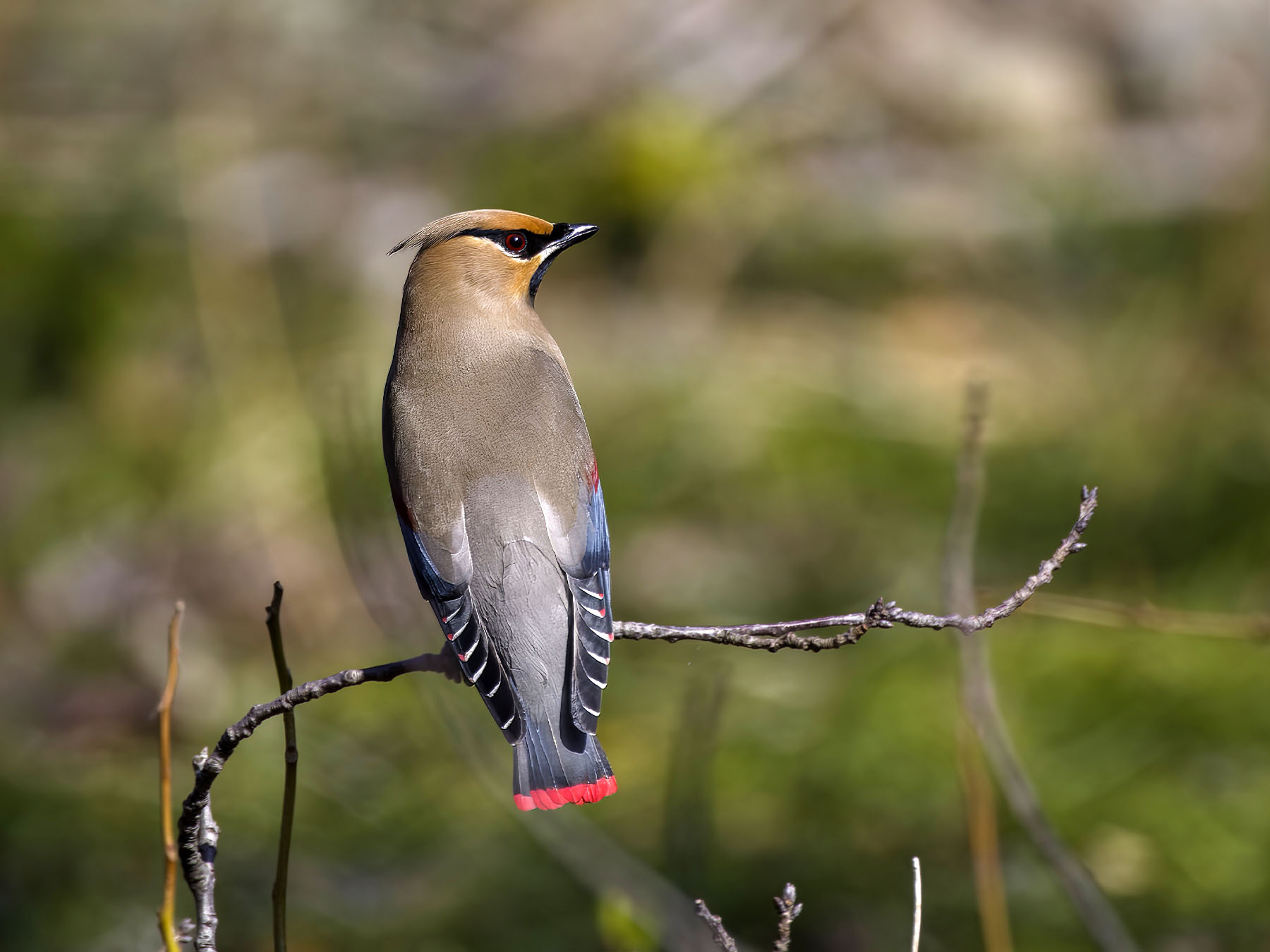
Quick facts
- Length
- 18–21 cm
- Wingspan
- 32–35 cm
- Weight
- 40–55 g
- Lifespan
- 5–8 years
- Family
- Waxwings
- Migration
- Short-distance migrant
- Global status (IUCN)
- Near Threatened
- World population
- Unknown
- Population trend
- Populations are decreasing due to factors like deforestation
- Also called
- Japanese Cedar Bird
- Scientific name
- Bombycilla japonica
Sources
2- 1BirdLife International. 2018. Bombycilla japonica. The IUCN Red List of Threatened Species 2018: e.T22708150A131946490. Source (opens in a new tab)
- 2BirdLife International. 2018. Bombycilla japonica. The IUCN Red List of Threatened Species 2018: e.T22708150A131946490. Source (opens in a new tab)

Checked by
Nathan Cope, founder and editor
Nathan founded Birdfact and leads its writers and contributors in the UK, the US and Canada. He has watched and studied birds for more than ten years, and checks every article and species guide before it’s published.