


Cedar Waxwing
Cedar Bird · Bombycilla cedrorum
By the Birdfact teamChecked by Nathan Cope
On this page13 sections
How to recognise it
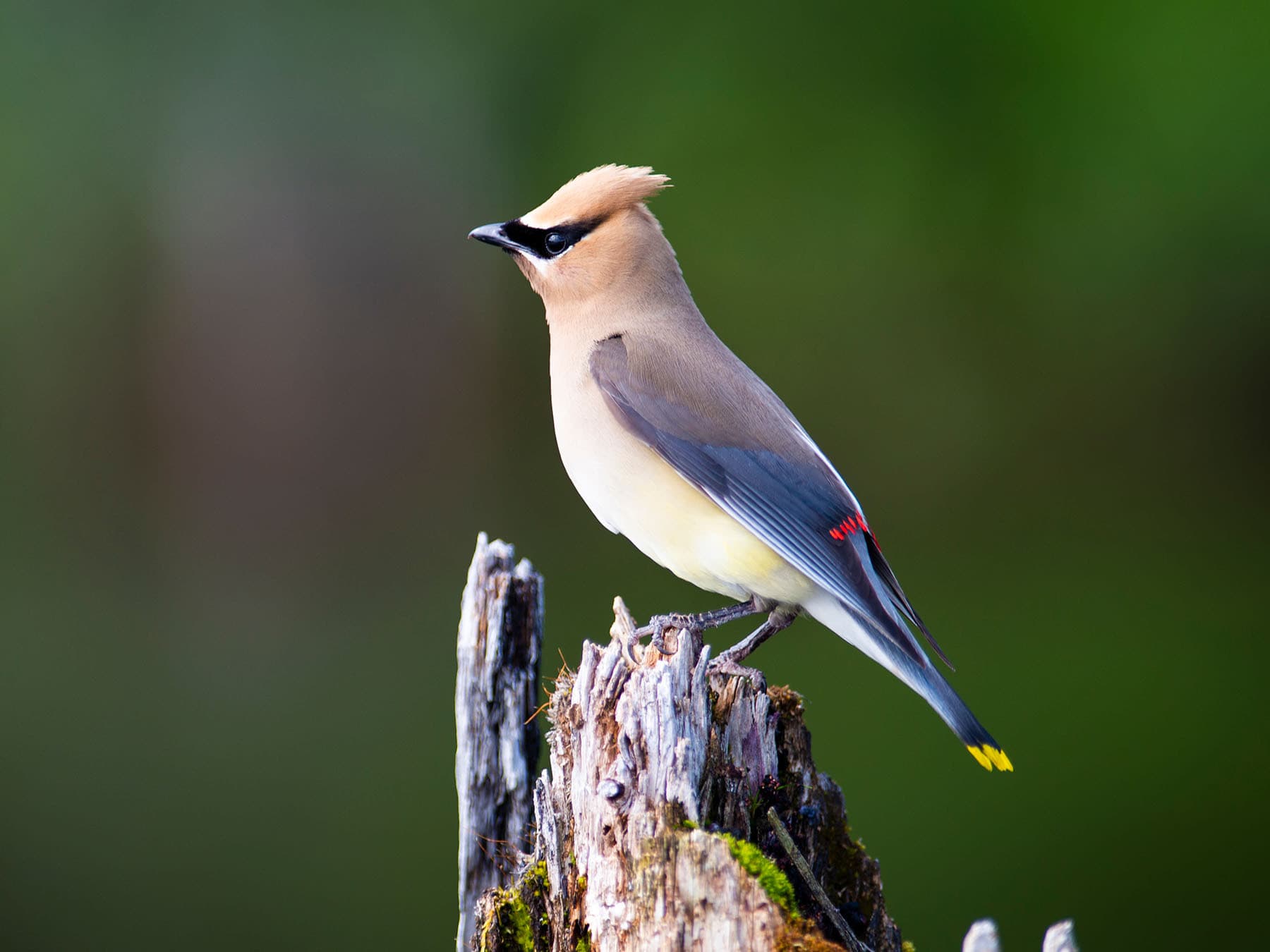
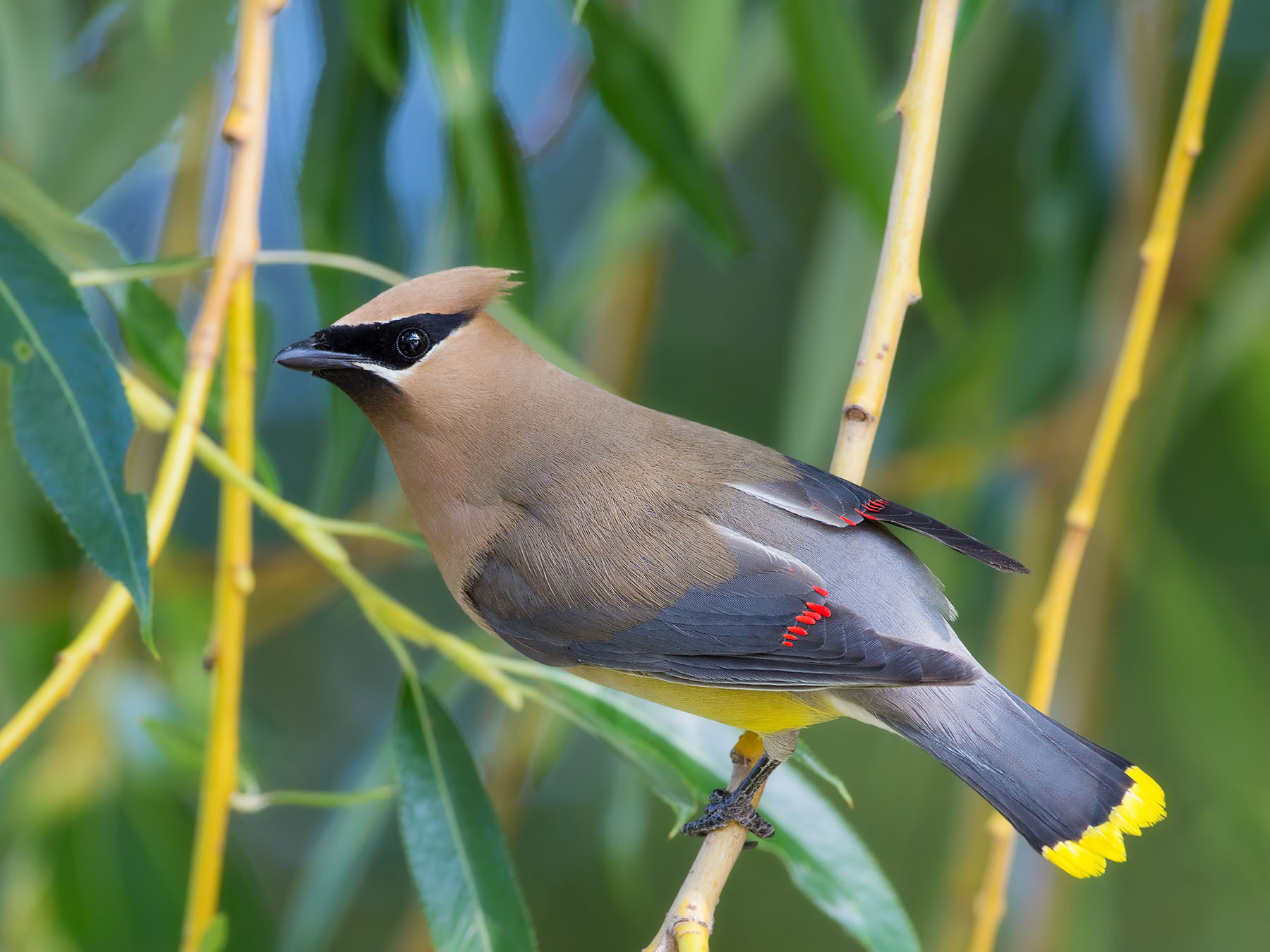
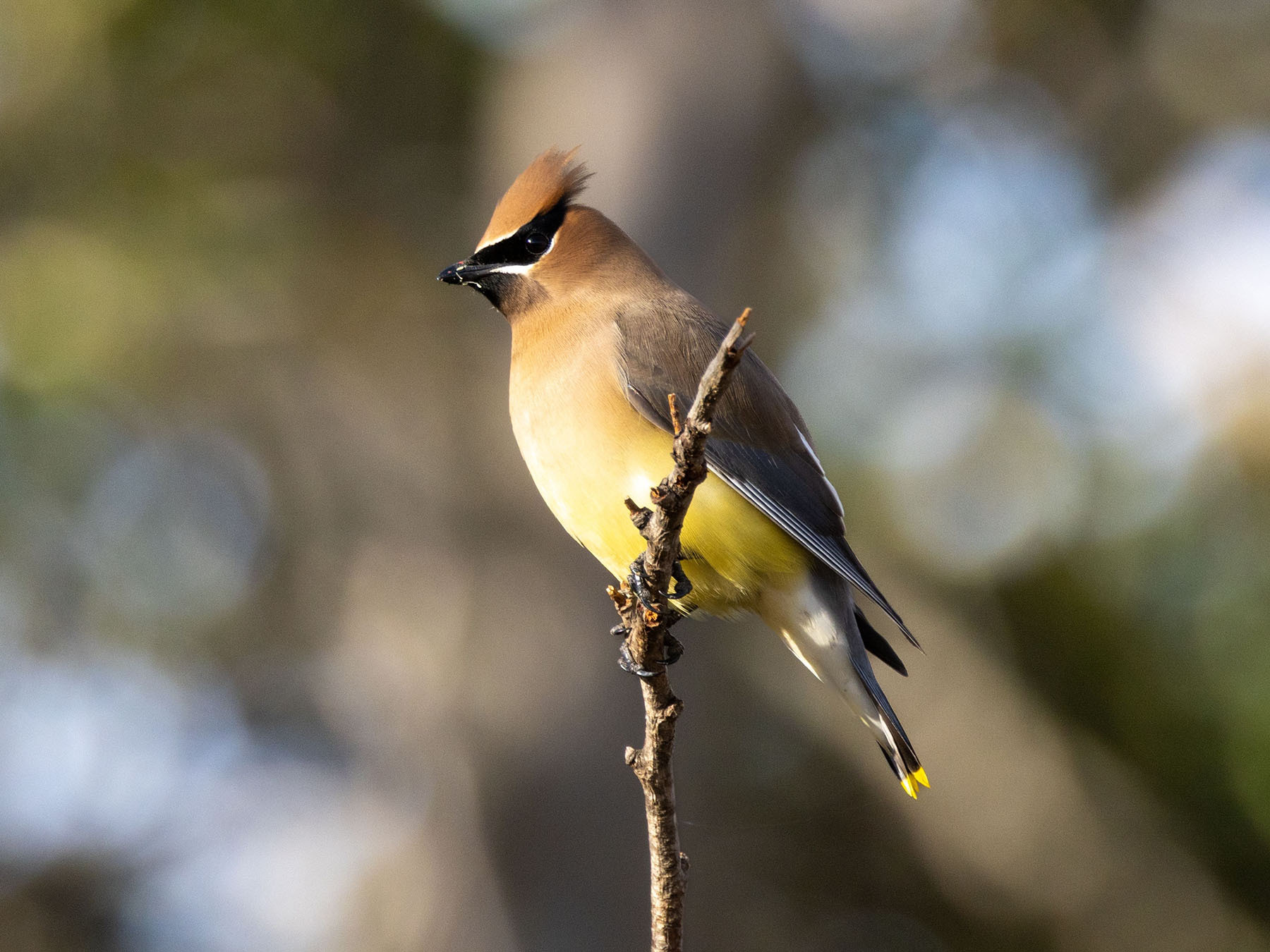
Cedar Waxwings are sleek, medium-sized songbirds with a distinctive crest and silky plumage. Their bodies are primarily pale brown, transitioning to soft gray on the wings and tail. The tail is tipped with bright yellow, and adults often have small red waxy tips on their wing feathers.
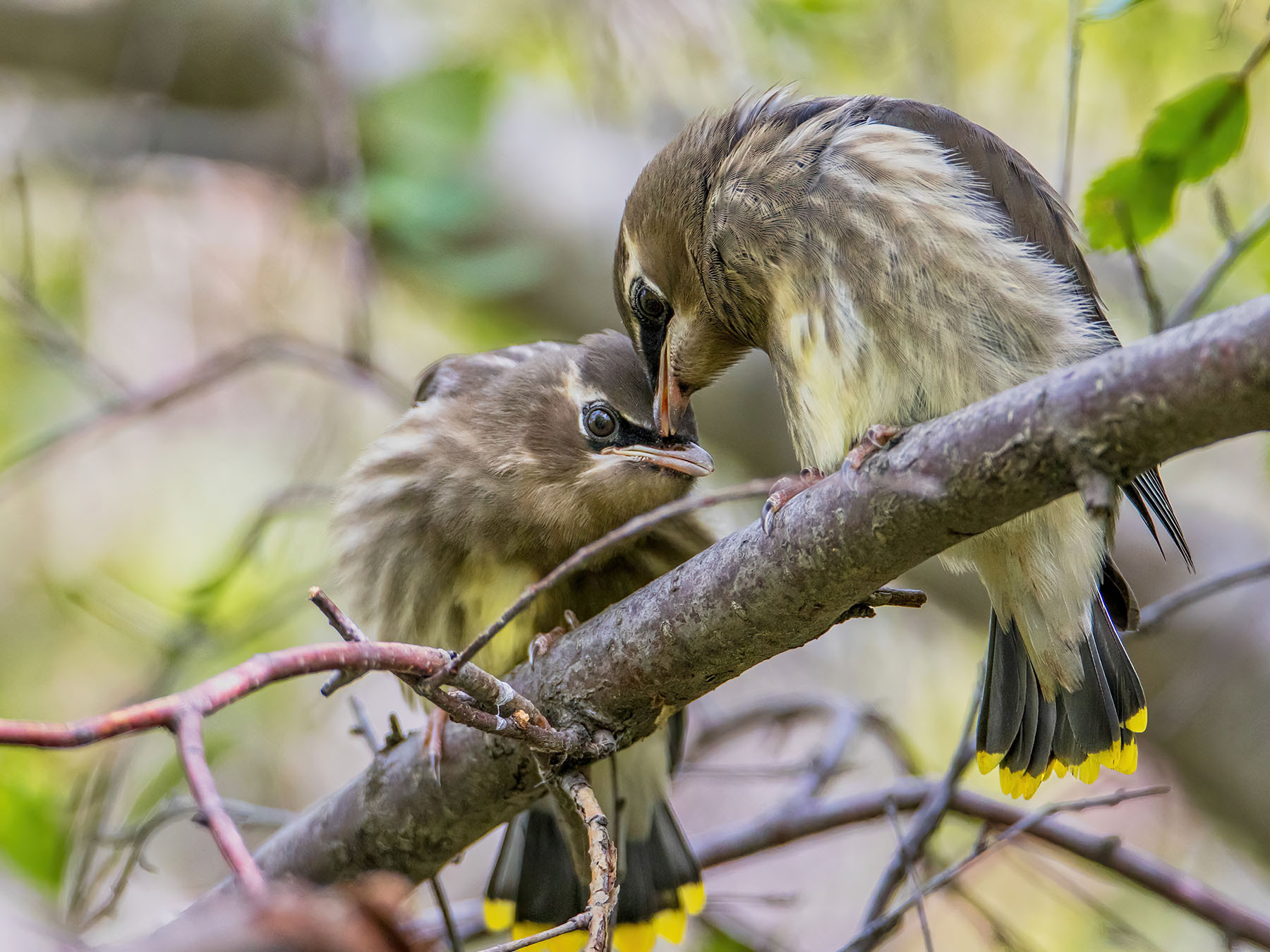
Both sexes look similar, with a black mask outlined in white, a pale yellow belly, and a yellowish undertail. Juveniles are streakier and lack the adult's sleek appearance and bright wing tips.
Its size
Adults- Length
- 15–18 cm
- Wingspan
- 22–30 cm
- Weight
- 30–40 g
Its song and calls
Cedar Waxwings are not known for melodious songs but rather for their high-pitched, thin, and buzzy calls.
Their most common vocalization is a high 'seee' or 'sree,' often described as sounding like a tiny, squeaky dog toy. In flocks, they produce a chorus of trills and buzzy notes.
- Call0:00 / 0:48
Recorded in Michigan, United States · July 2013
When and where to see it
OctoberLeaving
Most recorded in October
- 1. West Virginia1.5%
- 2. Oregon1.2%
- 3. Iowa1.2%
- 4. Wisconsin1.1%
- 5. Minnesota1.1%
Each dot is a county, state or province: the bigger and darker, the larger the bird’s share of that place’s bird records that month. Grey dots: no regular records. The ringed point is the centre of the bird’s records this month; the arrow shows how it moved since last month, and the dashed loop its path through the year. “Arrivals” colours places where it becomes regular this month (orange) or is in its last regular month (grey). GBIF eBird Observation Dataset, 2019–2024. Map data: Natural Earth, US Census Bureau; place centres © OpenStreetMap contributors.
In your area
See when the Cedar Waxwing is recorded in your county, state or province.
How often the Cedar Waxwing turns up in the United States and Canada through the year, from birdwatchers' records.
United States
Resident · all year · most records in June
Canada
Summer visitor · all year · most records in July
Show as a table
| Month | United States | Canada |
|---|---|---|
| January | 0.37% (regular) | 0.17% (regular) |
| February | 0.36% (regular) | 0.20% (regular) |
| March | 0.32% (regular) | 0.17% (regular) |
| April | 0.26% (regular) | 0.13% (regular) |
| May | 0.49% (regular) | 0.41% (regular) |
| June | 0.93% (regular) | 1.6% (regular) |
| July | 0.93% (regular) | 2.1% (regular) |
| August | 0.90% (regular) | 2.1% (regular) |
| September | 0.74% (regular) | 1.1% (regular) |
| October | 0.50% (regular) | 0.42% (regular) |
| November | 0.46% (regular) | 0.31% (regular) |
| December | 0.41% (regular) | 0.19% (regular) |
Worldwide: recorded regularly in 13 countries
Countries where it was recorded in at least 3 of the 6 years 2019–2024. Linked countries have their own bird list.
North America (13)
- Belize
- Bermuda
- Canada
- Costa Rica
- Cuba
- El Salvador
- Guatemala
- Honduras
- Mexico
- Nicaragua
- Panama
- St Pierre & Miquelon
- United States
Data: EOD – eBird Observation Dataset (Cornell Lab of Ornithology), accessed via GBIF.org, CC BY 4.0. Records from 2019–2024, aggregated and filtered by Birdfact. How these lists are made
Tips for seeing it
- Look for flocks in fruiting trees or shrubs, especially in winter
- Listen for their high-pitched, trilled calls
- Watch for their distinctive flight pattern: quick and direct with sudden changes in direction
- In North America, check parks and suburban areas with berry-producing plants
What it eats
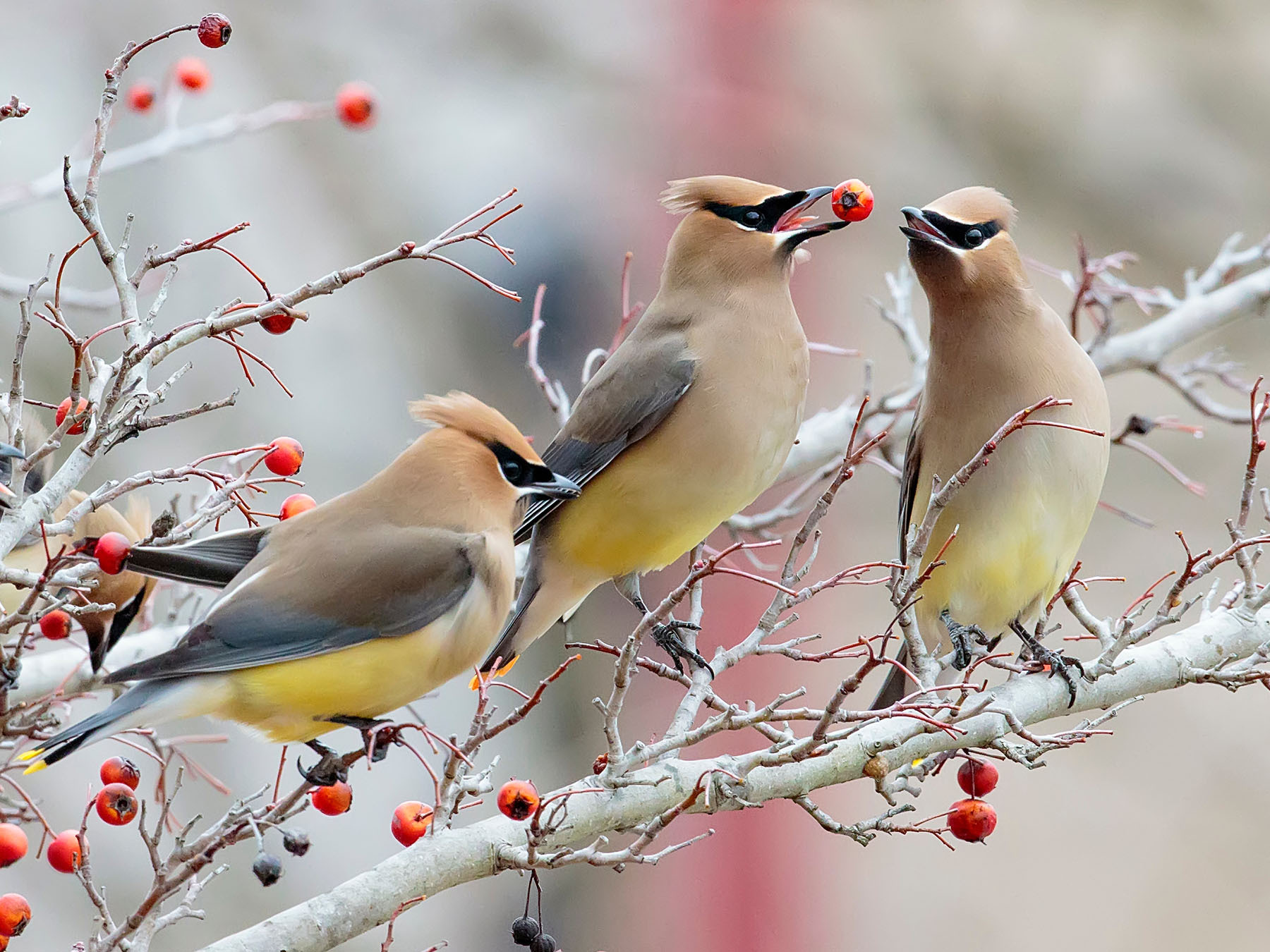
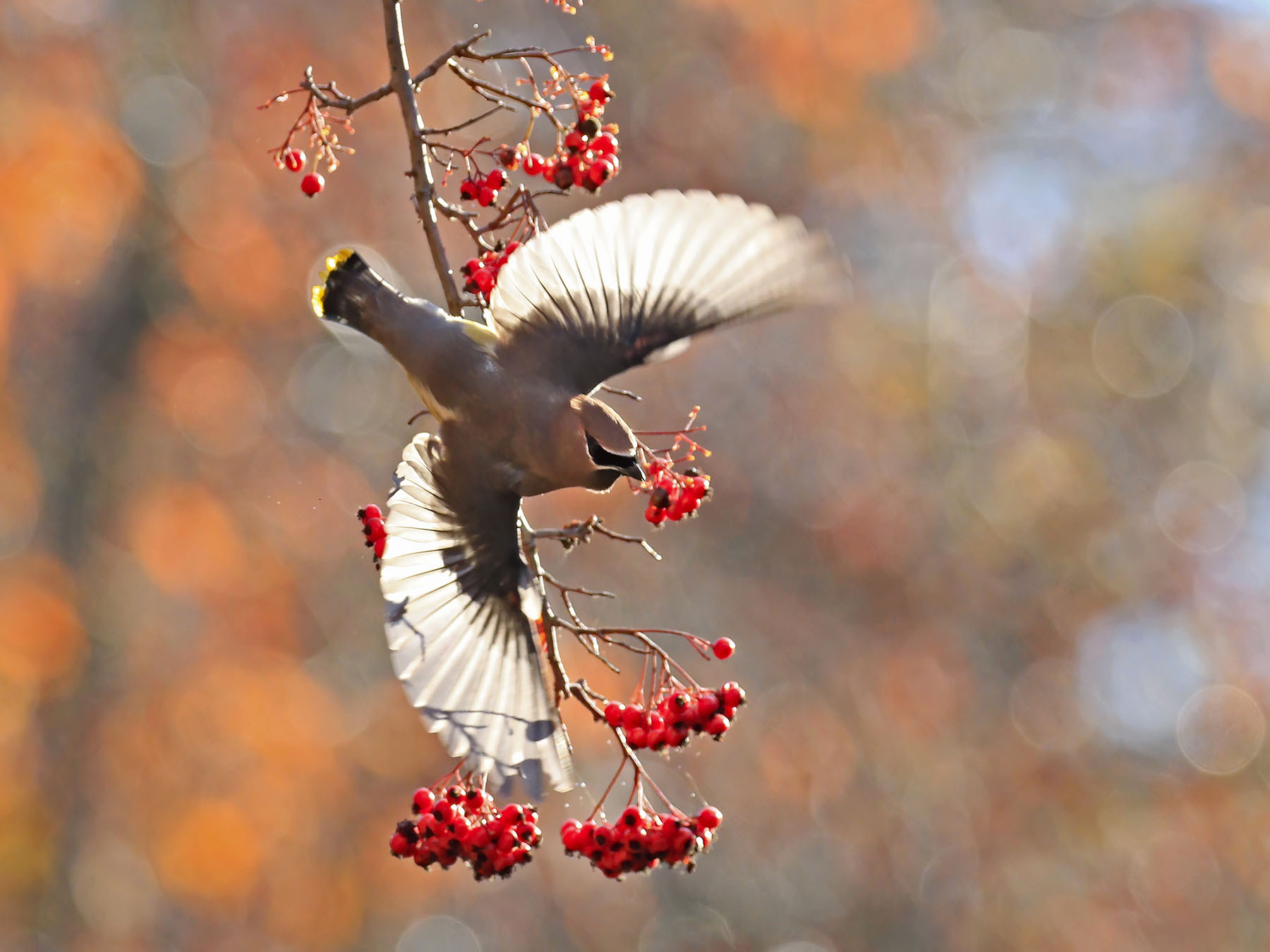
Cedar Waxwings are primarily frugivorous, with a strong preference for berries, especially cedar berries, hence their name. They also consume insects, particularly during the breeding season.
Their ability to subsist on a diet of sugary fruits is unique among North American birds, aided by a specialized liver that processes sugar efficiently.
Nesting and breeding
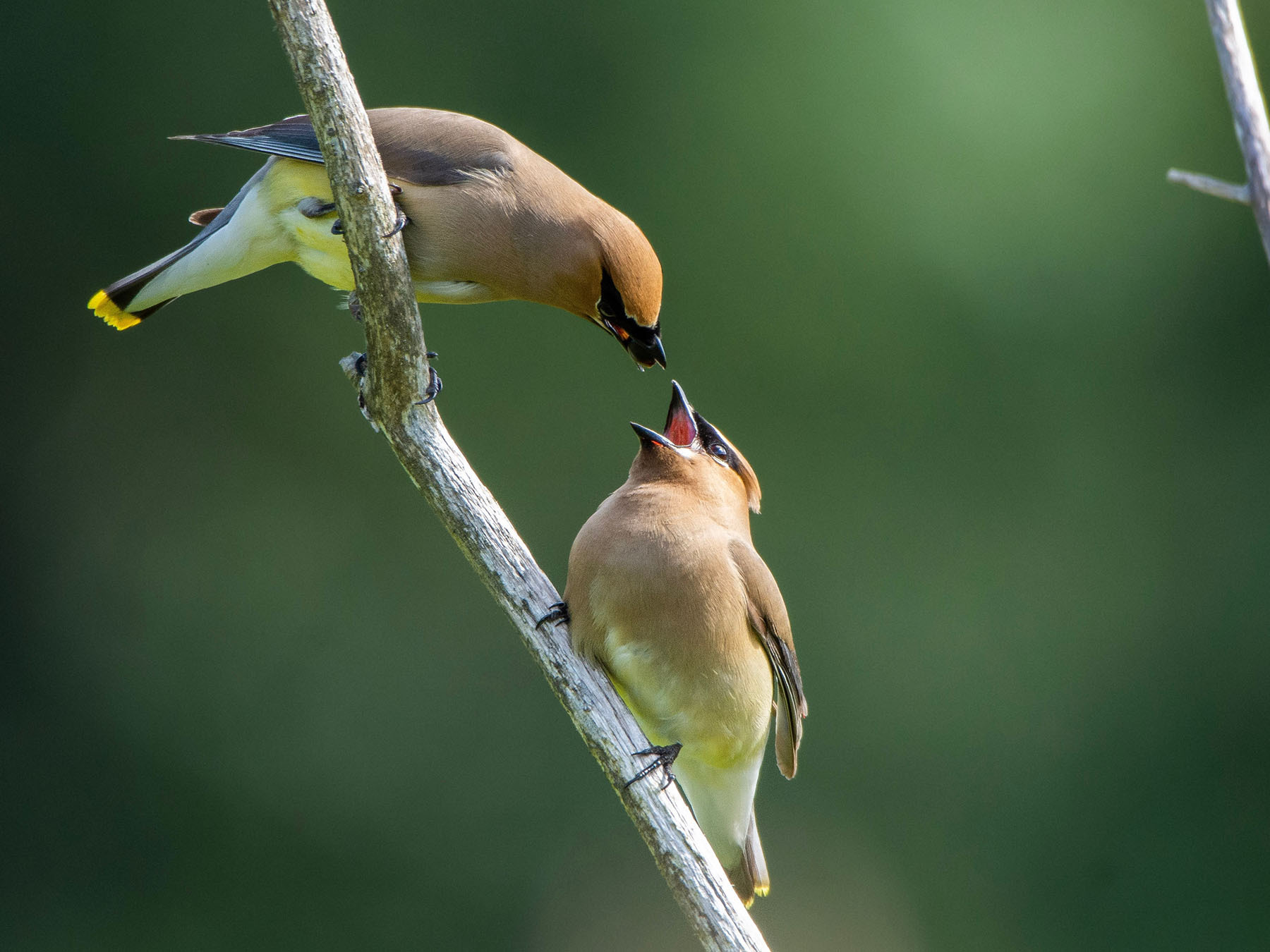
Cedar Waxwings typically form monogamous pairs during the breeding season, which runs from late spring to early summer. Courtship involves a charming ritual where birds pass small objects like flower petals or insects back and forth.
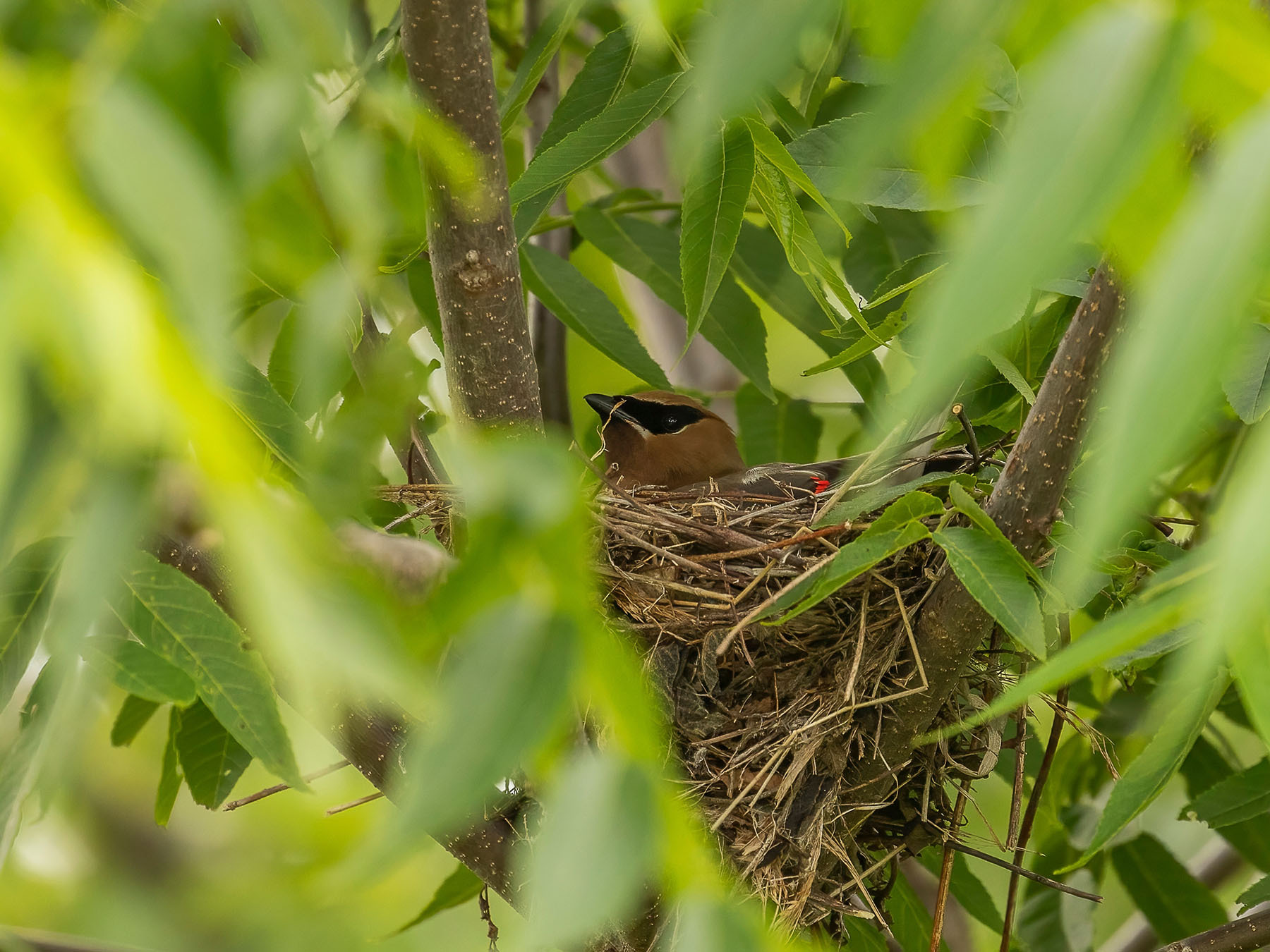
Nests are built in trees, often on a horizontal branch, using grasses, twigs, and plant fibers. Females lay 3-5 pale blue-gray eggs with dark spots. Both parents contribute to nest building and incubation.
Incubation lasts about 12-14 days, with nestlings fledging after another 14-18 days. Parents continue to feed fledglings for several days after they leave the nest.
Behaviour
Cedar Waxwings are highly social, often seen in large flocks, especially when foraging. They are known for their cooperative feeding behavior, passing berries beak-to-beak down a row of birds.
These birds are also skilled flycatchers, sallying out from perches to catch insects in mid-air.
Conservation
Cedar Waxwings are currently listed as Least Concern due to their large range and stable population. However, they face threats from window collisions in urban areas and pesticide use that affects their insect prey.
Conservation efforts focus on maintaining diverse habitats with native fruit-bearing plants.
Similar birds
Often mistaken for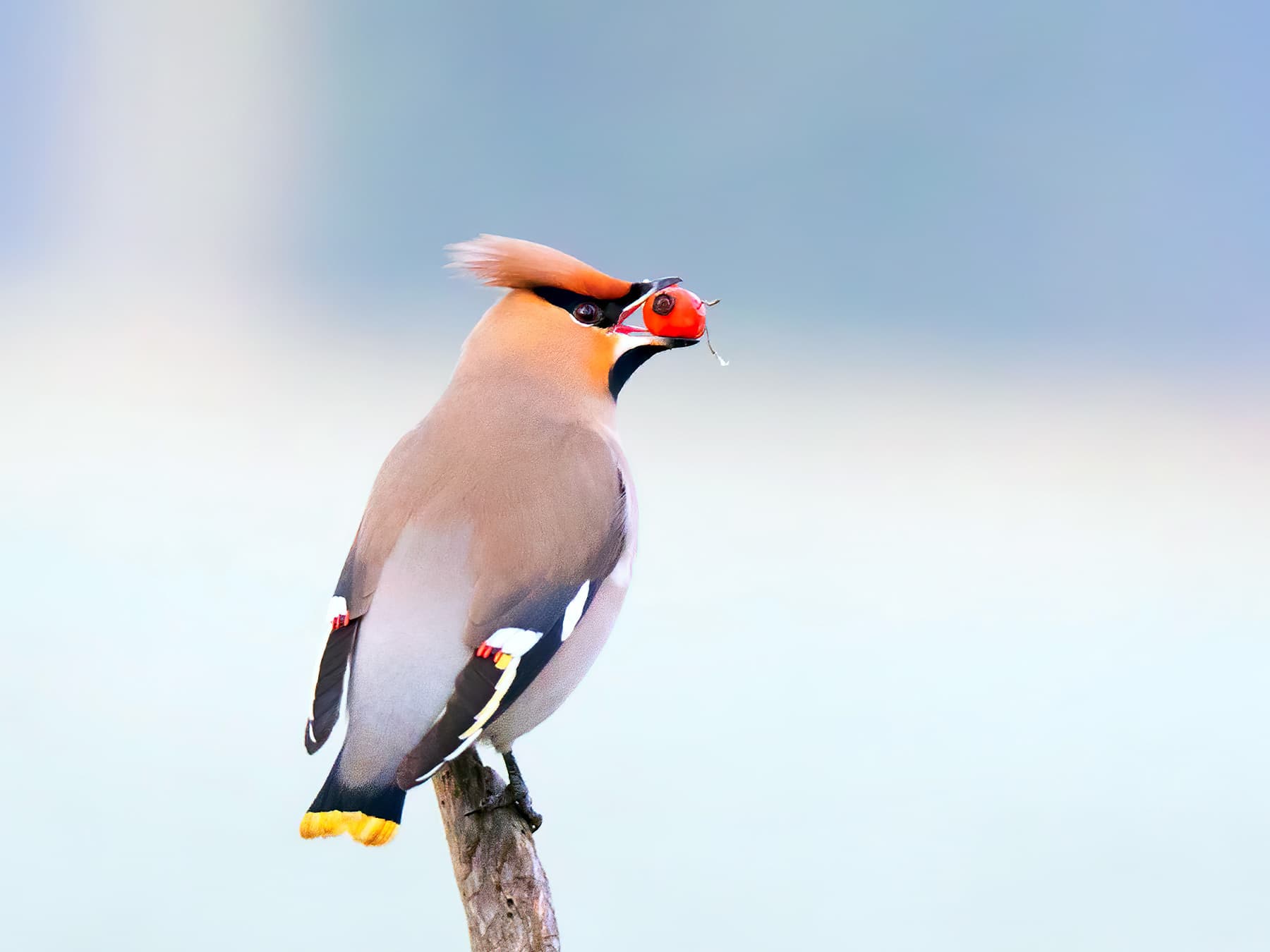
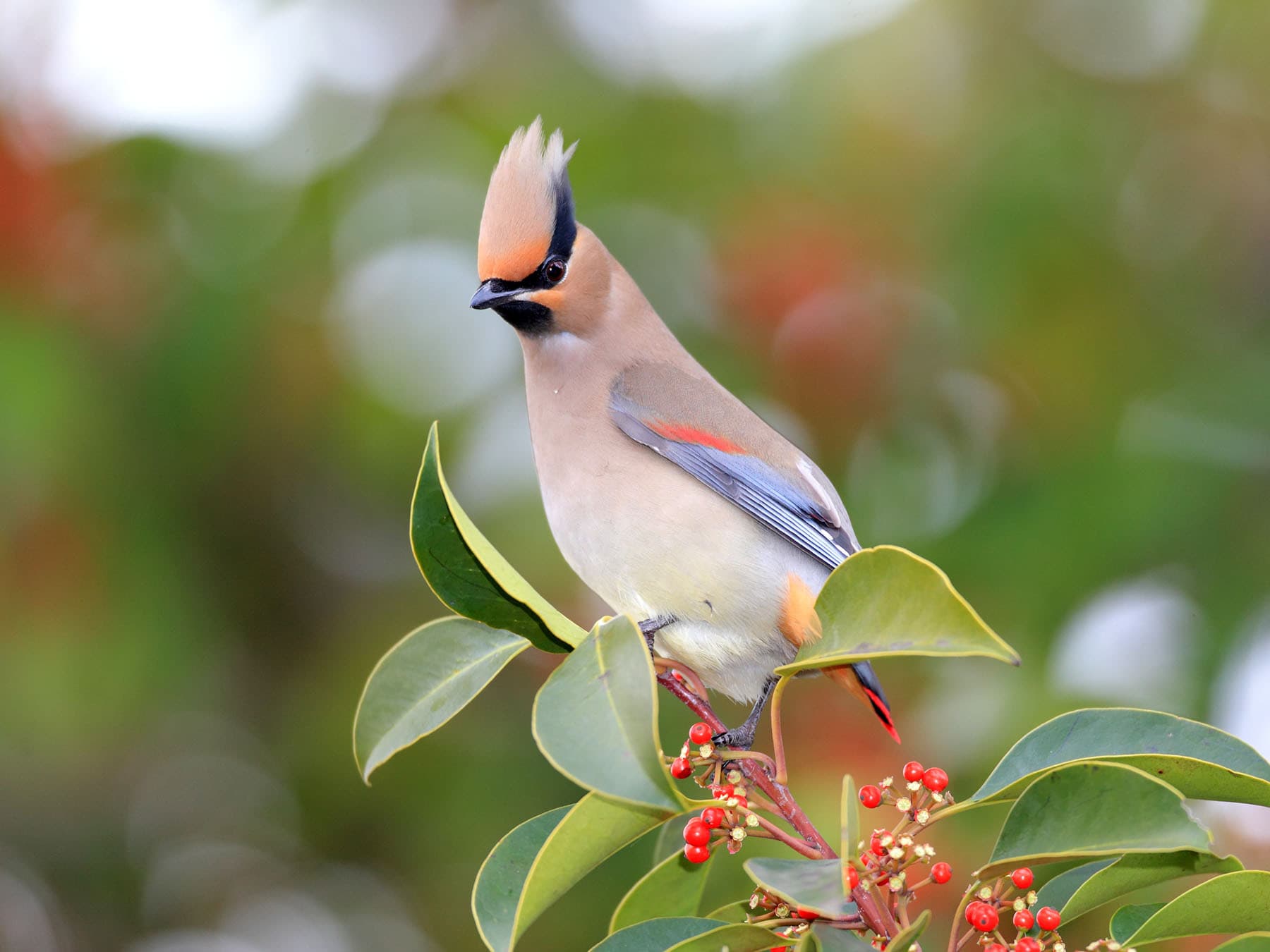
More photos
8 photos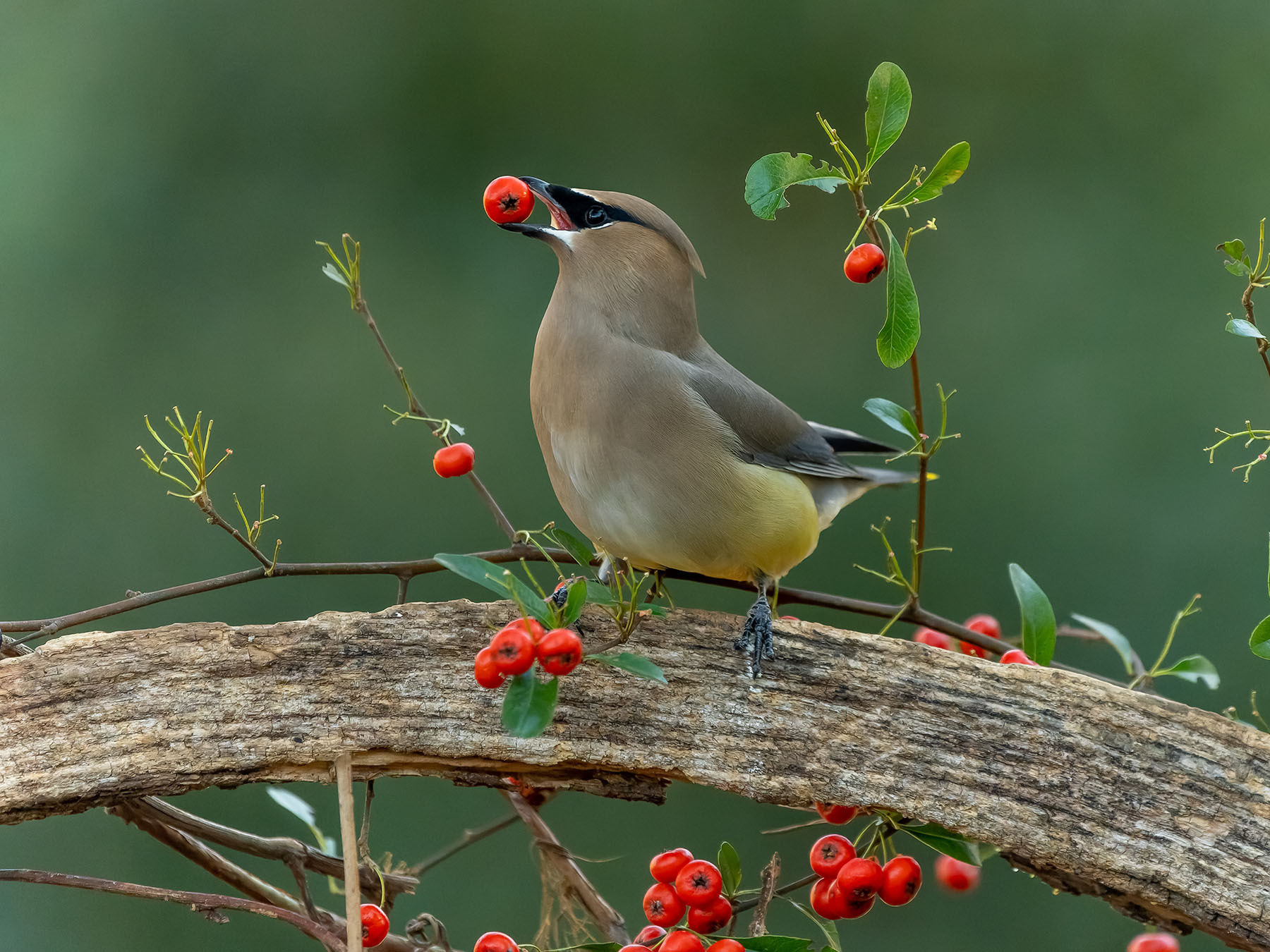
Cedar Waxwing guides
5 guidesQuick facts
- Length
- 15–18 cm
- Wingspan
- 22–30 cm
- Weight
- 30–40 g
- Lifespan
- 5–8 years · oldest recorded 8.2 years
- Family
- Waxwings
- Migration
- Partial migrant
- Global status (IUCN)
- Least Concern
- World population
- 64,000,000 mature individuals
- Population trend
- Increasing
- Also called
- Cedar Bird
- Scientific name
- Bombycilla cedrorum
Sources
4- 1BirdLife International. 2021. Bombycilla cedrorum. The IUCN Red List of Threatened Species 2021: e.T22708153A137475540. Source (opens in a new tab)
- 2Partners in Flight; Rosenberg et al. (2019)
- 3Partners in Flight (2022) Source (opens in a new tab)
- 4BBL - Longevity Records of North American Birds Source (opens in a new tab)

Checked by
Nathan Cope, founder and editor
Nathan founded Birdfact and leads its writers and contributors in the UK, the US and Canada. He has watched and studied birds for more than ten years, and checks every article and species guide before it’s published.