Facts · Updated 12 Oct 2026
Do Mourning Doves Mate for Life? Pair Bonds, Courtship and Mating
By the Birdfact teamChecked by Nathan Cope
Mourning Doves are seasonal partners: a pair stays together through a nesting season, and some may pair again later, but no study shows lifelong pairs. Learn how they court and mate, who does what at the nest, what happens when one of a pair dies, and whether pigeons and other doves stay together.
On this page13 sections
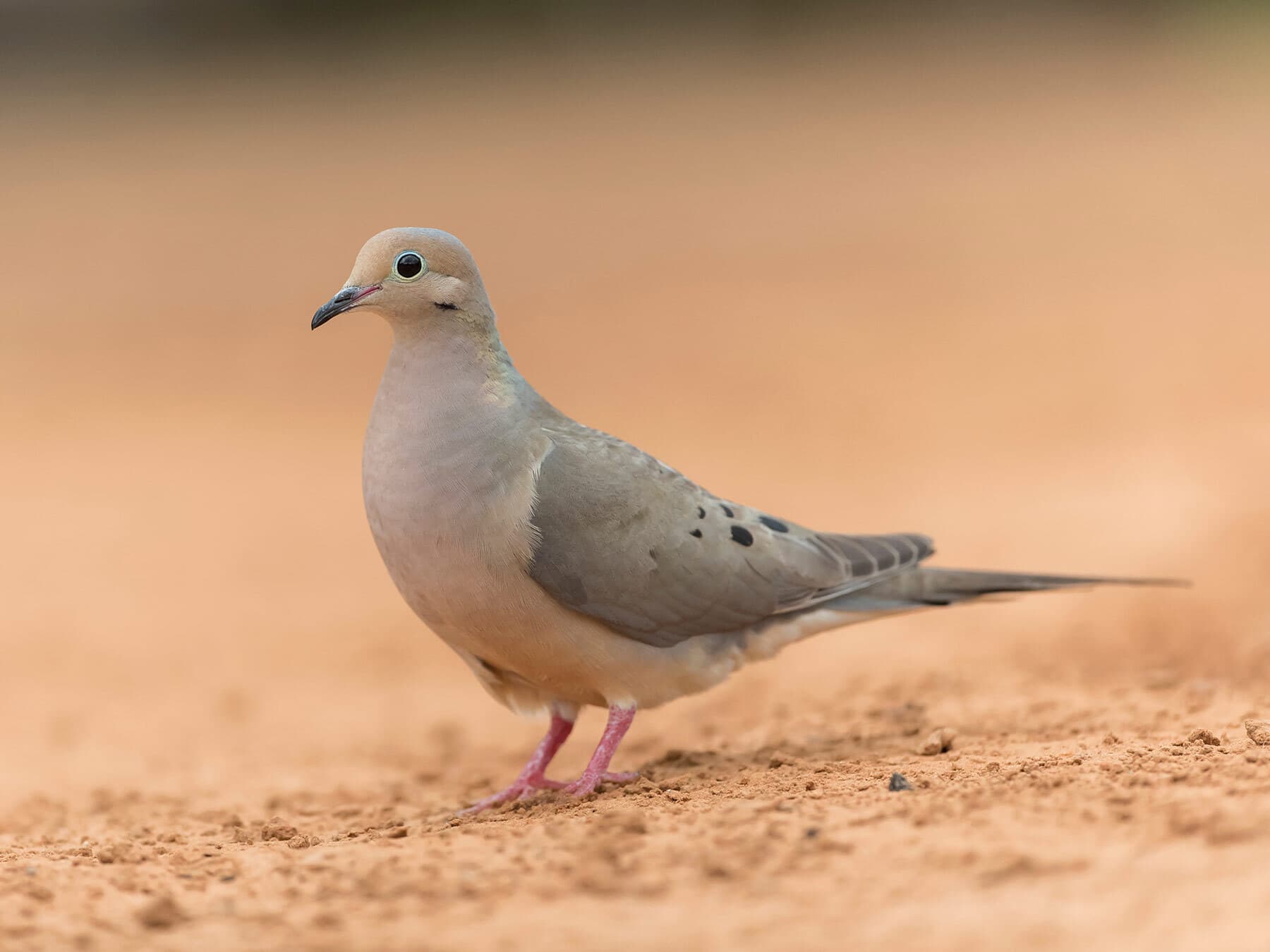
Do Mourning Doves really pair for life? What the banding studies and nest watches show, how a pair forms, how doves court and mate, who does what at the nest, what happens when one of a pair dies, and whether other doves and pigeons stay together. For the bird itself, see Mourning Dove identification and facts.
Do Mourning Doves mate for life?
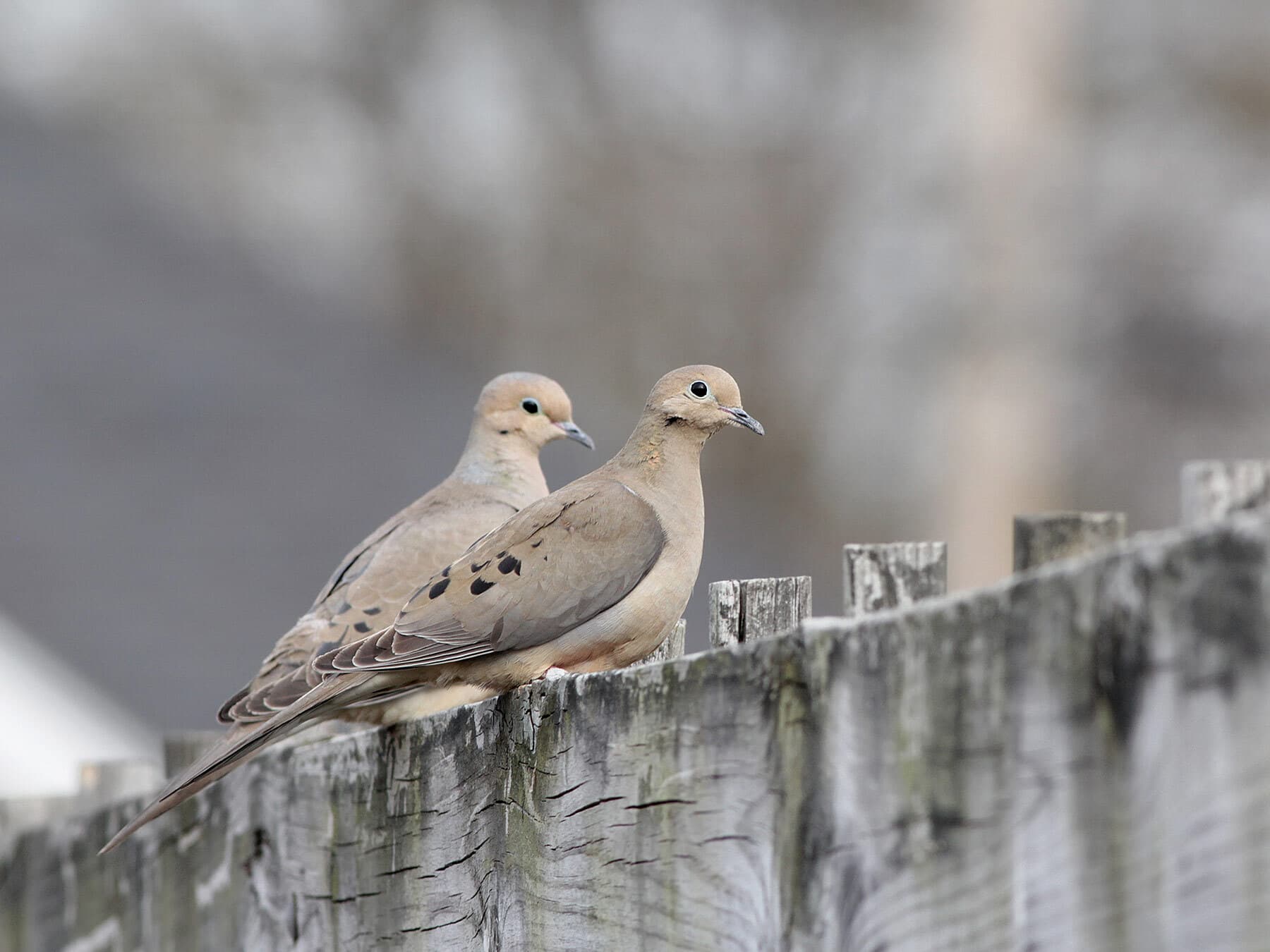
Not as far as anyone has shown. Birds of the World describes them as seasonally monogamous: a pair stays together through a nesting season, with some signs that birds may pair again in later seasons.1 With an average adult expected to live only about a year, "for life" would rarely mean more than a season or two anyway. Some pairs may stay together through the nesting season and the winter, while others change partners between nesting cycles.1
The clearest case we could read in full is one banded couple. On the Ohio State University campus a female was banded on her nest on June 23, 1951, and her mate two days later; in April 1952 both were trapped again at the same nest. Even the authors could not say whether the two had stayed together all winter or simply met again at their old site, and they said it may or may not be normal.2 Margaret Morse Nice had made the same point in 1922: a nest reused in the same season is easily assumed to belong to the same pair, but no one knew.3 A 1965 banding study that Birds of the World cites on whether pairs last, we could not read.
Other observations suggest some pairs separate after nesting. In southern Missouri from mid-September, birds shot from tight flocks of 10-20 all proved to be adult males, though many other males flocked with females and young,4 and in a four-year study of color-marked doves in North Dakota, one female left her mate and two eggs that were about to hatch and mated with another male.5 Some sources, including a state wildlife profile, say flatly that Mourning Doves pair for life,6 but none we found cites a study that shows it.
Courtship
Pairing starts with the perch coo: unmated males coo from favorite perches, and an unpaired male also gives a display flight, climbing from the perch with loud claps of his wings to 30 m (100 feet) or more, then gliding down in a long spiral.1 Courtship begins when a female lands near him. He charges, head forward and body raised, then bows up to 10 times until his head nearly touches the ground and rises tall to coo loudly. The female may fly off, often with him following, ignore him, peck him, or accept him; a new pair then loafs together for a few days before building a nest.1 In a captive pair, a newly arrived female followed the male about and shook her wings.7
How do Mourning Doves mate?
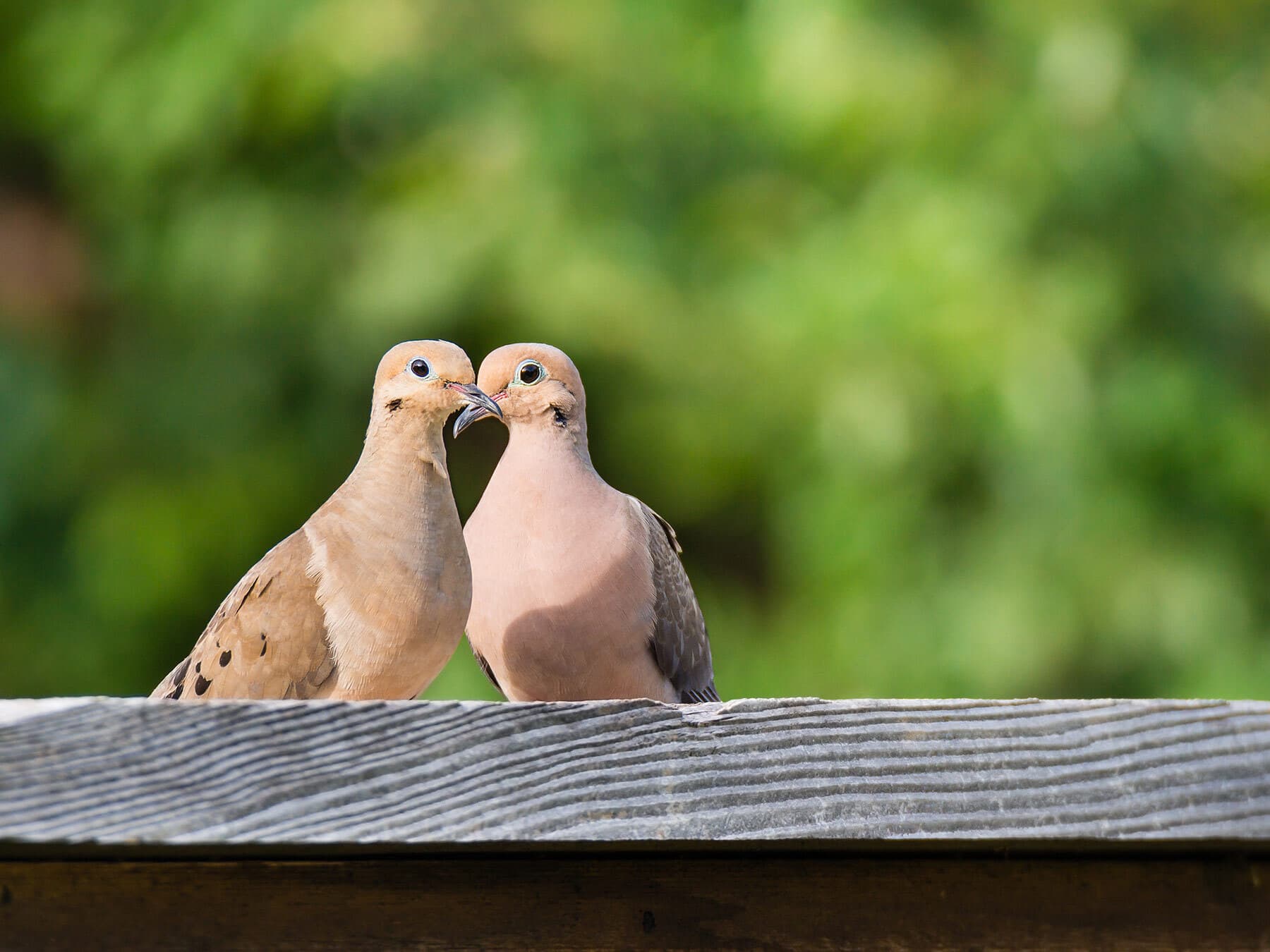
With a run of gentle displays. Mates nibble each other's head and neck feathers, the male may give a quick ritual preen and shake his wings at her, and then they bill: he offers his open bill, she puts hers inside it and they pump their heads together. She then crouches to invite him to mount.1 Courtship and mating pick up again as each brood nears fledging, so a pair can start the next clutch soon after the young leave.1
The mating season
Most pairs form between February and October, and at the southern end of the range all year round; the season is shorter farther north and peaks in late spring and early summer.1 In North Carolina, cooing and courtship flights begin in late January and early February,6 and in north-central Florida cooing was highest in February and March.8
Who does what
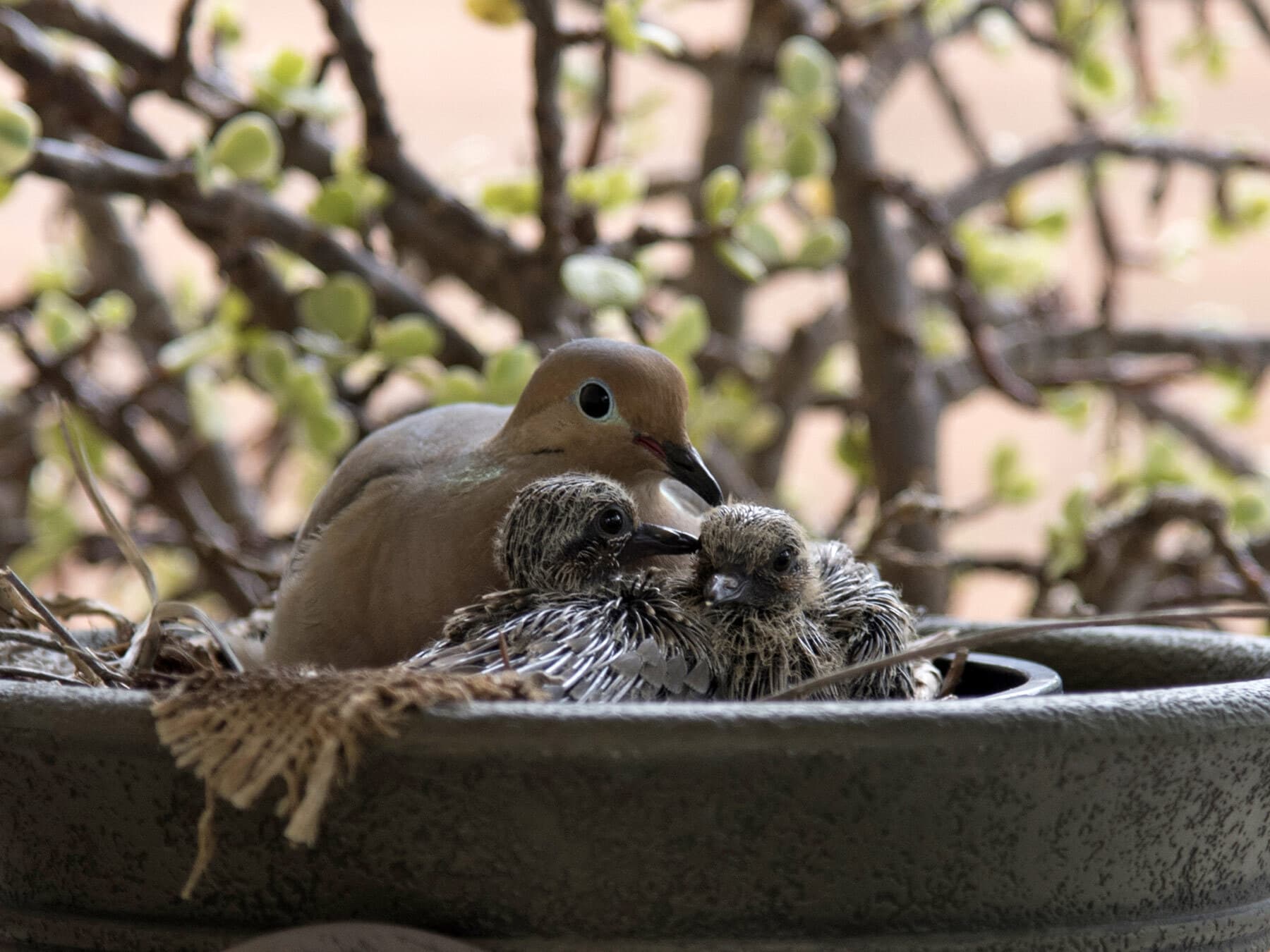
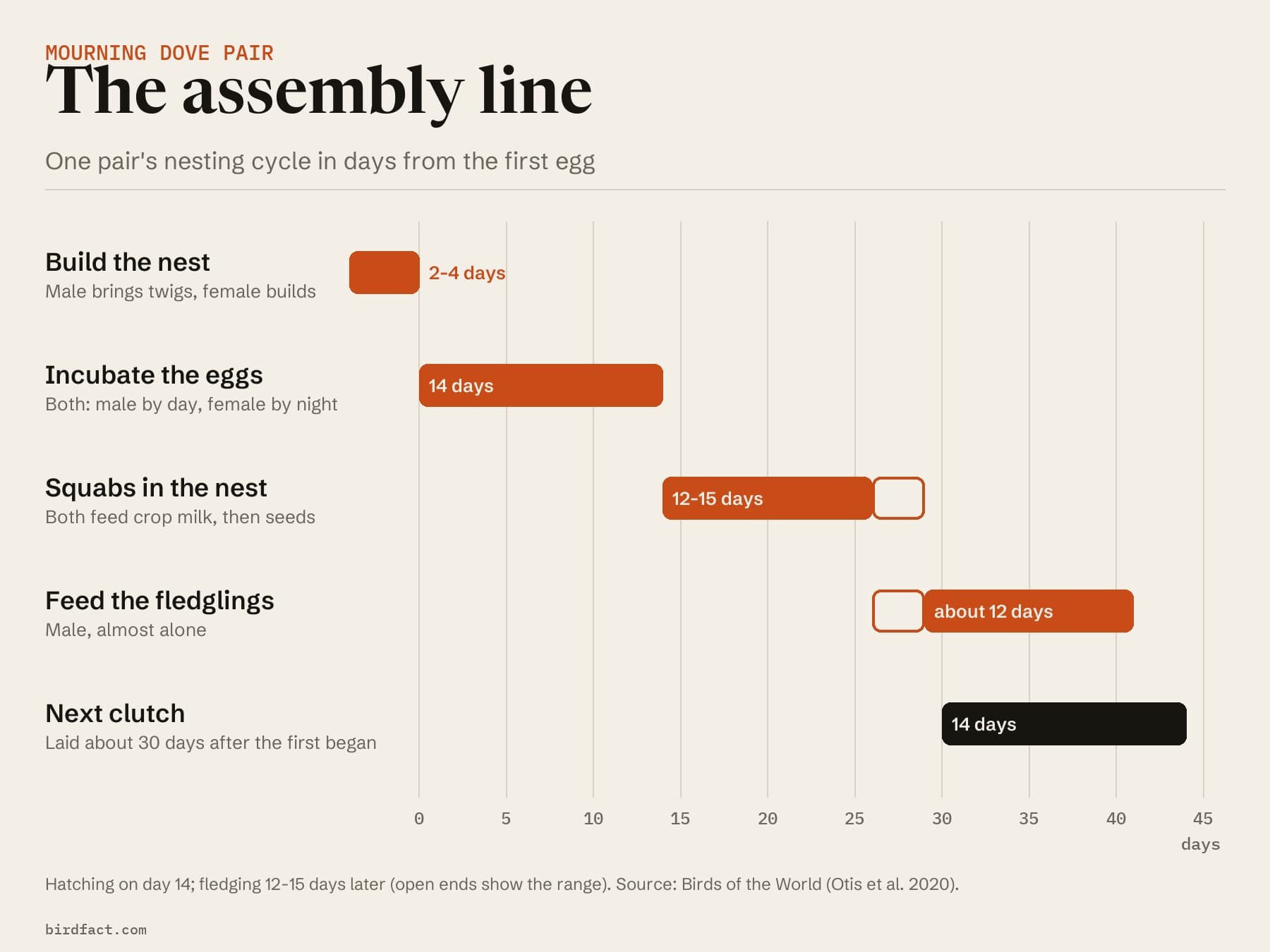
A pair shares almost everything, but not equally. The male starts the search for a site: he inspects possible sites and uses his nest call and flicks his wings to bring the female. He then gathers the twigs and hands each one to her while standing on her back, and she arranges them around her body into a shallow platform, a job of 7-10 hours spread over 2-4 days.1 Both incubate the two eggs for 14 days, the male generally from mid-morning to late afternoon and the female the rest of the day and night;1 in Iowa the male sat from about 8 a.m. to 5 p.m.9 Both feed the squabs crop milk and then seeds. After the young leave the nest, the male feeds them almost alone for about 12 days while the female lays again.1 More on the nest in Mourning Dove nesting.
Staying faithful
Extra-pair mating is rare. Birds of the World says the only reports are of paired males courting and mating with females hatched that year, and one attempt stopped by a male guarding his mate; because mates stay close until incubation starts, there are few chances.1 The male's "driving", following his mate everywhere and pecking her when she stops, may keep her away from rival males.1 In the North Dakota study, only a pair was seen at 485 nests, but three nests had two males and a female.5
When a mate dies
The survivor carries on, and often succeeds once the squabs are a week or so old. In South Carolina, biologists removed one parent from 258 nests at set ages of the young, and left 96 nests alone for comparison. Nests failed when a parent was lost while the squabs were 1-4 days old, but from then on the lone parent did better and better: 12% of nests succeeded when the loss came at 5-6 days, 30% at 7-8 days, 44% at 9-10 days and about 50% from 11 days on, as good as the 46% of untouched nests. It made no difference which parent was taken. The turning point matches when the squabs stop needing crop milk.10 In Texas in September 1979, nests with young 0-6 days old did significantly worse than the rest, though even some of those fledged a young bird; of 15 lone parents left with eggs, 2 hatched them but the young died in rain; and one female apparently had a new mate the day after hers was removed, and the pair raised two young.11
In Alabama, two females whose mates disappeared when the young were about 12-15 days old (one before day 12) kept feeding them until they were 27 and 31 days old, when females normally stop at about 16 days, and one brooded at midday, a job usually left to the male.12 In an aviary, with food at hand, a female whose mate died two days after the first egg hatched raised a single squab alone, and about two weeks after her mate died tried to take another male from his mate until she drove her off.7
Mourning, grief and helpers
We found no study showing that Mourning Doves grieve for a lost mate. The name comes from the sound, not a habit: the slow, low coo of the song (see Mourning Dove sounds). Nor could we find any source for the claim, repeated on some websites, that bereaved doves help other pairs raise their young: extra adults do sometimes feed young that are not theirs, but none has been shown to be a bird that lost its mate.
Do pigeons mate for life?
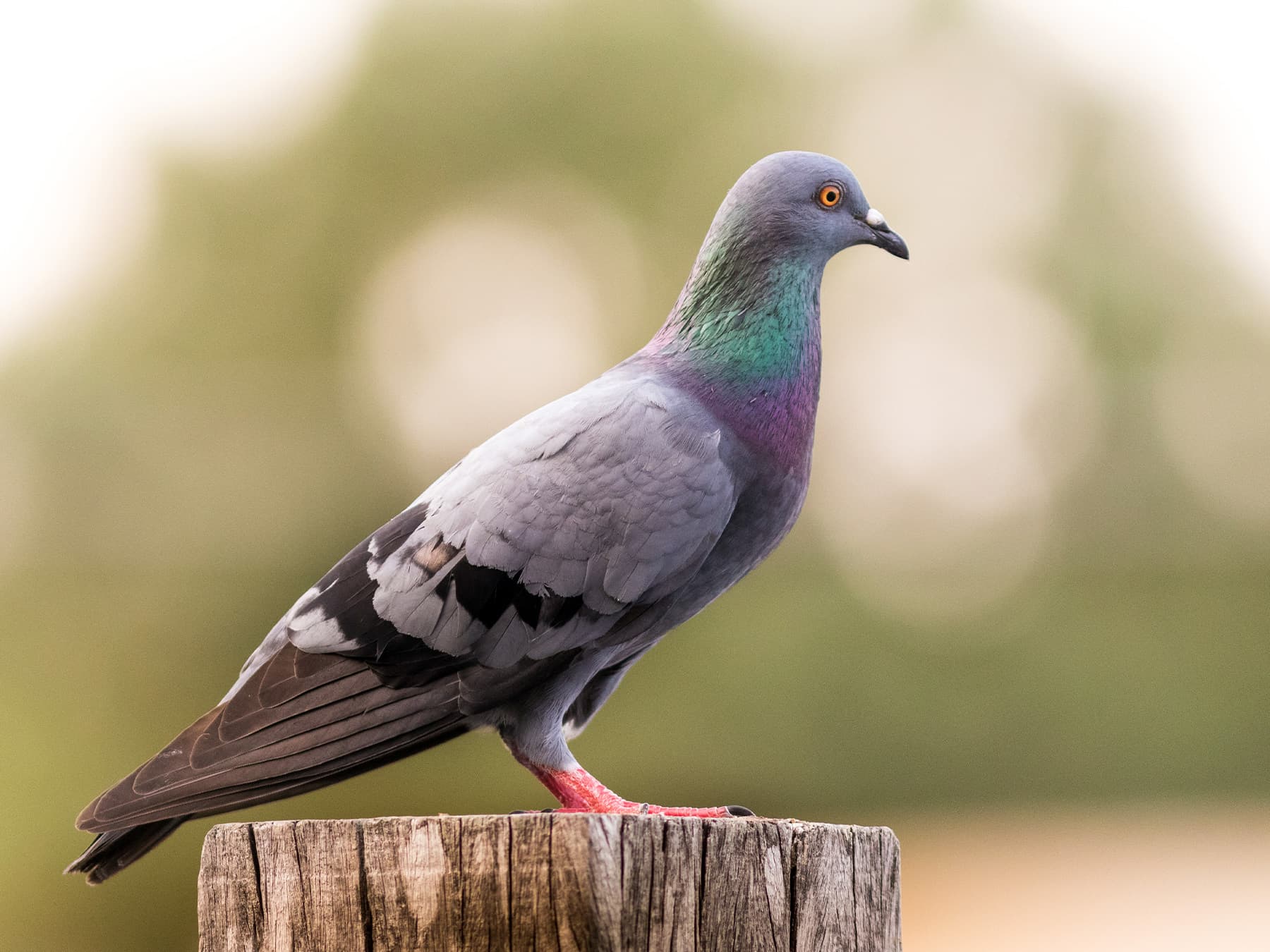
The Rock Pigeon, the city pigeon, comes closer. Birds of the World describes it as monogamous and pairing for life.13 In captive pigeons, DNA fingerprinting found no young fathered outside the pair among 25 chicks from one-off pairings and at most 2 of 43 among established pairs, and the pairs stayed together through the two-year study.14 In color-ringed feral pigeons in Poland, some pairs stopped breeding for the season when a partner died and the survivor found no new partner or paired with another single bird, while birds that had bred before nested for far longer each year, 203 days against 125.15
C. O. Whitman's posthumous notes on his aviary pigeons, edited by Harvey Carr, were more cautious: pairs normally stayed faithful through a nesting cycle and the rest of the season, but often probably not into later years, and a broken pair could re-pair almost at once.16
Do other doves mate for life?
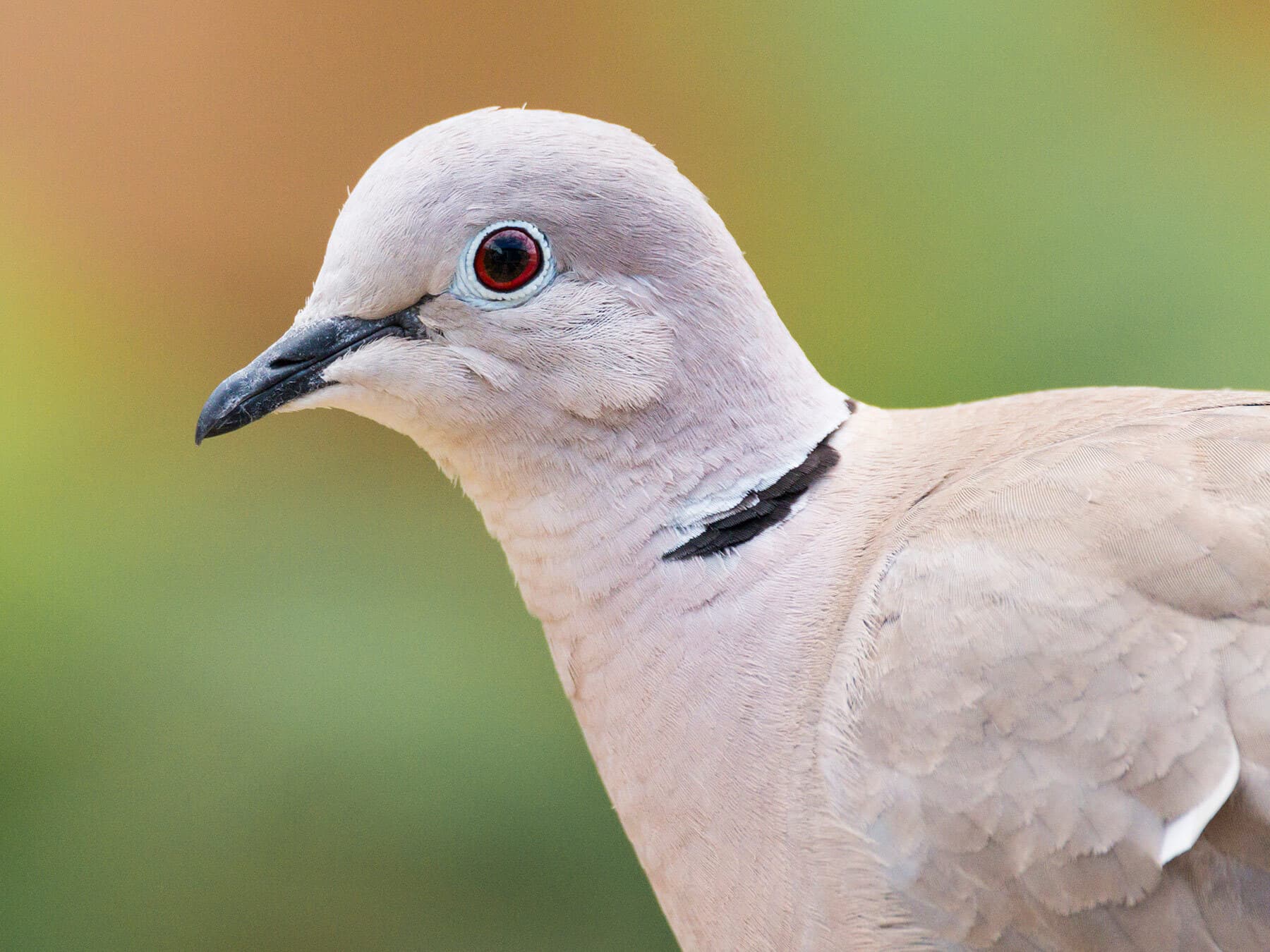
- Eurasian Collared-Dove: monogamous; a pair keeps together through the breeding period, and there are reports of pairs holding through the winter, and the bond may persist from one year to the next.17
- Common Ground Dove: pairs are seen together all year and no one has seen a pair form; Richard Johnston, who studied them, thought a lasting bond likely but called the evidence entirely circumstantial, with no banded birds.18
- Mourning Dove: seasonal pairs, perhaps re-forming in later years, as above.
Why doves stand for faithful love
The idea is older than the name Mourning Dove. Mark Catesby called it "The Turtle of Carolina" in 1731,19 and Alexander Wilson the Carolina Pigeon or Turtle Dove,20 presumably after its likeness to the Old World Turtle Dove, whose name comes from the Latin turtur, an echo of its coo.21 Turtle-doves were the "time-honoured emblem of tenderness and conjugal love",22 and Wilson heard the same in the American dove's song. No source we read says the name was given because the birds mate for life.
Telling the pair apart
Which one is the male? See male vs female Mourning Doves.
Sources
- Otis, D. L., Schulz, J. H., Miller, D., Mirarchi, R. E., Baskett, T. S. (2020). Mourning Dove (Zenaida macroura), version 1.0. Birds of the World (A. F. Poole, editor). Cornell Lab of Ornithology. doi:10.2173/bow.moudov.01
- Stewart, P. A., Mackey, J. P. Jr. (1953). A pair of mourning doves occupies same nest two successive years. Bird-Banding 24(1): 16. Accessed 12 October 2026. Source
- Nice, M. M. (1922). A study of the nesting of Mourning Doves. The Auk 39(4): 457-474. doi:10.2307/4073568
- Leopold, A. S. (1943). Autumn feeding and flocking habits of the mourning dove in southern Missouri. The Wilson Bulletin 55(3): 151-154. Accessed 12 October 2026. Source
- Blockstein, D. E. (1986). Nesting trios of mourning doves. The Wilson Bulletin 98(2): 309-311. Accessed 12 October 2026. Source
- North Carolina Wildlife Resources Commission (2009). North Carolina Wildlife Profiles: Mourning Dove. NCWRC. Accessed 12 October 2026. Source
- Gifford, E. W. (1909). The mourning dove in captivity. The Condor 11(3): 84-85. Accessed 12 October 2026. Source
- Marion, W. R., Schnoes, M. S. (1982). Seasonality of mourning dove nesting in Florida. Proceedings of the Annual Conference of the Southeastern Association of Fish and Wildlife Agencies 36: 543-551. Accessed 12 October 2026. Source
- McClure, H. E. (1943). Ecology and management of the mourning dove, Zenaidura macroura (Linn.), in Cass County, Iowa. Iowa Agricultural Experiment Station Research Bulletin 310: 355-415. Accessed 12 October 2026. Source
- Haas, G. H. (1980). Success of single-parent mourning dove nests. Proceedings of the Annual Conference of the Southeastern Association of Fish and Wildlife Agencies 34: 426-429. Accessed 12 October 2026. Source
- Bivings, A. E. IV, Silvy, N. J. (1994). Success of single-parent mourning dove nests in September. Proceedings of the Annual Conference of the Southeastern Association of Fish and Wildlife Agencies 48: 236-239. Accessed 12 October 2026. Source
- Hitchcock, R. R., Mirarchi, R. E. (1984). Comparisons between single-parent and normal mourning dove nestings during the post-fledging period. The Wilson Bulletin 96(3): 494-495. Accessed 12 October 2026. Source
- Lowther, P. E., Johnston, R. F. (2020). Rock Pigeon (Columba livia), version 1.0. Birds of the World. Cornell Lab of Ornithology. doi:10.2173/bow.rocpig.01
- Patel, K. K., Siegel, C. (2005). Genetic monogamy in captive pigeons (Columba livia) assessed by DNA fingerprinting. BIOS 76(2): 97-101. doi:10.1893/0005-3155(2005)076[0097:RAGMIC]2.0.CO;2
- Hetmański, T. (2004). Timing of breeding in the feral pigeon Columba livia f. domestica in Słupsk (NW Poland). Acta Ornithologica 39(2): 105-110. doi:10.3161/068.039.0207
- Whitman, C. O. (1919). The Behavior of Pigeons (Posthumous Works, vol. 3; H. A. Carr, editor). Carnegie Institution of Washington, Publication 257. Accessed 12 October 2026. Source
- Romagosa, C. M., Mlodinow, S. G. (2022). Eurasian Collared-Dove (Streptopelia decaocto), version 1.1. Birds of the World. Cornell Lab of Ornithology. doi:10.2173/bow.eucdov.01.1
- Johnston, R. F. (1964). Remarks on the behavior of the Ground Dove. The Condor 66(1): 65-69. doi:10.2307/1365239
- Catesby, M. (1731). The Natural History of Carolina, Florida and the Bahama Islands, vol. 1: The Turtle of Carolina. London. Accessed 12 October 2026. Source
- Wilson, A. (1812). American Ornithology, vol. 5: Carolina Pigeon, or Turtle Dove. Bradford and Inskeep, Philadelphia. Accessed 12 October 2026. Source
- Skeat, W. W. (1910). An Etymological Dictionary of the English Language. Clarendon Press, Oxford. Accessed 12 October 2026. Source
- Newton, A. (1896). A Dictionary of Birds. Adam and Charles Black, London. Accessed 12 October 2026. Source