Published 31 Oct 2026
Cowbird Eggs: What They Look Like and What to Do
By the Birdfact teamChecked by Nathan Cope
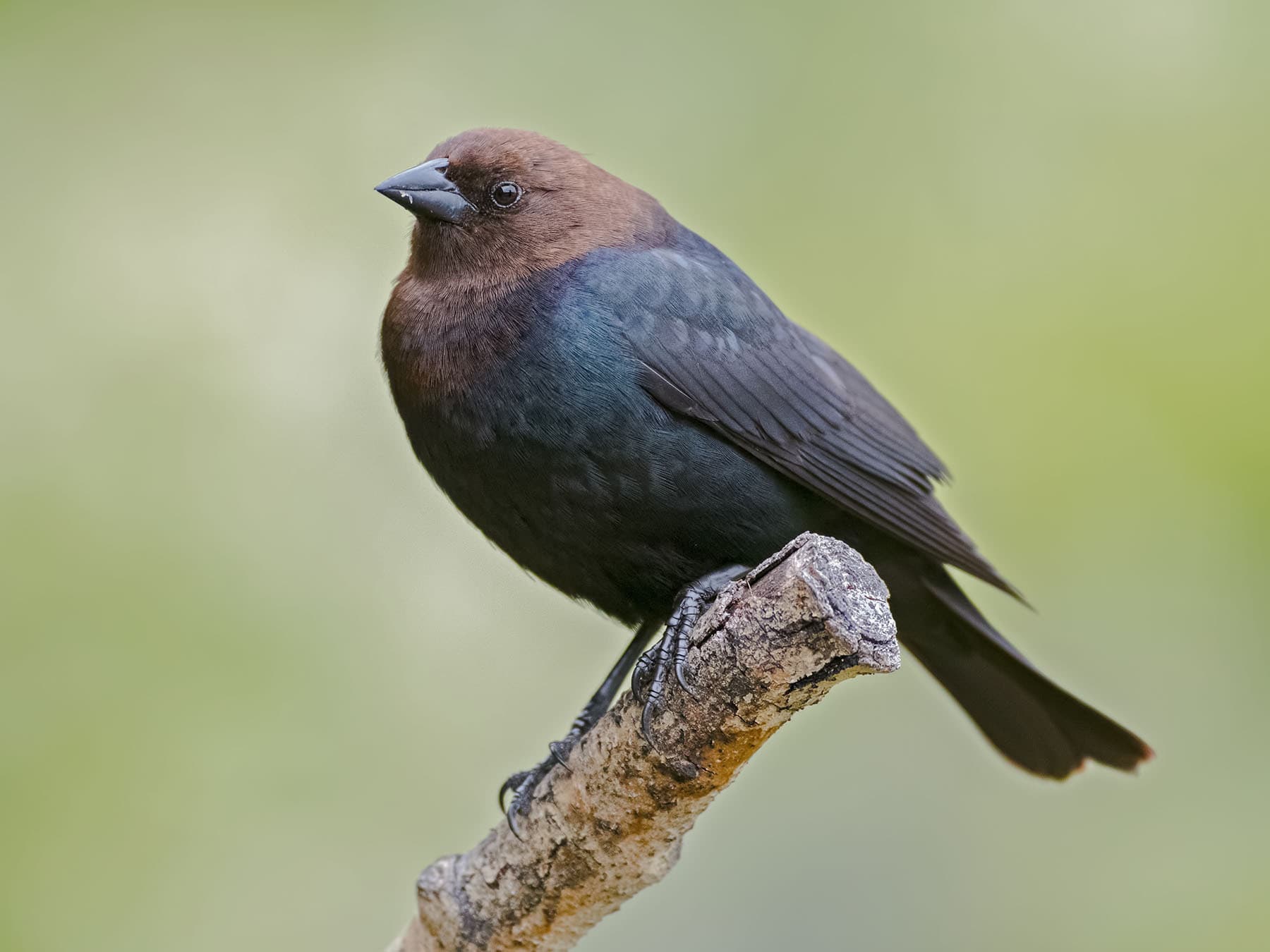
Cowbird eggs are white or grayish white with brown or gray spots, often bigger than the host's own eggs. The Brown-headed Cowbird lays only in other birds' nests, and the hosts raise its young. Removing a cowbird egg is illegal outside regulated programs, and it can make the host abandon its nest. Below: how to tell the eggs apart, signs of a parasitized nest, what happens after hatching, and which birds fight back.
On this page13 sections
- Cowbird eggs at a glance
- What do cowbird eggs look like?
- Are cowbird eggs bigger than the host's?
- Cowbird eggs next to common host eggs
- How a cowbird egg ends up in a nest
- Signs a nest has been parasitized
- Should I remove a cowbird egg?
- What happens after a cowbird egg hatches
- Hosts that reject cowbird eggs
- Cowbird eggs in a House Finch nest
- Cowbirds, eggs and rare birds
- Questions
- Sources
Cowbird eggs at a glance
A cowbird egg is the odd one out in another bird's nest. The Brown-headed Cowbird never builds a nest of its own: the female lays in the nests of other birds, and those hosts incubate the egg and raise the chick. This page shows how to recognize a cowbird egg, how it gets there, what happens next, and why the law says to leave it where it is.
What do cowbird eggs look like?
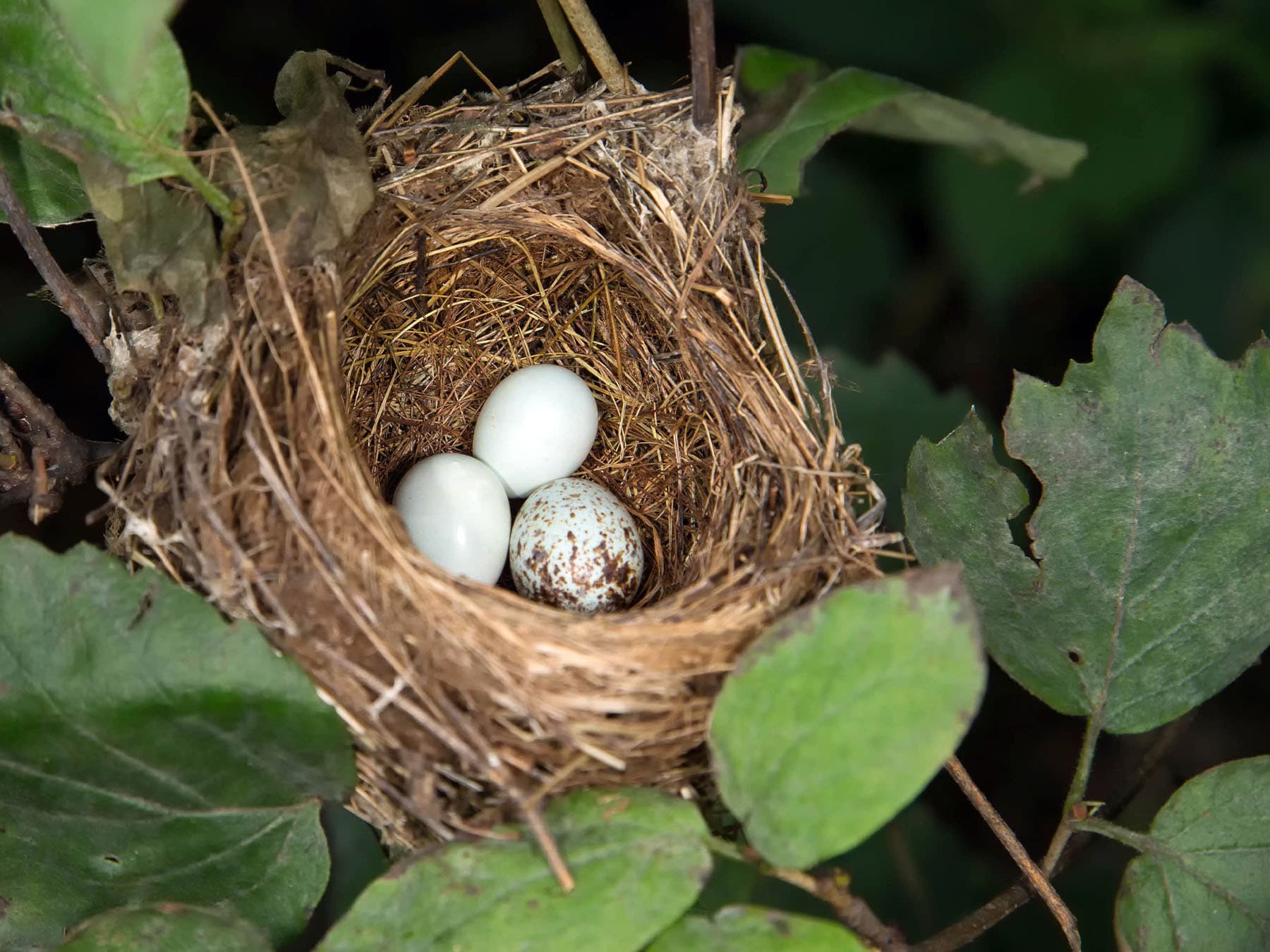
White or grayish white, marked with brown or gray spots and streaks that are usually densest at the larger end. They are oval or nearly round, with a slightly rough, moderately glossy surface.1, 2 Eggs from the East average about 0.85 by 0.65 inch (21.5 by 16.4 mm) and weigh about 0.1 ounce (3 g); cowbirds of the Southwest lay smaller eggs.1
The shell is thicker and stronger than a similar-sized host egg. In drop tests that copied the way cowbirds lay from above the nest, cowbird eggs were less likely to be damaged than host eggs, and damaged the host eggs they landed on.3
Are cowbird eggs bigger than the host's?
Often, but not always. A cowbird egg usually stands out among the eggs of warblers and other small birds.2 In an aviary study, female cowbirds preferred nests holding eggs smaller than their own.1
The Northern Cardinal is the hard case. Its eggs are speckled on a pale ground, much like a cowbird's, and NestWatch calls the two the same size2, though measured cardinal eggs average noticeably larger, about 0.98 by 0.73 inch (24.9 by 18.6 mm) against the cowbird's 0.85 by 0.65 inch.4 In a cardinal's nest a cowbird egg may be hard to pick out until it hatches.2
Cowbird eggs next to common host eggs
Some hosts lay eggs that look clearly different from a cowbird's; others lay speckled eggs that look much the same. Here is how the eggs of some common backyard hosts compare.
| Host | Its eggs | Next to a cowbird egg |
|---|---|---|
| Northern Cardinal | Grayish, buffy or greenish white, speckled gray to brown, most at the large end; about 0.98 x 0.73 in (24.9 x 18.6 mm) | The hardest to tell apart. Cardinal eggs average a little larger |
| Song Sparrow | Pale greenish white, heavily spotted reddish brown | A greener ground |
| Chipping Sparrow | Pale blue-green, marked brown, purple and black, mostly at the larger end | Blue-green ground color |
| Red-winged Blackbird | Pale blue-green, marked black, brown and purple at the larger end | Blue-green ground color |
| House Finch | Pale blue, finely speckled black and pale purple; about 0.75 x 0.55 in (19 x 14 mm) | A bluer ground; smaller |
| Eastern Phoebe | White, sometimes with a few reddish-brown dots | Plain white, with few or no spots |
| Indigo Bunting | White to bluish white, rarely spotted | Usually without spots |
| Red-eyed Vireo | White with brown or black spots near the large end | A similar pattern |
How a cowbird egg ends up in a nest
The female cowbird watches for birds that are building or laying, from a treetop, from the ground, or by fluttering through the leaves. She usually lays while the host is laying its own eggs, just before sunrise, and is on the nest for only 20 to 40 seconds. She often takes out one of the host's eggs, sometimes eating it, and drops her own into the nest.1, 5
One female may lay up to about 40 eggs in a season, spread across many nests. Most parasitized nests get a single cowbird egg: in one study, 60% of them. But more than one female can use the same nest, and nests with up to 12 cowbird eggs have been recorded.1
Signs a nest has been parasitized
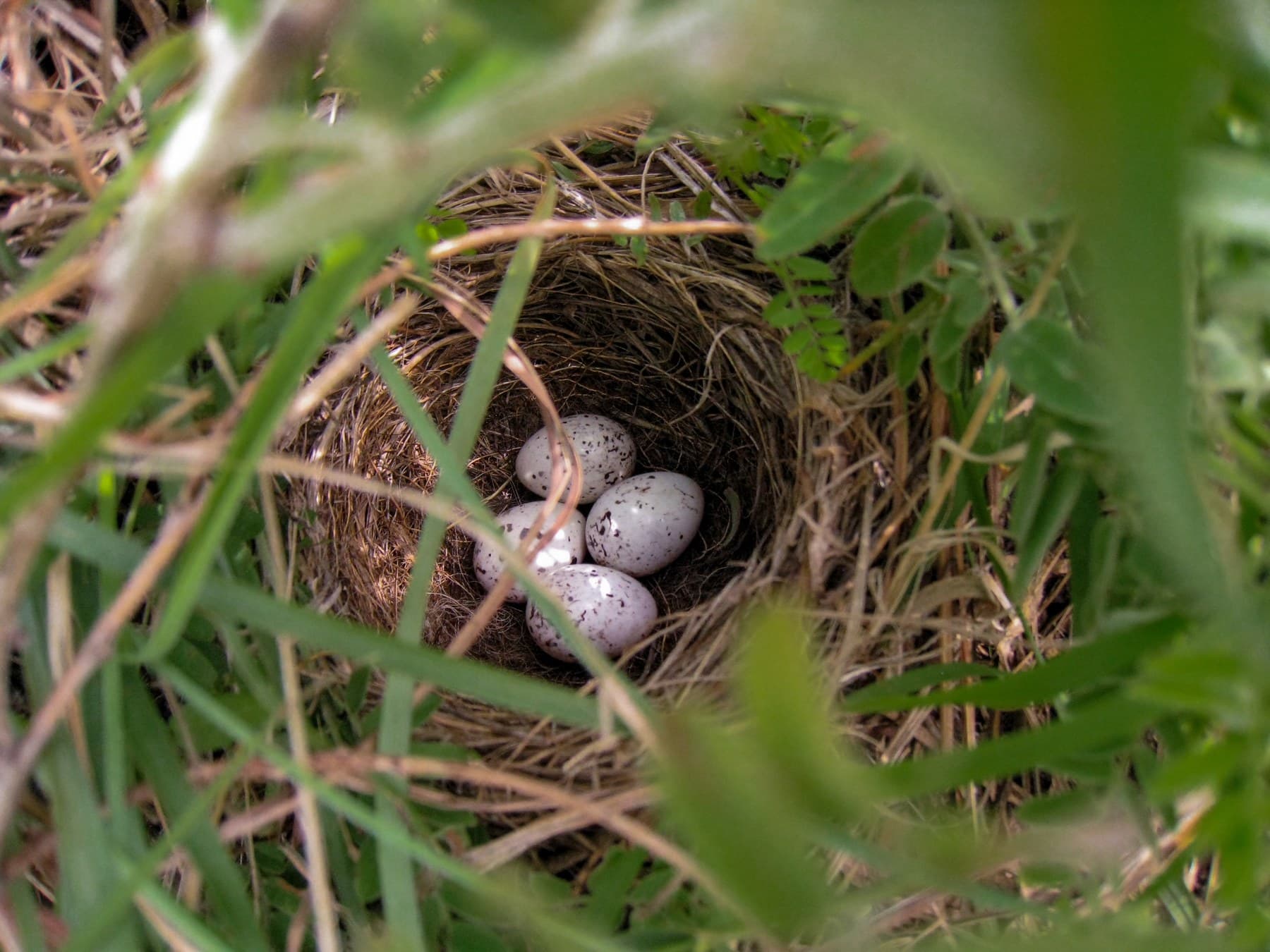
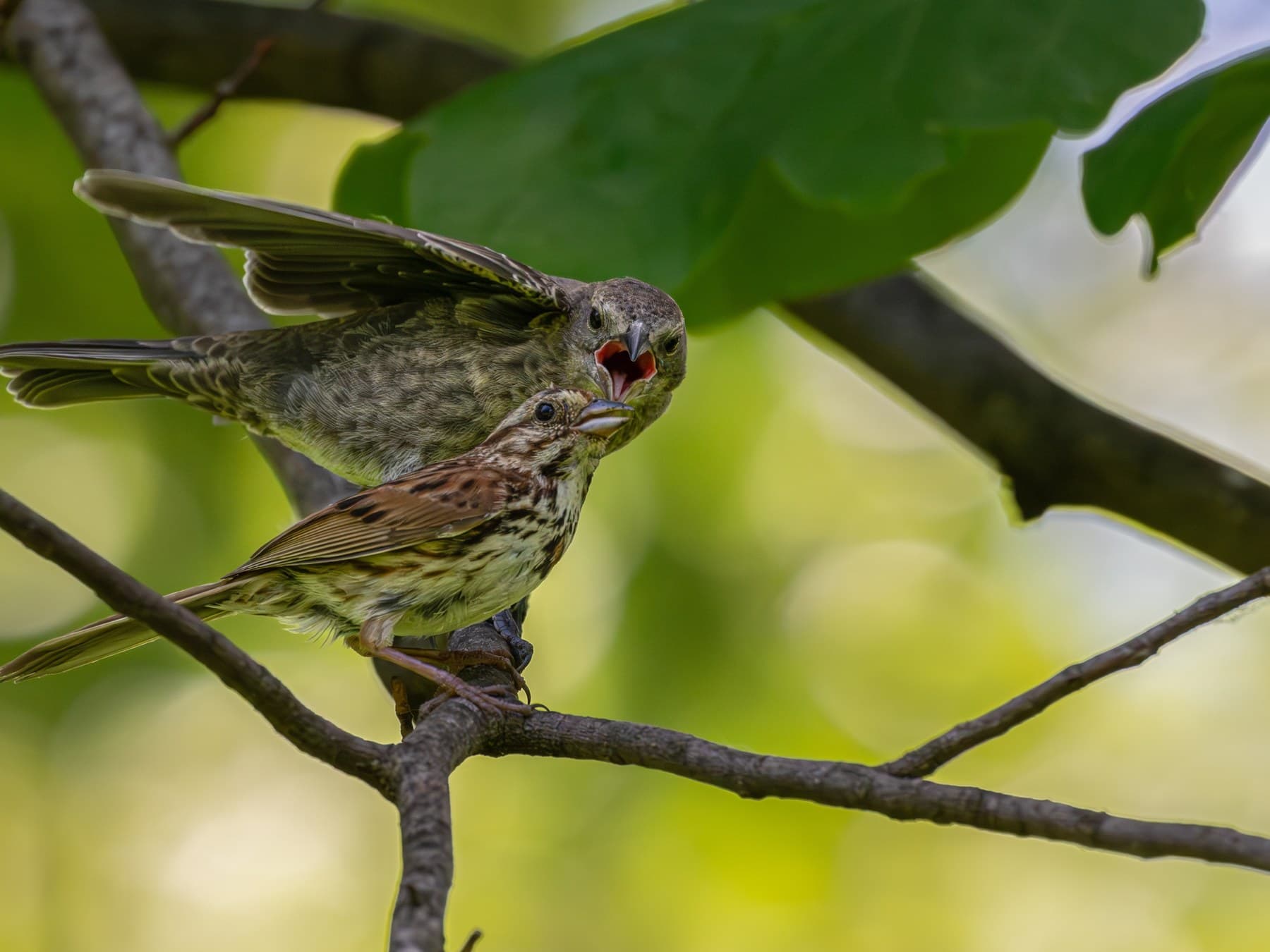
Look for an egg that looks different or out of place, and for unbroken host eggs lying on the ground under an active nest. After hatching, look for one chick that is bigger than the rest and begs hard, showing a bright red mouth; most songbird chicks' mouths are yellow or pale. Because many birds lay eggs like a cowbird's, you may not know until the eggs hatch.2
Should I remove a cowbird egg?
No. The Brown-headed Cowbird is a native bird protected under the Migratory Bird Treaty Act, and taking its eggs is illegal except as federal regulations allow.6, 7 Removing a cowbird egg from a songbird's nest is illegal outside regulated programs, such as permitted work to protect endangered birds.1 A federal depredation order allows control without a federal permit only in set cases, such as protecting an endangered or threatened species where it occurs, and state permits may still be needed.8
Removing the egg can also backfire. Most North American birds do not recognize eggs, but they do keep track of how much is in their nest, and many may desert if eggs go missing; late in the season they may not have time to nest again. "The best solution is to leave cowbirds eggs alone," as cowbird researcher Stephen Rothstein put it.9 Cowbirds may also hit back. In one experiment, cowbirds wrecked 56% of a warbler host's nests when their egg had been removed, against 6% of nests that kept it.10 A 22-year study of Dark-eyed Juncos found no such effect, so this "mafia" behavior may not happen everywhere.11
What happens after a cowbird egg hatches
The cowbird egg hatches after 10 to 12 days, usually first when it was laid in step with the host's own eggs. The chick grows fast and outcompetes its nestmates for food rather than pushing them out: in one study a cowbird chick got 56% of the food brought to the nest, against 22% for each of two host chicks.1 Experiments show the host chicks help it, since with them in the nest the parents bring more food.12
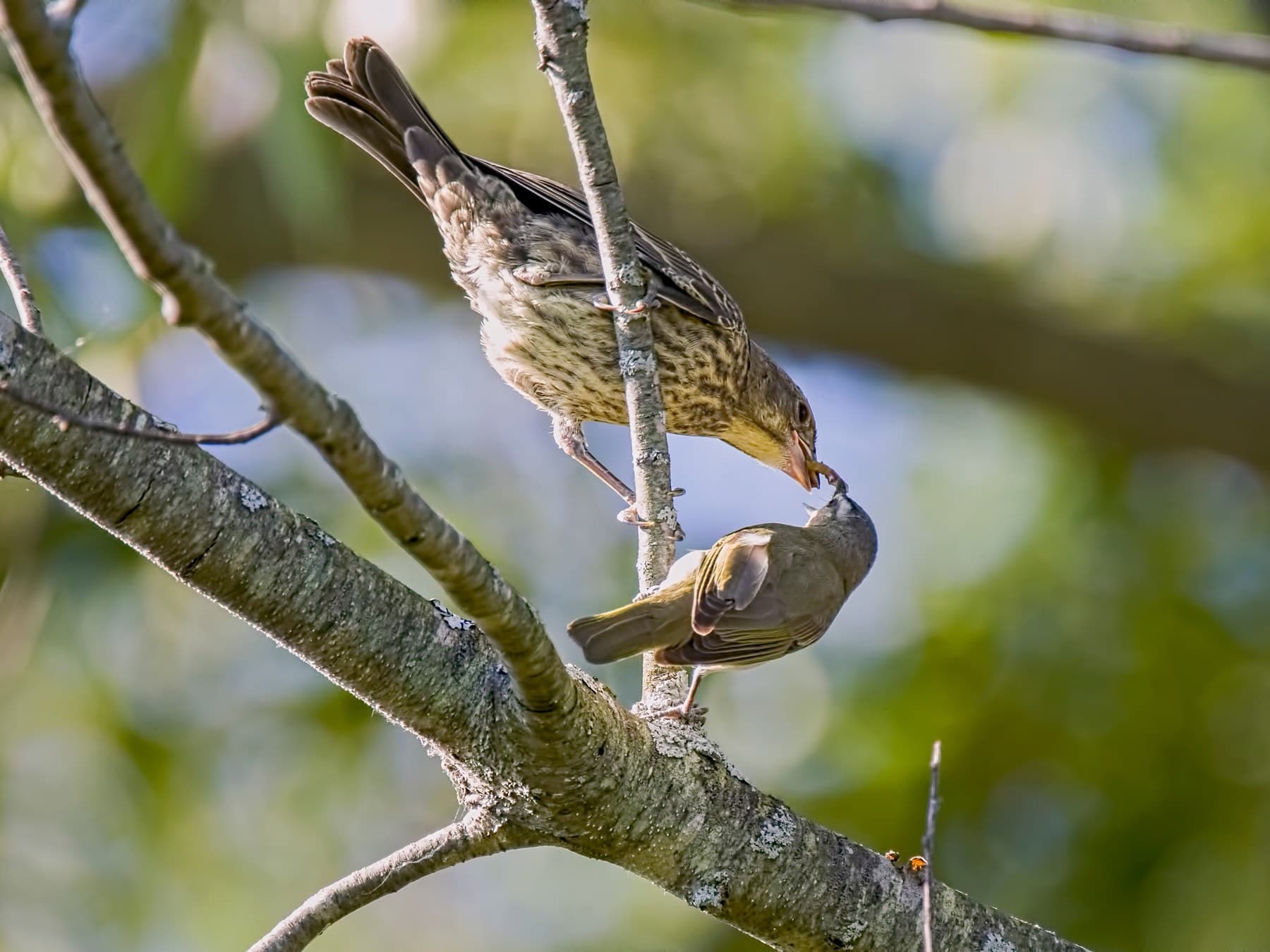
The young cowbird leaves the nest at 8 to 13 days, sometimes before you would expect the host's young to go, and its foster parents feed it for another 1 to 3 weeks, though it is often bigger than they are.1 If one ends up on the ground, its foster parents keep feeding it there; returning it to the nest will most likely just make it jump out again.2
Hosts that reject cowbird eggs
Some birds fight back. American Robins and Gray Catbirds throw the cowbird egg out, Yellow Warblers may bury it under a new nest floor, and other birds desert the nest.1 Red-eyed Vireos, a frequent host, only rarely bury them.13 Robins, catbirds, Blue Jays, Brown Thrashers, Cedar Waxwings, Baltimore Orioles and kingbirds reject cowbird eggs more than 88% of the time.1 In experiments, birds of most species either nearly all accepted or nearly all rejected cowbird eggs, and most accepters rejected fewer than 20% of the eggs placed in their nests.14
Cowbird eggs in a House Finch nest
A cowbird egg in a House Finch nest rarely produces a cowbird. In Ontario, cowbirds parasitized 99 of 406 House Finch nests and 84.8% of the cowbird eggs hatched, but no cowbird was reared: the chicks grew about half as fast as in other hosts' nests and lived 3.2 days on average. The researchers concluded that the wrong diet was the likely cause15; cowbird chicks need insects, and House Finches feed their young mostly on plant food.1, 16 In a Montana study, all 27 cowbird chicks hatched in House Finch nests died within a week.16
Cowbirds, eggs and rare birds
Where cowbirds spread into new places, parasitism hit some already rare birds hard, and managers trapped cowbirds to protect them.1 For Kirtland's Warbler, trapping ran for more than 40 years; it was cut back from 2015 and stopped in 2018, and only 4 of 514 nests were parasitized from 2015 to 2018.17 Trapping alone did not bring the warbler back: its numbers rose only when trapping was combined with managing the young jack pine forest it nests in.2 Habitat loss and fragmentation, not cowbirds, are thought to play the much larger part in songbird declines.2 More about the bird: Brown-headed Cowbird.
Questions
Why do cowbirds lay eggs in other birds' nests?
Because they never build nests or incubate. It is what biologists call an obligate brood parasite: every egg it lays goes into another bird's nest, and the foster parents raise the young.
How many eggs does a cowbird lay?
Up to about 40 in a season, spread over many nests, one to seven on consecutive days with pauses in between.
Do cowbird eggs hatch first?
Usually, when they are laid while the host is still laying: cowbird eggs hatch after 10 to 12 days, sooner than most songbirds' eggs.
Can a host raise its own young as well as a cowbird?
Yes, some of them. The cowbird chick takes a big share of the food, but it usually does not push its nestmates out, and Ovenbird nestlings, for one, often survive alongside a young cowbird.18
Sources
- Chamberlain, M. L., Lowther, P. E., Hauber, M. E. (2026). Brown-headed Cowbird (Molothrus ater), version 2.1. Birds of the World (S. M. Billerman, editor). Cornell Lab of Ornithology. doi:10.2173/bow.bnhcow.02.1
- NestWatch. Brown-headed Cowbirds. NestWatch (Cornell Lab of Ornithology). Accessed 31 October 2026. Source
- López, A. V., Fiorini, V. D., Ellison, K., Peer, B. D. (2018). Thick eggshells of brood parasitic cowbirds protect their eggs and damage host eggs during laying. Behavioral Ecology 29: 965-973. doi:10.1093/beheco/ary045
- Halkin, S. L., Shustack, D. P., DeVries, M. S., Jawor, J. M., Linville, S. U. (2021). Northern Cardinal (Cardinalis cardinalis), version 2.0. Birds of the World (P. G. Rodewald and B. K. Keeney, editors). Cornell Lab of Ornithology. doi:10.2173/bow.norcar.02
- National Audubon Society. Brown-headed Cowbird. Guide to North American Birds. Accessed 31 October 2026. Source
- United States Code. 16 U.S.C. 703: Taking, killing, or possessing migratory birds unlawful. Legal Information Institute, Cornell Law School. Accessed 31 October 2026. Source
- U.S. Fish and Wildlife Service. 50 CFR 10.13: List of migratory birds. Electronic Code of Federal Regulations (via Legal Information Institute). Accessed 31 October 2026. Source
- U.S. Fish and Wildlife Service. 50 CFR 21.150: Depredation order for blackbirds, cowbirds, crows, grackles, and magpies. Electronic Code of Federal Regulations (via Legal Information Institute). Accessed 31 October 2026. Source
- Lewis, A. (2018). Is It Okay to Remove Cowbird Eggs From Host Nests? Audubon Magazine (National Audubon Society). Accessed 31 October 2026. Source
- Hoover, J. P., Robinson, S. K. (2007). Retaliatory mafia behavior by a parasitic cowbird favors host acceptance of parasitic eggs. Proceedings of the National Academy of Sciences 104(11): 4479-4483. doi:10.1073/pnas.0609710104
- Turner, A. M., Hauber, M. E., Reichard, D. G. (2022). Twenty-two years of brood parasitism data do not support the mafia hypothesis in an accepter host of the Brown-headed Cowbird (Molothrus ater). Journal of Field Ornithology 93(4): 4. doi:10.5751/JFO-00180-930404
- Kilner, R. M., Madden, J. R., Hauber, M. E. (2004). Brood parasitic cowbird nestlings use host young to procure resources. Science 305(5685): 877-879. doi:10.1126/science.1098487
- National Audubon Society. Red-eyed Vireo. Guide to North American Birds. Accessed 31 October 2026. Source
- Rothstein, S. I. (1975). Evolutionary rates and host defenses against avian brood parasitism. American Naturalist 109: 161-176. doi:10.1086/282984
- Kozlovic, D. R., Knapton, R. W., Barlow, J. C. (1996). Unsuitability of the House Finch as a host of the Brown-headed Cowbird. The Condor 98(2): 253-258. doi:10.2307/1369143
- Badyaev, A. V., Belloni, V., Hill, G. E. (2020). House Finch (Haemorhous mexicanus), version 1.0. Birds of the World (A. F. Poole, editor). Cornell Lab of Ornithology. doi:10.2173/bow.houfin.01
- Cooper, N. W., Rushing, C. S., Marra, P. P. (2019). Reducing the conservation reliance of the endangered Kirtland's warbler through adaptive management. Journal of Wildlife Management 83: 1297-1305. doi:10.1002/jwmg.21714
- National Audubon Society. Ovenbird. Guide to North American Birds. Accessed 31 October 2026. Source
- National Audubon Society. Northern Cardinal. Guide to North American Birds. Accessed 31 October 2026. Source
- National Audubon Society. Song Sparrow. Guide to North American Birds. Accessed 31 October 2026. Source
- National Audubon Society. Chipping Sparrow. Guide to North American Birds. Accessed 31 October 2026. Source
- National Audubon Society. Red-winged Blackbird. Guide to North American Birds. Accessed 31 October 2026. Source
- National Audubon Society. Eastern Phoebe. Guide to North American Birds. Accessed 31 October 2026. Source
- National Audubon Society. Indigo Bunting. Guide to North American Birds. Accessed 31 October 2026. Source