


Updated 8 Oct 2026
Arizona's 13 Owl Species
By the Birdfact teamChecked by Nathan Cope
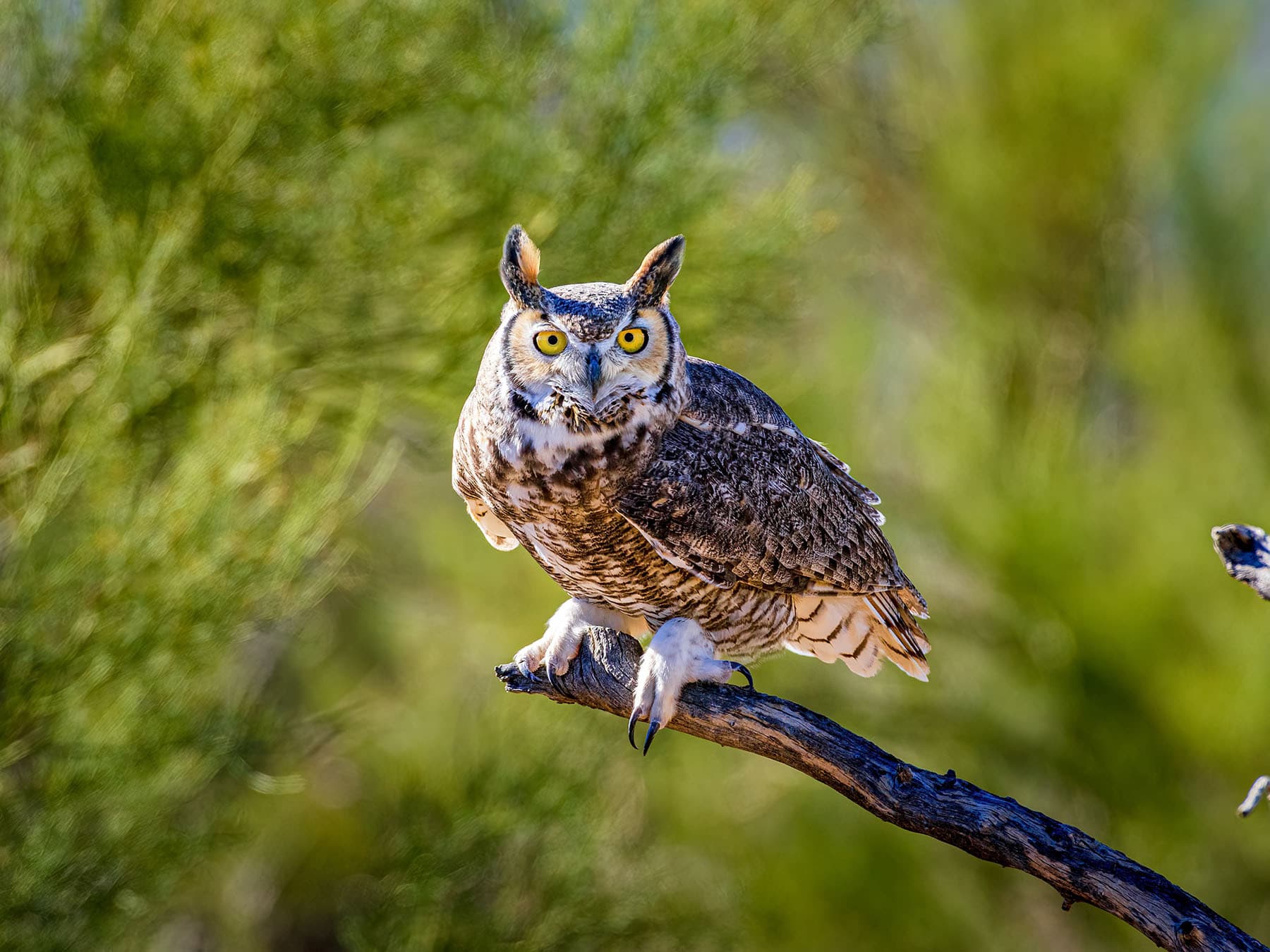
When the Sonoran Desert dims to purple twilight, Arizona's remarkable owl diversity comes alive.
From the tiny Elf Owl - barely bigger than a sparrow - to the commanding Great Horned Owl, these nocturnal hunters have adapted perfectly to the state's varied landscapes, from the low desert valleys to the forested peaks of the Sky Islands.
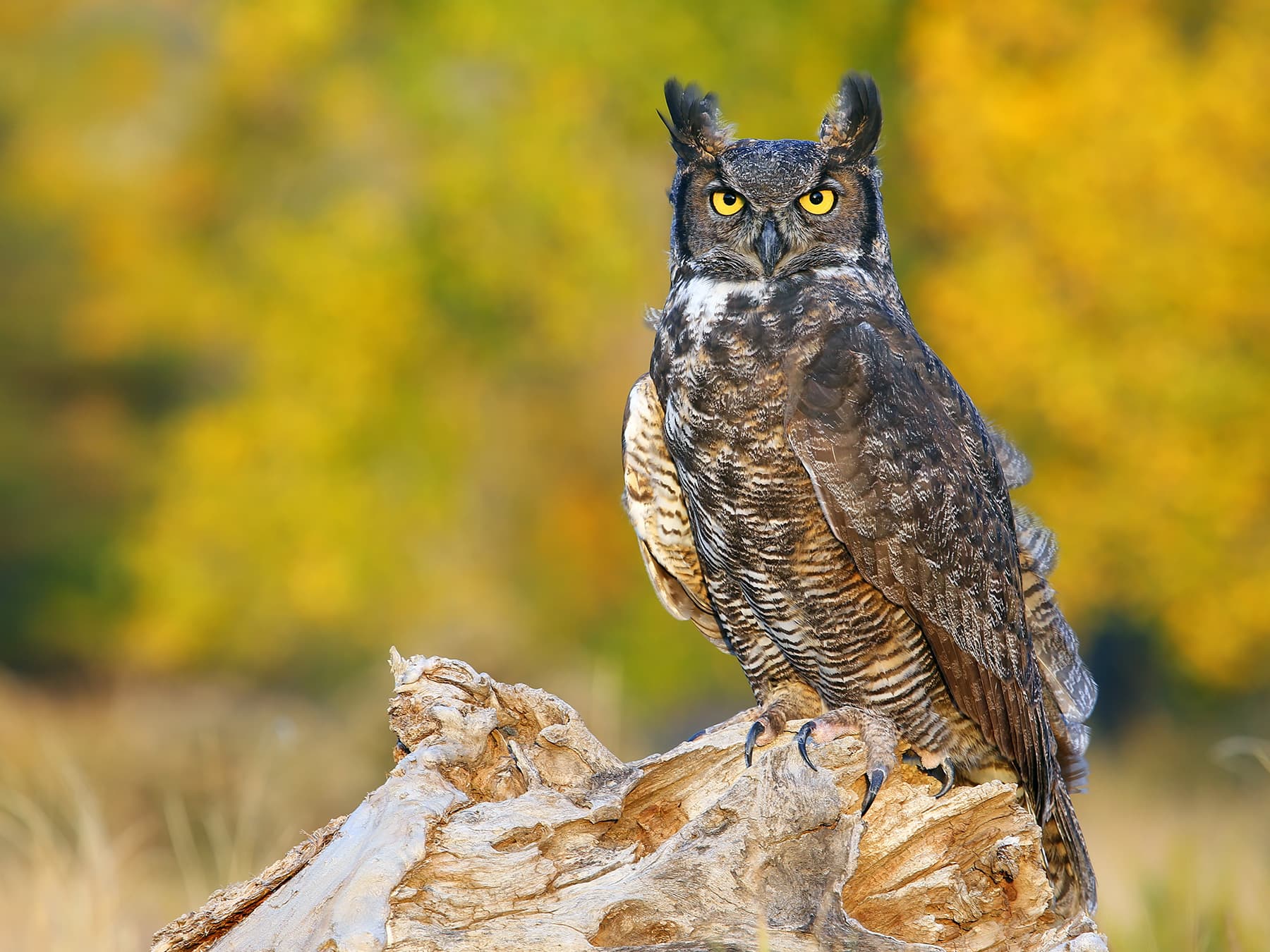
Great Horned Owl
Bubo virginianus
Regional Rarity Score
Ranges from 0 (common) to 100 (extremely rare) in this region
The Great Horned Owl stands as Arizona's most frequently encountered owl species.
These powerful predators are active year-round, with their distinctive "hoo-h'HOO-hoo-hoo" echoing across desert canyons and suburban neighborhoods alike, from Phoenix's urban parks to remote mountain ranges.
They're particularly vocal during their peak breeding season in April when pairs can be spotted silhouetted against the sunset, calling back and forth from prominent perches.
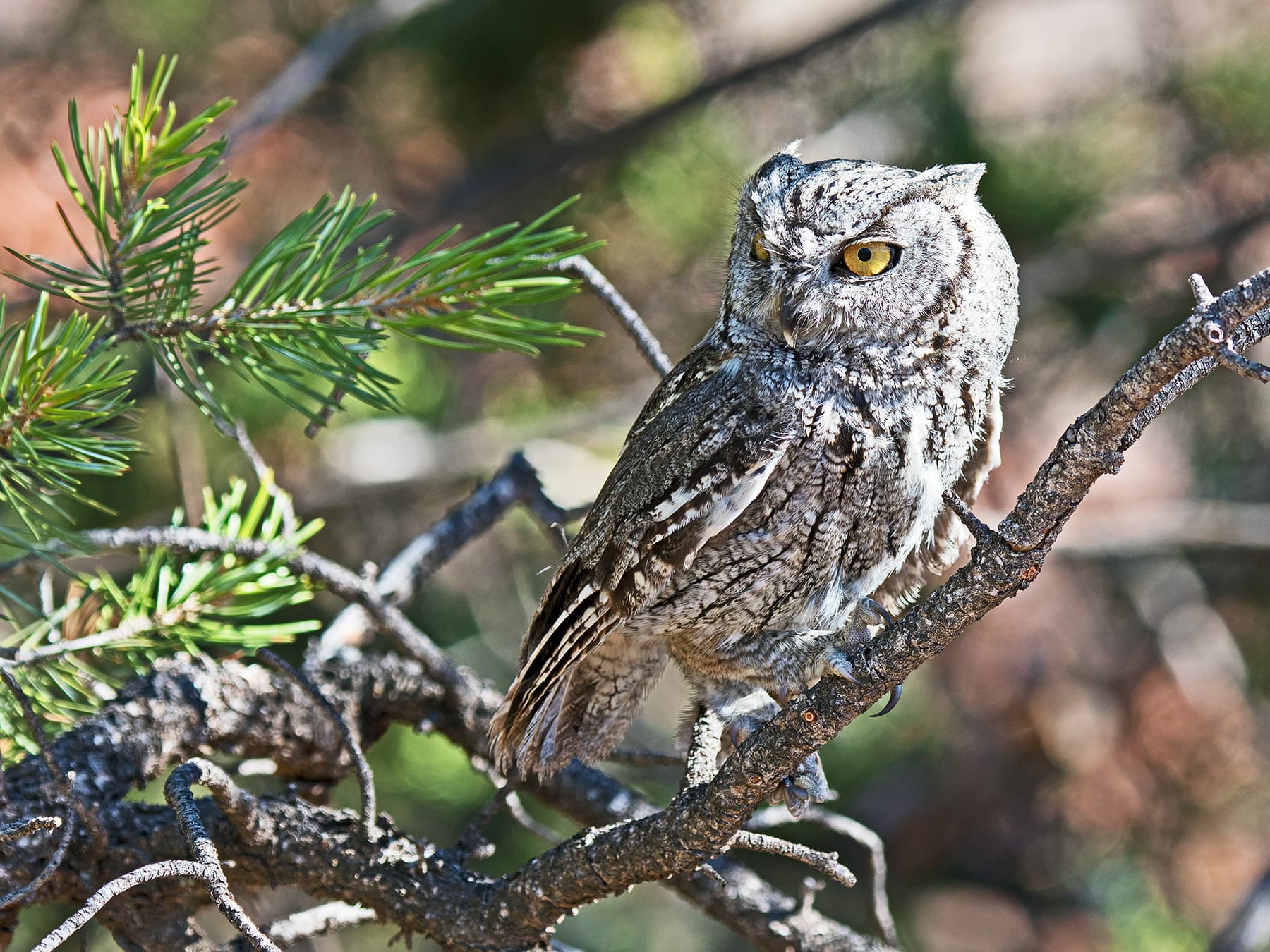
Western Screech-owl
Megascops kennicottii
Regional Rarity Score
Ranges from 0 (common) to 100 (extremely rare) in this region
For those seeking Western Screech-Owls, these year-round residents reach their peak activity in May.
Listen for their series of accelerating, bouncing-ball-like hoots in desert washes and riparian areas throughout the Sonoran and Chihuahuan desert regions.
They're cavity nesters, often taking up residence in holes left by woodpeckers in saguaros or large trees.
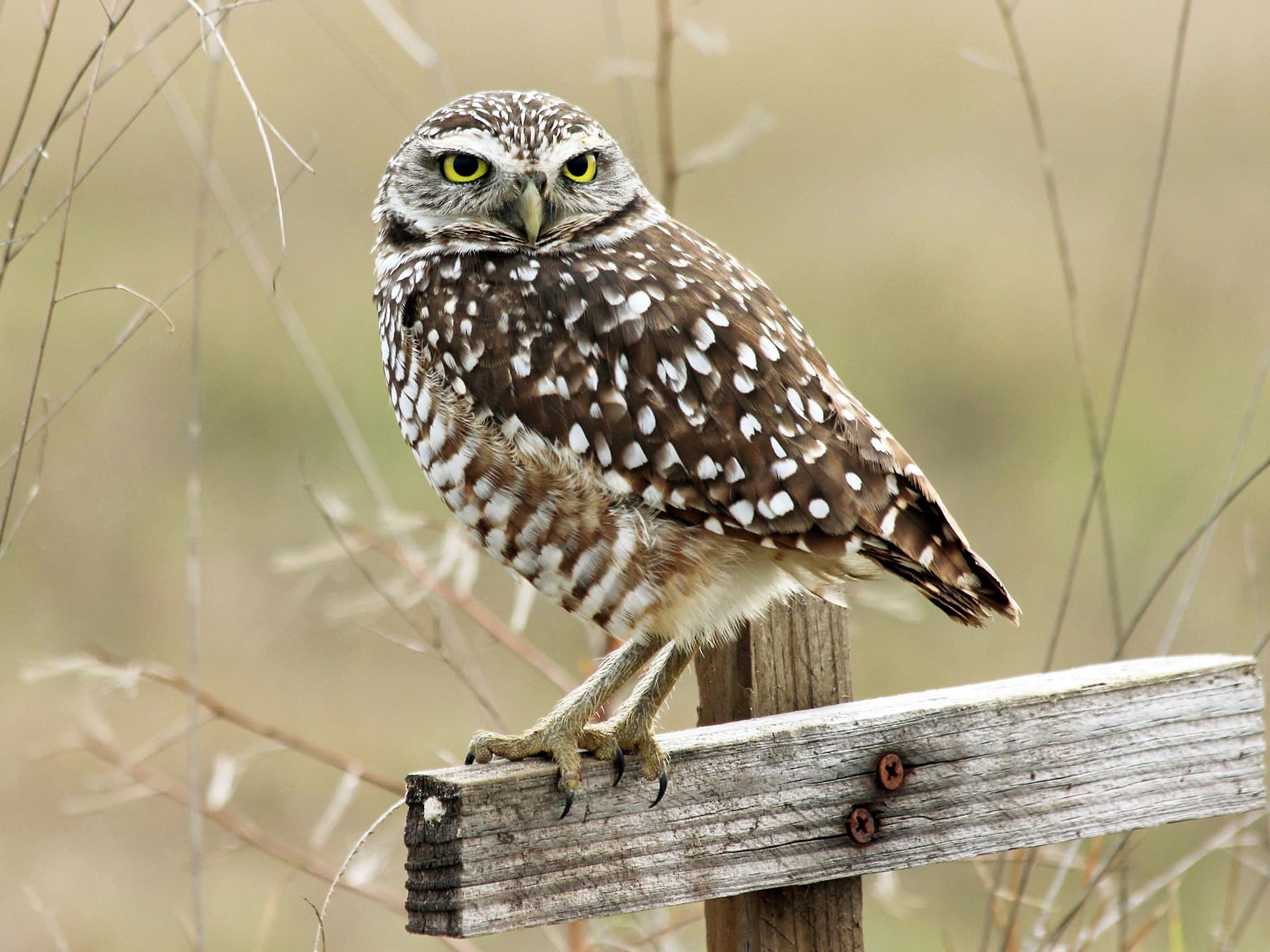
Burrowing Owl
Athene cunicularia
Regional Rarity Score
Ranges from 0 (common) to 100 (extremely rare) in this region
In the lower desert regions, particularly around Phoenix, Tucson, and Yuma's agricultural areas, Burrowing Owls offer a surprising departure from typical owl behavior.
Unlike their tree-dwelling cousins, these long-legged owls make their homes in abandoned ground squirrel burrows.
They're most active during July, often visible during daylight hours standing sentinel near their burrow entrances, bobbing up and down when disturbed.
Watch for them in open areas near agricultural fields or desert scrub, where they hunt grasshoppers and small rodents.
Elf Owl
Micrathene whitneyi
Regional Rarity Score
Ranges from 0 (common) to 100 (extremely rare) in this region
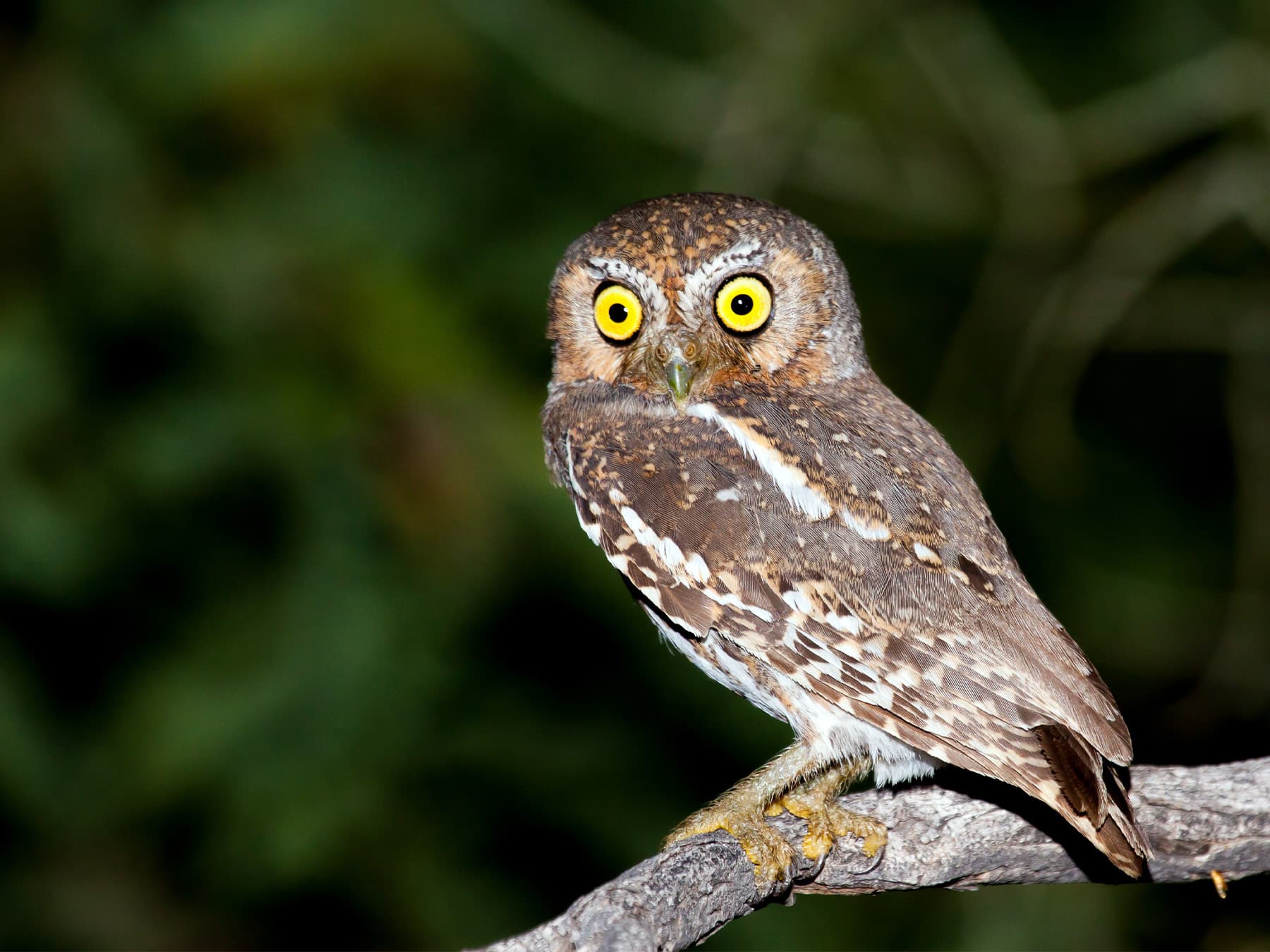
The tiny Elf Owl, arriving in spring and staying through early fall, claims the title of smallest owl in the world.
These charismatic birds peak in numbers during May, often taking up residence in old woodpecker holes in saguaro cacti throughout the Sonoran Desert regions.
During summer evenings, their high-pitched chuckling calls fill the desert air as they dart after moths and flying insects.
Barn Owl
Tyto alba
Regional Rarity Score
Ranges from 0 (common) to 100 (extremely rare) in this region
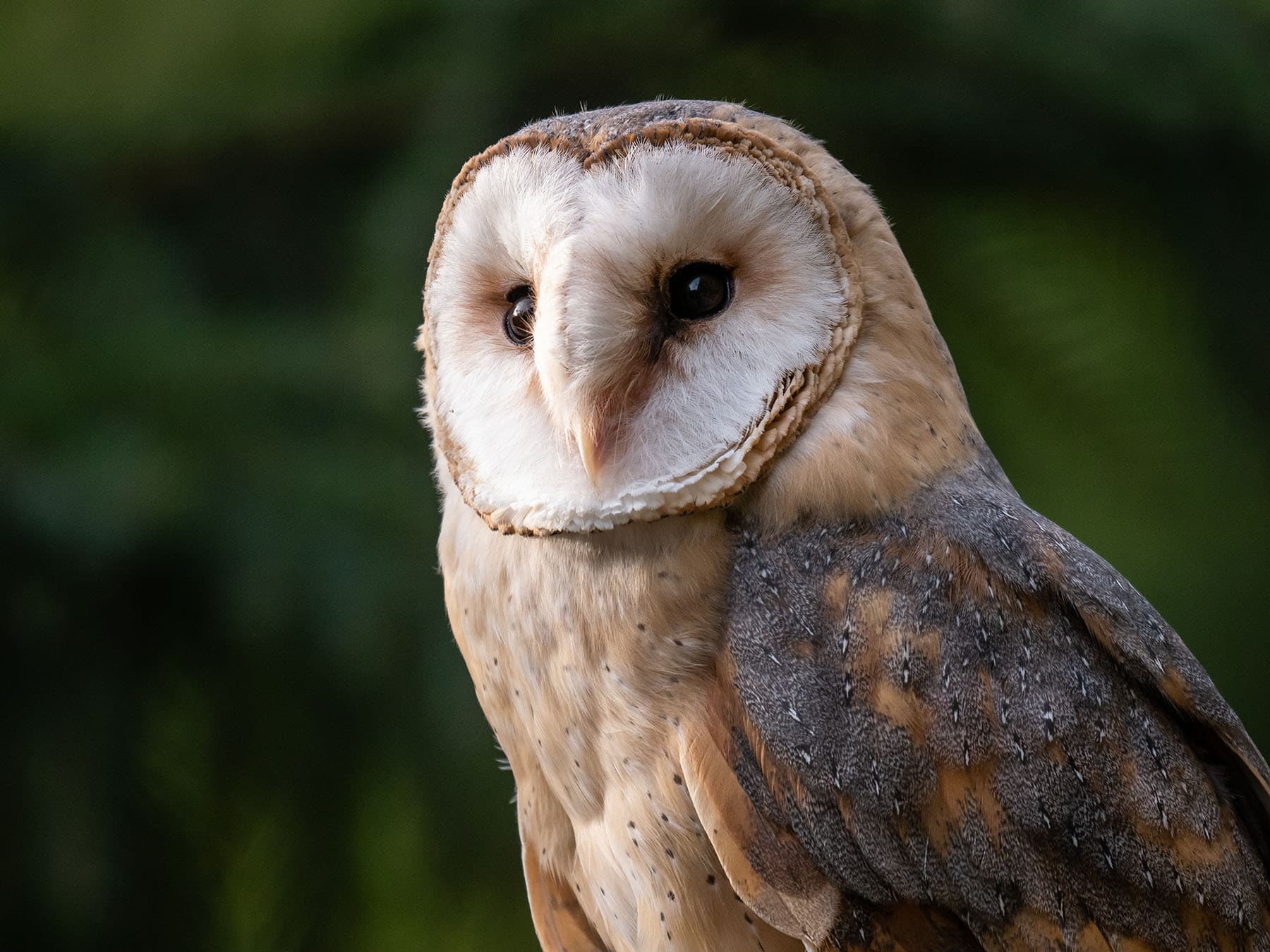
American Barn Owls, with their distinctive heart-shaped faces, are present year-round but become particularly active in September.
These ghost-like birds can often be spotted quartering low over grasslands at dusk. Their pale forms are visible in the fading light as they hunt for rodents.
The slightest rustle in the grass below can trigger their precise, silent attack.
Northern Pygmy-owl
Glaucidium gnoma
Regional Rarity Score
Ranges from 0 (common) to 100 (extremely rare) in this region
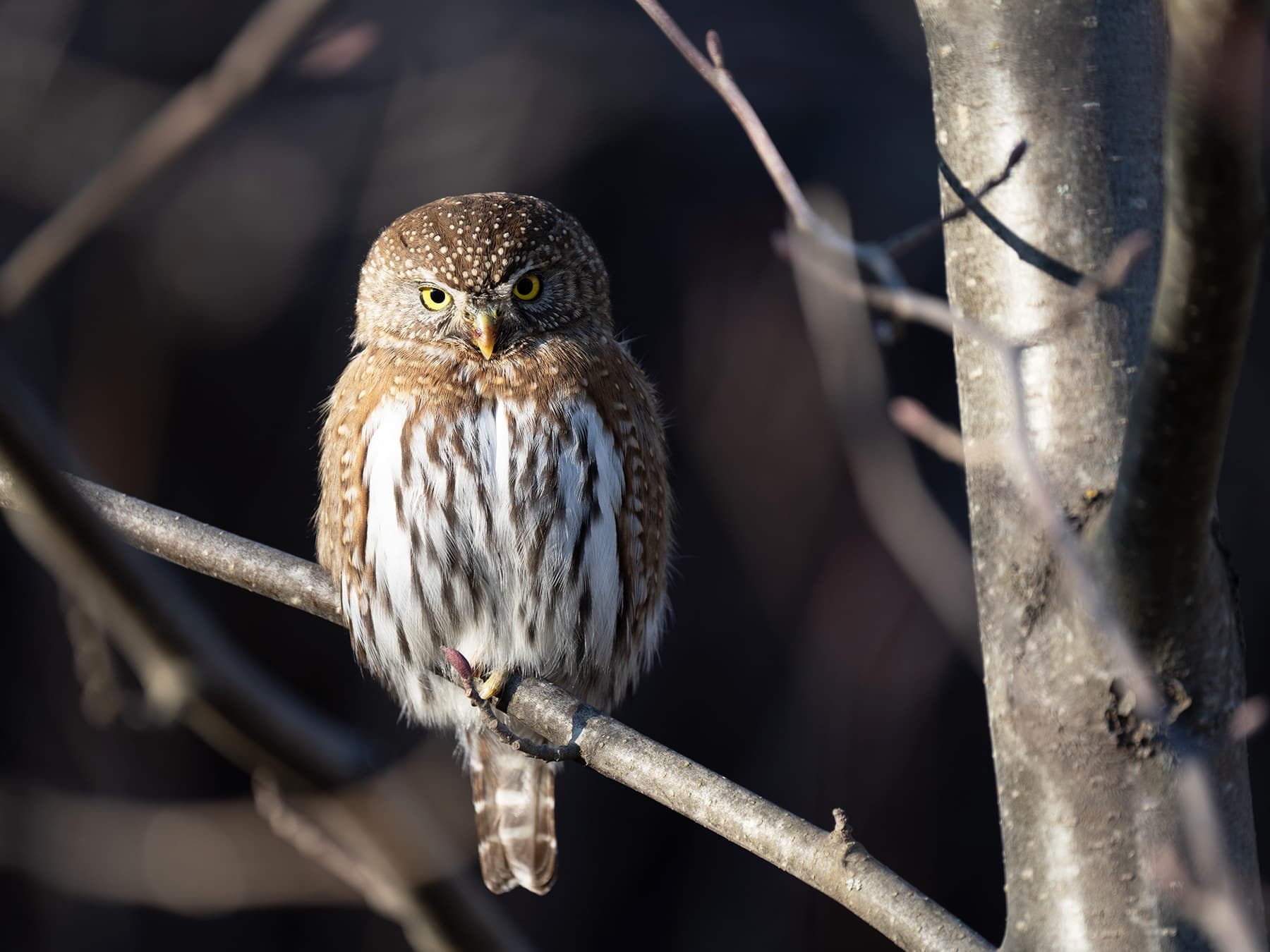
The Northern Pygmy-owl breaks the nocturnal rule, frequently hunting during daylight hours.
These fierce little predators, which are present year-round with a peak in May, often give themselves away when mobbed by small songbirds in pine-oak woodlands and higher elevation forests.
Watch for a small, round-headed owl perched in the open, sometimes clutching prey as large as itself.
Whiskered Screech-owl
Megascops trichopsis
Regional Rarity Score
Ranges from 0 (common) to 100 (extremely rare) in this region
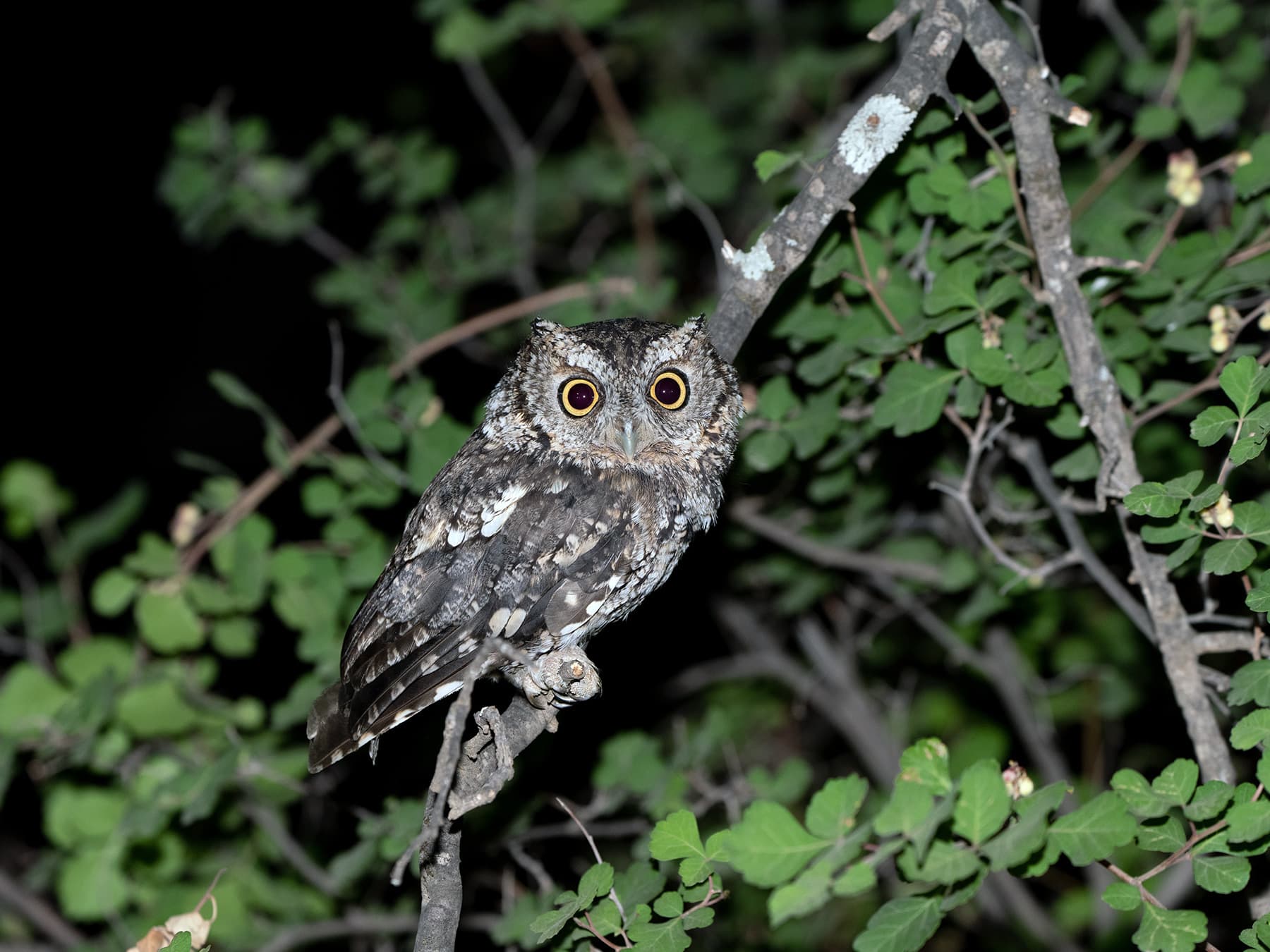
The Whiskered Screech-Owl, a year-round resident of Arizona's Sky Islands, becomes most vocal during their May breeding season.
These small owls prefer oak woodlands and pine-oak forests in mountain ranges like the Chiricahuas and Huachucas, where their series of hollow whistles carries through the mountain air.
They're masters of camouflage, pressing their feathers close to their bodies to mimic broken branches when roosting.
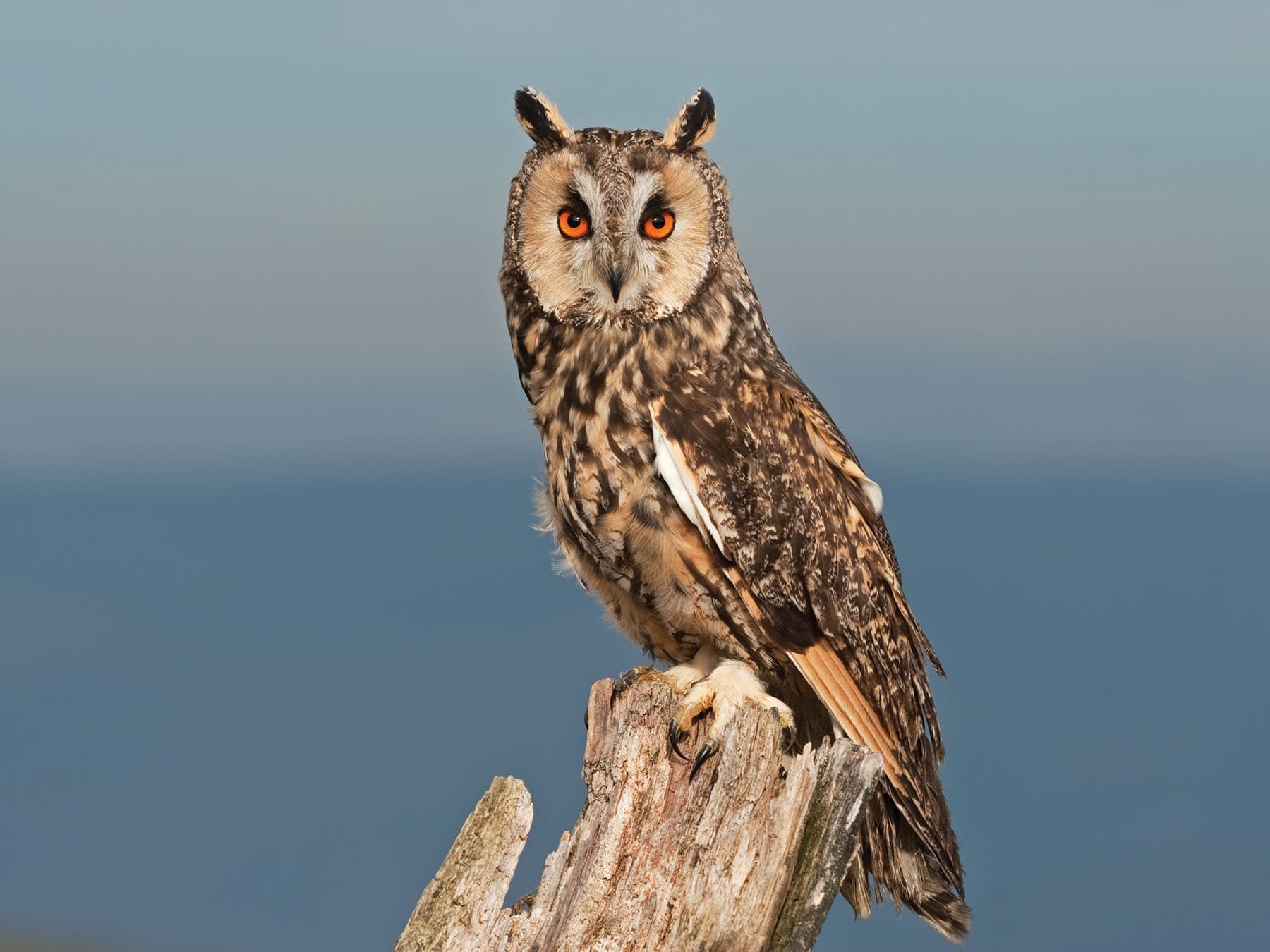
Long-eared Owl
Asio otus
Regional Rarity Score
Ranges from 0 (common) to 100 (extremely rare) in this region
The uncommon Long-eared Owl makes its presence known primarily during winter and early spring, with numbers peaking in December. Look for these slim, elongated owls roosting in dense stands of trees, often in groups.
Their excellent camouflage and tendency to press their feathers tightly against their bodies make them remarkably difficult to spot among the branches.
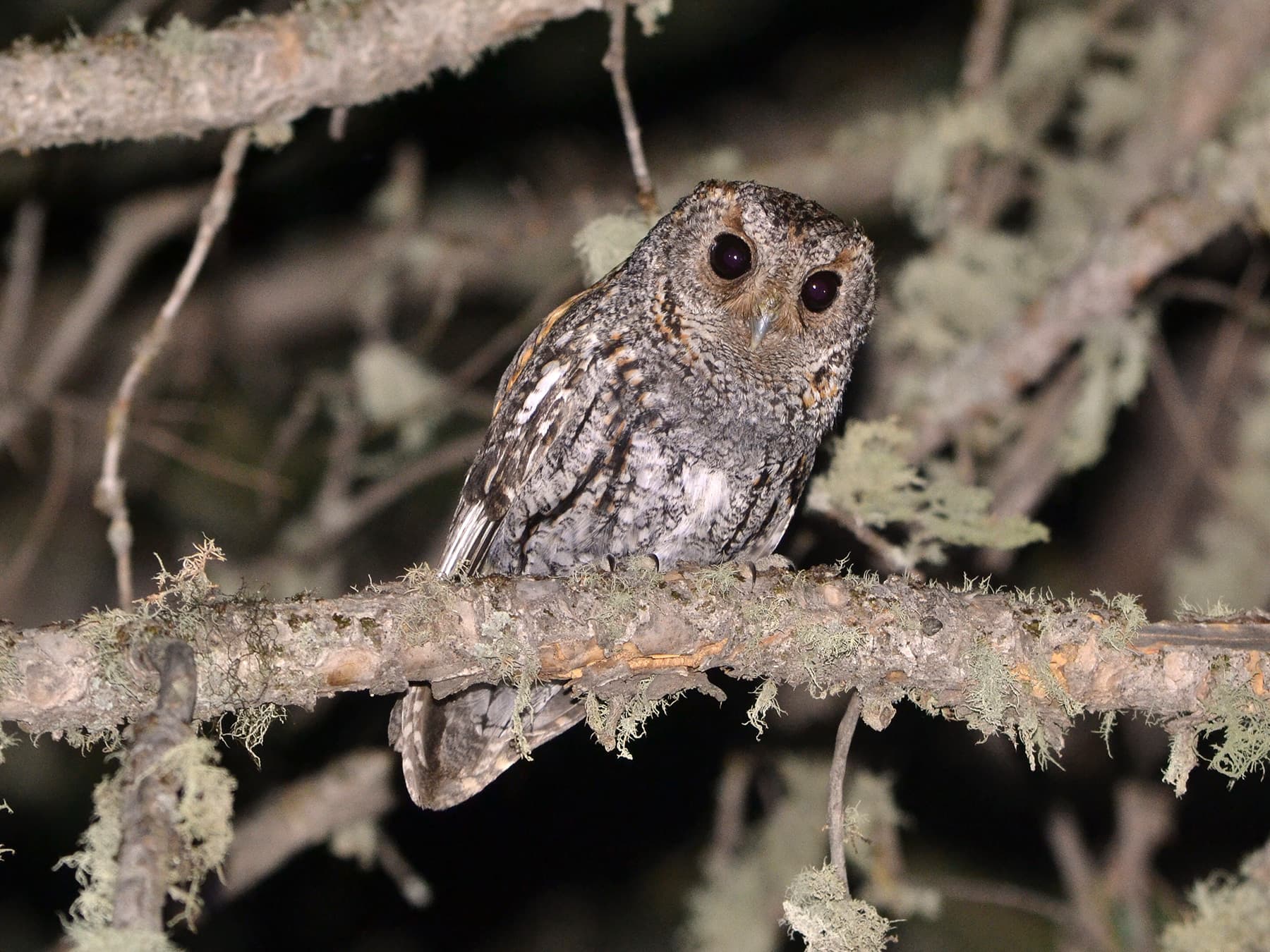
Flammulated Owl
Psiloscops flammeolus
Regional Rarity Score
Ranges from 0 (common) to 100 (extremely rare) in this region
The rare Flammulated Owl arrives in spring, with peak numbers in May.
Despite their scarcity, these small owls can be detected by their low-pitched hooting calls in high-elevation pine forests of the Mogollon Rim and White Mountains.
They're insect specialists, focusing almost entirely on moths and beetles they snatch from the air or glean from foliage.
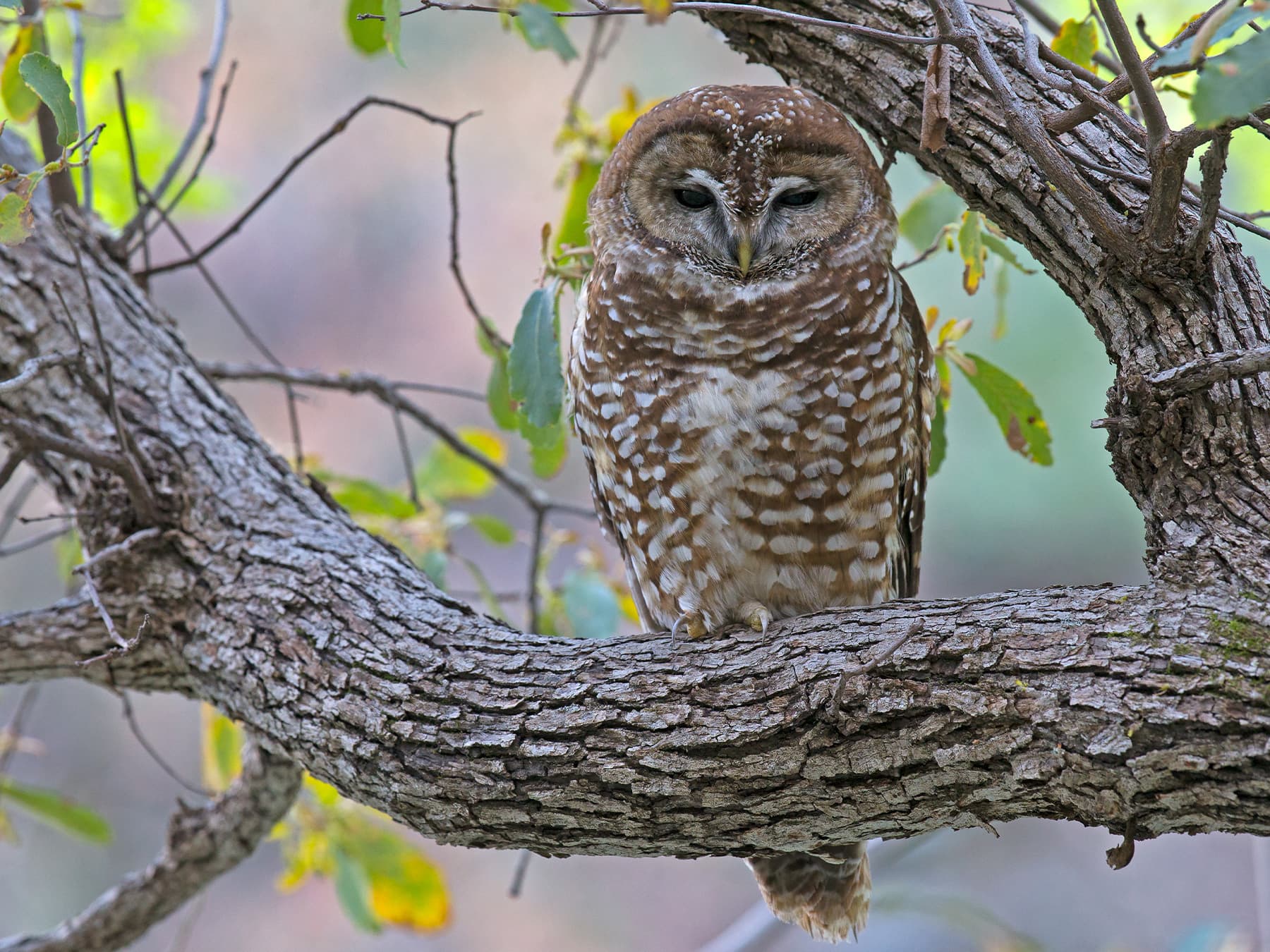
Spotted Owl
Strix occidentalis
Regional Rarity Score
Ranges from 0 (common) to 100 (extremely rare) in this region
The Spotted Owl, while not common, maintains a presence in Arizona's deep canyon forests from spring through fall, peaking in June.
These chocolate-brown owls with white spots prefer old-growth forests in steep-walled canyons. They hunt primarily at night, though they can sometimes be spotted roosting during the day in dense shade.
Rare Visitors Worth Watching For
While Arizona hosts many regular owl residents, there are a few elusive species that make occasional appearances.
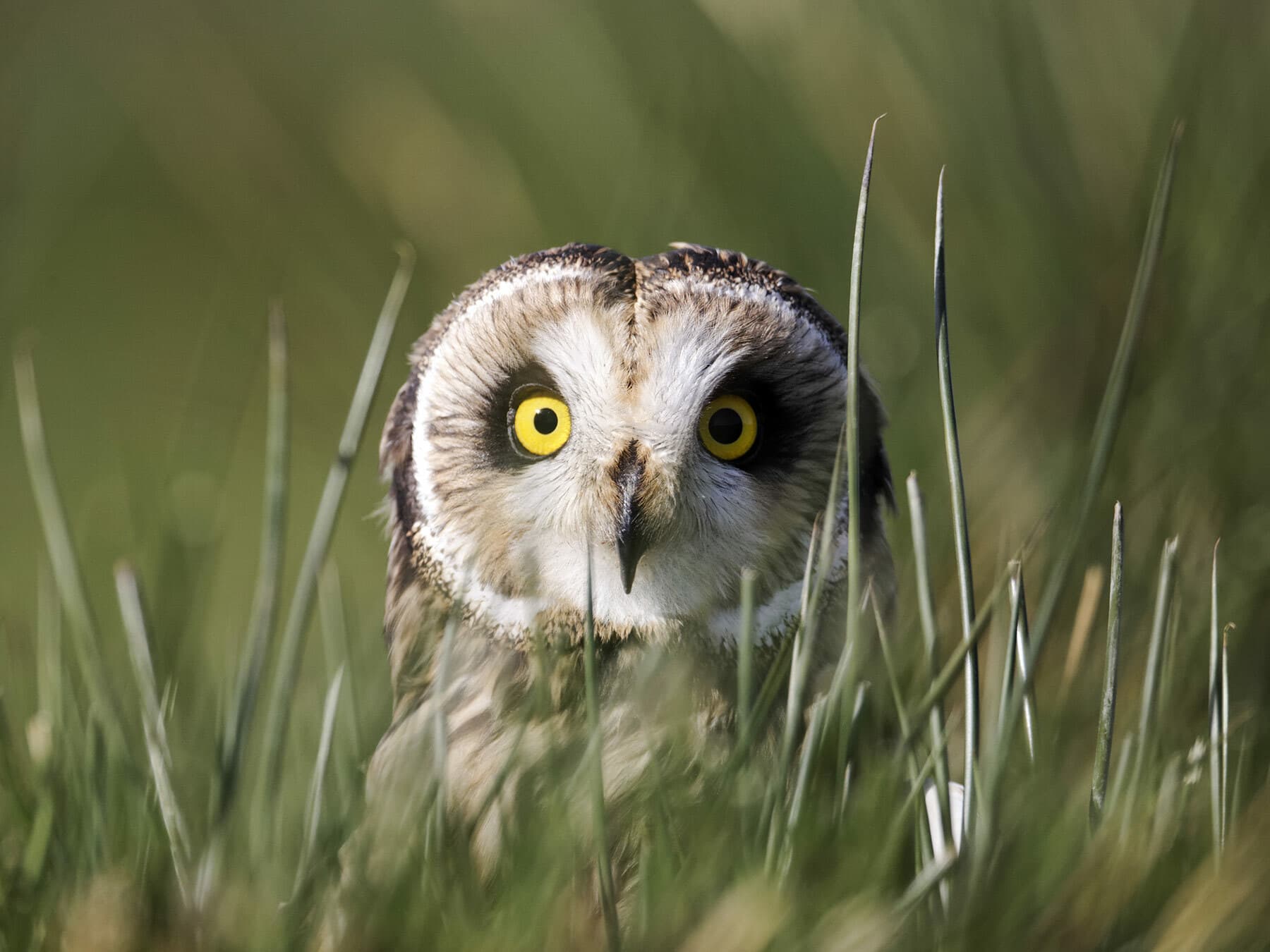
Short-eared Owl
Asio flammeus
Regional Rarity Score
Ranges from 0 (common) to 100 (extremely rare) in this region
The Short-eared Owl occasionally appears during winter months, particularly in January.
These ground-roosting owls might be spotted hunting low over grasslands and agricultural areas at dawn and dusk.
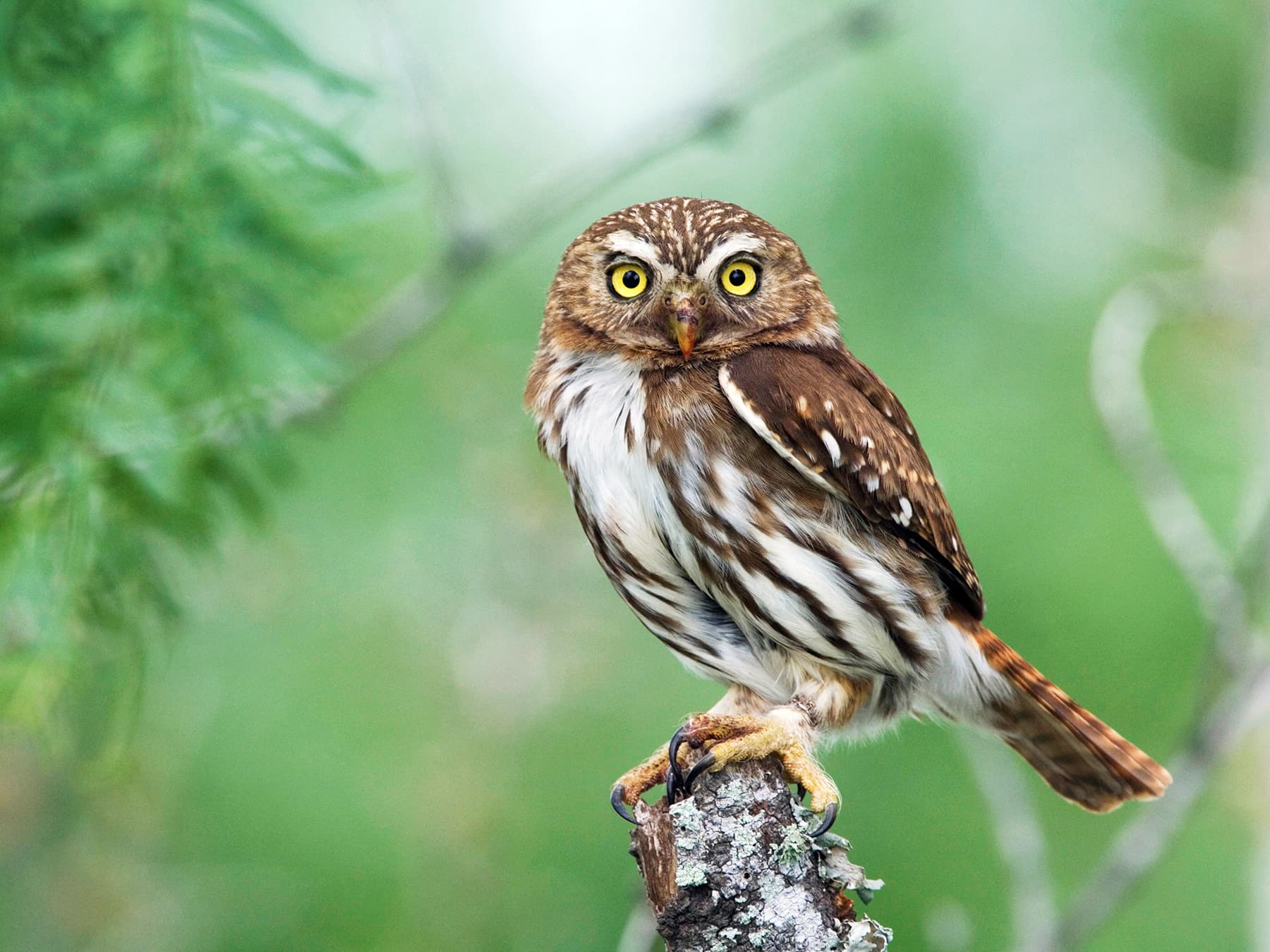
Ferruginous Pygmy-owl
Glaucidium brasilianum
Regional Rarity Score
Ranges from 0 (common) to 100 (extremely rare) in this region
The Ferruginous Pygmy-owl, historically native to southern Arizona, now makes only rare appearances, typically during August.
These tiny predators prefer dense mesquite bosques and Sonoran Desert scrub, where their high-pitched tooting calls might reveal their presence during daylight hours.
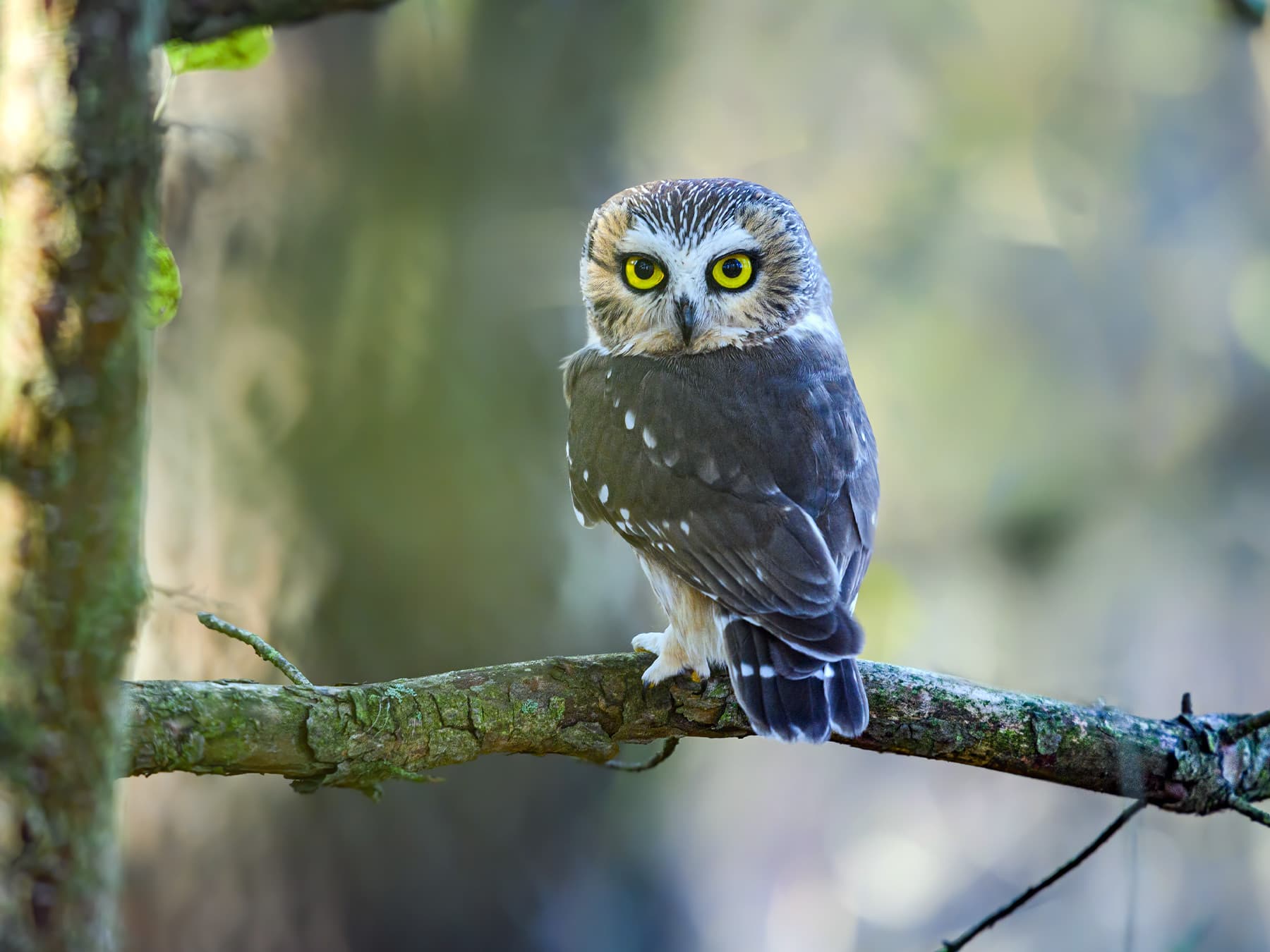
Northern Saw-whet Owl
Aegolius acadicus
Regional Rarity Score
Ranges from 0 (common) to 100 (extremely rare) in this region
The diminutive Northern Saw-whet Owl makes brief and rare appearances during spring migration, with peak sightings in April and May.
These secretive owls prefer dense coniferous forests at higher elevations, where their repetitive tooting calls might be heard on spring nights.
Finding Arizona's Owls
Detecting these remarkable birds requires patience and often a willingness to venture out after dark.
Their distinctive calls, silhouettes, and behaviors offer clues to their presence, turning every nighttime excursion into a potential owl encounter.
From desert floor to mountain peak, Arizona's owls have found their niches in every habitat the state has to offer.
Common Questions About Arizona Owls
Are owls protected in Arizona?
Yes, all owl species in Arizona are protected under the Migratory Bird Treaty Act. This means it's illegal to harm, harass, or possess any owl, their eggs, or their nests without proper permits. Some species, like the Spotted Owl, have additional protections due to their sensitive status.
What is the most common owl in Arizona?
The Great Horned Owl is Arizona's most frequently encountered owl species. They're found year-round across the state, from urban areas to remote wilderness. The Western Screech-Owl and Burrowing Owl are also common residents, though not as frequently spotted as their larger cousin.
What time of year can you see owls in Arizona?
Owl viewing opportunities exist year-round in Arizona, but timing depends on the species:
- Year-round residents: Great Horned Owl, Western Screech-Owl, Burrowing Owl, American Barn Owl, Northern Pygmy-Owl, and Whiskered Screech-Owl
- Spring/Summer visitors (March-October): Elf Owl, Spotted Owl, and Flammulated Owl
- Winter visitors (November-March): Long-eared Owl is most common in winter months
Peak activity months vary by species, but May tends to be an excellent month for owl diversity in Arizona
Birds in this article
13 birds- Ferruginous Pygmy-owlGlaucidium brasilianum15–19 cm · owls
- Northern Pygmy-owlGlaucidium gnoma15–17 cm · owls
- Spotted OwlStrix occidentalis41–48 cm · owls
See all 13 birds
- Barn OwlTyto alba33–39 cm · barn owls
- Elf OwlMicrathene whitneyi13–15 cm · owls
- Burrowing OwlAthene cunicularia19–25 cm · owls
- Short-eared OwlAsio flammeus34–43 cm · owls
- Western Screech-owlMegascops kennicottii19–25 cm · owls
- Great Horned OwlBubo virginianus46–63 cm · owls
- Flammulated OwlPsiloscops flammeolus15–17 cm · owls
- Whiskered Screech-owlMegascops trichopsis18–23 cm · owls
- Northern Saw-whet OwlAegolius acadicus17–21 cm · owls
- Long-eared OwlAsio otus35–40 cm · owls