


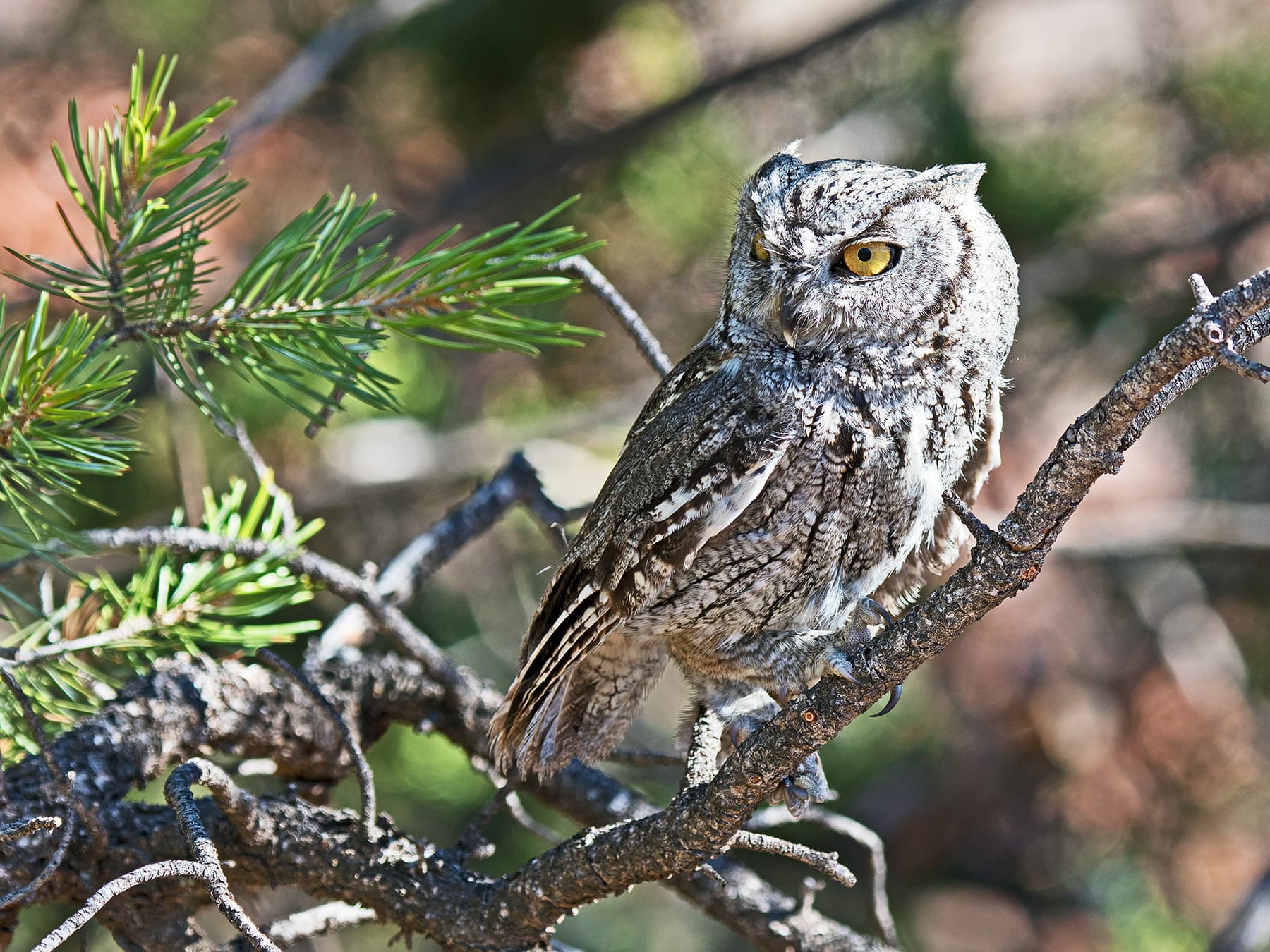
Western Screech-owl
Western Screech Owl · Megascops kennicottii
By the Birdfact teamChecked by Nathan Cope
On this page14 sections
How to recognise it
What do Western Screech-Owls look like?
Among western screech-owl populations in North America, there is considerable variation in plumage color, depending on geographical location.
In the northwest, the predominant coloring is brown or gray-brown, with coastal populations showing a reddish wash. Further south, in the southern desert regions, most western-screech owls are a darker gray.
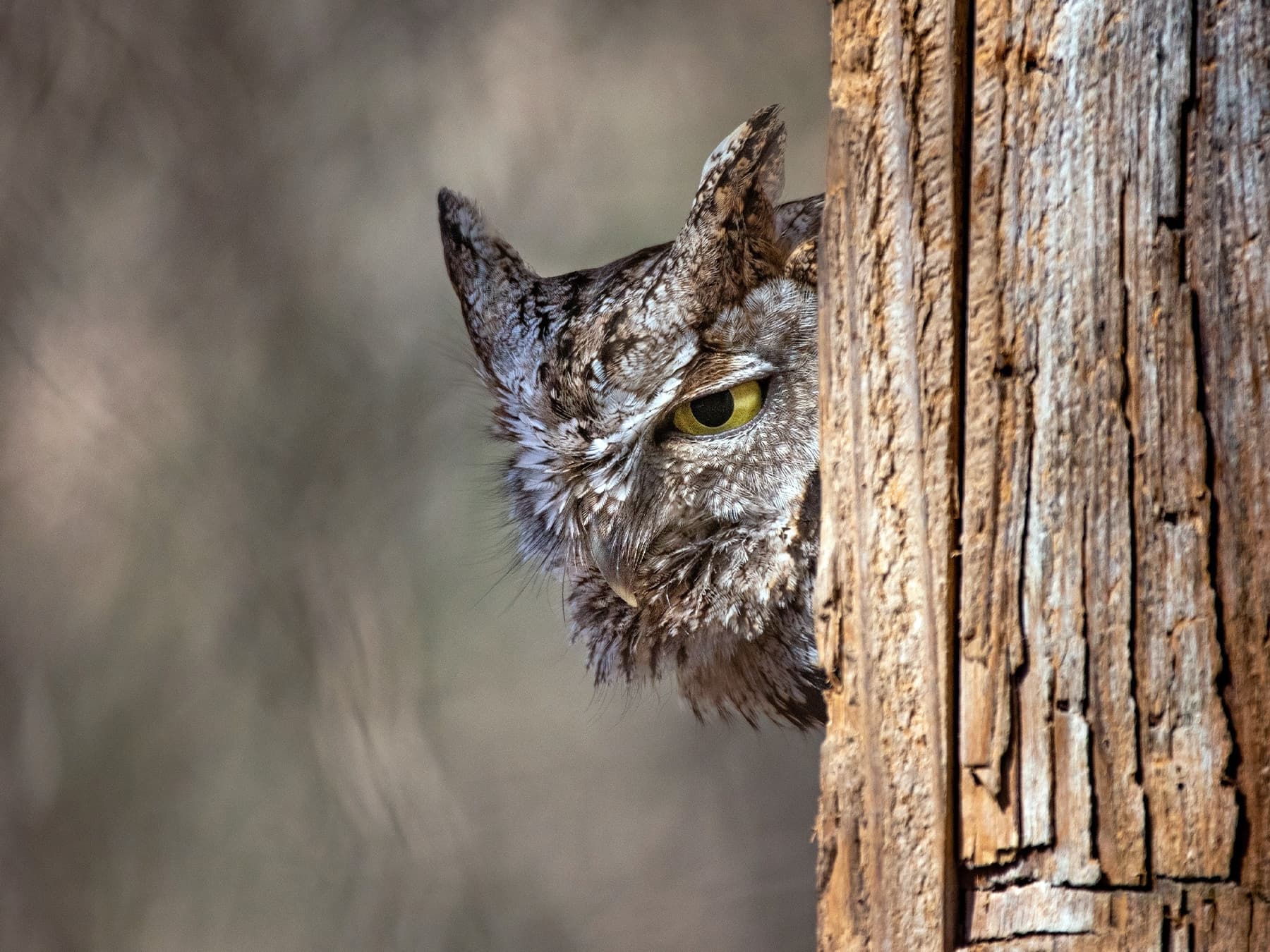
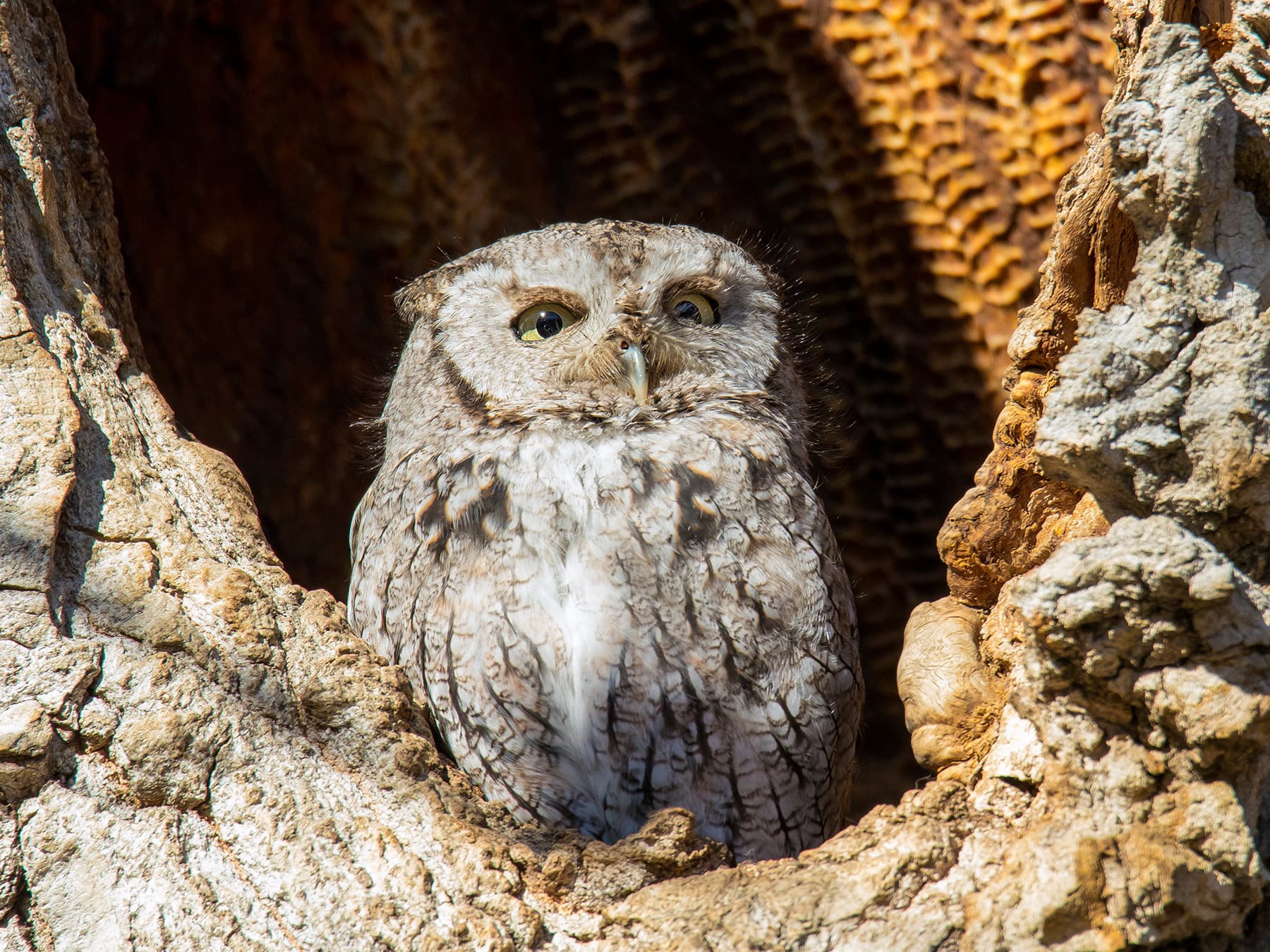
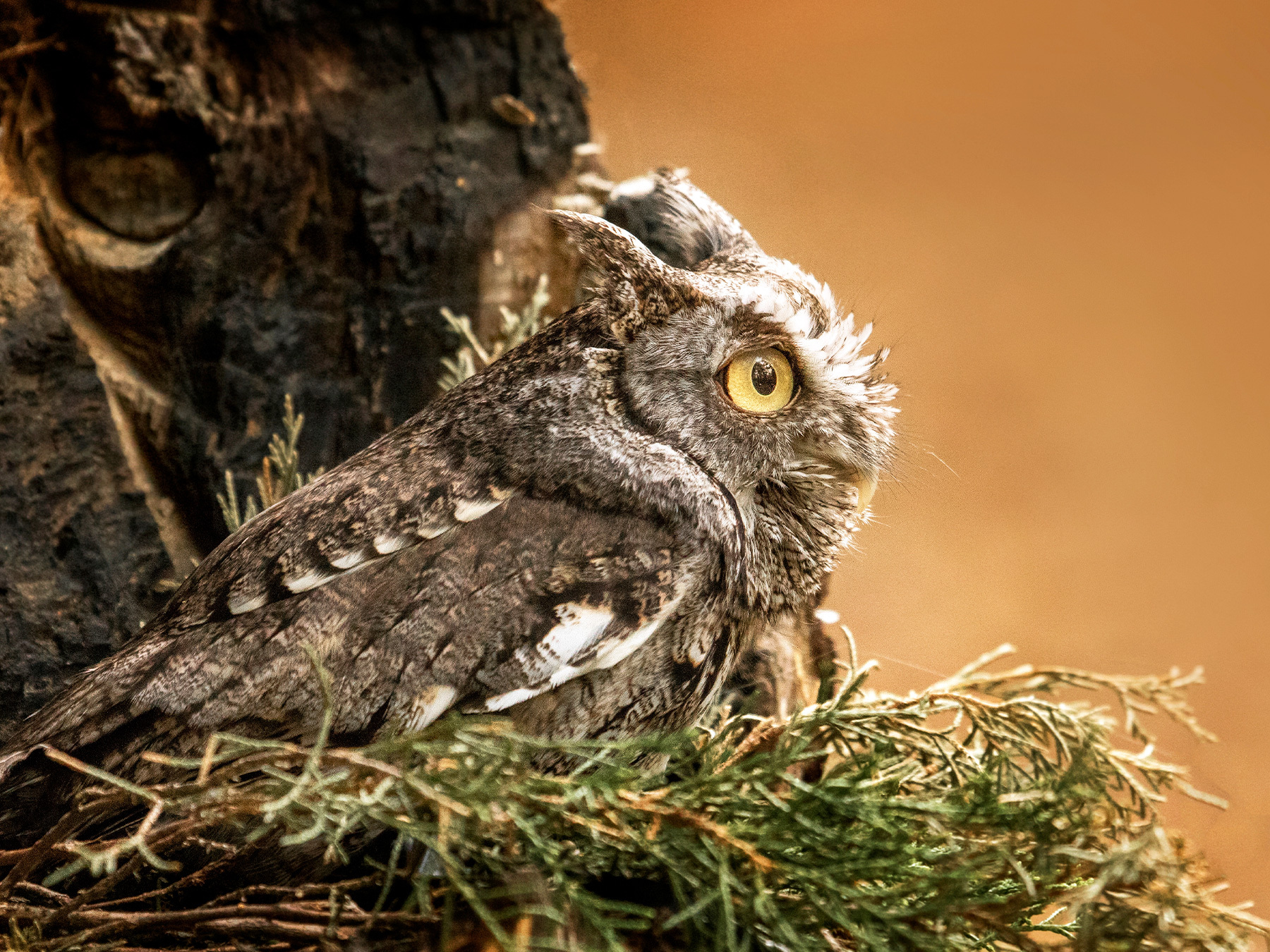
All variations have pronounced ear tufts, which are visible when in a state of heightened alert. A darker ring surrounds the facial disc, which is paler in comparison to the streaky facial markings of the head and throat.
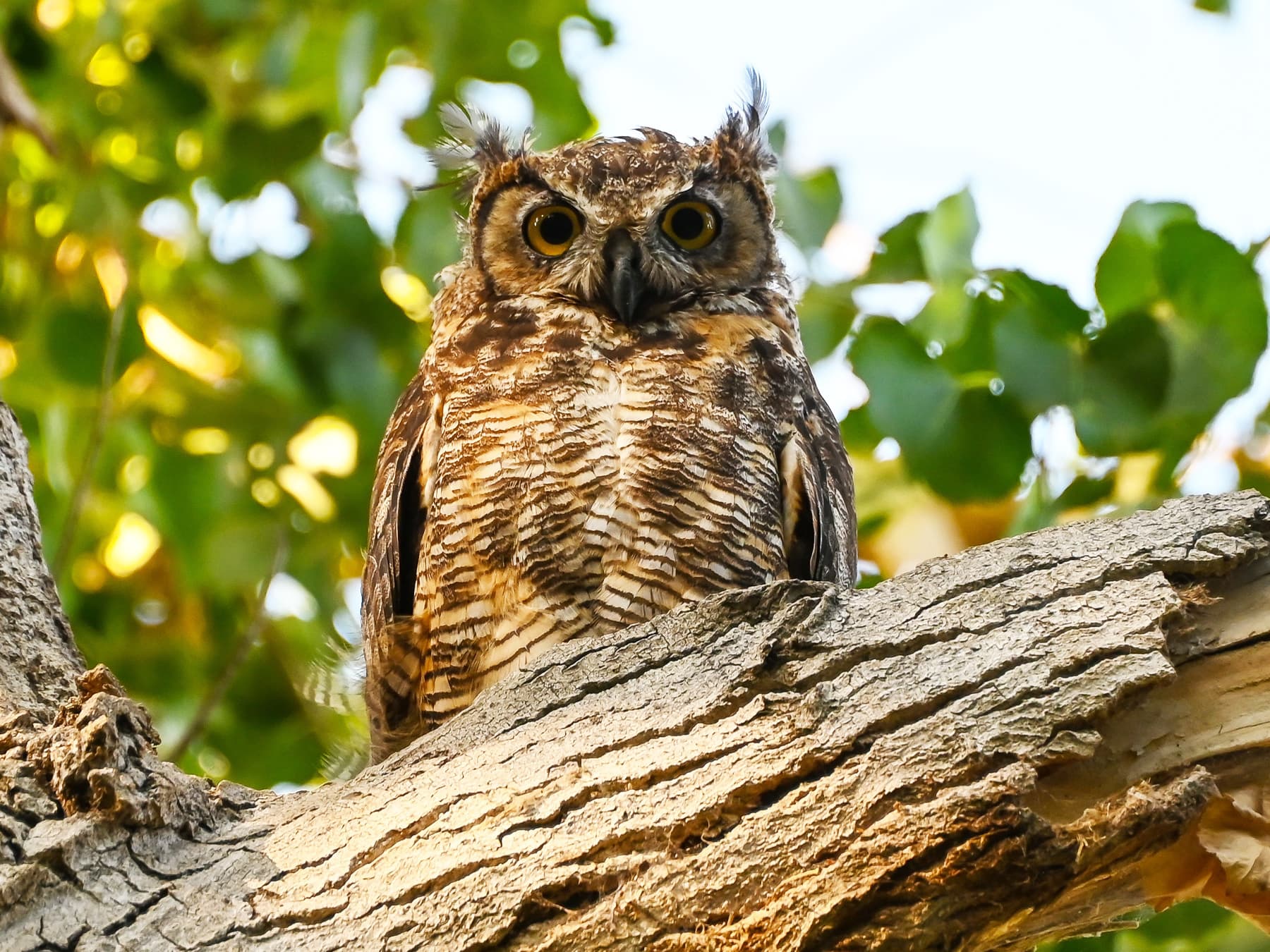
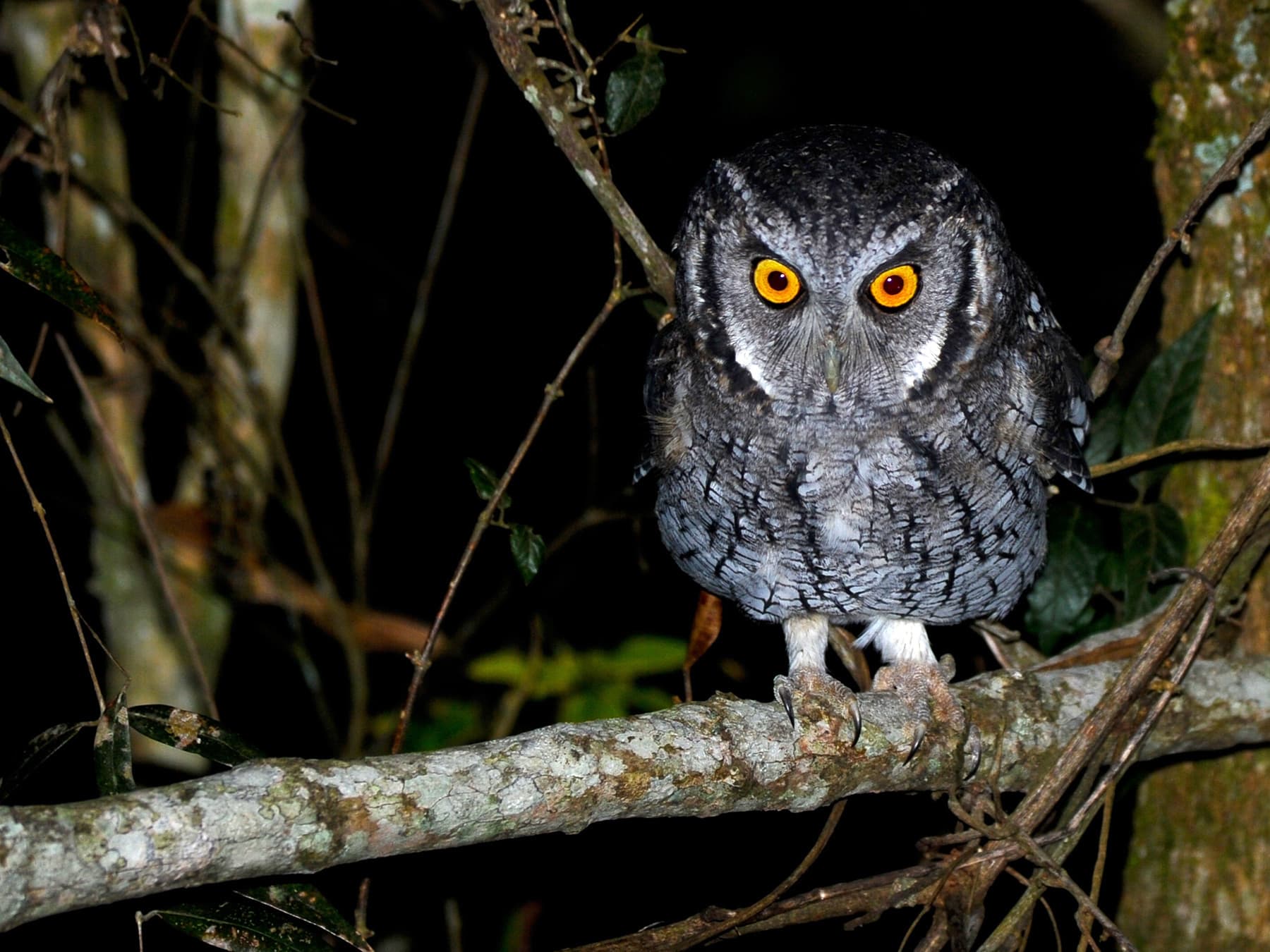
Their upperparts, either mainly brown or dark gray, are patterned with intricate mottling and lighter and darker streaks, which help them to remain hidden out of sight in their forest habitats. Their underparts are similarly marked, with bold darker vertical streaks across their wings, belly, and flanks.
Western screech-owls have pale yellow eyes and a sharp, curved bill which is black in more southern populations and a lighter shade of gray in northern birds. Legs and feet are bristled with short gray feathers.
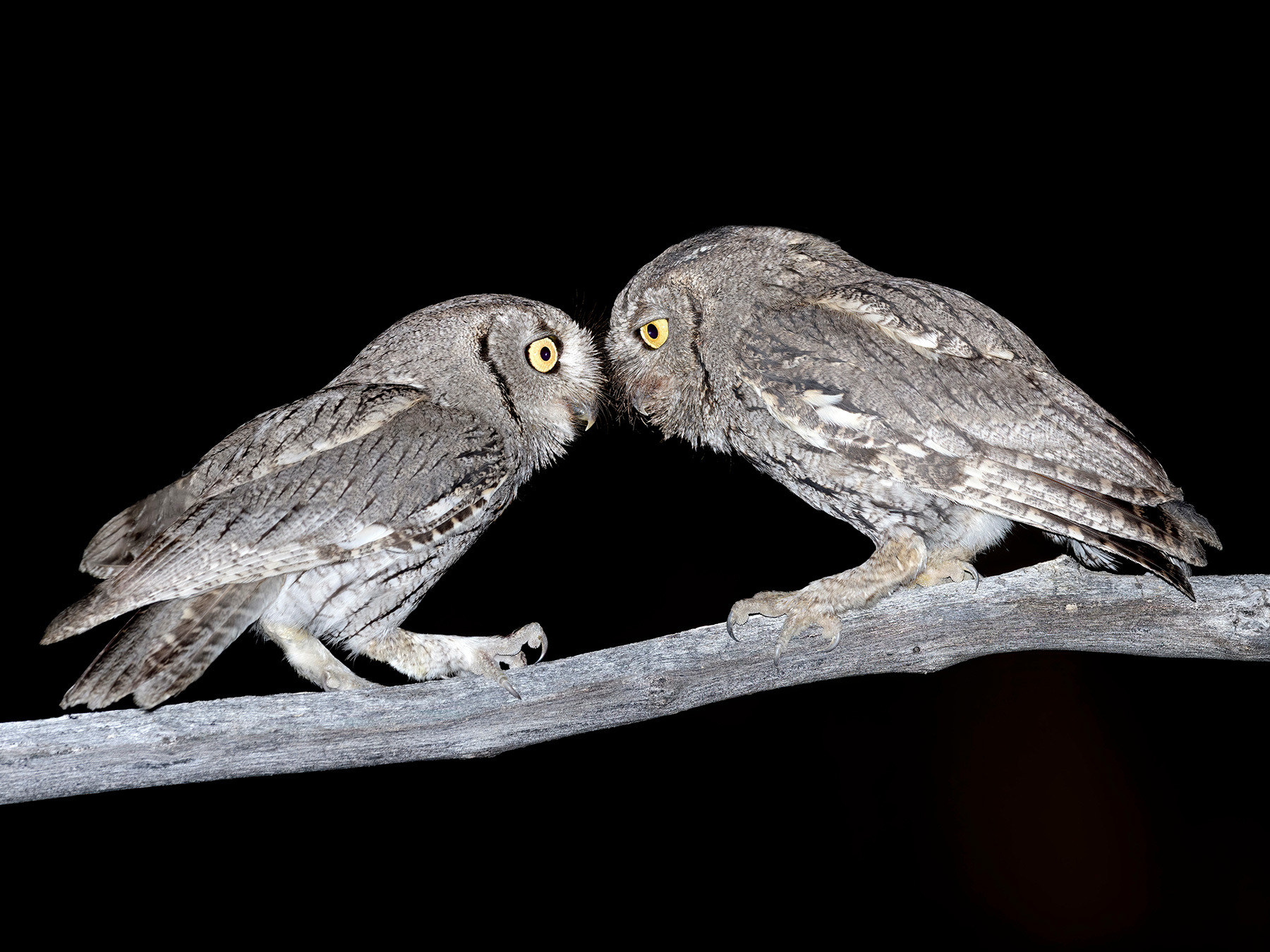
Females share the same coloring and patterning as males but are usually noticeably larger in size and weight.
In juvenile western screech-owls, streaks on the belly are horizontal rather than vertical and some feathers are tipped with white. Young birds have lighter bills than adults, but otherwise, the coloring is very similar.
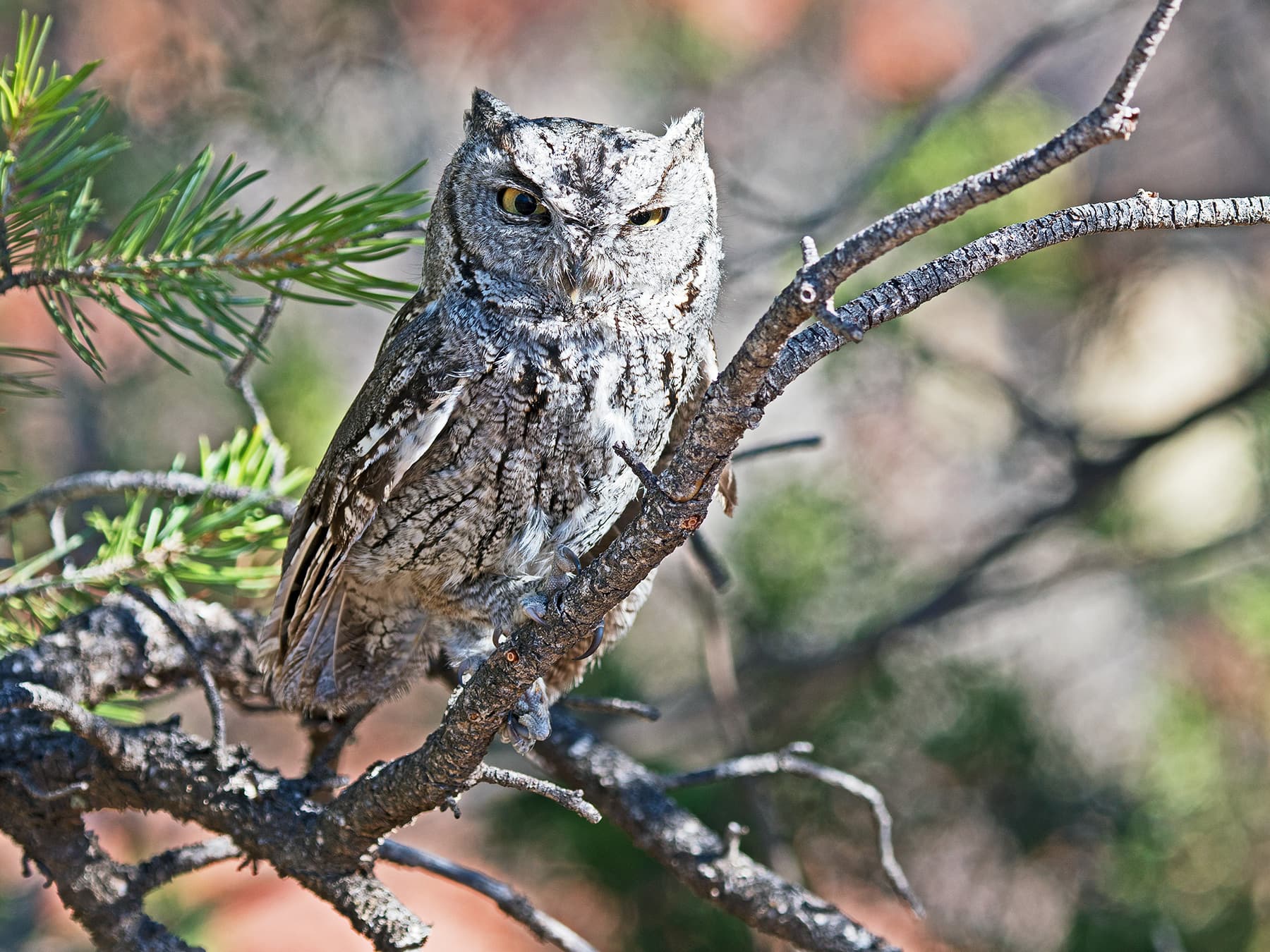
How big are Western Screech-Owls?
A relatively small owl species, the western screech-owl is the same size as its eastern counterpart, the eastern screech owl. Females are larger and heavier than males, and this difference between the sexes is clearly visible when a pair is seen side by side.
- Length: 20 cm to 25 cm (8 in to 10 in)
- Wingspan: 50 cm to 60 cm (20 in to 24 in)
- Weight: 100 g to 305 g ( oz to oz)
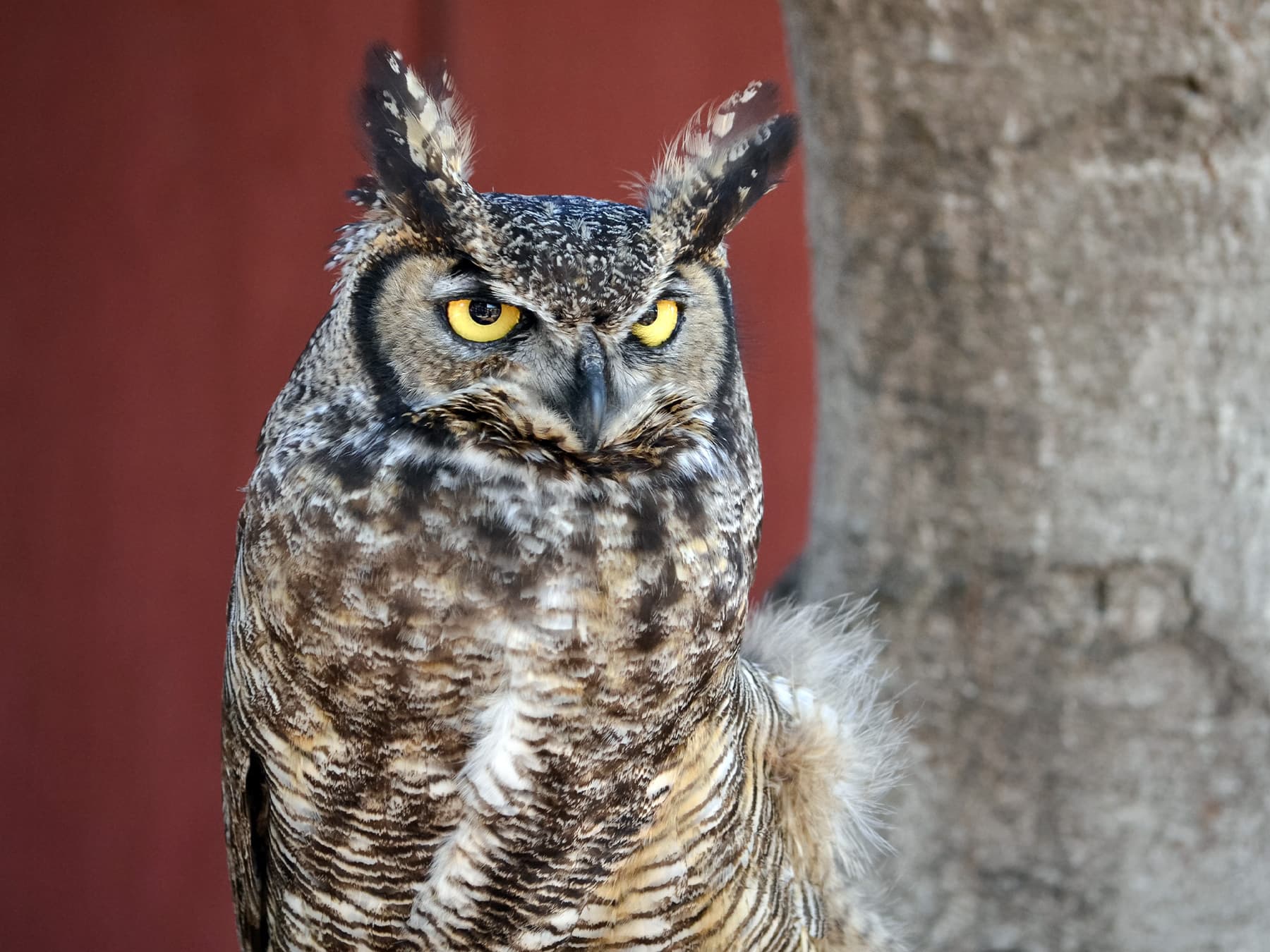
Its size
Adults- Length
- 19–25 cm
- Wingspan
- 54–61 cm
- Weight
- 120–305 g
Its song and calls
What sound does a Western Screech-Owl make?
Despite its name, a western screech-owl doesn’t actually screech, instead making a series of accelerating hoots with an intensifying pace. A loud bark-like call signals distress or alarm, while pairs use a contact call consisting of a short trilled note, followed by a longer trill.
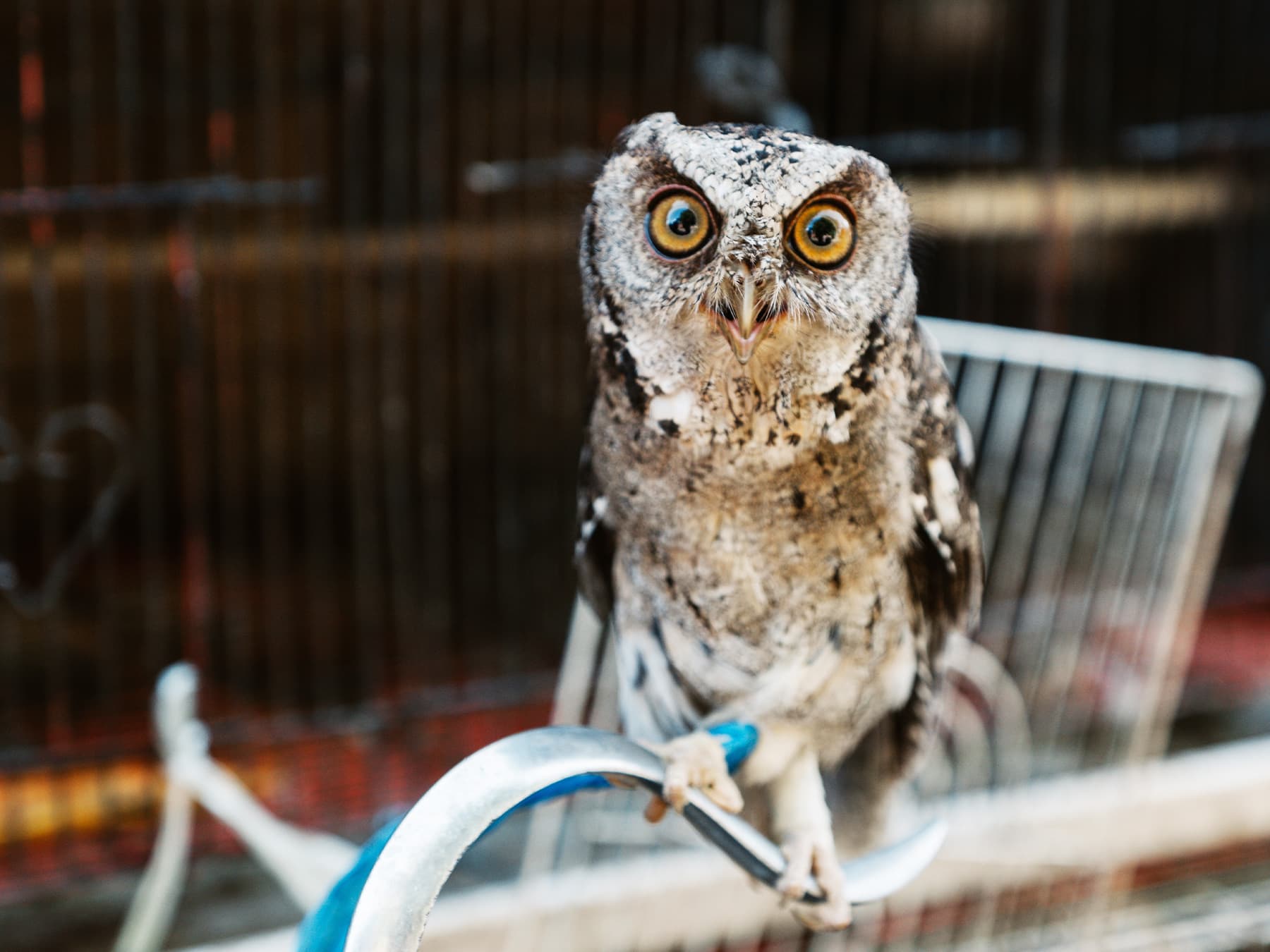
- Call0:00 / 1:02
Recorded in California, United States · June 2018
When and where to see it
OctoberIn season
Most recorded in October
- 1. Arizonaunder 0.1%
- 2. Idahounder 0.1%
- 3. Utahunder 0.1%
- 4. New Mexicounder 0.1%
- 5. Californiaunder 0.1%
Each dot is a county, state or province: the bigger and darker, the larger the bird’s share of that place’s bird records that month. Grey dots: no regular records. The ringed point is the centre of the bird’s records this month; the arrow shows how it moved since last month, and the dashed loop its path through the year. “Arrivals” colours places where it becomes regular this month (orange) or is in its last regular month (grey). GBIF eBird Observation Dataset, 2019–2024. Map data: Natural Earth, US Census Bureau; place centres © OpenStreetMap contributors.
In your area
See when the Western Screech-owl is recorded in your county, state or province.
How often the Western Screech-owl turns up in the United States and Canada through the year, from birdwatchers' records.
United States
Resident · all year · most records in January
Canada
Winter visitor · all year · most records in February
Show as a table
| Month | United States | Canada |
|---|---|---|
| January | 0.011% (regular) | 0.003% (regular) |
| February | 0.010% (regular) | 0.005% (regular) |
| March | 0.011% (regular) | 0.004% (regular) |
| April | 0.008% (regular) | 0.002% (regular) |
| May | 0.006% (regular) | 0.001% (regular) |
| June | 0.007% (regular) | 0.001% (regular) |
| July | 0.010% (regular) | <0.001% (regular) |
| August | 0.011% (regular) | 0.001% (regular) |
| September | 0.008% (regular) | <0.001% (regular) |
| October | 0.008% (regular) | 0.001% (regular) |
| November | 0.006% (regular) | 0.002% (regular) |
| December | 0.010% (regular) | 0.003% (regular) |
Worldwide: recorded regularly in 3 countries
Countries where it was recorded in at least 3 of the 6 years 2019–2024. Linked countries have their own bird list.
North America (3)
Data: EOD – eBird Observation Dataset (Cornell Lab of Ornithology), accessed via GBIF.org, CC BY 4.0. Records from 2019–2024, aggregated and filtered by Birdfact. How these lists are made
What is the habitat of a Western Screech-Owl?
Woodlands and forests are a popular choice of habitat for western screech-owls, with mixed species woodland preferred for the variety of cover, prey, and nesting choices they offer.
Riversides and lakeshore areas with well-established patches of vegetation are also used, as are rocky canyons and caves, with a wealth of nesting possibilities. Wooded canyon bottoms, expanses of desert mesquite, and farmland groves all provide suitable habitats.
What is the range of a Western Screech-Owl?
Western screech-owls are present from the south coast of Alaska, small regions of southwestern Canada, southwards through the western United States, and throughout western Mexico.
Where do Western Screech-Owls live?
Western screech owls are found across the western United States with established breeding populations present in Washington, Oregon, California, Idaho, Montana, Wyoming, Utah, Colorado, Nevada, New Mexico, and parts of western Texas.
Populations are particularly concentrated across Arizona’s mesquite landscapes. Canada and Mexico also have resident breeding populations and breeding has also occurred in Guatemala, Belize, and Honduras.
How rare are Western Screech-Owls?
The population of western screech-owls in the United States and Mexico is estimated to be around 220,000 individuals. Their nocturnal habits make them more challenging to spot, although some daytime hunting may occur during the nesting period.
Where can you see Western Screech-Owls in the US?
Redwood State and National Parks in California and Big Bend National Park in Texas offer opportunities for catching sight of western screech-owls in their preferred natural habitats of riverside woodlands.
Where can you see Western Screech-Owls in Canada?
The range of western screech owls is located mainly south of Canada’s border with the United States, although an estimated 350 to 500 adults are estimated to live in Canada, in southwestern British Columbia, and occasional sightings are recorded in Alberta and Saskatchewan.
Pacific Rim National Park Reserve in British Columbia is as good a location as any to watch out for the species.
Migration
Do Western Screech-Owls migrate?
Western screech-owls are a resident species in the westernmost regions of North America and do not migrate, remaining in the same territories all year round.
Are Western Screech-Owls native to the US?
Western screech-owls are resident in the westernmost regions of the US all year round, raising their young and wintering in the same territories. The related species, the eastern screech owl, is found to the east, and there is little overlap between the two species.
Tips for seeing it
- Listen for their distinctive bouncing ball or trilling call at night
- Look for them perched near tree trunks or in cavities during the day
- Check for whitewash and pellets below potential roosting sites
What it eats
What do Western Screech-Owls eat?
While they are mainly an insectivorous species, a western screech-owl will feed on anything available, preying on small mammals, including mice, voles, and shrews, as well as small reptiles, birds, and amphibians. Scorpions, earthworms, and spiders are also caught. Insect prey includes crickets, grasshoppers, and caterpillars.
Western screech-owls rely on both sight and sound to hunt, catching prey after swooping from branch perches in trees.
What do Western Screech-Owl chicks eat?
A mix of prey is brought to the nest by the male western screech-owl after their eggs hatch. The prey is delivered to the female who then feeds items to their young. This includes invertebrates (beetles, moths, crickets, and caterpillars), with small mammals introduced several days later, in particular voles and small mice. Birds may also be brought to the nest, particularly fledglings or injured birds which are easier for the adult western screech-owl to capture.
Nesting and breeding
Where do Western Screech-Owls nest?
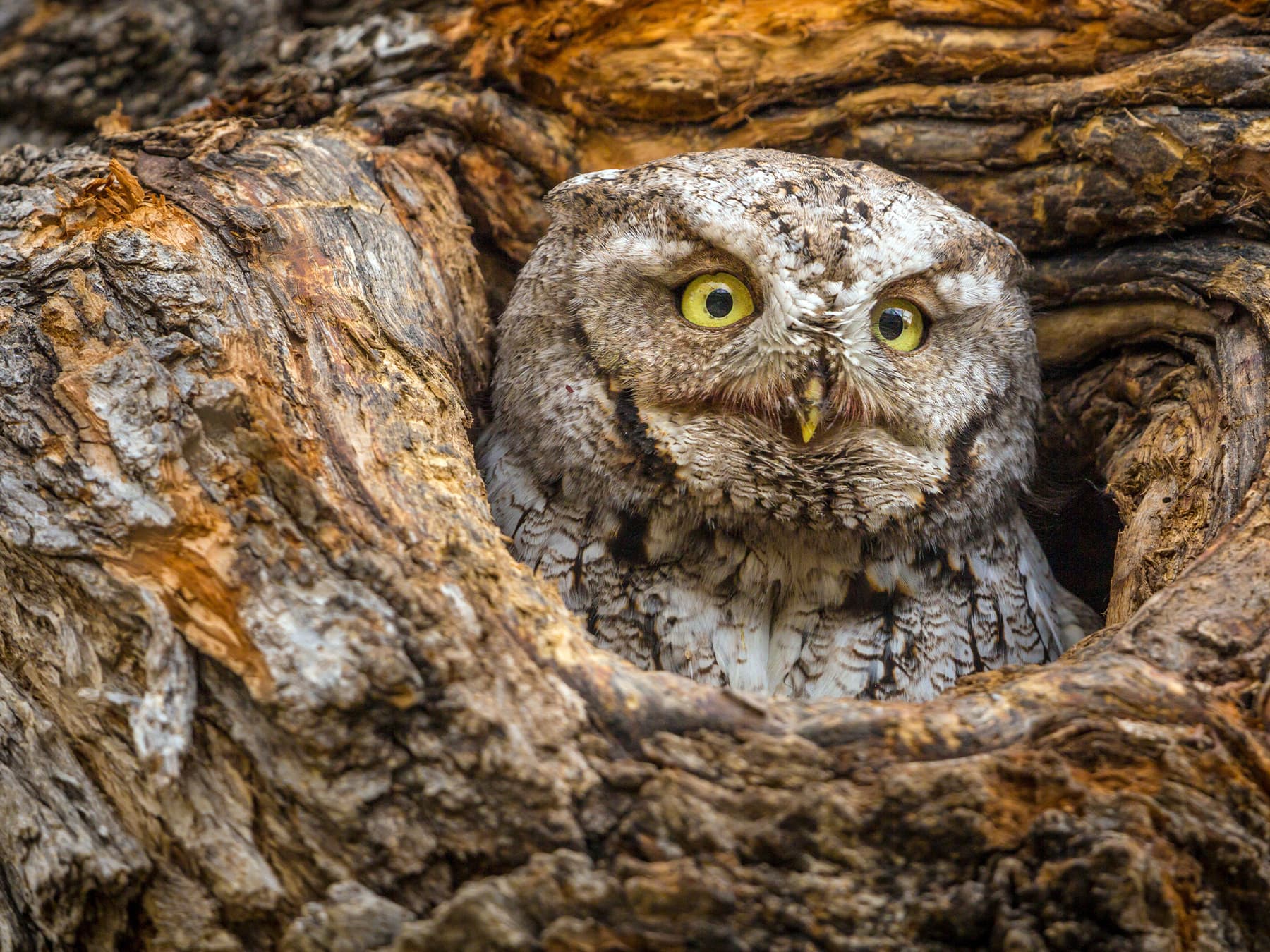
Cavities excavated by northern flickers, gilded flickers, and pileated woodpeckers provide suitable nest sites for western screech-owls.
Natural chambers are also readily used, including hollows that have formed at the site of broken branches or rotting deadwood. Cottonwood and maple are frequently chosen, and in southern Arizona, reusing the nests of flickers in saguaros is common. Nest boxes are also readily used throughout their range.
When do Western Screech-Owls nest?
The breeding season begins early in the year, with pairs forming between January and February, and courtship feeding, a precursor to copulation and egg-laying, is observed between March and April.
Eggs are incubated for between 26 and 34 days, with the female taking sole charge of incubation. Males remain nearby, roosting a short distance from the cavity opening.
What do Western Screech-Owl eggs look like?
Between 2 and 7 smooth white eggs are laid by western screech-owls in a typical clutch. Eggs measure on average 4.2 cm by 3.6 cm (1.6 in by 1.4 in).
Do Western Screech-Owls mate for life?
It is thought that western screech-owls are monogamous, and form long-lasting pairs once they reach breeding age. Gray and red-brown variations mate with each other. Pairs raise one brood together each season and will look for a replacement mate if a previous one dies.
Behaviour
Are Western Screech-Owls aggressive?
Aggressive behavior is frequently shown when defending the nest site, even against much larger threats, including humans. Hissing, swiping and flapping are used as a means of driving off any intruders.
Where do Western Screech-Owls sleep at night?
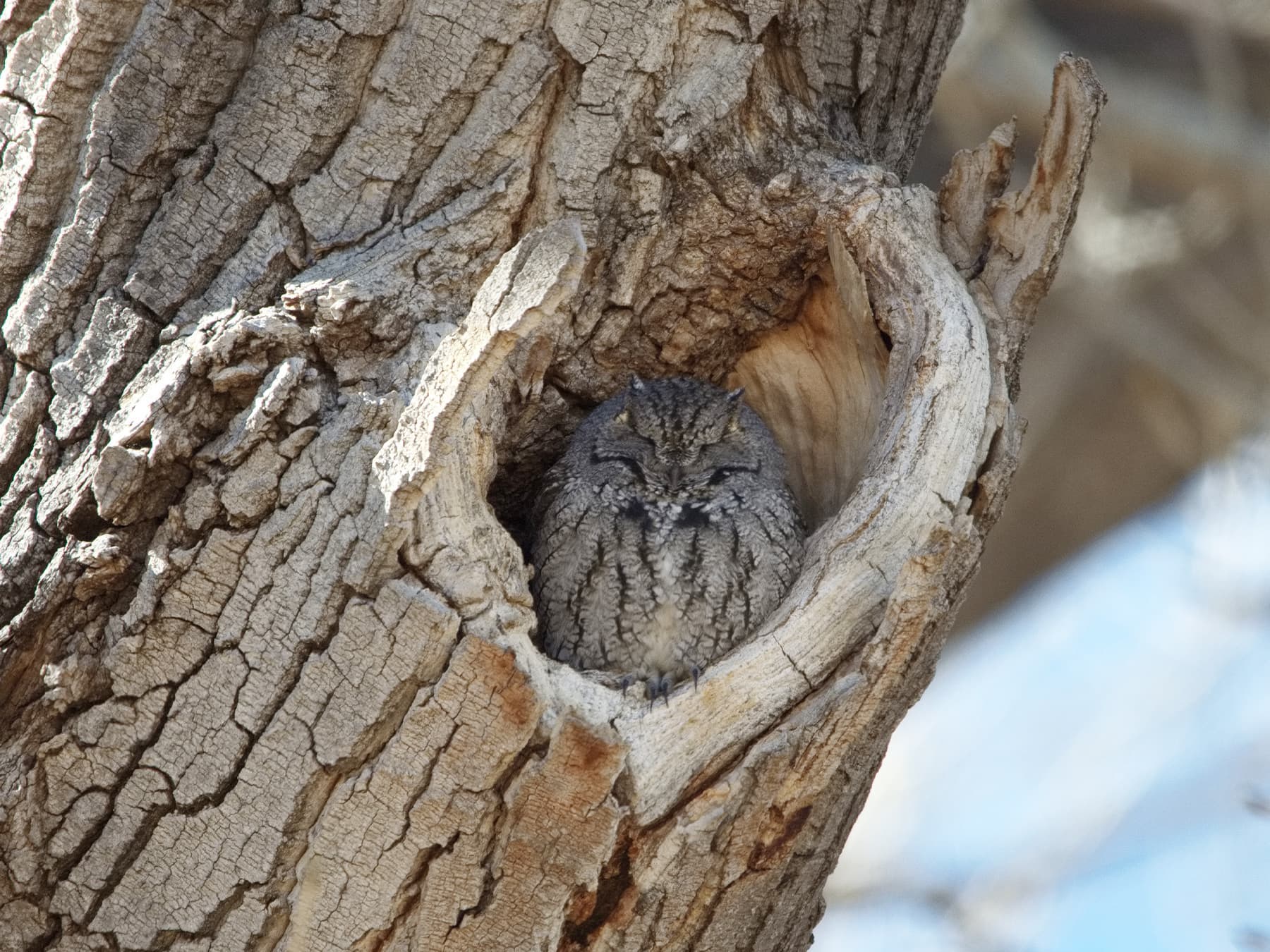
Western screech-owls are nocturnal and find suitable roosting spots in trees to sleep during the day. In the winter and spring, conifers are preferred, with deciduous trees becoming more popular later in the year once leaf cover develops. Spots are usually located close to the trunk, as their plumage offers perfect camouflage against the bark.
Lifespan and predators
How long do Western Screech-Owls live?
The average lifespan of western screech owls in the wild, obtained from banding records, is fairly low: around 1.83 years for males and 1.73 years for females. The longest-living wild western screech-owl lived to the age of 13, while a captive pair reached 19 years. Breeding is thought to occur for the first time at one year old.
What are the predators of Western Screech-Owls?
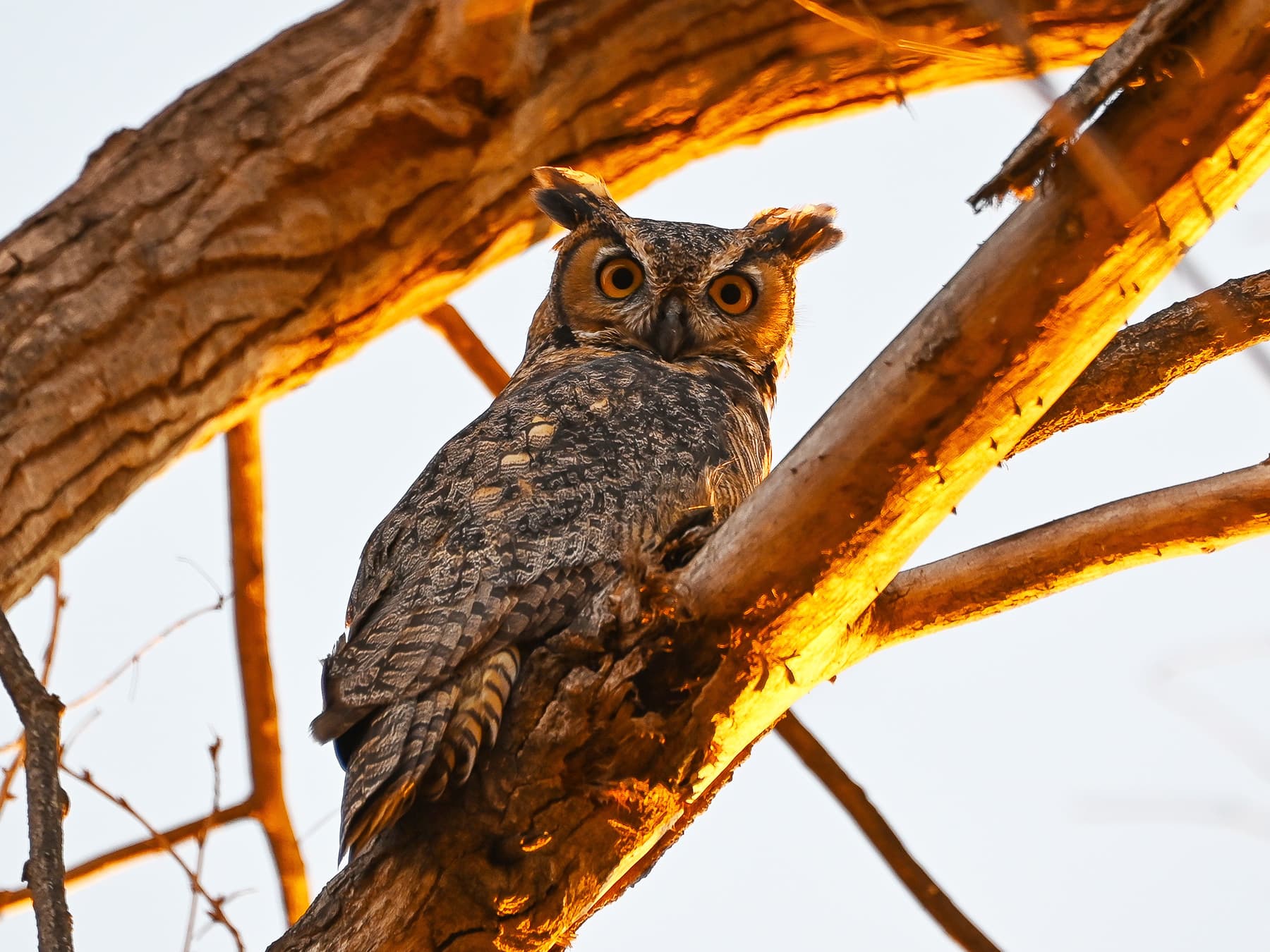
Being a relatively small species, western screech-owls are a common target for much larger owls, including great-horned, spotted, and barred owls. Raccoons, skunks, squirrels, crows, and weasels may raid nests for eggs and young, and occasionally gopher snakes have been observed to take a nesting female.
Are Western Screech-Owls protected?
Legislation in the United States (the Migratory Bird Treaty Act) and in Canada (the Migratory Birds Convention Act) protects northern screech-owls against being killed, injured, taken into captivity, or traded for sale. Their eggs, young, and nest sites are also protected.
Are Western Screech-Owls endangered?
Some slight declines in the global breeding population are evident, due to habitat loss and land use change, but there are no immediate concerns for their long-term future. Western screech-owls are classified as a species of least concern.
However, locally, on the British Columbia coast, a more worrying fall in numbers has been observed, with a year-on-year decline of 32 percent, thought to be caused by increased predation by barred owls and habitat loss meaning fewer available nest cavities.
Conservation
While the Western Screech-owl is currently listed as Least Concern, it faces threats from habitat loss due to urban development and logging.
Conservation efforts focus on preserving mature forests and maintaining suitable nesting cavities. In some areas, nest box programs have been implemented to support breeding populations.
Similar birds
Often mistaken for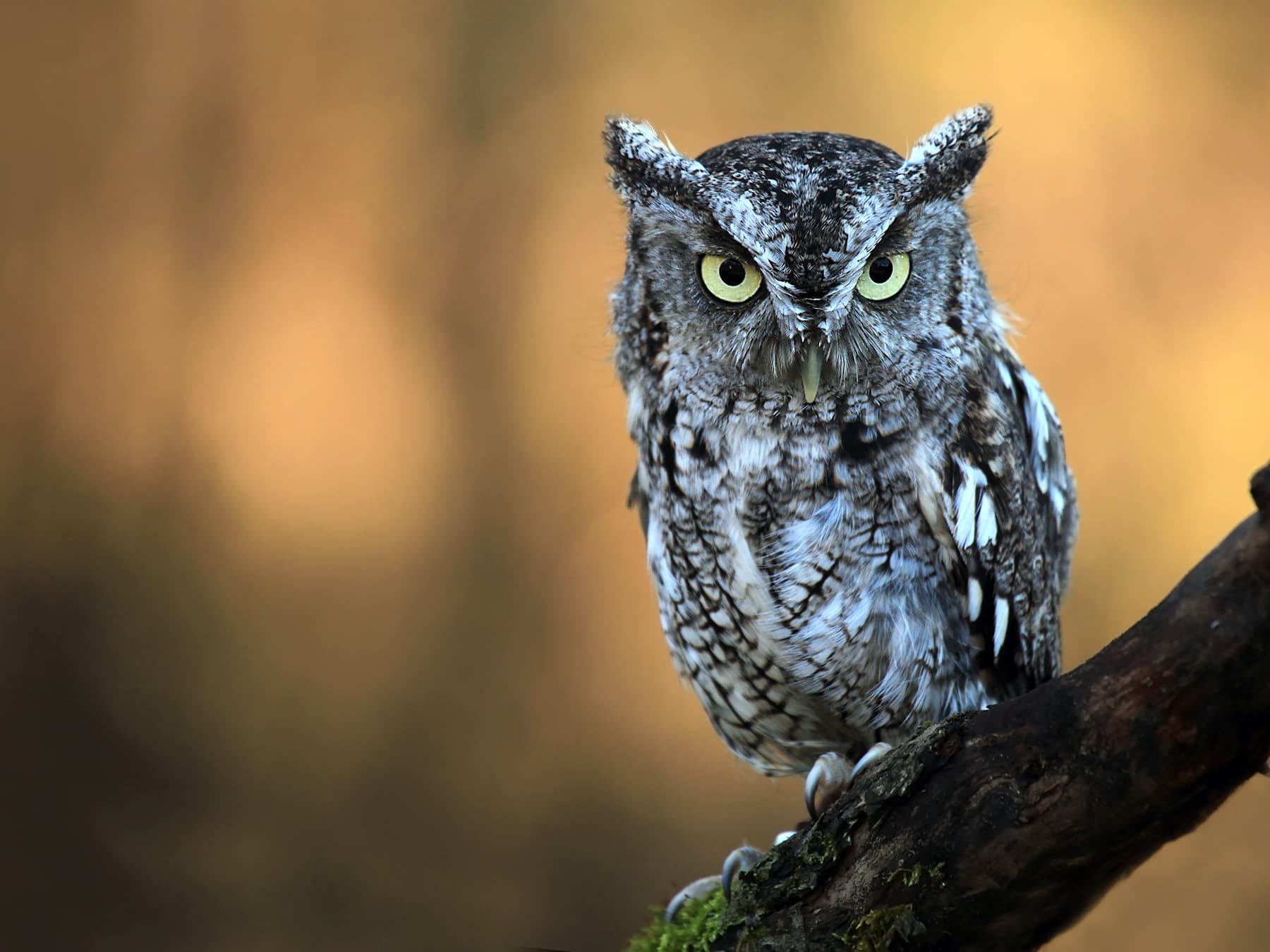
More photos
3 photos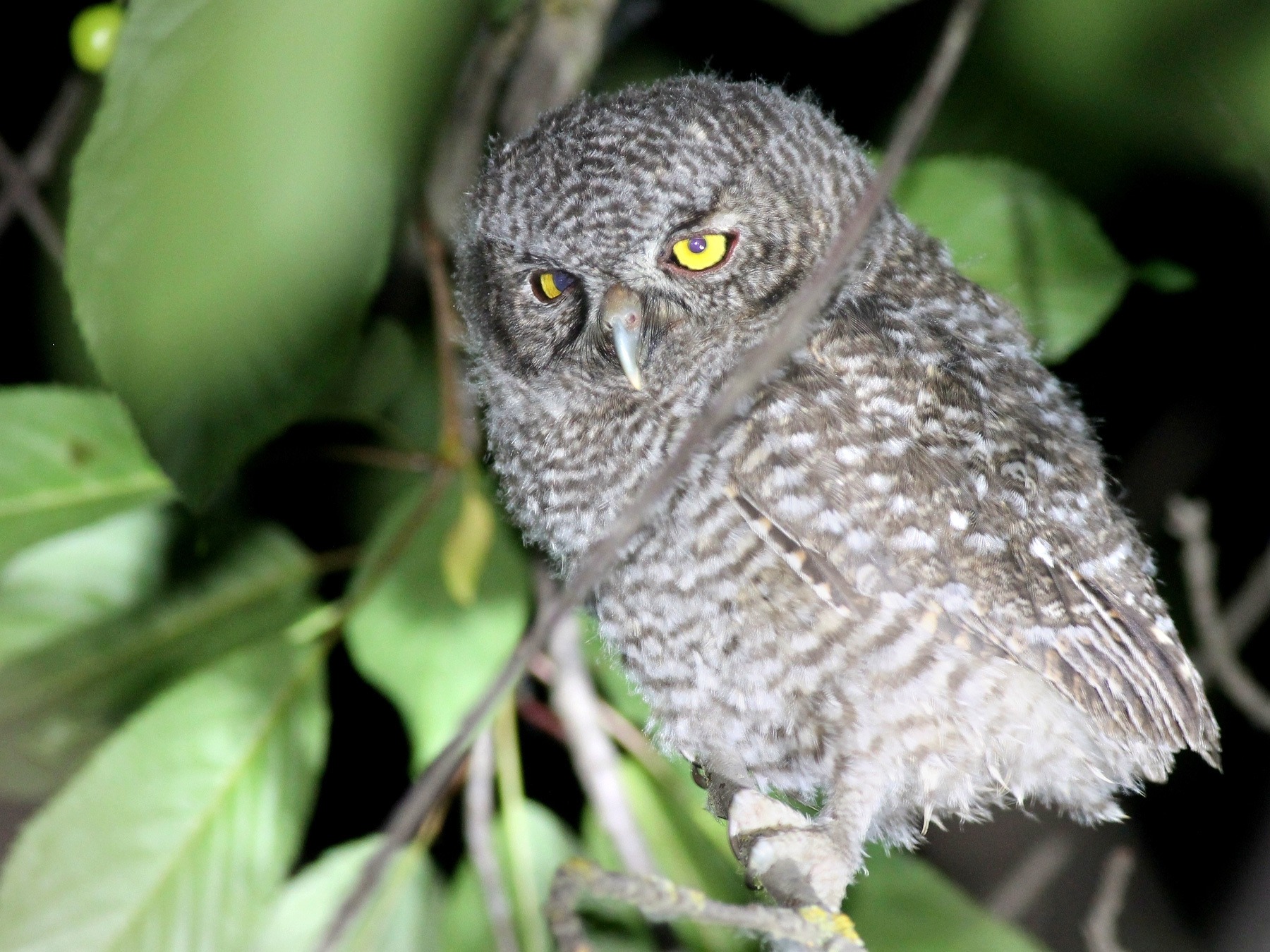
Quick facts
- Length
- 19–25 cm
- Wingspan
- 54–61 cm
- Weight
- 120–305 g
- Lifespan
- 2 years · oldest recorded 13 years
- Family
- Owls
- Migration
- Resident
- Global status (IUCN)
- Least Concern
- World population
- 180,000 mature individuals
- Population trend
- Decreasing
- Also called
- Western Screech Owl
- Scientific name
- Megascops kennicottii
Questions
4What color are Western screech owls?
Western screech owls are generally a mottled mixture of dark gray, brown, and white. Coloring varies across their range, with northwestern birds having a reddish wash, while the plumage of those further inland and to the south features more gray tones. They have bright yellow eyes.
Do Western screech owls come out during the day?
Although a strictly nocturnal species, during the breeding season western screech-owls (particularly males) will head out to hunt during daylight if the feeding demands of hungry young owlets mean they may need to seek additional prey during the day.
Do Western screech owls eat squirrels?
Western screech owls do eat squirrels although they are not among their primary prey. Normally they hunt smaller mammals, including voles, shrews and mice. However, if the opportunity arises to catch a squirrel, then may well give it their best shot.
How do you attract Western screech owls?
Tall trees with existing cavities for nesting offer western screech-owls a ready-made nesting spot. Mounting artificial nest boxes and adding wood chips as a lining may also tempt them to set up a home in your yard.
The best way to attract owls is to provide their natural habitat, with access to fresh water, tree cover, and the opportunity to catch prey, including plants that will encourage different insect species.
Sources
4- 1BirdLife International. 2016. Megascops kennicottii. The IUCN Red List of Threatened Species 2016: e.T22688747A93207555. Source (opens in a new tab)
- 2Breeding Bird Survey and/or Christmas Bird Count: Butcher and Niven (2007)
- 3Partners in Flight (2022) Source (opens in a new tab)
- 4Clapp, R. B., M. K. Klimkiewicz, and A. G. Futcher. Longevity records of North American birds: Columbidae through Paridae. Journal of Field Ornithology 54:123–137. (1983)

Checked by
Nathan Cope, founder and editor
Nathan founded Birdfact and leads its writers and contributors in the UK, the US and Canada. He has watched and studied birds for more than ten years, and checks every article and species guide before it’s published.