


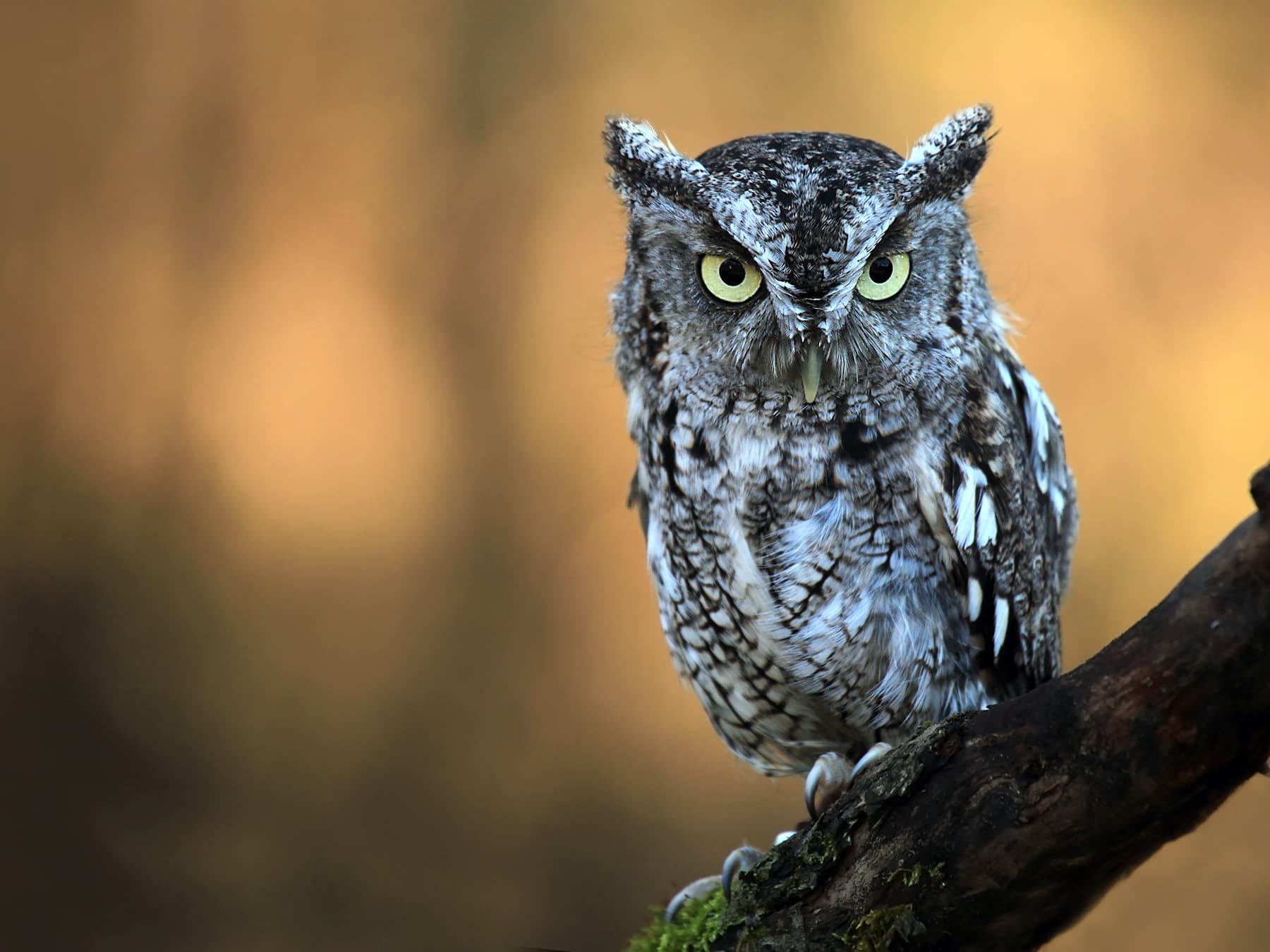
Eastern Screech-owl
Screech Owl · Megascops asio
By the Birdfact teamChecked by Nathan Cope
On this page14 sections
How to recognise it
What do Eastern Screech-Owls look like?
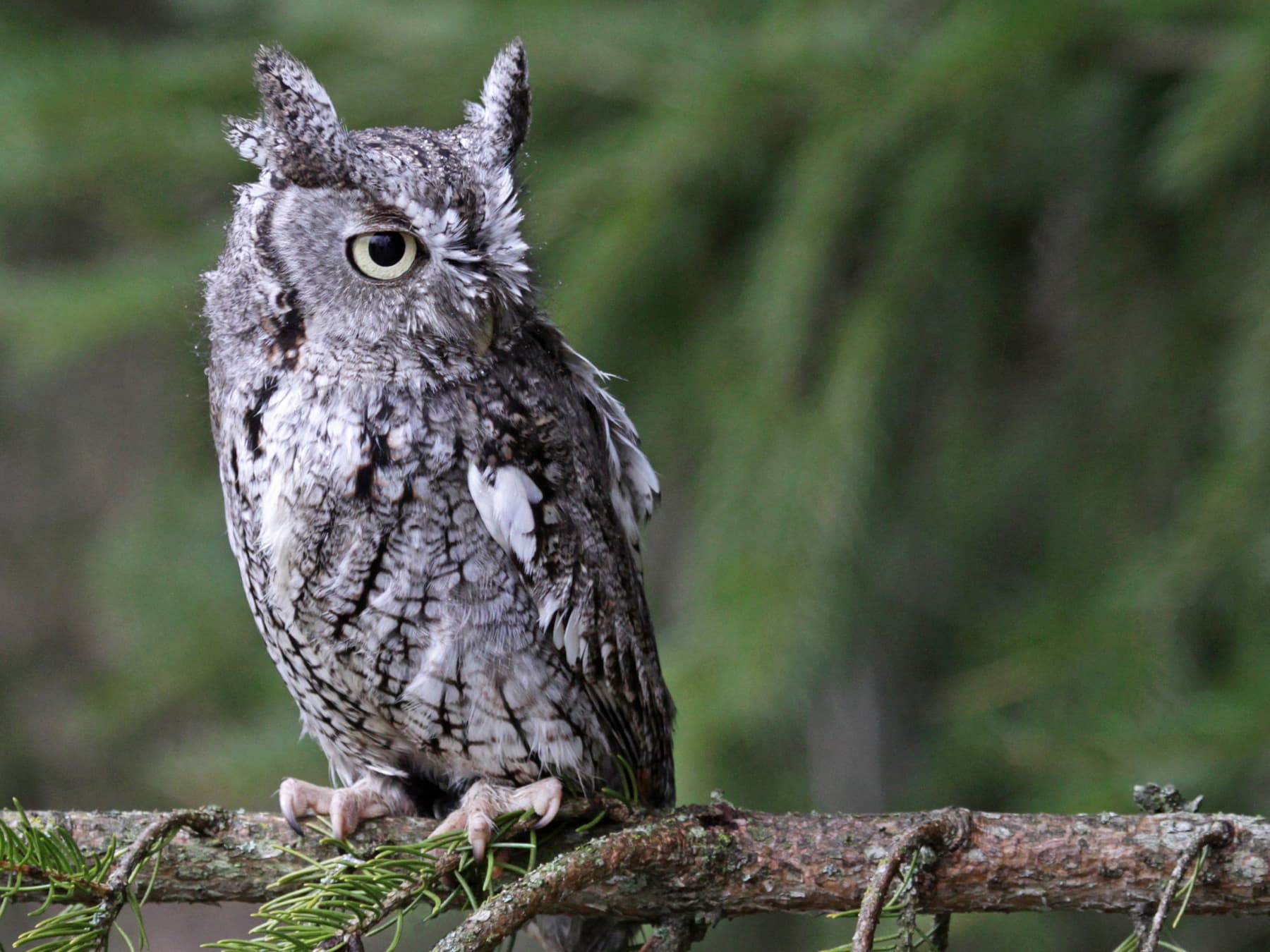
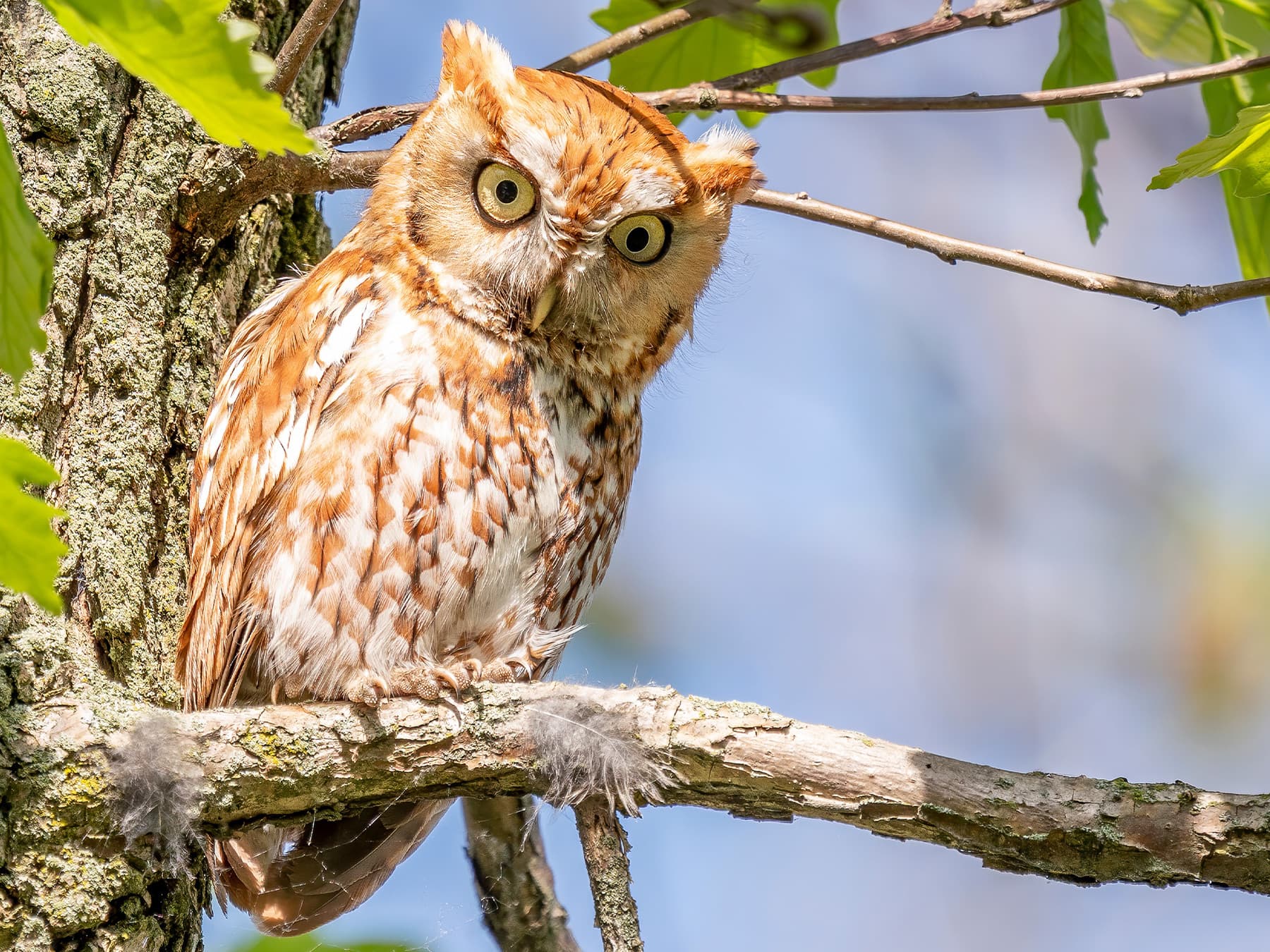
Two color morphs of eastern screech-owls exist, and they are quite unalike: a rufous morph and a gray morph. In each color morph, the plumage of males and females are identical, with size being the key way of distinguishing between the sexes.
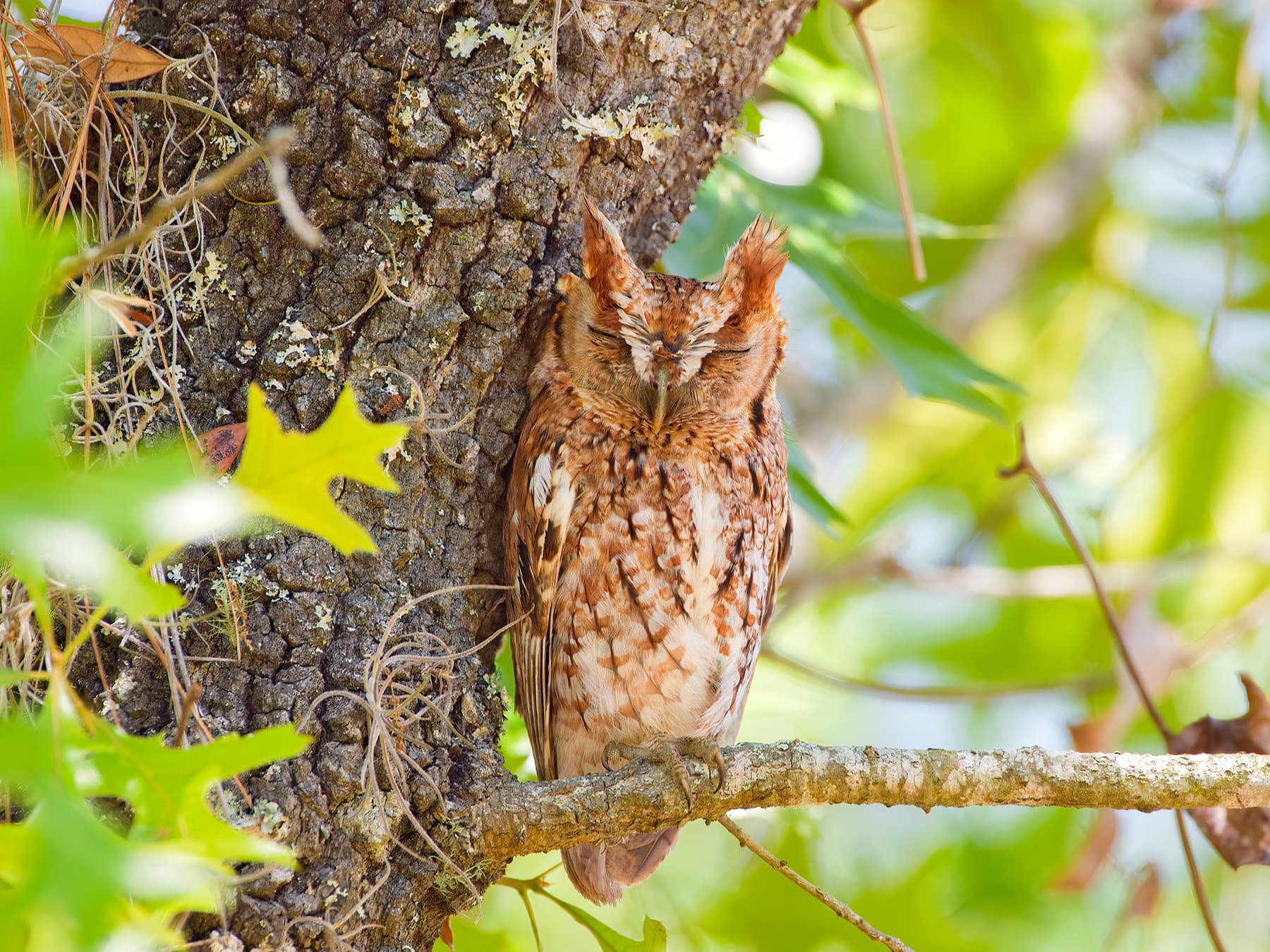
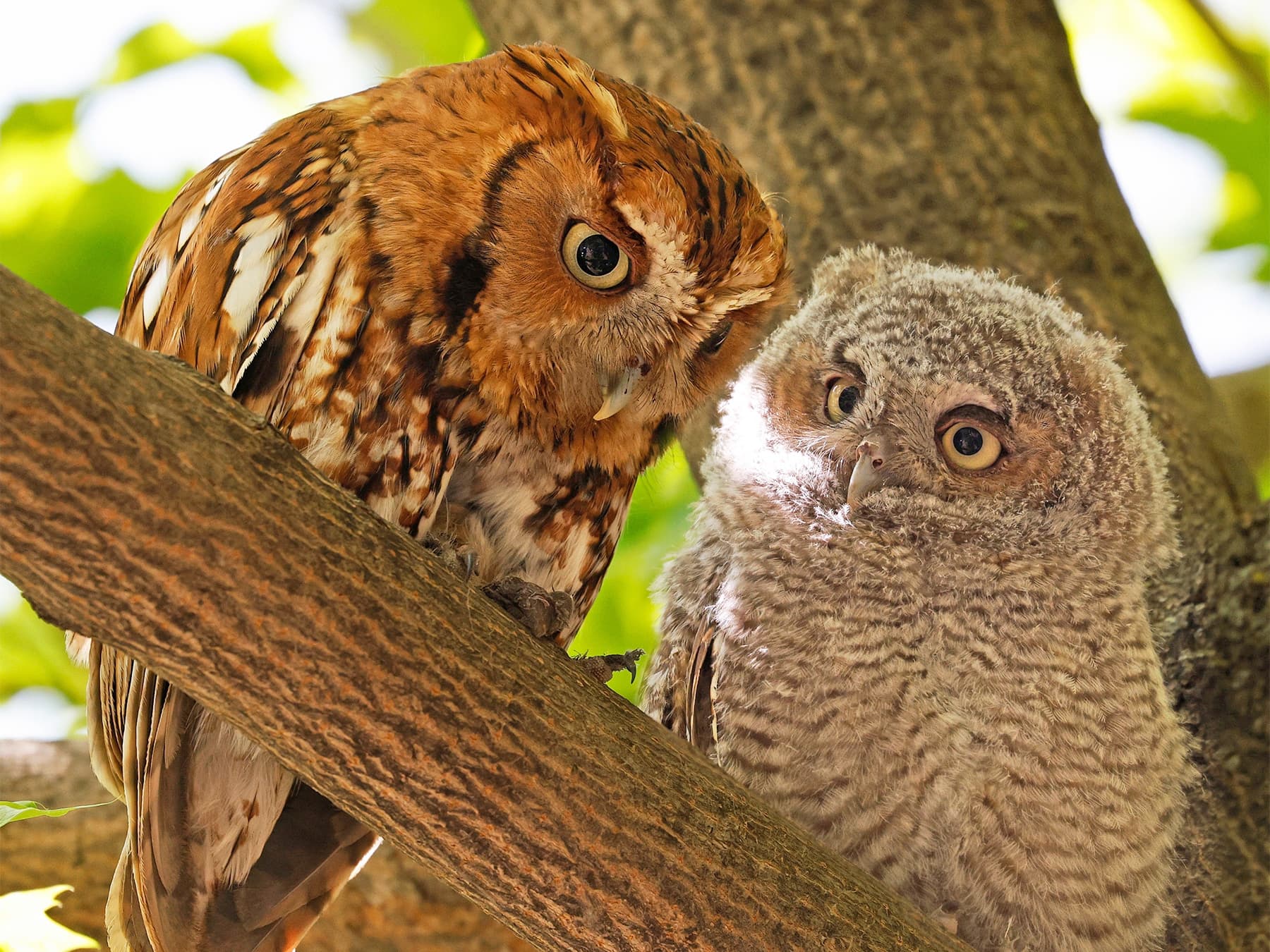
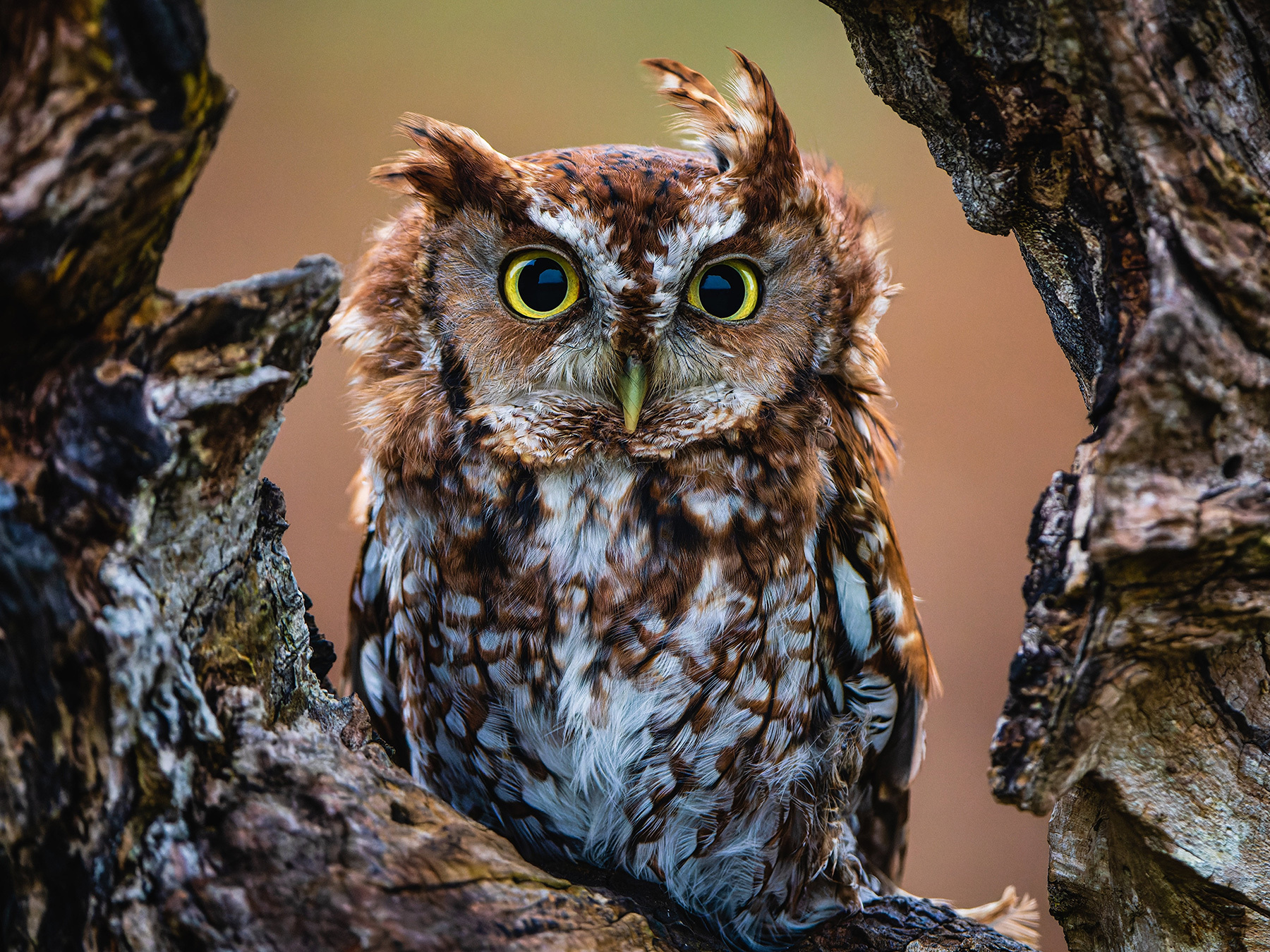
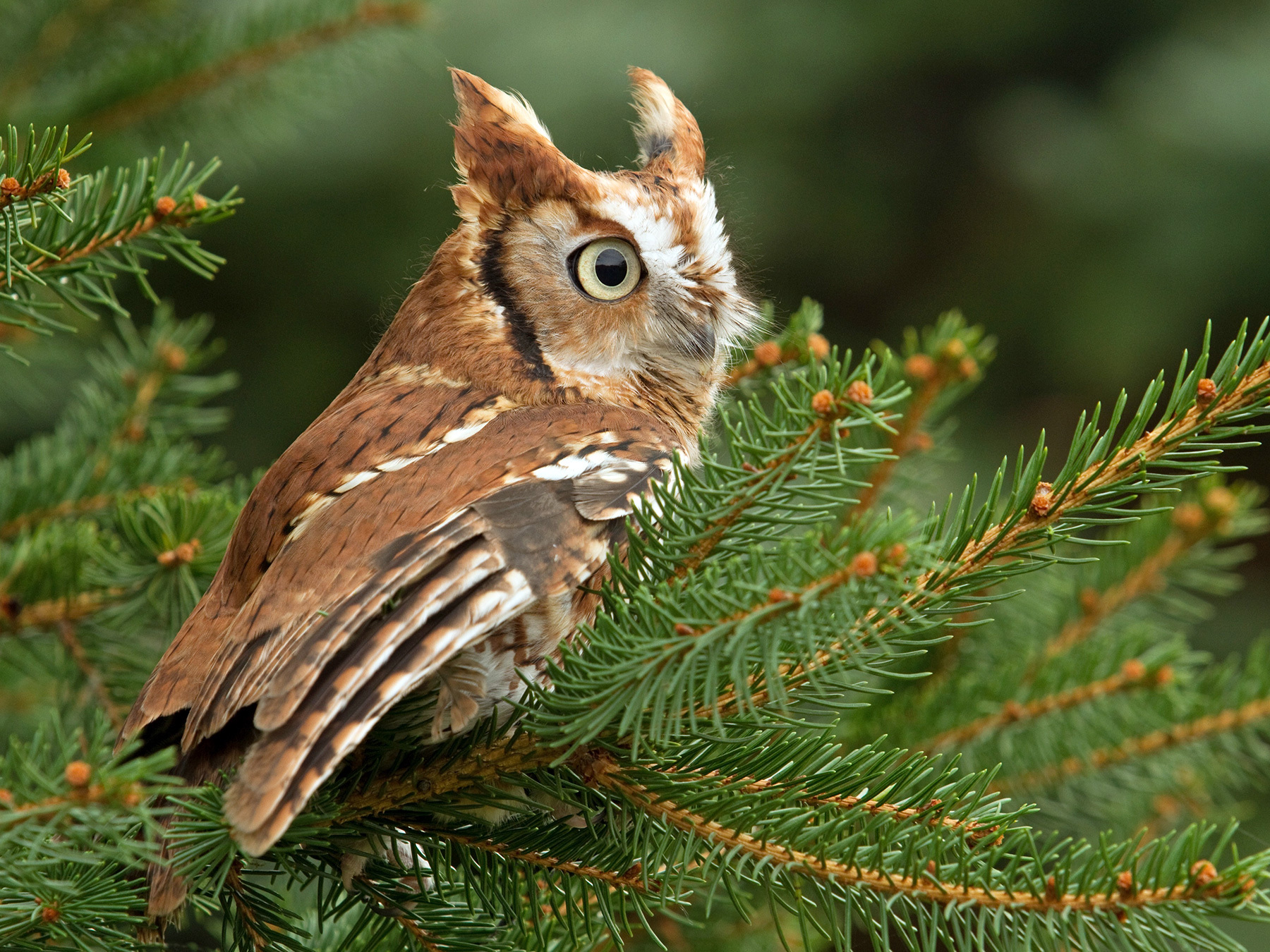
In rufous morph birds, found predominantly in the southeastern US, eastern screech-owls have reddish-brown backs, marked with mottled darker and lighter brown marbling, with some white and black wing patterning. Their breast is boldly marked with chestnut red and buffy-white, and their facial disc is pale, ringed with darker feathers and contrasting against the rufous coloring. Eyes are bright yellow with whitish bristling above the bill, and short reddish-brown ear tufts are present on each side of the head.
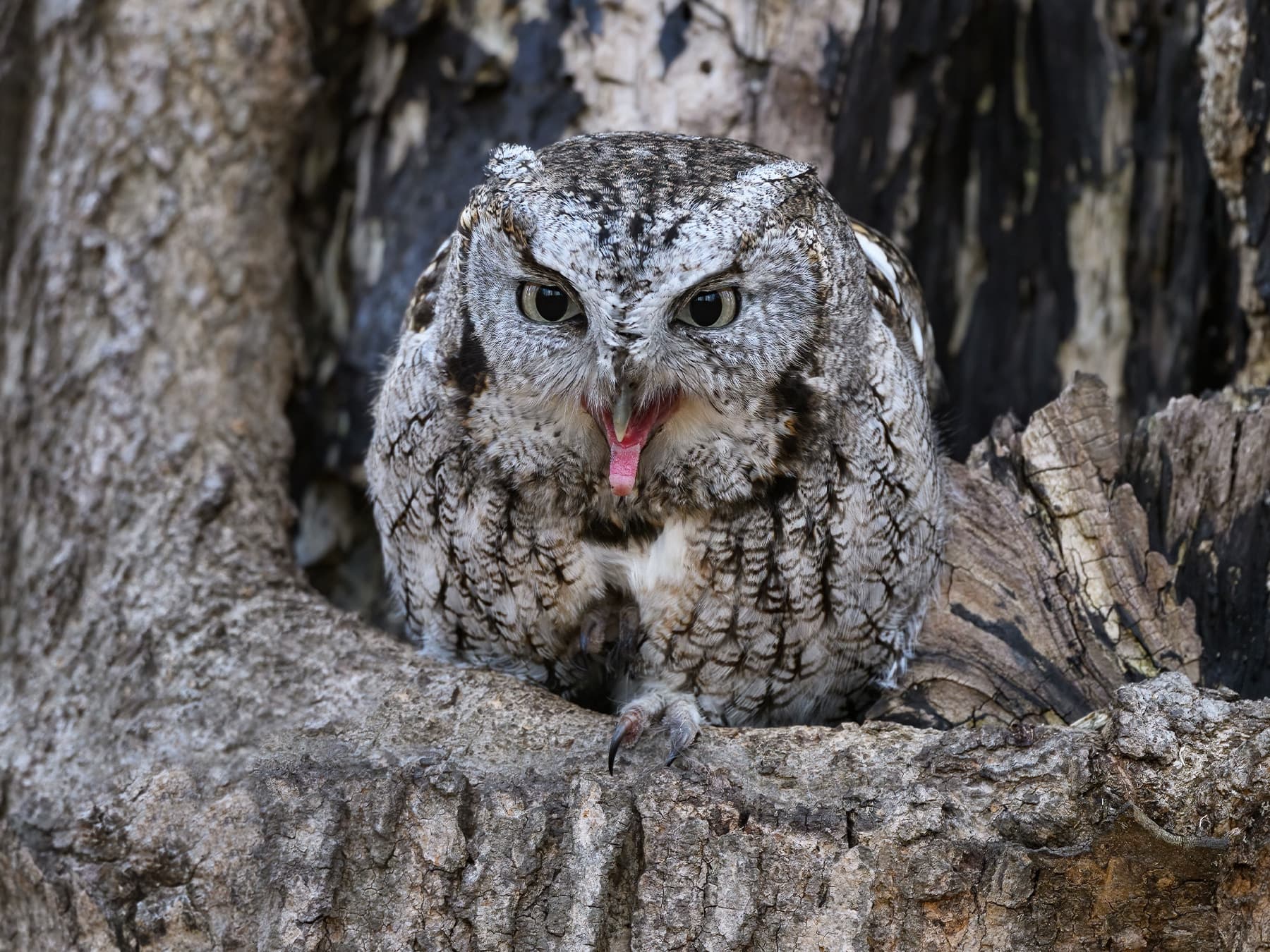
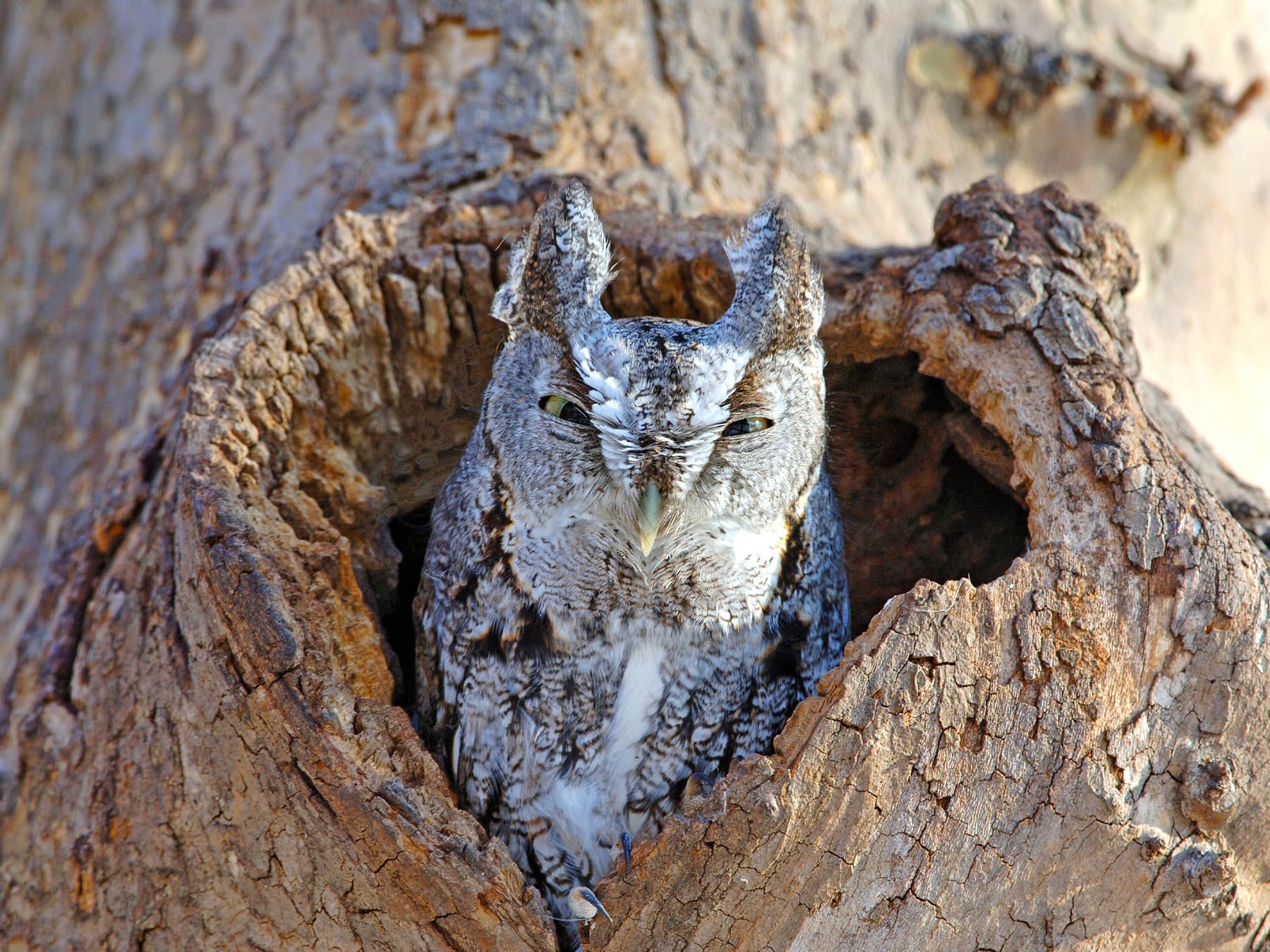
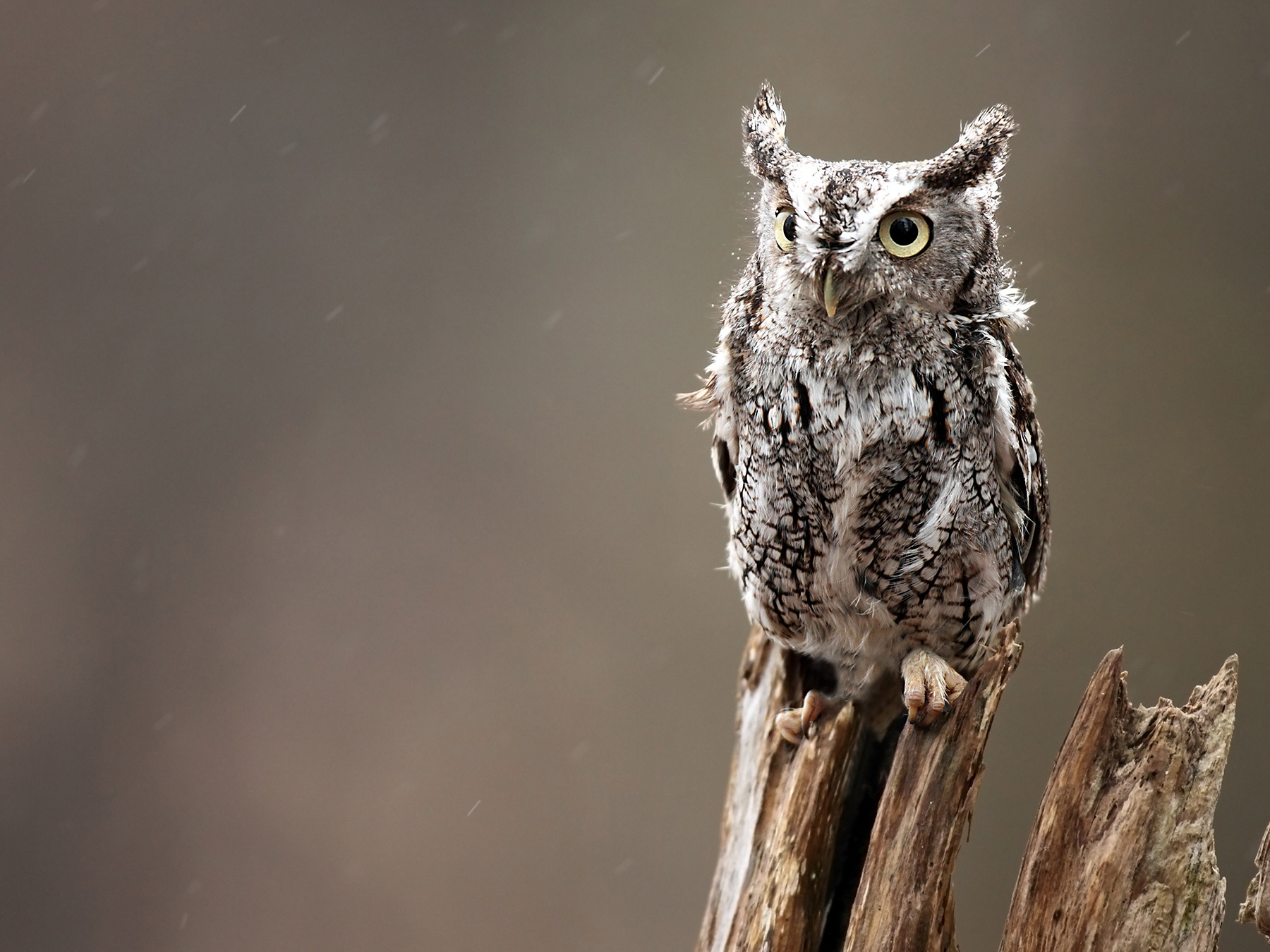
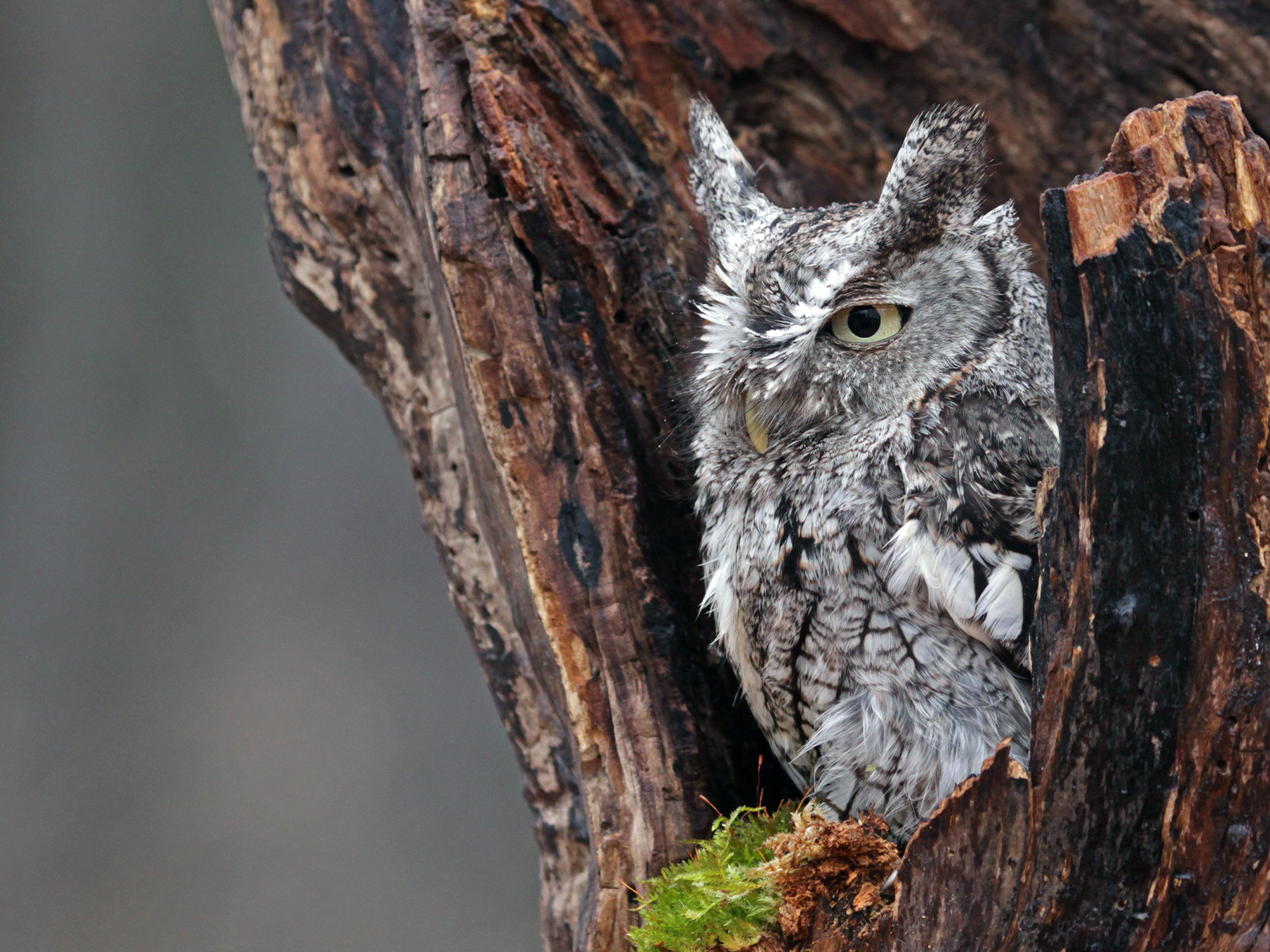
In gray morph birds, similar patterning is present, but tones are more muted shades of dark brown and gray, offering heightened camouflage against bark and deadwood.
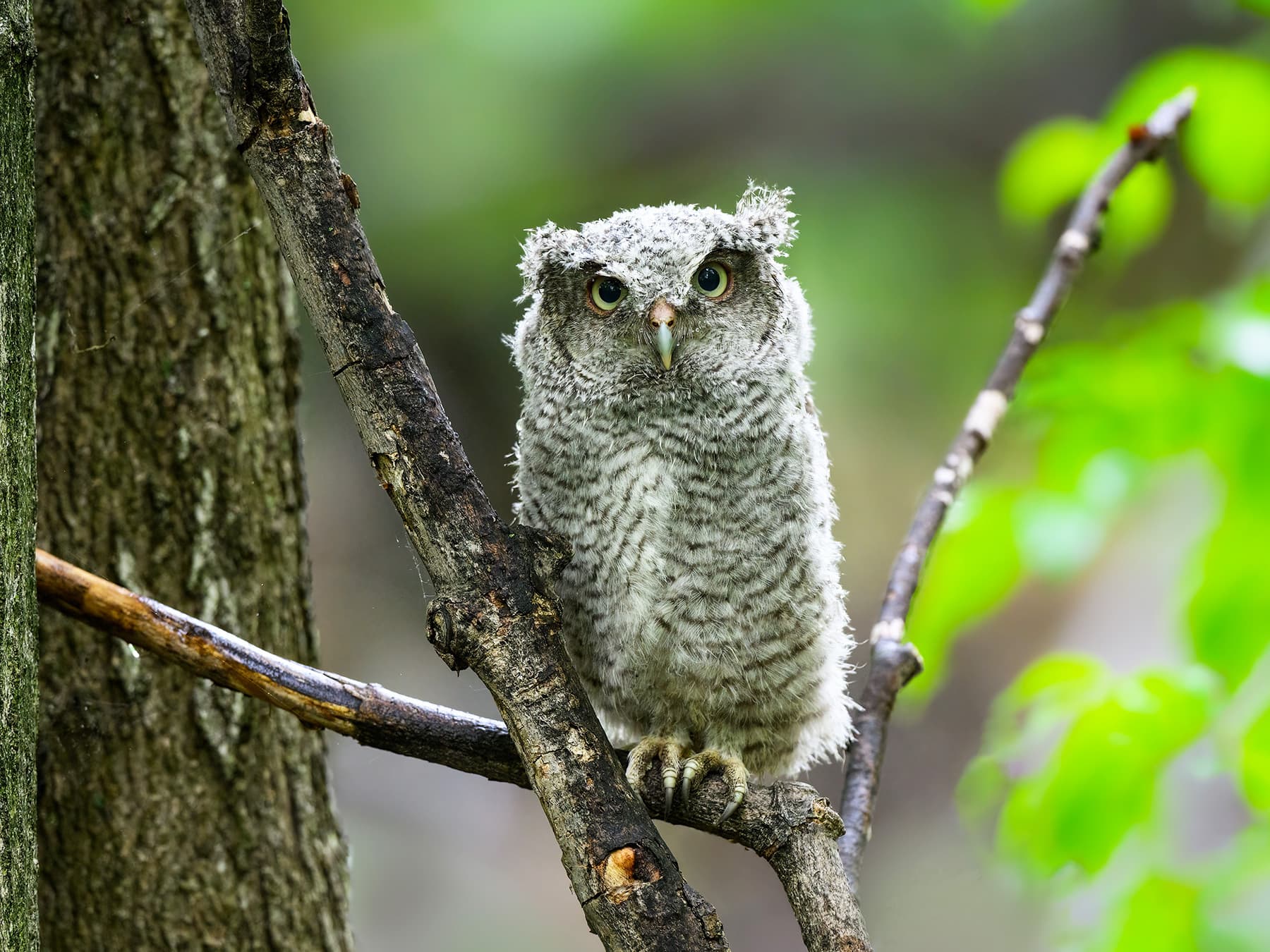
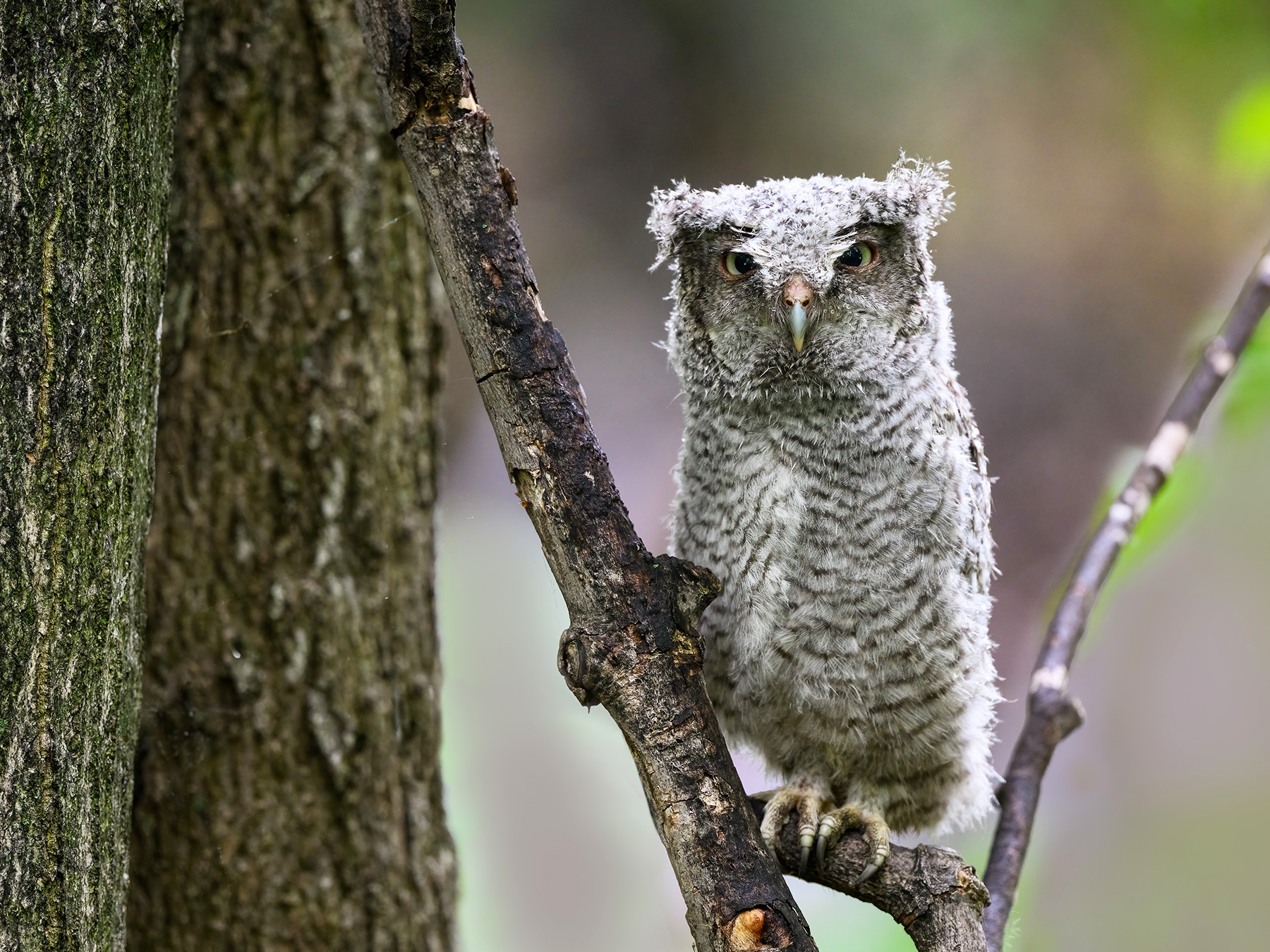
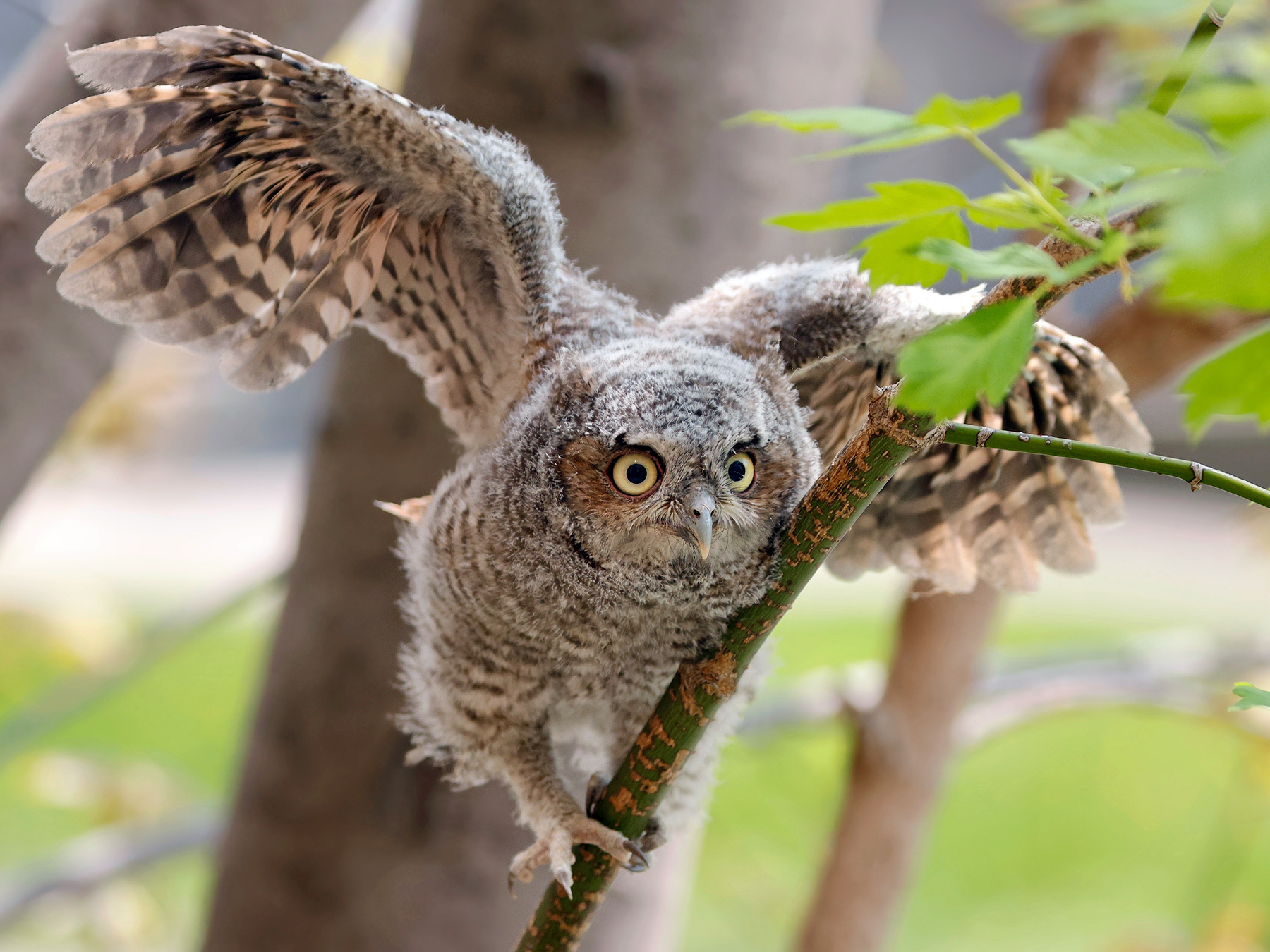
Until they acquire their full adult plumage, juvenile eastern screech-owls have a mottled gray-brown plumage, initially featuring a layer of down which gives them a fuzzy appearance. Their facial disc is less defined than an adult’s and their breast barring is less boldly marked. Their eyes are yellow, like those of a mature bird, although not as vibrant a shade.
How big are Eastern Screech-Owls?
Among the smallest owl species, eastern screech-owls are only roughly the same size as robins, with females larger and heavier than males.
- Length: 16 cm to 25 cm ( 6.3 in to 9.8 in) ·
- Wingspan: 48 cm to 61 cm (18.9 in to 24 in)
- Weight: 121 g to 244 g (4.3 oz to 8.6 oz)
Its size
Adults- Length
- 16–25 cm
- Wingspan
- 46–61 cm
- Weight
- 121–244 g
Its song and calls
What sound does an Eastern Screech-Owl make?
Despite its name, screeching does not feature in the eastern screech-owl’s vocal repertoire, with soft whinnying calls, descending in pitch and a wavering whistling tone and an unbroken trilled note the two most frequently heard sounds.
- Call0:00 / 0:32
Recorded in Minnesota, United States · April 2011
When and where to see it
OctoberLeaving
Most recorded in October
- 1. West Virginia0.12%
- 2. Kentucky0.11%
- 3. Pennsylvania0.11%
- 4. Louisianaunder 0.1%
- 5. Nebraskaunder 0.1%
Each dot is a county, state or province: the bigger and darker, the larger the bird’s share of that place’s bird records that month. Grey dots: no regular records. The ringed point is the centre of the bird’s records this month; the arrow shows how it moved since last month, and the dashed loop its path through the year. “Arrivals” colours places where it becomes regular this month (orange) or is in its last regular month (grey). GBIF eBird Observation Dataset, 2019–2024. Map data: Natural Earth, US Census Bureau; place centres © OpenStreetMap contributors.
In your area
See when the Eastern Screech-owl is recorded in your county, state or province.
How often the Eastern Screech-owl turns up in the United States and Canada through the year, from birdwatchers' records.
United States
Resident · all year · most records in December
Canada
Winter visitor · all year · most records in February
Show as a table
| Month | United States | Canada |
|---|---|---|
| January | 0.047% (regular) | 0.073% (regular) |
| February | 0.044% (regular) | 0.074% (regular) |
| March | 0.038% (regular) | 0.052% (regular) |
| April | 0.026% (regular) | 0.028% (regular) |
| May | 0.033% (regular) | 0.024% (regular) |
| June | 0.014% (regular) | 0.008% (regular) |
| July | 0.023% (regular) | 0.011% (regular) |
| August | 0.045% (regular) | 0.023% (regular) |
| September | 0.052% (regular) | 0.030% (regular) |
| October | 0.040% (regular) | 0.033% (regular) |
| November | 0.038% (regular) | 0.044% (regular) |
| December | 0.062% (regular) | 0.074% (regular) |
Worldwide: recorded regularly in 3 countries
Countries where it was recorded in at least 3 of the 6 years 2019–2024. Linked countries have their own bird list.
North America (3)
Data: EOD – eBird Observation Dataset (Cornell Lab of Ornithology), accessed via GBIF.org, CC BY 4.0. Records from 2019–2024, aggregated and filtered by Birdfact. How these lists are made
What is the habitat of an Eastern Screech-Owl?
Eastern screech-owls have adapted to survive well in a diverse range of habits, including rural, suburban, and urban settings. They are unaffected by the presence of humans and are resident in city parks, backyards, and roadsides with some tree cover. Forests, woodlands, orchards, and swamps are all regularly chosen for nesting and roosting sites.
What is the range of an Eastern Screech-Owl?
True to their name, eastern screech-owls are widespread across the eastern United States and absent west of the Rocky Mountains. They are resident in the entire eastern US, from western Montana south to western Oklahoma and Texas across to the Atlantic Coast as far north as New Hampshire.
In the north, the species has a presence across the Canadian border in parts of southeastern Saskatchewan and southern Manitoba and in the east in Quebec and Ontario. To the south, their range extends into northwestern Mexico.
Where do Eastern Screech-Owls live?
Widespread across the eastern United States, but limited to small geographic regions of Canada and northeastern Mexico, eastern screech-owls are most concentrated in the southeastern regions of the US, where the diverse ecosystems offer a perfect mix of landscapes in which the species thrives.
States with the highest populations include Florida, North Carolina, Ohio, and New York, where they are resident in forests and woodlands, and in urban and suburban neighborhoods.
How rare are Eastern Screech-Owls?
Eastern screech-owls are believed to be the most common owl species in the eastern US, and sightings are regularly reported throughout their range. Estimates put the population in Canada and the United States combined at 680,000, although in Canada, they are considered a lot rarer.
Where can you see Eastern Screech-Owls in the US?
The diverse habitats of the Everglades National Park in Florida offer numerous opportunities to spot eastern screech-owls.
Further north, the forests of the Great Smoky Mountains National Park in Tennessee and North Carolina are another well-known spot for sightings. Eastern screech-owls are regularly reported in the forests of Virginia’s Shenadoah National Park, where they are one of the most common owl species.
Where can you see Eastern Screech-Owls in Canada?
The extreme southern regions of Ontario, Quebec, and New Brunswick are the most likely provinces for an eastern screech-owl sighting in Canada. The woodlands in Quebec’s Mont-Saint-Bruno National Park are known to have resident eastern screech-owls.
Migration
Do Eastern Screech-Owls migrate?
Eastern screech-owls are a sedentary species and do not leave their home territories in winter, remaining in the same areas throughout the year. Some dispersal from breeding territories may occasionally occur in years of bad weather or poor prey availability.
Are Eastern Screech-Owls native to the US?
The eastern and central United States are home to the vast majority of the global population of eastern screech-owls.
Their range extends across the northern border into Canada in a few regions, as well as southwards into northeastern Mexico. However, most eastern screech-owls are resident in the US all year round and are one of the most widespread and common owls in urban and suburban habitats in the east of the country.
Tips for seeing it
- Listen for their distinctive trill call at night, especially during the breeding season
- Check tree cavities and dense foliage during the day for roosting owls
- Look for pellets or whitewash beneath potential roosting sites
- Use a flashlight at night to spot their reflective eyes
What it eats
What do Eastern Screech-Owls eat?
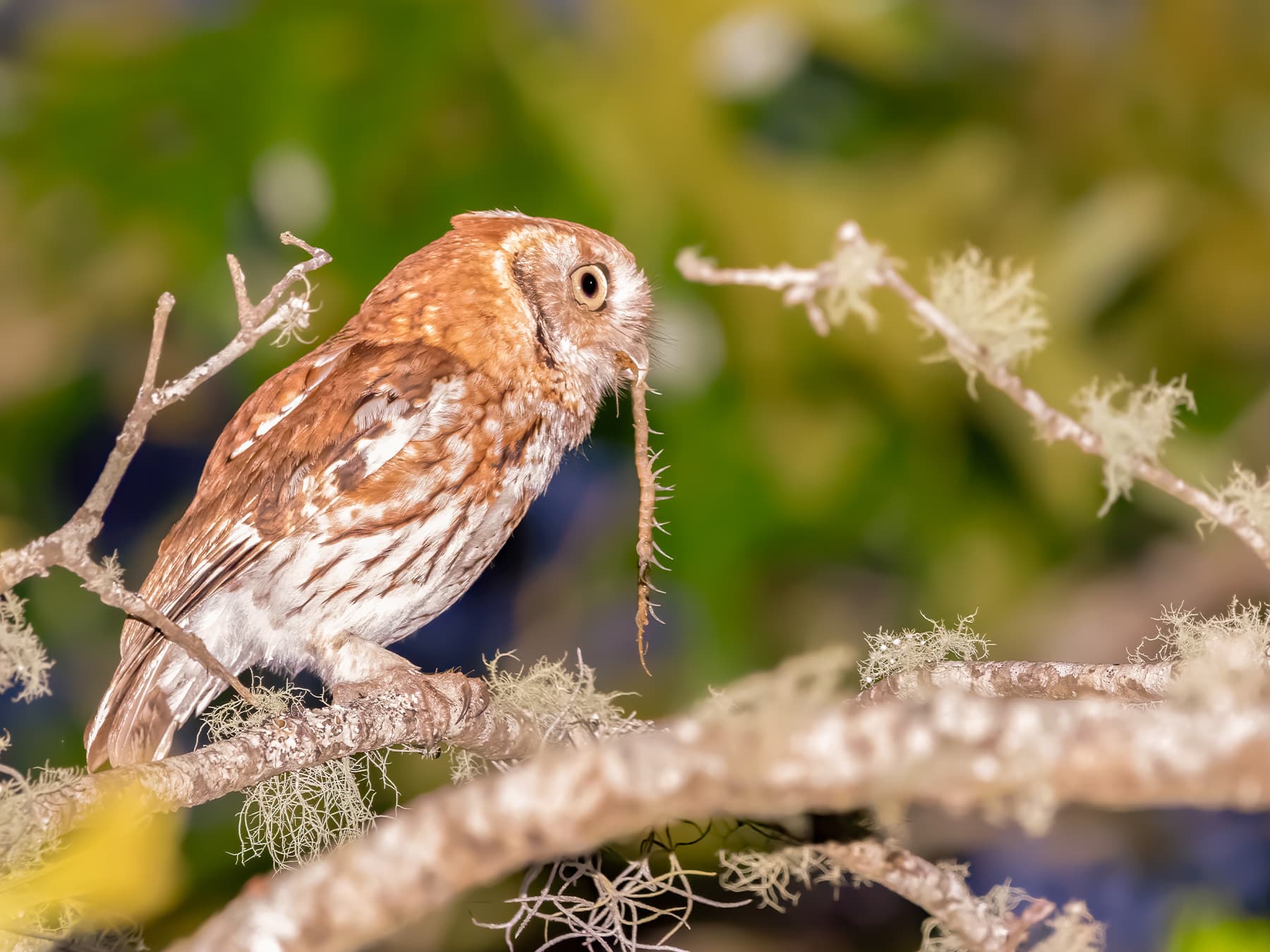
Prey caught by eastern screech-owls is diverse and ranges from insects and invertebrates to crayfish, small rodents, birds, earthworms, snakes, fish, and lizards.
They are believed to have one of the widest diets among all owls, with a recorded 138 vertebrate species taken, of which up to 67 percent comprised rodents and squirrels, and 83 different bird species, including flycatchers, wrens, starlings, sparrows, waxwings, jays, tits and creepers.
What do Eastern Screech-Owl chicks eat?
Beetles, caterpillars, and moths are among the most common types of prey brought to nestlings by eastern screech-owls. Larger items include deer mice, frogs, salamanders, and small birds, which are torn into smaller pieces before being fed by the mother to her young.
Nesting and breeding
Where do Eastern Screech-Owls nest?
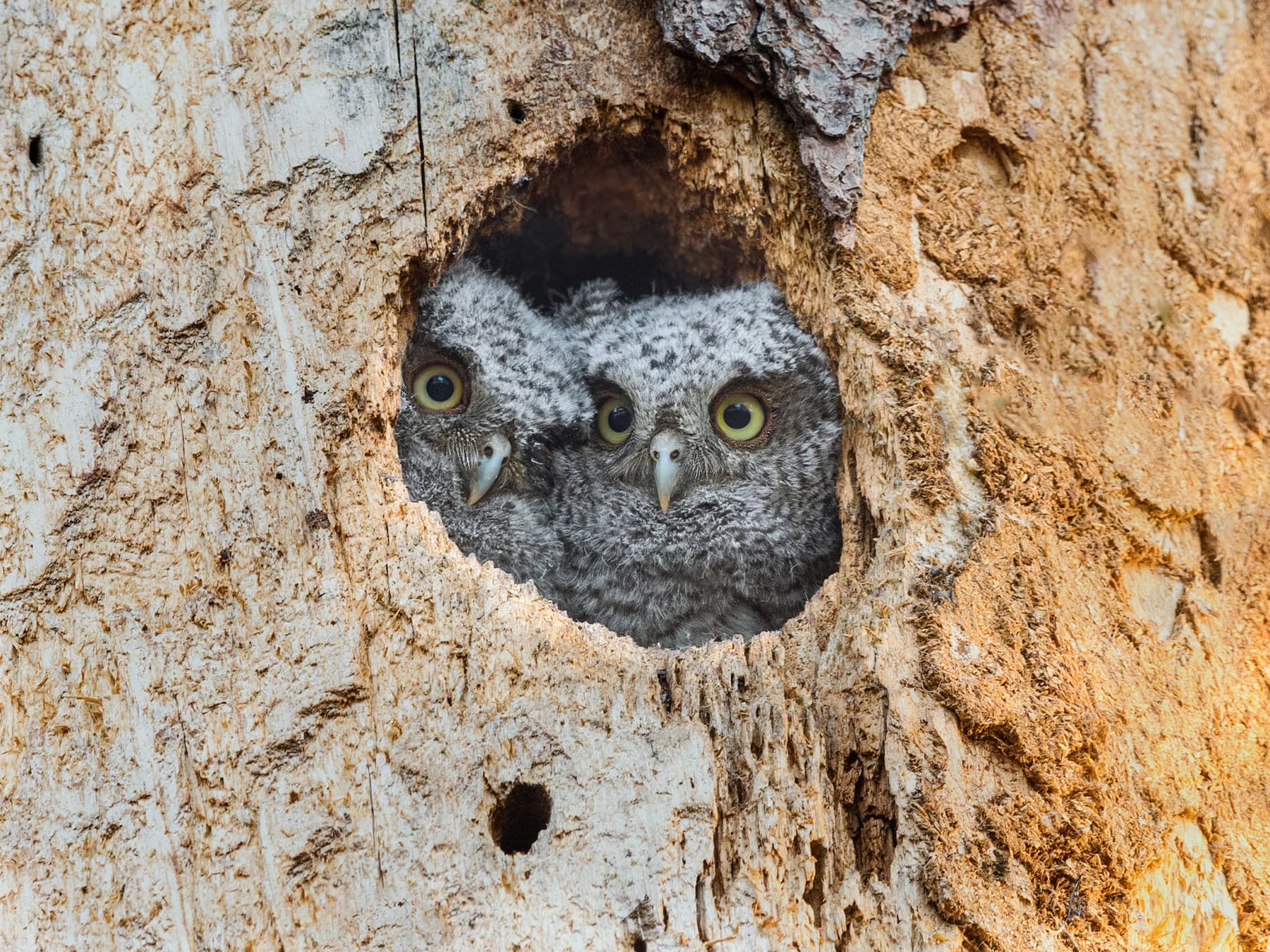
Eastern screech-owls are cavity nesters but seem to show little preference between artificial nest boxes and naturally occurring hollows in deciduous trees.
They may also reuse abandoned nests that were originally excavated by other birds, especially northern flickers and red-cockaded woodpeckers. If their chosen site leads to a successful breeding attempt, it will likely be used again in subsequent years.
Nest cavities are usually located between 4 m and 6 m (13 ft to 20 ft) off the ground, although may be as high as 20 m (65 ft).
When do Eastern Screech-Owls nest?
The nesting period for eastern screech-owls lasts for over four months, from pair formation from late January until mid-March, followed by laying which peaks in late March to early April. Incubation, which is undertaken by the female alone, takes from 29 to 31 days, after which nestlings are tended in the cavity for a further 26 to 28 days before they fledge.
What do Eastern Screech-Owl eggs look like?
Eastern screech-owls eggs are creamy-white with no external markings on the shell, although may become discolored with brownish streaks from damp nesting material. They are slightly rounded in shape, measuring a maximum of 36 mm by 30 mm (1.4 in by 1.2 in).
A typical clutch contains between 2 and 6 eggs, with 3 or 4 most common, and one single brood is raised each year.
Do Eastern Screech-Owls mate for life?
Eastern screech-owls usually form lifelong pairs and breed together each year. If one mate dies, a new mate will be found, and on rare occasions, a male may breed with two different females, with the second female usually displacing the first from her nest cavity and laying her own eggs alongside any that have already been laid.
Behaviour
Are Eastern Screech-Owls aggressive?
Bill clapping is used as an initial deterrent towards any intruders that encroach on their territory. Adults rarely attack but will swipe and strike with wings and talons if any intruders threaten their young.
Where do Eastern Screech-Owls sleep at night?
A nocturnal hunter, eastern screech-owls are awake at night and roost during the day and will readily use nest boxes or other natural cavities to rest in during the day, but will also use branches or tangles in vines close to the trunks of tall trees.
In winter, evergreen trees are a popular choice for roosting sites, while during the breeding season, deciduous trees are used for nest cavities, where females roost while incubating and brooding.
Lifespan and predators
How long do Eastern Screech-Owls live?
Lifespans of eastern screech-owls in the wild can vary considerably, from a minimum average of one year (data based on the study of female eastern screech-owls in Texas) to a maximum of 20 years and 8 months. Lifespans of around 16 years are fairly typical, with breeding usually occurring for the first time at 1 year of age.
What are the predators of Eastern Screech-Owls?
Despite a high level of vigilance around the cavity by both parents, predators including black rat snakes, opossums, raccoons, and ringtails do opportunistically raid eastern screech-owl nest chambers in search of eggs and young.
Larger owls, including great-horned owls, barred owls, and hawks are known to prey on fledglings and adult birds.
Are Eastern Screech-Owls protected?
In the United States, the Migratory Bird Treaty Act prohibits the killing, injuring, capturing, and trading of eastern screech-owls, their nests, young, and feathers. Similar legislation in Canada, the Migratory Birds Convention Act, offers similar protection north of the international border.
Are Eastern Screech-Owls endangered?
Eastern screech-owls are a hardy, adaptable species that has broadened its habitat options in recent decades and is able to survive in a range of environments. It is classified as a species of least concern and there are currently no threats to its future survival.
Conservation
While the Eastern Screech-owl is currently listed as Least Concern, it faces threats from habitat loss due to urbanization and deforestation.
Conservation efforts focus on preserving woodland habitats and providing nest boxes in urban and suburban areas to support breeding populations.
More photos
7 photos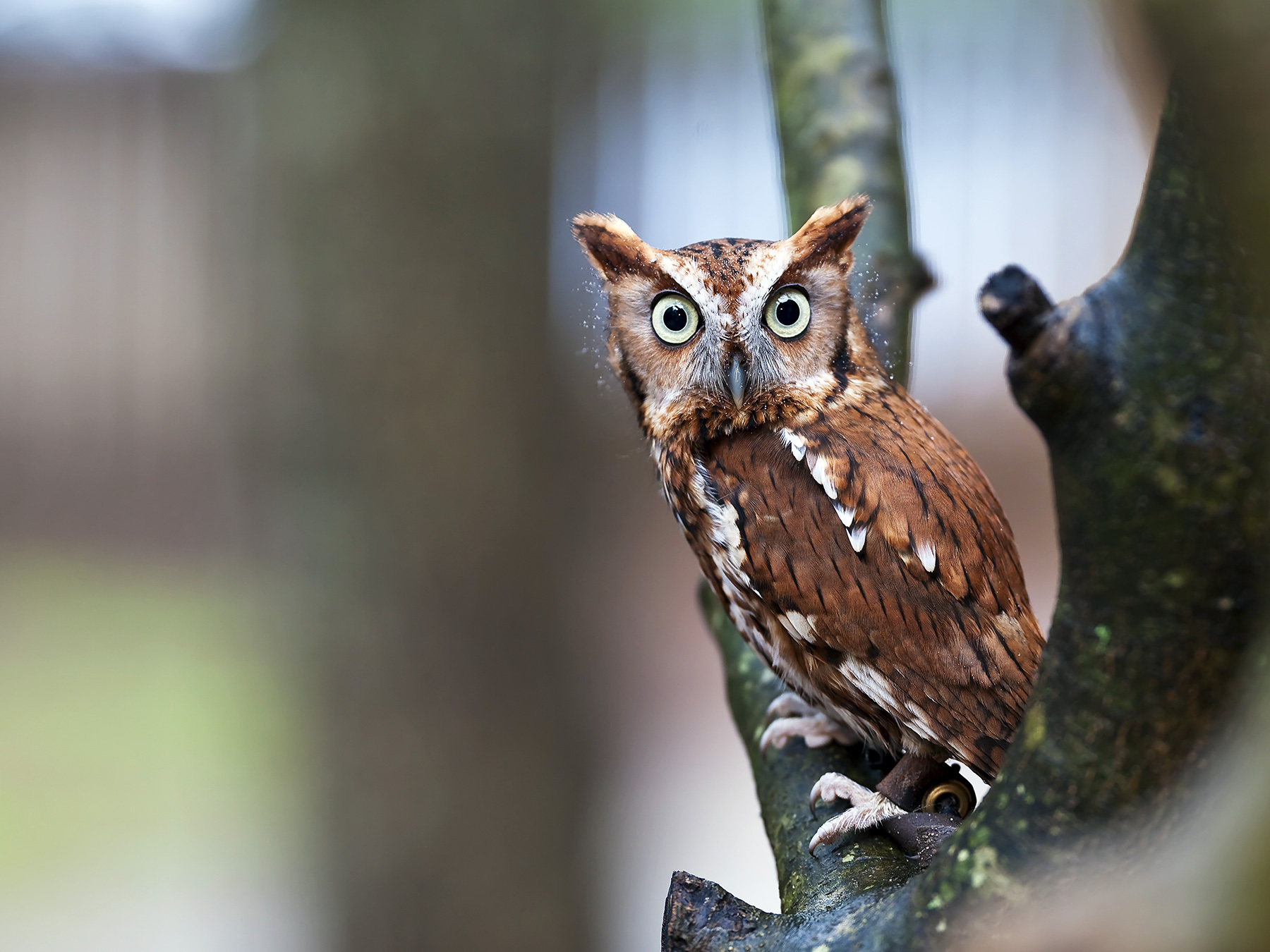
Eastern Screech-owl guides
1 guidesQuick facts
- Length
- 16–25 cm
- Wingspan
- 46–61 cm
- Weight
- 121–244 g
- Lifespan
- 8–10 years
- Family
- Owls
- Migration
- Resident
- Global status (IUCN)
- Least Concern
- World population
- 560,000 mature individuals
- Population trend
- Decreasing
- Also called
- Screech Owl
- Scientific name
- Megascops asio
Questions
5What does it mean when you see an Eastern Screech-Owl?
The symbolism of eastern screech-owls has different interpretations for different people and cultures.
Some believe that seeing any screech-owl serves as a warning that you must listen to advice and pay attention to what you’re being told. Other meanings include that you are in control of your own decision-making and responsible for the path you take, rather than simply following a suggestion without challenging it.
Do Eastern screech owls eat squirrels?
Eastern screech-owls are opportunistic and will hunt and catch whatever prey they can. Squirrels and eastern screech-owls share the same habitats, making them a readily available food source.
However, as squirrels are active during the day and eastern screech owls are strictly nocturnal, there may not be many occasions when the two cross paths.
What is the difference between a Great Horned Owl and an Eastern Screech-Owl?
Great horned owls and eastern screech-owls do share some overlap in their ranges, as great horned owls are resident across the entire United States. There are also some visual similarities, as both species have ear tufts and similar coloring.
However, it’s pretty unlikely that you’d get the two mixed up due to one huge difference – their size. Great horned owls are around 56 cm (22 in) in length, almost three times the size of the eastern screech owl!
Are Eastern Screech-Owls aggressive to humans?
If disturbed or distressed, an eastern screech-owl may strike at a human that attempts to handle it, but generally, they are relatively passive and used to living alongside people in urban settings. Due to their size, they are not capable of inflicting major injuries.
How to attract Eastern Screech-Owls?
Eastern screech-owls are one of the most likely owls to take up residence in a backyard in the eastern United States, particularly if tall trees with nesting possibilities are available and there is an abundance of insect and invertebrate life nearby.
Nest boxes are used by breeding pairs as well as by individuals as a safe roosting shelter throughout the year. Foliage, including vines and shrubbery, are a great source of foraging opportunities as well as providing camouflage and cover.
Sources
3- 1BirdLife International. 2019. Megascops asio. The IUCN Red List of Threatened Species 2019: e.T155660662A152331179. Source (opens in a new tab)
- 2Sauer et al. (2017)
- 3Partners in Flight (2019)

Checked by
Nathan Cope, founder and editor
Nathan founded Birdfact and leads its writers and contributors in the UK, the US and Canada. He has watched and studied birds for more than ten years, and checks every article and species guide before it’s published.