


Northern Pygmy-owl
Mountain Pygmy-owl · Glaucidium gnoma
By the Birdfact teamChecked by Nathan Cope
On this page13 sections
How to recognise it
What do Northern Pygmy-Owls look like?
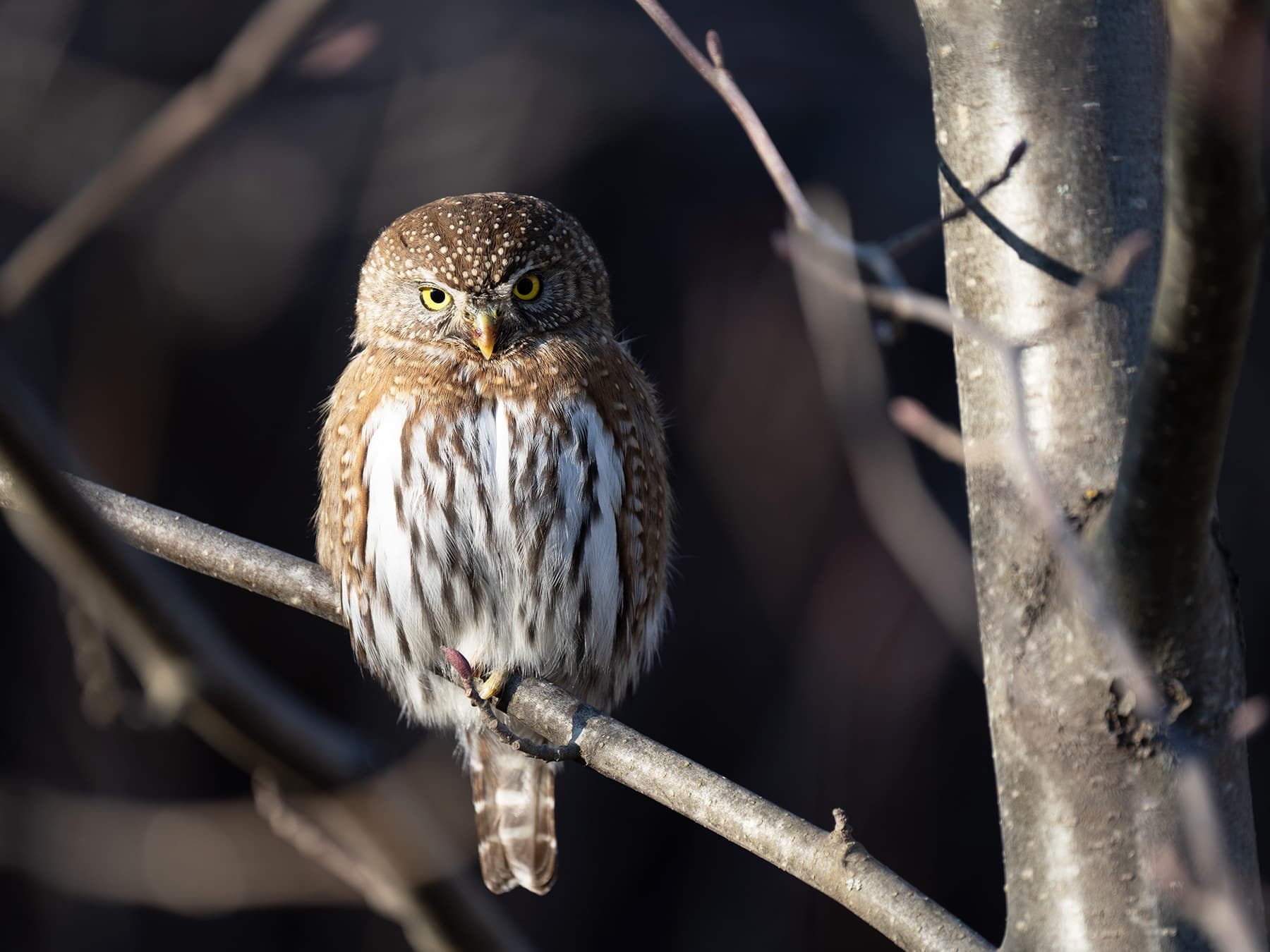
Compact, stocky owls, with rounded heads, small ear tufts and a relatively long tail, marked with dark barring.
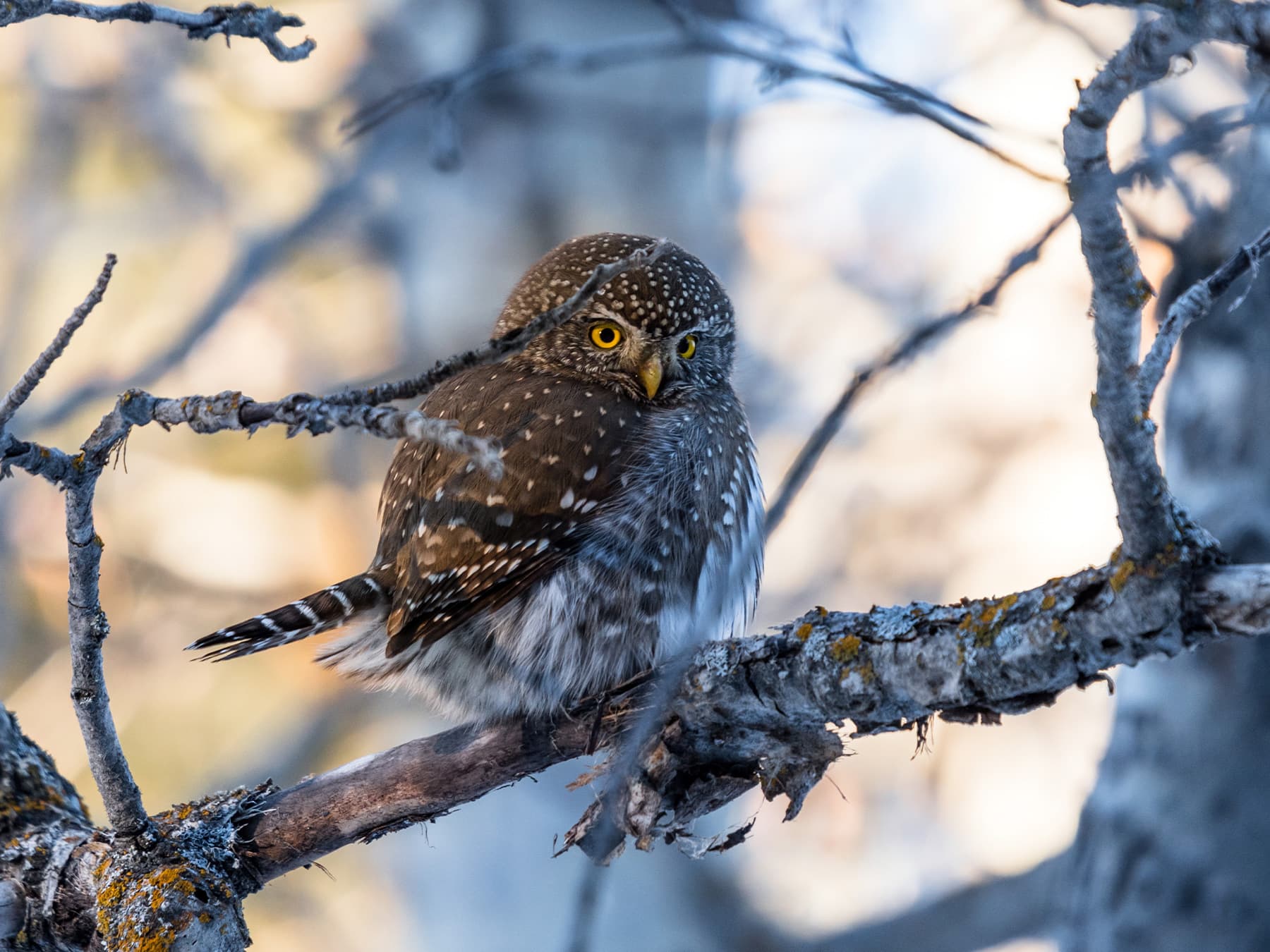
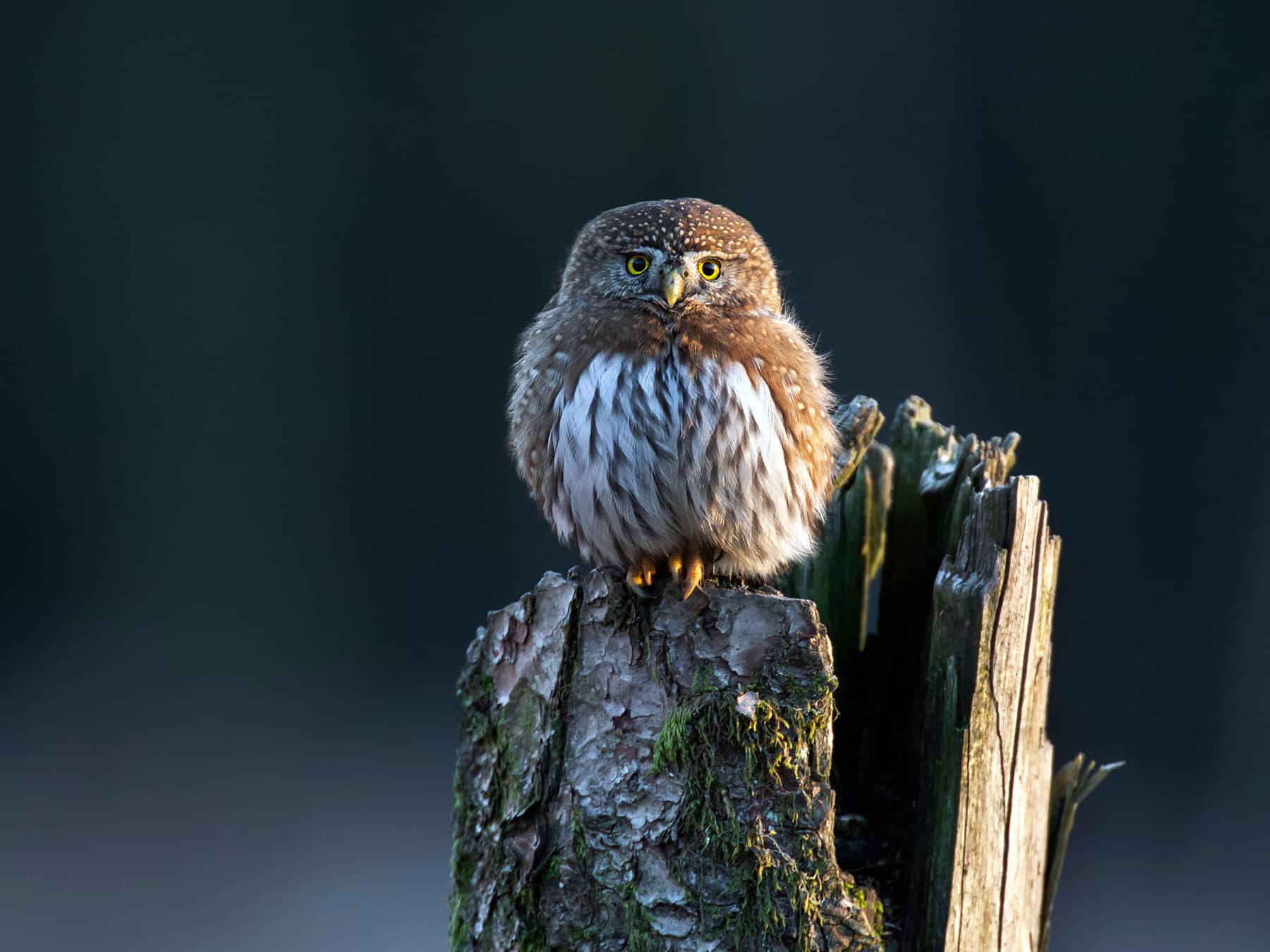
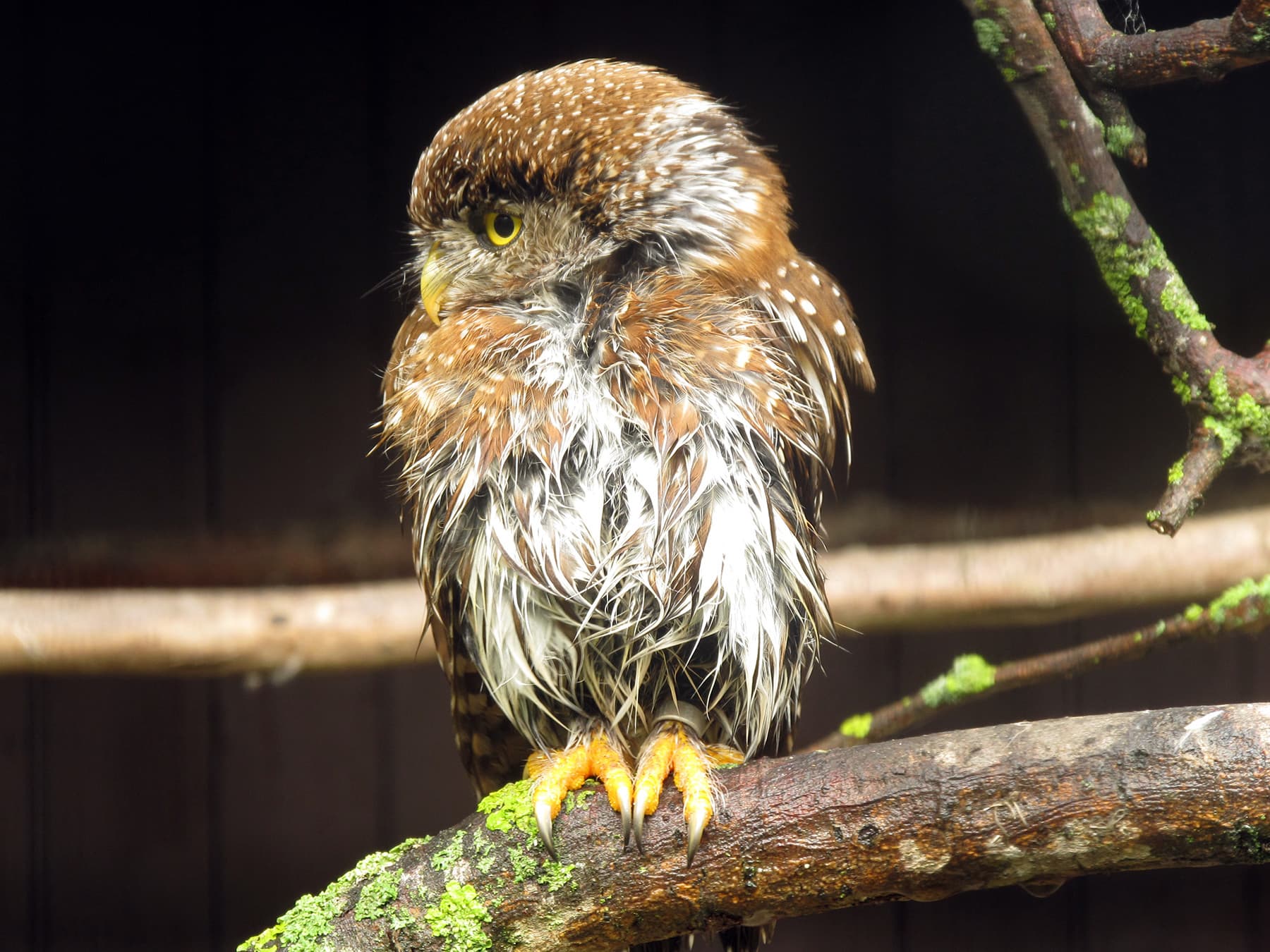
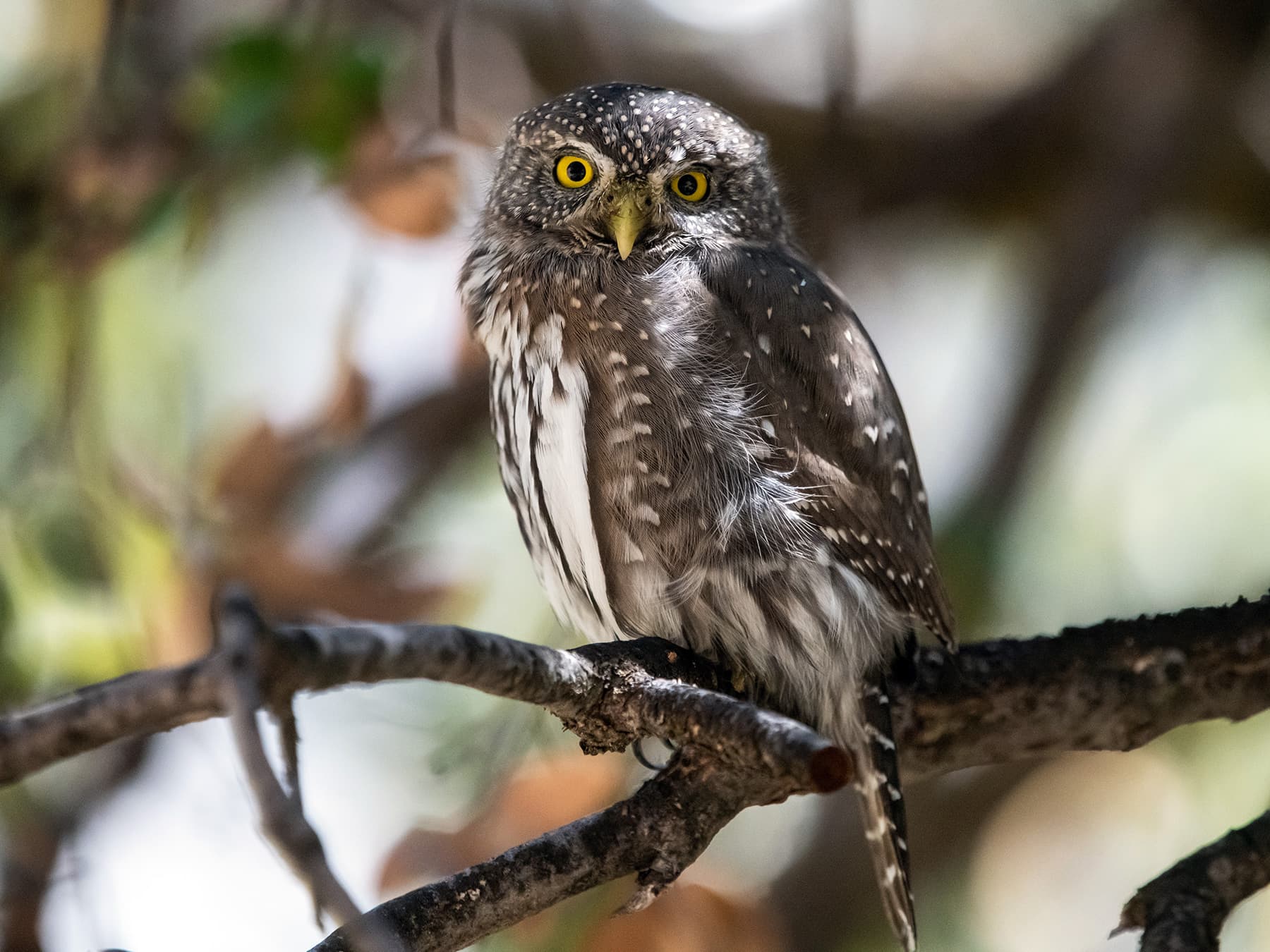
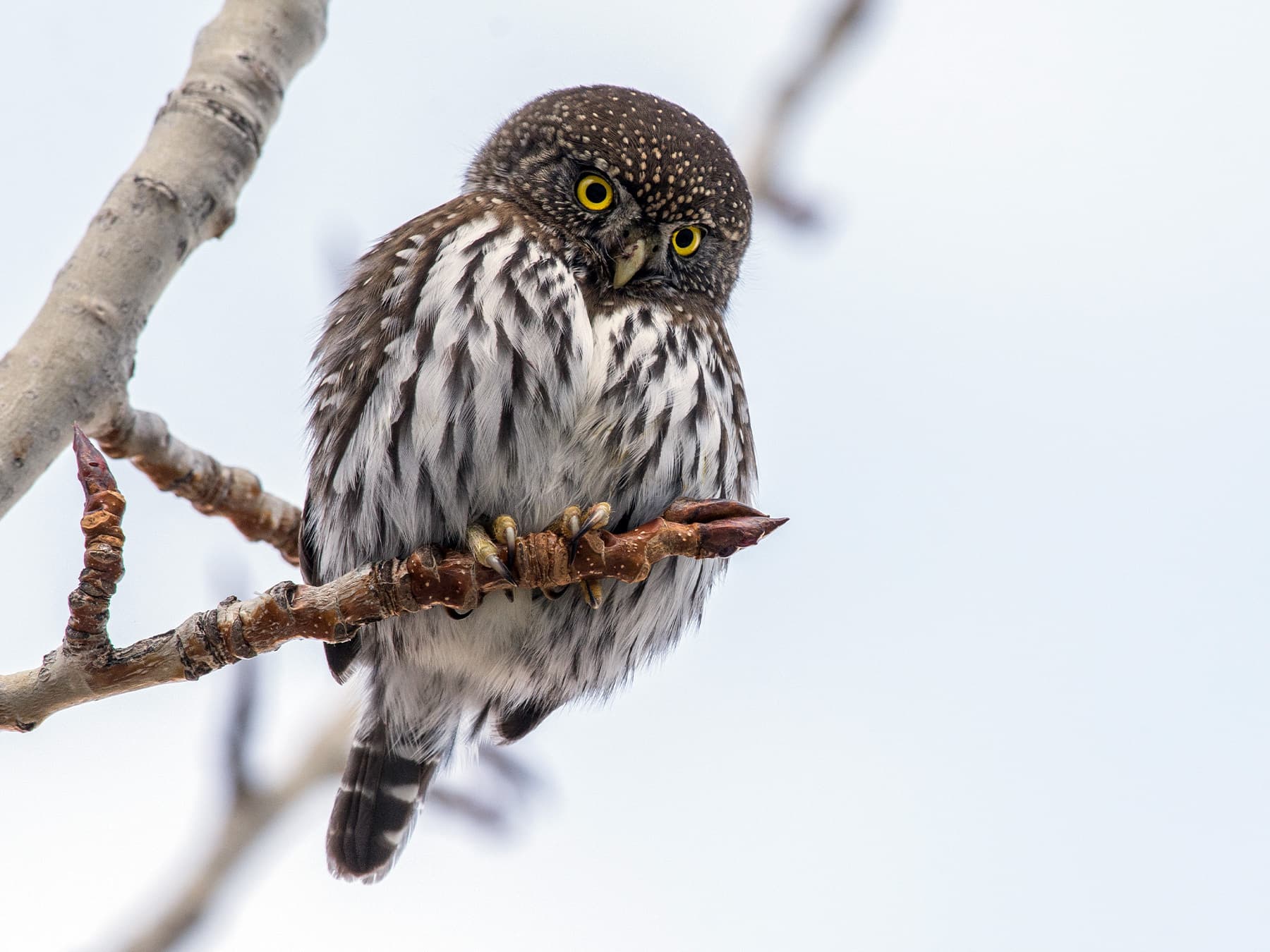
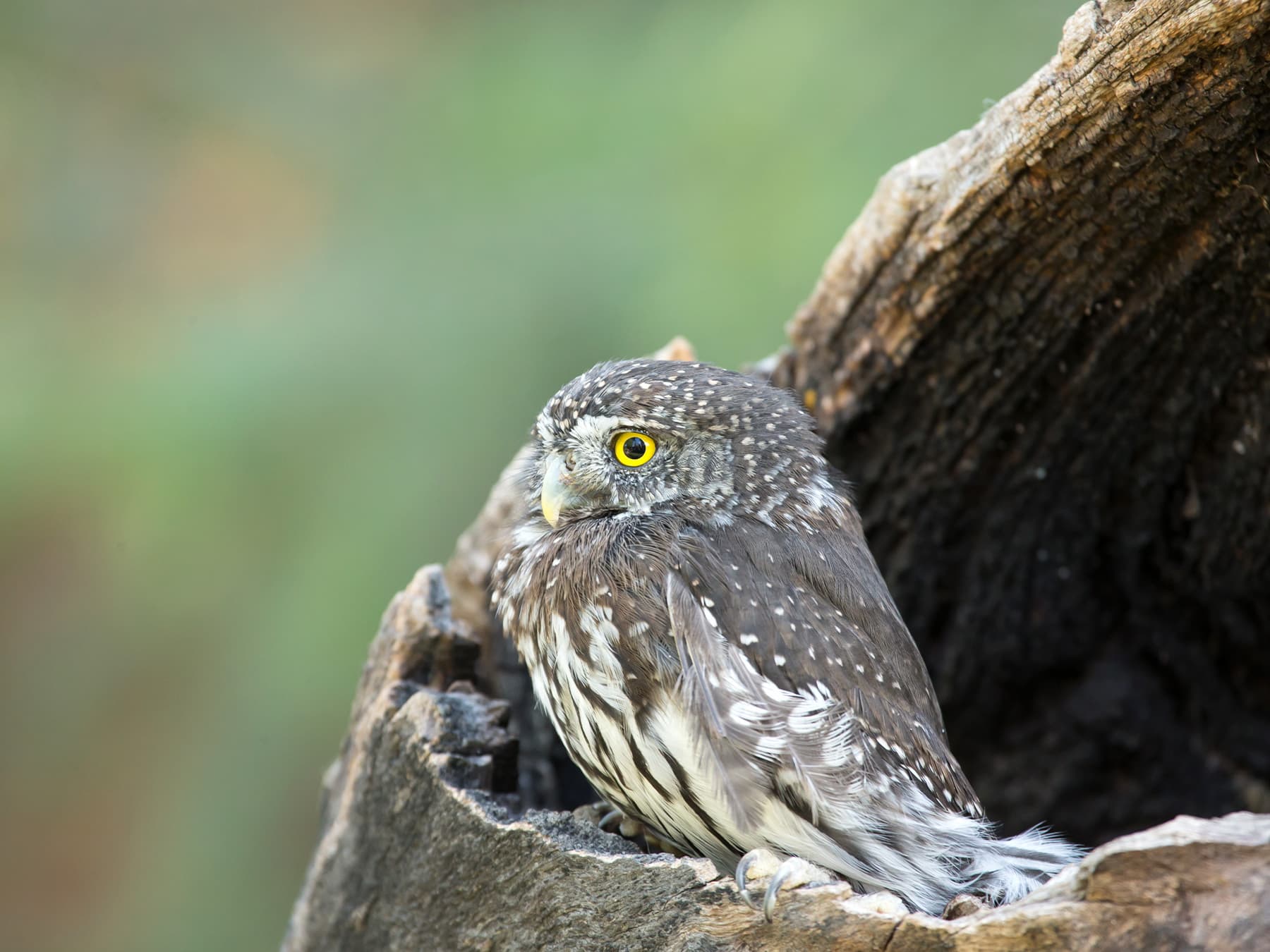
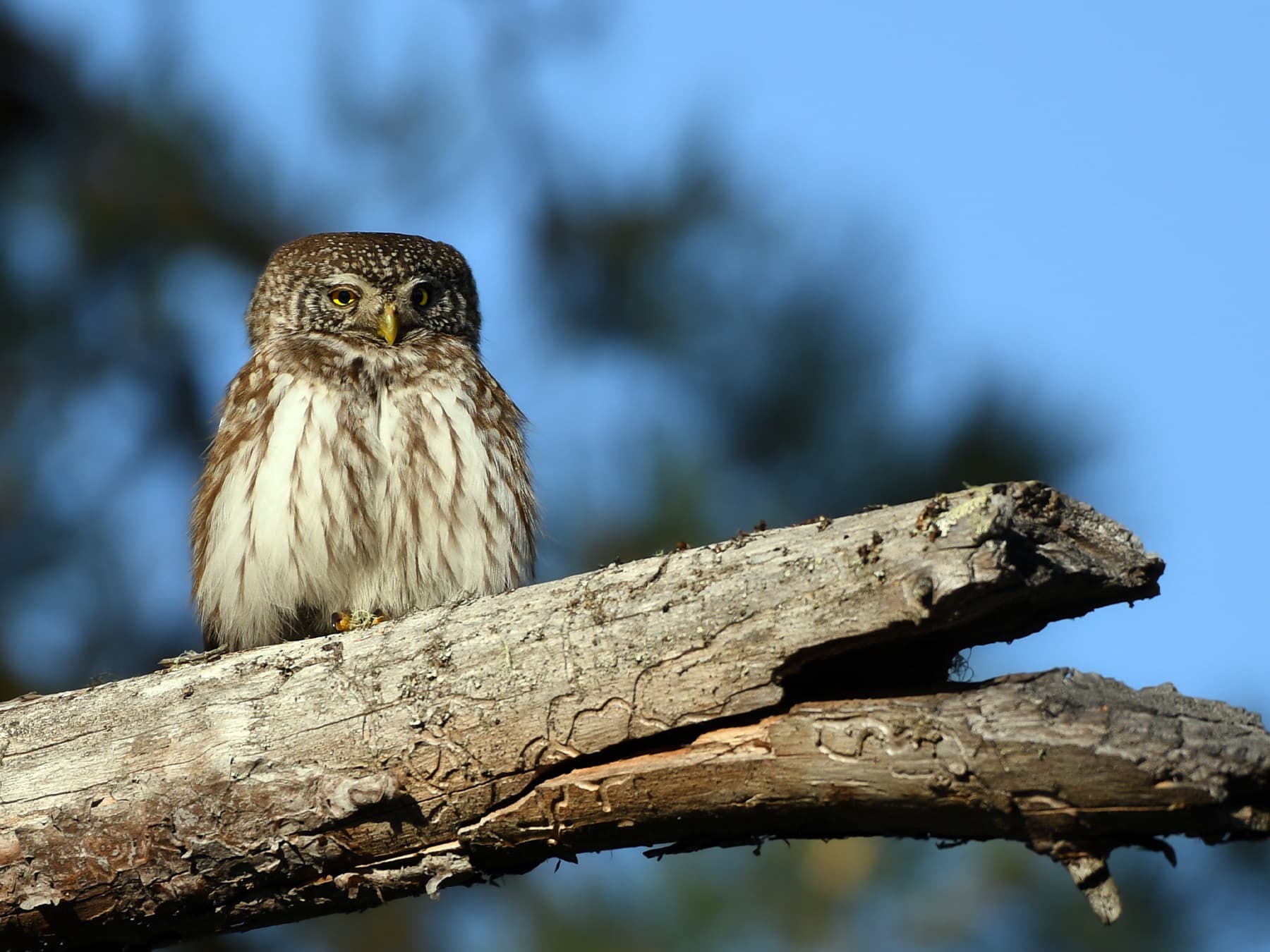
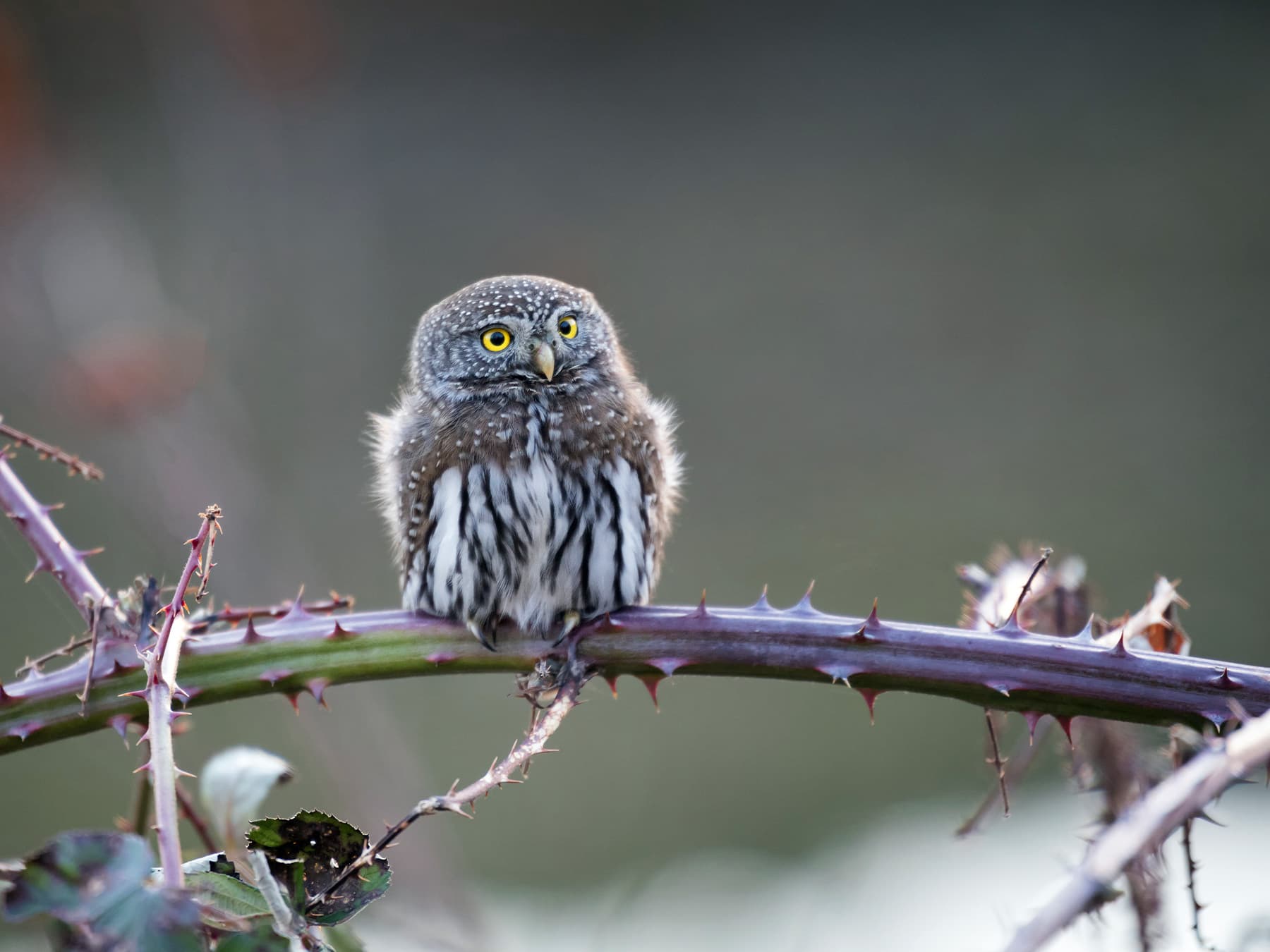
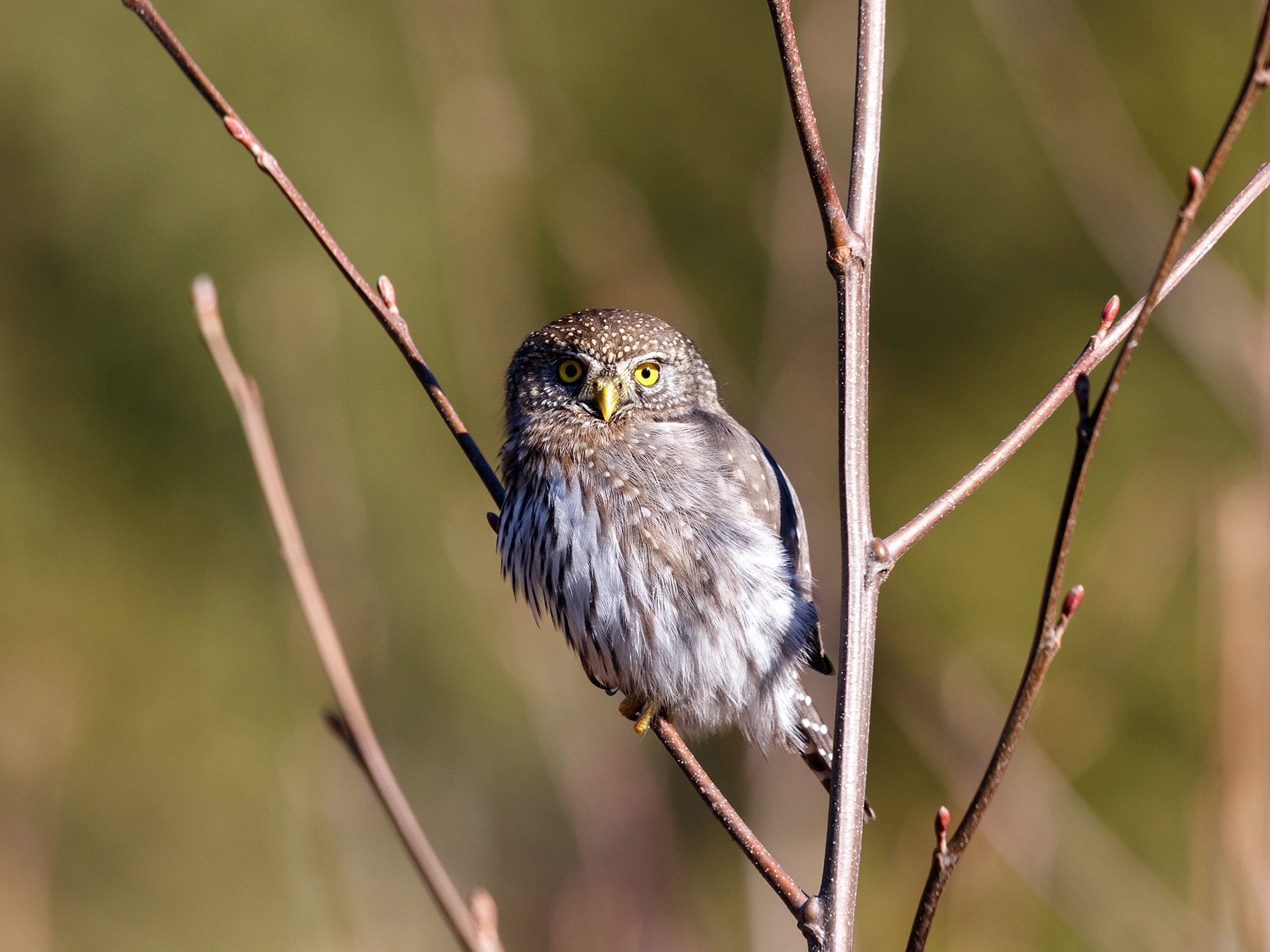
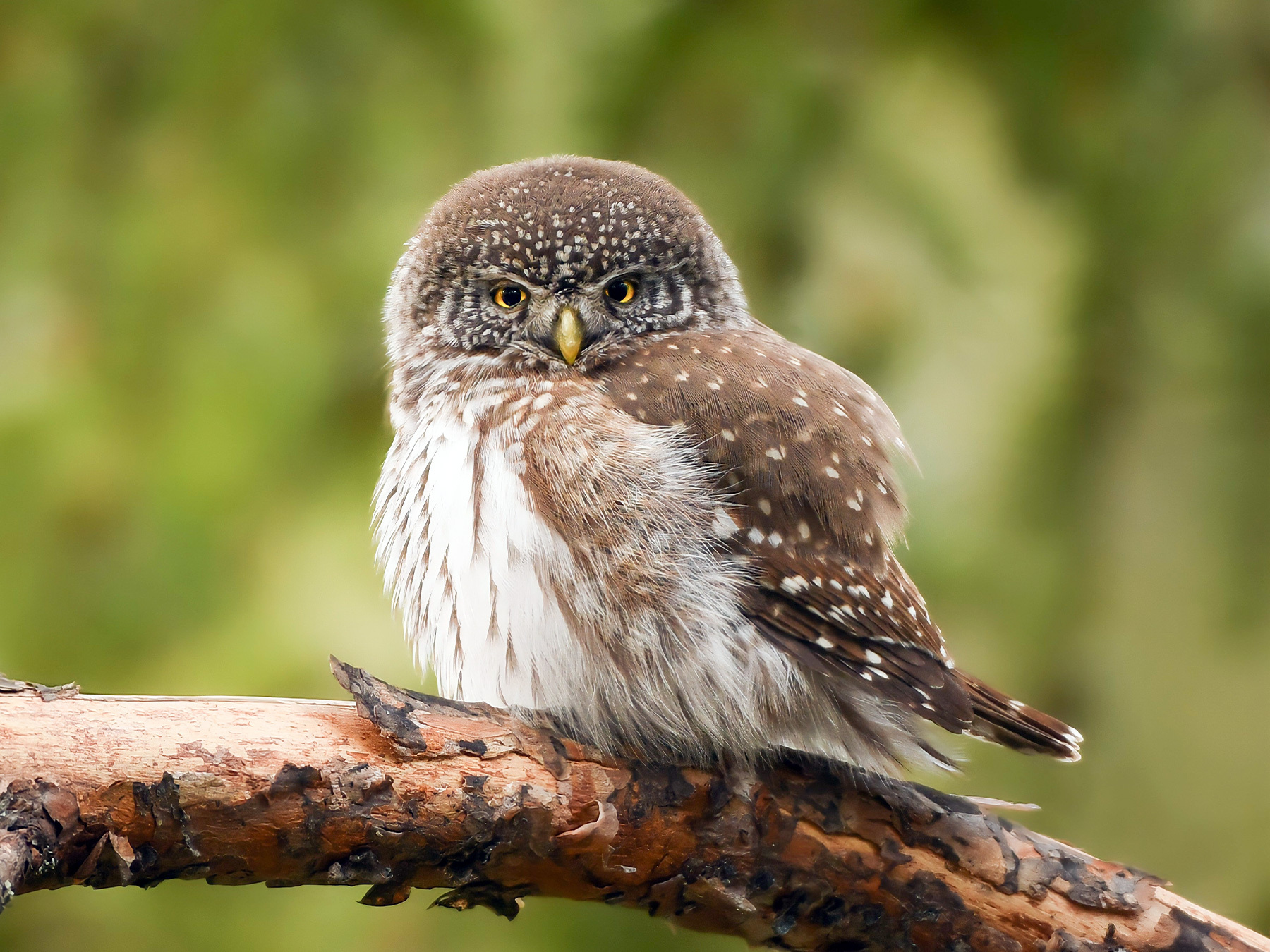
Northern pygmy-owls have a brown, gray and white streaked plumage that offers excellent camouflage against the forest tree trunks and branches. Some variation exists between individuals’ coloring from a rufous-brown to a darker gray-brown wash. Upperparts are mid-brown with white spots and streaks, and underparts are paler, marked with fine dark streaks. A mottled brownish bib runs across the upper breast.
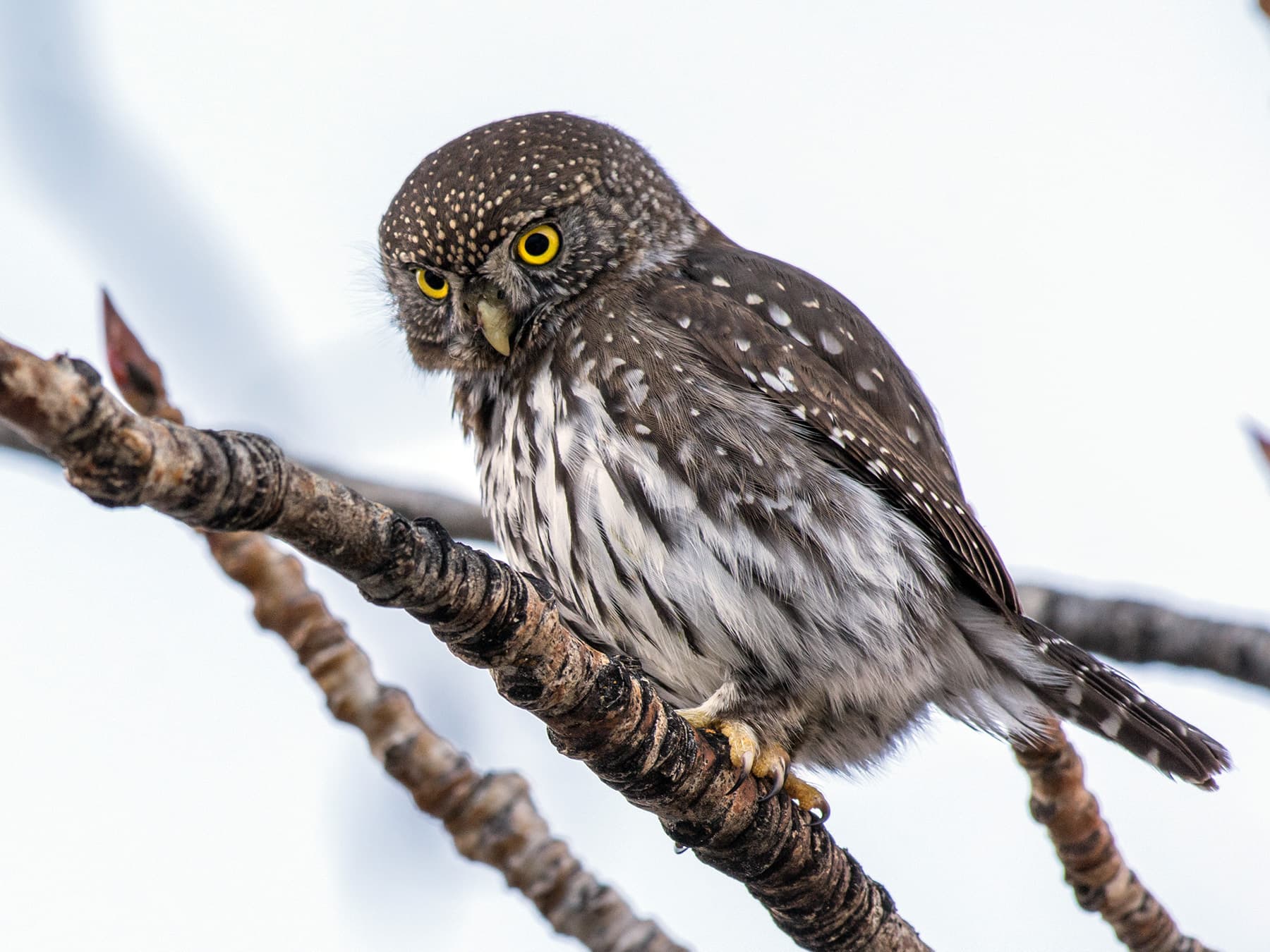
A distinctive plumage feature is visible on the upper body of a northern pygmy-owl. On the back of the neck are two ‘false eyes’: black oval-shaped patches ringed with white. These are believed to be an adaptation to deter predators. Their actual facial markings are not especially well-defined, with a small, pale facial disc, short white eyebrows, a yellowish-brown bill and piercing yellow eyes.
Female and male northern pygmy-owls are alike in plumage but females are often slightly darker than males.
Juvenile northern pygmy owls can be distinguished from adults due to their dark beak and the presence of more intense spotty markings on the crown.
How big are Northern Pygmy-Owls?
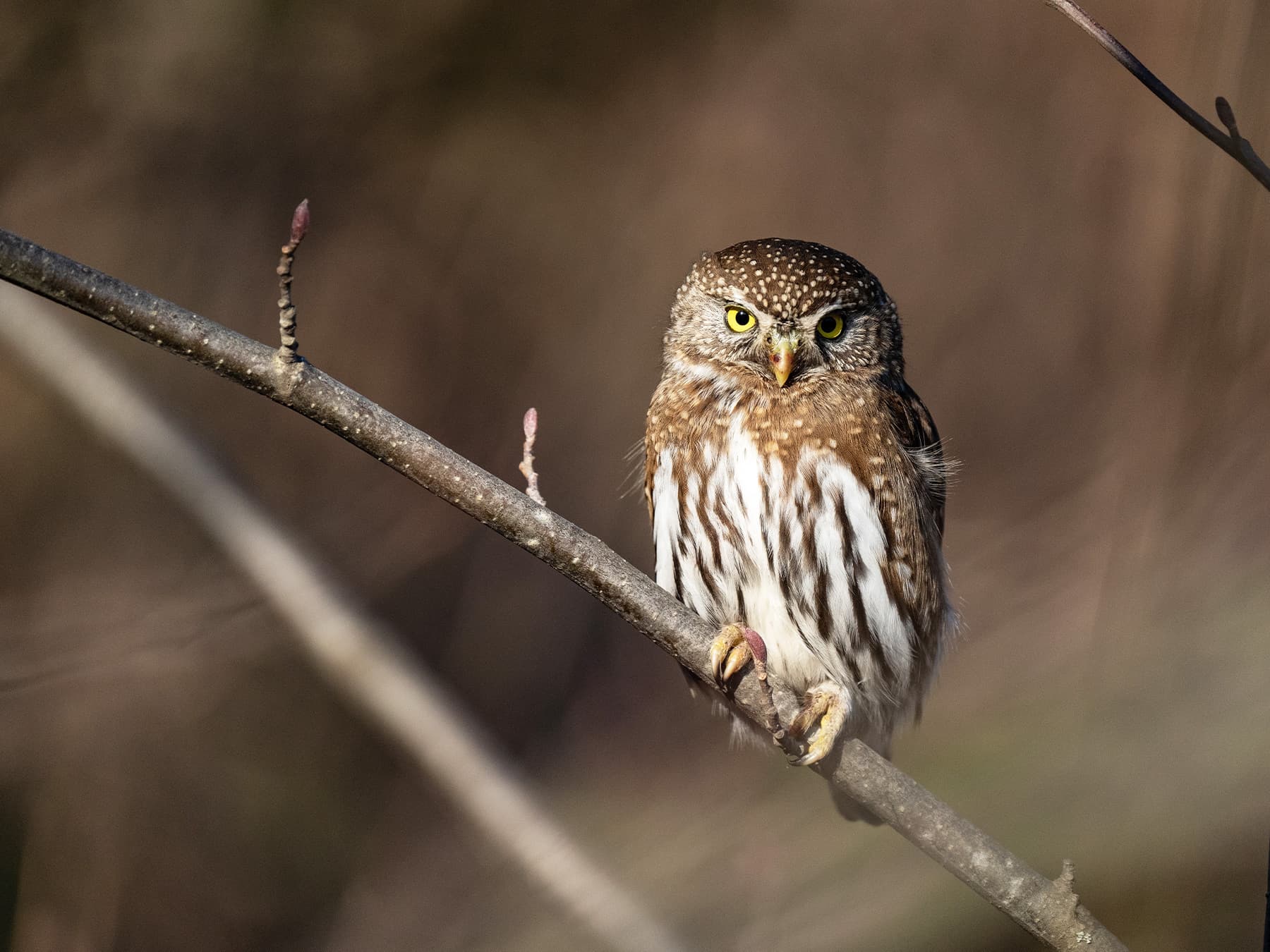
One of North America’s smallest owls, the northern pygmy-owl is between the size of a house sparrow and an eastern bluebird. Females are heavier and slightly larger than males.
- Height: 16 cm to 18 cm (6.3 in to 7.1 in)
- Wingspan: 38cm (15 in)
- Weight: 62 g to 72 g (2.2 oz to 2.5 oz)
Its size
Adults- Length
- 15–17 cm
- Wingspan
- 38–43 cm
- Weight
- 50–73 g
Its song and calls
What sound does a Northern Pygmy-Owl make?
The most frequently heard call of a northern pygmy-owl is a relatively high-pitched toot, repeated at intervals of around two seconds, and used as an advertising call by males early in the breeding season. A rapid series of trilling notes is used as an alarm or distress call.
When and where to see it
OctoberArriving
Most recorded in October
- 1. Oregonunder 0.1%
- 2. Idahounder 0.1%
- 3. Montanaunder 0.1%
- 4. Utahunder 0.1%
- 5. British Columbiaunder 0.1%
Each dot is a county, state or province: the bigger and darker, the larger the bird’s share of that place’s bird records that month. Grey dots: no regular records. The ringed point is the centre of the bird’s records this month; the arrow shows how it moved since last month, and the dashed loop its path through the year. “Arrivals” colours places where it becomes regular this month (orange) or is in its last regular month (grey). GBIF eBird Observation Dataset, 2019–2024. Map data: Natural Earth, US Census Bureau; place centres © OpenStreetMap contributors.
In your area
See when the Northern Pygmy-owl is recorded in your county, state or province.
How often the Northern Pygmy-owl turns up in the United States and Canada through the year, from birdwatchers' records.
United States
Resident · all year · most records in October
Canada
Winter visitor · all year · most records in December
Show as a table
| Month | United States | Canada |
|---|---|---|
| January | 0.006% (regular) | 0.017% (regular) |
| February | 0.006% (regular) | 0.020% (regular) |
| March | 0.007% (regular) | 0.013% (regular) |
| April | 0.005% (regular) | 0.004% (regular) |
| May | 0.004% (regular) | 0.002% (regular) |
| June | 0.005% (regular) | 0.002% (regular) |
| July | 0.005% (regular) | 0.002% (regular) |
| August | 0.007% (regular) | 0.004% (regular) |
| September | 0.007% (regular) | 0.009% (regular) |
| October | 0.008% (regular) | 0.012% (regular) |
| November | 0.005% (regular) | 0.014% (regular) |
| December | 0.006% (regular) | 0.020% (regular) |
Worldwide: recorded regularly in 6 countries
Countries where it was recorded in at least 3 of the 6 years 2019–2024. Linked countries have their own bird list.
North America (6)
- Canada
- El Salvador
- Guatemala
- Honduras
- Mexico
- United States
Data: EOD – eBird Observation Dataset (Cornell Lab of Ornithology), accessed via GBIF.org, CC BY 4.0. Records from 2019–2024, aggregated and filtered by Birdfact. How these lists are made
What is the habitat of a Northern Pygmy-Owl?
Resident in both coniferous and deciduous habitats, northern pygmy-owls are most commonly found in open forested environments, hunting from perches in trees around the forest edges. Their preferred nest sites are natural or abandoned cavities in deadwood standing trees, with mixed spruce and fir seeming to be the preferred species.
What is the range of a Northern Pygmy-Owl?
Northern pygmy-owls are native to western North America, from Alaska and British Columbia in the north, southwards through California and Arizona to Mexico, and occasionally reach as far south as Guatemala and Honduras.
Where do Northern Pygmy-Owls live?
Precise population data is not available, but northern pygmy-owls are known to have established populations in British Columbia, Alberta, Alaska, Washington, Oregon, Idaho, Montana, Wyoming, Nevada, California, Arizona, New Mexico, Colorado, Utah, and into western Mexico.
How rare are Northern Pygmy-Owls?
In parts of their range, northern pygmy-owls are considered relatively common and locally abundant in areas with suitable forested landscapes.
As they are active during daylight hours, the opportunities for sightings are higher than for many other owl species. One possible clue to their presence is loud, squawking mobbings from small songbird species, hoping to survive a northern pygmy-owl’s hunting attempt.
Where can you see Northern Pygmy-Owls in the US?
California’s Redwood National Park, Washington’s Olympic National Park, and Wyoming’s Yellowstone and Grand Teton National Parks all regularly report sightings of northern pygmy-owls in their forested landscapes.
Where can you see Northern Pygmy-Owls in Canada?
British Columbia is only resident in the Canadian provinces of British Columbia and southwestern Alberta and in the southern Yukon Territories, and it remains a relatively rare species in the country.
Scarce along the Pacific coast, it is slightly more common inland, and sightings have been recorded in Banff and Jasper National Parks in Alberta.
Migration
Do Northern Pygmy-Owls migrate?
Northern pygmy-owls are a nonmigratory species and remain in the same range all year round. Some birds living at higher elevations may move to lower-lying land in the fall, but no large-scale or long-distance migration takes place.
Are Northern Pygmy-Owls native to the US?
Northern pygmy-owls are a native US species and are also resident in Canada, Mexico, Guatemala, and Honduras.
Tips for seeing it
- Look for them perched on exposed branches in forest edges
- Listen for their distinctive tooting call, especially at dawn and dusk
- Watch for mobbing behavior by small birds, which often reveals the owl's presence
- In the western United States, check coniferous forests at various elevations
What it eats
What do Northern Pygmy-Owls eat?
Northern pygmy owls hunt during the daytime, watching from perches in trees to pounce on prey in the foliage or on the floor below. Their diet consists mainly of small mammals, songbirds, insects, and some reptiles and amphibians.
Despite their small size, northern pygmy-owls regularly pull off gravity-defying captures, lifting birds and animals up to three times their size including quails and chickens. Prey is often cached in a tree which they return to at a later date.
What do Northern Pygmy-Owl chicks eat?
Small mammals, including mice, voles, and lizards are brought to the nest by the male and initially torn into easy-to-swallow chunks by the female.
Large insects, including cicadas and grasshoppers, are also common prey fed to young. The female resumes hunting once her young has reached around 9 days old.
Nesting and breeding
Where do Northern Pygmy-Owls nest?
A secondary cavity-nesting species, northern pygmy-owls lay their eggs and raise their young in natural hollows in deadwood trees or repurpose empty chambers that have been excavated by other bird species, usually located between 2.4 m to 7.6 m (8 ft and 25 ft) above ground. Moss or strips of bark may be added as a lining.
Unlike other small owl species, northern pygmy-owls are not known to use manmade nest boxes.
When do Northern Pygmy-Owls nest?
The nesting habits of northern pygmy–owls’ breeding habits remain largely undocumented and there’s little precise or verified information available yet about the timings of the breeding season or egg laying. Males have been heard advertising for mates from February onwards, with eggs usually laid in April.
Incubation, by the female alone, lasts for around 28 days, during which time the male brings food to his mate but doesn’t enter the cavity. After hatching, females continue to brood young without leaving the nest for around 9 days, after which they resume hunting for prey themselves and returning to feed nestlings in the cavity until they are ready to fledge at around 27 days old.
What do Northern Pygmy-Owl eggs look like?
Northern pygmy-owls lay between two and seven white, glossy eggs. Their eggs, which have no patterning or marking on the shells, measure up to 3.2 cm by 2.5 cm (1.3 in by 1 in).
Do Northern Pygmy-Owls mate for life?
Pairs form at the beginning of the breeding season, raising one brood together and staying bonded until their young have gained independence. It’s unclear whether northern pygmy-owl pairs reunite in subsequent seasons or whether they find a new mate each year.
Behaviour
Are Northern Pygmy-Owls aggressive?
Known for their fierce hunting tactics and lack of fear when tackling much larger prey, northern pygmy-owls have a well-deserved reputation as aggressive predators.
Physical interactions with other northern pygmy-owls have been observed, particularly where competition over food, with confrontational behavior including chasing, grappling, swiping, and locking feet together.
Where do Northern Pygmy-Owls sleep at night?
Northern pygmy-owls are active hunters during daylight hours, watching for potential prey from perches in trees, and roosting overnight in scrubland thickets or the lower vegetation in shady stands of alder, out of sight of potential predators.
Lifespan and predators
How long do Northern Pygmy-Owls live?
Little information is available about the lifespan or first breeding age of northern pygmy-owls. The oldest owl recaptured by a banding study was 3 years and 11 months, and using comparisons from similar species, an average lifespan of 6 to 7 years is estimated. Age at first breeding is believed to be one year old.
What are the predators of Northern Pygmy-Owls?
Larger raptors, including red-tailed hawks and peregrine falcons, opportunistically prey on northern pygmy-owls, but the tiny owls’ have a defense adaptation that helps them to avoid being targeted.
The ‘false eye’ feature on their neck plumage gives the impression that they are watching potential predators, and may deter them from attacking.
Are Northern Pygmy-Owls protected?
Northern pygmy-owls are protected under the Migratory Bird Treaty Act of 1918 in the US and by the Migratory Birds Convention Act in Canada. This legislation bans the deliberate killing or injuring of the species and makes it an offense to capture or trade these birds. Their eggs, young, feathers, and nest sites are also protected.
Are Northern Pygmy-Owls endangered?
There is not much available data on the stability of population levels for the northern pygmy-owl, but they are rated as a species of least concern globally. Forest management practices that lead to habitat loss, including clearance of deadwood snags from woodlands, may threaten their long-term future.
Conservation
While the Northern Pygmy-owl is currently listed as Least Concern, it faces threats from habitat loss due to deforestation and urban development.
Conservation efforts focus on preserving mature forest habitats and maintaining snags for nesting sites.
More photos
3 photos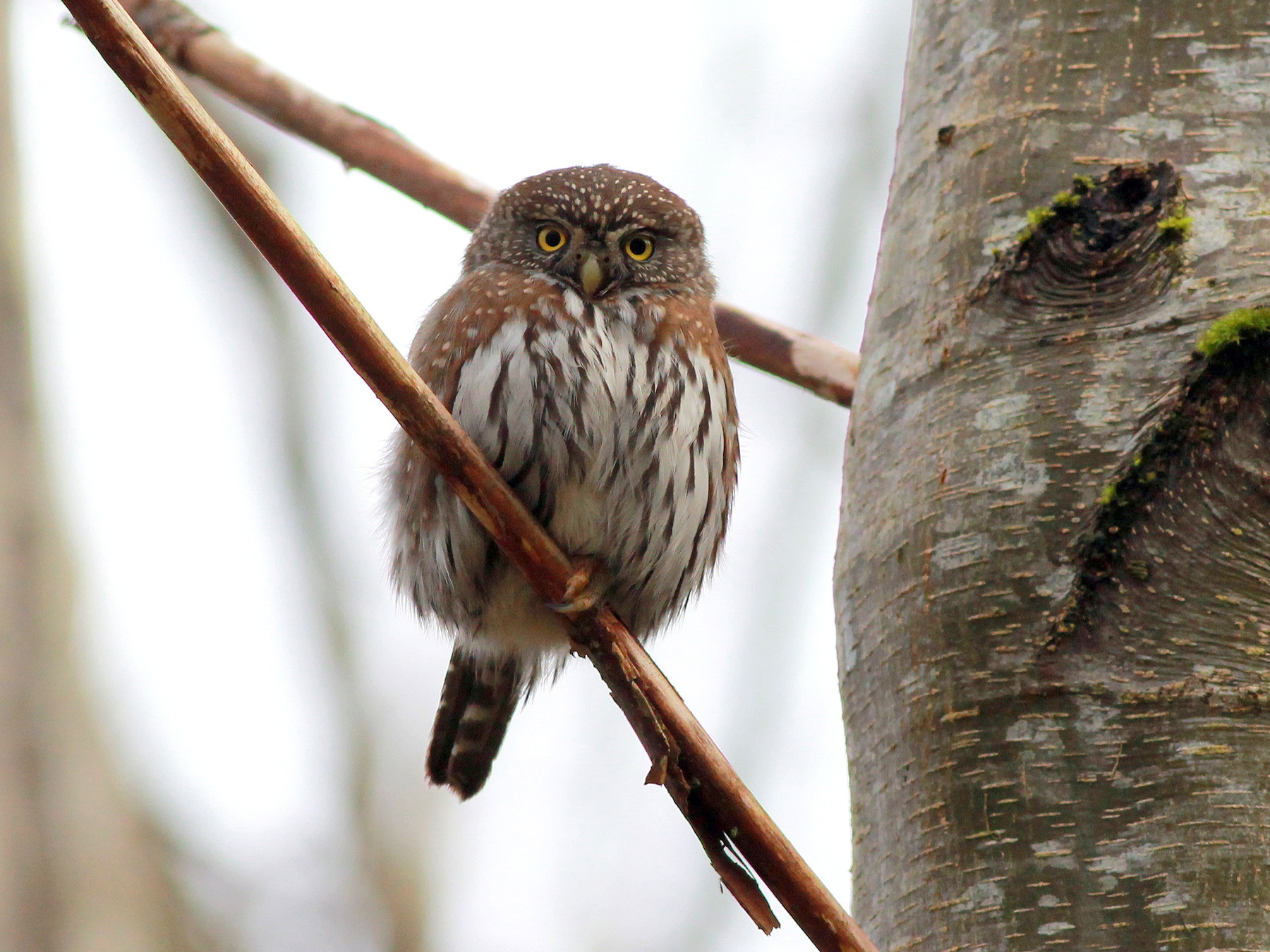
Quick facts
- Length
- 15–17 cm
- Wingspan
- 38–43 cm
- Weight
- 50–73 g
- Lifespan
- 3–7 years
- Family
- Owls
- Migration
- Resident
- Global status (IUCN)
- Least Concern
- World population
- 180,000 mature individuals
- Population trend
- Increasing
- Also called
- Mountain Pygmy-owl
- Scientific name
- Glaucidium gnoma
Questions
2What is the difference between a Mountain Pygmy Owl and a Northern Pygmy-Owl?
Currently, research is ongoing to decide whether mountain owls and northern pygmy-owls should be classified as independent or separate species.
The two are very similar in coloring and size, so the best way to tell the two apart is by their habitat: northern pygmy-owls are widespread in forests and woodlands of western North America, while mountain pygmy-owls are concentrated in uplands, in particular the Rocky Mountains and Sierra Nevada.
Vocalizations of the two species are also markedly different, with mountain pygmy-owls making a series of distinctive whistled hoots, while northern pygmy-owls can be heard making high-pitched one-note tooting calls.
Do Northern Pygmy-Owls hunt during the day?
Northern pygmy owls are mainly diurnal and are most active around sunrise and sunset.
Sources
3- 1BirdLife International. 2023. Glaucidium gnoma. The IUCN Red List of Threatened Species 2023: e.T22735293A232131334. Source (opens in a new tab)
- 2Partners in Flight (2022) Source (opens in a new tab)
- 3Partners in Flight (2022) Source (opens in a new tab)

Checked by
Nathan Cope, founder and editor
Nathan founded Birdfact and leads its writers and contributors in the UK, the US and Canada. He has watched and studied birds for more than ten years, and checks every article and species guide before it’s published.