


Ferruginous Pygmy-owl
Cactus Ferruginous Pygmy-owl · Glaucidium brasilianum
By the Birdfact teamChecked by Nathan Cope
On this page13 sections
How to recognise it
What do Ferruginous Pygmy-Owls look like?
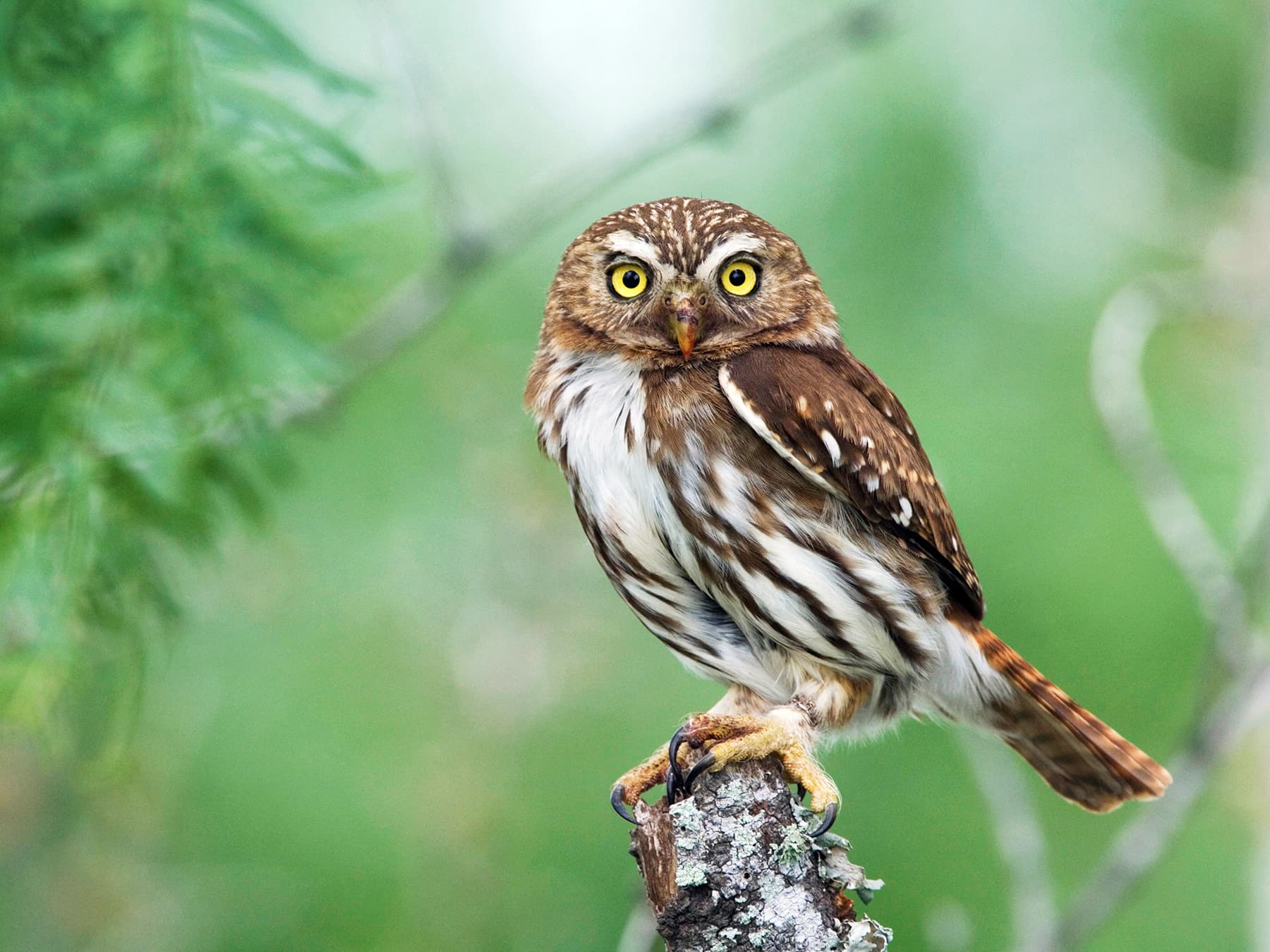
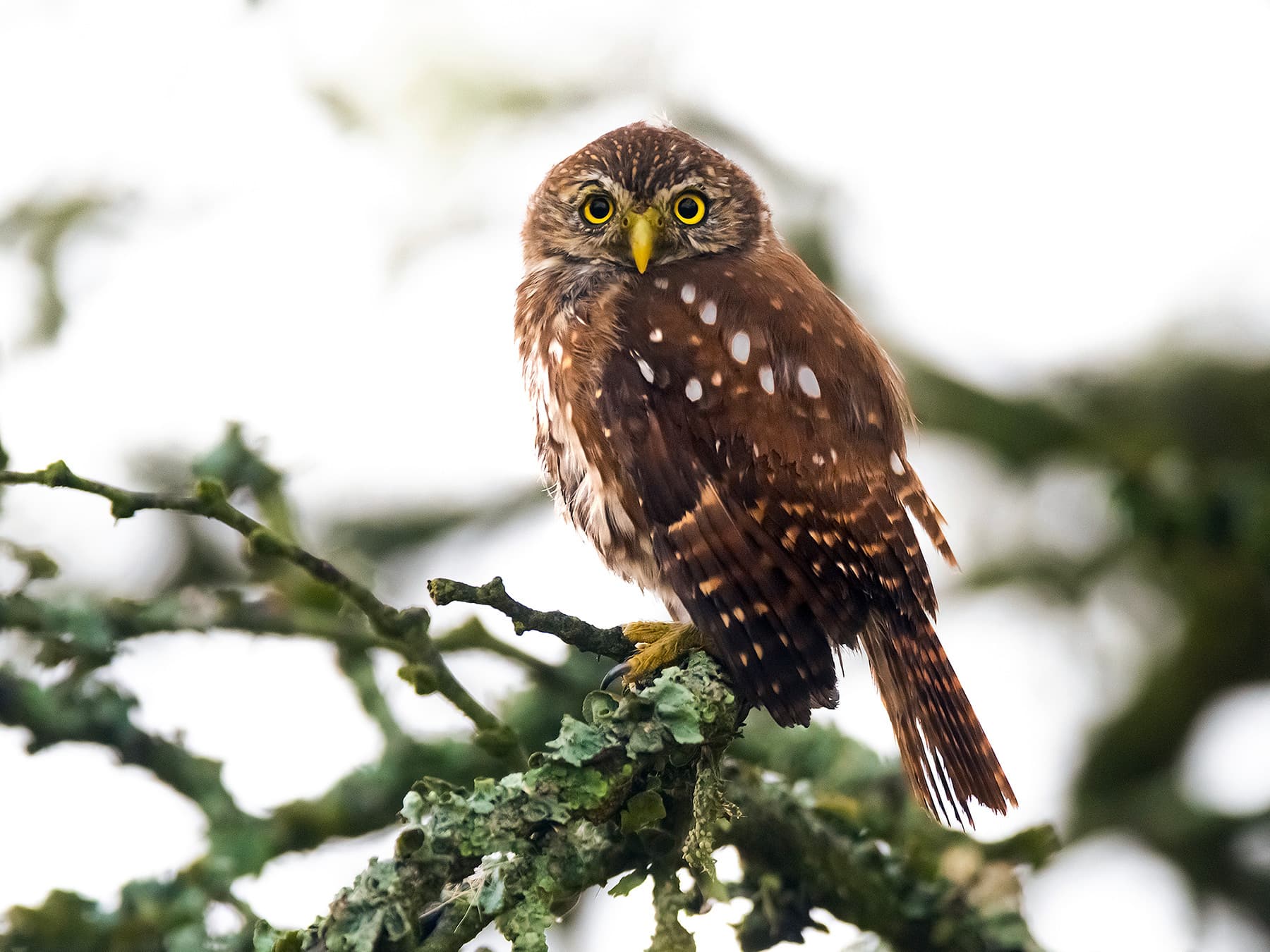
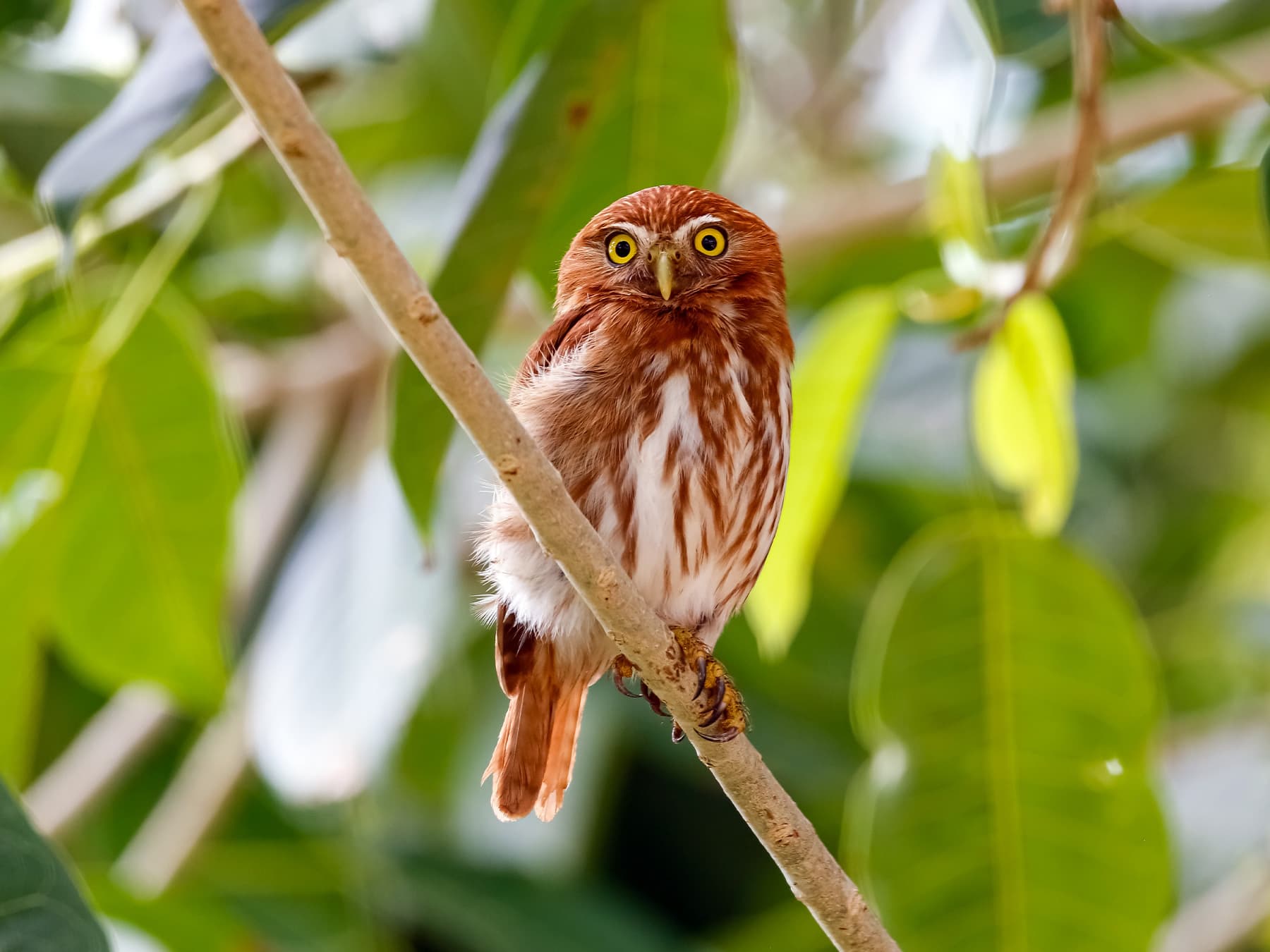
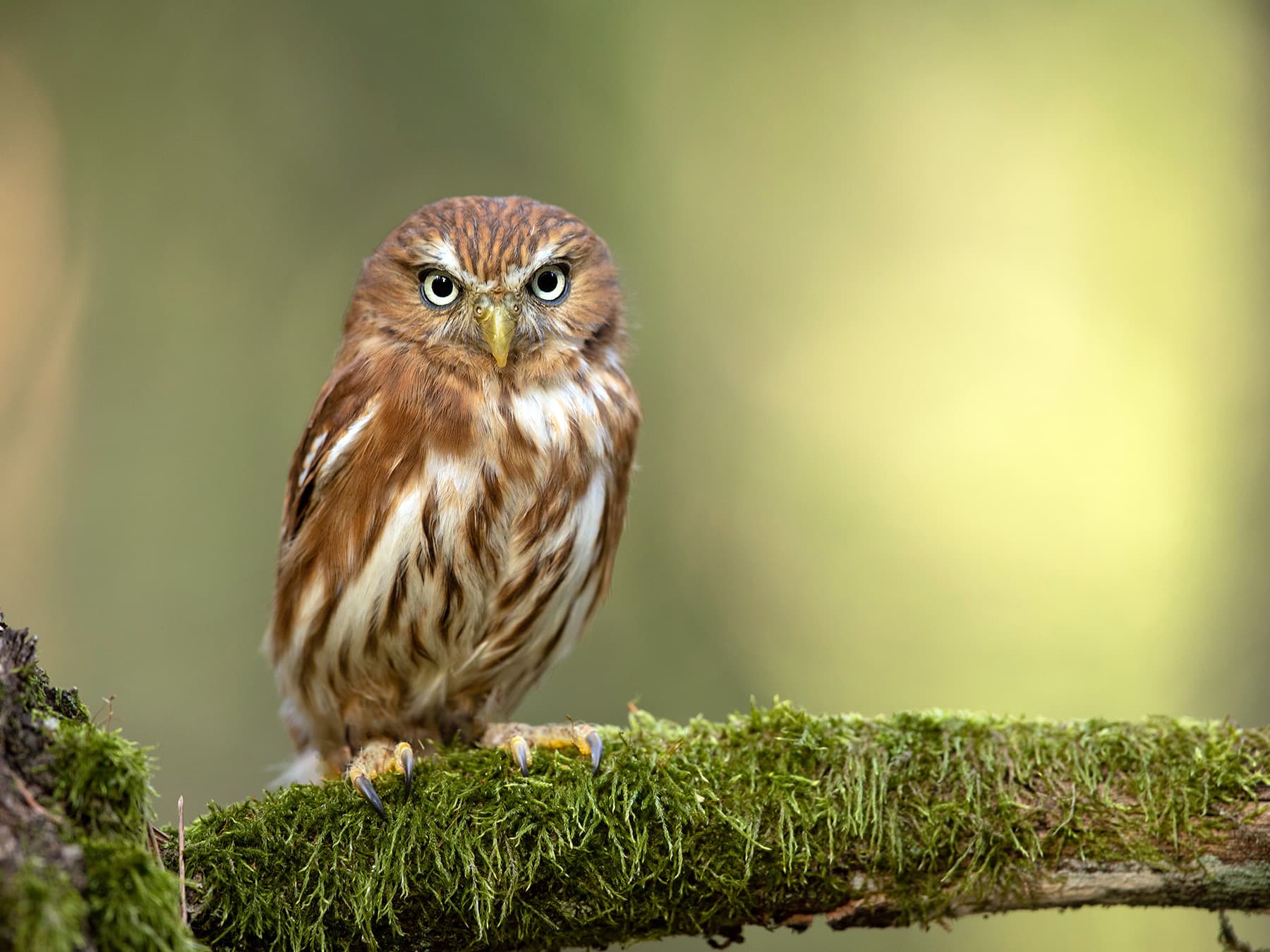
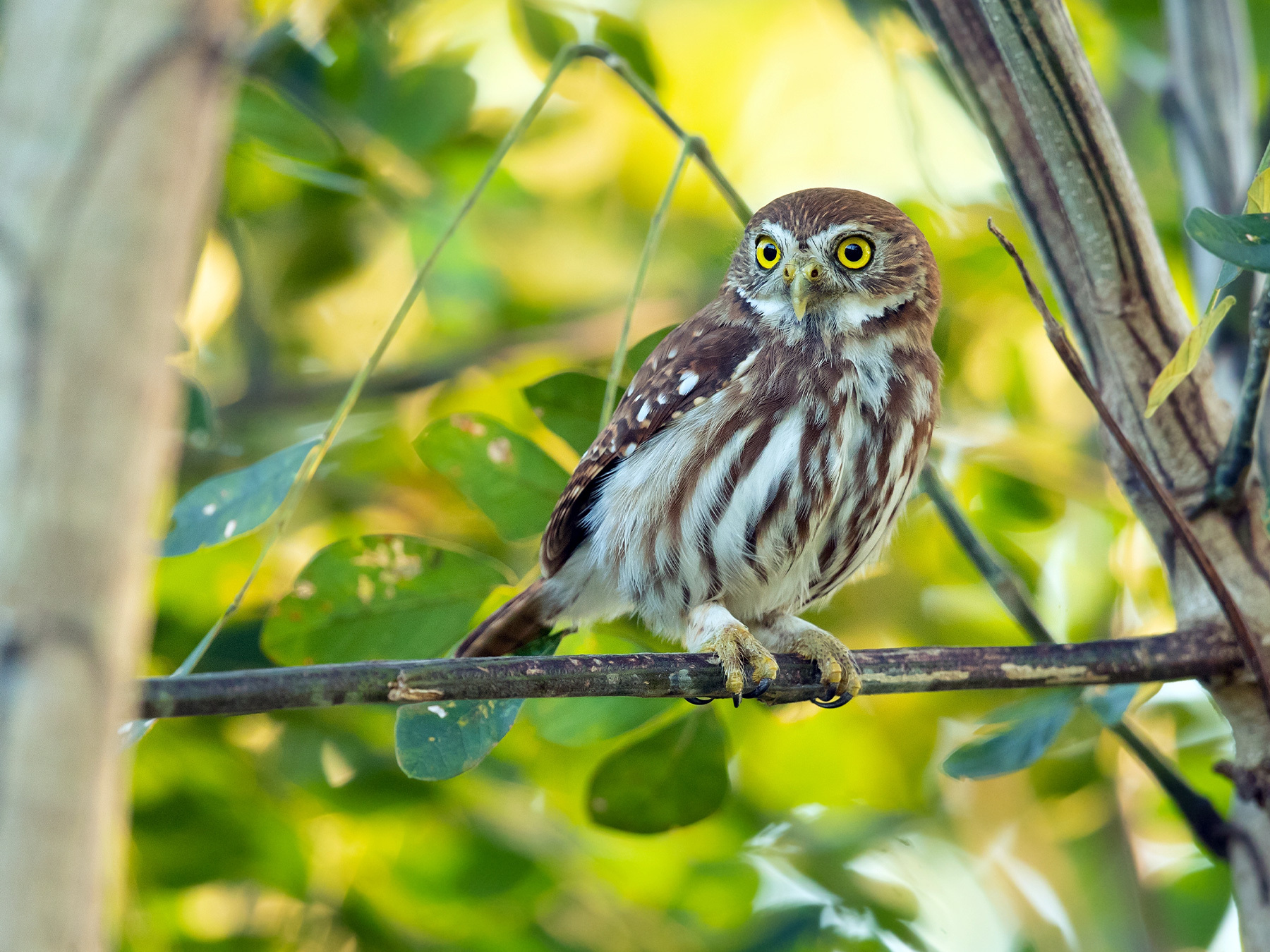
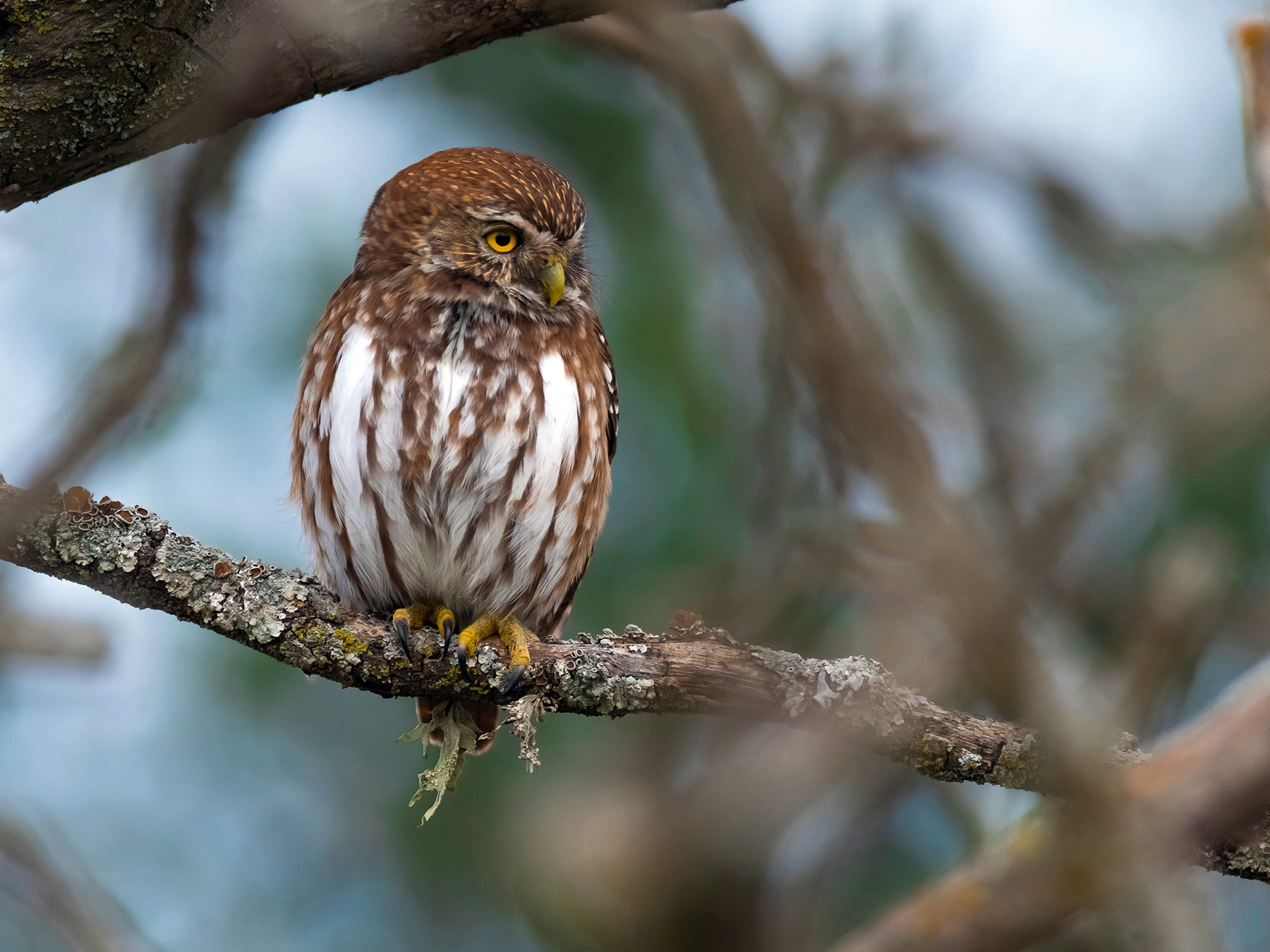
A short, compact owl, with disproportionately large feet, ferruginous pygmy-owls are similar in appearance to the northern pygmy-owl, sharing the same brown and white streaked plumage and distinctive ‘false eye’ black and white markings on the back of their neck.
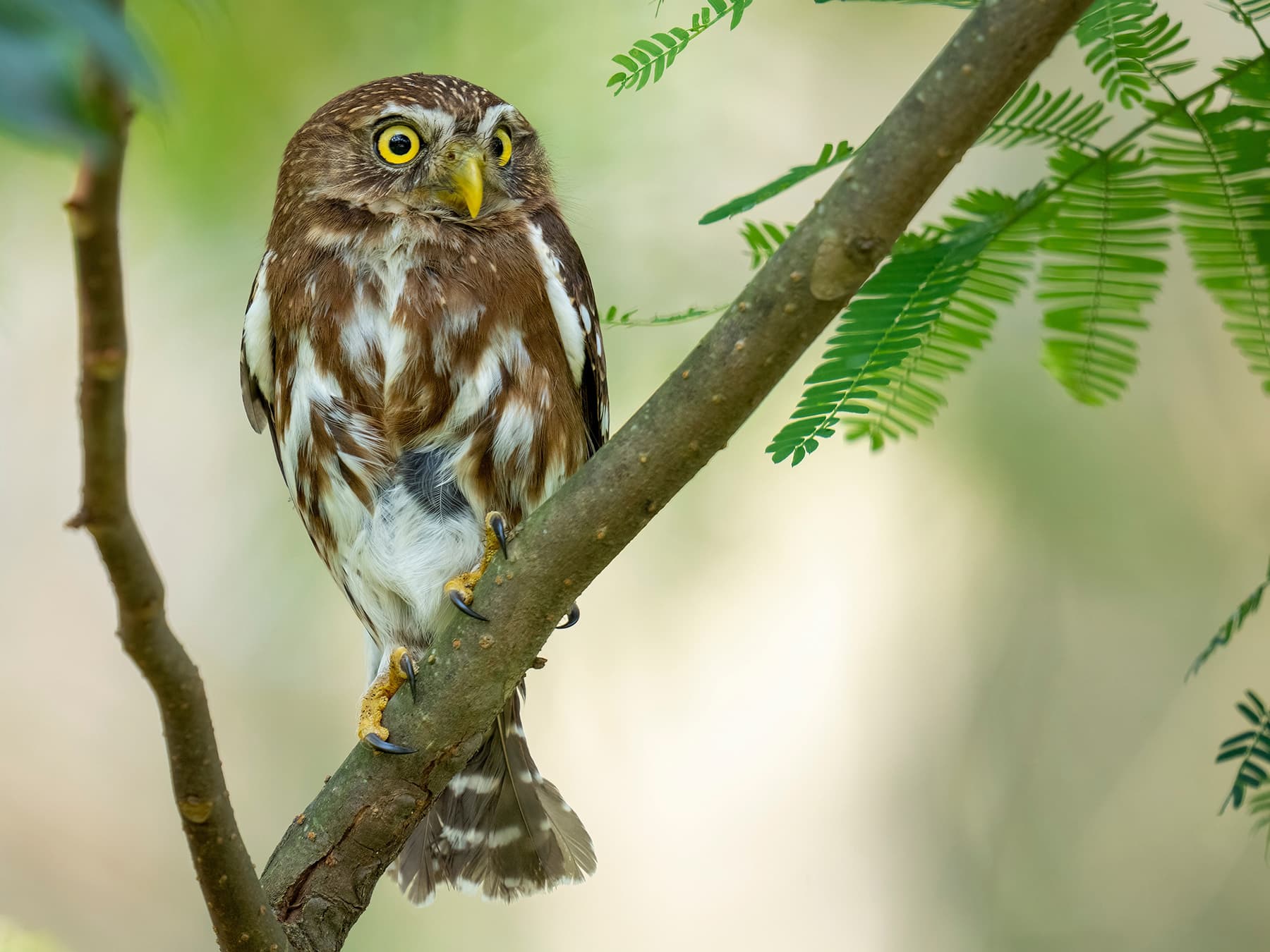
Ferruginous owls have whitish underparts, streaked with reddish brown, with a barred red-brown and darker brown tail. The wings and upper back are dark gray to rufous-brown, and the head is brown with fine light streaks. On both sides of the neck are large black spots, ringed with white, which look like eyes.
Facial markings include buff feathering around the eyes, white eyebrows, and narrow whitish streaking across the otherwise brown crown. White is the primary color of the chin and lower face, and the eyes and bill are yellow.
Females are similar to males, but as well as being slightly larger, they also frequently have more rufous coloring in their plumage.
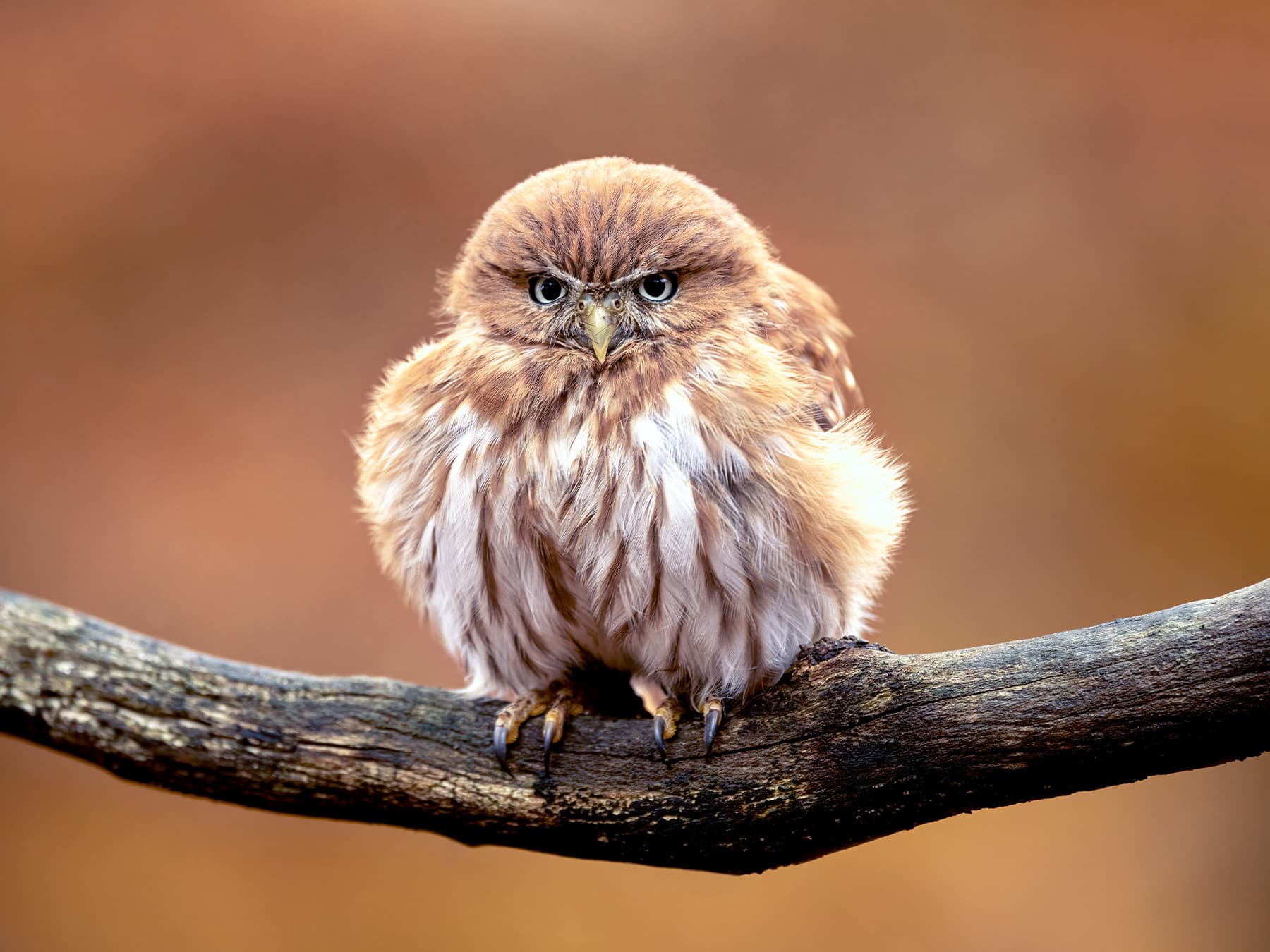
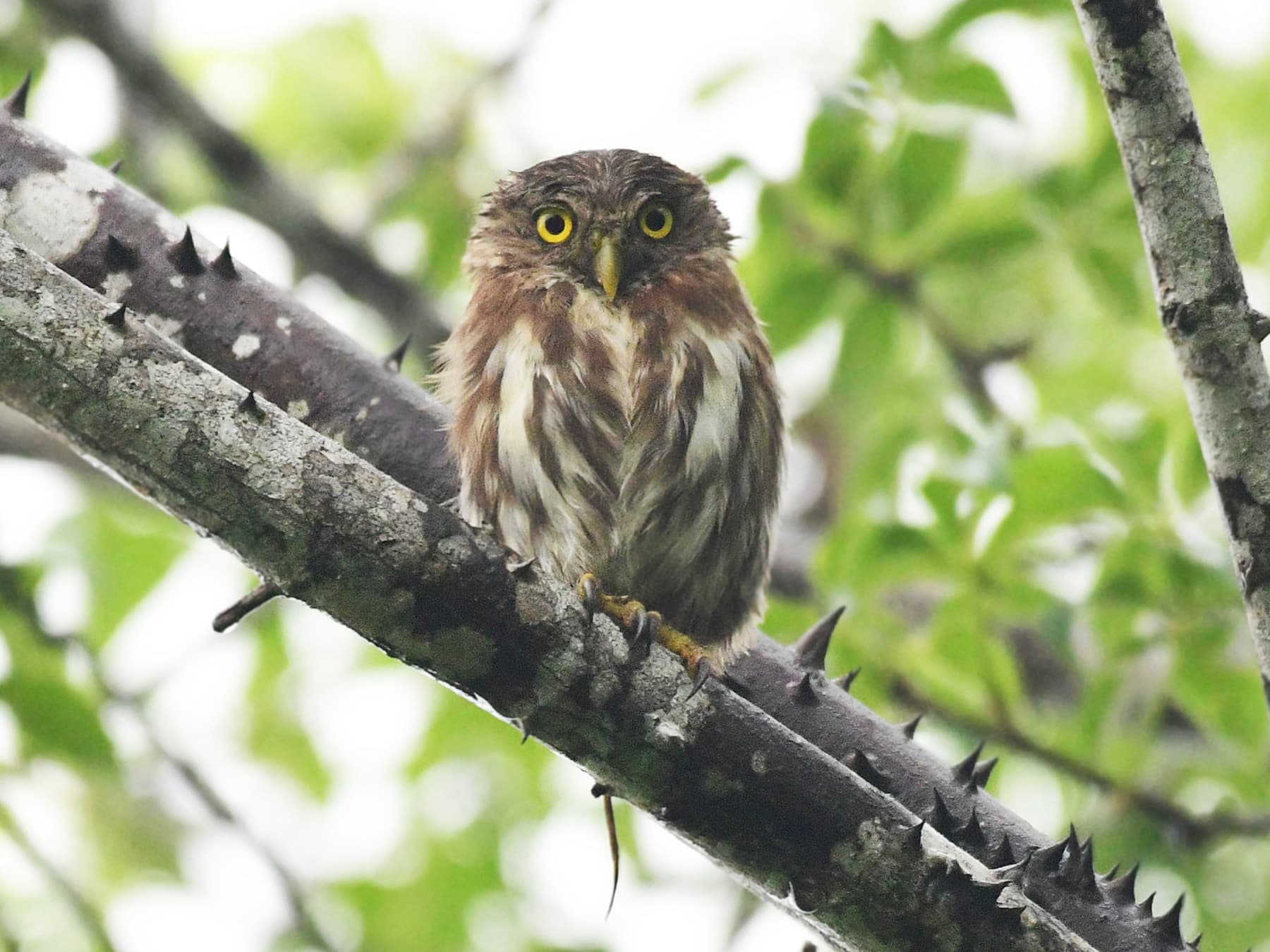
Young ferruginous owls are similarly marked to adults but have an overall grayer wash to their head and nape, with the neck spots less bold and sootier in color.
How big are Ferruginous Pygmy-Owls?
Standing on average 15 cm (5.9 in), ferruginous pygmy-owls are among the smallest owl species, and are marginally larger than the tiny elf owl. They are stocky and compact, with females slightly larger and heavier than males.
- Length: 15 cm to 17 cm (5.9 in to 6.7 in)
- Wingspan: 38 cm (15 in)
- Weight: 62 g (2.2 oz)
Its size
Adults- Length
- 15–19 cm
- Wingspan
- 38–45 cm
- Weight
- 60–75 g
Its song and calls
What sound does a Ferruginous Pygmy-Owl make?
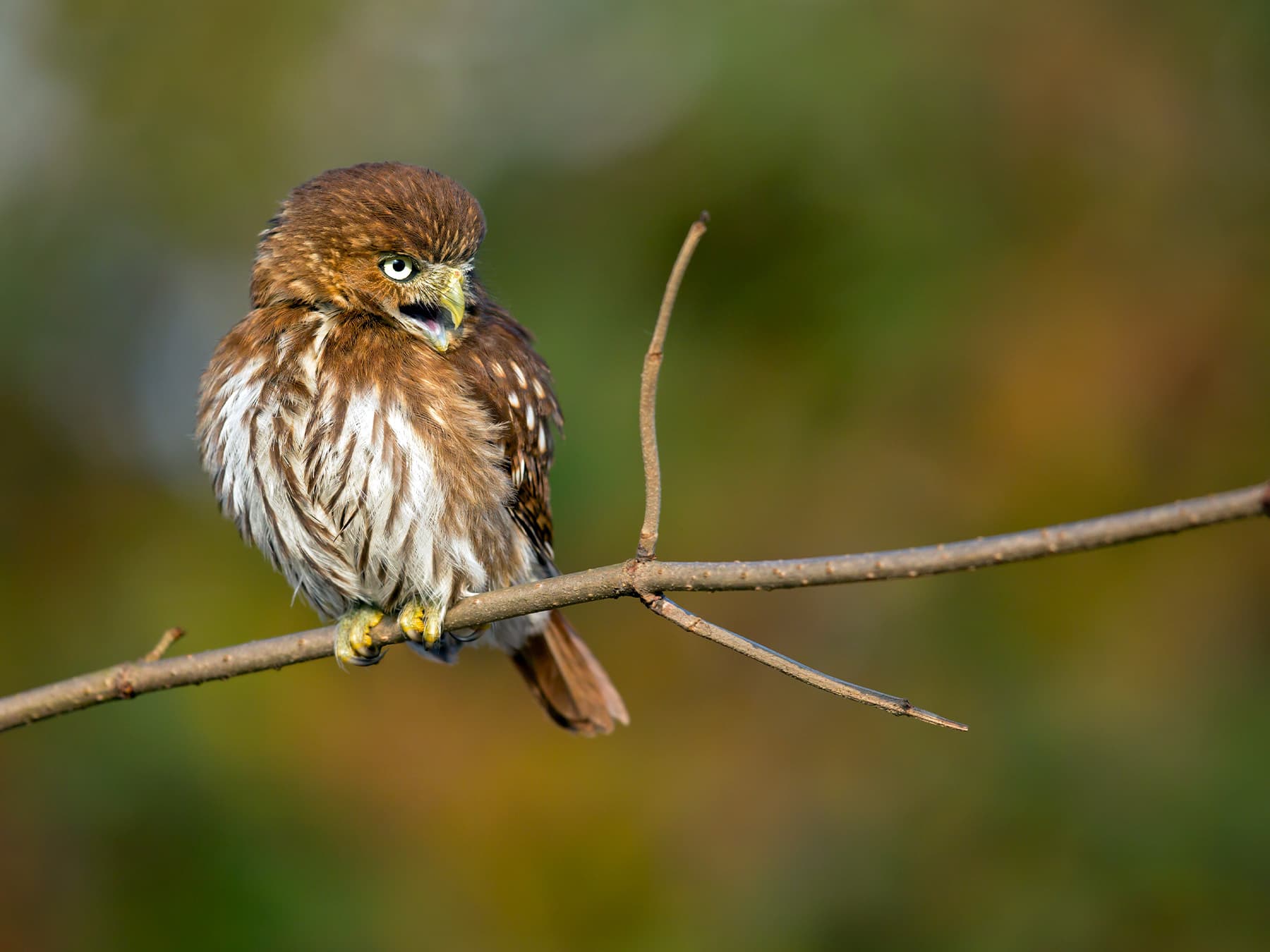
Among the most commonly heard vocalizations of ferruginous pygmy-owls is a repeated ‘took-took’ whistled call, repeated rapidly to signal a claim to a territory or early in the breeding season to advertise for mates.
- Song0:00 / 1:07
Recorded in Mato Grosso, Brazil · January 2023
- Call0:00 / 0:47
Recorded in Coclé Province, Panama · May 2022
When and where to see it
How often the Ferruginous Pygmy-owl turns up in the United States through the year, from birdwatchers' records.
United States
Winter visitor · regularly Nov–Jun · most records in November
Show as a table
| Month | United States |
|---|---|
| January | <0.001% (regular) |
| February | <0.001% (regular) |
| March | <0.001% (regular) |
| April | <0.001% (regular) |
| May | <0.001% (regular) |
| June | <0.001% (regular) |
| July | <0.001% |
| August | <0.001% |
| September | <0.001% |
| October | <0.001% |
| November | 0.001% (regular) |
| December | <0.001% (regular) |
Worldwide: recorded regularly in 20 countries
Countries where it was recorded in at least 3 of the 6 years 2019–2024. Linked countries have their own bird list.
North America (10)
- Belize
- Costa Rica
- El Salvador
- Guatemala
- Honduras
- Mexico
- Nicaragua
- Panama
- Trinidad & Tobago
- United States
Data: EOD – eBird Observation Dataset (Cornell Lab of Ornithology), accessed via GBIF.org, CC BY 4.0. Records from 2019–2024, aggregated and filtered by Birdfact. How these lists are made
What is the habitat of a Ferruginous Pygmy-Owl?
Thorny scrubland landscapes offer an ideal landscape for ferruginous pygmy-owls, providing cover from larger birds of prey and plenty of foraging opportunities for insects and lizards. Thickets and arid landscapes with ironwood, mesquite, acacia, and saguaro are favored nesting spots and are important roosting locations all year round.
What is the range of a Ferruginous Pygmy-Owl?
The range of ferruginous pygmy-owls is discontinuous, extending from southern Arizona down the western coast of Mexico and to the east, from the extreme southeastern tip of Texas through Mexico’s east coast through Central America into South America, where scattered populations are present in the west of the continent, but the presence grows towards the east, extending from Colombia to Argentina in the south, but absent from a large area of northeastern Brazil.
Where do Ferruginous Pygmy-Owls live?
Ferruginous pygmy-owls are present in small border regions of the southern US but are increasingly populous from Mexico through Central America and into South America.
Resident populations can be found in parts of Belize, Guatemala, El Salvador, Honduras, Nicaragua, Costa Rica, and Panama. In South America, ferruginous pygmy-owls can be seen in parts of Colombia, Venezuela, Guyana, French Guiana, Ecuador, Peru, Bolivia, Brazil, Chile, Paraguay, and Argentina.
How rare are Ferruginous Pygmy-Owls?
In the United States, due to their limited range and preference for remote habitats, sightings of ferruginous owls are an uncommon to rare species, with only up to 117 individuals estimated to be present in Arizona in 2006, and a few thousand more in Texas.
Globally, population estimates for ferruginous pygmy-owls are in the range of 20 and 50 million individuals, and it is classed as a common species in Mexico, Central America in much of eastern South America.
Where can you see Ferruginous Pygmy-Owls in the US?
Much of the United States is way outside of the distribution range of ferruginous pygmy-owls, with only two distinct regions home to the species, in the Sonoran Desert landscapes of southern Arizona and in southeastern Texas.
In these regions, Arizona’s Altar Valley and in Texas at the King Ranch, Lower Rio Grande Valley National Wildlife Refuge, and San Miguelito Ranch offer potential opportunities for sightings.
Migration
Do Ferruginous Pygmy-Owls migrate?
Ferruginous pygmy-owls are year-round residents in their range, with some dispersal evident post-breeding but no evidence of long-distance or regular migration occurring.
Are Ferruginous Pygmy-Owls native to the US?
Two small isolated regions of the US have resident ferruginous pygmy-owls, in south-central Arizona and the extreme southern tip of Texas. The main population of the species is found to the south, along the eastern and western coasts of Mexico, and further into South America.
Tips for seeing it
- Look for them perched on cacti or tree branches in open woodlands
- Listen for their repetitive, whistled 'poo-poo-poo' call, especially at dawn and dusk
- Watch for their characteristic bobbing motion when alerted
- In the US, focus on areas in southern Arizona and Texas
What it eats
What do Ferruginous Pygmy-Owls eat?
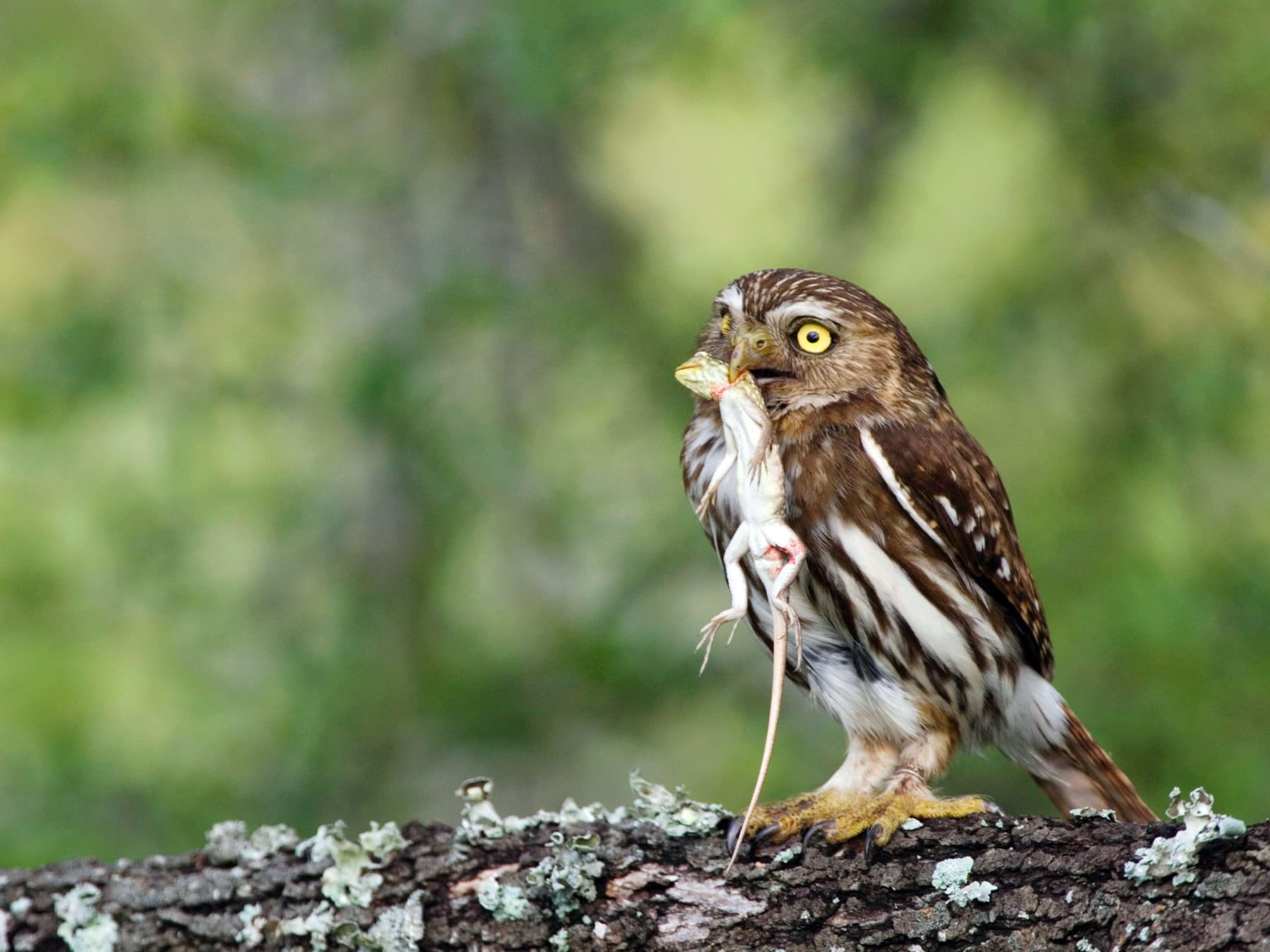
The diet of ferruginous pygmy-owls is varied, including large insects such as grasshoppers, cicadas, crickets, beetles, and moths, as well as scorpions, lizards, birds, and rodents, including pygmy mice and harvest mice.
What do Ferruginous Pygmy-Owl chicks eat?
For the first three weeks of their life, ferruginous pygmy-owl chicks are brought food to the nest by their father, who passes prey items to his mate for her to rip into small pieces and feed to individual owlets. By 3 to 4 weeks, nestlings begin to tear prey themselves, by which time the female also hunts for prey and deposits into the nest cavity.
Prey is mainly insects, including grasshoppers, crickets, and beetles, although as owlets grow, small skinks may also be brought to the nest.
Nesting and breeding
Where do Ferruginous Pygmy-Owls nest?
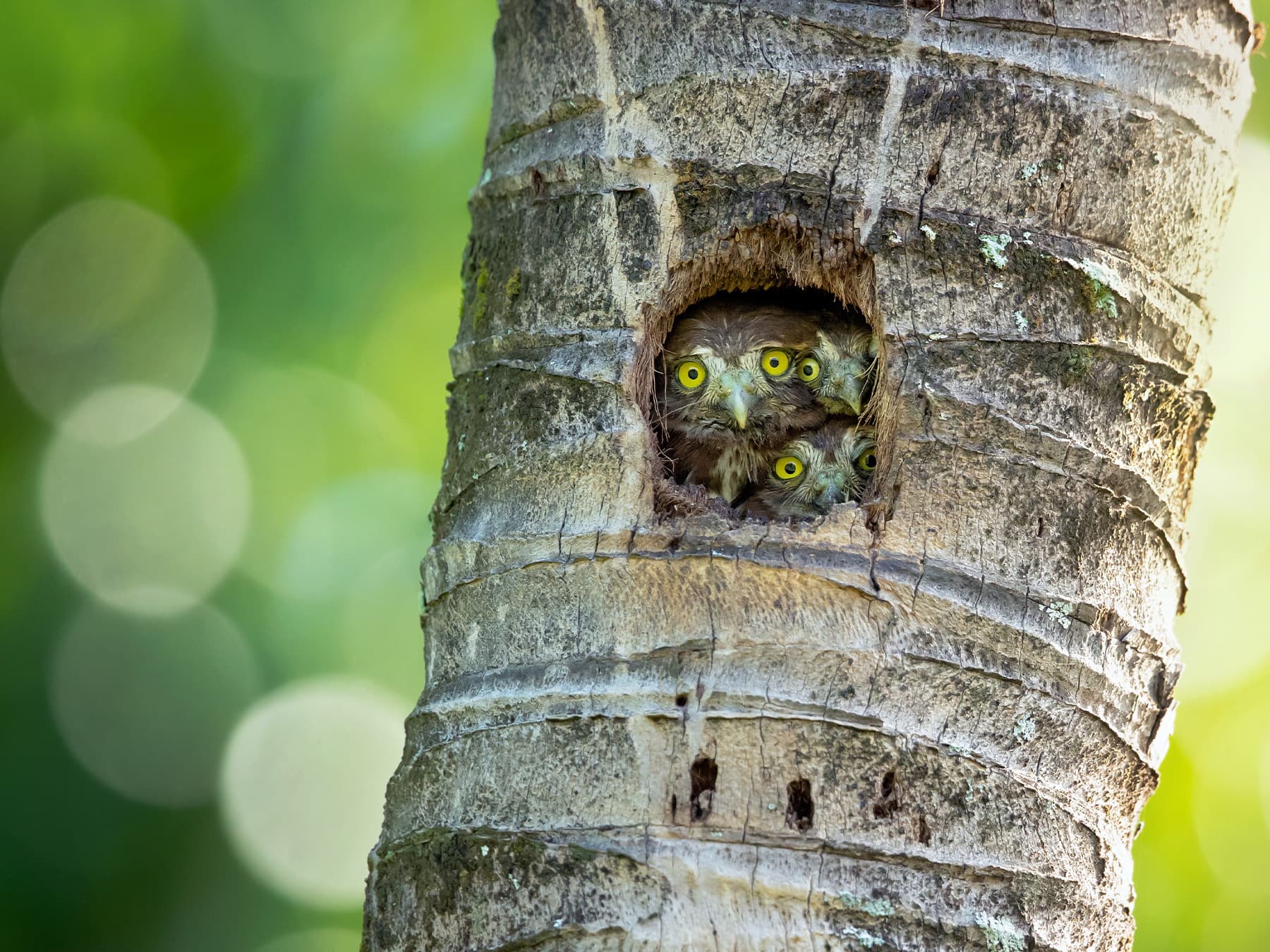
Ferruginous pygmy-owls do not build their own nests, relying instead on the evacuated cavities drilled out by woodpeckers and previously used by other species. Observations have recorded ferruginous pygmy-owls removing nesting material from brown-crested flycatchers’ nest cavities before setting up home there themselves.
Nests are usually in the trunks of trees, including oak, mesquite, cottonwood, and ash, as well as in large cacti, particularly saguaro. Termite mounds are also sometimes used as nesting locations.
When do Ferruginous Pygmy-Owls nest?
Pairs of ferruginous pygmy-owls begin scoping out potential nest sites from February onwards. Eggs are laid between late March and mid-June, with a peak in April to May and only one clutch is laid each season, unless a nest fails and a second, replacement clutch is attempted.
Incubation, by the female alone, lasts for between 23 and 28 days. Fledging takes place between 21 and 29 days, with early nest leavers far less likely to survive.
What do Ferruginous Pygmy-Owl eggs look like?
Like the vast majority of owl species, ferruginous pygmy-owls lay plain white, unmarked eggs. Eggs, which are slightly rounded, measure on average 29 mm by 23 mm (1.1 in by 0.9 in). A typical clutch contains between three and seven eggs.
Do Ferruginous Pygmy-Owls mate for life?
Long-term bonds form between ferruginous pygmy-owls from their first breeding season, aged one year. Observations indicate that pairs breed annually, and it’s common for the same pair to raise young together in several successive years.
Behaviour
Are Ferruginous Pygmy-Owls aggressive?
Aggressive posturing and vocalizations may be heard between rival birds, but no observations of physical interactions have been reported. A two-note ‘pee-witt’ alarm call is heard from females when intruders approach the nest site and repeated until the threat subsides.
Where do Ferruginous Pygmy-Owls sleep at night?
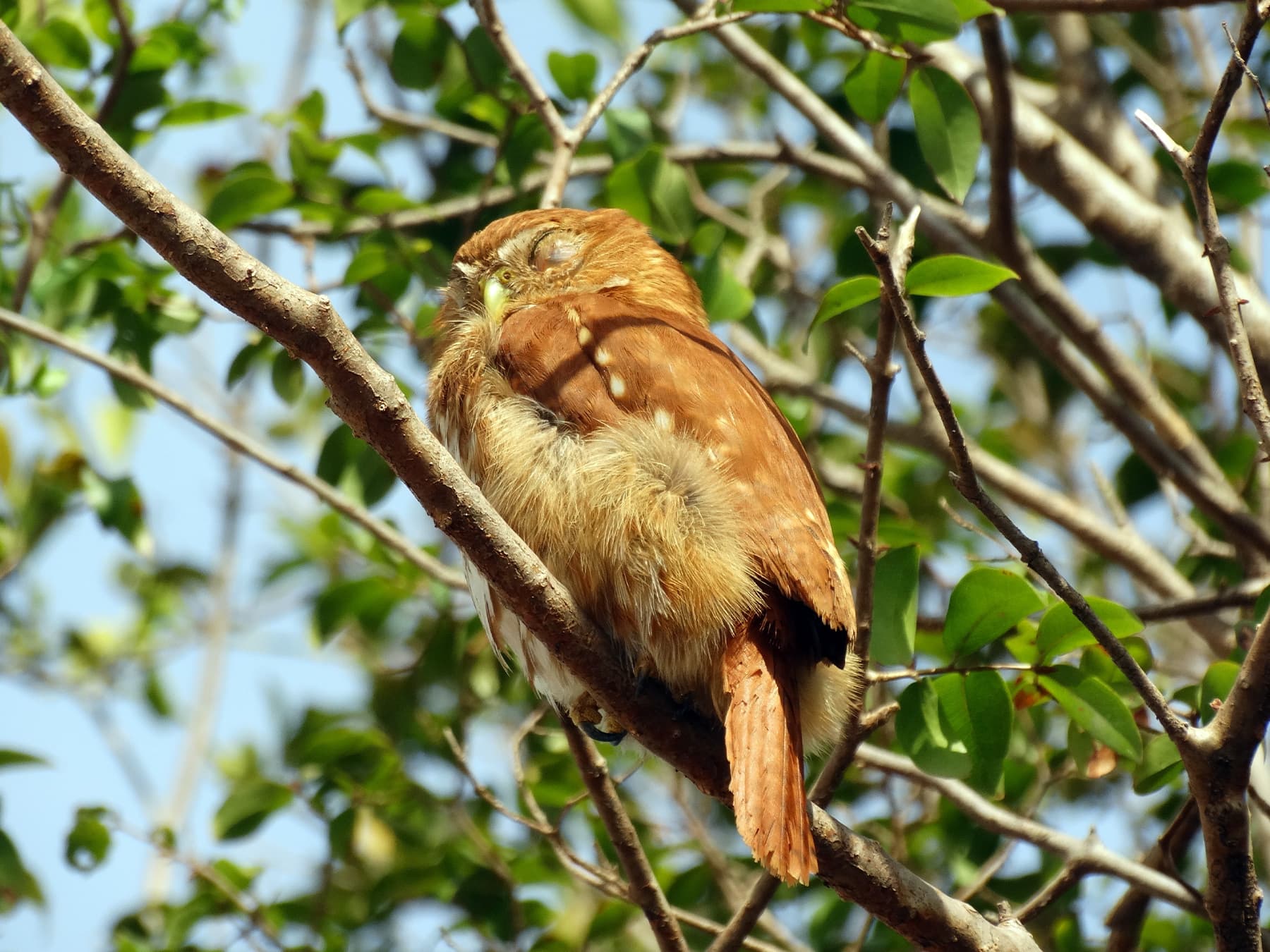
Roost spots are variable and different sites are used each night. During the breeding season, females roost in the nest chamber overnight, while males remain a short distance away, finding a sheltered spot in the lower canopy. Ferruginous pygmy-owls are chiefly diurnal, hunting during daylight and resting from dusk onwards each evening.
Lifespan and predators
How long do Ferruginous Pygmy-Owls live?
In the wild, ferruginous pygmy-owls can be expected to live for a maximum of 6 or 7 years, while those kept in captivity have a longer lifespan, estimated at 9 to 10 years. Breeding occurs annually, from one year of age.
What are the predators of Ferruginous Pygmy-Owls?
Nest predation is an issue for ferruginous pygmy-owls, with raccoons and bullsnakes recorded as common cavity raiders for eggs and young. Great horned owls and Cooper’s hawks have both been observed to prey on adult and juvenile ferruginous pygmy-owls.
Are Ferruginous Pygmy-Owls protected?
The Migratory Bird Treaty Act of 1918 protects ferruginous pygmy-owls in the United States, prohibiting killing, injuring, capturing, or trading birds of this species, or their eggs, young, and feathers. Nest sites are also protected against being destroyed or damaged.
Are Ferruginous Pygmy-Owls endangered?
Globally, ferruginous pygmy-owls are rated as a species of least concern. However, due to their limited numbers and risk of habitat degradation in the United States, they have been classified as Endangered in Arizona and Threatened in Texas.
Conservation
While listed as Least Concern globally, some local populations face threats. In the United States, the Cactus Ferruginous Pygmy-owl subspecies is of particular conservation concern due to habitat loss and fragmentation in Arizona. Conservation efforts focus on protecting and restoring suitable habitat.
More photos
3 photos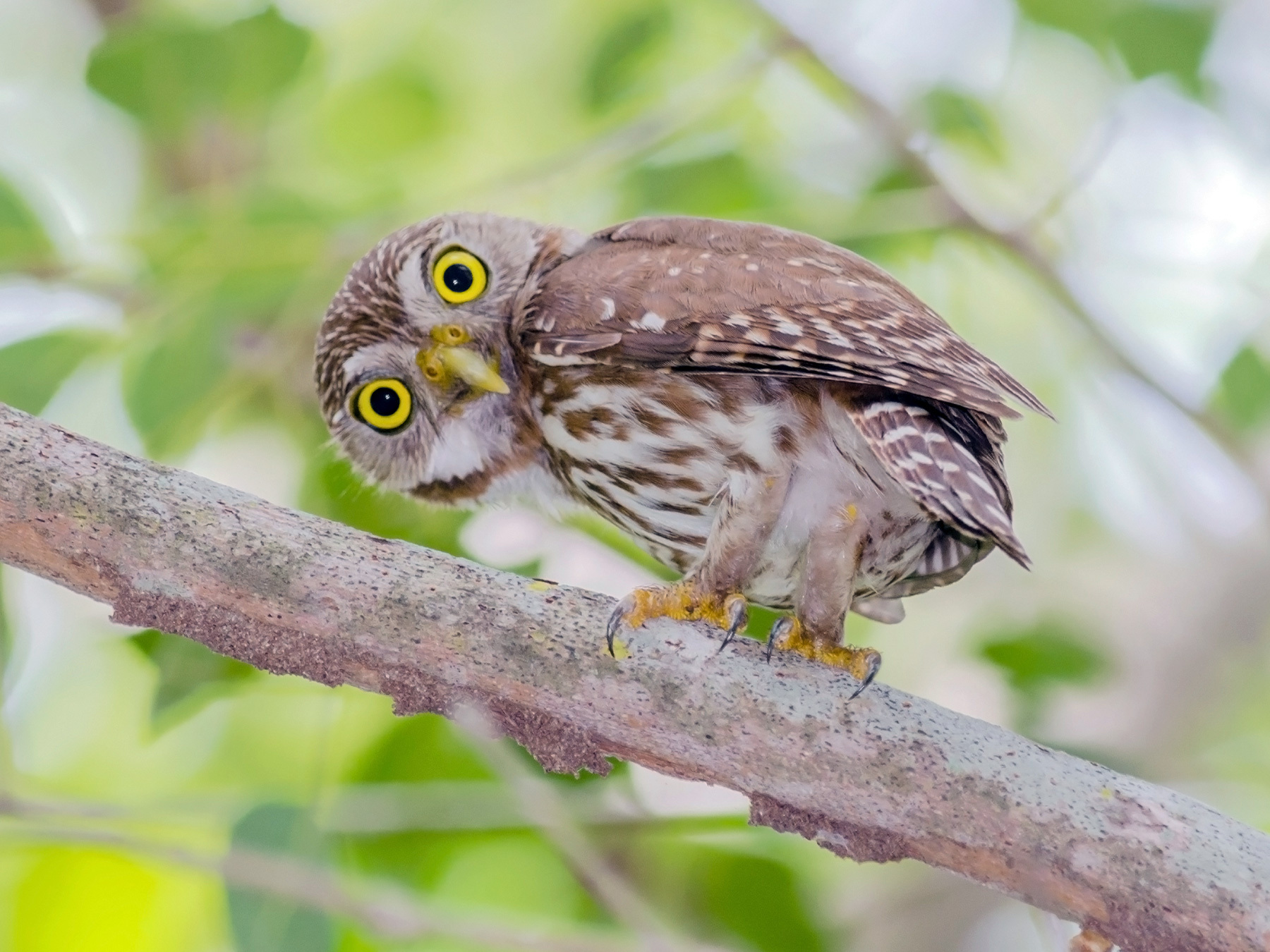
Quick facts
- Length
- 15–19 cm
- Wingspan
- 38–45 cm
- Weight
- 60–75 g
- Lifespan
- 5–8 years
- Family
- Owls
- Migration
- Resident
- Global status (IUCN)
- Least Concern
- World population
- 20,000,000 mature individuals
- Population trend
- Decreasing
- Also called
- Cactus Ferruginous Pygmy-owl
- Scientific name
- Glaucidium brasilianum
Questions
1What is the difference between Northern Pygmy-Owl and Ferruginous Pygmy-Owl?
Similar in size and coloring, there are some subtle differences between northern pygmy-owls and ferruginous pygmy-owls that help with telling the two species apart.
There is some overlap between the range of these two tiny owls, with ferruginous pygmy-owls present further south than their northern counterparts, with a range that extends deep into Mexico, with a limited presence in the United States.
Both species are diurnal, mostly active at dawn and dusk, with northern pygmy-owls typically found at higher elevations. In appearance, the main difference is seen in the forehead markings, which are streaked in ferruginous pygmy-owls and spotted in northern pygmy-owls.
Sources
3- 1BirdLife International. 2022. Glaucidium brasilianum. The IUCN Red List of Threatened Species 2022: e.T22689248A217038370. Source (opens in a new tab)
- 2Partners in Flight (2020)
- 3Partners in Flight (2020)

Checked by
Nathan Cope, founder and editor
Nathan founded Birdfact and leads its writers and contributors in the UK, the US and Canada. He has watched and studied birds for more than ten years, and checks every article and species guide before it’s published.