


Barn Owl
Common Barn Owl, Ghost Owl, Western Barn Owl · Tyto alba
By the Birdfact teamChecked by Nathan Cope
On this page15 sections
How to recognise it
The Barn Owl is a distinctive bird, although their nocturnal habits can make observation difficult.
What do Barn Owls look like?
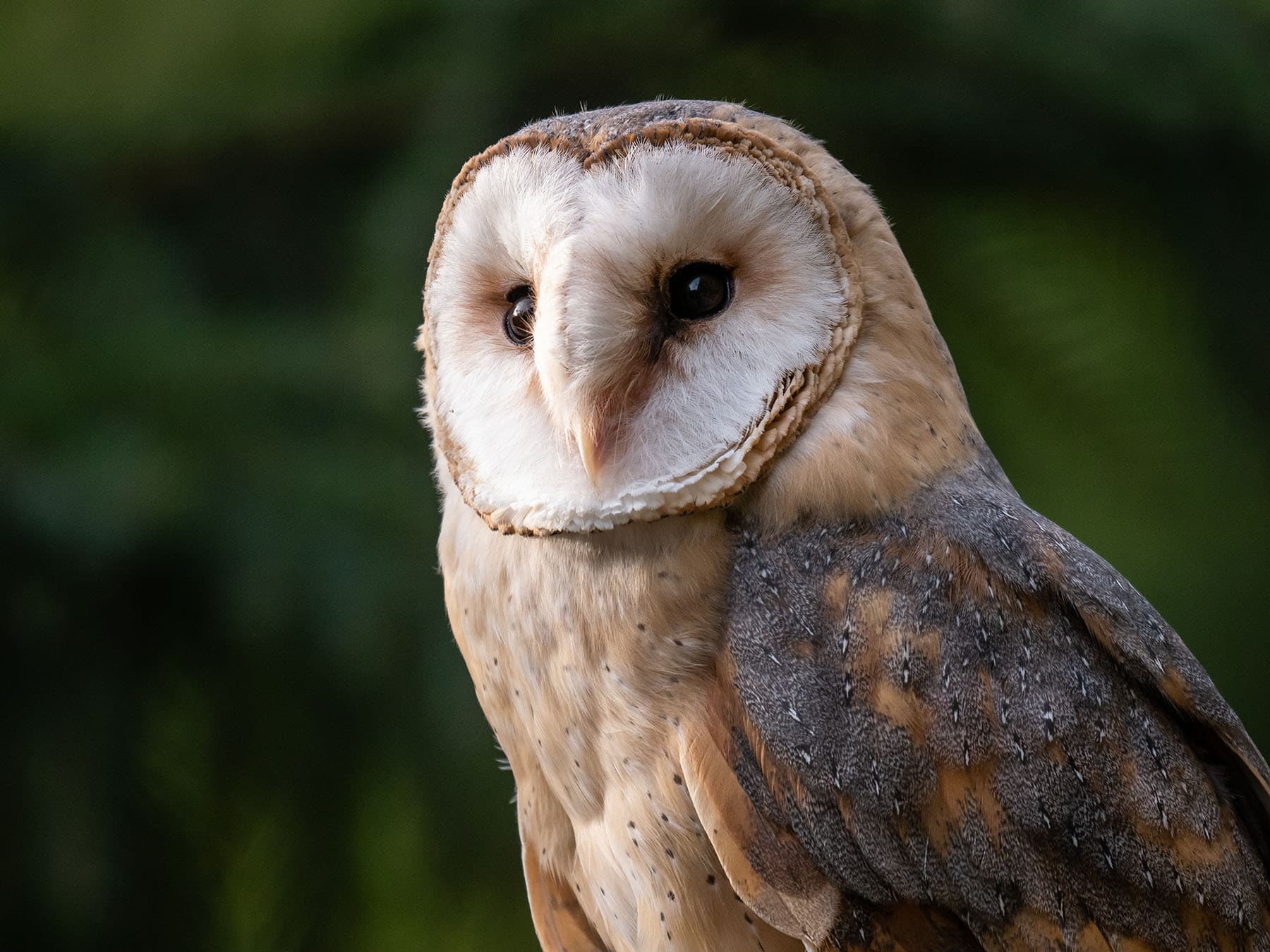
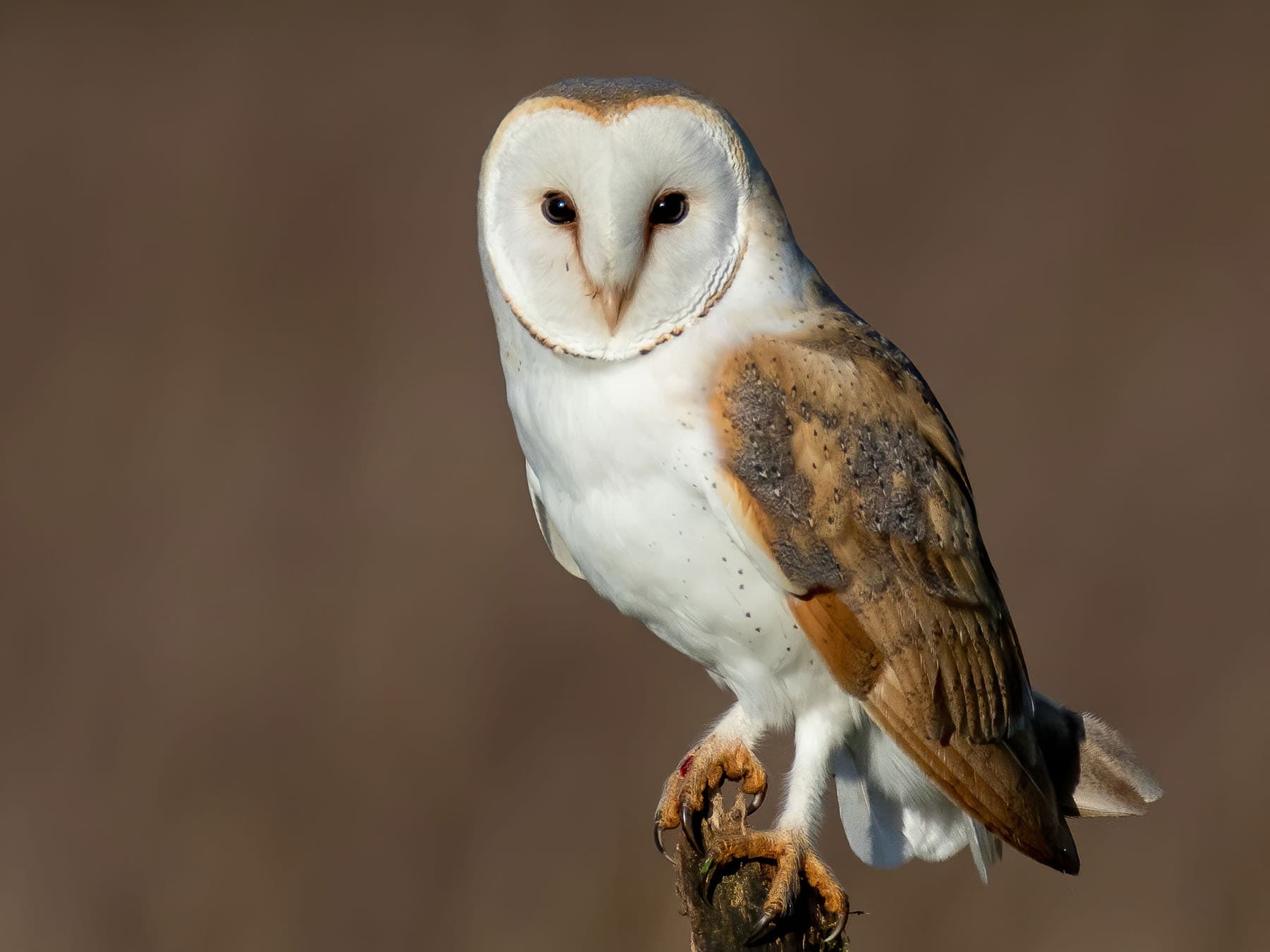
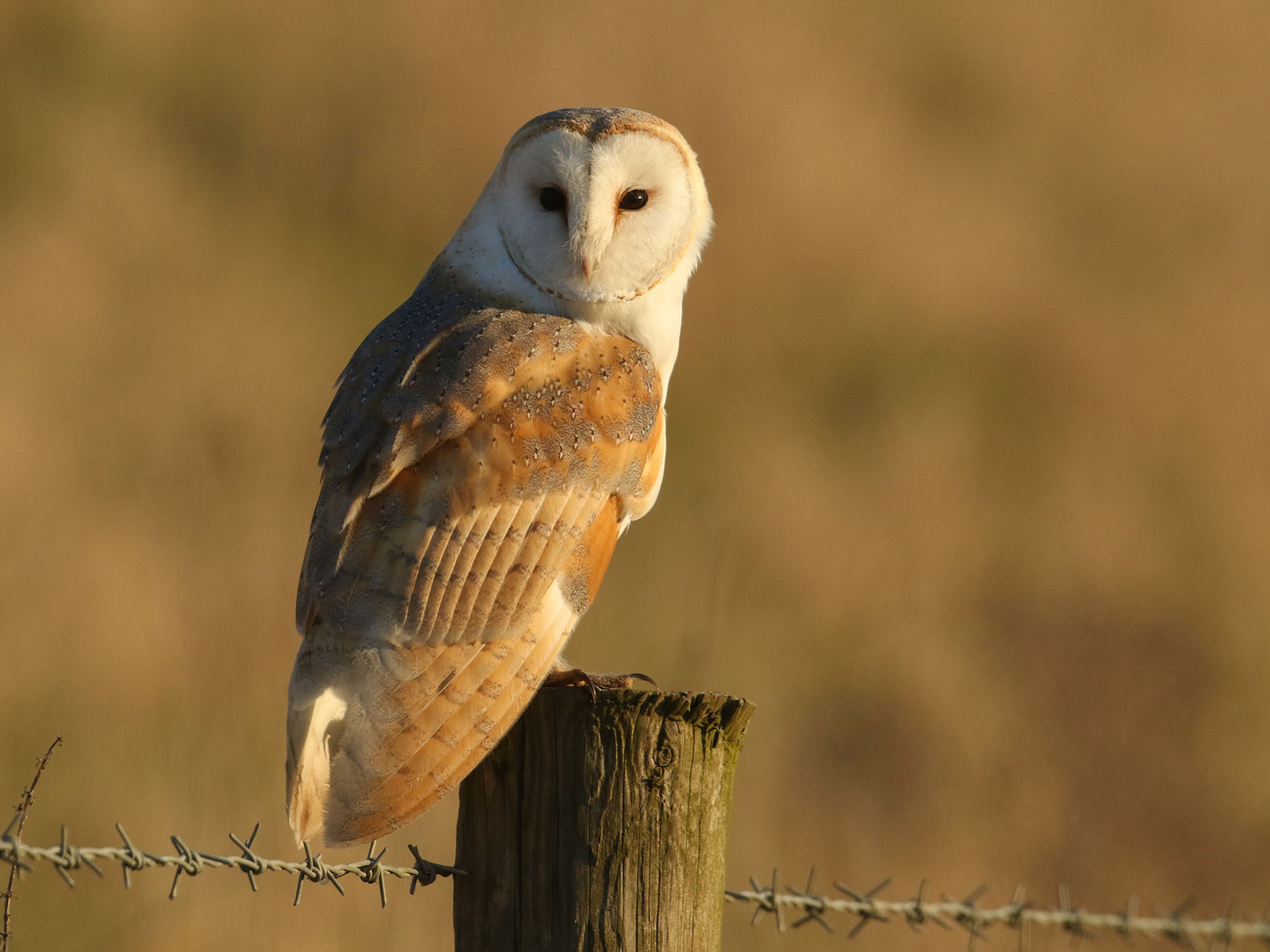
Barn Owls are pale, pigeon to crow-sized birds with an upright posture and a large head. Their flattened, heart-shaped face is perhaps their most defining feature. Their upper parts combine tawny brown and grey plumage, and their face and underparts are paler, from buff to nearly white.
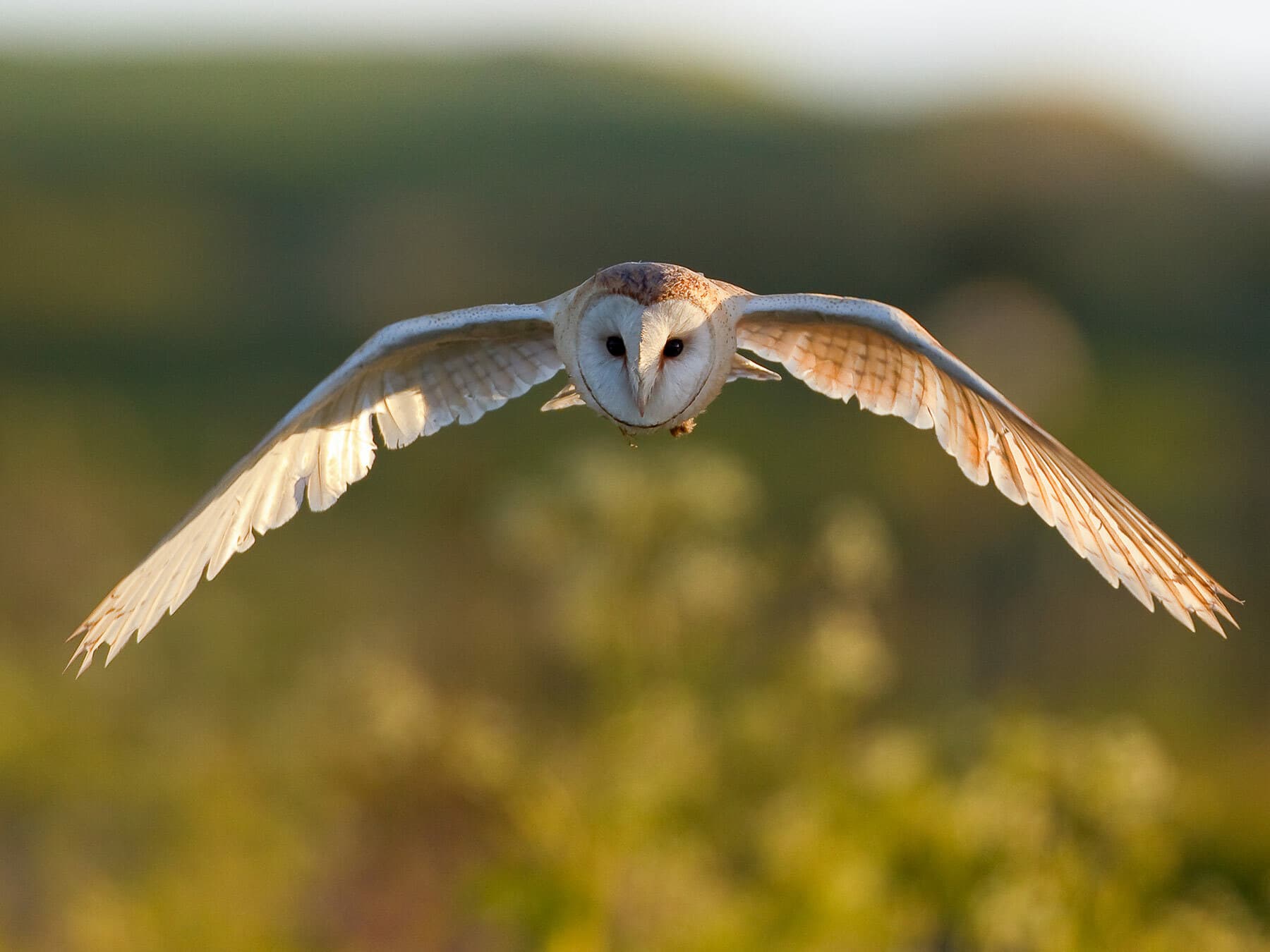
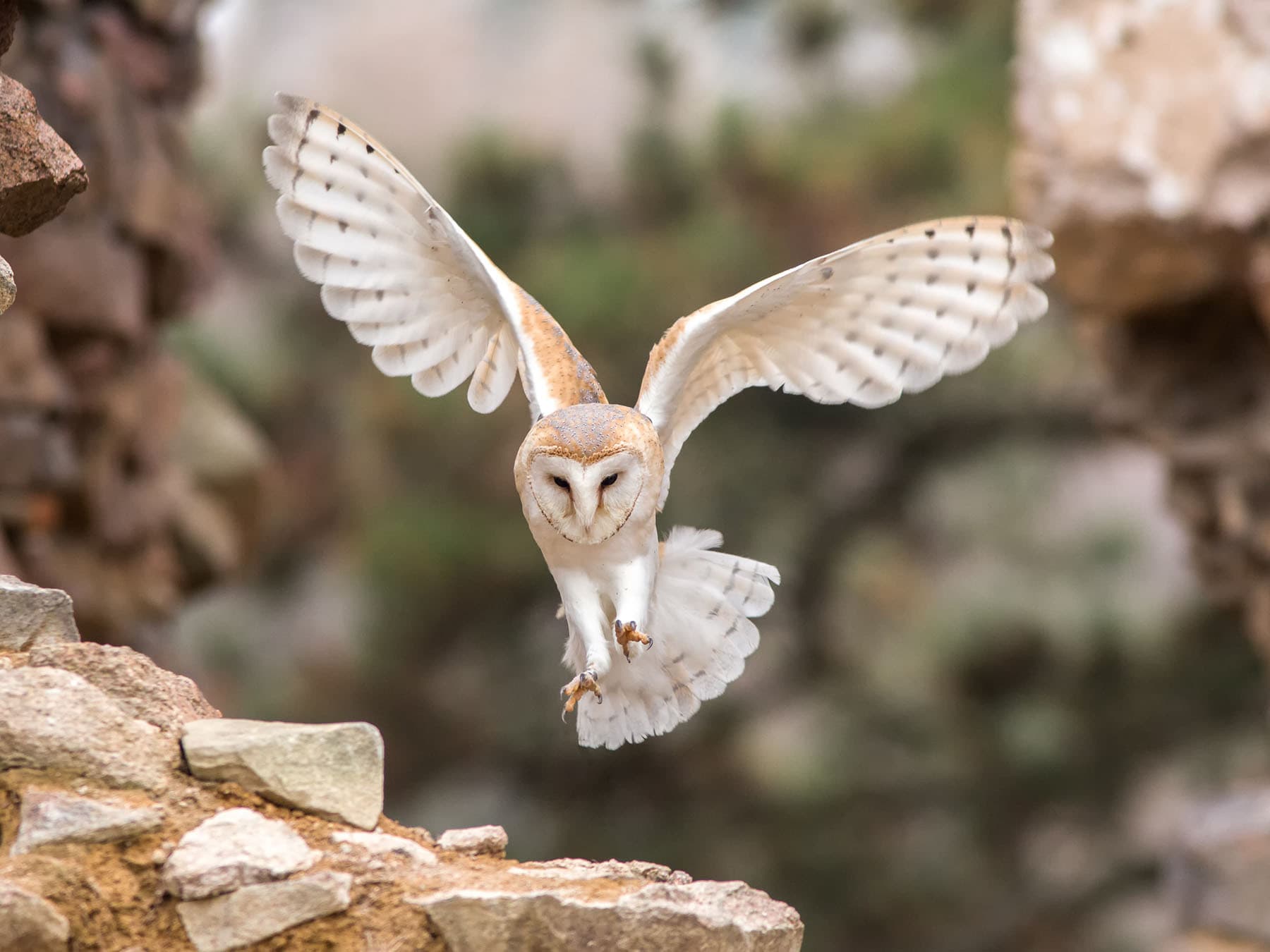
Barn Owls do not have ear tufts, and their large, dark eyes stand out against a smooth, off-white face. In flight, they are all-pale below and show broad, rounded wings, a short, broad tail, and a blunt face.
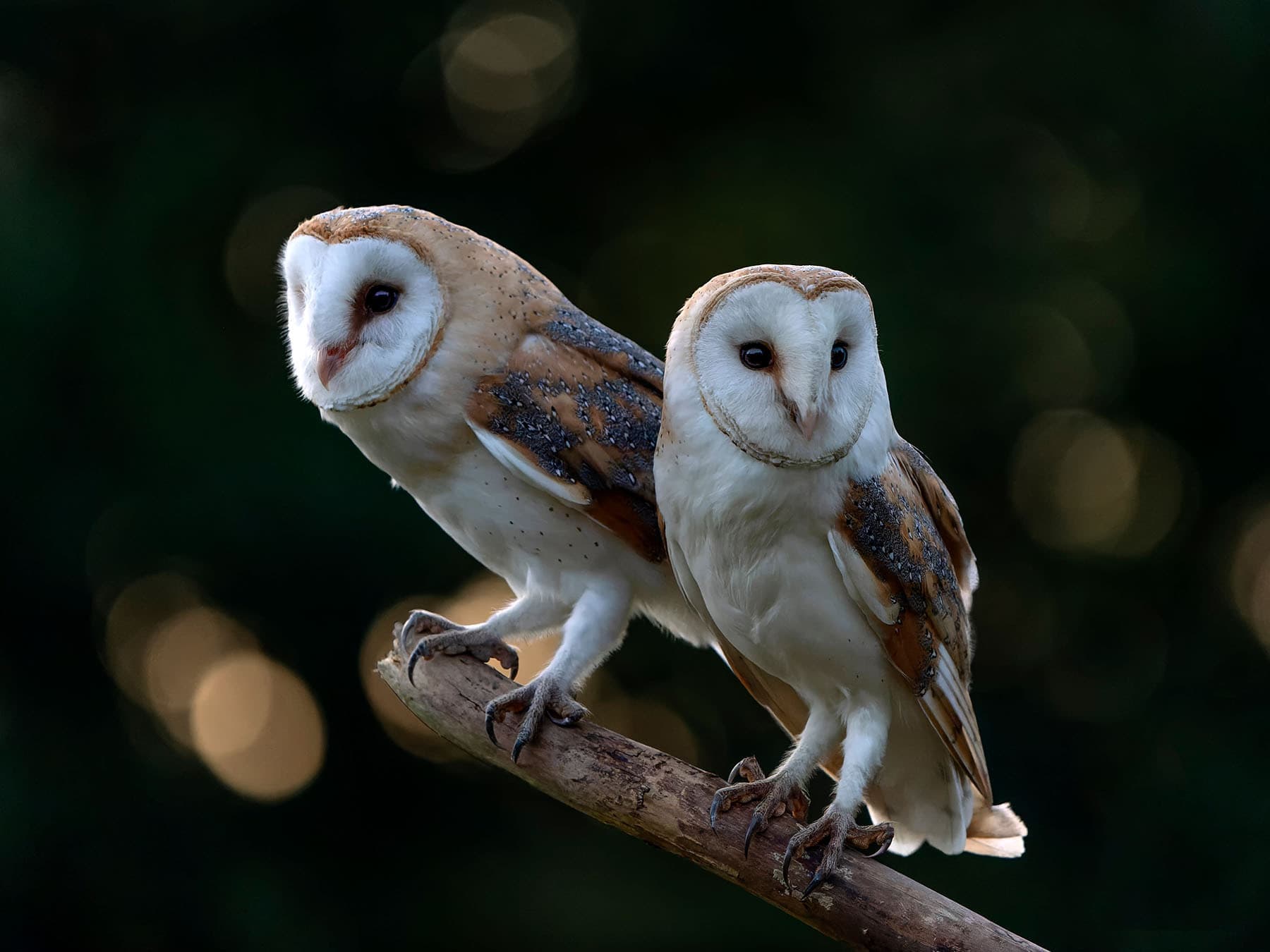
Females are bigger than males in all respects except wing and tail length, and this is a useful field marker if you spot a pair together. Females are generally darker below and often have bolder markings on the wings and chest.
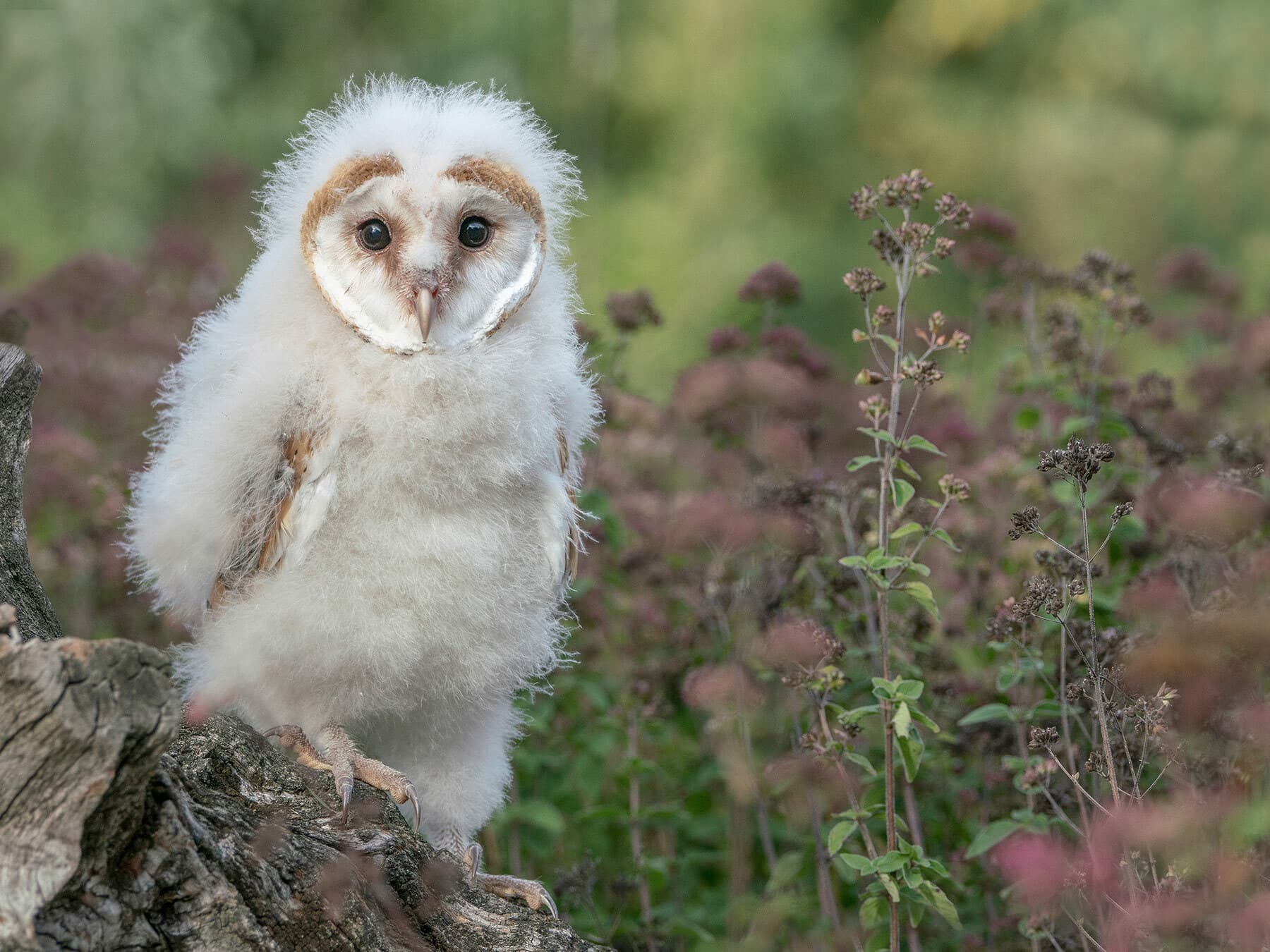
Juvenile Barn Owls appear similar to their parents but tend to be more heavily spotted.
How big are Barn Owls?
Barn Owls are medium-sized owls. They vary tremendously in size across their global range, with the smallest individuals in Europe and the largest in North America. Continue reading to learn more about their measurements.
Length
Barn Owls have a body length of roughly one to 1½ feet (29-44cm).
Weight
The largest Barn Owls can weigh more than three times as much as the smallest, although size generally varies geographically and between the sexes.
Barn Owls in North America (Tyto alba pratincola) can weigh up to 1½ pounds, while the largest specimens in Europe (T. a. alba) reach just over a pound.
Australian Barn Owls are similar in size to those in Europe.
Wingspan
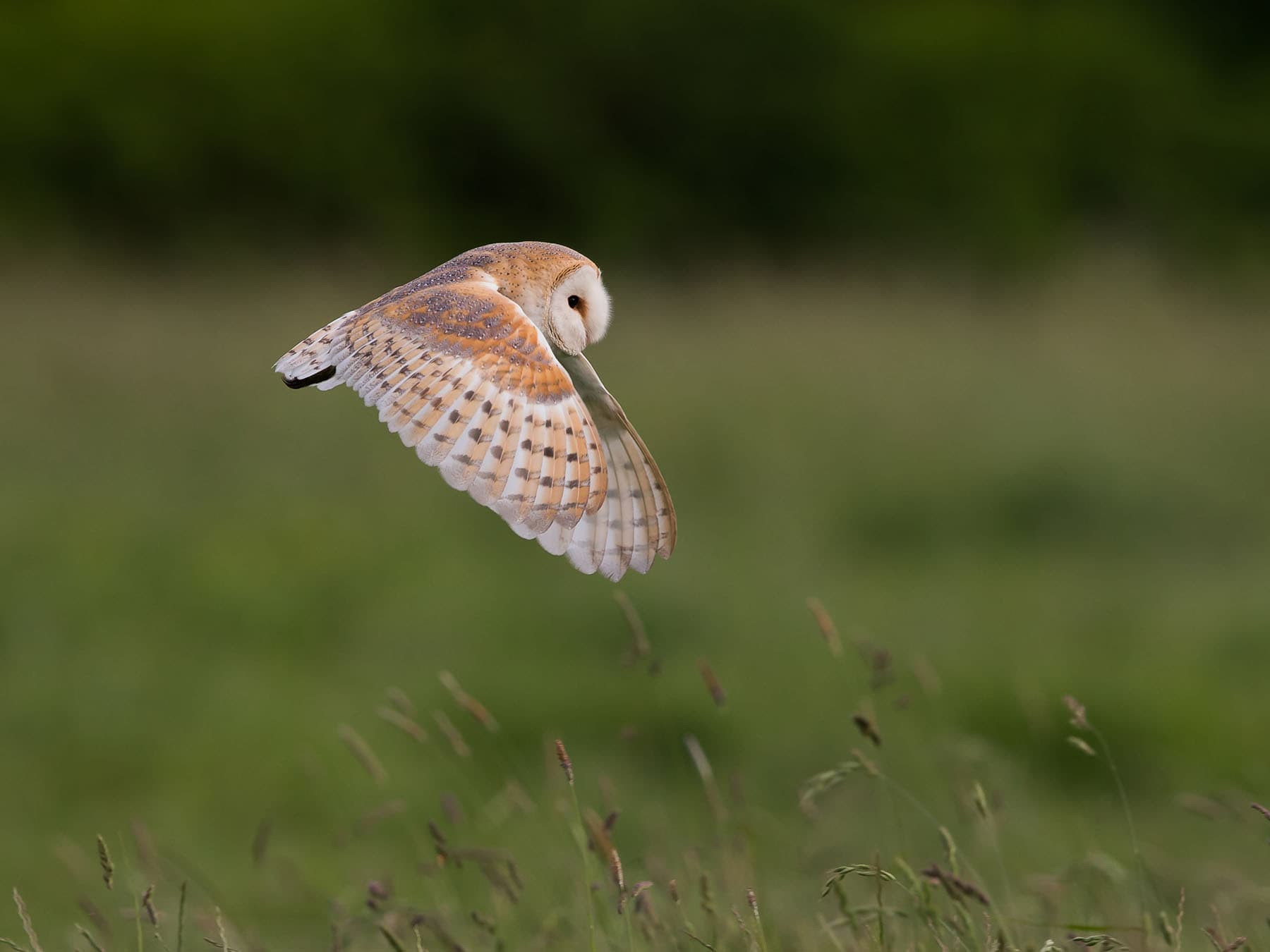
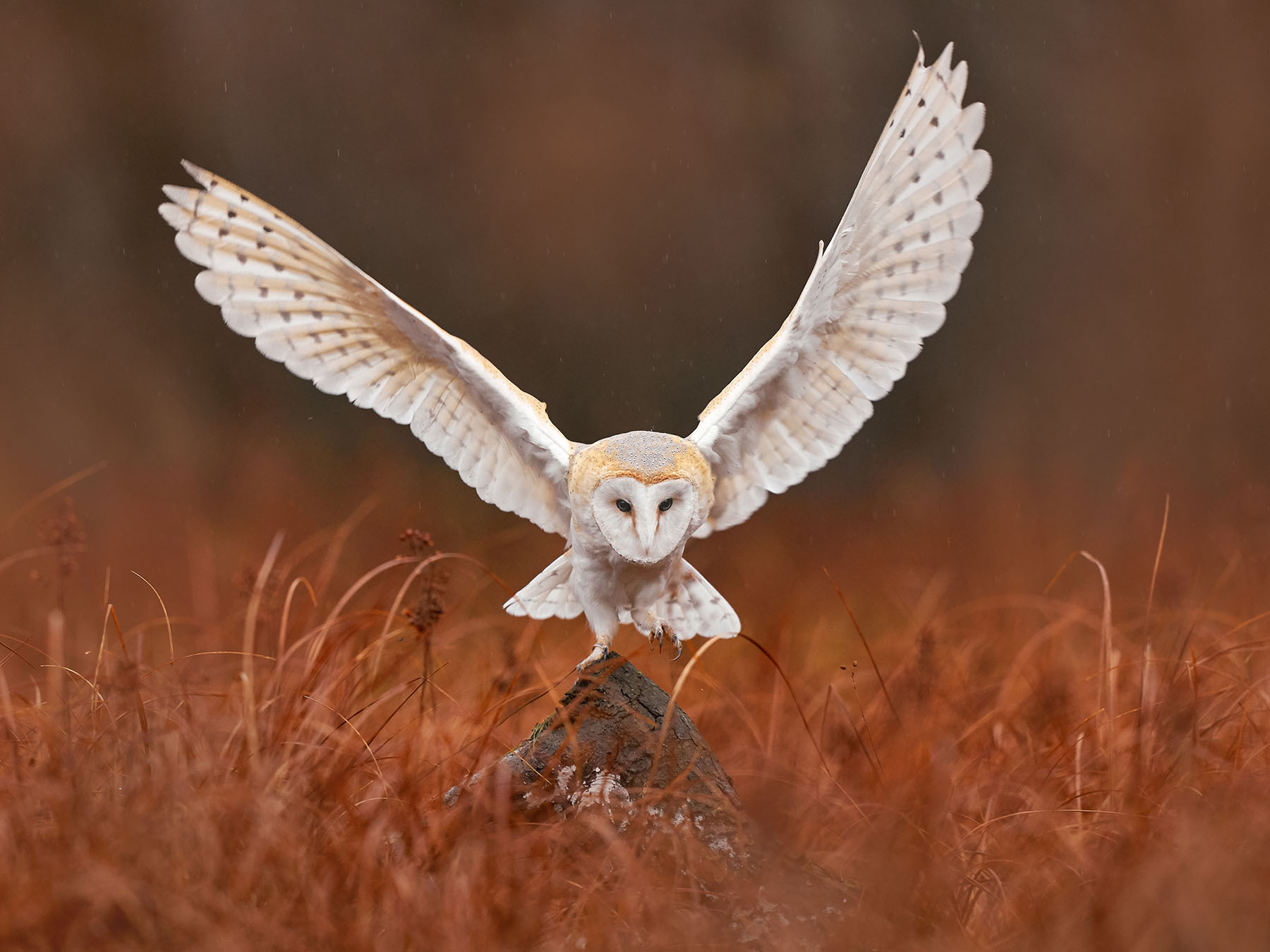
Barn Owls have a wingspan of up to three feet (80-95cm). They have broad, round wings that allow slow and silent flight low over the ground to hunt their prey.
Check out this in-depth guide to Barn Owl size for more information.
Its size
Adults- Length
- 33–39 cm
- Wingspan
- 80–95 cm
- Weight
- 430–620 g
Its song and calls
The Barn Owl’s call is one of nature's spookiest sounds. Read on to learn more about their vocalisations and their functions.
What sound does a Barn Owl make?
Barn Owls produce a range of sounds, including screams and hisses. Unlike many other species, they do not hoot. Their typical call is an eerie, drawn-out screech.
Why do Barn Owls call?
Barn Owls call most often in the nesting season, and their calls serve several functions. Males call to attract a mate, usually while flying near a nest site. They also make loud distress calls when caught or when humans and predators approach their nest.
- Song0:00 / 0:26
Recorded in Normandie, France · April 2021
- Call0:00 / 0:38
Recorded in Bourgogne-Franche-Comté, France · July 2025
When and where to see it
OctoberArriving
Most recorded in October
- 1. South Lanarkshire0.72%
- 2. Carlow0.34%
- 3. Durham0.24%
- 4. East Riding of Yorkshire0.22%
- 5. Shropshire0.21%
Each dot is a county, state or province: the bigger and darker, the larger the bird’s share of that place’s bird records that month. Grey dots: no regular records. The ringed point is the centre of the bird’s records this month; the arrow shows how it moved since last month, and the dashed loop its path through the year. “Arrivals” colours places where it becomes regular this month (orange) or is in its last regular month (grey). GBIF eBird Observation Dataset, 2019–2024. Map data: Natural Earth, US Census Bureau; place centres © OpenStreetMap contributors.
In your area
See when the Barn Owl is recorded in your county, state or province.
How often the Barn Owl turns up in the UK and Ireland through the year, from birdwatchers' records.
United Kingdom
Resident · all year · most records in February
Ireland
Resident · all year · most records in December
Show as a table
| Month | United Kingdom | Ireland |
|---|---|---|
| January | 0.14% (regular) | 0.029% (regular) |
| February | 0.15% (regular) | 0.035% (regular) |
| March | 0.097% (regular) | 0.015% (regular) |
| April | 0.070% (regular) | 0.010% (regular) |
| May | 0.082% (regular) | 0.009% (regular) |
| June | 0.11% (regular) | 0.014% (regular) |
| July | 0.10% (regular) | 0.014% (regular) |
| August | 0.053% (regular) | 0.008% (regular) |
| September | 0.048% (regular) | 0.008% (regular) |
| October | 0.070% (regular) | 0.013% (regular) |
| November | 0.077% (regular) | 0.028% (regular) |
| December | 0.095% (regular) | 0.037% (regular) |
Recorded regularly in
Worldwide: recorded regularly in 76 countries
Countries where it was recorded in at least 3 of the 6 years 2019–2024. Linked countries have their own bird list.
Europe (27)
Africa (36)
Data: EOD – eBird Observation Dataset (Cornell Lab of Ornithology), accessed via GBIF.org, CC BY 4.0. Records from 2019–2024, aggregated and filtered by Birdfact. How these lists are made
What is the habitat of a Barn Owl?
Barn Owls occupy a variety of open habitats that suit their hunting style. Farmlands, grasslands, heathland, marshes, open woodlands, semi-desert, savannahs, and even the outskirts of suburban areas provide suitable hunting grounds.
What is the range of a Barn Owl?
Barn Owls have an extensive global range encompassing much of North and South America, Europe and Asia, Africa, and Australia. They are absent from Antarctica.
Check out this in-depth guide for more information on the Barn Owl’s range and habitats.
Where do Barn Owls live?
Barn Owls are not strictly territorial, but they live and hunt within home ranges that vary in size depending on prey availability. At night, they emerge to fly low over open areas in search of prey but spend much time perched on poles, branches, rocks, and other convenient places.
How rare are Barn Owls?
Barn Owls are generally common in suitable habitats, although their status varies regionally. Unfortunately, these birds are endangered in Canada and many US states, while in the United Kingdom, their population is relatively healthy and increasing.
Where can you see Barn Owls in North America?
Barn Owls are widespread in the United States, occurring in every state except Alaska. They were also successfully introduced to Hawaii. These birds are generally common in the US but occur in lower numbers in the north.
Barn Owls are very rare in Canada. They occur only in the south of British Columbia and Ontario.
Where can you see Barn Owls in the UK?
Barn Owls are widespread in the United Kingdom. They have been recorded virtually everywhere except parts of northwestern Scotland. Look out for them in low-lying areas, particularly in farmland, meadows, and other open habitats.
Where can you see Barn Owls in Australia?
Barn Owls occur throughout Australia in open habitats like farmland, heath, and open woodlands.
Signs and spotting tips
Barn owls are nocturnal and crepuscular. However, in Britain, they do on occasion hunt by day. They can also be seen at twilight on winter afternoons patrolling along hedgerows in search of prey.
In flight, the barn owl shows warm-buff flight and tail feathers with dark-brown barring. Their flight is slow and elegant and they appear long-necked and short-tailed. Feet dangle when hovering. The barn owl’s white face and underparts are what are most likely to be visible.
Migration
Do Barn Owls migrate?
Barn Owls do not undertake regular annual migrations, although young birds can disperse over a thousand miles (1600 km) from their nest when they reach independence. However, such great distances are not the norm, and most move just a few dozen miles.
What it eats
Barn Owls are expert predators. Read this section to learn more about their diet and hunting techniques.
What do Barn Owls eat?
Barn Owls specialise in hunting small mammals like mice, rats, voles, and shrews. Birds, reptiles, amphibians, and insects make up a smaller proportion of their diet.
Check out our guide for more information on the Barn owl diet.
What do baby Barn Owls eat?
Baby Barn Owls eat mice and other small animals. Their mother tears the prey into manageable portions until they are about two weeks old. Older chicks simply swallow their meals whole.
Do Barn Owls hunt every night?
Barn Owls must hunt and eat every day. They may eat about ten percent of their own body mass per day on average, although this figure varies since they require more food to survive in colder weather.
Sometimes, Barn Owls go out hunting in the daylight, especially when food is scarce or they have chicks to feed.
How far away can Barn Owls see prey?
Barn Owls are close-range hunters. They find most of their prey by flying slowly over the ground at heights of 1.5 to 4.5 meters (5 - 15 ft) or from a low perch.
Barn Owls have incredible low-light eyesight, and their amazing sense of hearing allows them to find prey hidden in the undergrowth.
Nesting and breeding
Barn Owls may be prolific breeders when conditions allow. They usually produce a single clutch of four to six eggs per year, although there are records of up to four broods in a single year and up to twelve eggs per clutch.
Where do Barn Owls nest?
Barn Owls use the same nest year after year and may even sleep at their nest site in the non-breeding season. They do not collect nesting material but rather arrange their own regurgitated pellets. These birds nest in a variety of locations, both natural and artificial.
Common nest sites include:
- Tree cavities
- Holes in earth river banks
- Caves and crevices
- Towers
- Barns
- Bridges
- Nest boxes
Check out our in-depth guide on all things Barn owl nesting for more information.
What do Barn Owl eggs look like?
Barn Owls lay up to a dozen dull white eggs per clutch. Each measures 39 to 43 millimetres (1½ in) long and 31 to 33 millimetres (1⅕) wide.
Do Barn Owls mate for life?
Barn Owls form close bonds that may last their lifetime, and pairs may remain together throughout the year. However, they will seek a new partner if their mate disappears. Nearly one in four pairs divorce, especially if breeding is unsuccessful.
Behaviour
Are Barn Owls aggressive?
Barn Owls are generally non-aggressive, although they will attack other owls that approach their nest. They will hiss, lower their body and spread their wings when defending themselves against other predators, and may resort to lying on their backs with their talons extended above them if cornered.
Where do Barn Owls sleep at night?
Barn Owls are nocturnal birds, which means they are generally active at night and sleep during the day. They roost in natural tree cavities, caves and rock crevices, dense vegetation, buildings, and other man-made structures.
Why do Barn Owls sit on posts?
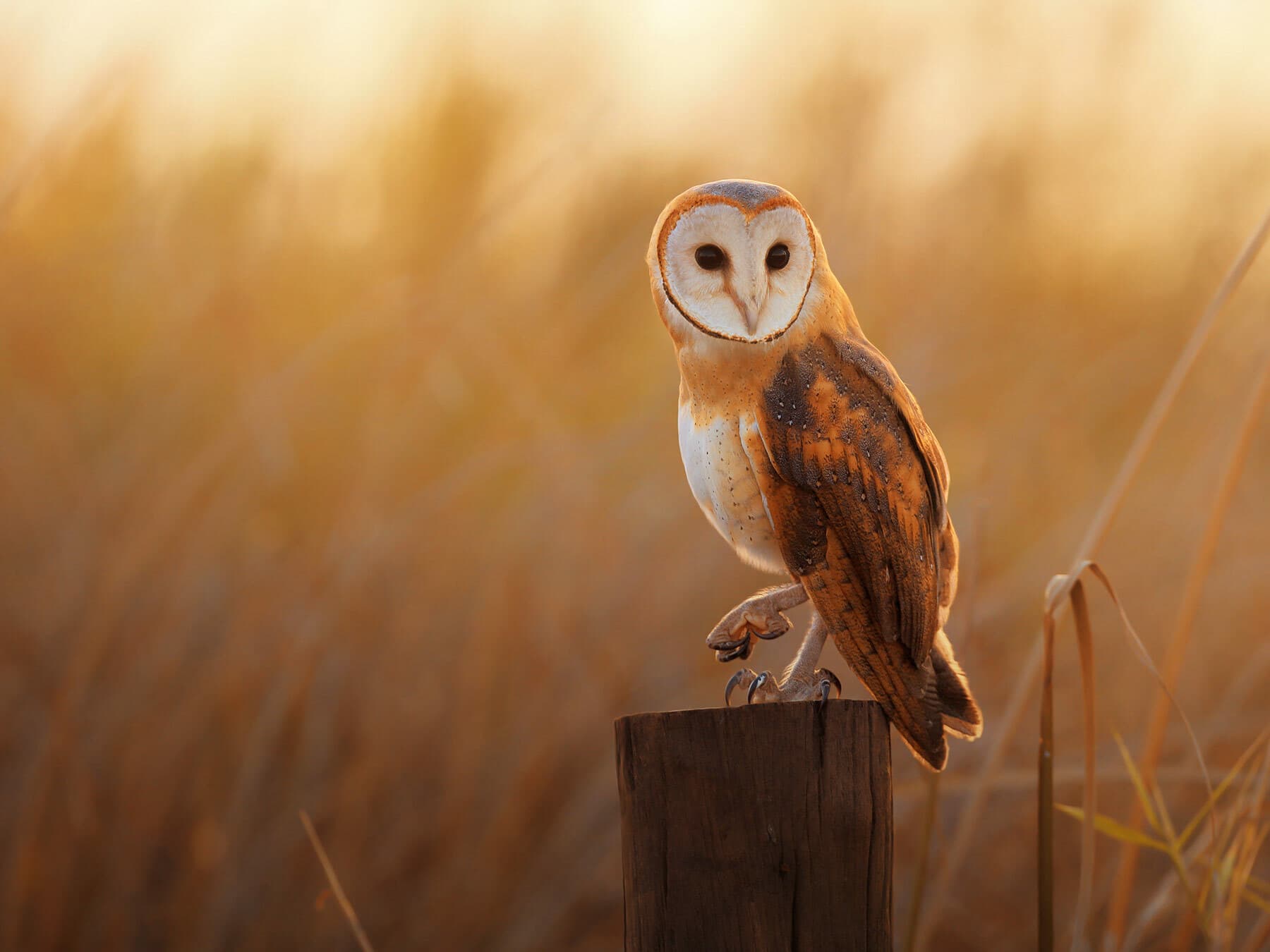
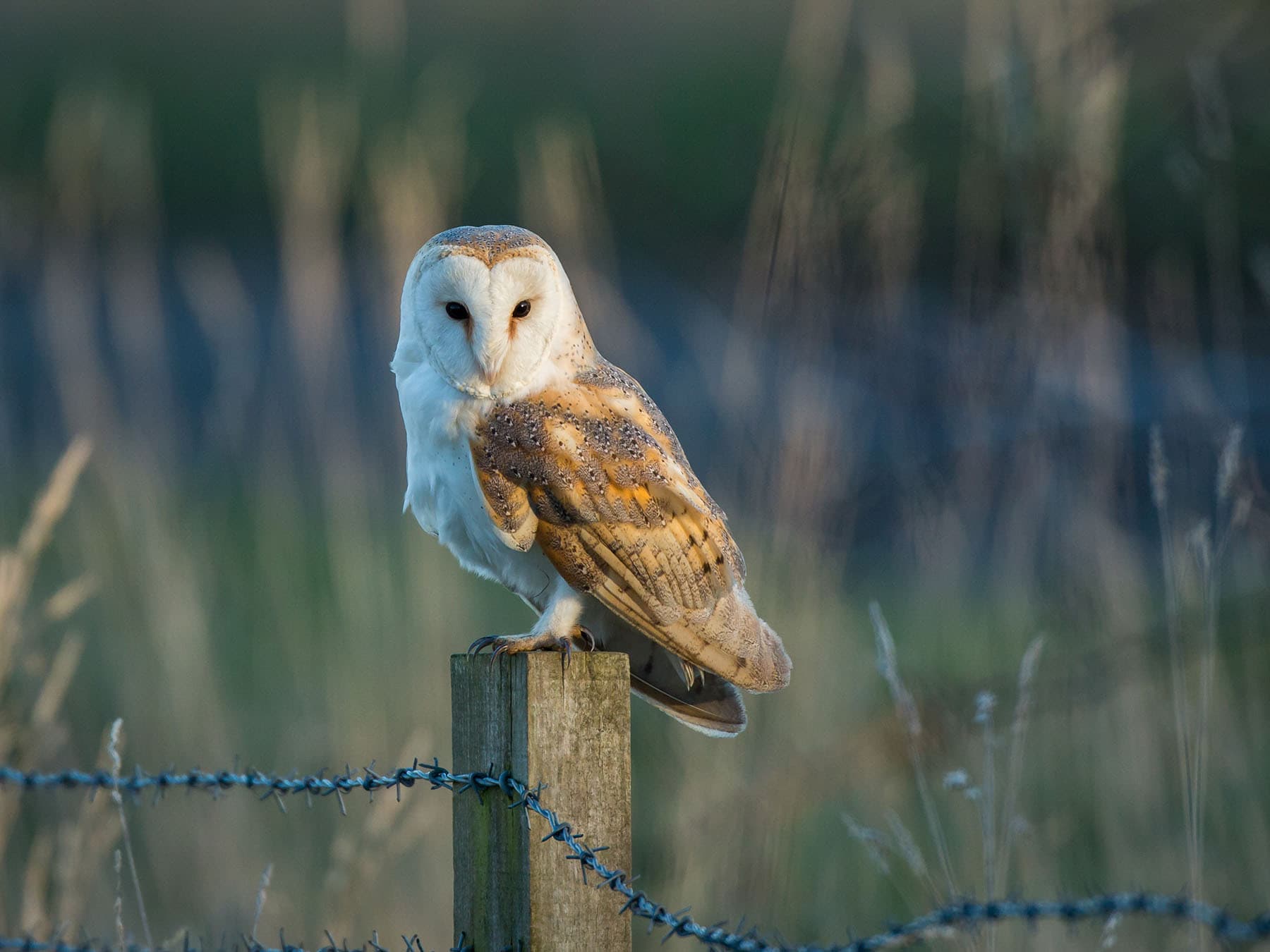
Barn Owls regularly perch on fence posts in farming areas since low crops provide ideal hunting habitat. Perching on these posts allow them to look patiently out over the area for any prey.
They rarely sit on the ground. These birds prefer to hunt from the wing or a stable perch.
Lifespan and predators
Barn Owls have relatively few predators, although habitat destruction and food shortages certainly take their toll on the species.
How long do Barn Owls live?
Barn Owls are relatively short-lived. Only one in four may survive their first year, and the average lifespan is less than two years. However, the oldest known specimen lived for an impressive 34 years, highlighting the challenges that face the average bird.
What are the predators of Barn Owls?
Adult Barn Owls do not have many predators, although they may fall prey to other owls and birds of prey like Great Horned Owls, Peregrine Falcons, and Golden Eagles.
Are Barn Owls protected?
Barn Owls are protected under the Migratory Bird Treaty Act (USA), the Wildlife and Countryside Act (UK), and the Species at Risk Act (Canada).
Are Barn Owls endangered?
Barn Owls are listed as a ‘Least Concern’ species with a stable population at a global level. However, they are faring better in some areas than others. They are listed as endangered in several Midwestern states in the US and at a national level in Canada.
Conservation
While globally listed as Least Concern, Barn Owl populations face threats from habitat loss, rodenticide use, and vehicle collisions.
Conservation efforts focus on providing nesting boxes, preserving grasslands, and reducing pesticide use in agricultural areas.
Similar birds
Often mistaken for
More photos
3 photos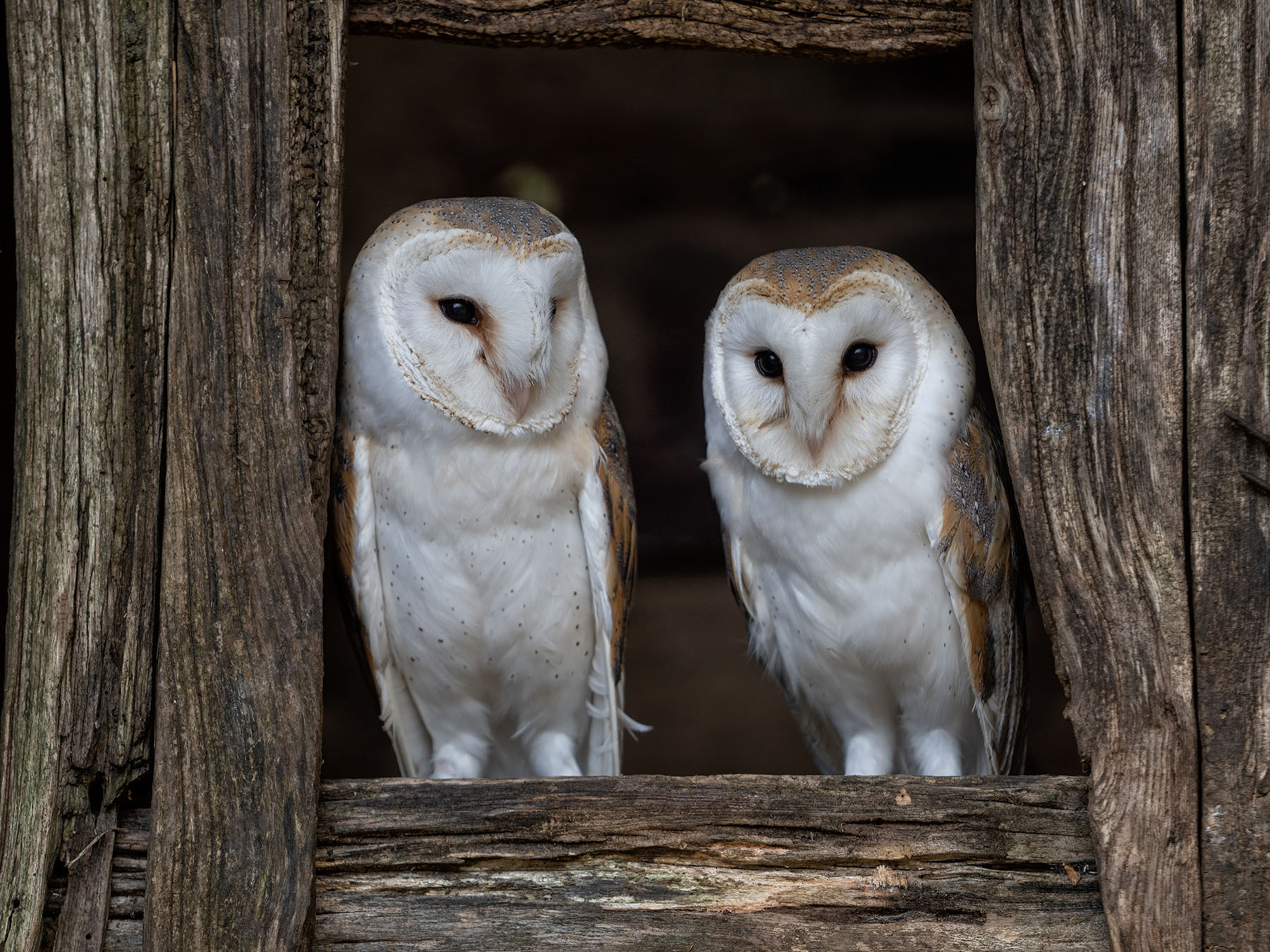
Barn Owl guides
2 guidesQuick facts
- Length
- 33–39 cm
- Wingspan
- 80–95 cm
- Weight
- 430–620 g
- Lifespan
- 4 years · oldest recorded 15.3 years
- Family
- Barn Owls
- Migration
- Resident
- Global status (IUCN)
- Least Concern
- World population
- 4,000,000 - 9,999,999 mature individuals
- Population trend
- Stable
- Also called
- Common Barn Owl, Ghost Owl, Western Barn Owl
- Scientific name
- Tyto alba
Questions
6How fast can Barn Owls fly?
Barn Owls can reach speeds of about 20 miles per hour (32 km/h). They are relatively slow-flying birds, which is a great advantage for their hunting style. By flying at just a few miles per hour, these birds have the time to look and listen for their prey on the ground below.
Why is a Barn Owl not a true owl?
Owls are classified into two families - the true owls (Strigidae) and the barn owls (Tytonidae). The most obvious difference between the two is their face shape (heart-shaped vs. round), although there are other differences in bill shape and eye size.
Are Barn Owls good to have around?
Barn Owls are great birds to have around. These beautiful creatures are exciting to watch, and their ability to control pests makes them welcome wherever people live. You can encourage these birds by erecting a nest box.
You can buy a ready-made nest box or build your own by following a plan like this one from the Barn Owl Trust.
Why do farmers have Barn Owls?
Barn Owls are popular among farmers because they control rodent populations. Rodents are often major pests in agricultural areas because they eat food provided for livestock, damage young crops, and cause damage to infrastructure.
How many mice do Barn Owls eat a day?
Barn Owls eat two to four mice per day. Their needs vary depending on their size and the time of year, with more food necessary to sustain their metabolism in colder conditions.
What is a group of Barn Owls called?
Known collective nouns for a group of Barn Owls are as follows:
- a stable of barn owls
General collective nouns for a group of Owls may also be used:
- a bazaar of owls
- a brood of owls
- a diss of owls
- an eyrie of owls
- a glaring of owls
- a hooting of owls
- a looming of owls
- a nest of owls
- a pair of owls
- a parliament of owls
- a sagaciousness of owls
- a silence of owls (when in flight)
- a stare of owls
- a stooping of owls
- a wisdom of owls
Sources
3- 1BirdLife International. 2019. Tyto alba (amended version of 2016 assessment). The IUCN Red List of Threatened Species 2019: e.T22688504A155542941. Source (opens in a new tab)
- 2BirdLife International. 2019. Tyto alba (amended version of 2016 assessment). The IUCN Red List of Threatened Species 2019: e.T22688504A155542941. Source (opens in a new tab)
- 3BTO longevity records: maximum age from a ringed bird, 15 years, 3 months, 21 days (set in 2016), BirdFacts: Barn Owl (2016) Source (opens in a new tab)

Checked by
Nathan Cope, founder and editor
Nathan founded Birdfact and leads its writers and contributors in the UK, the US and Canada. He has watched and studied birds for more than ten years, and checks every article and species guide before it’s published.