


Hairy Woodpecker
Hairy · Leuconotopicus villosus
By the Birdfact teamChecked by Nathan Cope
See it in 3D
2 plumages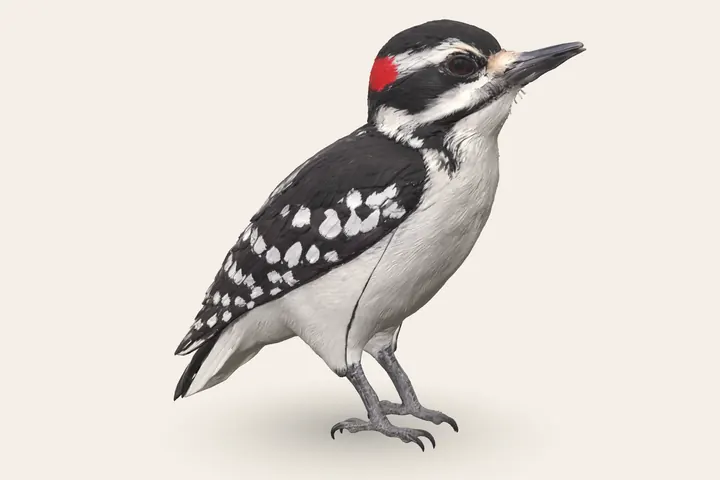 3D model
A Hairy Woodpecker is 7–10 in (18–26 cm) long, bill to tail.
3D model · Adult male · Length 7–10 in (18–26 cm) · How we make our birds · Report a problem
© 2026 NC Digital Limited (Birdfact). All rights reserved. This 3D model may be viewed on this page and shared by link only. Downloading, extracting, copying or reusing it, or using it to train machine-learning models, is not permitted without our written permission. Using our models
On this page15 sections
How to recognise it
What do Hairy Woodpeckers look like?
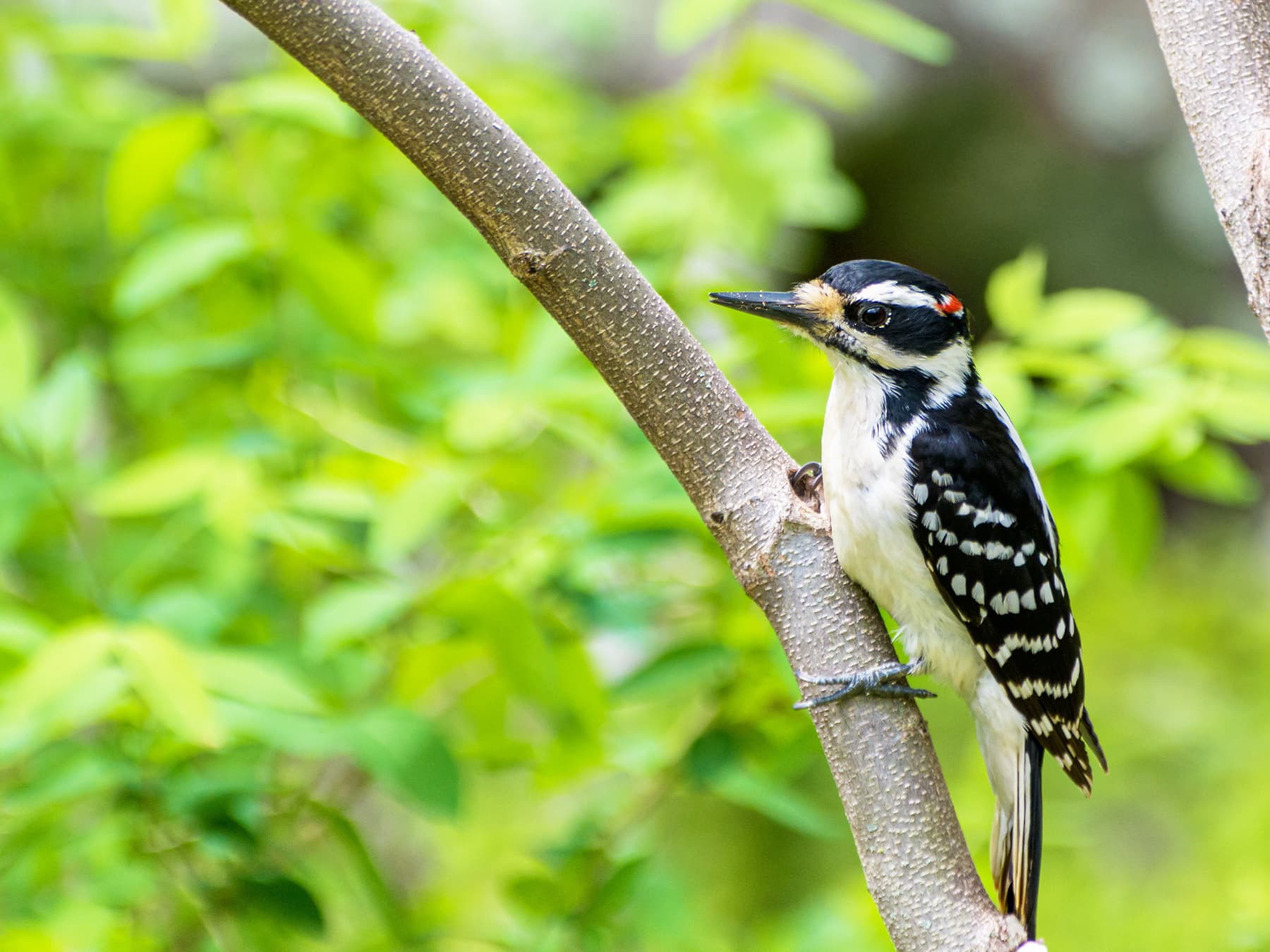
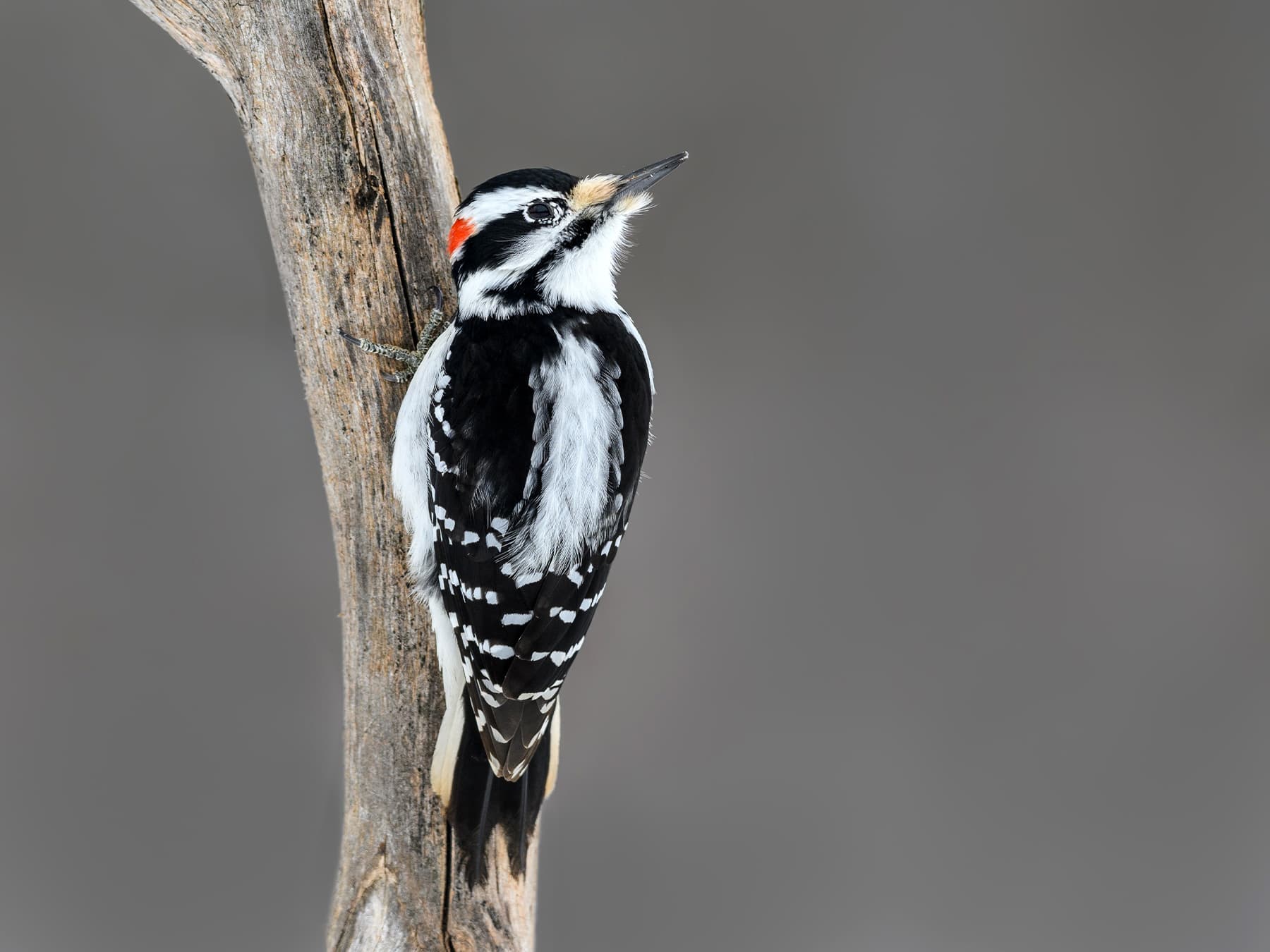
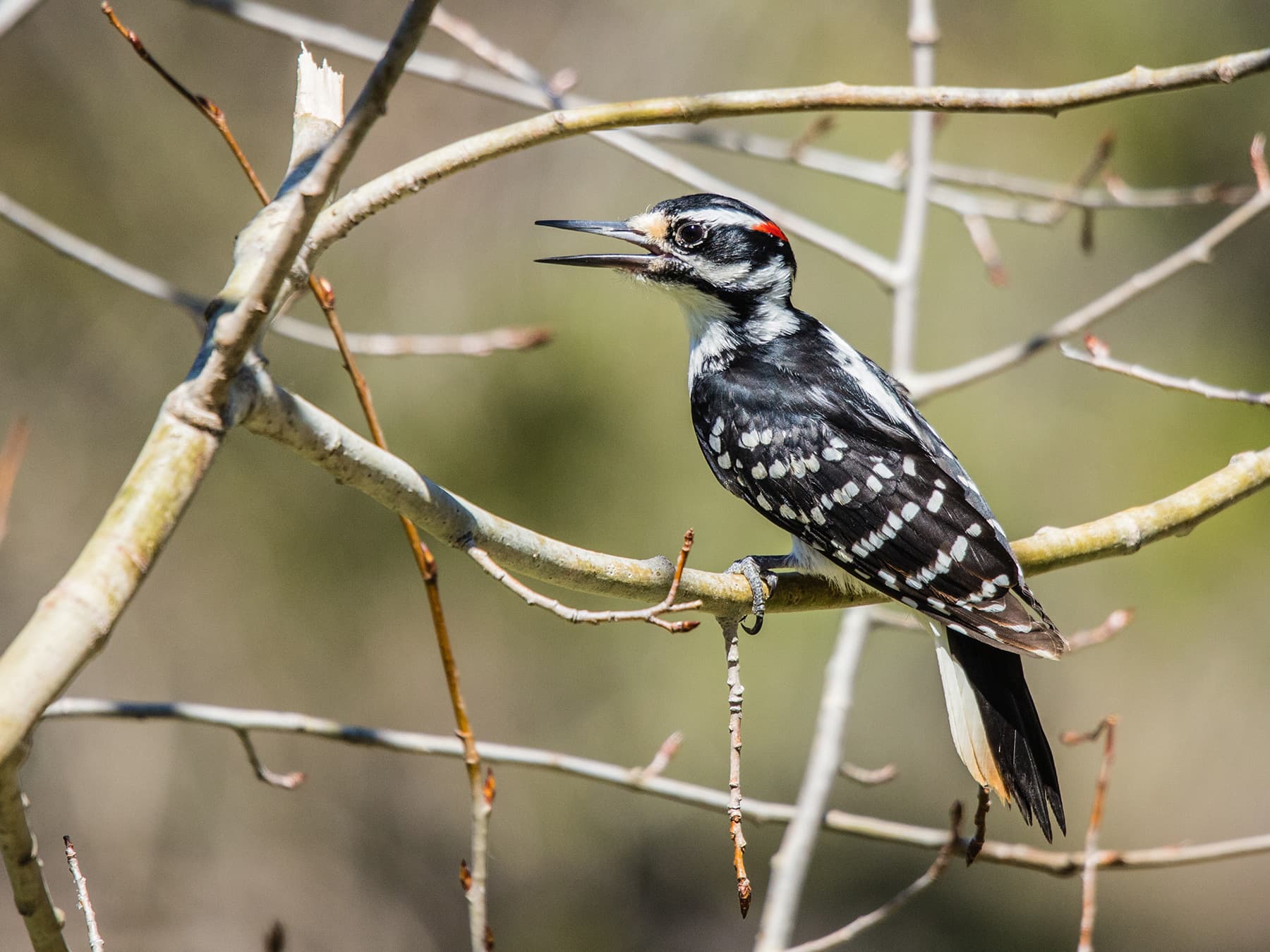
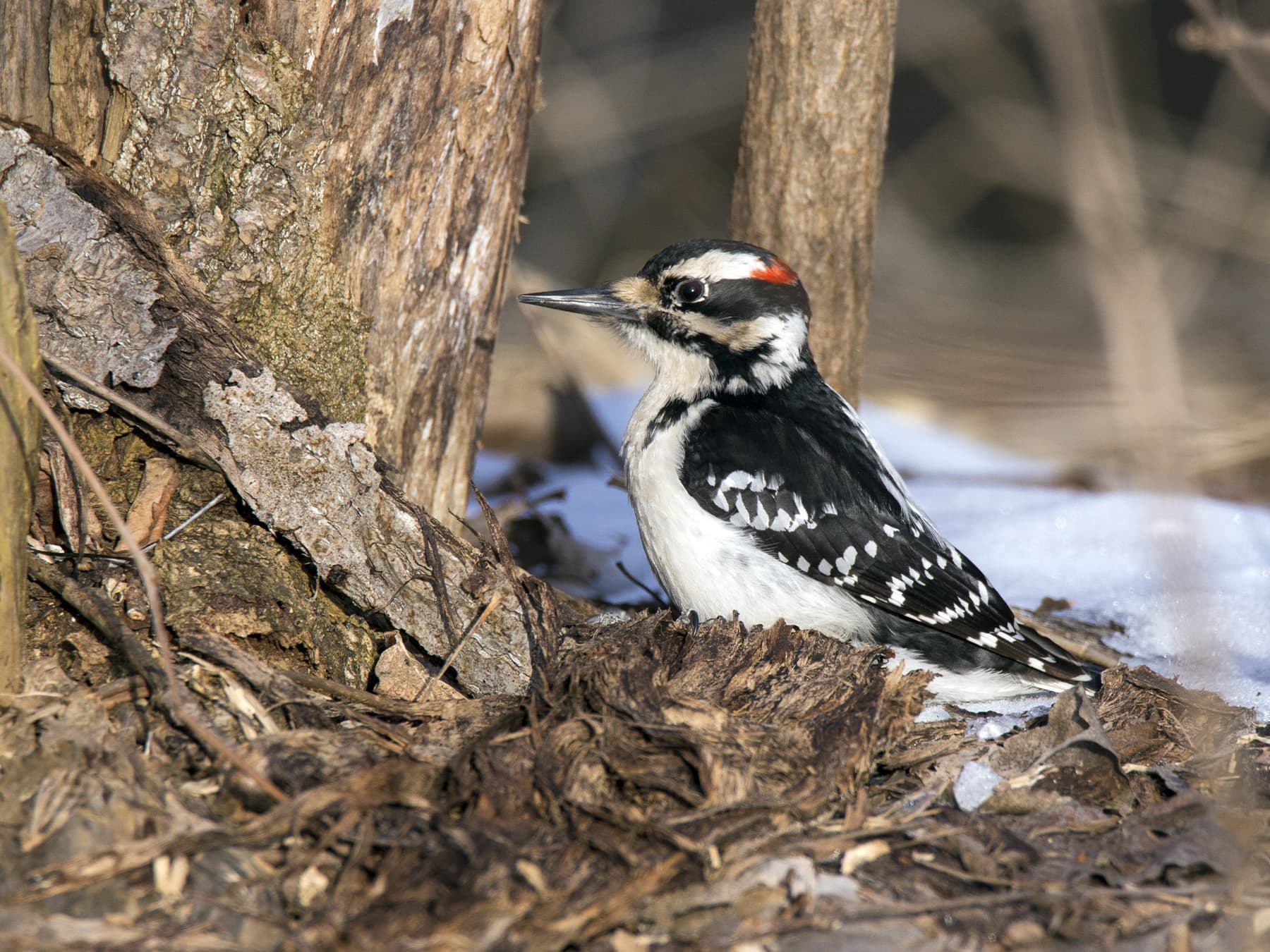
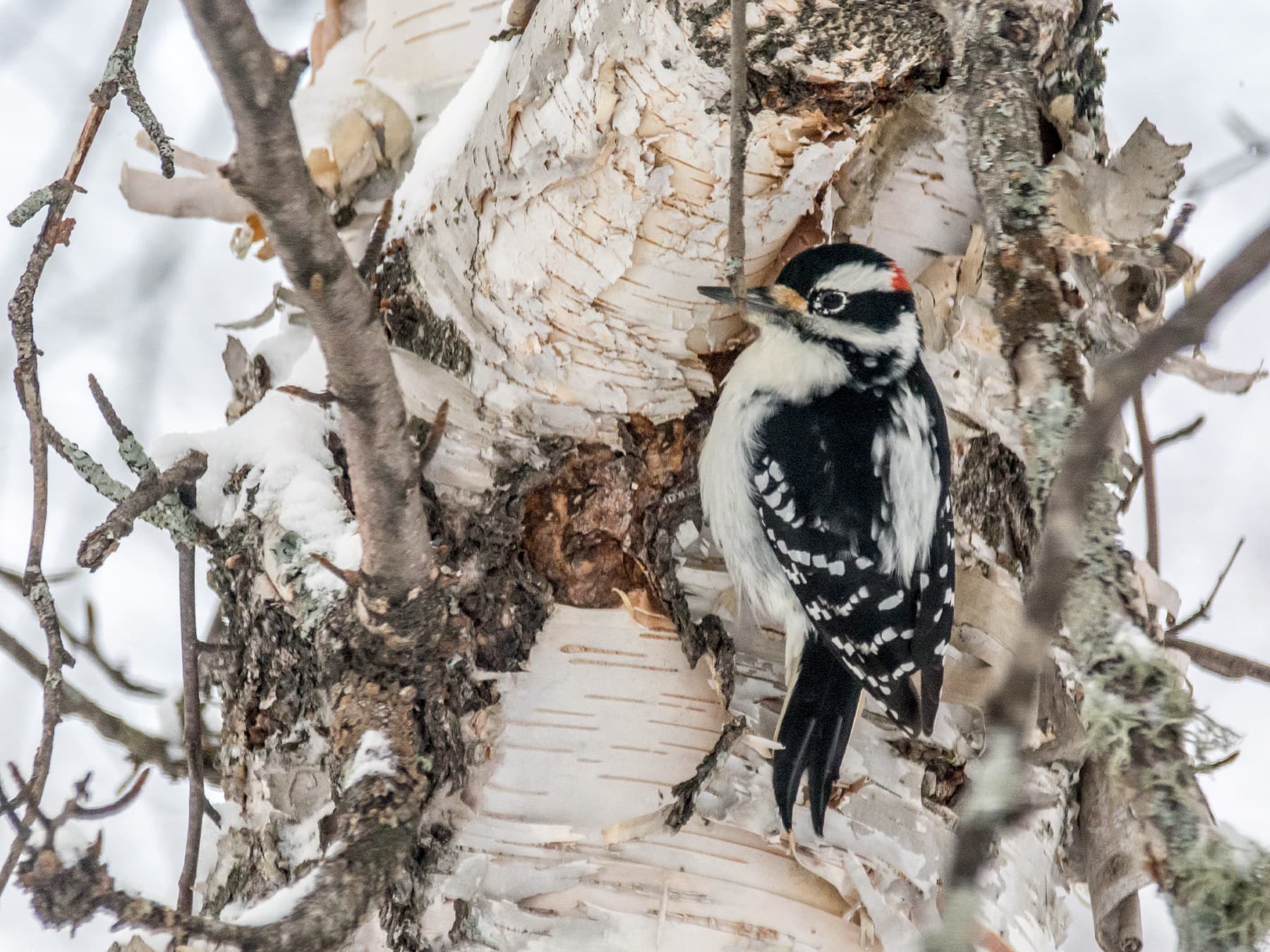
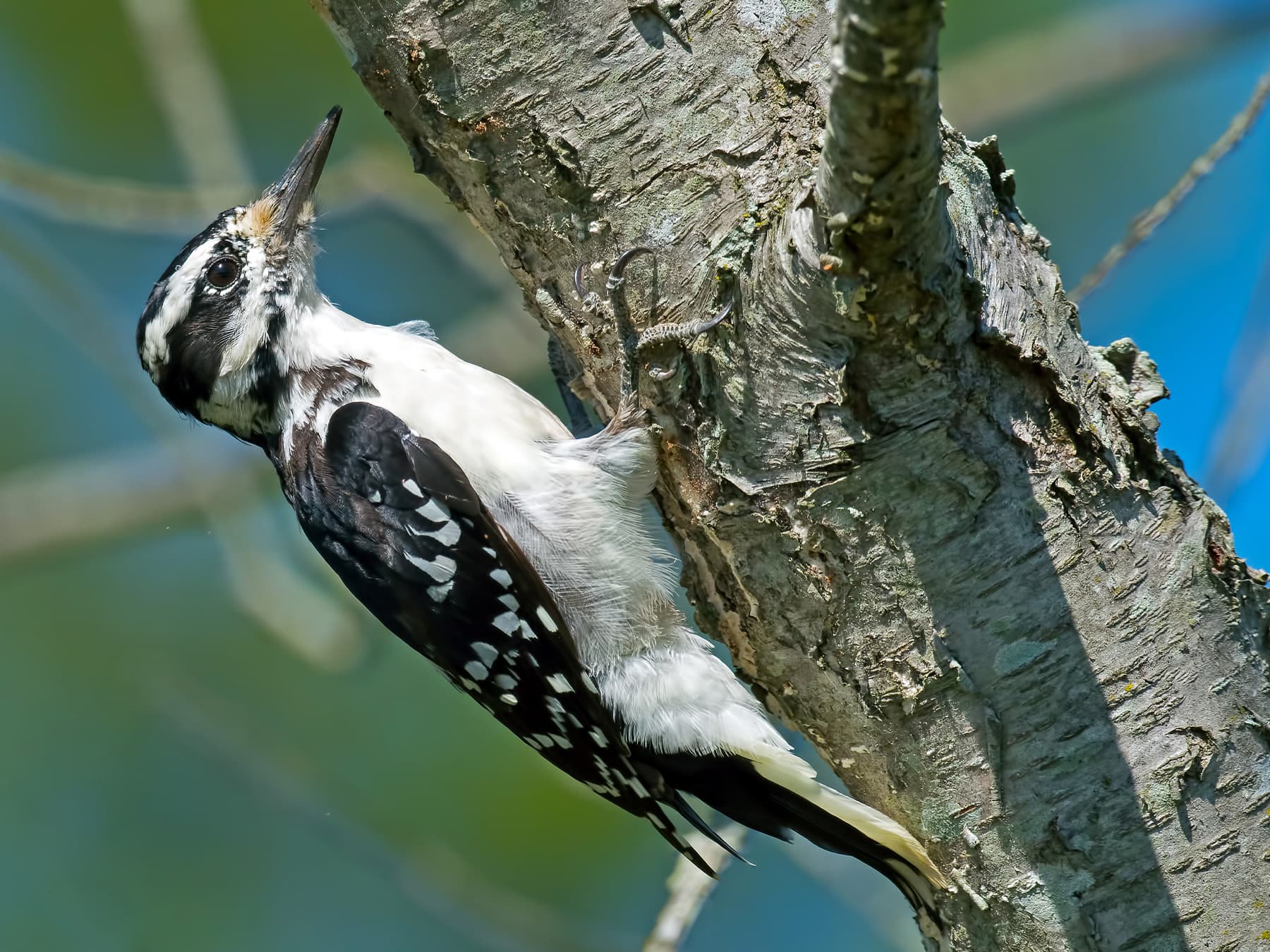
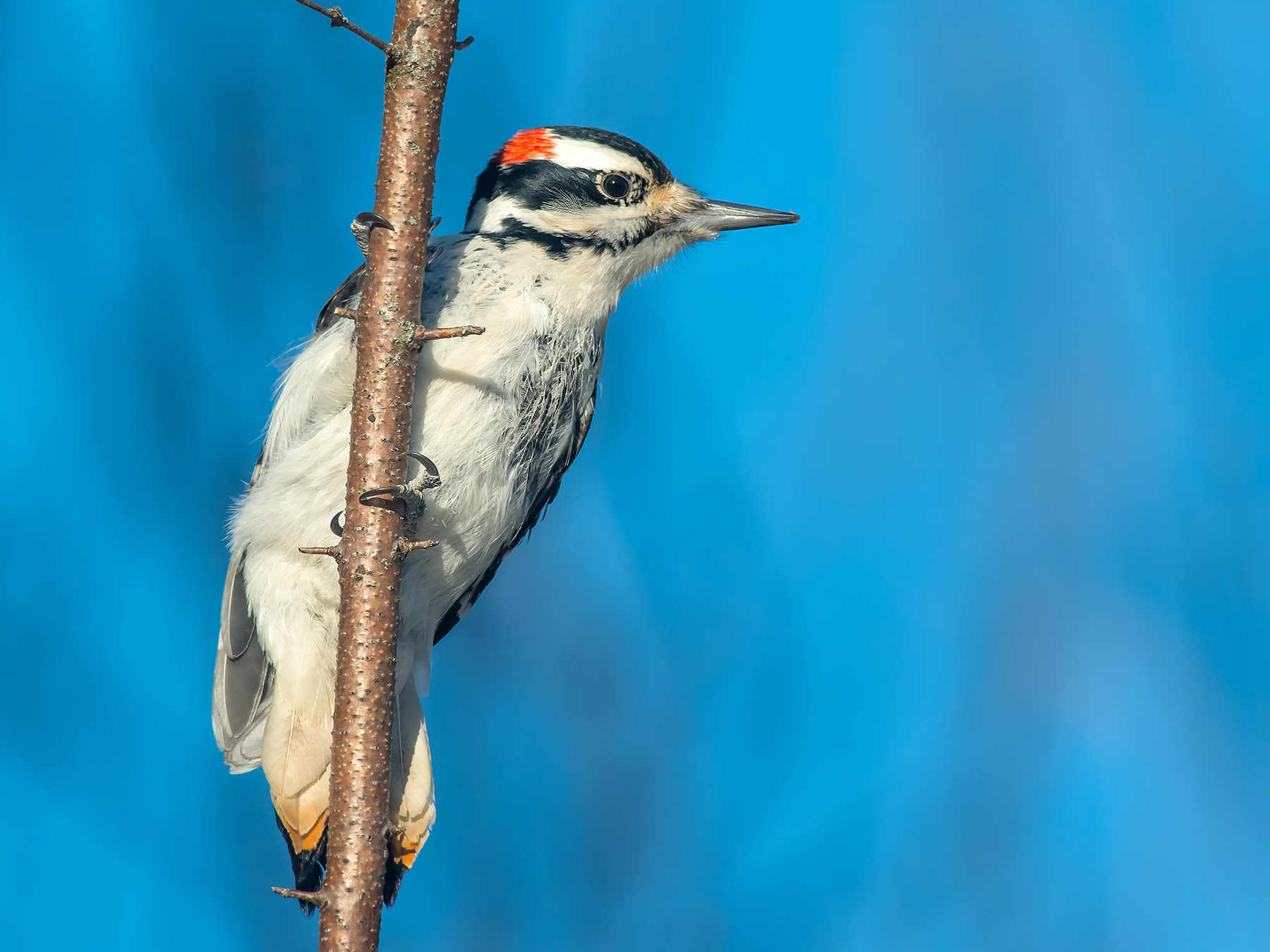
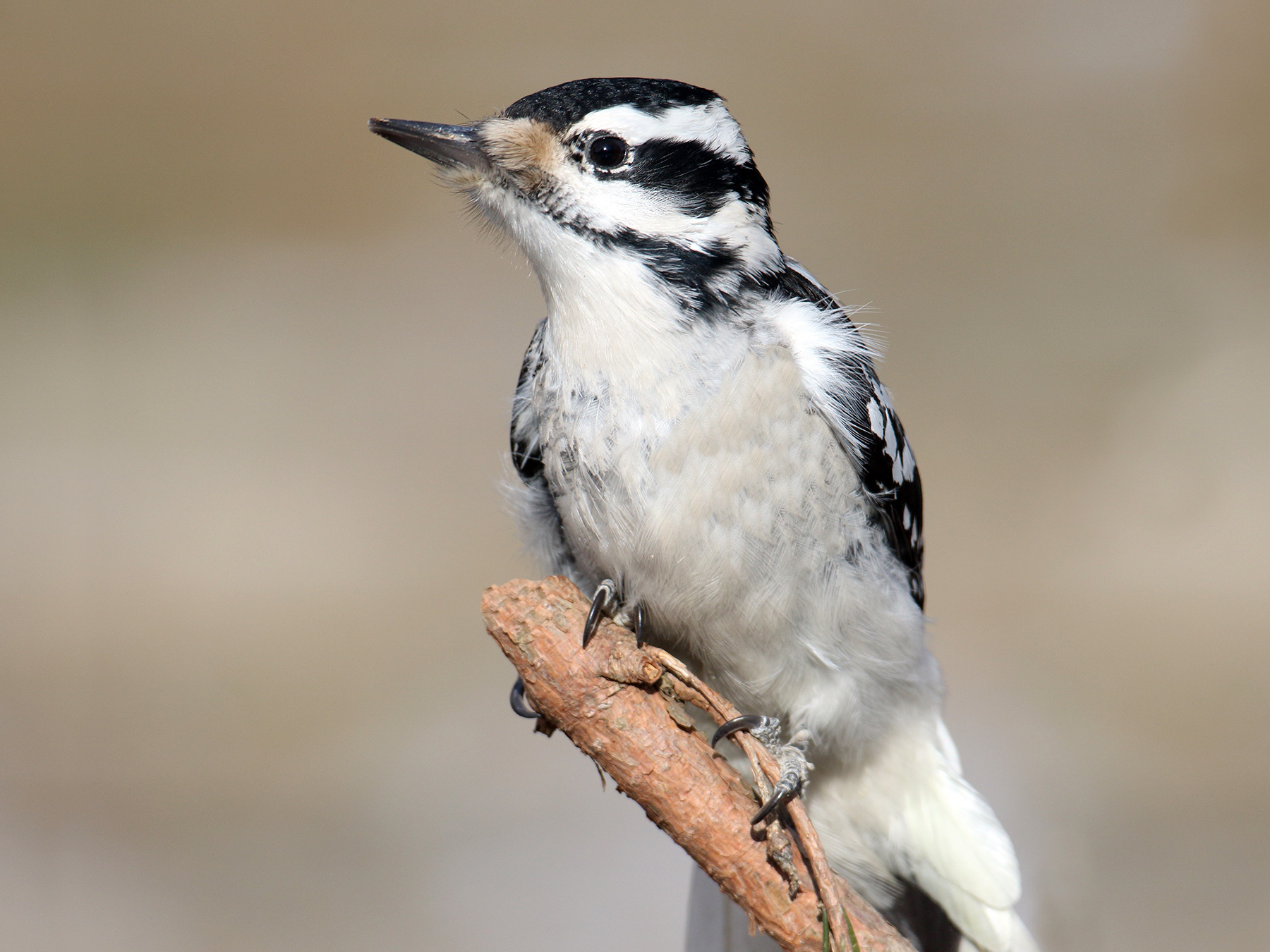
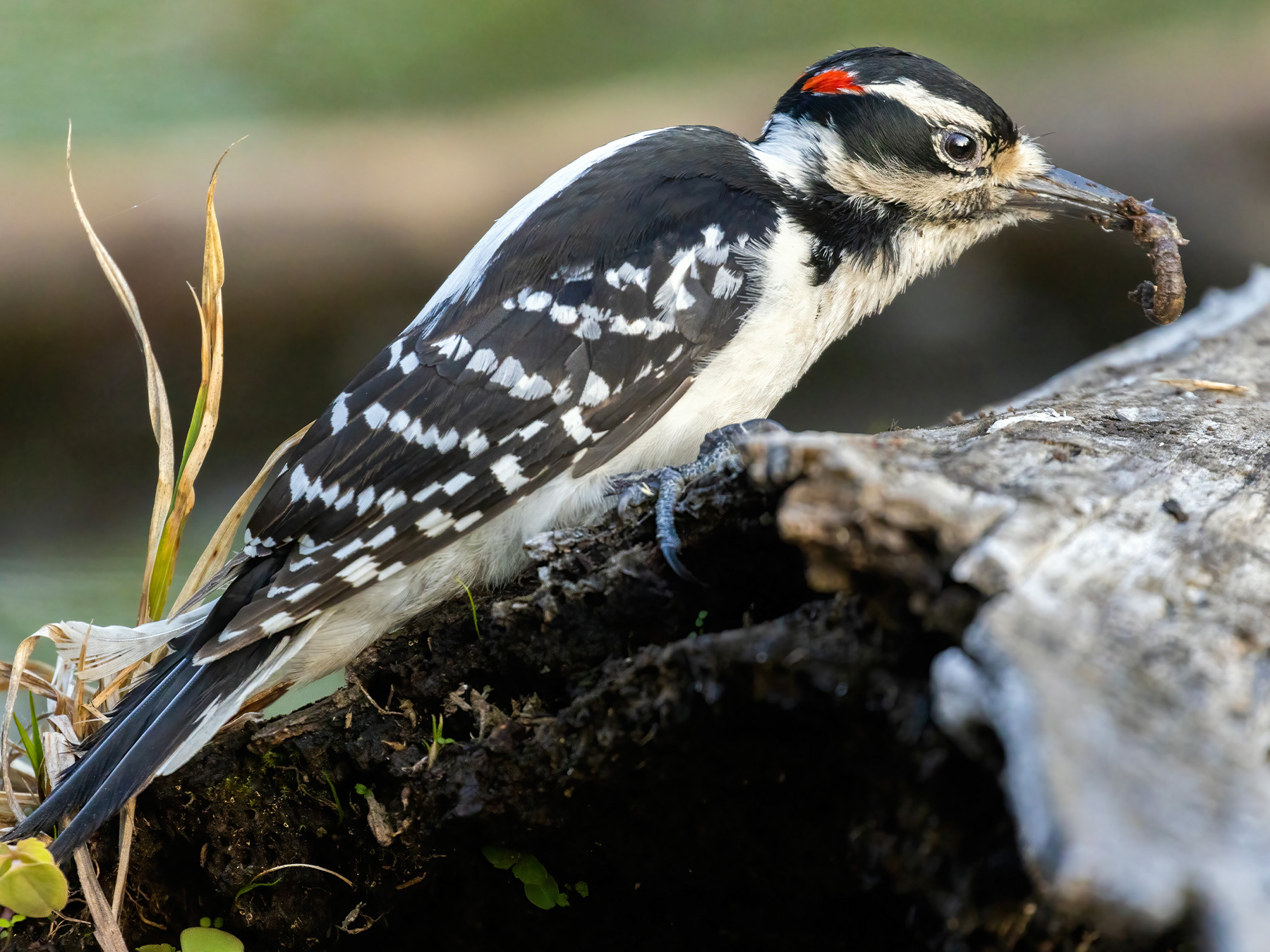
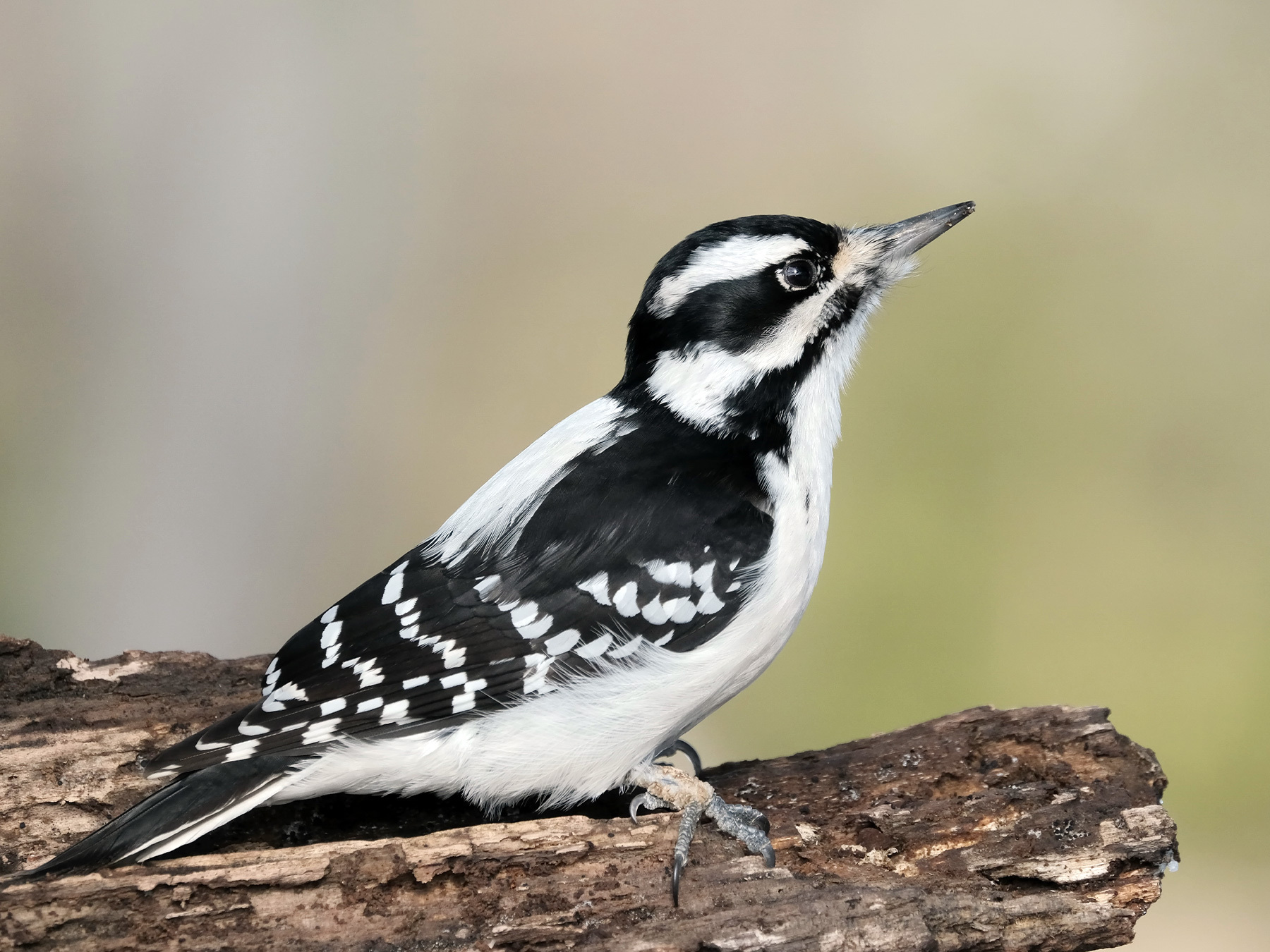
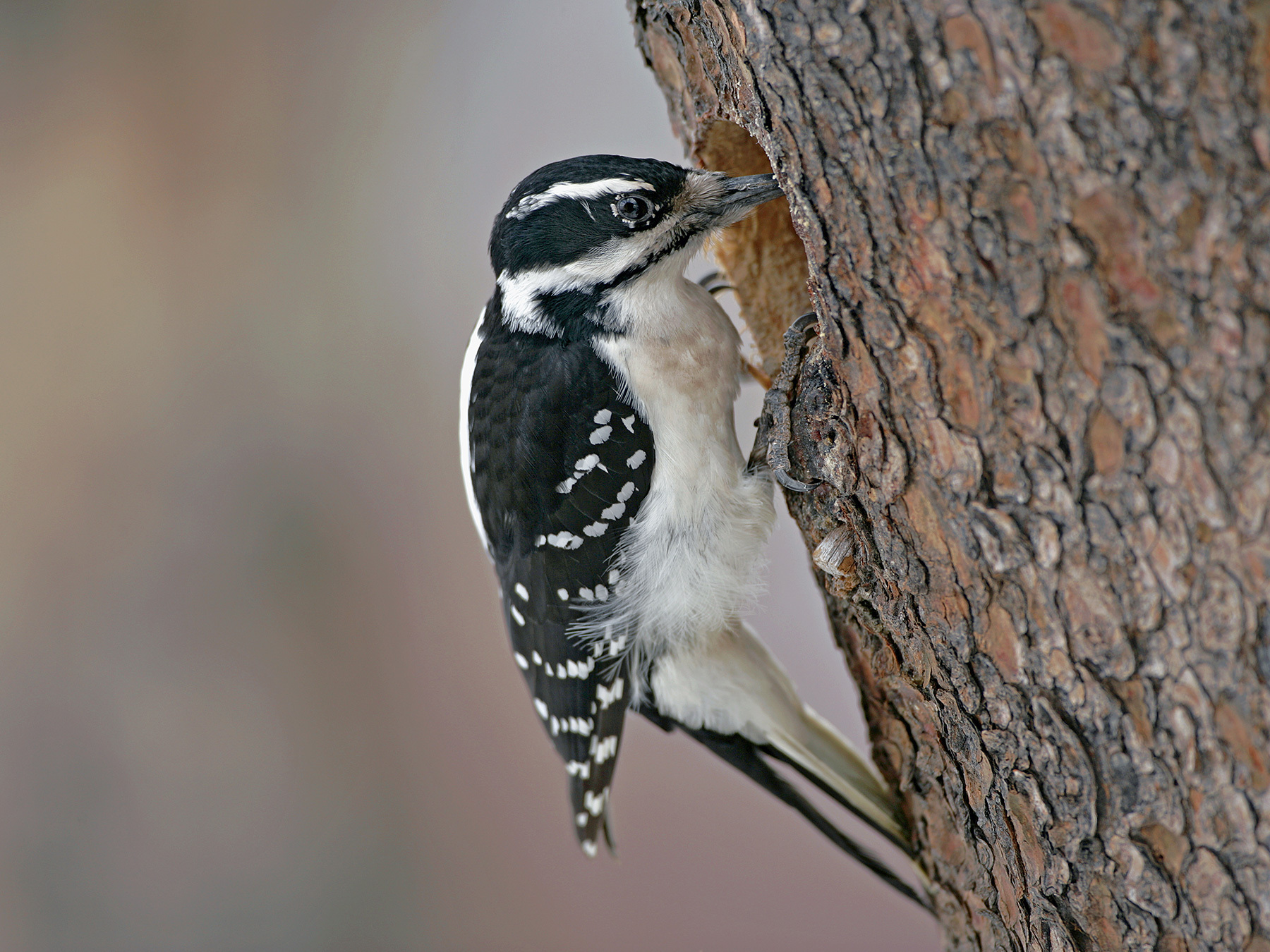
The Hairy Woodpecker is a medium-sized black and white woodpecker with a long black bill and a fine white ring around each eye. They have black wings with some white spotting, a white patch in the middle of the back, and all-white underparts from the throat to the tail. Their head is boldly marked with a black crown, a broad black stripe through each eye, and a black streak from the base of the bill to the shoulder.
The seventeen known subspecies can be distinguished by distribution and differences in plumage colors and patterns. There is notable variation in color between birds from the West and those from the East. Western populations are browner below and have fewer spots on their wings.
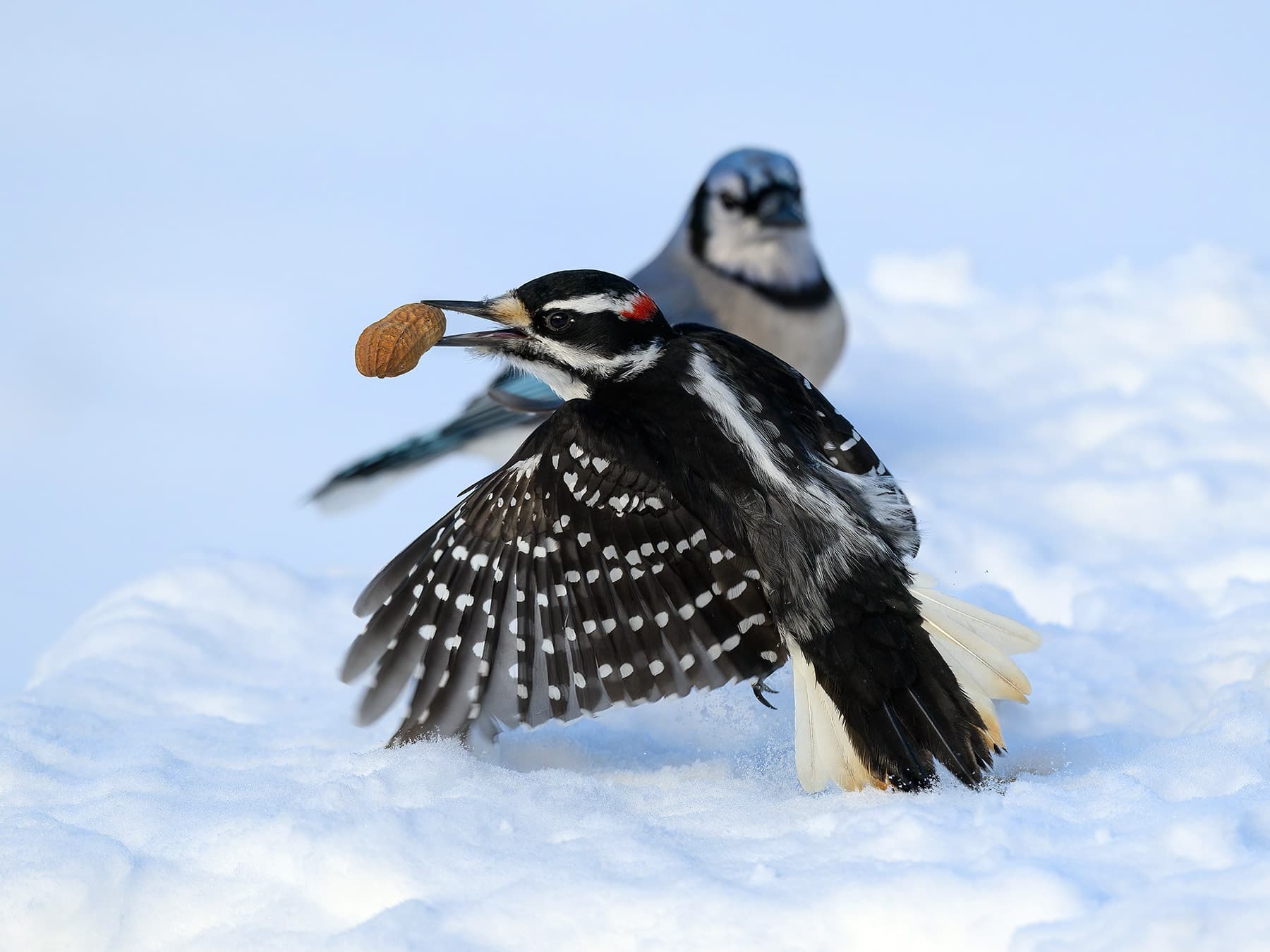
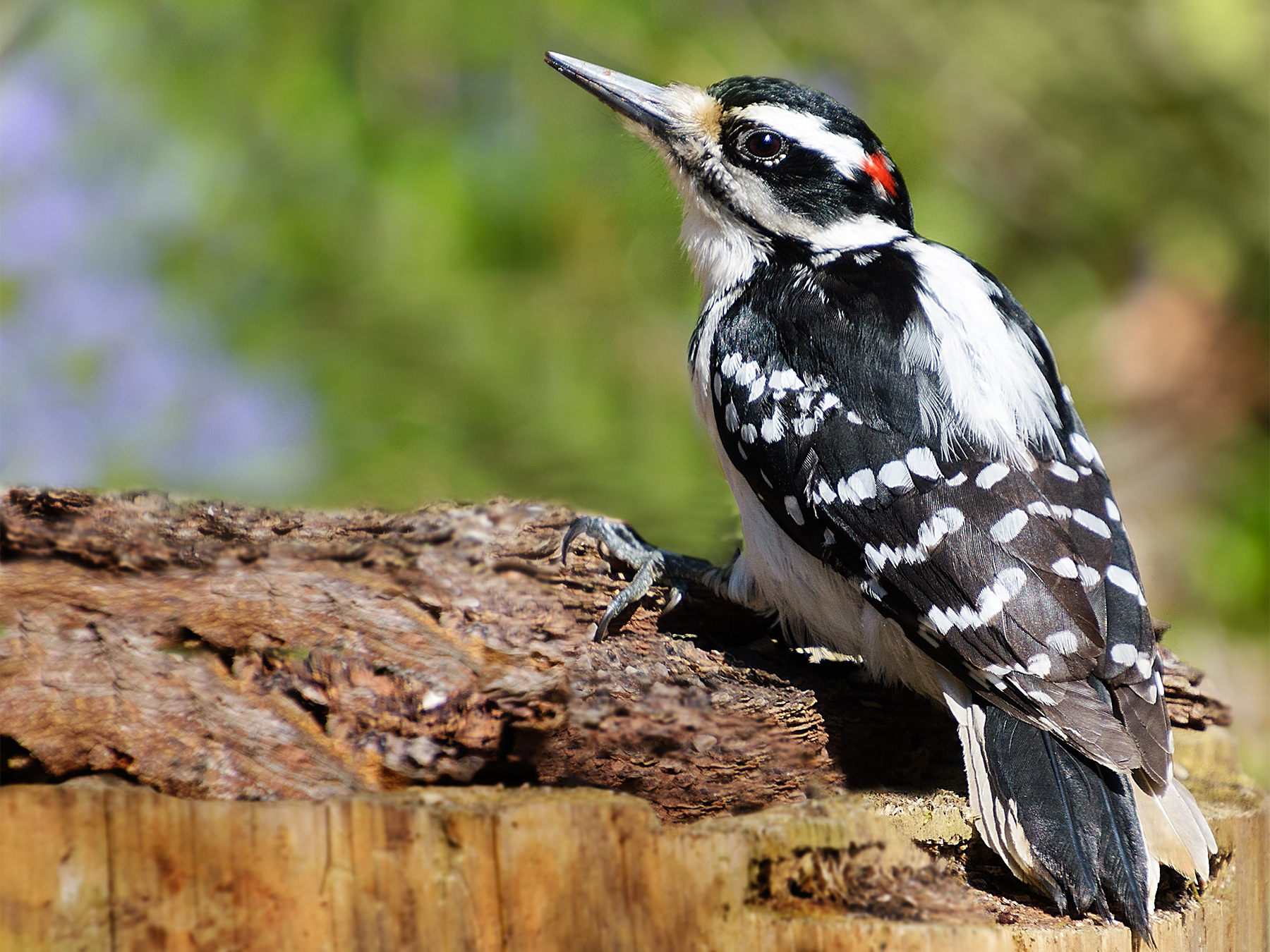
Females are very similar to males but reasonably easy to distinguish by comparing their head color. Females have all-black crowns, while males have a small red spot on the back of the head. Juveniles have similar plumage to adults but are generally duller. Young males are distinguished by a red crown.
Hairy Woodpeckers are most easily mistaken for the more common Downy Woodpecker, although that species is smaller and has a shorter bill. Check out this guide for more tips on telling these two birds apart.
How big are Hairy Woodpeckers?
Length
Hairy Woodpeckers vary in size across their range. They average a little over 9 inches (23 cm) long but vary between 7 and 10 inches (18 - 25 cm).
Weight
They have an average weight of about 2½ ounces (70g) but vary between 1.4 and 3.4 ounces (40 - 96g).
Wingspan
Adults have a wingspan of 13 to 17 inches or 33 to 41 centimeters.
Its size
Adults- Length
- 18–26 cm
- Wingspan
- 33–41 cm
- Weight
- 40–95 g
Its song and calls
What sound does a Hairy Woodpecker make?
Hairy Woodpeckers produce a squeaking ‘Peek’ call, either as a single note or in a rapid series. In typical woodpecker fashion, these birds also drum on wood as a form of communication. They drum a rapid burst of about 25 taps in a single second but then pause for about 20 seconds before repeating.
- Call0:00 / 0:21
Recorded in Newfoundland and Labrador, Canada · July 2010
When and where to see it
OctoberIn season
Most recorded in October
- 1. Northwest Territories2.3%
- 2. Manitoba2.3%
- 3. Minnesota1.9%
- 4. Vermont1.8%
- 5. Wisconsin1.8%
Each dot is a county, state or province: the bigger and darker, the larger the bird’s share of that place’s bird records that month. Grey dots: no regular records. The ringed point is the centre of the bird’s records this month; the arrow shows how it moved since last month, and the dashed loop its path through the year. “Arrivals” colours places where it becomes regular this month (orange) or is in its last regular month (grey). GBIF eBird Observation Dataset, 2019–2024. Map data: Natural Earth, US Census Bureau; place centres © OpenStreetMap contributors.
In your area
See when the Hairy Woodpecker is recorded in your county, state or province.
How often the Hairy Woodpecker turns up in the United States and Canada through the year, from birdwatchers' records.
United States
Resident · all year · most records in December
Canada
Resident · all year · most records in February
Show as a table
| Month | United States | Canada |
|---|---|---|
| January | 0.64% (regular) | 2.2% (regular) |
| February | 0.66% (regular) | 2.2% (regular) |
| March | 0.53% (regular) | 1.4% (regular) |
| April | 0.47% (regular) | 0.91% (regular) |
| May | 0.48% (regular) | 0.64% (regular) |
| June | 0.48% (regular) | 0.58% (regular) |
| July | 0.47% (regular) | 0.58% (regular) |
| August | 0.53% (regular) | 0.74% (regular) |
| September | 0.67% (regular) | 0.88% (regular) |
| October | 0.62% (regular) | 1.1% (regular) |
| November | 0.60% (regular) | 1.5% (regular) |
| December | 0.69% (regular) | 2.0% (regular) |
Worldwide: recorded regularly in 10 countries
Countries where it was recorded in at least 3 of the 6 years 2019–2024. Linked countries have their own bird list.
North America (10)
- Bahamas
- Canada
- Costa Rica
- El Salvador
- Guatemala
- Honduras
- Mexico
- Nicaragua
- Panama
- United States
Data: EOD – eBird Observation Dataset (Cornell Lab of Ornithology), accessed via GBIF.org, CC BY 4.0. Records from 2019–2024, aggregated and filtered by Birdfact. How these lists are made
What is the habitat of a Hairy Woodpecker?
Hairy Woodpeckers inhabit various well-wooded habitats, from mixed, deciduous, and coniferous forests to suburban backyards. They occur from sea level to over 10,000 feet in some parts of their range.
What is the range of a Hairy Woodpecker?
Hairy Woodpeckers are restricted to North America, where they occur from Alaska in the north to Panama in the south and from the Pacific coast to the Atlantic.
Where do Hairy Woodpeckers live?
Hairy Woodpeckers spend most of their time in trees and other vegetation, although they will forage low on the trunk. They may drink water from the ground but usually find rainwater collected in trees.
How rare are Hairy Woodpeckers?
Hairy Woodpeckers are common birds in suitable habitats. Estimates put the global population at nearly nine-million individuals.
Where can you see Hairy Woodpeckers in the US?
Look out for Hairy Woodpeckers in woodlands, forests, gardens, and parks across the United States, especially in areas with mature tree cover. They are uncommon or absent from parts of the Southwest, Northwest, and much of Texas.
Where can you see Hairy Woodpeckers in Canada?
Hairy Woodpeckers are a widespread and common species in Canada and have increased significantly over the last fifty years or so. They occur throughout the year in every province and territory except Nunavut.
Migration
Do Hairy Woodpeckers migrate?
Hairy Woodpeckers are resident birds. Only those from high-altitude mountainous habitats or areas in the far north of Canada and Alaska may move to warmer wintering grounds.
Are Hairy Woodpeckers native to the US?
Hairy Woodpeckers are a native species in the United States.
Tips for seeing it
- Listen for their sharp 'peek' call or rapid drumming on trees
- Look for them on tree trunks and large branches in mature forests
- Observe their distinctive black and white plumage pattern
- Check backyard suet feeders, especially in winter
- Compare size to the similar but smaller Downy Woodpecker
What it eats
What do Hairy Woodpeckers eat?
Hairy Woodpeckers are mostly insectivorous. They prefer insects and larvae that live in wood and under the bark, but they also eat crawling insects on the trunk and foliage. These birds supplement their diet with nuts and berries and often eat suet at backyard bird feeding stations.
What do Hairy Woodpecker chicks eat?
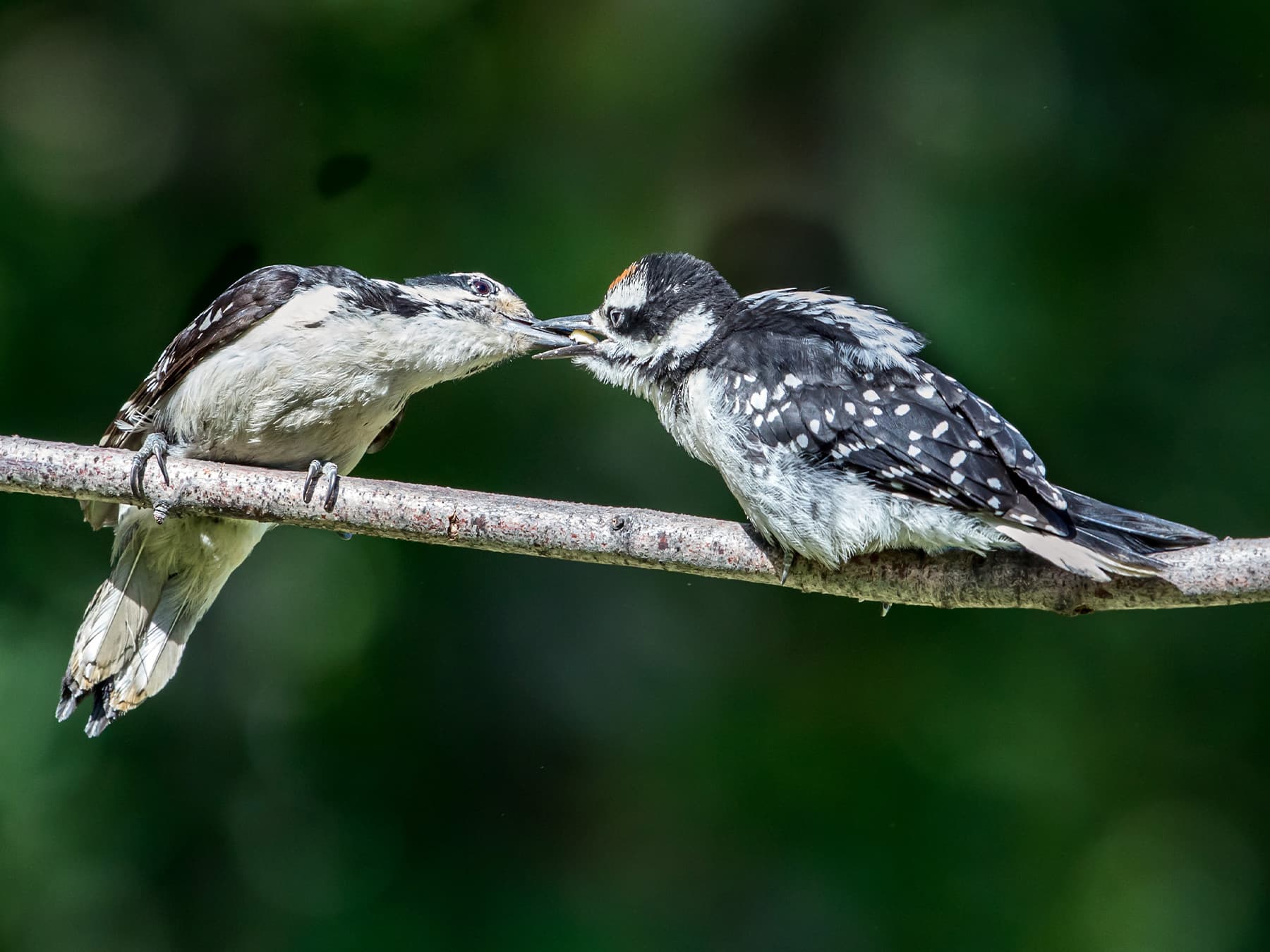
Hairy Woodpeckers feed their chicks small insects. Both males and females work together to provide a steady supply of food.
Nesting and breeding
Where do Hairy Woodpeckers nest?
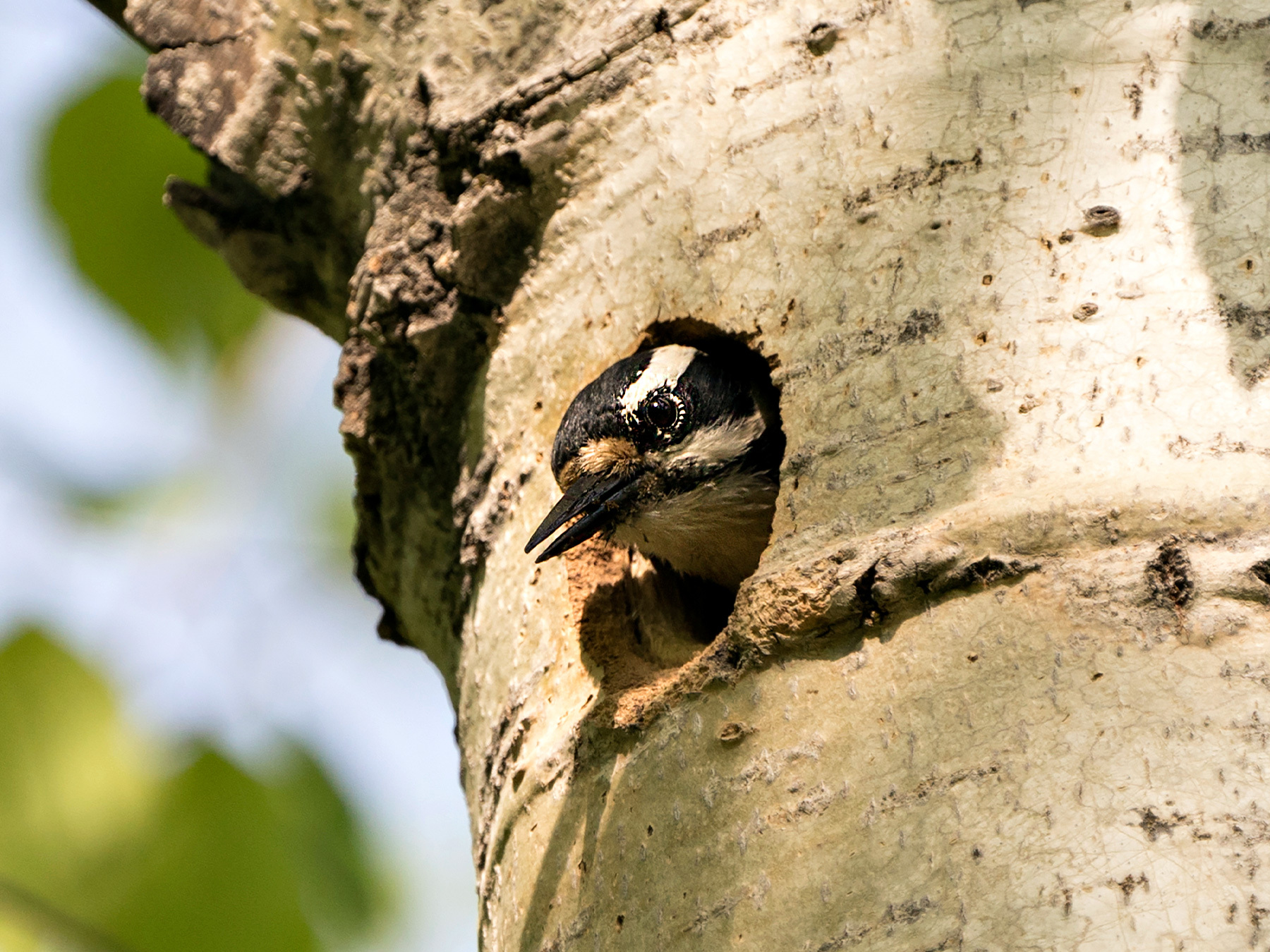
Hairy Woodpeckers nest in tree cavities about a foot deep that they excavate themselves. They choose dead trees or living trees affected by fungal rot and prefer to build their nests on the underside of sloping branches where they are safe from flooding. They typically nest anywhere from three to sixty feet (1 - 18 m) above the ground in various tree species, including pines, firs, and birches.
When do Hairy Woodpeckers nest?
Most Hairy Woodpeckers nest between April and July. Their timing varies depending on altitude and latitude, with birds in the north beginning latest. They produce a single brood each year, with incubation lasting about twelve days and chicks fledging four weeks later.
What do Hairy Woodpecker eggs look like?
Hairy Woodpeckers lay three to six plain white eggs, each measuring right around an inch in length and a three-quarter inch across (25 x 18 mm).
Do Hairy Woodpeckers mate for life?
Hairy Woodpeckers are monogamous and might even mate for life. Some pairs remain together outside of the nesting season.
Behaviour
Are Hairy Woodpeckers aggressive?
Hairy Woodpeckers are territorial birds. They use drumming to defend their area but will use other displays and even physical conflict in some disputes. They may be aggressive toward their own species and other woodpeckers.
Where do Hairy Woodpeckers sleep at night?
Hairy Woodpeckers are diurnal birds. They sleep in trees, usually in a cavity that they excavate themselves.
Lifespan and predators
How long do Hairy Woodpeckers live?
Hairy Woodpeckers can live for up to fifteen years in captivity, although wild birds have a much shorter life expectancy.
What are the predators of Hairy Woodpeckers?
Adult Hairy Woodpeckers are most at risk from accipiters like Cooper’s and Sharp-shinned Hawks, although other birds of prey and owls will hunt them when possible. Predators that take their eggs and chicks include snakes, squirrels, and Screech-owls.
Are Hairy Woodpeckers protected?
Hairy Woodpeckers are protected by the Migratory Bird Treaty Act in the United States and the Migratory Birds Convention Act in Canada.
Are Hairy Woodpeckers endangered?
Hairy Woodpeckers are not endangered. They are listed as a ‘Least Concern’ species on the IUCN Red List, and their population is thought to be increasing.
Conservation
While the Hairy Woodpecker is currently listed as Least Concern, it faces challenges from habitat loss due to deforestation and urban development. Conservation efforts focus on preserving mature forests and promoting the retention of dead trees, which are crucial for nesting and foraging.
Similar birds
Often mistaken for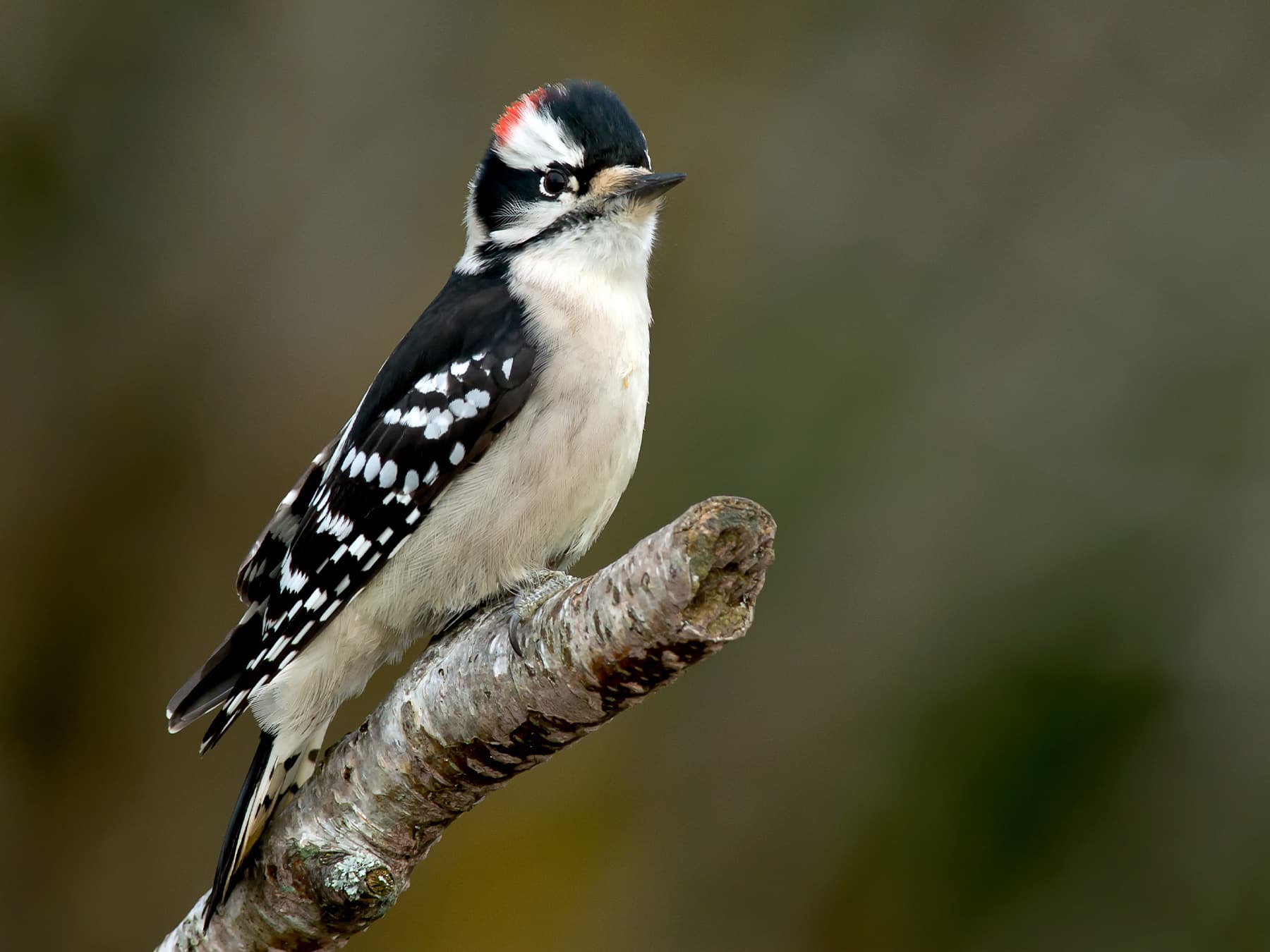
More photos
8 photos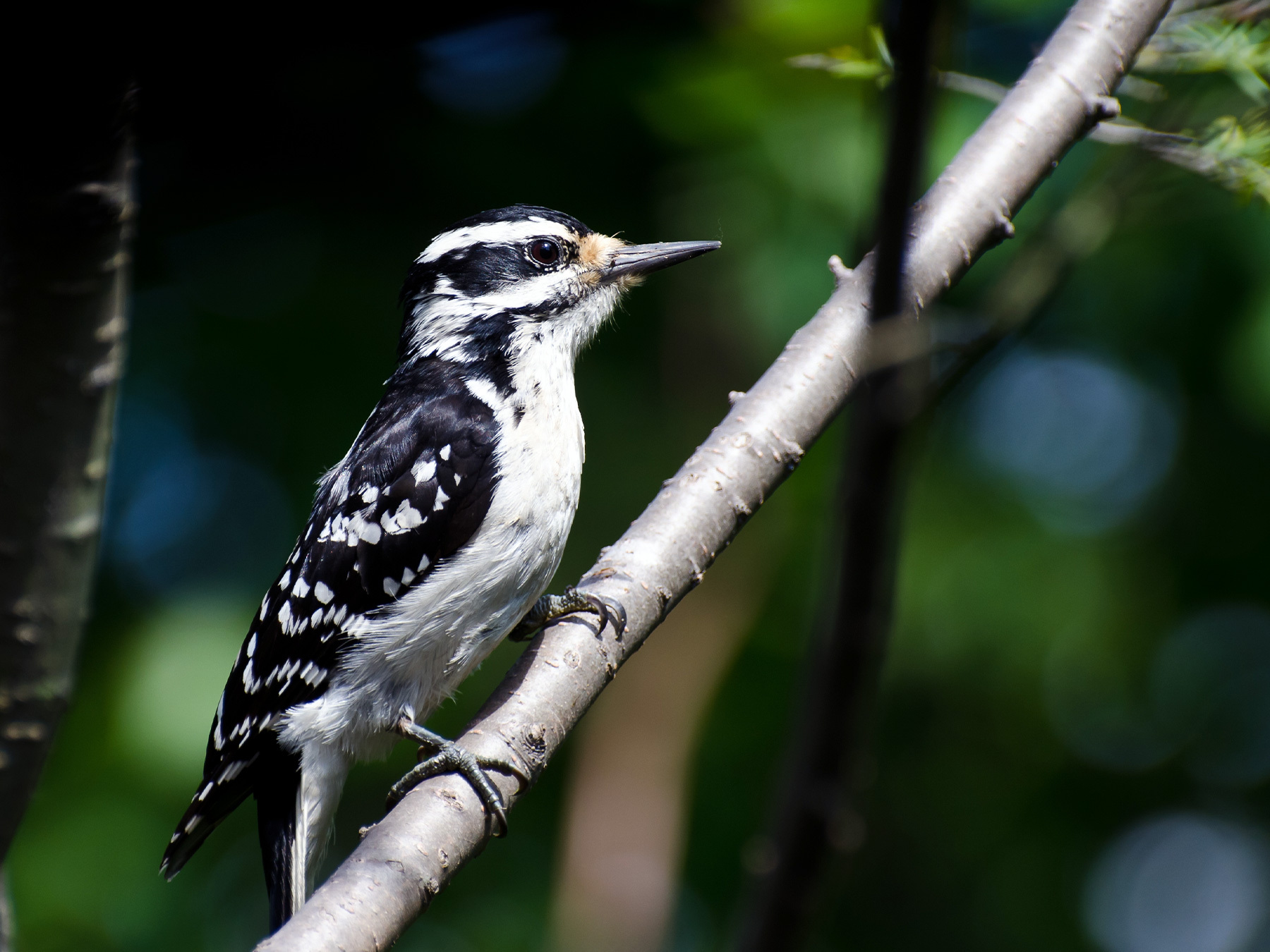
Quick facts
- Length
- 18–26 cm
- Wingspan
- 33–41 cm
- Weight
- 40–95 g
- Lifespan
- 4–11 years
- Family
- Woodpeckers
- Migration
- Resident
- Global status (IUCN)
- Least Concern
- World population
- 8,900,000 mature individuals
- Population trend
- Increasing
- Also called
- Hairy
- Scientific name
- Leuconotopicus villosus
Questions
5What attracts Hairy Woodpeckers?
Hairy Woodpeckers are attracted to forests and woodlands with medium to large trees. Birdwatchers with wooded gardens can attract these birds by setting out bird feeders or simply smearing food on the trunk of a suitable tree.
What trees do Hairy Woodpeckers prefer?
Hairy Woodpeckers feed and nest in a wide variety of coniferous, deciduous, and broadleaf evergreen trees across their range. They will forage in young growth but prefer larger mature trees for nesting.
Do Hairy Woodpeckers harm trees?
Hairy Woodpeckers are not harmful to healthy trees, although they can cause damage to trees that are already dead or rotten. In fact, these birds are a great asset because they feed heavily on pests like the European corn borer moth larvae.
Do Hairy Woodpeckers go to bird feeders?
Hairy Woodpeckers often visit birdfeeders. They love energy-rich foods like peanut butter, suet, and sunflower seeds.
Why is a Hairy Woodpecker called hairy?
Hairy Woodpeckers take their name from the hair-like feathers on their back. However, this feature is not particularly eye-catching, so their size, bill length, and patterning are better ways to identify these common birds.
Sources
3- 1BirdLife International. 2020. Leuconotopicus villosus. The IUCN Red List of Threatened Species 2020: e.T22681166A141046523. Source (opens in a new tab)
- 2Partners in Flight (2019)
- 3Partners in Flight (2019)

Checked by
Nathan Cope, founder and editor
Nathan founded Birdfact and leads its writers and contributors in the UK, the US and Canada. He has watched and studied birds for more than ten years, and checks every article and species guide before it’s published.