


Great Black-backed Gull
Greater Black-backed Gull · Larus marinus
By the Birdfact teamChecked by Nathan Cope
On this page14 sections
How to recognise it
What do Great Black-backed Gulls look like?
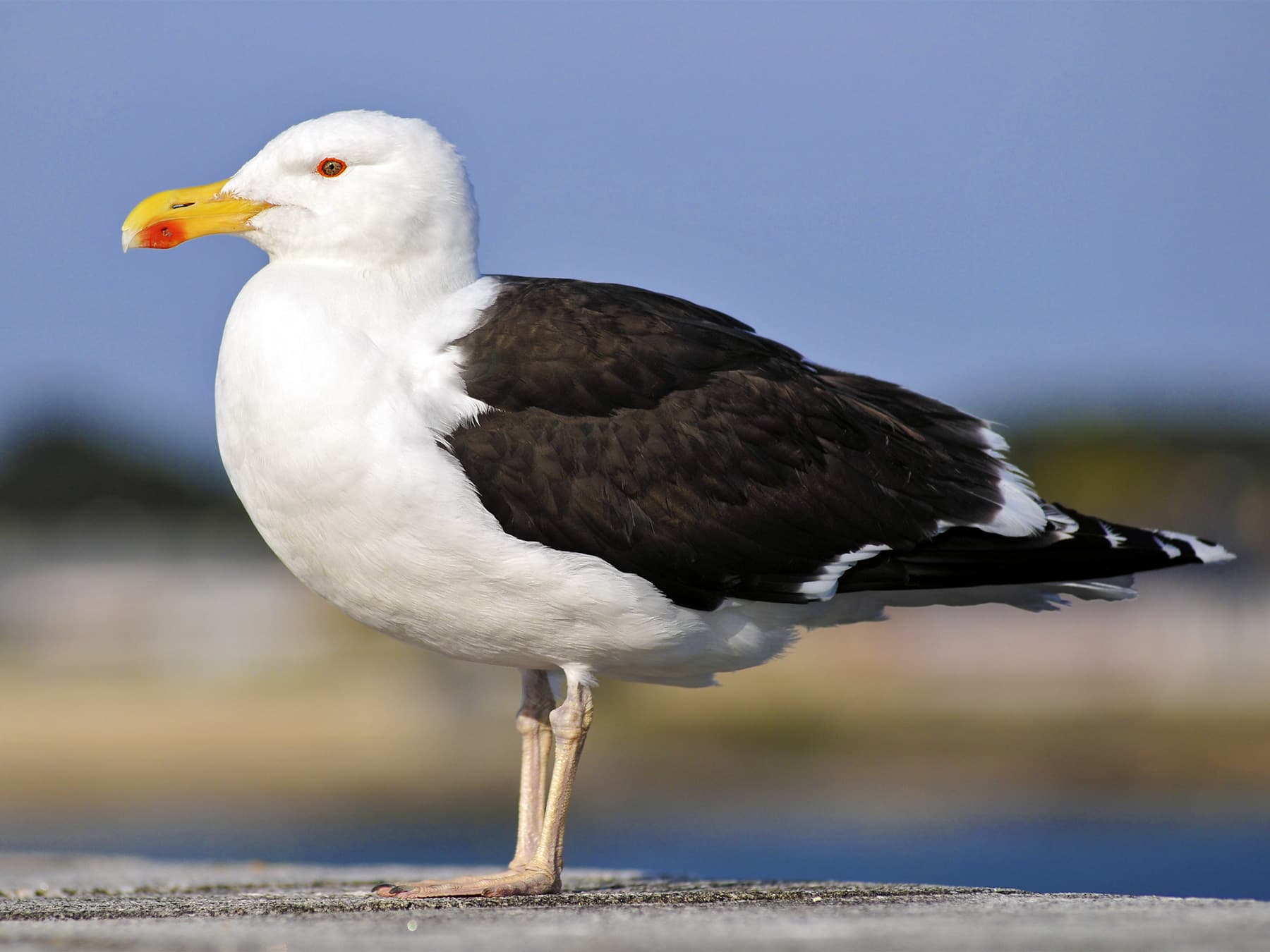
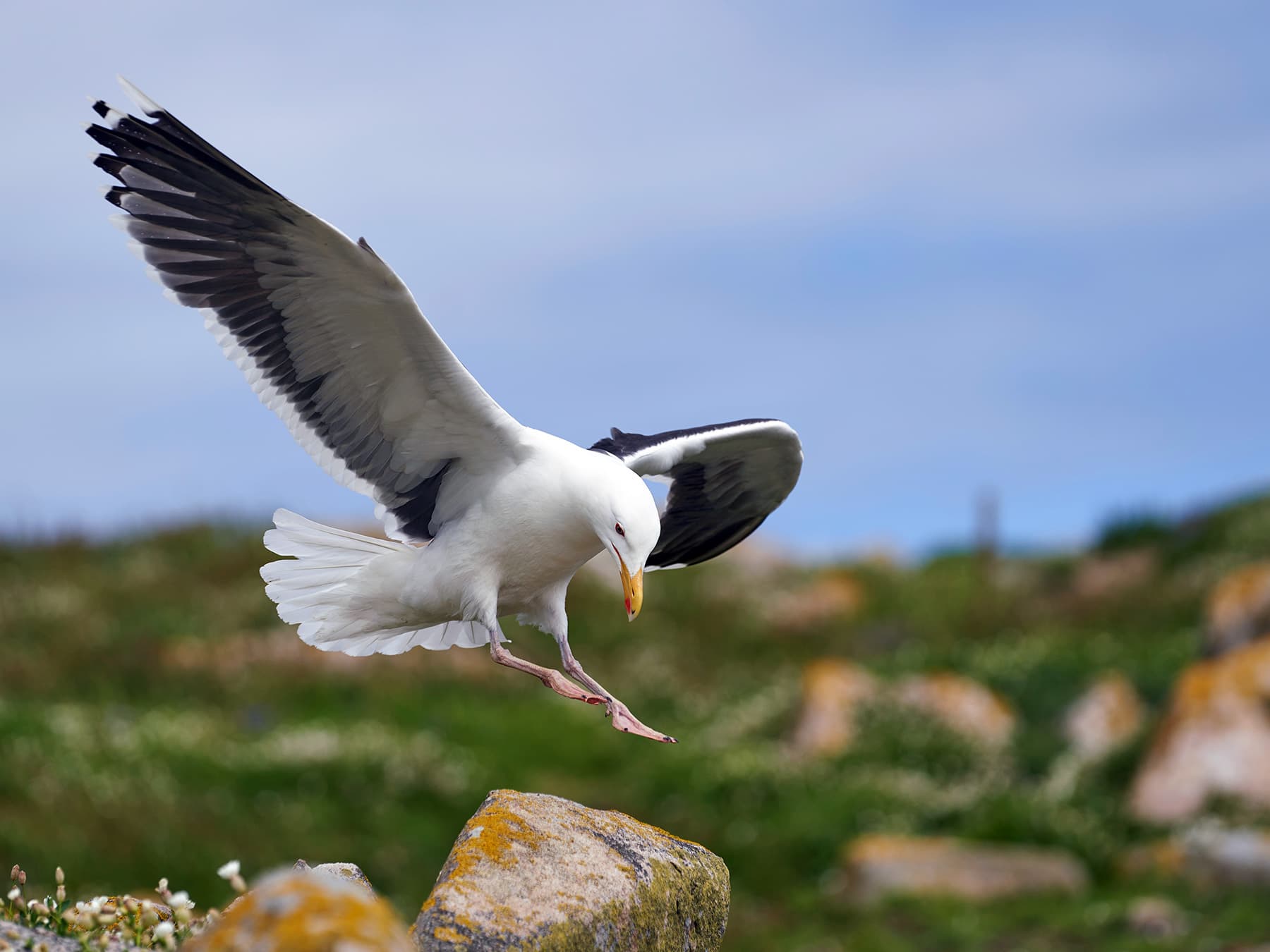
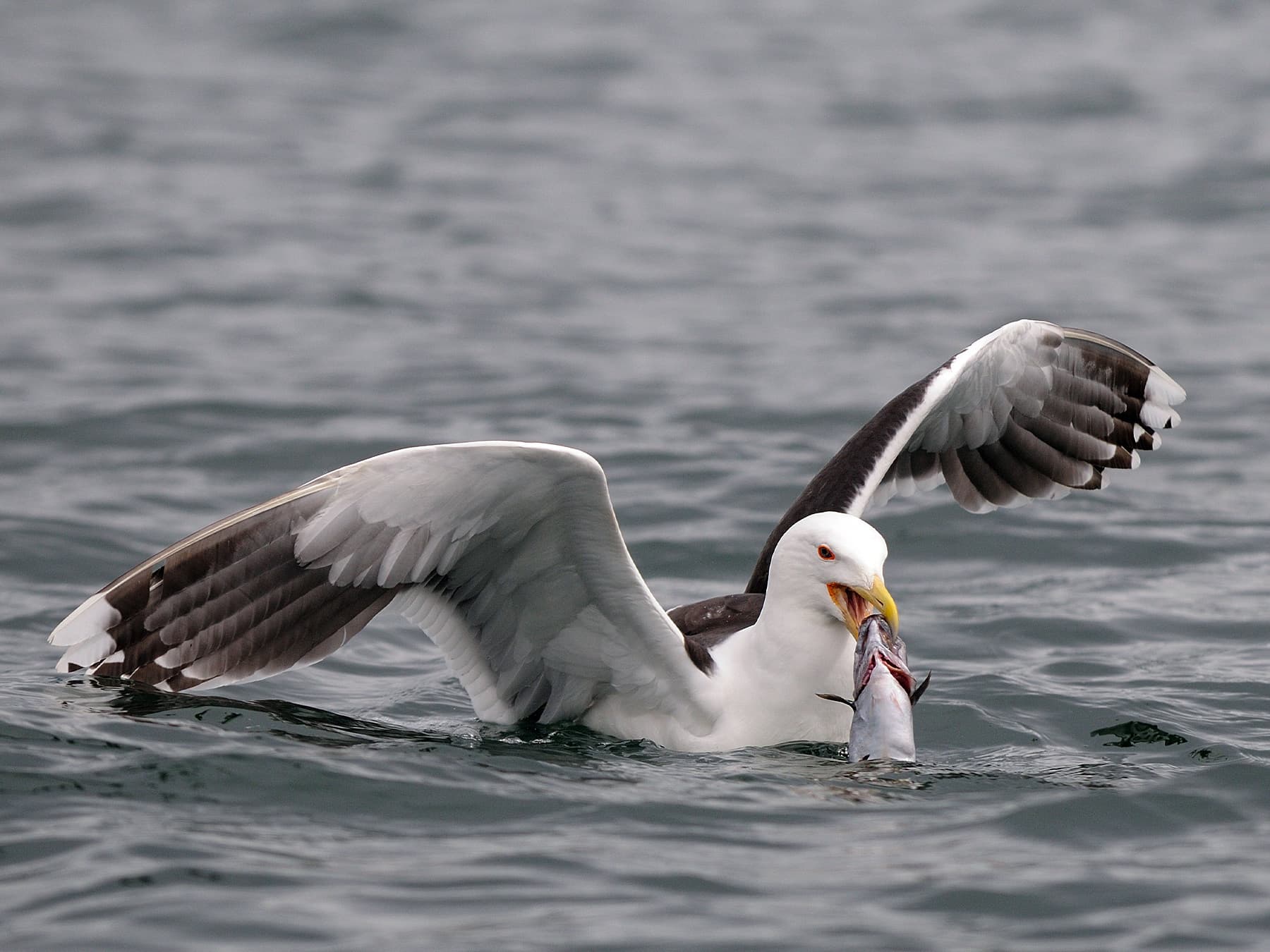
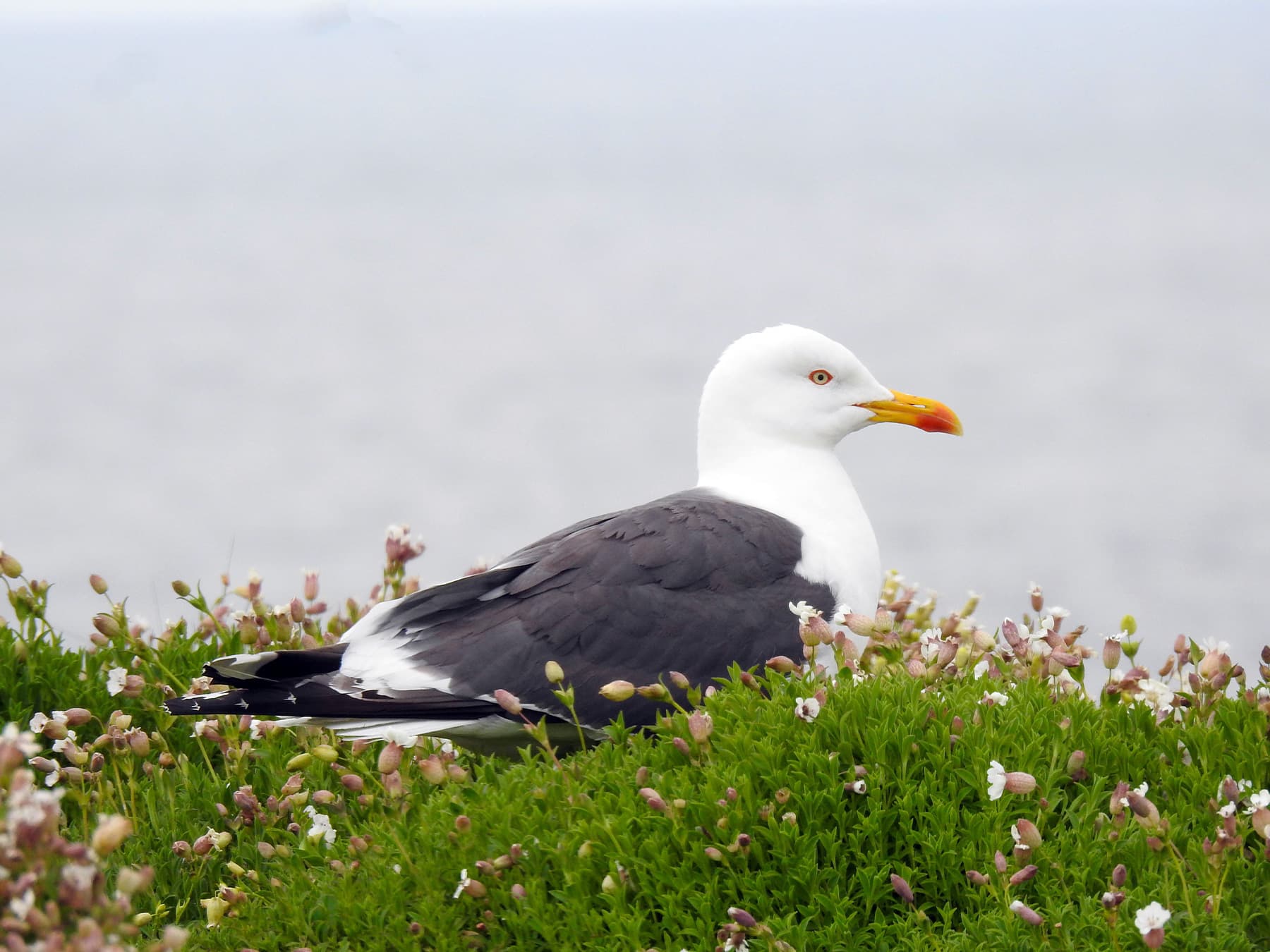
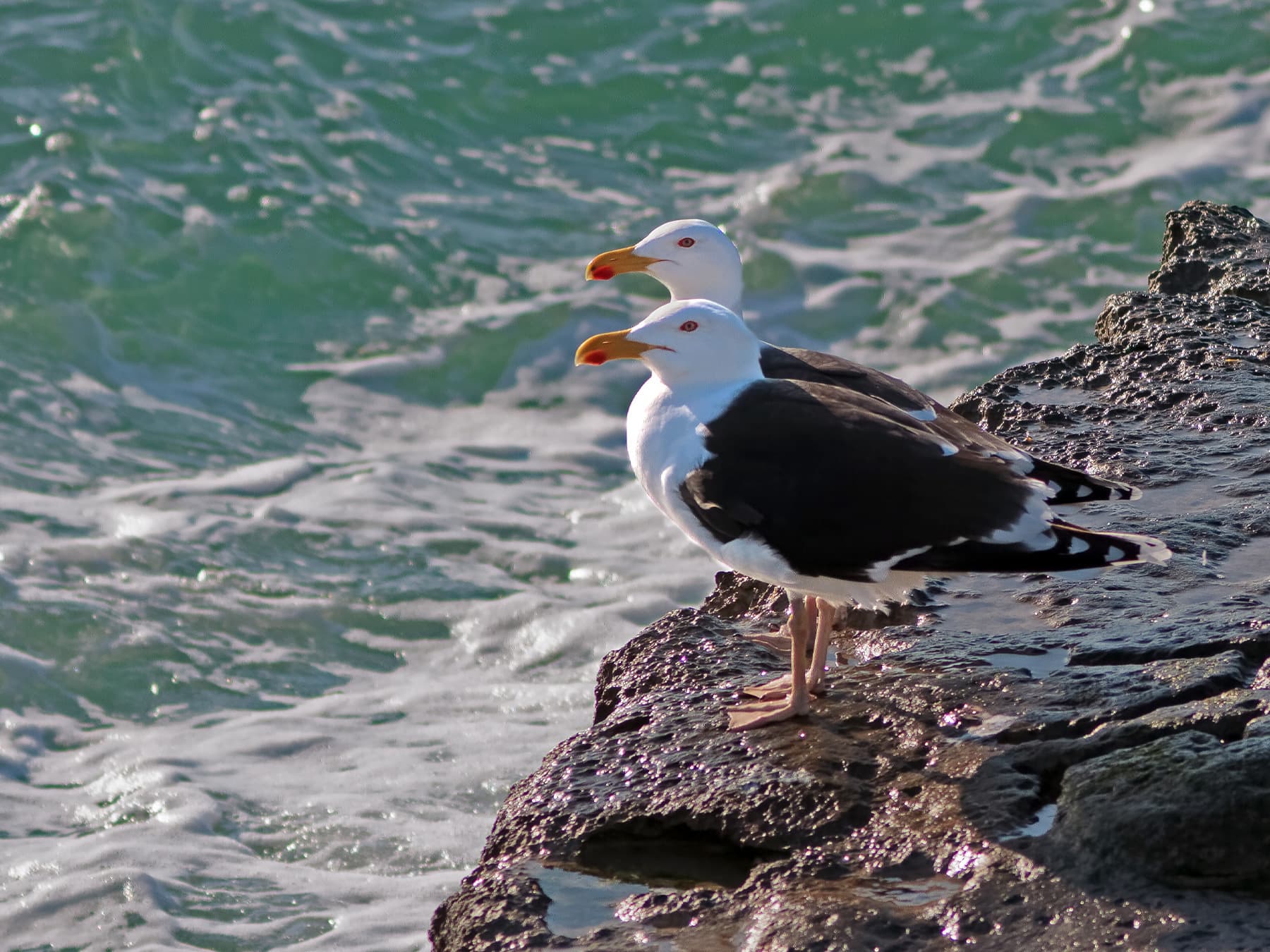
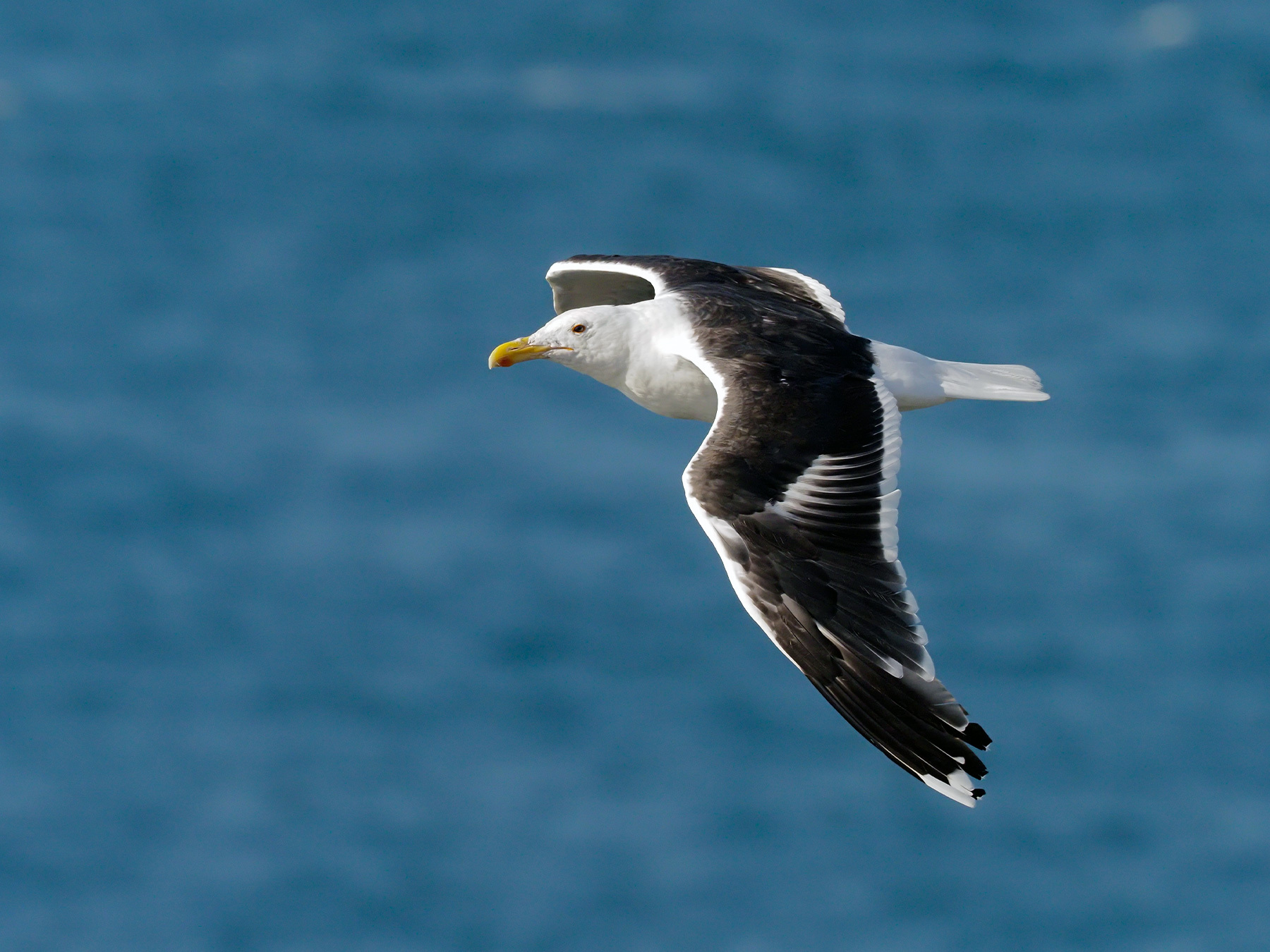
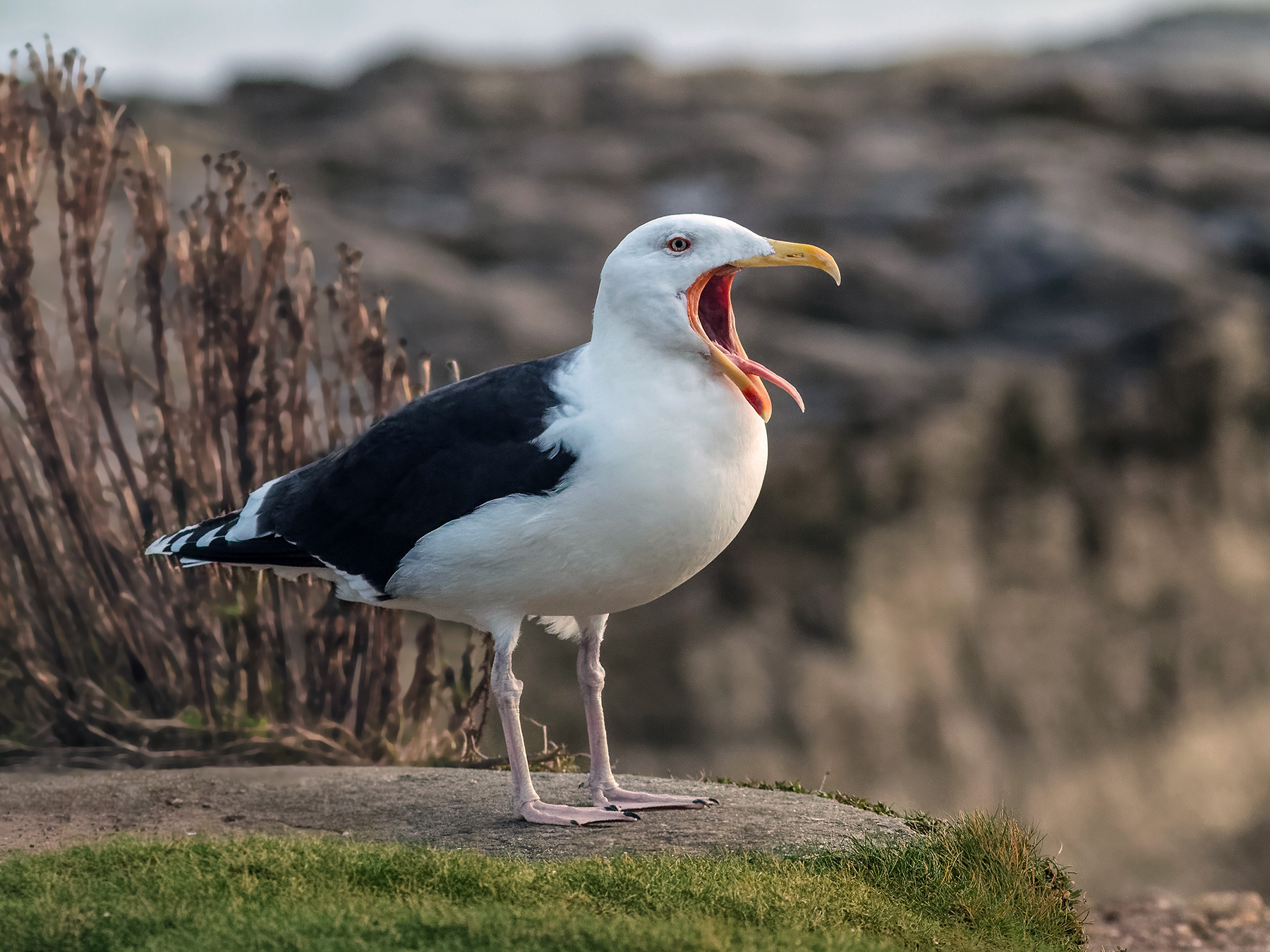
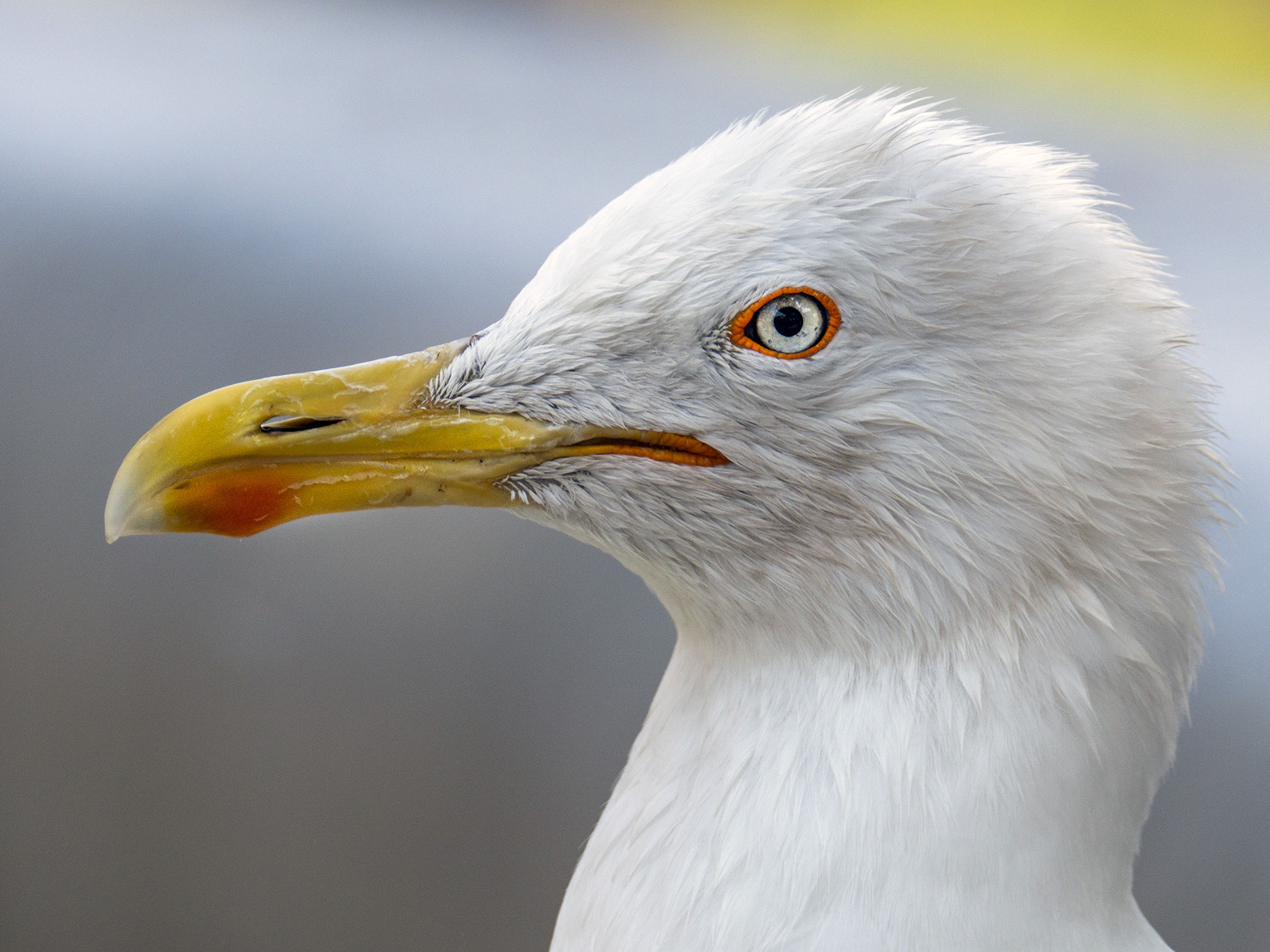
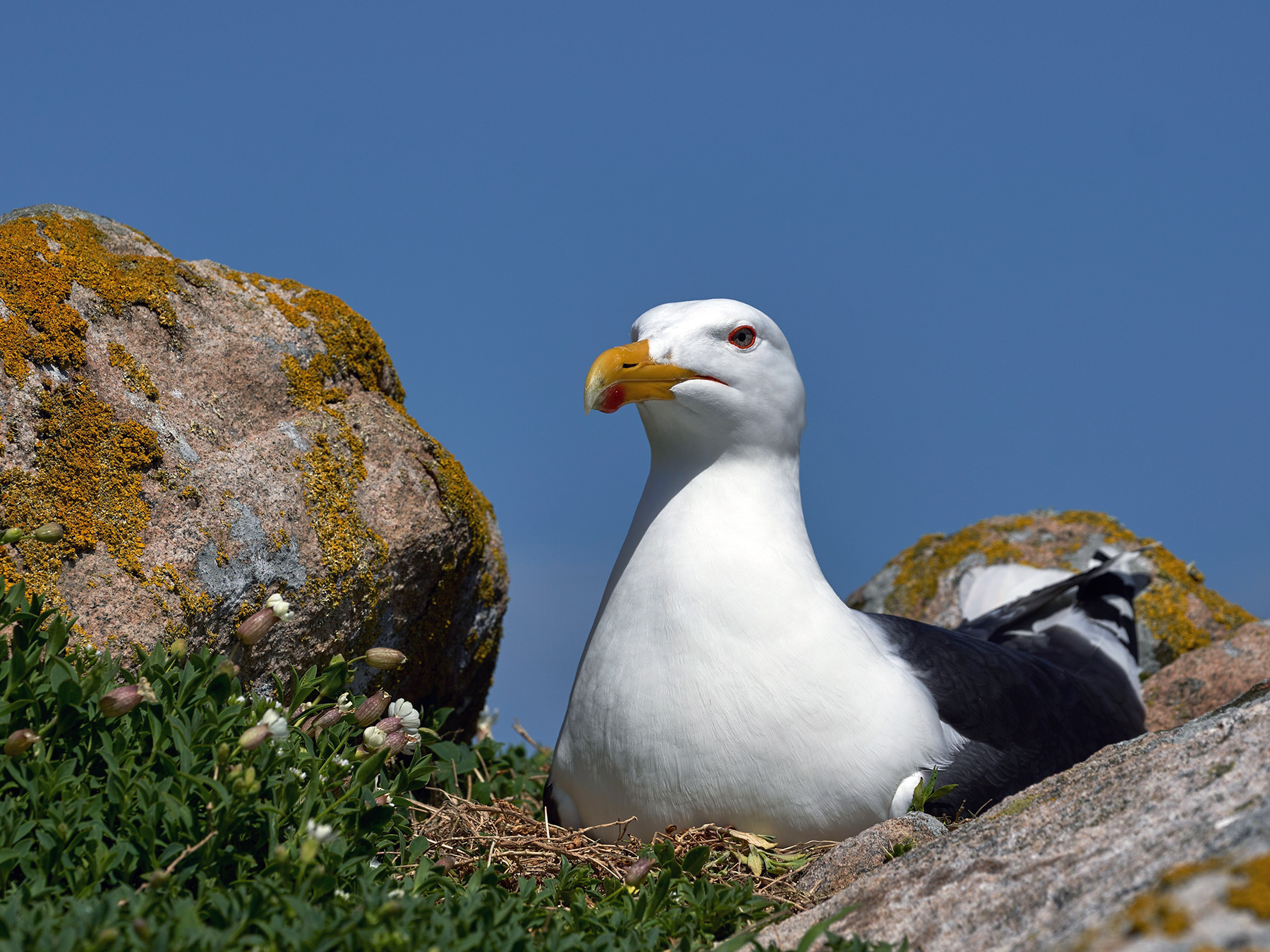
The Great Black-backed Gull is a large, eye-catching seabird with a black back and upper wings and pure white head, neck, tail, and underparts. They have pale pink legs and a bright yellow bill with a red spot toward the tip. Their piercing pale eyes are surrounded by a red eyelid.
In flight, white edges are visible around the upper side of the wings, as well as a large white spot at the tips. The underside of each wing is white, with darker flight feathers. The sexes have similar plumage, although females are smaller.
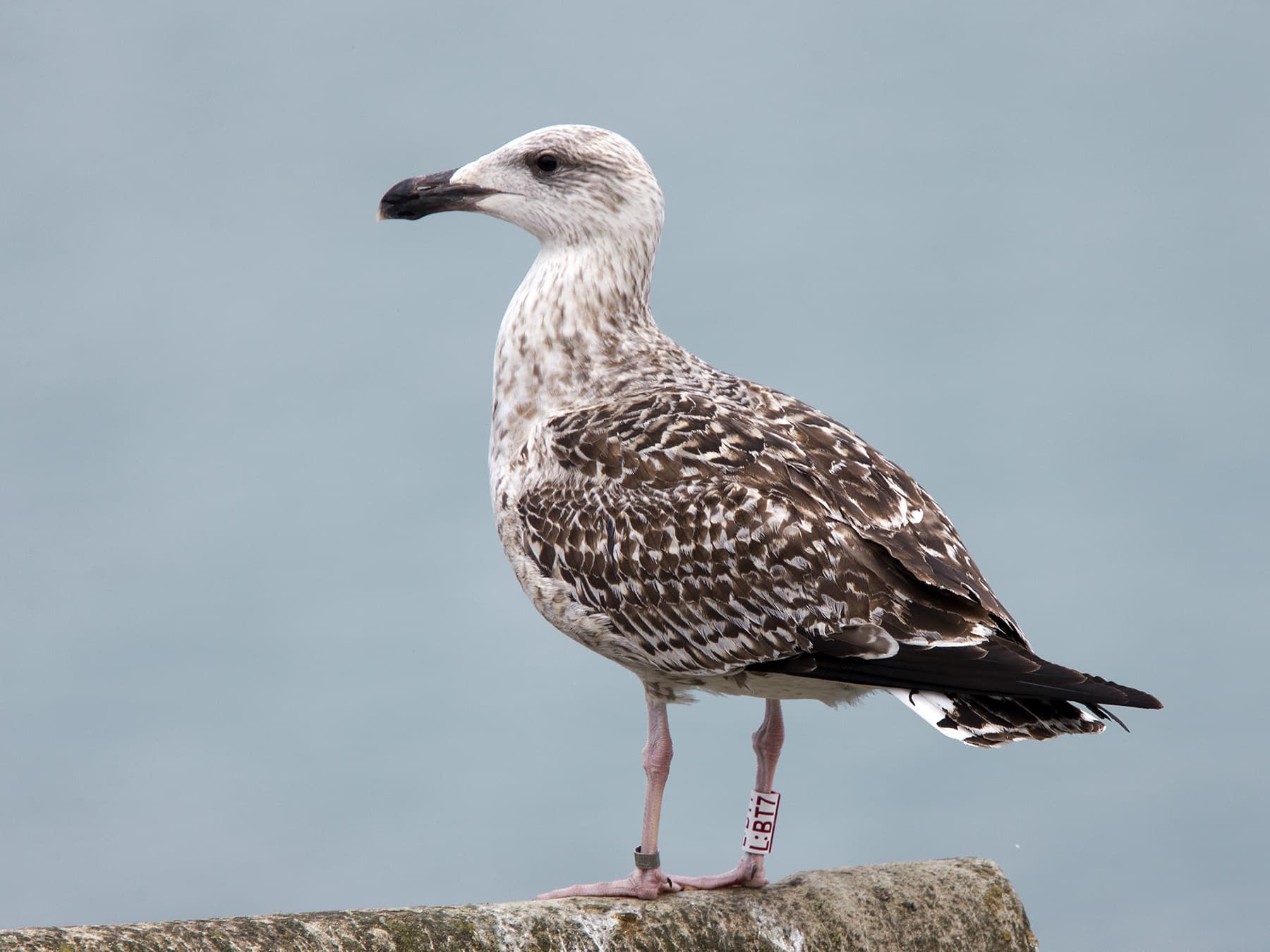
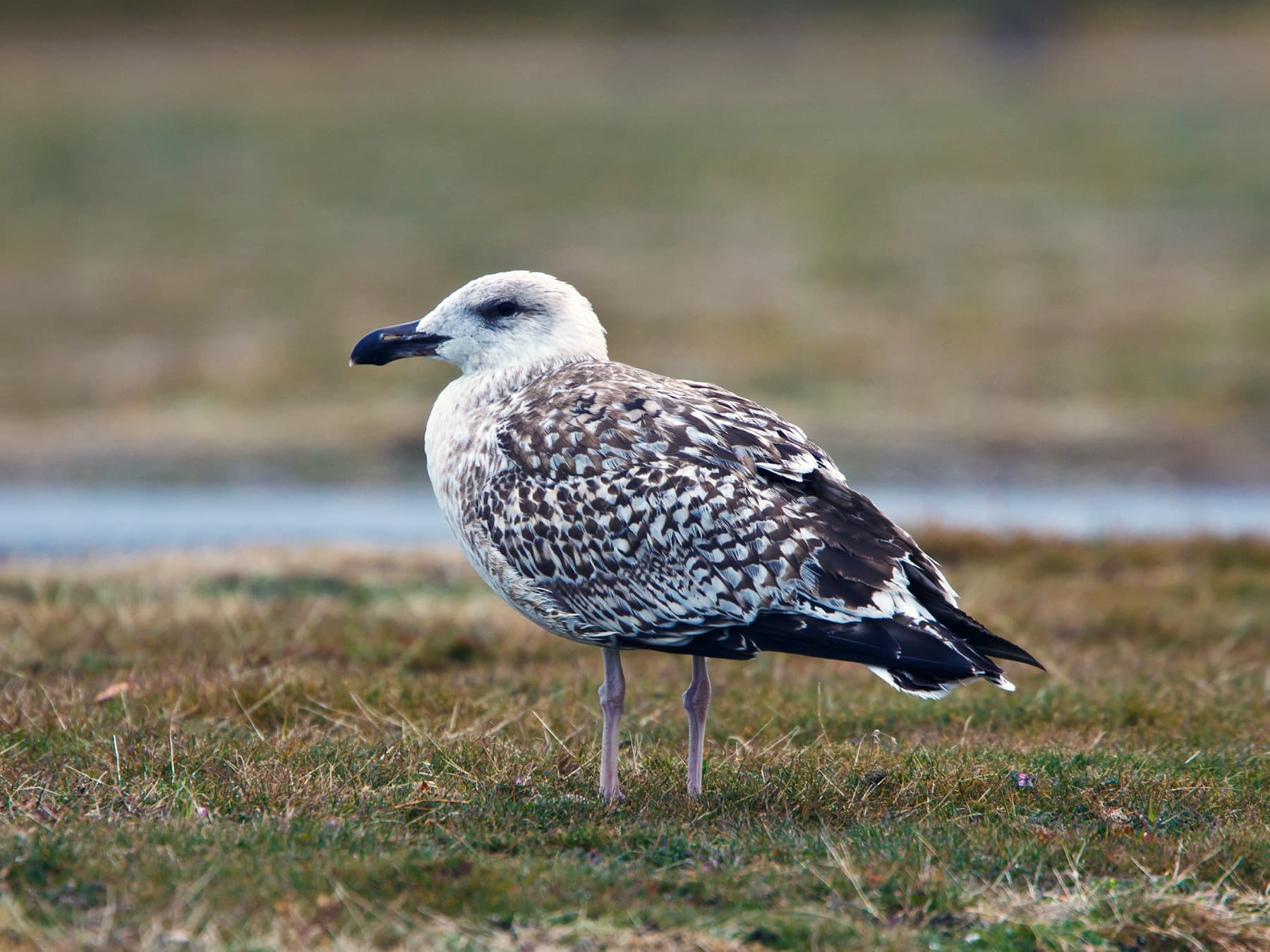
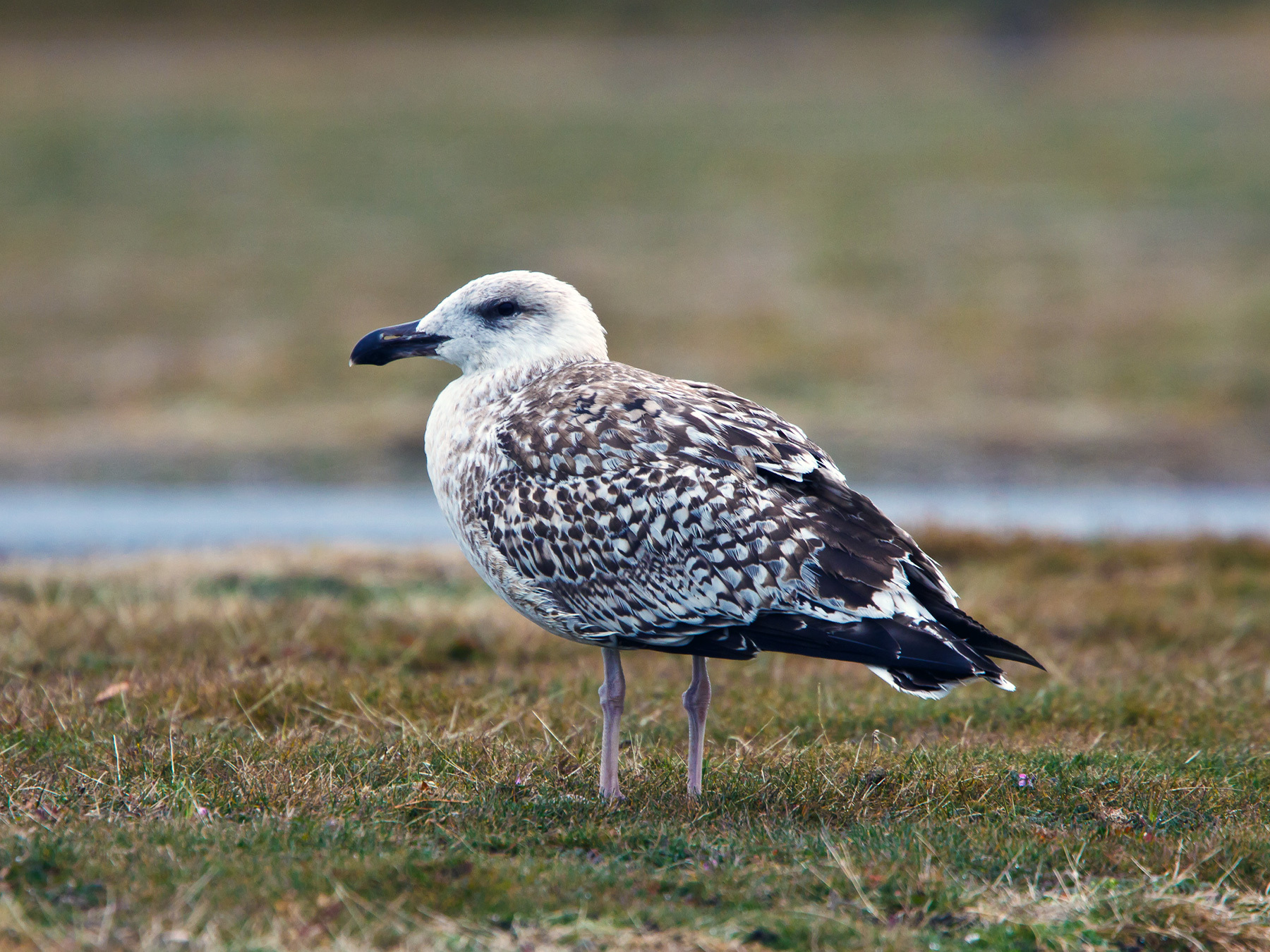
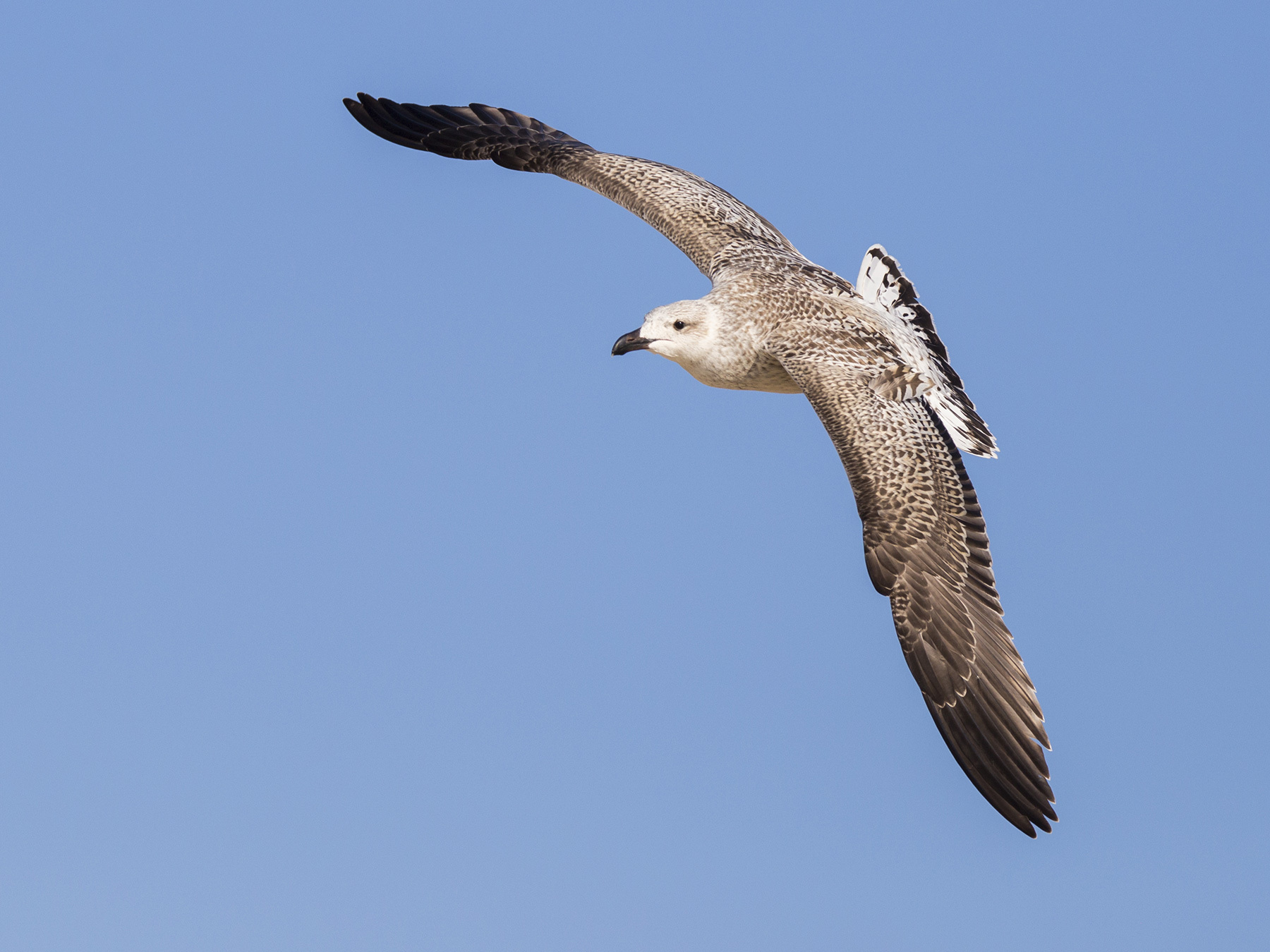
Juvenile Great Black-backed Gulls take about four years to attain their adult plumage. They are pale mottled brownish, with pale legs but dark bills and eyes. Their wings and backs are darker with a checkered appearance.
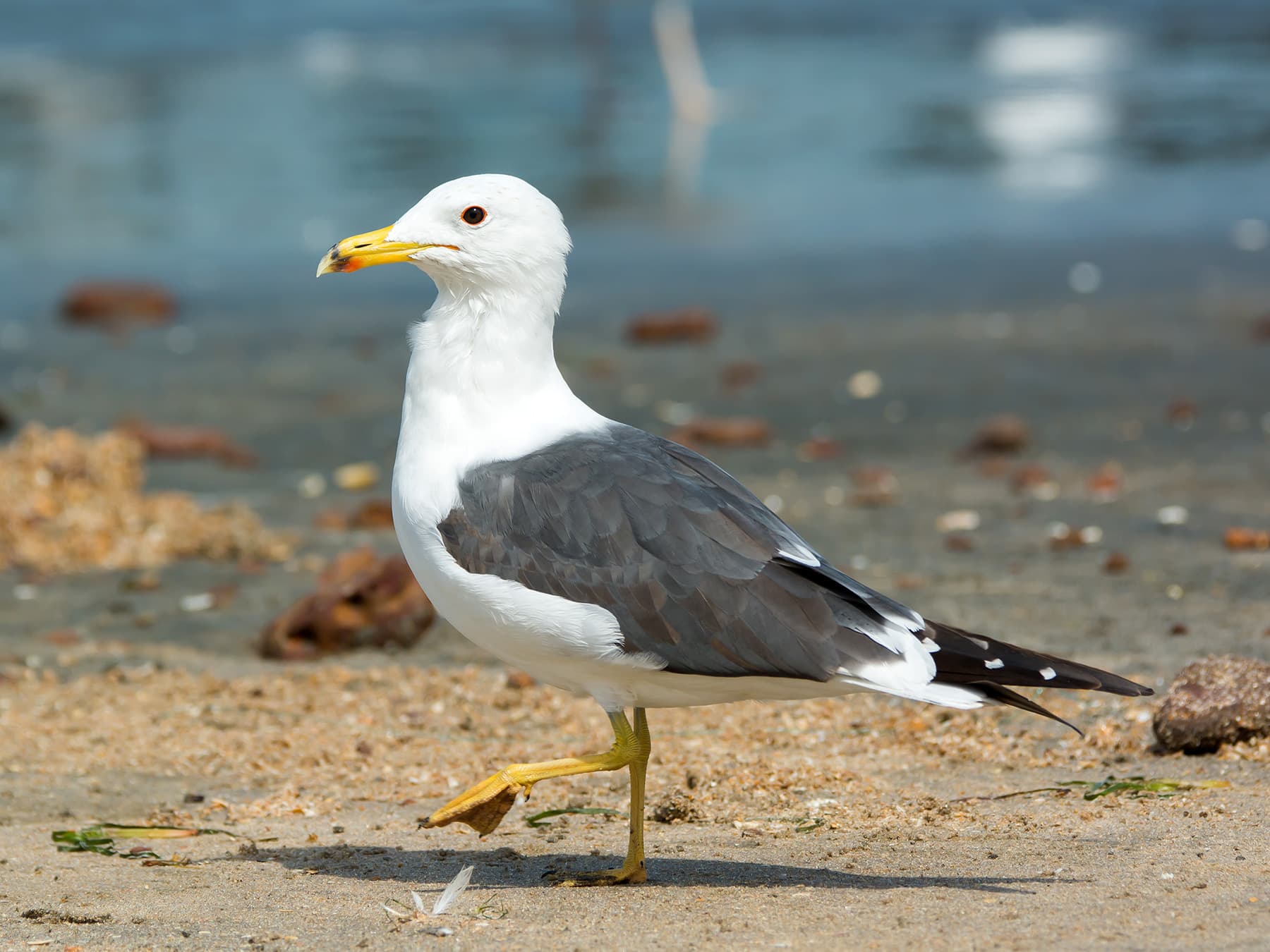
Apart from their larger size, these gulls appear similar to other Larus species like the Herring Gull (gray back) and Lesser Black-backed Gull (yellow legs).
How big are Great Black-backed Gulls?
The Great Black-backed Gull is a massive seabird and the largest gull species in the world. Males are typically larger in all respects.
Length
25 to 30 inches or 64 to 78 centimeters.
Weight
Most adults weigh 2.9 to 4.4 pounds or 1.3 to 2 kilograms. The largest males reach 5 pounds or 2.27 kilograms.
Wingspan
59 to 65 inches or 150 to 167 centimeters.
Its size
Adults- Length
- 64–79 cm
- Wingspan
- 150–170 cm
- Weight
- 1050–2500 g
Its song and calls
What sound does a Great Black-backed Gull make?
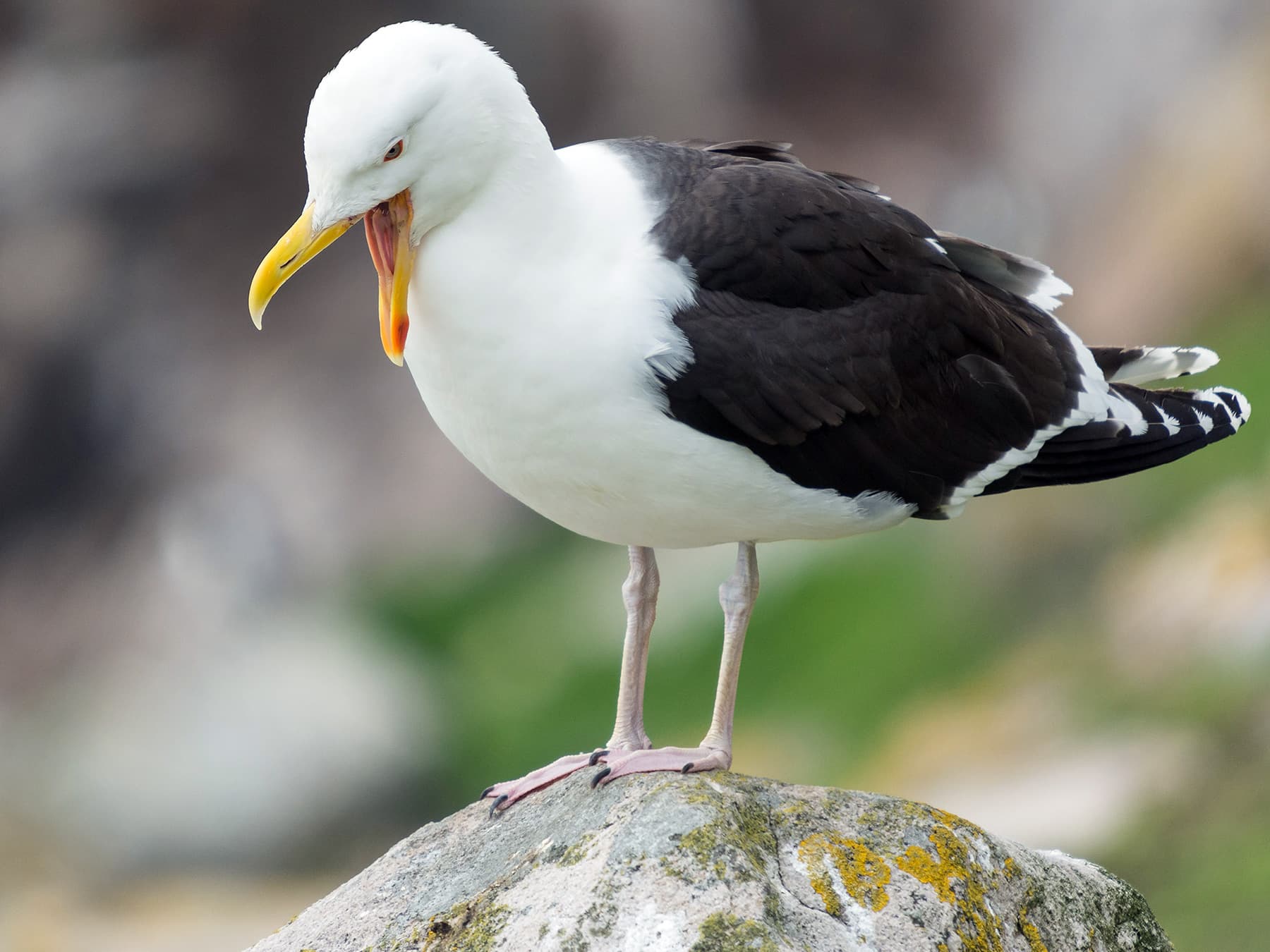
The Great Black-backed Gull produces similar calls to other large gulls but has a lower-pitched voice. They make a variety of sounds, including gruff, deep-voiced growls in flight, and a trumpeting ‘long call’ is made while raising and lowering their head.
- Call0:00 / 0:55
Recorded in Normandie, France · March 2022
When and where to see it
OctoberIn season
Most recorded in October
- 1. Derry2.9%
- 2. Donegal2.9%
- 3. Moray2.8%
- 4. Eilean Siar2.8%
- 5. Sligo2.8%
Each dot is a county, state or province: the bigger and darker, the larger the bird’s share of that place’s bird records that month. Grey dots: no regular records. The ringed point is the centre of the bird’s records this month; the arrow shows how it moved since last month, and the dashed loop its path through the year. “Arrivals” colours places where it becomes regular this month (orange) or is in its last regular month (grey). GBIF eBird Observation Dataset, 2019–2024. Map data: Natural Earth, US Census Bureau; place centres © OpenStreetMap contributors.
In your area
See when the Great Black-backed Gull is recorded in your county, state or province.
How often the Great Black-backed Gull turns up in the UK, Ireland, the United States and Canada through the year, from birdwatchers' records.
United Kingdom
Resident · all year · most records in October
Ireland
Resident · all year · most records in August
United States
Resident · all year · most records in January
Canada
Resident · all year · most records in December
Show as a table
| Month | United Kingdom | Ireland | United States | Canada |
|---|---|---|---|---|
| January | 0.76% (regular) | 1.6% (regular) | 0.29% (regular) | 0.68% (regular) |
| February | 0.62% (regular) | 1.8% (regular) | 0.23% (regular) | 0.44% (regular) |
| March | 0.51% (regular) | 1.7% (regular) | 0.15% (regular) | 0.38% (regular) |
| April | 0.45% (regular) | 1.5% (regular) | 0.075% (regular) | 0.23% (regular) |
| May | 0.47% (regular) | 1.5% (regular) | 0.080% (regular) | 0.15% (regular) |
| June | 0.55% (regular) | 1.8% (regular) | 0.12% (regular) | 0.22% (regular) |
| July | 0.67% (regular) | 2.2% (regular) | 0.17% (regular) | 0.36% (regular) |
| August | 0.85% (regular) | 2.4% (regular) | 0.22% (regular) | 0.56% (regular) |
| September | 0.88% (regular) | 2.2% (regular) | 0.19% (regular) | 0.62% (regular) |
| October | 0.89% (regular) | 2.0% (regular) | 0.20% (regular) | 0.55% (regular) |
| November | 0.79% (regular) | 1.7% (regular) | 0.22% (regular) | 0.70% (regular) |
| December | 0.78% (regular) | 1.7% (regular) | 0.24% (regular) | 0.74% (regular) |
Recorded regularly in
Worldwide: recorded regularly in 42 countries
Countries where it was recorded in at least 3 of the 6 years 2019–2024. Linked countries have their own bird list.
Europe (33)
Africa (1)
Asia (1)
North America (7)
- Bahamas
- Bermuda
- Canada
- Greenland
- Puerto Rico
- St Pierre & Miquelon
- United States
Data: EOD – eBird Observation Dataset (Cornell Lab of Ornithology), accessed via GBIF.org, CC BY 4.0. Records from 2019–2024, aggregated and filtered by Birdfact. How these lists are made
What is the habitat of a Great Black-backed Gull?
Great Black-backed Gulls are usually found in coastal habitats like rocky shores, sandy beaches, and estuaries, although they also forage further out to sea. They live around larger inland water bodies in some areas and may scavenge on dry fields or around rubbish dumps for scraps.
What is the range of a Great Black-backed Gull?
Great Black-backed Gulls are restricted to the northern Atlantic Ocean, from the East coast of North America to Greenland, and from Svalbard south to Portugal. They may range far inland, particularly around the Great Lakes of the United States and Canada.
Where do Great Black-backed Gulls live?
Most Great Black-backed Gulls live near the seashore, although some birds travel inland and others forage further out to sea. They are accomplished swimmers, strong in flight, and comfortable on land.
How rare are Great Black-backed Gulls?
Great Black-backed Gulls are generally rarer and more solitary than other large gulls. Their numbers vary depending on the season and quality of habitat.
Where can you see Great Black-backed Gulls in the US?
Great Black-backed Gulls occur in coastal and continental shelf waters from Maine to Florida and rarely along the Gulf Coast to Texas. Look out for them throughout the year in the northeast but only in the winter south of North Carolina. They also visit the Great Lakes, traveling as far west as Lake Superior in winter.
Where can you see Great Black-backed Gulls in the UK?
Great Black-backed Gulls occur around the entire coastline of the United Kingdom. They also forage inland around dumps and reservoirs in the winter non-breeding season.
Where can you see Great Black-backed Gulls in Canada?
Great Black-backed Gulls occur along the eastern Canadian coastline from New Brunswick to Baffin Island. They also visit the Great Lakes in the winter, and some birds even breed around Lake Ontario and Lake Huron.
Migration
Do Great Black-backed Gulls migrate?
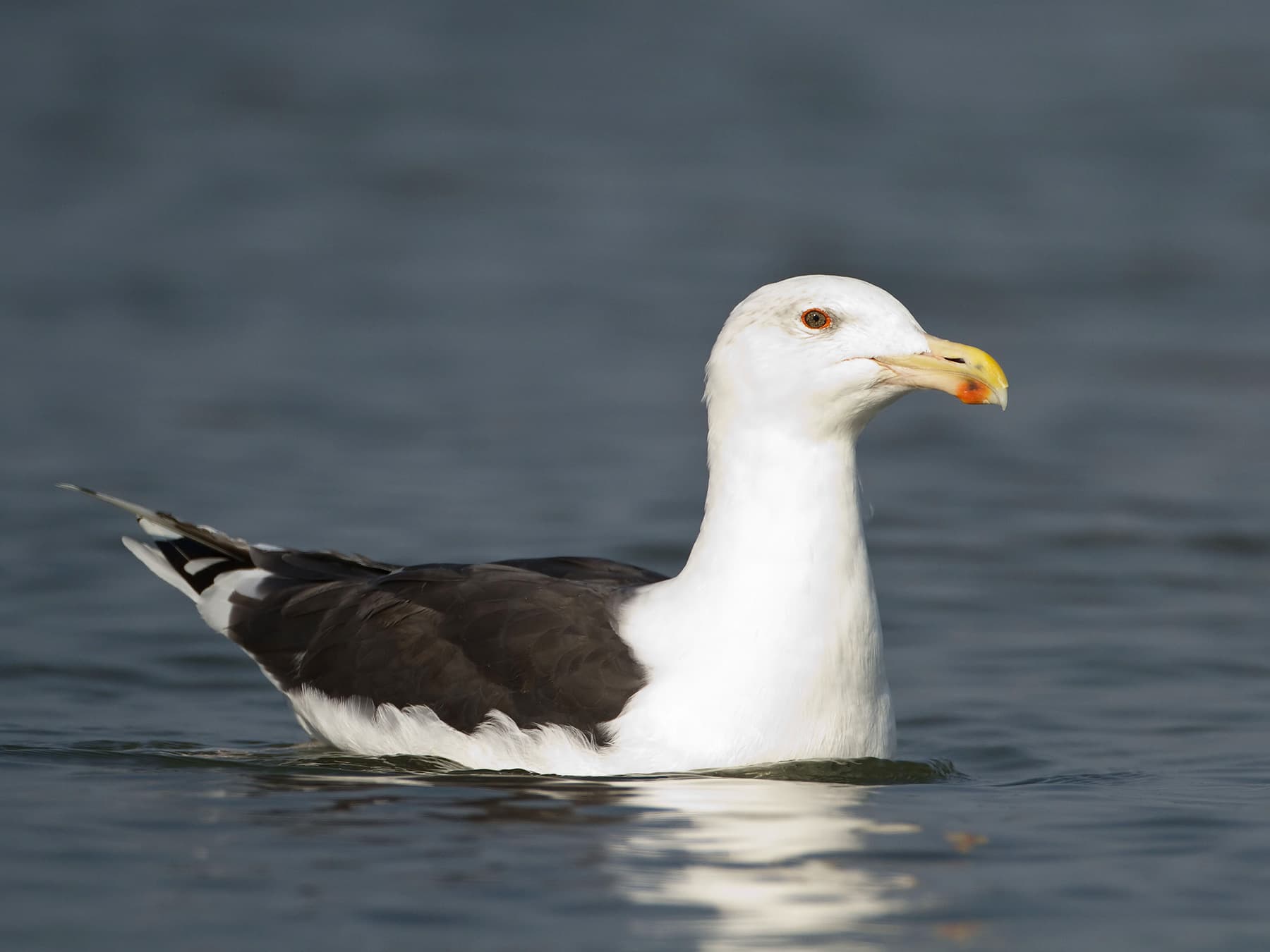
Great Black-backed Gulls are partial migrants. Some populations travel hundreds of miles to the south or inland after breeding, while others remain near their nesting grounds throughout the year.
Tips for seeing it
- Look for the largest gull on the beach or at sea
- Observe its distinctive black back and wings against its white body
- Watch for aggressive behavior towards other birds
- In the UK and eastern North America, check coastal areas and large inland water bodies
What it eats
What do Great Black-backed Gulls eat?
Great Black-backed Gulls have a varied diet that includes fish, crabs, mussels, and other marine organisms. They also eat small mammals, other birds and their eggs, carrion, and scraps. They find their food in the intertidal zone, at the surface of open water, and around seabird colonies.
What do Great Black-backed Gull chicks eat?
Great Black-backed Gull chicks eat fish and squid that both parents bring back to the nest. Younger chicks are fed directly from their parent’s bill, while older chicks eat meals regurgitated onto the floor.
Nesting and breeding
Where do Great Black-backed Gulls nest?
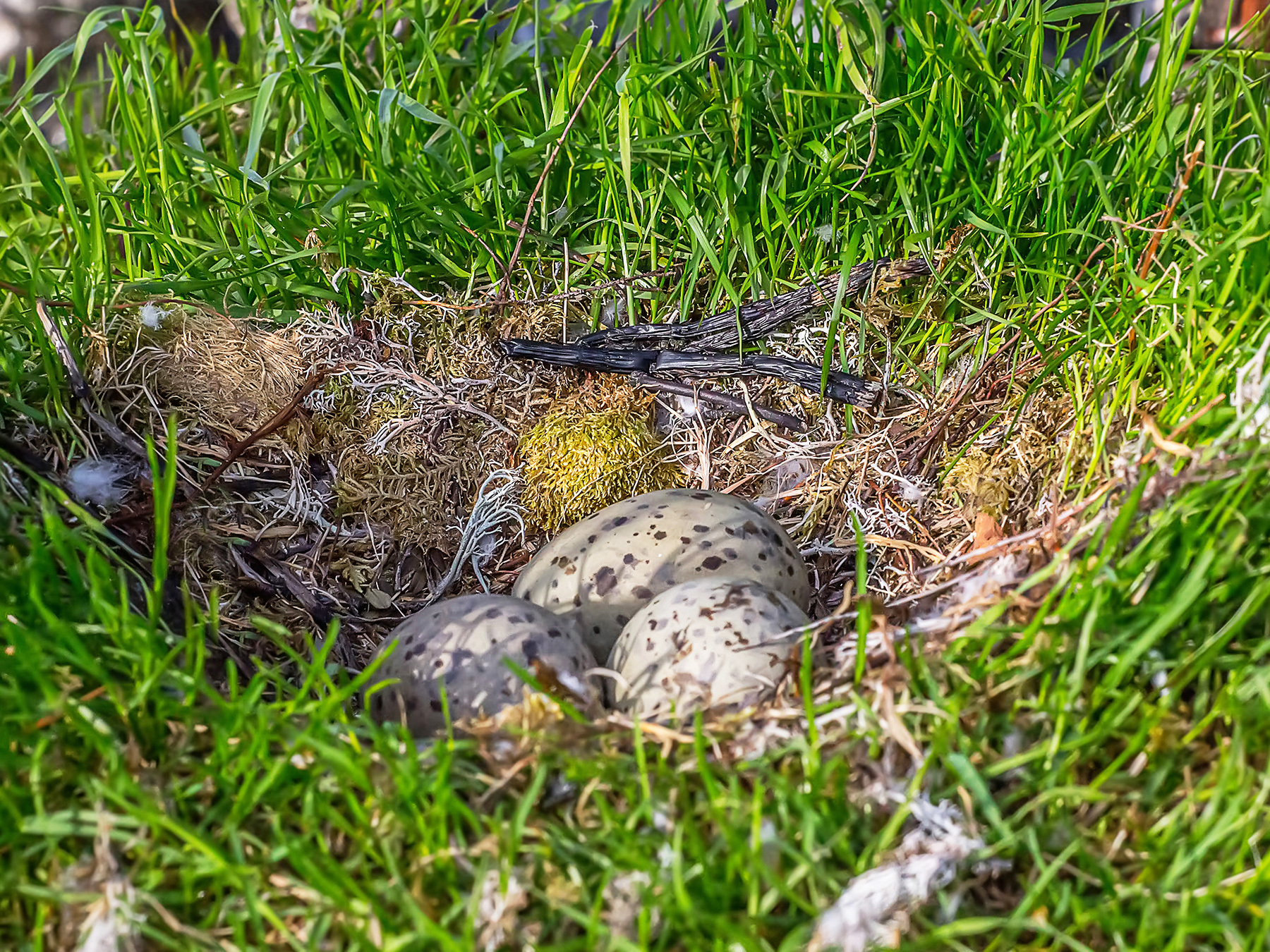
Great Black-backed Gulls nest on the ground in a shallow scrape lined with feathers, plant matter, trash, and other soft materials. They nest on rocky areas, sand dunes, salt marshes, and grassy ridges near the coast but always above the high water line.
When do Great Black-backed Gulls nest?
Great Black-backed Gulls nest in the spring and summer. Most pairs lay their eggs in April or May. Their eggs take 26 to 28 days to hatch, and the young birds begin to fly when they are about 45 days old. Juveniles rely on their parents for over two months before gaining independence.
What do Great Black-backed Gull eggs look like?
Great Black-backed Gulls lay blotched and speckled eggs with a buff or olive background color. Their eggs are large, measuring approximately 54 millimeters wide and 77 millimeters long.
Do Great Black-backed Gulls mate for life?
Great Black-backed Gulls form long-lasting partnerships. They often mate for life, but pairs may divorce after unsuccessful nesting attempts.
Behaviour
Are Great Black-backed Gulls aggressive?
Great Black-backed Gulls are highly aggressive, relying on their size and power to overcome large prey. They are also aggressive towards other gulls and their own species, particularly when raising their chicks. These birds fight by pecking and striking with their wings, sometimes injuring their opponent in the process.
Where do Great Black-backed Gulls sleep at night?
Great Black-backed Gulls sleep on the ground in open areas such as beaches and fields, sometimes in large groups. They may lie on their belly or stand on one leg while sleeping, either resting their head against their breast or tucking it under their wing.
Lifespan and predators
How long do Great Black-backed Gulls live?
Great Black-backed Gulls are known to live up to 26 years.
What are the predators of Great Black-backed Gulls?
Adult Great Black-backed Gulls are formidable birds, and healthy adults have few potential predators other than large raptors like Bald Eagles and White-tailed Eagles. Their eggs and chicks are more vulnerable to other large Gulls, Ravens, Crows, Rats, and Raccoons.
Are Great Black-backed Gulls protected?
Great Black-backed Gulls are a protected species in the United Kingdom, the United States, and Canada.
Are Great Black-backed Gulls endangered?
Great Black-backed Gulls are not endangered. These powerful seabirds have a large distribution and are ranked as a ‘Least Concern’ species on the IUCN Red List.
Conservation
While currently listed as Least Concern, Great Black-backed Gulls face threats from habitat loss, pollution, and climate change. Some populations have declined due to reduced food availability and human disturbance at nesting sites. Conservation efforts focus on protecting breeding colonies and managing coastal habitats.
Similar birds
Often mistaken for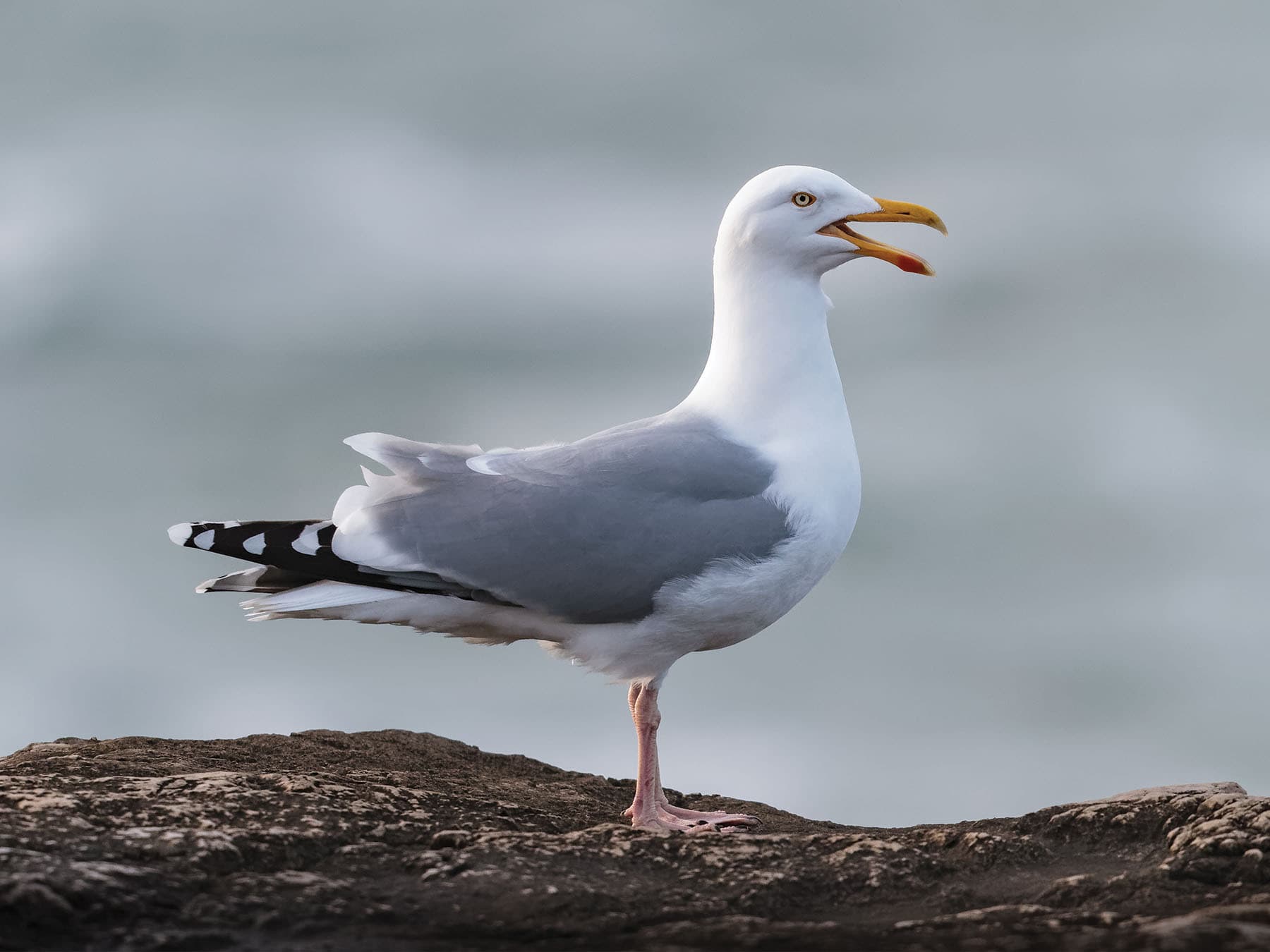
More photos
9 photos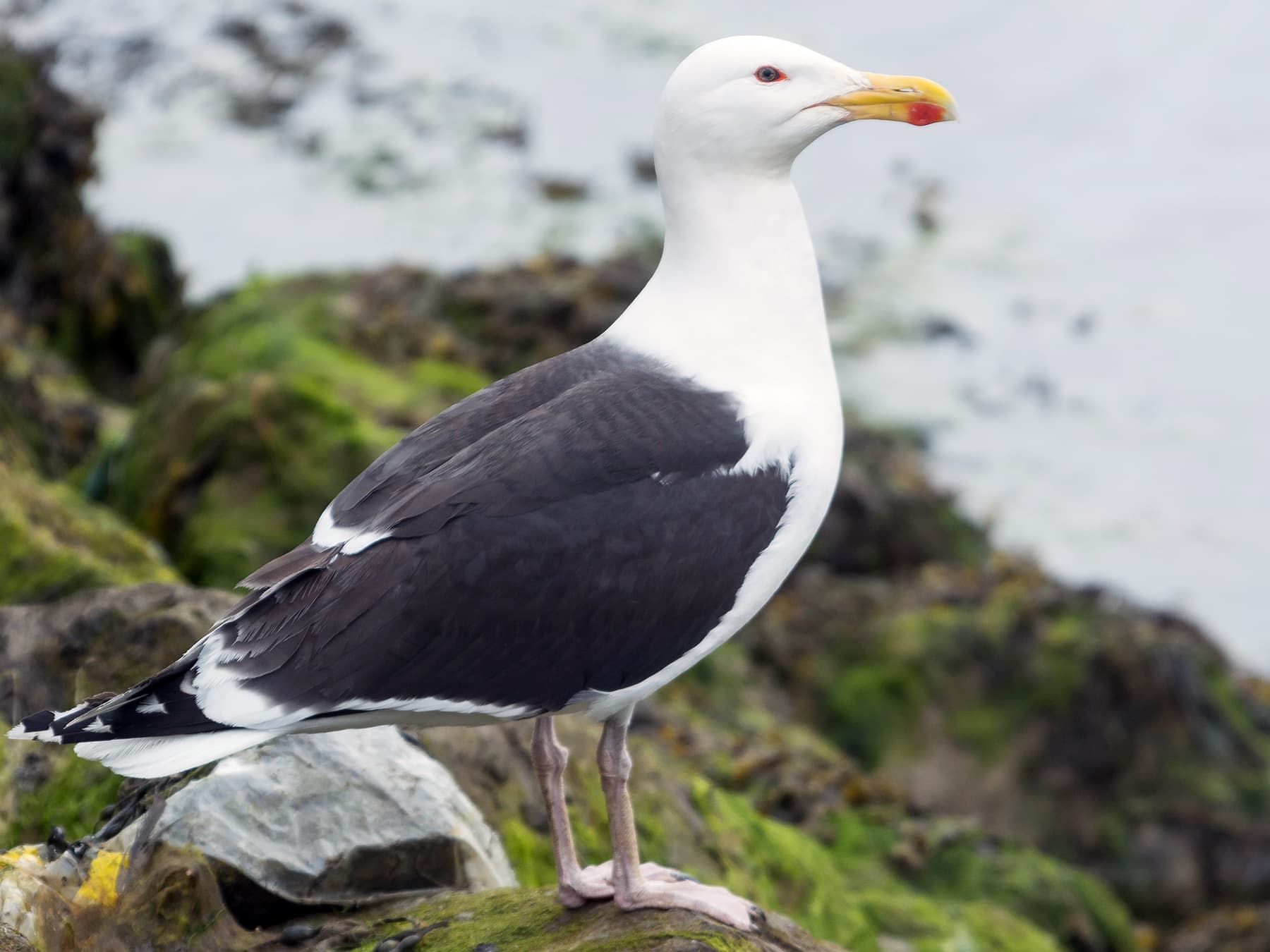 Adult Great Black-backed Gull
 Juvenile Great Black-backed Gull
 Juvenile Adult Great Black-backed Gull
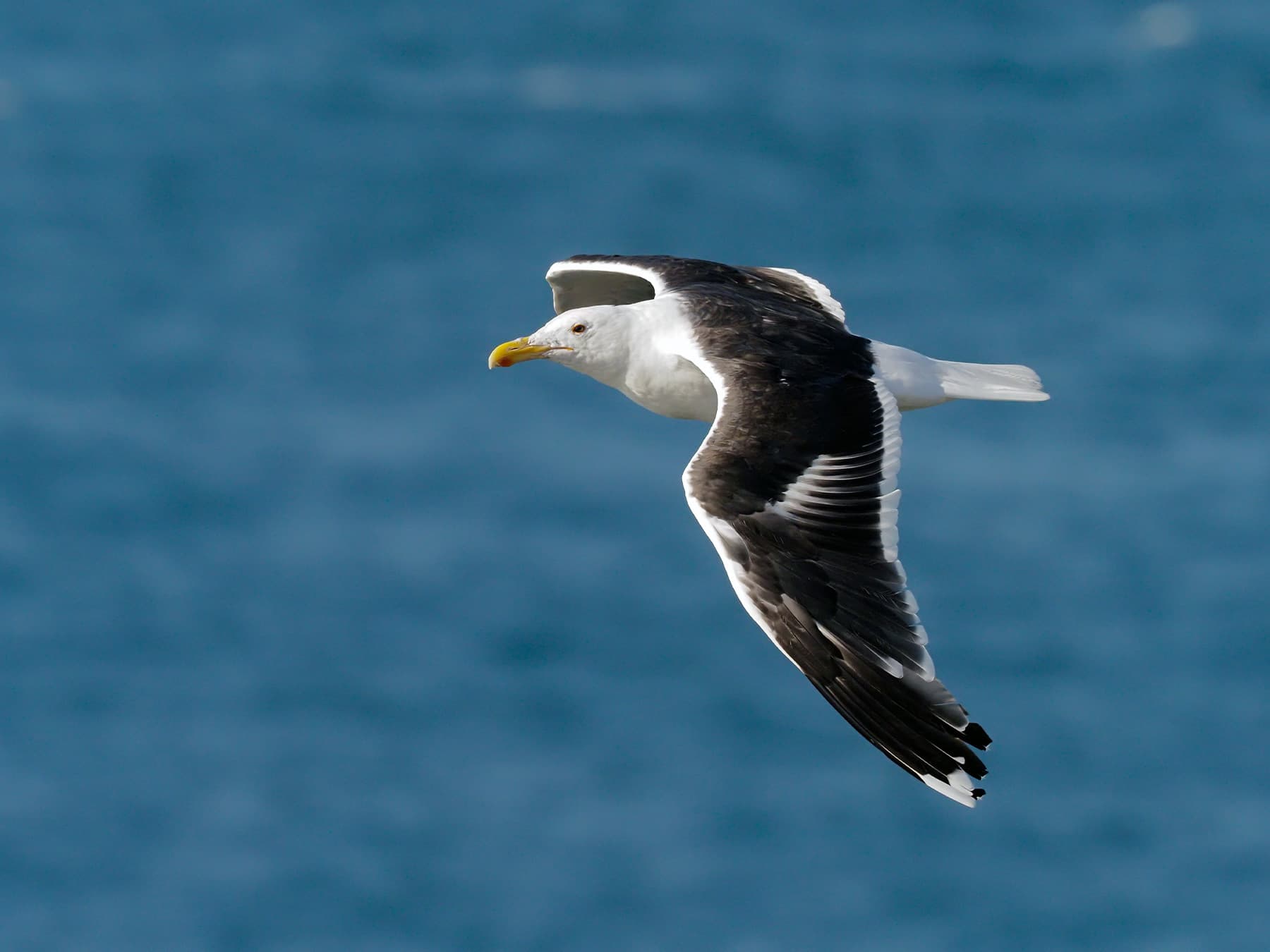 Great Black-backed Gull in-flight
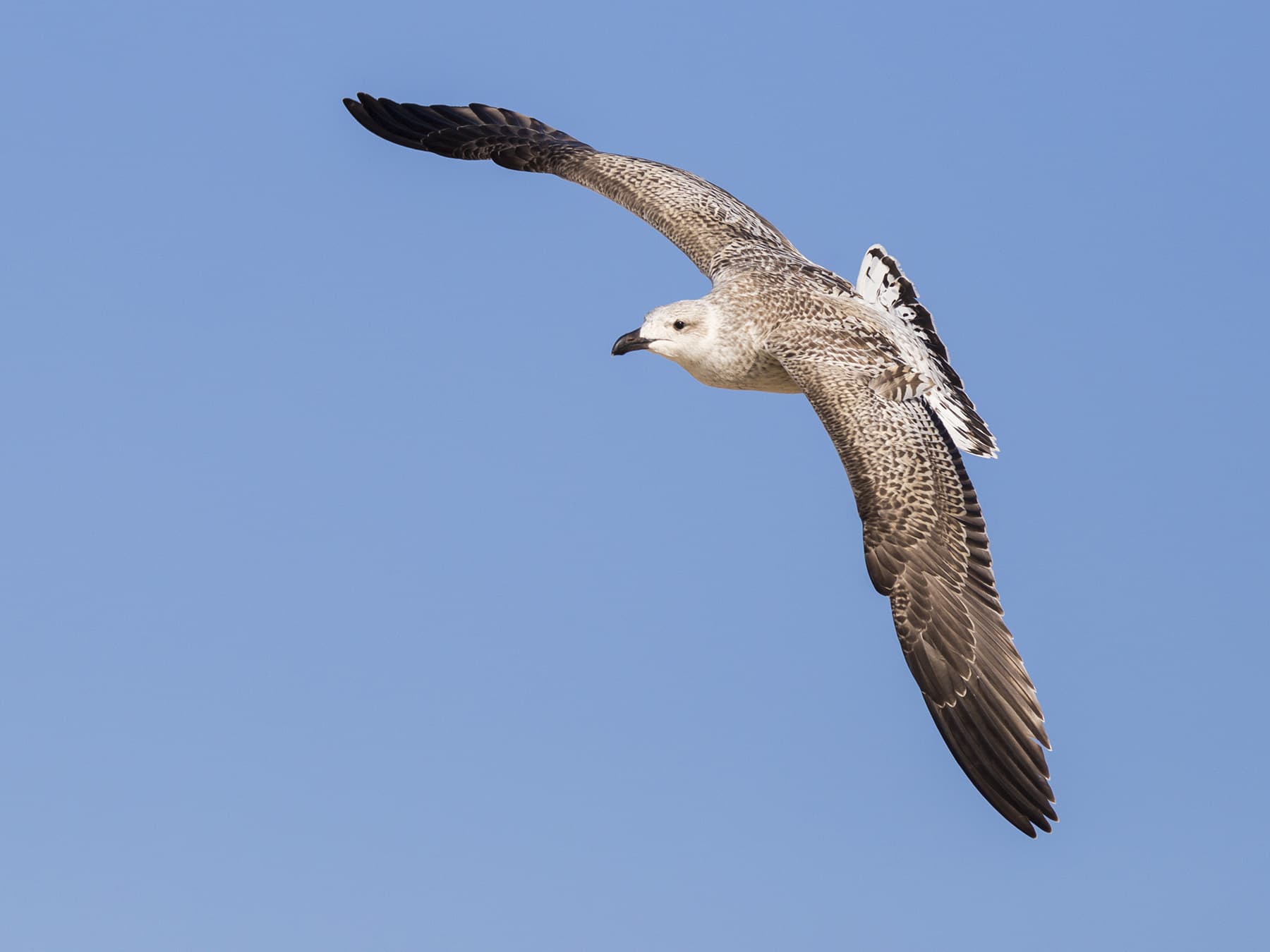 Juvenile Adult Great Black-backed Gull in-flight
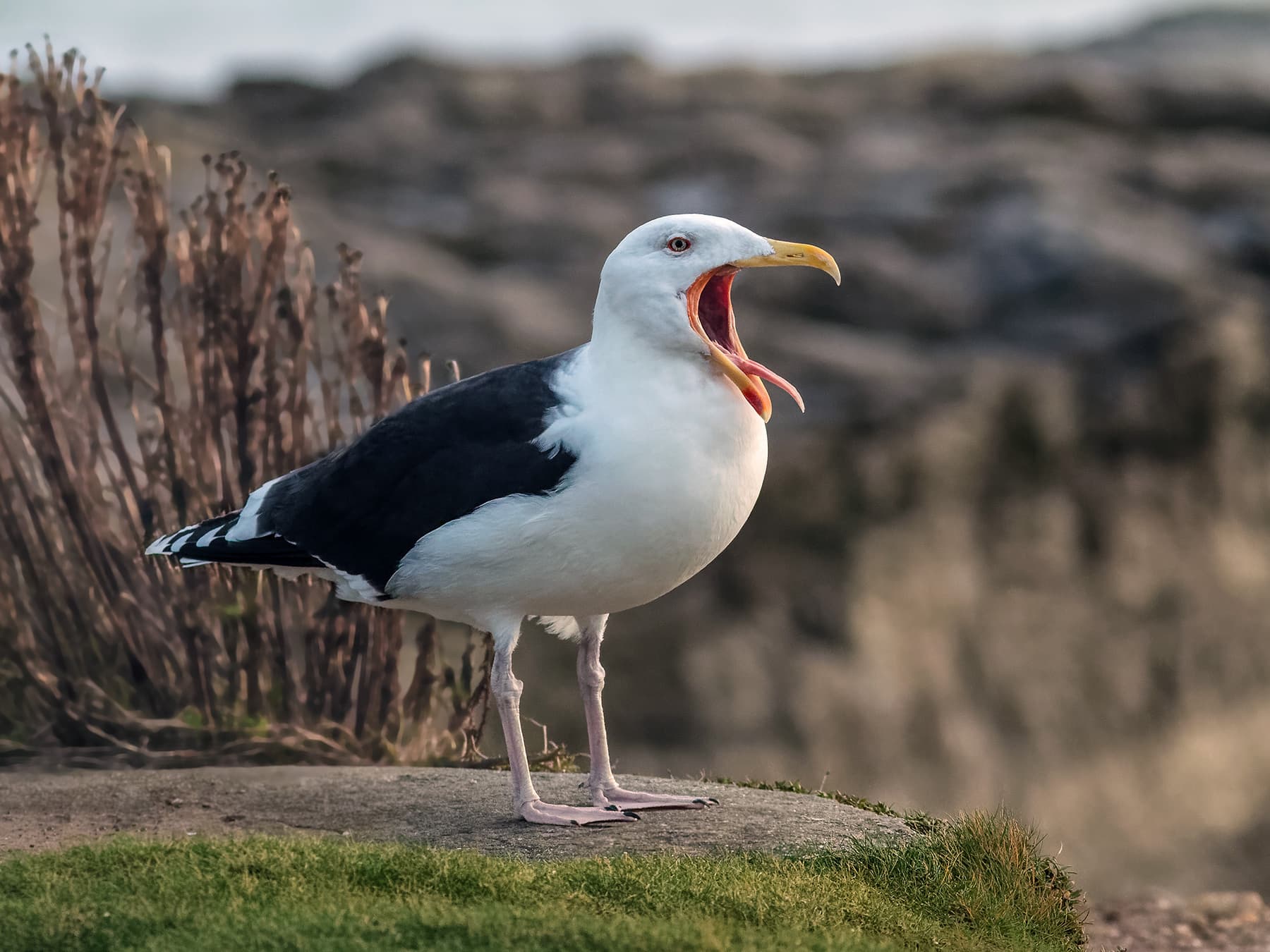 Great Black-backed Gull in natural habitat calling out
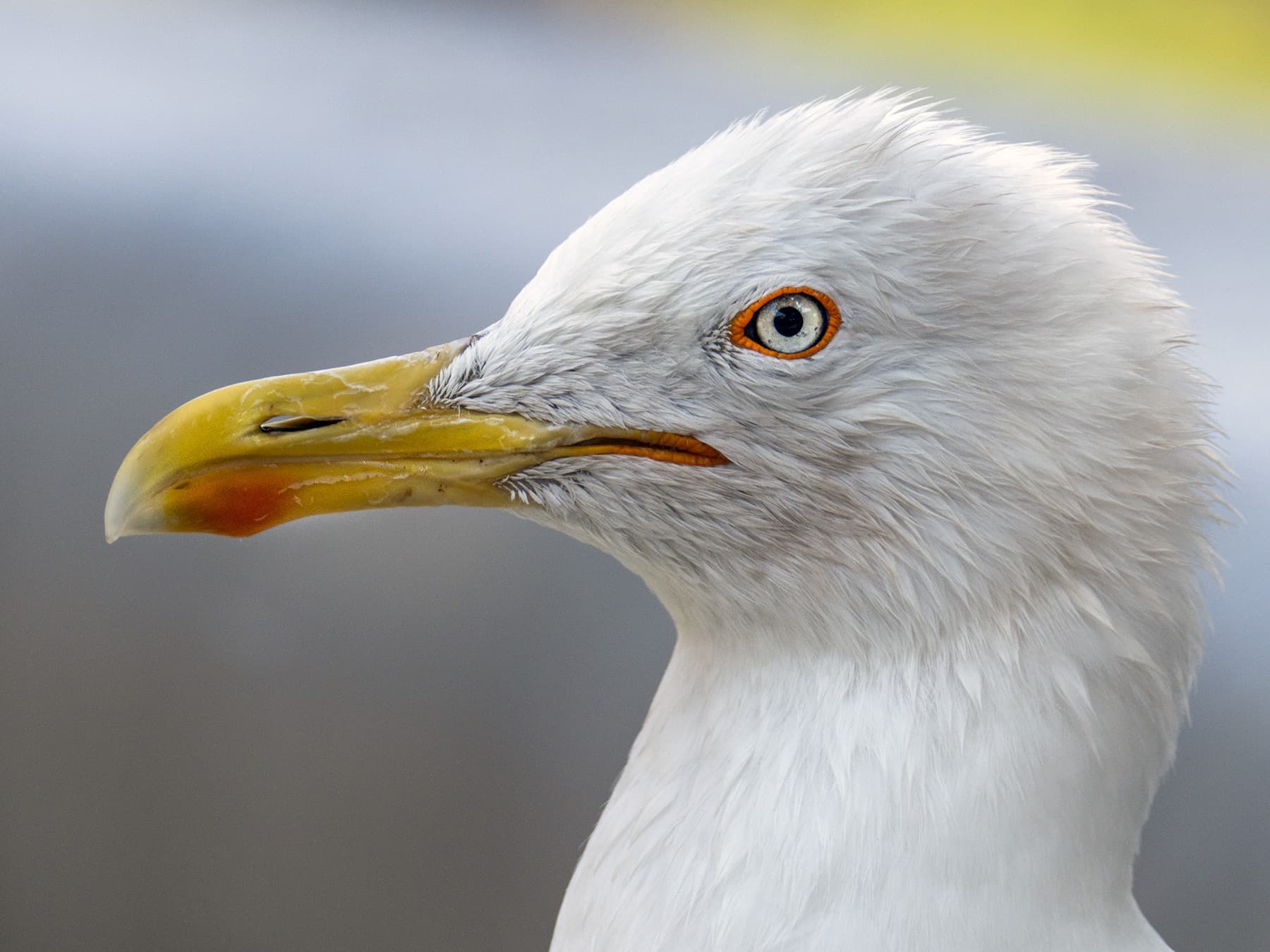 Adult Great Black-backed Gull portrait
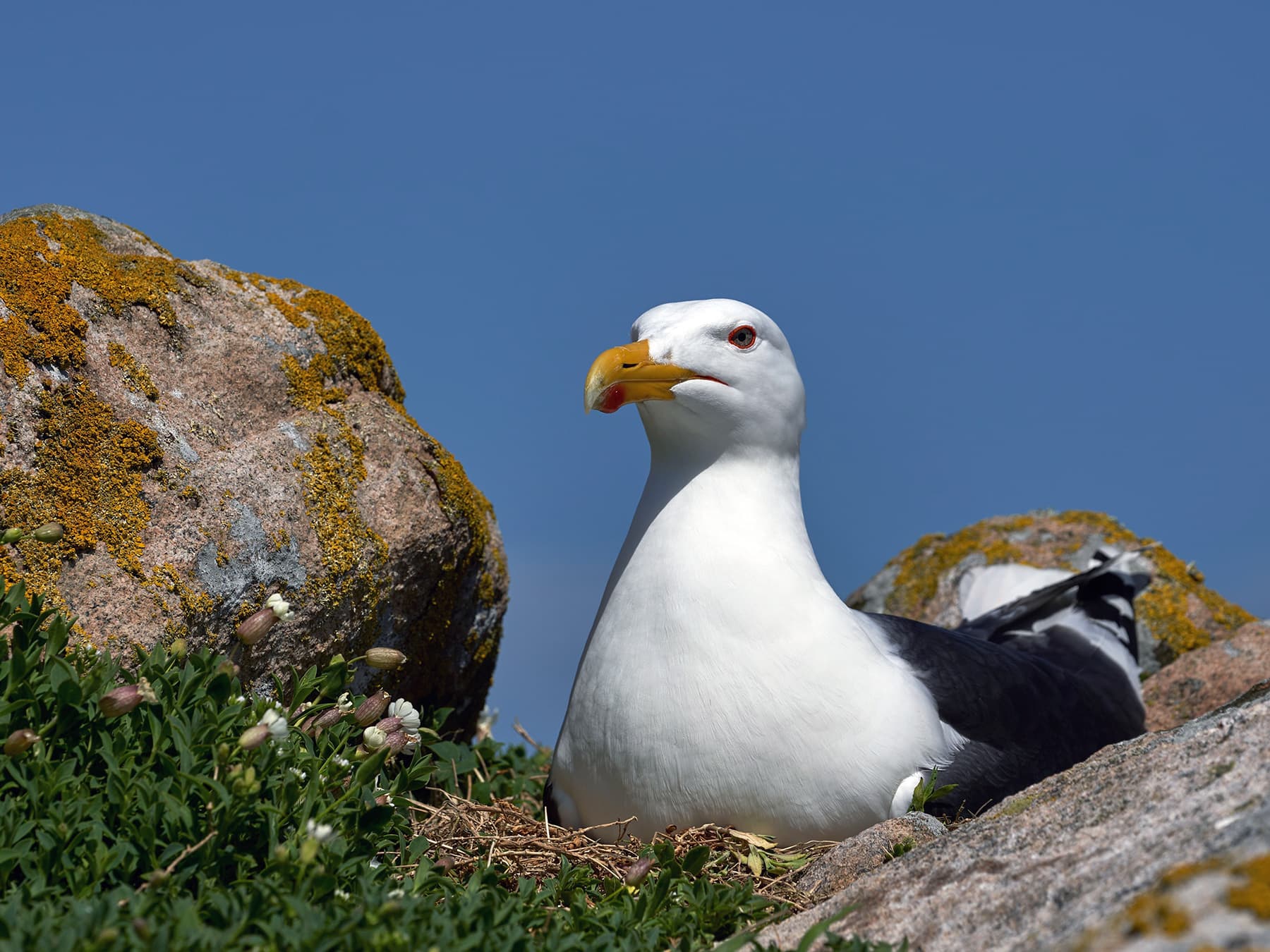 Great Black-backed Gull sitting on its nest in rocky terrain
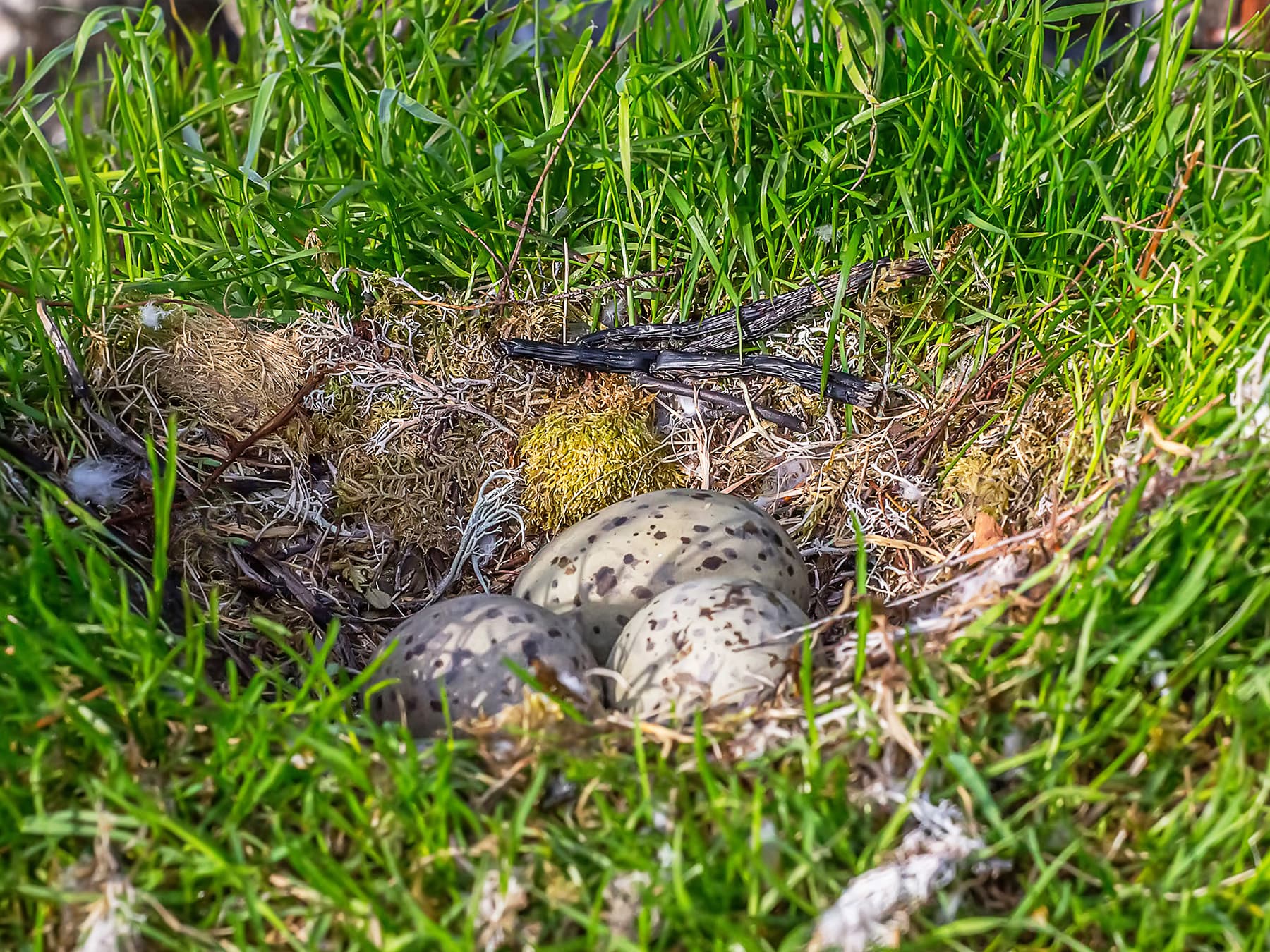 Nest of a Great Black-backed Gull with three eggs
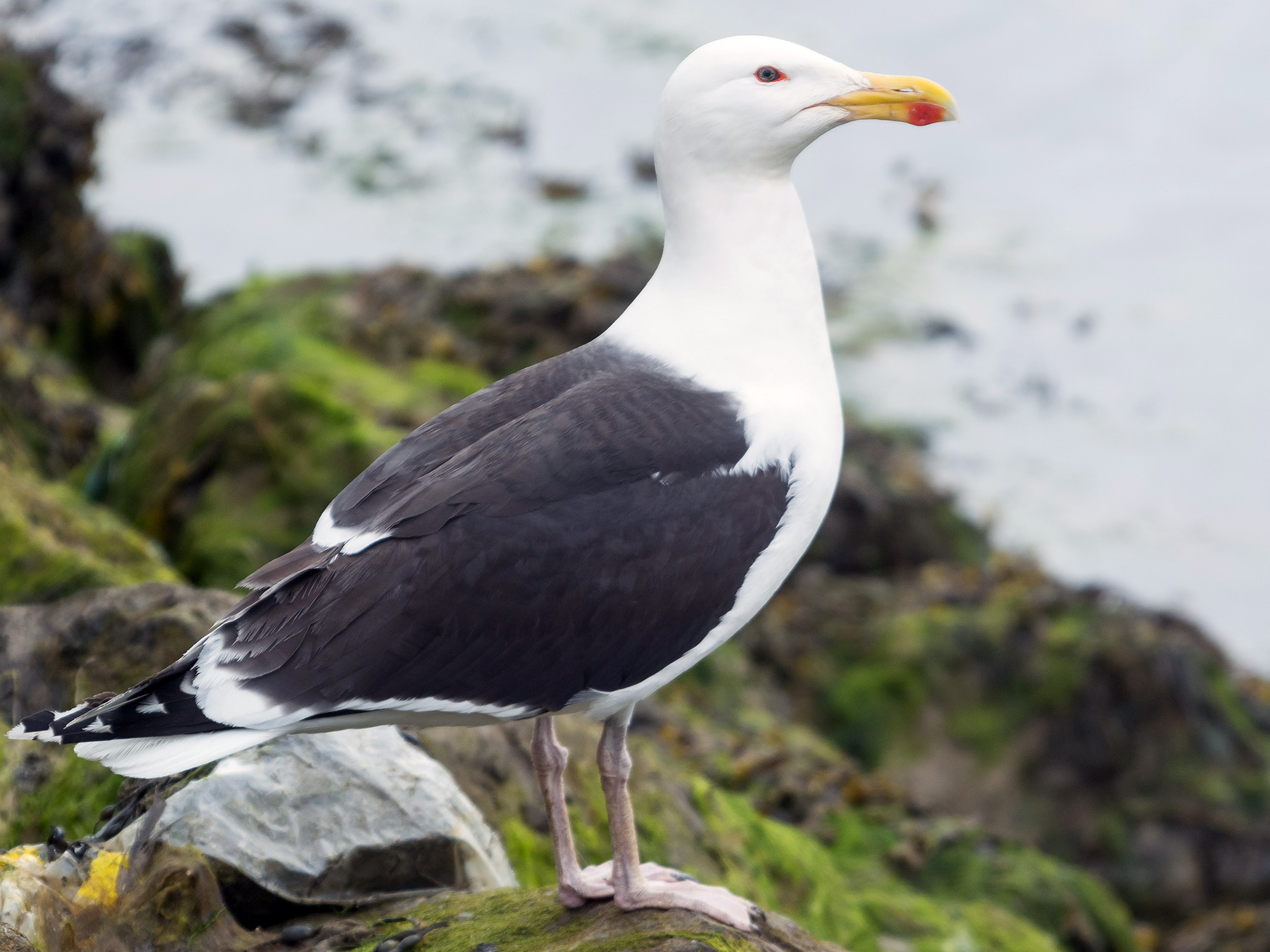
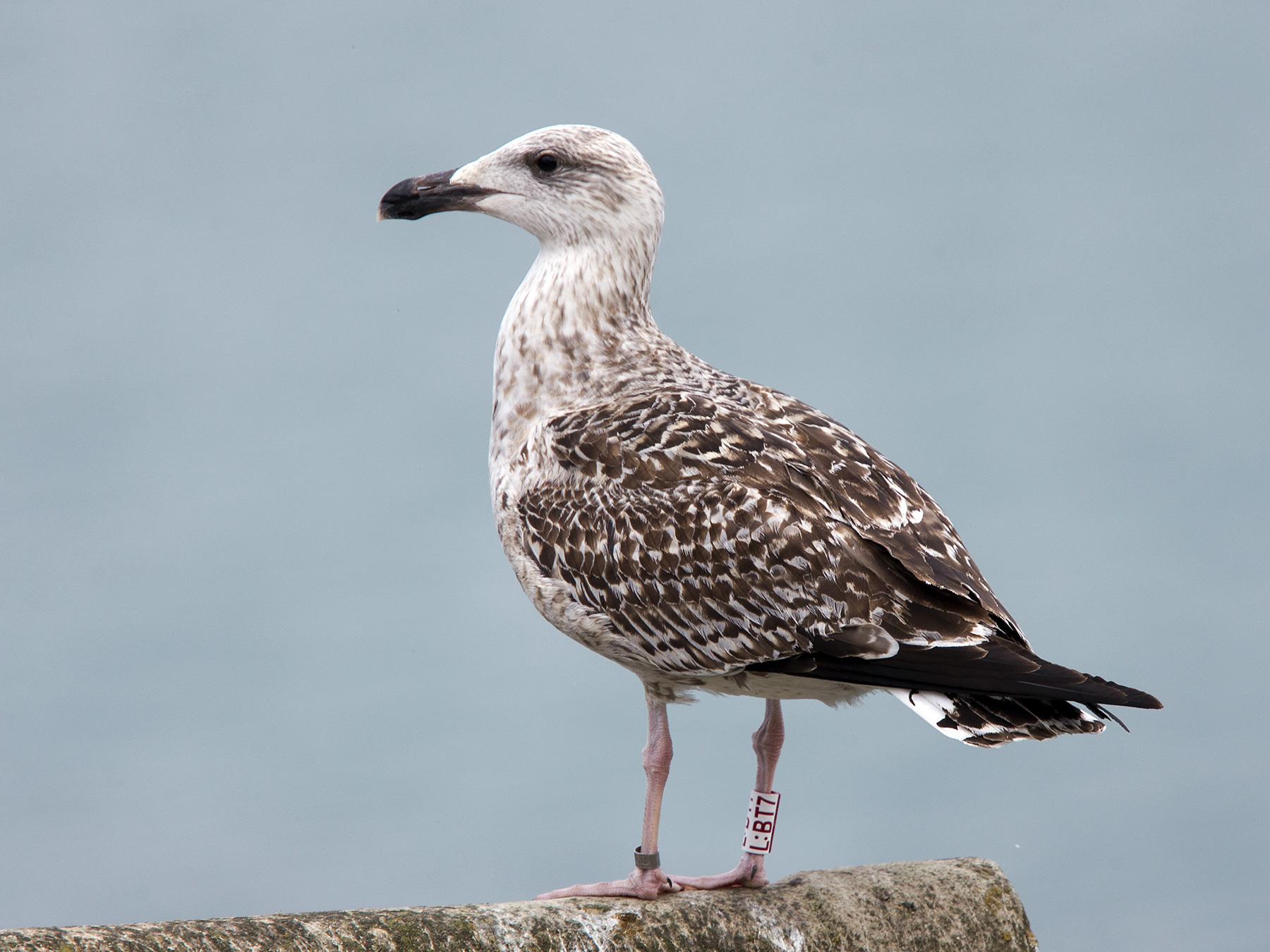
Great Black-backed Gull guides
6 guides- What Do Seagulls Actually Eat? Diet Secrets of These Clever Scavengers
- Do Seagulls Migrate? (All You Need To Know)
- Baby Seagulls: All You Need to Know (with Pictures)
- Seagull Nesting Secrets: Unveiling the Hidden Sanctuaries by the Sea
- What is a Group of Seagulls Called? (Complete List + Why?)
- How Long Do Seagulls Live?
Quick facts
- Length
- 64–79 cm
- Wingspan
- 150–170 cm
- Weight
- 1050–2500 g
- Lifespan
- 20–27 years
- Family
- Gulls & Terns
- Migration
- Partial migrant
- Global status (IUCN)
- Least Concern
- World population
- 690,000 - 940,000 mature individuals
- Population trend
- Stable
- Also called
- Greater Black-backed Gull
- Scientific name
- Larus marinus
Sources
2- 1BirdLife International. 2018. Larus marinus. The IUCN Red List of Threatened Species 2018: e.T22694324A132342572. Source (opens in a new tab)
- 2Wetlands International (2015)

Checked by
Nathan Cope, founder and editor
Nathan founded Birdfact and leads its writers and contributors in the UK, the US and Canada. He has watched and studied birds for more than ten years, and checks every article and species guide before it’s published.