


Lesser Black-backed Gull
Baltic Gull · Larus fuscus
By the Birdfact teamChecked by Nathan Cope
On this page14 sections
How to recognise it
What do Lesser Black-backed Gulls look like?
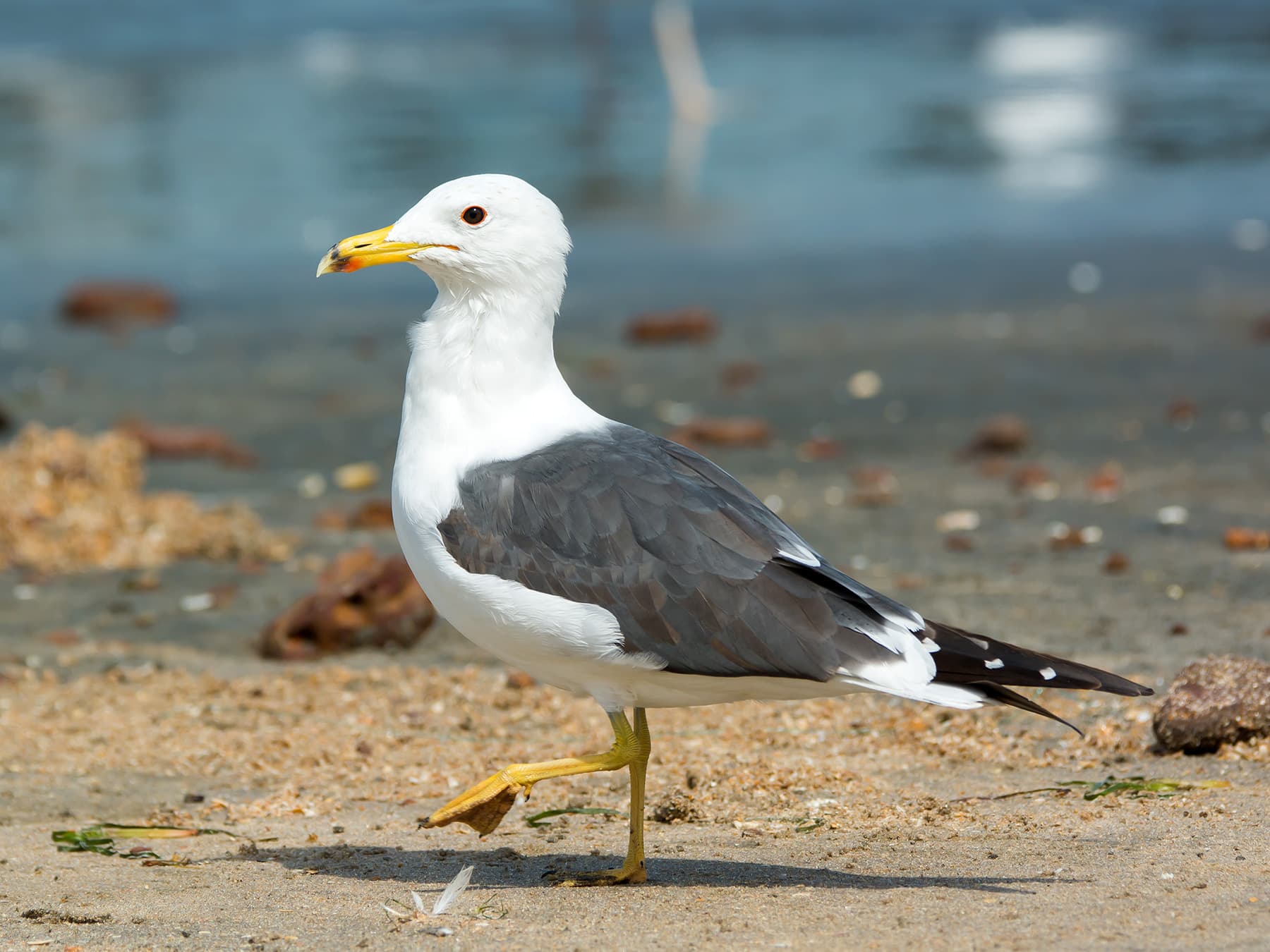
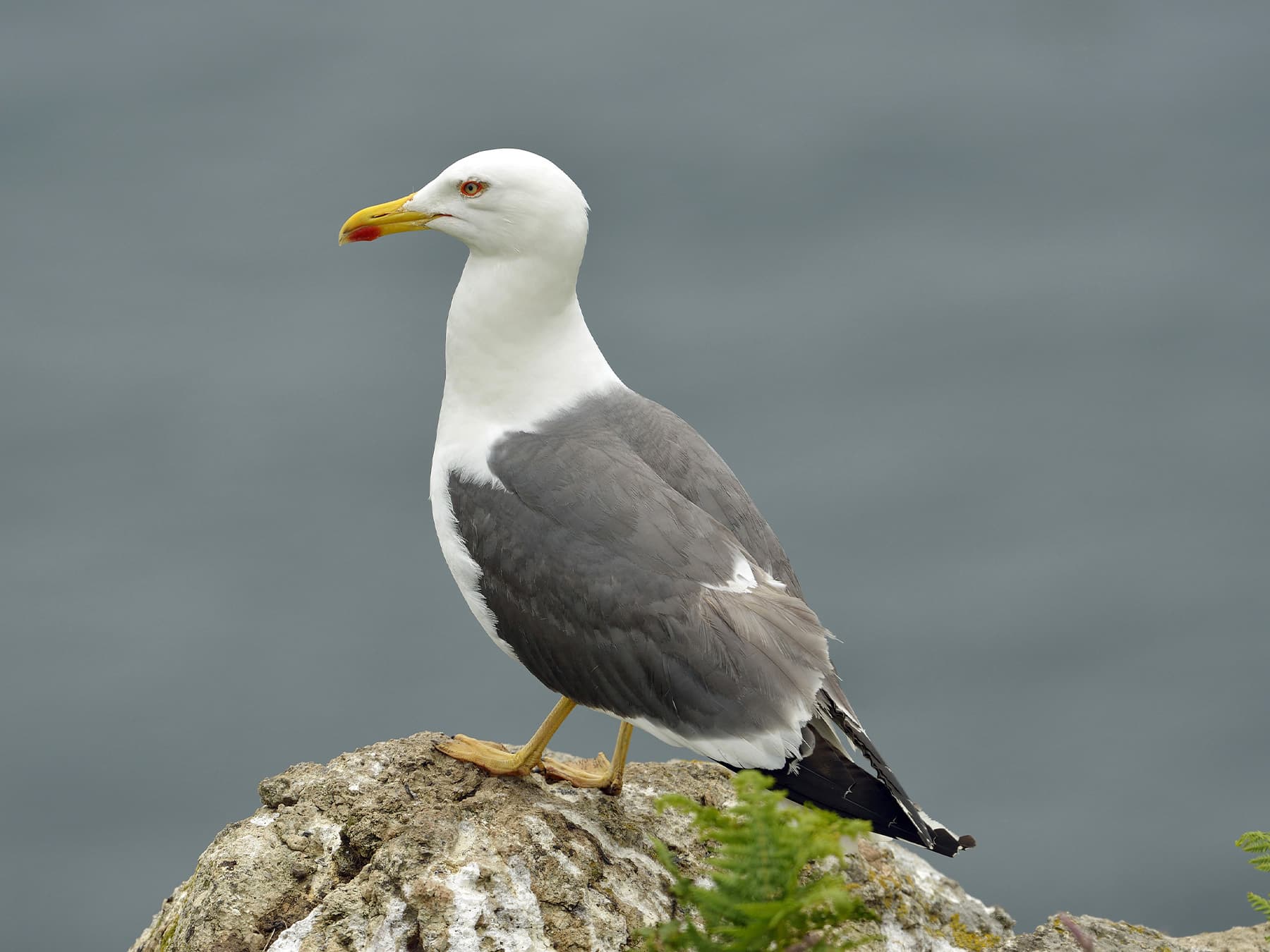
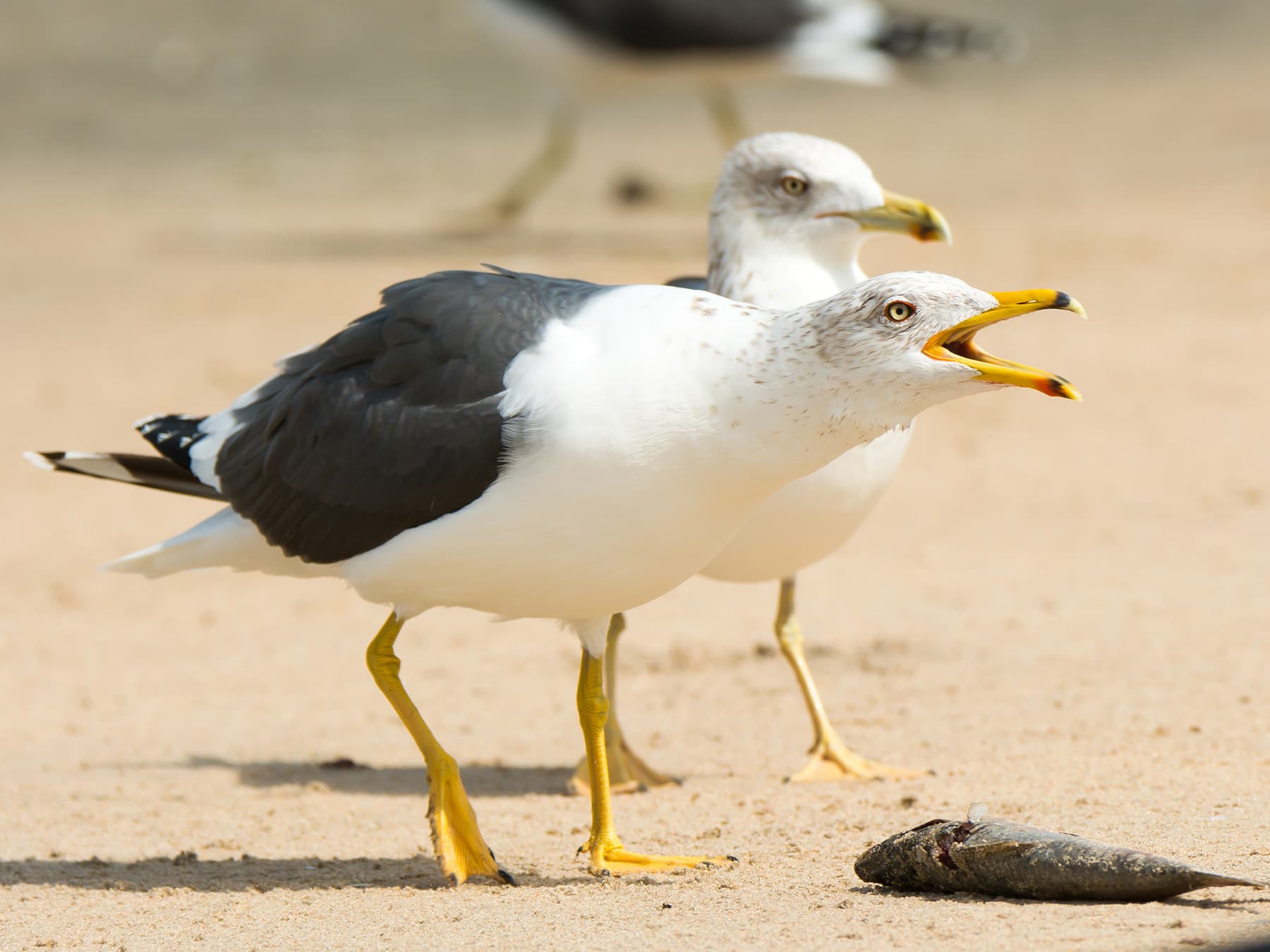
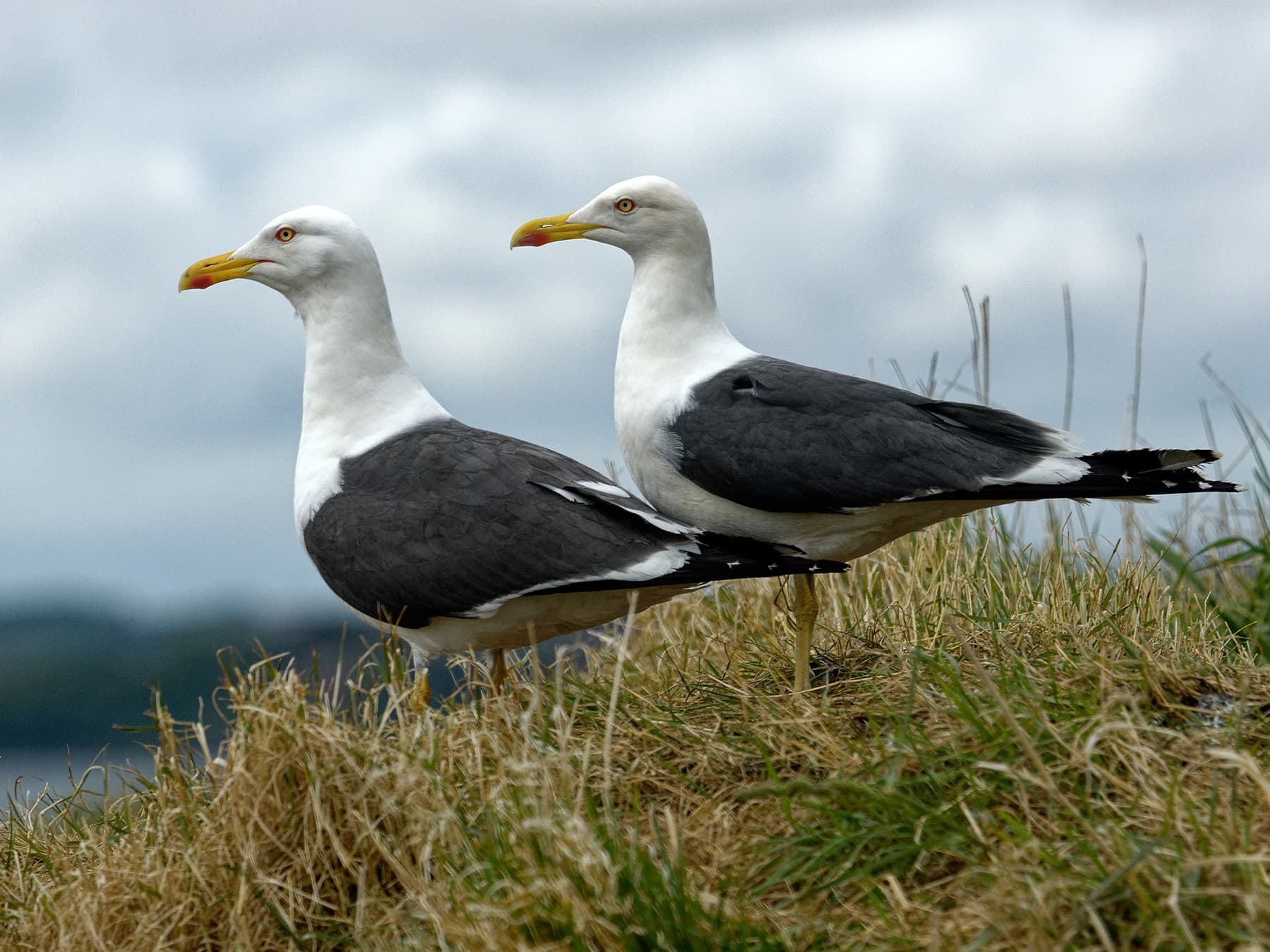
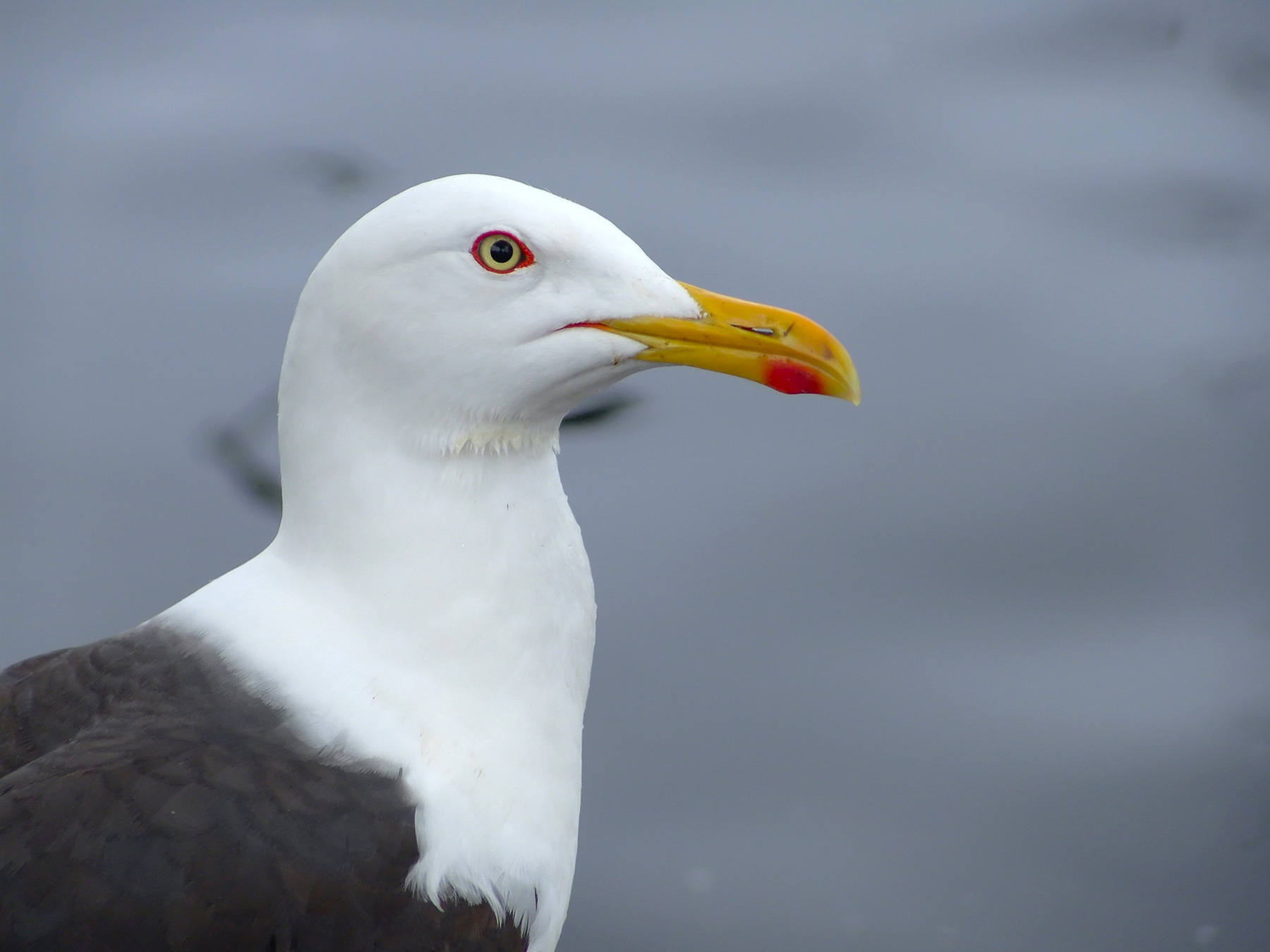
The Lesser Black-backed Gull is a medium-sized Larus gull with a relatively slender and graceful appearance. There are five subspecies, each with slight physical differences, although most of the birds seen in the United Kingdom and North America are L. f. graellsii.
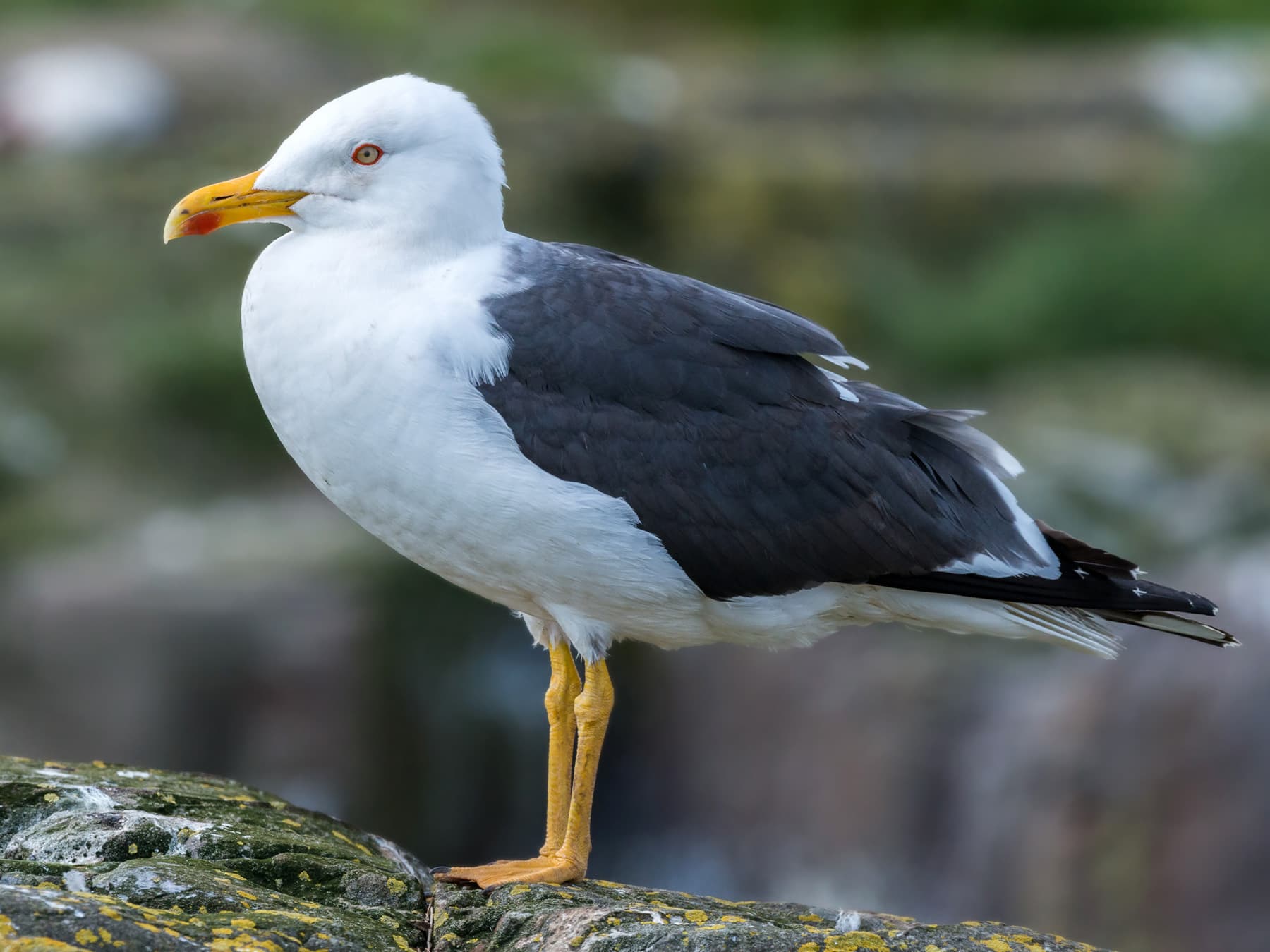
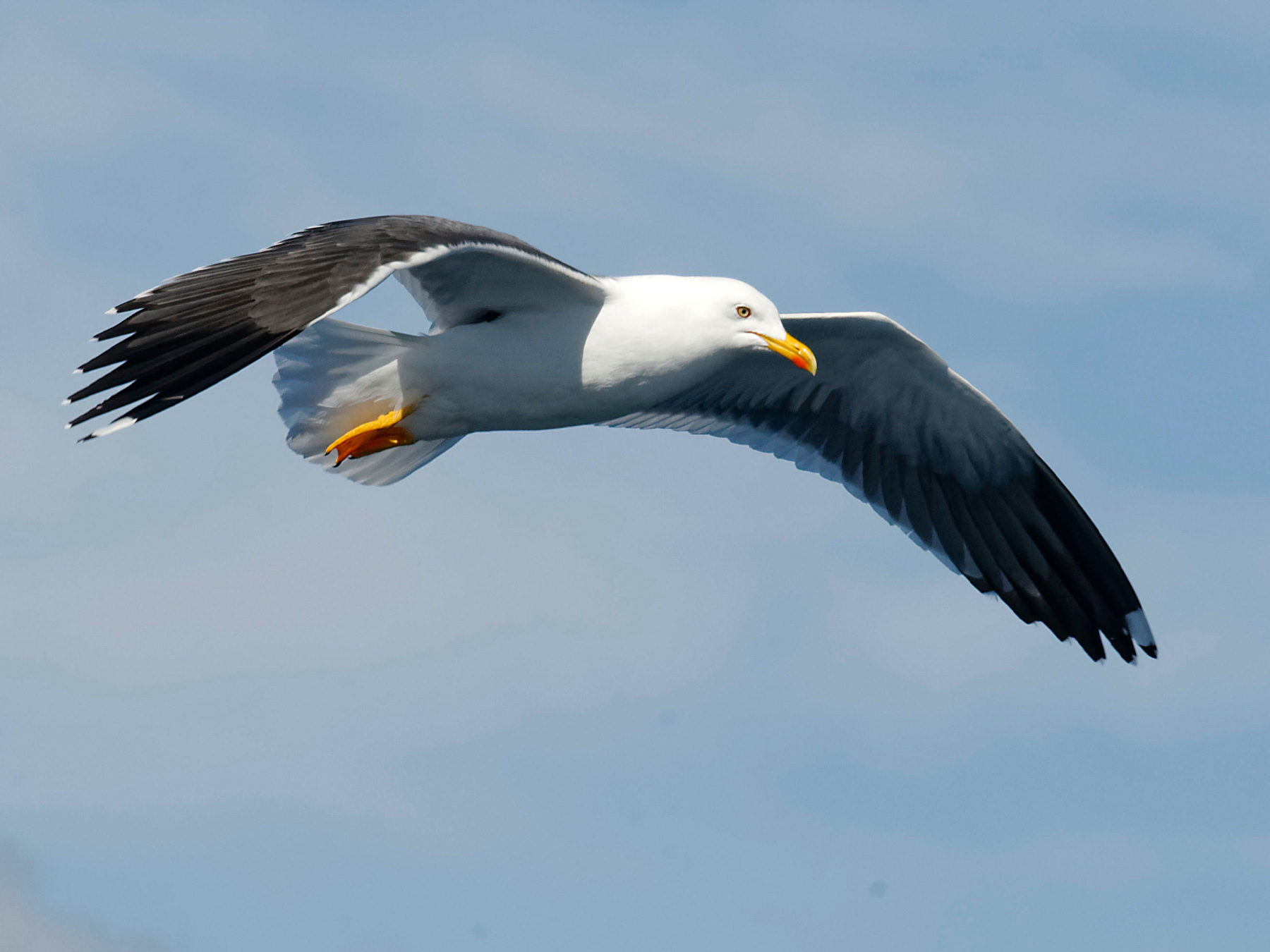
Ironically, the back and wings of this subspecies are dark slaty-grey rather than black. Their yellow bill has a red gonydeal spot toward the tip, and their legs are yellow. The head, neck, breast, and belly are usually pure white, although the head is lightly streaked in the autumn/fall and winter, creating a somewhat dirty look.
Females and males look alike, but juveniles are brownish with black bills and pinkish legs. Their back and upper wings are checkered in black and white. Young birds develop adult plumage after four years.
Lesser Black-backed Gulls are most likely to be confused with the Herring Gull (L. argentatus), which has silvery wings and pinkish legs, and the Great Black-backed Gull (L. marinus), which is much larger and has pinkish legs.
How big are Lesser Black-backed Gulls?
Lesser Black-backed Gulls are large gulls, similar in size to the Herring Gull.
Length
Adult Lesser Black-backed Gulls measure 52 to 64 centimetres or 20½ to 25 inches in length.
Weight
They weigh 550 to 1200 grams or 19 to 42 ounces.
Wingspan
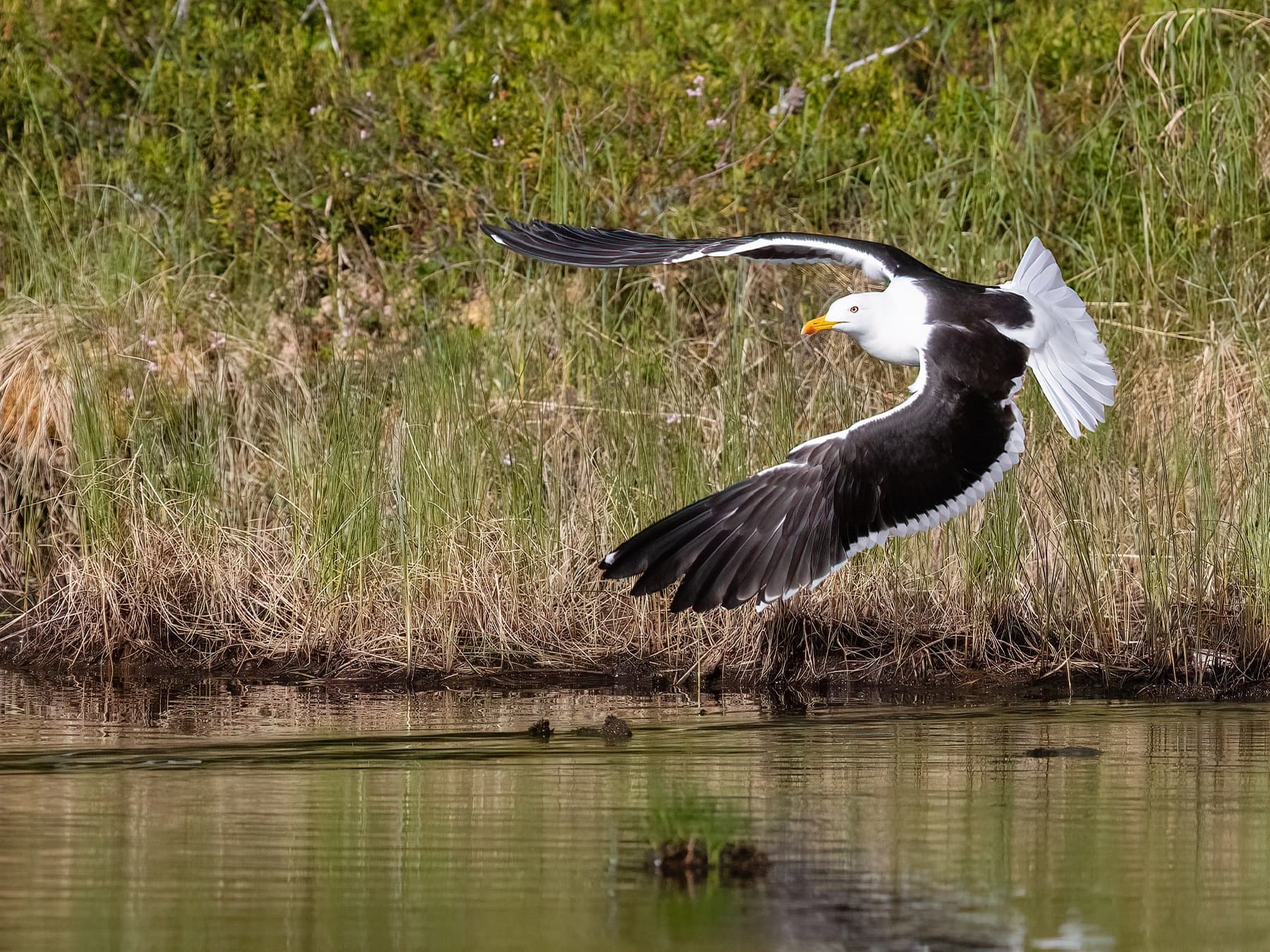
Adults have a wingspan of 124 to 158 centimetres or 49 to 62 inches.
Its size
Adults- Length
- 52–64 cm
- Wingspan
- 135–155 cm
- Weight
- 550–1000 g
Its song and calls
What sound does a Lesser Black-backed Gull make?
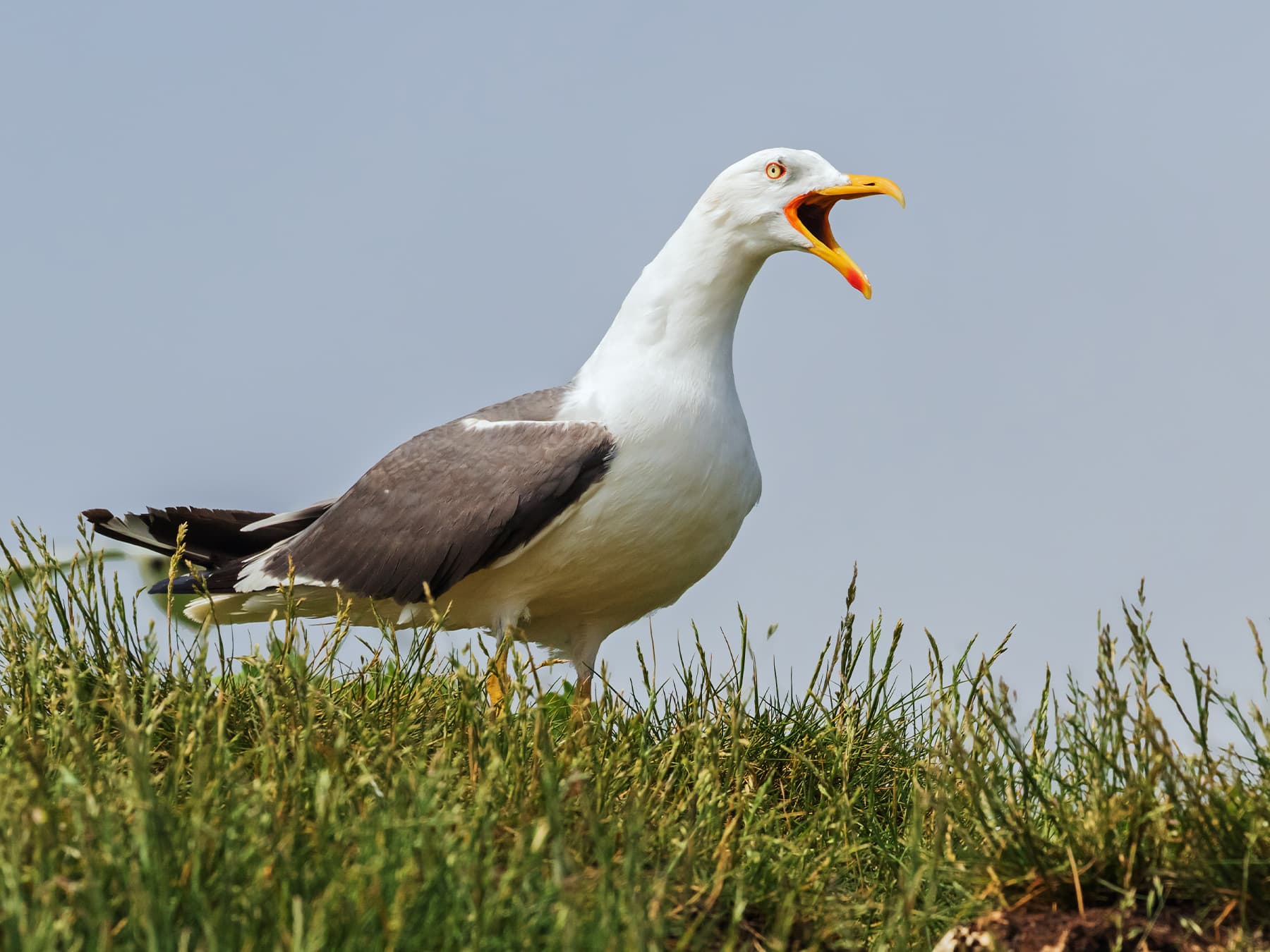
Lesser Black-backed Gulls make typical gull-like calls, including a ‘long call’, high-pitched whines, a laughter-like ‘gagaga’ and a ‘kyow’ or ‘khow’ note.
- Song0:00 / 0:12
Recorded in Normandie, France · June 2022
- Alarm call0:00 / 0:16
Recorded in Normandie, France · June 2022
When and where to see it
OctoberLeaving
Most recorded in October
- 1. Glasgow4.9%
- 2. West Lothian3.2%
- 3. Cardiff3.0%
- 4. Rhondda, Cynon, Taff3.0%
- 5. Swansea2.3%
Each dot is a county, state or province: the bigger and darker, the larger the bird’s share of that place’s bird records that month. Grey dots: no regular records. The ringed point is the centre of the bird’s records this month; the arrow shows how it moved since last month, and the dashed loop its path through the year. “Arrivals” colours places where it becomes regular this month (orange) or is in its last regular month (grey). GBIF eBird Observation Dataset, 2019–2024. Map data: Natural Earth, US Census Bureau; place centres © OpenStreetMap contributors.
In your area
See when the Lesser Black-backed Gull is recorded in your county, state or province.
How often the Lesser Black-backed Gull turns up in the UK, Ireland, the United States and Canada through the year, from birdwatchers' records.
United Kingdom
Resident · all year · most records in August
Ireland
Resident · all year · most records in July
United States
Winter visitor · all year · most records in January
Canada
Winter visitor · all year · most records in September
Show as a table
| Month | United Kingdom | Ireland | United States | Canada |
|---|---|---|---|---|
| January | 0.81% (regular) | 0.44% (regular) | 0.075% (regular) | 0.046% (regular) |
| February | 0.96% (regular) | 0.76% (regular) | 0.064% (regular) | 0.029% (regular) |
| March | 1.3% (regular) | 1.2% (regular) | 0.043% (regular) | 0.030% (regular) |
| April | 1.4% (regular) | 1.3% (regular) | 0.016% (regular) | 0.033% (regular) |
| May | 1.3% (regular) | 1.3% (regular) | 0.007% (regular) | 0.020% (regular) |
| June | 1.6% (regular) | 1.6% (regular) | 0.008% (regular) | 0.013% (regular) |
| July | 1.9% (regular) | 1.8% (regular) | 0.013% (regular) | 0.015% (regular) |
| August | 1.9% (regular) | 1.8% (regular) | 0.026% (regular) | 0.030% (regular) |
| September | 1.4% (regular) | 1.0% (regular) | 0.048% (regular) | 0.074% (regular) |
| October | 1.0% (regular) | 0.70% (regular) | 0.061% (regular) | 0.047% (regular) |
| November | 0.96% (regular) | 0.49% (regular) | 0.069% (regular) | 0.059% (regular) |
| December | 0.87% (regular) | 0.46% (regular) | 0.068% (regular) | 0.052% (regular) |
Recorded regularly in
Worldwide: recorded regularly in 125 countries
Countries where it was recorded in at least 3 of the 6 years 2019–2024. Linked countries have their own bird list.
Europe (42)
- Åland Islands
- Albania
- Austria
- Belarus
- Belgium
- Bulgaria
- Croatia
- Czechia
- Denmark
- Estonia
- Faroe Islands
- Finland
- France
- Germany
- Gibraltar
- Greece
- Guernsey
- Hungary
- Iceland
- Ireland
- Isle of Man
- Italy
- Jersey
- Latvia
- Lithuania
- Malta
- Montenegro
- Netherlands
- Norway
- Poland
- Portugal
- Romania
- Russia
- Serbia
- Slovakia
- Slovenia
- Spain
- Svalbard & Jan Mayen
- Sweden
- Switzerland
- Ukraine
- United Kingdom
Africa (20)
- Algeria
- Cape Verde
- Djibouti
- Egypt
- Eritrea
- Ethiopia
- Gambia
- Ghana
- Kenya
- Mauritania
- Morocco
- Mozambique
- Senegal
- Somalia
- South Africa
- Tanzania
- Tunisia
- Uganda
- Western Sahara
- Zambia
Asia (37)
- Armenia
- Azerbaijan
- Bahrain
- Bangladesh
- China
- Cyprus
- Georgia
- Hong Kong SAR China
- India
- Iran
- Iraq
- Israel
- Japan
- Jordan
- Kazakhstan
- Kuwait
- Lebanon
- Macao SAR China
- Mongolia
- Myanmar (Burma)
- Nepal
- Oman
- Pakistan
- Palestinian Territories
- Philippines
- Qatar
- Saudi Arabia
- South Korea
- Sri Lanka
- Taiwan
- Tajikistan
- Thailand
- Turkey
- United Arab Emirates
- Uzbekistan
- Vietnam
- Yemen
North America (23)
- Antigua & Barbuda
- Aruba
- Bahamas
- Barbados
- Belize
- Bermuda
- Canada
- Cuba
- Dominican Republic
- Greenland
- Grenada
- Guadeloupe
- Honduras
- Mexico
- Panama
- Puerto Rico
- Sint Maarten
- St Kitts & Nevis
- St Martin
- St Pierre & Miquelon
- Trinidad & Tobago
- Turks & Caicos Islands
- United States
Data: EOD – eBird Observation Dataset (Cornell Lab of Ornithology), accessed via GBIF.org, CC BY 4.0. Records from 2019–2024, aggregated and filtered by Birdfact. How these lists are made
What is the habitat of a Lesser Black-backed Gull?
Lesser Black-backed Gulls forage offshore, along rocky and sandy seashores, in estuaries and harbours, and inland at lakes and reservoirs. They are increasingly common in towns and cities, and many now nest on rooftops and visit rubbish dumps to scavenge for scraps.
What is the range of a Lesser Black-backed Gull?
Lesser Black-backed Gulls have a wide distribution in Europe, Asia, North America, and Africa. They occur across Europe and Asia, from Iceland to South Korea. Overwintering birds regularly disperse as far as South Africa and the Gulf Coast of the United States.
Where do Lesser Black-backed Gulls live?
Lesser Black-backed Gulls are opportunistic birds that live in both natural and human-altered environments. These adaptable seabirds are comfortable on land, in flight, and on the water.
How rare are Lesser Black-backed Gulls?
Lesser Black-backed Gulls are common in the United Kingdom throughout the year, although they are most numerous in the warmer months when an estimated 110,000 pairs nest in colonies along the coast and on rooftops. They are increasingly common in North America since they began nesting in Iceland about a century ago.
Where can you see Lesser Black-backed Gulls in the UK?
Birdwatchers can spot Lesser Black-backed Gulls around the United Kingdom’s coastline throughout the year. They also occur further inland in low-lying areas of England and southern Scotland, especially in the winter. Look out for them around rubbish dumps during the day or at roost sites around reservoirs in the mornings and evenings.
Where can you see Lesser Black-backed Gulls in North America?
Lesser Black-backed Gulls are fairly common winter visitors to beaches along the East Coast of the United States and inland on the Great Lakes. Smaller numbers occur further inland and south to the Gulf Coast.
Migration
Do Lesser Black-backed Gulls migrate?
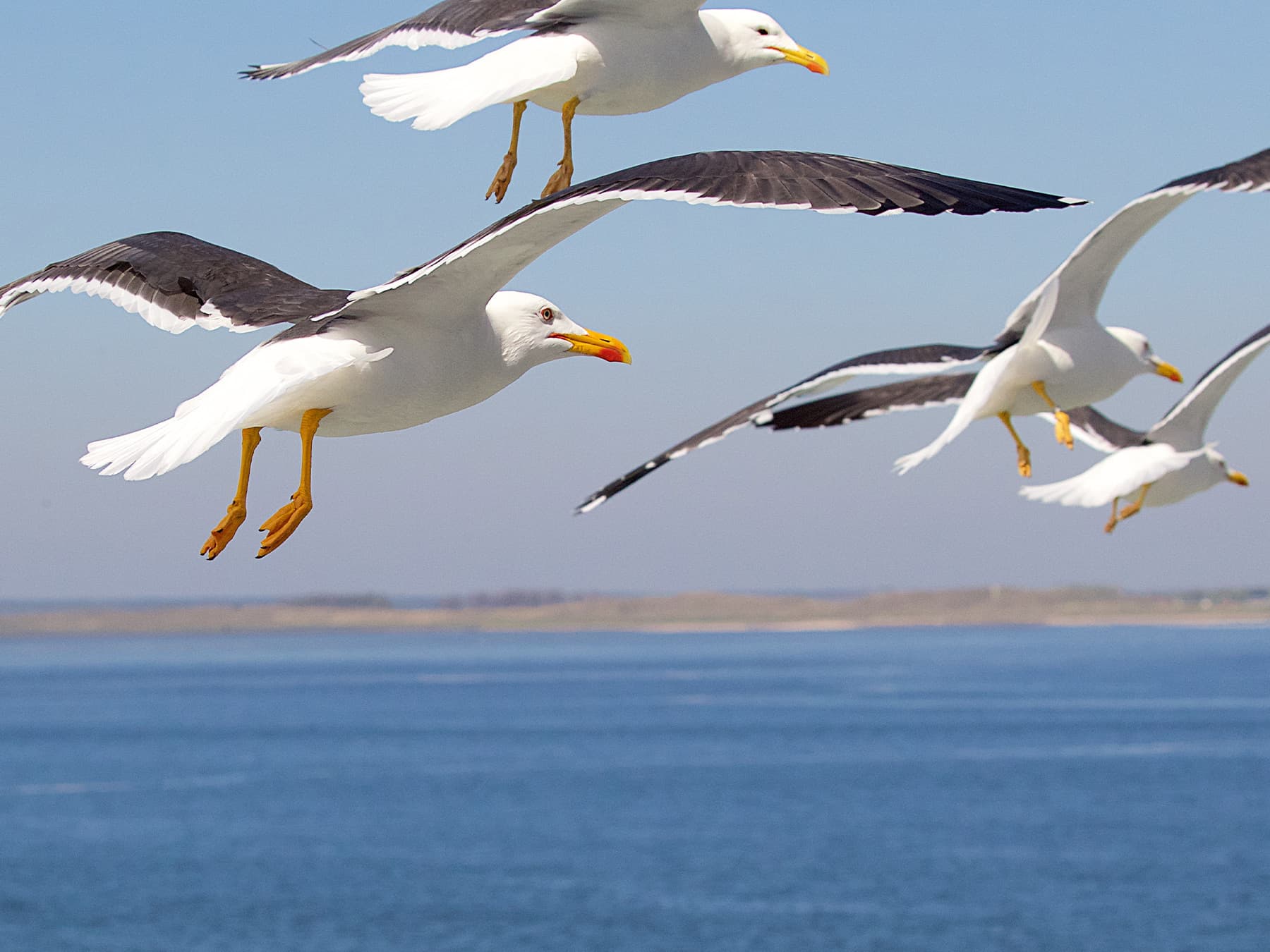
Lesser Black-backed Gulls are medium to long-distance migrants across most of their range, and some northern breeders migrate impressive distances of over 7000 kilometres (4350 mi) to overwintering grounds in Africa.
However, they have become increasingly sedentary in the United Kingdom, where more than 120,000 individuals now spend the winter. These gulls don’t usually breed in North America, but more and more are visiting from Greenland and Western Europe each winter.
Tips for seeing it
- Look for them near coastal areas, especially around harbours and estuaries
- Observe their distinctive dark grey to black back to differentiate them from other gull species
- Listen for their harsh, laughing call, especially in breeding colonies
- In the UK, watch for them inland, as they increasingly nest on urban rooftops
What it eats
What do Lesser Black-backed Gulls eat?
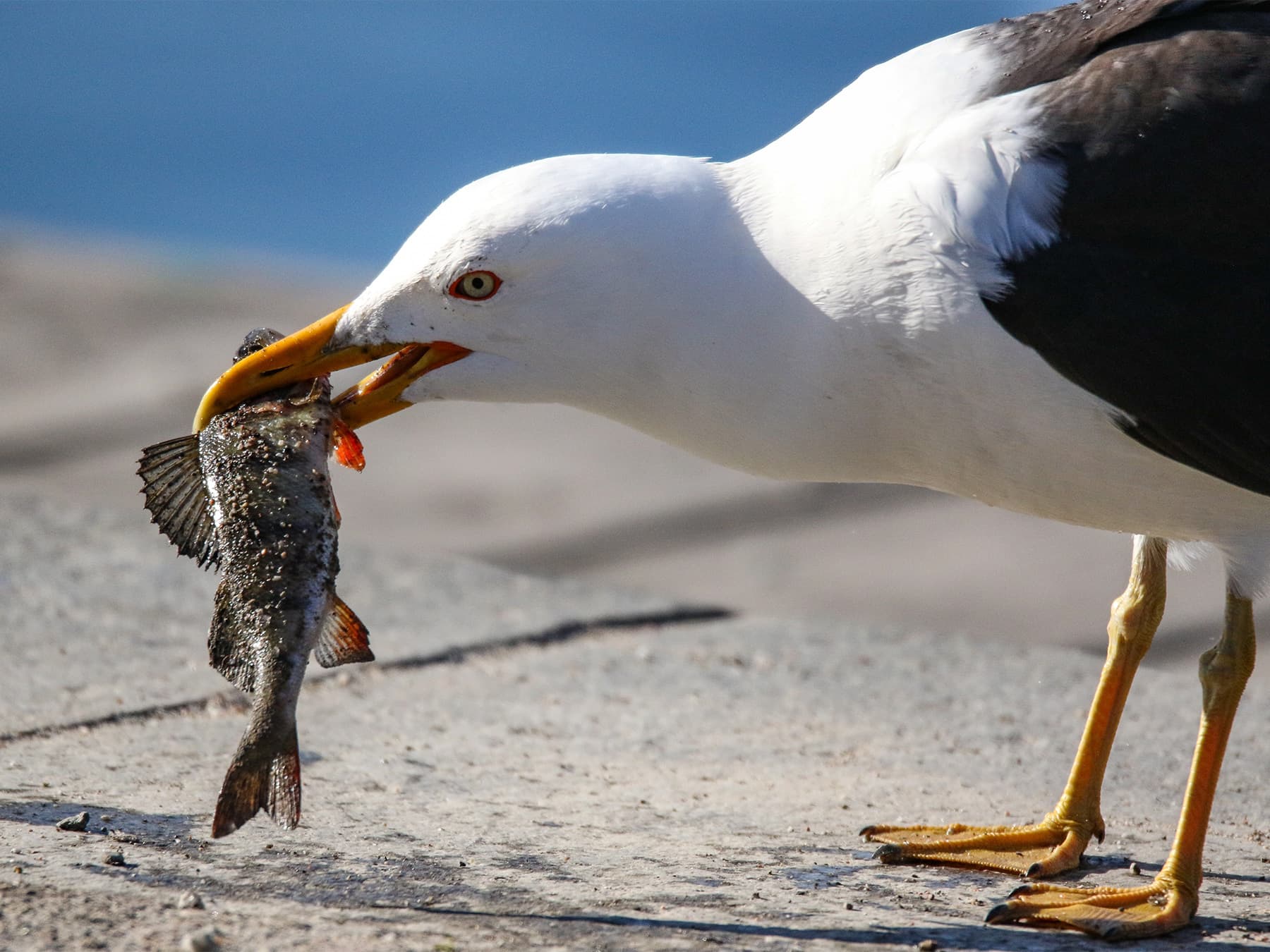
Lesser Black-backed Gulls are opportunistic hunters and scavengers. They are primarily carnivorous, although they will take berries at times. Typical food sources include small fish, marine invertebrates, food scraps, rodents, and bird eggs.
What do Lesser Black-backed Gull chicks eat?
Lesser Black-backed Gull chicks are usually fed small fish like herring and sand eels, and both parents bring food back to their young. Interestingly, the red spot (known as the gonydeal spot) on the lower mandible of these and many other adult Larus gull species is thought to encourage chicks to peck at their parent's bill to beg for food.
Nesting and breeding
Where do Lesser Black-backed Gulls nest?
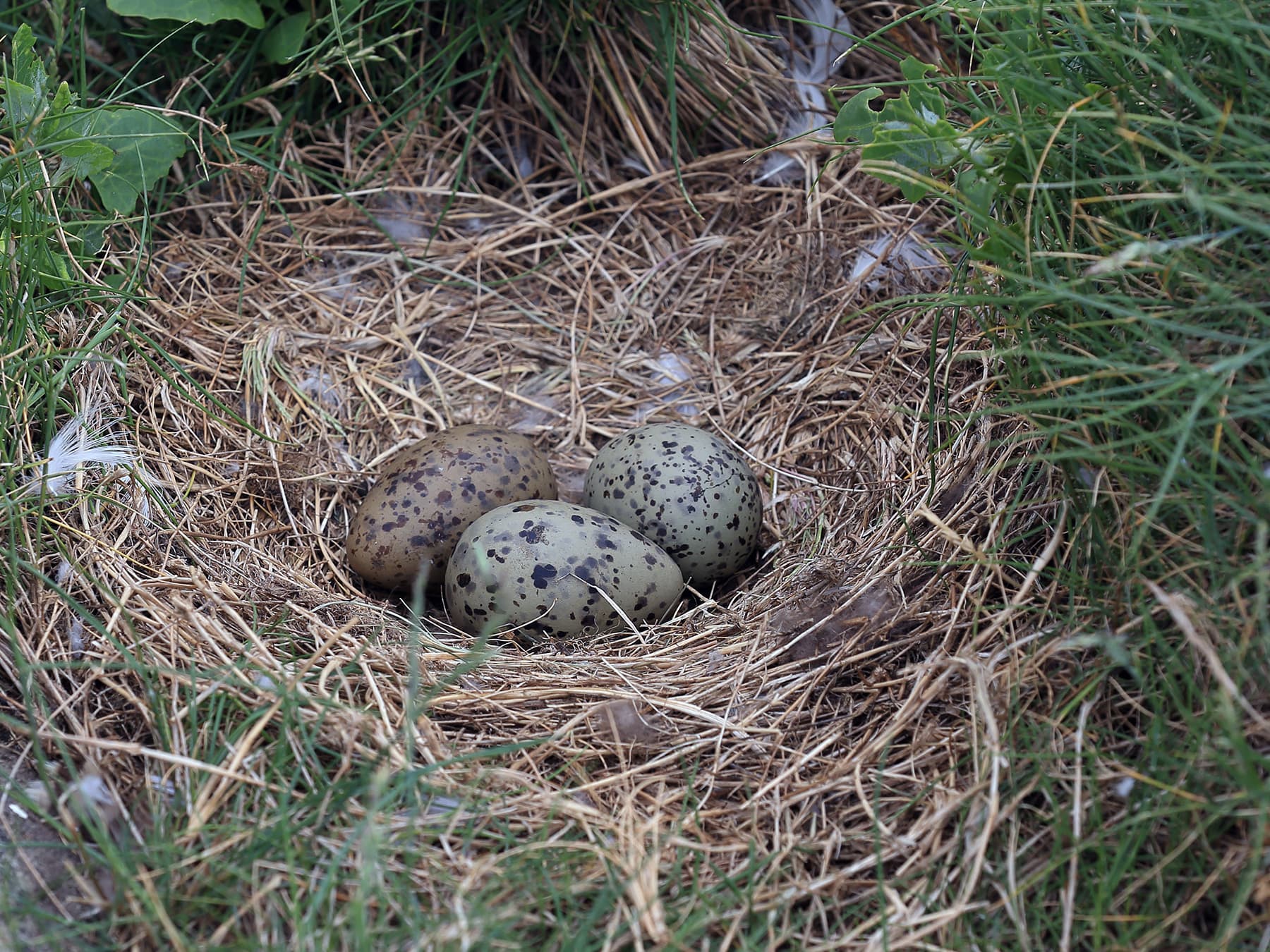
Lesser Black-backed Gulls nest in colonies, often with other seabirds like Herring Gulls. Colonies nest on coastal islands, sea cliffs, dunes, and rooftops where there is less risk of predation from foxes and other ground predators. Nests are built on the ground from plant material and feathers.
When do Lesser Black-backed Gulls nest?
Lesser Black-backed Gulls first breed when they are four years old. Most females lay their eggs in May and June, which take 24 to 28 days to hatch. Their chicks may leave the nest just days after hatching but remain nearby and fledge after about 30 to 40 days.
What do Lesser Black-backed Gull eggs look like?
Lesser Black-backed Gull eggs are olive-brown to blue-green with dark brown markings. Females usually lay a single clutch of two or three eggs, each measuring approximately 67 millimetres long and 47 millimetres wide.
Do Lesser Black-backed Gulls mate for life?
Lesser Black-backed Gulls may form lasting pair bonds, although studies indicate that at least some birds will select a new partner each year.
Behaviour
Are Lesser Black-backed Gulls aggressive?
Lesser Black-backed Gulls will use aggression to steal food from their own kind or other birds, although they are also bullied by larger species. They usually avoid humans, but adults and juveniles may be aggressive toward people who approach their nesting area.
Lifespan and predators
How long do Lesser Black-backed Gulls live?
Many seabird species have surprising longevity, and the Lesser Black-backed Gull is no exception. These long-lived birds have a typical lifespan of about 15 years, with the record set at over 34 years.
What are the predators of Lesser Black-backed Gulls?
Healthy adult Lesser Black-backed Gulls have few natural enemies. They are most vulnerable to ground predators like foxes, badgers, and mink when nesting.
Are Lesser Black-backed Gulls protected?
Lesser Black-backed Gulls are protected by the Wildlife and Countryside Act in the United Kingdom and by the Migratory Bird Treaty Act in the USA.
Are Lesser Black-backed Gulls endangered?
Lesser Black-backed Gulls are a secure species in the Least Concern category of the IUCN Red List. They have an extensive distribution, and their numbers are generally increasing.
Conservation
While currently listed as Least Concern, Lesser Black-backed Gulls face threats from habitat loss, pollution, and climate change. Conservation efforts focus on protecting breeding sites and managing urban populations to reduce conflicts with humans.
More photos
3 photos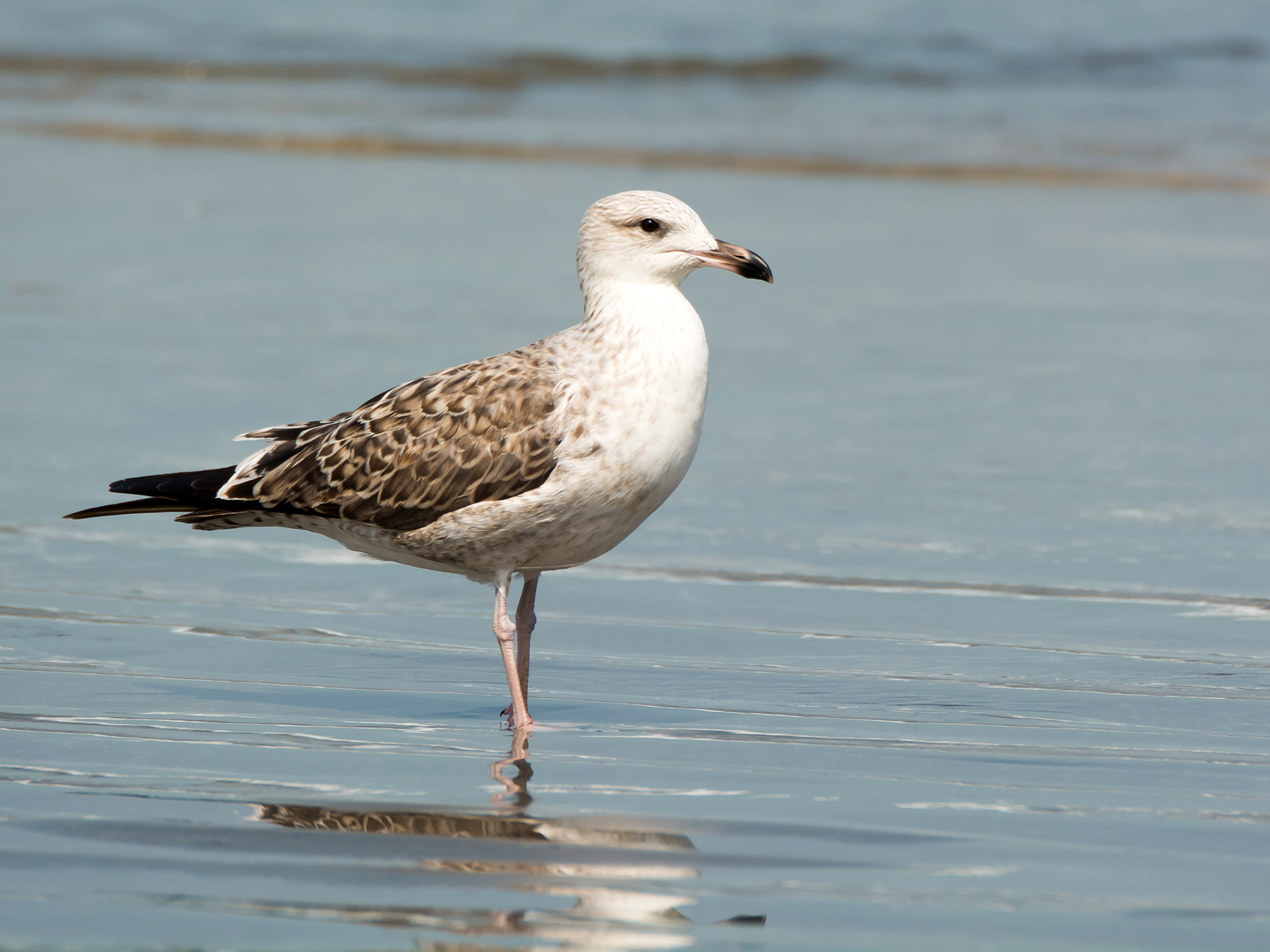
Lesser Black-backed Gull guides
6 guides- What Do Seagulls Actually Eat? Diet Secrets of These Clever Scavengers
- Do Seagulls Migrate? (All You Need To Know)
- Baby Seagulls: All You Need to Know (with Pictures)
- Seagull Nesting Secrets: Unveiling the Hidden Sanctuaries by the Sea
- What is a Group of Seagulls Called? (Complete List + Why?)
- How Long Do Seagulls Live?
Quick facts
- Length
- 52–64 cm
- Wingspan
- 135–155 cm
- Weight
- 550–1000 g
- Lifespan
- 20–32 years
- Family
- Gulls & Terns
- Migration
- Long-distance Migrant
- Global status (IUCN)
- Least Concern
- World population
- 940,000 - 2,070,000 individuals
- Population trend
- Increasing
- Also called
- Baltic Gull
- Scientific name
- Larus fuscus
Questions
1What causes variations in Lesser Black-backed Gulls?
Lesser Black-backed Gulls vary in appearance as they mature from juvenile to adult plumage and then again each year as they switch between breeding and non-breeding plumage. These birds also vary in different parts of the world, with minor plumage differences visible between the five known subspecies.
Sources
3- 1BirdLife International. 2019. Larus fuscus (errata version published in 2022). The IUCN Red List of Threatened Species 2019: e.T22694373A211737029. Source (opens in a new tab)
- 2Wetlands International (2015)
- 3Wetlands International (2015)

Checked by
Nathan Cope, founder and editor
Nathan founded Birdfact and leads its writers and contributors in the UK, the US and Canada. He has watched and studied birds for more than ten years, and checks every article and species guide before it’s published.