


European Herring Gull
Herring Gull · Larus argentatus
By the Birdfact teamChecked by Nathan Cope
On this page15 sections
How to recognise it
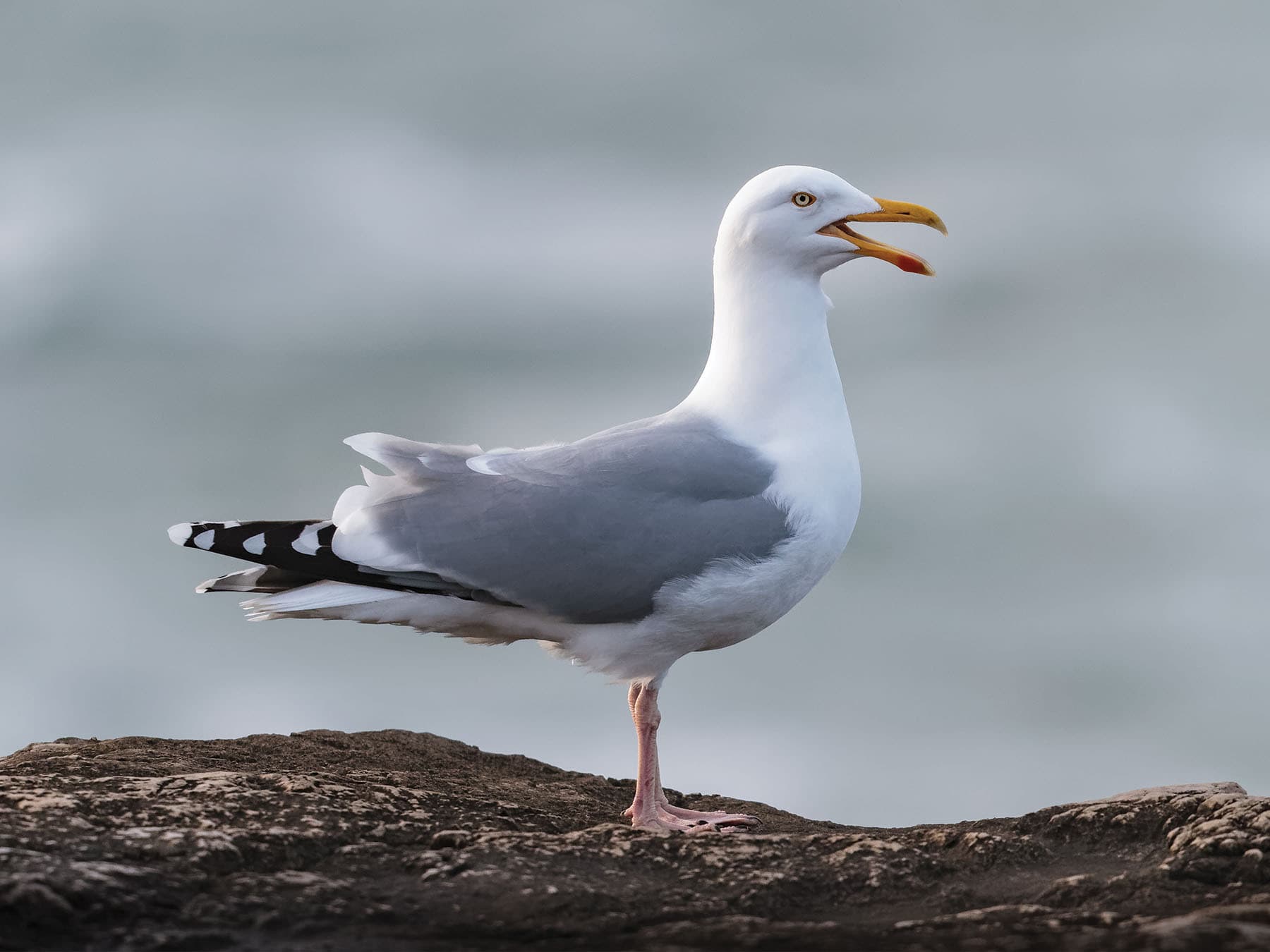
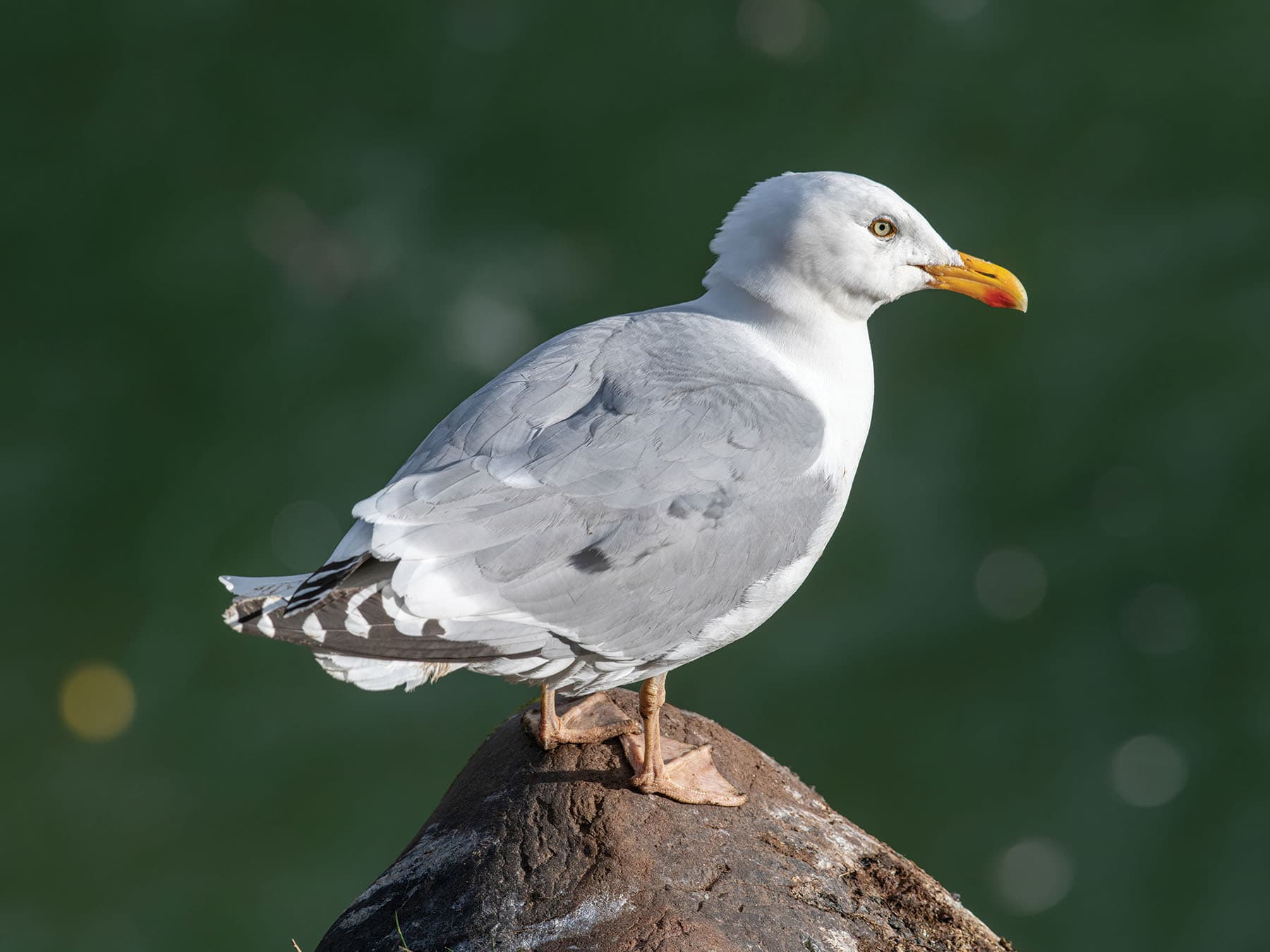
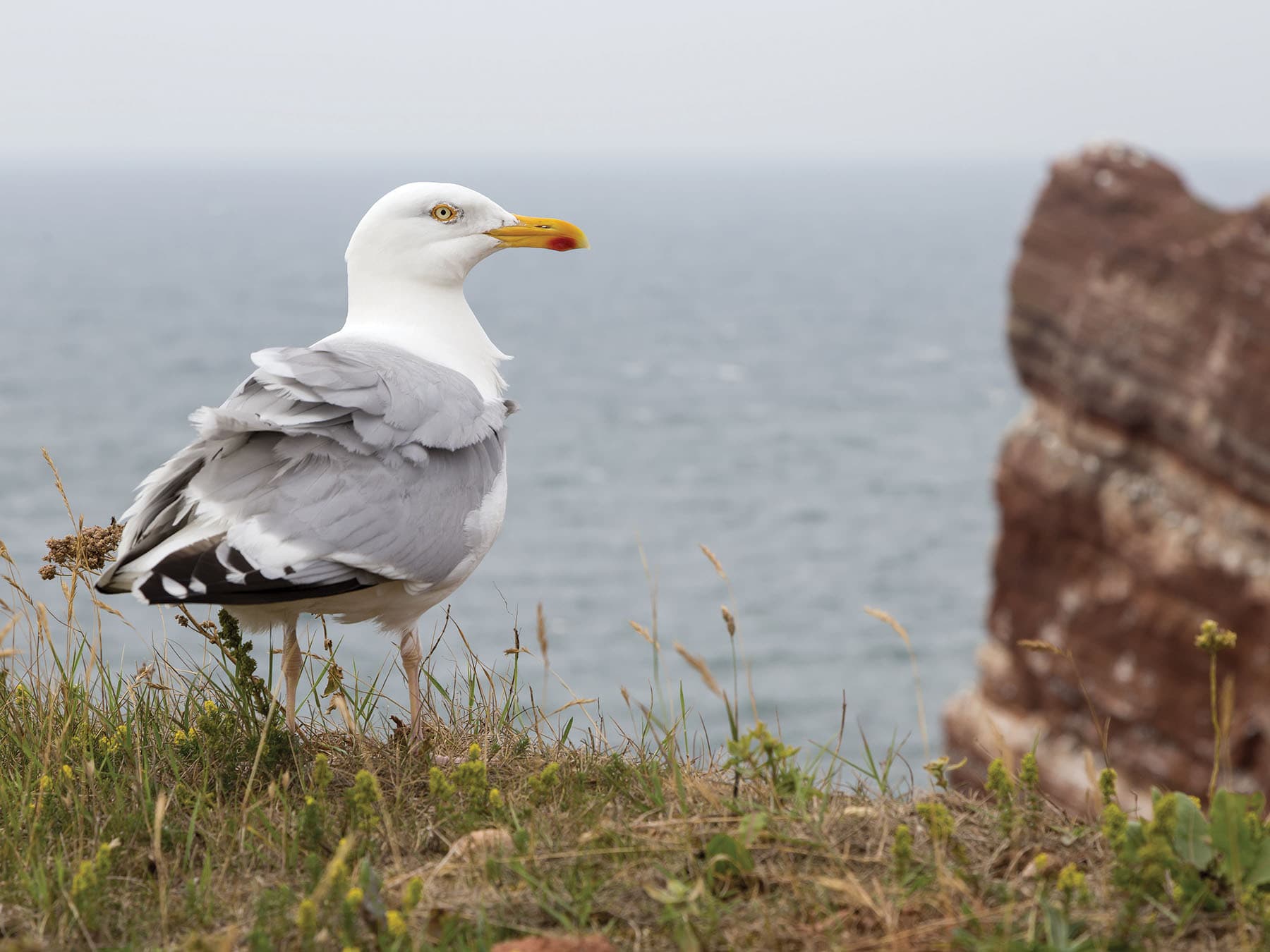
The Herring gull is a large seabird with a white head and underparts in the breeding season. The upper wings are pale grey with black tips, and their legs are pinkish. The species has a heavy, yellow bill with a red spot on the lower mandible and yellow eyes.
Female Herring Gulls have identical plumage to males, which poses a challenge for identification. However, males are significantly larger on average, and the difference may be visible when pairs are seen together. Non-breeding birds have grey-brown streaks on the head and neck.
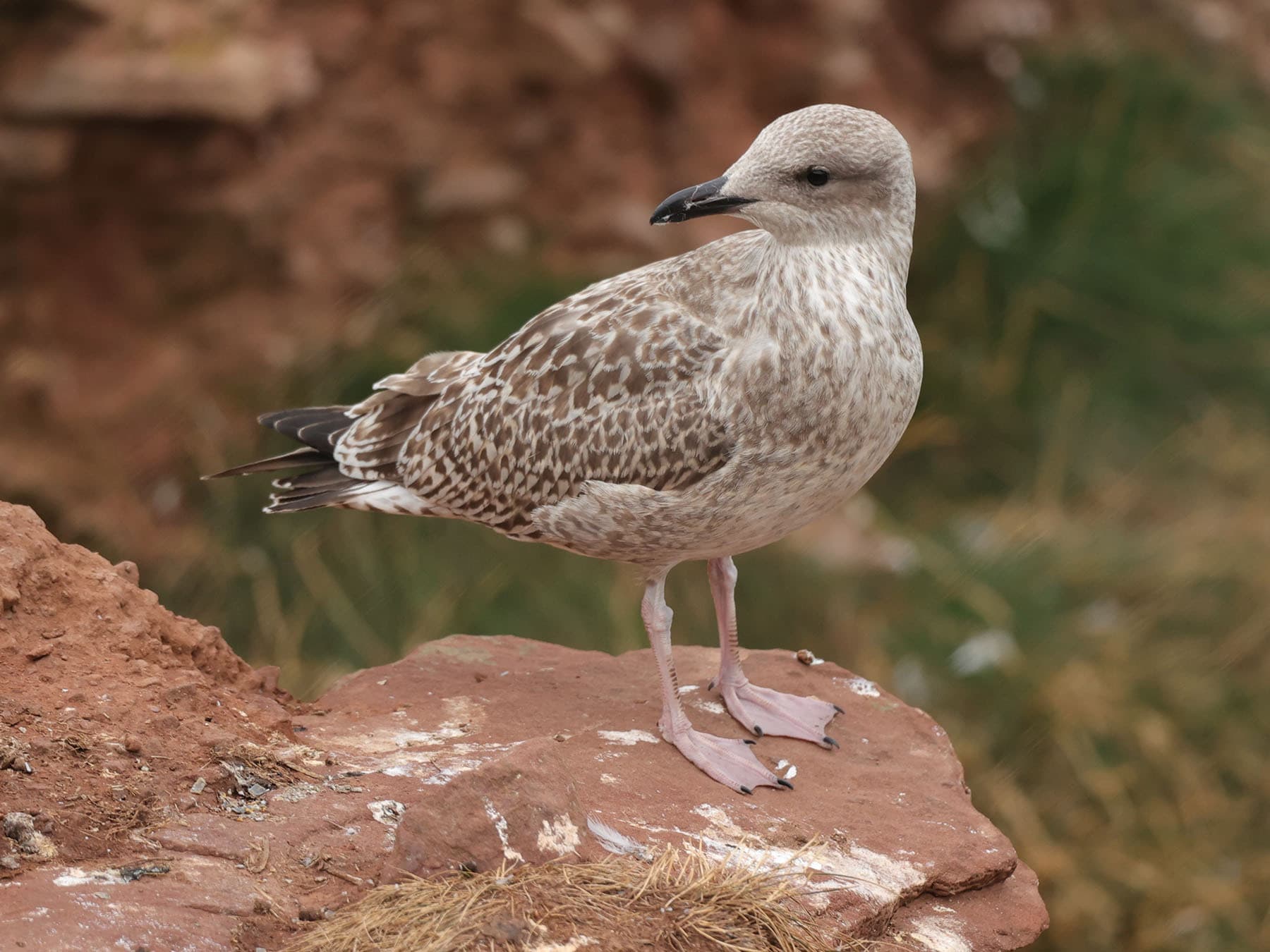
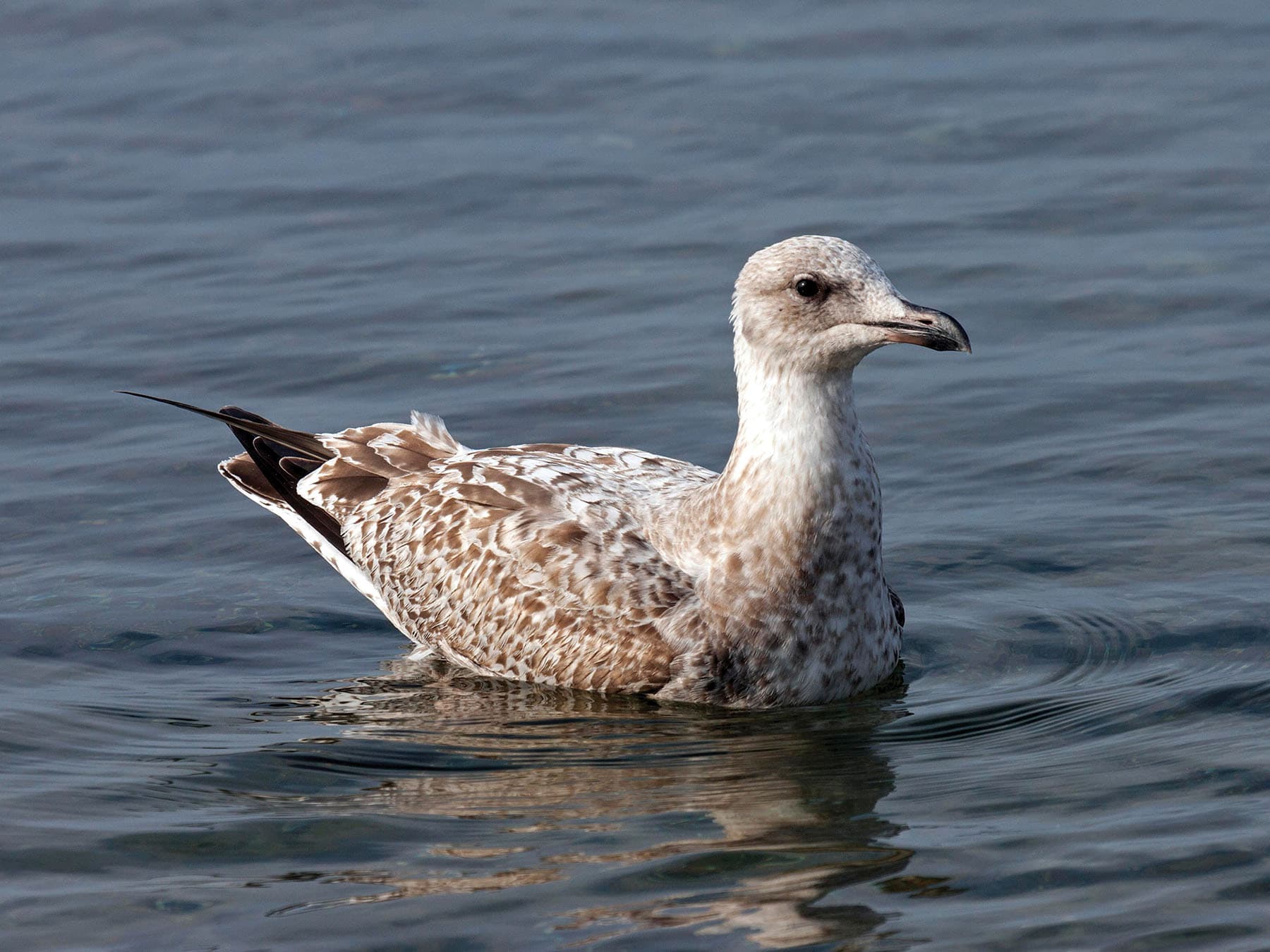
Juvenile Herring Gulls are distinct from mature birds, taking four years to attain their adult plumage. The young birds have brown streaking and blotching over the entire body but are darkest on the back and wings. They also have black bills and eyes until about their third winter.
Juvenile Herring Gulls are difficult to distinguish from other juvenile gull species, although adults are easily identified by their wing, back, and leg colours.
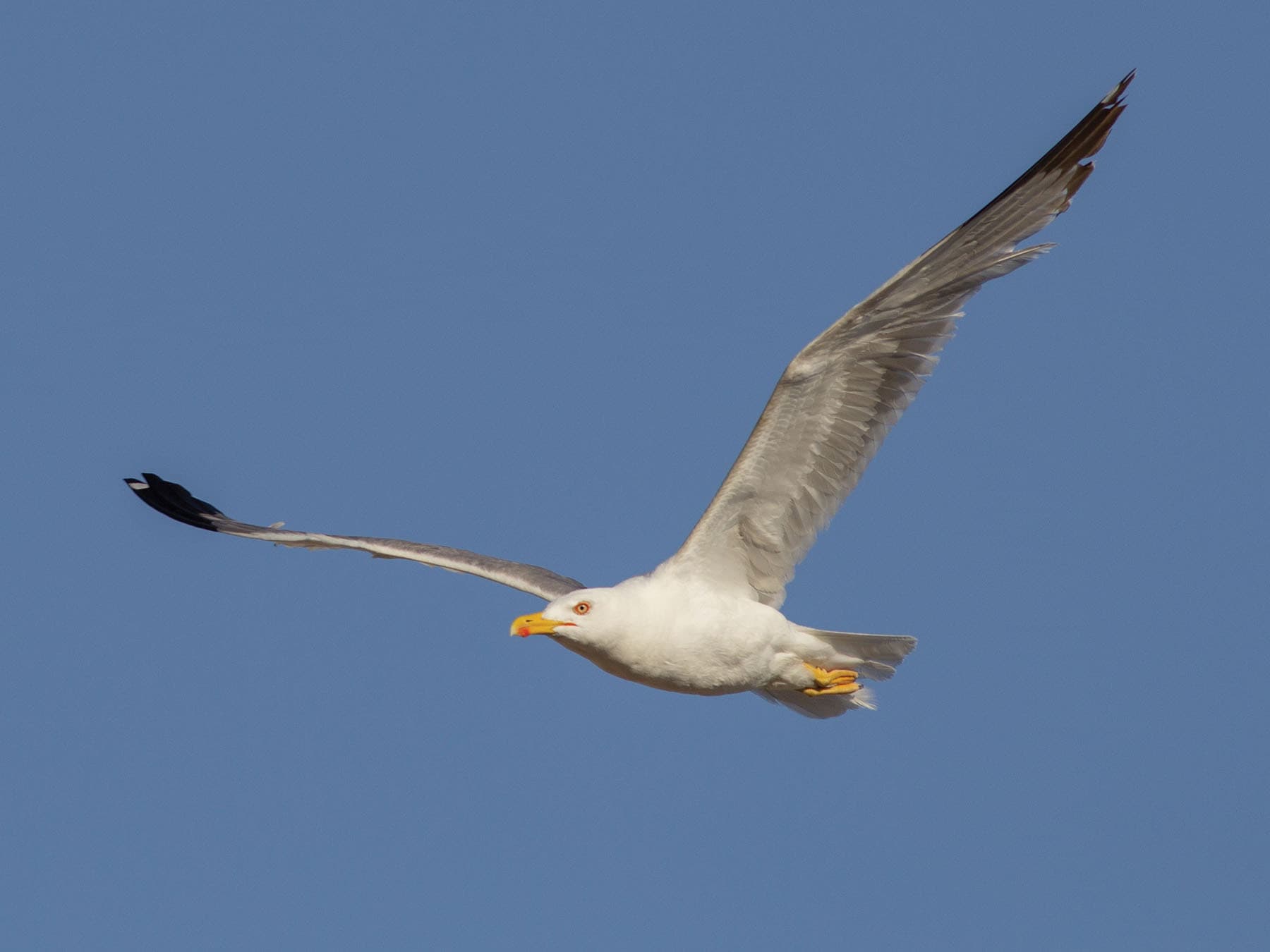
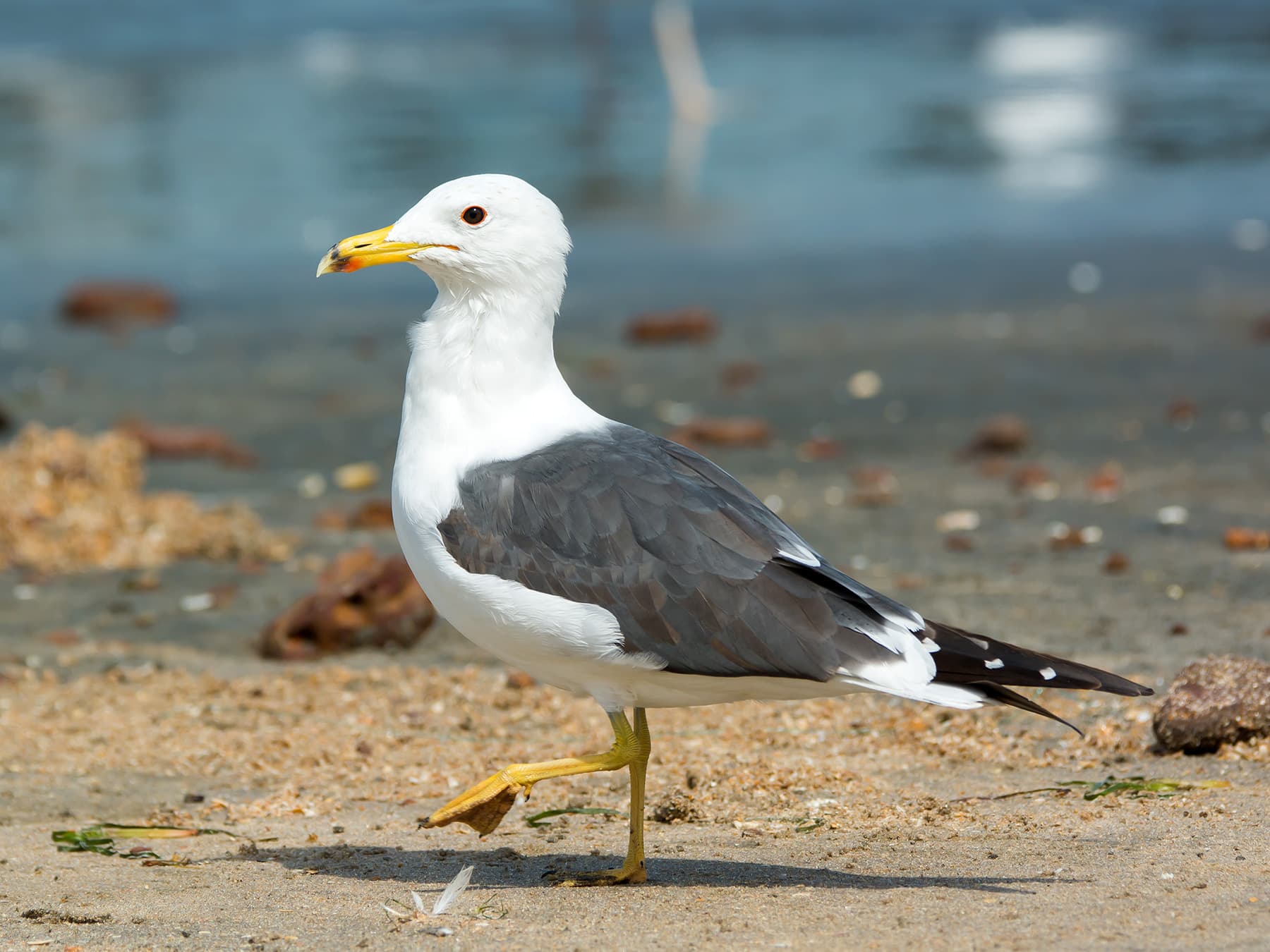
The species most likely to cause confusion are the Lesser Black-backed Gull (dark grey back, wings, and yellow legs) and the Common Gull (smaller with black eyes and yellow-green legs).
How big are Herring Gulls?
Herring Gulls are large gulls, second only to the magnificent Great Black-backed Gull.
Length
Adult Herring Gulls have a total body length of 54 to 60 centimetres.
Weight
Their weight varies from 690 grams to over 1.4 kilograms, with males as the heavier sex.
Wingspan
Herring Gulls have an impressive wingspan of 1.3 to 1.5 meters.
Its size
Adults- Length
- 55–67 cm
- Wingspan
- 130–158 cm
- Weight
- 800–1250 g
Its song and calls
The Herring Gull’s call is a quintessential seaside sound in the United Kingdom.
What sound does a Herring Gull make?
Herring Gulls make various sounds at different stages of their lives and times of the year, including a variety of shorter calls to communicate with their partners and chicks or when alarmed or threatened.
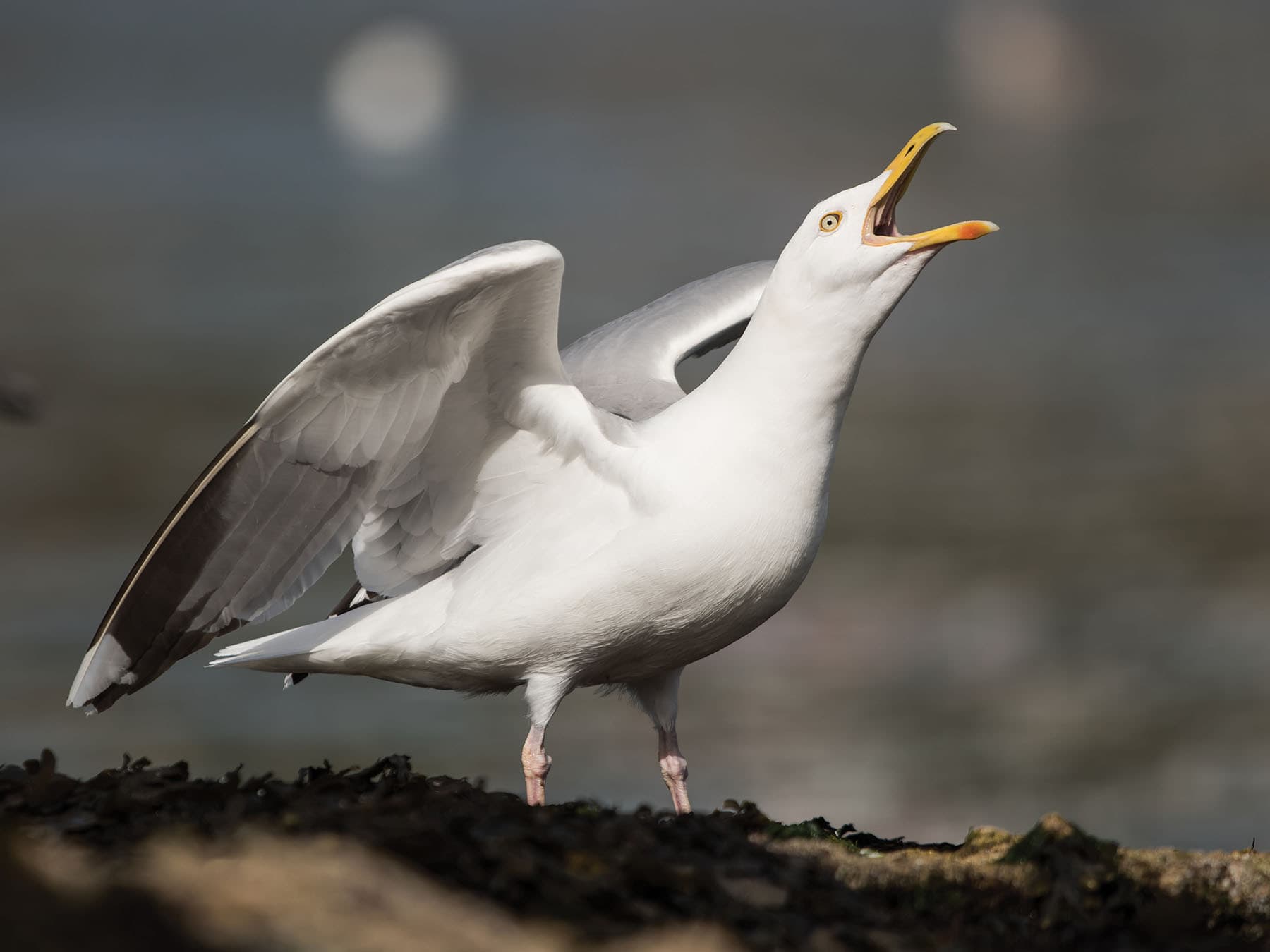
The Herring Gull’s most complex vocalisation is known as the ‘long call’ and may consist of over 25 notes. The first few notes are produced with a lowered neck and are softer. The rest are uttered with a raised head and are faster and louder.
Why do Herring Gulls scream?
Herring Gulls utter their characteristic screaming ‘long call’ when approached by other gulls near their nest or when feeding. This call serves an aggressive territorial function.
- Song and calls0:00 / 2:24
Recorded in Bretagne, France · February 2025
- Alarm call0:00 / 0:13
Recorded in Pays de la Loire, France · May 2025
When and where to see it
OctoberHere all year
Most recorded in October
- 1. Dundee7.5%
- 2. South Ayrshire7.5%
- 3. North Ayrshire5.9%
- 4. Derry5.0%
- 5. Aberdeen4.8%
Each dot is a county, state or province: the bigger and darker, the larger the bird’s share of that place’s bird records that month. Grey dots: no regular records. The ringed point is the centre of the bird’s records this month; the arrow shows how it moved since last month, and the dashed loop its path through the year. “Arrivals” colours places where it becomes regular this month (orange) or is in its last regular month (grey). GBIF eBird Observation Dataset, 2019–2024. Map data: Natural Earth, US Census Bureau; place centres © OpenStreetMap contributors.
In your area
See when the European Herring Gull is recorded in your county, state or province.
How often the European Herring Gull turns up in the UK and Ireland through the year, from birdwatchers' records.
United Kingdom
Resident · all year · most records in August
Ireland
Resident · all year · most records in August
Show as a table
| Month | United Kingdom | Ireland |
|---|---|---|
| January | 2.2% (regular) | 3.2% (regular) |
| February | 2.2% (regular) | 3.3% (regular) |
| March | 2.0% (regular) | 3.5% (regular) |
| April | 1.8% (regular) | 3.1% (regular) |
| May | 1.7% (regular) | 2.9% (regular) |
| June | 2.1% (regular) | 3.4% (regular) |
| July | 2.3% (regular) | 4.1% (regular) |
| August | 2.4% (regular) | 4.2% (regular) |
| September | 2.1% (regular) | 3.6% (regular) |
| October | 2.1% (regular) | 3.4% (regular) |
| November | 2.2% (regular) | 3.2% (regular) |
| December | 2.3% (regular) | 3.3% (regular) |
Recorded regularly in
Worldwide: recorded regularly in 38 countries
Countries where it was recorded in at least 3 of the 6 years 2019–2024. Linked countries have their own bird list.
Europe (37)
Asia (1)
Data: EOD – eBird Observation Dataset (Cornell Lab of Ornithology), accessed via GBIF.org, CC BY 4.0. Records from 2019–2024, aggregated and filtered by Birdfact. How these lists are made
What is the habitat of a Herring Gull?
Herring Gulls are most common along the coast, although they are adaptable birds that frequent larger freshwater bodies, fields and rubbish dumps inland.
What is the range of a Herring Gull?
Herring Gulls occur around the entire UK coastline and venture far inland in some areas. The species has a vast geographic range, although the European subspecies is limited to Iceland, the British Isles, and adjacent Western Europe from Germany to the Iberian Peninsula.
Where do Herring Gulls live?
Most Herring Gulls live along the coast, where they forage on the shore, in coastal towns, and in other suitable feeding grounds. They are comfortable out at sea and will feed many kilometres offshore. They also venture far inland, especially in the winter.
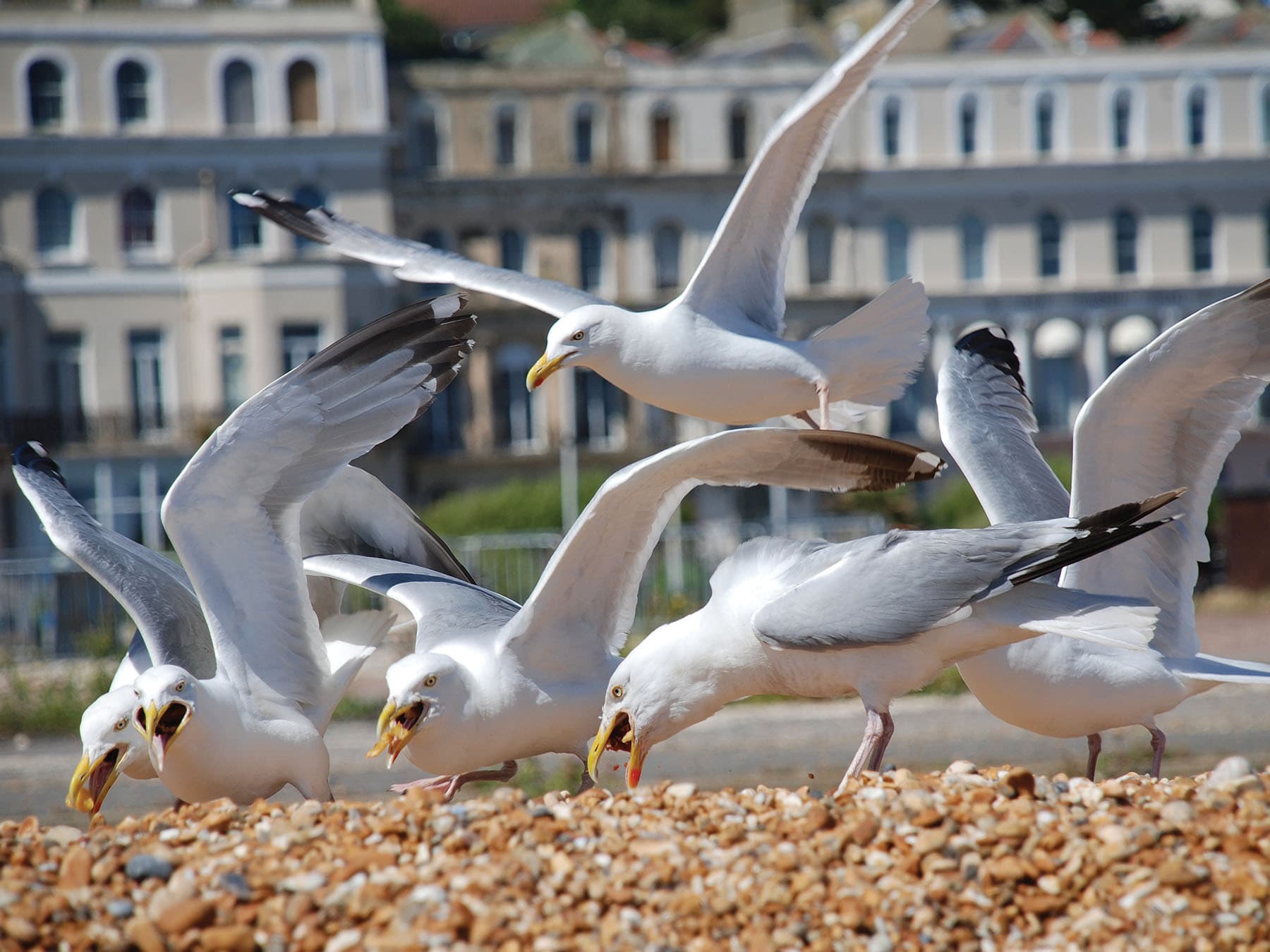
How rare are Herring Gulls?
Herring Gulls are among the most common gulls in the United Kingdom, second only to the Black-headed Gull.
Where can you see Herring Gulls in the UK?
Herring Gulls can be seen practically anywhere along the UK coastline. Look out for them inland at rubbish dumps and flooded fields.
Migration
Do Herring Gulls migrate?
The breeding population of Herring Gulls is mainly sedentary in the United Kingdom. However, their numbers swell in the winter when birds from Northern Europe arrive for the non-breeding season.
Are Herring Gulls native to the UK?
Herring Gulls are a native species in the UK, although they have recently expanded their range inland in response to dwindling natural food supplies and the allure of scraps around towns and cities.
Tips for seeing it
- Look for Herring Gulls near coastal areas, harbours, and urban centres
- Observe their behaviour around fishing boats for easy identification
- Listen for their loud, laughing 'kyow' call
- In the UK, watch for them scavenging in seaside towns
- Compare with other gull species to note distinctive size and colouration
What it eats
The Herring gull has an incredibly varied diet. They have learned to capitalise on human food and are now at home around towns and cities.
What do Herring Gulls eat?
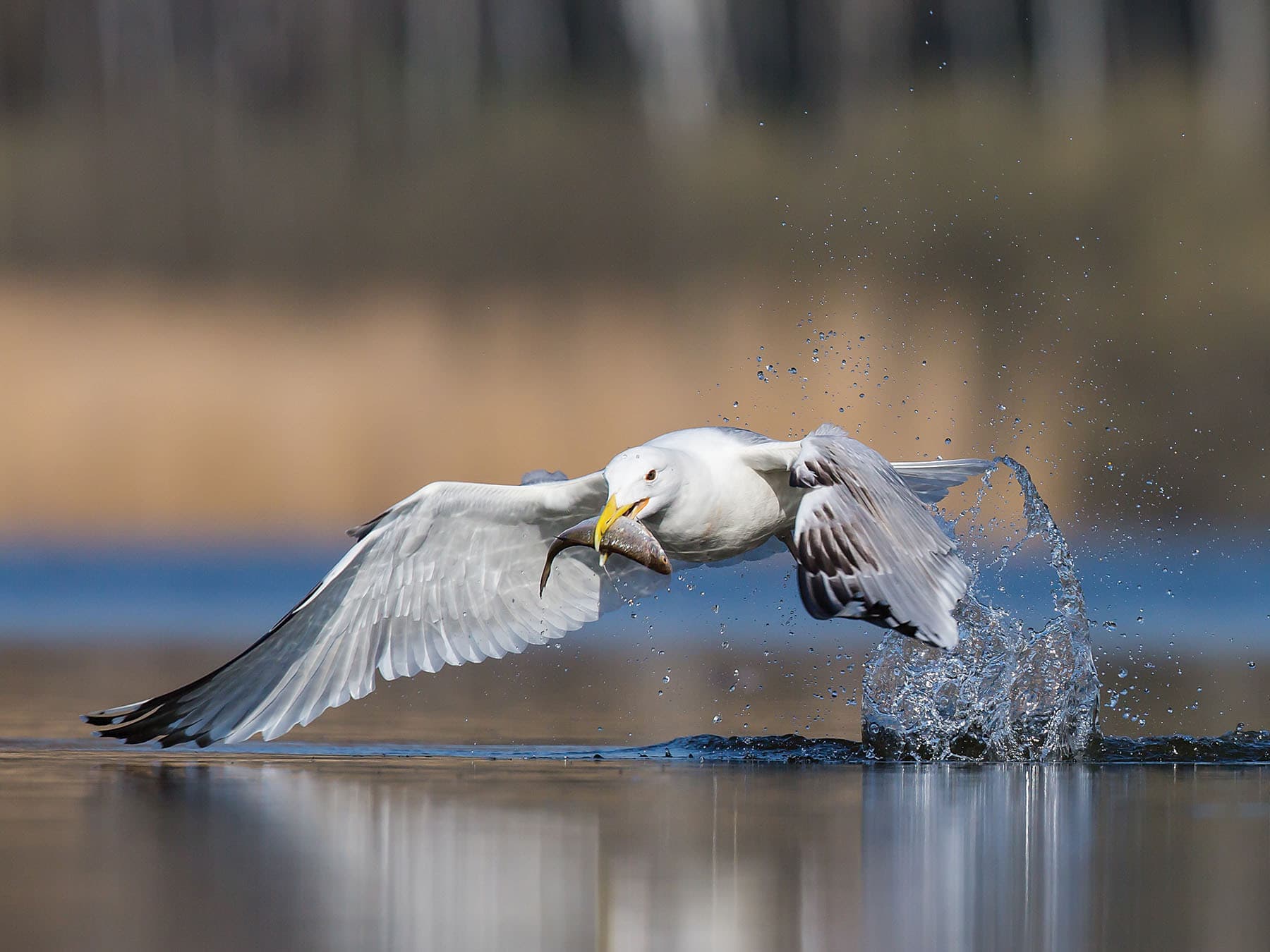
Herring Gulls eat whatever food is available. They are omnivorous and adept at finding a meal in many environments.
Herring Gulls will hunt fish and invertebrates for themselves, steal food from other birds, or scavenge for carrion. They also eat a variety of plant material, including seeds, fruit and roots.
Discarded food and scraps around towns and landfills are important food sources in many areas.
What do Herring Gull chicks eat?
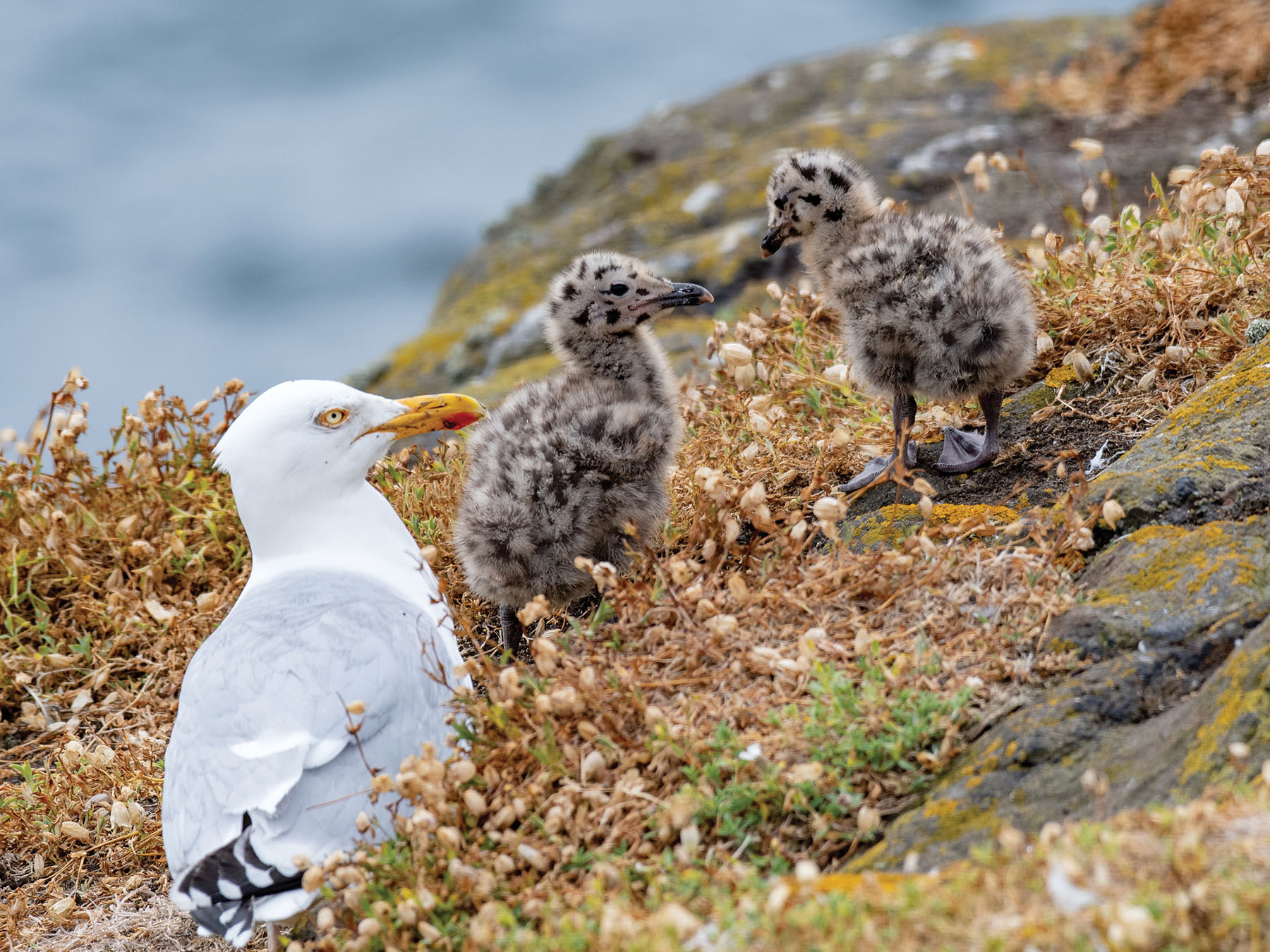
Young Herring Gulls rely on their parents for up to three months before they become independent. Both males and females provide food, which is regurgitated directly into the bills of young chicks but deposited on the floor as they grow stronger.
Older chicks (10 days +) are fed entire food items like small fish, shellfish, and scraps.
Nesting and breeding
Where do Herring Gulls nest?
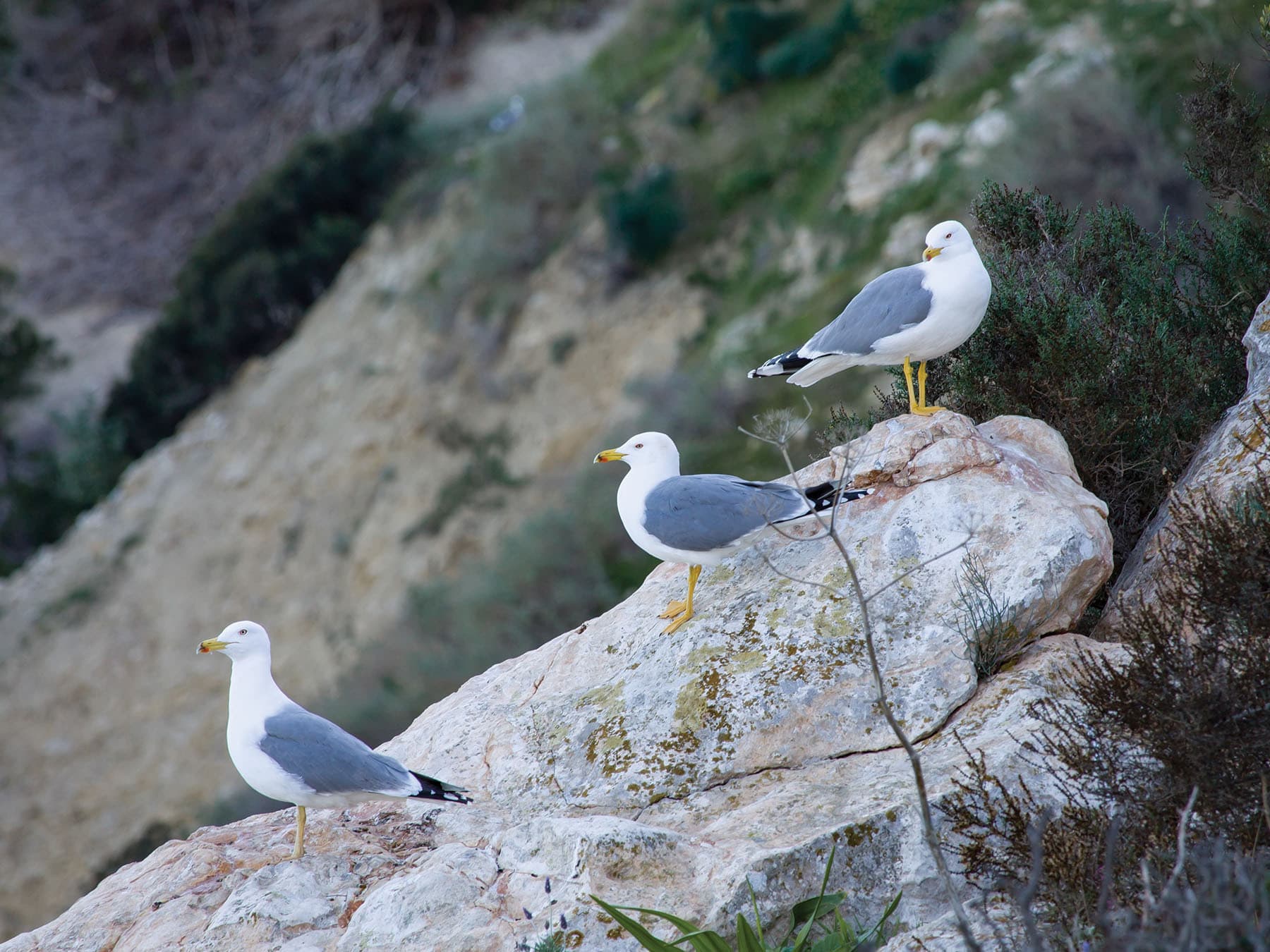
Herring Gulls nest on the ground in inaccessible areas, safe from foxes and other hungry carnivores. They prefer sites that are sheltered from the wind but provide a good lookout for threats and predators.
Typical sites include cliffs, islands, and sand dunes. These adaptable birds have learned that our rooftops provide similar protection, and many now nest on buildings in the United Kingdom.
When do Herring Gulls nest?
Herring Gulls produce a single brood each year. They typically lay their eggs toward the end of spring in May. The eggs hatch after about 29 days, and the chicks leave the nest soon thereafter.
They will remain within the nesting territory until their first flight about 50 days later.
What do Herring Gull eggs look like?
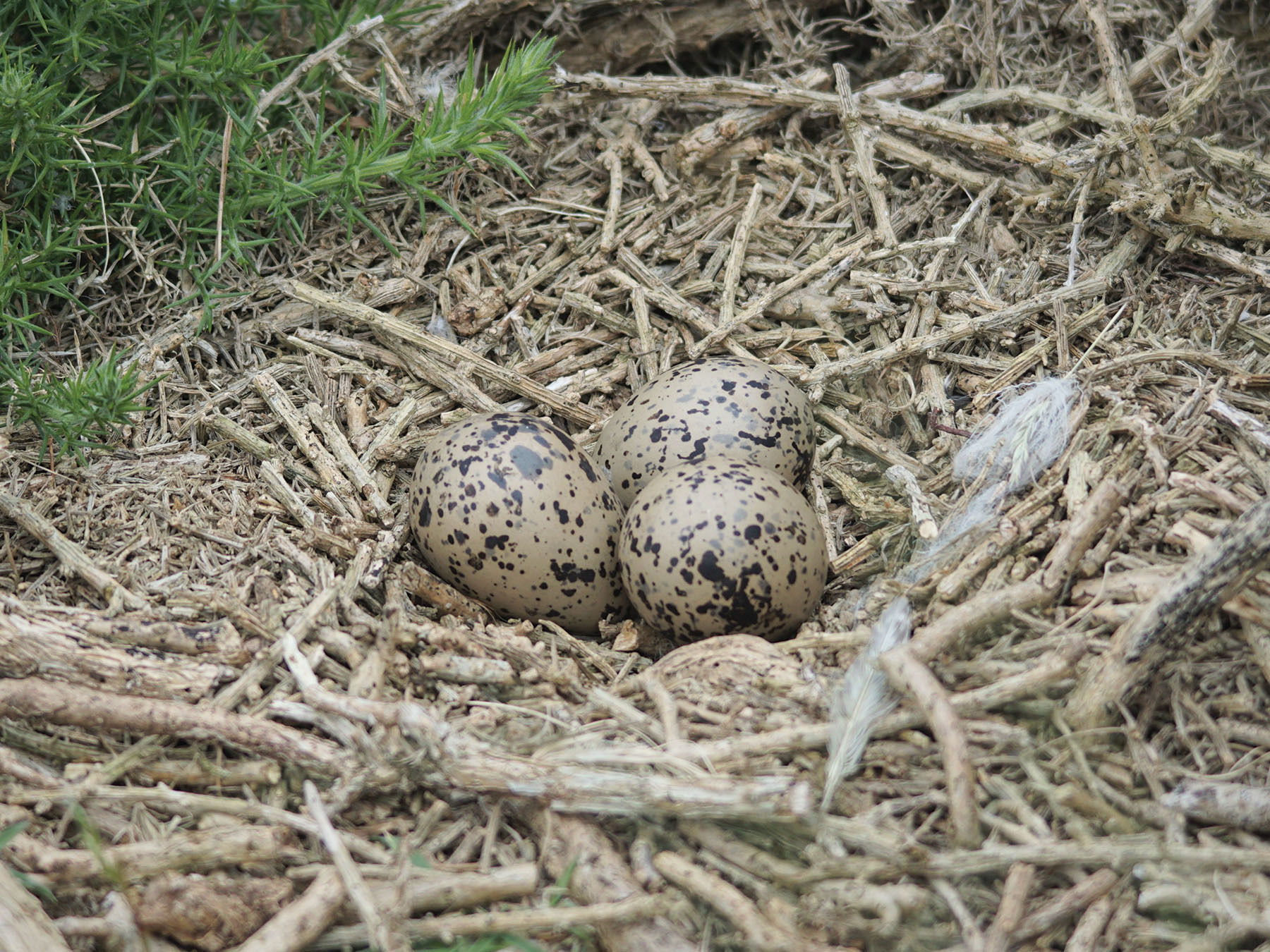
Herring Gulls lay two or three speckled olive eggs that camouflage well against natural surroundings. The eggs are large, measuring approximately 70 millimetres long and 49 millimetres wide.
Do Herring Gulls mate for life?
Herring Gulls are a monogamous species, and successful pairs will mate for life.
Behaviour
Are Herring Gulls aggressive?
Herring Gulls are highly aggressive towards other birds that approach their nest. They will also attack and even kill other chicks that wander too close. They can be surprisingly bold around humans, particularly when defending their nest or looking for a free meal.
Where do Herring Gulls sleep at night?
Herring Gulls take short naps during the day but may sleep for several hours each night. They sleep on rocky shores and beaches for most of the year but spend the night near the nest during the breeding season.
Lifespan and predators
How long do Herring Gulls live?
Herring Gulls are generally long-lived, which is vital for a species that first breeds at the age of four. Their average lifespan is approximately 12 years, but they have been known to live up to 49 years, which is impressive for any bird.
What are the predators of Herring Gulls?
Herring gull eggs and chicks are vulnerable to predation by Foxes, dogs, cats, and Great Black-backed Gulls. Adults occasionally fall prey to Peregrine Falcons and grey seals.
Are Herring Gulls protected?
Herring Gulls are protected by the Wildlife and Countryside Act 1981.
Are Herring Gulls endangered?
Despite their numbers, Herring Gulls are a red-listed species in the United Kingdom due to a precipitous 50% decline in the second half of the 20th century.
Conservation
While Herring Gulls are listed as Least Concern globally, some regional populations have declined. In the UK, they are on the Red List of conservation concerns due to significant population decreases. Urban development and changes in fishing practices have impacted their traditional habitats and food sources.
Similar birds
Often mistaken for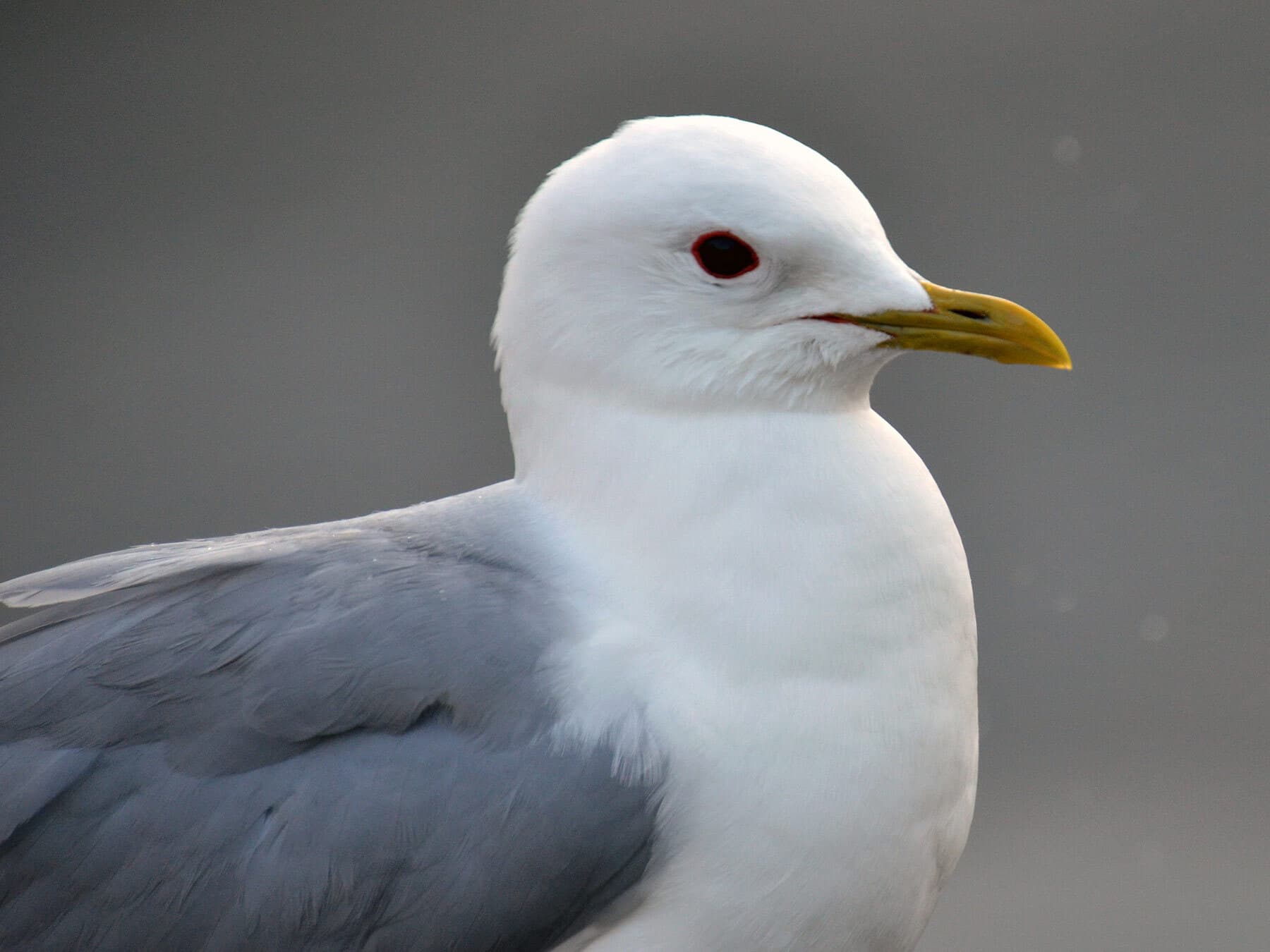
More photos
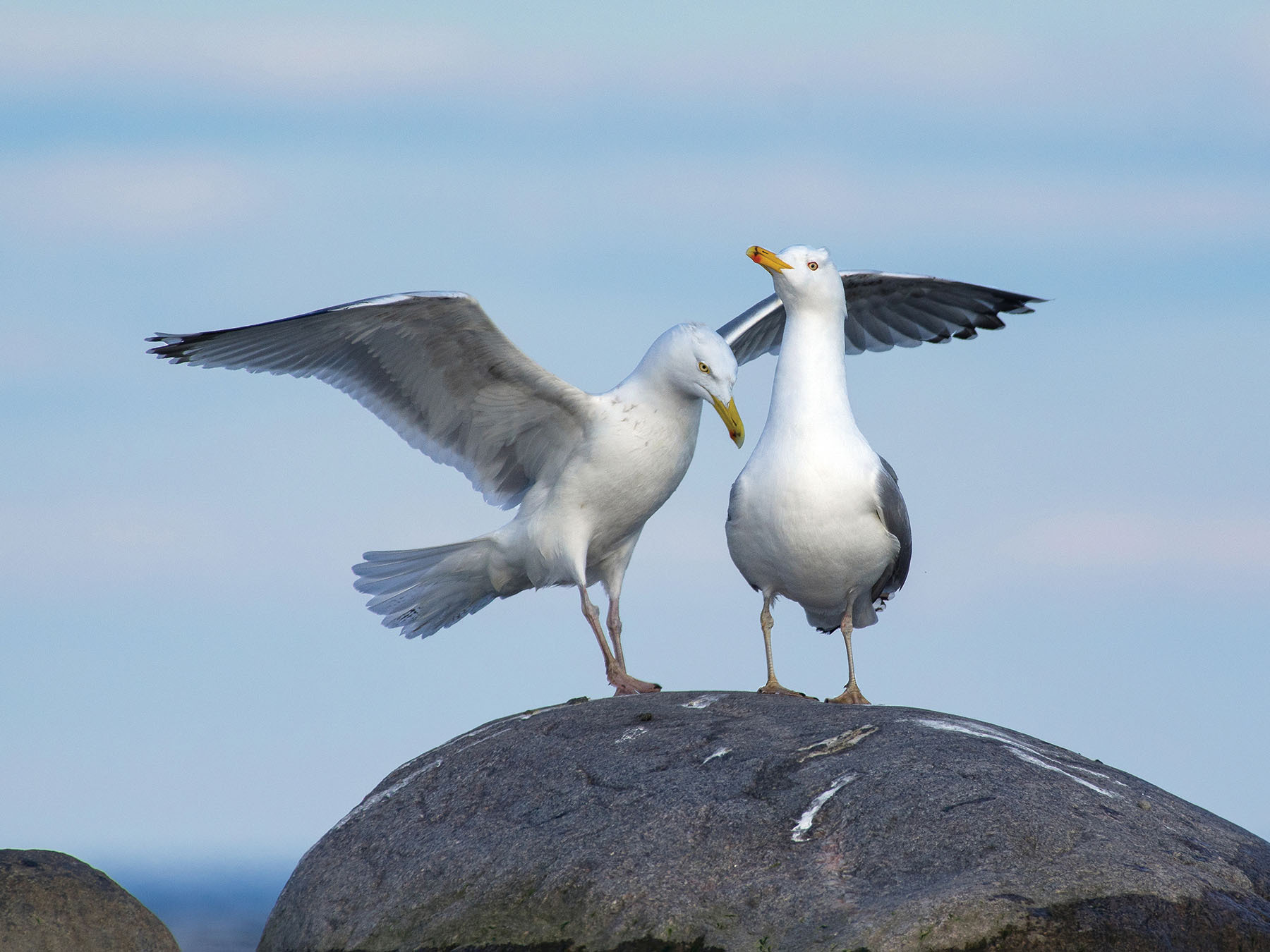
7 photos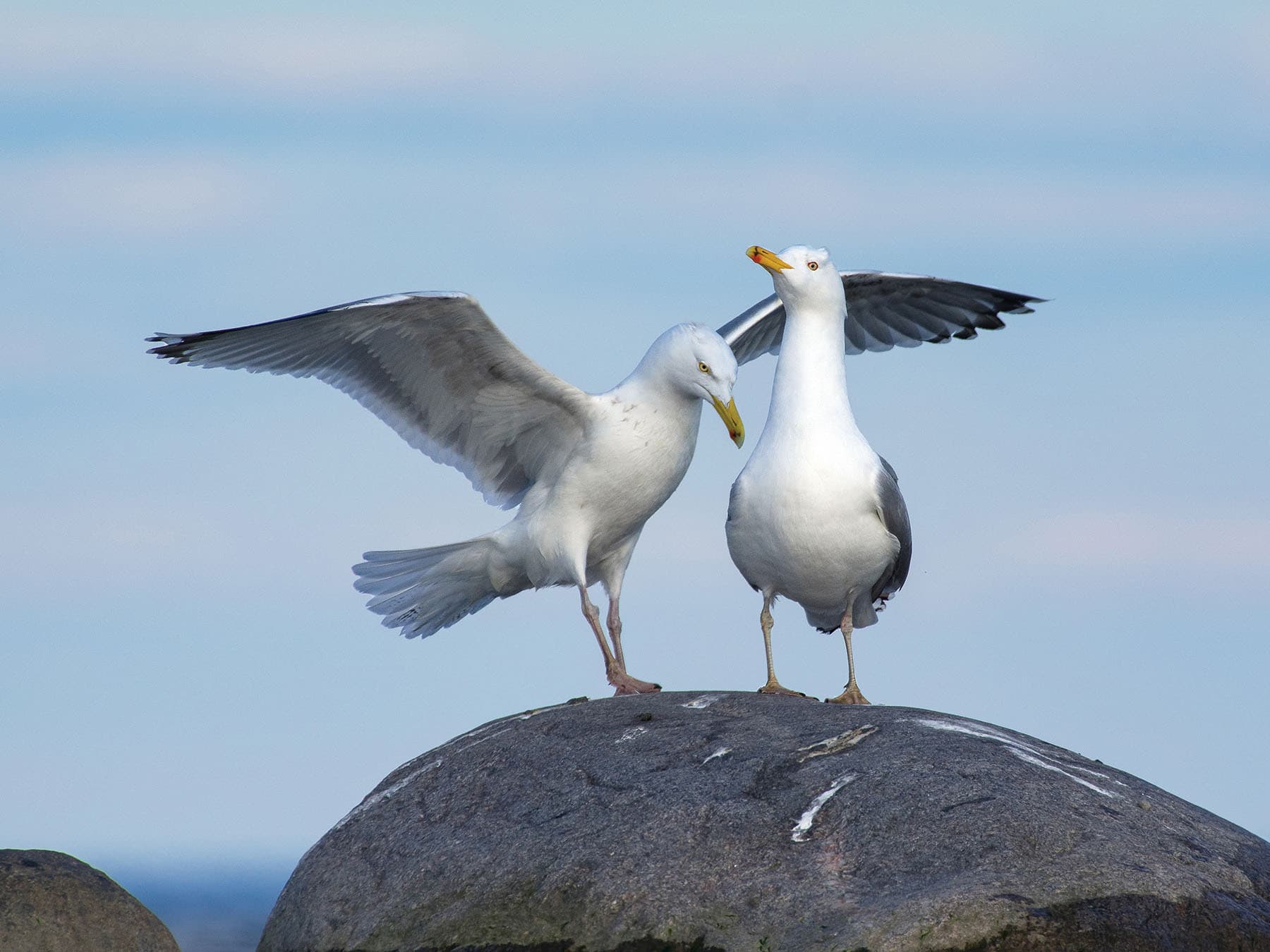 A pair of Herring Gulls during courtship
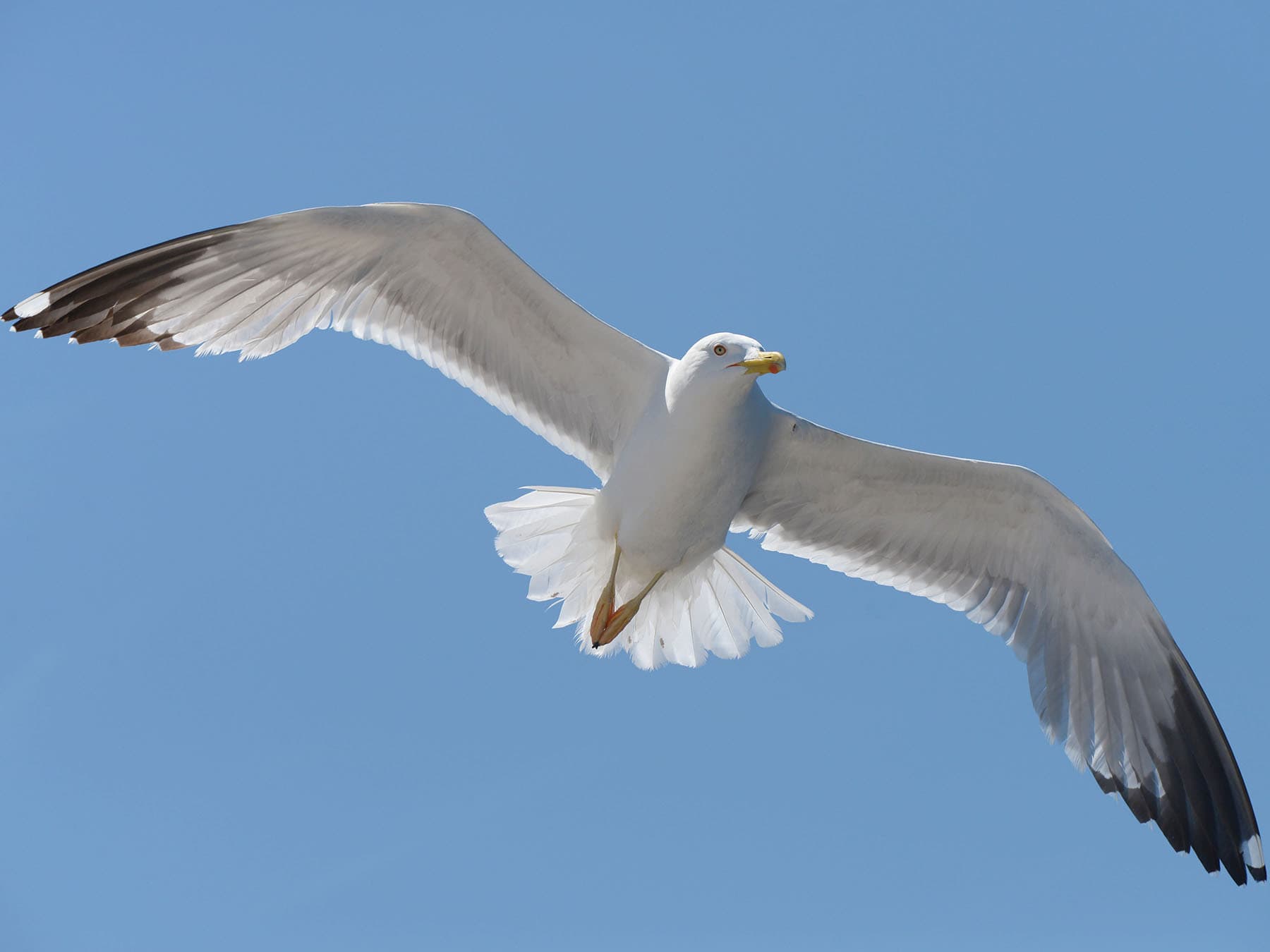 Close up of a Herring Gull in flight, from below
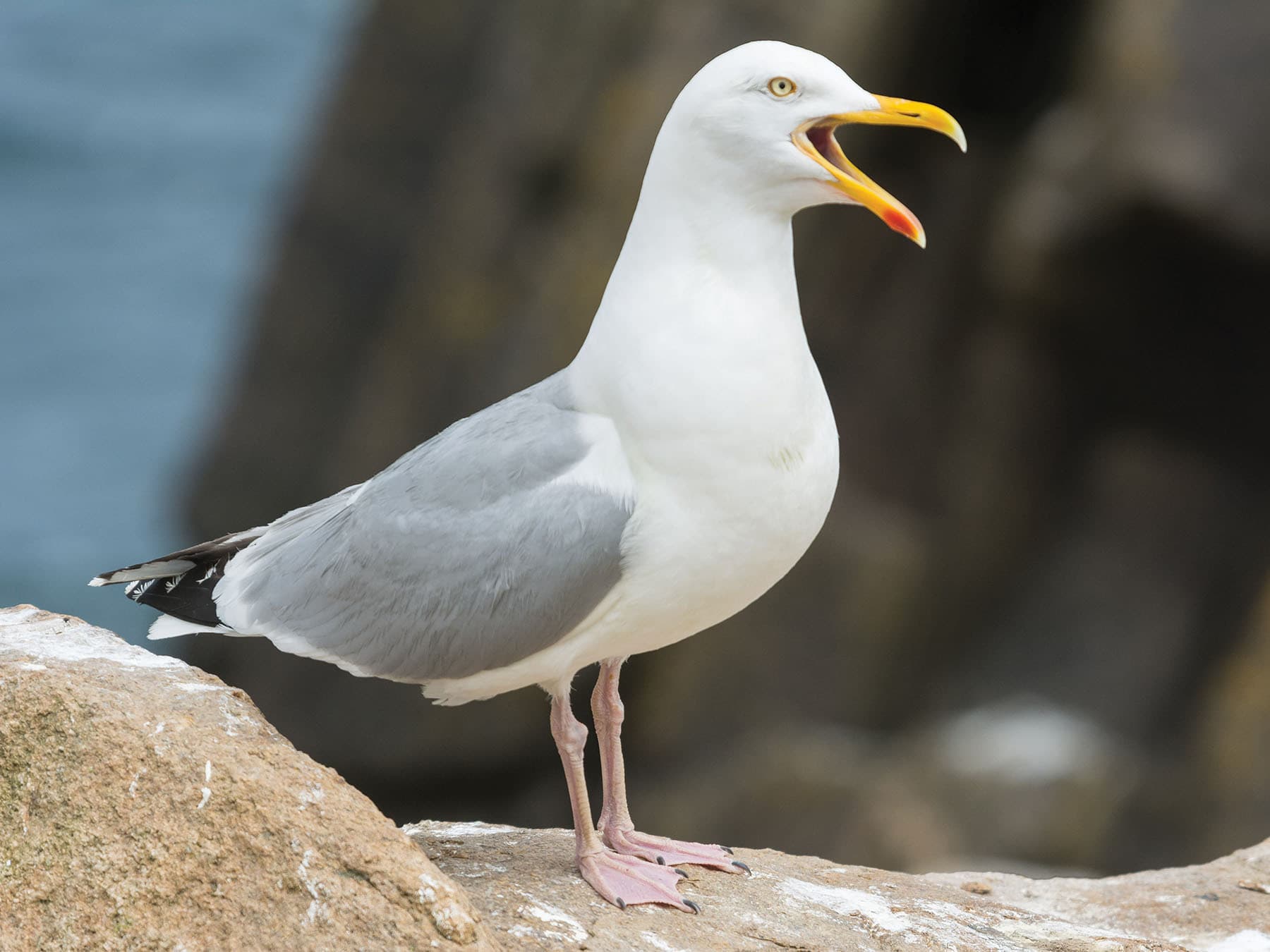 Herring Gulls are a loud gull species
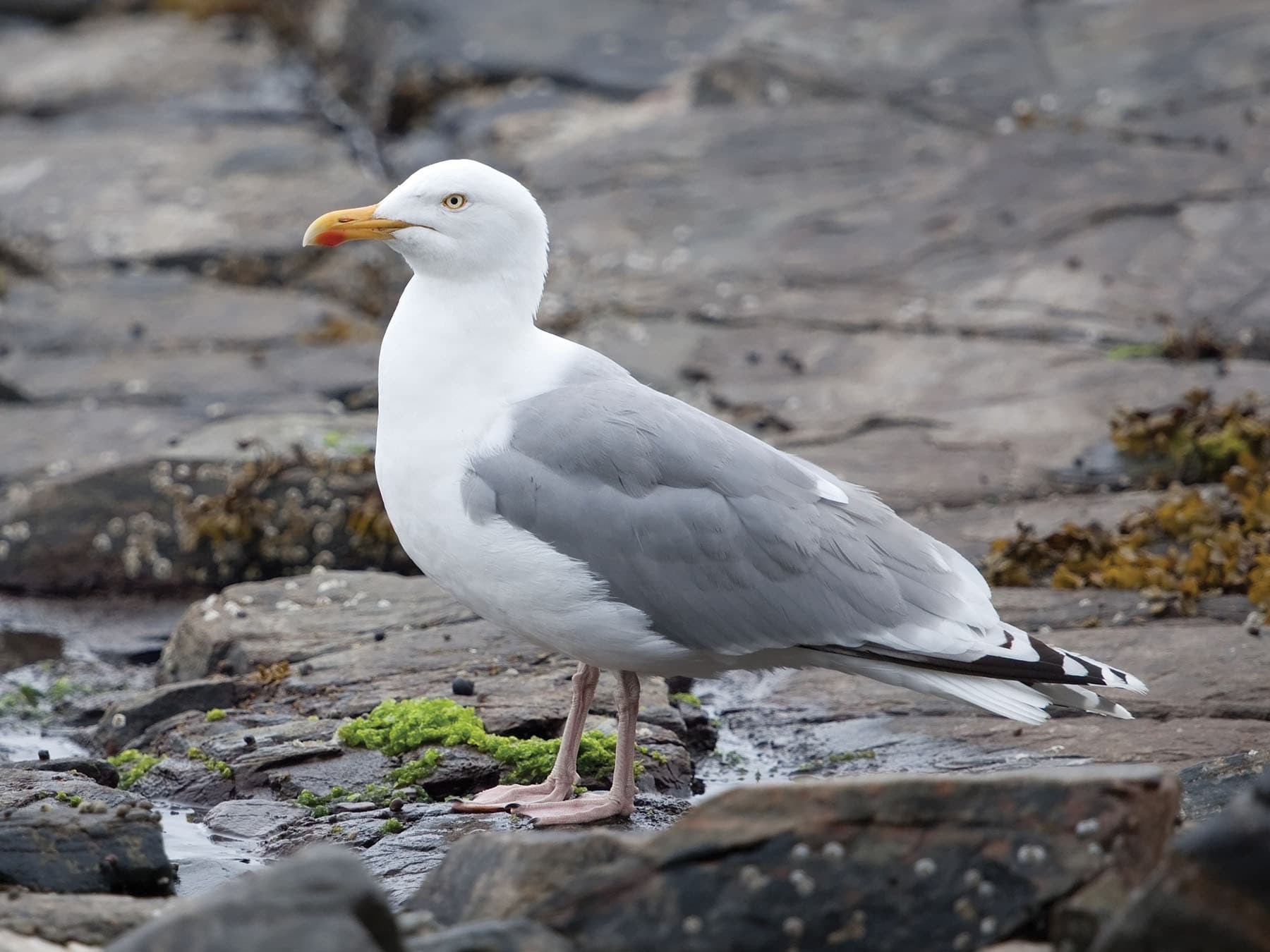 Herring Gull Summer Plumage (Breeding)
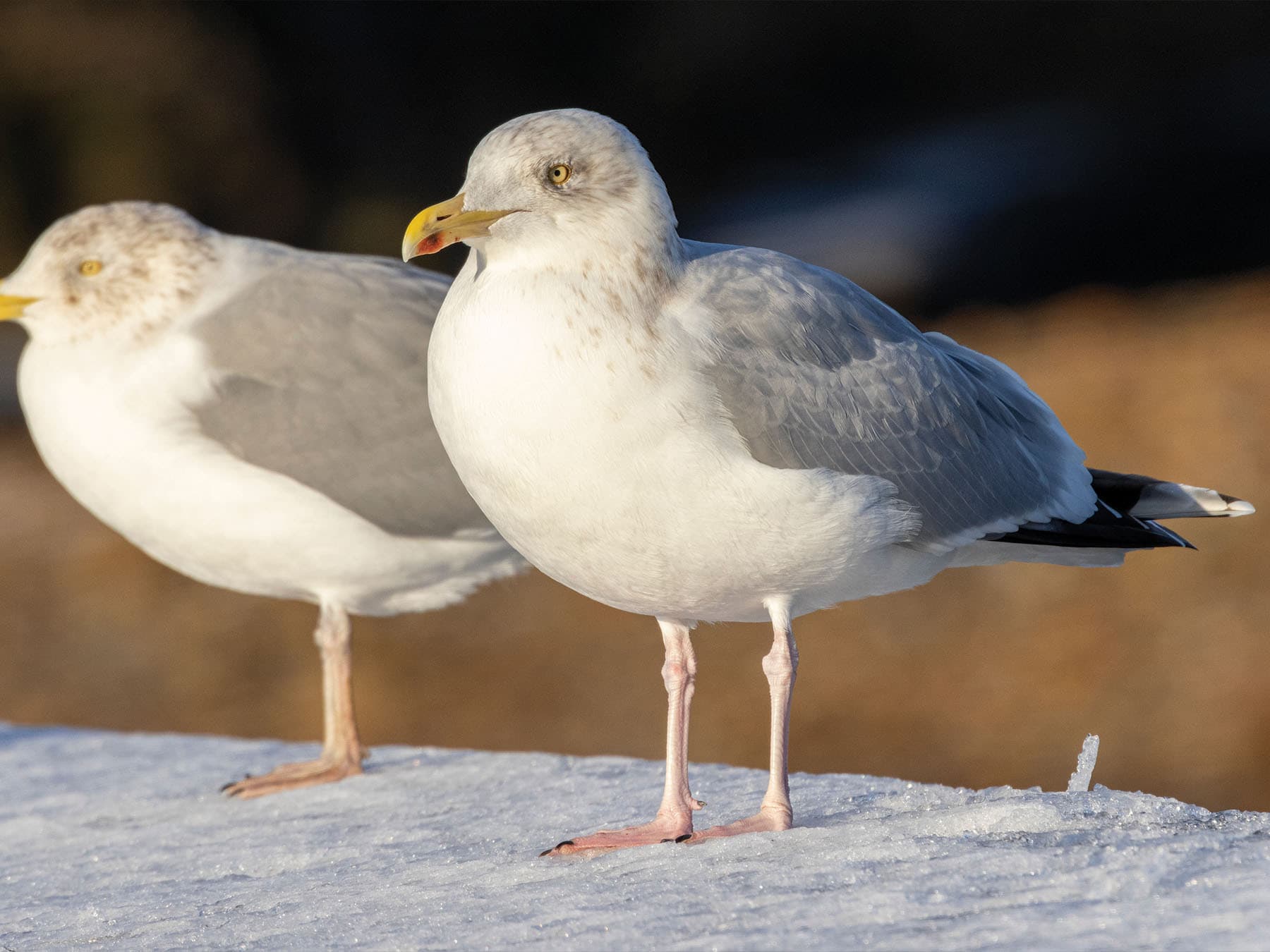 Herring Gull Winter Plumage (non breeding) - notice the light brown mottling
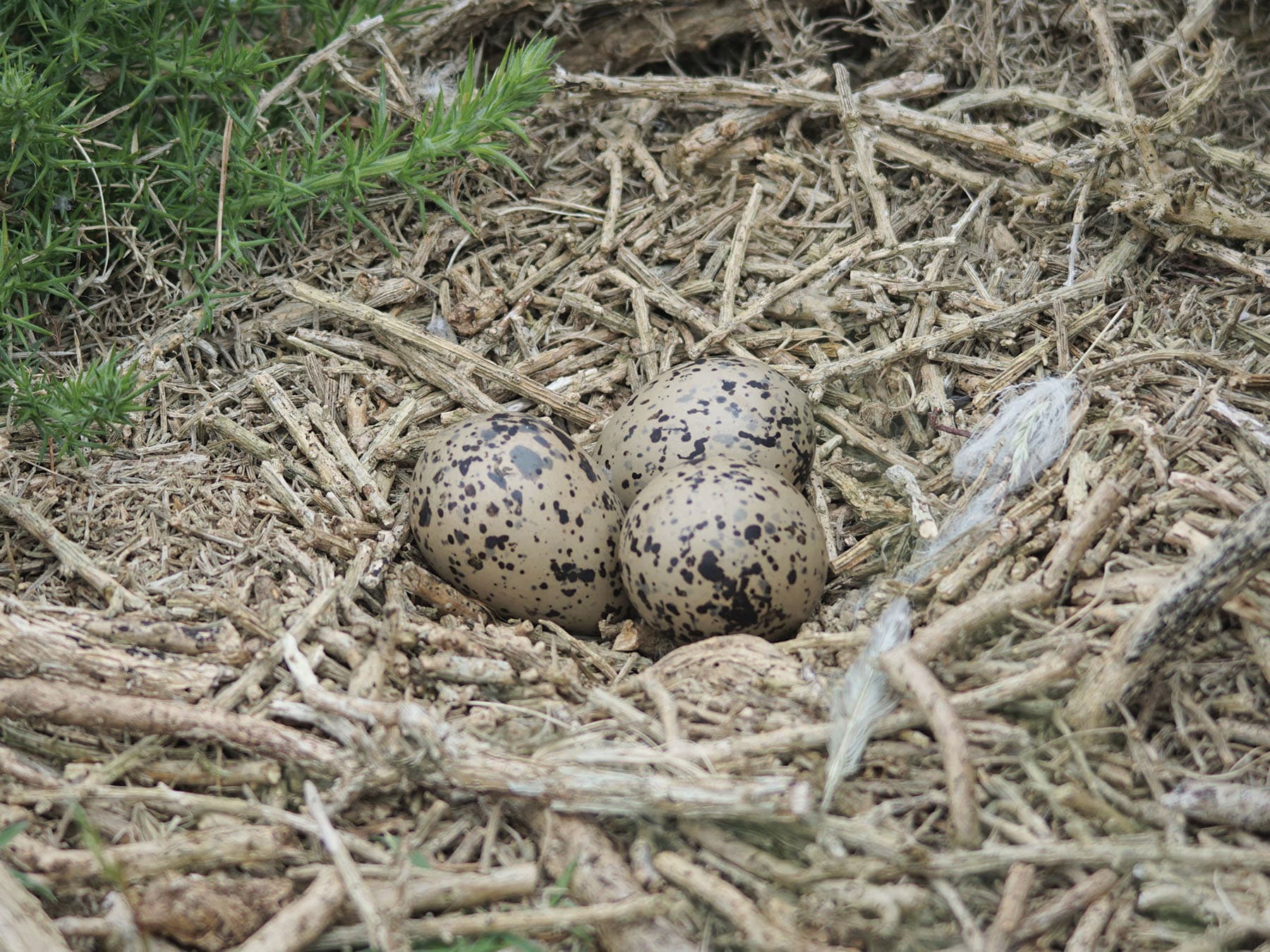 The nest of a Herring Gull, with three eggs inside
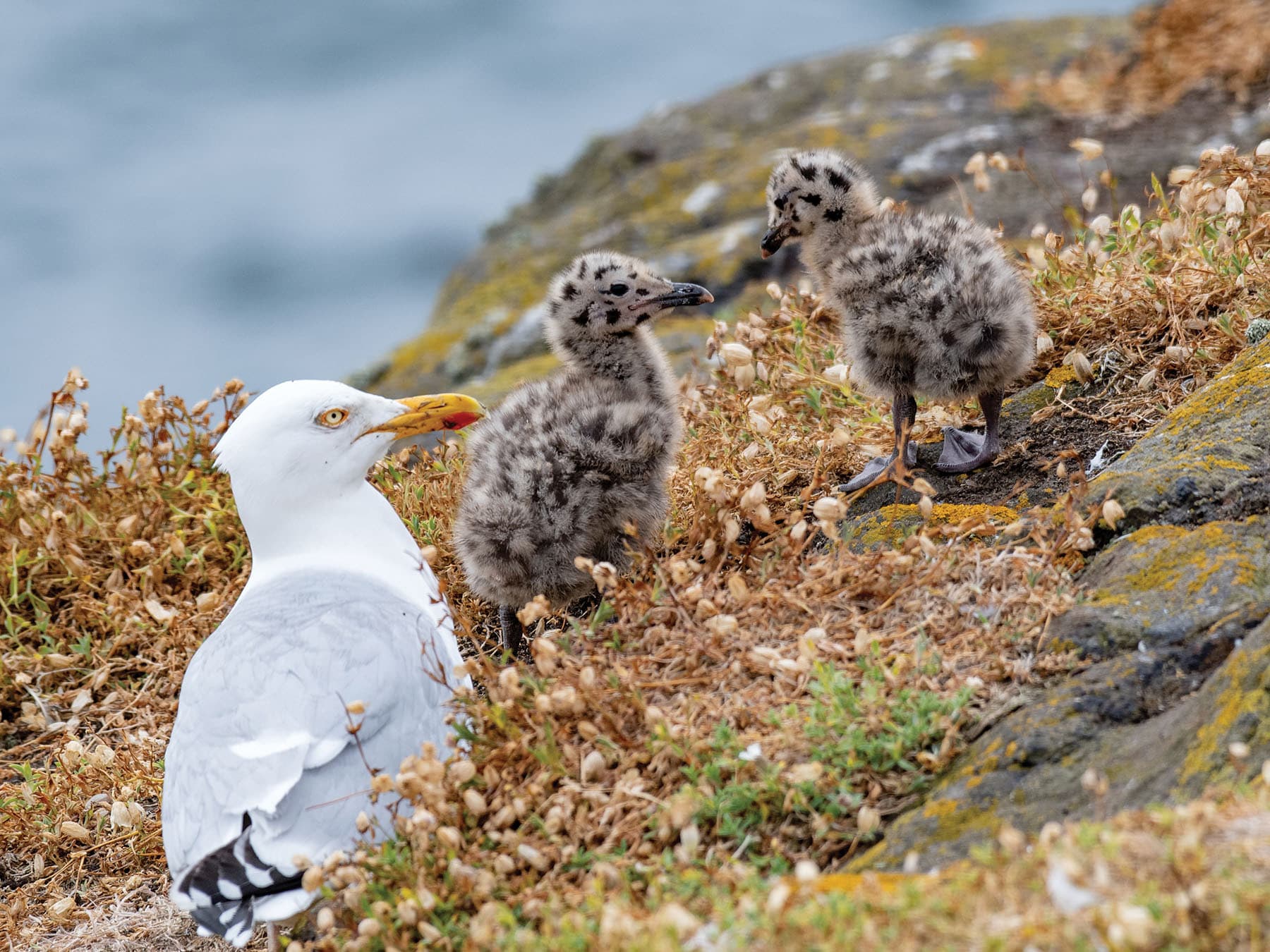 Adult Herring Gull with two young fluffy chicks
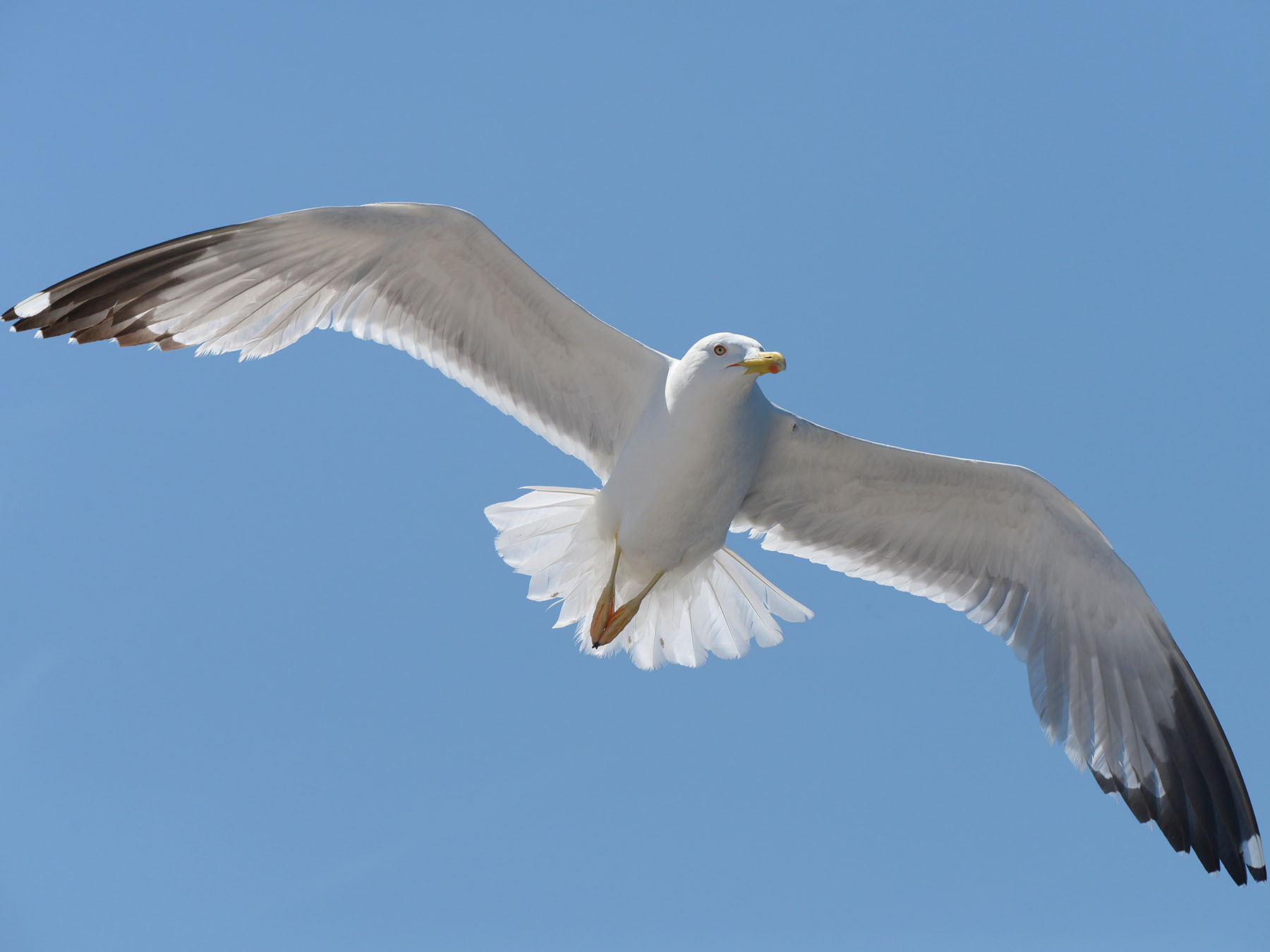
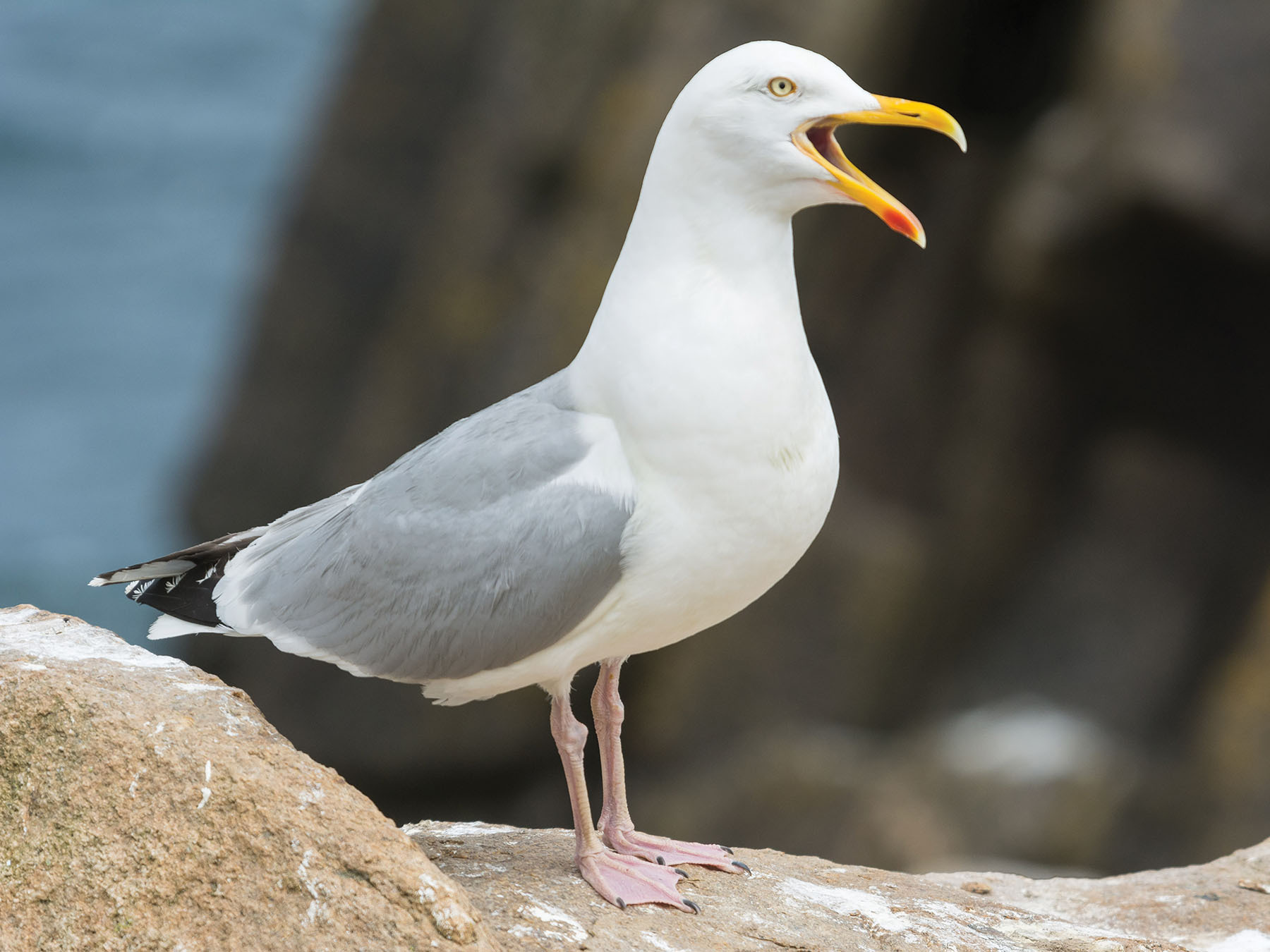
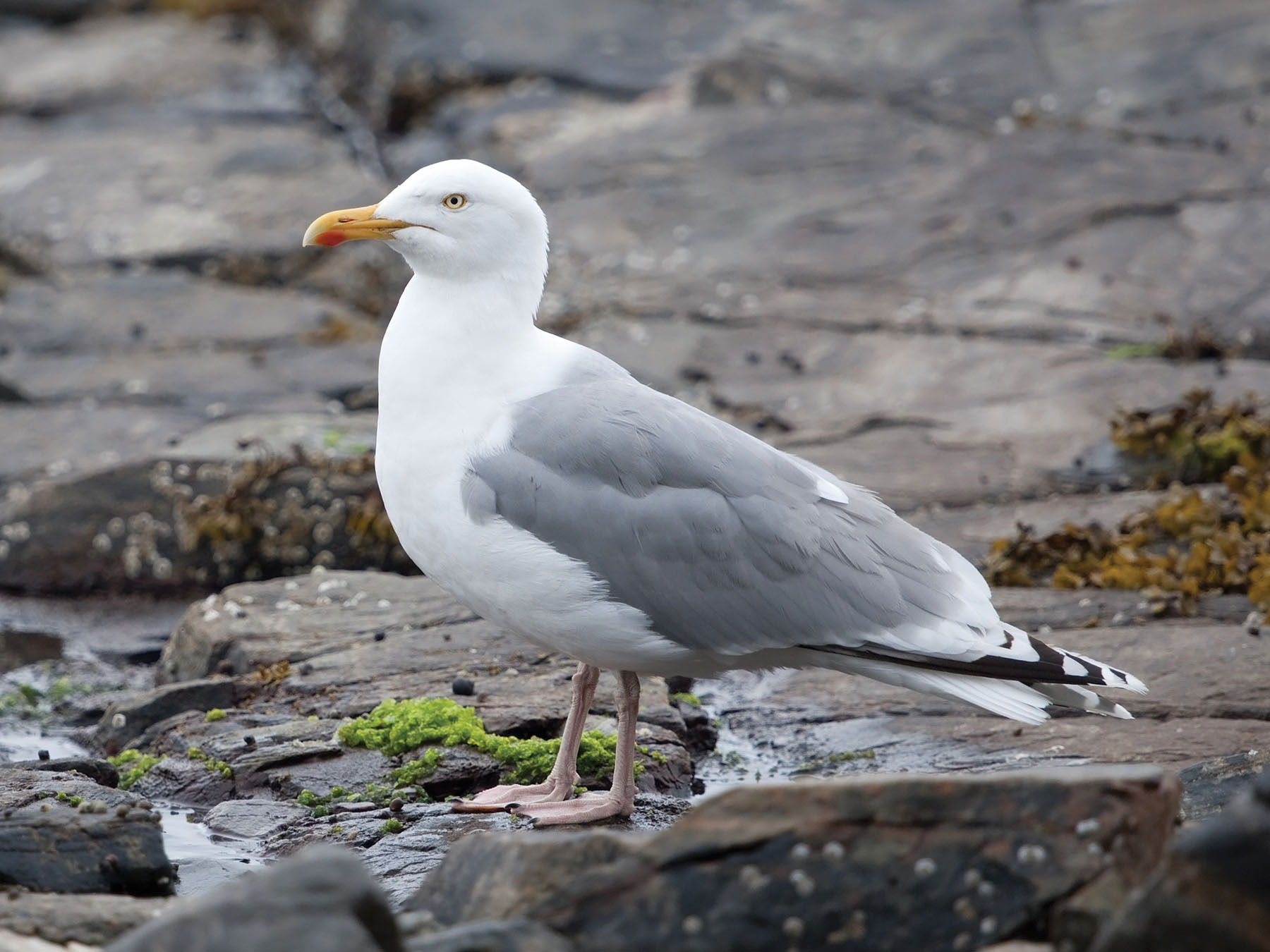
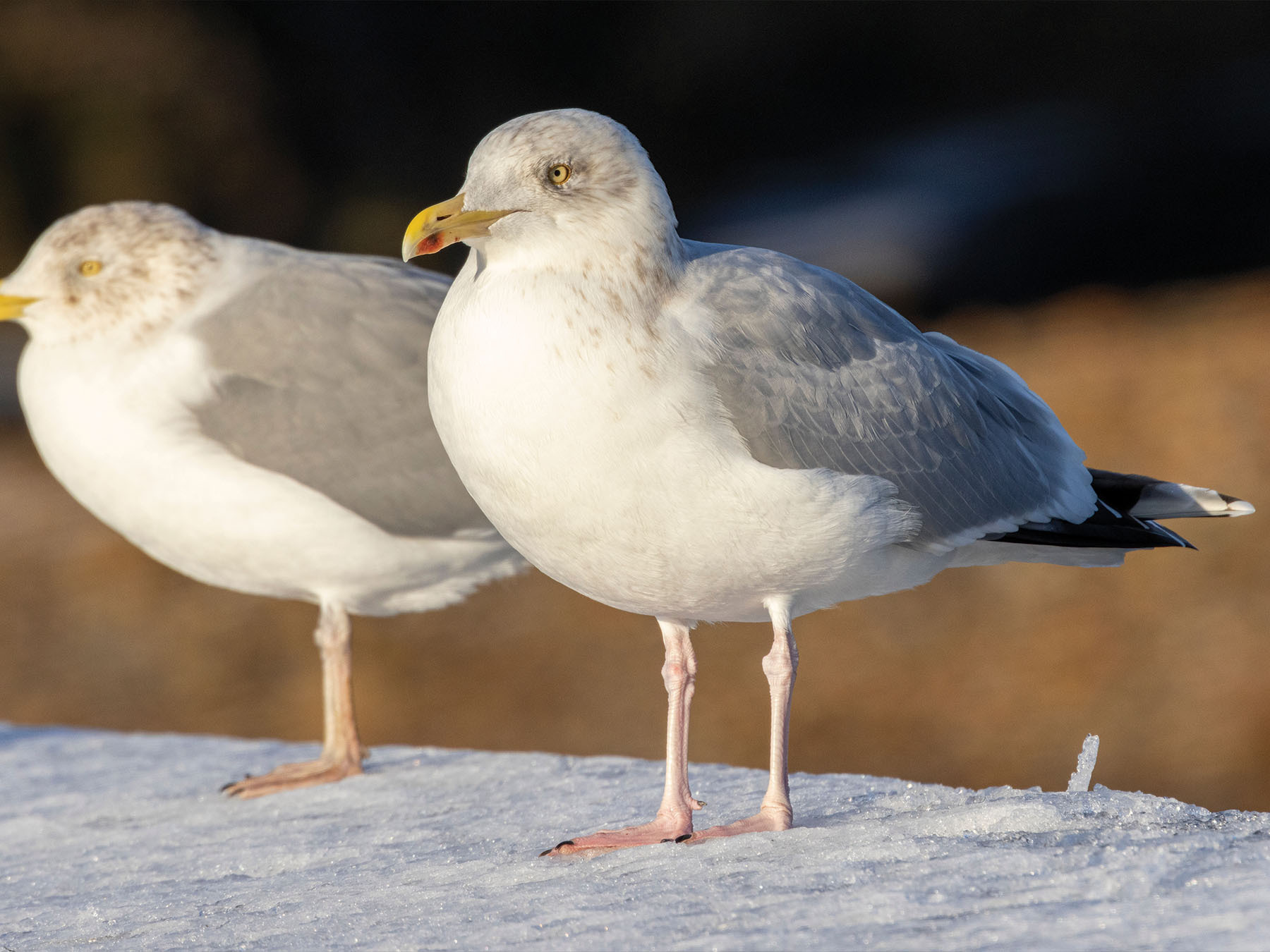
European Herring Gull guides
6 guides- What Do Seagulls Actually Eat? Diet Secrets of These Clever Scavengers
- Do Seagulls Migrate? (All You Need To Know)
- Baby Seagulls: All You Need to Know (with Pictures)
- Seagull Nesting Secrets: Unveiling the Hidden Sanctuaries by the Sea
- What is a Group of Seagulls Called? (Complete List + Why?)
- How Long Do Seagulls Live?
Quick facts
- Length
- 55–67 cm
- Wingspan
- 130–158 cm
- Weight
- 800–1250 g
- Lifespan
- 20–30 years
- Family
- Gulls & Terns
- Migration
- Partial migrant
- Global status (IUCN)
- Least Concern
- World population
- 1,060,000 - 1,220,000 mature individuals
- Population trend
- Decreasing
- Also called
- Herring Gull
- Scientific name
- Larus argentatus
Questions
4Why are Herring Gulls called seagulls?
Herring Gulls and many other gull species are often known as seagulls simply due to their association with the coast. This old name is only partially accurate for describing Herring Gulls due to their habit of wintering inland.
Are Herring gulls vermin?
Herring Gulls are not classed as vermin. Their numbers have fallen dramatically in recent times, and they are deservedly protected by the Wildlife and Countryside Act. As such, harming them or interfering with their nests, eggs, or chicks is an offence.
Do Herring gulls eat puffins?
Herring Gulls do not kill live adult Puffins, although they may feed on dead or dying individuals. The gulls will, however, steal puffin eggs or eat young chicks that leave their nest burrows.
Should you feed Herring gulls?
Feeding Herring Gulls is bad for birds and bad for people. This practice encourages begging and food stealing, and rarely provides the balanced diet they require.
Sources
3- 1BirdLife International. 2021. Larus argentatus. The IUCN Red List of Threatened Species 2021: e.T62030608A206585142. Source (opens in a new tab)
- 2BirdLife International. 2021. Larus argentatus. The IUCN Red List of Threatened Species 2021: e.T62030608A206585142. Source (opens in a new tab)
- 3BirdLife International. 2021. Larus argentatus. The IUCN Red List of Threatened Species 2021: e.T62030608A206585142. Source (opens in a new tab)

Checked by
Nathan Cope, founder and editor
Nathan founded Birdfact and leads its writers and contributors in the UK, the US and Canada. He has watched and studied birds for more than ten years, and checks every article and species guide before it’s published.