
Common Gull
Mew Gull · Larus canus
By the Birdfact teamChecked by Nathan Cope
On this page15 sections
How to recognise it
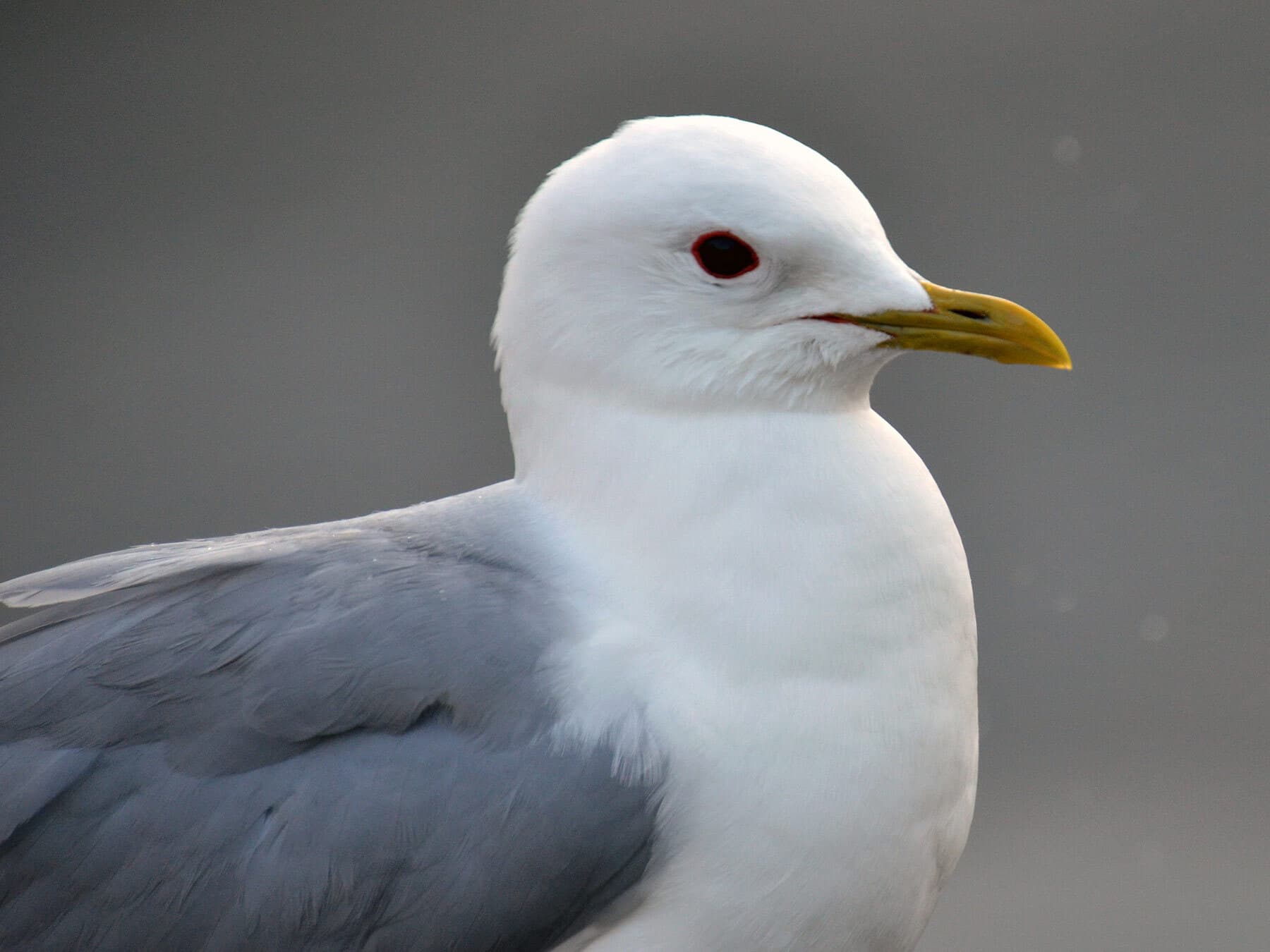
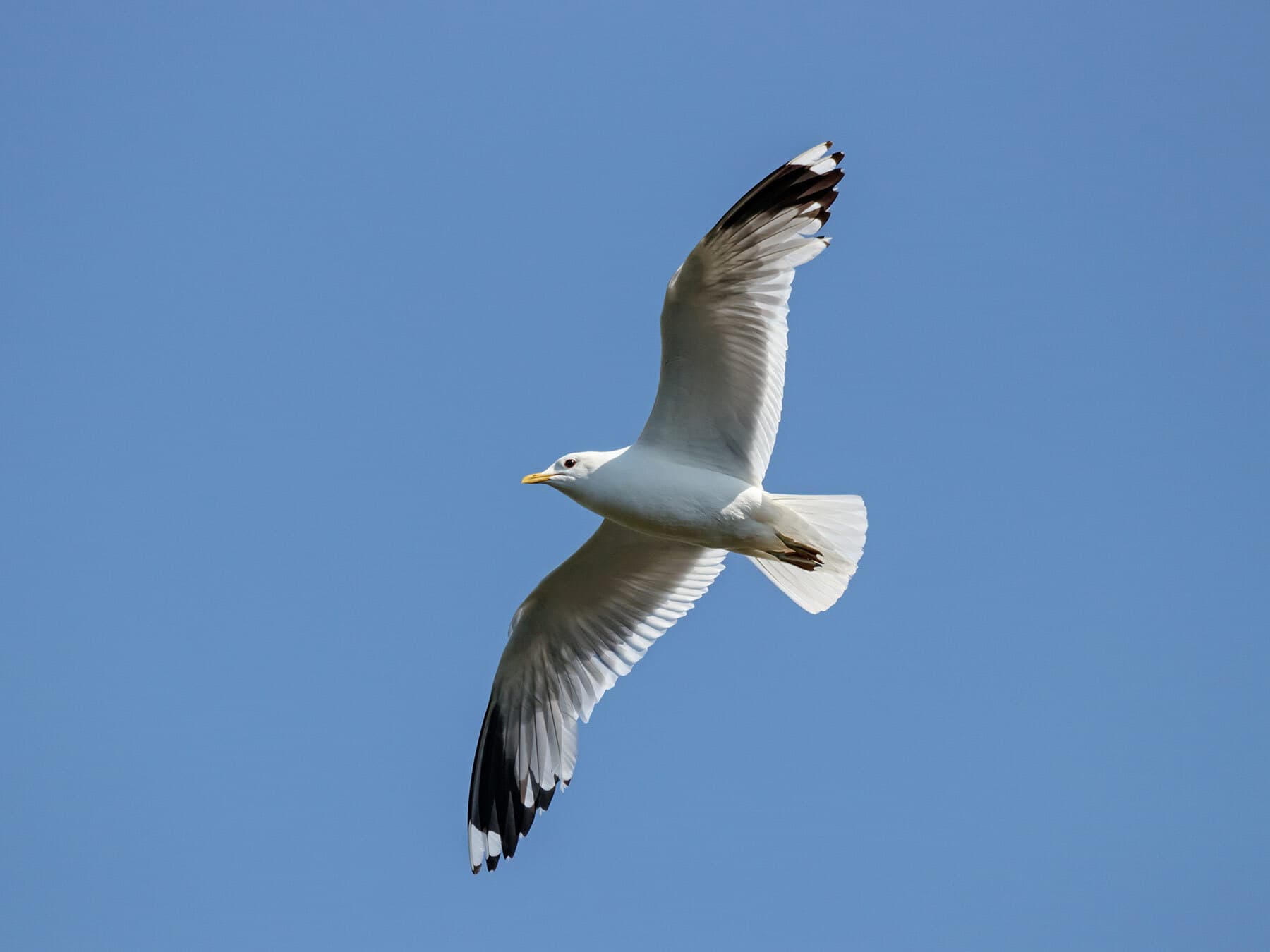
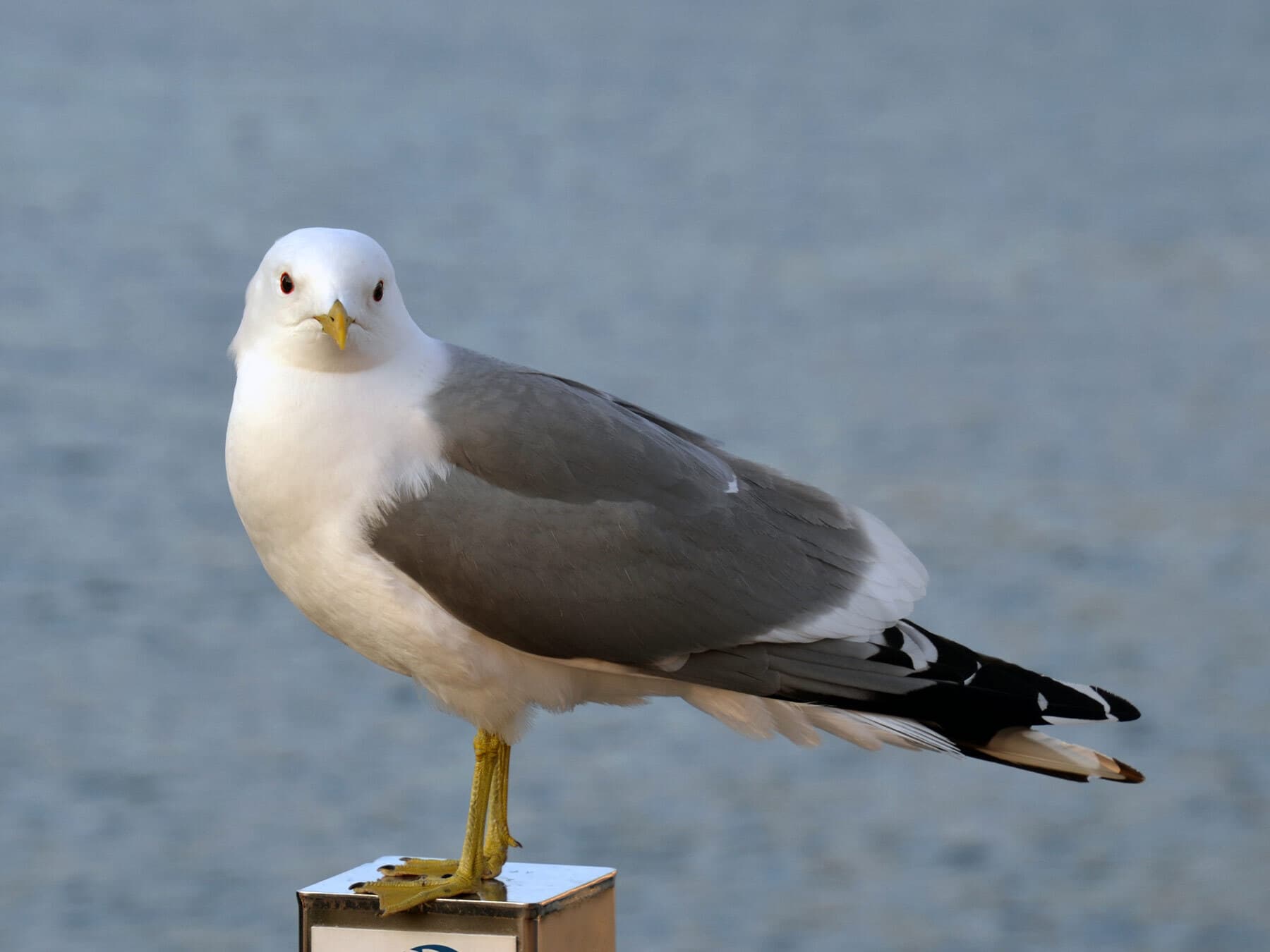
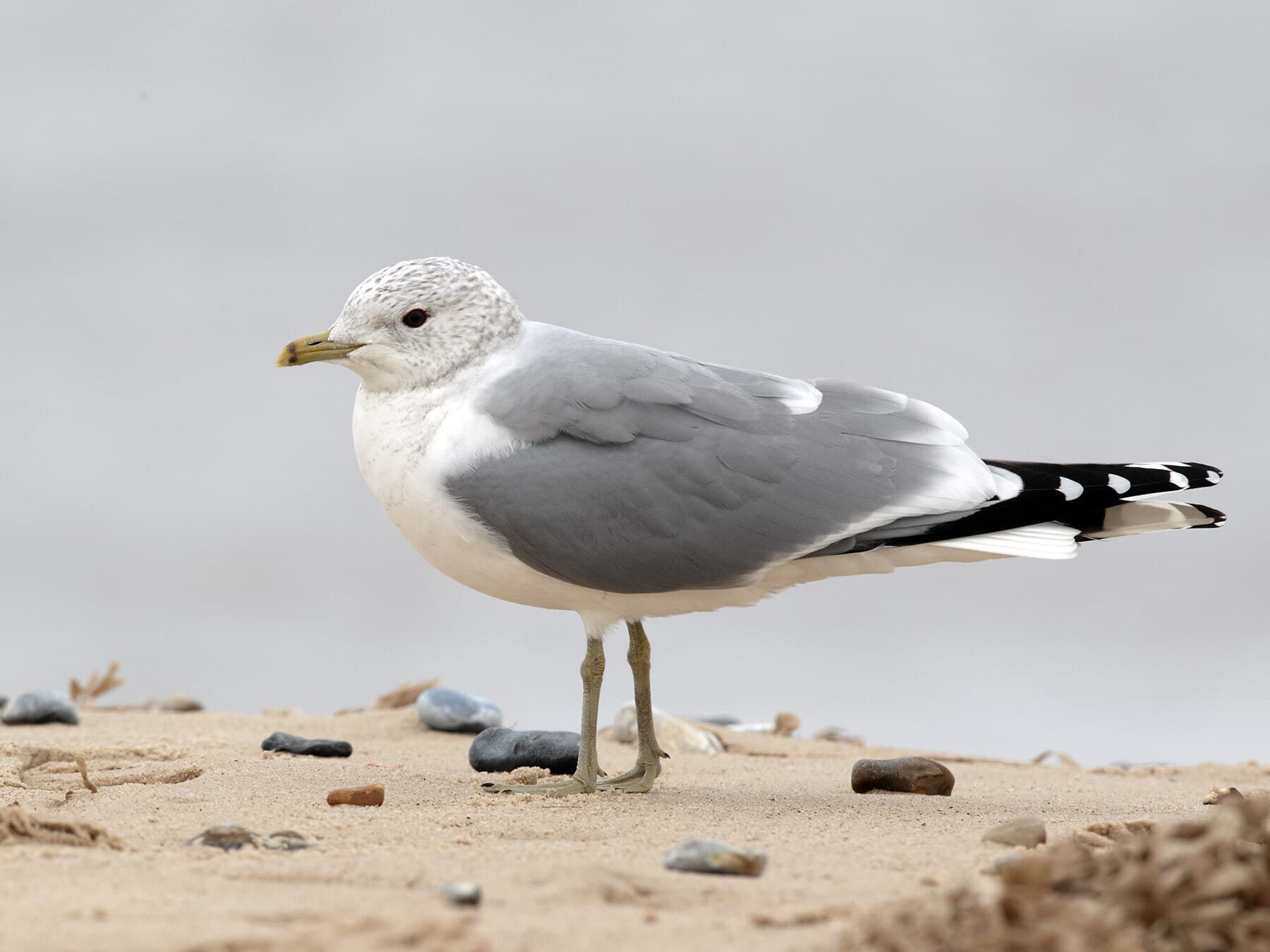
The Common Gull has a white head and underparts, with a pale grey back and wings. Its wingtips are distinctively black, creating a striking contrast. The bird's yellow bill often features a dark ring near the tip, while its legs can range from greenish to yellow.
Both sexes share similar plumage, although males are slightly larger than females. The iris is dark with a red orbital ring which is not apparent in winter plumage.
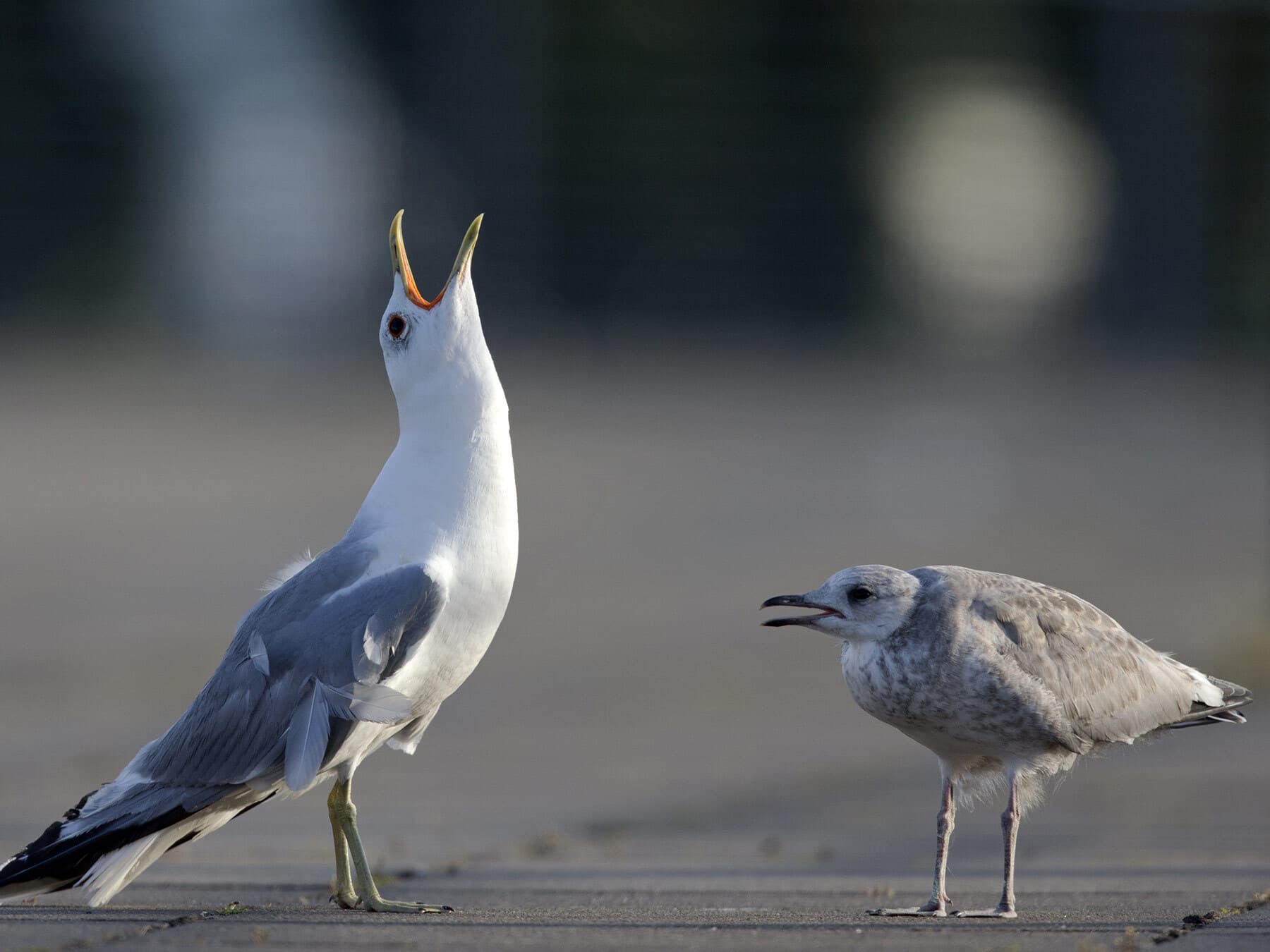
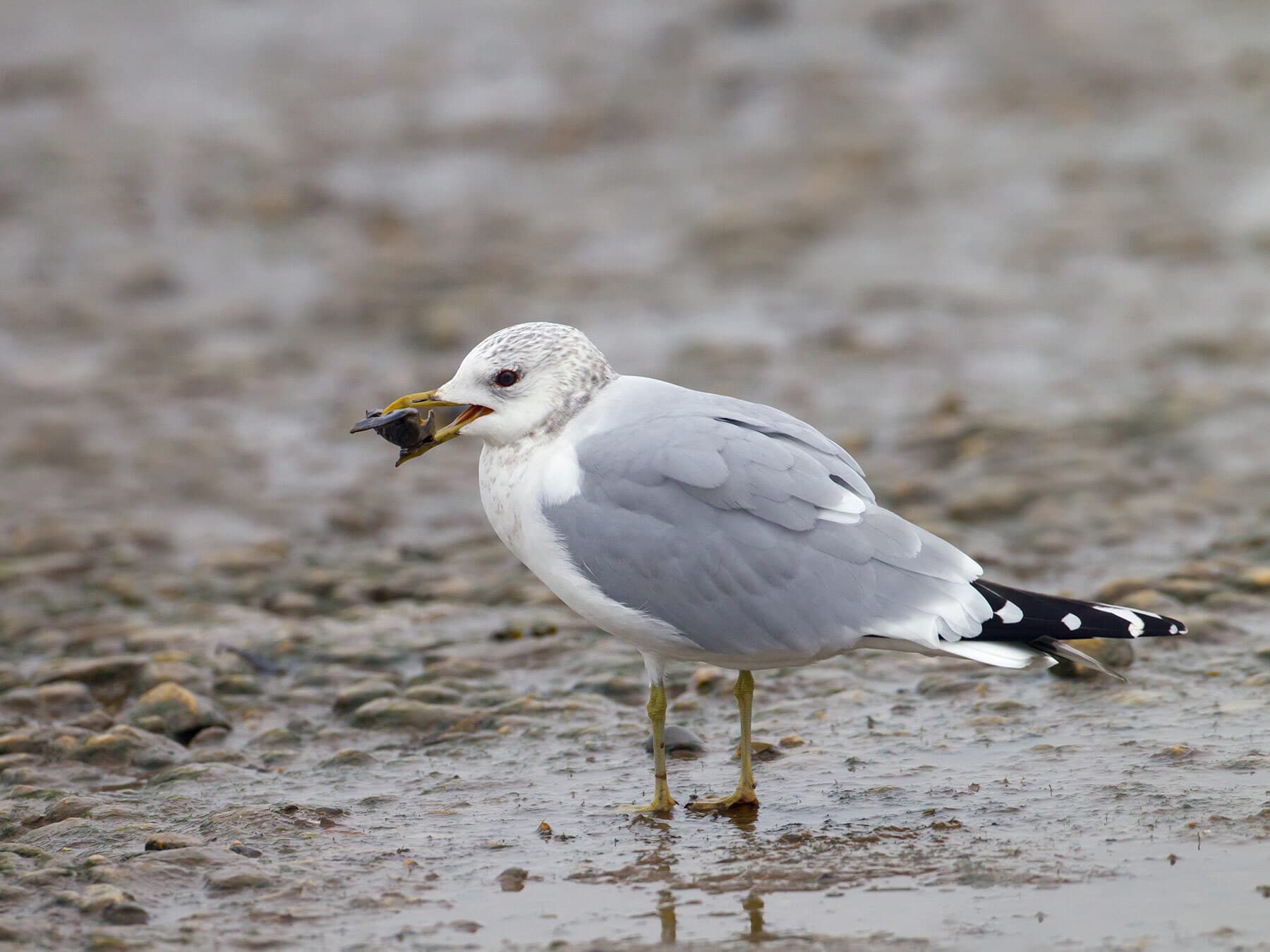
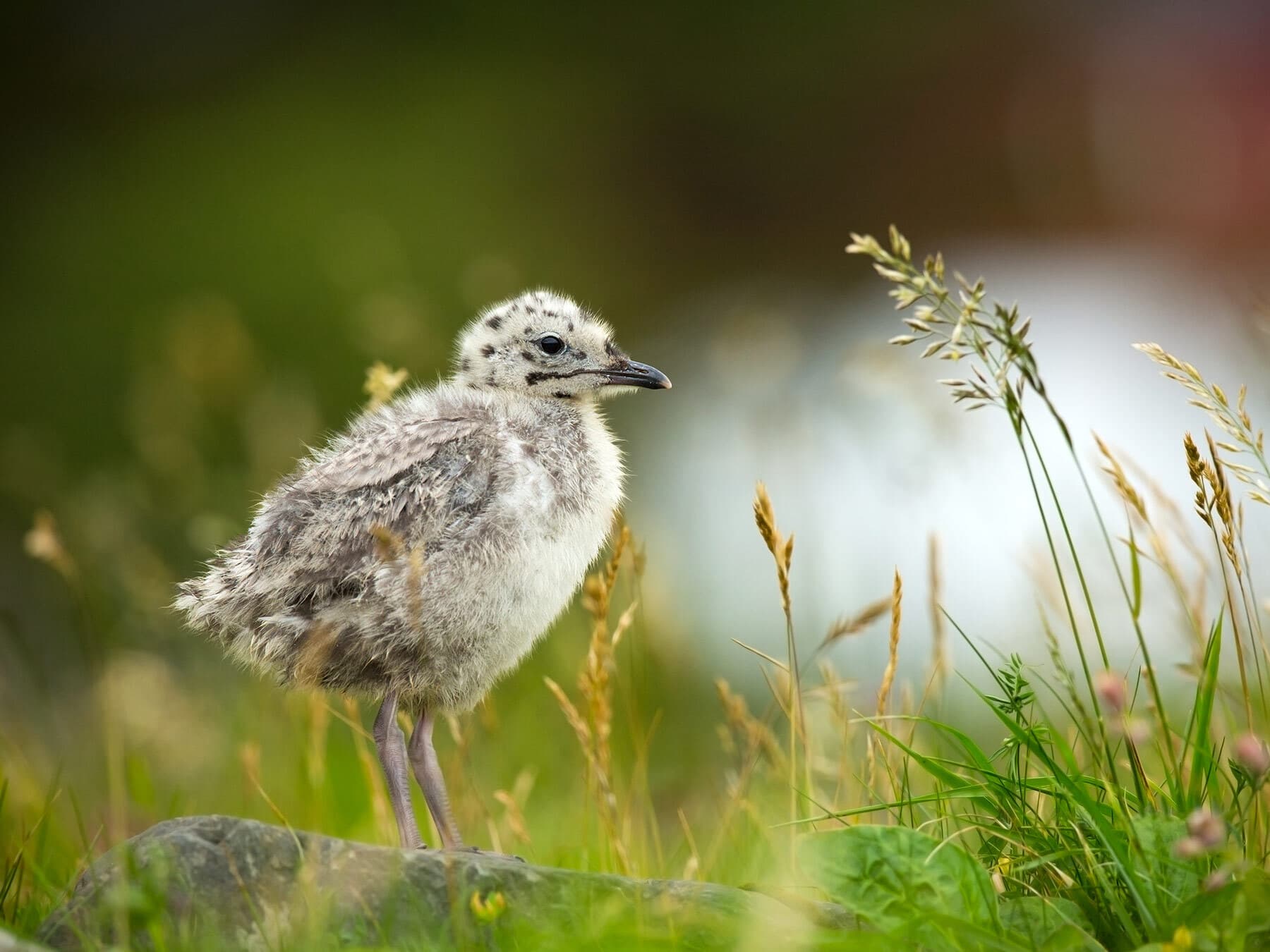
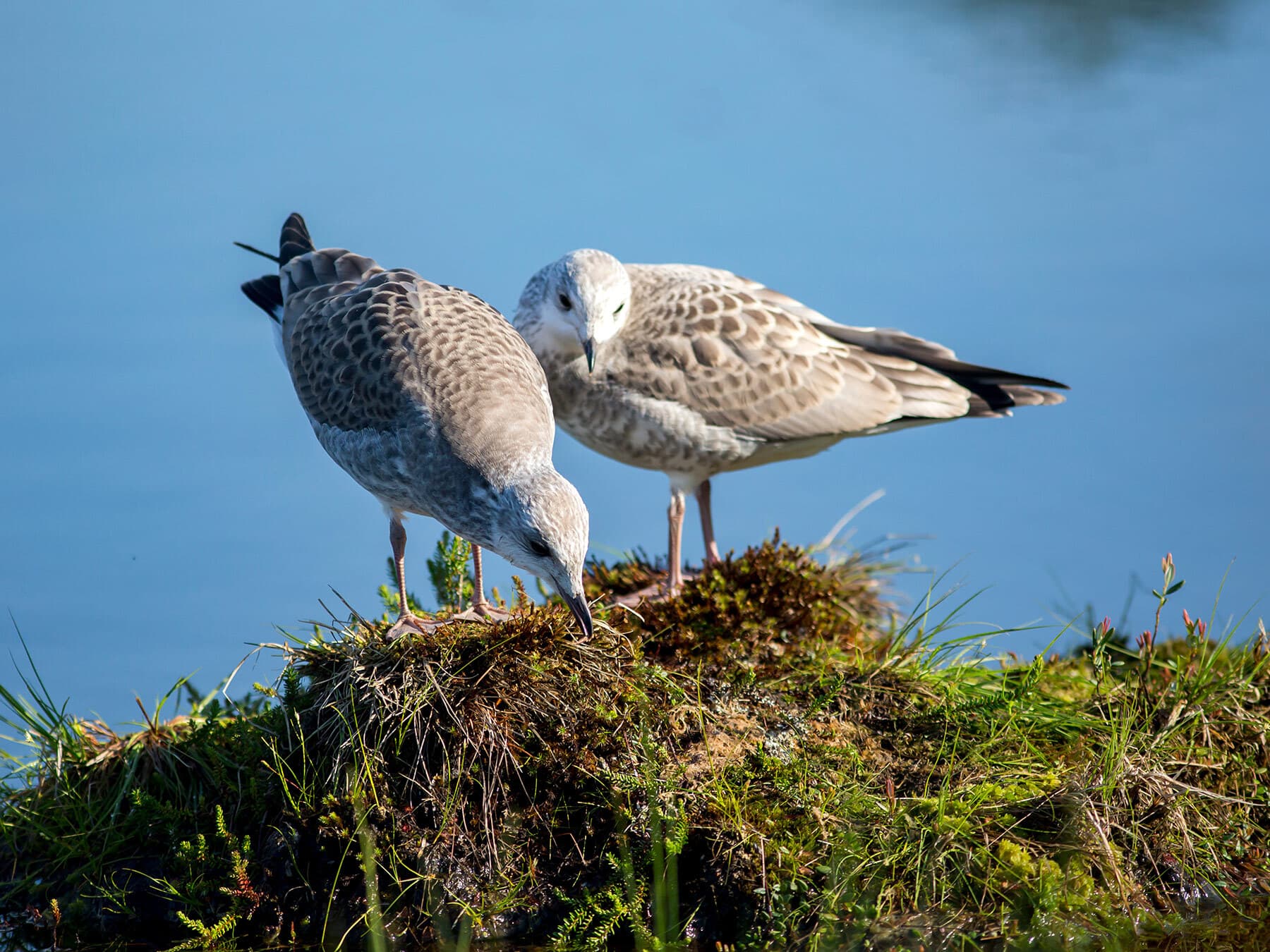
In winter, adults develop faint grey streaking on their heads. Juveniles have brown markings on their wings and backs and gradually moult into adult plumage over three years.
Its size
Adults- Length
- 40–46 cm
- Wingspan
- 110–130 cm
- Weight
- 290–480 g
Its song and calls
The common gull’s call is a high pitched, loud ‘keeeee – ya’ or ‘keeee -ya – ya -ya’.
- Song and calls0:00 / 0:26
Recorded in Normandie, France · January 2026
- Call0:00 / 0:17
Recorded in Kalmar län, Sweden · April 2024
When and where to see it
OctoberIn season
Most recorded in October
- 1. Sligo2.6%
- 2. Mayo2.5%
- 3. North Ayrshire2.4%
- 4. Aberdeen2.3%
- 5. Donegal2.3%
Each dot is a county, state or province: the bigger and darker, the larger the bird’s share of that place’s bird records that month. Grey dots: no regular records. The ringed point is the centre of the bird’s records this month; the arrow shows how it moved since last month, and the dashed loop its path through the year. “Arrivals” colours places where it becomes regular this month (orange) or is in its last regular month (grey). GBIF eBird Observation Dataset, 2019–2024. Map data: Natural Earth, US Census Bureau; place centres © OpenStreetMap contributors.
In your area
See when the Common Gull is recorded in your county, state or province.
How often the Common Gull turns up in the UK, Ireland, the United States and Canada through the year, from birdwatchers' records.
United Kingdom
Resident · all year · most records in January
Ireland
Resident · all year · most records in February
United States
Winter visitor · regularly Dec–Mar · most records in February
Canada
Winter visitor · regularly Oct–Apr · most records in January
Show as a table
| Month | United Kingdom | Ireland | United States | Canada |
|---|---|---|---|---|
| January | 1.2% (regular) | 1.5% (regular) | 0.001% (regular) | 0.005% (regular) |
| February | 1.1% (regular) | 1.6% (regular) | 0.001% (regular) | 0.004% (regular) |
| March | 0.82% (regular) | 1.2% (regular) | <0.001% (regular) | 0.002% (regular) |
| April | 0.35% (regular) | 0.76% (regular) | <0.001% | <0.001% (regular) |
| May | 0.30% (regular) | 0.53% (regular) | <0.001% | <0.001% |
| June | 0.36% (regular) | 0.62% (regular) | <0.001% | <0.001% |
| July | 0.42% (regular) | 1.0% (regular) | – | <0.001% |
| August | 0.53% (regular) | 1.2% (regular) | – | <0.001% |
| September | 0.57% (regular) | 1.3% (regular) | <0.001% | <0.001% |
| October | 0.80% (regular) | 1.3% (regular) | <0.001% | <0.001% (regular) |
| November | 1.0% (regular) | 1.4% (regular) | <0.001% | 0.003% (regular) |
| December | 1.2% (regular) | 1.5% (regular) | <0.001% (regular) | 0.002% (regular) |
Recorded regularly in
Worldwide: recorded regularly in 59 countries
Countries where it was recorded in at least 3 of the 6 years 2019–2024. Linked countries have their own bird list.
Europe (40)
- Åland Islands
- Austria
- Belarus
- Belgium
- Bulgaria
- Croatia
- Czechia
- Denmark
- Estonia
- Faroe Islands
- Finland
- France
- Germany
- Greece
- Hungary
- Iceland
- Ireland
- Isle of Man
- Italy
- Jersey
- Latvia
- Lithuania
- Luxembourg
- Malta
- Moldova
- Montenegro
- Netherlands
- Norway
- Poland
- Portugal
- Romania
- Russia
- Serbia
- Slovakia
- Slovenia
- Spain
- Sweden
- Switzerland
- Ukraine
- United Kingdom
Africa (1)
Asia (16)
- Azerbaijan
- China
- Cyprus
- Georgia
- Hong Kong SAR China
- Iran
- Israel
- Japan
- Kazakhstan
- Kuwait
- Kyrgyzstan
- Mongolia
- Oman
- South Korea
- Taiwan
- Turkey
North America (2)
Data: EOD – eBird Observation Dataset (Cornell Lab of Ornithology), accessed via GBIF.org, CC BY 4.0. Records from 2019–2024, aggregated and filtered by Birdfact. How these lists are made
The breeding range of the common gull encompasses much of the higher latitudes of the northern hemisphere including Svalbard in the Arctic Ocean, Iceland, the United Kingdom and eastwards across northern Europe into Russia and across Siberia to the Kamchatka Peninsula. Breeding populations are also found in Turkey, Kazakhstan and Mongolia. In North America they breed across Alaska and eastwards into the Canadian provinces of Yukon, North West Territories, British Columbia, Alberta and Saskatchewan. Eurasian breeding colonies that do migrate south for the winter head for the Baltic Sea, United Kingdom, North Africa, the western Mediterranean, Black Sea, Persian Gulf, Afghanistan, Pakistan, Korea, southern China and Japan. North American colonies winter across the Pacific coast from Alaska south to Central California. Isolated pockets of common gulls can also be found inland within North America with Eurasian variants appearing on the Atlantic Coast of the U.S.
Signs and Spotting tips
During the breeding season, in the main, common gulls choose to inhabit areas close to water. In particular, sea coasts, offshore islands, beaches, cliffs, wetlands, estuaries, marshes, freshwater lakes and rivers etc. Some birds will however, venture further inland to moors, heaths and even wooded areas. During winter months much of the Eurasian population will move inland and occupy arable and grassland whilst also selecting urban and suburban areas, particularly around sewage farms and refuse tips. North American birds in general, remain close to the coast. Dependent upon region, common gulls often congregate in large flocks that can reach several thousand and are frequently seen roosting on beaches and sandbars. Although nests are usually built on the ground close to water, common gulls will also nest in trees and are the only white headed gull to do so. In appearance they are easy to confuse with a Herring Gull although the latter is larger and much heavier.
What it eats
Feeding from water or on the ground the bird lives on a diet of molluscs, fish, worms, carrion and insects which is often supplemented by scraps scavenged from refuse tips.
Nesting and breeding
The breeding season across the range is from late April through to July dependent upon geographical location and climatic conditions (breaking up of winter ice etc). Nests are usually constructed by the female with little help from the male and are either a shallow cup shape built on a rock or marshy ground, often amongst thick vegetation, or a simple platform high in a tree. Birds will often nest in colonies although some pairs will nest alone. One brood of two or three pale brown eggs, marked with dark brown splodges, are laid annually and incubated by both parents for between twenty four to twenty six days. Fledging occurs from four to five weeks after hatching.
Behaviour
Common Gulls are highly social and often seen in large flocks during non-breeding seasons. They're highly efficient at soaring and gliding and use air currents efficiently.
These gulls are known for their 'foot-paddling' behaviour, in which they rapidly stamp their feet on the ground to bring worms to the surface.
Lifespan and predators
Average life expectancy for a common gull is up to ten years although examples of those surviving twice that period have been recorded.
Conservation
While currently listed as Least Concern, Common Gulls face threats from habitat loss, pollution, and climate change.
Coastal development and disturbance at breeding sites are particular concerns. Conservation efforts focus on protecting nesting areas and reducing marine pollution.
What does a Common Gull look like?
The common gull is a medium sized gull with a round head and small bill. Adult summer (breeding) plumage is predominantly grey above with white underparts. The body, head and tail is white and the mantle, the area immediately below the nape of the neck, is grey. The upper wing area is grey with the tips of the primary feathers coloured black. There is a large circular white spot partially superimposed over the black area. The trailing edge of the upper wings are marked with a narrow white stripe. Upper tail is white and the underwings are white tipped black. The short bill is a greenish yellow as are the legs and webbed feet. The iris is dark with a red orbital ring which is not apparent in winter plumage. Non breeding adults have grey brown markings over a white head extending to the top of the nape. Males and females are similar in appearance with the male being slightly larger than the female. Juvenile birds are mainly a grey brown colour with light brown upper wings and dark brown primaries. The upper tail is grey with a black band across the trailing edge. The bill is grey with a black tip and the legs vary from buff to pale pink.
A difference of opinion
The common gull attracts a number of differing assertions from ornithologists and scientific bodies where it’s nomenclature allegedly derives from its abundance in numbers, to those who opine that the overwintering of birds inland, on common ground, gives rise to its title. Further, whilst most authorities count the North American variant as a subspecies (Larus canus brachyrhynchus) others see it as an independent and separate species.
Similar birds
Often mistaken for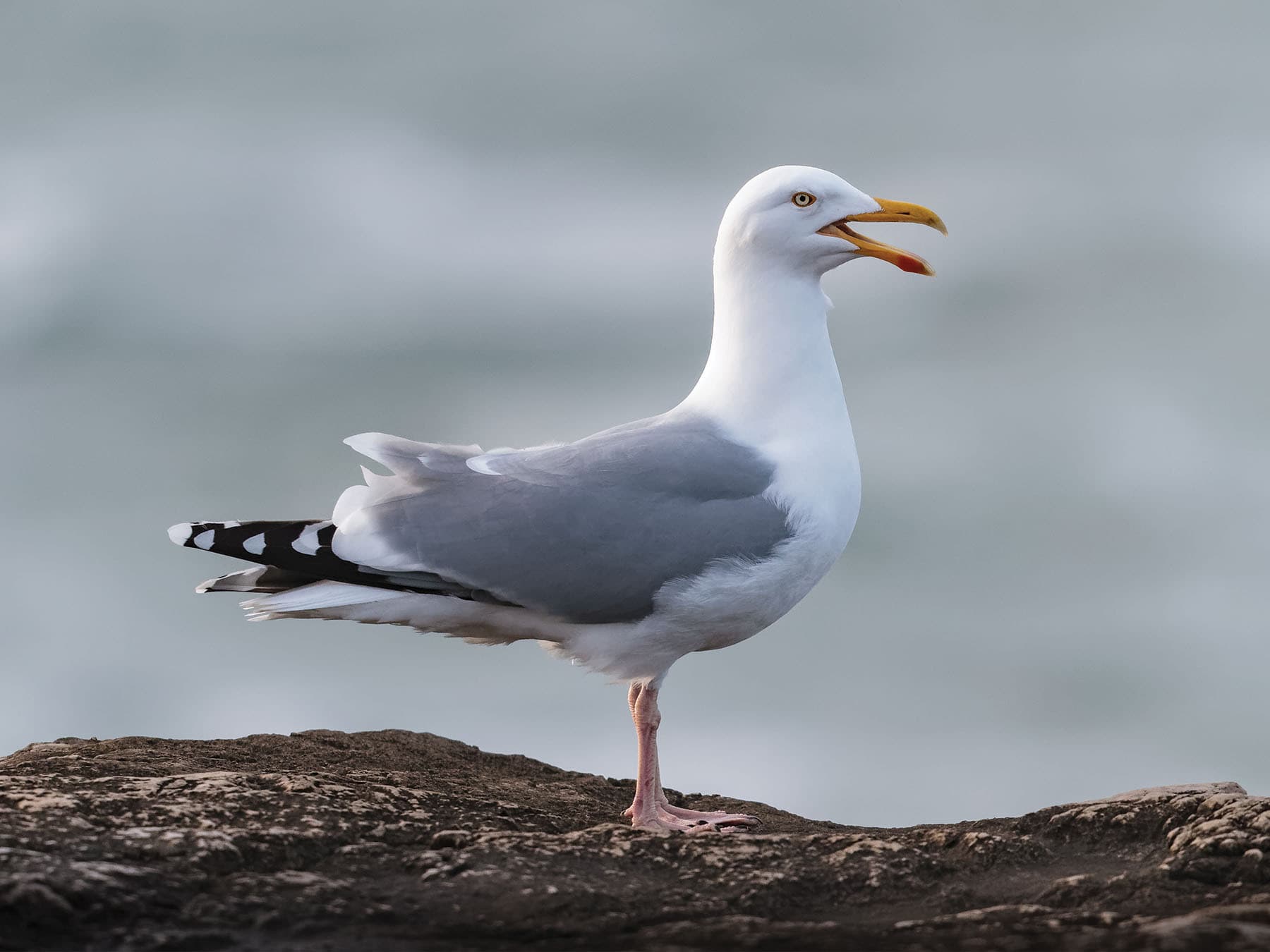
Common Gull guides
6 guides- What Do Seagulls Actually Eat? Diet Secrets of These Clever Scavengers
- Do Seagulls Migrate? (All You Need To Know)
- Baby Seagulls: All You Need to Know (with Pictures)
- Seagull Nesting Secrets: Unveiling the Hidden Sanctuaries by the Sea
- What is a Group of Seagulls Called? (Complete List + Why?)
- How Long Do Seagulls Live?
Quick facts
- Length
- 40–46 cm
- Wingspan
- 110–130 cm
- Weight
- 290–480 g
- Lifespan
- 10 years · oldest recorded 33.7 years
- Family
- Gulls & Terns
- Migration
- Partial migrant
- Global status (IUCN)
- Least Concern
- World population
- 2,500,000 - 3,700,000 mature individuals
- Population trend
- Decreasing
- Also called
- Mew Gull
- Scientific name
- Larus canus
Sources
3- 1BirdLife International. 2019. Larus canus (amended version of 2018 assessment). The IUCN Red List of Threatened Species 2019: e.T22694308A155576460. Source (opens in a new tab)
- 2Wetlands International (2015)
- 3Fransson et al., EURING list of longevity records for European birds (2010) Source (opens in a new tab)

Checked by
Nathan Cope, founder and editor
Nathan founded Birdfact and leads its writers and contributors in the UK, the US and Canada. He has watched and studied birds for more than ten years, and checks every article and species guide before it’s published.