


Brown Thrasher
Toxostoma rufum
By the Birdfact teamChecked by Nathan Cope
On this page14 sections
How to recognise it
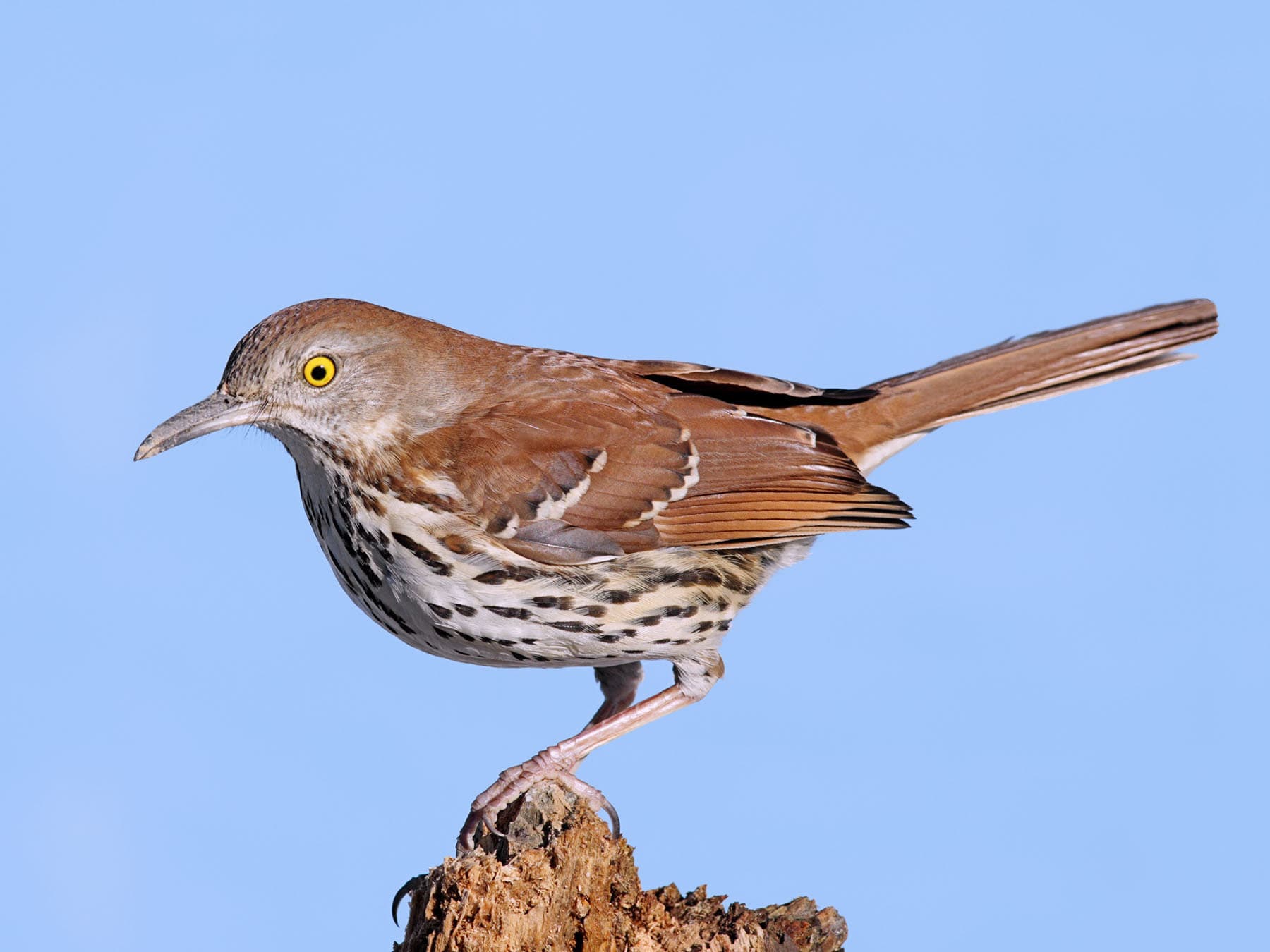
Look for a long-tailed, rufous bird in thick cover. No other thrasher lives east of the Rockies and central Texas. Its back, wings and tail are a rich red-brown, and its whitish to pale buff underparts are boldly marked with black streaks and teardrop-shaped spots. Two pale wing bars, edged black, cross each wing.
Look at the face. The adult has a yellow eye set in a gray-brown face, and a long, slightly curved bill, dark above and paler at the base of the lower half. The tail is as rufous as the back, and is often cocked up like a wren's or held low as the bird runs.
The plumage is richest in fresh fall feathers and fades to a paler rufous by spring, when the buff tips of the wing bars have worn to white. Birds from the western Great Plains average a little larger and paler, cinnamon above and buffier below.
Size and shape
Brown Thrashers are 9.1 to 11.8 inches (23-30 cm) long, with a wingspan of 11.4 to 12.6 inches (29-32 cm), and weigh 2.1 to 3.1 ounces (61-89 g).1 That makes it slightly smaller than a Blue Jay and slightly larger than a Northern Mockingbird. It is slender, with long, strong legs and a long tail and bill.
Males, females and young
Males and females look alike in every plumage. Males are slightly larger in wing and bill on average, but the two overlap, so a lone bird cannot be sexed by size in the field.
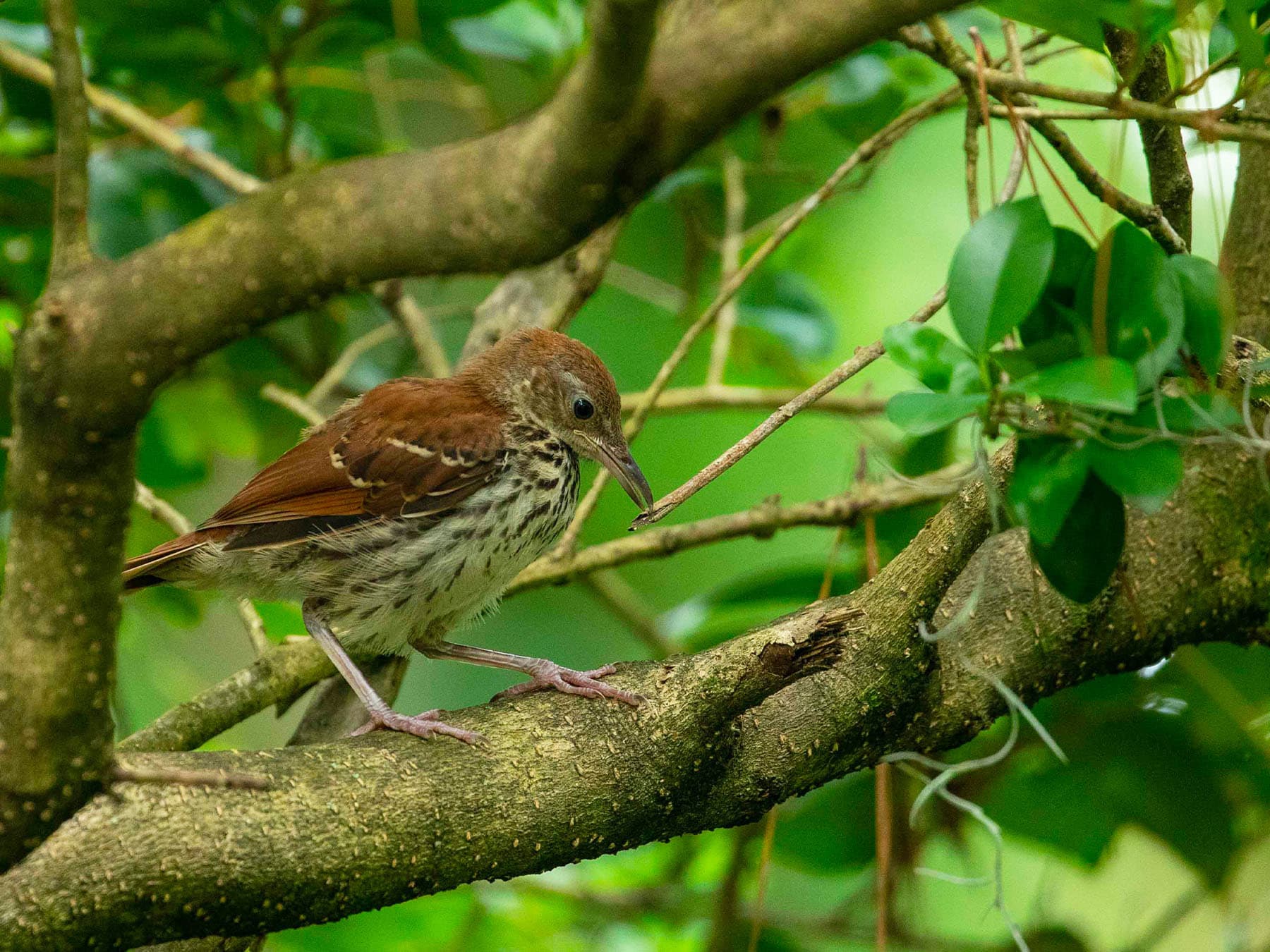
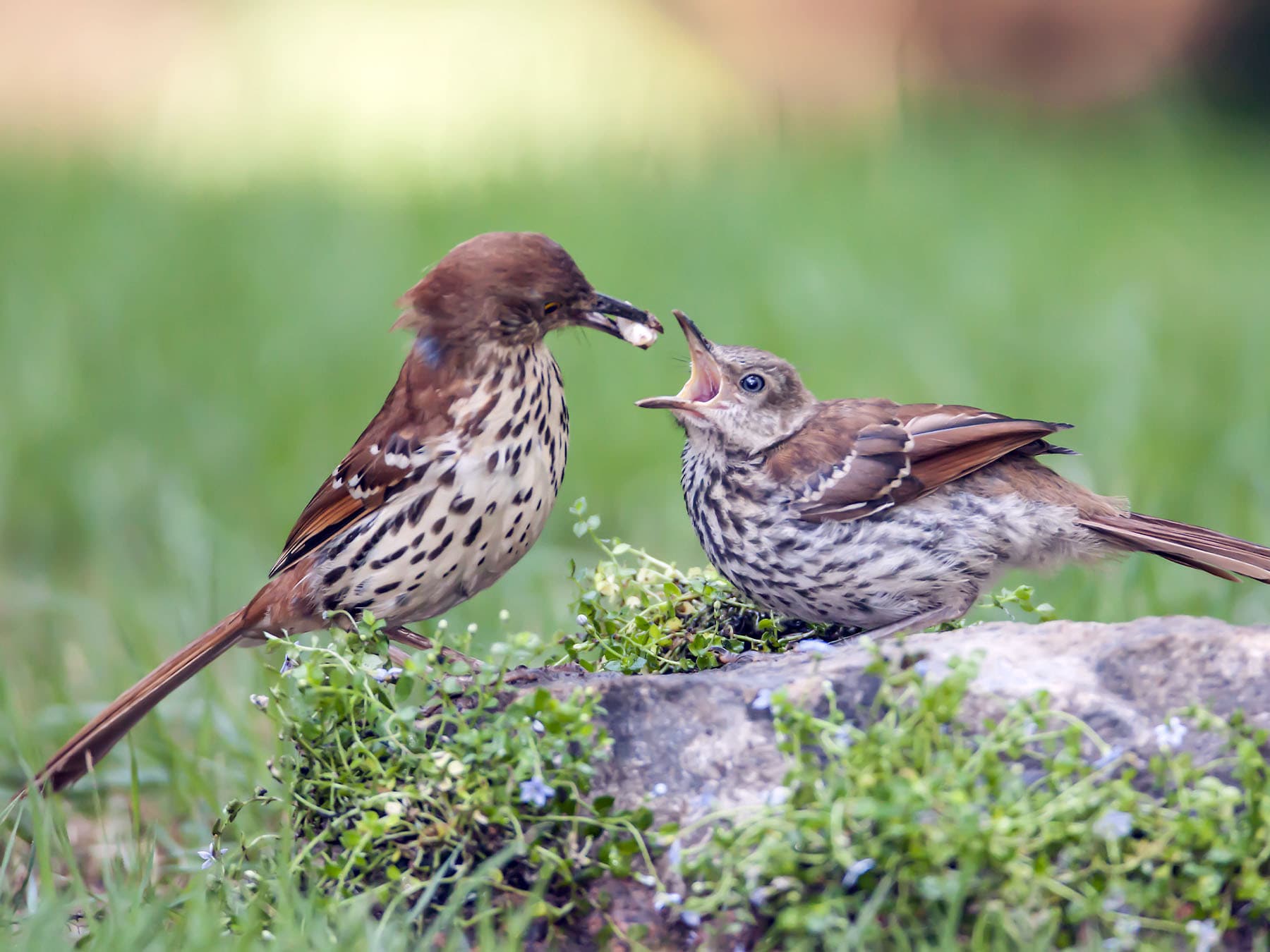
Juveniles, seen in summer, are the ones that look different. They are softer and looser-feathered, with faint dusky spots on paler upperparts, buff rather than whitish wing bars and blurrier streaks below. Their eyes are gray to grayish olive, not yellow, and turn yellow through the first year. Fledglings also have short wings and a short tail, because they leave the nest before their feathers have finished growing.
More: Male vs female Brown Thrasher: how to tell them apart.
Identification: similar birds
Wood Thrush. The lookalike people ask about most. A Wood Thrush is smaller, about 8 inches (20 cm), with round black spots rather than streaks on a white breast, a reddish-brown head, a bold eye-ring and a shorter tail; it has no yellow eye.2 Our Brown Thrasher or Wood Thrush? guide compares them side by side.
Long-billed Thrasher. In south Texas, where the two meet in winter, the Long-billed Thrasher is very similar but has a grayer face, an orange eye and a longer, more curved bill.3, 4
Northern Mockingbird. Gray rather than rufous, with white wing patches and white outer tail feathers. It sings a similar long run of phrases, but repeats each one three or more times.5
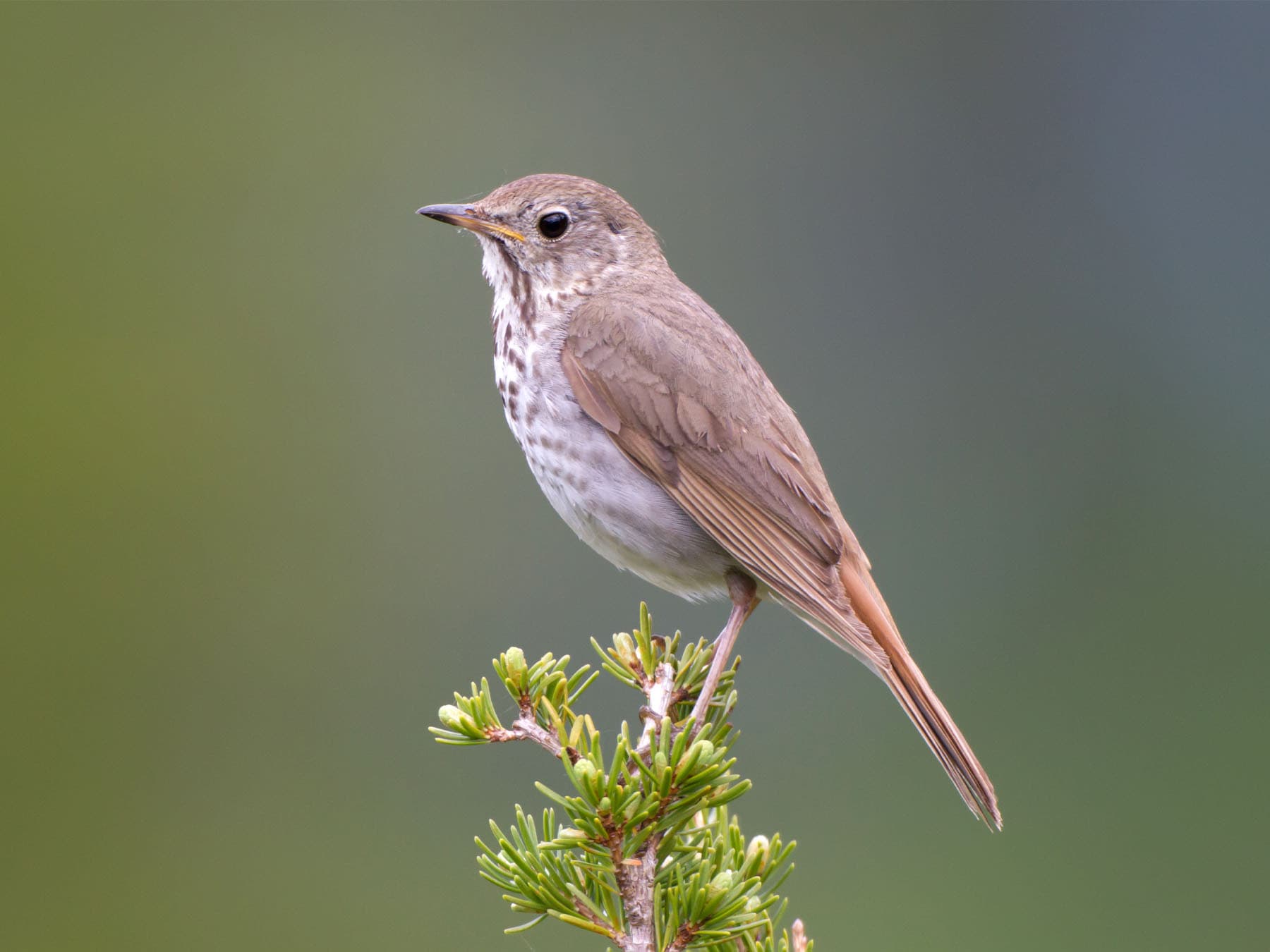
Hermit Thrush. Much smaller, 6.3 to 7.5 inches (16-19 cm), with a reddish tail that contrasts with a duller brown back, and usually a strong eye-ring.6
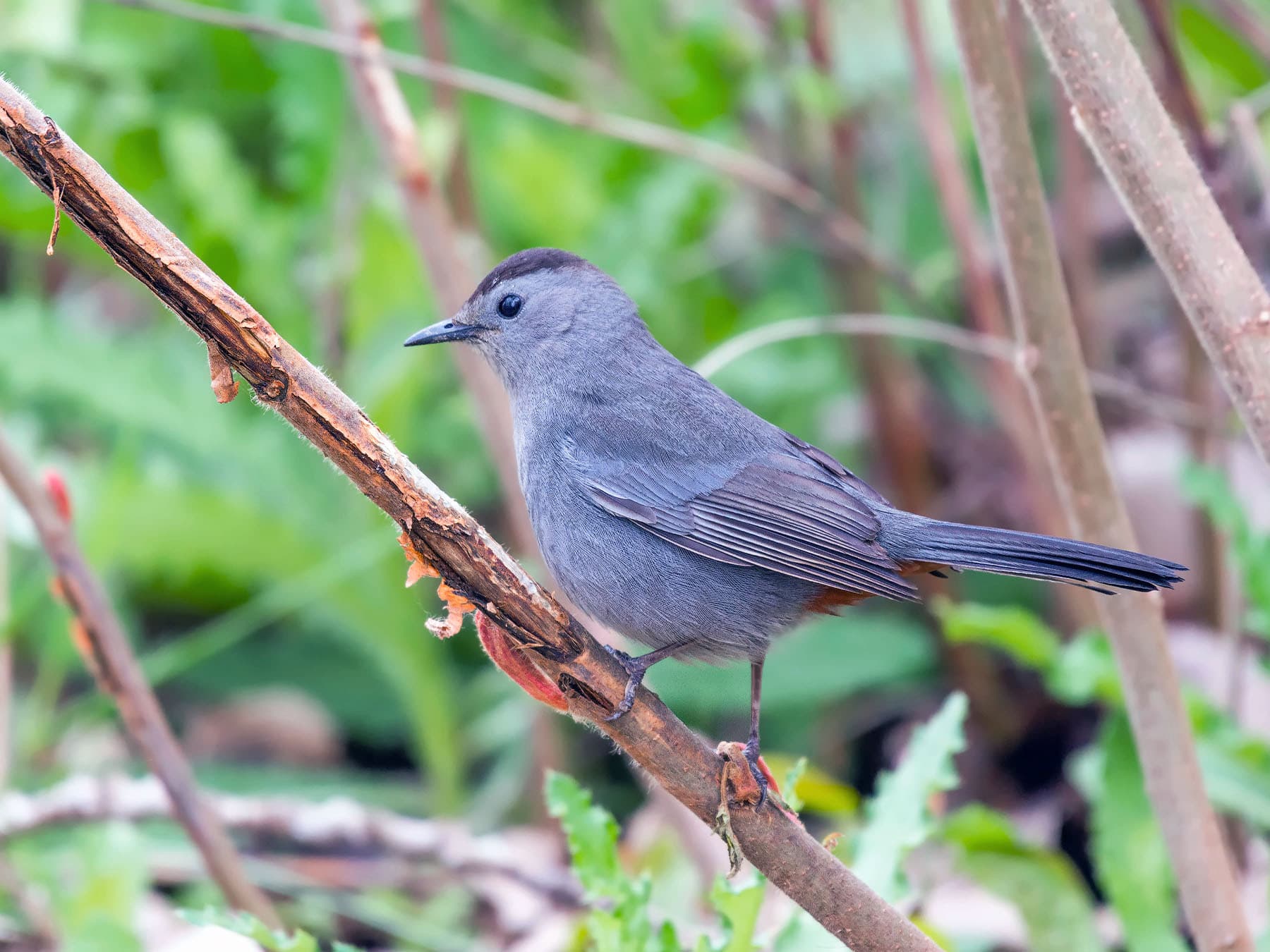
Gray Catbird. A smaller relative, smooth gray with a black cap and chestnut under the tail. Its song is a long, irregular run of notes, and it mews like a cat.7
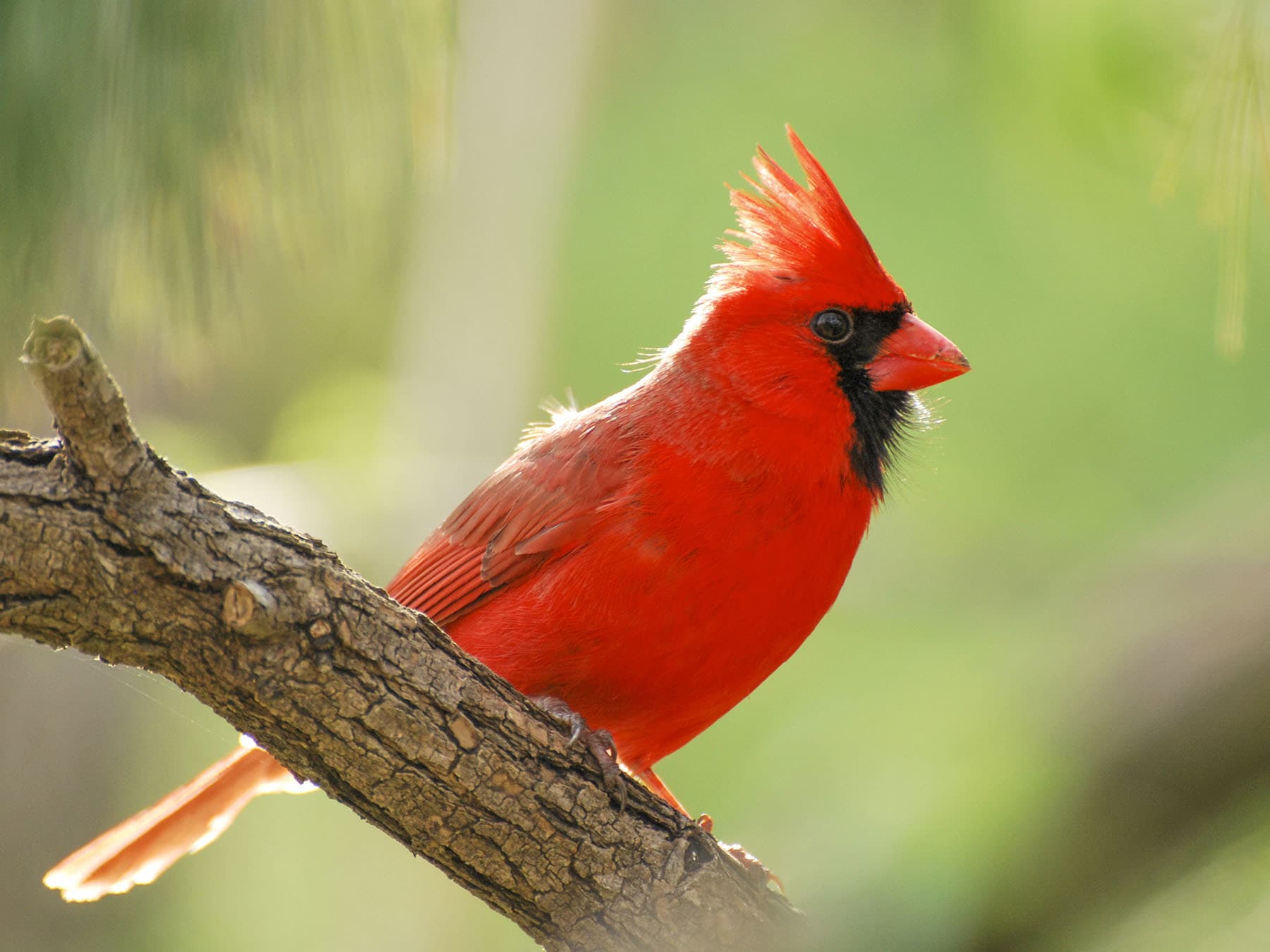
Northern Cardinal. A female cardinal is a duller bird than the red male, with a crest and a massive pinkish bill; she has neither the thrasher's streaked breast nor its yellow eye.8
Not sure it’s a Brown Thrasher? Check your photo: Birdfact names the bird and shows the look-alike side by side.
Its size
Adults- Length
- 23–30 cm
- Wingspan
- 29–32 cm
- Weight
- 61–89 g
Its song and calls
In spring the male sings a loud, long run of varied, musical phrases, many of them given twice before he moves on, with short pauses between them and no clear beginning or end. Field guides use the pairs as the rule of thumb, though in one study phrases were repeated an average of 1.5 times; some were given once and some several times in a row.4 He usually sings from the top of a tree or tall shrub, his tail hanging straight down, well above where he feeds and nests.
Few North American songbirds can match its song repertoire: more than 1,100 song types,9 and individual males use well over 1,000 different phrases.10 It can even sing two notes at once. Despite its reputation, it mimics other birds only now and then, and the copies are usually rough; imitations heard include Northern Cardinal, Wood Thrush, Tufted Titmouse, White-eyed Vireo, Northern Flicker and Chuck-will's-widow.
To tell it from a Northern Mockingbird, count the repeats: the thrasher's phrases tend to come in pairs, the mockingbird's in threes or more, and the thrasher's song is lower-pitched. Mockingbirds themselves tell thrasher song from their own by its repetition pattern and perhaps its pitch range.11 A Gray Catbird mostly gives each phrase once.
Loud song is short-lived. Males sing a lot in early spring, from soon after they arrive, then very little once paired and nesting. In Georgia song runs from February to July, in Massachusetts from late April to early July. They sing most at dawn and in the hours after, and again before dusk. Close to a female, males also give a soft version of the song, and they have a whisper song, given in spring, fall and (in Texas) late winter, that cannot be heard from more than a few feet away. Females apparently do not give the loud song, though one incubating female was heard singing, after which the male took over the eggs.
The call you will hear most is a loud, harsh smack or tchuck, like a smacking kiss, often repeated slowly. It also gives a whistled teeola, harsh, rising teea notes, a low hissing note and, in winter, a soft verr.
More: Brown Thrasher sounds: song, calls and how to recognize them.

- Song0:00 / 0:26
Recorded in Illinois, United States · March 2025
- Call0:00 / 0:10
Recorded in North Carolina, United States · May 2025
Heard one and not sure? Let the bird song identifier listen.
When and where to see it
Brown Thrashers breed across eastern and central North America, from southern Canada (Alberta to Nova Scotia) south to east-central Texas, the Gulf Coast and southern Florida, and west to Montana, eastern Wyoming and Colorado and western Kansas.
Look in dense thickets, hedgerows, brushy fields, overgrown clearings and forest edges; on the Great Plains, in shelterbelts, fencerows and wooded draws. They rarely go far from thick cover. A habitat model found they do best where young woody growth is dense, the tree canopy is open and most of the ground is covered in leaf litter. Some live in suburbs and yards with plenty of shrubs and hedges, though they breed in gardens only now and then.
A thrasher is heard more often than seen. It spends most of its time on or near the ground under cover, and you may first notice the rustle of leaves being tossed aside, or the loud smack call. In spring, look for the singing male at the top of a tree.
Its range probably grew as forests were cleared and fire was kept off the Great Plains. It reached the grasslands in the late 1800s, breeding at first along wooded rivers, then in the shelterbelts and fencerows that came with settlement. It has also spread into southern Florida since the 1930s and into the Canadian Maritimes since the 1950s.4
Do they migrate?
Some do. The Brown Thrasher is a short-distance, partial migrant: birds in the south stay all year, while northern birds move south for the winter, at night and usually alone. Most winter in the southeastern US, mostly on the Gulf and other coastal plains, within a line joining central Texas and Oklahoma, central Florida and southeastern North Carolina. A few stay farther north, often near feeders or berry thickets, and since the mid-1900s more have wintered in places like Ohio, Wisconsin and New York.
In spring they return from early March in Kentucky to late April in New York and New England, and as late as the third week of May in Alberta; in Kentucky, males sang for 7 to 10 days before any female was seen. They leave the north quietly from late August to October and are on their wintering grounds by mid-October. The longest movement in the banding data, as of 2014, was about 1,370 miles (2,200 km).
Europe had two records by 2014: one at Durlston Head in Dorset, England, from November 1966 to February 1967, and one on Helgoland, Germany, in fall 1836.
Tips for seeing it
What it eats
Mainly insects, especially beetles, with other small animals, plus fruit, seeds and nuts. In a study of 266 stomachs from across the country and the year, 63% of the food was animal, almost all of it insects, with beetles the biggest share at 18%; the other 37% was plant food, mostly wild fruit and acorns.12 The balance shifts with the seasons. In Illinois, seeds and grain, mostly corn, made up more than 40% of the April diet; in May more than 80% was animal food, about half of it beetles, and by July 60% was fruit. Wintering birds in southern Texas ate more plant than animal food in October, mostly sugarberry and poison ivy fruit, but by March, when food was scarcest, 80% of what they ate was animal, mostly snails and crustaceans.4
Insects taken include May beetles and their white grubs, weevils, wireworms, caterpillars such as cutworms and tent caterpillars, grasshoppers, crickets and cicadas. It also eats spiders, sow bugs, earthworms, snails and crayfish, and now and then a small lizard, snake, salamander or tree frog. Fruit includes blackberries and raspberries, blueberries, elderberries, pokeberries, hackberries, holly berries, sumac, grapes, cherries and Virginia creeper, along with acorns.
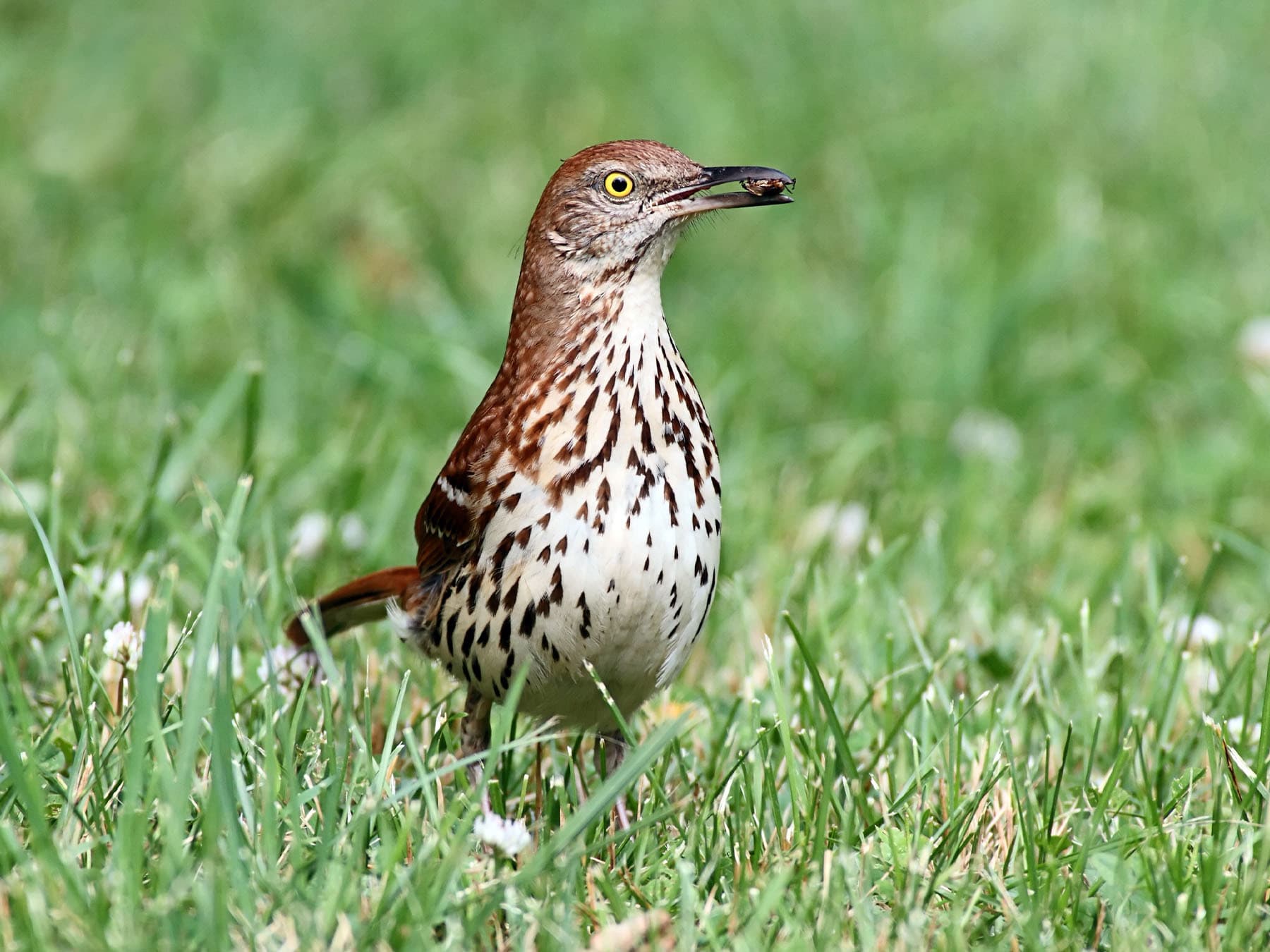
A thrasher feeds on the ground under shrubs and trees, sweeping its bill from side to side to toss leaves aside, and digging or hammering into the soil. It also picks berries from bushes and seeds from weed stems. It cracks acorns by pounding them with its bill; one bird dug a small hole, set an acorn in it and hammered until the shell broke.

Feeders and yards
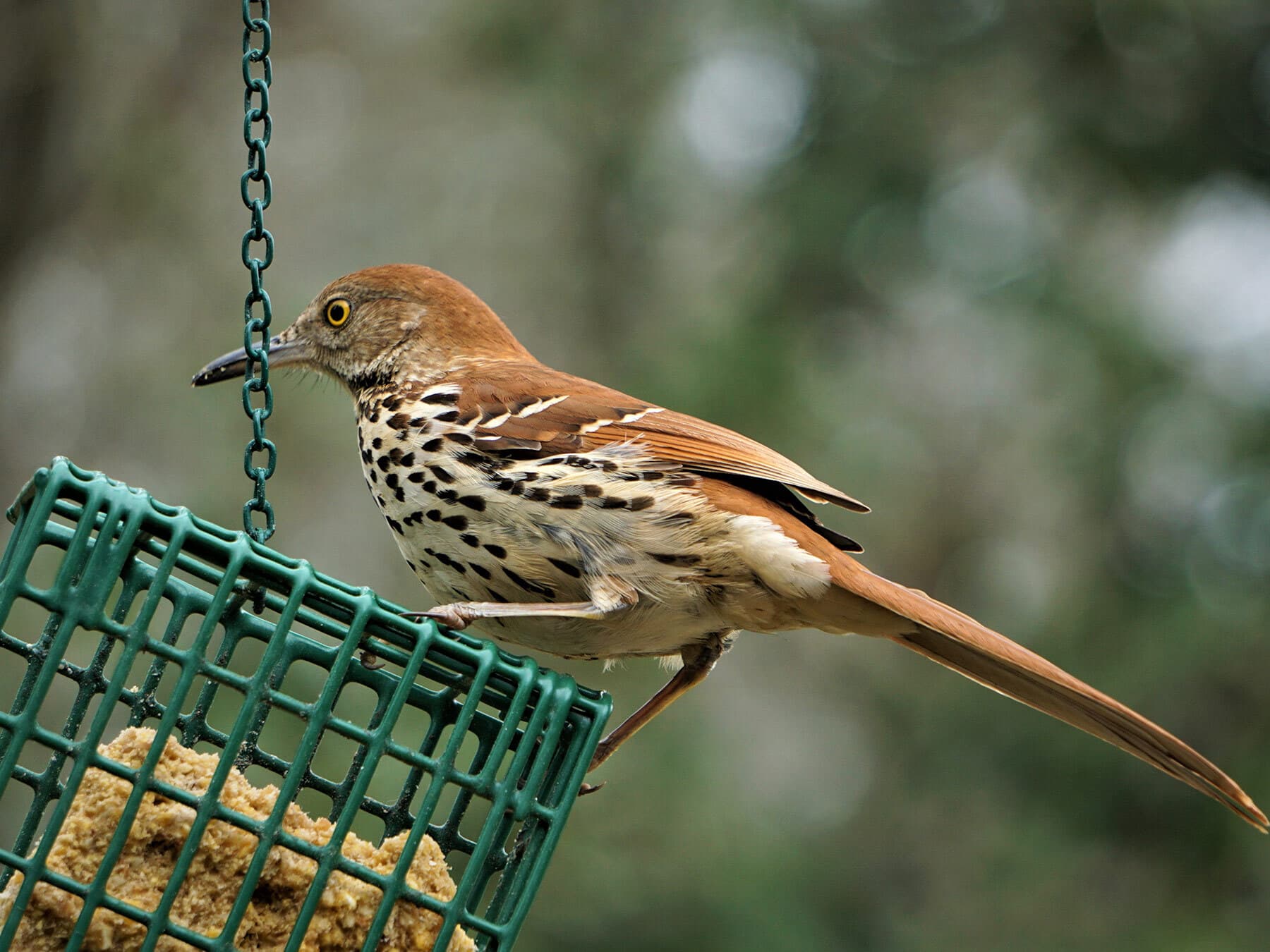
Brown Thrashers do eat bird seed. They may come to yards where food is on offer, feeding on the ground or on platform feeders, and take black oil and hulled sunflower seed, cracked corn, peanut hearts and suet.13 Dense cover close by makes a visit more likely, and berry-bearing shrubs are another way to attract them.
Nesting and breeding
Males take territories as soon as they arrive, from mid-February to mid-March in Tennessee and as late as mid-May in the north, and pairs form and build soon after; the earliest nest-building noted was on March 27 in Alabama. Laying starts in the first half of April in Tennessee, but not until late May in North Dakota. At one Kansas site laying peaked from May 11 to 20, with 27 of 72 clutches, and only 1 of 72 began after July 1; at others it ran from late April or early May to mid- or late July.4
Pairs are socially monogamous within a season, and in North Dakota most stayed together to renest after a failure; in Kentucky, 2 of 11 pairs changed mates within the season. Few North Dakota pairs re-formed in later years, partly because few adults returned. Courtship was little studied as of 2014: the pair present each other with twigs or dead leaves, and the male may sing softly or briefly chase the female.
The nest
The nest is usually low in a dense, often thorny shrub, vine tangle or small tree, such as a rose, plum, dogwood, sumac or red cedar, mostly 2 to 7 feet (0.6-2.1 m) up. Study averages ran from 3 feet (0.9 m) in Kansas to 5 feet (1.5 m) in Tennessee, and in Kentucky nests were higher later in the season (5 feet in May, 7 feet in July). Some nest on the ground: frequent in older New England accounts, but only 1 of 139 nests in an Oklahoma sample and 3 of 232 in Kansas.
Both sexes build a bulky cup in four layers: a base of twigs, then dead leaves, then small roots and stems, and a lining of clean rootlets. An early nest takes 5 to 7 days, a later one 3 or 4. The nest is about 5.5 to 7.5 inches (14-19 cm) across outside, with a cup about 3.5 inches (9 cm) wide and about 2 inches (5-6 cm) deep.
A pair occasionally reuses a nest from an earlier year, relining it and often adding sticks, which may save 3 to 8 days of building: in a Kansas study, 4% of 94 old nests were reused.14

Eggs and young
The usual clutch is 3 to 5 eggs (2-6), averaging 3.6, pale blue, greenish blue or white and finely speckled all over with reddish brown; each is about 1.0 by 0.8 inches (26.5 x 19.4 mm). Study averages run from 2.8 to 4.1 eggs; clutches are larger early in the season, and in Illinois larger in the north than the south. Both parents incubate, the female more (about 70% of incubation time at three Kentucky nests and one Tennessee nest), for about 11 to 14 days (10-14).
The chicks hatch with their eyes closed and sparse gray-white down, and both parents brood and feed them, almost entirely on insects and earthworms, with some berries. At most nests studied the male made about 40 to 45% of the feeding visits, though at three of four Iowa nests he made more than the female. The young leave the nest quickly for a bird this size, at about 10 to 12 days (9-13), with strong legs but short wings, and run well before they fly well. Leaving early, and finishing their growth outside the nest, may help them escape the heavy nest predation of shrub nesters.
The family stays close for weeks, and adults were still giving alarm calls at least 19 days after their young left the nest. In North Dakota, young moved a median of only 660 feet (200 m) in six weeks.15 Pairs raise one or two broods a year; many raise only one, but they renest, up to four times, if a nest fails.
Nest predation is a major cause of failure. In a northeastern Kansas study only 22% of 964 eggs produced fledglings, predation caused 83% of nest losses, and snakes were thought to take most. In the same study, pairs given extra food made fewer feeding trips, spent more time perched watching the nest, reacted faster to a model snake, and more of their nests succeeded.16 Nest success varies widely between habitats, from 14% of nests in Florida citrus groves to 73% in North Dakota shelterbelts.4
Of all the Brown-headed Cowbird's common hosts, it is the largest, but it often throws out cowbird eggs, and few cowbirds fledge from its nests. In a North Dakota study 12% of 136 nests were parasitized,17 against 8% of 294 in Kansas and none of 52 in Kentucky.4
Behaviour
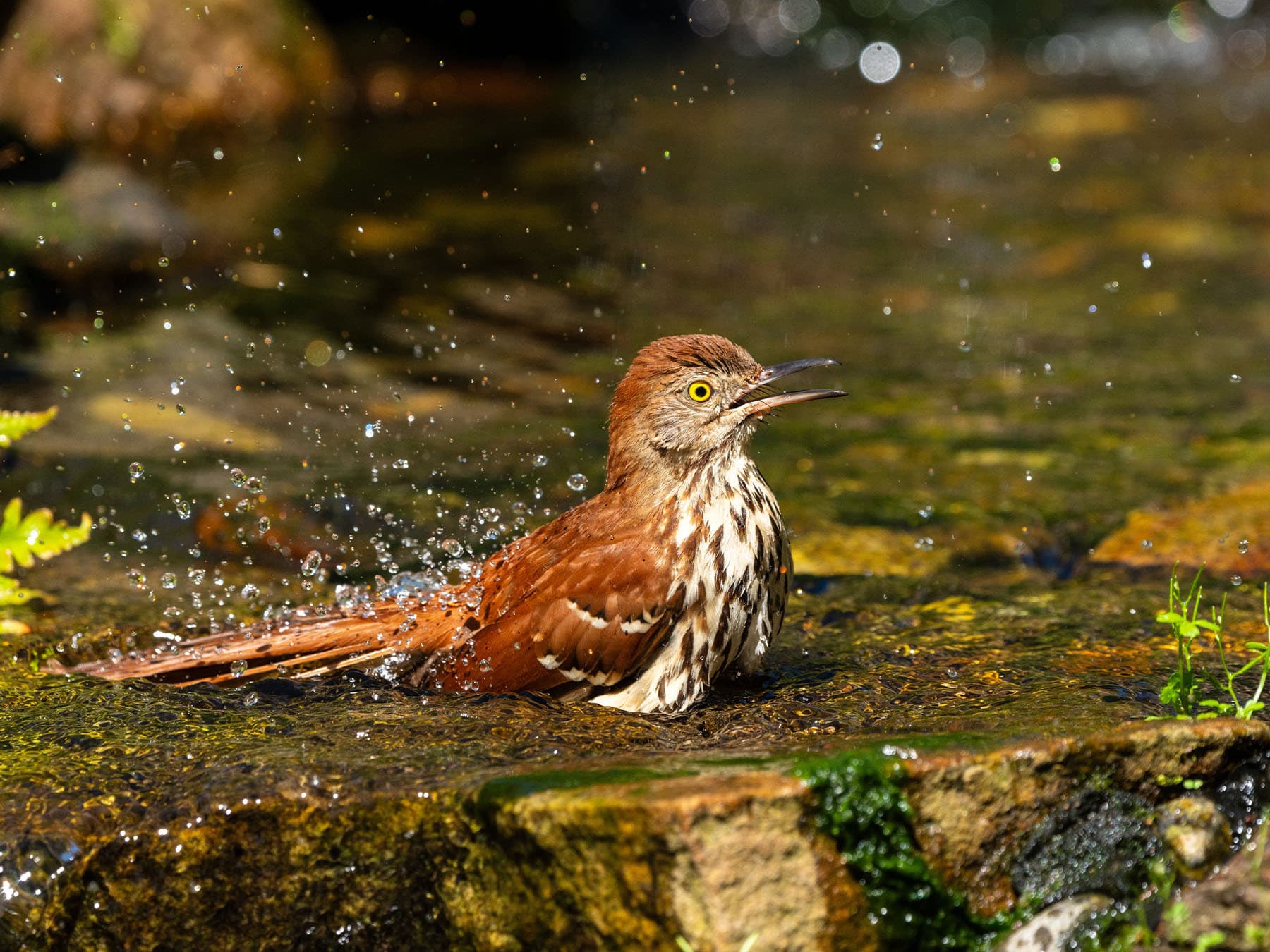
A Brown Thrasher spends most of its time on or near the ground, walking, running or hopping, and dives into thick cover when disturbed. It usually flies low and only a short way, a slow, jerky, fluttering flight that often ends in a glide into a bush or down to the ground. It bathes often, even in heavy rain, dust-bathes on country roads, and has been seen anting and sunbathing.
It defends its nest very aggressively, striking snakes, dogs and people with its bill, sometimes hard enough to draw blood, and puts on broken-wing displays when a snake or a person comes close to the nest or young. In the breeding season it chases other thrashers off its territory; territories were about 1.2 to 2.8 acres (0.5-1.1 ha) in Kentucky and Illinois. In a Kentucky study, most aggression in the nesting season was started by males and aimed mostly at Gray Catbirds, domestic cats, European Starlings and Blue Jays, and it competes with catbirds for nest sites, sometimes throwing out their eggs and taking over the nest. In a southern Texas study, wintering birds held territories too and were usually alone.18
Lifespan and predators
In the Southeast, about 7 in 10 breeding adults are recaught or seen again the next year, a banding estimate that counts birds that moved away as lost.4 The oldest on the North American banding records was 10 years 11 months old: banded in Florida in October 1967, it was found dead there in May 1978.19 A 1983 list gave an older record, 12 years 10 months, for a bird banded and recovered in North Carolina, but it is not on the Bird Banding Laboratory's current list.
Nest predators include snakes, domestic cats, and Blue Jays and Northern Flickers, which broke eggs at Kentucky nests. Brown Thrasher remains have been found at two Peregrine Falcon eyries in east-central Alaska. Known causes of death include cars, since many live along roadsides, collisions with TV towers on migration, pesticides and severe cold.
Conservation
The Brown Thrasher is still common and widespread, with about 6.2 million birds in a Partners in Flight estimate for around 2010; in 2023 the same group scored it 11 out of 20 for continental concern and left it off its Watch List.20 But it has been in long, steady decline: on the North American Breeding Bird Survey, numbers fell by 1.03% a year from 1966 to 2025, so the survey index is now a little over half its 1966 level. The falls are steepest in New England and New Jersey.21 Partners in Flight puts the long-term loss at 41% from 1970 to 2021, and 9% in the ten years to 2021.20
The decline is put down mainly to habitat loss: shrublands in the East growing up into forest or being cleared, and hedgerows, fencerows and shelterbelts removed by clean farming in the Great Plains. It may gain where shrubby habitat is made or kept open: power-line corridors, regularly burned pine barrens in New Jersey, oak savanna restored with fire, and rotationally grazed pasture in Wisconsin. In the US it is protected under the Migratory Bird Treaty Act.22
Similar birds
Often mistaken for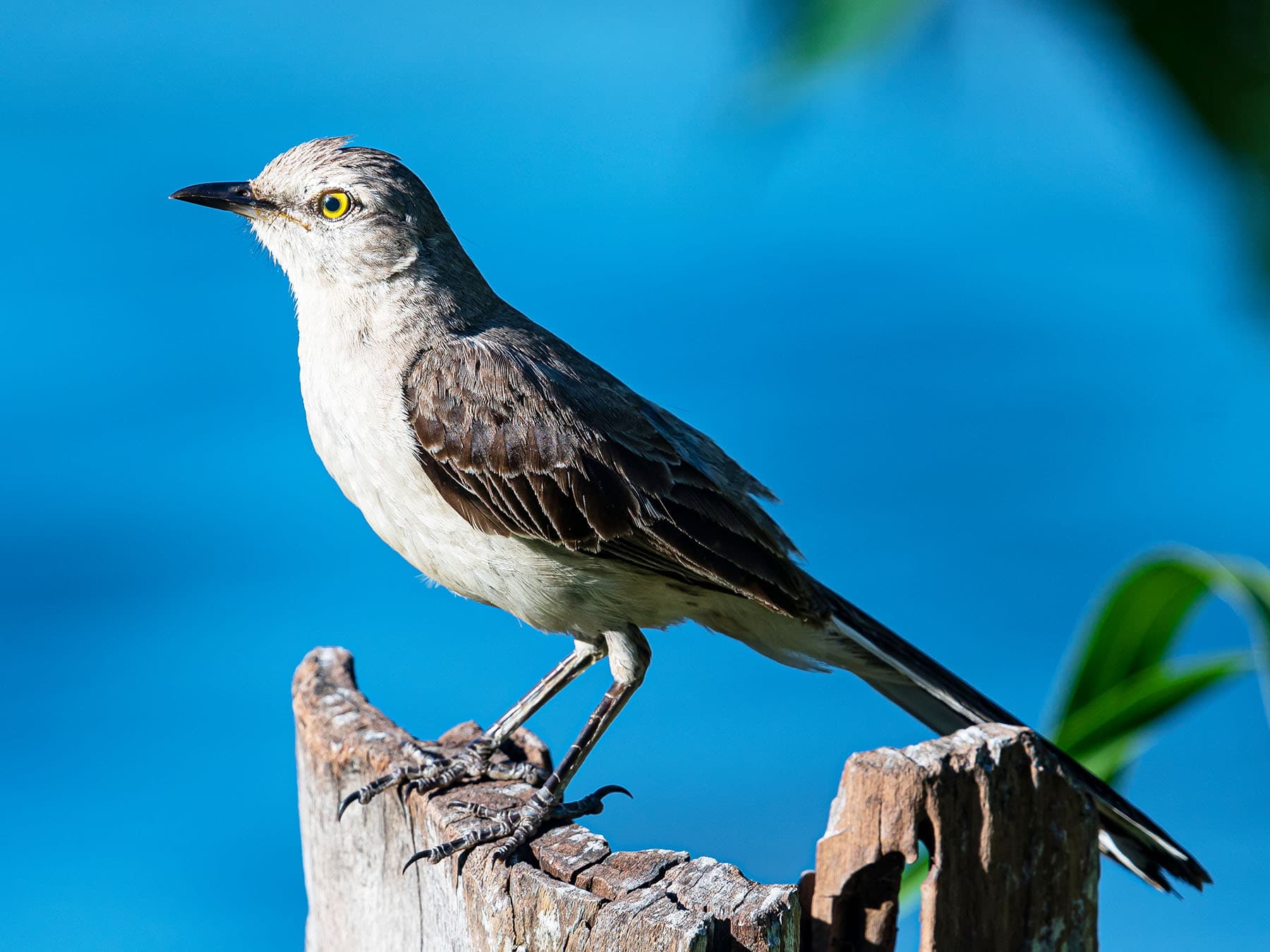
Brown Thrasher guides
5 guidesQuick facts
- Length
- 23–30 cm
- Wingspan
- 29–32 cm
- Weight
- 61–89 g
- Lifespan
- oldest recorded 10 years 11 months
- Family
- Mockingbirds & Thrashers
- Migration
- Partial migrant
- Global status (IUCN)
- Least Concern
- World population
- About 6.2 million (Partners in Flight, about 2010)
- Population trend
- Common and widespread but declining; not on the Partners in Flight Watch List (Continental Concern Score 11 of 20, 2023)
- Scientific name
- Toxostoma rufum
Questions
3Is the Brown Thrasher Georgia's state bird?
Yes. The Governor first proclaimed it Georgia's state bird on April 6, 1935, and in 1970 the Legislature made it official, at the Garden Clubs of Georgia's request.23
Do Brown Thrashers mate for life?
Not as far as anyone knows. Pairs usually stay together through a season and renest together, but in a North Dakota study few re-formed in later years. See nesting.
Are Brown Thrashers rare?
No. They are common across eastern and central North America, though numbers have fallen by almost half since 1966. They are easy to miss because they keep to thick cover. See conservation.
Sources
26- 1Cornell Lab of Ornithology. Brown Thrasher. All About Birds. Accessed 1 November 2026. Source (opens in a new tab)
- 2National Audubon Society. Wood Thrush. Guide to North American Birds. Accessed 1 November 2026. Source (opens in a new tab)
- 3National Audubon Society. Long-billed Thrasher. Guide to North American Birds. Accessed 1 November 2026. Source (opens in a new tab)
- 4Cavitt, J. F. and Haas, C. A. (2020). Brown Thrasher (Toxostoma rufum), version 1.0. Birds of the World (A. F. Poole, editor). Cornell Lab of Ornithology. doi:10.2173/bow.brnthr.01 (opens in a new tab)
- 5National Audubon Society. Northern Mockingbird. Guide to North American Birds. Accessed 1 November 2026. Source (opens in a new tab)
- 6National Audubon Society. Hermit Thrush. Guide to North American Birds. Accessed 1 November 2026. Source (opens in a new tab)
- 7National Audubon Society. Gray Catbird. Guide to North American Birds. Accessed 1 November 2026. Source (opens in a new tab)
- 8National Audubon Society. Northern Cardinal. Guide to North American Birds. Accessed 1 November 2026. Source (opens in a new tab)
- 9Boughey, M. J. and Thompson, N. S. (1981). Song variety in the Brown Thrasher (Toxostoma rufum). Zeitschrift für Tierpsychologie 56: 47-58. Accessed 1 November 2026.
- 10Kroodsma, D. E. and Parker, L. D. (1977). Vocal virtuosity in the Brown Thrasher. The Auk 94: 783-785. doi:10.2307/4085282 (opens in a new tab)
- 11Reichard, D. G. and Price, J. J. (2008). Species recognition in a vocal mimic: repetition pattern not the only cue used by Northern Mockingbirds in discriminating songs of conspecifics and Brown Thrashers. Wilson Journal of Ornithology 120. Accessed 1 November 2026.
- 12Beal, F. E. L., McAtee, W. L. and Kalmbach, E. R. (1916). Common birds of southeastern United States in relation to agriculture. U.S. Department of Agriculture, Farmers' Bulletin 755. Accessed 1 November 2026.
- 13Project FeederWatch. Common Feeder Birds: Brown Thrasher. Project FeederWatch (Cornell Lab of Ornithology and Birds Canada). Accessed 1 November 2026. Source (opens in a new tab)
- 14Cavitt, J. F., Pearse, A. T. and Miller, T. A. (1999). Brown Thrasher nest reuse: a time saving resource, protection from search-strategy predators, or cues for nest-site selection?. The Condor 101: 859-862. Accessed 1 November 2026.
- 15Haas, C. A. (1995). Dispersal and use of corridors by birds in wooded patches on an agricultural landscape. Conservation Biology 9: 845-854. Accessed 1 November 2026.
- 16Cavitt, J. F. (1998). The role of food supply and nest predation in limiting reproductive success of Brown Thrashers (Toxostoma rufum). PhD thesis, Kansas State University, Manhattan. Accessed 1 November 2026.
- 17Haas, C. A. and Haas, K. H. (1998). Brood parasitism by Brown-headed Cowbirds on Brown Thrashers: frequency and rates of rejection. The Condor 100: 535-540. Accessed 1 November 2026.
- 18Fischer, D. H. (1981). Wintering ecology of thrashers in southern Texas. The Condor 83: 340-346. Accessed 1 November 2026.
- 19USGS Bird Banding Laboratory. Longevity records of North American birds. USGS Eastern Ecological Science Center, Bird Banding Laboratory. Accessed 1 November 2026. Source (opens in a new tab)
- 20Partners in Flight (2023). Avian Conservation Assessment Database and Population Estimates Database. Bird Conservancy of the Rockies. Accessed 1 November 2026. Source (opens in a new tab)
- 21Hostetler, J. A. et al. (2026). The North American Breeding Bird Survey, Analysis Results 1966-2025. U.S. Geological Survey data release. doi:10.5066/P1OSNSFC (opens in a new tab)
- 22U.S. Fish and Wildlife Service (2026). 50 CFR 10.13: List of Birds Protected by the Migratory Bird Treaty Act. Electronic Code of Federal Regulations. Accessed 1 November 2026. Source (opens in a new tab)
- 23Georgia Secretary of State (2003). Georgia's official state symbols. Georgia Secretary of State, Atlanta (Georgia Government Publications, Digital Library of Georgia). Accessed 1 November 2026. Source (opens in a new tab)
- 24National Audubon Society. Brown Thrasher. Guide to North American Birds. Accessed 1 November 2026. Source (opens in a new tab)
- 25Erwin, W. G. (1935). Some nesting habits of the Brown Thrasher. Journal of the Tennessee Academy of Science 10: 179-204. Accessed 1 November 2026.
- 26Graber, R. R., Graber, J. W. and Kirk, E. L. (1970). Illinois birds: Mimidae. Illinois Natural History Survey Biological Notes 68. Accessed 1 November 2026.

Checked by
Nathan Cope, founder and editor
Nathan founded Birdfact and leads its writers and contributors in the UK, the US and Canada. He has watched and studied birds for more than ten years, and checks every article and species guide before it’s published.