Facts · Updated 8 Oct 2026
Male, Female and Young Blue Tits: How to Tell Them Apart
By the Birdfact teamChecked by Nathan Cope
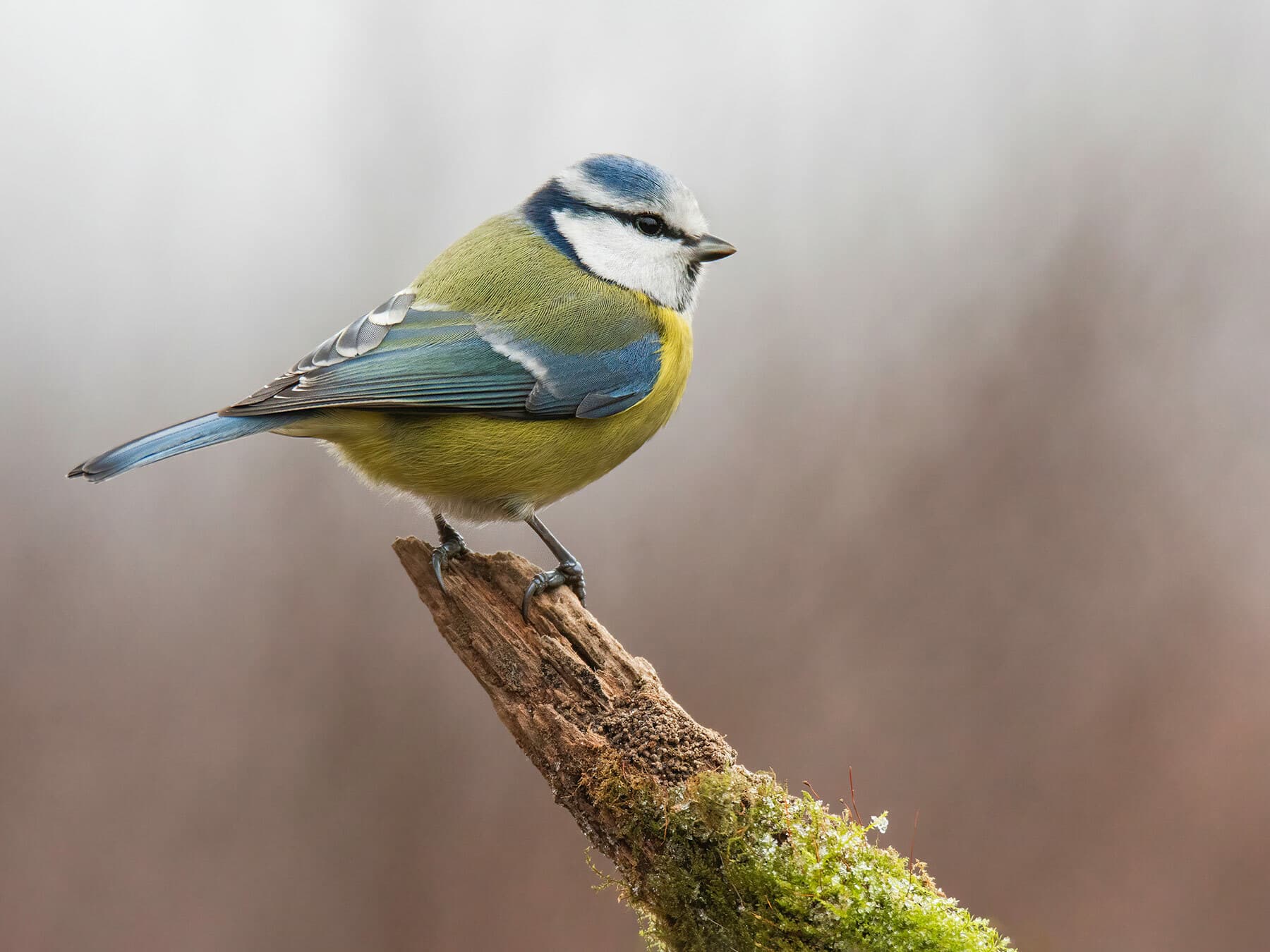
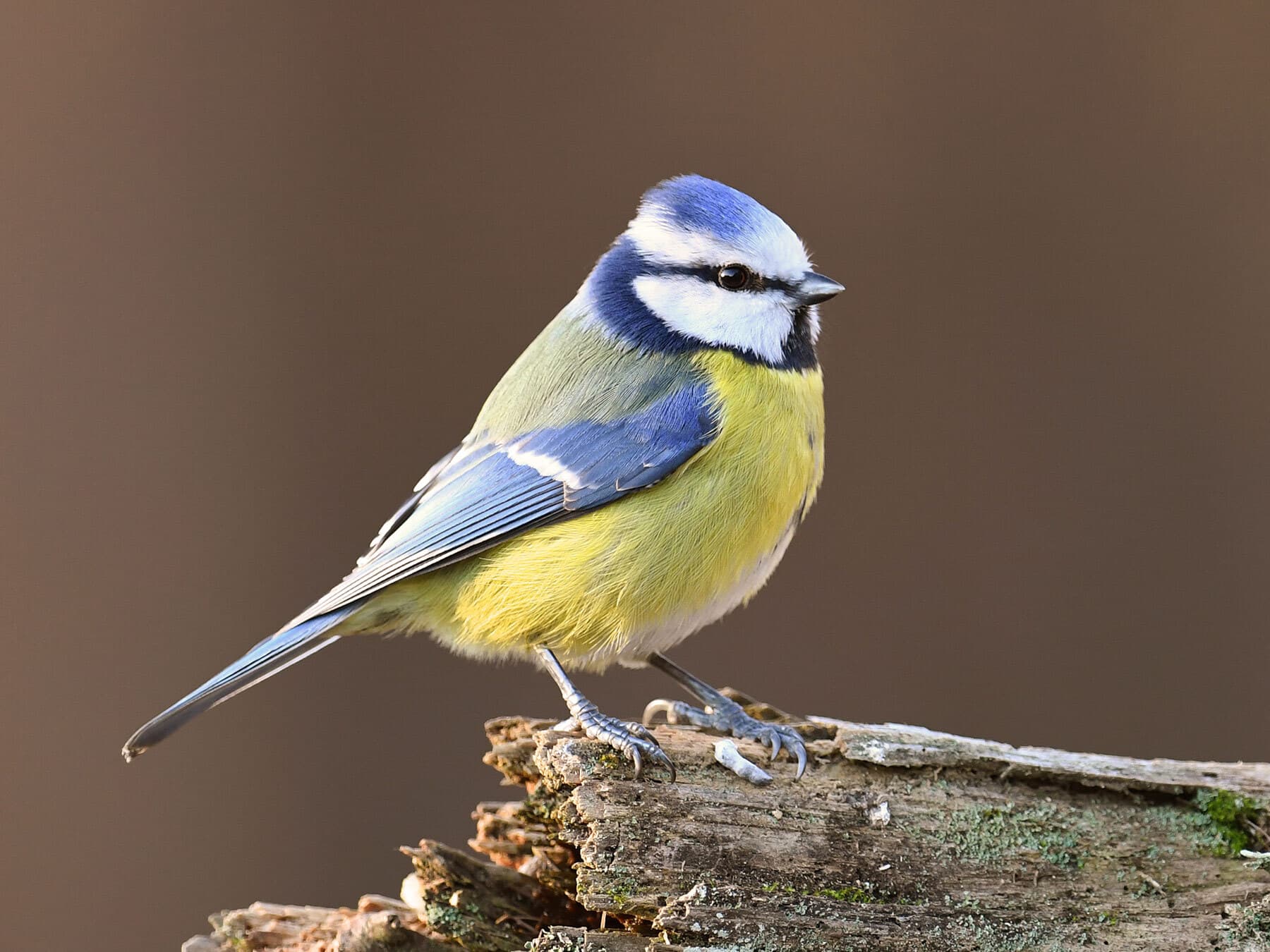
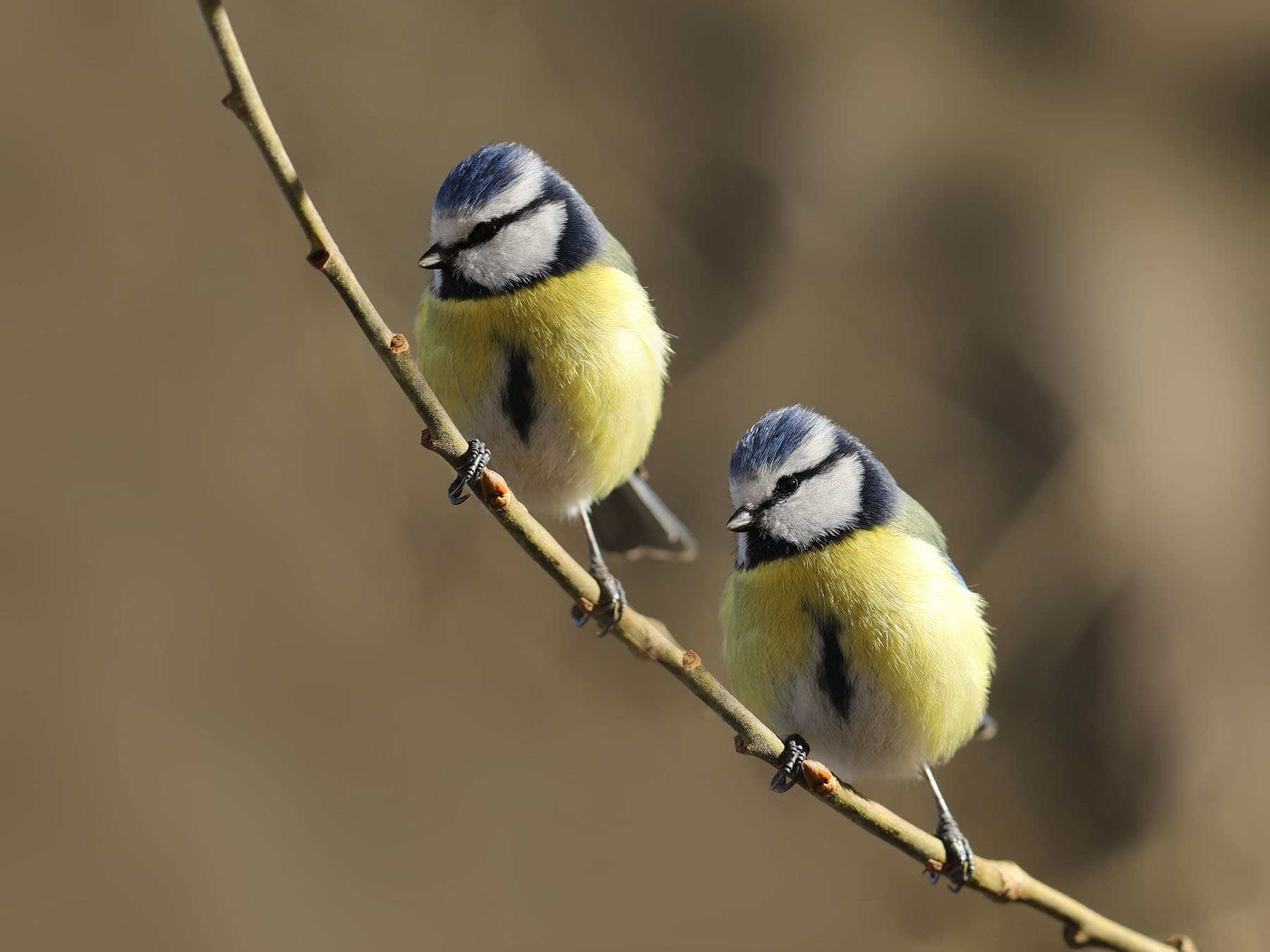
Male and female Blue Tits look almost the same to us; males are on average a little brighter. In ultraviolet light, which Blue Tits see, the sexes differ clearly. Young birds in summer have yellow faces.
On this page8 sections
This page is about telling Blue Tits apart: males from females, and young birds from adults. For the bird in general, see Blue Tit identification and facts; to separate it from its bigger cousin, see Blue Tit vs Great Tit.
Can you tell a male Blue Tit from a female?
Only roughly, and only with practice. To our eyes the sexes are very similar. On average a male is brighter: his cap and wings are a brighter blue, his back is greener and less olive, and his yellow is stronger, with less of an olive wash. But the ranges overlap, and a bright female can look like a dull male.1
So the honest answer is that most Blue Tits cannot be sexed at a glance. Side by side, the brighter bird of a pair is more likely to be the male. Ringers in the hand go further: the blue of the wing coverts may be the most reliable guide, and they age a bird first, because a young male can be as dull as an adult female.
What Blue Tits see that we don't
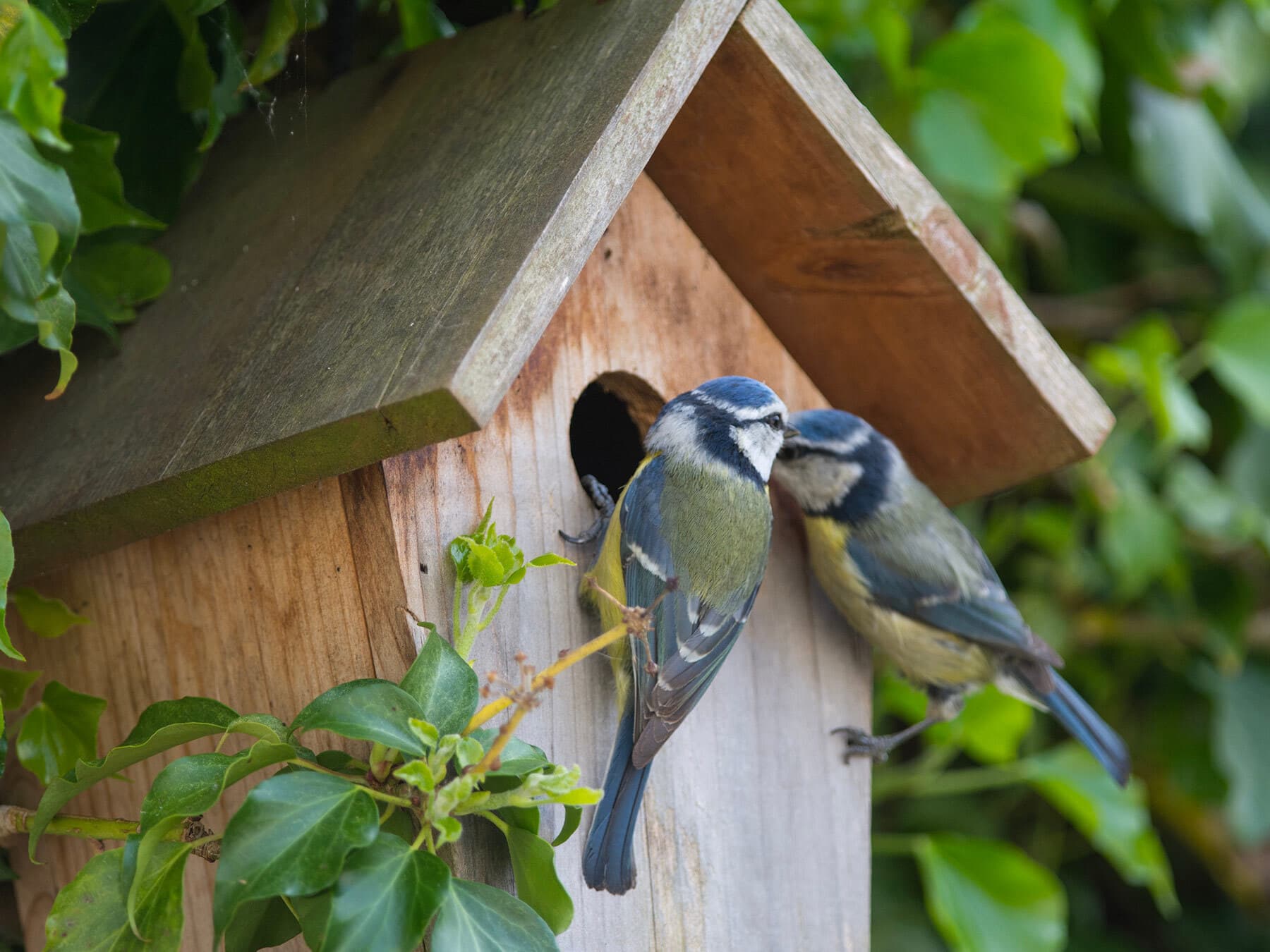
Birds see ultraviolet light, which we cannot. Measured in ultraviolet, a Blue Tit's blue crown reflects strongly, peaking at about 352 nanometres, and males and females differ clearly in several parts of the plumage, the crown included. In choice trials, females preferred the males with the brightest crowns.2
A second study found that males also have slightly larger crown patches, which they show off in courtship by holding the body level and raising their nape feathers. Among 18 breeding pairs, partners were matched by the ultraviolet colour of their crowns. In their own eyes, males and females look clearly different.3
What the female does
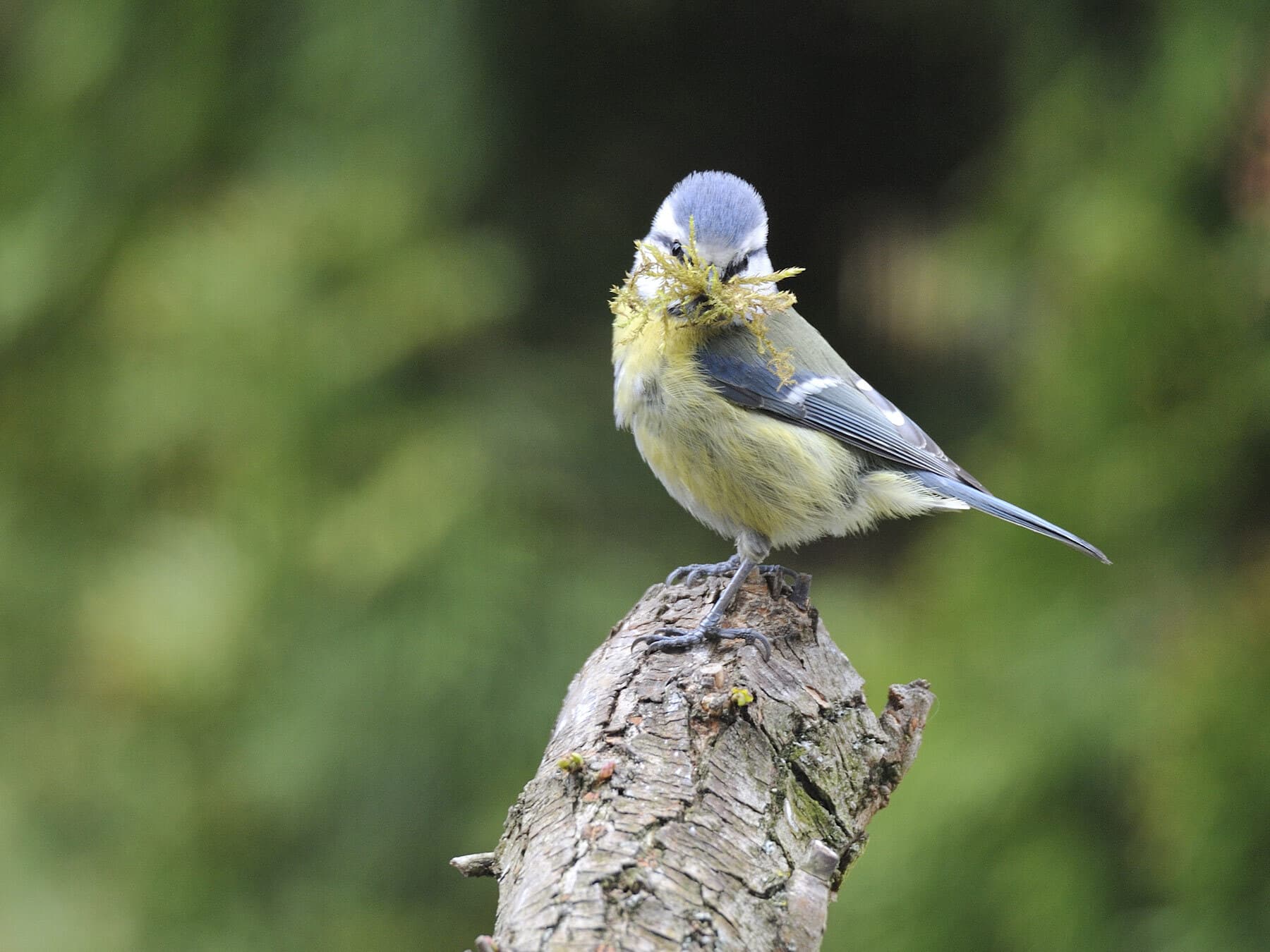
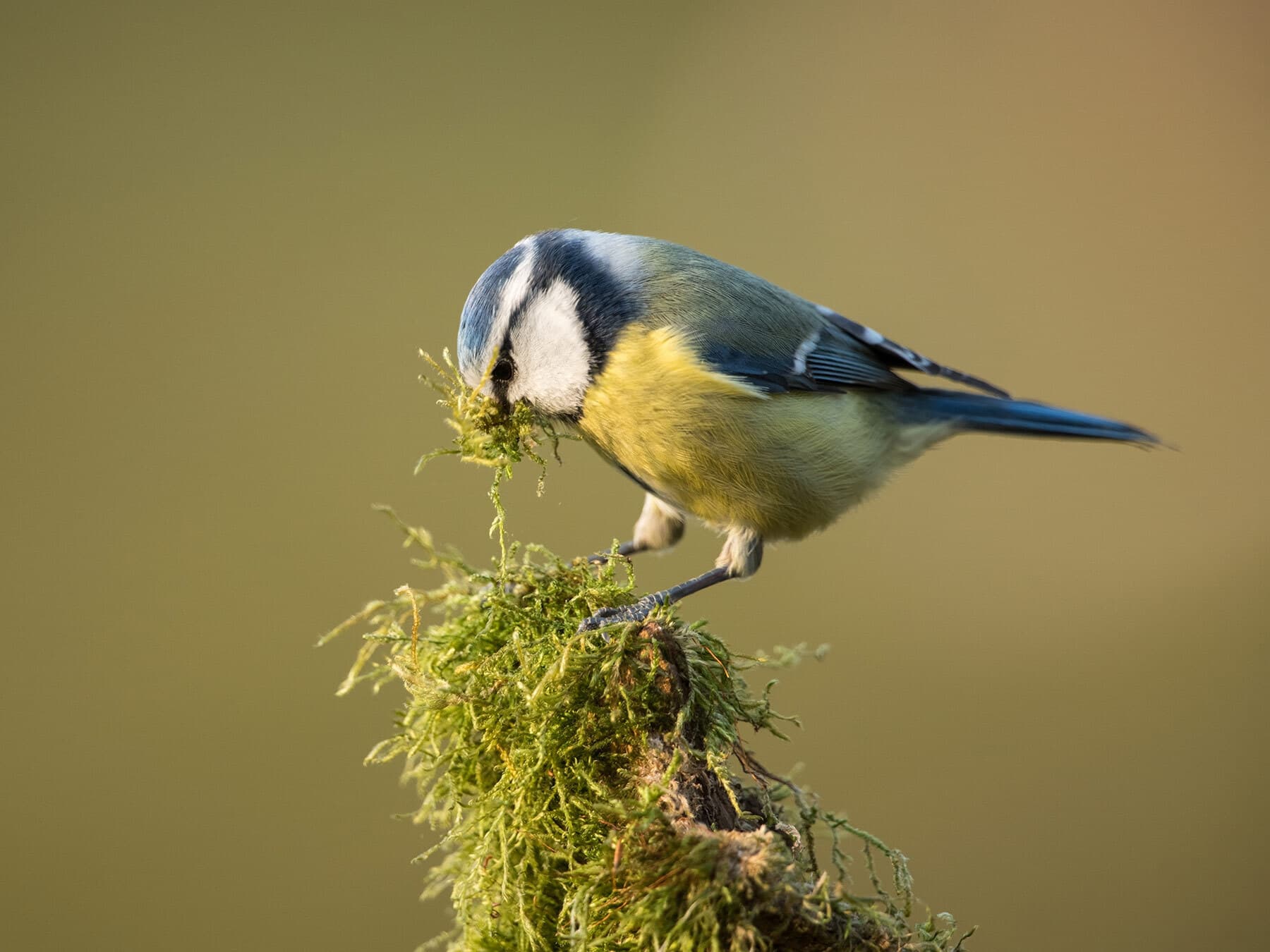
The female does the building, laying and incubating. In April she builds the nest alone, a cup of moss lined with feathers, fur or wool, usually over one to two weeks.4 She lays one egg a day, usually first thing in the morning, and starts incubating about a day before the clutch is complete. She sits for about two weeks, and keeps the newly hatched chicks warm.
So a Blue Tit carrying moss in April is almost certainly a female.
What the male does
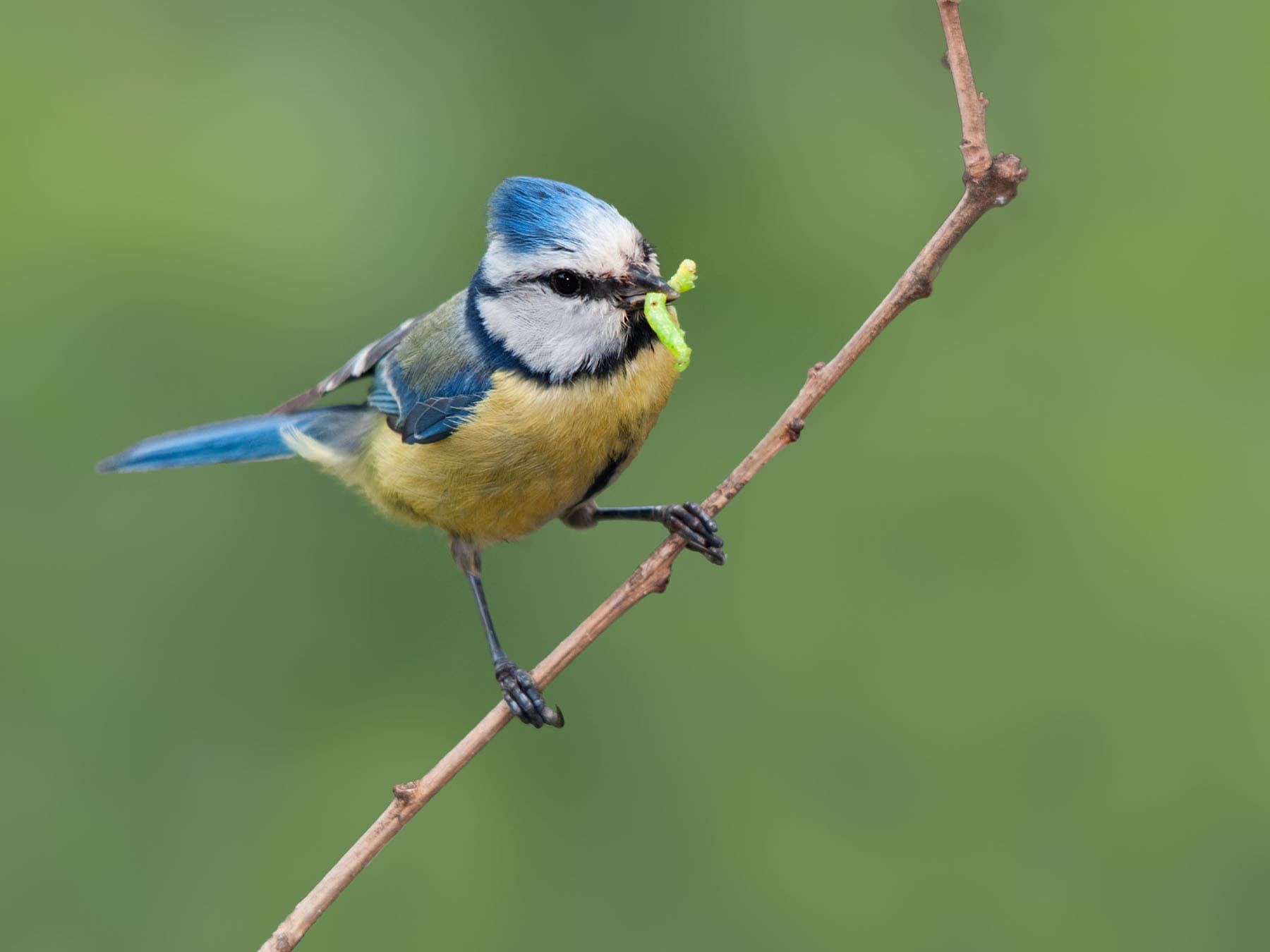
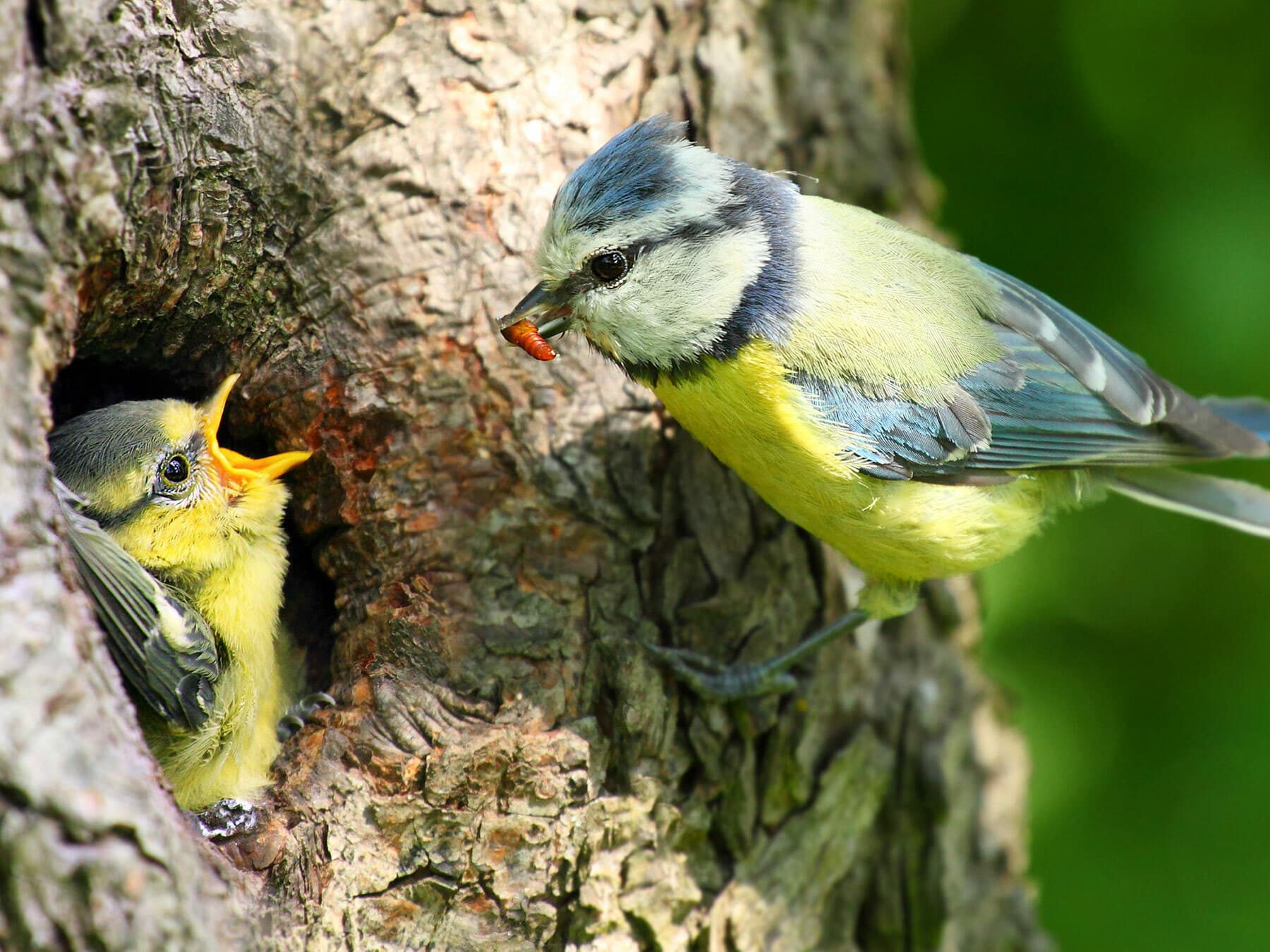
He courts her with slow, moth-like flights, a steep climb to 6 m or more and a dive, and a dance with his tail fanned and his nape raised to show his dark blue collar. Through laying and incubation he brings her food rich in protein. Once the chicks hatch, both parents feed them, while only the female broods them.
Pairs usually stay together for life. Where Blue Tits nest densely, some males have more than one mate, and such a male feeds the young in all their nests.
Do female Blue Tits sing?
Yes, and often. Females sing a song similar to the male's. In a three-year study of marked birds on the Lancaster University campus, females sang frequently, in disputes, alone and in alarm, but less than males, with smaller repertoires and shorter trills, and they were not heard singing at dawn.5 Both sexes give a high zeedle in courtship, and a female disturbed on the nest gives an explosive hiss.1 Listen to them: Blue Tit song and calls.
Young Blue Tits: the yellow face
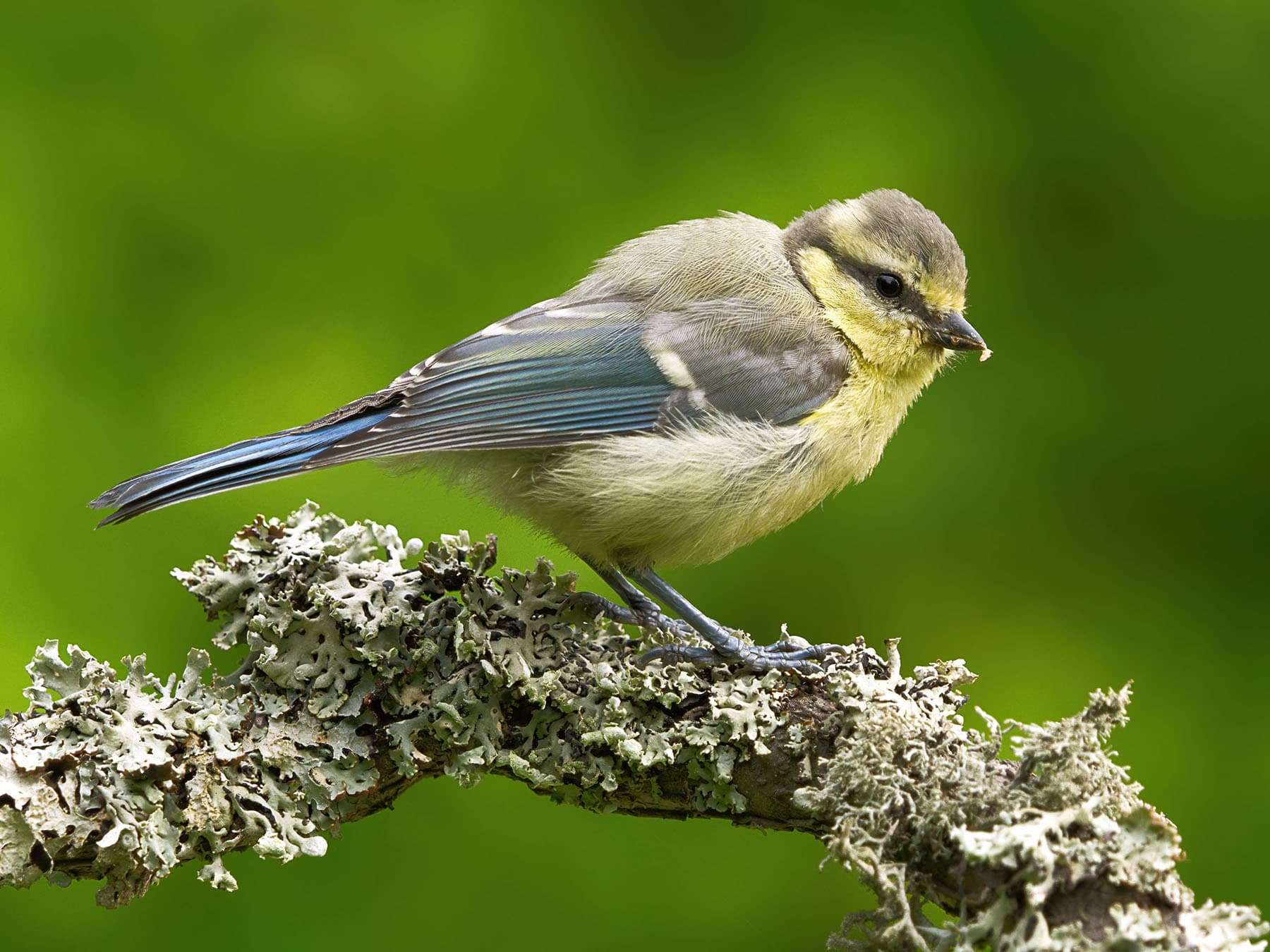
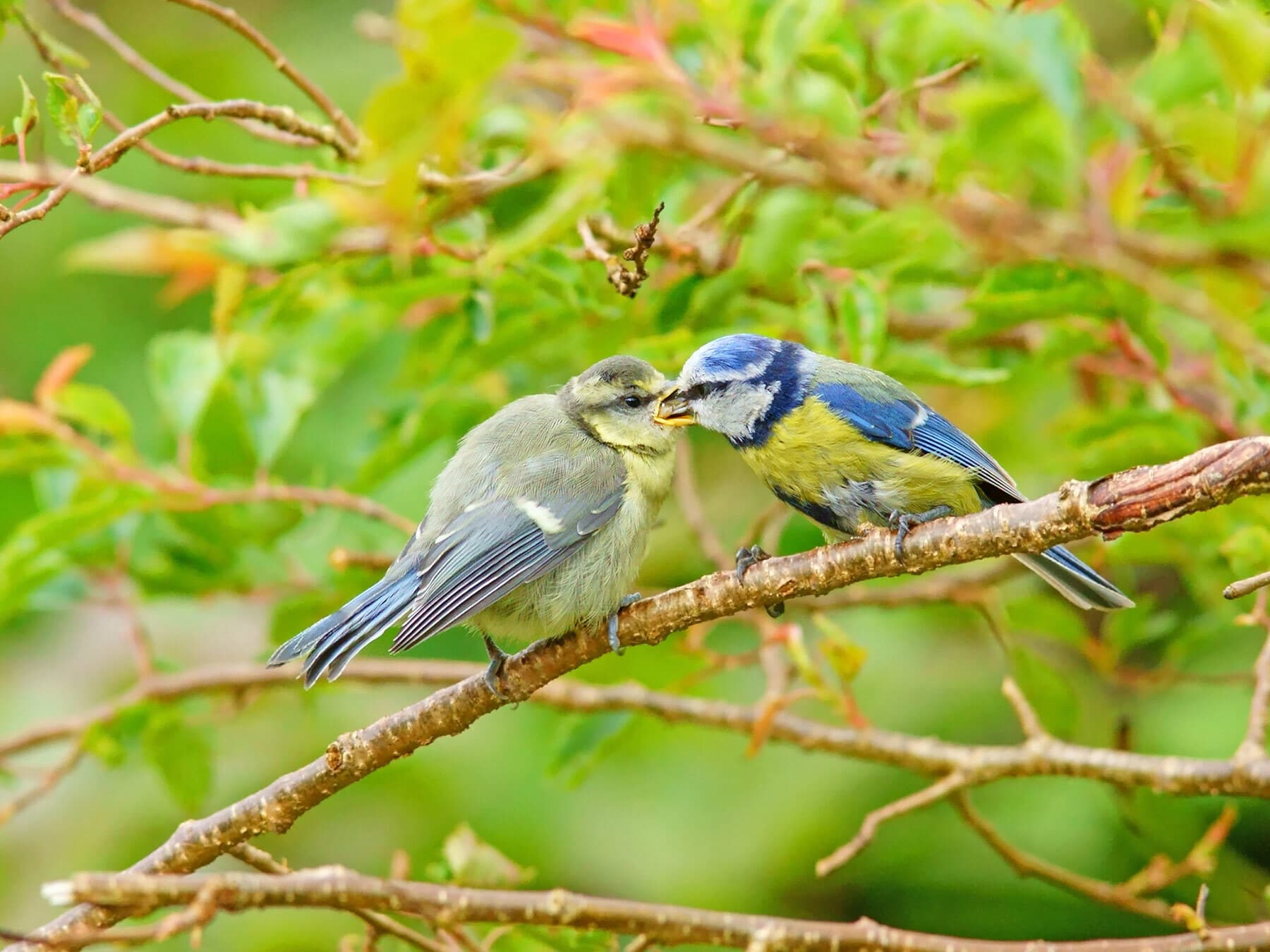
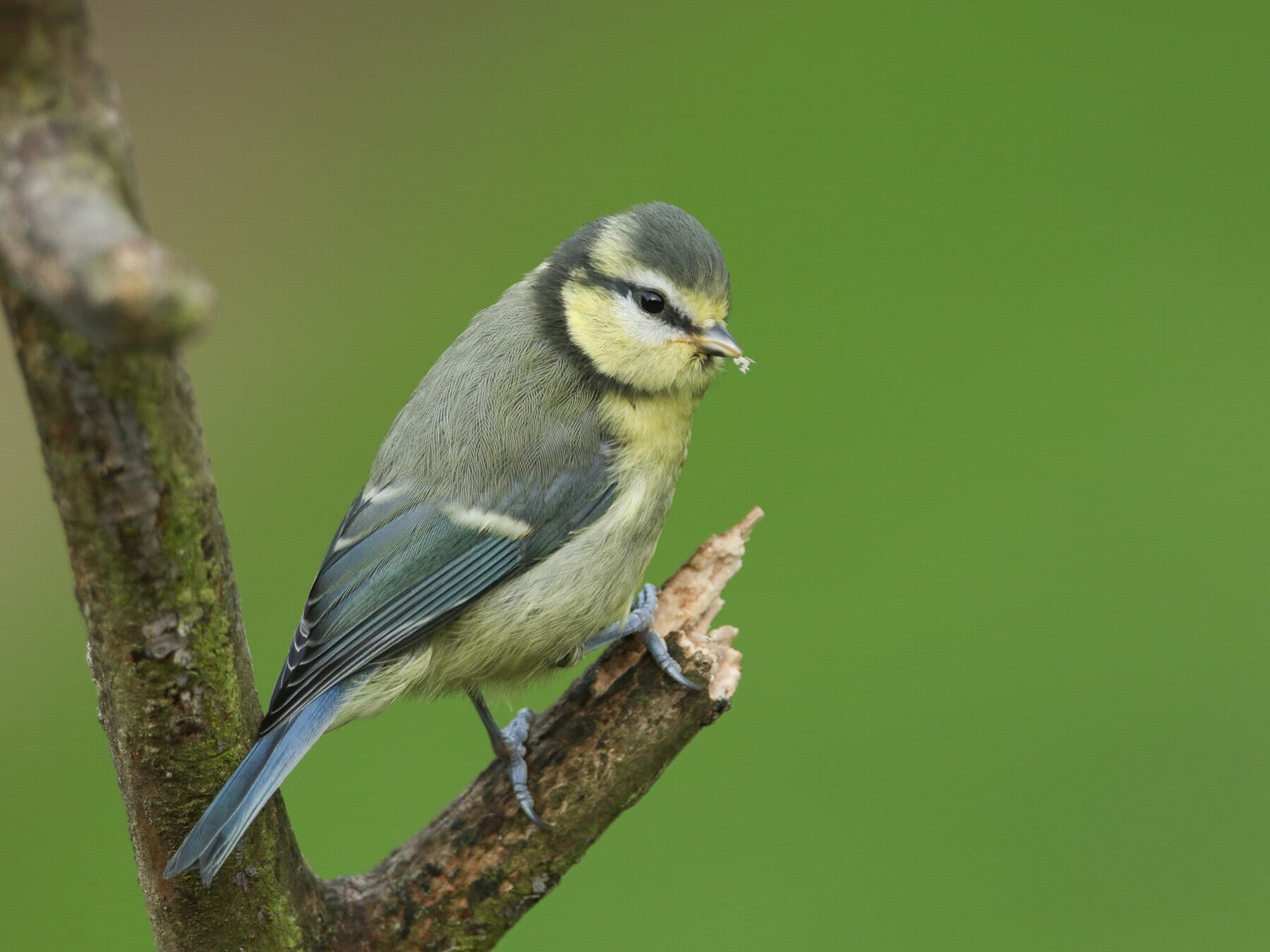
A young Blue Tit is the easiest to recognise. From June to August, look for a pale yellow face where an adult's is white, a dull olive cap with no blue, an olive-grey back and duller blue wings and tail.6 There is no dark line on the breast, and the bill often keeps yellow edges at first.
The young birds stay near where they hatched at first, and their parents feed them for a few weeks after they leave the nest. From about two months old they moult their body feathers and some wing feathers, and by autumn they look like adults.
Telling young Blue and Great Tits apart
Both have yellowish faces in summer. A young Great Tit is bigger, with a brownish cap and a grey bib and stripe down the breast7; a young Blue Tit has an olive cap and no breast stripe. Watch which adults come to feed them. More: Blue Tit vs Great Tit.
Sources
- Kirwan, G. M., Gosler, A., Clement, P., Christie, D. A., Pyle, P. (2024). Eurasian Blue Tit (Cyanistes caeruleus), version 1.1. Birds of the World (J. del Hoyo, A. Elliott, J. Sargatal, D. A. Christie, E. de Juana and M. G. Smith, editors). Cornell Lab of Ornithology. doi:10.2173/bow.blutit.01.1
- Hunt, S., Bennett, A. T. D., Cuthill, I. C., Griffiths, R. (1998). Blue tits are ultraviolet tits. Proceedings of the Royal Society B 265: 451-455. doi:10.1098/rspb.1998.0316
- Andersson, S., Örnborg, J., Andersson, M. (1998). Ultraviolet sexual dimorphism and assortative mating in blue tits. Proceedings of the Royal Society B 265: 445-450. doi:10.1098/rspb.1998.0315
- McCambridge, H.. A Blue Tit Diary. BTO Masterclass articles. Accessed 7 October 2026. Source
- Sierro, J., de Kort, S. R., Riebel, K., Hartley, I. R. (2022). Female blue tits sing frequently: a sex comparison of occurrence, context, and structure of song. Behavioral Ecology 33(5): 912-925. doi:10.1093/beheco/arac044
- BTO. Identifying young birds. BTO Develop your skills. Accessed 7 October 2026. Source
- Kirwan, G. M., Sly, N. D., Gosler, A., Clement, P., Christie, D. A., Moura, N., Pyle, P. (2024). Great Tit (Parus major), version 2.0. Birds of the World (G. M. Kirwan and N. D. Sly, editors). Cornell Lab of Ornithology. doi:10.2173/bow.gretit1.02
- BTO. Blue Tit (Cyanistes caeruleus). BTO BirdFacts. Accessed 7 October 2026. Source
- RSPB. Blue tit. RSPB Birds A-Z. Accessed 7 October 2026. Source