Facts · Updated 7 Oct 2026
Blue Tit vs Great Tit: How to Tell Them Apart
By the Birdfact teamChecked by Nathan Cope
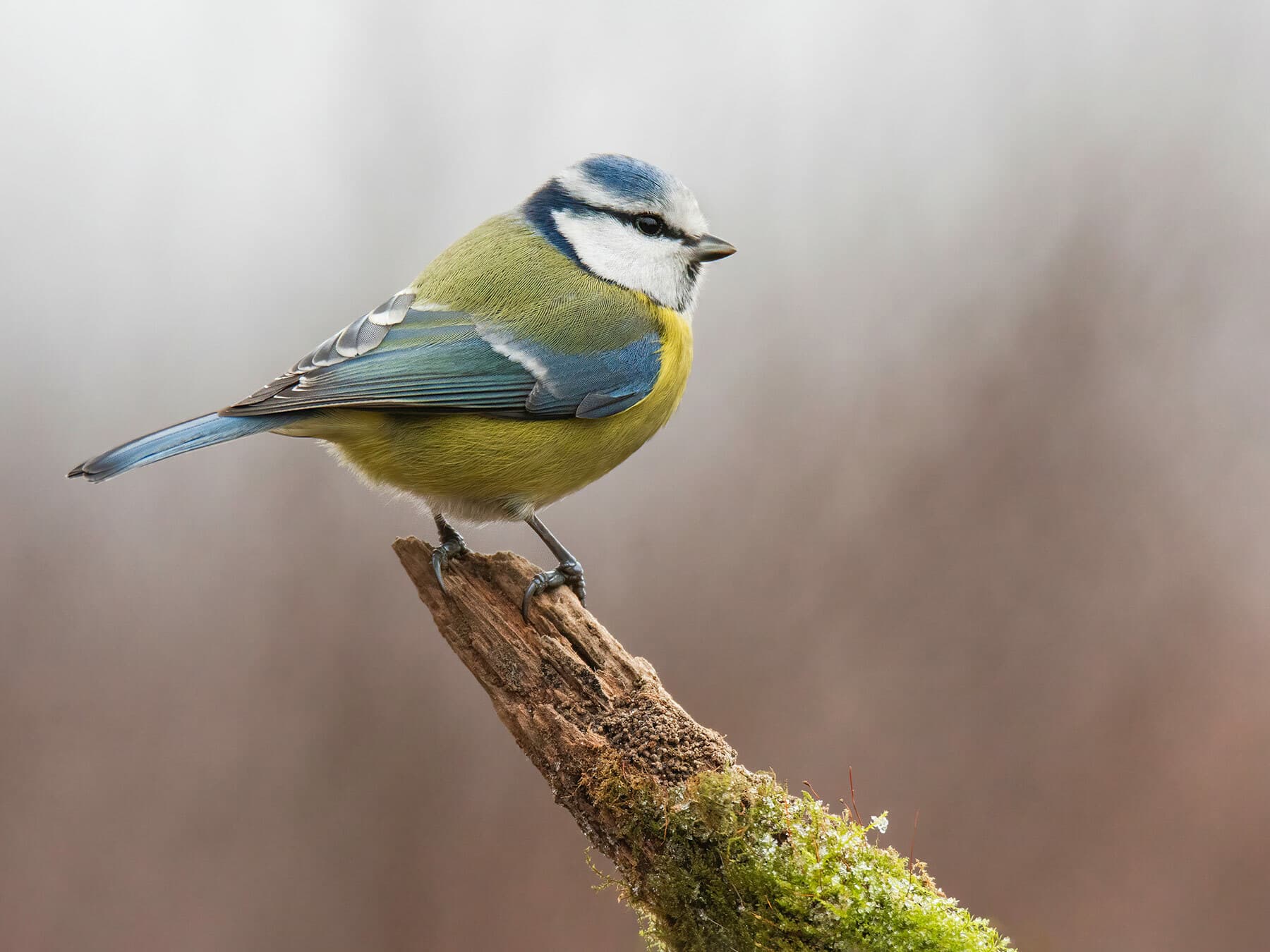
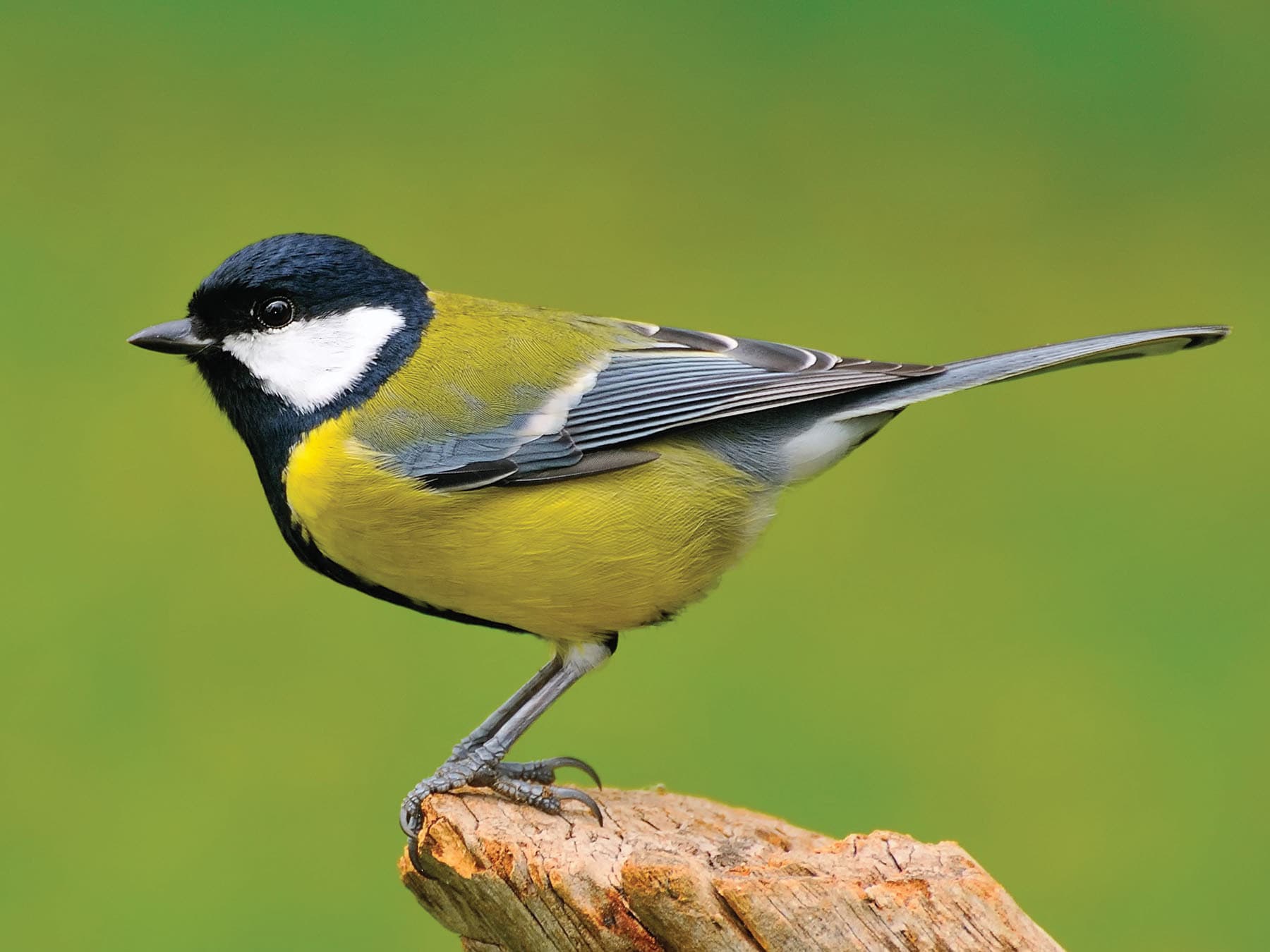
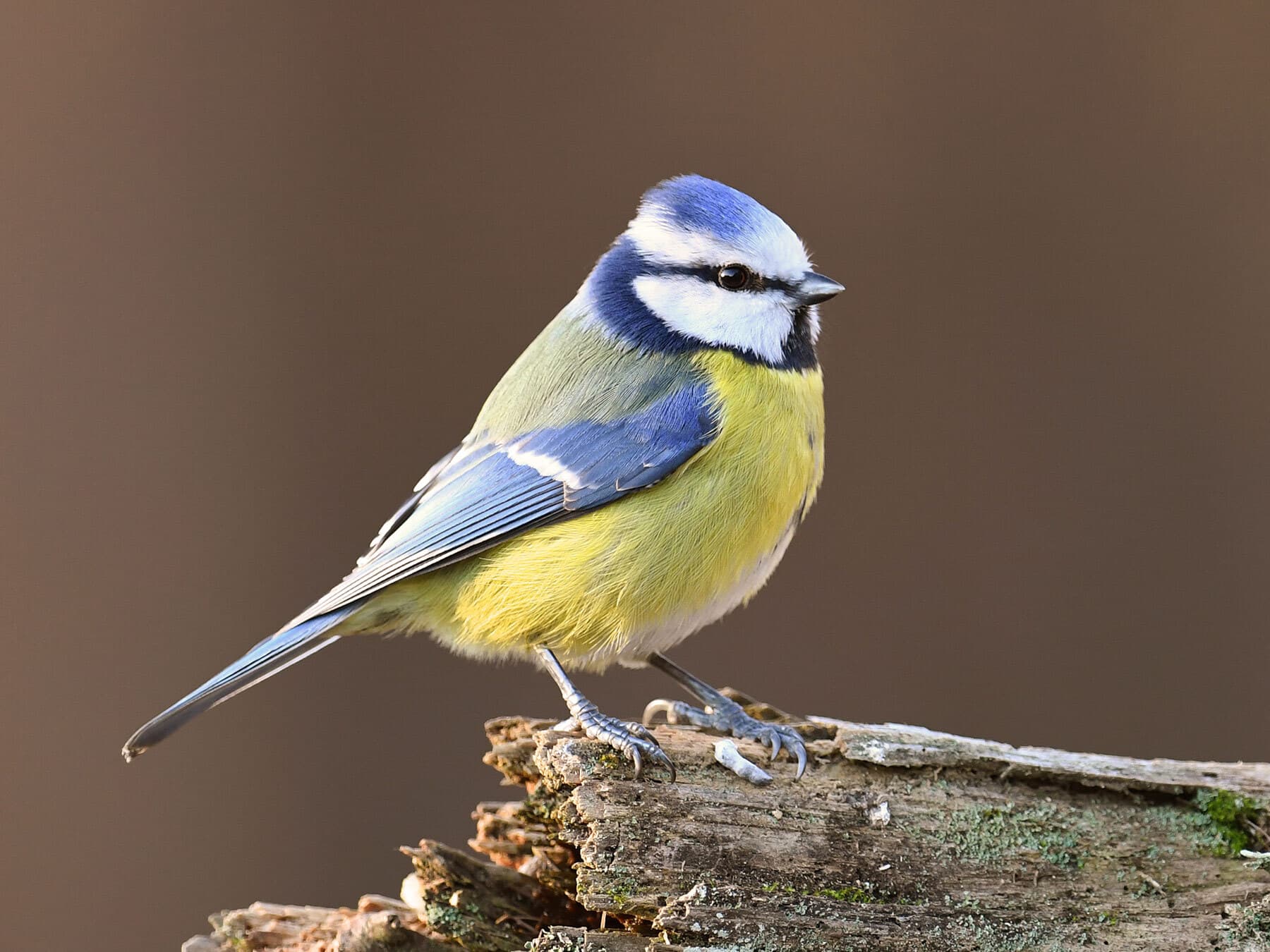
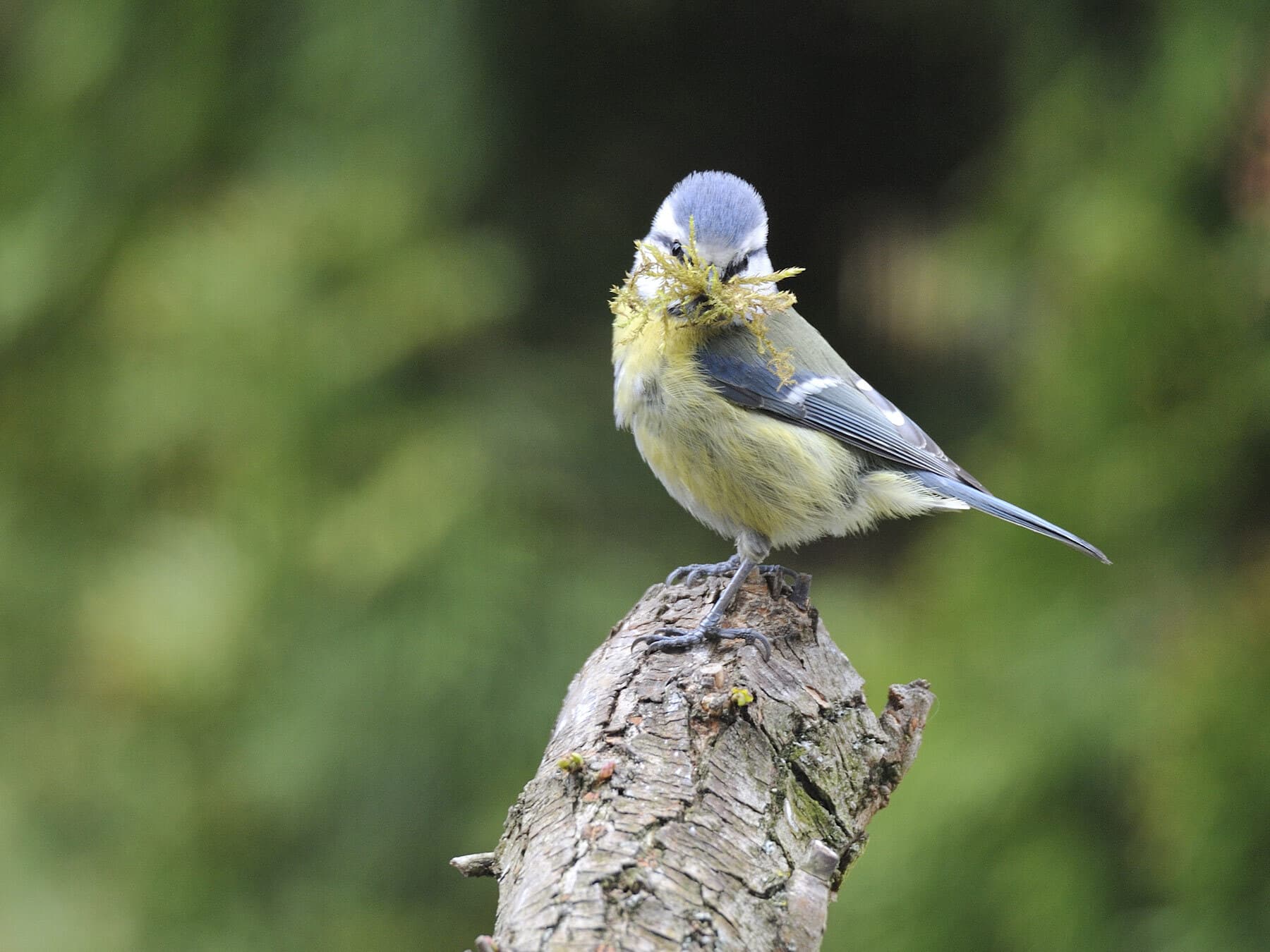
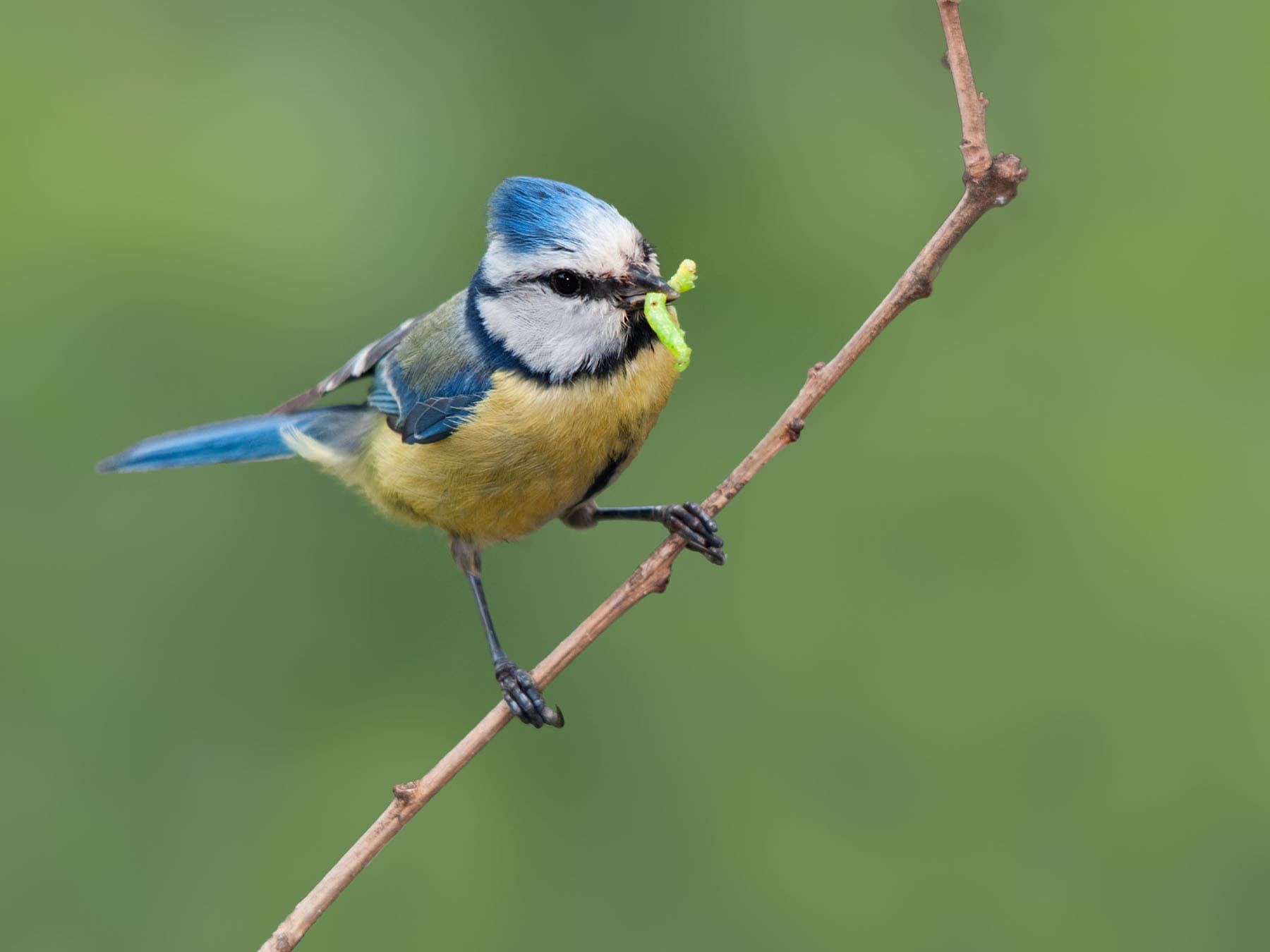
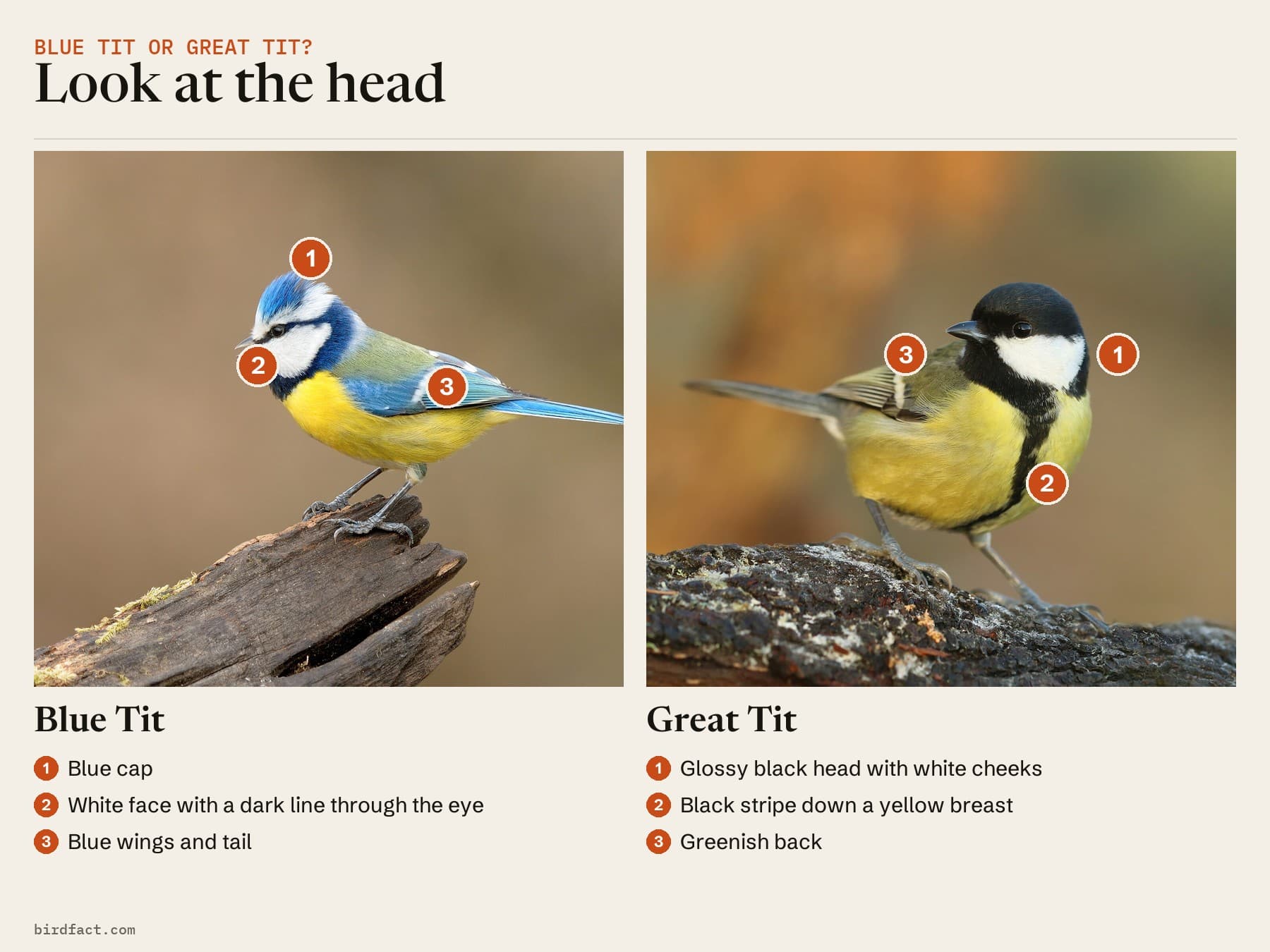
Look at the head. A Great Tit has a black cap and big white cheeks and a black stripe down its yellow breast; a Blue Tit is smaller, with a blue cap ringed in white and a dark line through the eye.
On this page13 sections
Side by side, to scale
3D models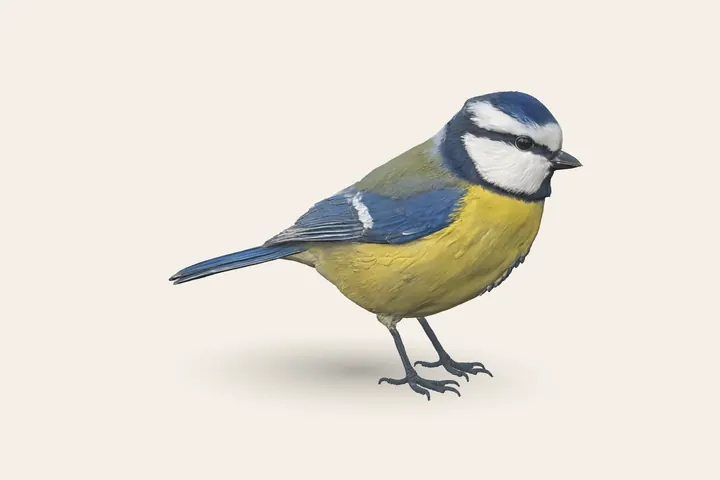
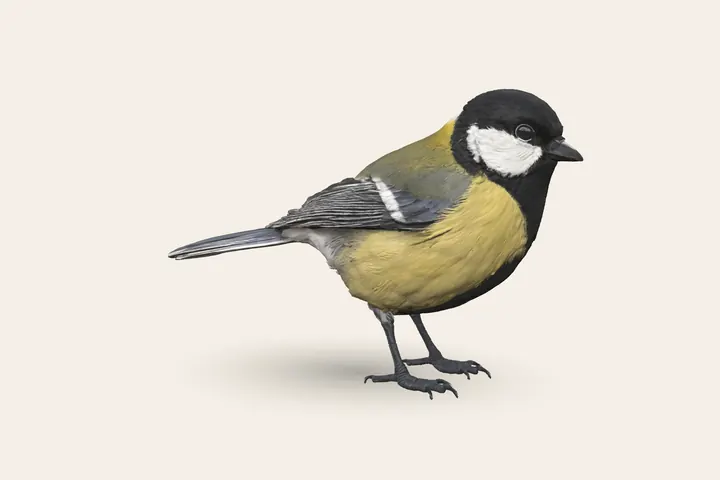
A Great Tit is about a quarter longer than a Blue Tit.
3D models · lengths from each species page · How we make our birds · Report a problem
© 2026 NC Digital Limited (Birdfact). All rights reserved. These 3D models may be viewed on this page and shared by link only. Downloading, extracting, copying or reusing them, or using them to train machine-learning models, is not permitted without our written permission. Using our models
Blue Tit or Great Tit at a glance
| Great Tit | Blue Tit | |
|---|---|---|
| Length | 14 cm | 12 cm |
| Weight (UK adults) | 18.6 g | 10.9 g |
| Cap | Glossy black, down to the eye | Blue, ringed with white |
| Face | Big white cheeks inside black | White, with a thin dark line through the eye |
| Breast | Yellow, split by a broad black stripe | Yellow; at most a faint dark line |
| Back and wings | Green back, blue-grey wings, one white bar | Olive-green back, blue wings and tail, a narrow white bar |
| Song | Loud, sharp tea-cher, tea-cher | High, lilting notes, often ending in a trill |
| Young (June to August) | Like a dull female, cheeks tinged yellow | Yellow face, olive cap, no blue |
| UK breeding population | 2.4 million territories | 3.4 million territories |
Size and shape
The Great Tit is the bigger bird: about 14 cm long against the Blue Tit's 12 cm.1 The difference in weight is greater than it looks. Adults weighed by BTO ringers average 18.6 g for a Great Tit and 10.9 g for a Blue Tit, so a Great Tit is about 1.7 times as heavy.2, 3
Side by side, the Blue Tit is compact and round, with a small bill, a short tail and a rather square head. The Great Tit is sturdier, with a longer tail and a bigger, black-and-white head.
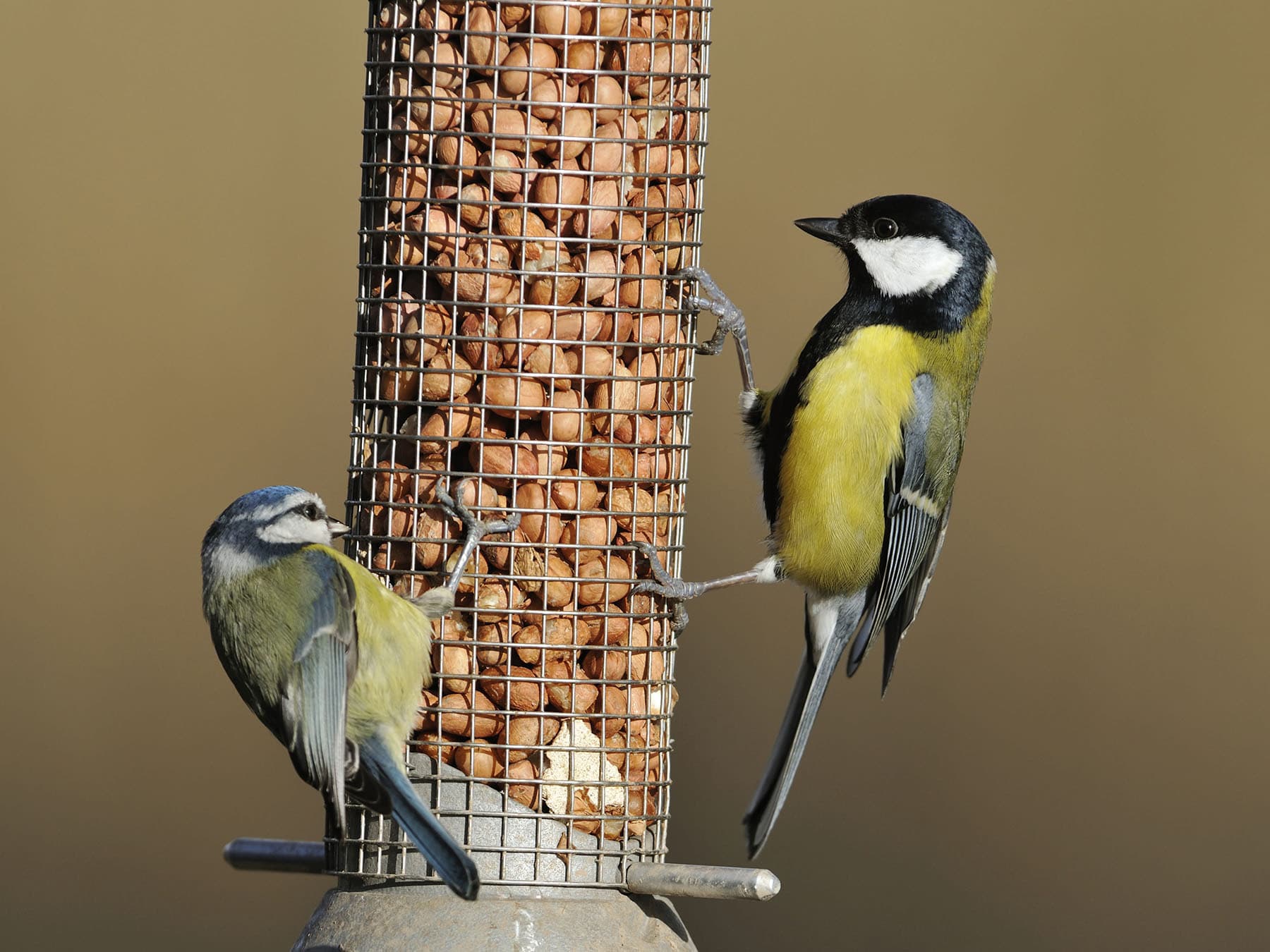
The head: the quickest way to tell them apart
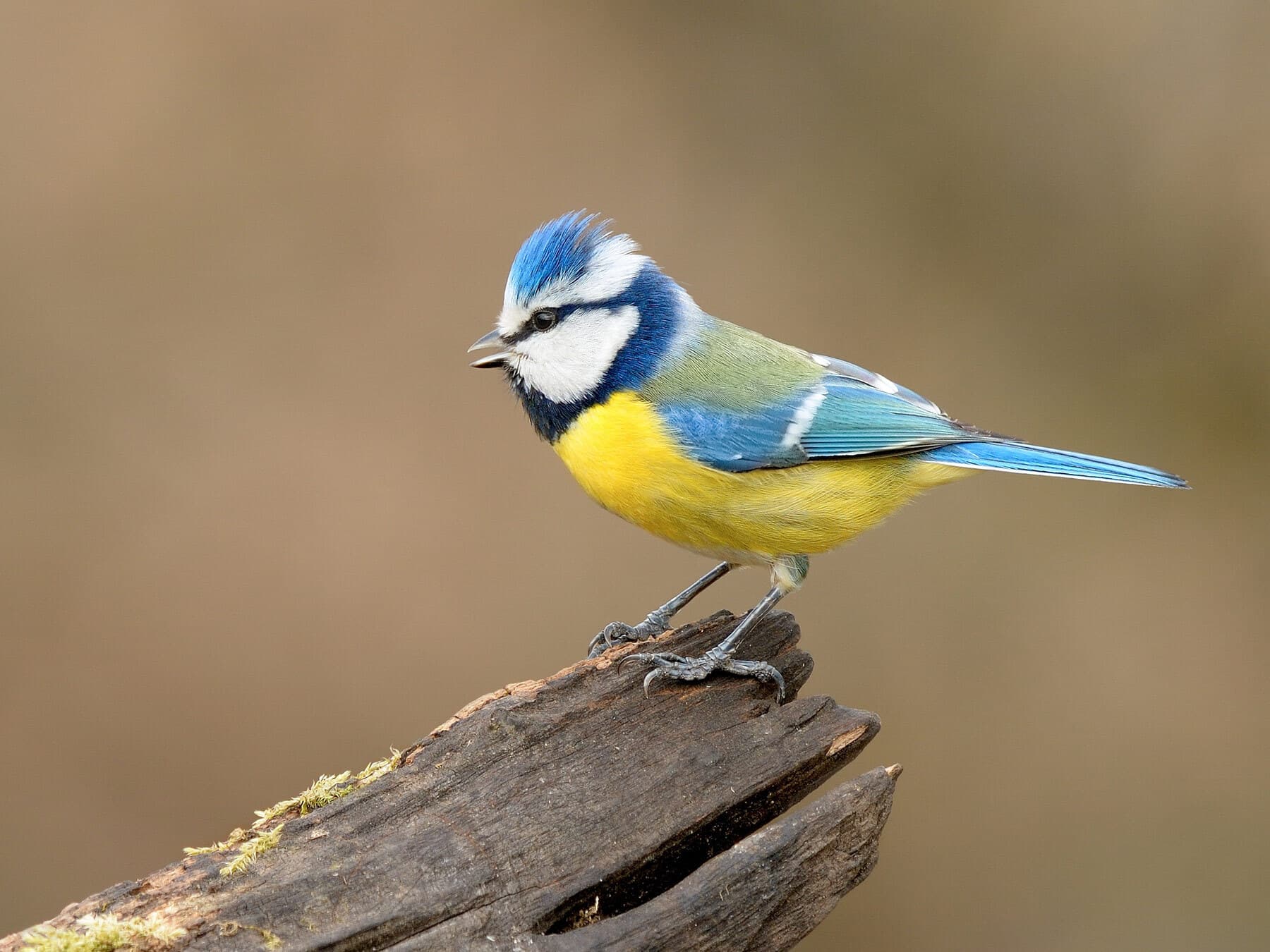
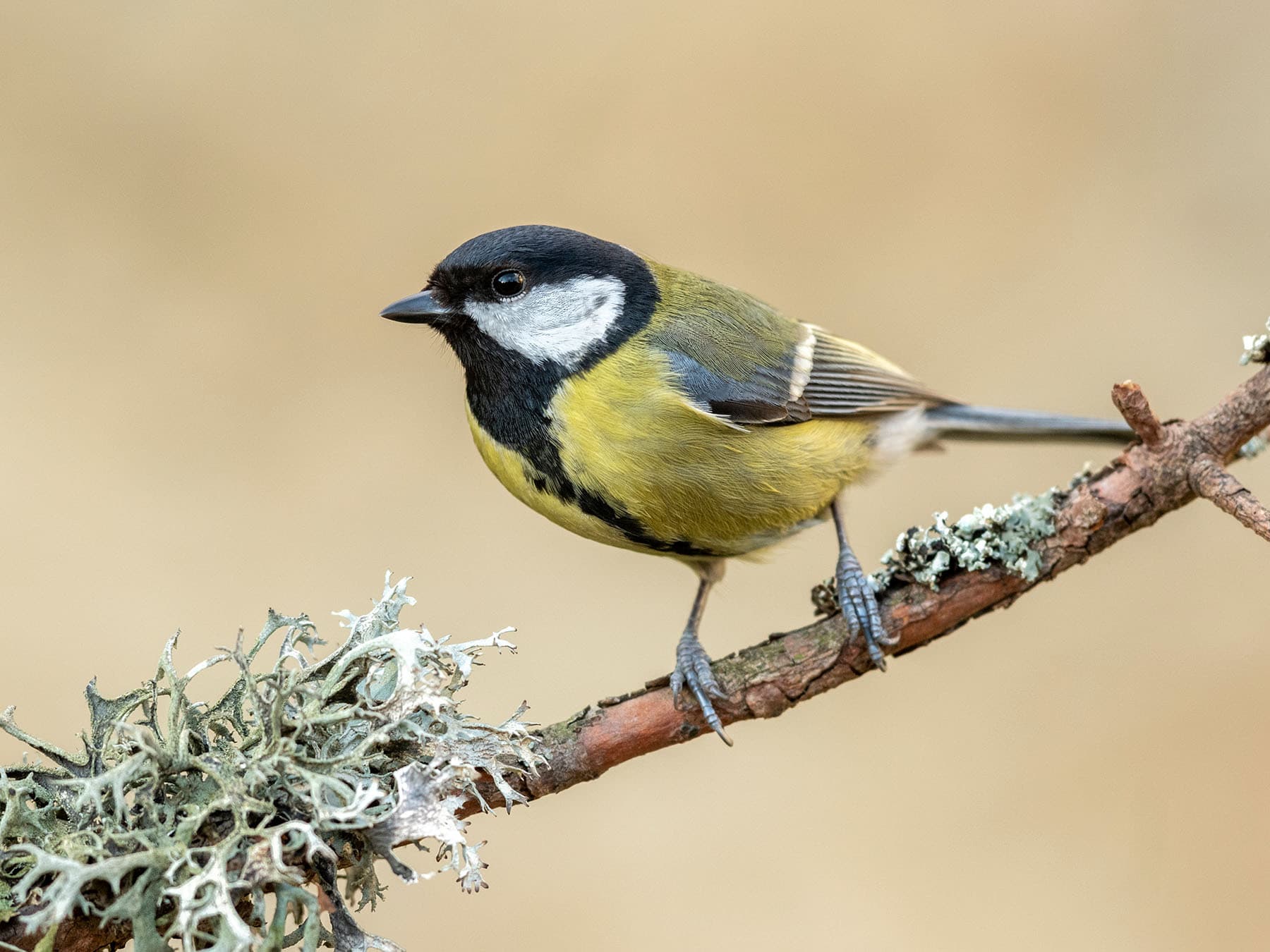
A Great Tit's head is black and white: a glossy black cap down to the eye and a big white cheek patch, ringed with black. A Blue Tit's head is blue and white: a blue cap ringed with white, a white face, and a thin dark line running through the eye to the back of the neck. If you see blue on the crown, it is a Blue Tit.4
The breast stripe
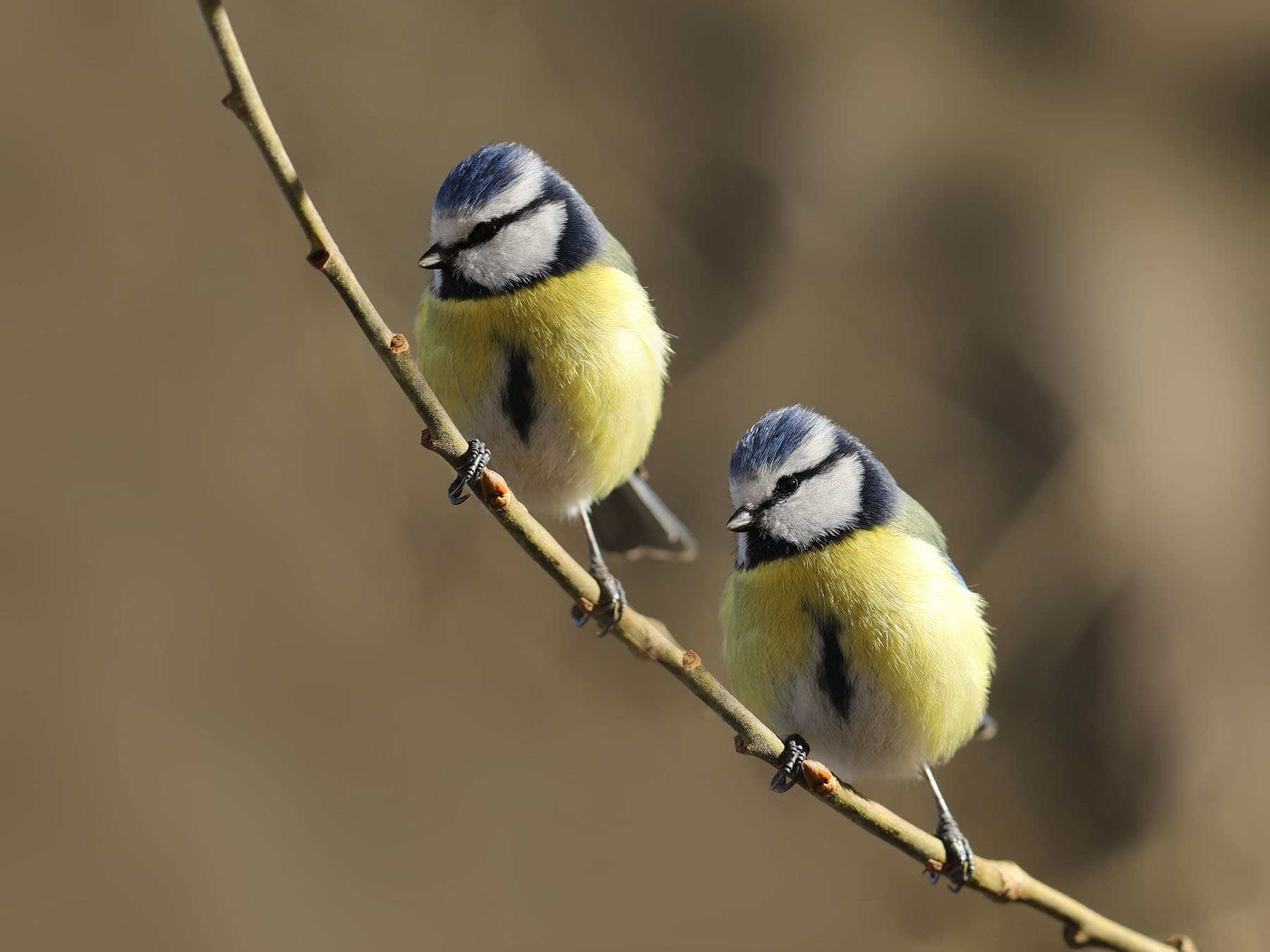
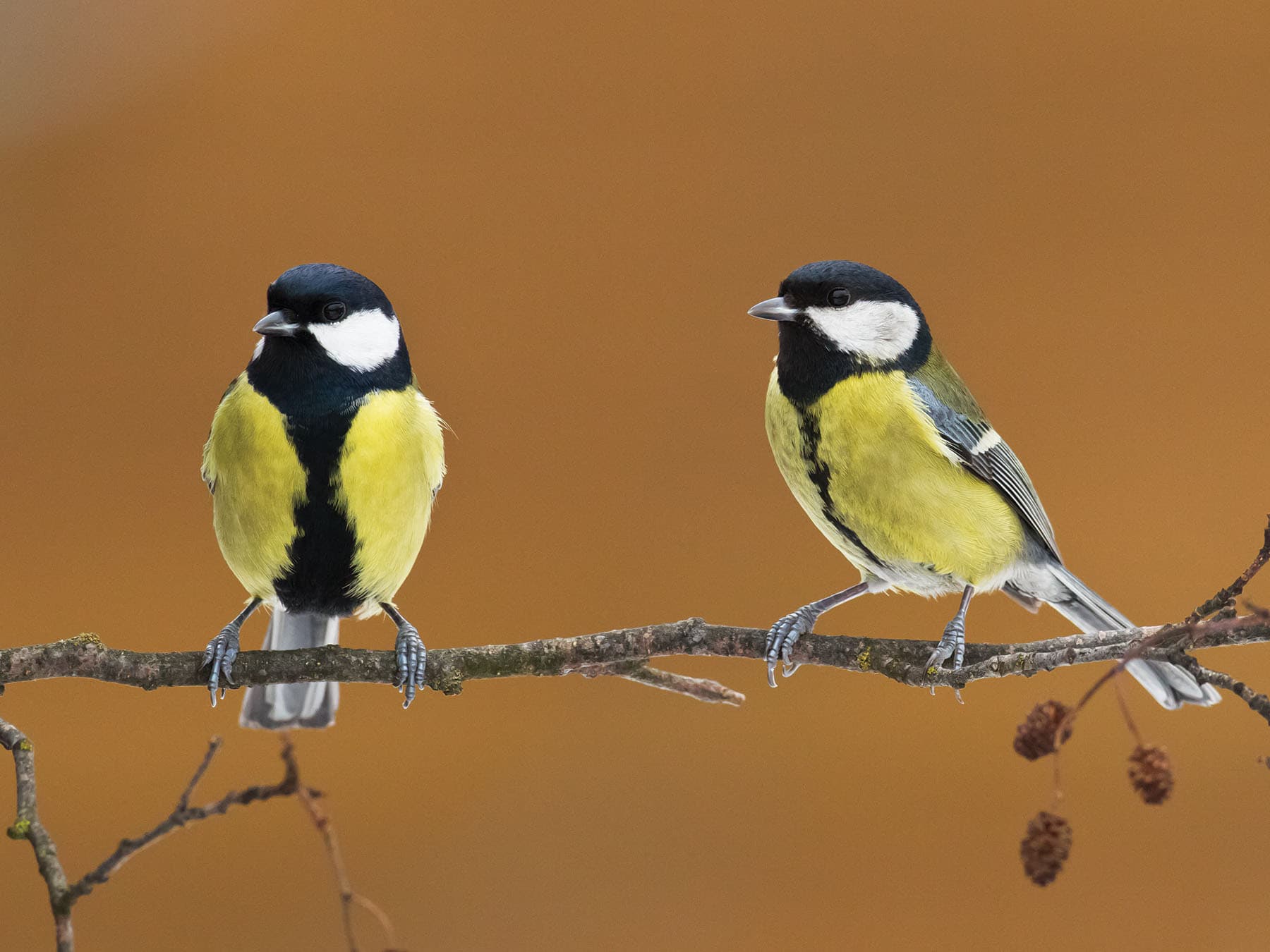
Both birds are yellow below, so look at the middle of the breast. A Great Tit has a black stripe running straight down from its black bib, broad in males. A Blue Tit has at most a narrow, blackish line, often hidden, and it does not join the small black bib under the chin.
Wings, back and tail
A Great Tit has a green back and blue-grey wings with a single bold white bar, and white edges to the tail. A Blue Tit has an olive-green back, but its wings and tail are a brighter blue, with a narrower white bar.
Young Blue Tits and young Great Tits
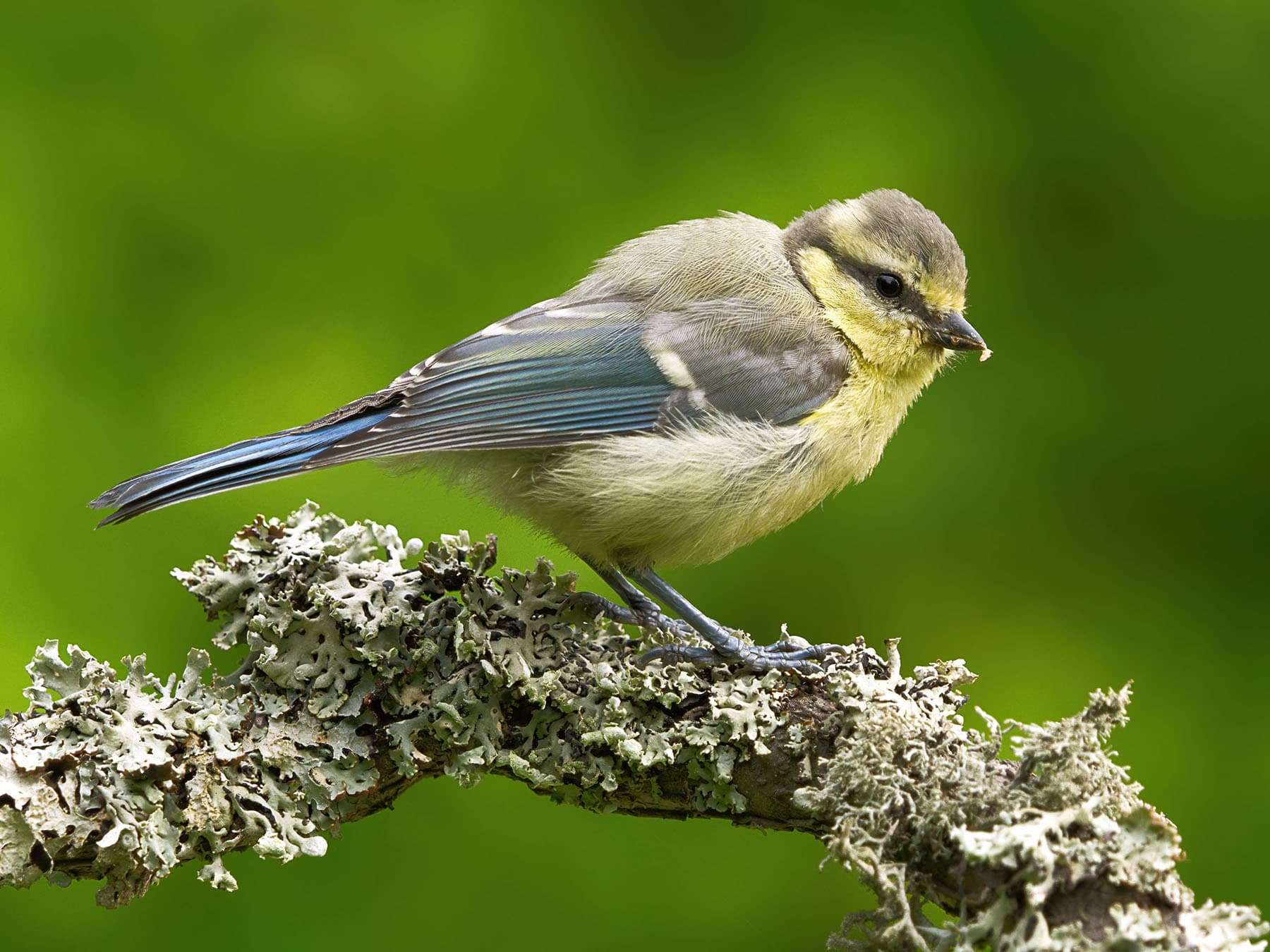
In summer the newly fledged young cause most of the confusion. A young Blue Tit has no blue cap and no white face at all: its forehead, eyebrows and cheeks are a dull yellow, its cap is dark olive, and there is no dark line on the breast. Its wings and tail are already blue, only duller.4
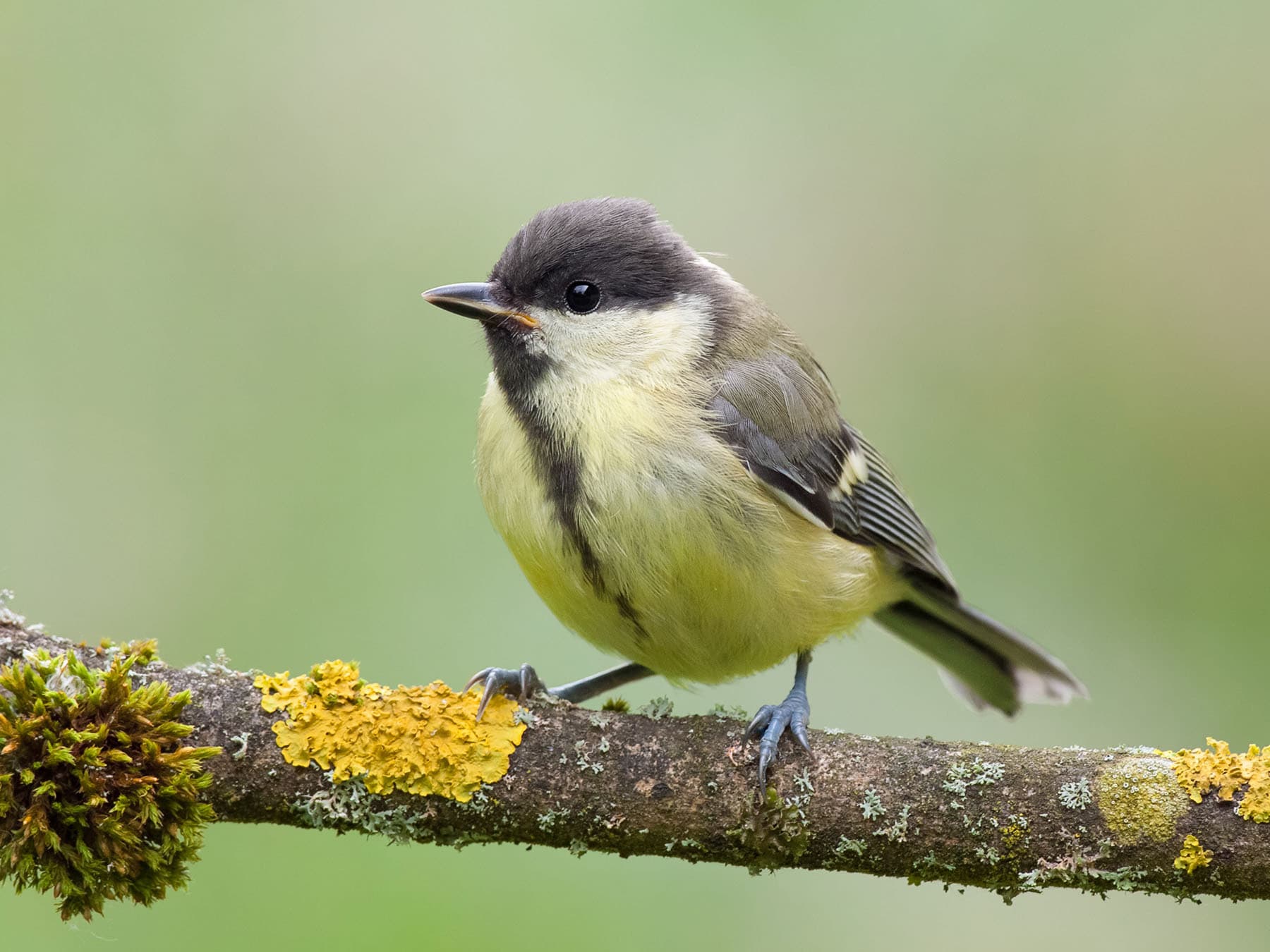
A young Great Tit looks like a washed-out female: a brownish cap, cheeks tinged yellow, and a dark grey bib and breast stripe. Both replace their body feathers in a partial moult between July and September. More on young Great Tits: Great Tit nesting.
Males and females
Male and female Great Tits differ in the width of the breast stripe: broad in males, widening between the legs; narrow and often broken in females. Male and female Blue Tits are very alike. On average males are a little brighter blue and yellow, but the difference is hard to see in the field.
Song and calls
The Great Tit's song is a loud, sharp tea-cher, tea-cher, a two- or three-note phrase repeated several times. The Blue Tit's is a clear, high, lilting phrase, often running into a trill, something like tsee-tsee-tsee-tsu-hu-hu-hu-hu.4 More: Great Tit song and calls.
Both scold with a churring call when a predator is about. A Blue Tit's churr rises at the end and often follows thin pit notes, and its contact call is a short, thin tsee. A Great Tit has many more calls, including a loud metallic tink.
Behaviour
Blue Tits are restless and acrobatic. They feed at every level of a tree, often hanging by one leg from a thin twig or a leaf, and come down to the ground only briefly. Great Tits feed mostly on the lower and inner branches and often on the ground, especially in winter.
At feeders and in winter flocks the Great Tit is the boss: it is the top bird in mixed tit flocks and can chase smaller tits off a bird table. Seeing four or five Blue Tits on a feeder together can mean 20 or more are using it, the RSPB says.1
Their pair bonds differ too. A Blue Tit pair usually stays together for life, while Great Tit pairs in western Europe split after nesting and, if both survive, often get back together by January.
Nesting
Both nest in holes and both take readily to nest boxes. A box with a 32 mm entrance hole suits both, and the BTO advises a 28 mm hole only for a box meant for Blue Tits alone.5
In Britain both lay their first eggs around 26 April on average. Blue Tits lay slightly larger clutches, typically 8 to 10 eggs against the Great Tit's 7 to 9, and smaller eggs, about 16 by 12 mm against 18 by 14 mm. Both incubate for 13 to 14 days and the young of both fly at 18 to 21 days. Each usually raises one brood a year.2, 3
The two compete for holes and sometimes lay in each other's nests. Blue Tits tend to drop eggs into Great Tit nests, while Great Tits take over Blue Tit nests and add their own eggs.
Which is more common?
The Blue Tit. The BTO estimated 3.4 million Blue Tit territories in the UK in 2016, against 2.4 million for the Great Tit, and both are found in 90% of the 10-km squares in Britain and Ireland. Since 1967 Great Tits have increased faster: by 67% against 20% for Blue Tits. Competition with Great Tits may be one reason the Blue Tit's rise has been smaller.3
How long do they live?
A bird of either species that survives to breed typically lives about 3 years. The oldest on the BTO's ringing records for Britain and Ireland are a Great Tit of 10 years, 10 months and 29 days and a Blue Tit of 9 years, 8 months and 16 days.6
Sources
- RSPB. Blue tit. RSPB Birds A-Z. Accessed 7 October 2026. Source
- BTO. Great Tit (Parus major). BTO BirdFacts. Accessed 6 October 2026. Source
- BTO. Blue Tit (Cyanistes caeruleus). BTO BirdFacts. Accessed 7 October 2026. Source
- Kirwan, G. M., Gosler, A., Clement, P., Christie, D. A., Pyle, P. (2024). Eurasian Blue Tit (Cyanistes caeruleus), version 1.1. Birds of the World (J. del Hoyo, A. Elliott, J. Sargatal, D. A. Christie, E. de Juana and M. G. Smith, editors). Cornell Lab of Ornithology. doi:10.2173/bow.blutit.01.1
- BTO. Buying a nest box. Accessed 6 October 2026. Source
- BTO (2024). Longevity records for Britain & Ireland in 2024. BTO Online Ringing Report. Accessed 6 October 2026. Source
- Kirwan, G. M., Sly, N. D., Gosler, A., Clement, P., Christie, D. A., Moura, N., Pyle, P. (2024). Great Tit (Parus major), version 2.0. Birds of the World (G. M. Kirwan and N. D. Sly, editors). Cornell Lab of Ornithology. doi:10.2173/bow.gretit1.02
- RSPB. Great tit. RSPB Birds A-Z. Accessed 6 October 2026. Source