Facts · Updated 8 Oct 2026
Do Blue Tits Migrate? Where Blue Tits Go in Winter
By the Birdfact teamChecked by Nathan Cope
No: British Blue Tits stay all year, most within 10 km of where they hatched. In winter they roam in mixed flocks and visit gardens. A few continental Blue Tits reach Britain, one from Lithuania.
On this page8 sections
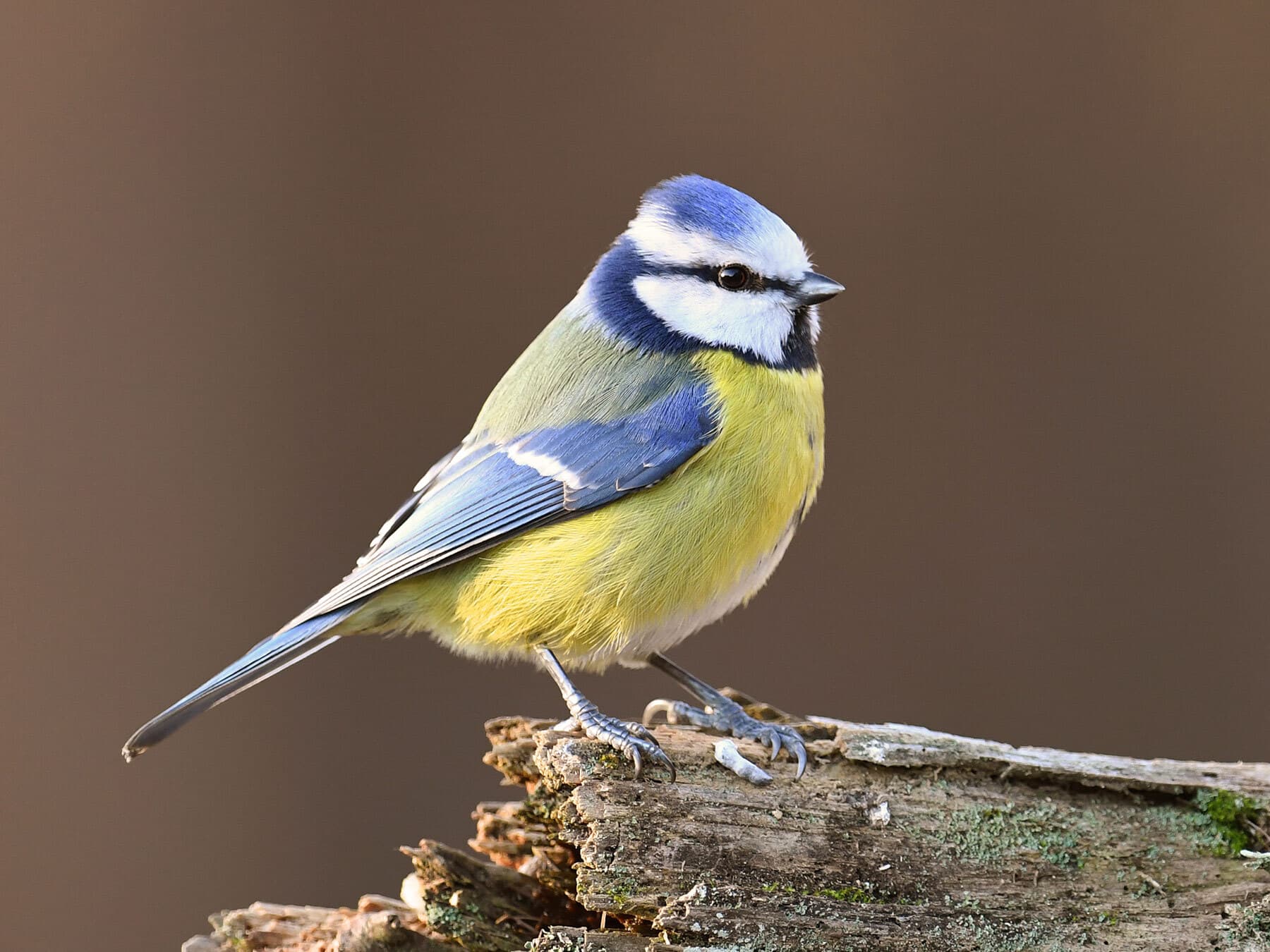
This page covers where Blue Tits go: in Britain, across Europe and through the year. For the bird in general, see Blue Tit identification and facts.
Do Blue Tits migrate?
British and Irish Blue Tits do not migrate. They stay all year, most of them close to where they hatched. Ringing in Britain shows that most movements are of 2 to 28 km, and 95% of ringed birds found again were within 10 km of where they were ringed; females wander a little farther than males.1
Long moves do happen, rarely. Of the BTO's 98,456 Blue Tit recoveries in Britain and Ireland, the longest included a female ringed at Haytor in Devon in June 2022 and caught in the Highlands in May 2024, 732 km to the north.2
Blue Tits from the Continent
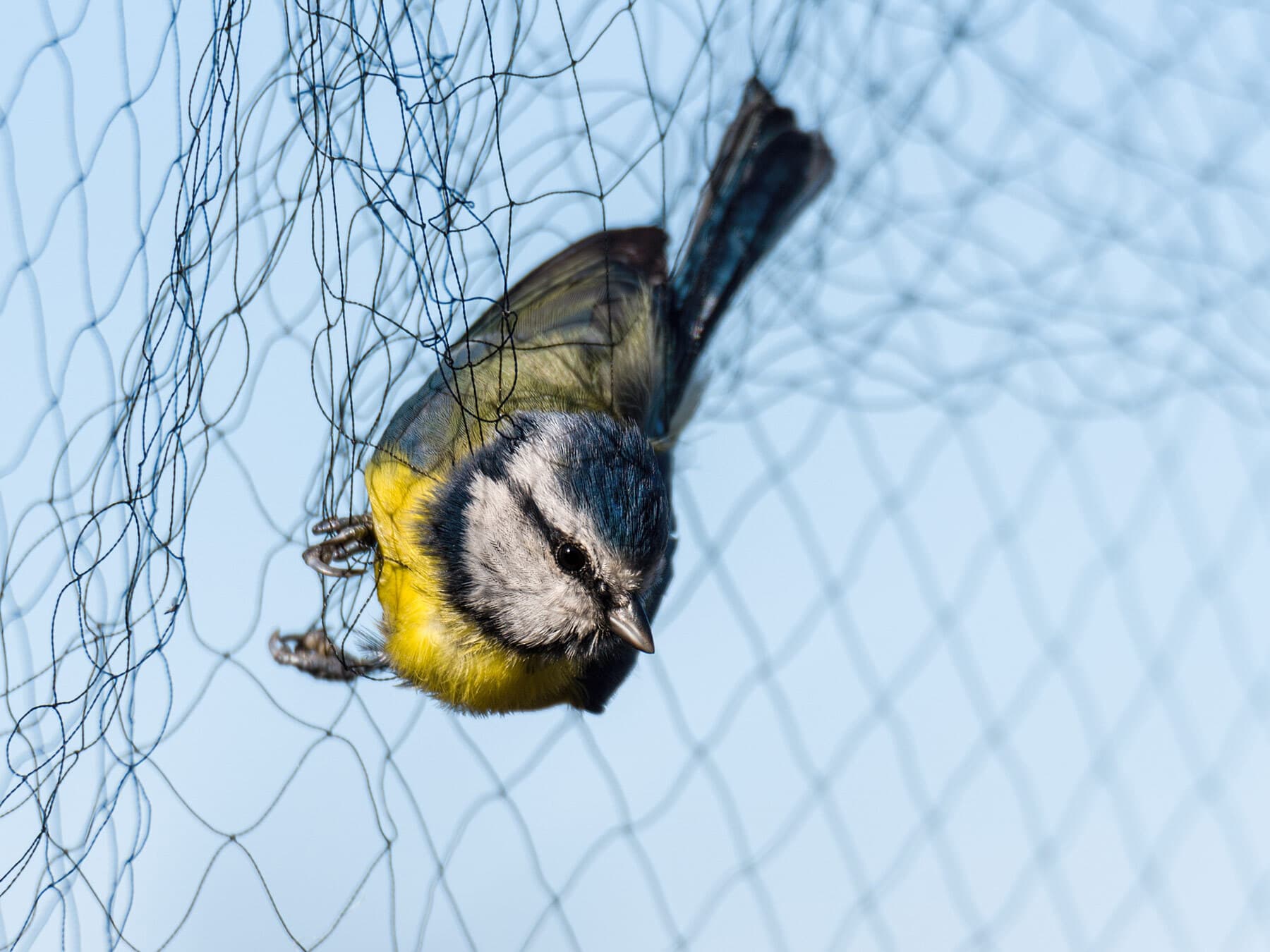
In the north of their range Blue Tits are part migrants. Young birds and adult females from northern Europe move south and west from September to late October, some as far as the Mediterranean; the longest ringing journeys are over 2,000 km.
A few reach Britain. Ringers in Britain and Ireland have found 22 Blue Tits ringed abroad, 13 of them from Norway. One adult male, ringed at Ventės Ragas in Lithuania on 15 September 2015, was caught at Sandwich Bay in Kent on 23 March 2016, 1,389 km to the west.
In some years far more come. In the autumn of 1957, when numbers were high, large numbers of Blue Tits moved from the north and north-east along the southern North Sea coast, and many arrived on the east and south coasts of Britain. So the Blue Tits at your feeder in winter are probably local, but one might have hatched elsewhere in northern Europe.3
Where do Blue Tits go in winter?
Nowhere far. After the breeding season, pairs stay near their territory and join roaming flocks, often with Long-tailed Tits, Goldcrests and Treecreepers. A flock's range, up to about 10 ha, covers several breeding territories. They spread into a wider range of places too, including reedbeds and scrub. Towards the end of winter the flocks break up as pairs take back their territories.
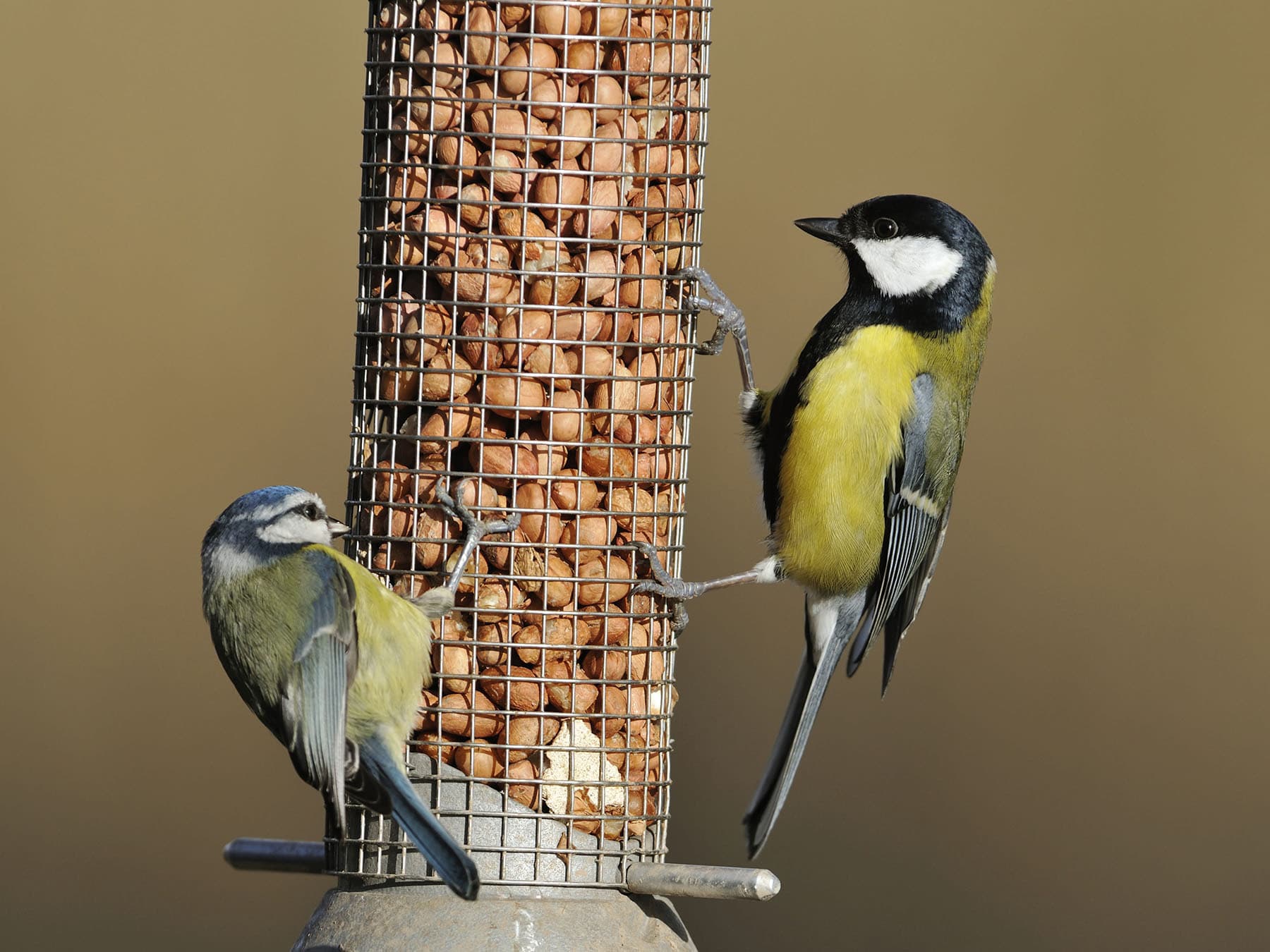
Gardens matter in winter. Urban Blue Tits rely heavily on garden food then. Food from bird tables and feeders is thought to supply a considerable part of their winter food, helping large numbers survive hard weather.
Winter roosts
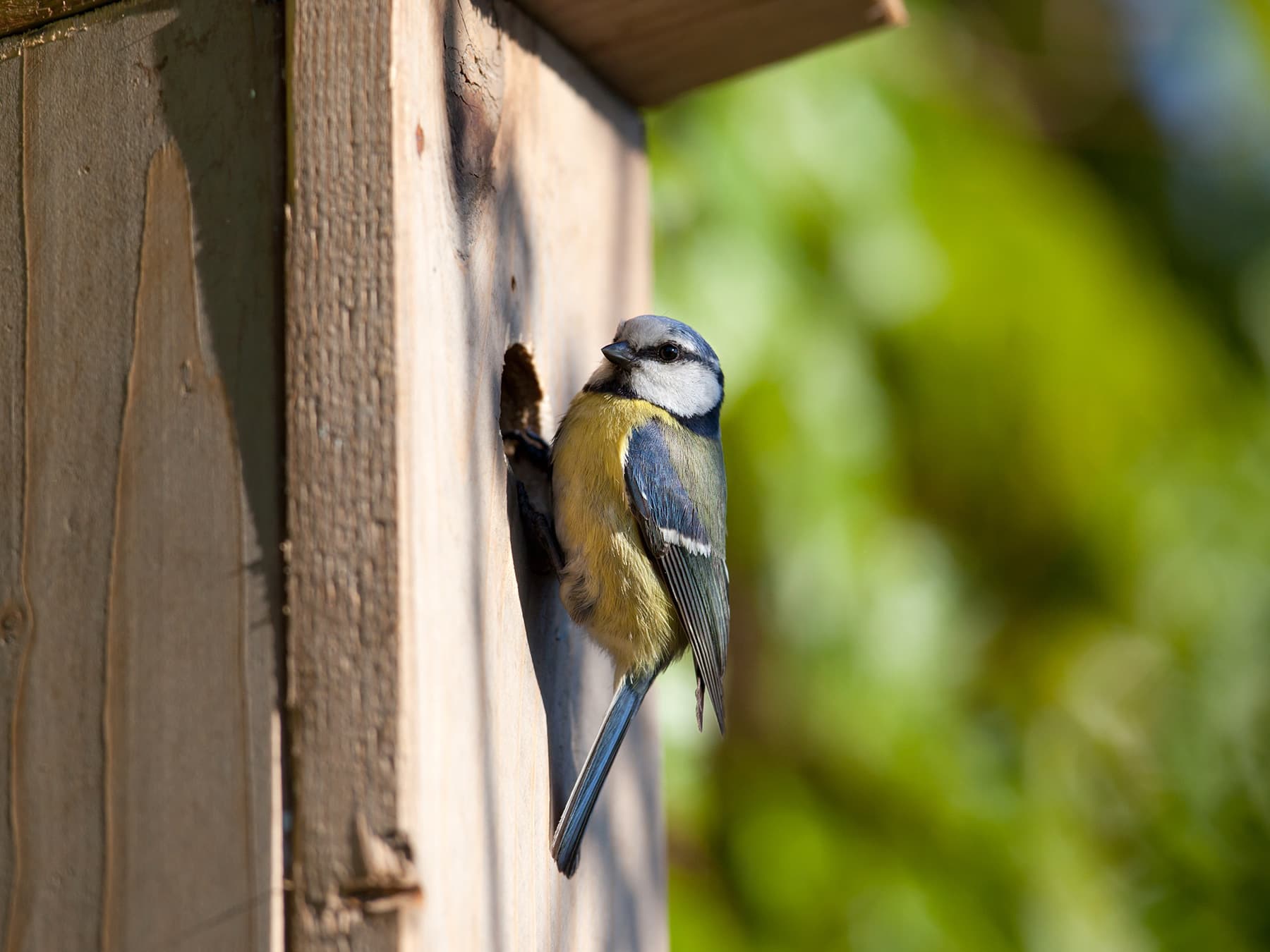
On winter nights some Blue Tits shelter in nest boxes. In early spring, before they build, adults roost in boxes too: scientists in Scotland collected their droppings there.4 The BTO notes that some birds roost in boxes in winter, so a box put up in autumn may be used as a roost before the nesting season.
Active all winter
Blue Tits stay active all winter, feeding by day and roosting at night. Life is hard for young birds, though: about 70% die between leaving the nest and November.
Fewer in the garden in summer
They are busy elsewhere, not gone. In spring and early summer the adults are feeding chicks on caterpillars in the trees. From late June to mid-August the young birds disperse short distances, and the adults moult every feather, from about midsummer into September. In autumn and winter they gather in flocks and come back to the feeders.
Helping Blue Tits through the winter
From 1 November to 30 April the RSPB says you can offer the full range of foods: sunflower hearts, peanuts in a mesh feeder and fat balls suit tits. Use hanging feeders rather than bird tables or trays, clean them weekly and change water daily. From 1 May to 31 October, pause seed and peanuts and offer only small amounts of fat balls or suet.5 A nest box, up before winter, gives them a roost.
Sources
- Kirwan, G. M., Gosler, A., Clement, P., Christie, D. A., Pyle, P. (2024). Eurasian Blue Tit (Cyanistes caeruleus), version 1.1. Birds of the World (J. del Hoyo, A. Elliott, J. Sargatal, D. A. Christie, E. de Juana and M. G. Smith, editors). Cornell Lab of Ornithology. doi:10.2173/bow.blutit.01.1
- Robinson, R. A., Leech, D. I., Clark, J. A. (2025). The Online Demography Report: Bird ringing and nest recording in Britain & Ireland in 2024. Summary of all recoveries: Blue Tit. BTO. Accessed 7 October 2026. Source
- McCambridge, H.. A Blue Tit Diary. BTO Masterclass articles. Accessed 7 October 2026. Source
- Shutt, J. D., Nicholls, J. A., Trivedi, U. H., Burgess, M. D., Stone, G. N., Hadfield, J. D., Phillimore, A. B. (2020). Gradients in richness and turnover of a forest passerine's diet prior to breeding: a mixed model approach applied to faecal metabarcoding data. Molecular Ecology 29: 1199-1213. doi:10.1111/mec.15394
- RSPB (2026). How to help garden birds. RSPB news. Accessed 6 October 2026. Source
- BTO. Blue Tit (Cyanistes caeruleus). BTO BirdFacts. Accessed 7 October 2026. Source
- BTO. Putting up a nest box. Accessed 6 October 2026. Source
- RSPB. Blue tit. RSPB Birds A-Z. Accessed 7 October 2026. Source