


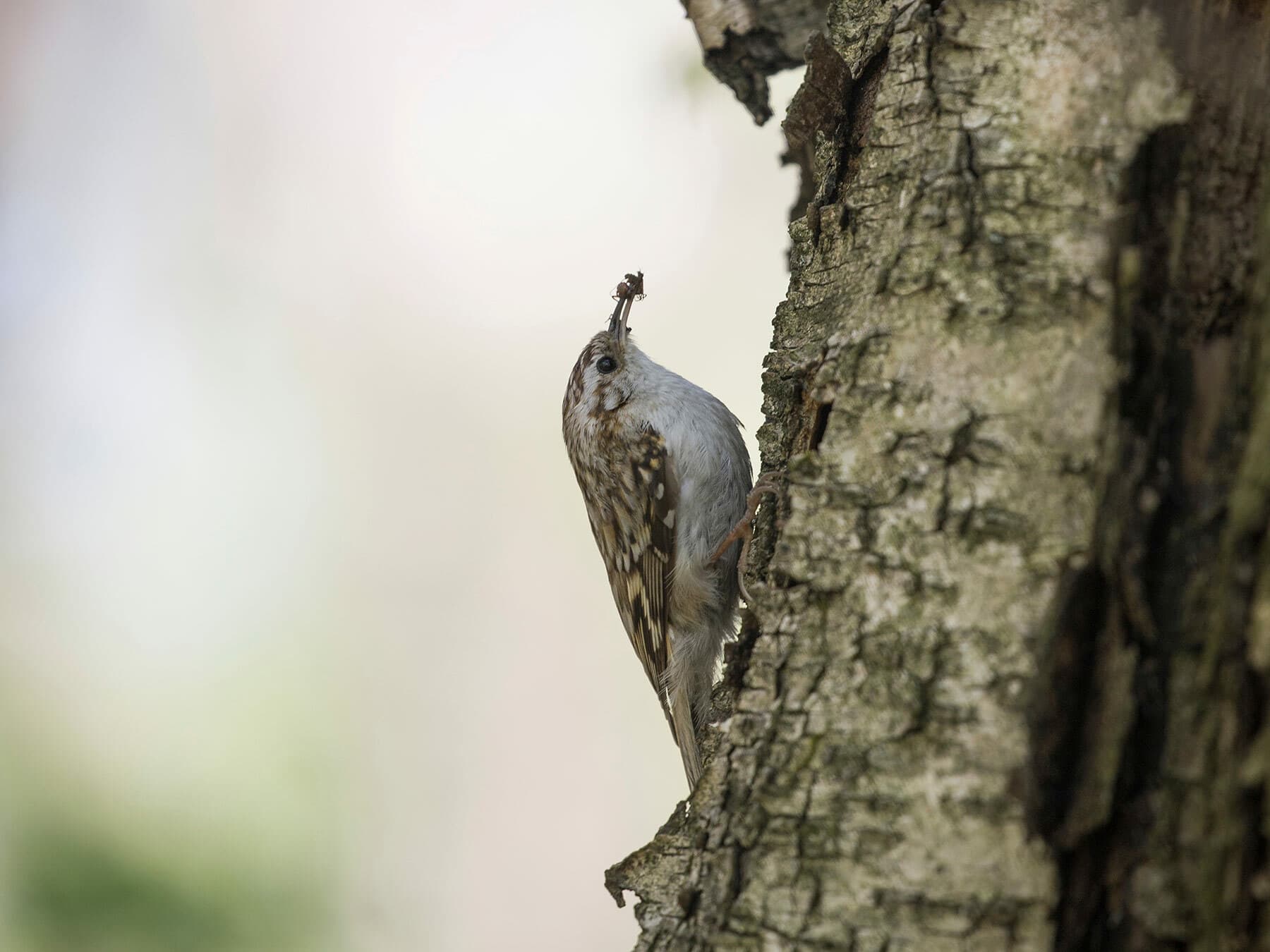
Treecreeper
Eurasian Treecreeper · Certhia familiaris
By the Birdfact teamChecked by Nathan Cope
On this page14 sections
How to recognise it
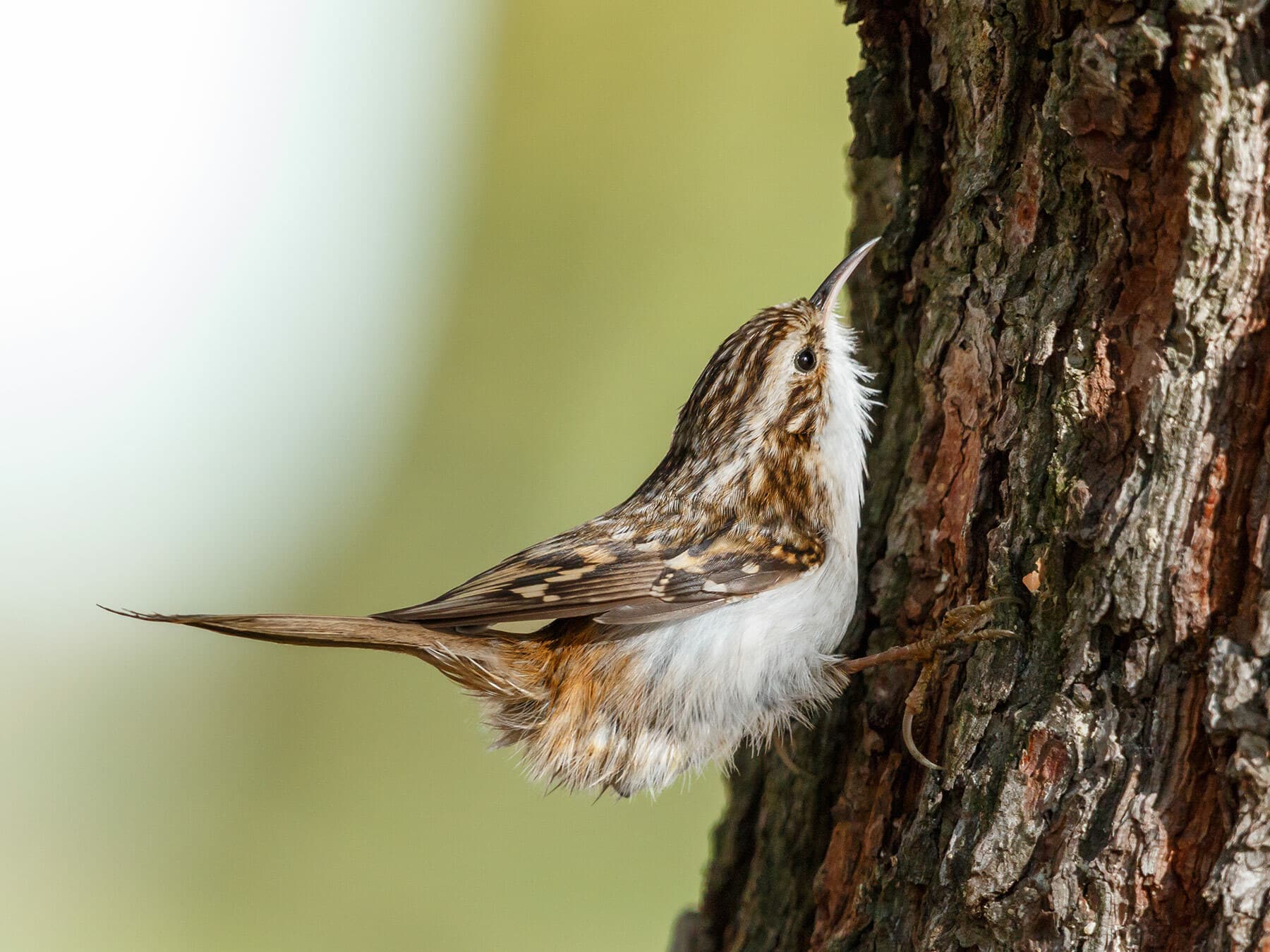
The Treecreeper is a small, slim bird with mottled brown upperparts and white underparts.
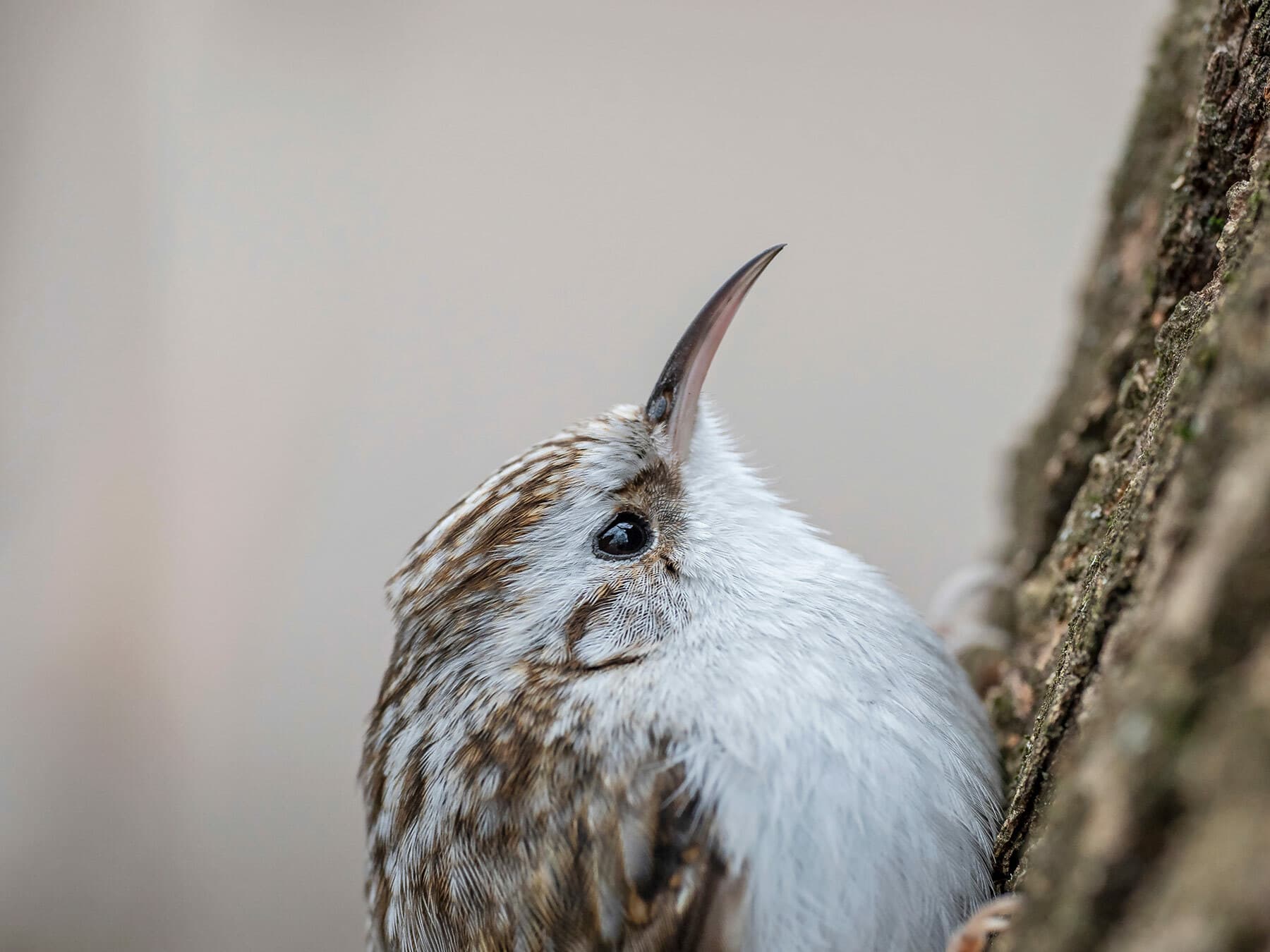
Its long, curved bill is perfectly adapted for probing bark crevices, and its stiff tail feathers provide support while climbing. The feet are large, brownish-pink with long curved toes, which they use in gripping onto trees.
Both sexes look similar, with juveniles resembling adults but showing slightly more spotted plumage. There are no significant seasonal changes in appearance.
Its size
Adults- Length
- 12–14 cm
- Wingspan
- 17–21 cm
- Weight
- 7–12 g
Its song and calls
The treecreepers call is a long quiet and high pitched trill of ‘srreee’ which lowers in pitch at the end of each tweet.
- Song0:00 / 0:03
Recorded in Košice Region, Slovakia · March 2015
- Call0:00 / 0:51
Recorded in Surrey, England
Aubrey John Williams / The British Library Board · Wikimedia Commons · CC BY-SA 4.0
When and where to see it
OctoberHere all year
Most recorded in October
- 1. West Dunbartonshire1.4%
- 2. Stirling1.1%
- 3. Rhondda, Cynon, Taff1.1%
- 4. Neath Port Talbot1.1%
- 5. Perthshire and Kinross0.88%
Each dot is a county, state or province: the bigger and darker, the larger the bird’s share of that place’s bird records that month. Grey dots: no regular records. The ringed point is the centre of the bird’s records this month; the arrow shows how it moved since last month, and the dashed loop its path through the year. “Arrivals” colours places where it becomes regular this month (orange) or is in its last regular month (grey). GBIF eBird Observation Dataset, 2019–2024. Map data: Natural Earth, US Census Bureau; place centres © OpenStreetMap contributors.
In your area
See when the Treecreeper is recorded in your county, state or province.
How often the Treecreeper turns up in the UK and Ireland through the year, from birdwatchers' records.
United Kingdom
Resident · all year · most records in February
Ireland
Resident · all year · most records in June
Show as a table
| Month | United Kingdom | Ireland |
|---|---|---|
| January | 0.32% (regular) | 0.23% (regular) |
| February | 0.34% (regular) | 0.22% (regular) |
| March | 0.33% (regular) | 0.24% (regular) |
| April | 0.26% (regular) | 0.26% (regular) |
| May | 0.23% (regular) | 0.26% (regular) |
| June | 0.26% (regular) | 0.28% (regular) |
| July | 0.29% (regular) | 0.28% (regular) |
| August | 0.26% (regular) | 0.18% (regular) |
| September | 0.23% (regular) | 0.16% (regular) |
| October | 0.23% (regular) | 0.16% (regular) |
| November | 0.27% (regular) | 0.19% (regular) |
| December | 0.31% (regular) | 0.21% (regular) |
Recorded regularly in
Worldwide: recorded regularly in 53 countries
Countries where it was recorded in at least 3 of the 6 years 2019–2024. Linked countries have their own bird list.
Europe (41)
- Åland Islands
- Albania
- Andorra
- Austria
- Belarus
- Belgium
- Bosnia & Herzegovina
- Bulgaria
- Croatia
- Czechia
- Denmark
- Estonia
- Finland
- France
- Germany
- Greece
- Hungary
- Ireland
- Isle of Man
- Italy
- Kosovo
- Latvia
- Liechtenstein
- Lithuania
- Luxembourg
- Moldova
- Montenegro
- Netherlands
- North Macedonia
- Norway
- Poland
- Romania
- Russia
- Serbia
- Slovakia
- Slovenia
- Spain
- Sweden
- Switzerland
- Ukraine
- United Kingdom
Asia (12)
- Armenia
- Azerbaijan
- Bhutan
- China
- Georgia
- Iran
- Japan
- Kazakhstan
- Kyrgyzstan
- Mongolia
- South Korea
- Turkey
Data: EOD – eBird Observation Dataset (Cornell Lab of Ornithology), accessed via GBIF.org, CC BY 4.0. Records from 2019–2024, aggregated and filtered by Birdfact. How these lists are made
Treecreepers are UK residents and can be found across the kingdom apart from the northern isles of Scotland. They are solitary birds in the main who prefer deciduous woodland but are also found in conifer forests and occasionally wooded gardens. During the autumn and winter months they are often seen on the periphery of tit flocks.
Signs and Spotting tips
Their camouflage can make these active little birds difficult to spot although once seen they are easy to identify. In size they resemble a small tit or wren but their slender bills coupled with their particularly long curved toes are a give away. Unlike the Nuthatch which is also a tree feeder, the treecreeper is not able to turn around on a tree and venture back down again head first. It is therefore forced to fly to the next tree or the ground. It is able to walk backwards down the tree but is inhibited in doing so by its tail. They generally start their foraging at the base of a tree and circle around the trunk walking upwards as they do so. Once at the top of the tree or when they want to move on to the next they simply take to the wing.
What it eats
The treecreepers home is also its kitchen! Its long thin pointed bill is used to wheedle out larvae, insects and spiders living in the tree bark and it is a very effective tool. In the winter they will also feed on seeds.
Nesting and breeding
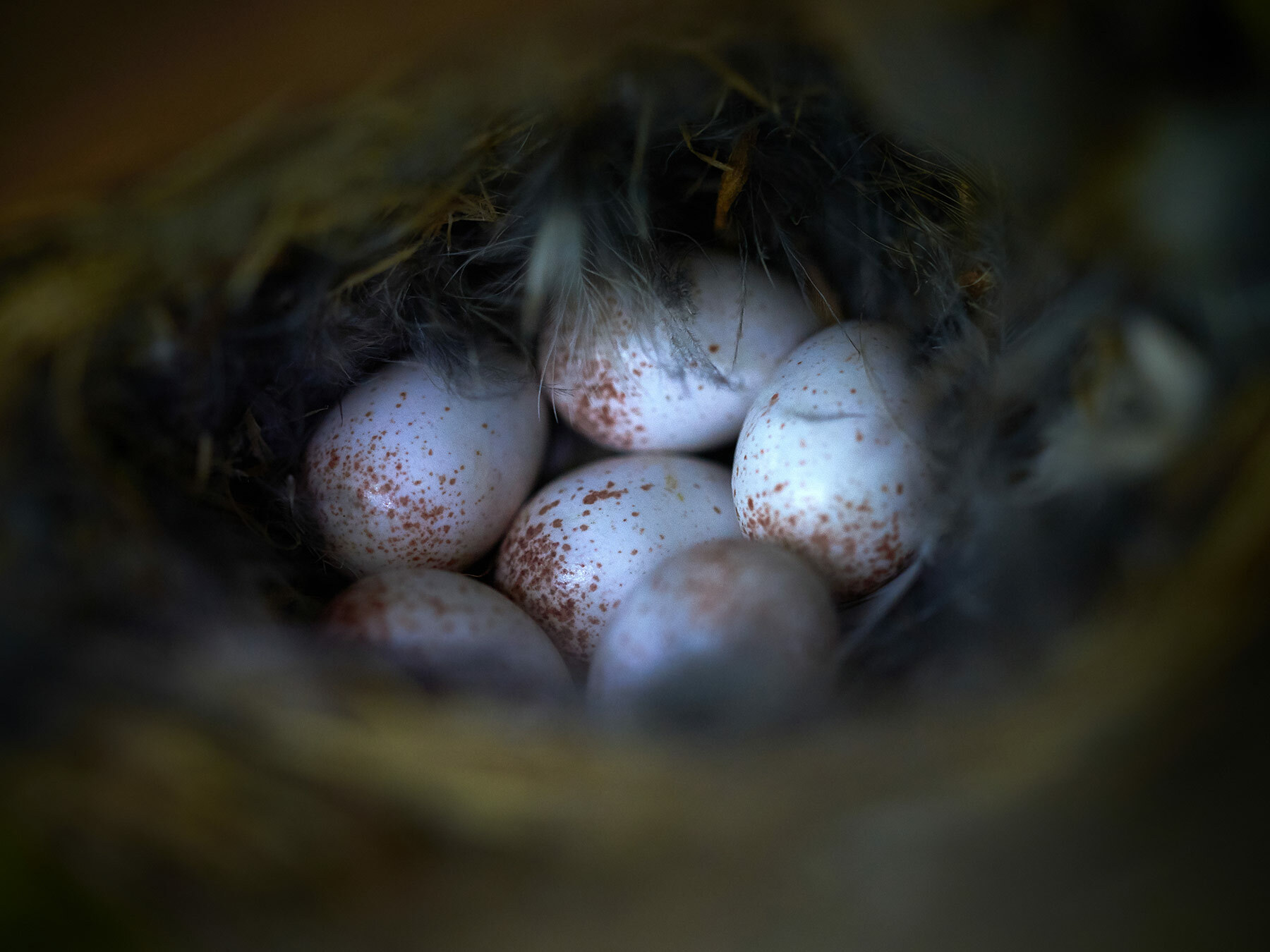
Treecreepers build their nests under protruding bark or behind ivy on the trunk of a tree. One clutch is laid annually between April to June and normally consists of 5 or 6 white coloured eggs which are speckled reddish-brown.
Behaviour
Treecreepers exhibit a distinctive spiralling movement as they climb up tree trunks, searching for insects. They typically start at the base of a tree and work their way up, then fly down to the base of another tree to repeat the process.
These birds are generally solitary but may join mixed-species flocks in winter.
Lifespan and predators
The lifespan of a treecreeper is two to three years.
Conservation
While the Treecreeper is currently listed as Least Concern, it faces threats from habitat loss due to deforestation and the removal of old, mature trees. Climate change may also impact its distribution and food availability.
Conservation efforts focus on preserving mature woodlands and promoting sustainable forestry practices.
What does a Treecreeper look like?
These tiny attractive birds spend most of their lives on trees and are superbly camouflaged to blend in with their surroundings. Their main colouring is mottled browns and black on their back and head and with mainly white underparts. The have a long pale brown notched tail and a white stripe over each eye. The rounded wings are predominantly black with a pale almost white wing bar. In relation to this small bird’s overall size they have a long, thin, downward curving, black beak and large slender brown and pink feet with long curved toes, which they use in gripping on to trees. When climbing up the bark of vertical tree trunks they use their stiff tail to assist them with balance and as an extra support against the tree. Male and female adults are similar and juveniles duller in colour with less obvious colour markings.
Similar birds
Often mistaken for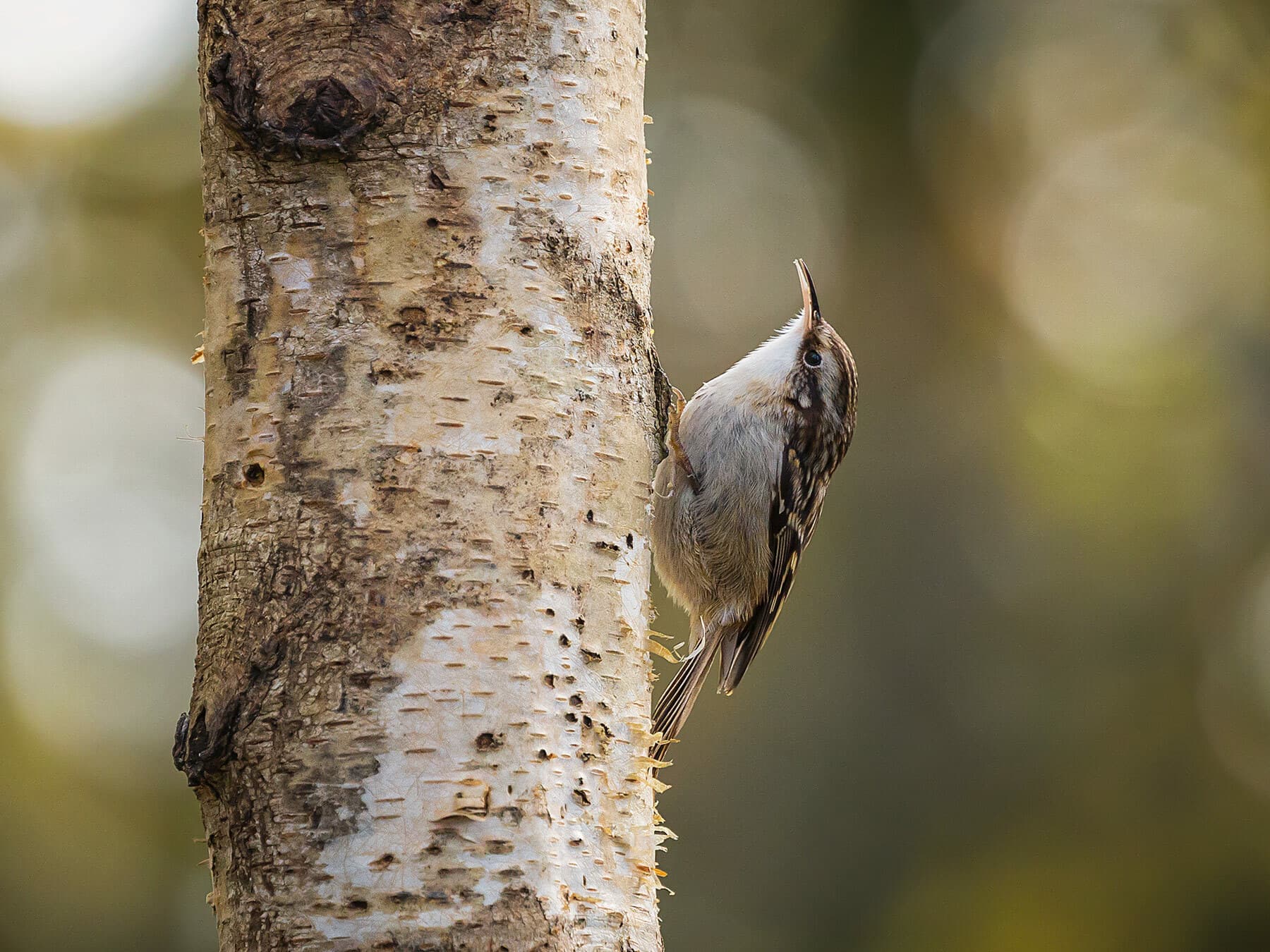
More photos
2 photos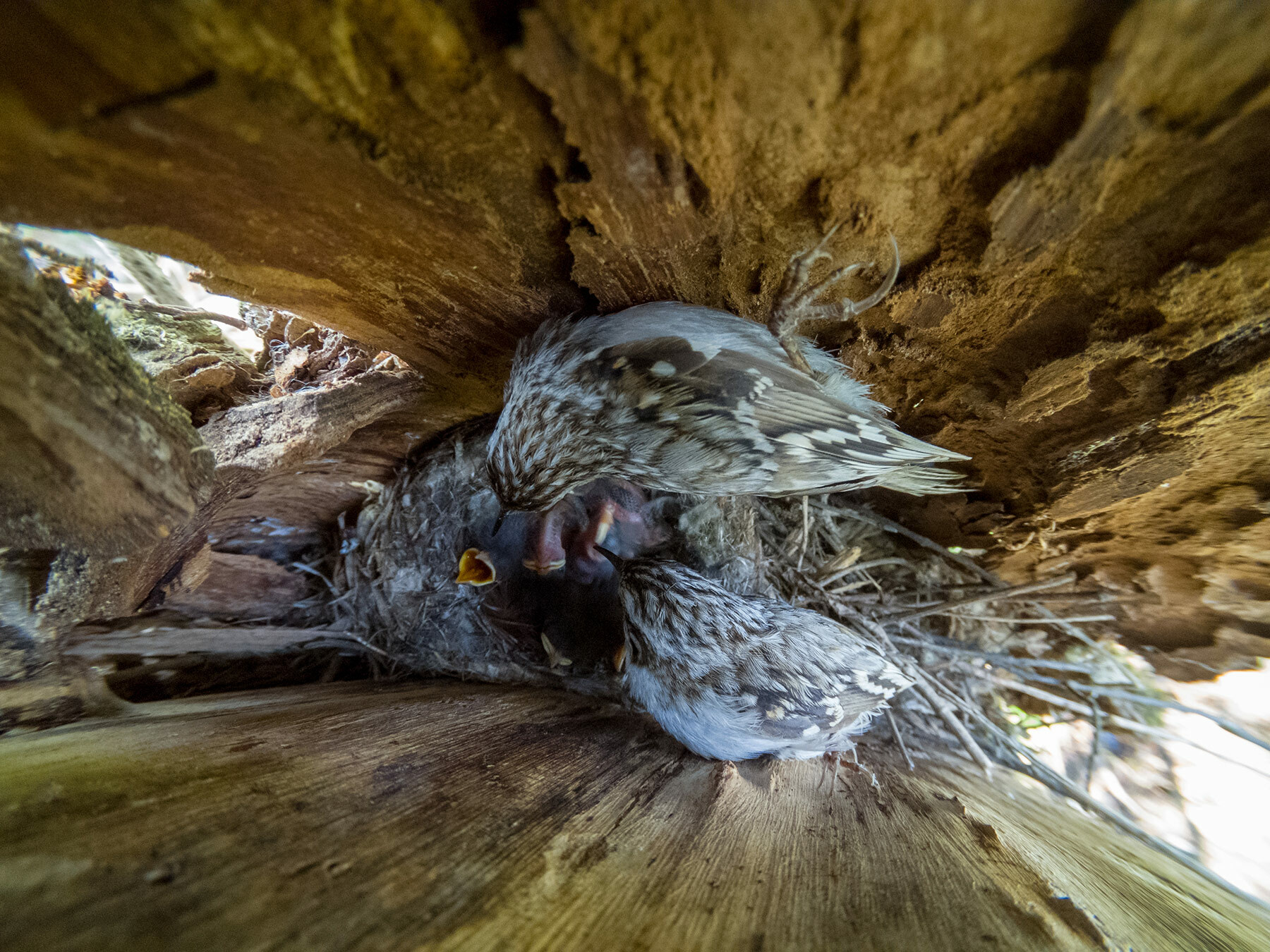
Quick facts
- Length
- 12–14 cm
- Wingspan
- 17–21 cm
- Weight
- 7–12 g
- Lifespan
- 2–3 years · oldest recorded 8.6 years
- Family
- Treecreepers
- Migration
- Resident
- Global status (IUCN)
- Least Concern
- World population
- 40,000,000 - 76,000,000 mature individuals
- Population trend
- Stable
- Also called
- Eurasian Treecreeper
- Scientific name
- Certhia familiaris
Sources
4- 1BirdLife International. 2017. Certhia familiaris (amended version of 2016 assessment). The IUCN Red List of Threatened Species 2017: e.T22735060A111155023. Source (opens in a new tab)
- 2EBCC (2015)
- 3BirdLife International. 2017. Certhia familiaris (amended version of 2016 assessment). The IUCN Red List of Threatened Species 2017: e.T22735060A111155023. Source (opens in a new tab)
- 4BTO longevity records: maximum age from a ringed bird, 8 years, 8 months, 7 days (set in 2017), BirdFacts: Treecreeper (2017) Source (opens in a new tab)

Checked by
Nathan Cope, founder and editor
Nathan founded Birdfact and leads its writers and contributors in the UK, the US and Canada. He has watched and studied birds for more than ten years, and checks every article and species guide before it’s published.