


Short-toed Treecreeper
Short-toed Creeper · Certhia brachydactyla
By the Birdfact teamChecked by Nathan Cope
On this page13 sections
How to recognise it
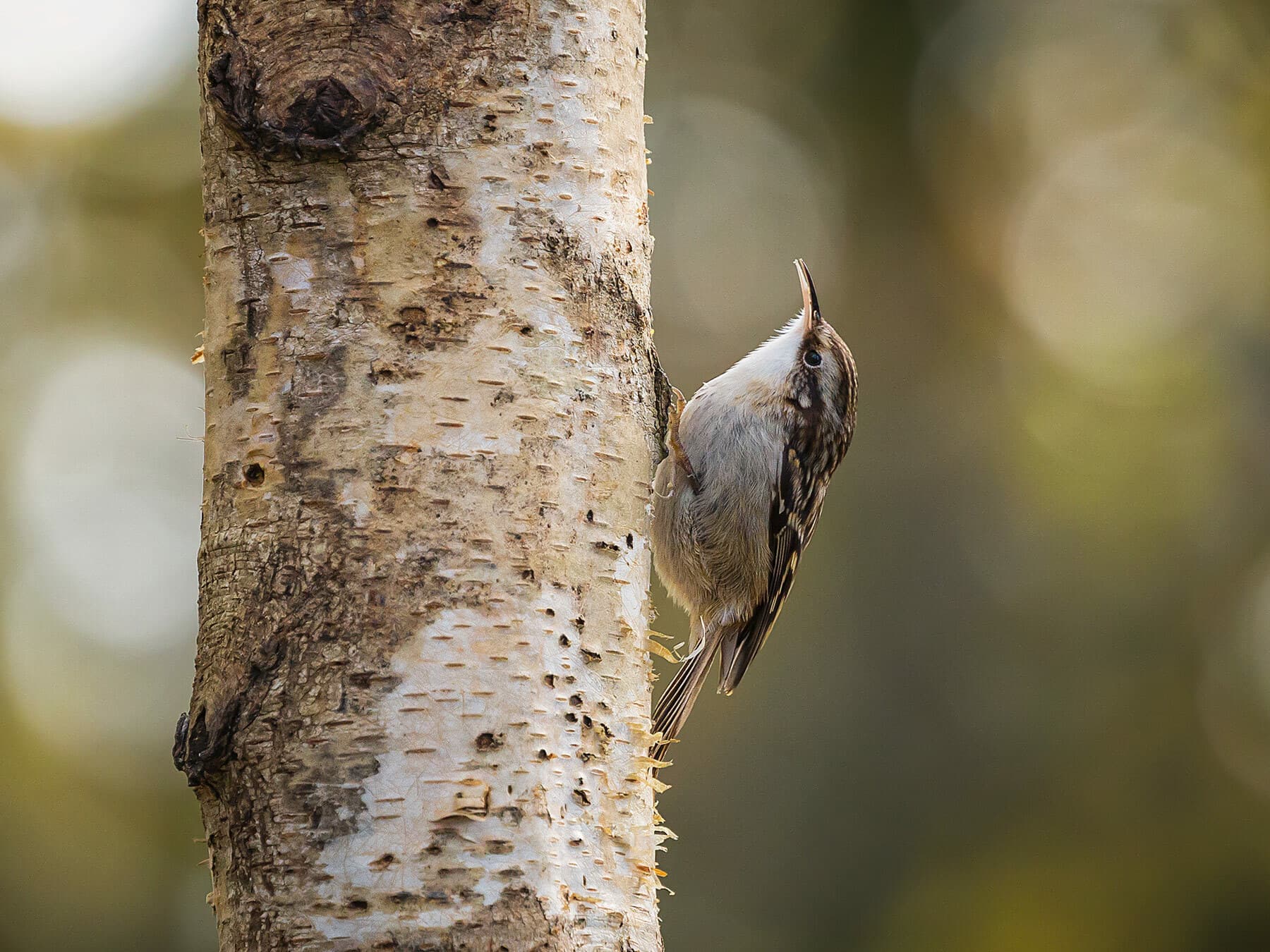
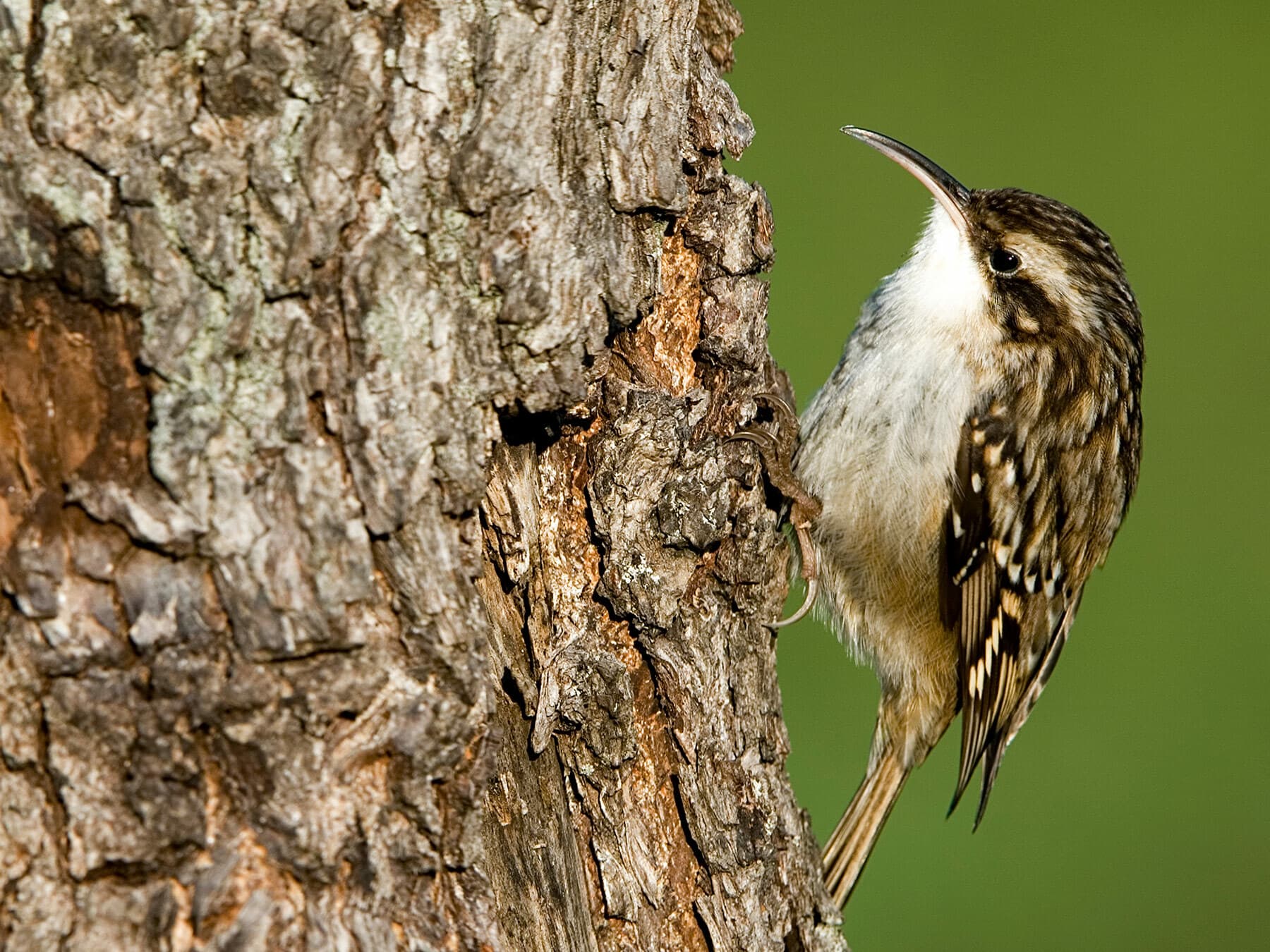
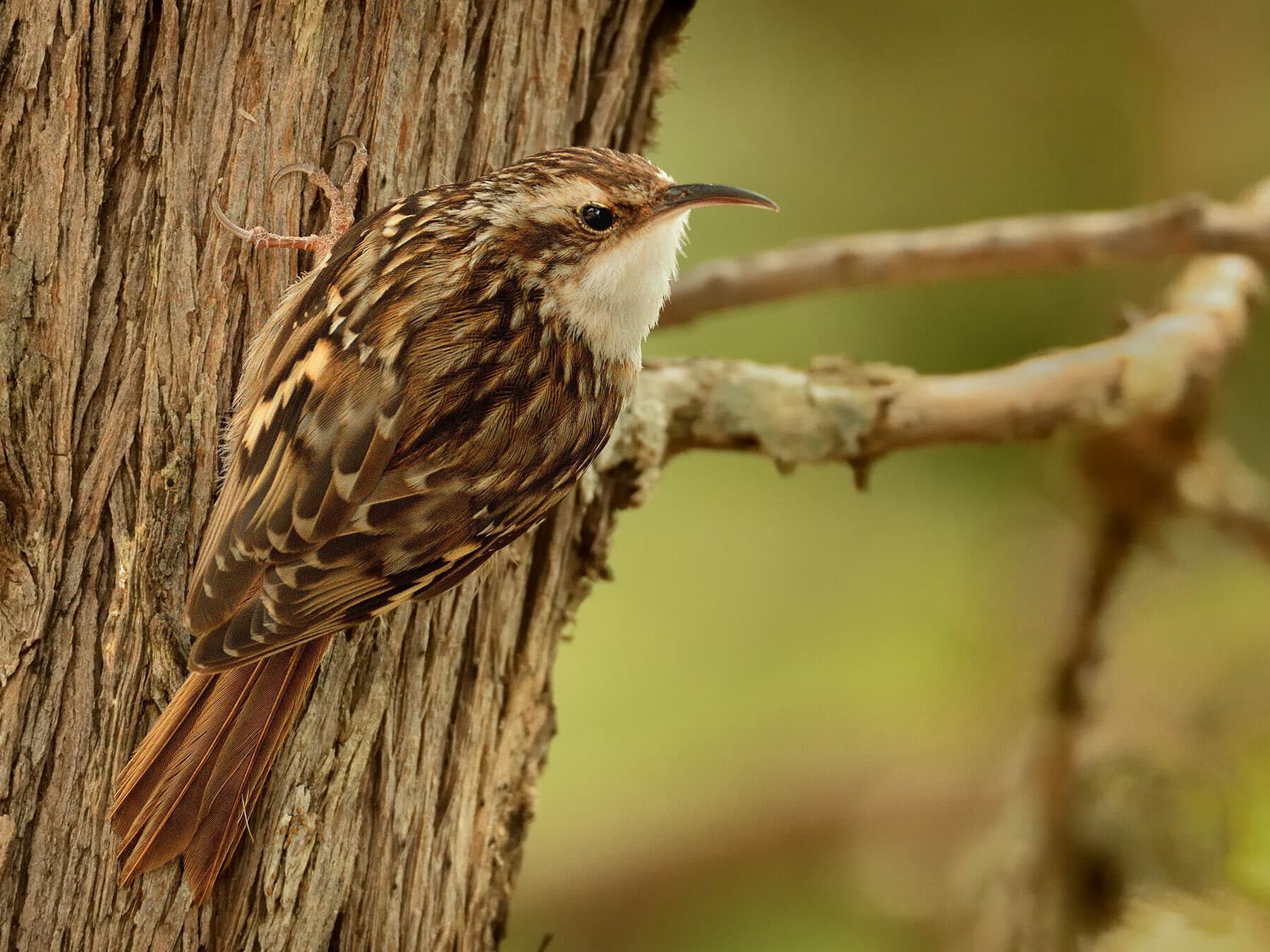
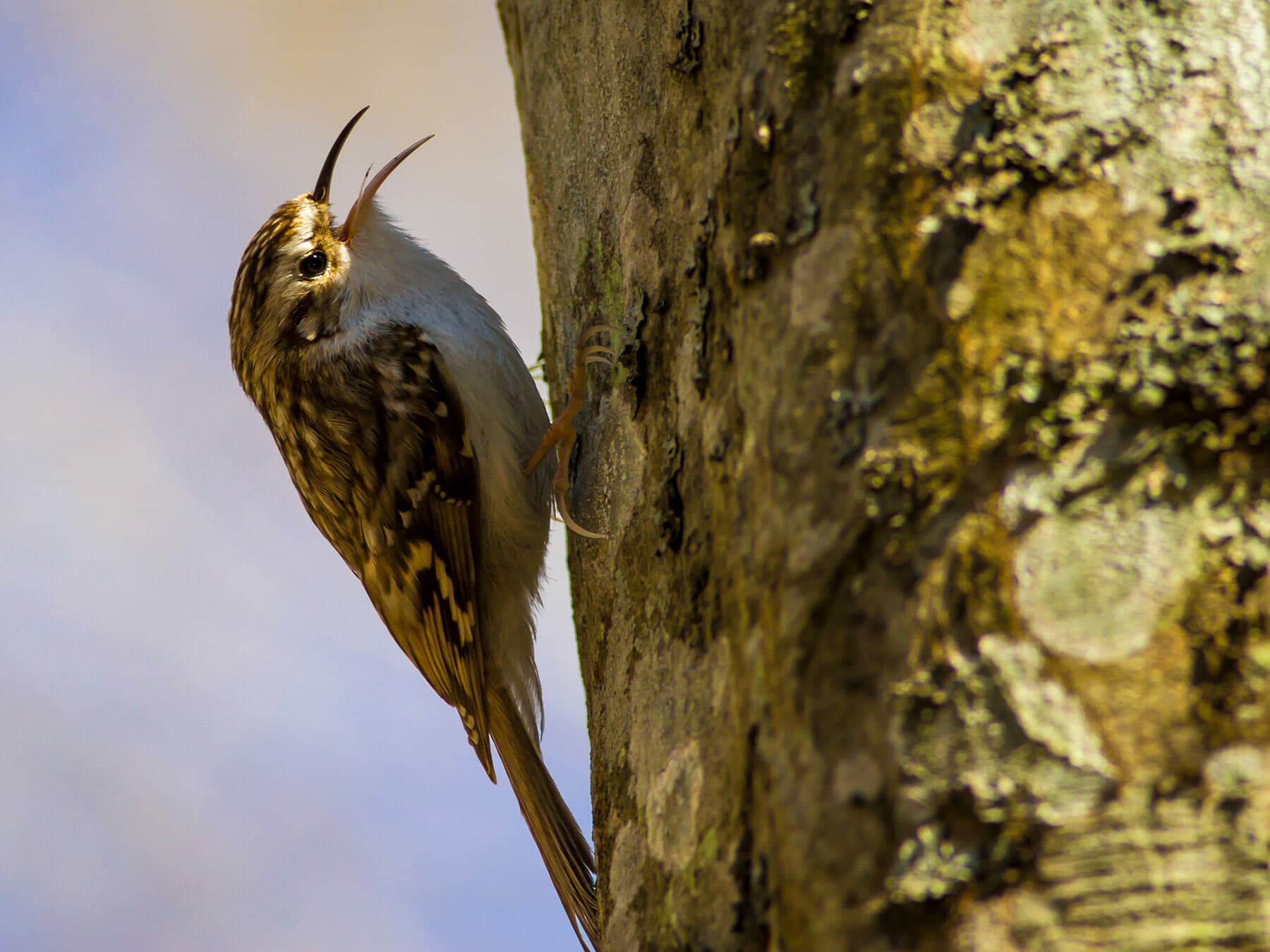
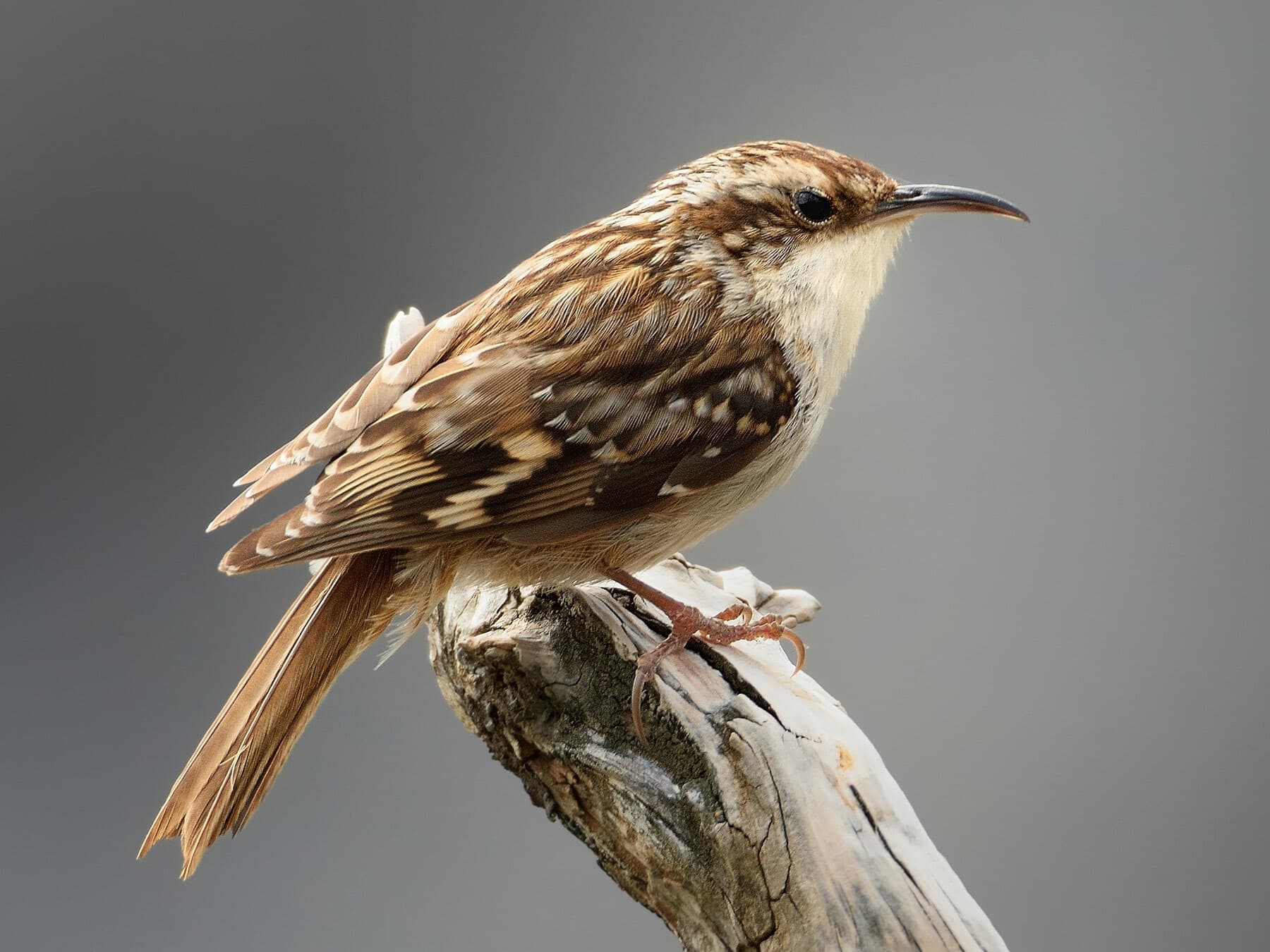
The Short-toed Treecreeper is a small, brown bird with a slender, curved bill and stiff tail feathers. Its upperparts are mottled brown, providing excellent camouflage against tree bark, while the underparts are predominantly white with a buff tinge.
Both sexes look alike, with no significant seasonal plumage changes. Juveniles closely resemble adults but may have slightly more diffuse markings and a shorter bill.
Its size
Adults- Length
- 12–13.5 cm
- Wingspan
- 17–20 cm
- Weight
- 7.5–11 g
Its song and calls
Perhaps the easiest way to distinguish the short-toed treecreeper from the common treecreeper is by its song. Whereas the latter has an elongated almost flowing musical trill, the former has a clearer, louder more staccato contact call of ‘sreet’ or ‘sree’ and a short ‘wit’ during normal activity.
- Song and calls0:00 / 0:39
Recorded in Středočeský kraj, Czech Republic · May 2024
- Call0:00 / 0:24
Recorded in Île-de-France, France · May 2019
When and where to see it
The Short-toed Treecreeper is not recorded regularly in the UK, Ireland, the United States or Canada.
United Kingdom: recorded in 2 of the 6 years. Too few years to count as a regular visitor.
Worldwide: recorded regularly in 39 countries
Countries where it was recorded in at least 3 of the 6 years 2019–2024. Linked countries have their own bird list.
Europe (33)
- Albania
- Andorra
- Austria
- Belgium
- Bosnia & Herzegovina
- Bulgaria
- Croatia
- Czechia
- Denmark
- France
- Germany
- Greece
- Guernsey
- Hungary
- Italy
- Jersey
- Liechtenstein
- Luxembourg
- Montenegro
- Netherlands
- North Macedonia
- Poland
- Portugal
- Romania
- Russia
- San Marino
- Serbia
- Slovakia
- Slovenia
- Spain
- Sweden
- Switzerland
- Ukraine
Data: EOD – eBird Observation Dataset (Cornell Lab of Ornithology), accessed via GBIF.org, CC BY 4.0. Records from 2019–2024, aggregated and filtered by Birdfact. How these lists are made
Generally confined to south and south west continental Europe it is a very rare vagrant to the UK but if spotted is likely to be found in upland pine or conifer forests or their preferred lowland deciduous woods. In addition to spending most of the time foraging on tree trunks it can also be found foraging amongst rocks, a habit not observed of its common treecreeper cousin.
Signs and Spotting tips
As previously stated, the short-toed is almost identical to the common treecreeper, and thus it is very difficult to differentiate between the two. Those characteristics unique to each species of treecreeper are so subtle that close examination will normally be required in order to positively identify the individual bird. For example, the edges of the wing bar pattern closest to the wing tip on the short-toed are triangular in shape, unlike the squarer shape on the common treecreeper. Imagine a bird’s wing being an arm with a hand at the end of it. As with all birds, the short-toed has an area of feathers known as the alula, also known as a bastard wing, which is similar to a thumb. The alula is located on the leading edge of the wing, where it forms a small protrusion consisting of 3 to 5 flight feathers. The pale border of the largest alula feather on the short-toed extends throughout the total outer edge, which would be unusual on a common treecreeper. More obvious signs are bolder white tips to wingtip feathers, a darker more brownish underneath and a bright white throat.
What it eats
Small spiders, insects and their eggs are the staple diet for the short-toed which it finds by foraging along the trunks and branches of trees using its bill as a probe.
Nesting and breeding
Nesting in a small bowl of grass and feathers, behind broken bark or in a crack or crevice, one brood of 5 or 6 eggs coloured white with reddish-purple blotches are laid between April to June and incubated by the female for two weeks. Chicks fledge up to eighteen days later. Occasionally a second brood is produced in another nest prepared before the first brood has fledged.
Behaviour
Short-toed Treecreepers exhibit a distinctive spiralling movement as they climb up tree trunks, using their stiff tail feathers for support. They forage by probing into bark crevices with their specialised curved bills.
These birds are generally solitary or found in pairs, occasionally joining mixed-species flocks outside the breeding season.
Lifespan and predators
Life expectancy for the short-toed treecreeper is between two to three years.
Conservation
While the Short-toed Treecreeper is currently listed as Least Concern, it faces localised threats from habitat loss and fragmentation.
Conservation efforts focus on preserving mature woodlands and maintaining a diverse age structure in managed forests to ensure suitable foraging and nesting sites.
What does a Short-toed Treecreeper look like?
An extremely well camouflaged bird when active within its chosen environment foraging on tree trunks, the short-toed treecreeper has pale grey brown underparts and a bright white throat patch. The upper parts are a dull speckled brown with white streaks and a plain light brown tail. The short-toed treecreeper has pale brown feet and a long thin slightly downwards curved bill with a dark brown upper mandible and paler brown or pinkish lower mandible with a dark tip. On top of the wing on the mantle below the nape of the neck and on the scapula the feathers have black tips with broad white centres. Primary and secondary flight feathers are brown. It has white wing bars which are similar but not identical to the common treecreeper and in fact it is very difficult indeed to tell the two birds apart on just physical features, plumage patternation and colour.
Similar birds
Often mistaken for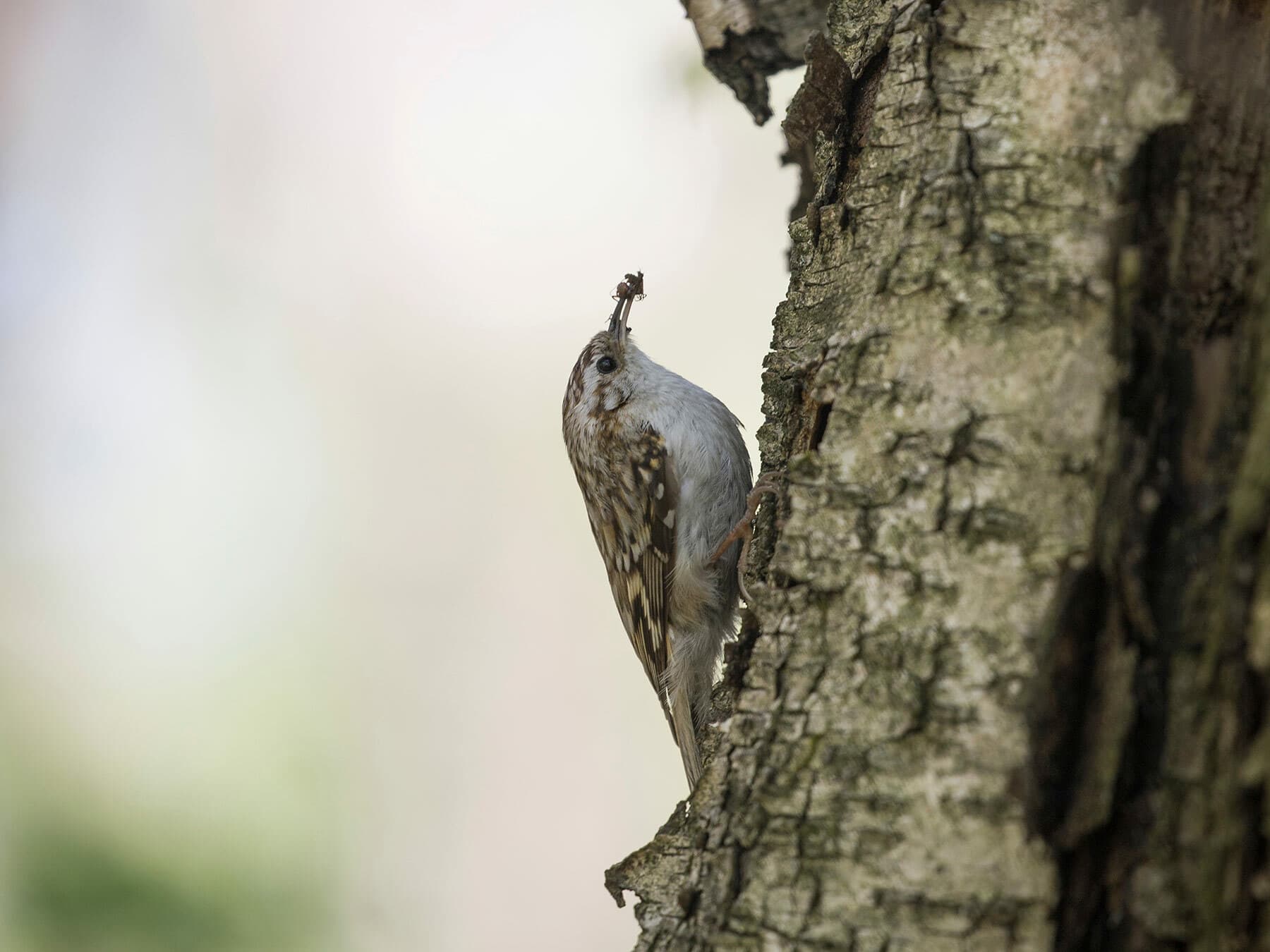
Quick facts
- Length
- 12–13.5 cm
- Wingspan
- 17–20 cm
- Weight
- 7.5–11 g
- Lifespan
- 2–3 years · oldest recorded 5.9 years
- Family
- Treecreepers
- Migration
- Resident
- Global status (IUCN)
- Least Concern
- World population
- 11,000,000 - 19,000,000 mature individuals
- Population trend
- Increasing
- Also called
- Short-toed Creeper
- Scientific name
- Certhia brachydactyla
Sources
4- 1BirdLife International. 2016. Certhia brachydactyla. The IUCN Red List of Threatened Species 2016: e.T22711249A87839163. Source (opens in a new tab)
- 2EBCC (2015)
- 3BirdLife International. 2016. Certhia brachydactyla. The IUCN Red List of Threatened Species 2016: e.T22711249A87839163. Source (opens in a new tab)
- 4Fransson et al., EURING list of longevity records for European birds (2010) Source (opens in a new tab)

Checked by
Nathan Cope, founder and editor
Nathan founded Birdfact and leads its writers and contributors in the UK, the US and Canada. He has watched and studied birds for more than ten years, and checks every article and species guide before it’s published.