Facts · Updated 15 Oct 2026
Blue Jay vs Bluebird: How to Tell Them Apart
By the Birdfact teamChecked by Nathan Cope
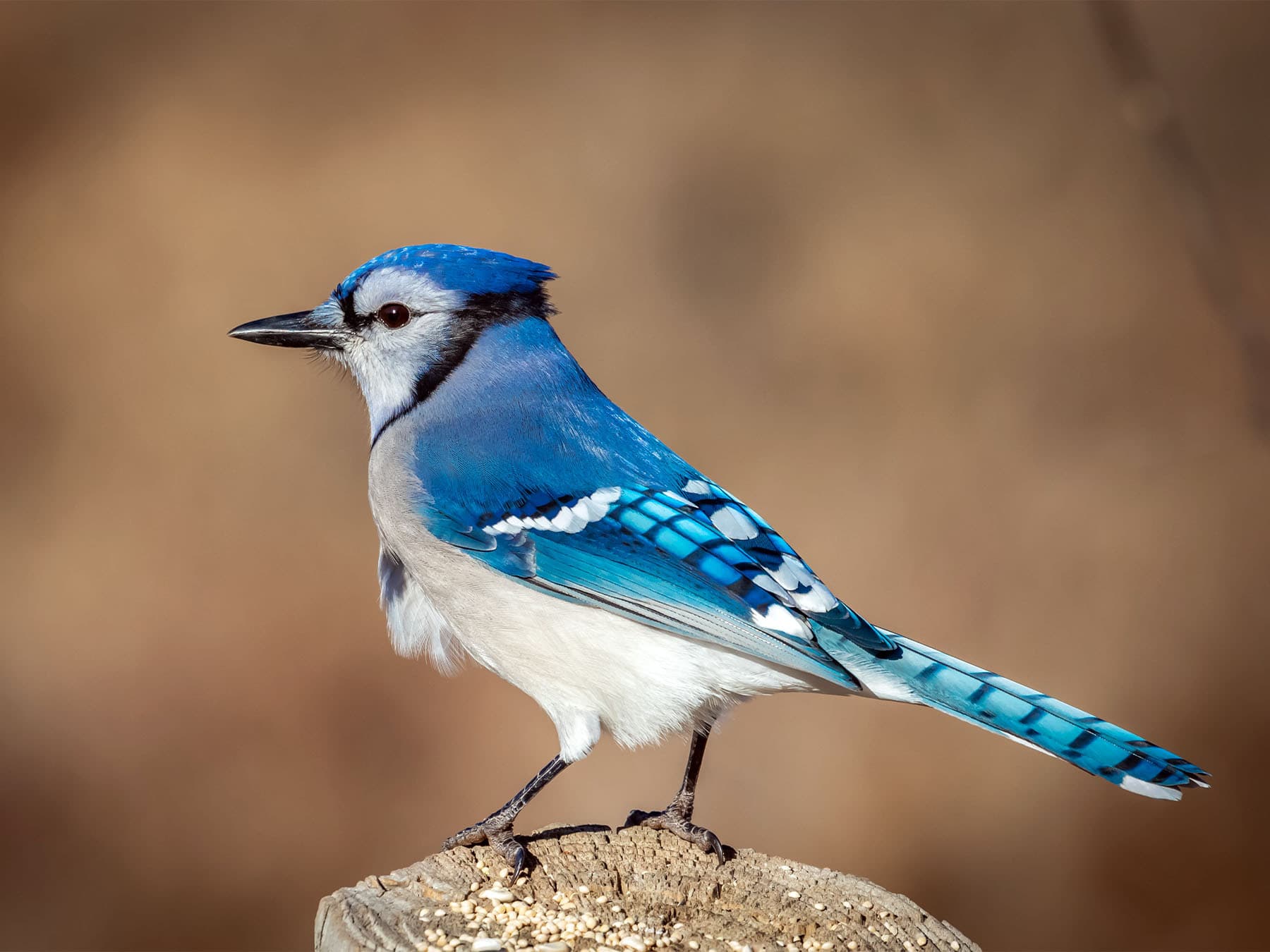
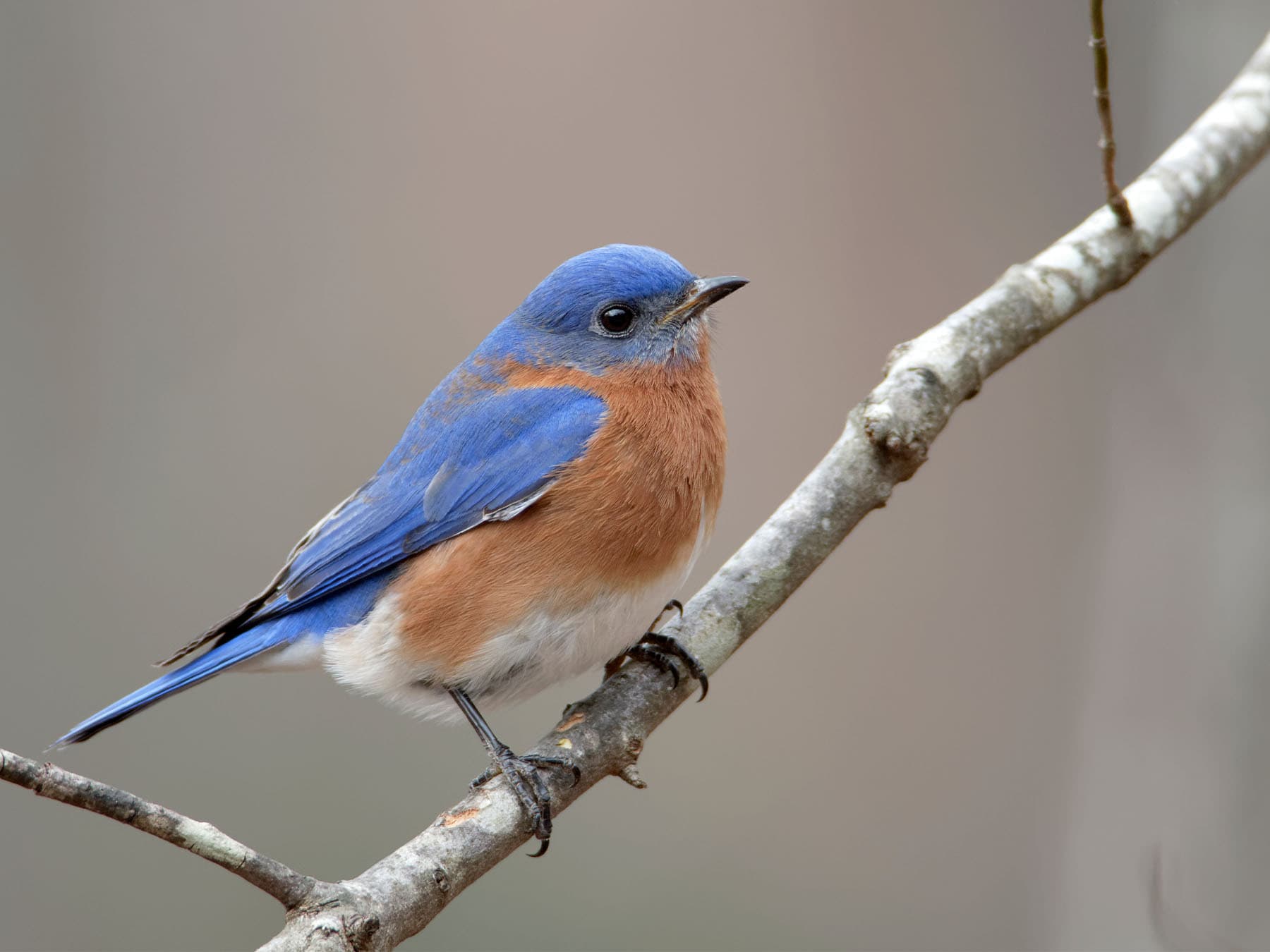
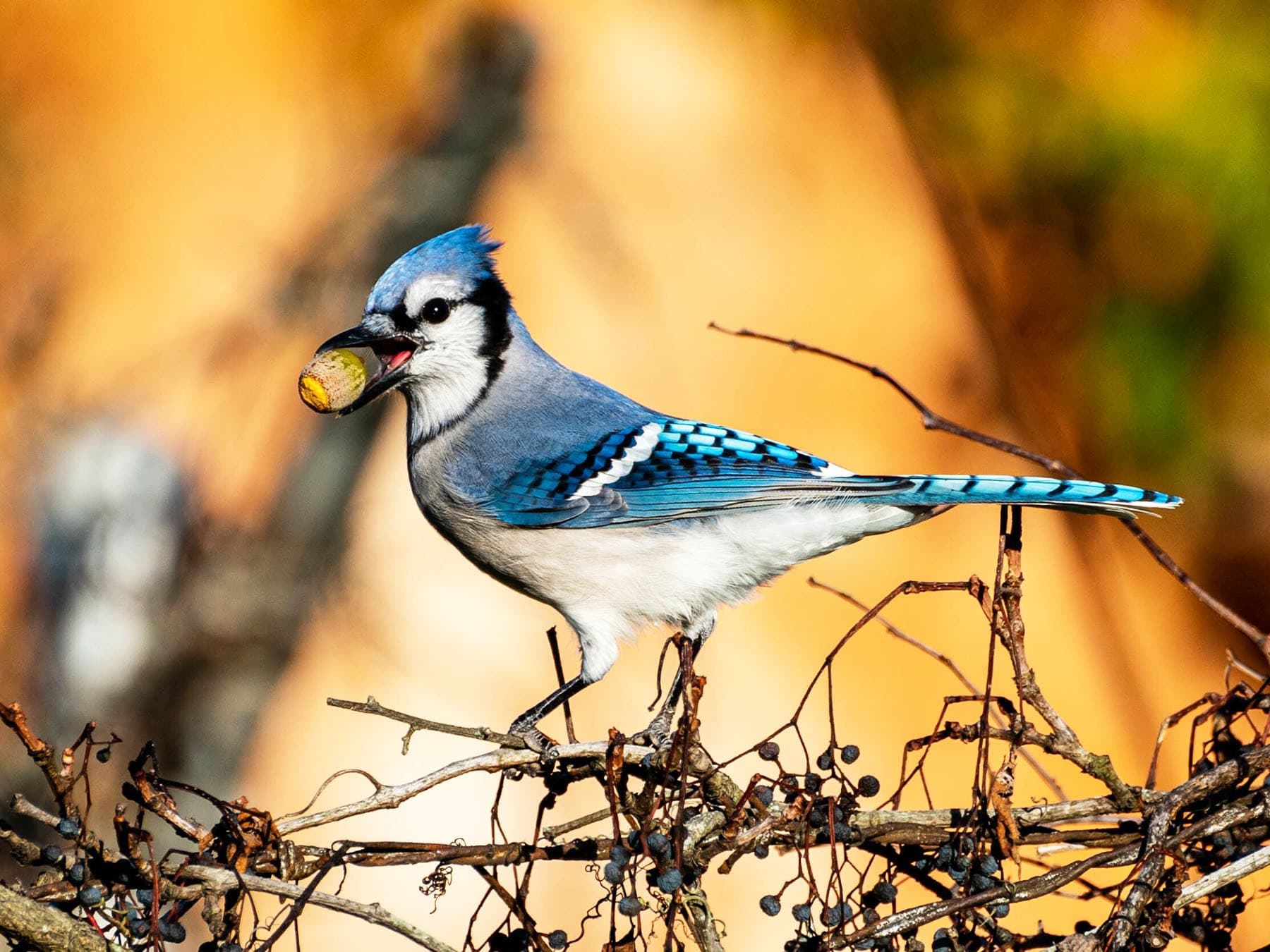
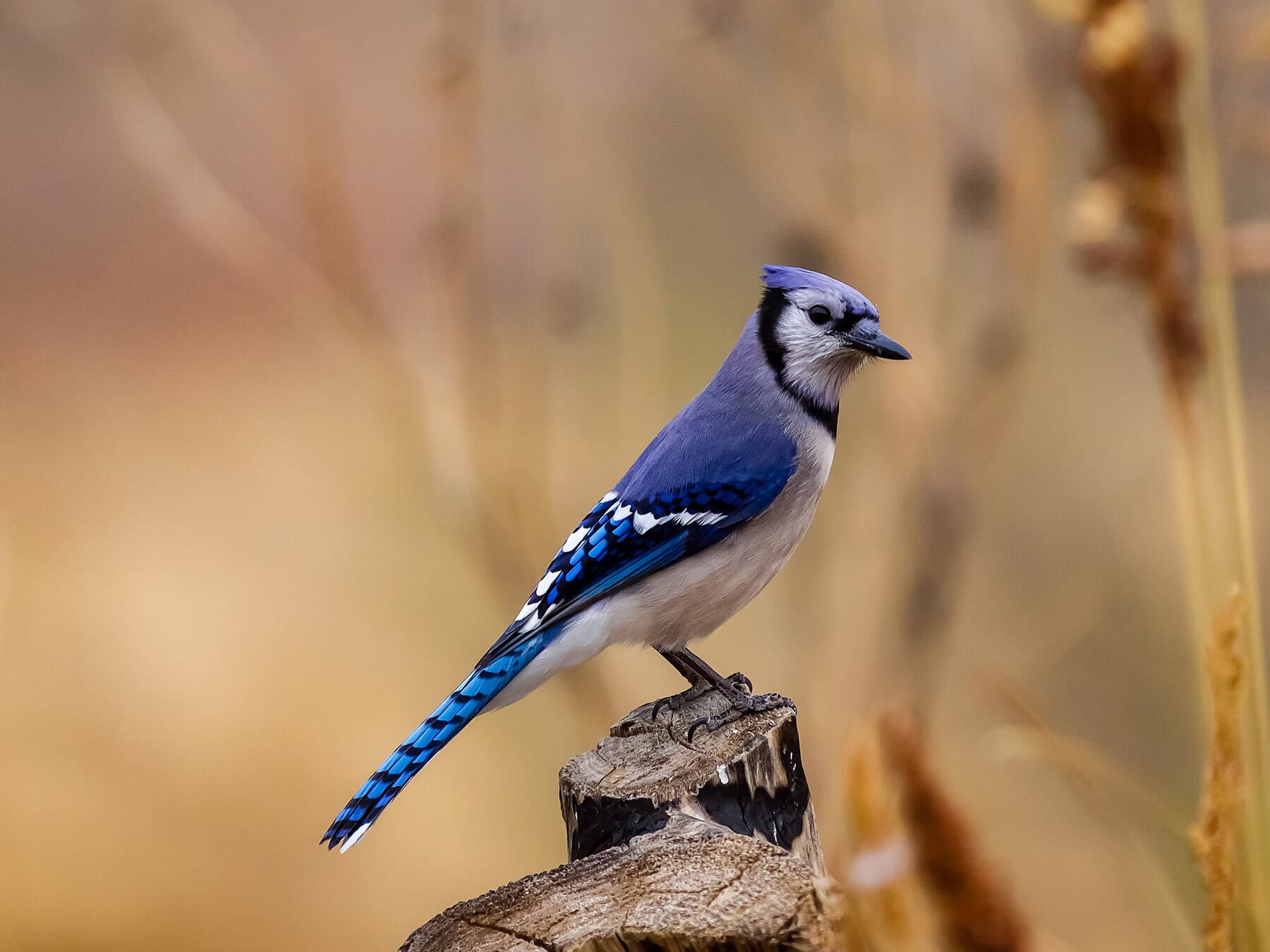
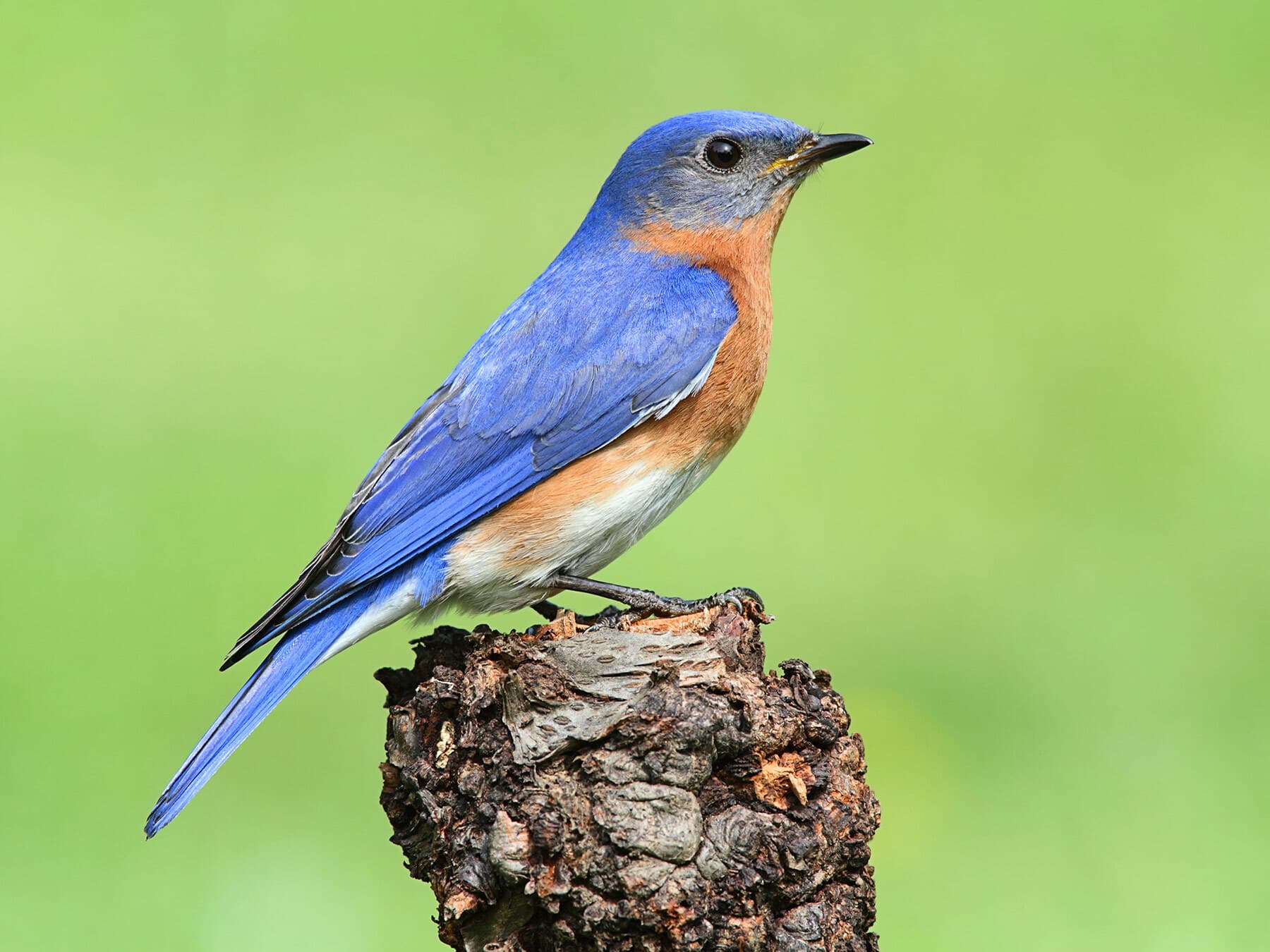
A Blue Jay has a crest and a black necklace. A bluebird has a round head with no crest, and a male Eastern Bluebird has a rusty-orange breast
Then look at the wings: black bars and a white wing bar on a Blue Jay, blue with no bars on a male bluebird. A Blue Jay is also much bigger, larger than an American Robin, while an Eastern Bluebird is about two-thirds of a robin.
On this page16 sections
- Is a Blue Jay a bluebird?
- The quickest clues
- At a glance
- Size and weight
- Color, sexes and young
- Both blues are structural
- Songs and calls
- Where you'll see each one
- Nests and eggs
- Food and feeders
- Do Blue Jays attack bluebirds or their nests?
- Which is more common?
- Protected, and state birds
- Other blue birds people mix up
- About the recordings
- Sources
Blue Jay or bluebird? Look at the head and breast
| Feature | Blue Jay | Eastern Bluebird |
|---|---|---|
| HeadDecisive | Blue Jay: Crest | Eastern Bluebird: Round, no crest |
| Breast | Blue Jay: White or light gray, black necklace | Eastern Bluebird: Male red-orange, white lower belly |
| Wings and tail | Blue Jay: Black bars, white wing bar and tail corners | Eastern Bluebird: Blue, no bars (male) |
| Length | Blue Jay: 9.8-11.8 in (25-30 cm) | Eastern Bluebird: 6.3-8.3 in (16-21 cm) |
| Weight | Blue Jay: 2.5-3.5 oz (70-100 g) | Eastern Bluebird: 1.0-1.1 oz (28-32 g) |
| Voice | Blue Jay: Loud calls, jeers | Eastern Bluebird: Low-pitched warble, many quiet sounds |
| Nest | Blue Jay: Open cup of twigs in a tree | Eastern Bluebird: Old woodpecker hole or nest box |
Out west, look for Western and Mountain Bluebirds, and for Steller's Jay and the scrub-jays.
Seen one and not sure which? Identify it from a photo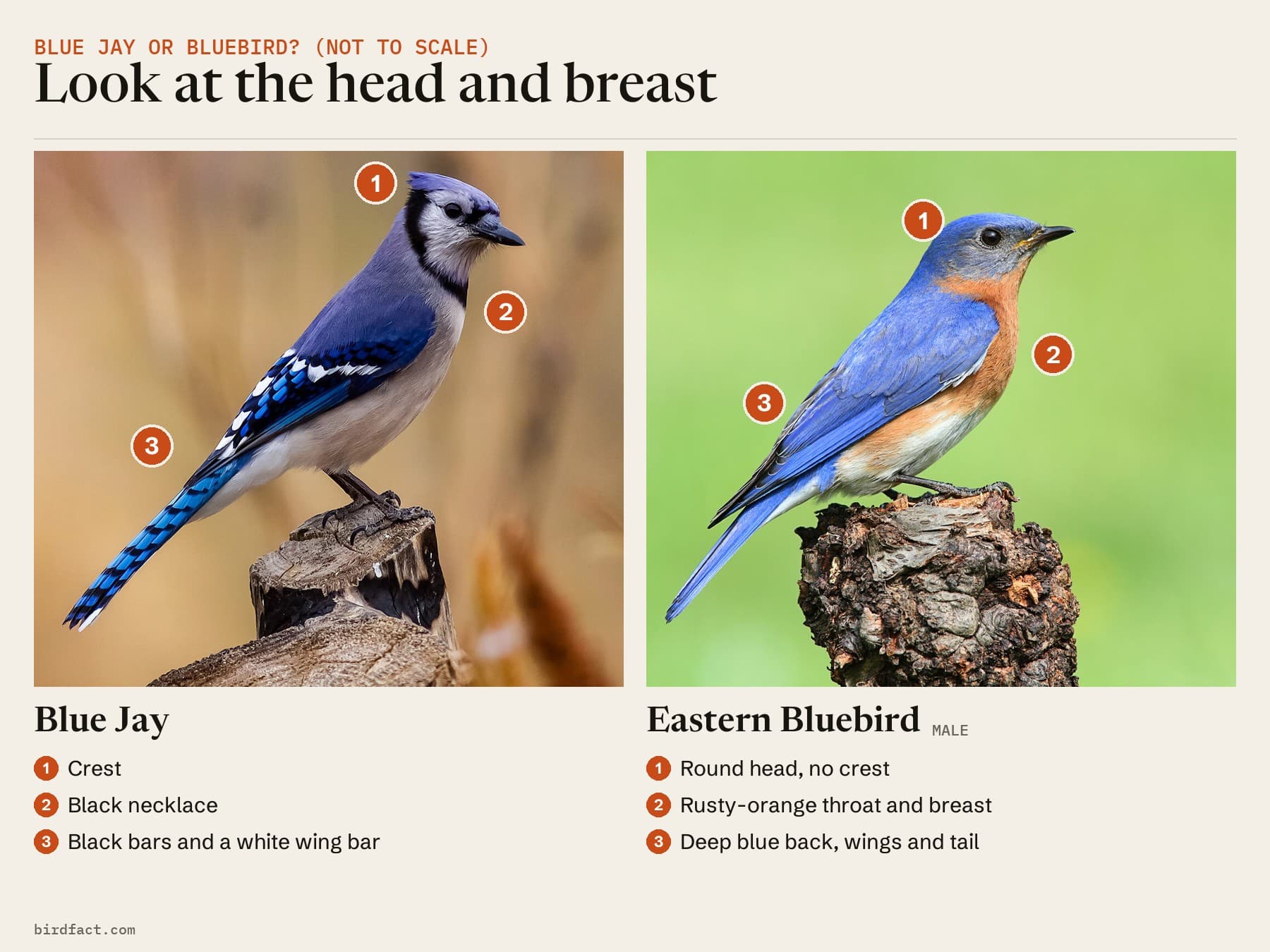
A Blue Jay has a crest, a black necklace and black-barred wings, and is much bigger; a bluebird has a round head, no crest, a rusty-orange breast (on Eastern and Western males) and blue wings with no bars. Compare size, voice, nests, food and numbers, with a comparison card and recordings.
A Blue Jay and an Eastern Bluebird can turn up in the same eastern backyard, and both are blue. Beyond the blue, and how that blue is made, they have little in common. Here is how to tell them apart at a glance, why both are blue without any blue pigment, and how they differ in voice, nests, food and numbers. The West has two more bluebirds, the Western and the Mountain Bluebird, and they are covered too.
Is a Blue Jay a bluebird?
The quickest clues
- The head. A Blue Jay has a crest. A bluebird has a big, rounded head and no crest.3, 2
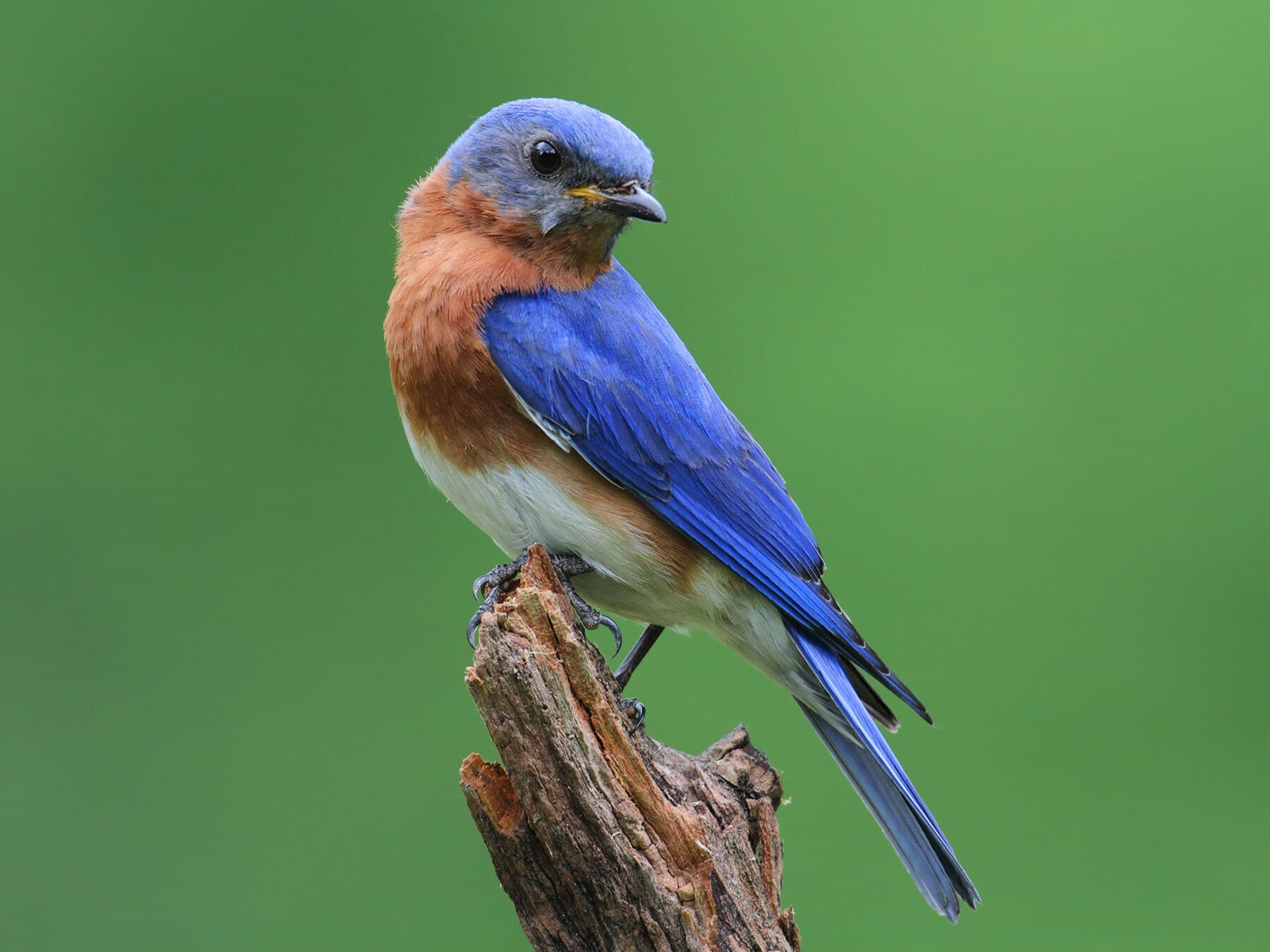
- The breast. A Blue Jay is white or light gray below, with a black necklace below the white throat.3 A male Eastern Bluebird has a red-orange throat, breast and flanks and a white lower belly.4
- The wings and tail. A Blue Jay's wings and tail are barred with black, with a bold white wing bar and white tail corners.3 A male bluebird's are blue, with no black bars or white wing bar.2
- The size. A Blue Jay is larger than an American Robin; an Eastern Bluebird is about two-thirds the size of one.3, 2
- The sound. A Blue Jay is loud: its calls carry a long way. A bluebird's song is a fairly low-pitched warble, and many of its sounds are quiet.3, 2, 4
Light matters: a bird's blue changes with the light, and from a distance a male bluebird can look plain gray-brown.2
At a glance
| Blue Jay | Eastern Bluebird | |
|---|---|---|
| Head | Crest | Round, no crest |
| Breast | White or light gray, black necklace | Male red-orange, white lower belly |
| Wings and tail | Black bars, white wing bar and tail corners | Blue, no bars (male) |
| Size | Larger than an American Robin | About two-thirds of a robin |
| Family | Crow family | Thrush family |
| Voice | Loud calls, jeers | Low-pitched warble, many quiet sounds |
| Nest | Open cup of twigs in a tree | Old woodpecker hole or nest box |
| Eggs | Bluish or light brown, with brownish spots | Pale blue or blue-green, some white |
| Food | Acorns and other nuts above all | Mainly insects; fruit in fall and winter |
The table draws on All About Birds, Birds of the World and the 1915 federal diet study.3, 2, 1, 4, 5 The card at the top is not to scale.
Size and weight
| Length | Weight | |
|---|---|---|
| Blue Jay | 9.8-11.8 in (25-30 cm) | 2.5-3.5 oz (70-100 g) |
| Eastern Bluebird | 6.3-8.3 in (16-21 cm) | 1.0-1.1 oz (28-32 g) |
| Western Bluebird | 6.3-7.5 in (16-19 cm) | 0.8-1.1 oz (24-31 g) |
| Mountain Bluebird | 6.3-7.9 in (16-20 cm) | about 1.1 oz (30 g) |
Sizes are from All About Birds.3, 2, 6, 7 A Blue Jay weighs about two and a half to three times as much as an Eastern Bluebird. It has a broad, rounded tail;3 an Eastern Bluebird is plump, with long wings but a fairly short tail.2
Color, sexes and young
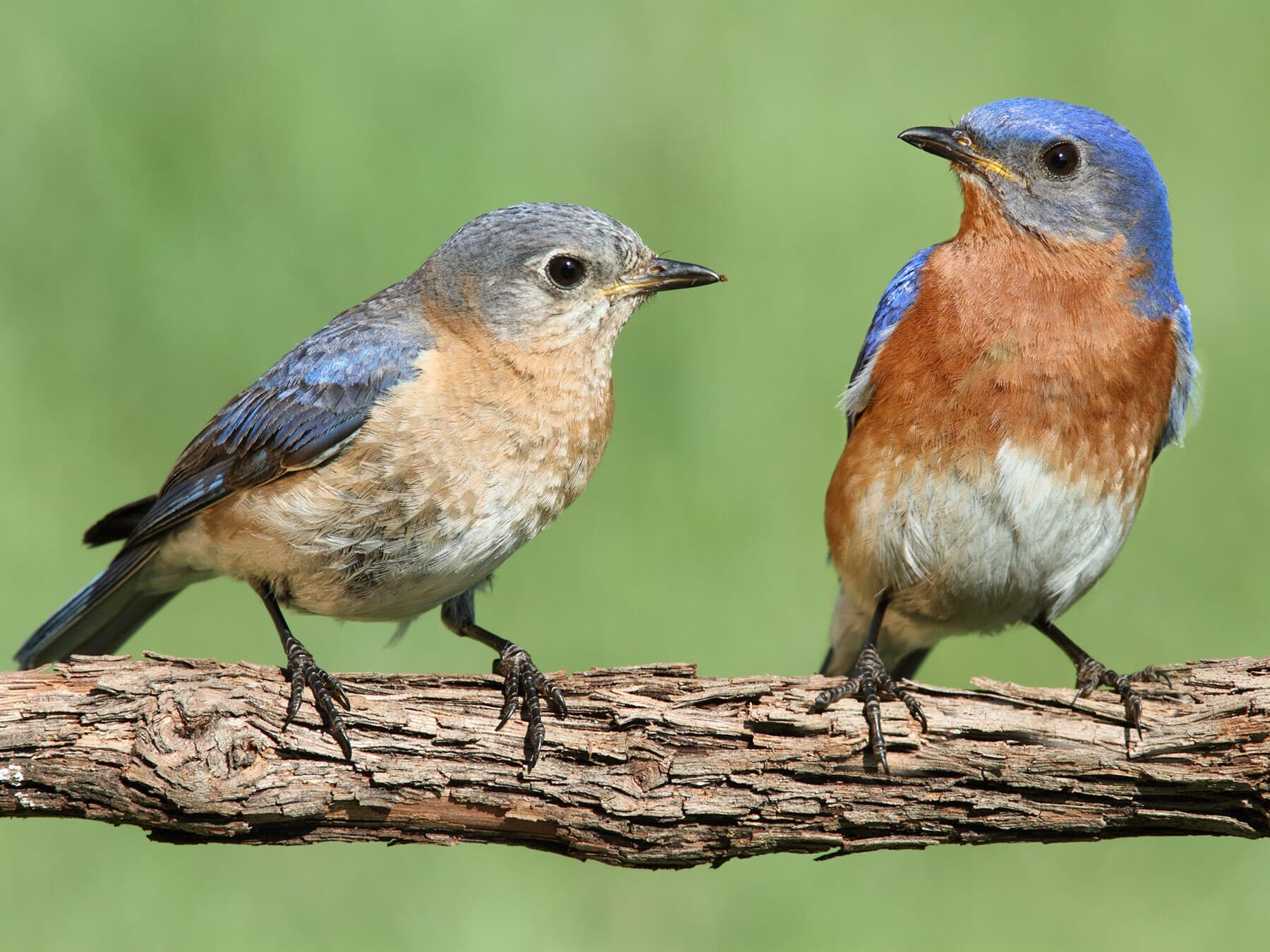
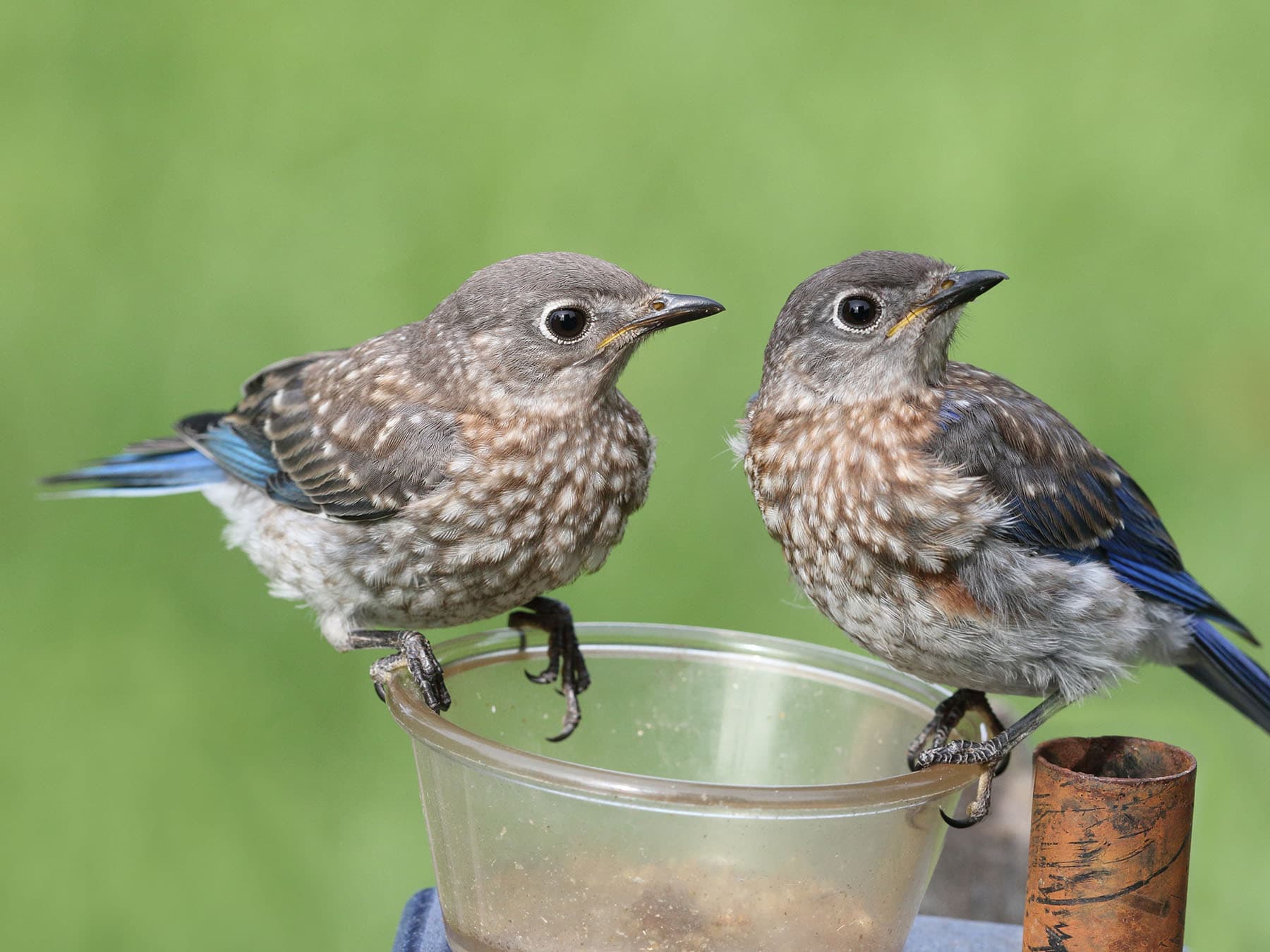
Blue Jays look the same whichever the sex.1 Bluebirds do not. A male Eastern Bluebird is rich blue above; a female is blue-gray, with a gray-brown wash on the back, dull blue wings and tail, and a paler orange breast. Young Eastern Bluebirds are browner, streaked white above and spotted below, and even they can be sexed, by the blue in the wing and tail.4
Both blues are structural
Neither bird has any blue pigment. In 1936 Carl Gower studied the feathers of the Blue Jay and the Eastern Bluebird side by side and found the blue in both comes from the structure of the feather barbs, over a dark layer of pigment; his explanation of how has since been replaced.8 Later work showed how it works in bluebirds: light is scattered by a spongy layer inside each barb, beneath a keratin outer layer and backed by melanin.9 A study of three males of each bluebird found the same spongy layer in the rusty breast feathers of Eastern and Western Bluebirds, where melanin in the outer layer hides the blue.10
The eggs are the other way round. A bluebird's pale blue or blue-green eggs really are colored by a pigment, biliverdin.4 For more on the Blue Jay's feathers, see what a Blue Jay feather means.
Songs and calls
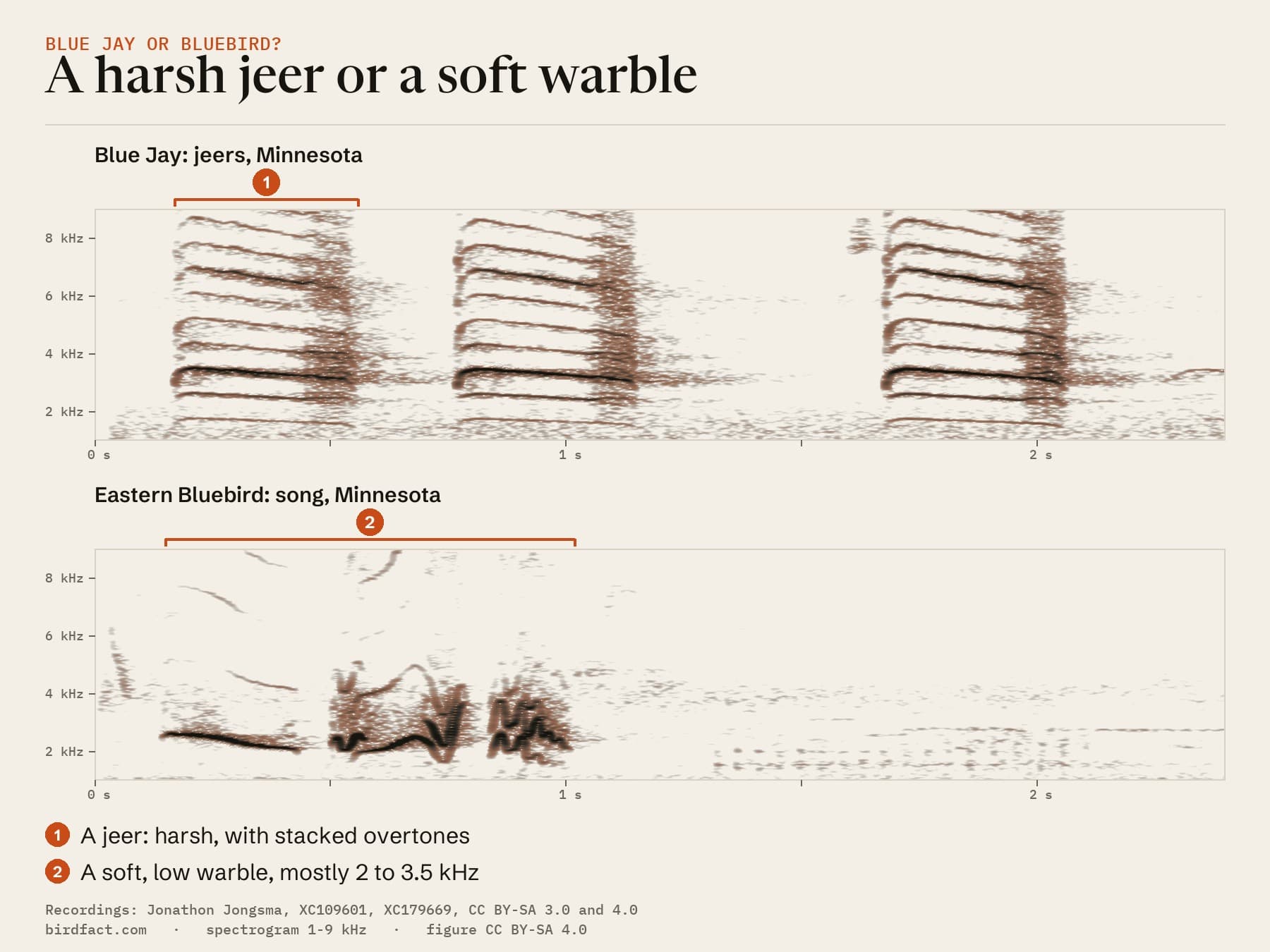
Blue Jays are loud and varied: harsh jeers, musical whistled calls, a dry rattle and close copies of hawk calls.1 More: Blue Jay sounds.
An Eastern Bluebird's song is a fairly low-pitched warble. In a study of five males, 4,238 songs averaged about 3 notes each and fell between 2 and 4 kHz; the common call is a soft, low tu-a-wee.4, 2 A bluebird has even been heard copying a Blue Jay: an observer writing in 1887 heard one put the jay's kay-kay note in front of every fourth to seventh warble.11
Where you'll see each one
Most Blue Jays live year-round across eastern and central North America, from southern Canada to Florida and Texas, and the species is spreading west.1 The Eastern Bluebird lives in eastern North America, and its range reaches south to Nicaragua. A bluebird often perches on a wire or post and drops to the ground for insects.2
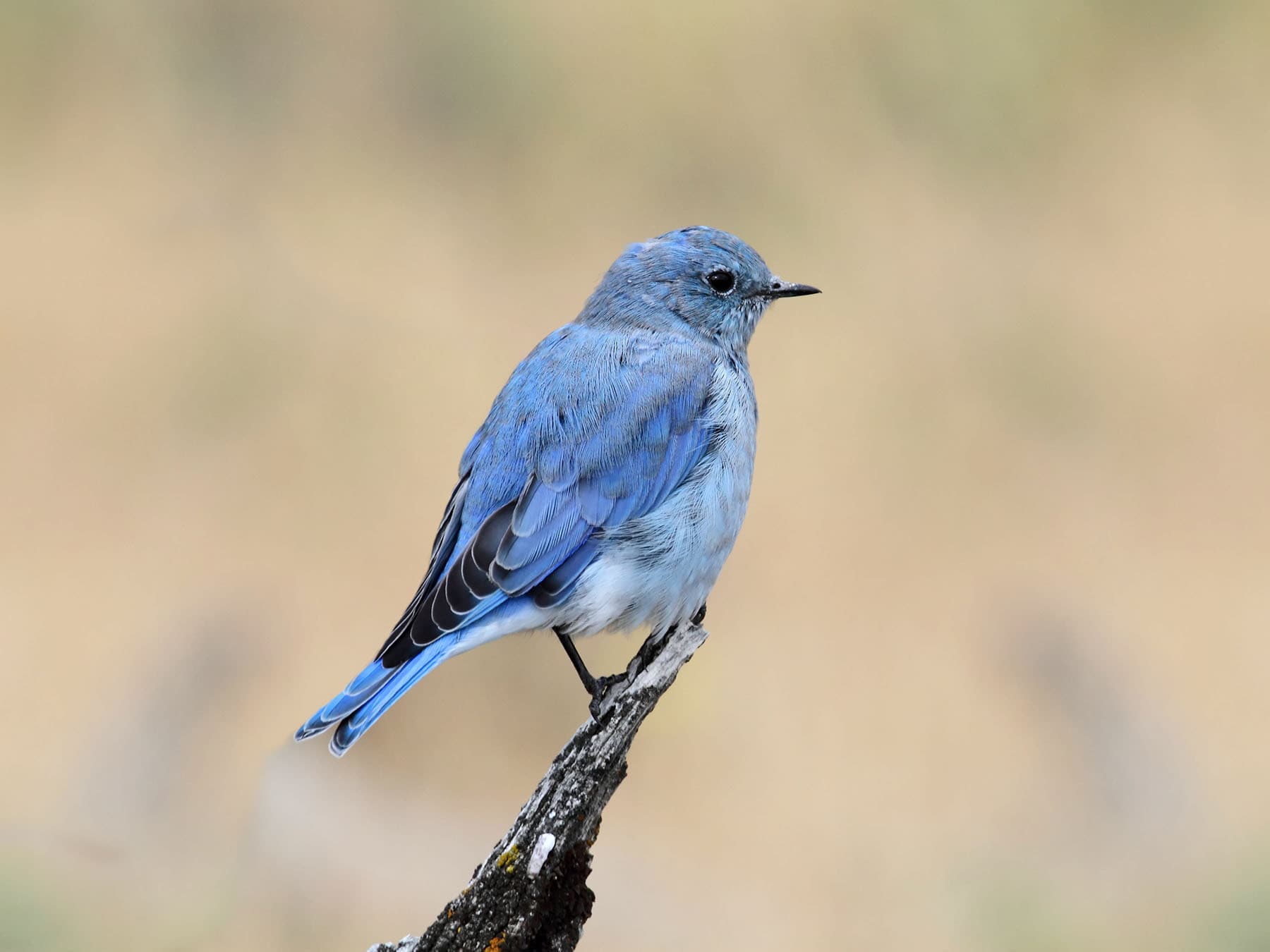
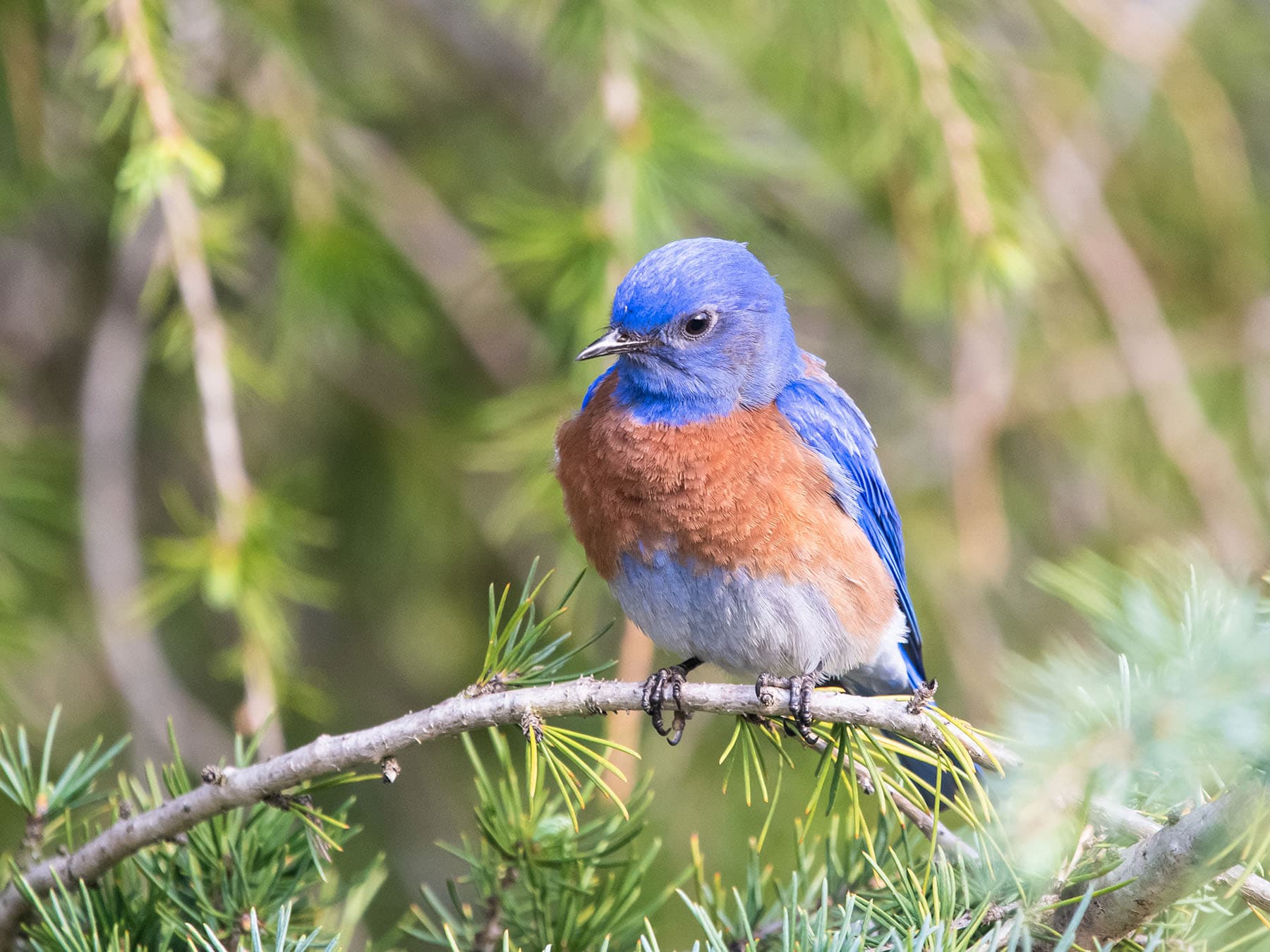
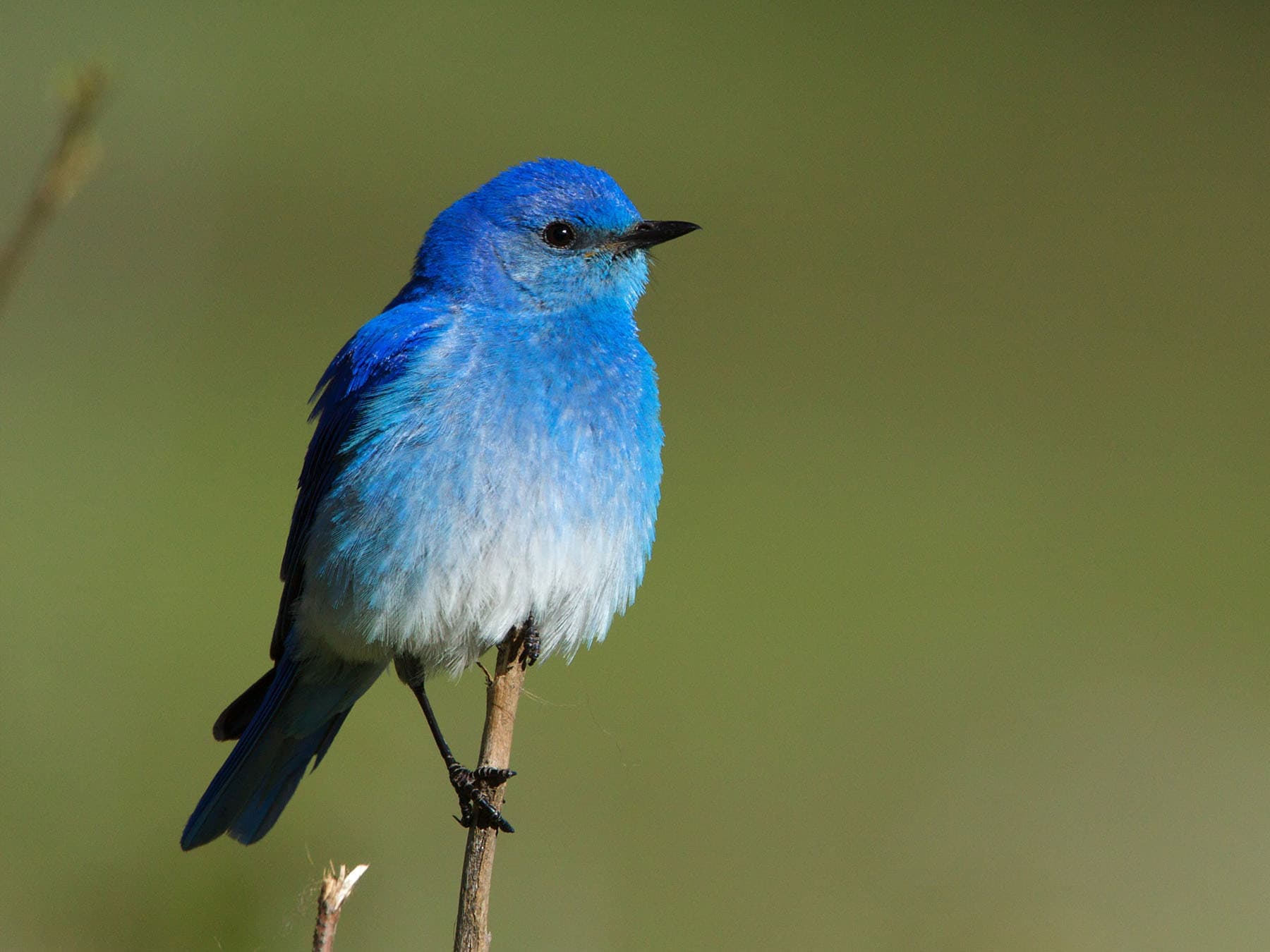
The West has its own jays and bluebirds. All About Birds lists Steller's Jay and the scrub-jays as lookalikes of the Blue Jay, and Steller's Jay and two scrub-jays among the birds to compare with a Western Bluebird.3, 6 The male Western Bluebird has a blue throat and a rust-orange vest that reaches the upper back; the male Mountain Bluebird is sky-blue, paler below, with no orange, and Mountain Bluebirds often hover while they hunt.6, 7
Nests and eggs
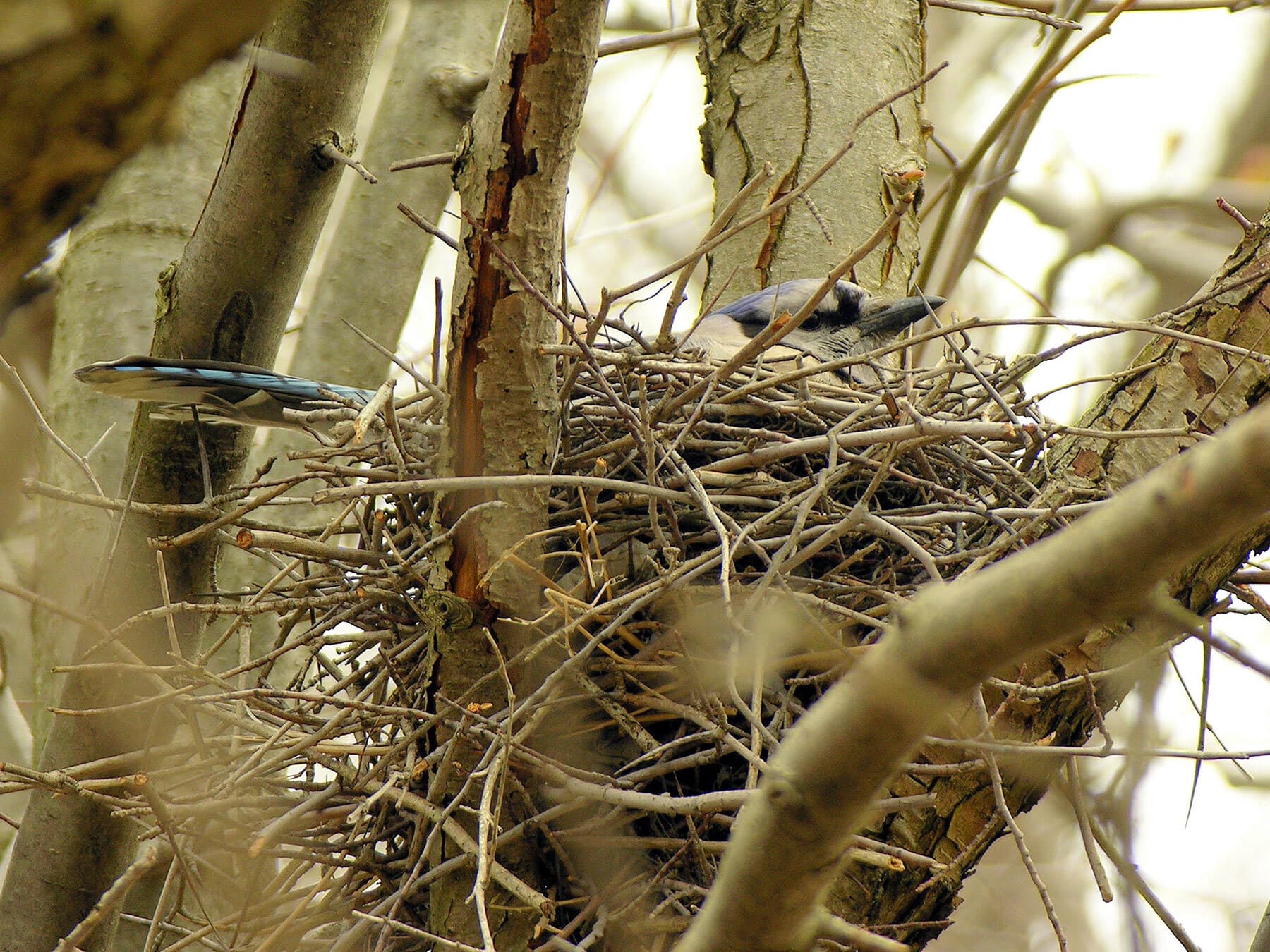
Blue Jays build an open cup of twigs in a tree, usually 10 to 25 feet up, and lay 2 to 7 bluish or light brown eggs with brownish spots.3 More: Blue Jay nesting.
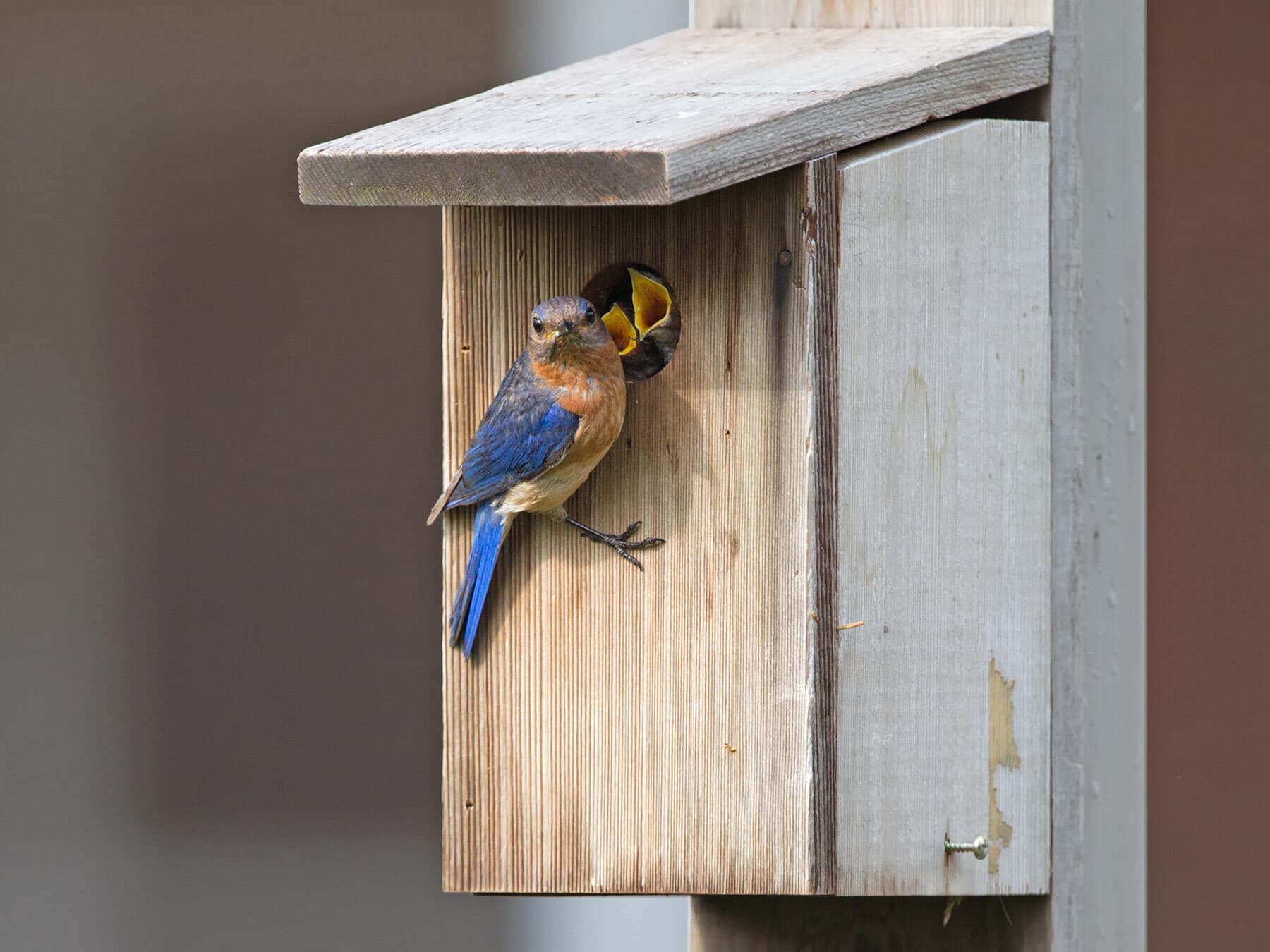
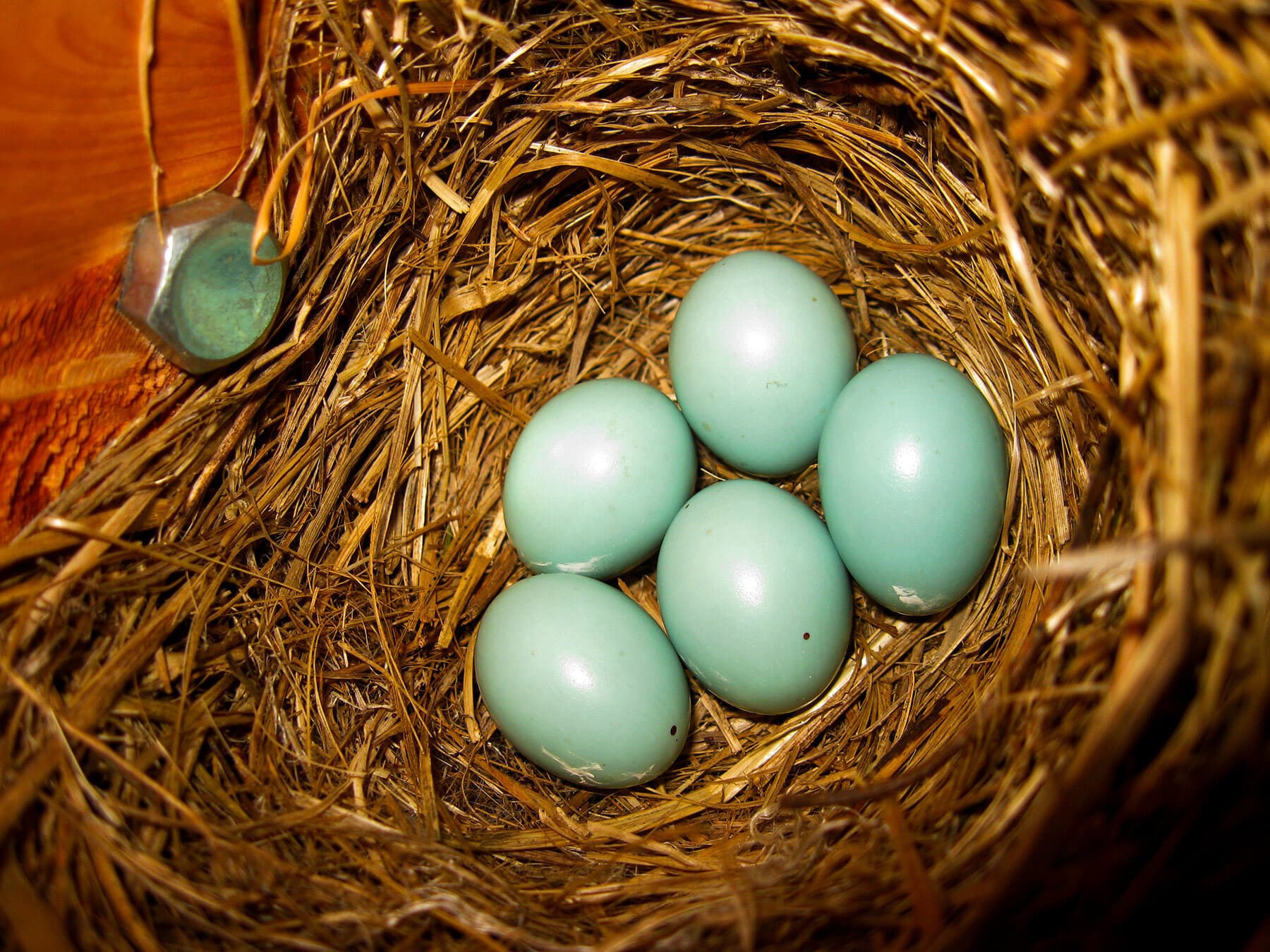
Bluebirds nest in holes, but cannot dig their own: they use old woodpecker holes and take readily to nest boxes.6, 12, 4 An Eastern Bluebird lays 3 to 6 or 7 eggs, pale blue or blue-green, and a few females lay white eggs.4
Food and feeders
Blue Jays eat nuts more than anything else, above all acorns, plus insects, grain and fruit,5 and at feeders they take peanuts, sunflower seeds and suet;3 Project FeederWatch lists mealworms among their feeder foods too.13 More: what Blue Jays eat.
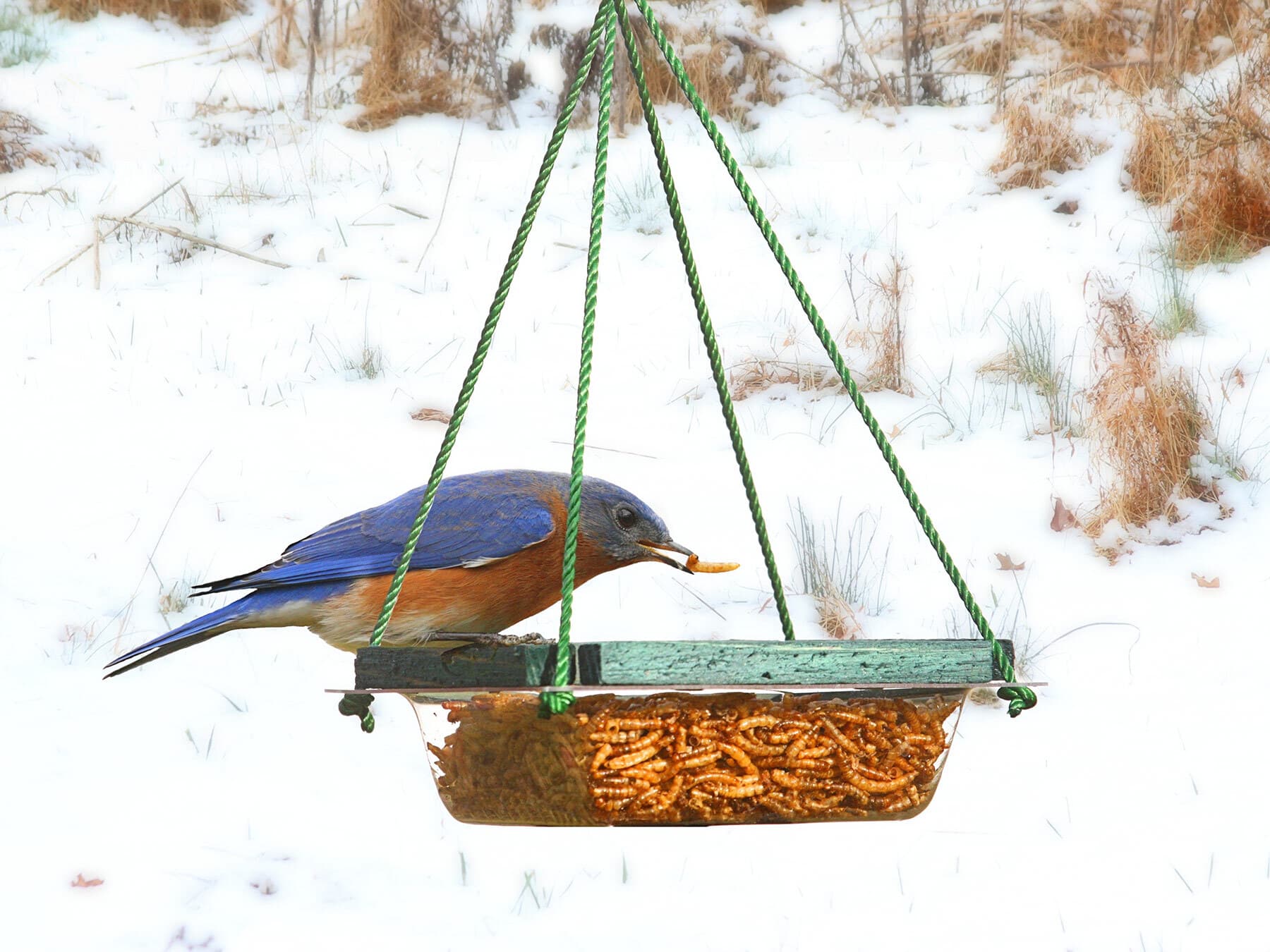
Bluebirds eat mainly insects caught on the ground for much of the year, and a lot of fruit in fall and winter. They seldom visit feeders unless mealworms are offered.2 In a study of 24,528 NestWatch nest attempts by Eastern Bluebirds and two chickadees from 2014 to 2019, bluebirds with access to mealworms or other insects started laying about six days earlier, and their predicted nest success was slightly higher (79% against 74%).14
Do Blue Jays attack bluebirds or their nests?
Not much, as far as the records go. Birds of the World lists the predators of Eastern Bluebirds and their eggs and young (chipmunks, flying squirrels, House Sparrows, European Starlings, snakes, fire ants, cats, black bears, raccoons and American Kestrels, with House Wrens behind about a third of the predation in one Michigan study) and does not name the Blue Jay.4 NestWatch names raccoons, cats, snakes and squirrels as the common predators at nest boxes.15 The one claim we found against the jay is an unreferenced line in a 1949 book that "red squirrels and blue jays invade the nests and eat the eggs or young".11
If anything, the aggression runs the other way: Blue Jays are among the species Eastern Bluebirds have aggressive encounters with, mostly in the breeding season, and All About Birds says male bluebirds will attack Blue Jays.4, 2 For what Blue Jays do take, see do Blue Jays eat other birds?
Which is more common?
The Eastern Bluebird. Partners in Flight puts the world breeding population at about 23 million Eastern Bluebirds, 7.1 million Western and 5.6 million Mountain Bluebirds, against 17 million Blue Jays.16 The trends differ too. On the Breeding Bird Survey, survey-wide from 1966 to 2025, Eastern Bluebirds increased by about 0.75% a year and Blue Jays declined by about 0.56% a year; Mountain Bluebirds declined by about 0.75% a year from 1967, and the Western Bluebird showed no clear trend.17
Protected, and state birds
All four are protected under the Migratory Bird Treaty Act in the United States.18 The Eastern Bluebird is the state bird of Missouri19 and New York,20 and the Mountain Bluebird of Nevada and Idaho, according to the Nevada Department of Wildlife.21 The Blue Jay is the provincial bird of Prince Edward Island.22
Other blue birds people mix up
All About Birds lists the Indigo Bunting among the birds to compare with an Eastern Bluebird, and the Lazuli Bunting with a Western Bluebird.2, 6 A. C. Bent's 1949 account of the Western Bluebird gives the marks: the Blue Grosbeak "does not have the solidly chestnut breast and its stout bill is quite noticeable, and the lazuli bunting is a much lighter blue and has white wing bars".11
About the recordings
Both recordings were made in Minnesota by the same recordist, Jonathon Jongsma, and drawn on the same scale so the two voices can be compared directly. The bluebird recording has other birds in the background; the bluebird is the low warble.
Sources
- Smith, K. G., Tarvin, K. A., Woolfenden, G. E. (2020). Blue Jay (Cyanocitta cristata), version 1.0. Birds of the World (A. F. Poole, editor). Cornell Lab of Ornithology. doi:10.2173/bow.blujay.01
- Cornell Lab of Ornithology. Eastern Bluebird. All About Birds. Accessed October 15, 2026. Source
- Cornell Lab of Ornithology. Blue Jay. All About Birds. Accessed October 14, 2026. Source
- Gowaty, P. A., Plissner, J. H. (2020). Eastern Bluebird (Sialia sialis), version 1.0. Birds of the World (A. F. Poole, editor). Cornell Lab of Ornithology. doi:10.2173/bow.easblu.01
- Beal, F. E. L., Kalmbach, E. R. (1915). Some Common Birds Useful to the Farmer (Farmers' Bulletin 630; revised 1923). U.S. Department of Agriculture. Accessed October 14, 2026. Source
- Cornell Lab of Ornithology. Western Bluebird. All About Birds. Accessed October 15, 2026. Source
- Cornell Lab of Ornithology. Mountain Bluebird. All About Birds. Accessed October 15, 2026. Source
- Gower, C. (1936). The Cause of Blue Color as Found in the Bluebird (Sialia sialis) and the Blue Jay (Cyanocitta cristata). The Auk 53(2): 178-185. doi:10.2307/4077277
- Shawkey, M. D., Estes, A. M., Siefferman, L., Hill, G. E. (2005). The anatomical basis of sexual dichromatism in non-iridescent ultraviolet-blue structural coloration of feathers. Biological Journal of the Linnean Society 84(2): 259-271. doi:10.1111/j.1095-8312.2005.00428.x
- Shawkey, M. D., Balenger, S. L., Hill, G. E., Johnson, L. S., Keyser, A. J., Siefferman, L. (2006). Mechanisms of evolutionary change in structural plumage coloration among bluebirds (Sialia spp.). Journal of the Royal Society Interface 3(9): 527-532. doi:10.1098/rsif.2006.0111
- Bent, A. C. (1949). Life Histories of North American Thrushes, Kinglets, and Their Allies (United States National Museum Bulletin 196). Smithsonian Institution, Washington. Accessed October 15, 2026. Source
- Johnson, L. S., Dawson, R. D. (2020). Mountain Bluebird (Sialia currucoides), version 1.0. Birds of the World (P. G. Rodewald, editor). Cornell Lab of Ornithology. doi:10.2173/bow.moublu.01
- Project FeederWatch (Cornell Lab of Ornithology and Birds Canada). Common Feeder Birds: Blue Jay. Project FeederWatch. Accessed October 14, 2026. Source
- Bailey, R. L., Bonter, D. N. (2021). Large-scale supplemental feeding alters lay date and nest survival in Eastern Bluebirds but not in two species of chickadees. Ornithological Applications 124(1): duab046. doi:10.1093/ornithapp/duab046
- NestWatch (Cornell Lab of Ornithology). Dealing with Predators. NestWatch. Accessed October 15, 2026. Source
- Partners in Flight (2020). Population Estimates Database, version 3.1. Partners in Flight (Bird Conservancy of the Rockies). Accessed October 15, 2026. Source
- Hostetler, J. A., Sauer, J. R., Hines, J. E., Ziolkowski, D. J., Jr., Lutmerding, M., Skalos, S. M. (2026). The North American Breeding Bird Survey, Analysis Results 1966-2025. U.S. Geological Survey data release. doi:10.5066/P1OSNSFC
- U.S. Fish and Wildlife Service (2023). 50 CFR 10.13: List of Birds Protected by the Migratory Bird Treaty Act. Electronic Code of Federal Regulations. Accessed October 14, 2026. Source
- State of Missouri (1957). Revised Statutes of Missouri, section 10.010 (official state bird). Missouri Revisor of Statutes. Accessed October 15, 2026. Source
- State of New York. New York State Law, section 78 (state bird). New York State Senate. Accessed October 15, 2026. Source
- Nevada Department of Wildlife. Mountain Bluebird. Nevada Department of Wildlife. Accessed October 15, 2026. Source
- Government of Prince Edward Island. Provincial Bird. Prince Edward Island Executive Council Office. Accessed October 14, 2026. Source