


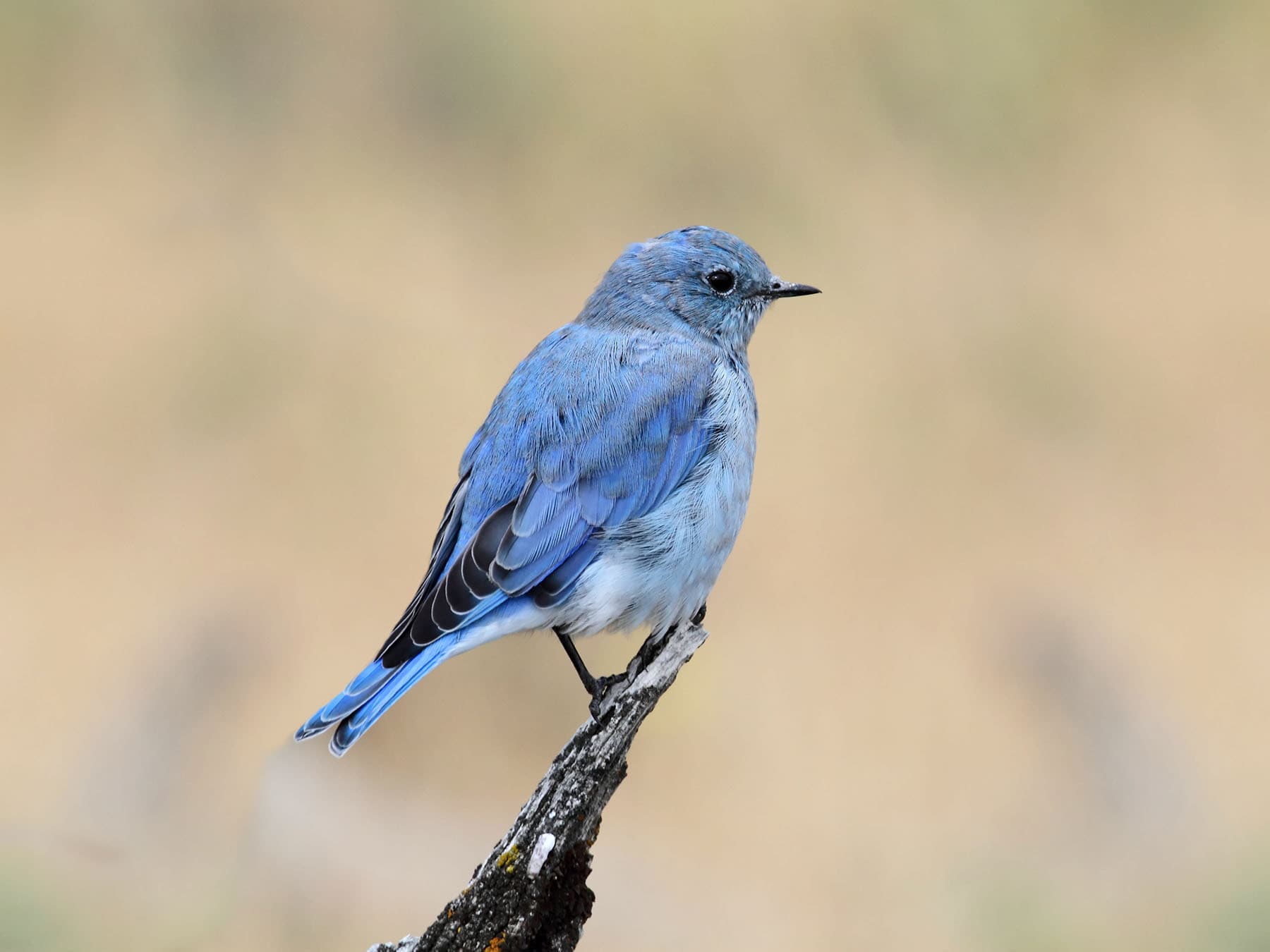
Mountain Bluebird
Arctic Bluebird · Sialia currucoides
By the Birdfact teamChecked by Nathan Cope
On this page13 sections
How to recognise it
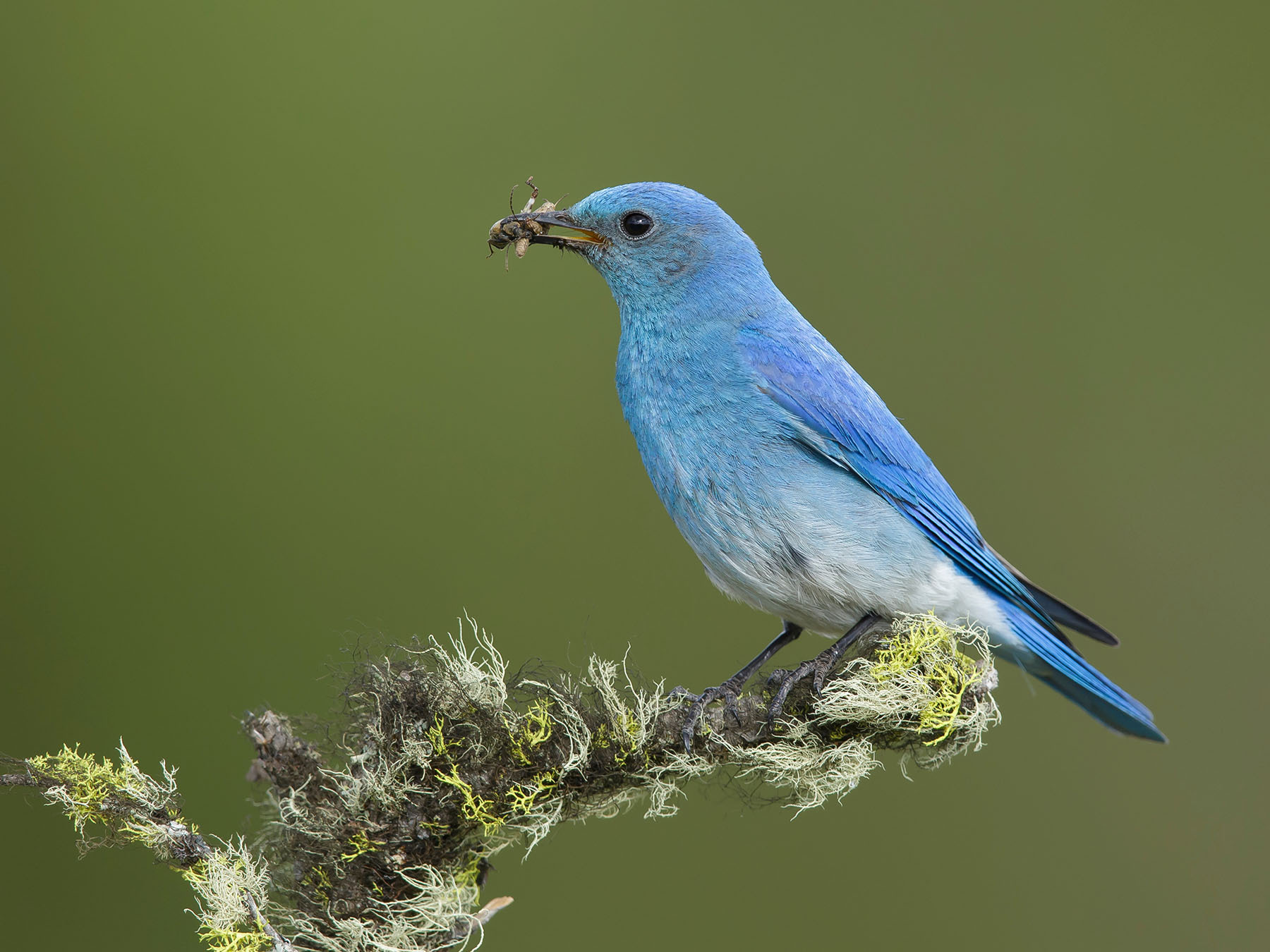
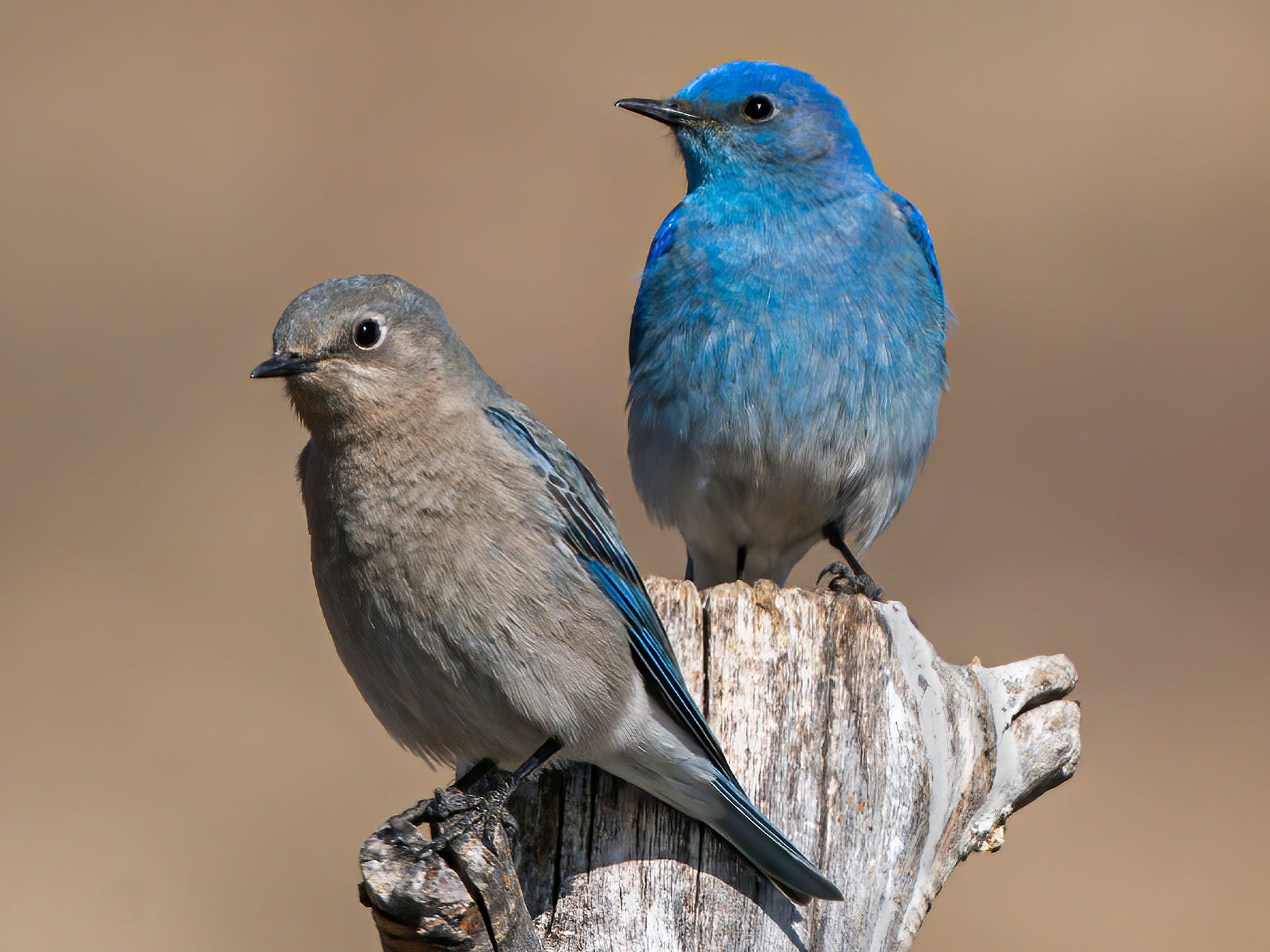
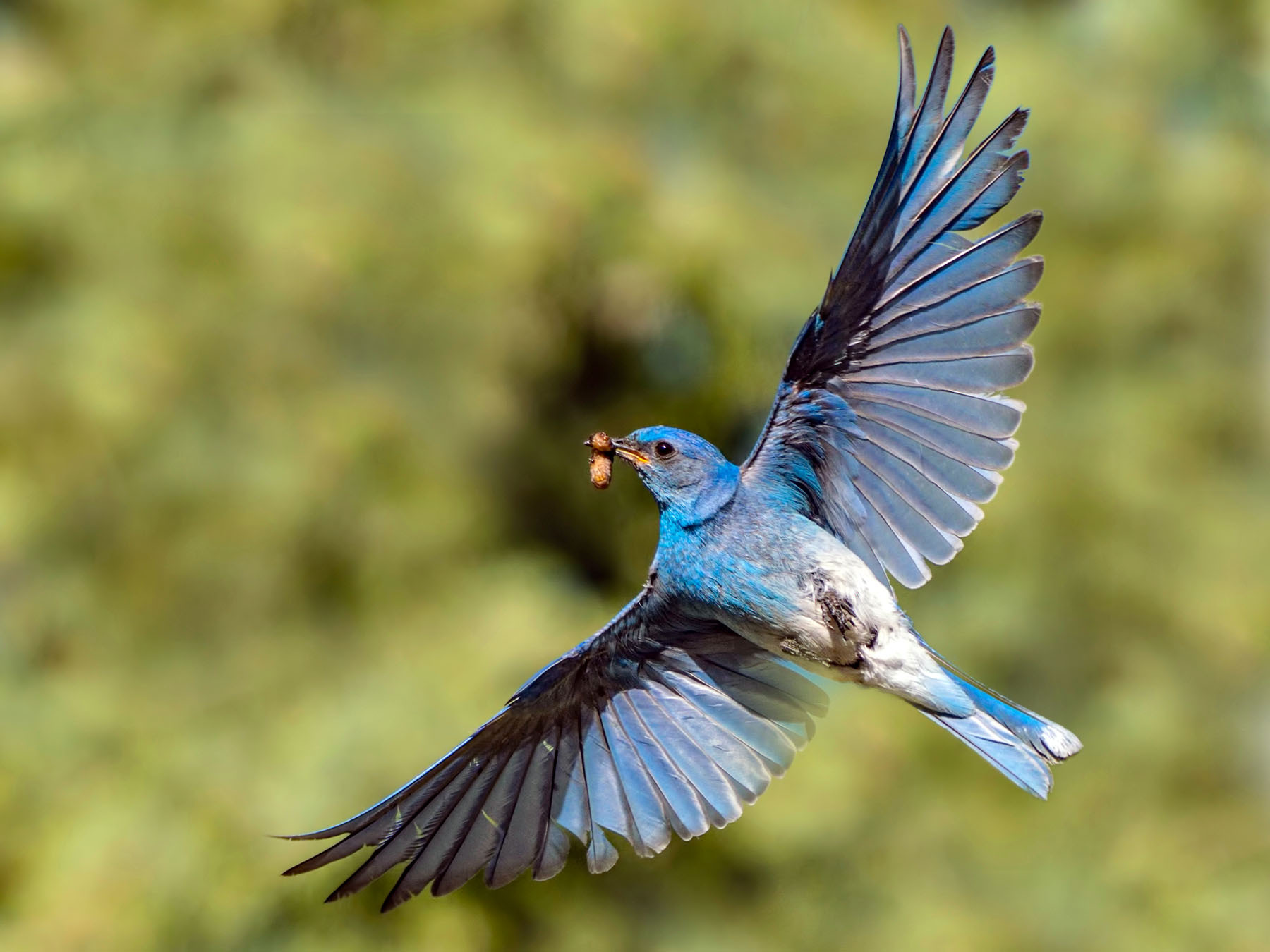
The Mountain Bluebird is a small thrush with a slender profile and long wings. Males are a rich, bright blue across their upperparts, fading to lighter blue on the breast and white on the lower belly. The wing tips are dusky, not pure blue.
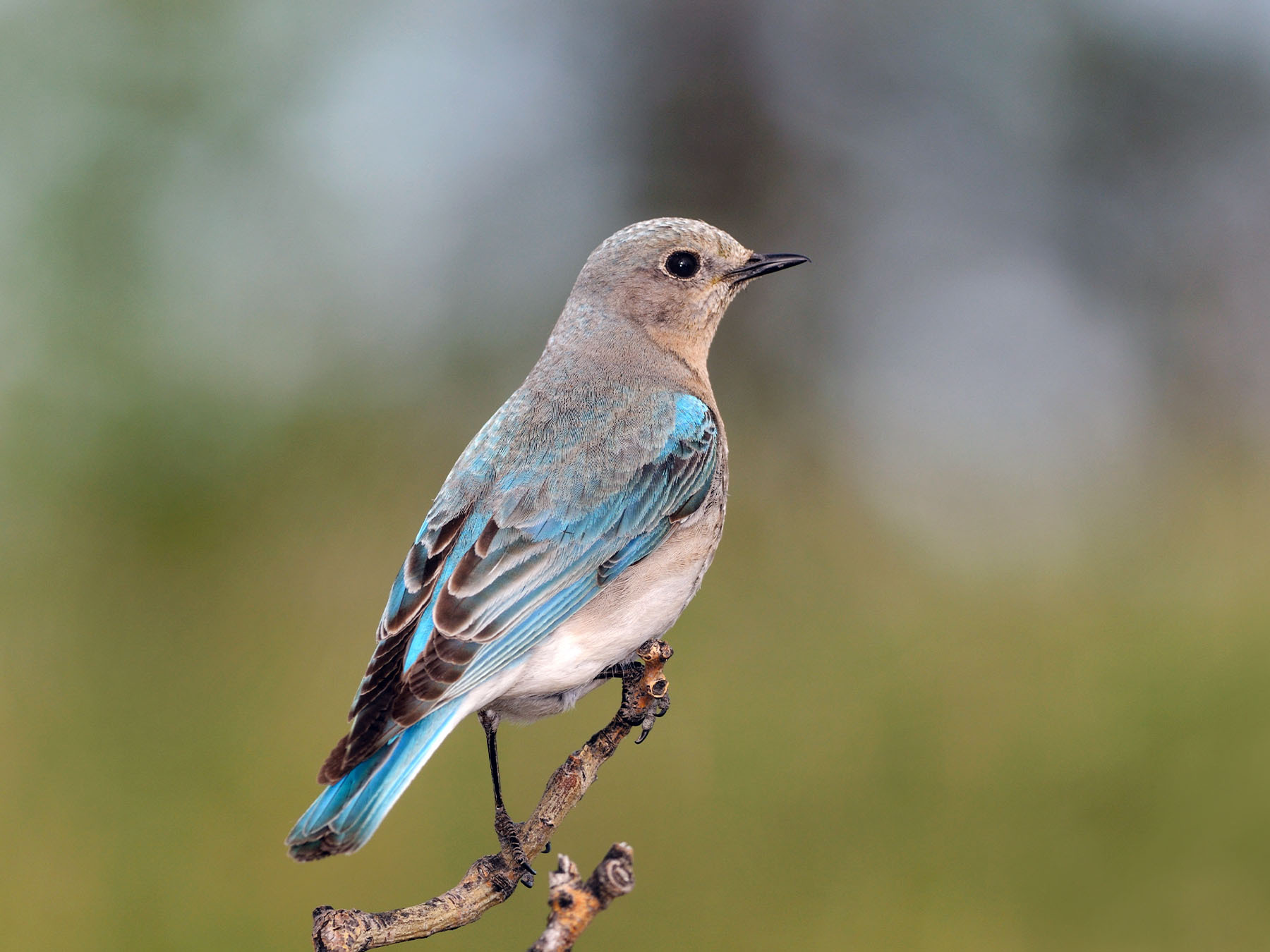
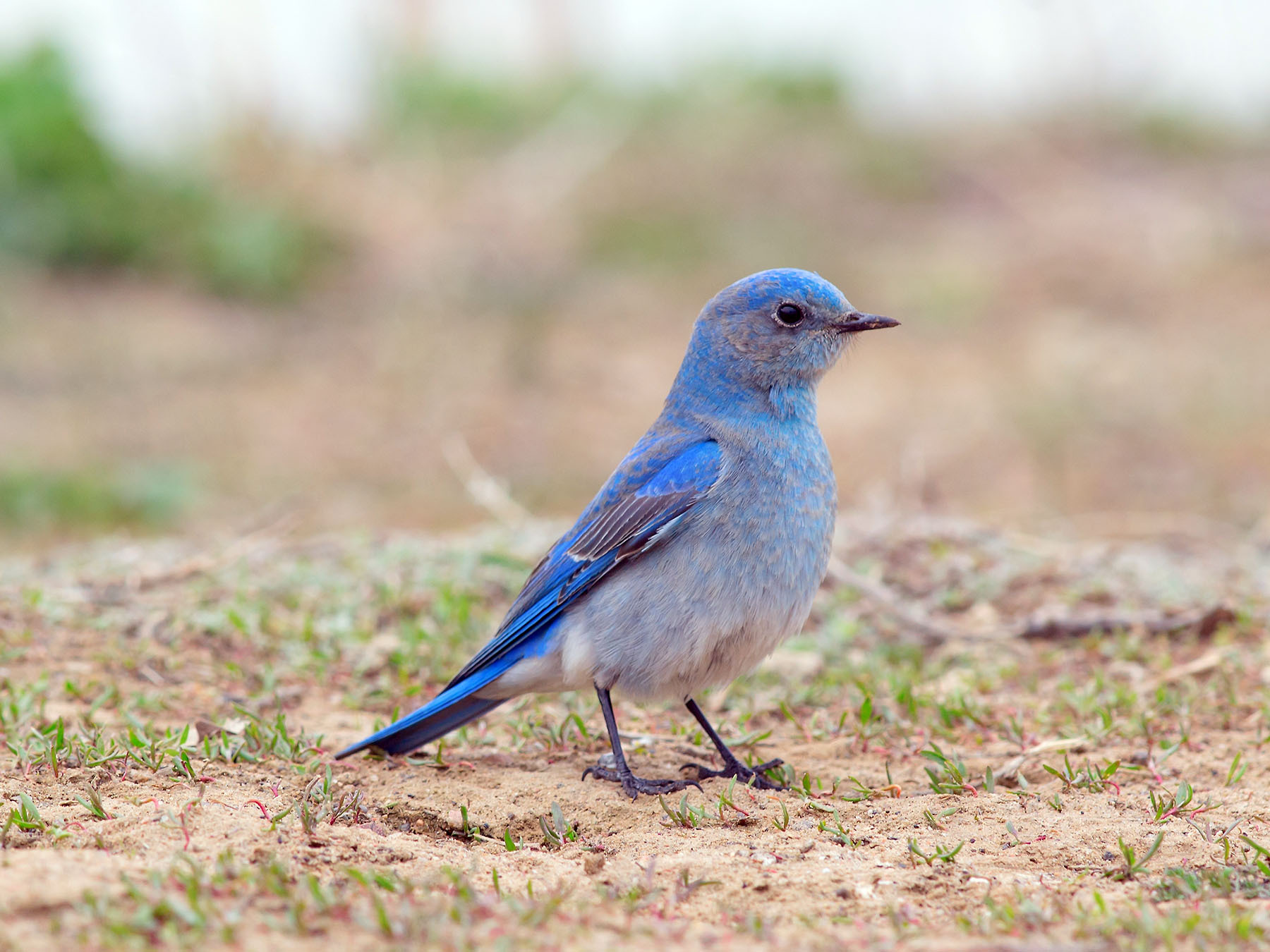
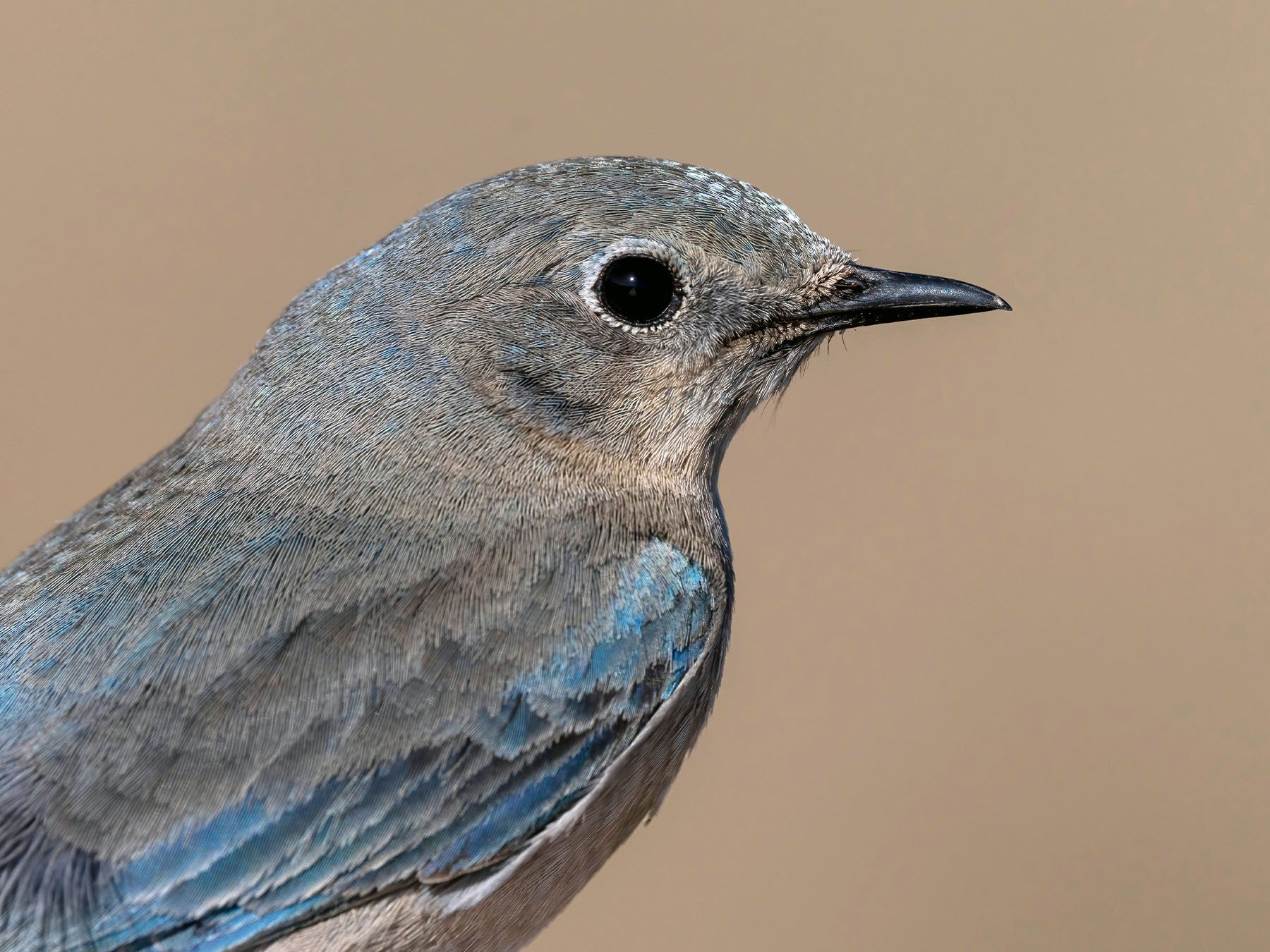
Females are primarily grey-brown, with a distinctive blue rump patch and blue in the wings and tail. Their underparts can range from grey-brown to pale buff, with a whiter chin and belly. They also have a subtle white eye ring.
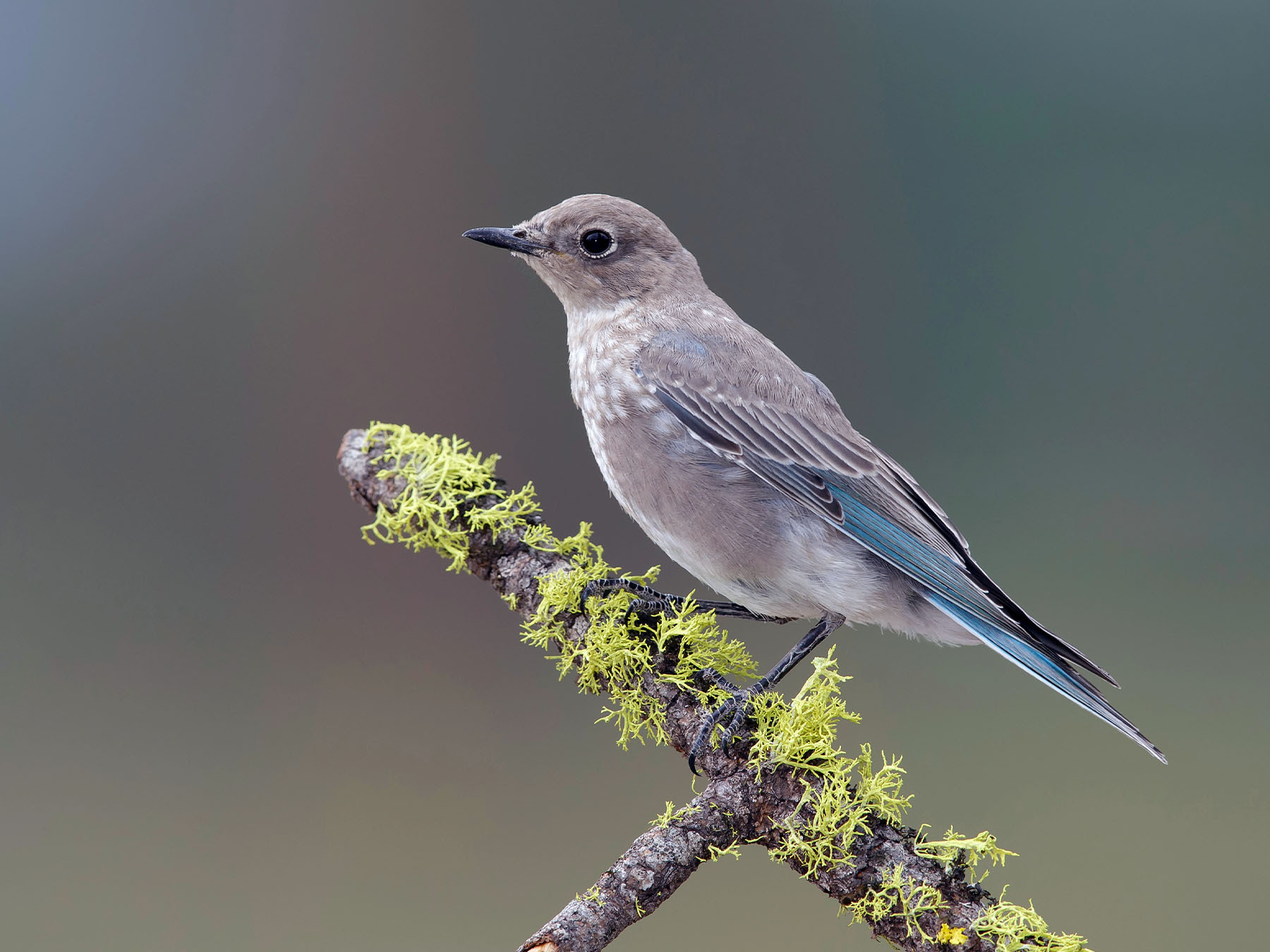
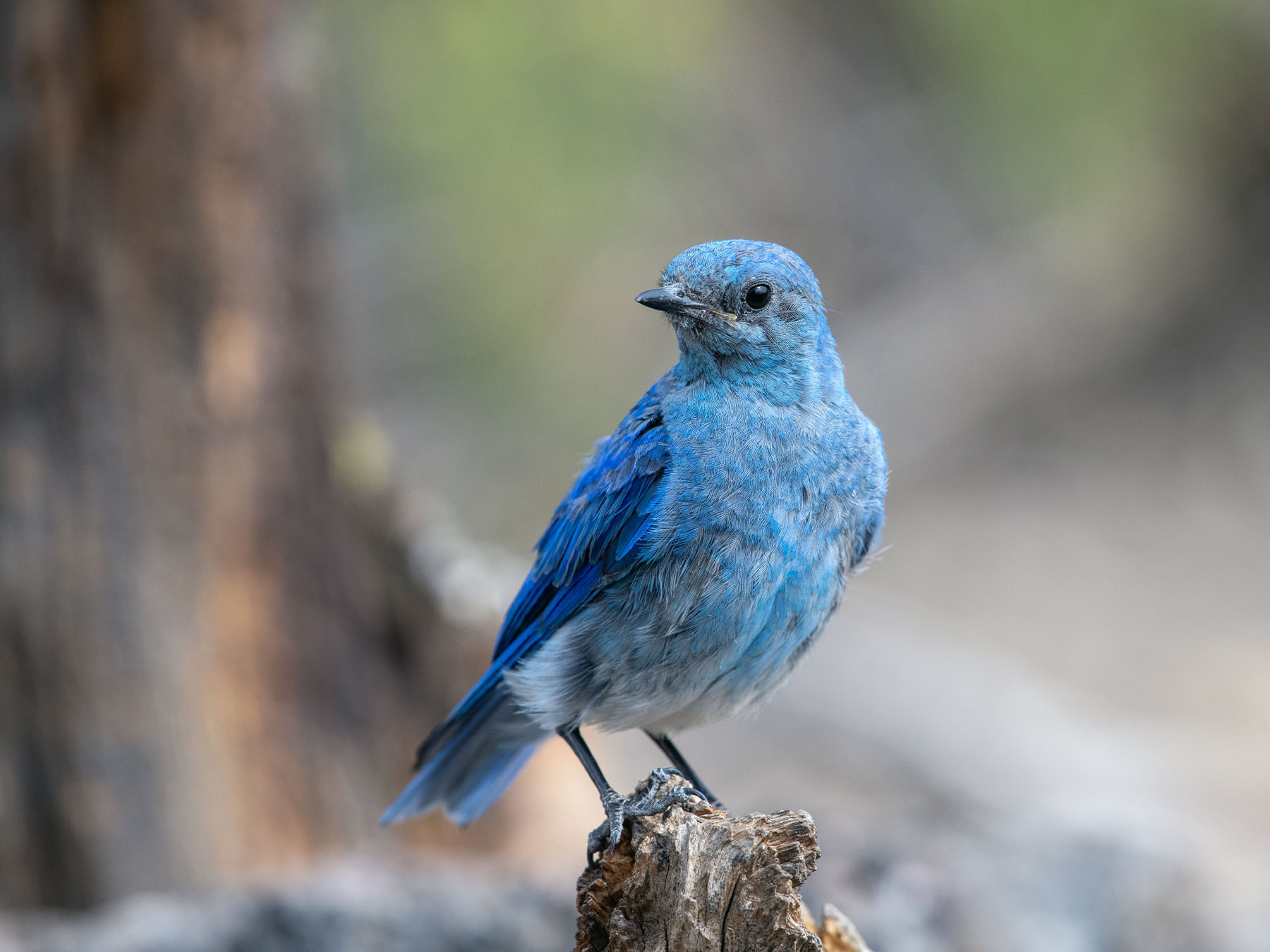
Young birds look similar to females but are darker, with distinctive white spotting on their breast and upper flanks.
Its size
Adults- Length
- 15–18 cm
- Wingspan
- 28–36 cm
- Weight
- 24–37 g
Its song and calls
The Mountain Bluebird's song is a series of soft, warbling phrases, often described as 'few-few-few' or 'chur-chur'. Their call is a thin, musical 'few' or 'phew'.
During courtship, males sing more frequently, producing longer, more varied songs to attract mates.
- Call0:00 / 0:47
Recorded in South Dakota, United States · June 2015
When and where to see it
OctoberIn season
Most recorded in October
- 1. Wyoming0.65%
- 2. Colorado0.63%
- 3. New Mexico0.43%
- 4. Utah0.43%
- 5. South Dakota0.27%
Each dot is a county, state or province: the bigger and darker, the larger the bird’s share of that place’s bird records that month. Grey dots: no regular records. The ringed point is the centre of the bird’s records this month; the arrow shows how it moved since last month, and the dashed loop its path through the year. “Arrivals” colours places where it becomes regular this month (orange) or is in its last regular month (grey). GBIF eBird Observation Dataset, 2019–2024. Map data: Natural Earth, US Census Bureau; place centres © OpenStreetMap contributors.
In your area
See when the Mountain Bluebird is recorded in your county, state or province.
How often the Mountain Bluebird turns up in the United States and Canada through the year, from birdwatchers' records.
United States
Resident · all year · most records in June
Canada
Summer visitor · all year · most records in April
Show as a table
| Month | United States | Canada |
|---|---|---|
| January | 0.034% (regular) | 0.013% (regular) |
| February | 0.026% (regular) | 0.006% (regular) |
| March | 0.045% (regular) | 0.055% (regular) |
| April | 0.037% (regular) | 0.074% (regular) |
| May | 0.033% (regular) | 0.038% (regular) |
| June | 0.074% (regular) | 0.064% (regular) |
| July | 0.066% (regular) | 0.039% (regular) |
| August | 0.042% (regular) | 0.019% (regular) |
| September | 0.039% (regular) | 0.022% (regular) |
| October | 0.036% (regular) | 0.012% (regular) |
| November | 0.027% (regular) | 0.009% (regular) |
| December | 0.029% (regular) | 0.008% (regular) |
Worldwide: recorded regularly in 3 countries
Countries where it was recorded in at least 3 of the 6 years 2019–2024. Linked countries have their own bird list.
North America (3)
Data: EOD – eBird Observation Dataset (Cornell Lab of Ornithology), accessed via GBIF.org, CC BY 4.0. Records from 2019–2024, aggregated and filtered by Birdfact. How these lists are made
Tips for seeing it
- Look for Mountain Bluebirds in open, high-elevation areas with scattered trees.
- Listen for their soft, warbling song, especially during spring.
- Observe fenceposts and low perches in grasslands for hunting birds.
- In winter, search for flocks in lower elevation open areas.
- In the western United States, check bluebird nest boxes in appropriate habitats.
What it eats
Mountain Bluebirds primarily feed on insects, including grasshoppers, caterpillars, and beetles. They supplement their diet with small fruits and berries, especially during winter months when insects are scarce.
Their hunting style involves hovering and dropping to the ground to catch prey.
Nesting and breeding
Mountain Bluebirds form monogamous pairs during the breeding season, which typically begins in late spring. Males perform aerial displays and offer nesting material to attract females.
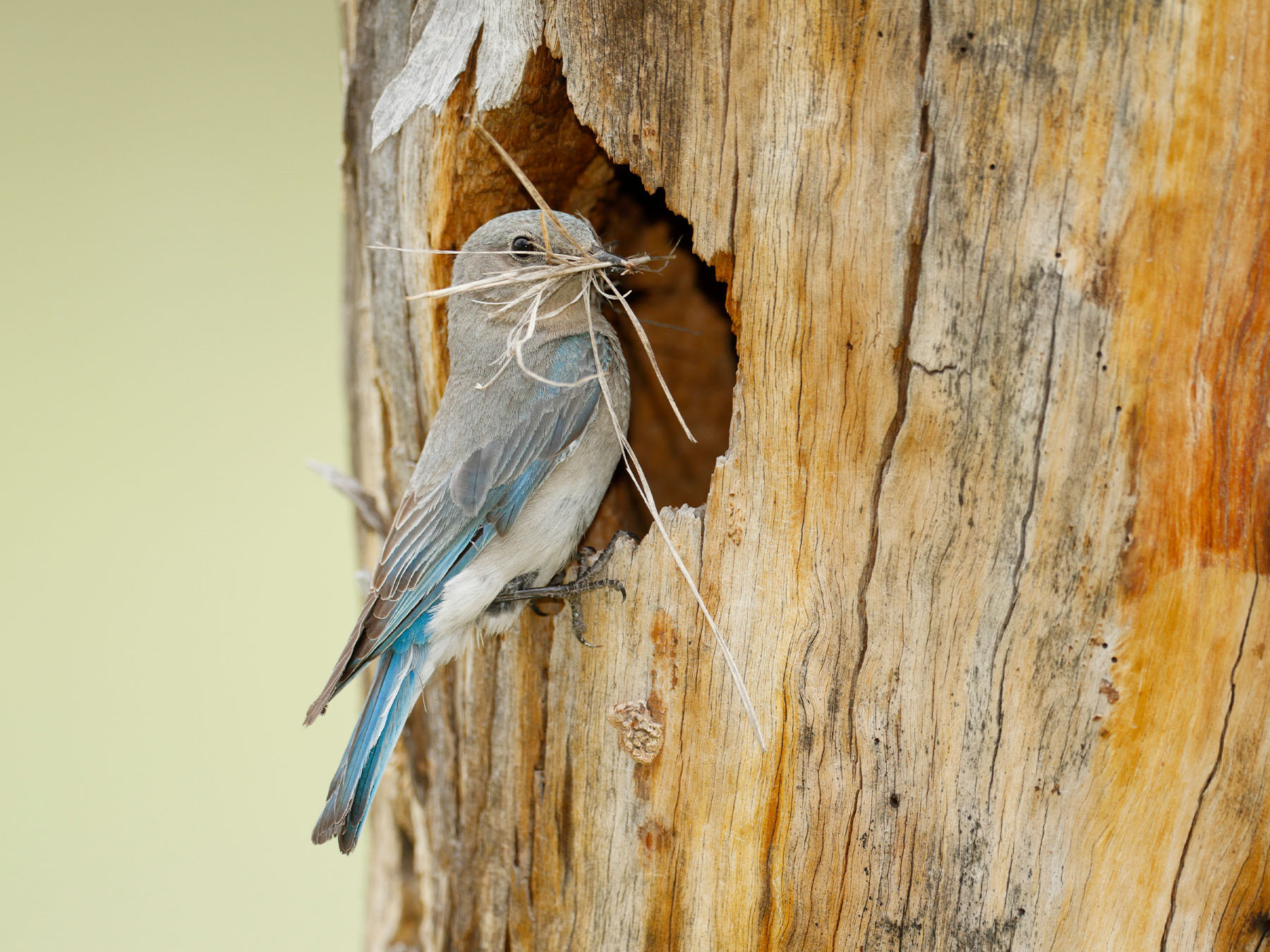
Nests are built in natural tree cavities, old woodpecker holes, or nest boxes. Females construct the nest using grasses and fine plant materials, laying 4-8 pale blue eggs.
Incubation lasts about 13 days, primarily done by the female. Both parents feed the nestlings, which fledge after 18-21 days. Pairs often raise two broods per season in favorable conditions.
Behaviour
Mountain Bluebirds are often seen perched on fenceposts or low branches, scanning the ground for insects. They employ a distinctive 'drop and hover' hunting technique, flying down to catch prey on the ground or in mid-air.
During the breeding season, males perform aerial displays to attract mates, showcasing their vibrant plumage.
Conservation
While currently listed as Least Concern, Mountain Bluebirds face threats from habitat loss due to urban development and changes in agricultural practices.
Conservation efforts include the installation of nest boxes in suitable habitats, which has helped stabilize populations in some areas.
Similar birds
Often mistaken for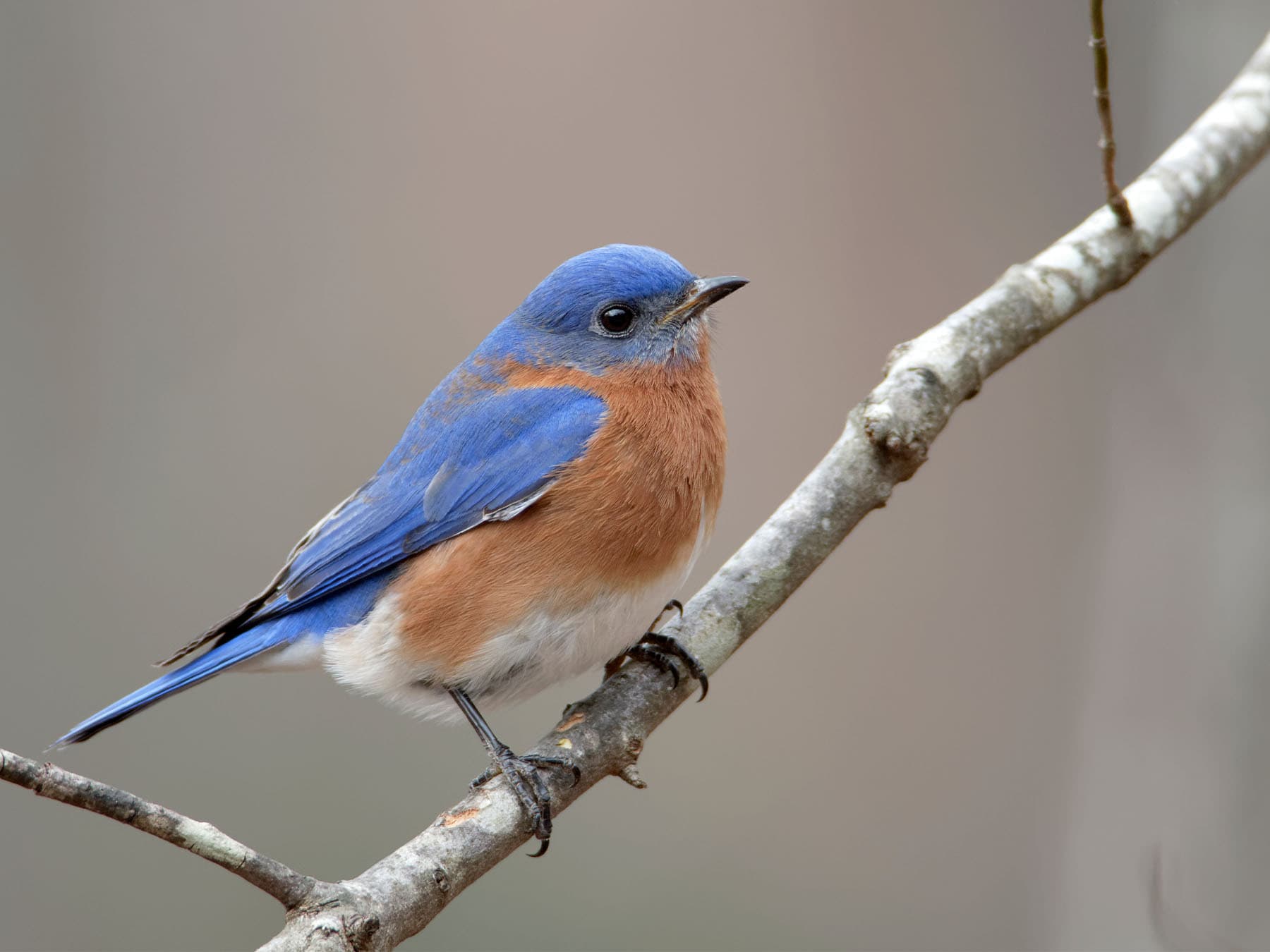
More photos
10 photos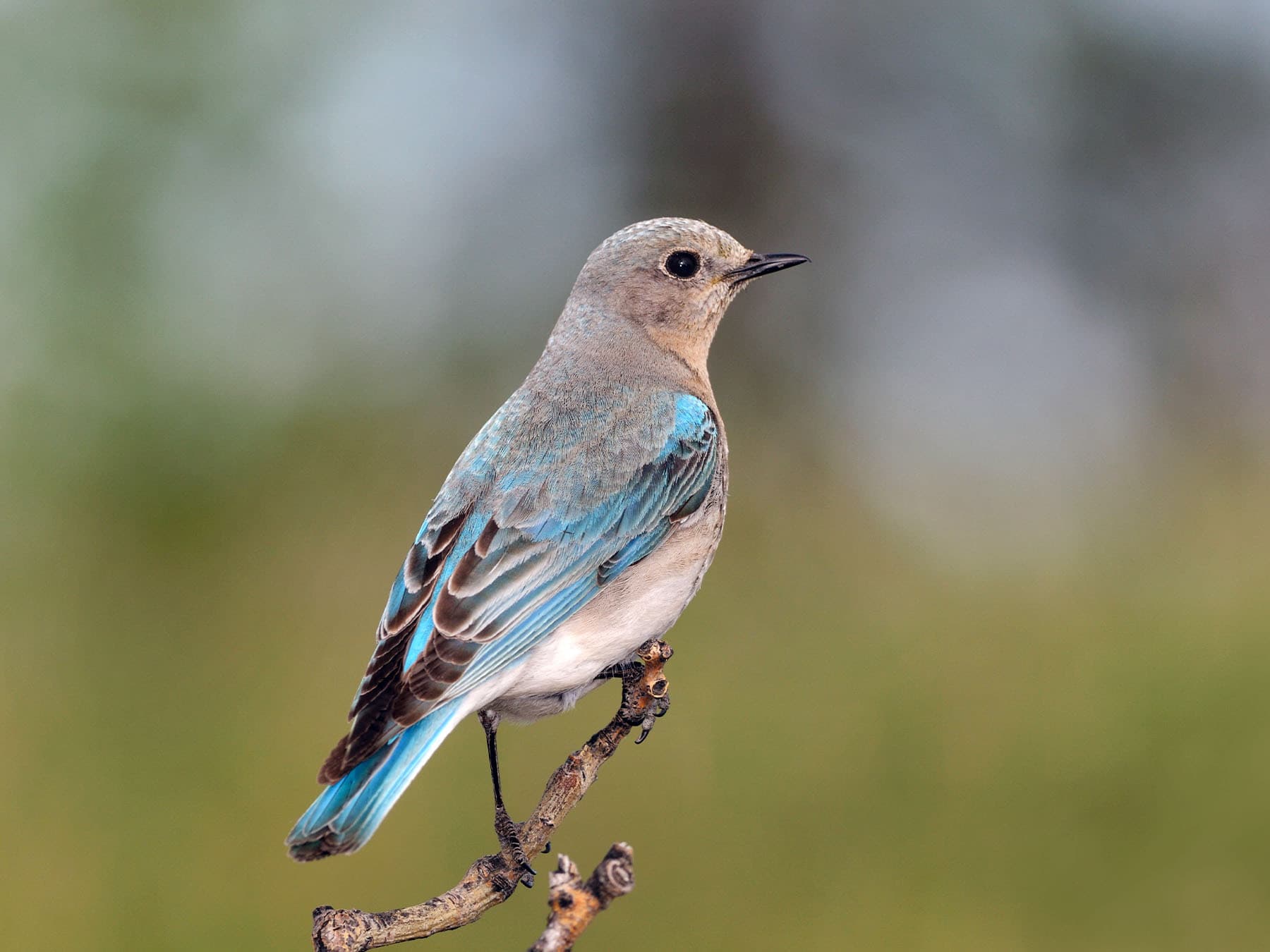 Female Mountain Bluebird
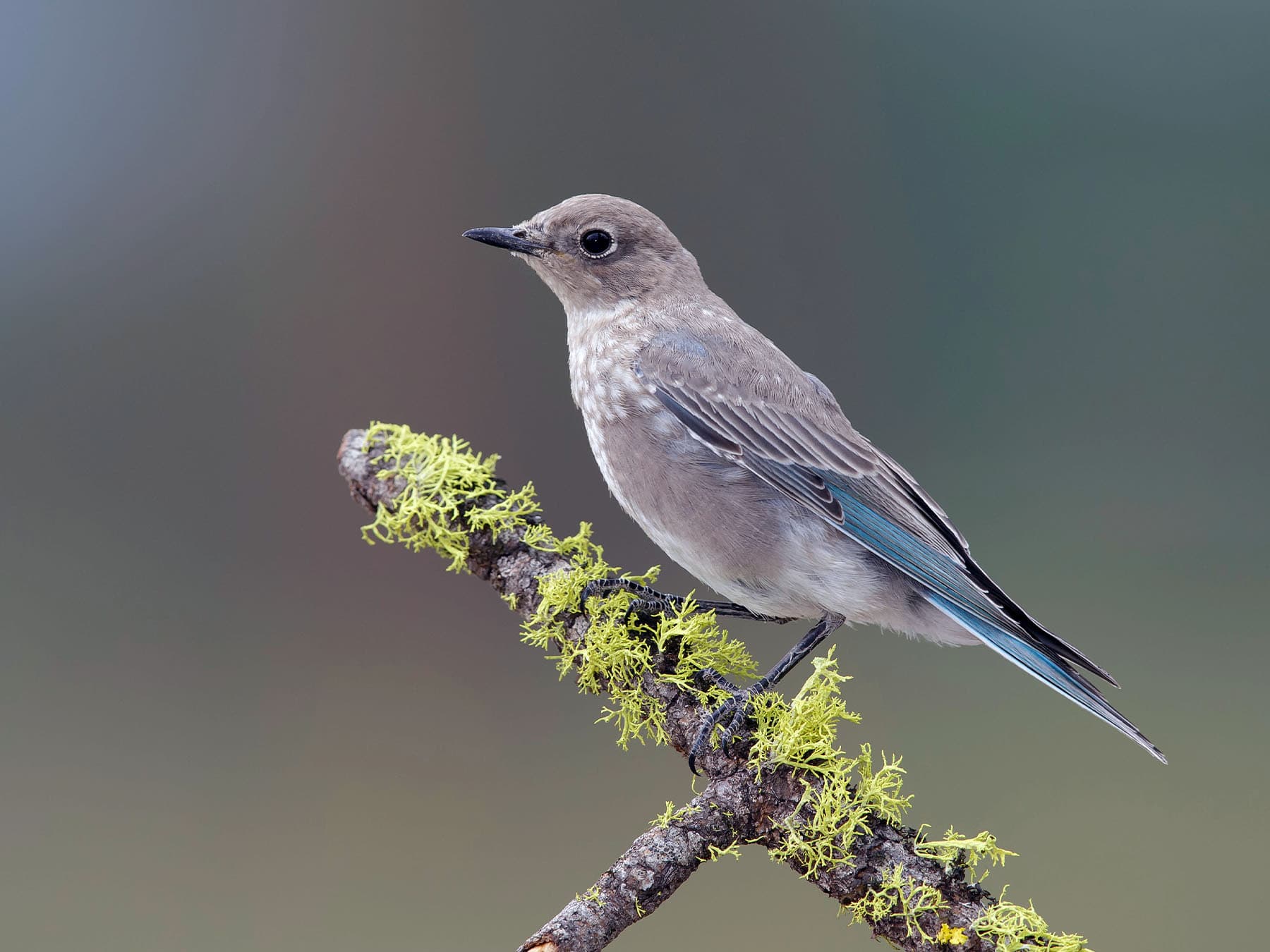 Juvenile Mountain Bluebird
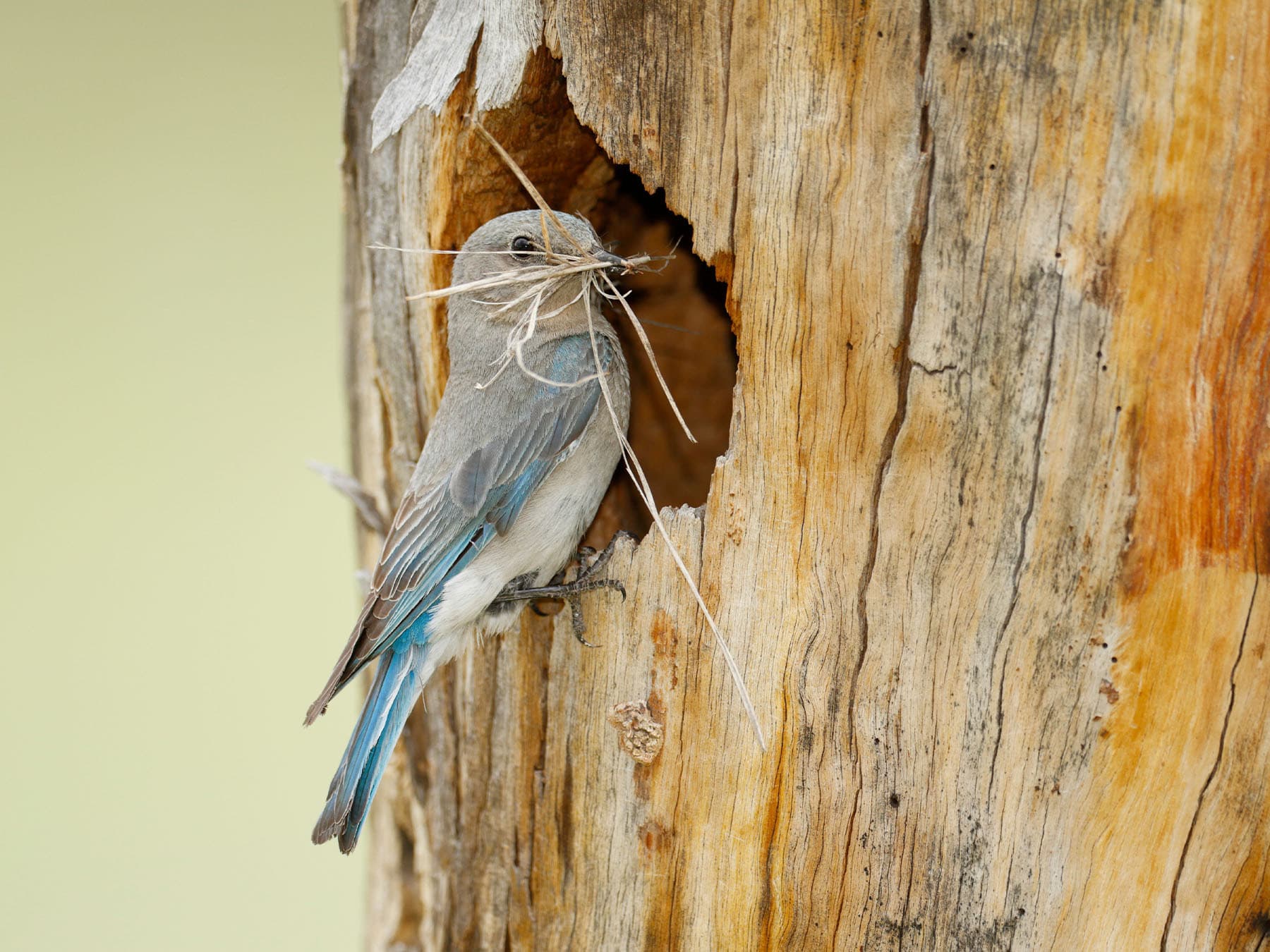 Female Mountain Bluebird outside the nest hole with nesting building materials in her beak
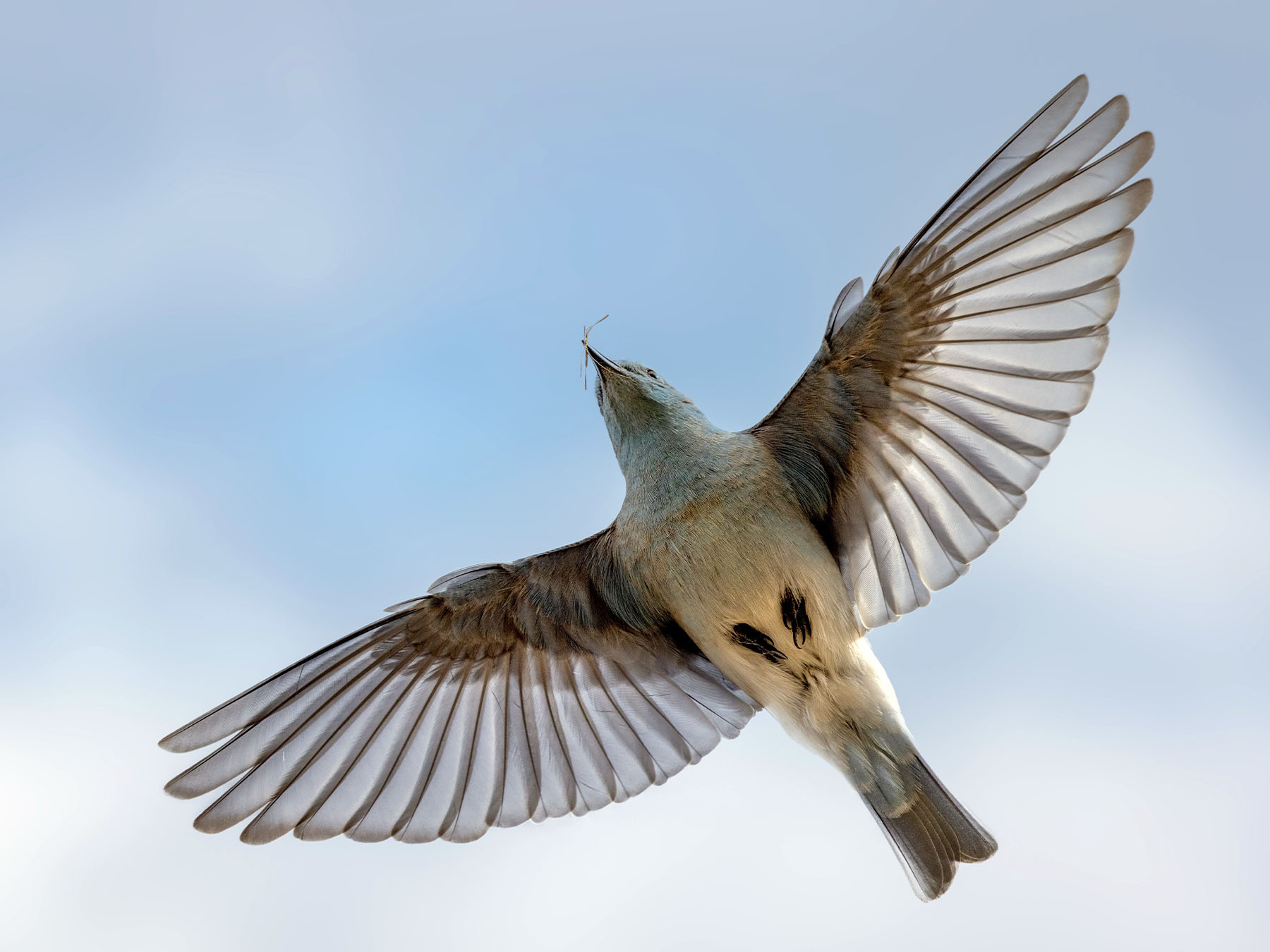
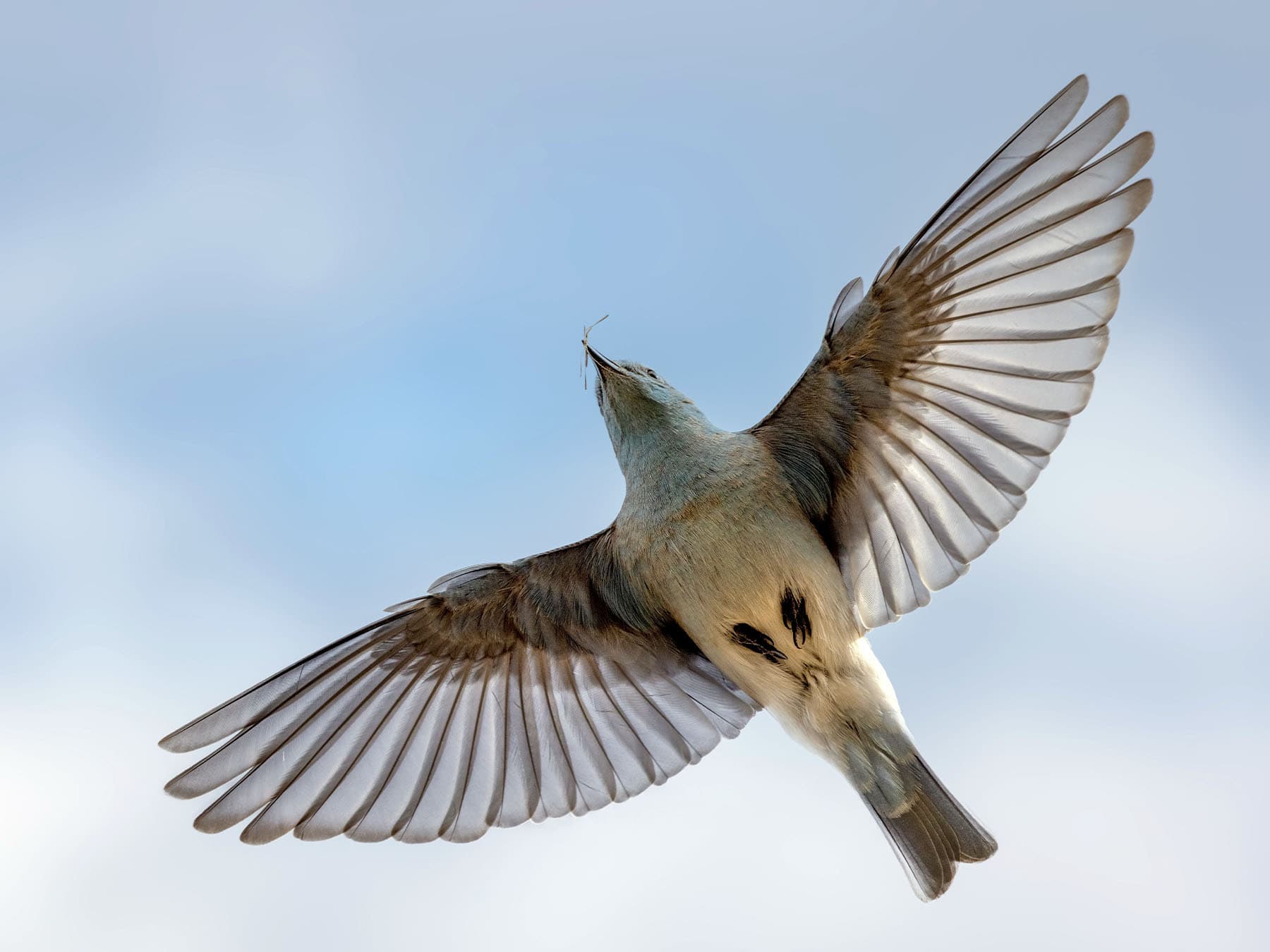 Mountain Bluebird in-flight carrying nesting material
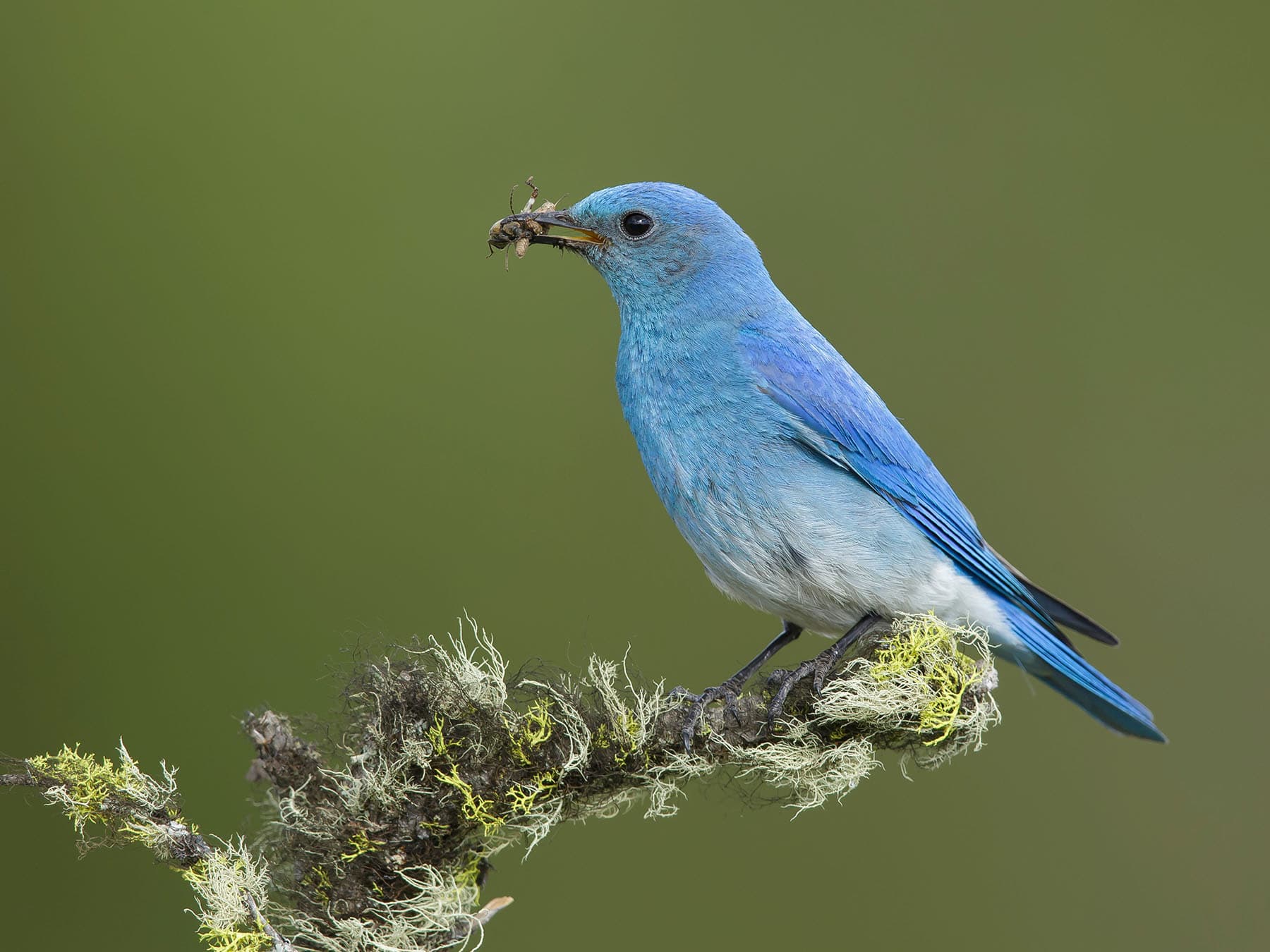 Mountain Bluebird perching on a branch feeding on an insect
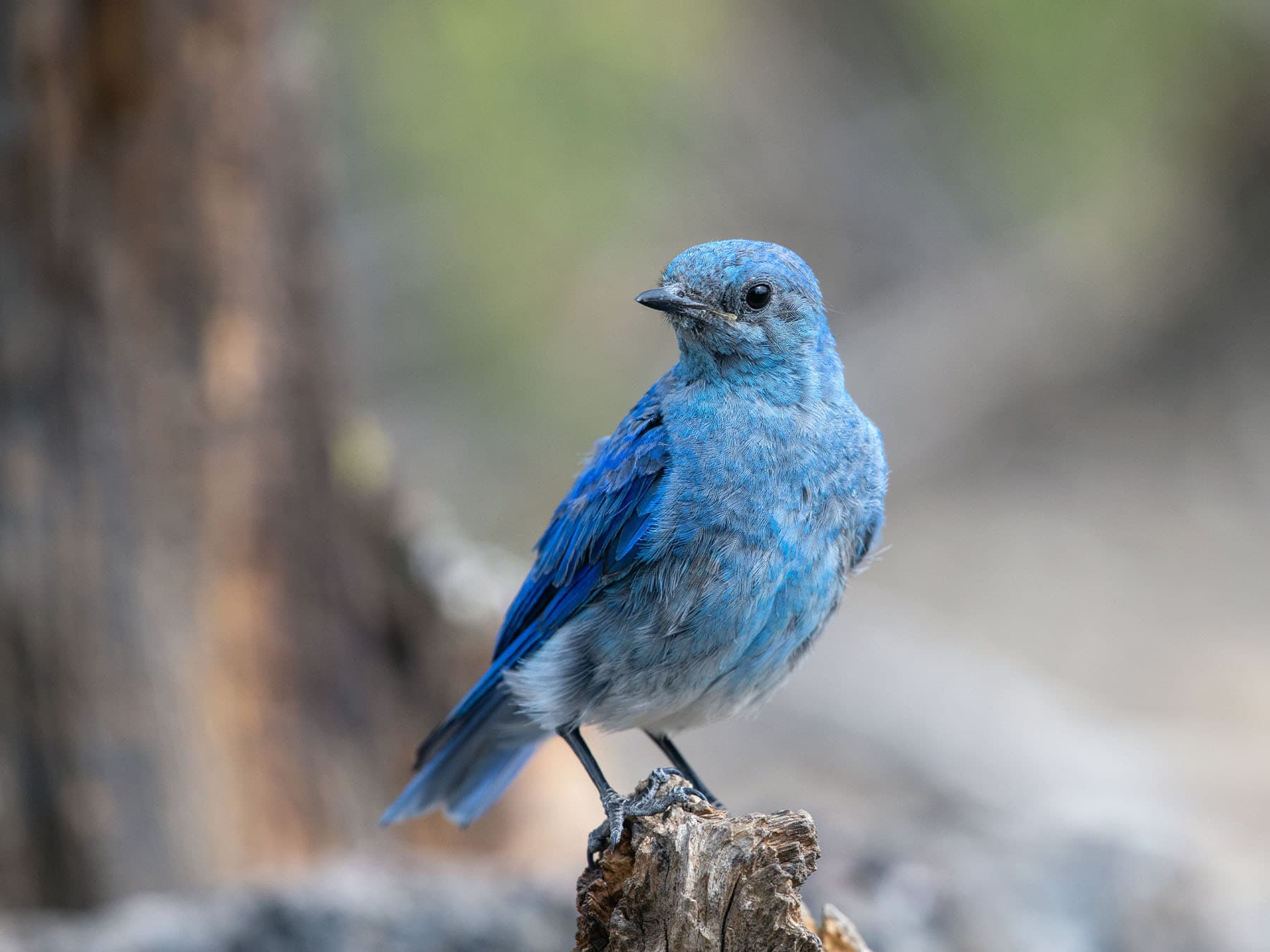 Mountain Bluebird in natural habitat
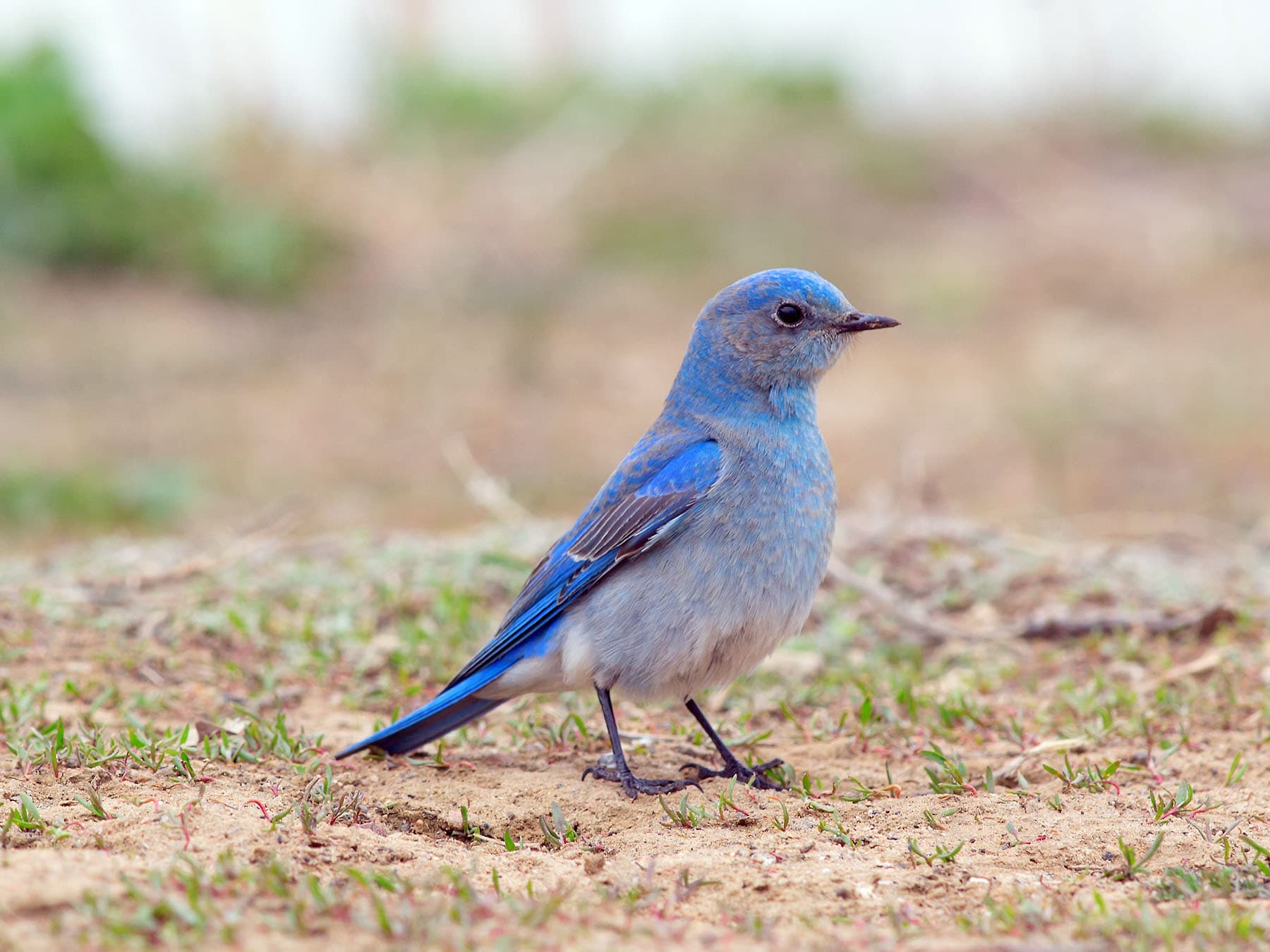 Mountain Bluebird on the ground foraging for insects
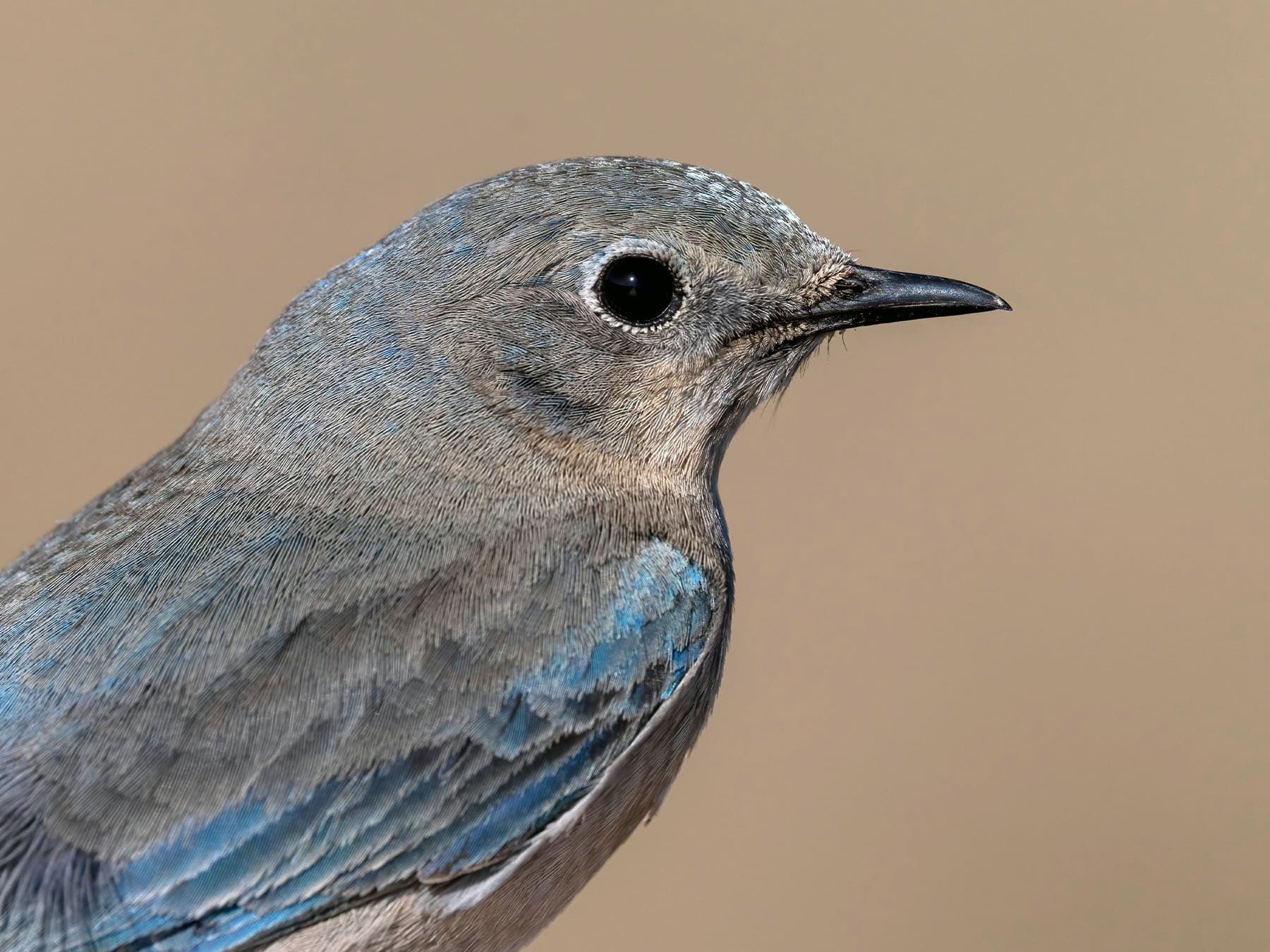 Portrait of a Female Mountain Bluebird
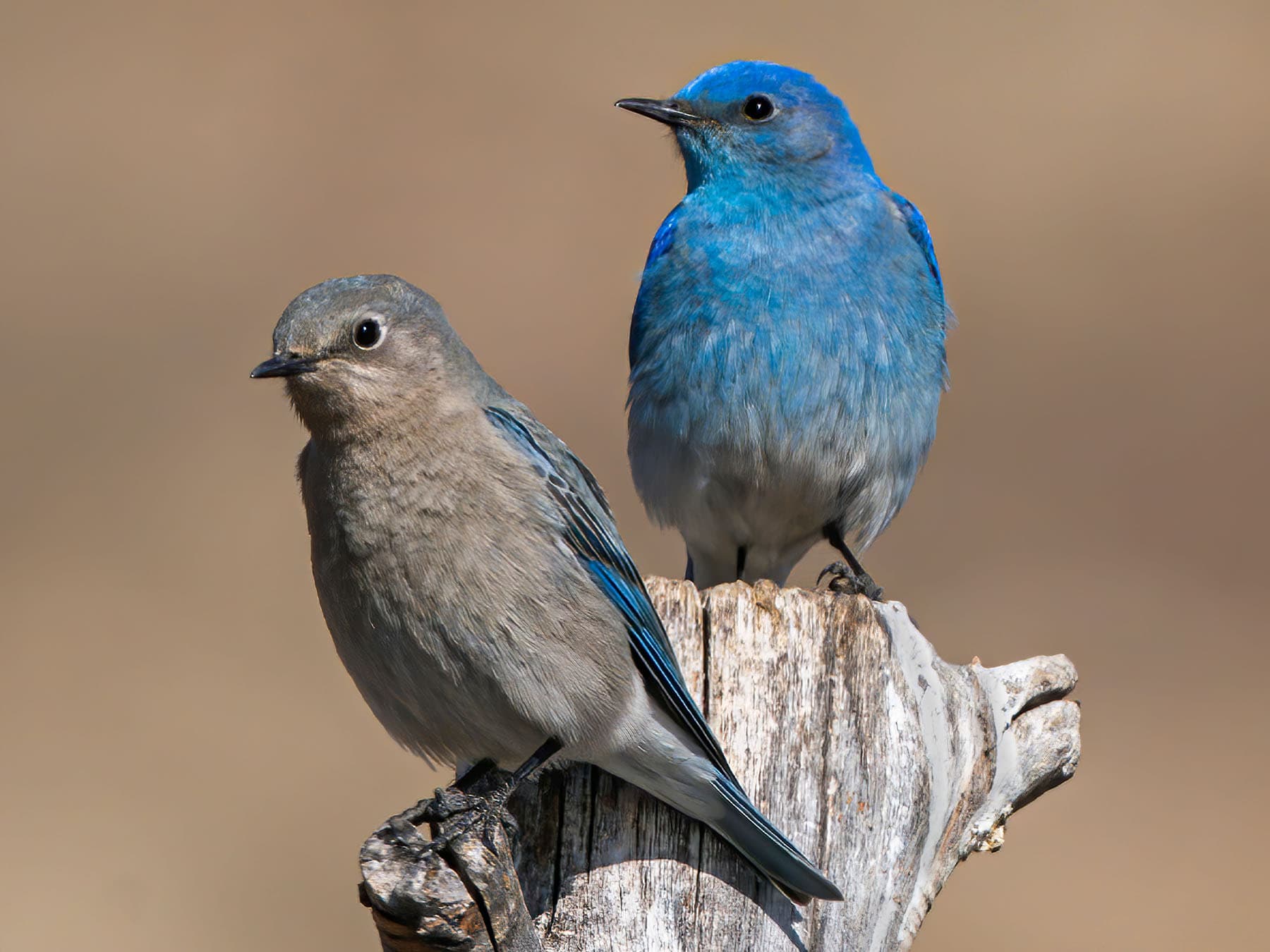 Female (left) and Male (right) Mountain Bluebirds perching on a tree trunk
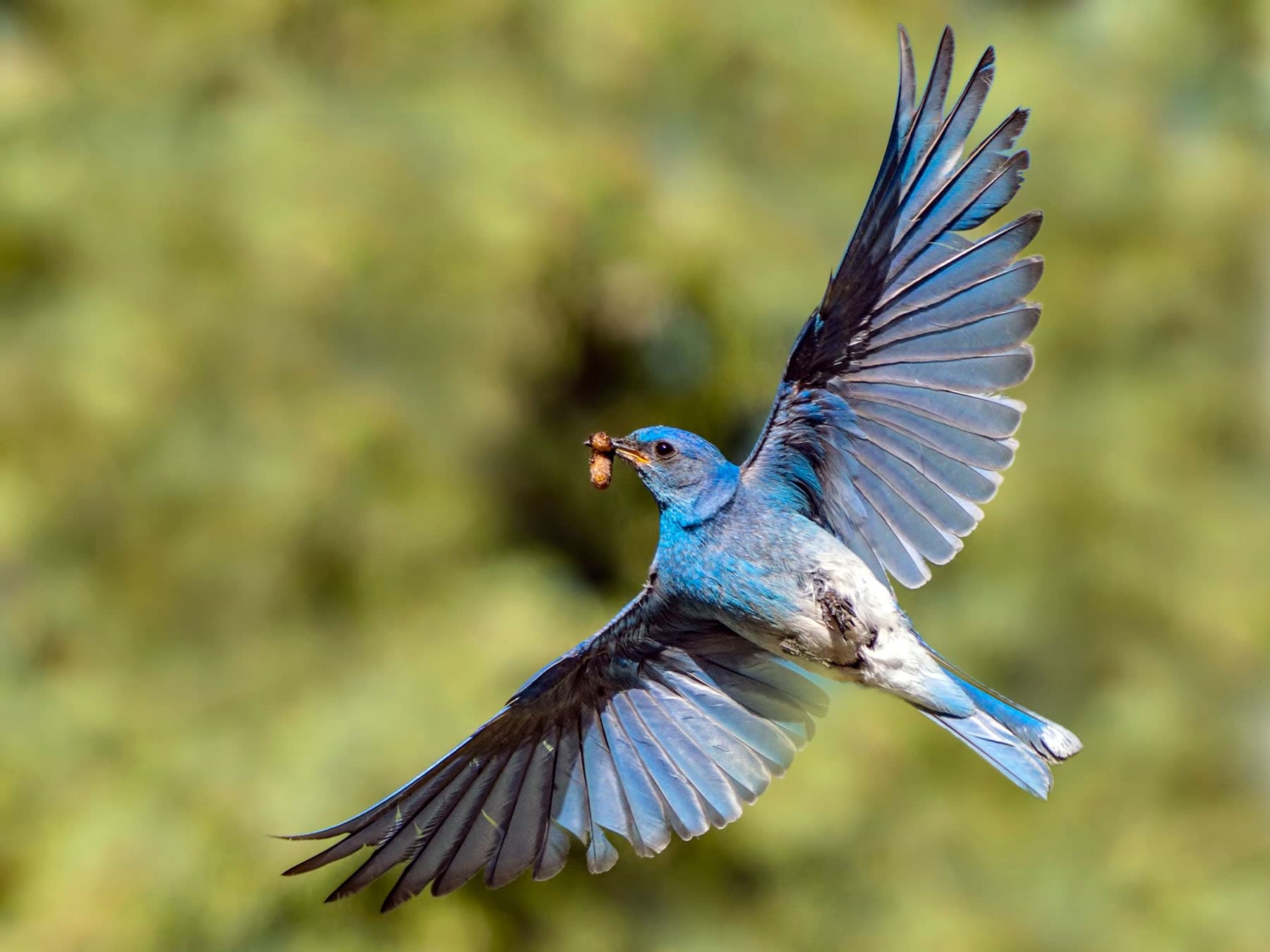 Mountain Bluebird in-flight carrying food in his beak
Mountain Bluebird guides
1 guidesQuick facts
- Length
- 15–18 cm
- Wingspan
- 28–36 cm
- Weight
- 24–37 g
- Lifespan
- 4–6 years · oldest recorded 9 years
- Family
- Thrushes
- Migration
- Short-distance migrant
- Global status (IUCN)
- Least Concern
- World population
- 5,600,000 mature individuals
- Population trend
- Increasing
- Also called
- Arctic Bluebird
- Scientific name
- Sialia currucoides
Sources
4- 1BirdLife International. 2019. Sialia currucoides. The IUCN Red List of Threatened Species 2019: e.T22708556A137560639. Source (opens in a new tab)
- 2Sauer et al. (2017)
- 3Partners in Flight (2022) Source (opens in a new tab)
- 4Historical Longevity Records of North American Birds Source (opens in a new tab)

Checked by
Nathan Cope, founder and editor
Nathan founded Birdfact and leads its writers and contributors in the UK, the US and Canada. He has watched and studied birds for more than ten years, and checks every article and species guide before it’s published.