Facts · Updated 15 Oct 2026
Blue Jay Symbolism and Meaning: What the Folklore Really Says
By the Birdfact teamChecked by Nathan Cope
What does a Blue Jay symbolize? The old records make the jaybird the devil's Friday errand-runner, with a few luck and rain omens; Native American stories make it a watcher and boaster; Thoreau and Dickinson loved its noise. "Sign from heaven" and most spiritual meanings have no old record we could find. Plus feathers, dreams and the name.
On this page15 sections
- What does a Blue Jay symbolize?
- The jaybird's Friday errand
- Luck, weather and other old omens
- Is a Blue Jay a sign from heaven?
- Modern spiritual meanings
- What does a Blue Jay feather mean?
- Can you keep a Blue Jay feather?
- Blue Jays in Native American stories
- Blue Jays in dream books
- Is the Blue Jay in the Bible?
- In literature and art
- Where the name comes from
- Teams, schools and a province
- The bird behind the stories
- Sources
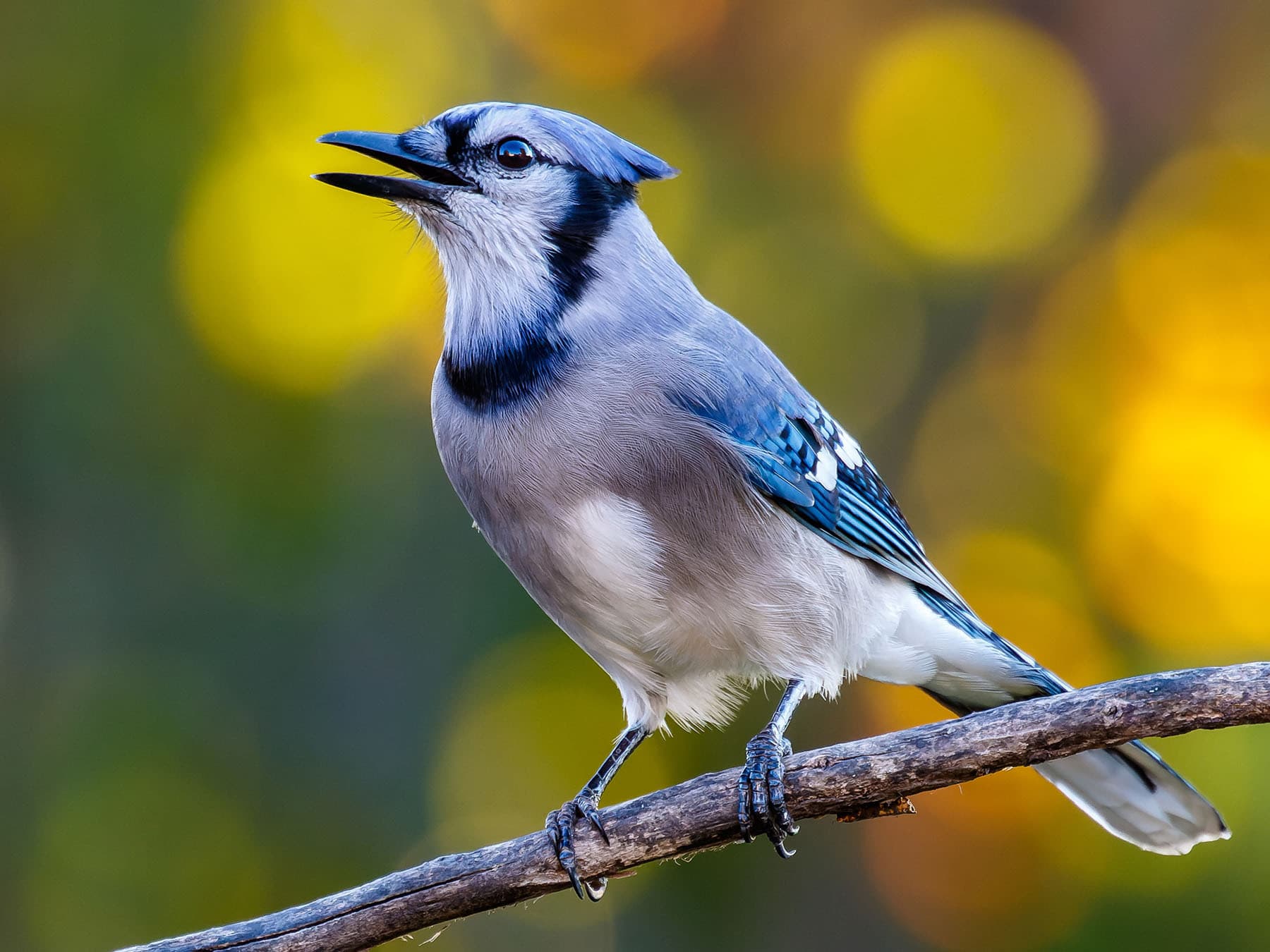
What does it mean when a Blue Jay turns up? This page sets out what people have actually believed about Blue Jays, where and when each belief was written down, and what the bird itself is like. The old records make the jaybird a busy, sometimes devilish errand-runner; writers from Thoreau to Dickinson loved its noise and nerve; and most of today's "spiritual meanings" are much newer than they look. For the bird itself, see our Blue Jay guide.
What does a Blue Jay symbolize?
In the old Southern records, the devil's Friday errand-runner; in a few old omens, luck or rain; in modern spiritual books, power and resourcefulness. There is no single meaning, and many meanings repeated online have no old record behind them. What the records show:
- In Southern folklore, the devil's errand bird. From at least 1870 people said jaybirds carried sand to hell, and from 1889 that they spend Fridays carrying sand or wood to the devil, which is why you never see one then.1, 2
- In a few old omens, luck or rain. One Illinois record says a jay coming into your yard brings good luck; others say calling jays mean rain.3
- In literature, a loud, clever, roguish neighbor. Thoreau called it "the bird of October", and Emily Dickinson "a neighbor and a warrior too".4, 5
- In modern spiritual books, power and resourcefulness. The earliest such book we found, from 1993, gives the Blue Jay's keynote as "The Proper Use of Power".6
We found no printed source, in the old folklore collections or in books before the internet era, for the Blue Jay as a sign from heaven, a messenger of the dead, or an omen of letters, money, a birth or a death. These ideas may be sincerely held today, but we found no old folklore behind them.
The jaybird's Friday errand
The Blue Jay belief recorded again and again in the old collections is that jaybirds visit the devil. The earliest dated record we found is from 1870, when Thaddeus Norris listed, among beliefs of the "Atlantic-Southern States", that every jaybird carries a grain of sand to hell once a year, and that the world will end when the last grain is gone.1 In 1889 Fanny Bergen recorded the Friday form on Maryland's Eastern Shore: "a jaybird is never to be seen on Friday", because on that day jays are busy "carrying wood to the Devil".2 The same year Walter Hoxie, writing about the Florida Scrub-Jay, said he had heard "the same or a similar" story about the Blue Jay, and that the fable was told "from Maine to Florida" by people of every race.7
Collectors went on recording it for more than half a century, mostly as a belief of Black Southerners, though Hoxie and later collectors heard it from white people too, and it reached Illinois:
| Recorded | Where | What the jays carry |
|---|---|---|
| 1892 | Baltimore, Maryland | A grain of sand, every Friday8 |
| 1899 | Maryland and Tennessee | Sand or sticks; in Maryland, reports of people's sins every third day9 |
| 1899 | Central Georgia | A small stick as fuel10 |
| 1901 | Southern Kentucky | Kindling11 |
| 1920 | Kentucky | Sand, or wood "to heat the lawyers"12 |
| 1928 | Texas | Sticks, or sand13 |
| 1935 | Adams County, Illinois | A grain of sand3 |
| 1912 to 1943 (published 1964) | North Carolina | A grain of corn, twigs, sand or brimstone14 |
Thomas Talley, a Fisk University scholar, published a jaybird rhyme ending with a farewell to the "Friday Devil" in 1922 and traced the belief to slavery days.15 In 1926 Newbell Niles Puckett gathered the variants: the jaybird took kindling, sand or a drop of water to hell, and in one version the sand was a ransom for souls that could not go free until all the sand on earth had been carried down.16
Luck, weather and other old omens
Beyond the devil story, the old collections hold only a handful of Blue Jay omens, and they point both ways:
- Good luck: "A blue jay coming into your yard is bringing good luck to you" (Adams County, Illinois, 1935);3 "the red foot of a jay bird", carried as a luck charm (Arkansas, recorded in 1926), though which bird was meant is unclear, since a Blue Jay's feet are dark.16
- Bad luck: in Texas it was "unlucky to hear a blue jay sing", and some people would quit working near chattering jays "to get out of hearing of the sinister birds". Hunters there called jays "devil birds" for a practical reason: their cries warned the game.13
- Weather: calling jays foretold rain in Cape Breton,9 a storm or rain in Illinois3 and rain in North Carolina,14 and a chirping flock meant cold weather in Georgia.16 An example sentence in today's Ojibwe People's Dictionary says a blue jay calling in winter means it will warm up for a few days.17
We found no record, in these or the other collections, of a Blue Jay foretelling a letter, money, a birth or a death. In the same books, letters and news are foretold by other birds: a buzzard over the house or a redbird (cardinal) for a letter, a bird at the window for news.10, 12, 3
Is a Blue Jay a sign from heaven?
Not in any old record we found. In the folklore the jay's errands run the other way: in Chestertown, Maryland, Fanny Bergen recorded in 1889 that jays visit hell every third day to report sins to the devil,2 and in 1899 that they go "as messengers to tell of backsliders": "Heaven's no place for them."9 In a 1935 Illinois collection, a white contributor recalled an old Black man telling them that the jays visit hell on Fridays and report to the devil "all the meanness you people do us" through the week: the wrongs done to Black people.3
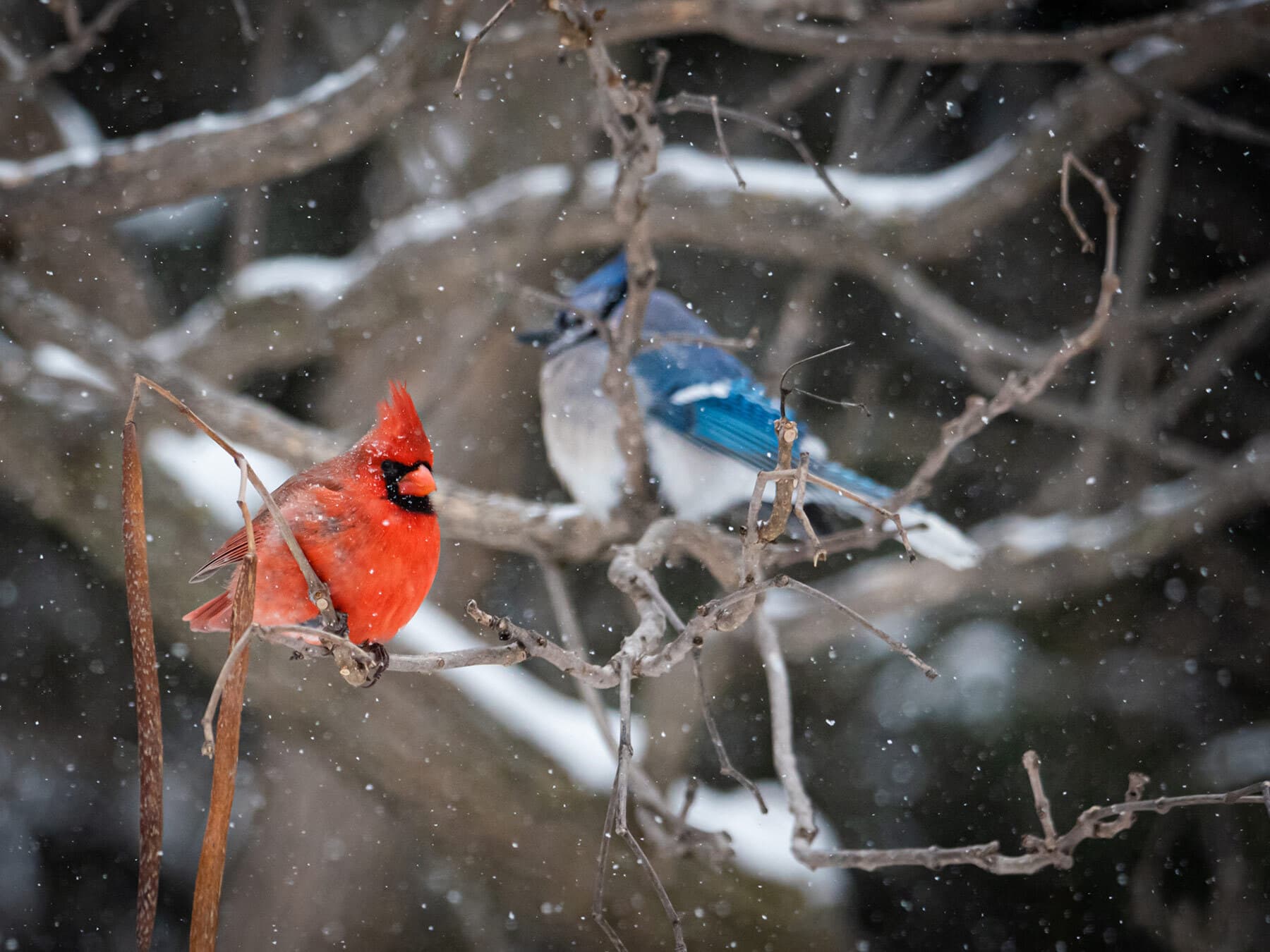
The earliest printed link with heaven we found is from 1993, when Ted Andrews wrote in Animal-Speak that the jay can "link the heavens and earth".6 We found no dated source for "sign from heaven" itself, for the saying that cardinals appear when angels are near, or for a special meaning in seeing a Blue Jay and a cardinal together.
Modern spiritual meanings
Today's "spiritual meaning" of the Blue Jay comes mostly from animal-symbolism books and websites of the last few decades. The earliest such book we found is Ted Andrews's Animal-Speak (1993). It gives the Blue Jay the keynote "The Proper Use of Power", and treats the bird as a totem: a guide to using one's own power well and to being resourceful and adaptable.6 Steven Farmer's Animal Spirit Guides (2006) treats it as a spirit or power animal and files it under themes such as truth and deception, study, and protection.18
These books are a modern genre, not a record of older belief. Andrews also says the word "jay" comes from Latin gaia, linked to Gaea, Mother Earth;6 dictionaries trace it instead to Late Latin gaius, probably imitating the bird's harsh call.19
What does a Blue Jay feather mean?
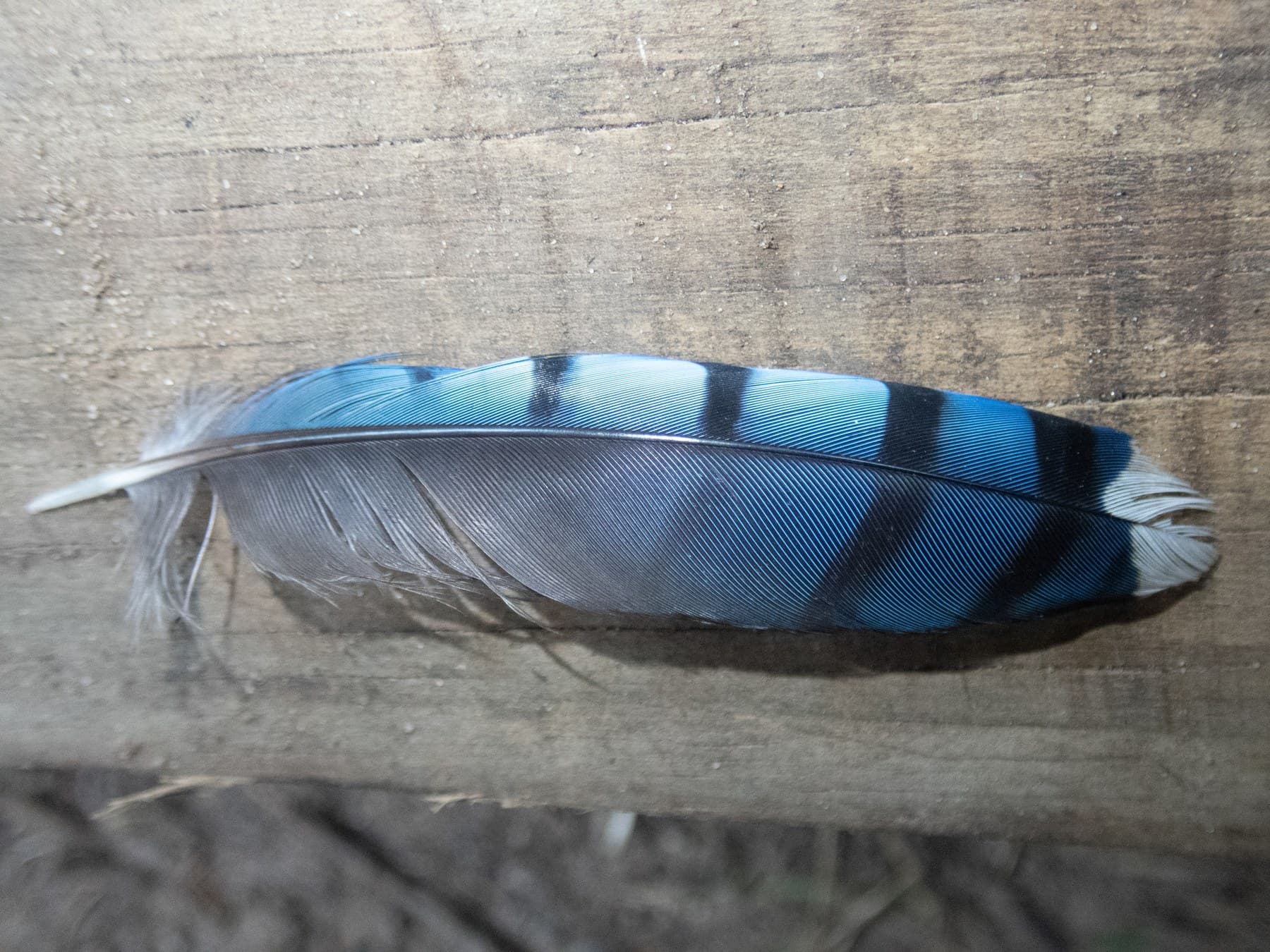
Most feather meanings online, such as a found feather being a sign of encouragement or a visit from a spirit, have no old record that we could find. The one recorded belief about a found feather that we found is Cherokee: James Mooney wrote in 1900 that water with a chance-found blue jay feather soaked in it "will make the child an early riser".20
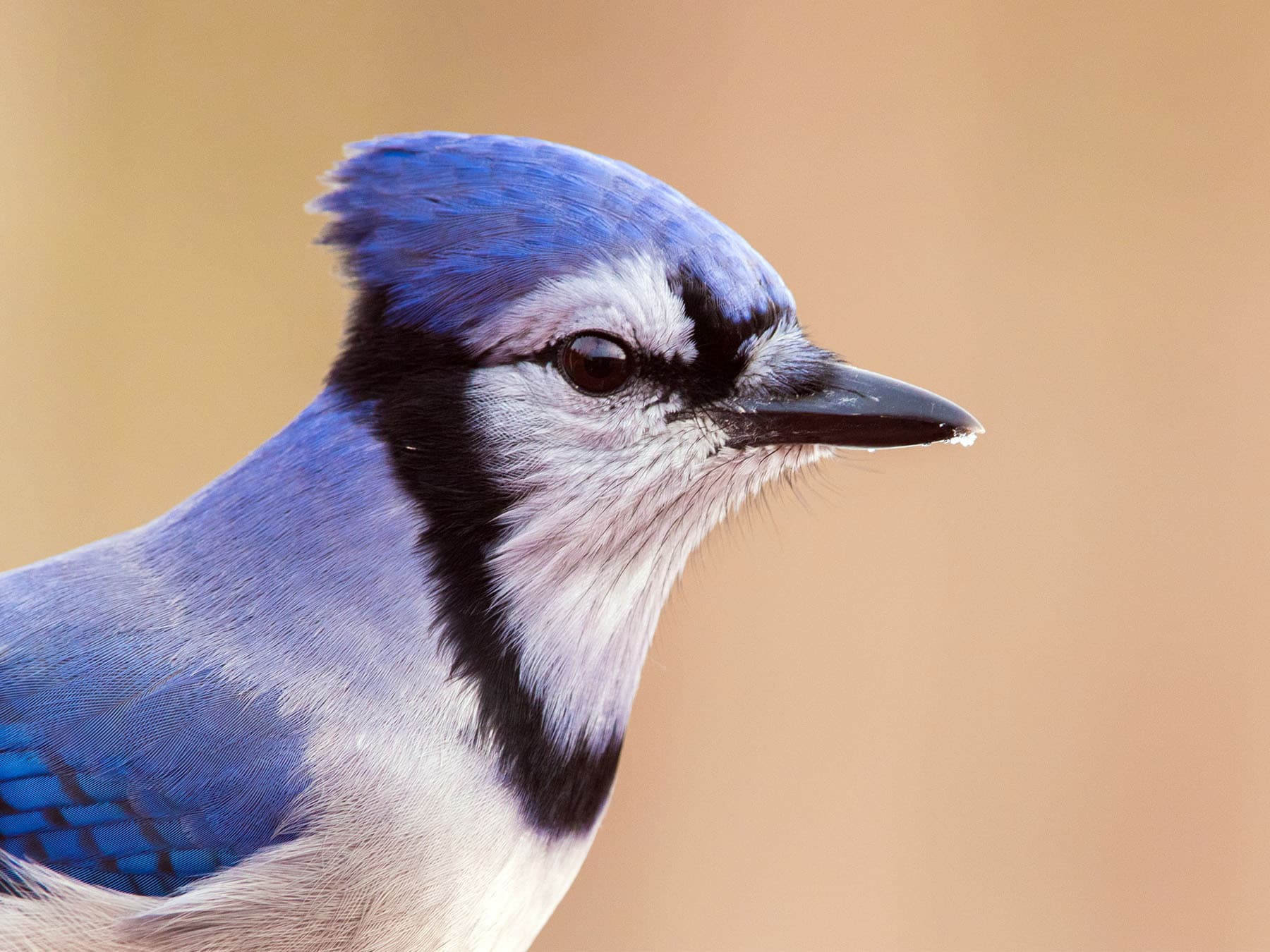
The feather itself holds a surprise: it has no blue pigment. Its pigment is melanin, which is brown, and the blue is a structural color caused by light scattering through modified cells on the surface of the feather barbs.21 Hold a blue feather up to the light, so that it is lit from behind, and it looks dark, almost black.22
Can you keep a Blue Jay feather?
In the United States, not without a permit. Blue Jays are on the list of birds protected by the Migratory Bird Treaty Act.23 Federal rules count "any part, nest, or egg" as part of a protected bird,24 and the Act makes it illegal, unless regulations allow it, to take or possess one, so that includes a feather you pick up.25 Asked "Can I keep a feather, egg or nest that I found?", the U.S. Fish and Wildlife Service answers: "The simple answer is no." It rarely issues permits to individuals.26
In Canada, the crow family, which includes the Blue Jay, is not covered by the federal Migratory Birds Convention Act, but such birds may be protected under provincial or territorial law.27
Blue Jays in Native American stories
Blue Jays live across eastern and central North America, and the peoples there have their own names for the bird: diindiisi in Ojibwe,17 tsay'ku' or tlay'ku' in Cherokee,20 Tv'sse in Muscogee (Creek),28 tetenica in Dakota,29 tiyas in Lenape,30 and Koskomines in Passamaquoddy, as Charles Leland wrote it in 1884.31
In the stories written down from the 1880s onward, the jay is usually a watcher, a talker or a boaster:
- Cherokee, told in 1883: warriors could not kill a stone-skinned monster until a jay called out "In the hand, in the hand!"; they shot it in the hand, and it fell dead.32 James Mooney, who recorded the story from other Cherokee tellers, says the bird should be the tomtit.20
- Ojibwe, recorded 1903 to 1905: the Bluejay is a sentry on an island, and Nanabushu keeps it quiet by giving it an acorn.33
- Menominee, recorded 1910 to 1914: blue jays keep watch for She-Bear, and in another story a boastful jay fails to copy Woodpecker's magic.34
- Passamaquoddy, 1884: Blue Jay fishes a salmon out of the river, and Lox, who copies him, is swept away.31
- Creek, Alabama, Koasati and Natchez stories recorded mainly from 1908 to 1914 have jays worn as regalia, in a headdress or on the shoulders.35
We found no early record of the Blue Jay as a Native American omen of good fortune or a guide for the dead, as the old version of this page said. These are the written records; living traditions belong to the nations themselves.
The trickster Blue-Jay of the Chinookan stories of the Pacific Northwest is a different bird. In Franz Boas's Chinook Texts (1894), told by Charles Cultee at Bay Center, Washington, in 1890 and 1891, Blue-Jay takes instructions too literally, swaps the heads and legs of the ghosts' skeletons, and dies.36 Boas translated the name as "Blue-Jay", but Blue Jays only began spreading west in the late 1940s; the jay of the Lower Columbia is the Steller's Jay.22
Blue Jays in dream books
Dream meanings for jays go back at least to Gustavus Hindman Miller's dream dictionary (first published 1901):
"To dream of a jay-bird, foretells pleasant visits from friends and interesting gossips.
To catch a jay-bird, denotes pleasant, though unfruitful, tasks.
To see a dead jay-bird, denotes domestic unhappiness and many vicissitudes."37
Is the Blue Jay in the Bible?
No. The King James Bible never mentions a jay of any kind, and its lists of birds, such as the birds not to be eaten in Leviticus 11, include no jay.38 The Blue Jay lives only in North America, so the writers of the Bible would not have known it.22 We found no old source for a "biblical meaning" of the Blue Jay.
In literature and art
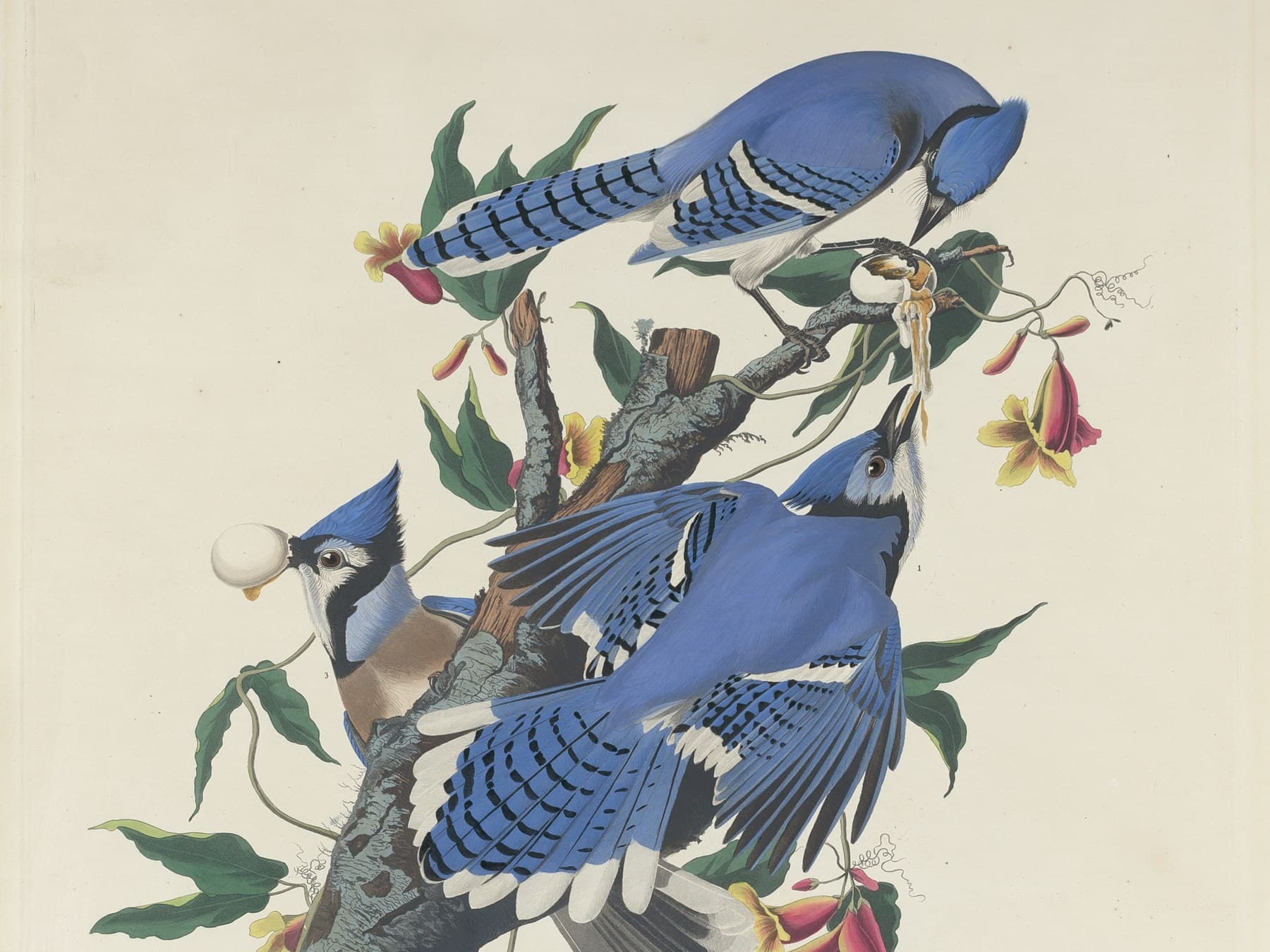
Mark Catesby painted "the blew jay" for his Natural History of Carolina in 1731,39 and Linnaeus named the species from his description in 1758.22 John James Audubon's plate 102 for the Havell edition of The Birds of America (issued 1827 to 1838)40 shows three jays, two with eggs they had taken, as he put it, "from the nest of some innocent dove or harmless partridge"; he called them "rogues though they be, and thieves".41
Henry David Thoreau wrote about jays for years. In Walden (1854) the jays at his door were "manifestly thieves",42 but in his journal he called the jay's scream "a true winter sound" (1854)43 and wrote on November 3, 1858: "The jay is the bird of October."4 He also took up William Bartram's view that the jay is "one of the most useful agents in the economy of nature, for disseminating forest trees".44
Mark Twain's "Baker's Blue-Jay Yarn", in A Tramp Abroad (1880), is a comic tall tale. A California miner, Jim Baker, says jays are the best talkers among animals ("a jay is everything that a man is") and tells of one that spent hours dropping acorns through a knot-hole in a cabin roof, trying to fill the house, until thousands of jays came to look and laughed at it.45 Baker's jays lived in the California mountains, where Blue Jays are only rare winter visitors, so the birds behind the yarn were probably western jays such as the Steller's Jay; the habits it turns on, carrying and hiding acorns and calling one another to anything odd, are ones jays share.22
Emily Dickinson's poem about the jay was printed in 1891 under the editors' title "The Blue Jay". It begins:
No brigadier throughout the year
So civic as the jay.
A neighbor and a warrior too,
With shrill felicity
And John Burroughs, puzzling over why pine woods are so often followed by oak, concluded in 1894 that "The acorns are planted by the jays."46
Where the name comes from
- Jay: from Old French jai and Late Latin gaius, probably imitating the bird's harsh call. It was first the name of the Eurasian Jay; "blue jay" is recorded from 1709.19
- Jaybird: on record since 1661.47
- Jaywalking: by the 1880s "jay" was American slang for a rube or greenhorn.19 "Jaywalking" is recorded by 1912, said to be a Kansas City term: Merriam-Webster derives it from jay meaning greenhorn,48 and the Online Etymology Dictionary perhaps from the jay's boldness.49
- Naked as a jaybird: the earliest use found is in a Mississippi newspaper in 1841, "as naked as an unfledged Jay bird". Nobody knows why the jaybird; the 1841 wording suggests a featherless nestling.50
- Cyanocitta cristata: from Greek kuanos, dark blue, and kitta, jay, with Latin cristatus, crested: the crested blue jay.51
Teams, schools and a province
The Toronto Blue Jays got their name on August 12, 1976, chosen by the club's directors from over 4,000 names and 30,000 entries in a name-the-team contest,52 and 154 people had suggested "Blue Jays".53 The team played its first game on April 7, 1977.52 Creighton University's Bluejays date from a newspaper contest in late 1923, picked from 200 entries "because the color of the bird was in keeping with school colors".54 Johns Hopkins University's teams are the Blue Jays too,55 and their mascot was named Jay after a community vote in 2013.56
The Blue Jay is the provincial bird of Prince Edward Island, named in 1977 after a public vote in 1976.57 The province's Provincial Emblems and Honours Act adopts it as "the avian emblem of the province".58
The bird behind the stories
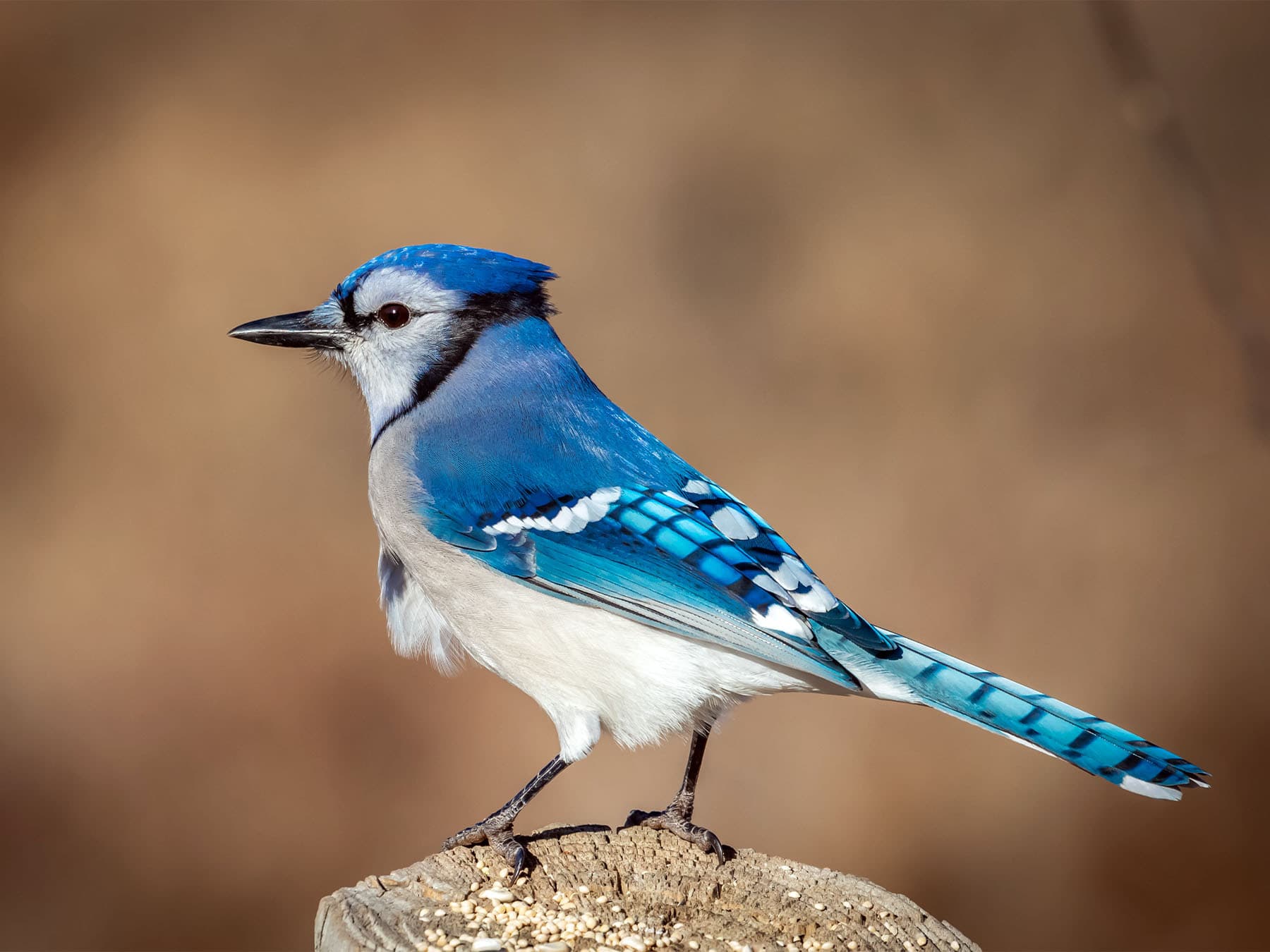
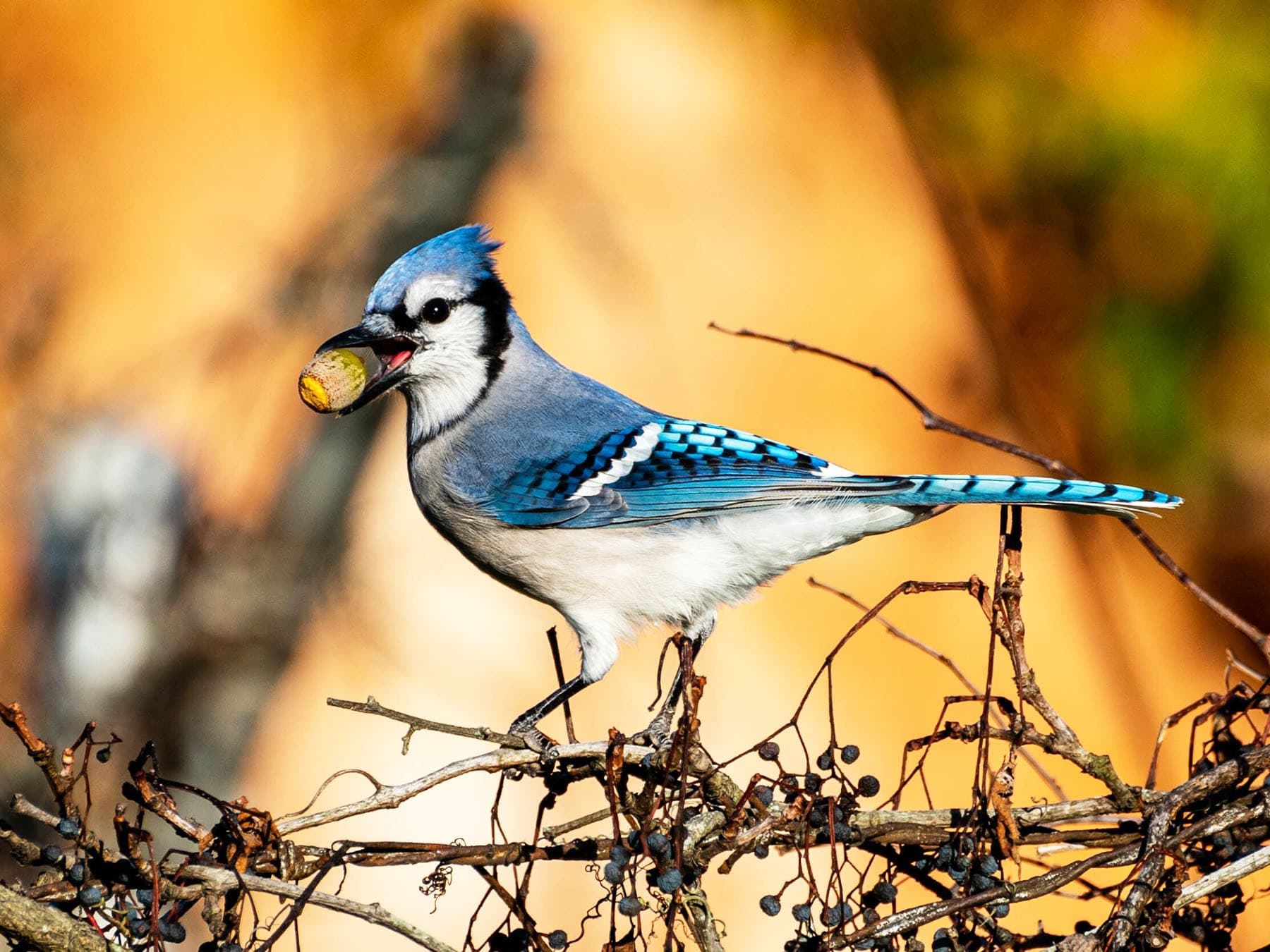
Behind the stories is a real bird. It is loud and bold, mobs hawks and owls, and copies hawk calls;22 each fall a jay may cache thousands of acorns and other nuts, helping oaks spread;22, 59 and it does sometimes take eggs and nestlings, though in a 1915 federal study only 6 of 530 jay stomachs held remains of wild birds or their eggs.60 More: Blue Jay sounds, what Blue Jays eat, do Blue Jays eat other birds? and our Blue Jay guide.
Sources
- Norris, T. (1870). Negro Superstitions. Lippincott's Magazine of Literature, Science and Education 6 (July 1870): 90-95. Accessed October 15, 2026. Source
- Bergen, F. D. (1889). On the Eastern Shore. The Journal of American Folklore 2(7): 295-300. doi:10.2307/534045
- Hyatt, H. M. (1935). Folk-Lore from Adams County Illinois. Memoirs of the Alma Egan Hyatt Foundation, New York. Accessed October 15, 2026. Source
- Thoreau, H. D., Torrey, B. (ed.) (1906). Journal, vol. XI (July 2, 1858-February 28, 1859). Houghton Mifflin and Company, Boston and New York. Accessed October 15, 2026. Source
- Dickinson, E., Higginson, T. W. (ed.), Todd, M. L. (ed.) (1891). Poems by Emily Dickinson, Second Series. Roberts Brothers, Boston. Accessed October 15, 2026. Source
- Andrews, T. (1993). Animal-Speak: The Spiritual & Magical Powers of Creatures Great & Small. Llewellyn Publications, St. Paul, Minnesota. Accessed October 15, 2026. Source
- Hoxie, W. (1889). The Florida Jay (Aphelocoma floridana). The Ornithologist and Oologist 14 (Sept. 1889): 134-135. Accessed October 15, 2026. Source
- Lee, C. (1892). Some Negro Lore from Baltimore. The Journal of American Folklore 5(17): 110-112. doi:10.2307/533544
- Bergen, F. D. (1899). Animal and Plant Lore Collected from the Oral Tradition of English Speaking Folk (Memoirs of the American Folk-Lore Society, vol. VII). Houghton, Mifflin and Company, Boston and New York. Accessed October 15, 2026. Source
- Steiner, R. (1899). Superstitions and Beliefs from Central Georgia. The Journal of American Folklore 12(47): 261-271. doi:10.2307/533053
- Price, S. F. (1901). Kentucky Folk-Lore. The Journal of American Folklore 14(52): 30-38. doi:10.2307/533104
- Thomas, D. L., Thomas, L. B. (1920). Kentucky Superstitions. Princeton University Press, Princeton. Accessed October 15, 2026. Source
- Strecker, J. K. (1928). Folk-Lore Relating to Texas Birds. In J. F. Dobie (ed.), Follow de Drinkin' Gou'd. Publications of the Texas Folk-Lore Society VII. Accessed October 15, 2026. Source
- Hand, W. D. (ed.) (1964). Popular Beliefs and Superstitions from North Carolina, part 2 (The Frank C. Brown Collection of North Carolina Folklore, vol. VII). Duke University Press, Durham. Accessed October 15, 2026. Source
- Talley, T. W. (1922). Negro Folk Rhymes, Wise and Otherwise, with a Study. Macmillan, New York. Accessed October 15, 2026. Source
- Puckett, N. N. (1926). Folk Beliefs of the Southern Negro. University of North Carolina Press, Chapel Hill. Accessed October 15, 2026. Source
- Ojibwe People's Dictionary (University of Minnesota). diindiisi (na): a blue jay. Ojibwe People's Dictionary. Accessed October 15, 2026. Source
- Farmer, S. (2006). Animal Spirit Guides. Hay House, Carlsbad, California. Accessed October 15, 2026. Source
- Harper, D. jay (n.); jay (adj.). Online Etymology Dictionary. Accessed October 15, 2026. Source
- Mooney, J. (1900). Myths of the Cherokee (Nineteenth Annual Report of the Bureau of American Ethnology, part 1). Government Printing Office, Washington. Accessed October 15, 2026. Source
- Cornell Lab of Ornithology. Blue Jay. All About Birds. Accessed October 14, 2026. Source
- Smith, K. G., Tarvin, K. A., Woolfenden, G. E. (2020). Blue Jay (Cyanocitta cristata), version 1.0. Birds of the World (A. F. Poole, editor). Cornell Lab of Ornithology. doi:10.2173/bow.blujay.01
- U.S. Fish and Wildlife Service (2023). 50 CFR 10.13: List of Birds Protected by the Migratory Bird Treaty Act. Electronic Code of Federal Regulations. Accessed October 14, 2026. Source
- U.S. Fish and Wildlife Service (2023). 50 CFR 10.12: Definitions (migratory bird). Electronic Code of Federal Regulations. Accessed October 14, 2026. Source
- United States Congress (1918). Migratory Bird Treaty Act, 16 U.S.C. 703. United States Code, Title 16, section 703 (Legal Information Institute). Accessed October 14, 2026. Source
- U.S. Fish and Wildlife Service. Utah Ecological Services Field Office: Migratory Birds. U.S. Fish and Wildlife Service. Accessed October 15, 2026. Source
- Environment and Climate Change Canada. Birds protected under the Migratory Birds Convention Act. Government of Canada. Accessed October 14, 2026. Source
- Loughridge, R. M., Hodge, D. M. (1890). English and Muskokee Dictionary. J. T. Smith, St. Louis. Accessed October 15, 2026. Source
- Riggs, S. R. (ed.) (1852). Grammar and Dictionary of the Dakota Language (Smithsonian Contributions to Knowledge, vol. IV). Smithsonian Institution, Washington. Accessed October 15, 2026. Source
- Lenape Talking Dictionary. jay. Lenape Talking Dictionary. Accessed October 15, 2026. Source
- Leland, C. G. (1884). The Algonquin Legends of New England. Sampson Low, Marston, Searle & Rivington, London. Accessed October 15, 2026. Source
- ten Kate, H. (1889). Legends of the Cherokees. The Journal of American Folklore 2(4): 53-55. doi:10.2307/533702
- Jones, W., Michelson, T. (ed.) (1917). Ojibwa Texts, part I (Publications of the American Ethnological Society, vol. VII). E. J. Brill, Leyden. Accessed October 15, 2026. Source
- Skinner, A., Satterlee, J. V. (1915). Folklore of the Menomini Indians (Anthropological Papers of the American Museum of Natural History, vol. XIII, part III). American Museum of Natural History, New York. Accessed October 15, 2026. Source
- Swanton, J. R. (1929). Myths and Tales of the Southeastern Indians (Bureau of American Ethnology Bulletin 88). Government Printing Office, Washington. Accessed October 15, 2026. Source
- Boas, F. (1894). Chinook Texts. Bureau of Ethnology, Government Printing Office, Washington. Accessed October 15, 2026. Source
- Miller, G. H. (1901). What's in a Dream. G. W. Dillingham, New York; text as in Ten Thousand Dreams Interpreted (M. A. Donohue, n.d.; Project Gutenberg eBook #926) and the T. W. Laurie London edition, p. 317. Accessed October 15, 2026. Source
- Project Gutenberg. The King James Version of the Bible (eBook #10). Project Gutenberg. Accessed October 15, 2026. Source
- Royal Society Picture Library. Catesby, The Natural History of Carolina, vol. I, plate 15: the blew jay (1731). Royal Society Picture Library. Accessed October 15, 2026. Source
- The Metropolitan Museum of Art. Blue Jay, printing plate for 'The Birds of America,' 1827-38, plate CII. The Met Collection. Accessed October 15, 2026. Source
- Audubon, J. J. (1834). Ornithological Biography, vol. 2. Adam & Charles Black, Edinburgh. Accessed October 14, 2026. Source
- Thoreau, H. D. (1854). Walden; or, Life in the Woods. Ticknor and Fields, Boston. Accessed October 15, 2026. Source
- Thoreau, H. D., Torrey, B. (ed.) (1906). Journal, vol. VI (December 1, 1853-August 31, 1854). Houghton Mifflin and Company, Boston and New York. Accessed October 15, 2026. Source
- Thoreau, H. D. (1863). Excursions. Ticknor and Fields, Boston. Accessed October 15, 2026. Source
- Twain, M. (1880). A Tramp Abroad. American Publishing Company, Hartford; Chatto & Windus, London. Accessed October 15, 2026. Source
- Burroughs, J. (1894). Riverby. Houghton, Mifflin and Company, Boston and New York. Accessed October 15, 2026. Source
- Merriam-Webster. jaybird. Merriam-Webster.com Dictionary. Accessed October 15, 2026. Source
- Merriam-Webster. jaywalker. Merriam-Webster.com Dictionary. Accessed October 15, 2026. Source
- Harper, D. jaywalking (n.). Online Etymology Dictionary. Accessed October 15, 2026. Source
- Reitan, P., Horn, L., O'Toole, G., Doyle, C. C. Antedating Naked as a Jaybird. American Dialect Society mailing list (ADS-L), 8 March 2016. Accessed October 15, 2026. Source
- Jobling, J. A. The Key to Scientific Names: Cyanocitta; cristata. Birds of the World, Cornell Lab of Ornithology. Accessed October 14, 2026. Source
- Toronto Blue Jays. Timeline. MLB.com. Accessed October 15, 2026. Source
- Matheson, K. Here's how the Blue Jays got their name. MLB.com. Accessed October 15, 2026. Source
- Creighton University Athletics. New Billy Bluejay Introduced. GoCreighton.com. Accessed October 15, 2026. Source
- Johns Hopkins Athletics. Johns Hopkins Athletics Quick Facts. HopkinsSports.com. Accessed October 15, 2026. Source
- Hub staff report. Johns Hopkins Blue Jay mascot is named ... wait for it ... Jay. The Hub (Johns Hopkins University), November 15, 2013. Accessed October 15, 2026. Source
- Government of Prince Edward Island. Provincial Bird. Prince Edward Island Executive Council Office. Accessed October 14, 2026. Source
- Legislative Assembly of Prince Edward Island (1997). Provincial Emblems and Honours Act, R.S.P.E.I., c. P-26.1, s. 2. Prince Edward Island statutes (office consolidation). Accessed October 15, 2026. Source
- Darley-Hill, S., Johnson, W. C. (1981). Acorn dispersal by the blue jay (Cyanocitta cristata). Oecologia 50(2): 231-232. doi:10.1007/BF00348043
- Beal, F. E. L., Kalmbach, E. R. (1915). Some Common Birds Useful to the Farmer (Farmers' Bulletin 630; revised 1923). U.S. Department of Agriculture. Accessed October 14, 2026. Source