Facts · Updated 8 Oct 2026
Baby Owls: All You Need To Know (with Pictures)
By the Birdfact teamChecked by Nathan Cope
On this page19 sections
- What does a baby owl look like?
- How big are baby owls?
- How much do baby owls weigh?
- What do juvenile owls look like?
- What is a baby owl called?
- What is a group of baby owls called?
- Do baby owls flock together?
- What do baby owls eat?
- How do baby owls learn to hunt?
- What do owl eggs look like?
- How long do owl eggs take to hatch?
- When do owls lay eggs?
- How do owls feed their chicks?
- When can baby owls fly?
- When do baby owls leave their nests?
- Do owls reuse nests?
- How long do baby owls stay with their parents?
- Do owls abandon their babies?
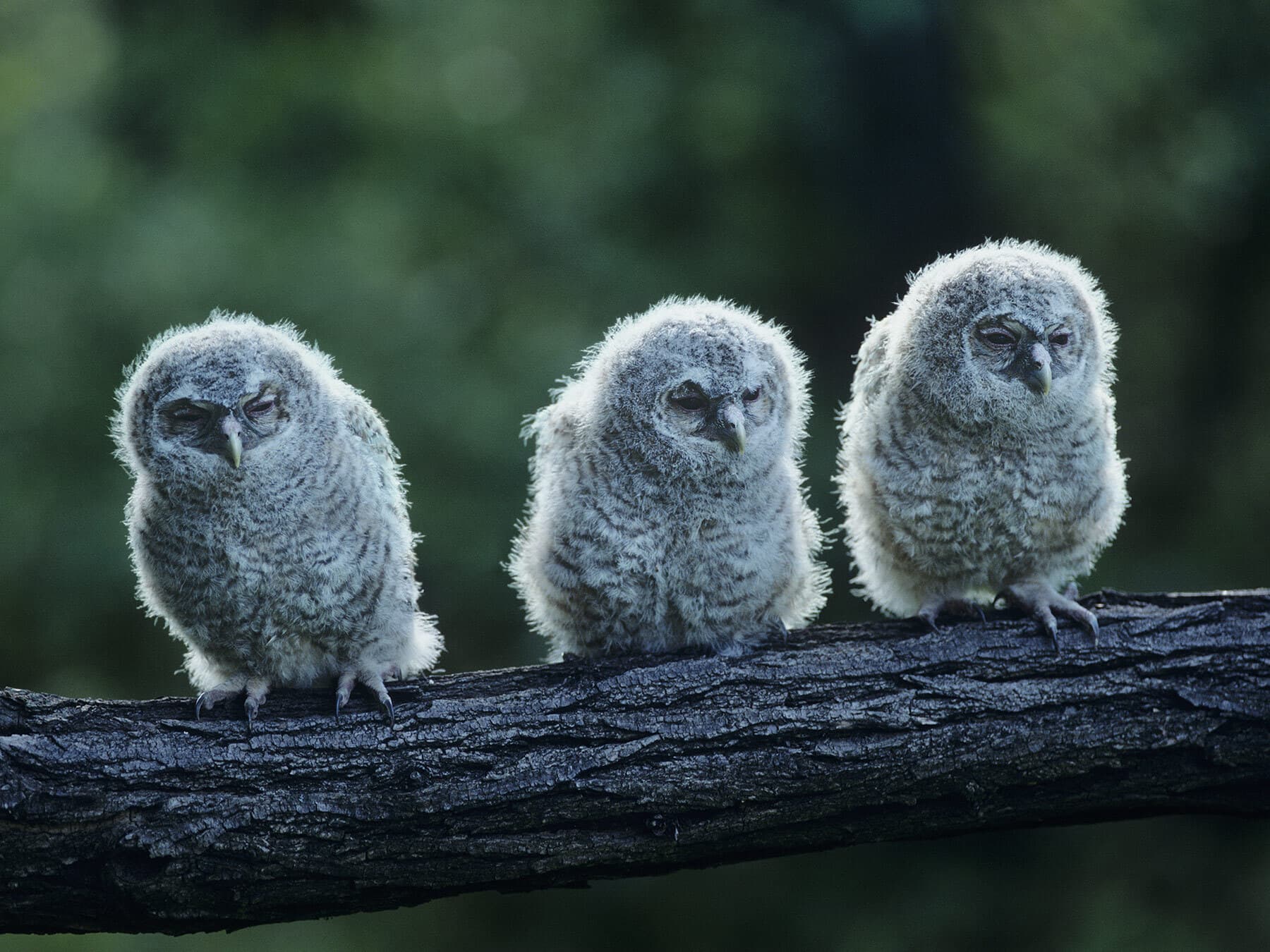
- Why do baby owls sleep with their heads down?
Owls are secretive creatures. In fact, anyone would be lucky to see an owl in the wild - you’re much more likely to hear their distinctive hooting sound instead!
To see a baby owl would be even less likely, so we’ve created this article on everything you need to know about baby owls alongside plenty of baby owl pictures.
What does a baby owl look like?
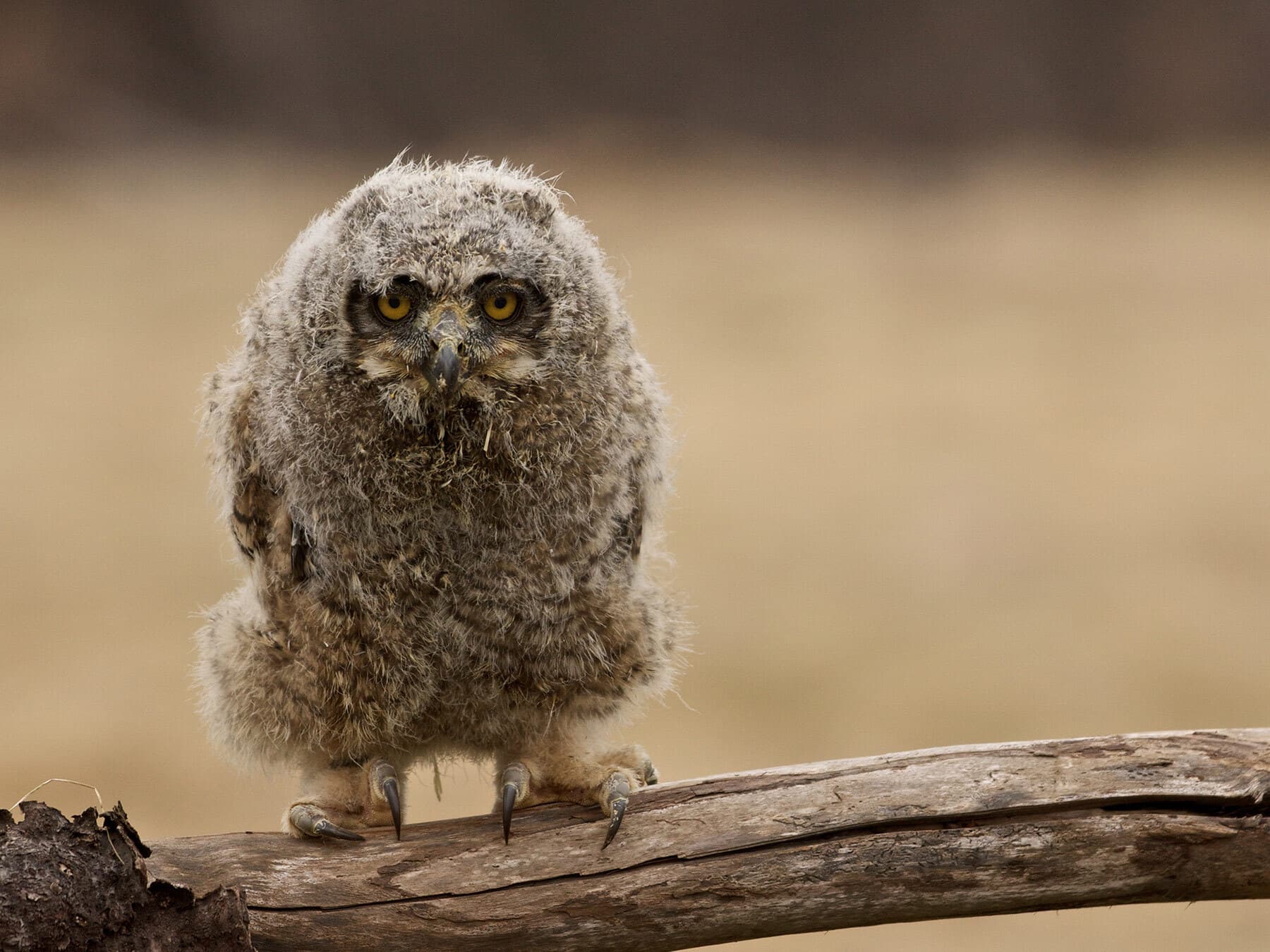
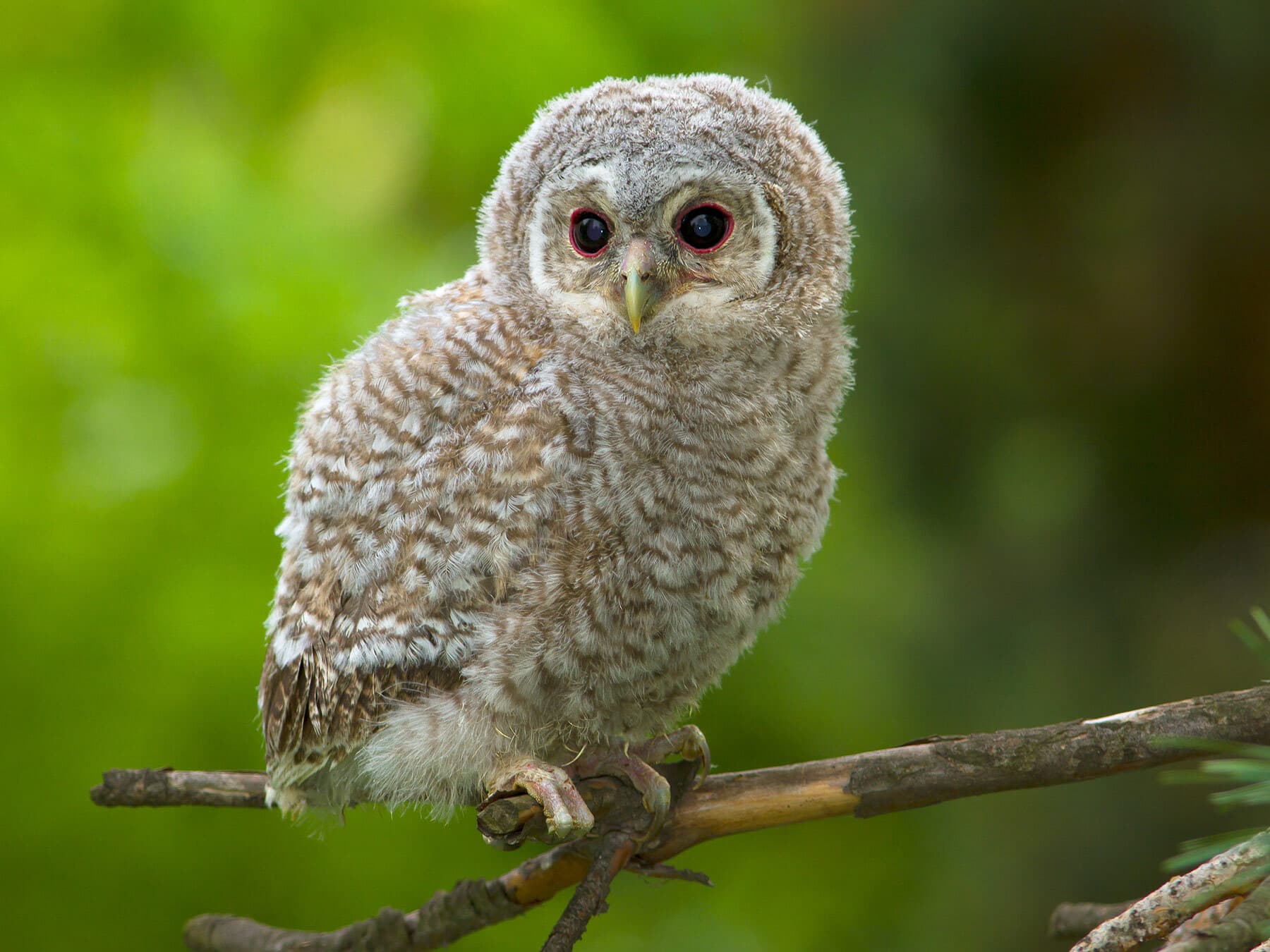
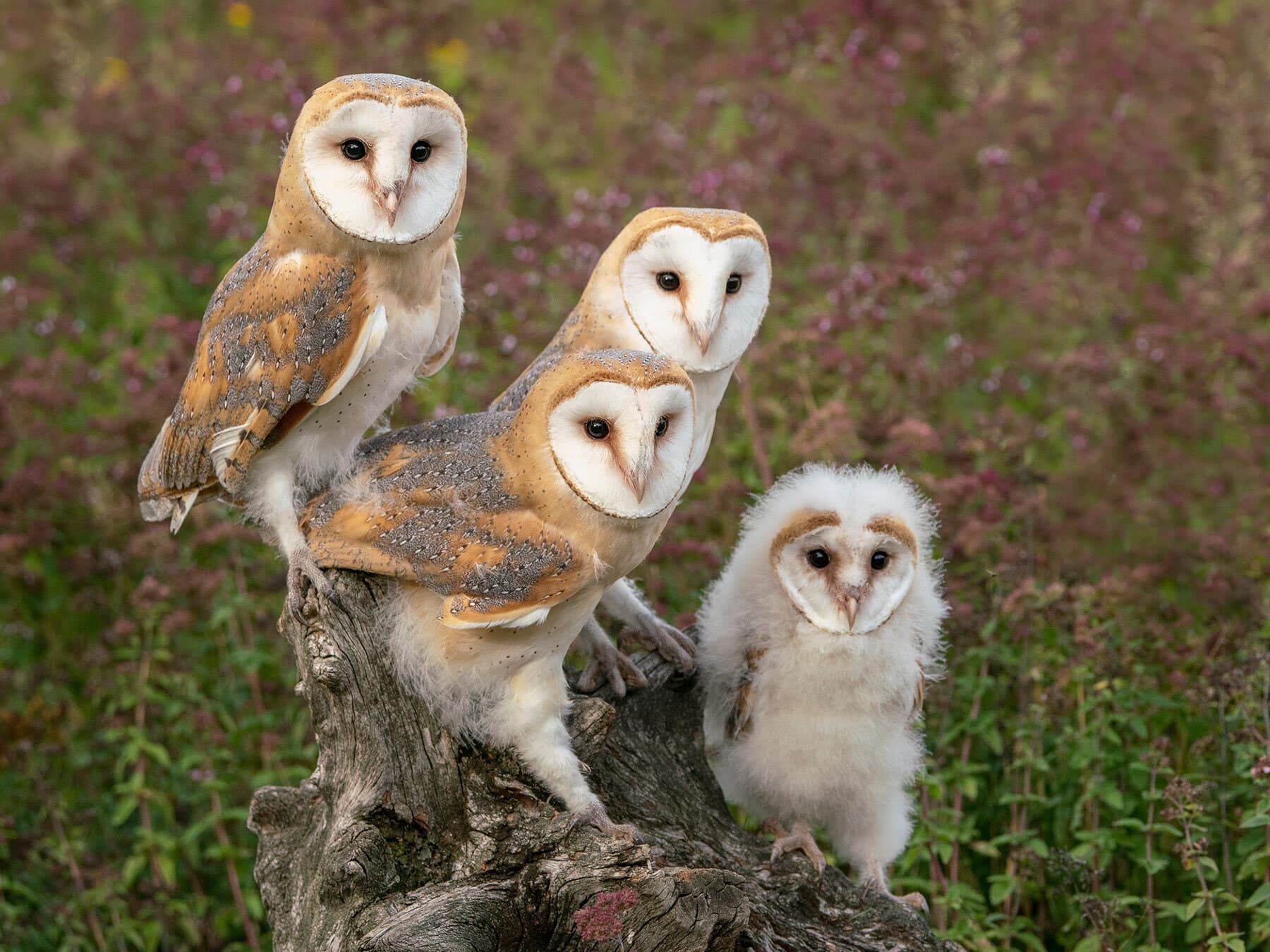
Most baby owls are extremely fluffy, usually covered in a very thick white or grey down. They often have black button-like round eyes and heart-shaped heads. A hook-shaped beak protrudes from the fluff. Baby owls also have a quite pronounced egg tooth, a sharp protrusion from their beak that allows them to pierce the egg whilst hatching. These disappear within a week or so of hatching.
Some baby owls do have quite a peculiar look, especially Barn owls, who can have quite pronounced long faces that contrast with their white fluffy bodies.
How big are baby owls?
The owlets of even the largest owls, such as the Great Horned owl, Snowy owl and Eurasian Eagle owls, are pretty small considering how large some of these birds are. Snowy owl chicks, for example, are just a minuscule 6.5cm (2.5in) tall. Fully grown, they stand at around 2.5 feet tall!
It’s a similar story with Great Horned owls, who are just around 3 inches tall at birth. Owl chicks grow at an astonishing rate but amongst the smallest and most helpless of all baby birds. This is quite typical of birds of prey, and it means that the first few days of life are absolutely critical to long-term survival.
How much do baby owls weigh?
The babies of even large owl species will only reach around 40g to 60g (2oz) at birth. For comparison, a standard chicken chick might weigh approximately 30g and a duckling around 50g. Great Horned owl babies weigh just around 35g (1.2oz). As a rule, owlets really are very tiny indeed!
Two of the smallest owls in the world, the Elf owl and Pygmy owl, weigh just 40g when fully grown (1.5 oz), and their chicks weigh in at a minuscule 4g (0.14oz)! They are barely larger than a Bumblebee.
What do juvenile owls look like?
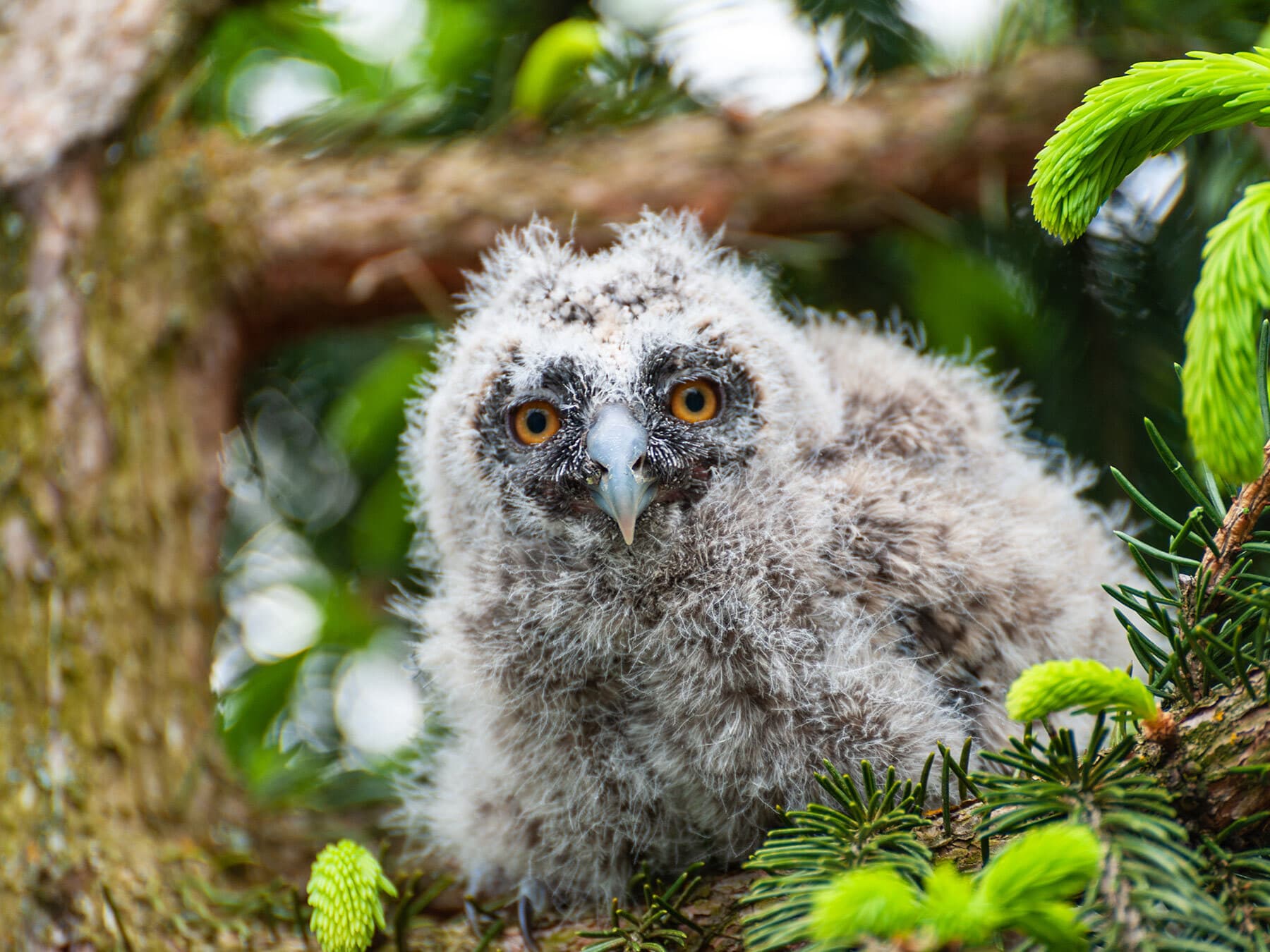
Owl chicks grow and accumulate weight extremely quickly in their first month. Between day 14 and day 28 owlets can easily double in weight, their faces becoming flatter and more pronounced. The Great Horned owl is just 35g (1.2oz) at birth, but reaches 800 grams (28oz) in just around 1 month!
The thick fluffy down begins to give way to more typical adult feathers, but the down will remain for at least 2 months. Juvenile owls may well fledge the nest before they’ve lost all of their baby feathers but will likely resemble adult owls after around 14 weeks.
What is a baby owl called?
Baby owls are typically called owlets whilst they’re still in their fluffy down and are yet to develop feathers or adult plumage.
What is a group of baby owls called?
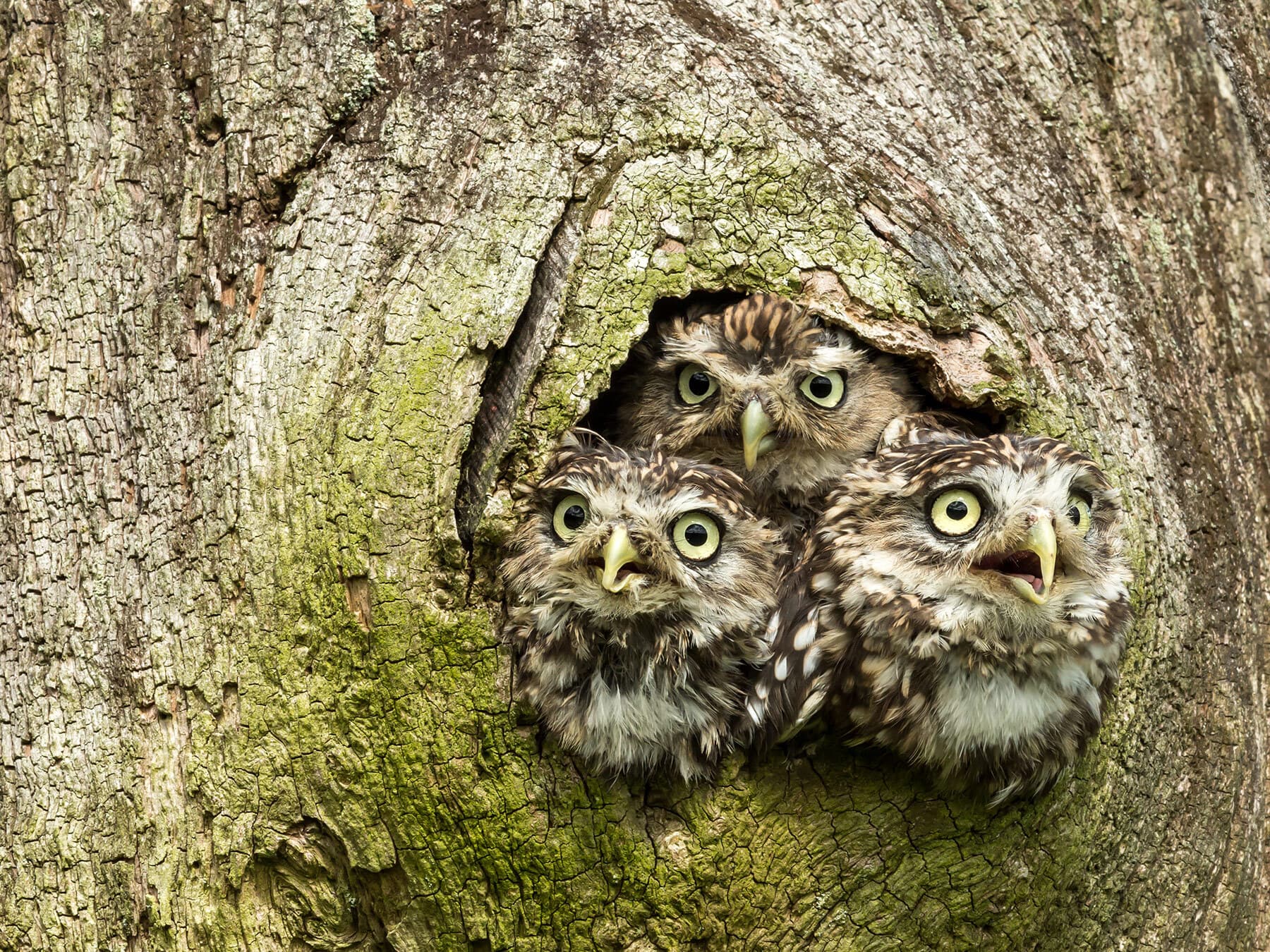
Seeing a group of owls (a parliament or congress) is a rare enough sight as it is, but seeing a group of baby owls in the wild is exceptionally rare.
Owls typically lay small clutches, usually numbering just around 4 to 6 eggs, though some species lay as few as 1 to 3 and some 10 to 12, depending on the season. Overall, owls have secretive nests of just a small number of chicks, and owl chicks only spend 1 to 3 months in the nest before fledging and becoming independent. This is why you’re so unlikely to see baby owls together, even from the same nest.
Do baby owls flock together?
It’d be very unlikely for the owlets of different mated owl couples to flock together. It is true that owls are primarily solitary, tending to isolate themselves in their monogamous pairs.
Some species, such as the Burrowing owl and Tawny owl, do flock together and live in small groups throughout some of the year at least, in which case owlets may spend some time mingling outside of their family units. In general, baby owls are highly independent as soon as they leave the nest after around 12 weeks at the most.
What do baby owls eat?
Owls are almost exclusively carnivorous, meaning they solely consume meat. Larger owls eat primarily mammals, reptiles, birds and fish whereas small owls are more likely to prey on insects, arthropods and small rodents.
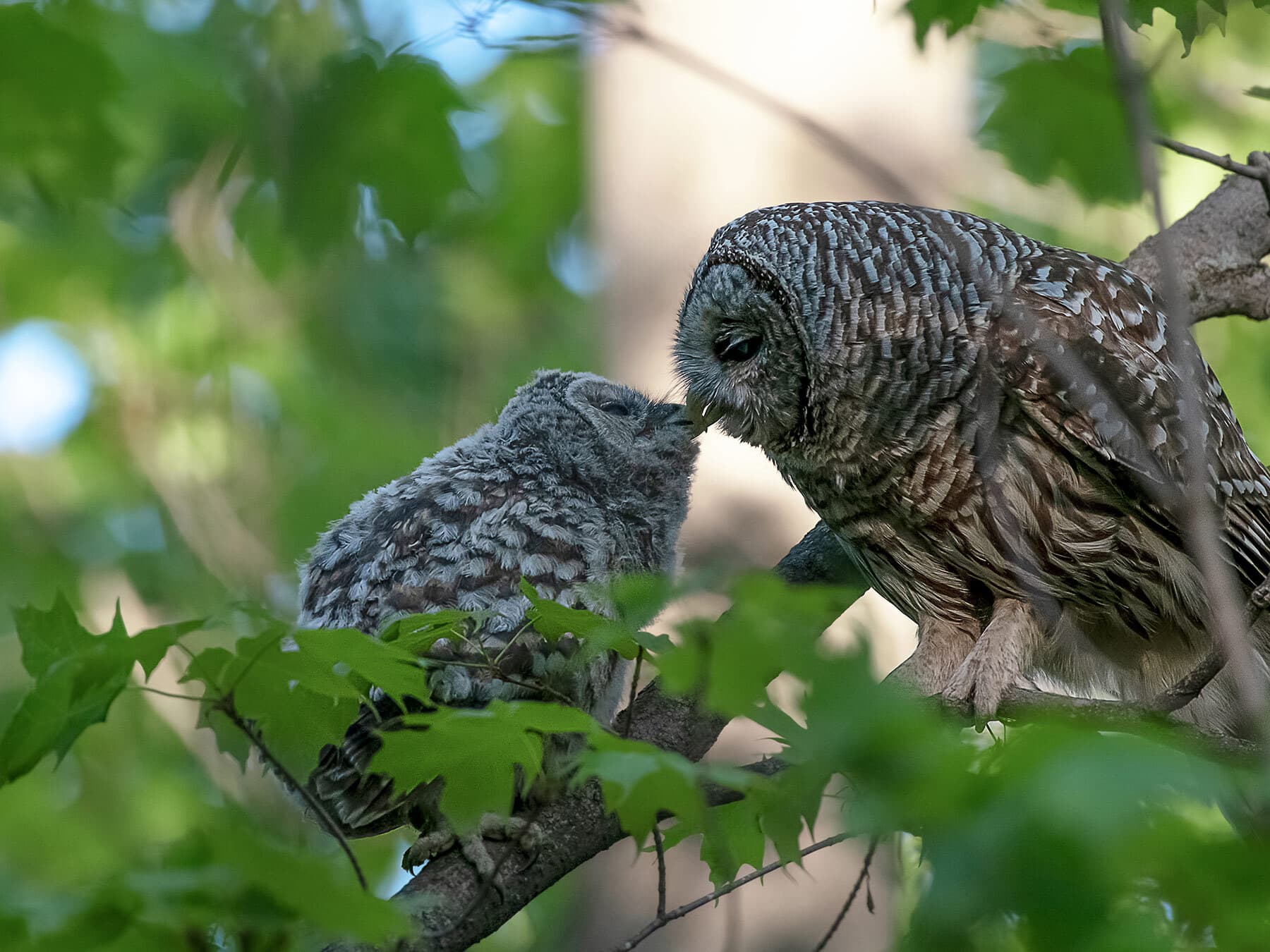
Baby owls eat whatever their parents feed them. They’ll tear food into small chunks that the owlets can swallow whole.
How do baby owls learn to hunt?
Baby owls receive practically no guidance or instruction on hunting and hunt on instinct alone. Juvenile owls will have to hunt for themselves after leaving the nest.
What do owl eggs look like?
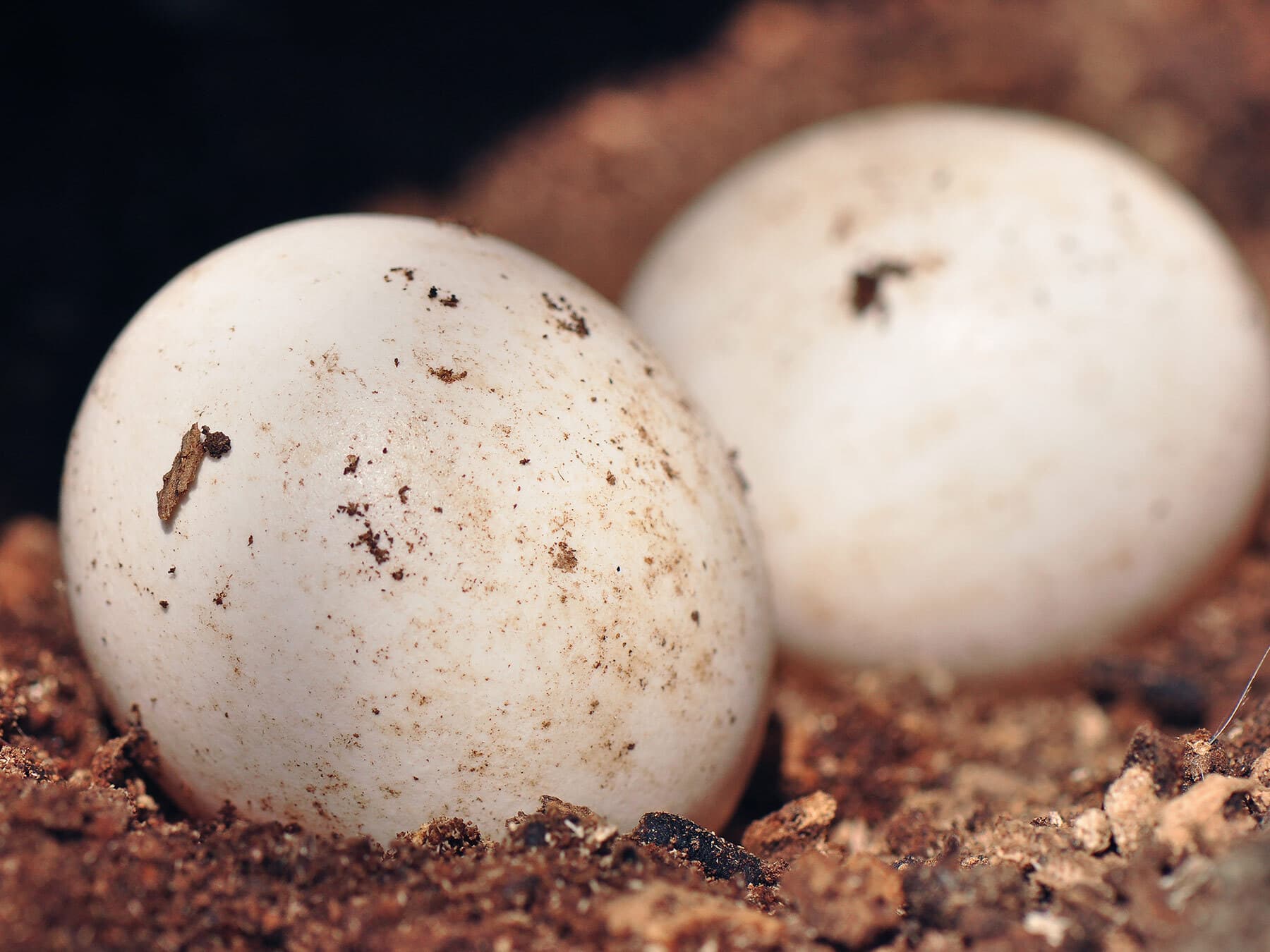
Owl eggs are typically all-white and have no particularly unique identifying characteristics. Some owl species lay much more glossy and shiny eggs than others (e.g. the Tawny owl).
How long do owl eggs take to hatch?
The eggs of many species of owls tend to hatch within 30 to 35 days. For example, both the Snowy, Little and Barn owl’s eggs hatch in 31 to 33 days. Eagle Owl eggs may take around 35 days to hatch. Thirty-two days seems like a reasonable average across all species of owls. This is around average amongst all birds of prey also.
When do owls lay eggs?
Owls typically lay their eggs in the springtime, usually no earlier than March. Some species of owls, such as the rare Blakiston's fish owl, do not lay eggs every year - if the winter is particularly harsh and they cannot hunt sufficient food, then they may skip a year entirely.
Other species such as the Great Horned owl and the Barred owl are known for laying their eggs very early in the year, sometimes even in the mid-winter of January and February. These eggs are incubated at very low temperatures - owls can successfully incubate eggs in outside temperatures of some -35°F (-37°C).
If food is scarce, the female may join the male to hunt, leaving eggs unattended in freezing temperatures.
How do owls feed their chicks?
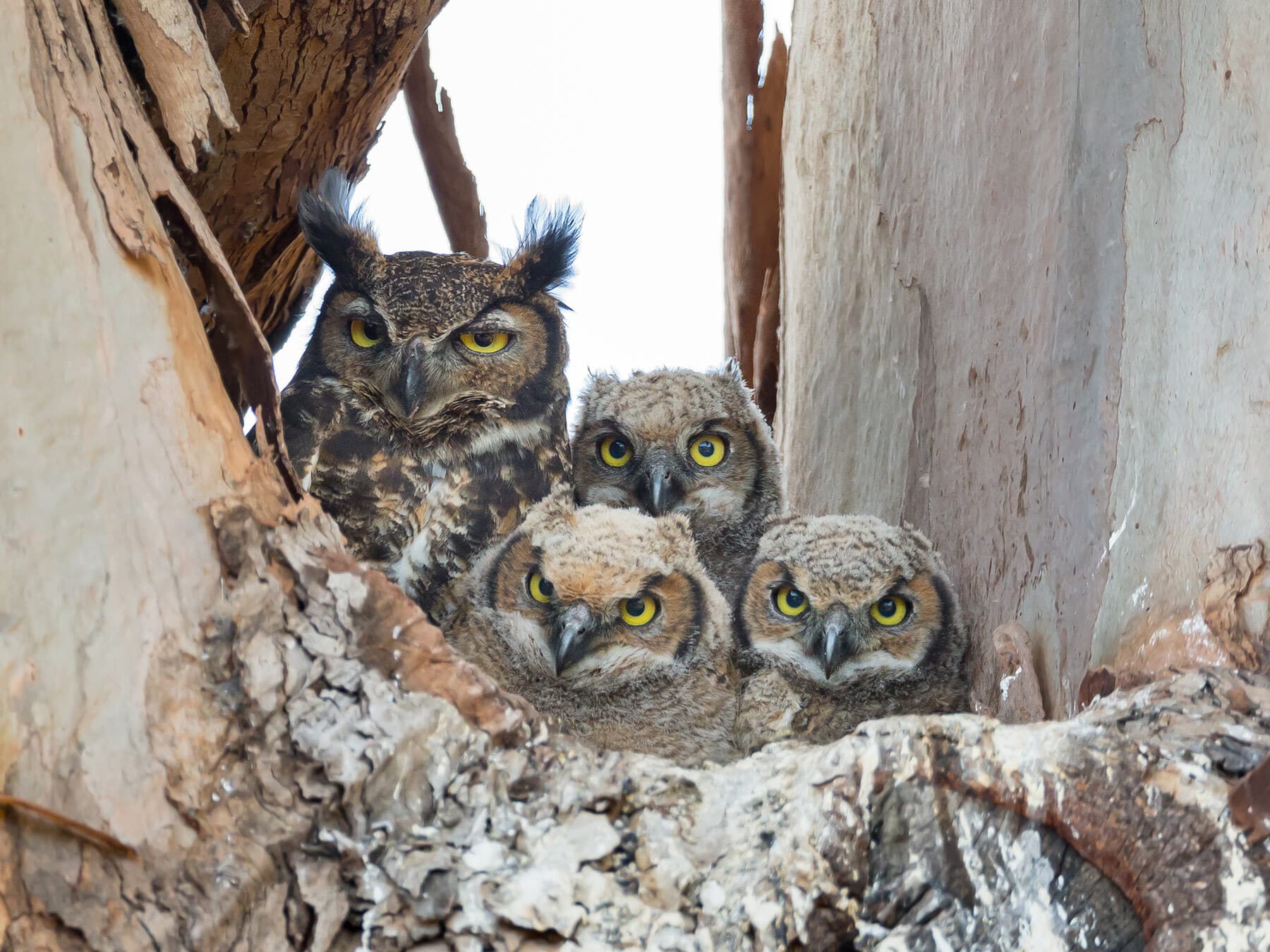
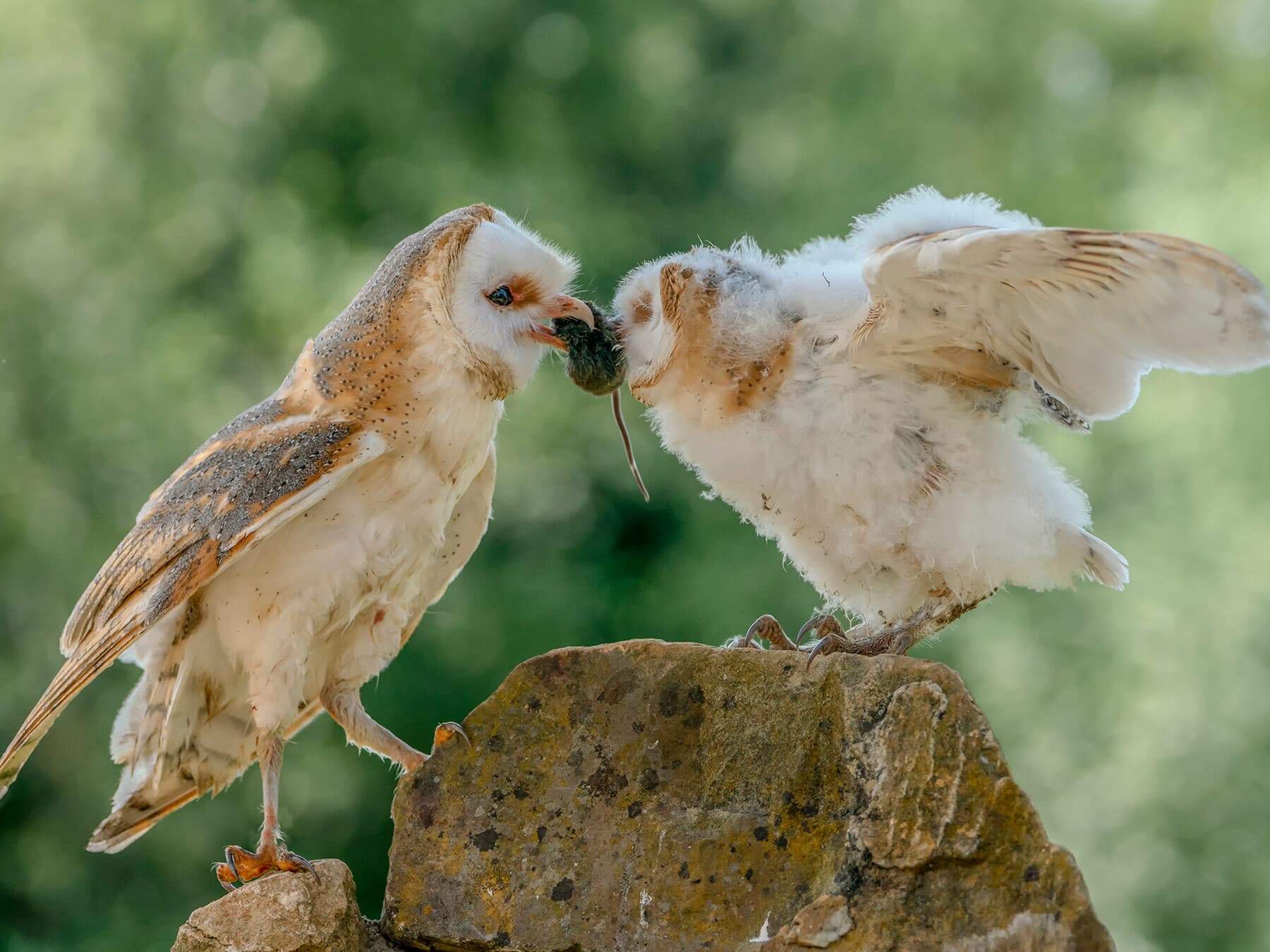
The male typically takes on the role of the hunter during the owlet’s first few weeks, bringing food to feed both the female and the owlet. The female will rip this food up into tiny pieces that the chick can swallow whole. Owlets grow at an astonishing rate and are quickly able to consume the same diet as their parents.
The older chicks are usually fed first as they’re the largest and strongest in the nest, possibly even leaving the smallest, latest chicks to starve if food is scarce.
When can baby owls fly?
The owlets of some species such as the Screech owl are ready to fly in just over 1 month, but others, such as the Great Horned owl, can take as long as 2.5 months. Like many birds of prey, owls are ‘born ready’ and develop quickly, developing flying and hunting skills by instinct rather than by watching their parents. Owls are quite distinctive in how quickly chicks become independent from their parents.
When do baby owls leave their nests?
Baby owls are relatively quick to leave their nests compared to other species of birds, with some leaving the nest after just four weeks or so. Other owl species will stay in their nests for longer, such as Barn owl owlets, who might stay with their parents for ten weeks. This is still a quick transition compared to other birds who often stay with their parents for the remainder of the spring and summer at least.
Do owls reuse nests?
Owl nests are generally too poor to reuse - they are not famed for their nest-building abilities!
Instead, owls tend to be opportunistic nesters and will take their chances at nesting in any sufficiently safe location. If they can help it, they’ll avoid building much of a nest at all, instead choosing to nest in tree hollows or abandoned buildings. They’re also excellent at stealing the nesting sites of other birds.
How long do baby owls stay with their parents?
Baby owls do not stay with their parents for long at all, sometimes as little as one month. This is relatively standard amongst birds of prey who are quick to become independent from their parents, establishing their own territories before the following winter comes.
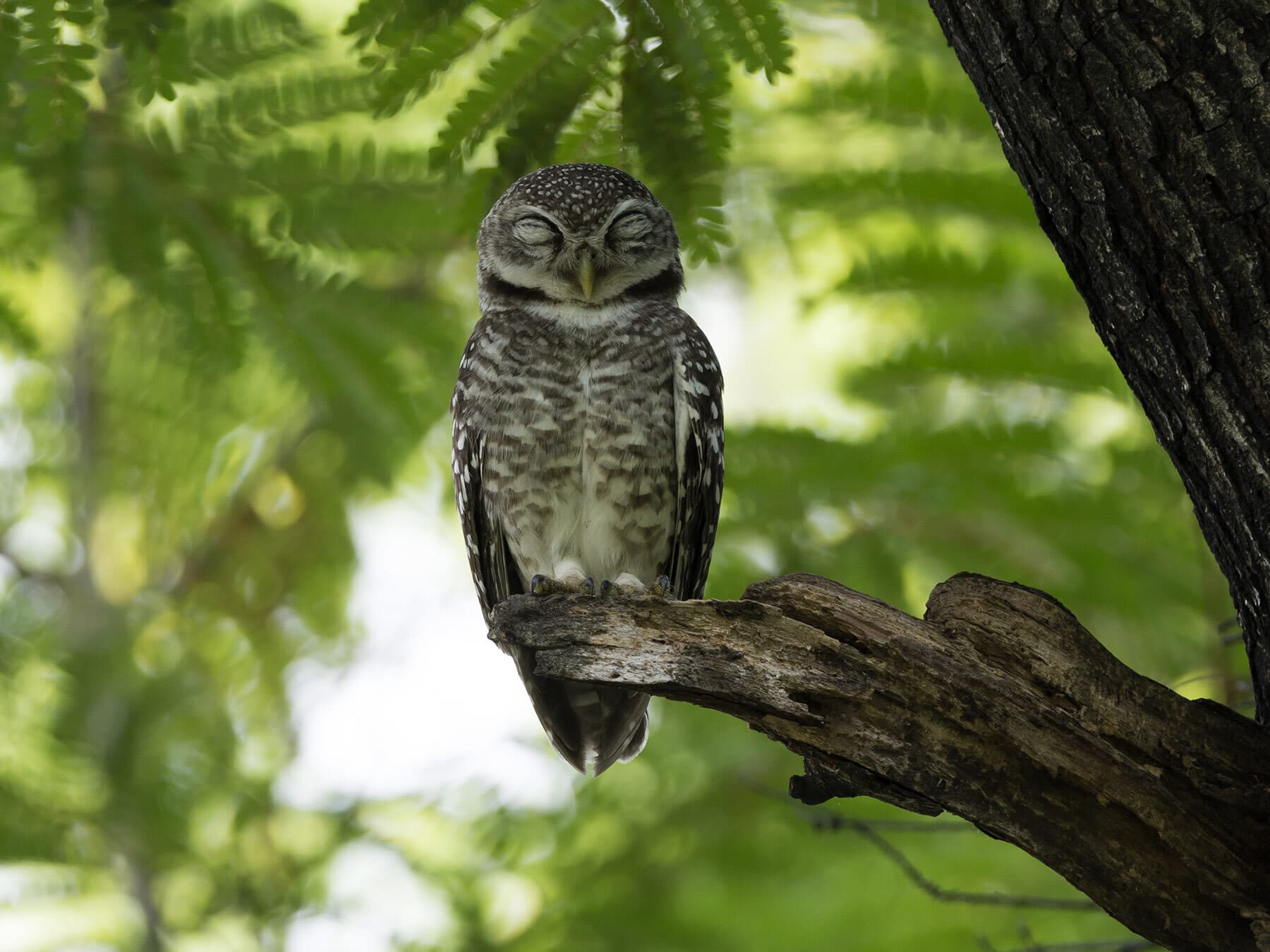
Do owls abandon their babies?
Despite the seemingly quick transition from an owlet to an owl, owl parents are dedicated to their chicks. They will not abandon them if they’re handled by humans and will not easily abandon a nest if it’s visited by other predators.
Why do baby owls sleep with their heads down?
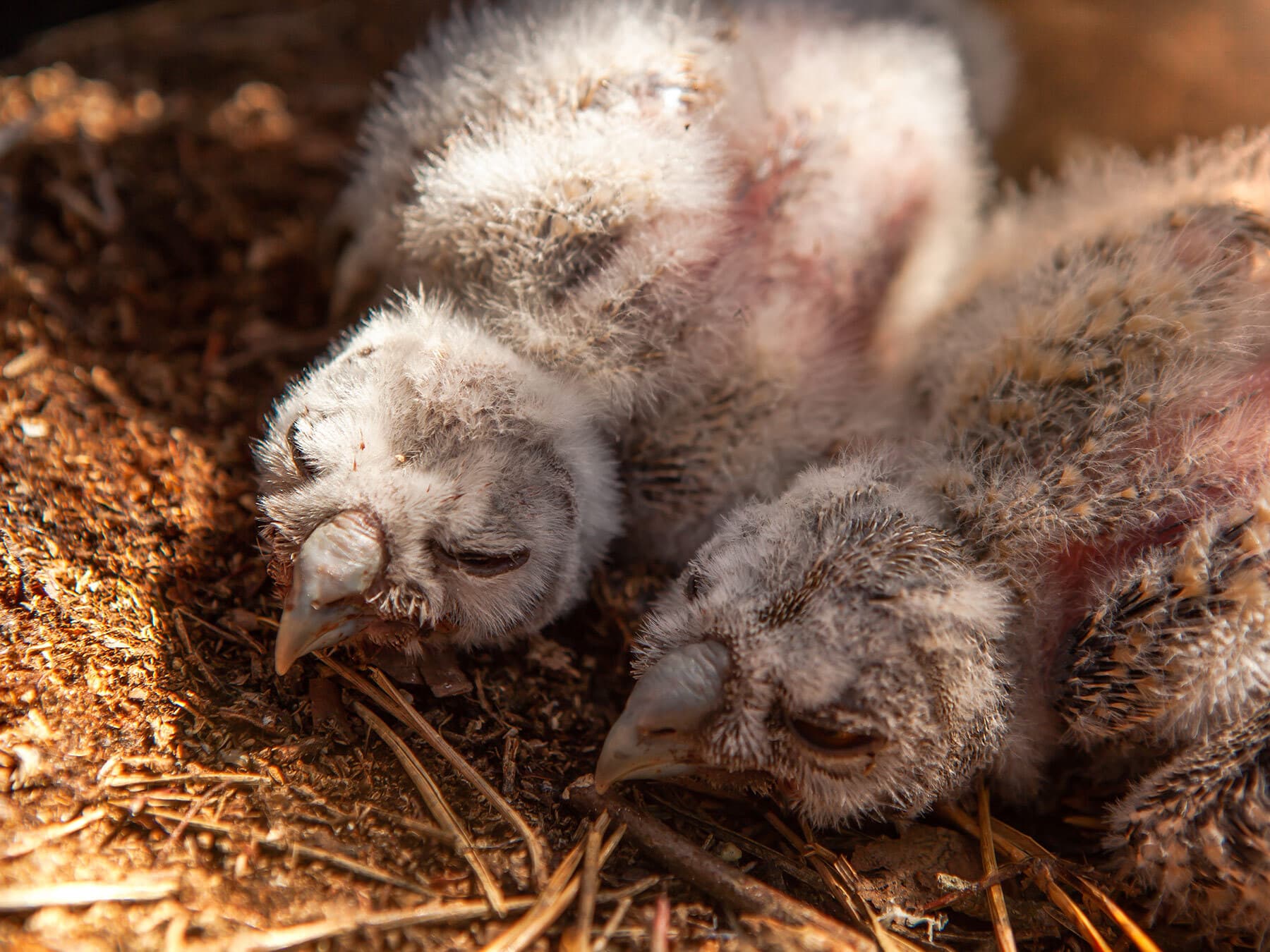
Some baby owls have been observed to sleep in a somewhat collapsed position with their heads down towards the floor. This is because their heads are large and heavy - they’re literally unable to hold them up for the first few days of their lives!