


Little Owl
Owl of Minerva, Owl of Athena · Athene noctua
By the Birdfact teamChecked by Nathan Cope
On this page15 sections
How to recognise it
What do Little Owls look like
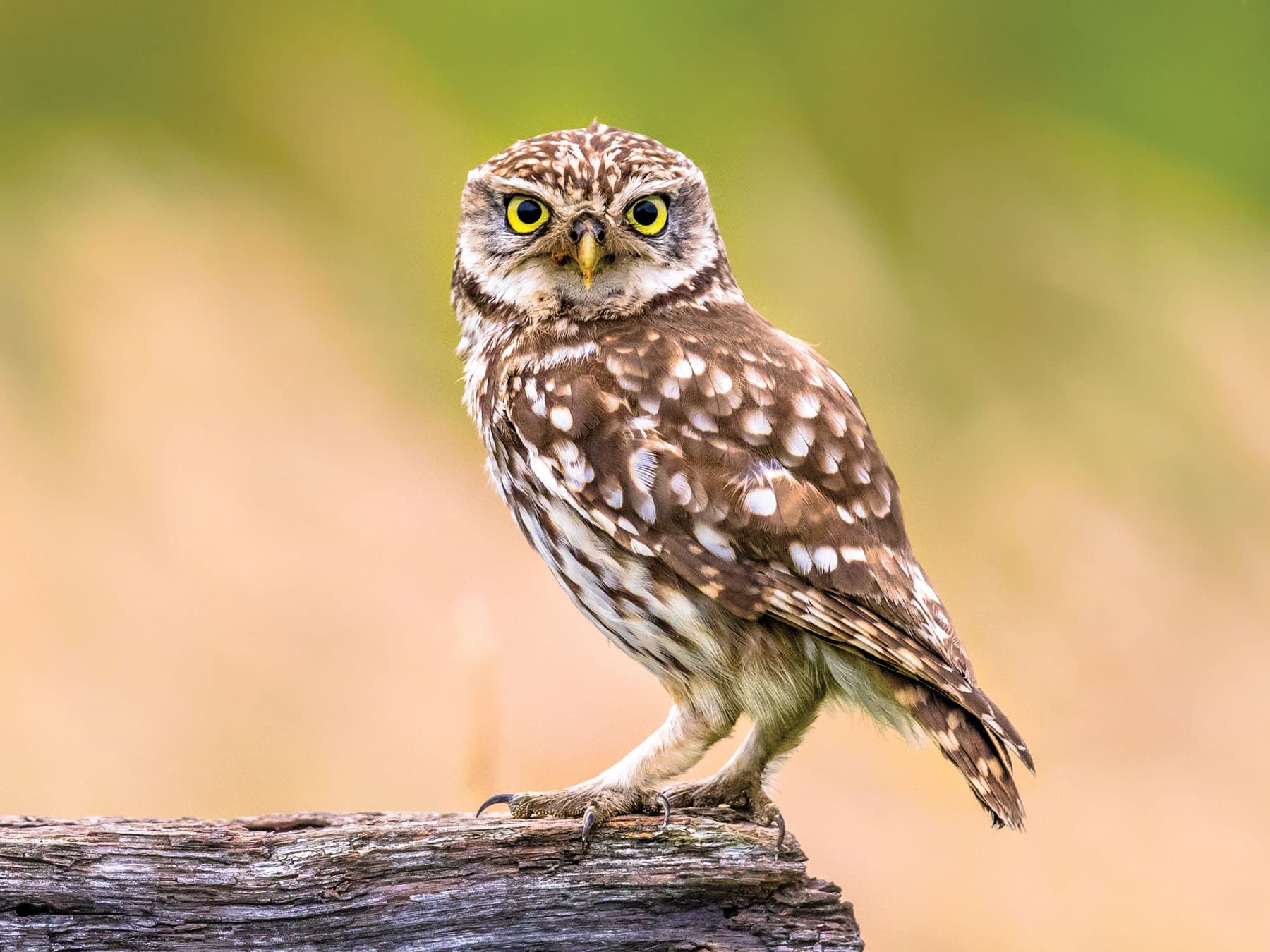
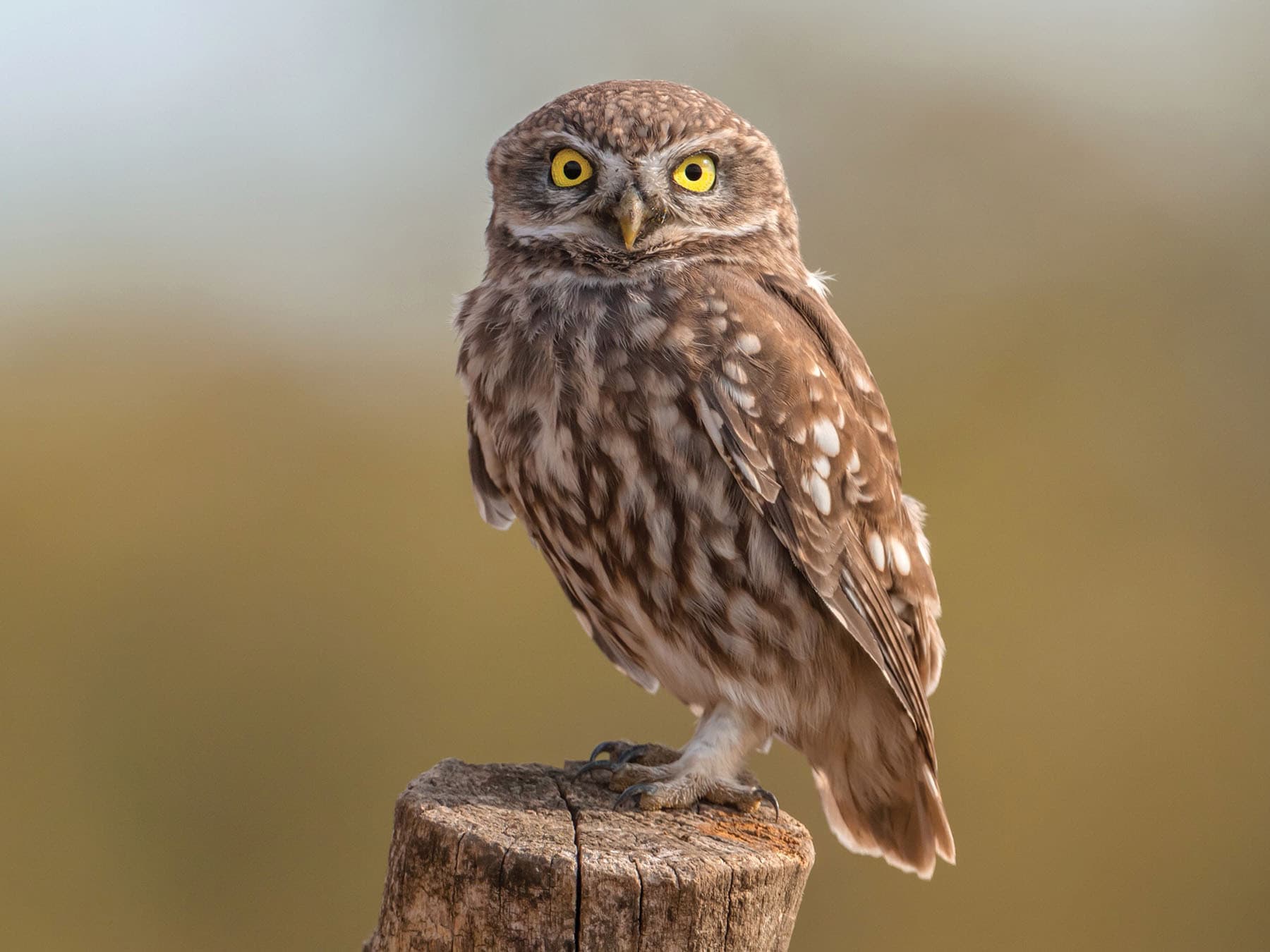
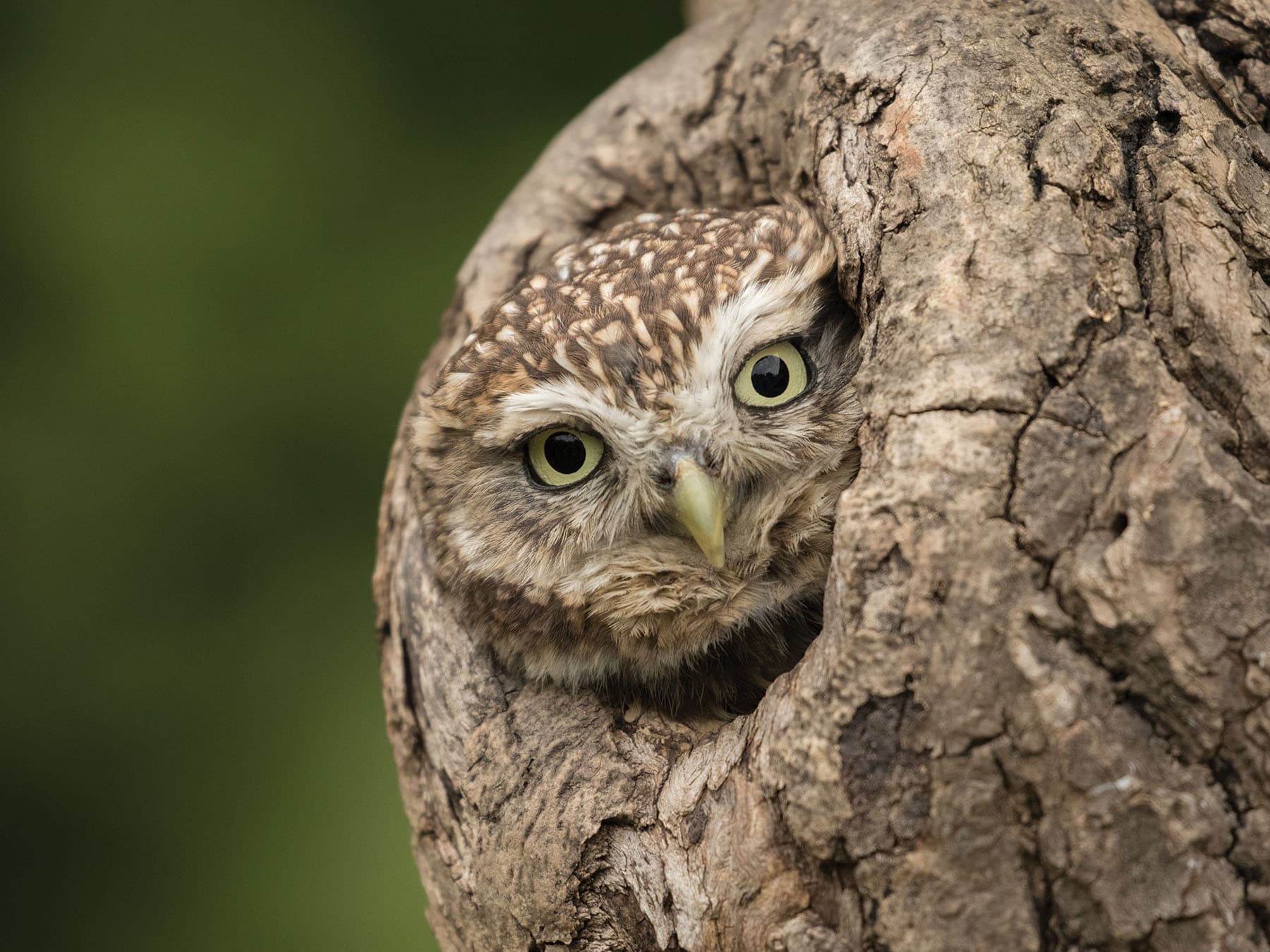
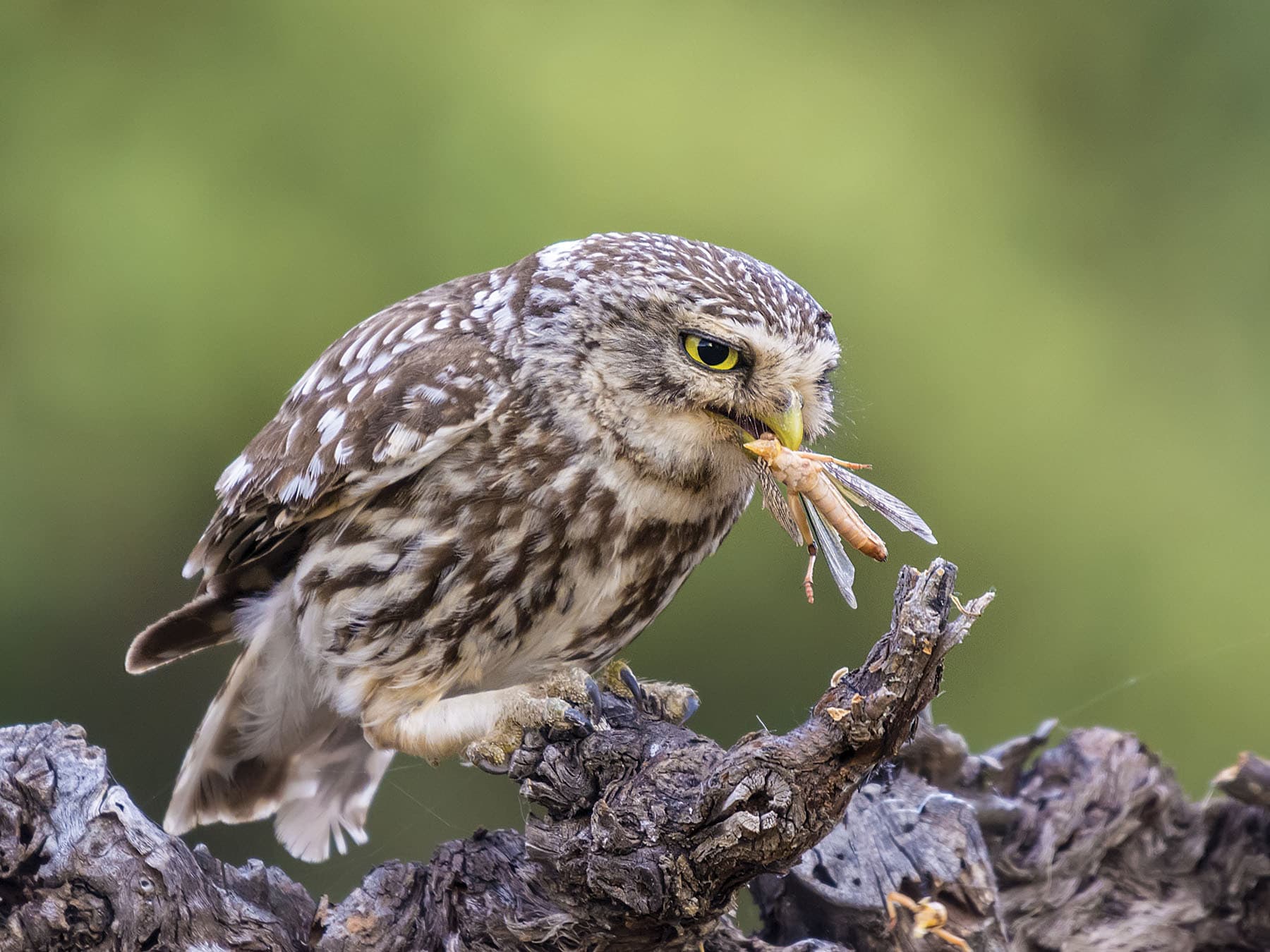
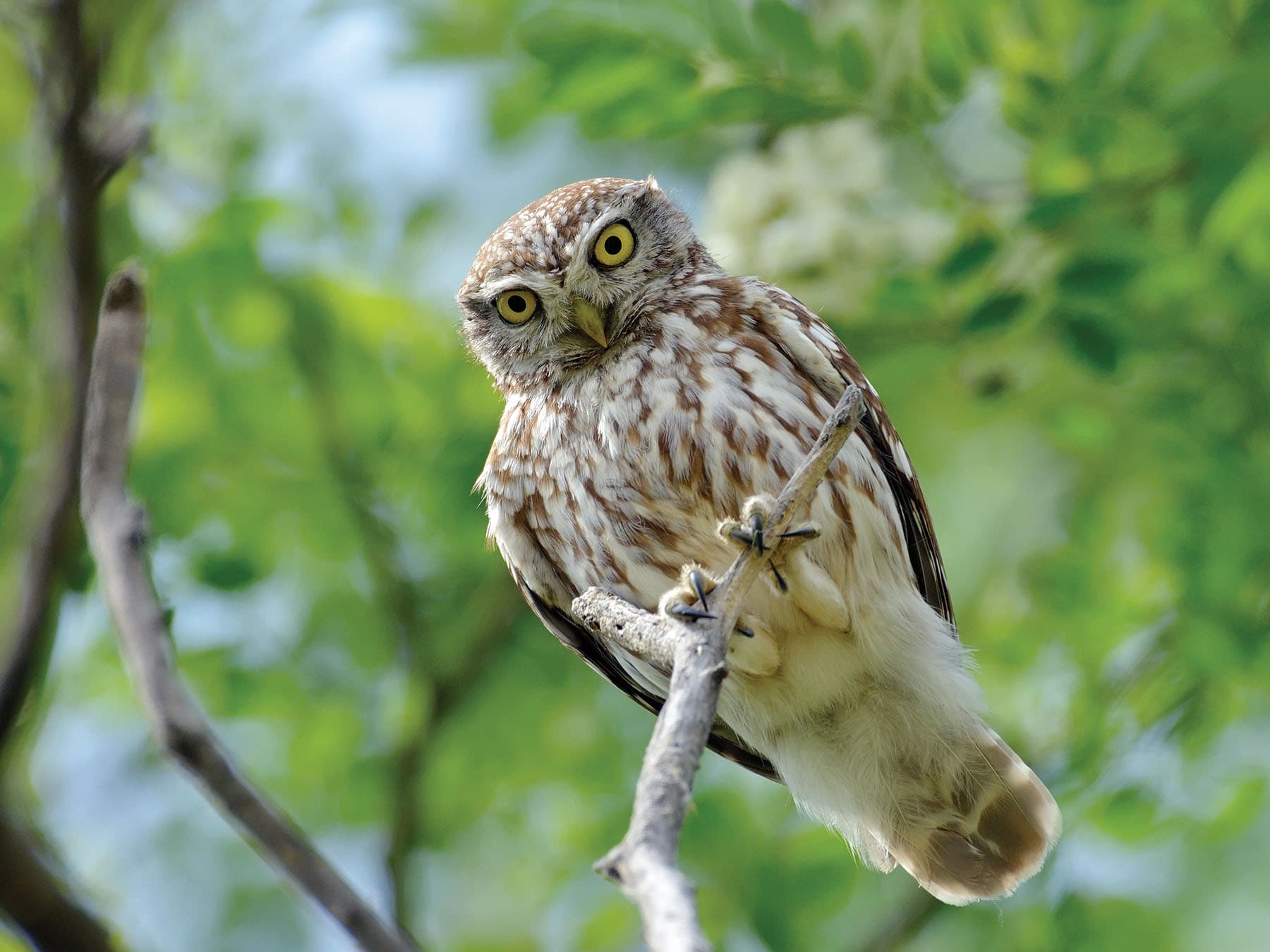
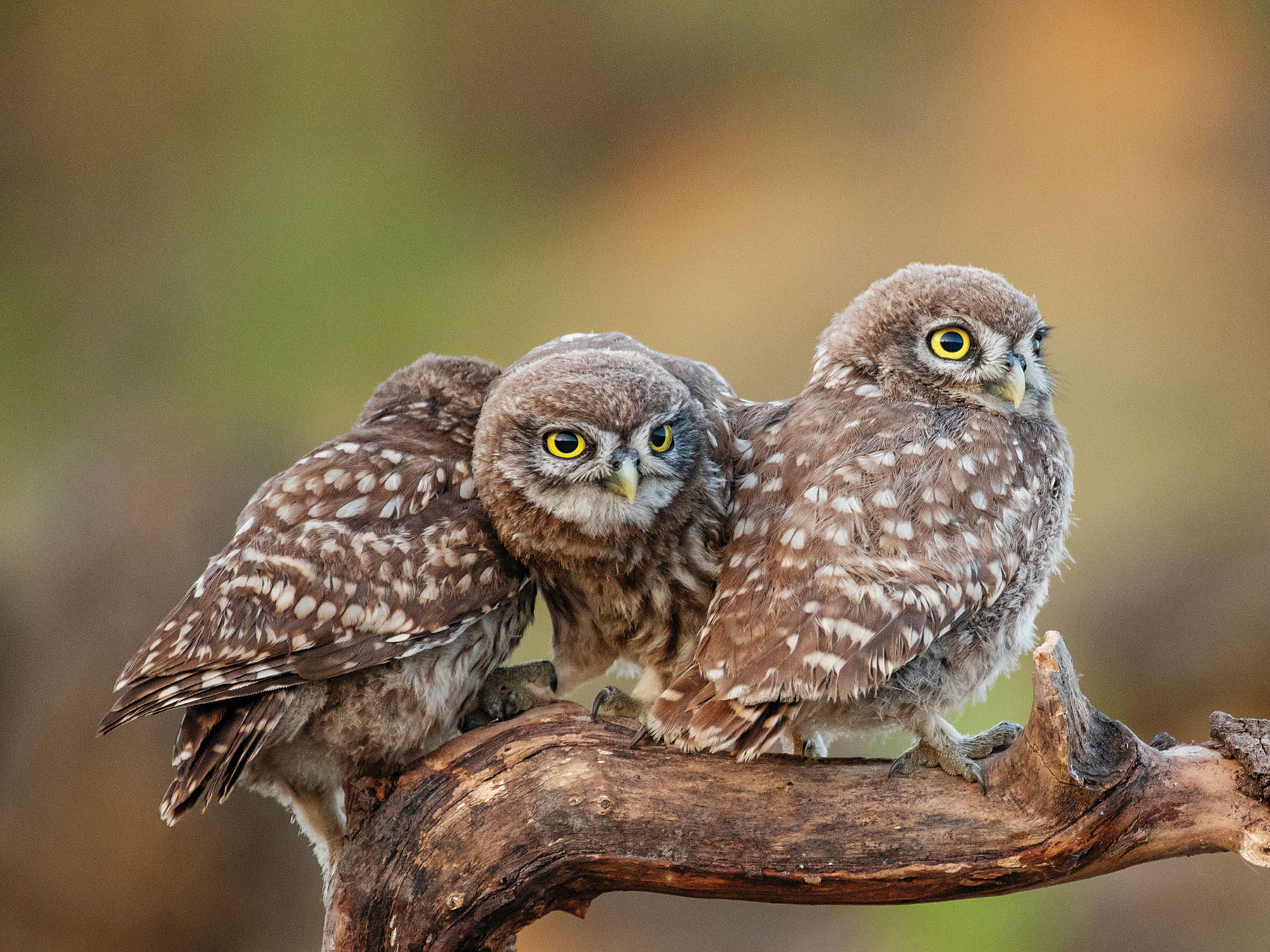
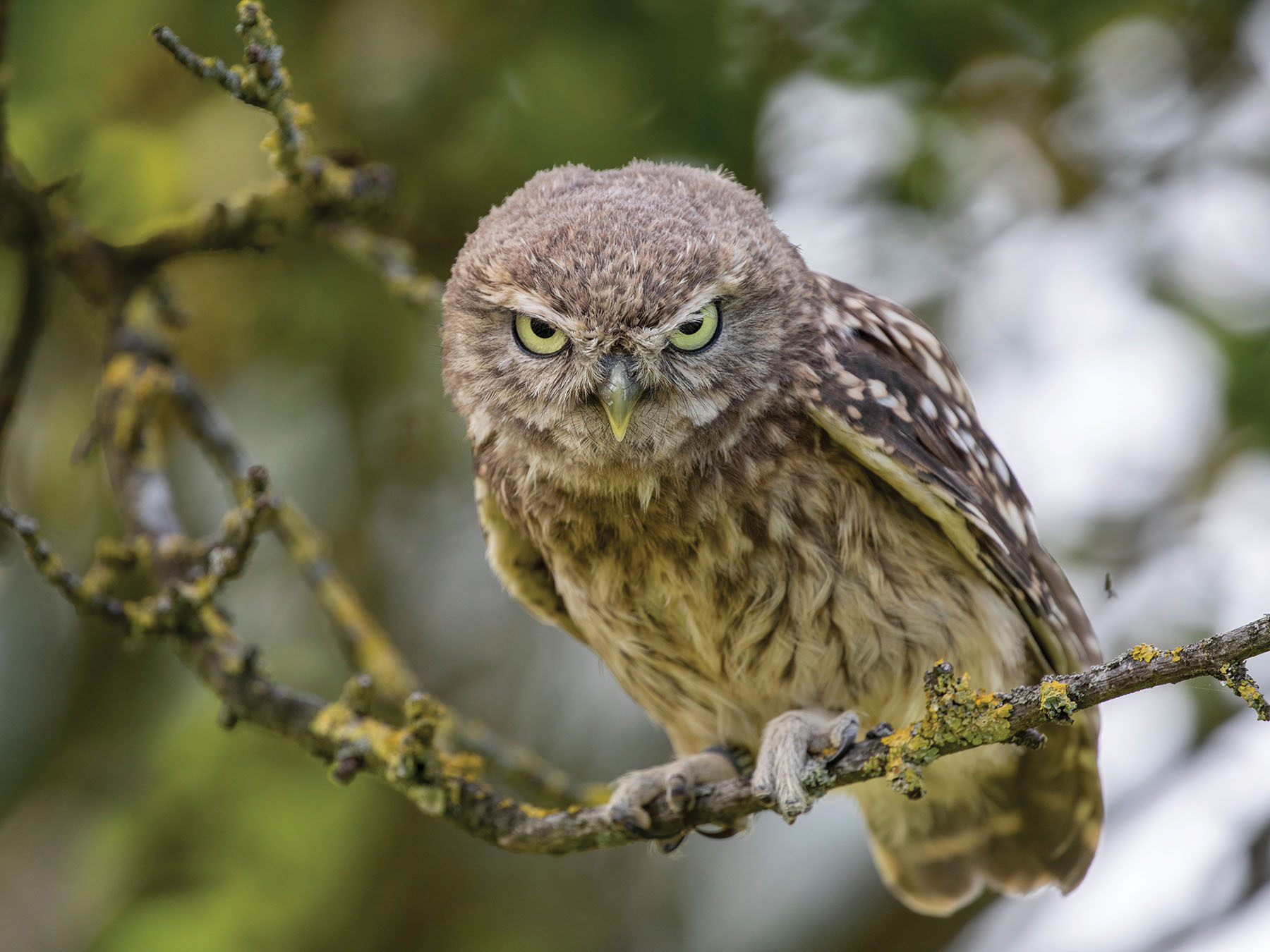
Little Owls have brown upper parts covered in white spots and white underparts with heavy brown streaking. They have a grumpy look, with prominent white ‘eyebrows’, large yellow eyes, and a yellow bill. These owls have rounded faces and lack the facial disc of other species like the Barn Owl.
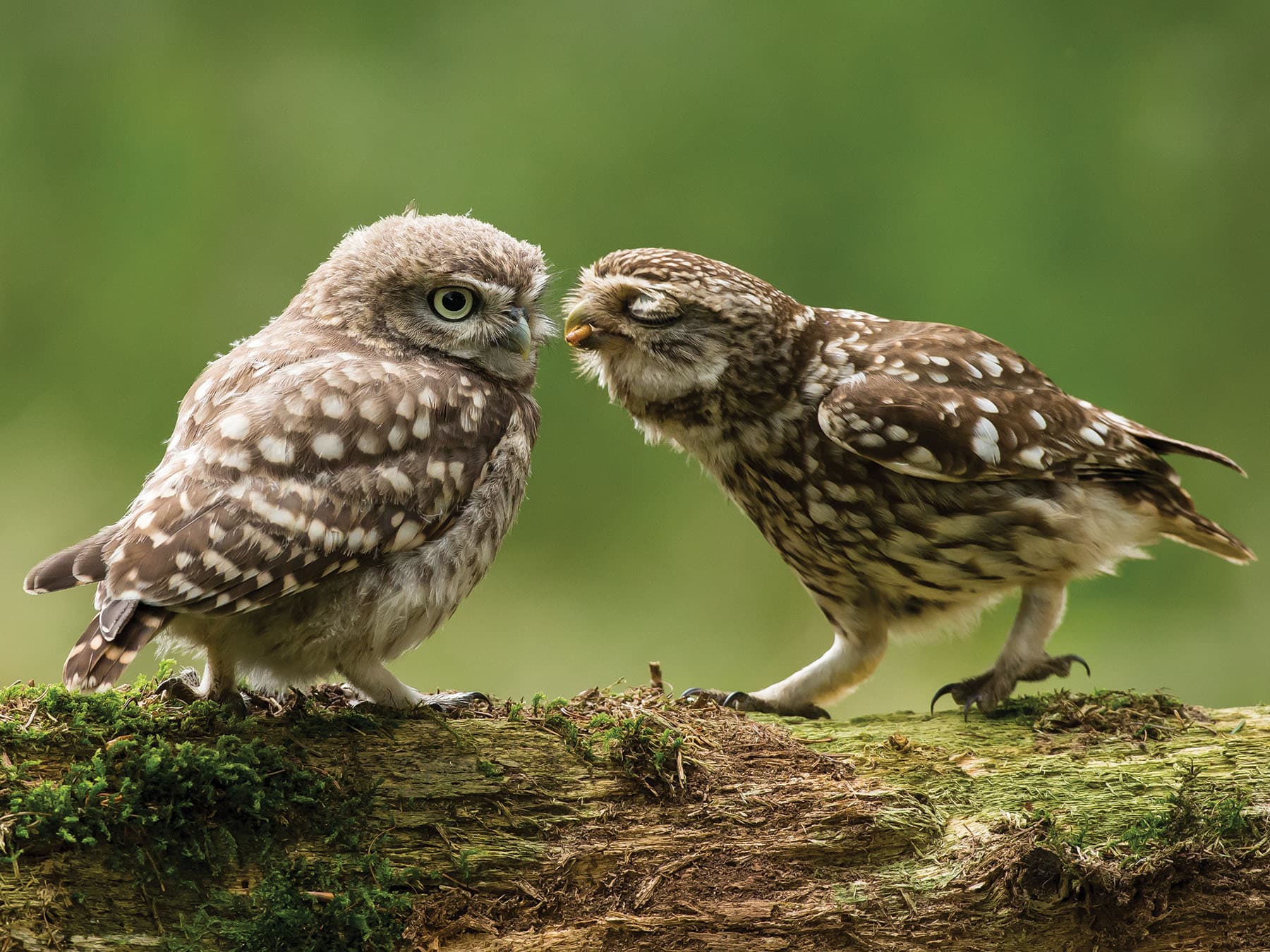
Females are very similar to males, although they grow slightly larger. The fluffy juveniles are paler than adults and have buff-coloured spots and plain brown crowns.
The Little Owl is a distinctive bird, unlikely to be confused with any other in the UK. However, their dipping and undulating flight resembles that of Woodpeckers and the Mistle Thrush.
How big are Little Owls?
The smallest owl in the UK, these compact birds are shorter than a Blackbird but weigh twice as much.
Length
Little Owls have a body length of 21 to 23 centimetres. They are stocky birds with short tails but long, well-developed legs.
Weight
Most adult Little Owls weigh 140 to 220 grams. Males are generally lighter than females, although there is some size overlap.
Wingspan
The Little Owl has a large wingspan relative to its body length. Most adults measure 54 to 58 centimetres between wingtips.
Its size
Adults- Length
- 21–23 cm
- Wingspan
- 54–58 cm
- Weight
- 140–200 g
Its song and calls
Little Owls are a vocal species, particularly in the late winter and spring leading up to the breeding season.
What sound does a Little Owl make?
The male Little Owl produces a loud, mellow hoot that can be heard from a great distance. This ‘Weeu’ note is repeated several times and may be heard in the day or night. They also produce a high-pitched, rather frantic cackling alarm call when excited or threatened.
- Song0:00 / 0:12
Recorded in Andalucía, Spain · August 2018
- Call0:00 / 0:16
Recorded in Liberecký kraj, Czech Republic · April 2026
When and where to see it
OctoberIn season
Most recorded in October
- 1. West Yorkshire0.17%
- 2. Newport0.14%
- 3. Dorset0.11%
- 4. Derbyshire0.10%
- 5. London0.10%
Each dot is a county, state or province: the bigger and darker, the larger the bird’s share of that place’s bird records that month. Grey dots: no regular records. The ringed point is the centre of the bird’s records this month; the arrow shows how it moved since last month, and the dashed loop its path through the year. “Arrivals” colours places where it becomes regular this month (orange) or is in its last regular month (grey). GBIF eBird Observation Dataset, 2019–2024. Map data: Natural Earth, US Census Bureau; place centres © OpenStreetMap contributors.
In your area
See when the Little Owl is recorded in your county, state or province.
How often the Little Owl turns up in the UK through the year, from birdwatchers' records.
United Kingdom
Resident · all year · most records in July
Show as a table
| Month | United Kingdom |
|---|---|
| January | 0.049% (regular) |
| February | 0.047% (regular) |
| March | 0.054% (regular) |
| April | 0.050% (regular) |
| May | 0.038% (regular) |
| June | 0.054% (regular) |
| July | 0.060% (regular) |
| August | 0.055% (regular) |
| September | 0.044% (regular) |
| October | 0.039% (regular) |
| November | 0.032% (regular) |
| December | 0.033% (regular) |
Recorded regularly in
Worldwide: recorded regularly in 63 countries
Countries where it was recorded in at least 3 of the 6 years 2019–2024. Linked countries have their own bird list.
Europe (30)
- Albania
- Austria
- Belarus
- Belgium
- Bosnia & Herzegovina
- Bulgaria
- Croatia
- Denmark
- France
- Germany
- Gibraltar
- Greece
- Hungary
- Italy
- Kosovo
- Lithuania
- Luxembourg
- Moldova
- Montenegro
- Netherlands
- North Macedonia
- Portugal
- Romania
- Russia
- Serbia
- Slovakia
- Slovenia
- Spain
- Ukraine
- United Kingdom
Asia (25)
- Armenia
- Azerbaijan
- Bhutan
- China
- Cyprus
- Georgia
- India
- Iran
- Iraq
- Israel
- Jordan
- Kazakhstan
- Kuwait
- Kyrgyzstan
- Lebanon
- Mongolia
- Oman
- Palestinian Territories
- Qatar
- Saudi Arabia
- South Korea
- Tajikistan
- Turkey
- United Arab Emirates
- Uzbekistan
Oceania (1)
Data: EOD – eBird Observation Dataset (Cornell Lab of Ornithology), accessed via GBIF.org, CC BY 4.0. Records from 2019–2024, aggregated and filtered by Birdfact. How these lists are made
Little Owls are most at home in human-altered landscapes in the United Kingdom, although their range has contracted somewhat. Keep reading to learn where to find the UK’s smallest owl species.
What is the habitat of a Little Owl?
Little Owls prefer open habitats like mixed farmland and old orchards. Abandoned buildings, hedges, and small copses of trees create ideal hunting grounds, and they avoid dense woodlands or forests.
What is the range of a Little Owl?
The Little Owl is widespread in England, although largely absent from the southwest. They have a scattered and patchy distribution in Wales and occur only in the extreme south of Scotland. Elsewhere, they are widespread in Europe, Asia, and North Africa and were introduced to New Zealand.
Where do Little Owls live?
Little Owls spend most of their time perched and watching for movement below. They may run along the ground in pursuit of their prey, but they usually perch higher up on posts, rocks, and trees. These birds shelter and nest in natural and artificial cavities.
How rare are Little Owls?
Little Owl numbers have dropped considerably in the United Kingdom. They are still common in prime habitats, although they have become scarce in the West. The total population is estimated at just 3600 pairs.
Where can you see Little Owls in the UK?
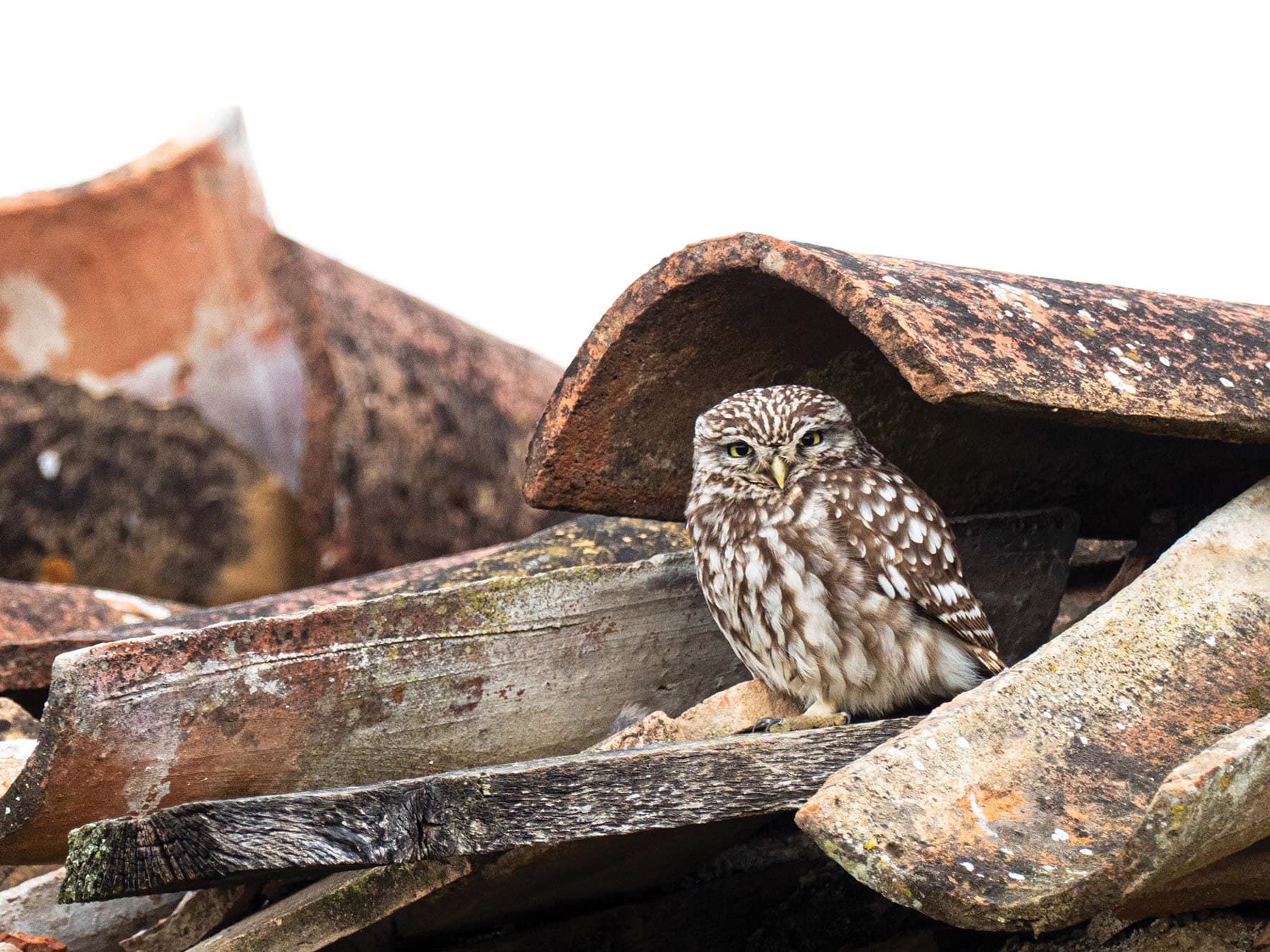
Little Owls are most common in Northern England, East Anglia, and the Midlands, particularly around pasture farmland with old derelict buildings and trees that provide nesting cavities. Look for them perched prominently on roofs, poles, and large trees.
Signs and spotting tips
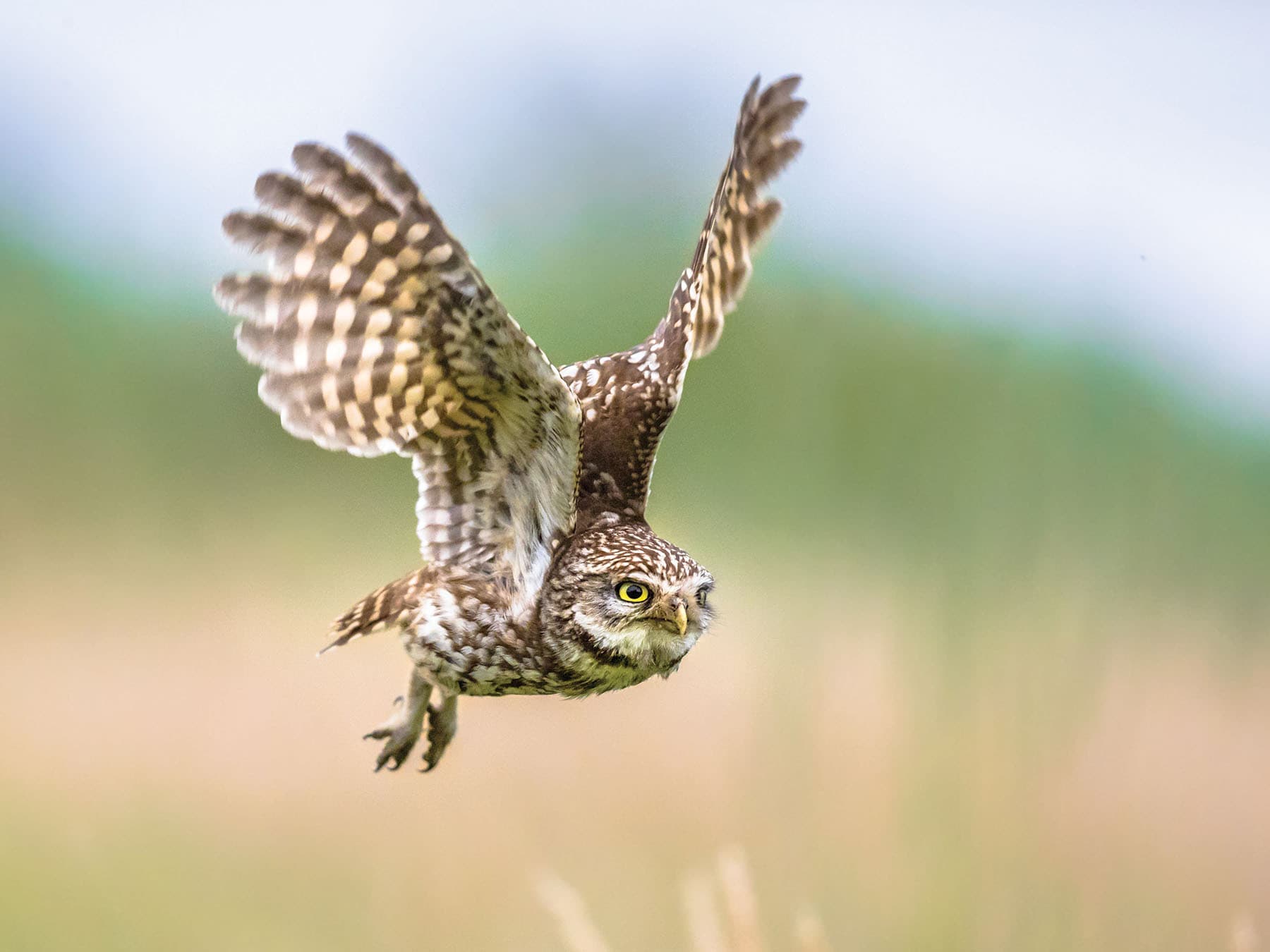
The little owl often takes up a squat posture when alarmed, bobbing in excitement. Its flight is fast and has bounding undulations, similar to a woodpecker. It can be hard to spot, as it flies close to the ground before swooping upwards to perch.
They nest in tree holes and one parent can often be seen on sentry duty near the nest.
Migration
Little Owls can be seen throughout the year if you locate an active territory. Continue reading to learn about their movements and history in the United Kingdom.
Do Little Owls migrate?
Little Owls do not migrate, which may explain why the species never colonised the British Isles on their own. These birds remain within their territories throughout the year, and their young tend to disperse relatively short distances.
Are Little Owls native to the UK?
Little Owls are not native to the United Kingdom. Early sightings in the 1700s may have been imports or vagrants from Mainland Europe, although they were undoubtedly brought over in the 1800s.
The successful introduction of the modern-day population happened in the 1870s when they were released in Kent and Northamptonshire.
What it eats
The Little Owl is capable of tackling relatively large prey, although invertebrates form the bulk of their diet. Continue reading to learn about the Little Owl diet in the UK.
What do Little Owls eat?
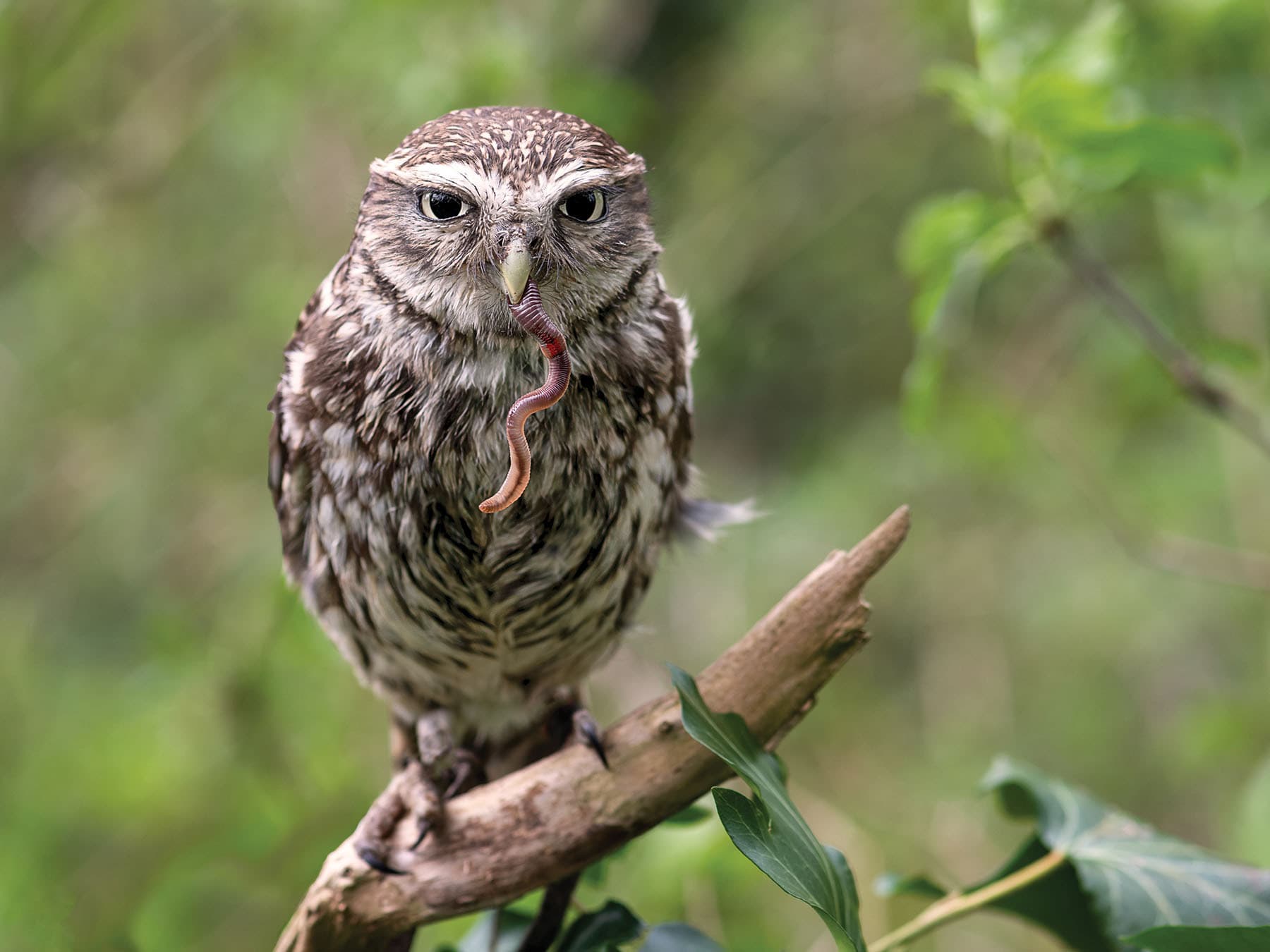
Little Owls are carnivores with a varied diet. Most of their prey are insects and other invertebrates like earthworms, although they will take larger animals like rodents and small birds.
They hunt by watching for movement on the ground and swooping down to catch their victim. Larger prey, like rodents, are caught in their talons, but insects are taken with the bill.
What do baby Little Owls eat?
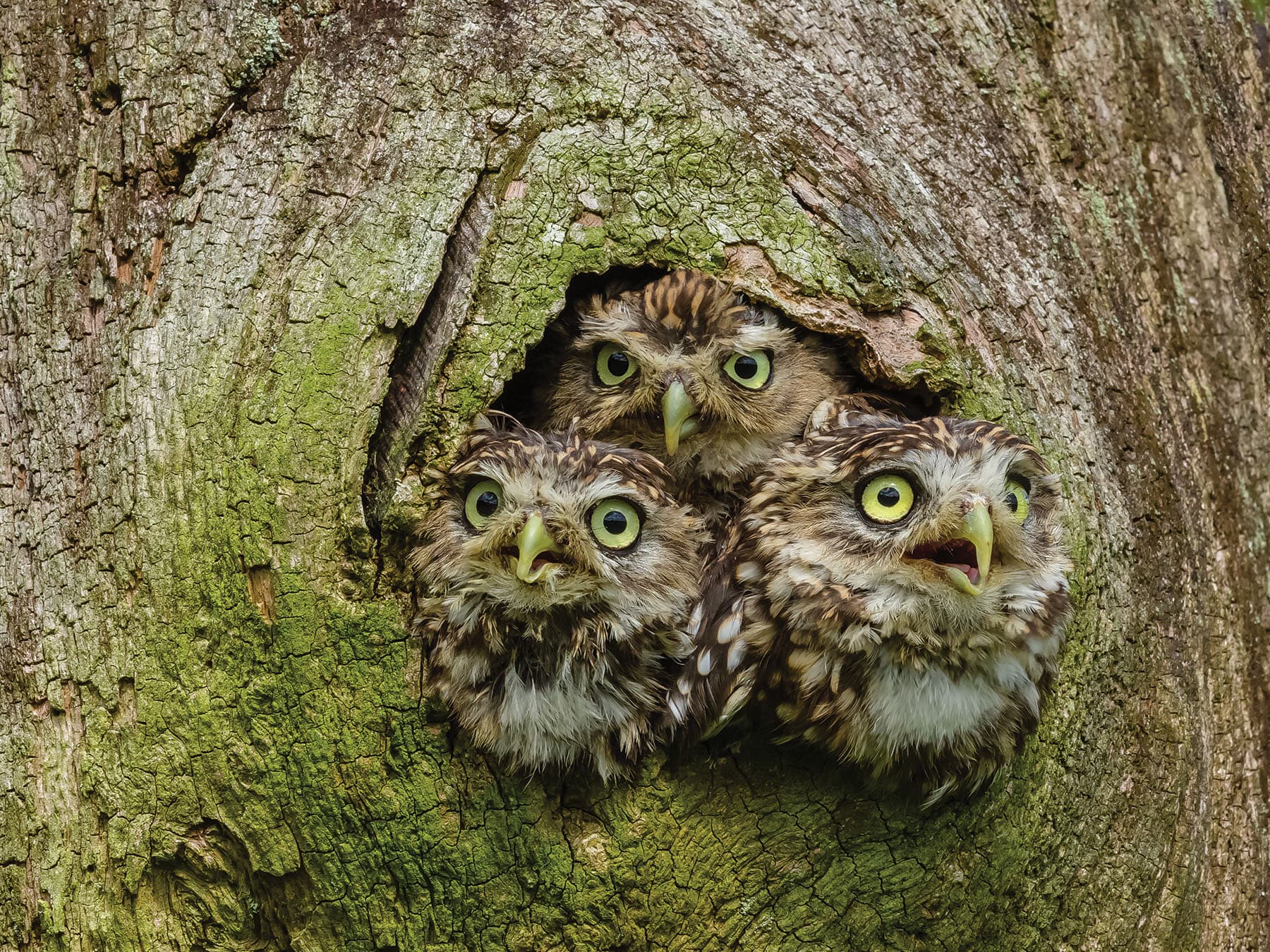
Both parents feed the young, although the male provides all the food for the first two weeks while the female is brooding the chicks. The young birds fledge after about a month and rely on their parents for another month before gaining independence.
Nesting and breeding
Where do Little Owls nest?
Little Owls are cavity nesters that will use both natural and artificial sites to raise their young. Most pairs use natural tree holes, but roofs, hay stacks, and nest boxes are also popular choices.
When do Little Owls nest?
Little Owls nest in the spring and early summer, laying their first clutch of eggs between early April and early May. Incubation takes approximately one month, and the young birds fledge the nest about a month later. They rarely have a second brood in the United Kingdom.
What do Little Owl eggs look like?
Little Owls lay three or four matte white eggs, each measuring approximately 34 millimetres long and millimetres wide.
Do Little Owls mate for life?
Little Owls are monogamous in a relatively strict sense. Pairs rarely ‘cheat’ and may remain together throughout the year and perhaps even throughout their lives. However, single birds will seek a new mate if their partner dies.
Behaviour
Are Little Owls aggressive?
Little Owls are highly territorial and will behave aggressively toward other Little Owls in their territory. They begin by calling loudly and resort to attacking with their talons if the intruder does not get the message.
Are Little Owls nocturnal?
Little Owls are mainly crepuscular (active at dawn and dusk) and nocturnal, although they are often seen during the day. They are naturally shy birds, but individuals that live near people are often bold and may allow good sightings.
Lifespan and predators
Little Owls are fierce hunters, although their small size makes them vulnerable to larger predators.
How long do Little Owls live?
Most Little Owls live for about three years, although the oldest recorded specimen lived for well-over thirteen years.
What are the predators of Little Owls?
Little Owls may fall prey to diurnal and nocturnal birds of prey, such as Sparrowhawks, Long-eared Owls, and Tawny Owls. Mammalian carnivores like foxes and cats would also eat these small birds when possible.
Are Little Owls protected?
Little Owls in the United Kingdom are protected by the Wildlife and Countryside Act 1981.
Are Little Owls endangered?
Little Owls are a ‘Least Concern’ species on the IUCN Red List with a stable population trend. However, they have declined drastically (nearly 80%) since the 1960s in the United Kingdom.
Conservation
While listed as Least Concern globally, Little Owl populations are declining in parts of Europe due to agricultural intensification and loss of suitable nesting sites.
Conservation efforts focus on maintaining traditional farmland habitats and providing nest boxes to support breeding populations.
Similar birds
Often mistaken for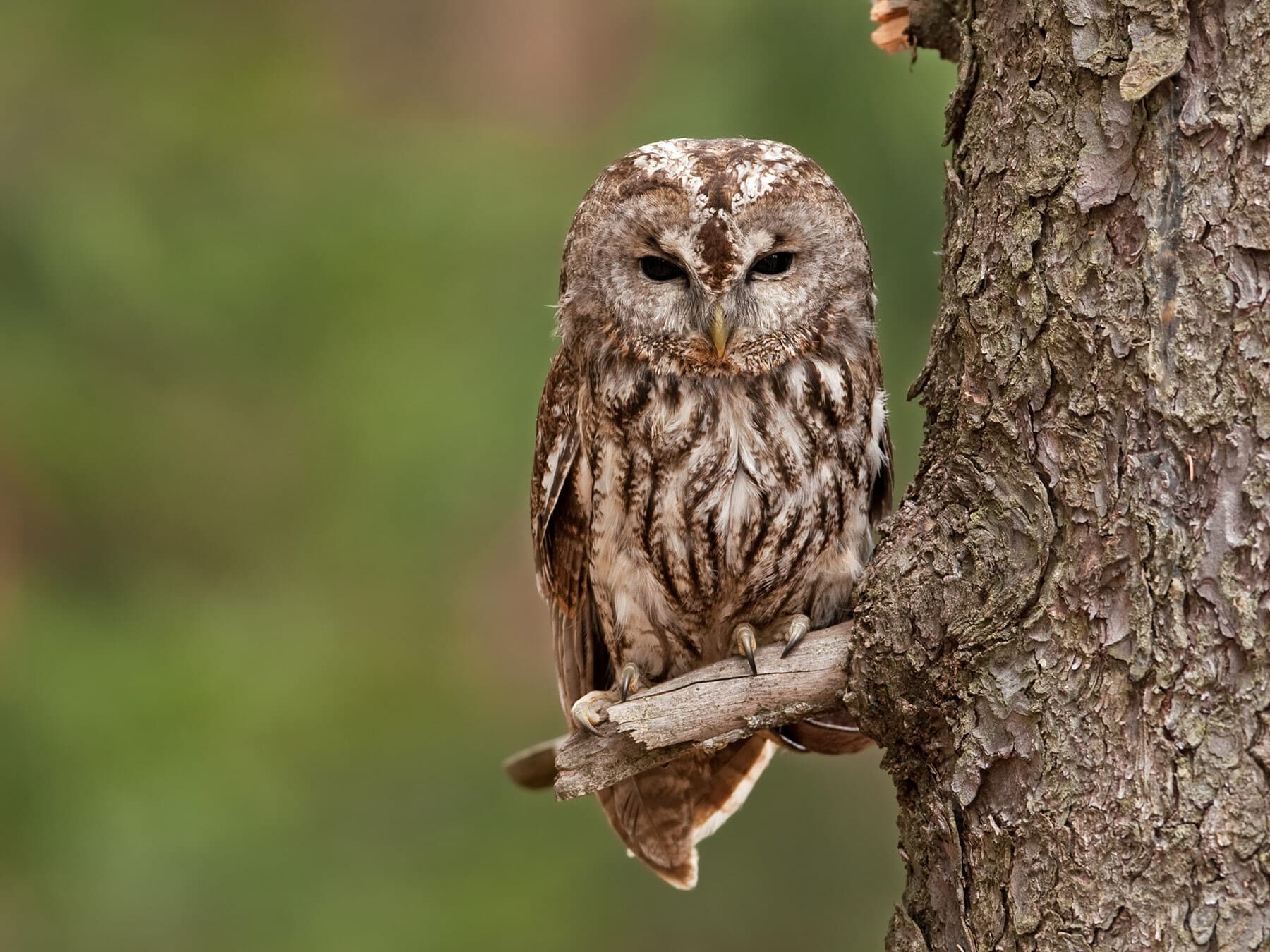
More photos
3 photos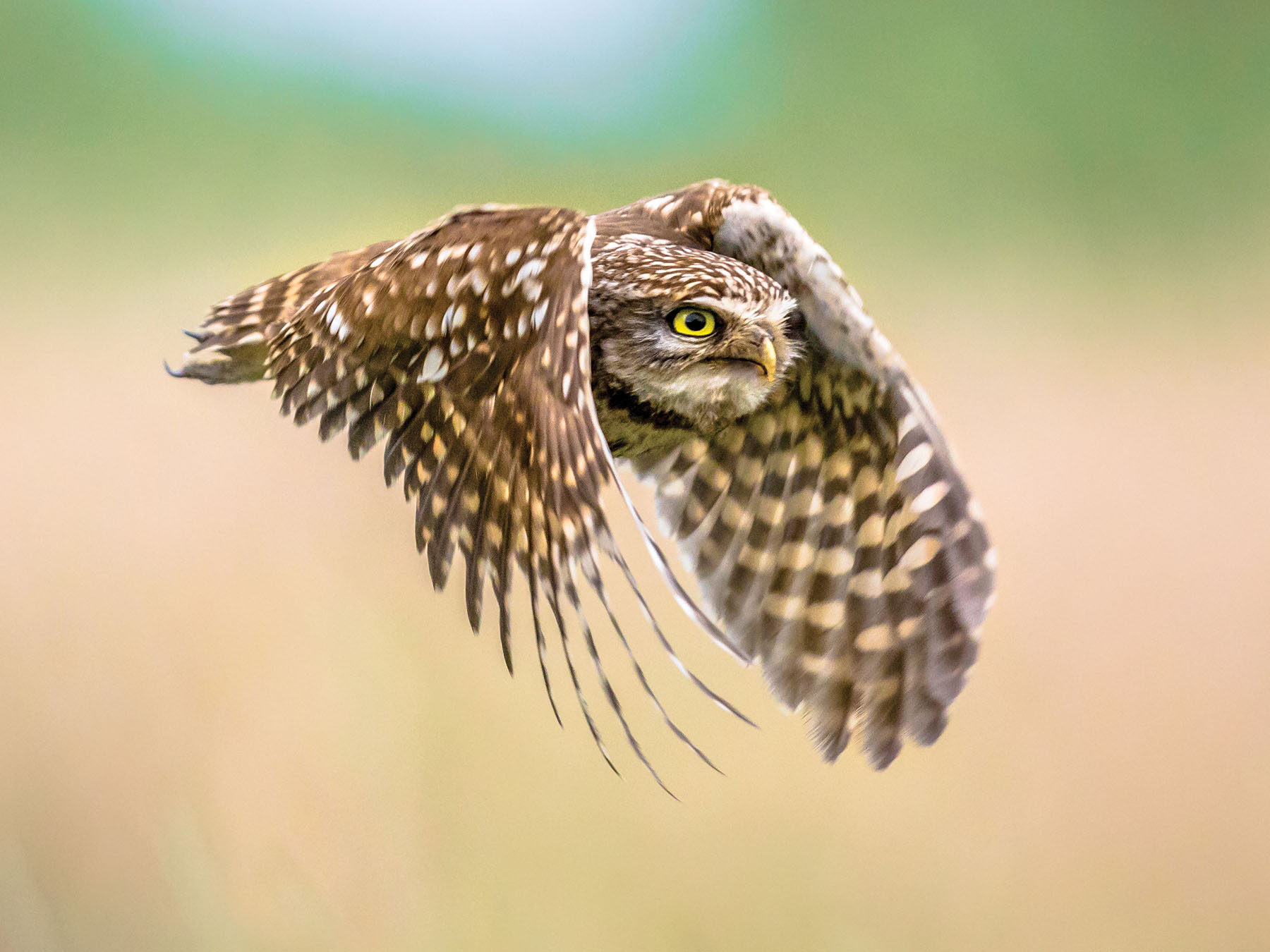
Little Owl guides
5 guidesQuick facts
- Length
- 21–23 cm
- Wingspan
- 54–58 cm
- Weight
- 140–200 g
- Lifespan
- 4–6 years · oldest recorded 13.8 years
- Family
- Owls
- Migration
- Resident
- Global status (IUCN)
- Least Concern
- World population
- 5,000,000 - 9,999,999 mature individuals
- Population trend
- Stable
- Also called
- Owl of Minerva, Owl of Athena
- Scientific name
- Athene noctua
Questions
2Can you have a Little Owl as a pet in the UK?
It is legal to keep Little Owls as pets in the United Kingdom. However, the bird must be legitimately captive-bred and may not be released into the wild. Keeping a captive owl requires careful planning, resources and commitment and is not recommended for anyone but the most dedicated and experienced bird enthusiasts.
What is a group of Little Owls called?
Known collective nouns for a group of Little Owls are as follows:
- a volery of little owls
General collective nouns for a group of Owls may also be used:
- a bazaar of owls
- a brood of owls
- a diss of owls
- an eyrie of owls
- a glaring of owls
- a hooting of owls
- a looming of owls
- a nest of owls
- a pair of owls
- a parliament of owls
- a sagaciousness of owls
- a silence of owls (when in flight)
- a stare of owls
- a stooping of owls
- a wisdom of owls
Sources
4- 1BirdLife International. 2019. Athene noctua (amended version of 2018 assessment). The IUCN Red List of Threatened Species 2019: e.T22689328A155470112. Source (opens in a new tab)
- 2BirdLife International. 2019. Athene noctua (amended version of 2018 assessment). The IUCN Red List of Threatened Species 2019: e.T22689328A155470112. Source (opens in a new tab)
- 3BirdLife International. 2019. Athene noctua (amended version of 2018 assessment). The IUCN Red List of Threatened Species 2019: e.T22689328A155470112. Source (opens in a new tab)
- 4BTO longevity records: maximum age from a ringed bird, 13 years, 10 months, 3 days (set in 2016), BirdFacts: Little Owl (2016) Source (opens in a new tab)

Checked by
Nathan Cope, founder and editor
Nathan founded Birdfact and leads its writers and contributors in the UK, the US and Canada. He has watched and studied birds for more than ten years, and checks every article and species guide before it’s published.