Published 6 Oct 2026
American Robin vs European Robin: Size, Song and Differences
By the Birdfact teamChecked by Nathan Cope
The American Robin and the European Robin share a name and an orange breast, but not much else. The American bird is a thrush nearly twice the length and about four times the weight, in a different family. Here is how to tell them apart, how their song, nests and eggs differ, and why both are called robins.
On this page12 sections
Two birds, one name
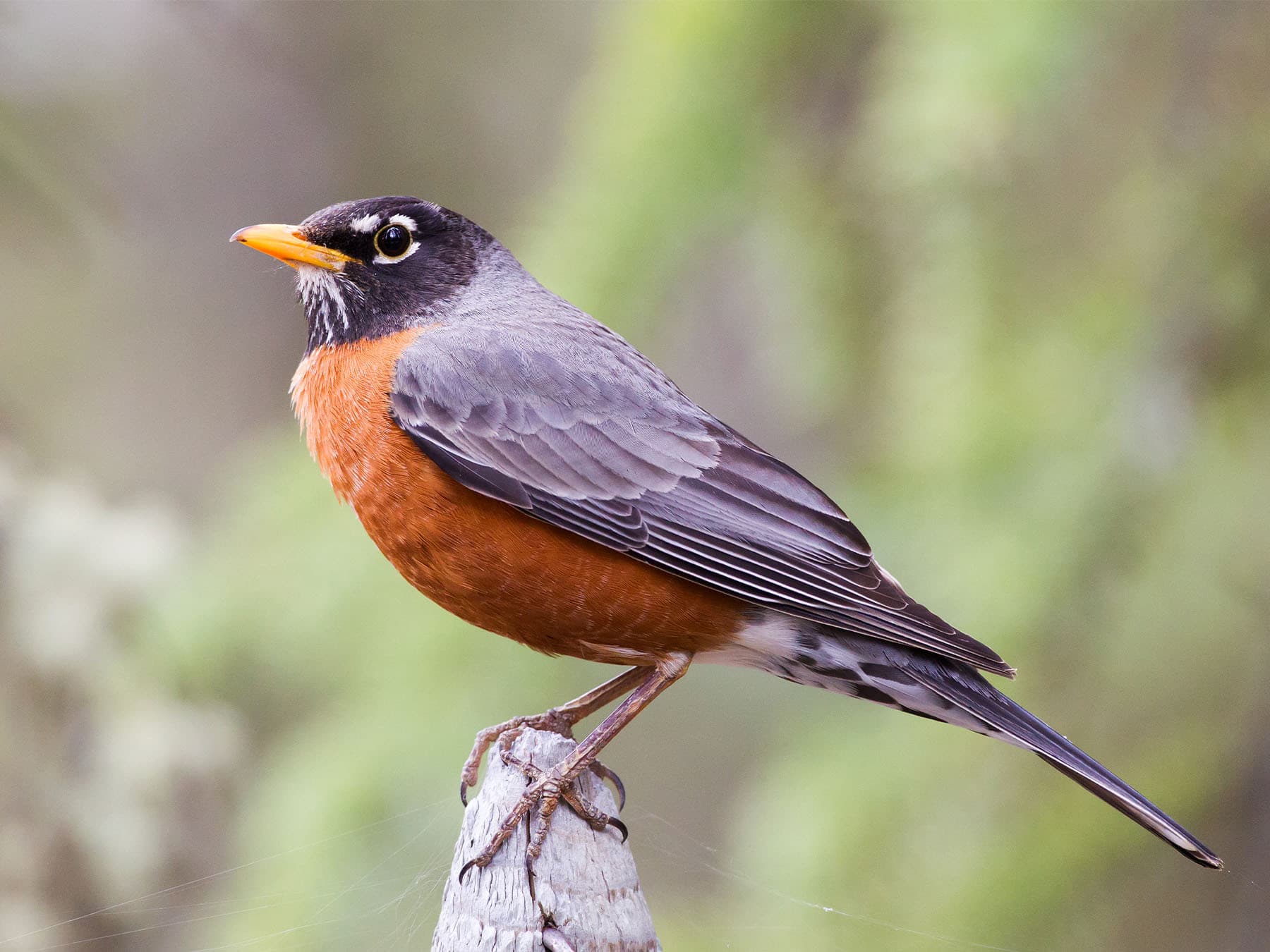
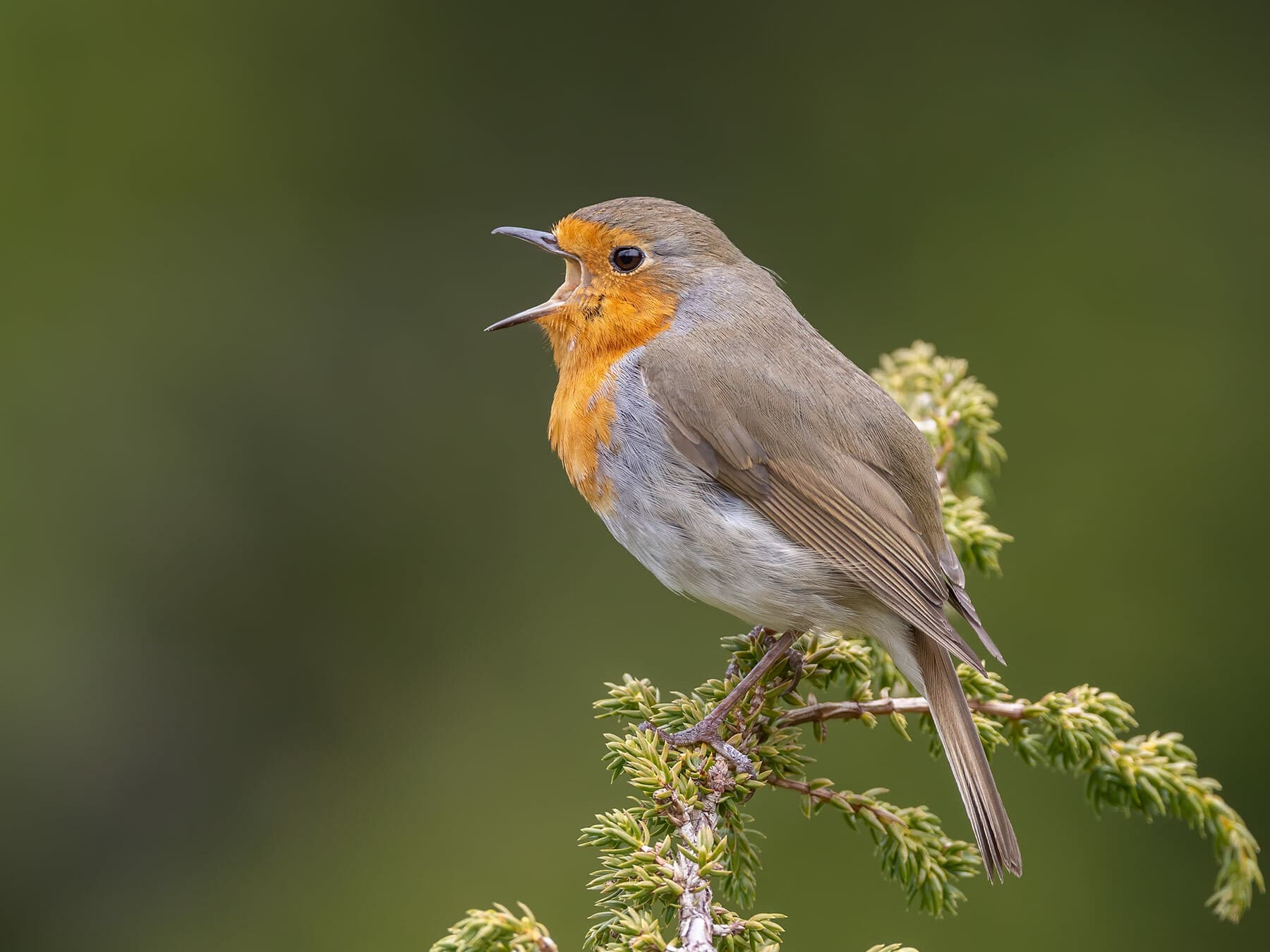
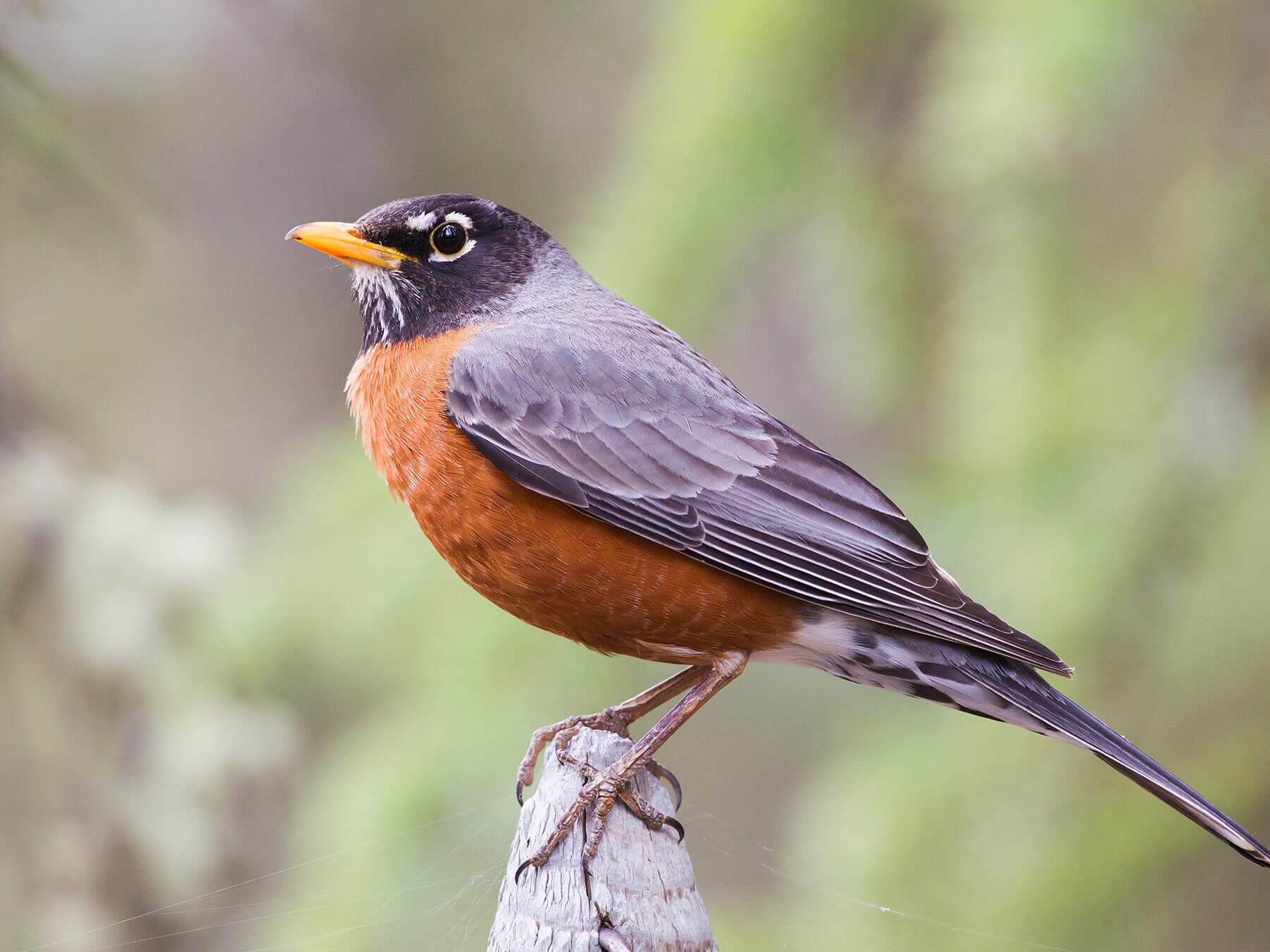
The American Robin and the European Robin share a name and an orange breast, and very little else. "Robin", a pet form of Robert, was first given to a bird by the English in the 1500s: the small, orange-breasted European Robin of their gardens. The American bird that shares the name is, in Kenn Kaufman's words, "twice the size and four times the bulk", and not even in the same family.1
| American Robin | European Robin | |
|---|---|---|
| Scientific name | Turdus migratorius | Erithacus rubecula |
| Family | Thrushes (Turdidae) | Old World flycatchers and chats (Muscicapidae) |
| Length | About 10 in (25 cm) | About 5.5 in (14 cm) |
| Weight | 2.7 to 3.0 oz (77 to 85 g) | About 0.7 oz (19 g) |
| Look | Dark head, white eye crescents, yellow bill, brick-red breast, gray back | Orange-red face and breast edged with blue-gray, brown back, thin dark bill |
| Male and female | Female usually paler | Look alike |
| Young | Black-spotted breast | Brown and speckled, no red breast |
| Eggs | Three or four, sky blue and unmarked | Usually four or five in Britain, whitish with fine reddish spots |
| Where | North America, south to the highlands of Mexico | Europe, North Africa and western Asia |
| Population | About 370 million adults | 130 to 201 million adults |
| Oldest known | 13 years 11 months | 19 years 4 months (Europe) |
Size and shape
Side by side there would be no contest. An American Robin is about 10 in (25 cm) long and weighs 77 to 85 g,2 while a European Robin is about 5.5 in (14 cm) and averages 19 g.3
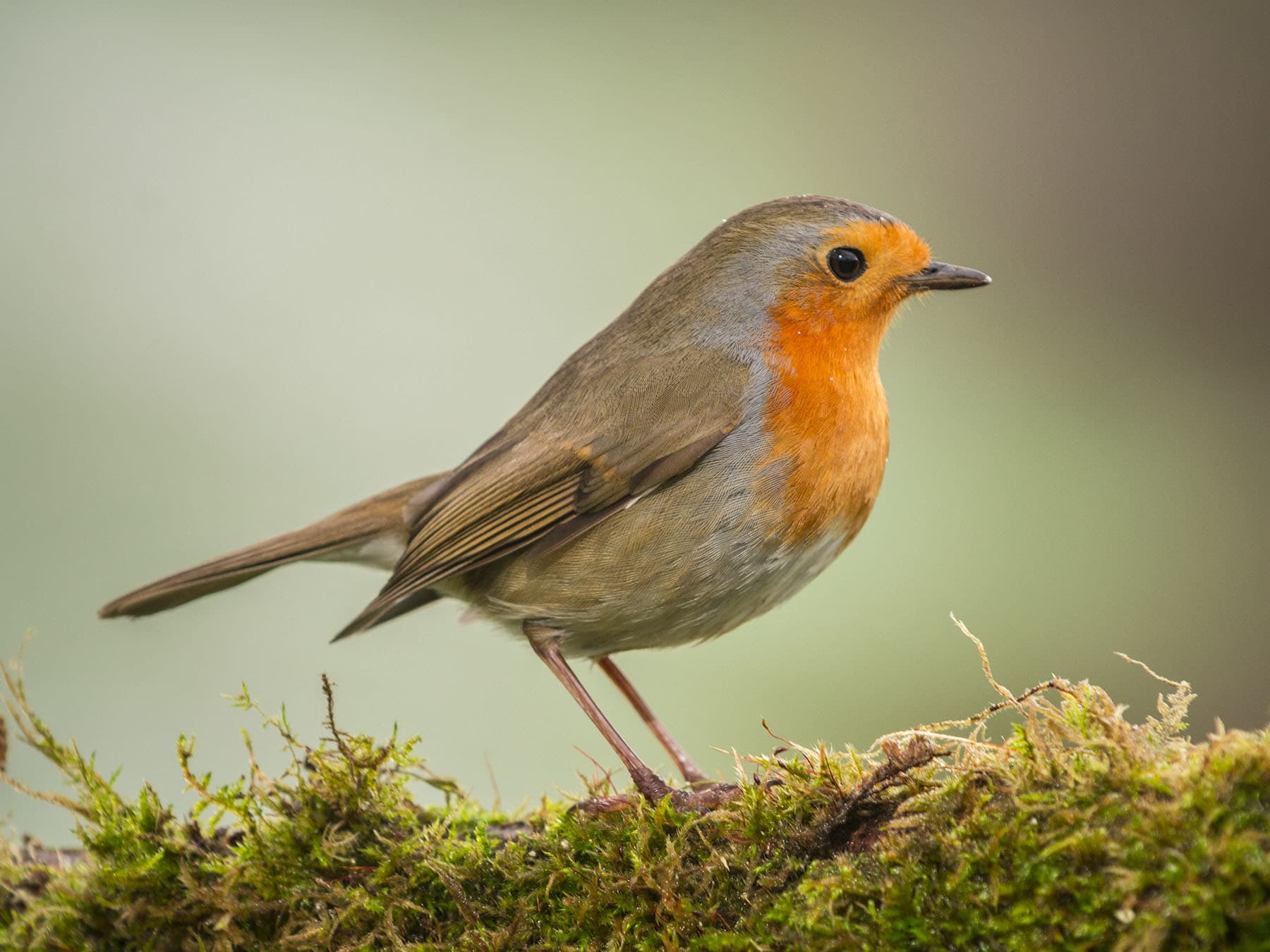
The shapes differ too. The American Robin is a long-legged, long-tailed thrush that stands tall on a lawn. The European Robin is small and plump.
How to tell them apart
Look at the head. On an American Robin the head is blackish to dark gray, with white crescents above and below the eye and a yellow bill; the red stops at the throat, which is white with black streaks. On a European Robin the orange-red covers the face as well as the breast, edged with blue-gray, and the bill is thin and dark.
Male and female European Robins look alike. Female American Robins are usually paler than males, with a grayer head.
Young robins
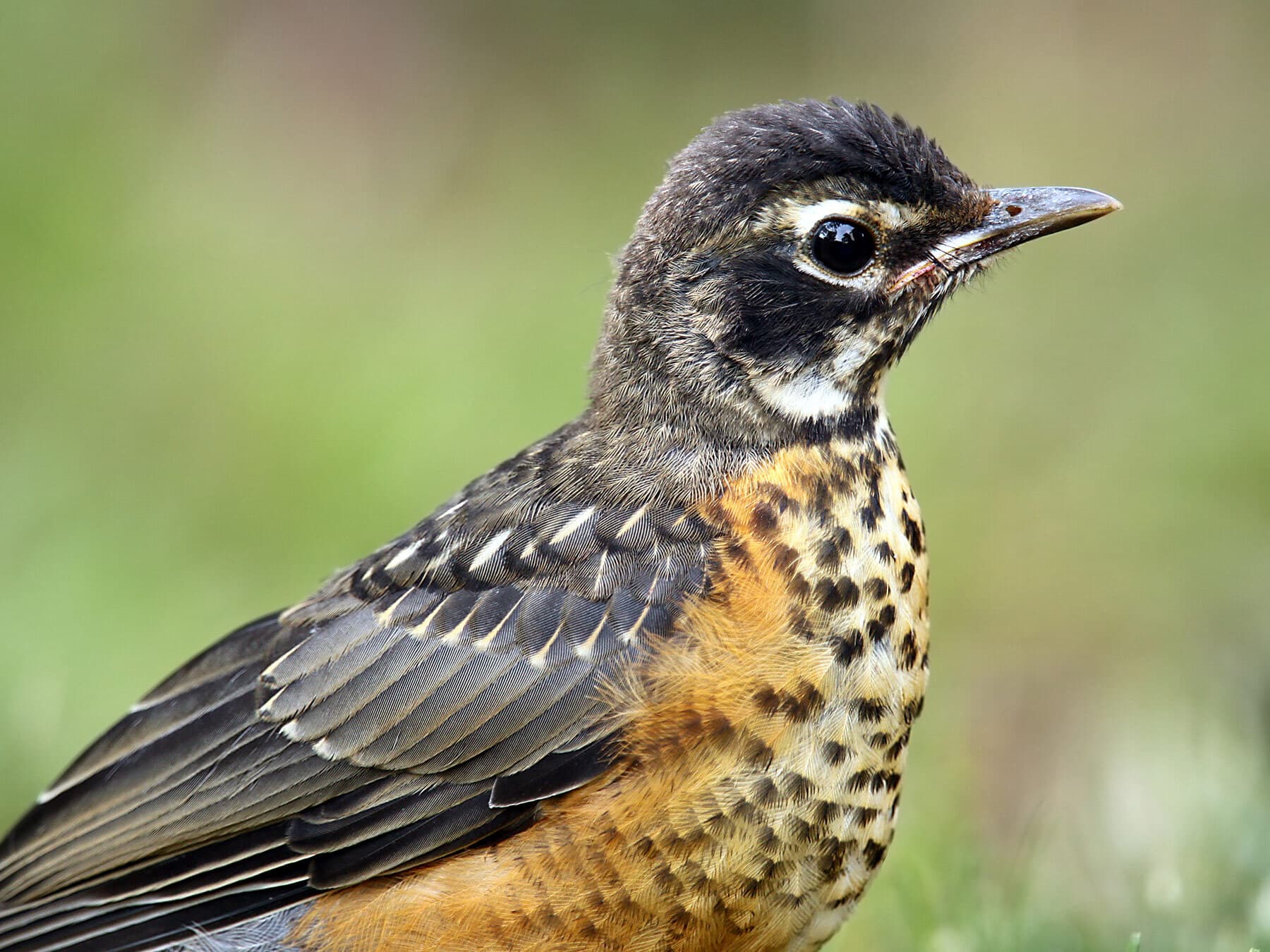
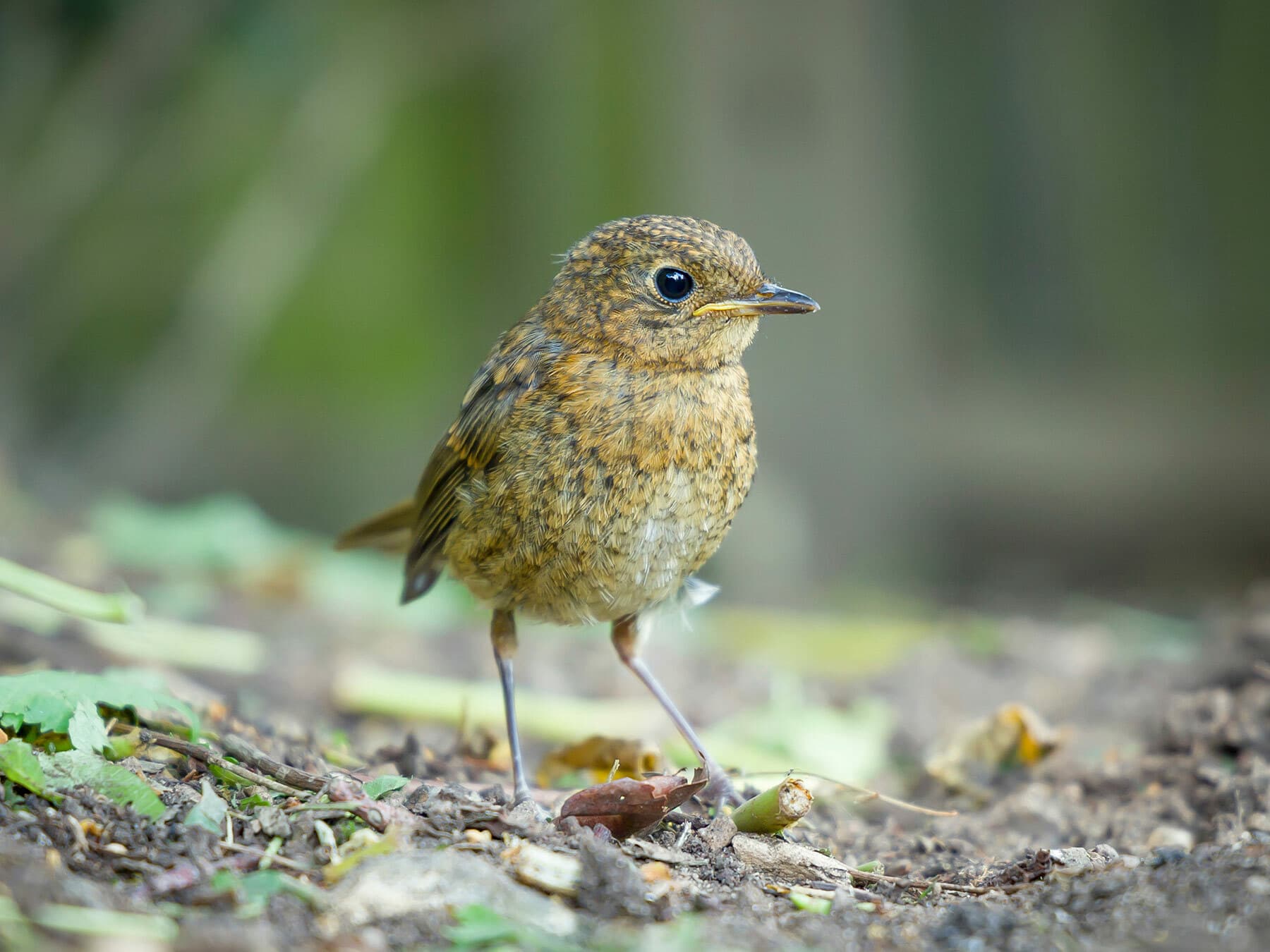
Neither bird is born with a red breast. A young American Robin has a pale orange breast covered in black spots; a young European Robin is brown and speckled with golden brown, with no red at all, until its first molt. See baby American Robins and baby European Robins.
Are they related?
Only distantly. The American Robin is a thrush, family Turdidae; the European Robin belongs to the Old World flycatchers and chats, family Muscicapidae.45 The American Robin's closest relative is the Rufous-collared Robin of the mountains of southern Mexico and Central America.
In Britain, its nearest relatives are the Blackbird and Song Thrush, which share its genus, Turdus. The BTO describes the American Robin as about the size of a Blackbird.6
Song
The American Robin sings a loud, caroling string of whistles, cheerily, cheer up, cheer up, cheerily, mostly from late winter to midsummer, and is one of the first birds singing at dawn. The European Robin sings a run of high, whistled phrases of two to four seconds with abrupt pauses, in almost every month; in autumn and winter females sing too.
Nests and eggs
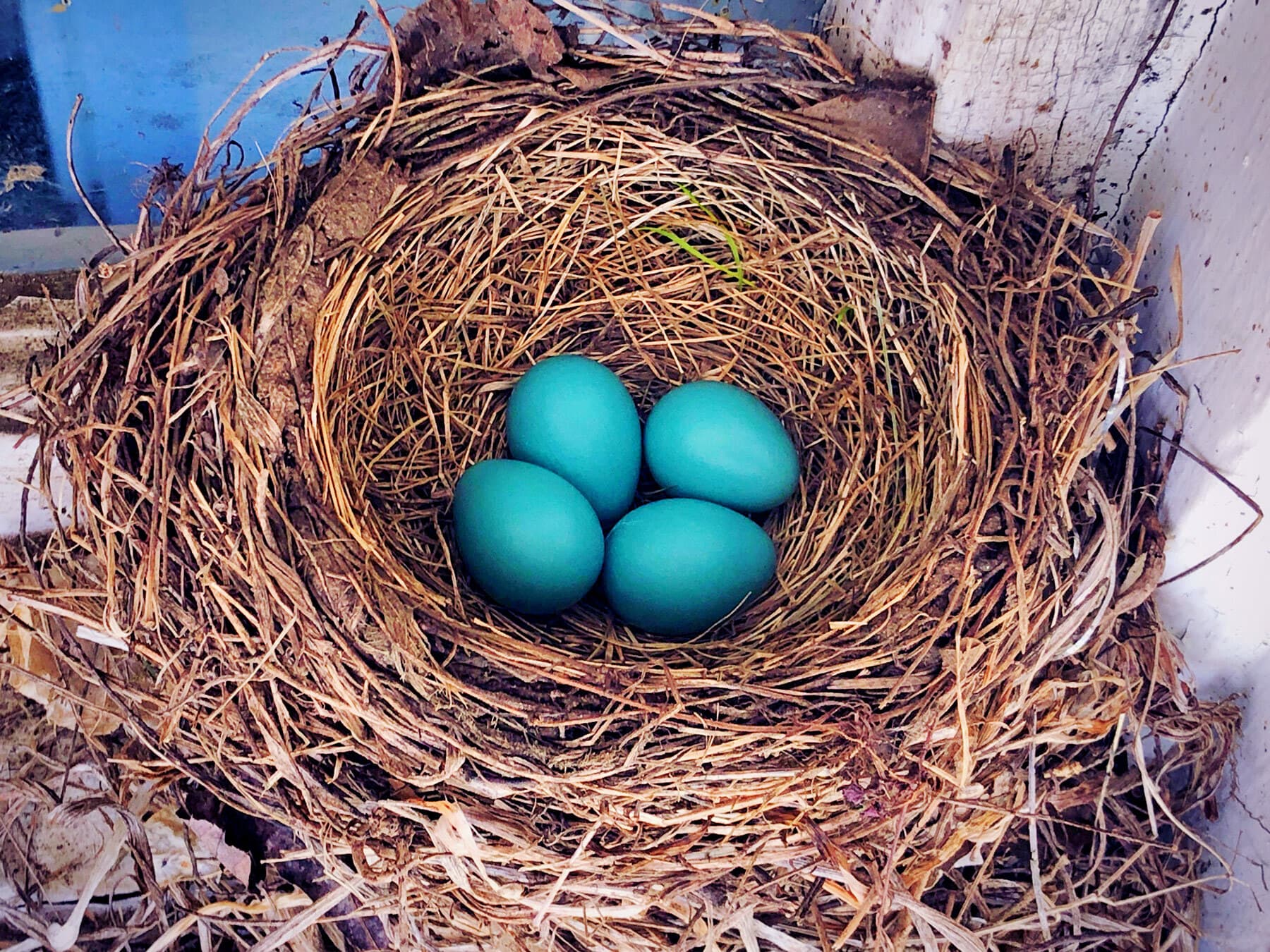
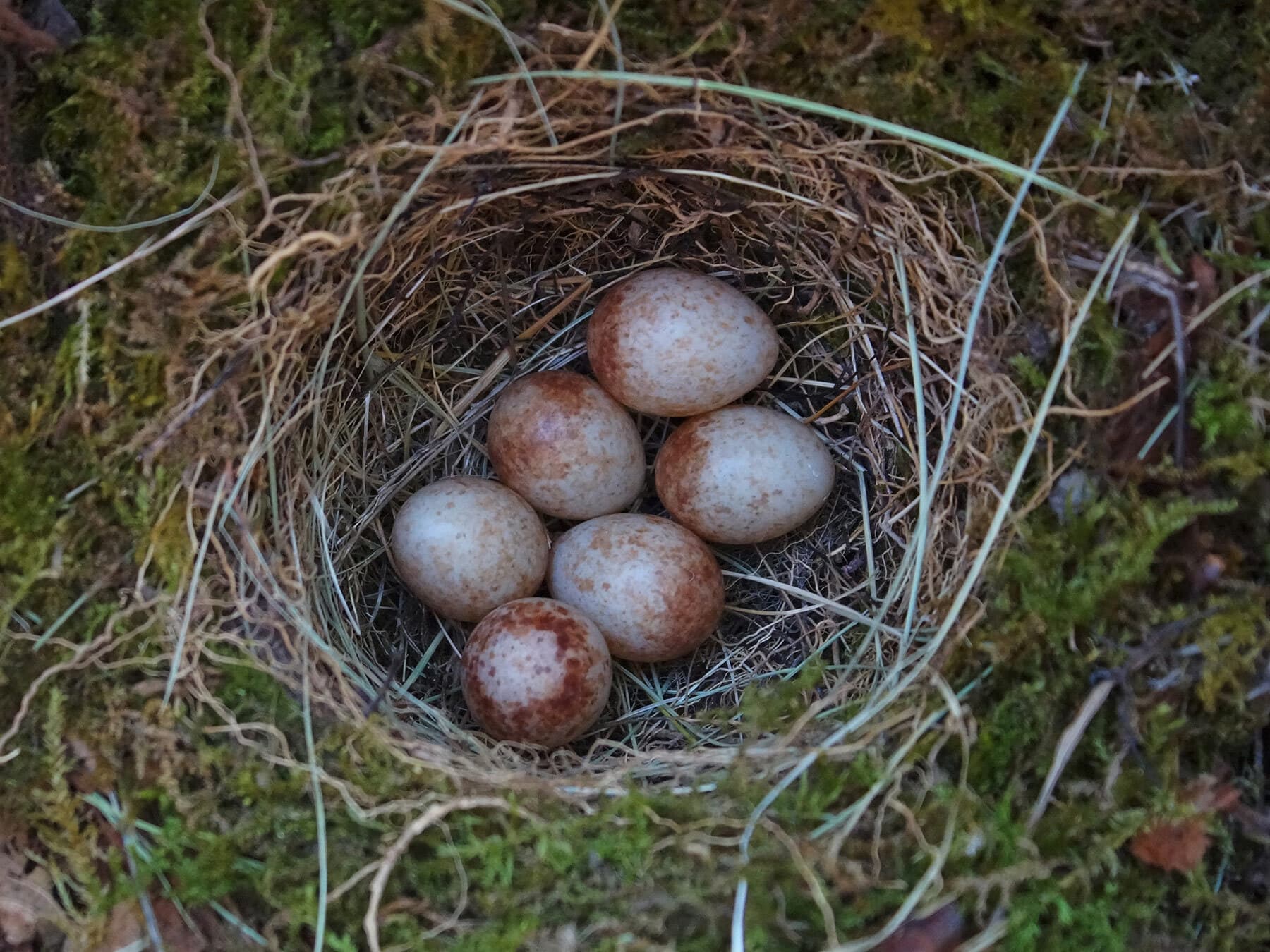
American Robins build a mud-walled cup on a branch or a ledge and lay three or four sky-blue eggs. European Robins hide their nest low in a recess, among tree roots, in ivy, a hedge or a bank, and in Britain lay usually four or five whitish eggs with fine reddish spots, incubated for 14 to 16 days. See American Robin nesting and European Robin nesting.
Where they live
American Robins live across North America, from Alaska and Canada to the highlands of Mexico; northern birds move south in winter, though many stay put. European Robins live in Europe, which holds about 90% of their range, and in North Africa and western Asia.5 Most British and Irish robins stay all year, while birds from the north and east migrate.
Can you see an American Robin in Britain?
Very rarely. American Robins sometimes cross the Atlantic, and Britain and Ireland have occasional records, mostly between October and February.6
Which lives longer?
Both are doing well
Both are of Least Concern. There are about 370 million American Robins and an estimated 130 to 201 million European Robins, a population that is increasing.5
Sources
- Kaufman, K. (2019). Ask Kenn Kaufman: Are American Robins Really Robins?. Audubon Magazine. Accessed 6 October 2026. Source
- Cornell Lab of Ornithology. American Robin: Overview and Identification. All About Birds. Accessed 6 October 2026. Source
- BTO. Robin (Erithacus rubecula). BTO BirdFacts. Accessed 25 September 2026. Source
- BirdLife International (2021). Species factsheet: American Robin Turdus migratorius. BirdLife DataZone. Accessed 6 October 2026. Source
- BirdLife International (2018). Species factsheet: European Robin Erithacus rubecula. BirdLife DataZone. Accessed 6 October 2026. Source
- BTO. American Robin (Turdus migratorius). BTO BirdFacts. Accessed 6 October 2026. Source
- EURING (2023). EURING list of longevity records for European birds (1 September 2023). Accessed 6 October 2026. Source
- Vanderhoff, E. N., Pyle, P., Patten, M. A., Sallabanks, R., James, F. C. (2020). American Robin (Turdus migratorius), version 1.0. Birds of the World (P. G. Rodewald, editor). Cornell Lab of Ornithology. doi:10.2173/bow.amerob.01
- Kirwan, G. M., Collar, N., Goodman, D. D. (2025). European Robin (Erithacus rubecula), version 1.1. Birds of the World (G. M. Kirwan and B. K. Keeney, editors). Cornell Lab of Ornithology. doi:10.2173/bow.eurrob1.01.1
- RSPB. Robin. RSPB Bird A-Z. Accessed 25 September 2026. Source
- Cornell Lab of Ornithology. American Robin: Life History. All About Birds. Accessed 6 October 2026. Source