Facts · Updated 8 Oct 2026
Robin Nesting in UK Gardens: When, Where & How to Help
By the Birdfact teamChecked by Nathan Cope
Robins nest early, low and in surprising places. The first eggs are laid around mid-April on average, as early as mid-March, and most pairs raise two broods a year. Here is when and where they nest, how long the young stay in the nest, and how to help with an open-fronted nest box.
On this page8 sections
When do Robins nest?
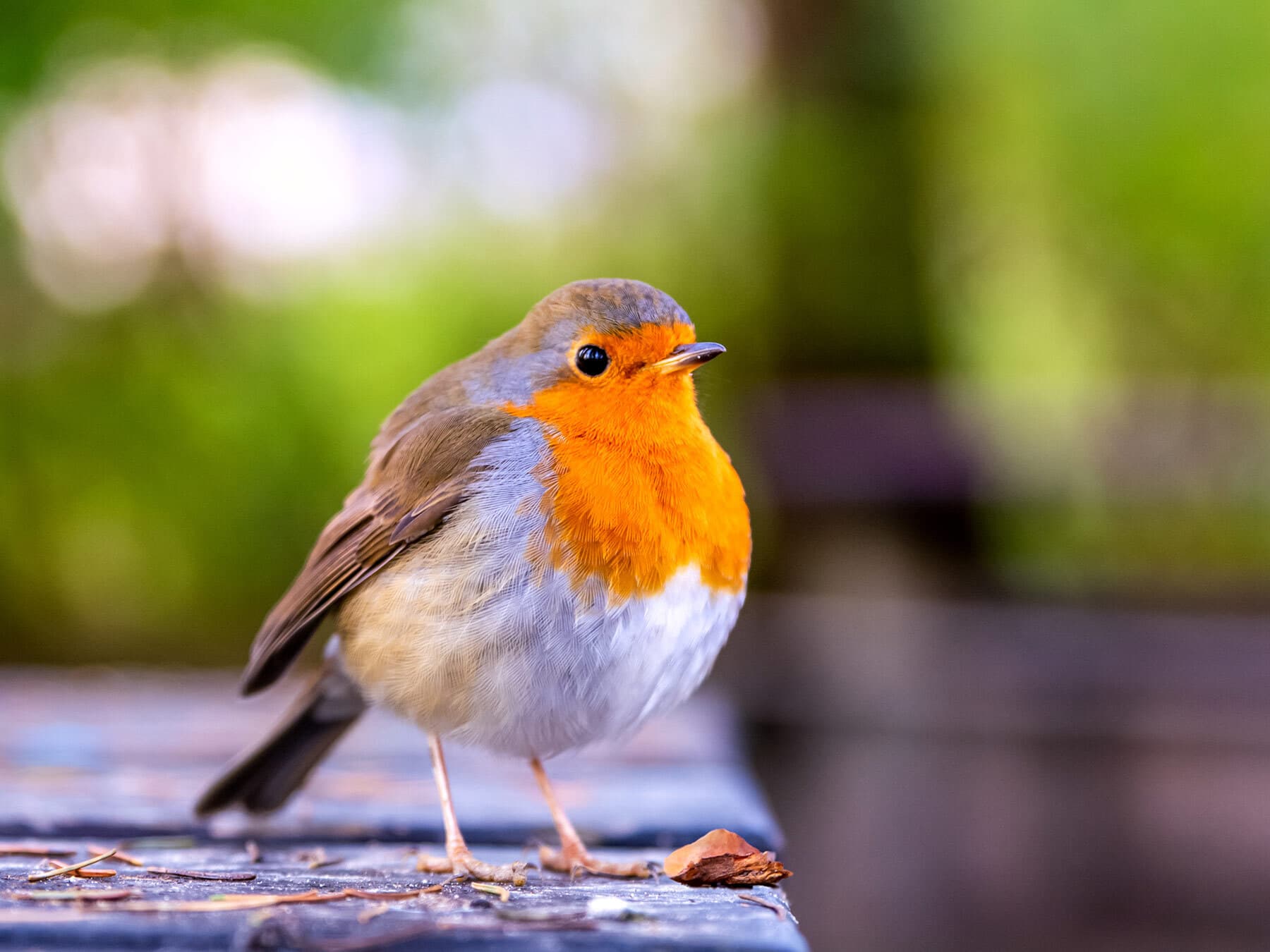
Robins start early. Across Britain and Ireland, the average first clutch is laid on 18 April, but laying can start as early as mid-March and first clutches run to early June. Most pairs raise two broods a year, some three, so nests can be active from March well into summer.1
Where do Robins nest?
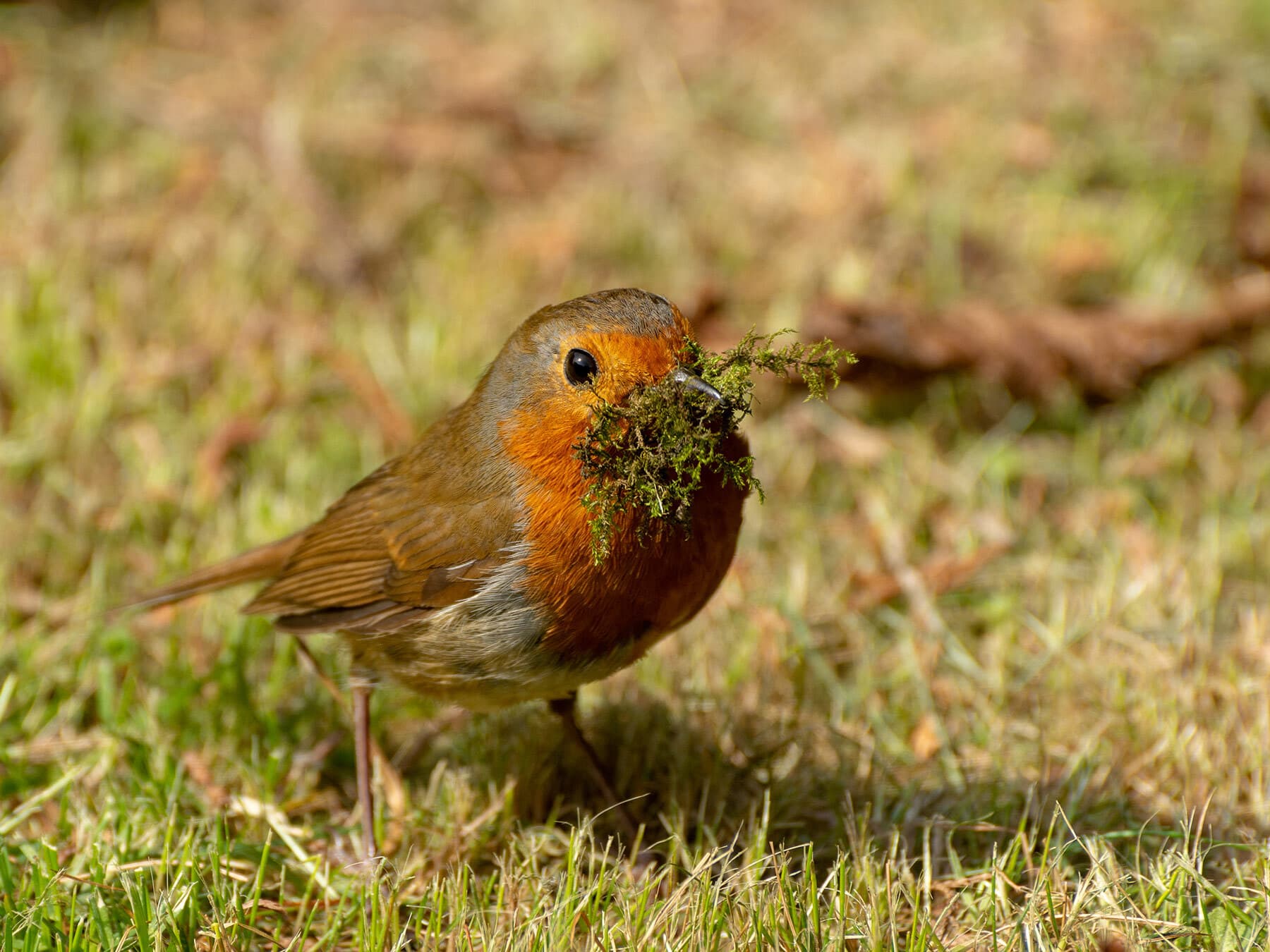
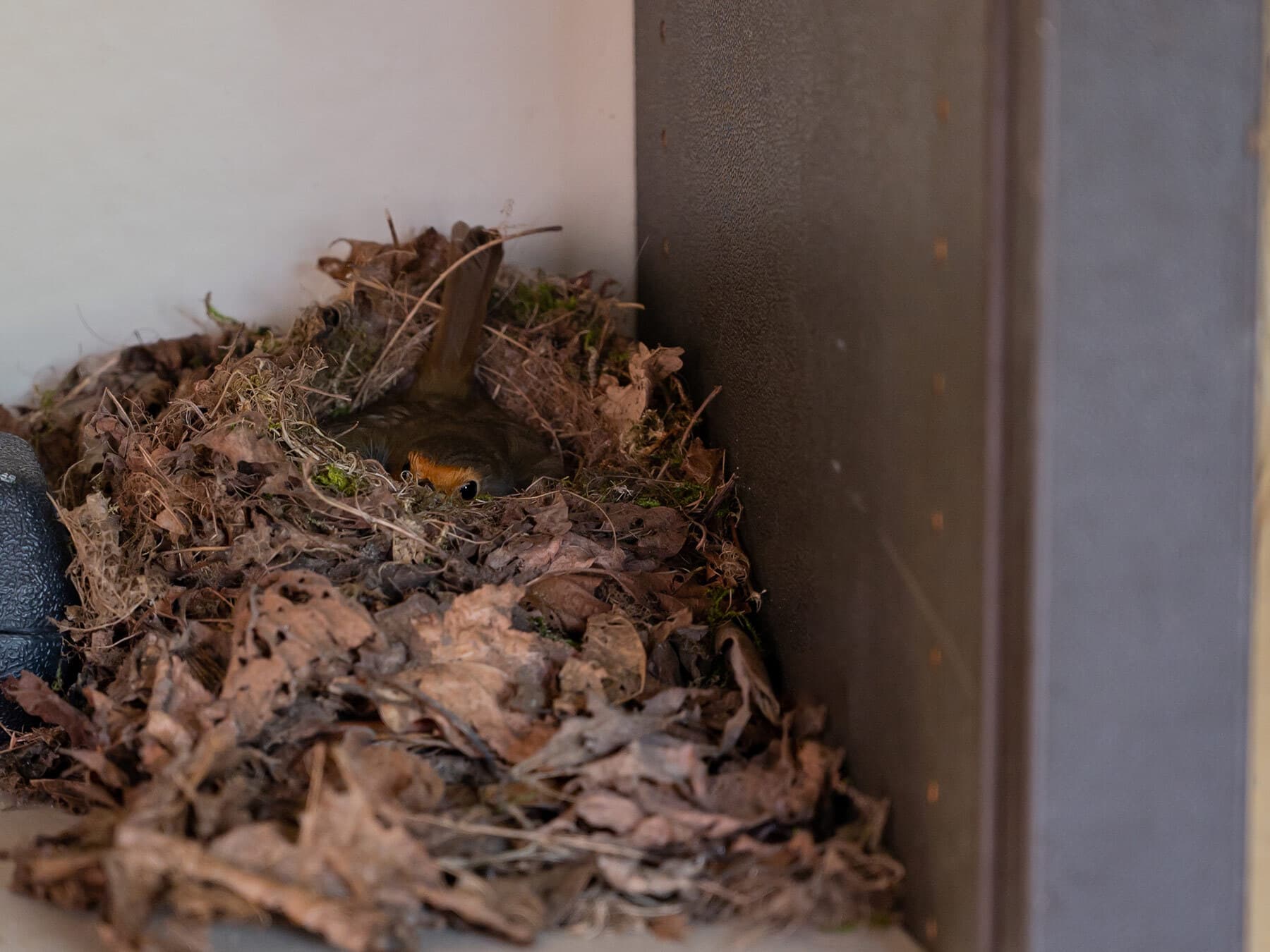
Low down, and hidden. Robins like enclosed spaces on or near the ground: among tree roots, under logs or in thick, tangled plants.2 They are famous for odd sites too: flower pots in sheds, post boxes and old boots,2 and the RSPB lists car bonnets and even a plane engine.
Ivy on walls and tree trunks is a favourite. Wherever it is, the nest is tucked into a hollow or recess, usually low and rarely more than 5 m up: a cup of moss, grass and leaves, lined with fine grass and hair, on a thick pad of dead leaves.3
Gardens matter: in the BTO's Gardenwatch survey Robins nested in 29% of the gardens taking part.2
Eggs and incubation
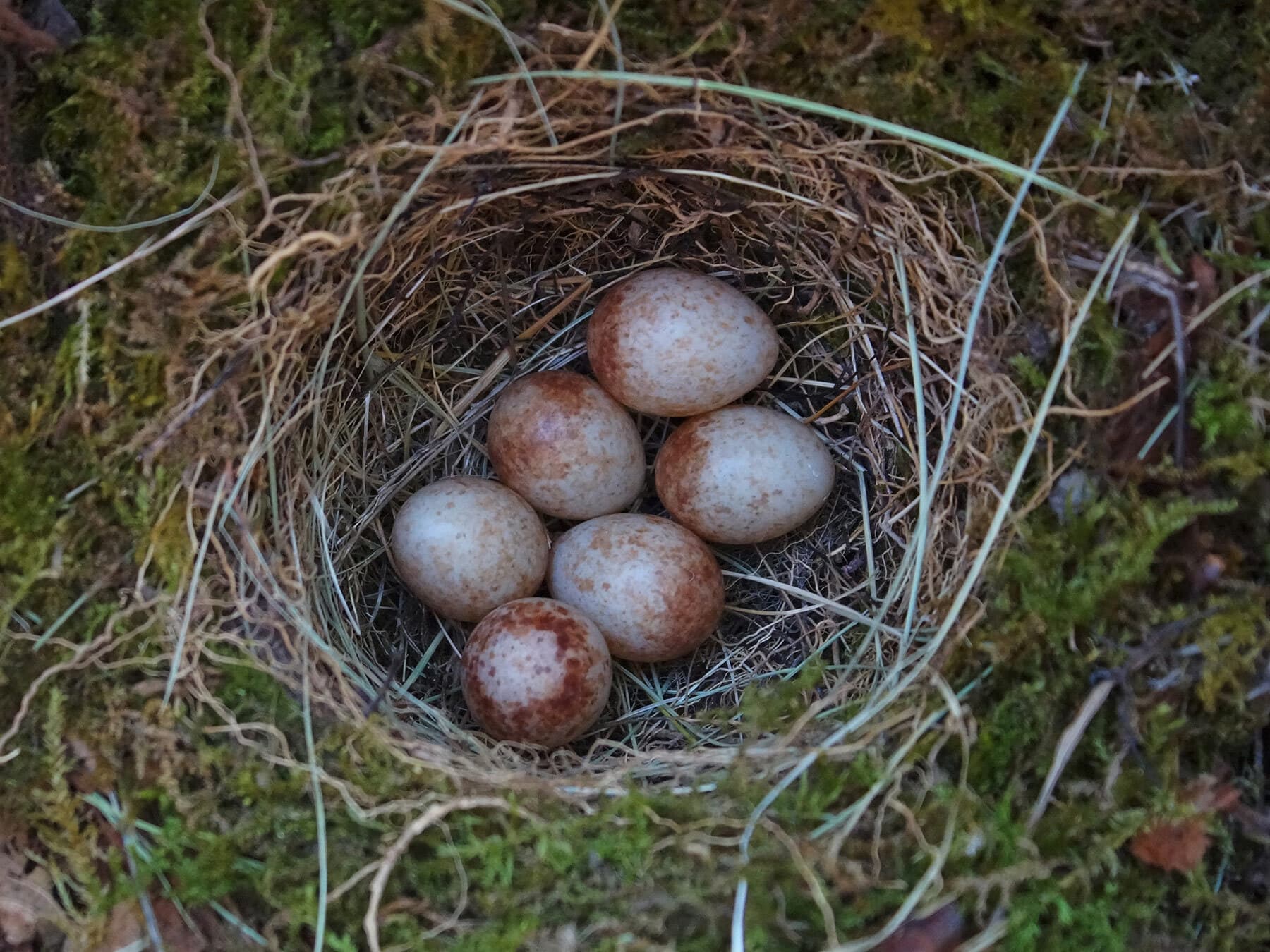
A clutch is usually four or five eggs, sometimes as few as two or as many as nine, each about 20 × 15 mm. The female incubates them for 14 to 16 days.1 The eggs are whitish, sometimes with a bluish tint, and finely spotted with reddish brown.
Leaving the nest
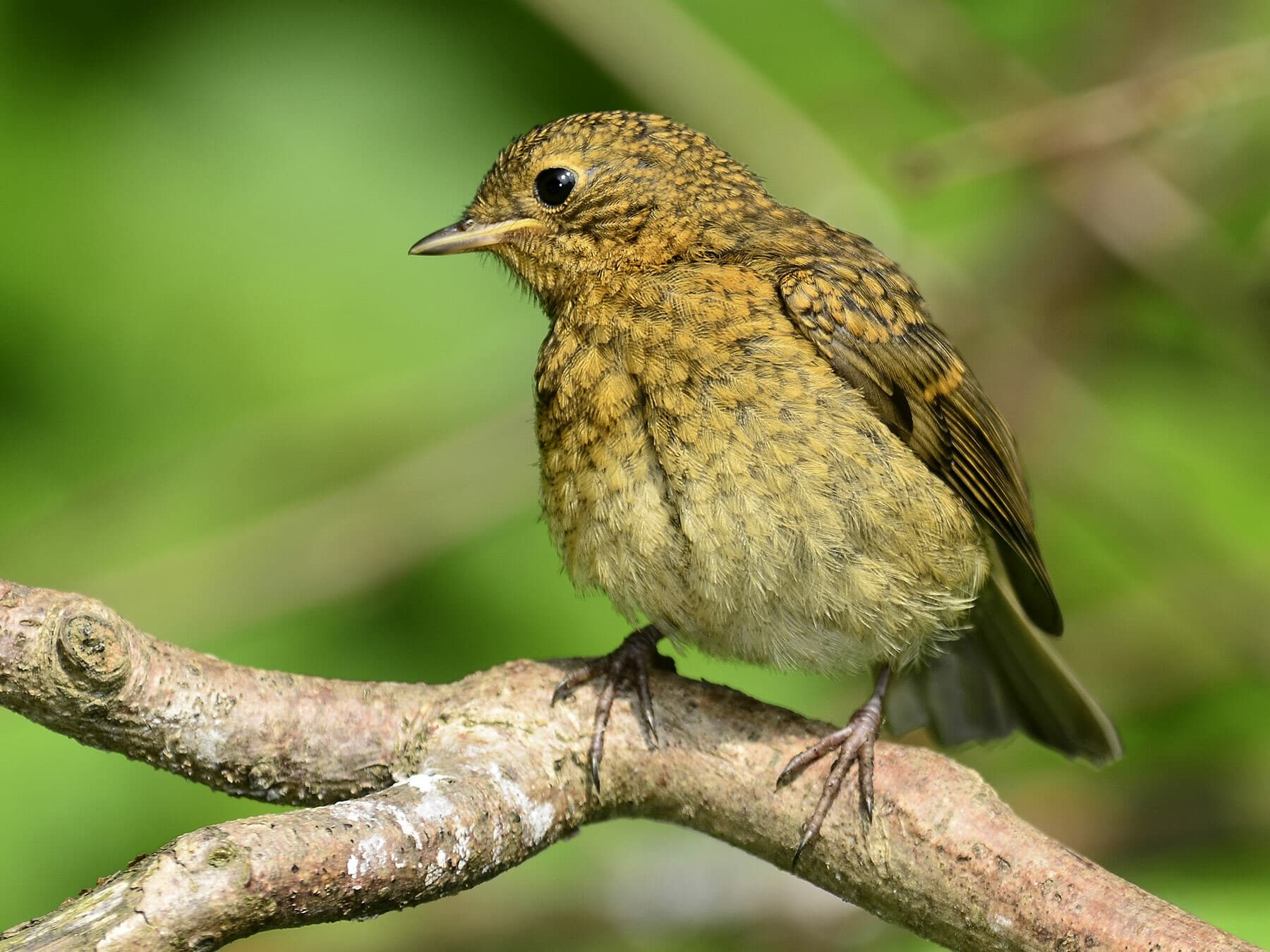
The chicks leave the nest 12.5 to 16 days after hatching, about two weeks.1 Fledglings then spend a few days to a week on or near the ground while their flight feathers finish growing, still fed by their parents. The parents keep feeding them for two to three weeks after they leave the nest (16 to 24 days).3 What they look like at each stage is in baby Robins.
Nest boxes
Robins will not use a box with a round entrance hole; they need an open-fronted box. The BTO recommends a front panel about 100 mm high, the box fixed below about 2 m (6 to 7 ft) within a climber or overhanging plants, facing north-east and out of the prevailing wind and rain, and never on a south-facing wall that turns into a sun trap.4
How to help nesting Robins
Leave nests alone. In England and Wales it is an offence under the Wildlife and Countryside Act 1981 intentionally to take, damage or destroy the nest of any wild bird while it is in use or being built; in Scotland the Act also covers doing so recklessly, and interfering with a nest, and in Northern Ireland the Wildlife (Northern Ireland) Order 1985 covers doing so intentionally or recklessly. So check hedges and climbers before cutting them in spring and summer.5
Food helps busy parents: a few mealworms on a table or the ground. The RSPB advises small amounts of mealworms, fat balls or suet in summer, and no seed or peanuts between May and October.6
The American Robin
This guide covers the European Robin of Britain, Ireland and Europe. For the North American bird, see American Robin nesting, and for how the two birds differ, American Robin vs European Robin. For the Robin itself, its song, food and lifespan, see the Robin guide.
Sources
- BTO. Robin (Erithacus rubecula). BTO BirdFacts. Accessed 25 September 2026. Source
- BTO. Gardenwatch: Robin. British Trust for Ornithology. Accessed 6 October 2026. Source
- Kirwan, G. M., Collar, N., Goodman, D. D. (2025). European Robin (Erithacus rubecula), version 1.1. Birds of the World (G. M. Kirwan and B. K. Keeney, editors). Cornell Lab of Ornithology. doi:10.2173/bow.eurrob1.01.1
- BTO. Robin nest box plan. British Trust for Ornithology. Accessed 6 October 2026. Source
- RSPB. What does the Wildlife and Countryside Act 1981 do?. RSPB. Accessed 6 October 2026. Source
- RSPB (2026). How to help garden birds. RSPB news. Accessed 6 October 2026. Source
- RSPB. Robin. RSPB Bird A-Z. Accessed 25 September 2026. Source
- RSPB. Injured and baby birds. RSPB advice. Accessed 6 October 2026. Source
- UK Government (1985). The Wildlife (Northern Ireland) Order 1985, article 4. Accessed 7 October 2026. Source