Facts · Updated 8 Oct 2026
Baby American Robins: What They Look Like at Every Age
By the Birdfact teamChecked by Nathan Cope
Baby American Robins hatch naked and blind, open their eyes at about five days, and leave the nest at about 13 days old, spotted and short-tailed. Here is each stage from egg to juvenile, what the chicks eat, how many survive, and what to do if you find one.
On this page12 sections
Which robin this guide covers
This guide is about the American Robin of North America. In Britain and Europe, "robin" means the European Robin, a much smaller bird whose chicks look different: see baby European Robins.
What does a baby robin look like?
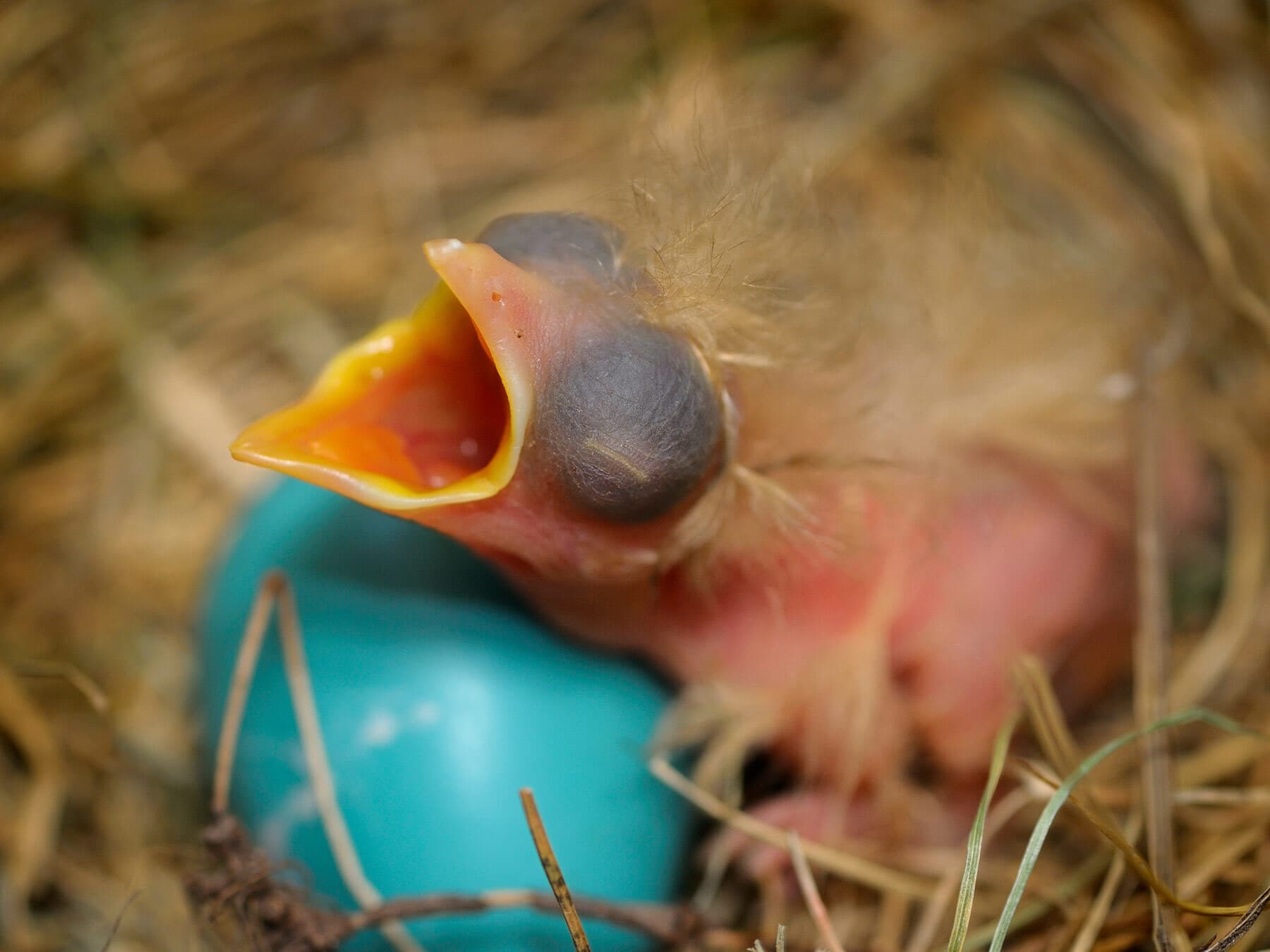
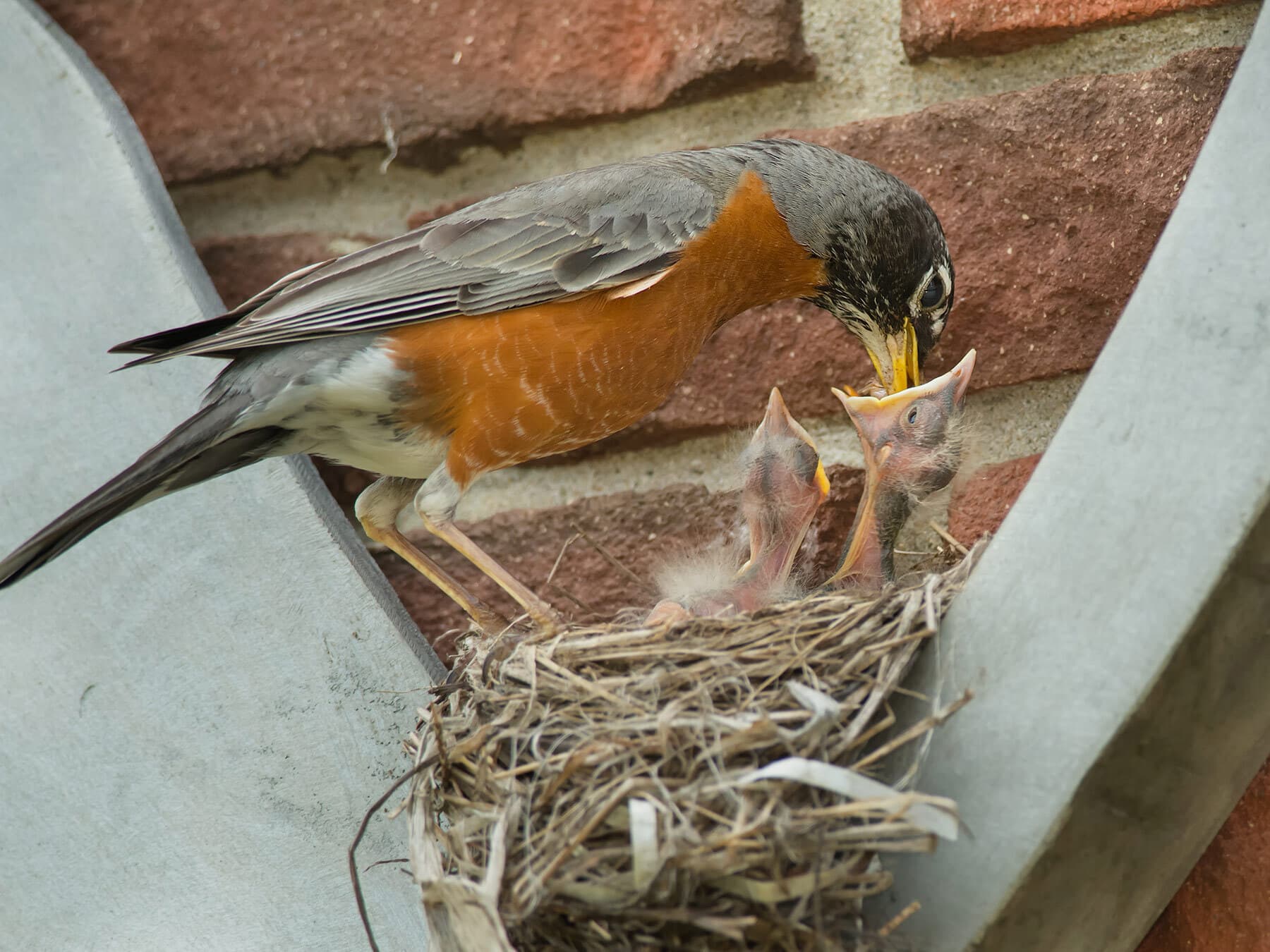
It depends on the age. A robin hatches helpless and mostly naked, with only sparse whitish down and its eyes closed. Its skin is yellowish and see-through, and its eyes open on about day 5.
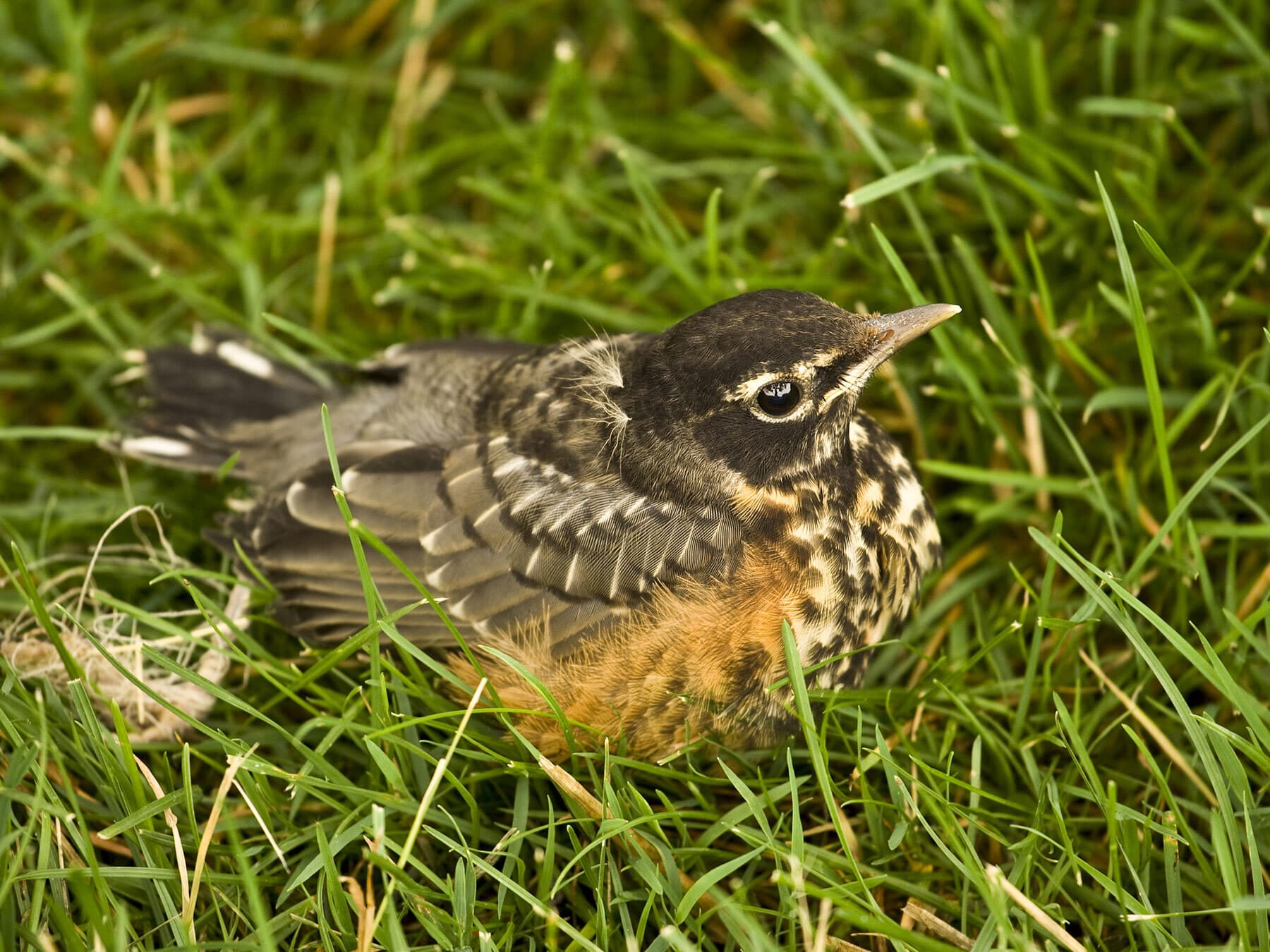
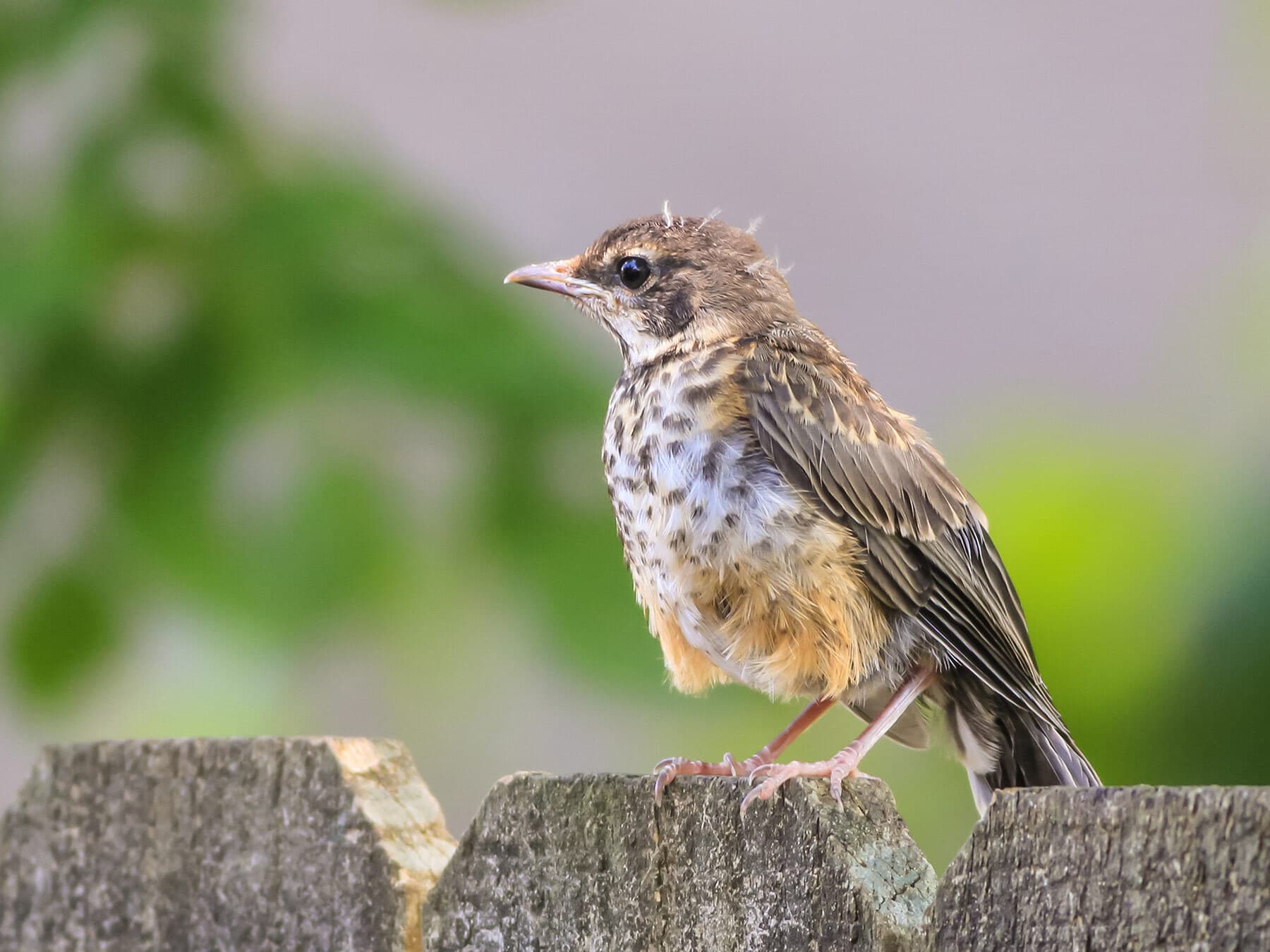
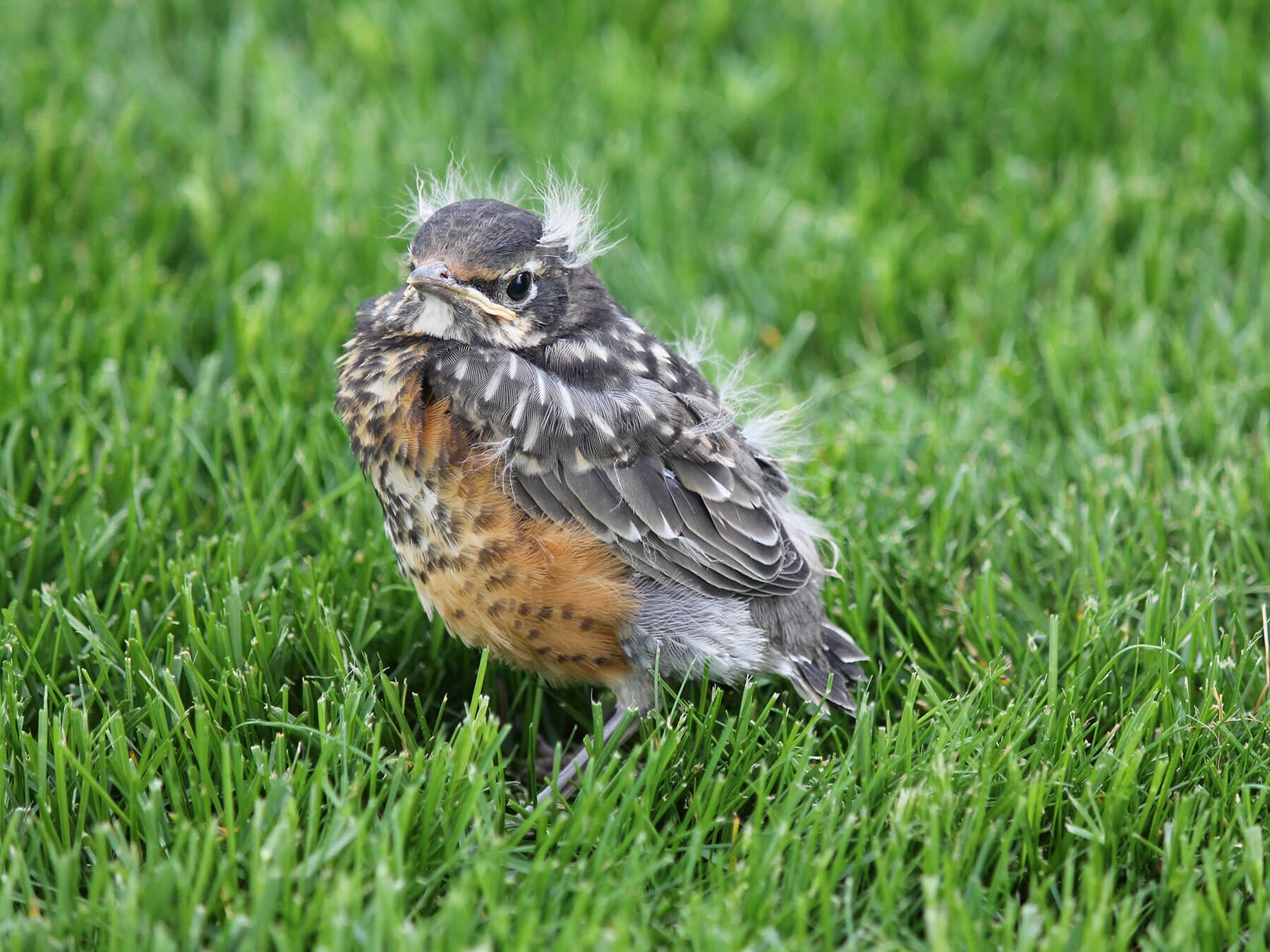
By the time it leaves the nest, about two weeks later, it is fully feathered but still looks unlike its parents: a pale orange to buff breast covered in black spots, a back speckled with pale spots, a paler head and a short tail.
| Stage | Age | What you will see |
|---|---|---|
| Eggs | 12 to 14 days of incubation | Three or four sky-blue eggs, sometimes five, incubated by the female |
| Hatchling | Days 0 to 4 | Mostly naked, with sparse whitish down and closed eyes; fed regurgitated food |
| Nestling | Day 5 to about day 13 | Eyes open on about day 5; feathers grow in; parents bring 6 to 7 feeds an hour |
| Fledgling | Leaves the nest at about 13 days (9 to 16) | Spotted breast, short tail, cannot yet fly level; hides in cover for 10 to 15 days, fed by its parents |
| Juvenile | Independent at about 4 weeks old | Spotted until its first molt, mainly July to October; joins adult flocks from September |
Nestlings, fledglings and juveniles
A chick still in the nest is a nestling. Once it has left the nest it is a fledgling, and when it can look after itself it is a juvenile. "Chick" covers all of these.
What do baby robins eat?
Soft food carried by both parents: beetle grubs, caterpillars and other insects, and pieces of earthworm. For the first four days the parents feed regurgitated food, and up to 30% of what they bring can be fruit.
The work is relentless. Each chick gets 35 to 40 feeds a day, one chick per visit, and the female broods the young for the first few days.1
Growth
They grow fast: a robin weighs about 5.5 g (0.2 oz) when it hatches and leaves the nest about 13 days later, fully feathered.
When do baby robins leave the nest?
At about 13 days old, though anywhere from 9 to 16 days, and the whole brood usually goes within a day.1 At first the young cannot fly level. They spend the next 10 to 15 days hiding in cover, usually within 150 m (about 500 ft) of the nest, while their parents keep feeding them.
Do fledglings go back to the nest? Once the whole brood is out, the parents follow the young and feed them where they hide, and the male may lead them to a communal roost at night while the female starts the next nest.
Juveniles
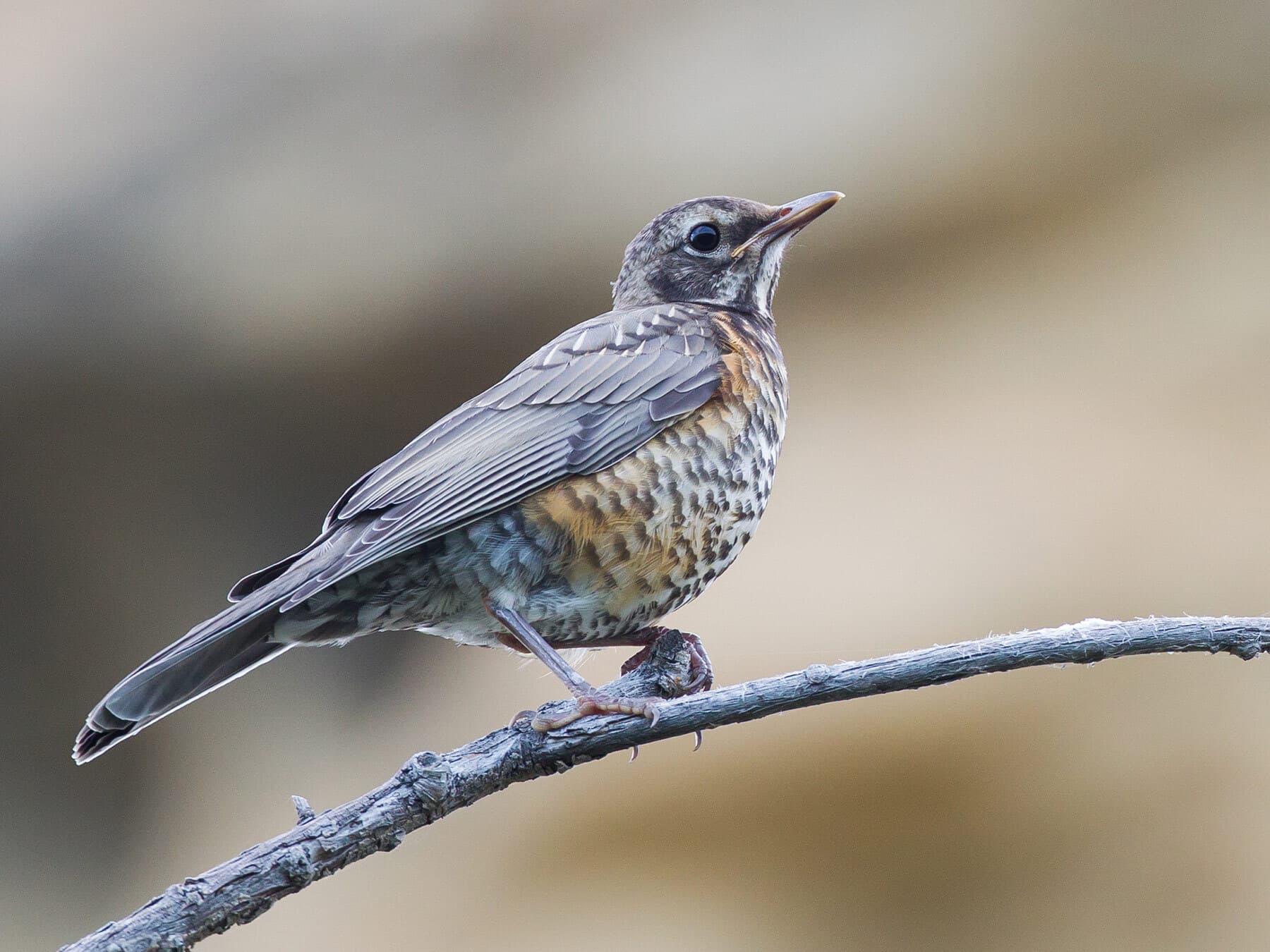
A young robin can manage on its own at about four weeks old. It keeps its spotted breast until its first molt, mainly from July to October, and stays near where it hatched for up to four months before joining adult flocks and following them to fruit and winter roosts.
Survival
If you find a baby robin
First, look at it. A young bird with feathers that can hop and flutter is a fledgling: it does not need help. Its parents are nearby and still feeding it, so give it plenty of space.4
A chick with no feathers, or with its eyes closed, is a nestling and should be in the nest. If you can find the nest, put it back; if not, leave it where it is or move it into shade. Your scent will not put the parents off.
Do not try to feed or raise it. Caring for a wild bird needs state permits, and for most birds a federal permit too. If a bird is hurt, call a licensed wildlife rehabilitator before you move it.4
More about American Robins
For eggs, nest sites and nest shelves, see American Robin nesting. For the adult bird, its song, food and lifespan, see the American Robin guide, and for how it differs from its namesake, see American Robin vs European Robin.
Sources
- Vanderhoff, E. N., Pyle, P., Patten, M. A., Sallabanks, R., James, F. C. (2020). American Robin (Turdus migratorius), version 1.0. Birds of the World (P. G. Rodewald, editor). Cornell Lab of Ornithology. doi:10.2173/bow.amerob.01
- Cornell Lab of Ornithology. American Robin: Life History. All About Birds. Accessed 6 October 2026. Source
- Cornell Lab of Ornithology. American Robin: Overview and Identification. All About Birds. Accessed 6 October 2026. Source
- Shaw, T.. What to do if you find a baby bird, injured or orphaned wildlife. U.S. Fish and Wildlife Service. Accessed 6 October 2026. Source
- National Audubon Society. American Robin. Audubon Guide to North American Birds (text adapted from Kenn Kaufman, Lives of North American Birds). Accessed 6 October 2026. Source