


Northern Shoveler
Shoveler · Spatula clypeata
By the Birdfact teamChecked by Nathan Cope
On this page14 sections
How to recognise it
What do Northern Shovelers look like?
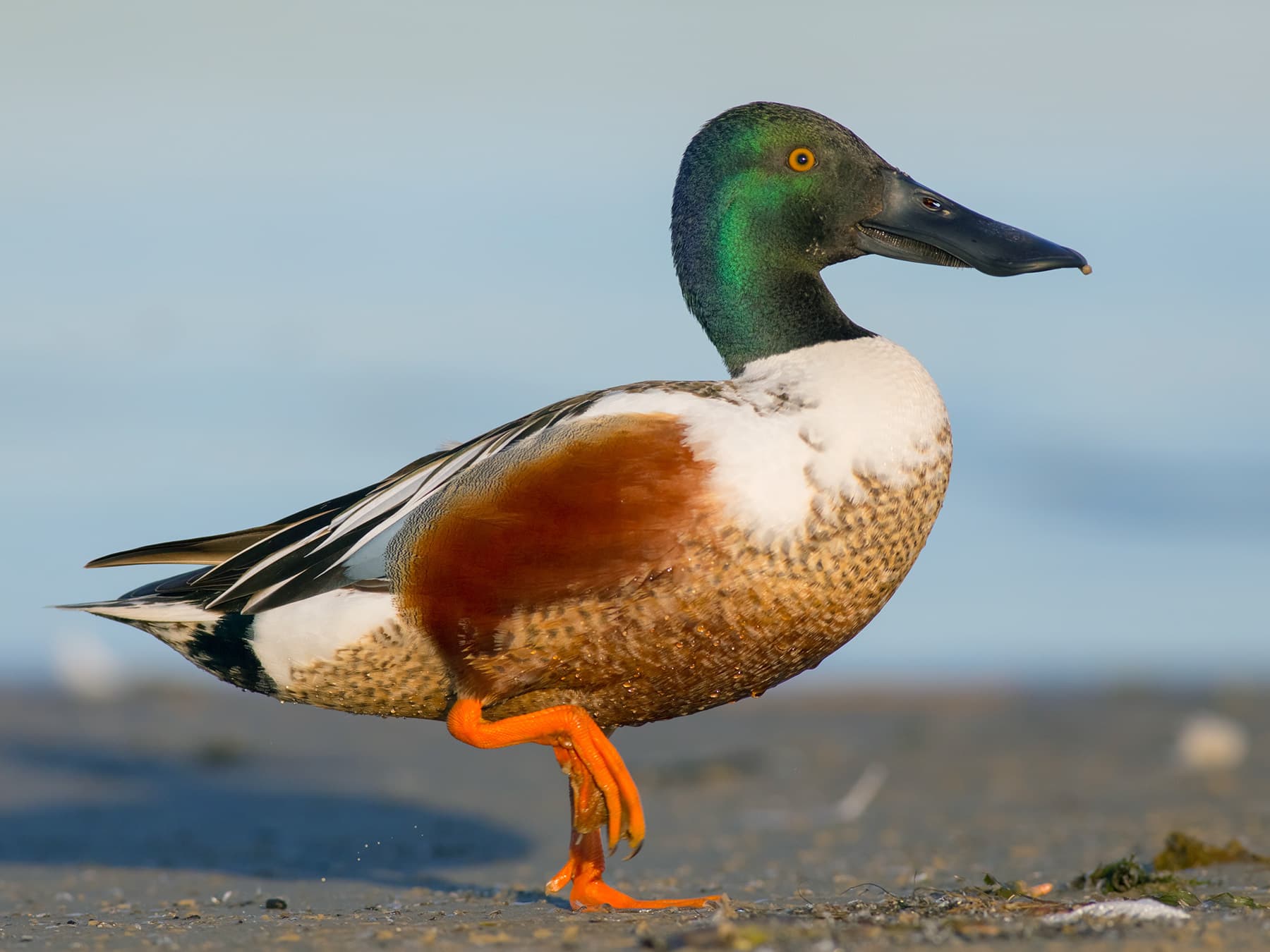
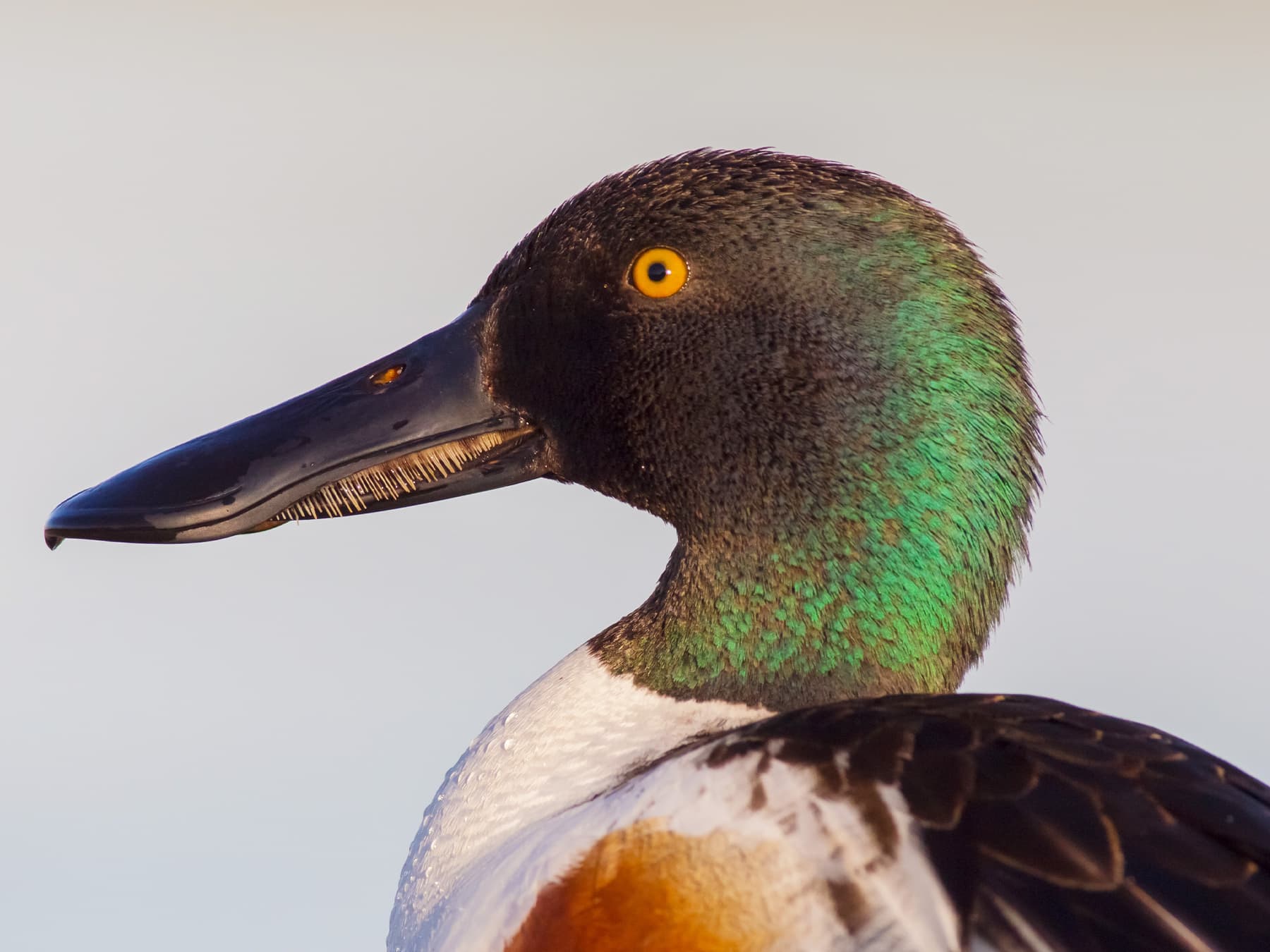
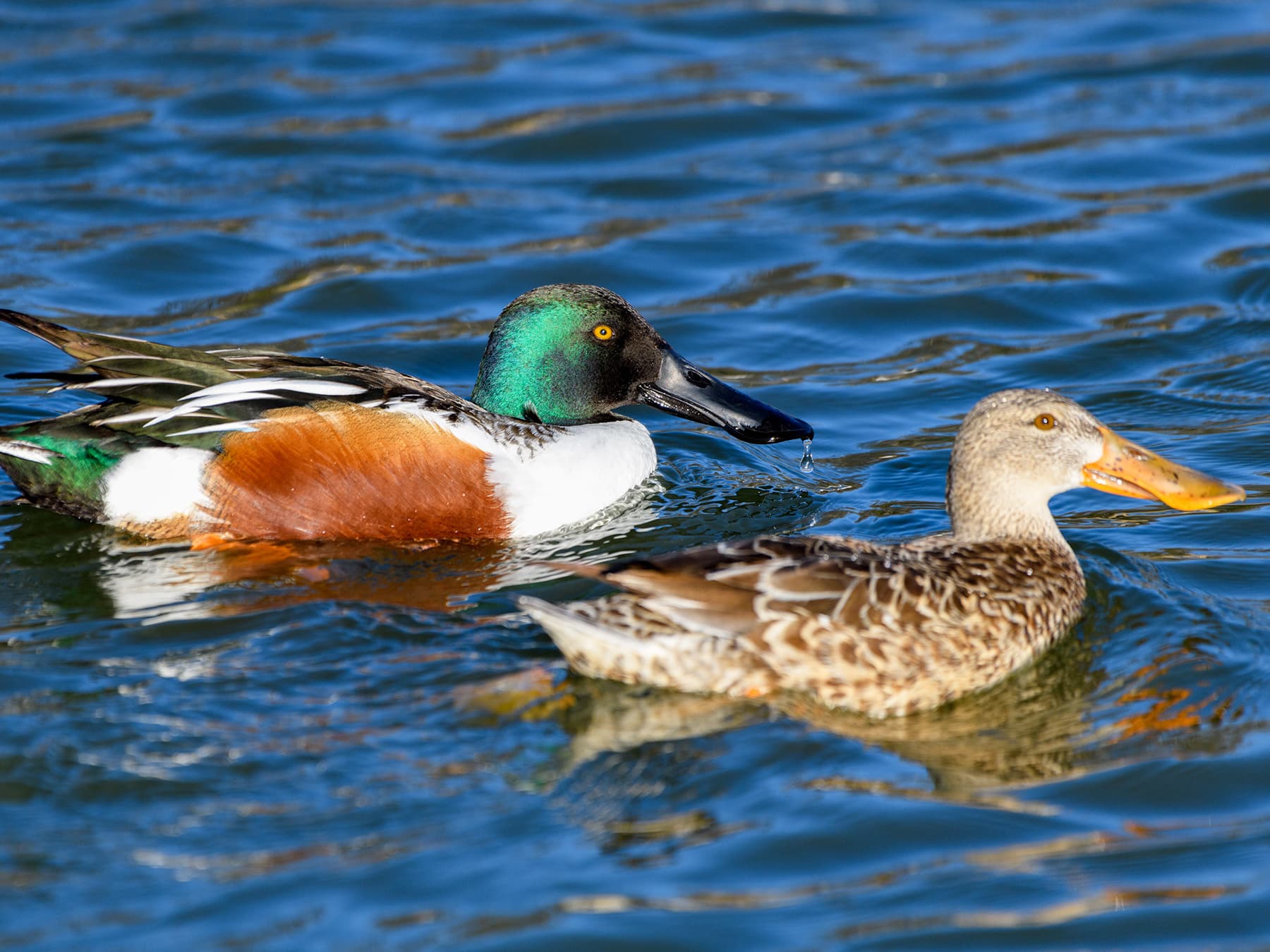
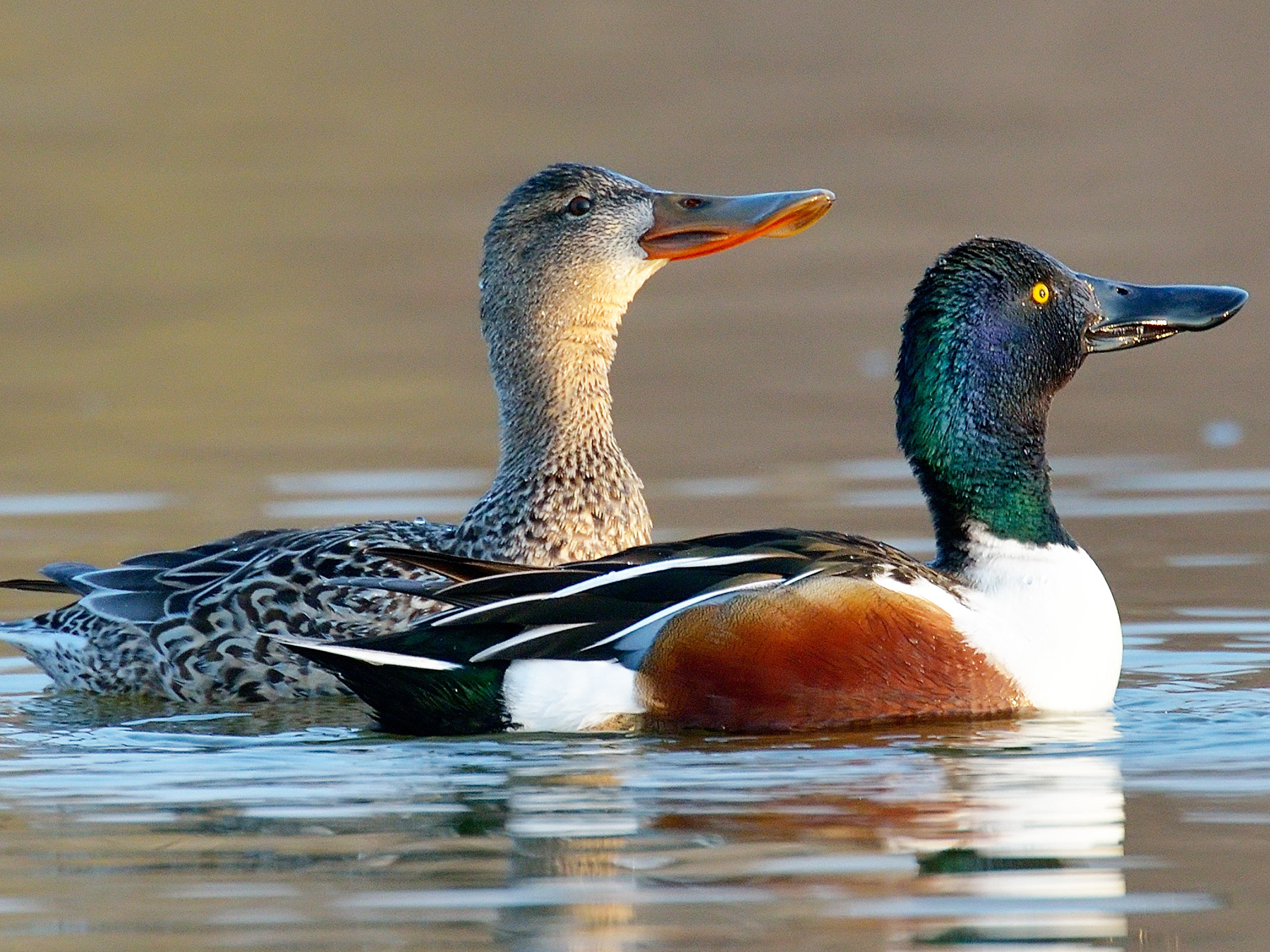
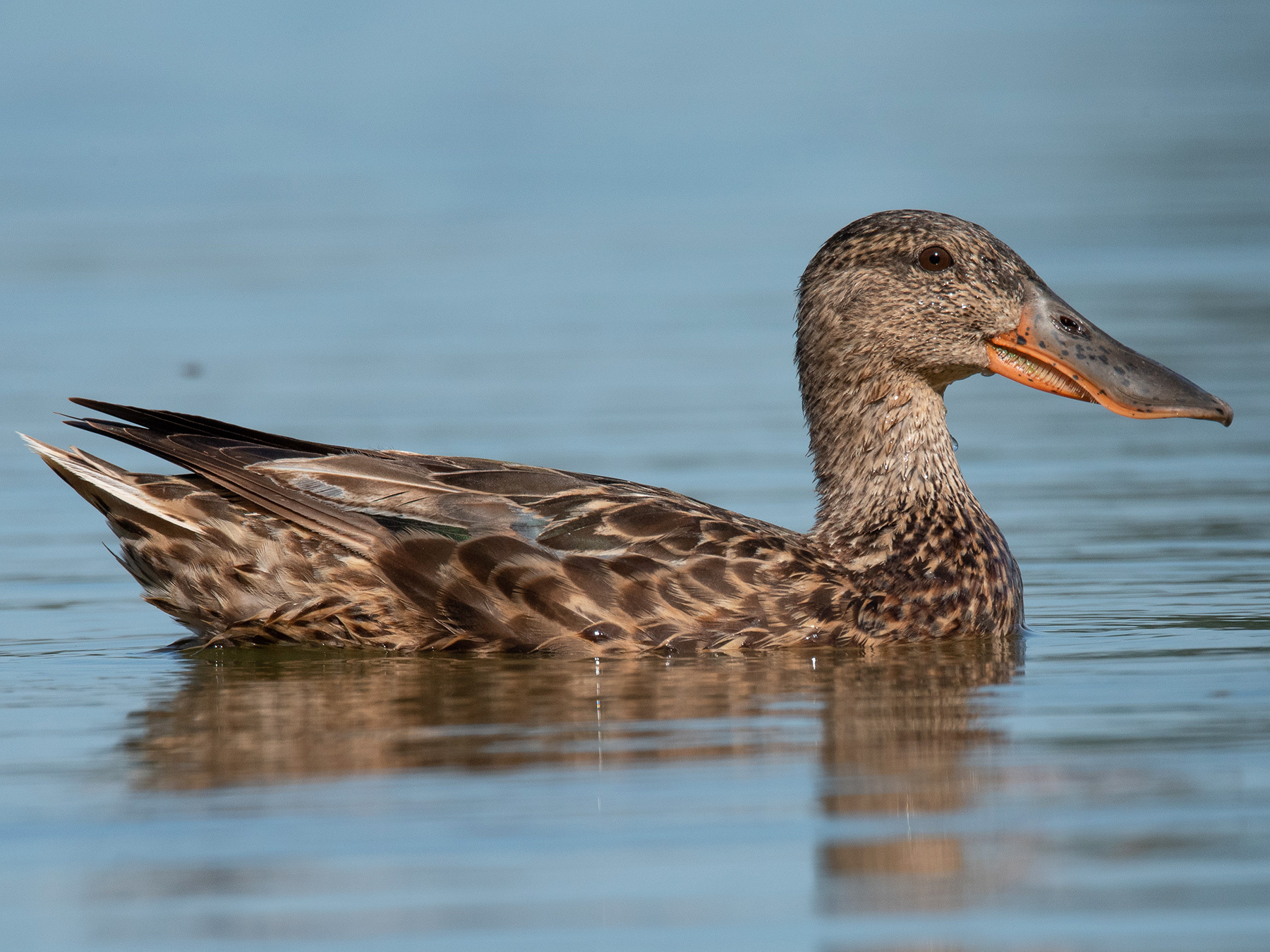
One key feature used to identify a northern shoveler – male and female – is its wide, flat, spatula-like bill (dark gray in males and orange in females). However, there are a number of other visual features that will quickly confirm a positive identification.
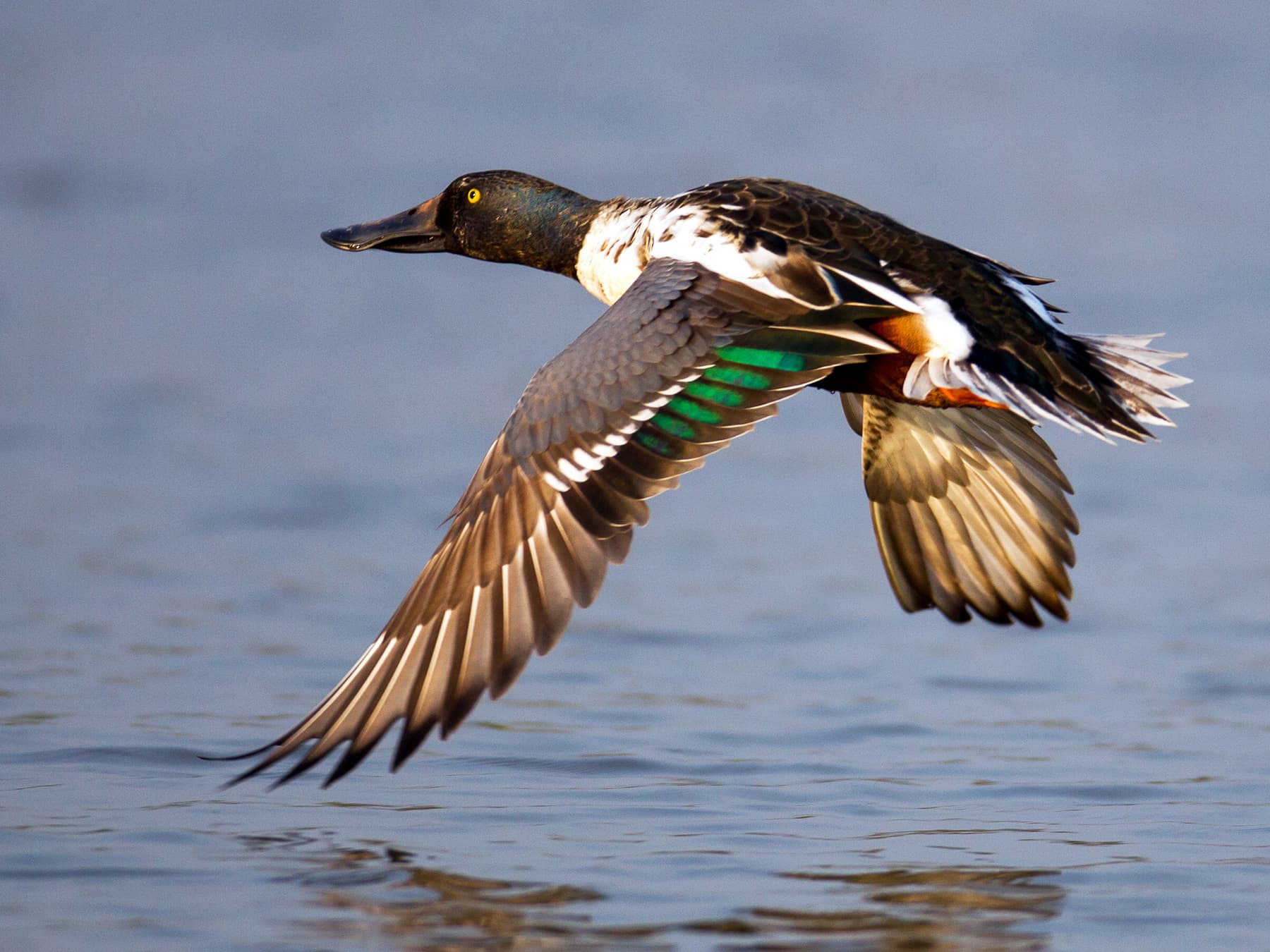
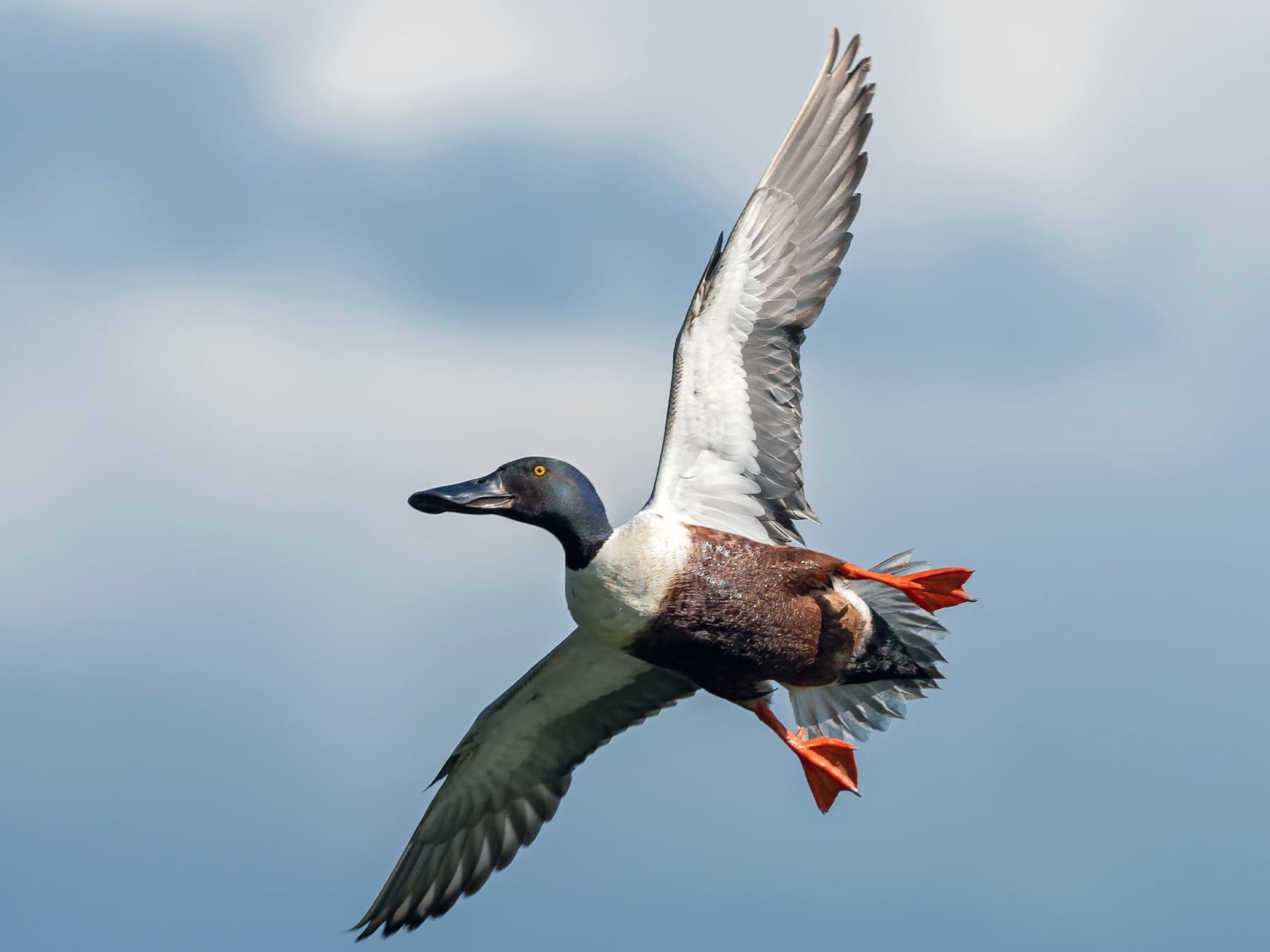
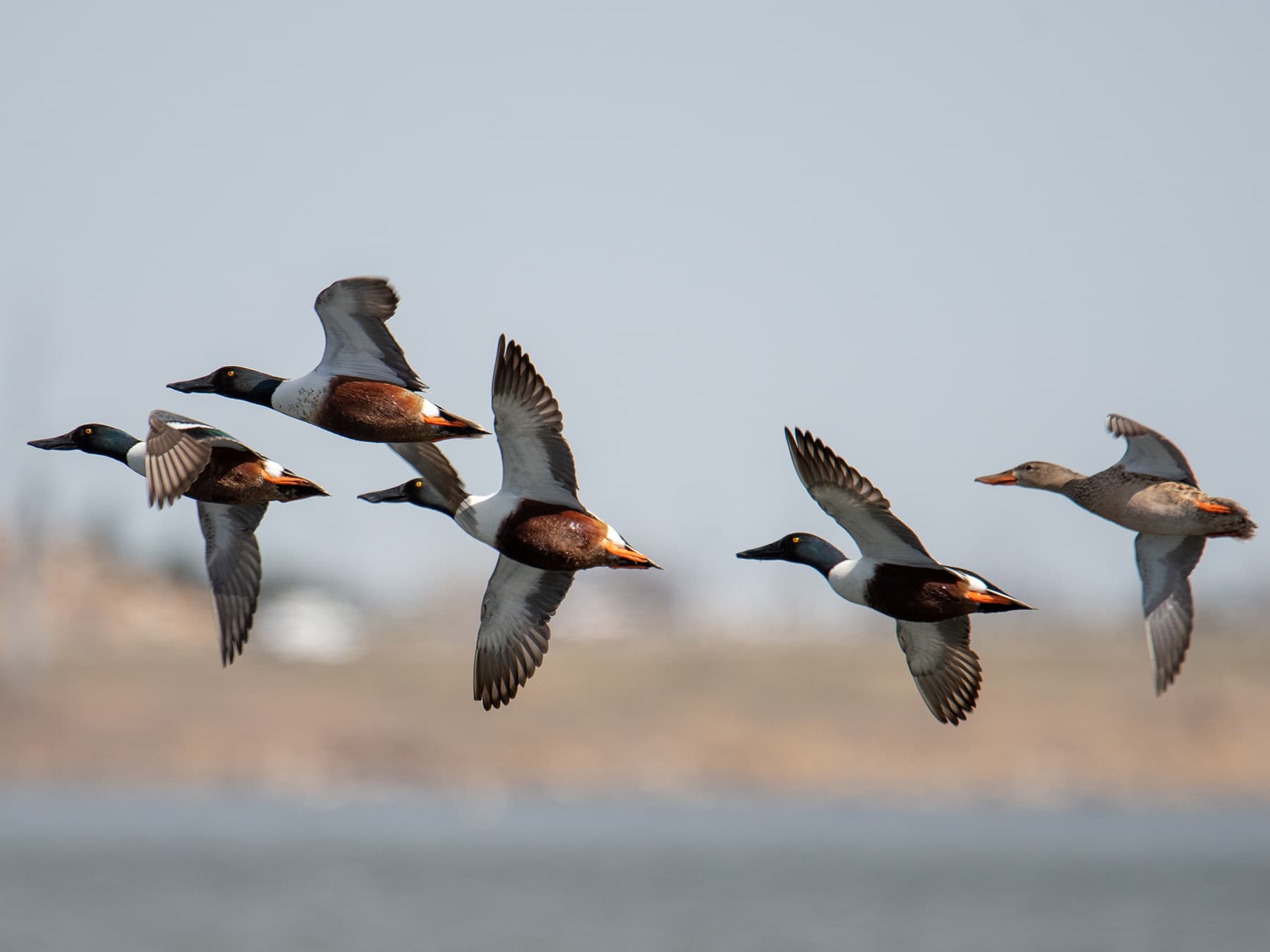
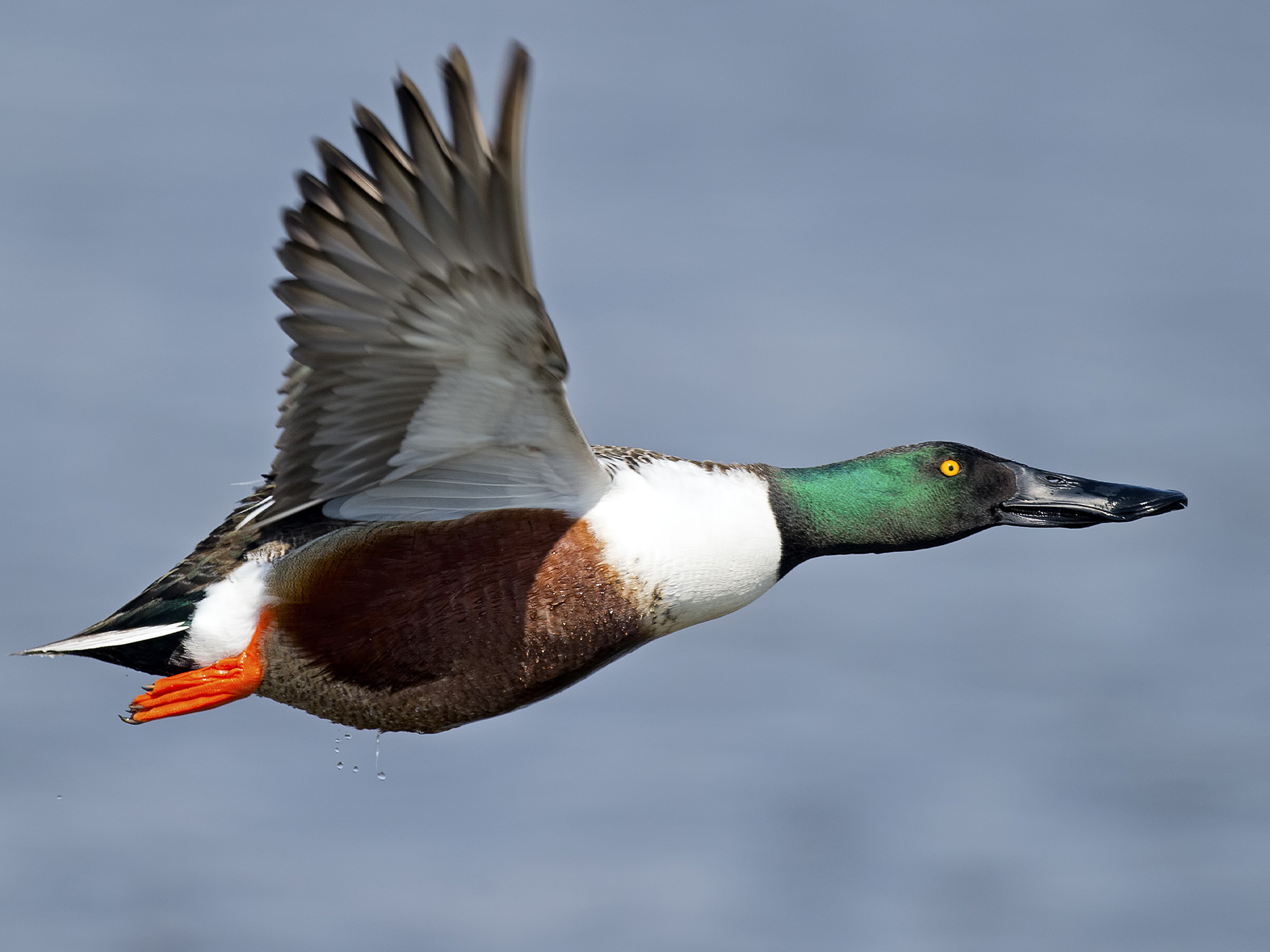
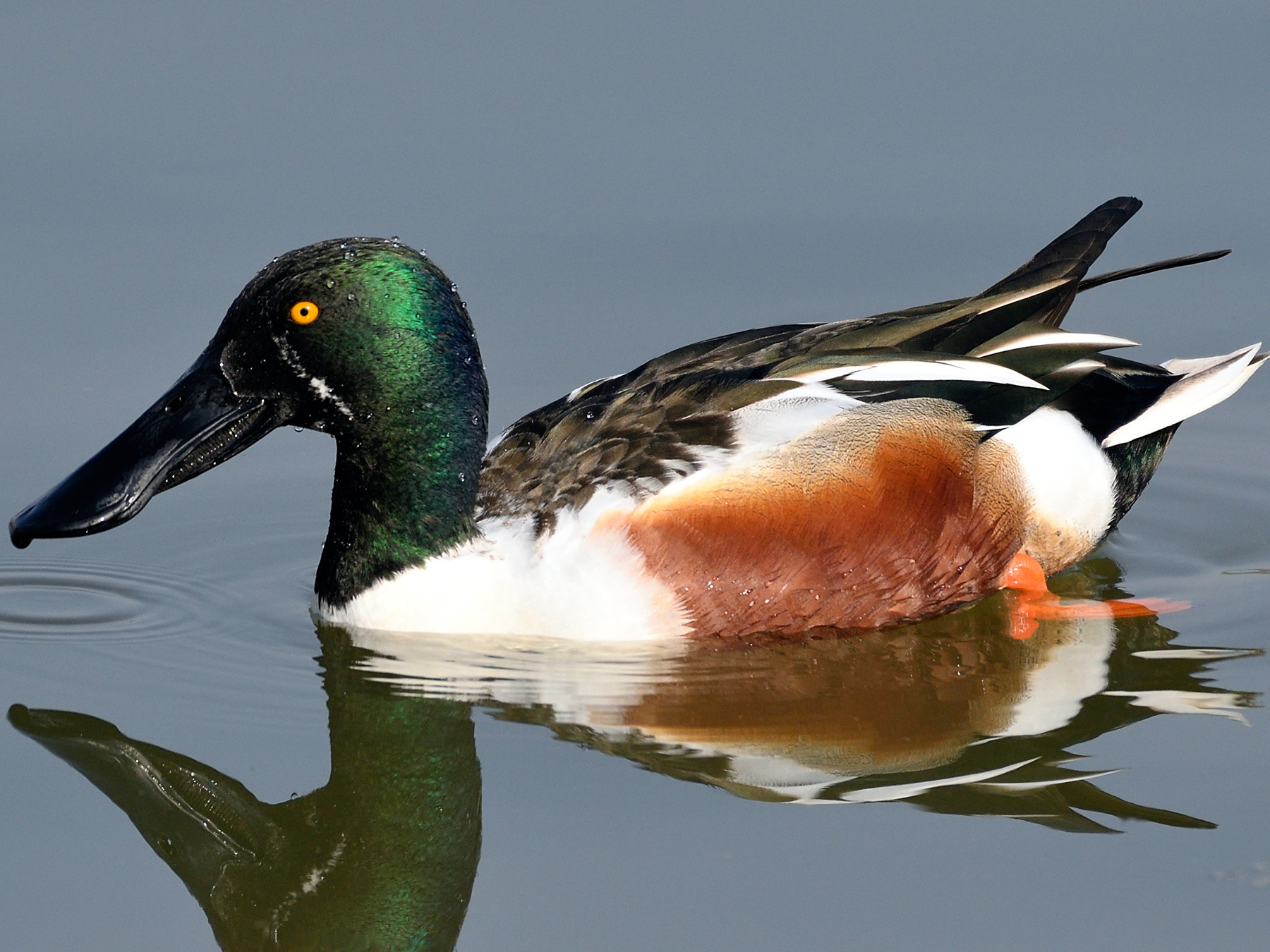
Male northern shovelers in breeding plumage have a dark green head, golden eye, white breast and chestnut flanks, and belly. Their wings appear black and white when not in flight, but when spread, a pale blue patch is visible at the front, separated from a green panel by a narrow white band. Their legs and feet are orange at all times of the year, but brighter when breeding.
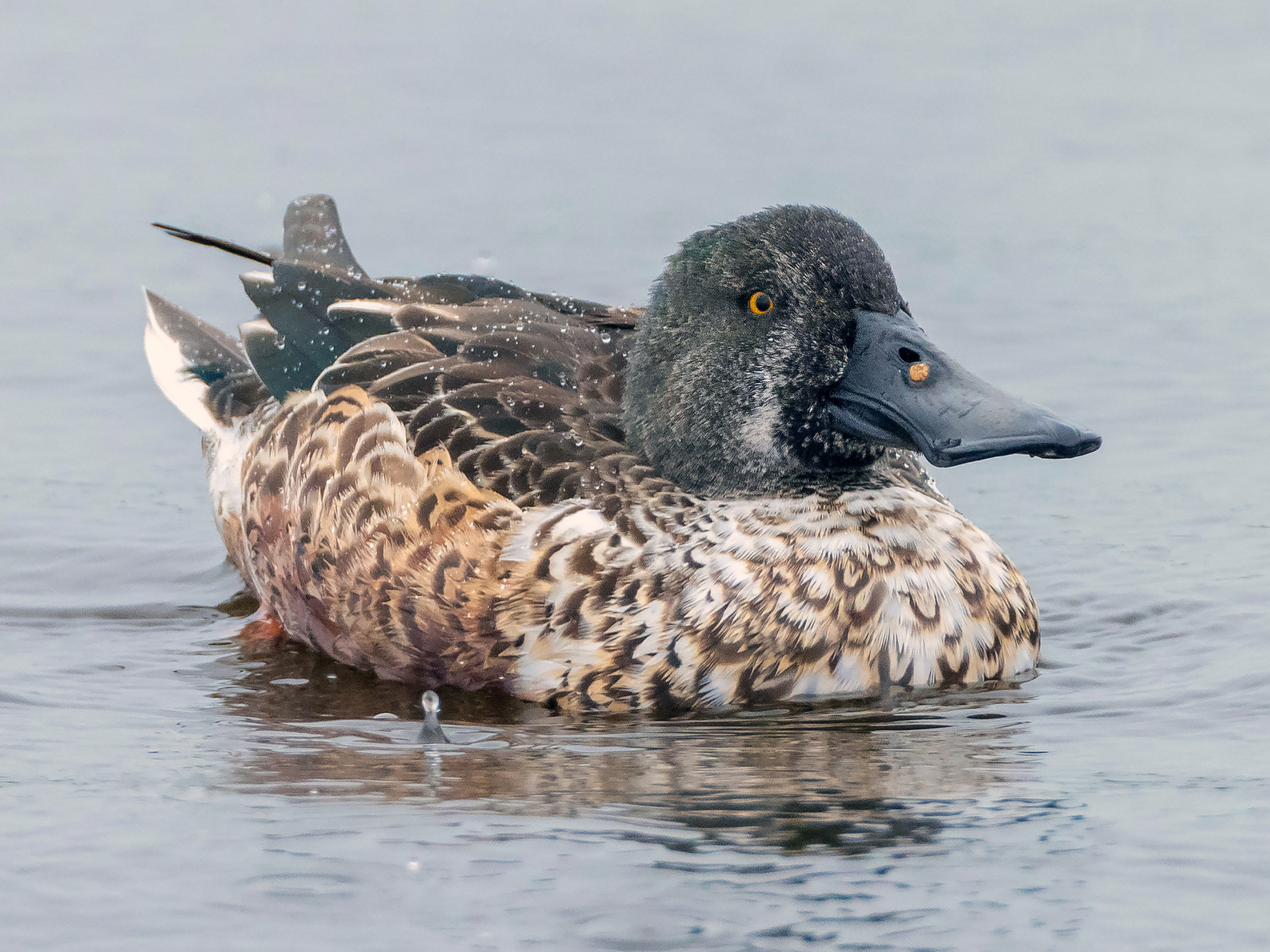
Out of breeding season, males lose their showy coloring, developing a dark brown head, neck, breast, and belly and lighter brown flanks and upper wings. Two pale white crescents are visible on their faces, at the base of the bill, and although the blue and green patches can still be seen on the wings, the colors become more drab than earlier in the year.
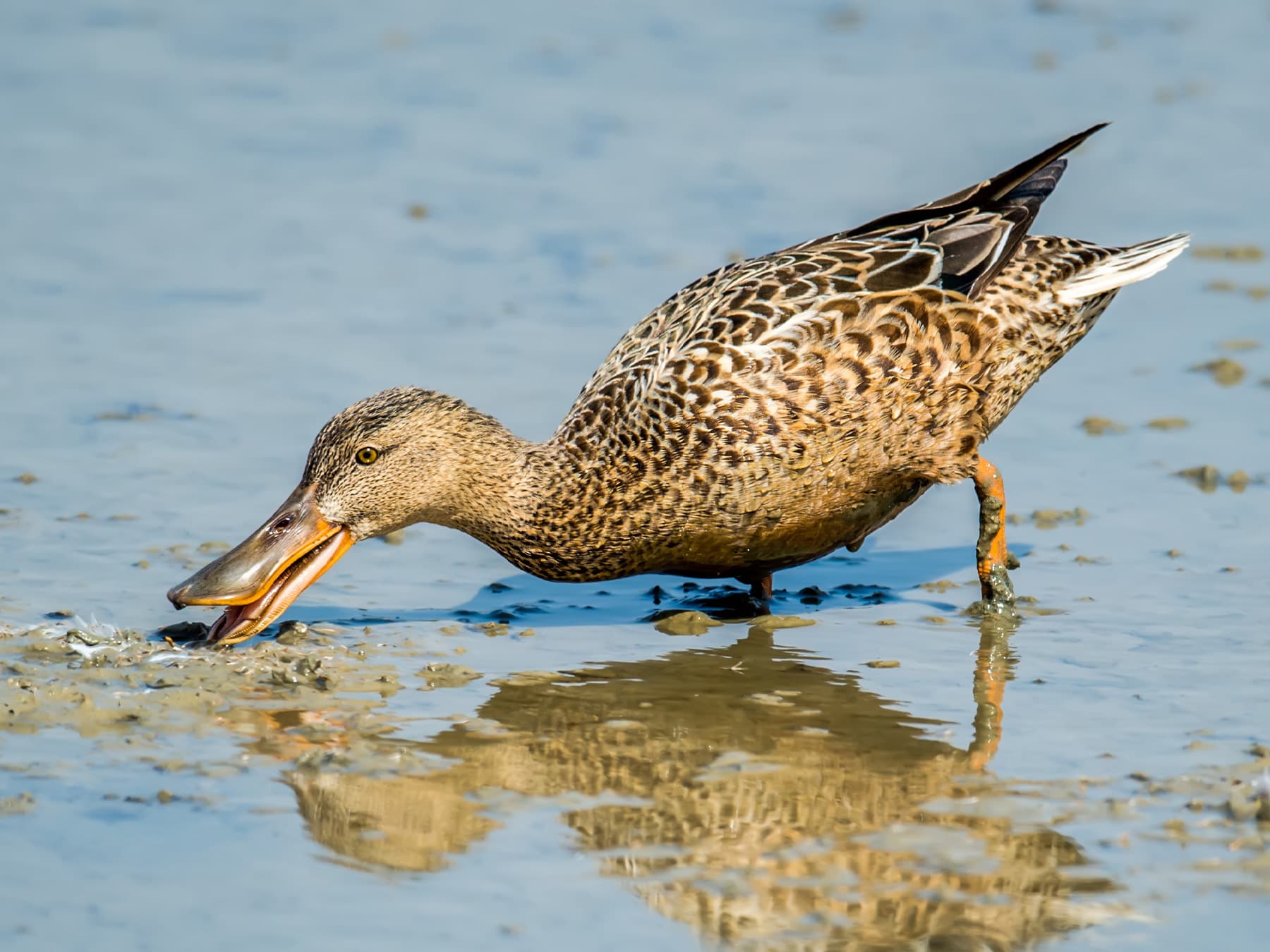
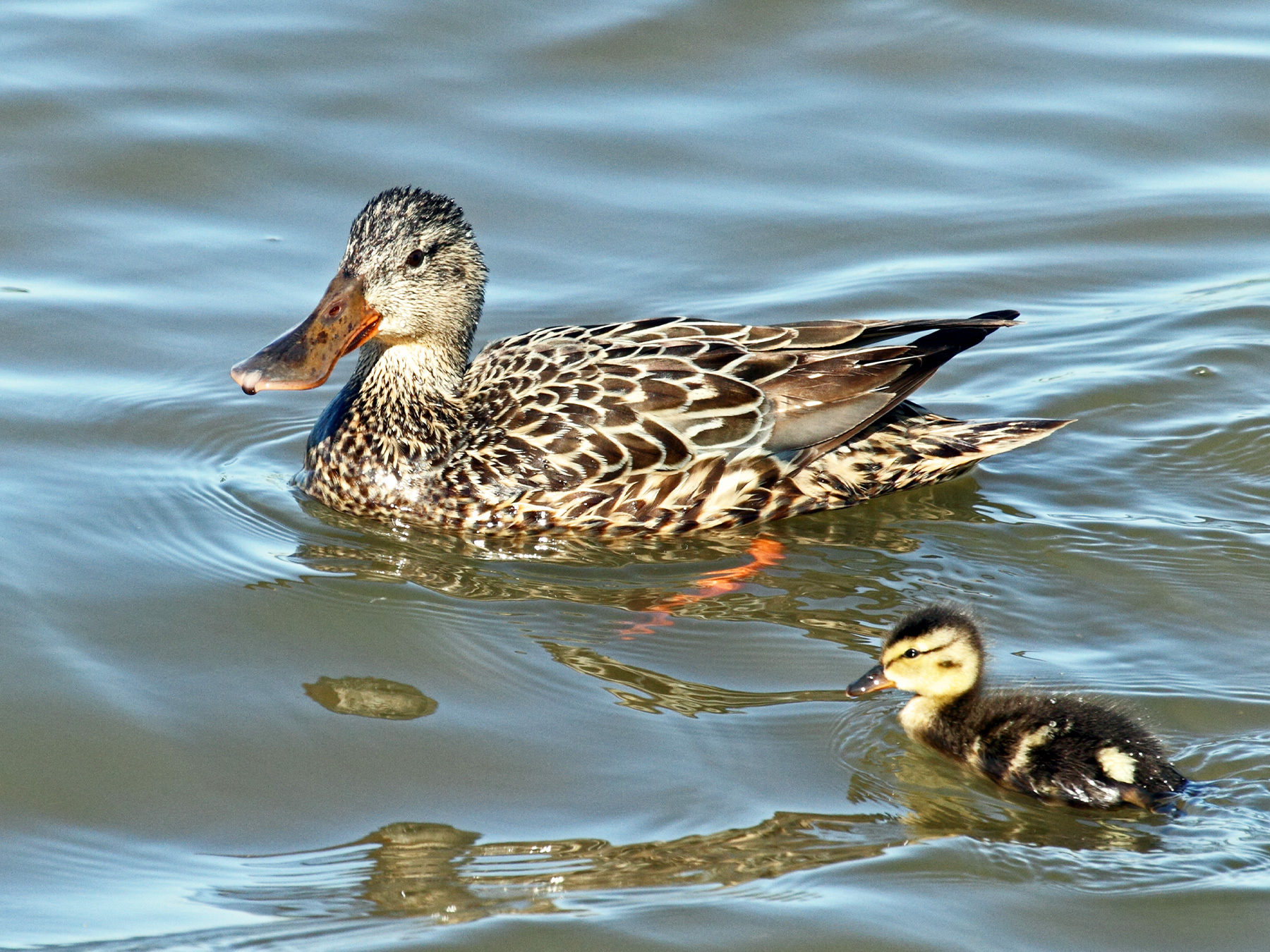
Female northern shovelers lack any of the colorful body markings seen on breeding males but do have the same blue and green wing patches that are visible in flight. Their bodies are patterned all over in lighter and darker brown markings. Their bill and feet are yellowish-orange, and their eyes are brown or brownish-yellow.
Juvenile northern shovelers are similar in appearance to adult females but darker and less heavily patterned. The blue wing patches seen on adults are more gray in juvenile shovelers, and their legs are pale yellow to pale orange.
How big are Northern Shovelers?
Northern shovelers are medium-sized ducks that are smaller than mallards, but larger than blue-winged teals. Males are typically larger and heavier than females.
- Length: 44 cm to 52 cm (17.3 in to 20.5 in)
- Wingspan: 70 cm to 84 cm (27.6 in to 33.1 in)
- Weight: 400 g to 1000 g (14.1 oz to 35.3 oz)
Its size
Adults- Length
- 44–51 cm
- Wingspan
- 70–84 cm
- Weight
- 400–1000 g
Its song and calls
What sound does a Northern Shoveler make?
A rather quiet duck species, northern shovelers are not particularly vocal outside of the breeding season. When pairs are forming, males can be heard making a wheezy ‘thic’ or ‘took’ sound in flight and when alarmed. Females make a nasal quacking sound.
On take-off, a shoveler’s wings can be heard making a distinctive ‘rattling’ sound, unlike any other duck species.
- Song0:00 / 0:27
Recorded in Bretagne, France · March 2022
- Call0:00 / 0:15
Recorded in Normandie, France · March 2024
When and where to see it
OctoberPeak season
Most recorded in October
- 1. Stockton-on-Tees2.1%
- 2. Nottinghamshire1.5%
- 3. Rutland1.5%
- 4. South Yorkshire1.5%
- 5. Carmarthenshire1.4%
Each dot is a county, state or province: the bigger and darker, the larger the bird’s share of that place’s bird records that month. Grey dots: no regular records. The ringed point is the centre of the bird’s records this month; the arrow shows how it moved since last month, and the dashed loop its path through the year. “Arrivals” colours places where it becomes regular this month (orange) or is in its last regular month (grey). GBIF eBird Observation Dataset, 2019–2024. Map data: Natural Earth, US Census Bureau; place centres © OpenStreetMap contributors.
In your area
See when the Northern Shoveler is recorded in your county, state or province.
How often the Northern Shoveler turns up in the UK, Ireland, the United States and Canada through the year, from birdwatchers' records.
United Kingdom
Resident · all year · most records in January
Ireland
Winter visitor · all year · most records in November
United States
Winter visitor · all year · most records in March
Canada
Resident · all year · most records in April
Show as a table
| Month | United Kingdom | Ireland | United States | Canada |
|---|---|---|---|---|
| January | 0.81% (regular) | 0.41% (regular) | 0.49% (regular) | 0.14% (regular) |
| February | 0.75% (regular) | 0.36% (regular) | 0.43% (regular) | 0.13% (regular) |
| March | 0.73% (regular) | 0.30% (regular) | 0.51% (regular) | 0.25% (regular) |
| April | 0.61% (regular) | 0.21% (regular) | 0.38% (regular) | 0.50% (regular) |
| May | 0.42% (regular) | 0.096% (regular) | 0.14% (regular) | 0.35% (regular) |
| June | 0.29% (regular) | 0.061% (regular) | 0.071% (regular) | 0.23% (regular) |
| July | 0.28% (regular) | 0.051% (regular) | 0.027% (regular) | 0.11% (regular) |
| August | 0.45% (regular) | 0.12% (regular) | 0.098% (regular) | 0.20% (regular) |
| September | 0.64% (regular) | 0.22% (regular) | 0.19% (regular) | 0.28% (regular) |
| October | 0.71% (regular) | 0.34% (regular) | 0.30% (regular) | 0.36% (regular) |
| November | 0.77% (regular) | 0.44% (regular) | 0.48% (regular) | 0.33% (regular) |
| December | 0.79% (regular) | 0.42% (regular) | 0.43% (regular) | 0.17% (regular) |
Recorded regularly in
Worldwide: recorded regularly in 126 countries
Countries where it was recorded in at least 3 of the 6 years 2019–2024. Linked countries have their own bird list.
Europe (43)
- Åland Islands
- Albania
- Austria
- Belarus
- Belgium
- Bosnia & Herzegovina
- Bulgaria
- Croatia
- Czechia
- Denmark
- Estonia
- Finland
- France
- Germany
- Greece
- Hungary
- Iceland
- Ireland
- Isle of Man
- Italy
- Jersey
- Kosovo
- Latvia
- Lithuania
- Luxembourg
- Malta
- Moldova
- Montenegro
- Netherlands
- North Macedonia
- Norway
- Poland
- Portugal
- Romania
- Russia
- Serbia
- Slovakia
- Slovenia
- Spain
- Sweden
- Switzerland
- Ukraine
- United Kingdom
Asia (40)
- Armenia
- Azerbaijan
- Bahrain
- Bangladesh
- Bhutan
- Cambodia
- China
- Cyprus
- Georgia
- Hong Kong SAR China
- India
- Iran
- Iraq
- Israel
- Japan
- Jordan
- Kazakhstan
- Kuwait
- Kyrgyzstan
- Lebanon
- Macao SAR China
- Malaysia
- Mongolia
- Myanmar (Burma)
- Nepal
- Oman
- Pakistan
- Palestinian Territories
- Philippines
- Qatar
- Saudi Arabia
- South Korea
- Sri Lanka
- Taiwan
- Tajikistan
- Thailand
- Turkey
- United Arab Emirates
- Uzbekistan
- Vietnam
North America (23)
- Aruba
- Bahamas
- Barbados
- Belize
- Bermuda
- Canada
- Cayman Islands
- Costa Rica
- Cuba
- Curaçao
- Dominican Republic
- El Salvador
- Guatemala
- Haiti
- Honduras
- Jamaica
- Mexico
- Nicaragua
- Panama
- Puerto Rico
- St Pierre & Miquelon
- Turks & Caicos Islands
- United States
South America (2)
- Colombia
- Venezuela
Oceania (6)
- Australia
- Guam
- Marshall Islands
- New Zealand
- Northern Mariana Islands
- US Outlying Islands
Data: EOD – eBird Observation Dataset (Cornell Lab of Ornithology), accessed via GBIF.org, CC BY 4.0. Records from 2019–2024, aggregated and filtered by Birdfact. How these lists are made
What is the habitat of a Northern Shoveler?
Breeding habitats favored by northern shovelers include shallow pools and marshes with a good level of vegetation cover, with grasslands nearby where secluded nest sites can be established.
In winter, northern shovelers gather at large reservoirs, freshwater marshes, swamps, and flooded gravel pits.
What is the range of a Northern Shoveler?
The geographical range of northern shovelers covers a broad geographical area. Breeding occurs throughout Eurasia and western and northern North America. Breeding northern shoveler pairs are present in the Great Lakes region of the eastern United States.
Once breeding is complete, although some northern shoveler populations remain resident in their home territories all year round, others migrate south to wintering grounds scattered throughout north-east Africa, India, southern China, and Japan to Mexico and southern North America.
Where do Northern Shovelers live?
Around 5 million northern shovelers are estimated to live in North America, with up to 3.5 million of these spending winter in Mexico.
In Europe and Asia, have an estimated population of between 1.5 and 2 million, of which up to 95,000 pairs breed in Russia. 400,000 shovelers spend winters in south-west Asia and East Africa, and up to 1 million in South Asia.
How rare are Northern Shovelers?
After mallards and blue-winged teals, northern shovelers are believed to be the third-most abundant duck species in North America. They are seen more in winter than summer across most of the United States, with populations in northern Canada shifting southwards after breeding.
Although during the breeding season, shovelers are less commonly spotted in the UK, once winter arrives British wetlands welcome a relatively large influx of incoming migrants, and sightings become far less rare.
Where can you see Northern Shovelers in North America?
The population of northern shovelers was estimated at 5 million in 2015, with Saskatchewan, Alaska, and Yukon being home to the largest number of breeding pairs.
Certain wintering grounds, found in the southern US and into Mexico, attract large numbers of migratory northern shovelers each autumn, in particular the San Joaquin and Sacramento valleys and San Francisco Bay in California.
Where can you see Northern Shovelers in the UK?
In the UK breeding shovelers are most commonly spotted in southern and eastern England, especially around the Ouse Washes, the Humber, and the North Kent Marshes.
In winter, some of our breeding population may choose to migrate further south, to France or Spain, while arrivals from northern Europe can be seen across the whole country, particularly at Rutland Water in the East Midlands and Abberton Reservoir in Essex.
Migration
Do Northern Shovelers migrate?
Northern shovelers are usually strongly migratory, breeding in northern regions, and heading southwards to lower-latitude winter feeding territories each fall. They are one of the latest dabbling duck species to arrive in breeding grounds each spring and one of the first to leave.
Are Northern Shovelers native to North America?
In North America, shovelers are considered one of the most common and abundant duck species, after mallards and blue-winged teals.
Breeding takes place across Alaska, western Canada, and much of the western United States, with some birds along the west coast resident in their breeding territories all year round. In winter, most northern shoveler populations shift southwards and the species is widespread across the southern states, as well as regularly spotted in passage across the eastern US.
Are Northern Shovelers native to the UK?
Shovelers are native to the UK in small numbers, with a breeding population of around 1,100 pairs mainly based in southern and eastern England.
In winter, incoming migrants from northern Europe swell the shoveler population to more than 19,000 individuals, making it one of Europe’s most important sites for the species.
Tips for seeing it
- Look for their distinctive, oversized bill
- Search in shallow wetlands and marshes
- Listen for soft quacking sounds
- Observe their unique feeding behaviour of skimming the water's surface
- In the UK, visit coastal areas and inland wetlands during winter months
What it eats
What do Northern Shovelers eat?
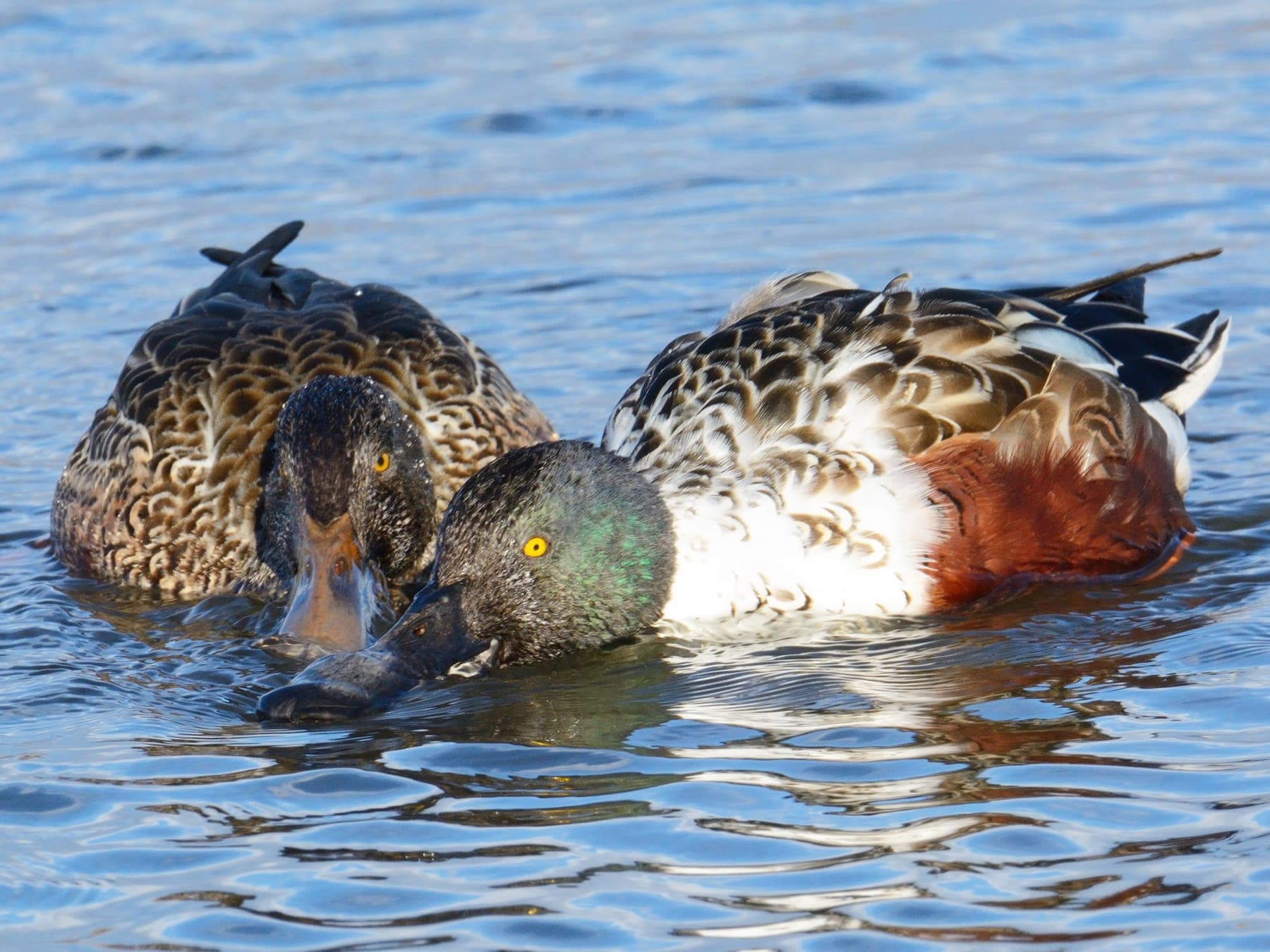
Northern shovelers are surface-feeding ducks, taking advantage of the comb-like structure on the edge of their bill to filter out tiny food particles from the water of the lakes and pools they live on.
By moving their heads from side to side while dipping beneath the water surface, they are able to sift out crustaceans, molluscs, aquatic insects, and their larvae as well as seeds, algae, leaves, and other plant matter.
Water beetles, minnows, and snails are also commonly eaten.
What do Northern Shoveler chicks eat?
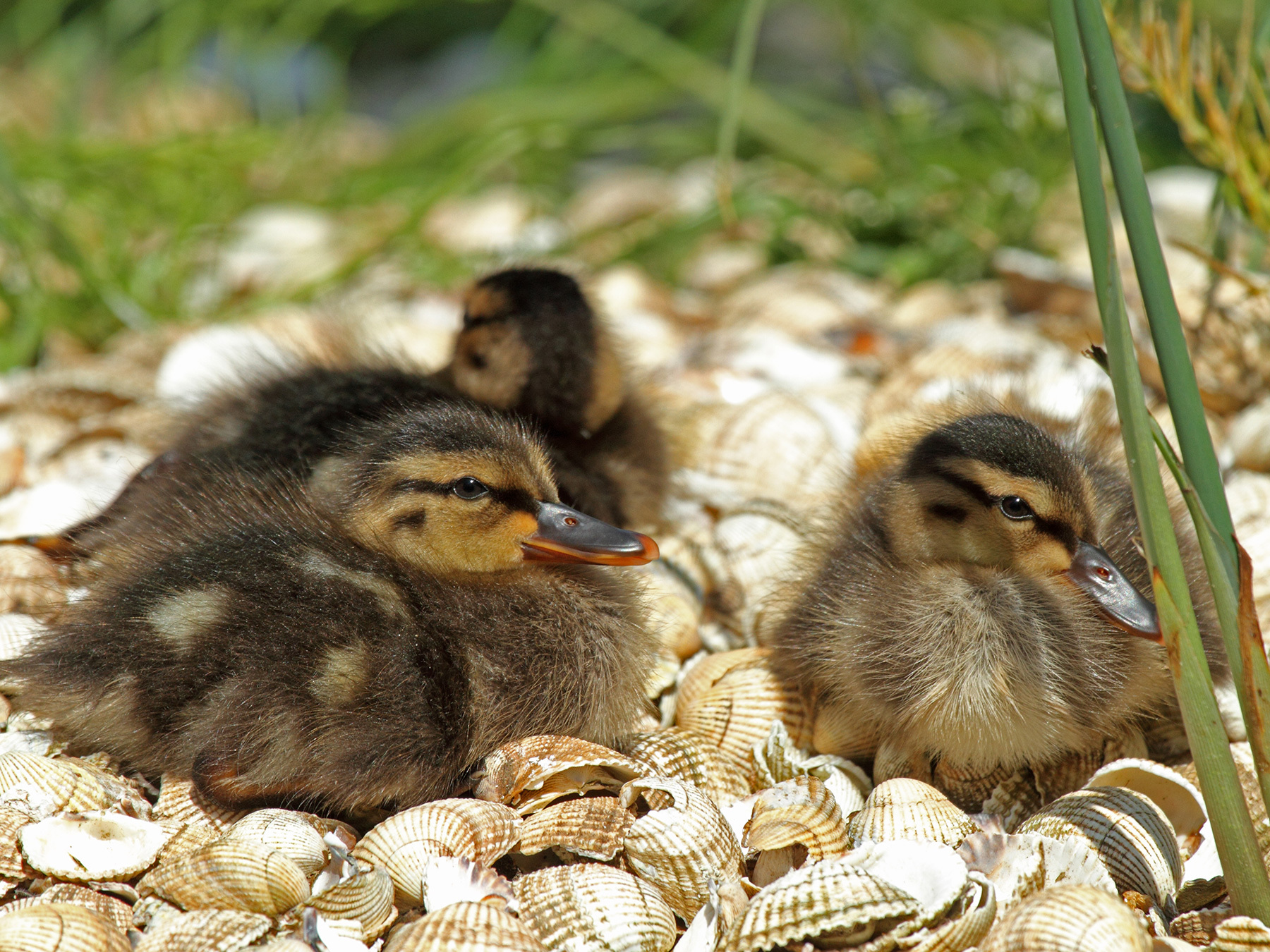
Young northern shoveler chicks feed independently from the outset, being led by the mother to foraging grounds shortly after hatching. Their initial diet consists mainly of zooplankton, aquatic invertebrates, and duckweed.
Nesting and breeding
Where do Northern Shovelers nest?
Typical nest sites chosen by northern shovelers are found in grassy areas, a short distance away from open water.
Shallow depressions are made in the ground or short grass by the female, which is then lined with grasses, and other plant material and soft down. Nearby vegetation, such as weeds, tussocks, or thickets helps to conceal the nest.
When do Northern Shovelers nest?
The breeding season for northern shovelers usually takes place from April until June. Earliest hatchlings are usually seen from mid-May onwards. One brood per year is typical, with replacement clutches occasionally being attempted if a brood fails early enough in the season.
What do Northern Shoveler eggs look like?
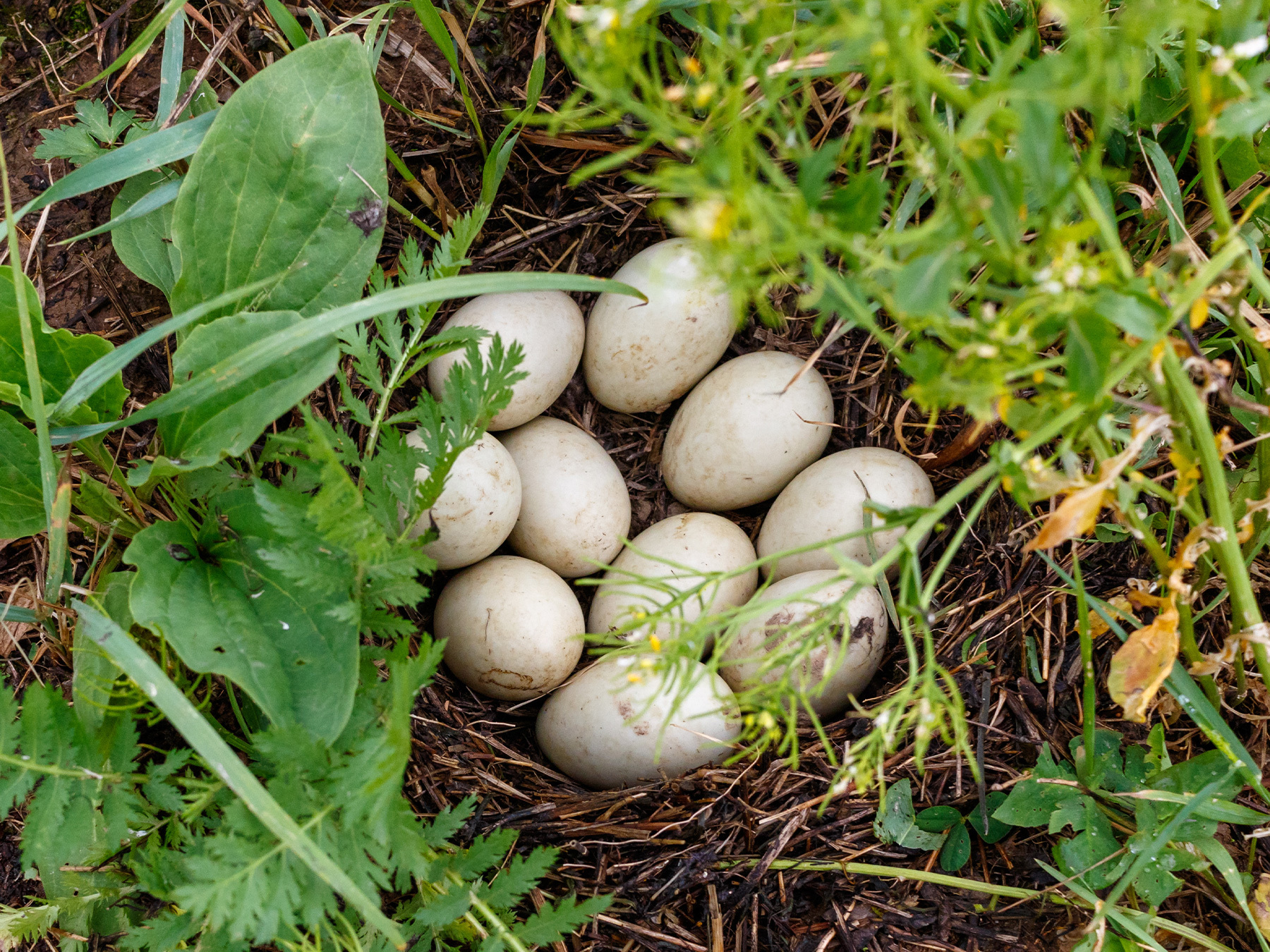
Up to nine smooth plain pale buff to greenish-gray eggs are laid by female northern shovelers, who incubate their clutch alone for 22 to 27 days. Eggs measure 52 mm by 37 mm (2 in by 1.5 in). Females raise young alone, leading them to water shortly after they hatch.
Do Northern Shovelers mate for life?
Northern shovelers form strong pair bonds for the duration of a breeding season but will find a new mate the following year. Their bond is one of the strongest of all waterfowl, with pairs beginning to form on wintering grounds and remaining together until just before departure from breeding grounds in the fall.
Behaviour
Are Northern Shovelers aggressive?
Pursuit flight chases are the most common form of physical interaction with other northern shovelers, with actual physical contact (e.g. biting, wing flapping) observed only on rare occasions.
Northern shoveler males are highly protective of their territory once a nest is established and do not tolerate interactions from other shovelers.
During migration and on winter foraging grounds, the species becomes more tolerant and sociable, with groups of several hundred northern shovelers gathering.
Where do Northern Shovelers sleep at night?
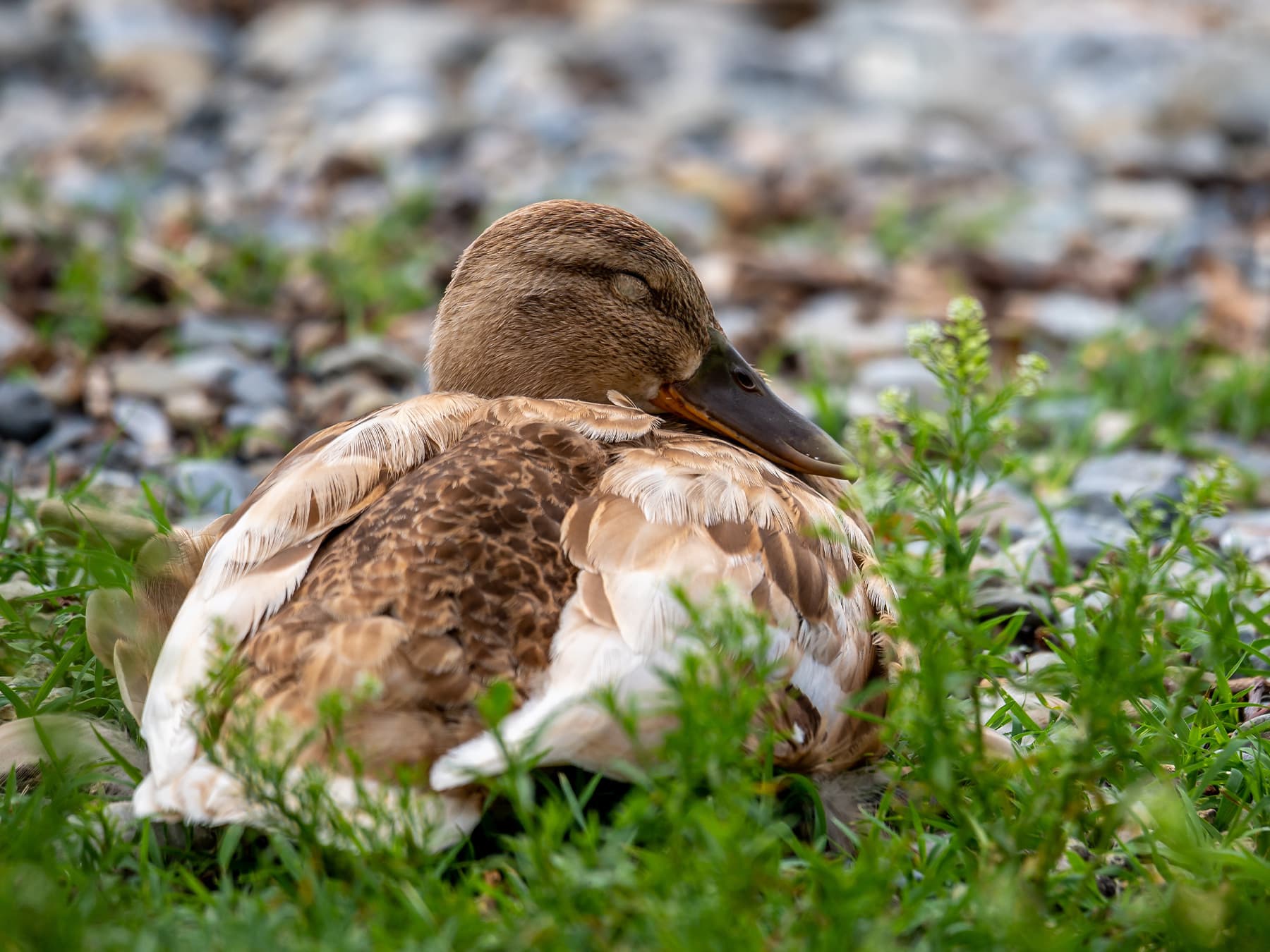
Northern shovelers roost overnight on the water, which offers safety from land predators. Typical overnight roosts, or loafing sites, include wetlands and flooded ditches.
Lifespan and predators
How long do Northern Shovelers live?
The average life expectancy of a northern shoveler is around 3 years. However, some individual northern shovelers live much longer lives, including one ringed bird aged 22 years and 7 months, discovered in 2009. First-time breeding is believed to occur at one year of age.
What are the predators of Northern Shovelers?
Red foxes pose a particular threat to nesting female northern shovelers and their eggs and young. Mink are also a threat, and nests are frequently destroyed by skunks, crows, magpies and gulls.
Are Northern Shovelers protected?
Northern shovelers, their eggs, nests, and feathers are protected under the Migratory Bird Treaty Act of 1918 in the United States. The species is also included in Canada’s Migratory Bird Convention Act of 1994.
In the UK, northern shovelers are a Schedule I bird under the Wildlife and Countryside Act, of 1981, meaning their eggs, nests, and young are given additional protection against being damaged or destroyed. It is illegal to knowingly kill, injure or capture a shoveler in Britain.
Are Northern Shovelers endangered?
Habitat destruction and loss of wetlands is a threat to the long-term future of northern shovelers, but for now, the species is widespread and abundant across much of its range and they are considered a species of least concern.
Shovelers have Amber status on the British Birds of Conservation Concern list, due to UK wetlands being home to more than 20 percent of the wintering population of shovelers in north-western Europe.
Conservation
While currently listed as Least Concern, Northern Shovelers face threats from wetland habitat loss and degradation.
Conservation efforts focus on protecting and restoring wetland ecosystems, which benefit this species along with many other waterfowl.
More photos
9 photos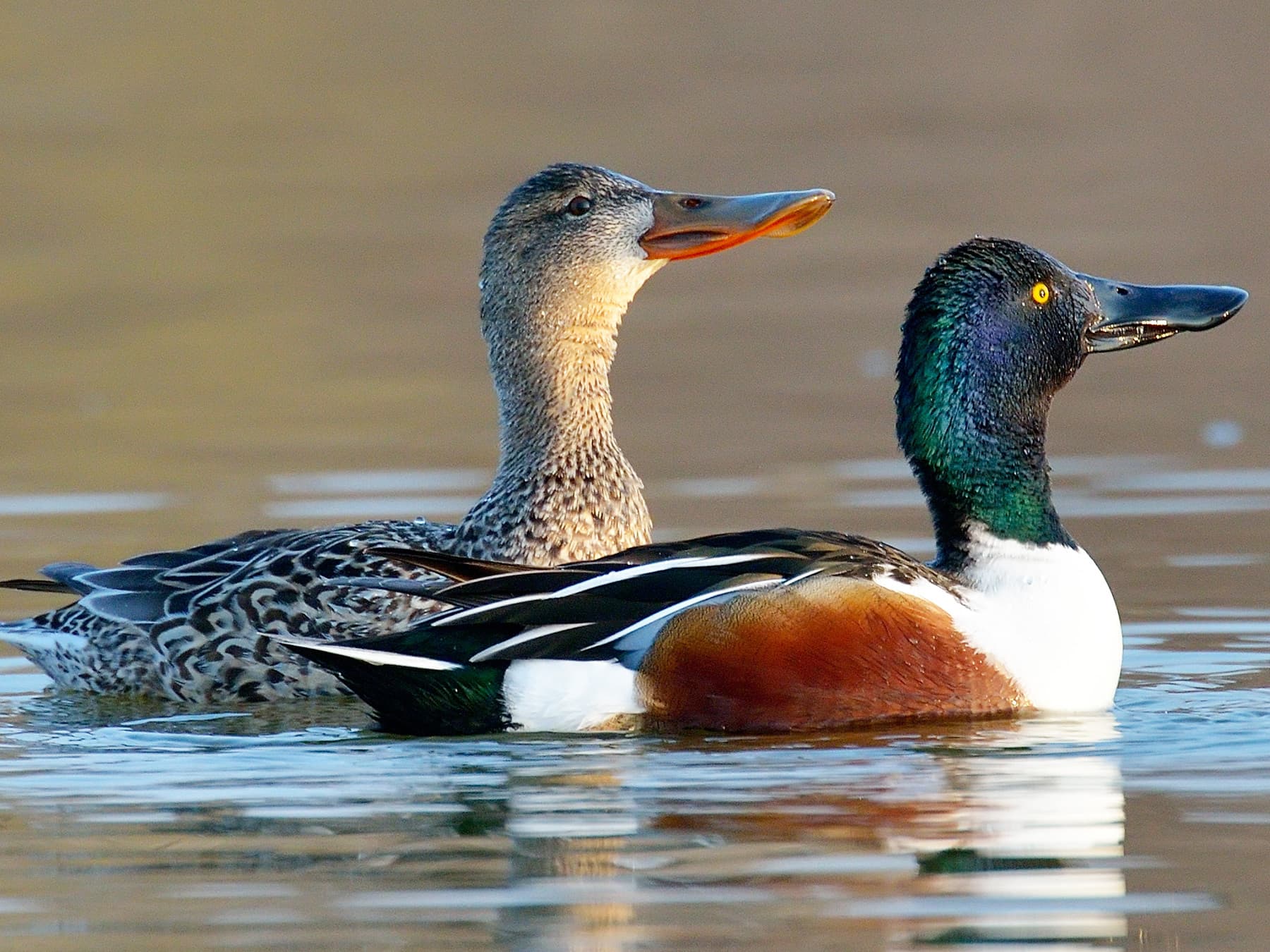 Female (left) and Male (right) Northern Shovelers
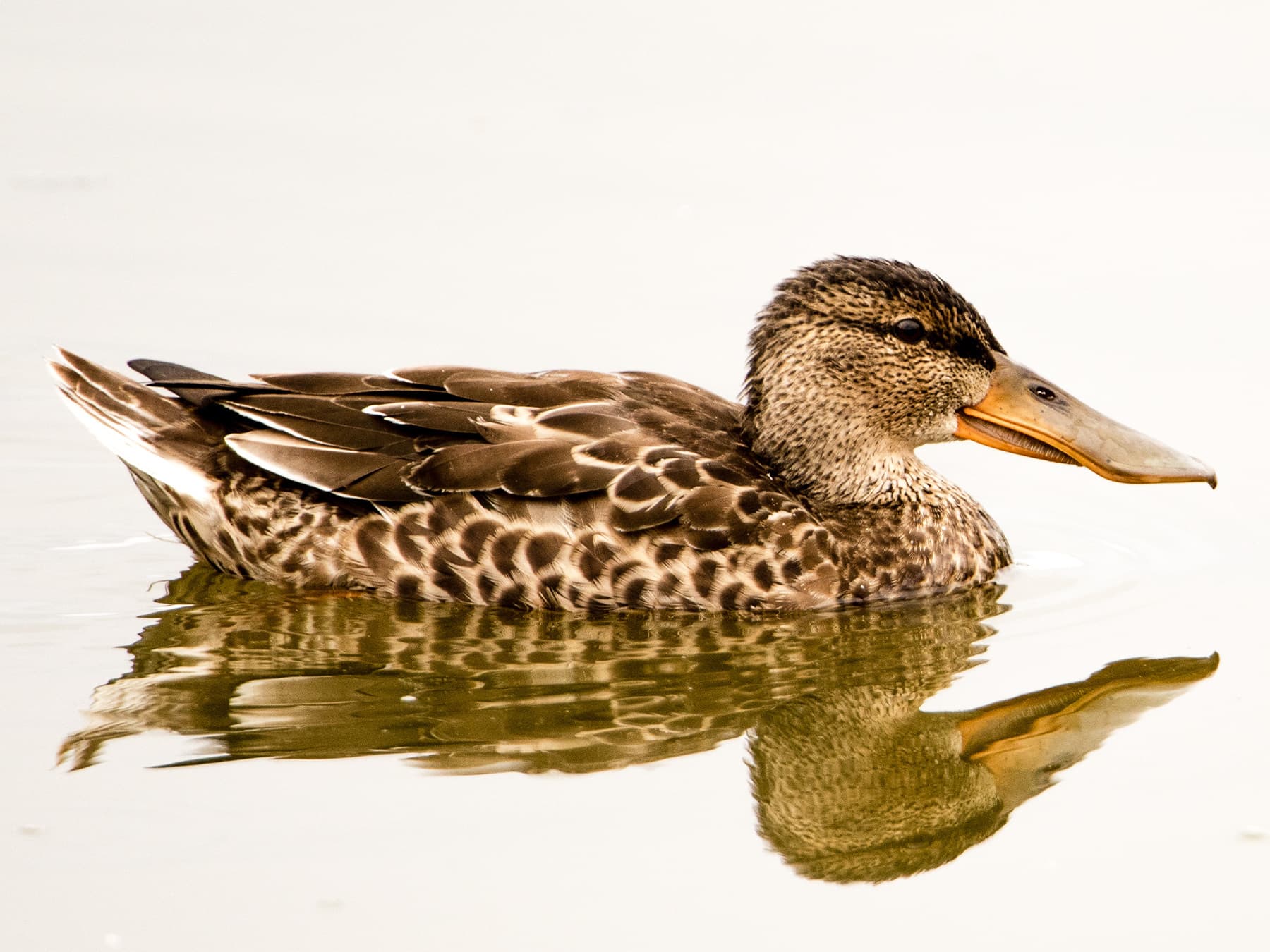 Juvenile Northern Shoveler
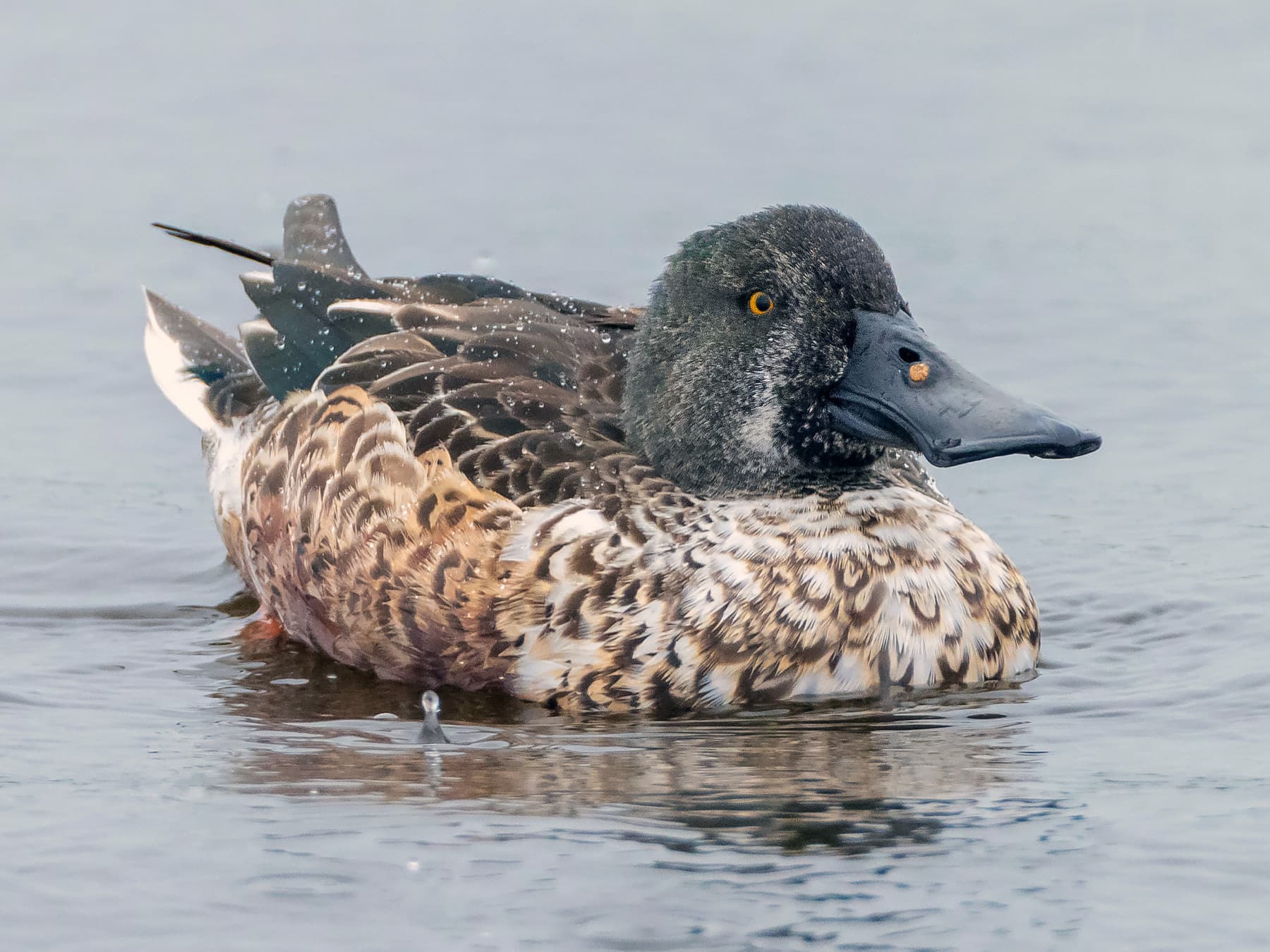 Northern Shoveler in non-breeding plumage
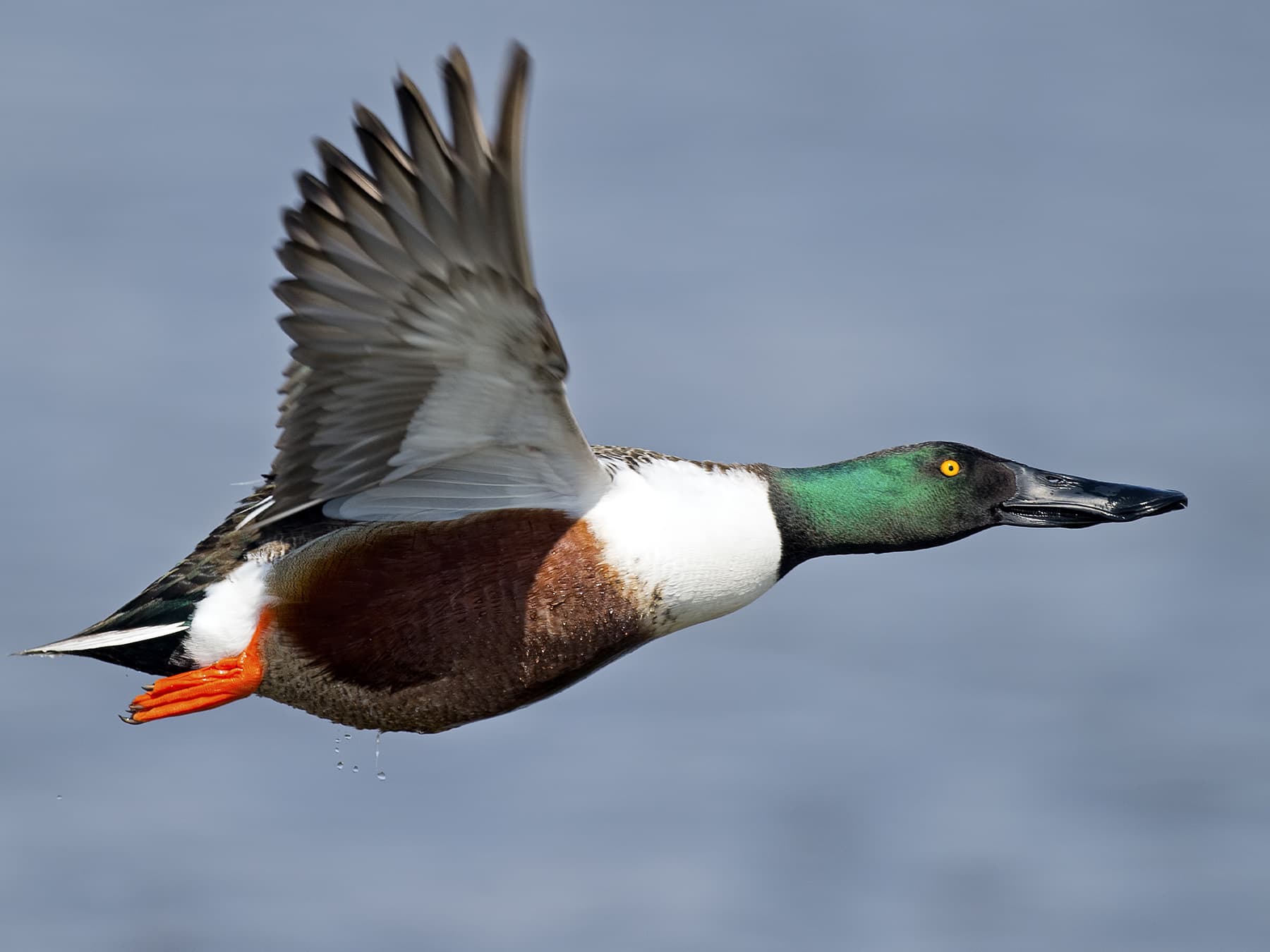 Northern Shoveler in-flight
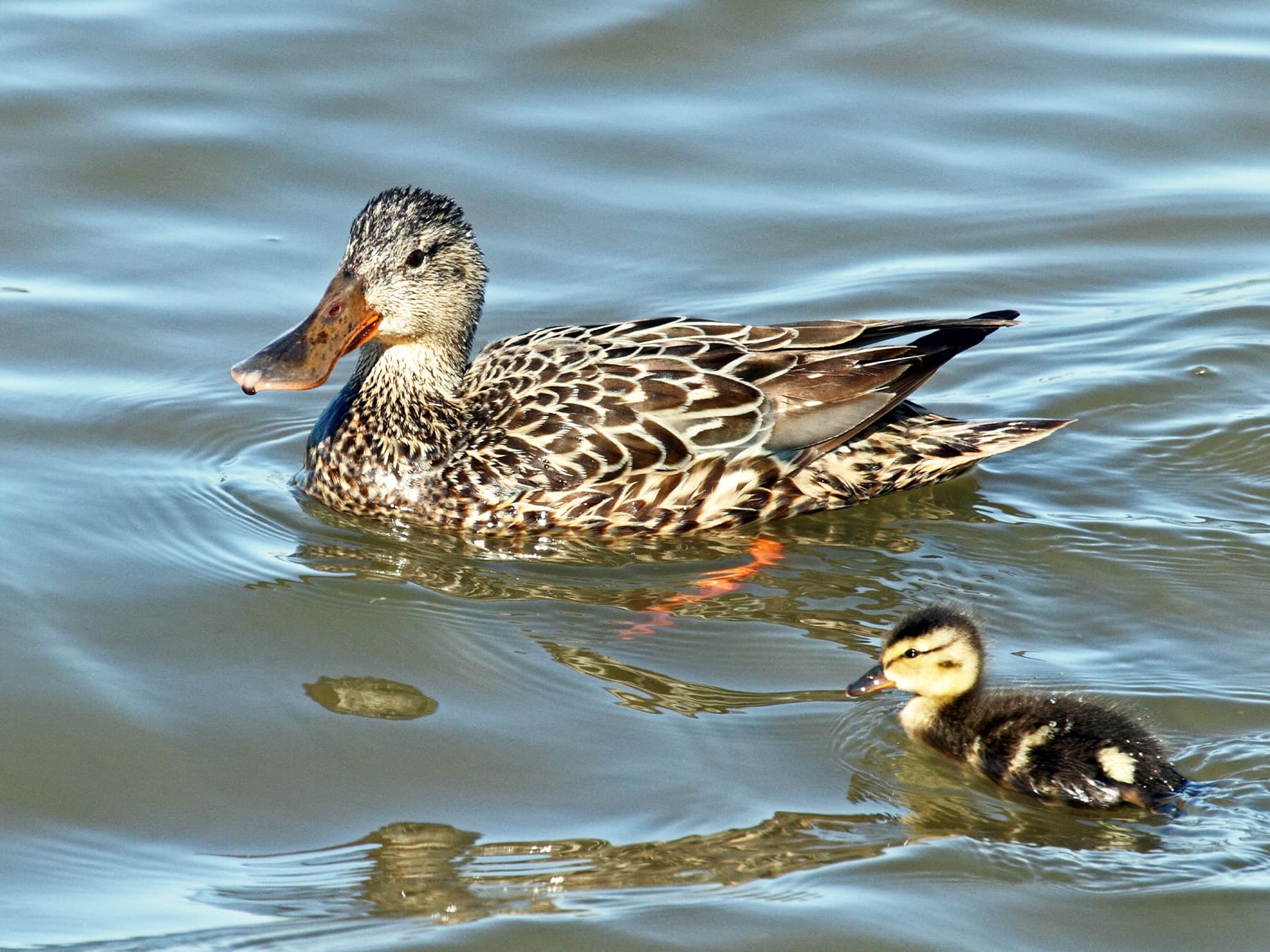 Northern Shoveler parent swimming with her young
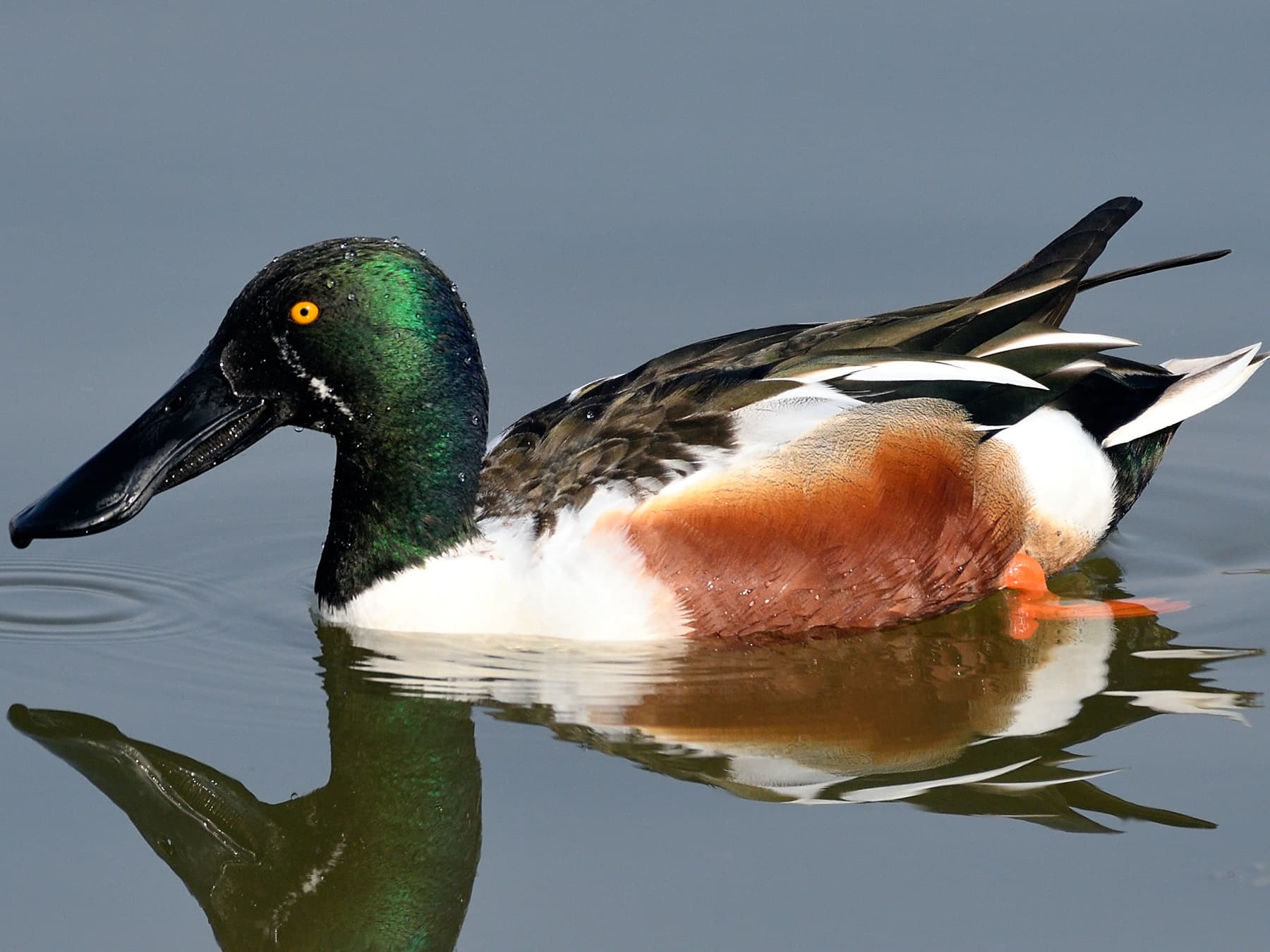 Male Northern Shoveler
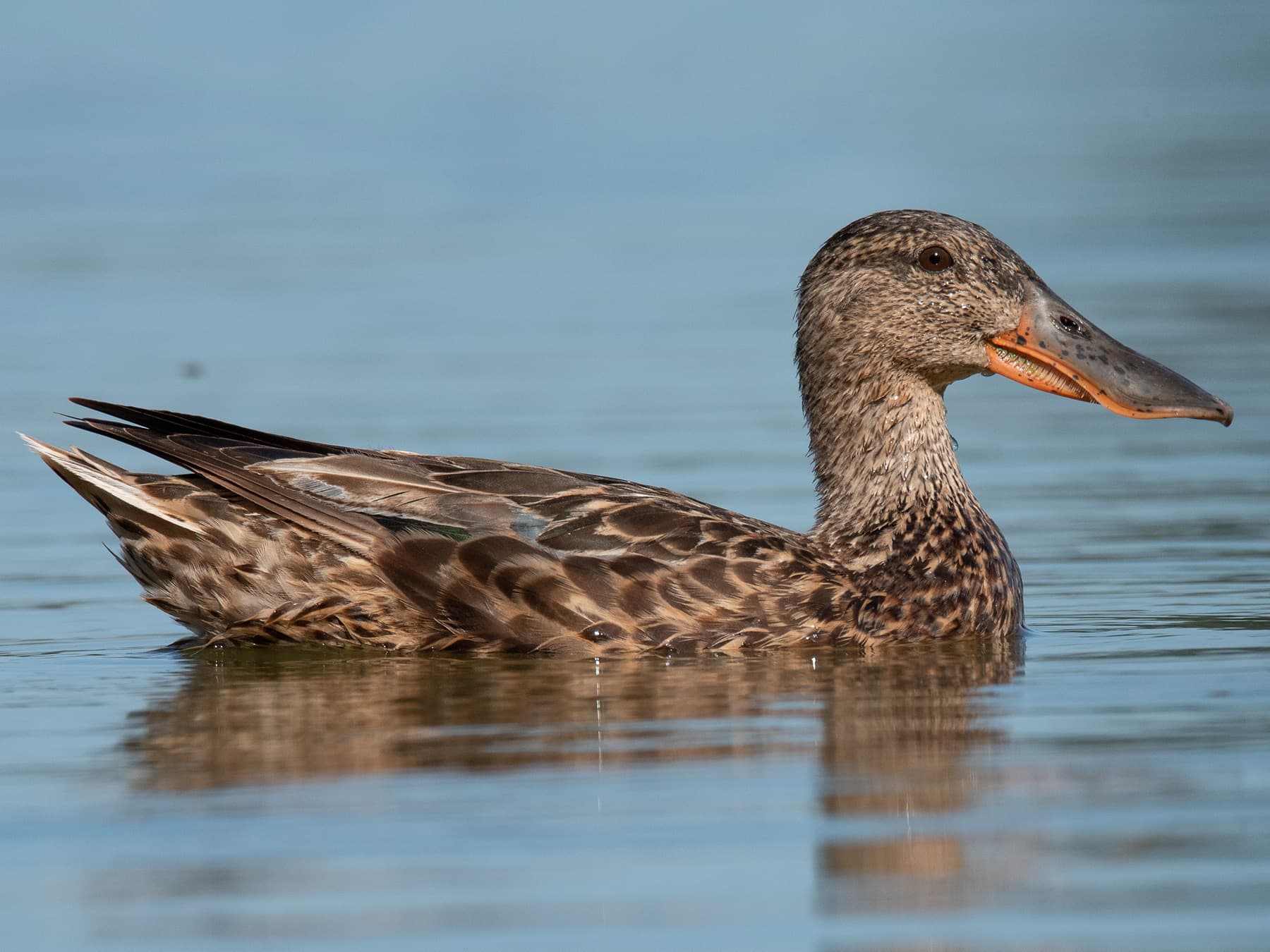 Female Northern Shoveler
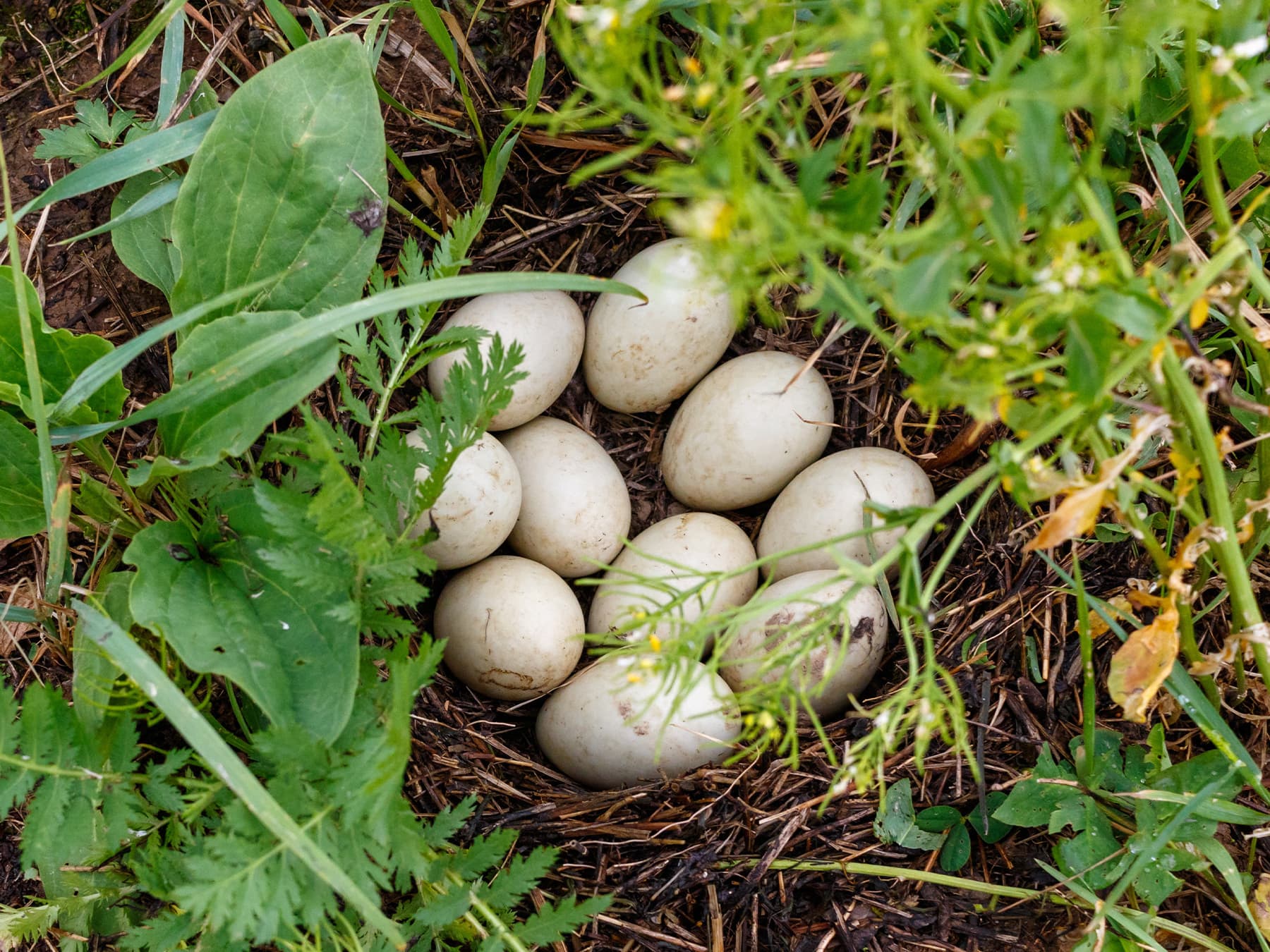 Nest of a Northern Shoveler with ten eggs
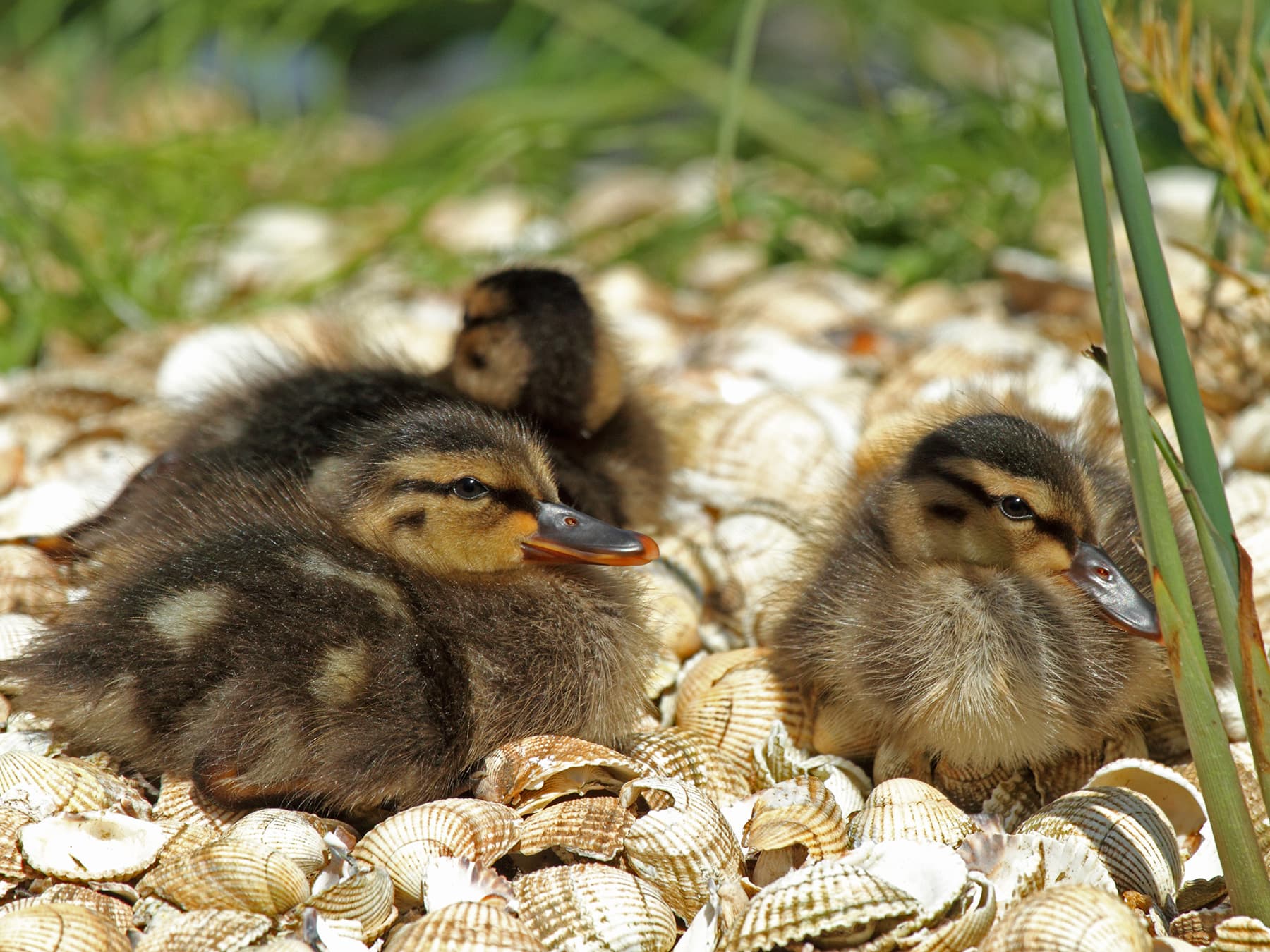 Northern Shoveler ducklings
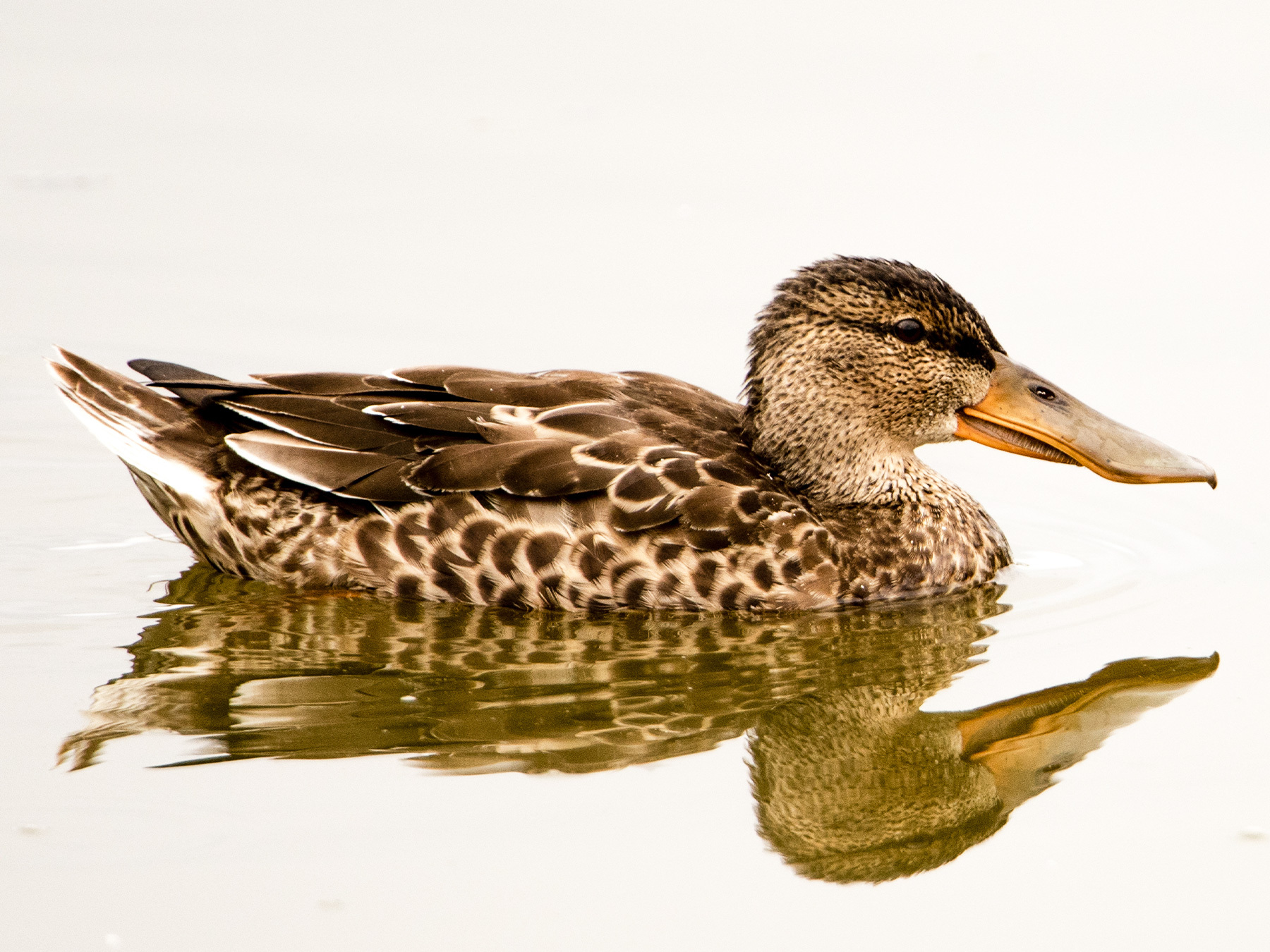
Northern Shoveler guides
1 guidesQuick facts
- Length
- 44–51 cm
- Wingspan
- 70–84 cm
- Weight
- 400–1000 g
- Lifespan
- 3 years · oldest recorded 22 years
- Family
- Ducks, Geese & Swans
- Migration
- Long-distance Migrant
- Global status (IUCN)
- Least Concern
- World population
- 6,500,000 - 7,000,000 individuals
- Population trend
- Decreasing
- Also called
- Shoveler
- Scientific name
- Spatula clypeata
Questions
3Is a northern shoveler a diving duck?
Northern shovelers are dabbling ducks, not diving ducks. They get their food from the water’s surface rather than diving deep underwater.
Why do northern shovelers swim in circles?
Swimming in circles is a foraging tactic commonly used by northern shovelers to stir up aquatic invertebrates living in the muddy pond or lake bottom, with the circular movement of the water stirring them up and causing them to rise to the surface, making foraging easier.
Why are they called Shovelers?
Shovelers take their name from their distinctively shaped bills, which resemble flattened spatulas or shovels.
Sources
4- 1BirdLife International. 2019. Spatula clypeata. The IUCN Red List of Threatened Species 2019: e.T22680247A153875944. Source (opens in a new tab)
- 2Wetlands International (2015)
- 3Wetlands International (2015)
- 4Robinson and Clark, The Online Ringing Report: Bird ringing in Britain & Ireland in 2011 (2012) Source (opens in a new tab)

Checked by
Nathan Cope, founder and editor
Nathan founded Birdfact and leads its writers and contributors in the UK, the US and Canada. He has watched and studied birds for more than ten years, and checks every article and species guide before it’s published.