


Ring-billed Gull
Larus delawarensis
By the Birdfact teamChecked by Nathan Cope
On this page11 sections
How to recognise it
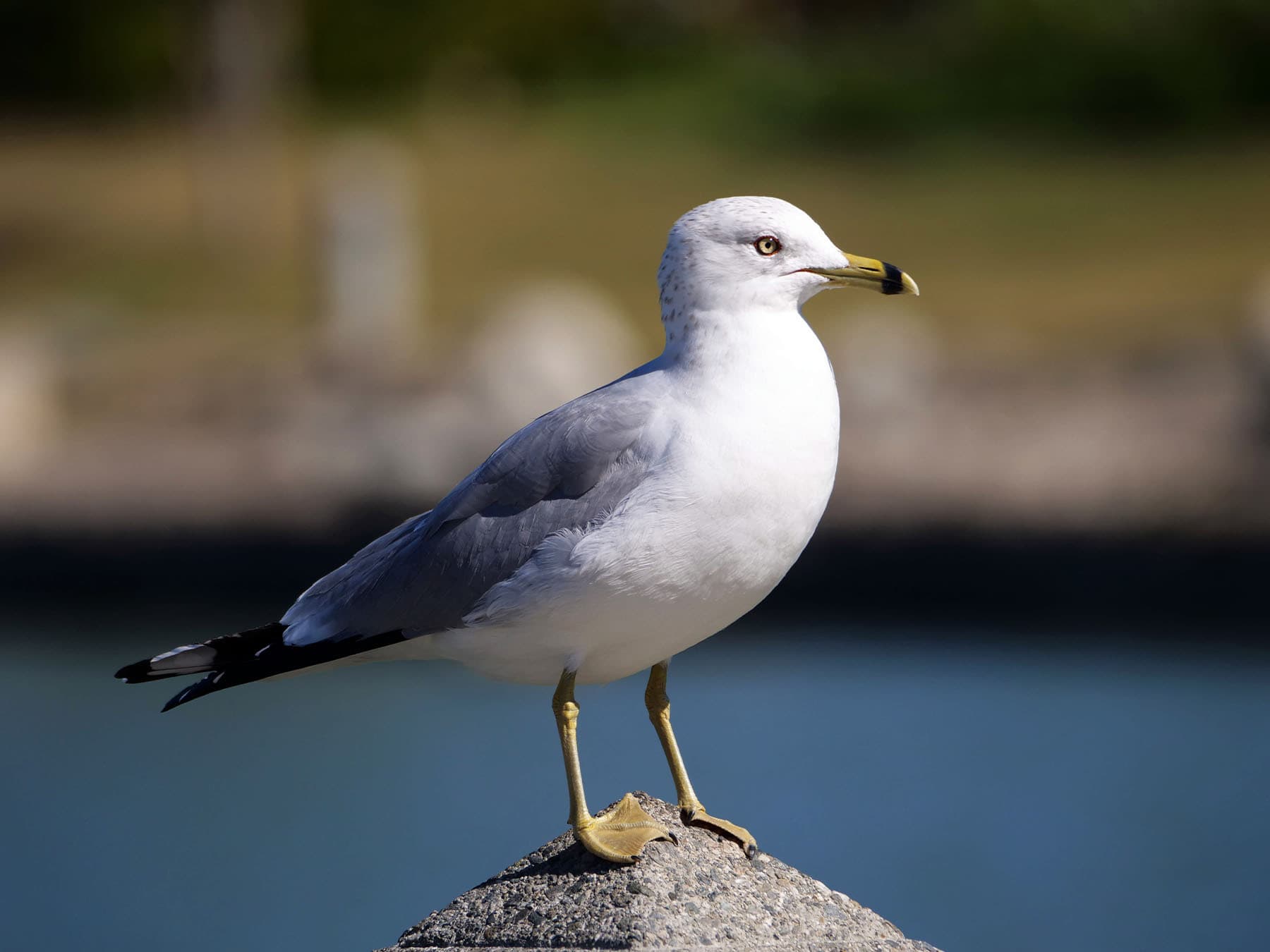
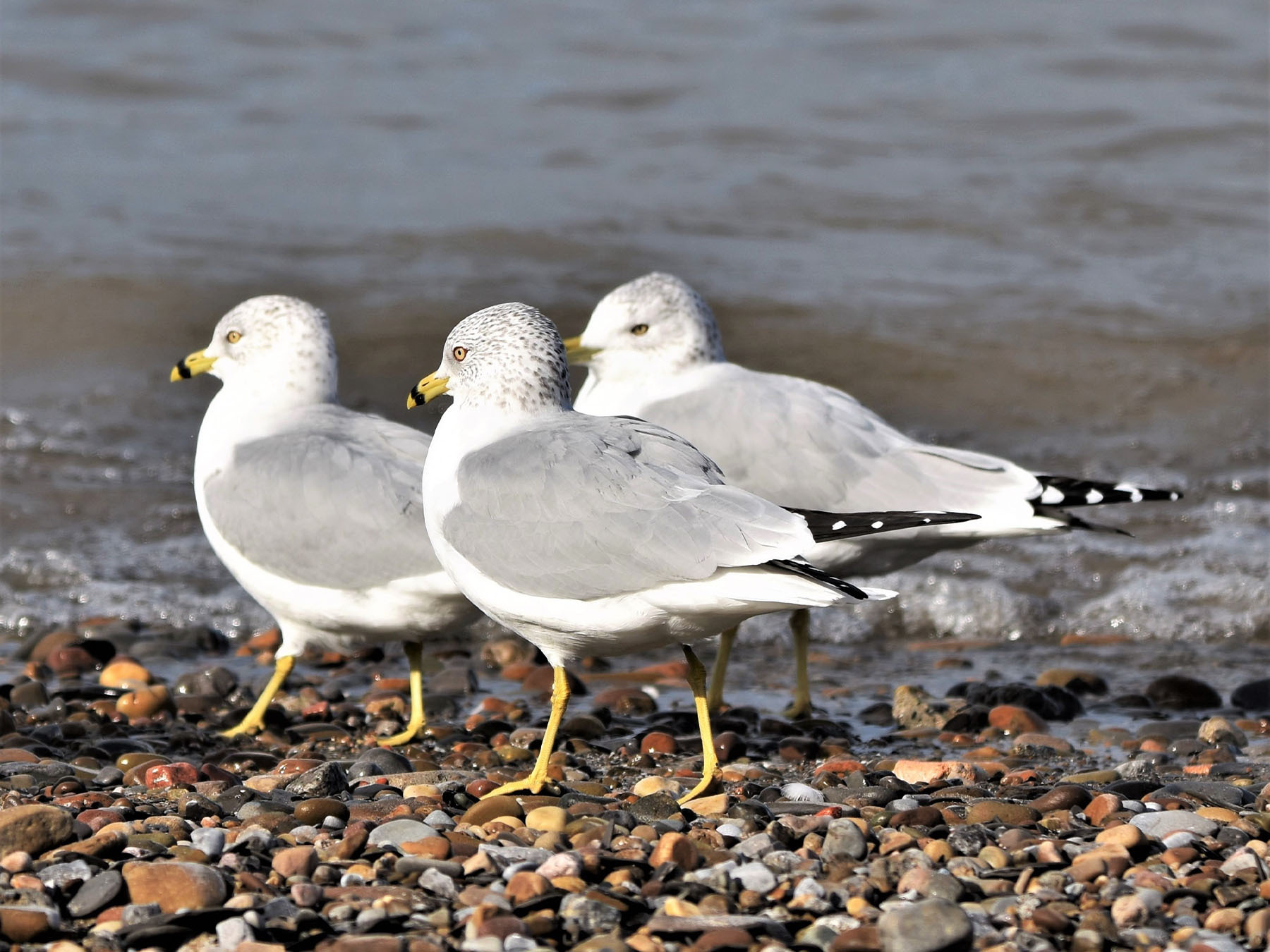
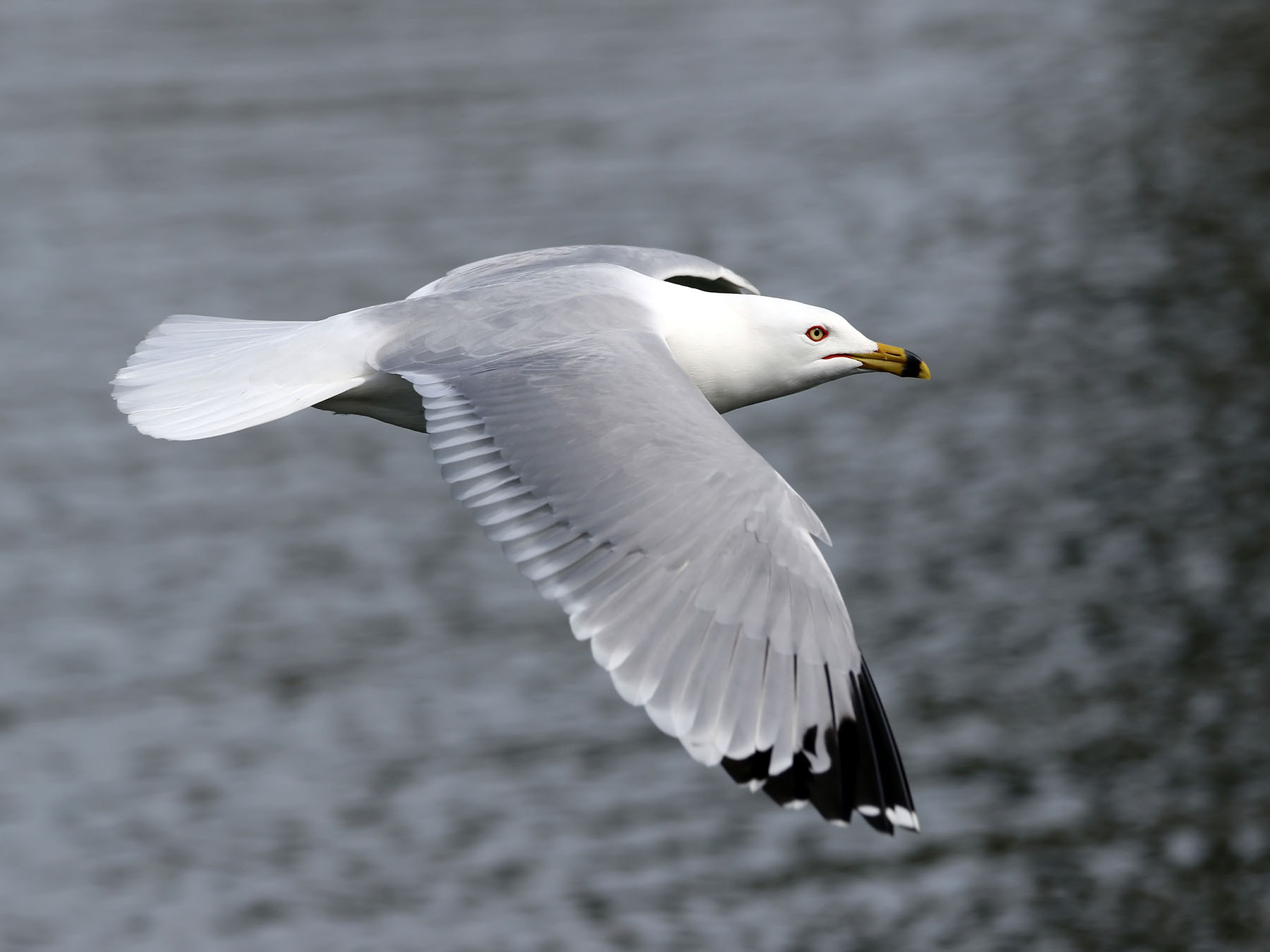
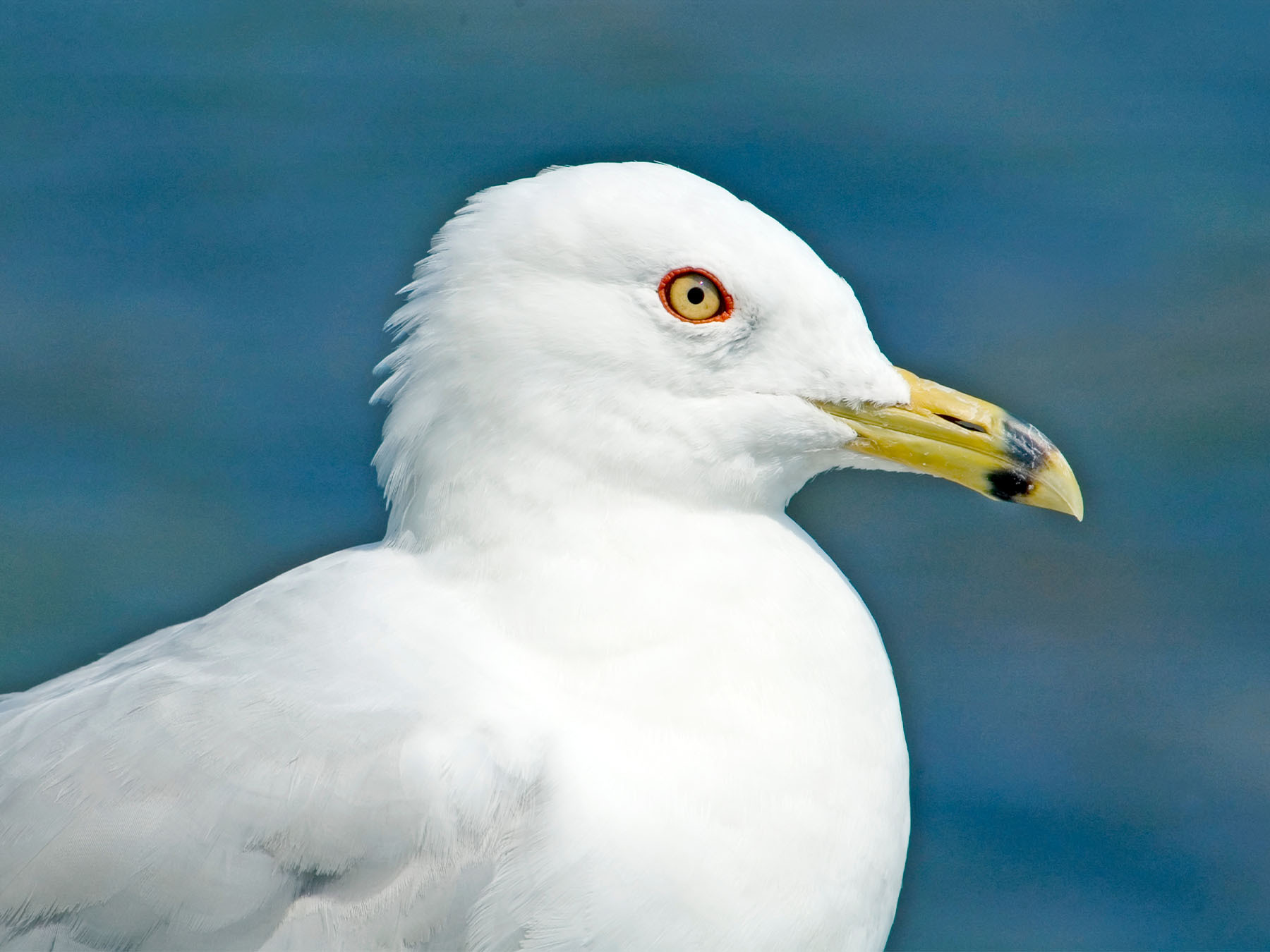
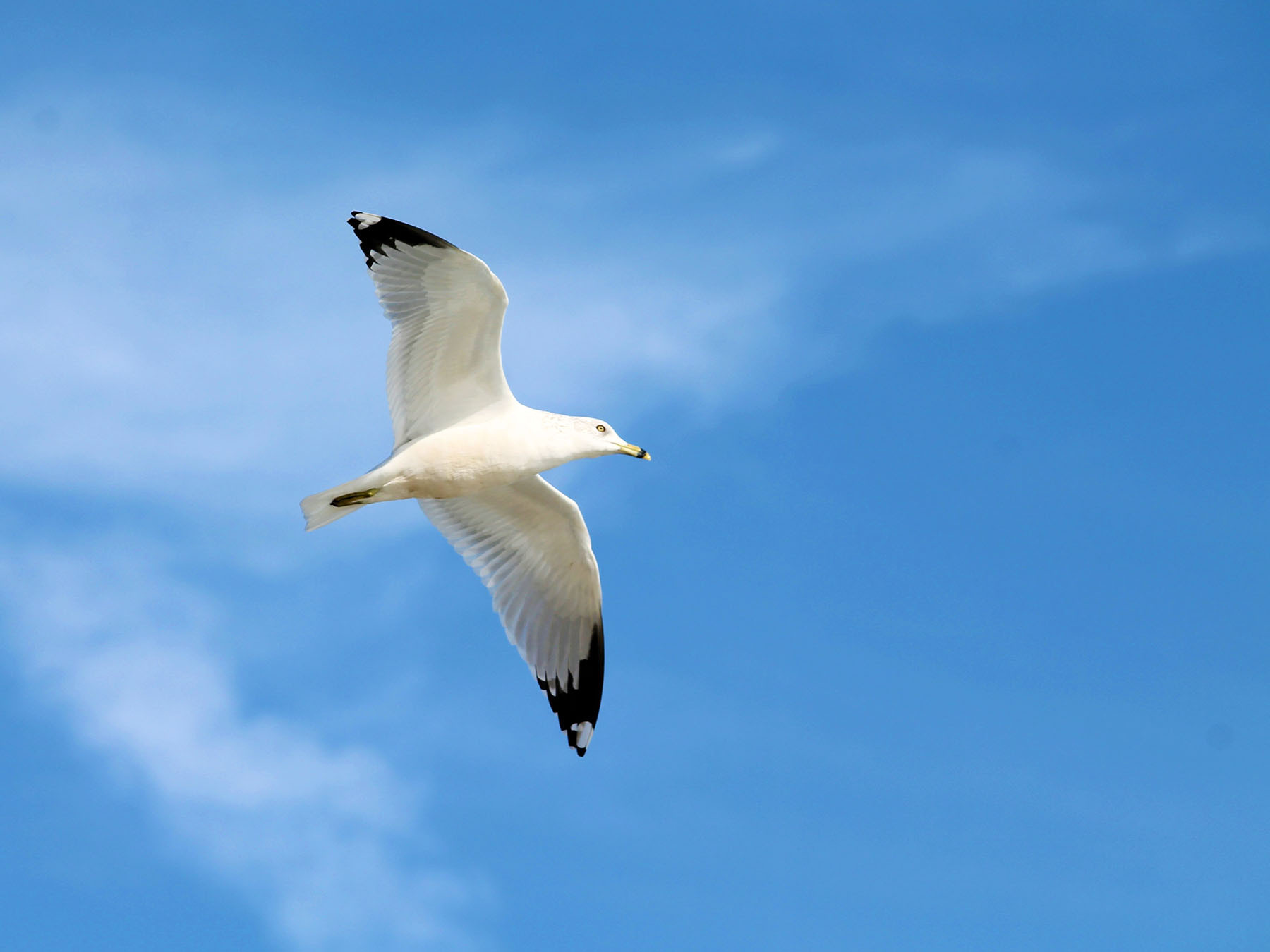
The Ring-billed Gull is a medium-sized gull with a white head, neck, and underparts. Its back and wings are pale gray, with black wingtips marked by white spots. The distinctive yellow bill features a black ring near the tip.
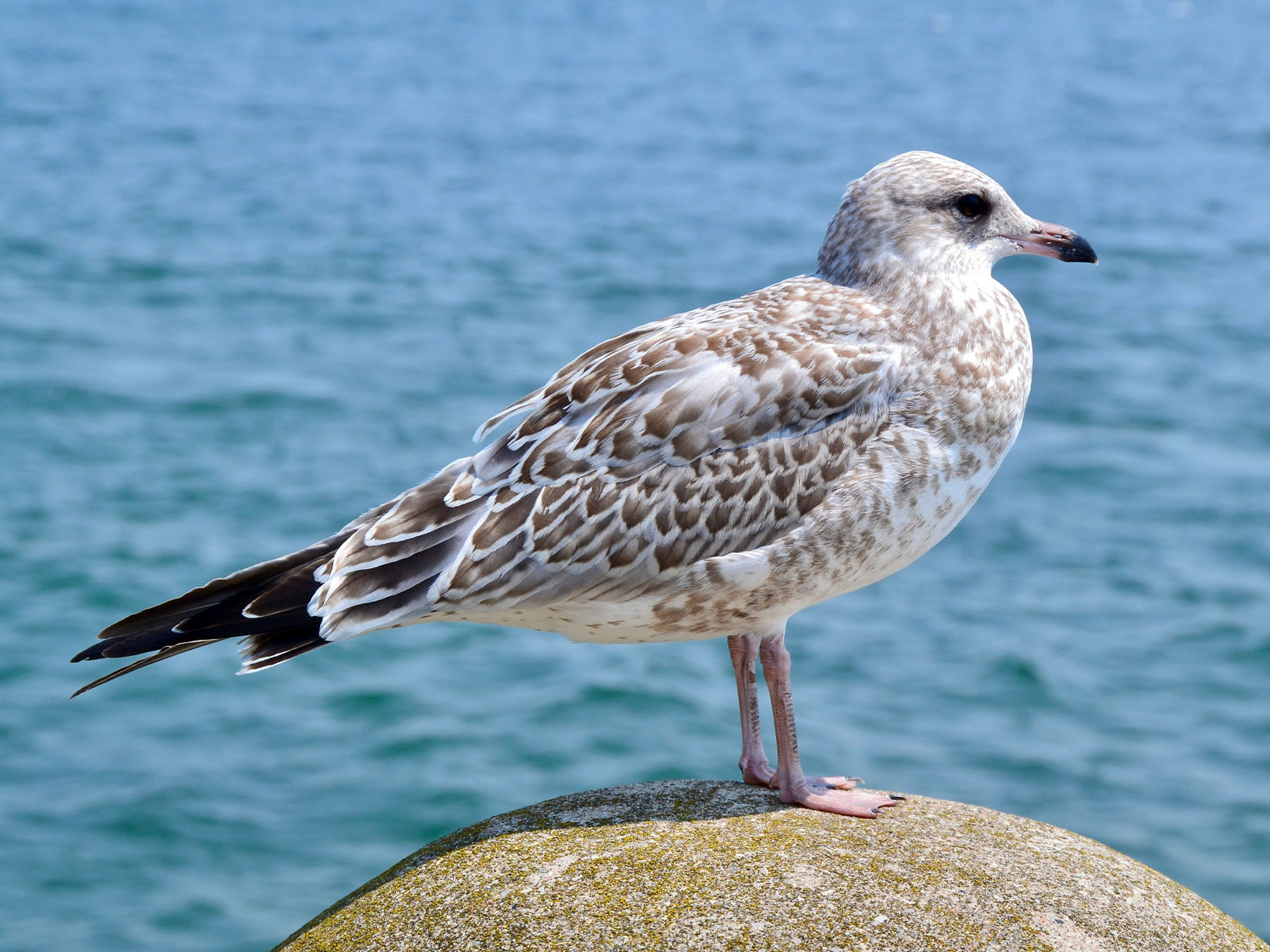
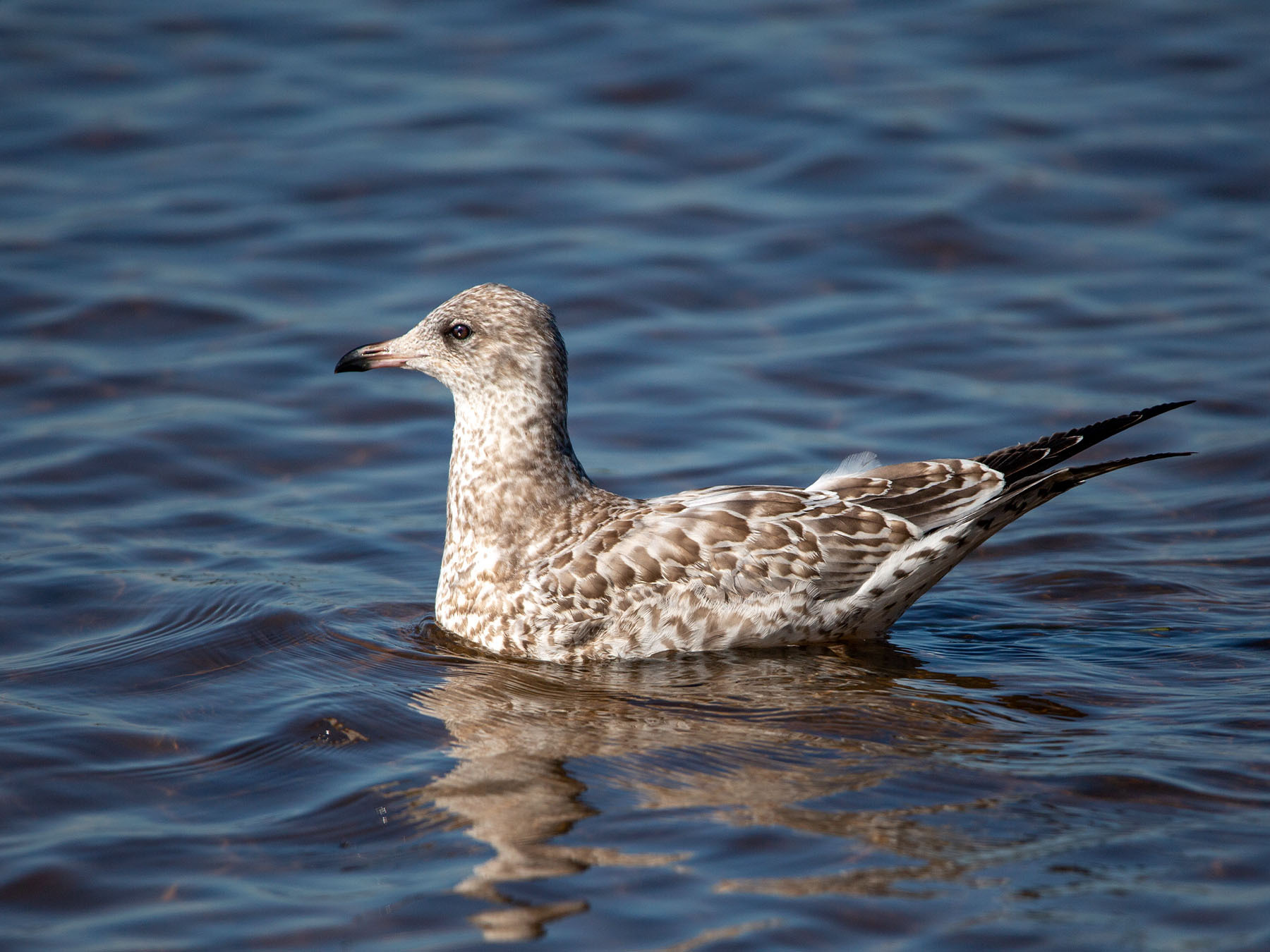
Adults have yellow legs and yellow eyes. Juveniles are drab brown with mottled patterns, gradually acquiring adult plumage over three years. Winter adults may show sparse, pale gray streaking on the head.
Its size
Adults- Length
- 43–54 cm
- Wingspan
- 112–124 cm
- Weight
- 300–700 g
Its song and calls
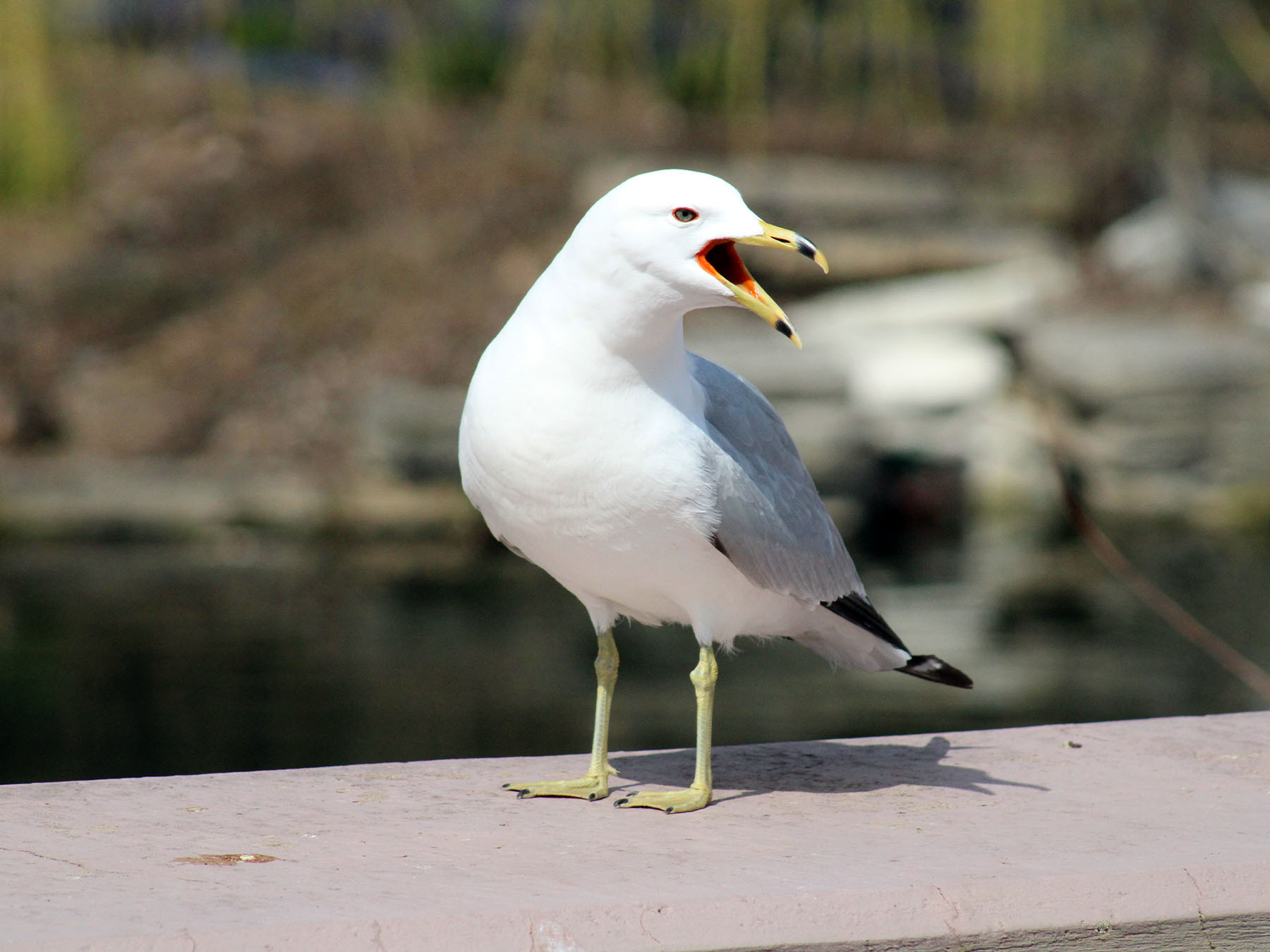
Ring-billed Gulls have a variety of calls. Their most common is a loud, harsh "kuk-kuk-kuk" or "kee-aw." During courtship, they produce a softer mewing sound.
When alarmed, they emit a sharp, high-pitched "kek-kek-kek." Their calls are often described as more musical than those of other gull species.
- Call0:00 / 0:16
Recorded in Minnesota, United States · April 2011
When and where to see it
OctoberMostly absent
Most recorded in October
Each dot is a county, state or province: the bigger and darker, the larger the bird’s share of that place’s bird records that month. Grey dots: no regular records. The ringed point is the centre of the bird’s records this month; the arrow shows how it moved since last month, and the dashed loop its path through the year. “Arrivals” colours places where it becomes regular this month (orange) or is in its last regular month (grey). GBIF eBird Observation Dataset, 2019–2024. Map data: Natural Earth, US Census Bureau; place centres © OpenStreetMap contributors.
In your area
See when the Ring-billed Gull is recorded in your county, state or province.
How often the Ring-billed Gull turns up in the UK, Ireland, the United States and Canada through the year, from birdwatchers' records.
United Kingdom
Winter visitor · regularly Dec–Jun · most records in February
Ireland
Winter visitor · regularly Oct–Mar · most records in February
United States
Resident · all year · most records in January
Canada
Resident · all year · most records in November
Show as a table
| Month | United Kingdom | Ireland | United States | Canada |
|---|---|---|---|---|
| January | 0.003% (regular) | 0.035% (regular) | 1.2% (regular) | 0.92% (regular) |
| February | 0.004% (regular) | 0.068% (regular) | 1.1% (regular) | 0.70% (regular) |
| March | 0.002% (regular) | 0.027% (regular) | 0.95% (regular) | 2.1% (regular) |
| April | <0.001% (regular) | 0.002% | 0.51% (regular) | 2.1% (regular) |
| May | <0.001% (regular) | – | 0.32% (regular) | 1.2% (regular) |
| June | <0.001% (regular) | <0.001% | 0.26% (regular) | 1.1% (regular) |
| July | <0.001% | 0.006% | 0.45% (regular) | 1.5% (regular) |
| August | – | 0.005% | 0.70% (regular) | 2.1% (regular) |
| September | – | 0.008% | 0.69% (regular) | 2.3% (regular) |
| October | – | 0.011% (regular) | 0.79% (regular) | 2.6% (regular) |
| November | <0.001% | 0.019% (regular) | 1.2% (regular) | 2.7% (regular) |
| December | 0.002% (regular) | 0.028% (regular) | 1.2% (regular) | 1.4% (regular) |
Recorded regularly in
Worldwide: recorded regularly in 30 countries
Countries where it was recorded in at least 3 of the 6 years 2019–2024. Linked countries have their own bird list.
Asia (1)
North America (20)
- Bahamas
- Belize
- Bermuda
- Canada
- Cayman Islands
- Costa Rica
- Cuba
- Dominican Republic
- Guadeloupe
- Guatemala
- Honduras
- Martinique
- Mexico
- Panama
- Puerto Rico
- Sint Maarten
- St Pierre & Miquelon
- Turks & Caicos Islands
- United States
- US Virgin Islands
Data: EOD – eBird Observation Dataset (Cornell Lab of Ornithology), accessed via GBIF.org, CC BY 4.0. Records from 2019–2024, aggregated and filtered by Birdfact. How these lists are made
Tips for seeing it
- Look for Ring-billed Gulls near water bodies, parking lots, and urban parks
- Observe their distinctive black ring on the bill for easy identification
- Watch for their habit of dropping hard-shelled prey from height to crack it open
- In the US and Canada, they're common near the Great Lakes and coastal areas
What it eats
Ring-billed Gulls have a diverse diet, including fish, insects, earthworms, rodents, and human food scraps.
They are opportunistic feeders, often seen foraging in parking lots, beaches, and agricultural fields. These gulls will also steal food from other birds and raid unattended picnics.
Nesting and breeding
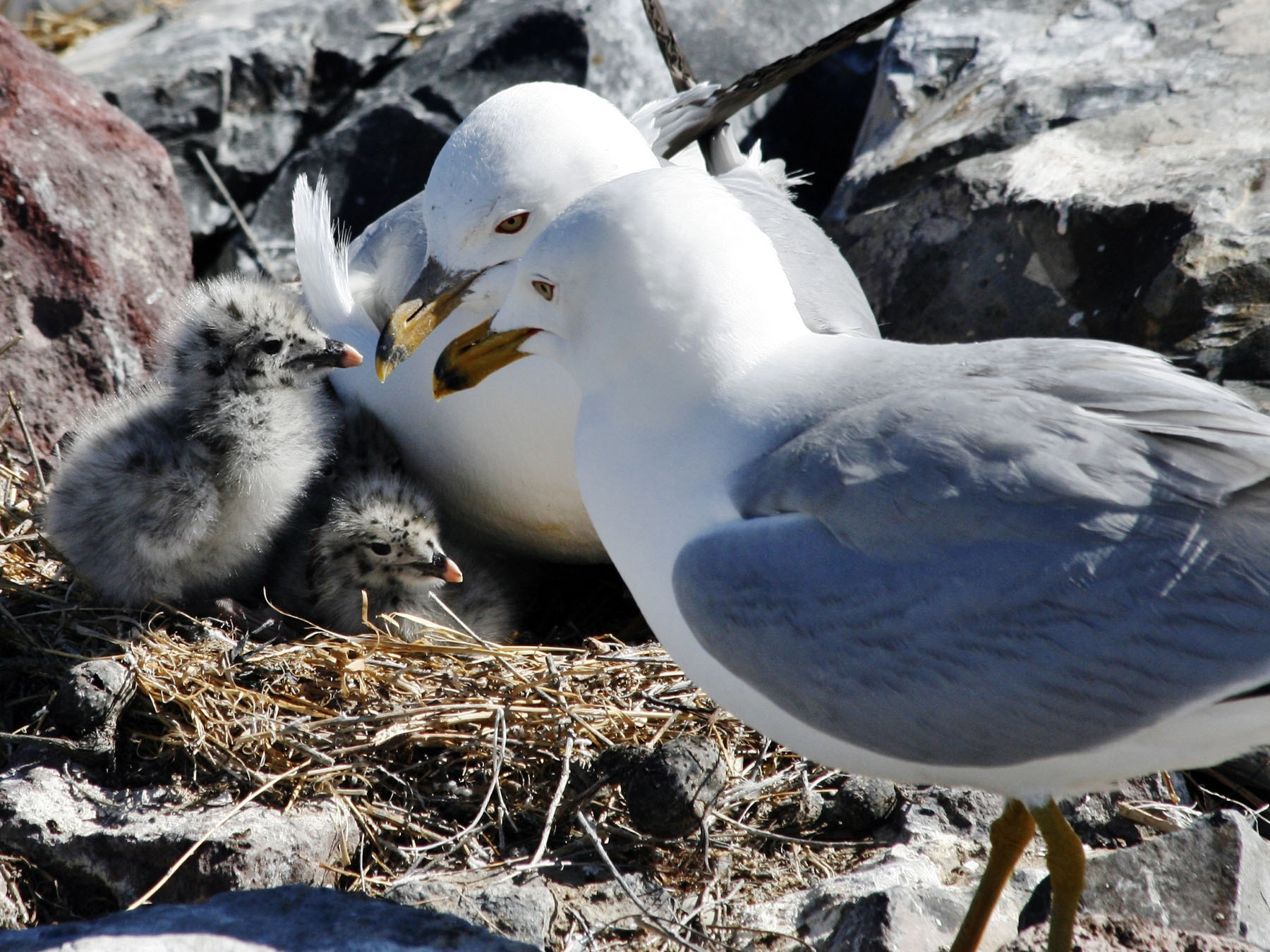
Ring-billed Gulls typically breed in large colonies on islands or near shorelines. Pair formation begins in early spring, with both sexes participating in courtship displays.
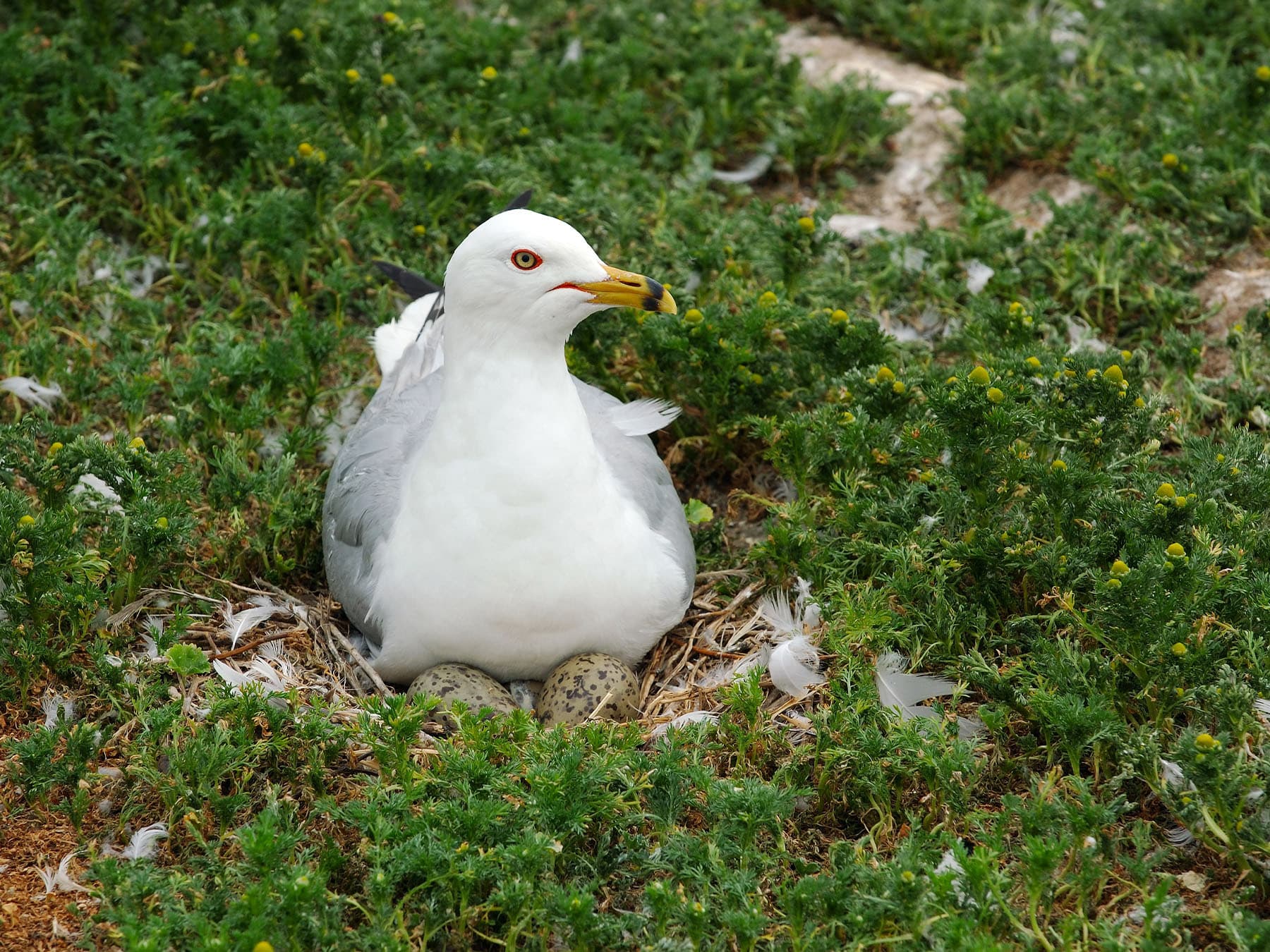
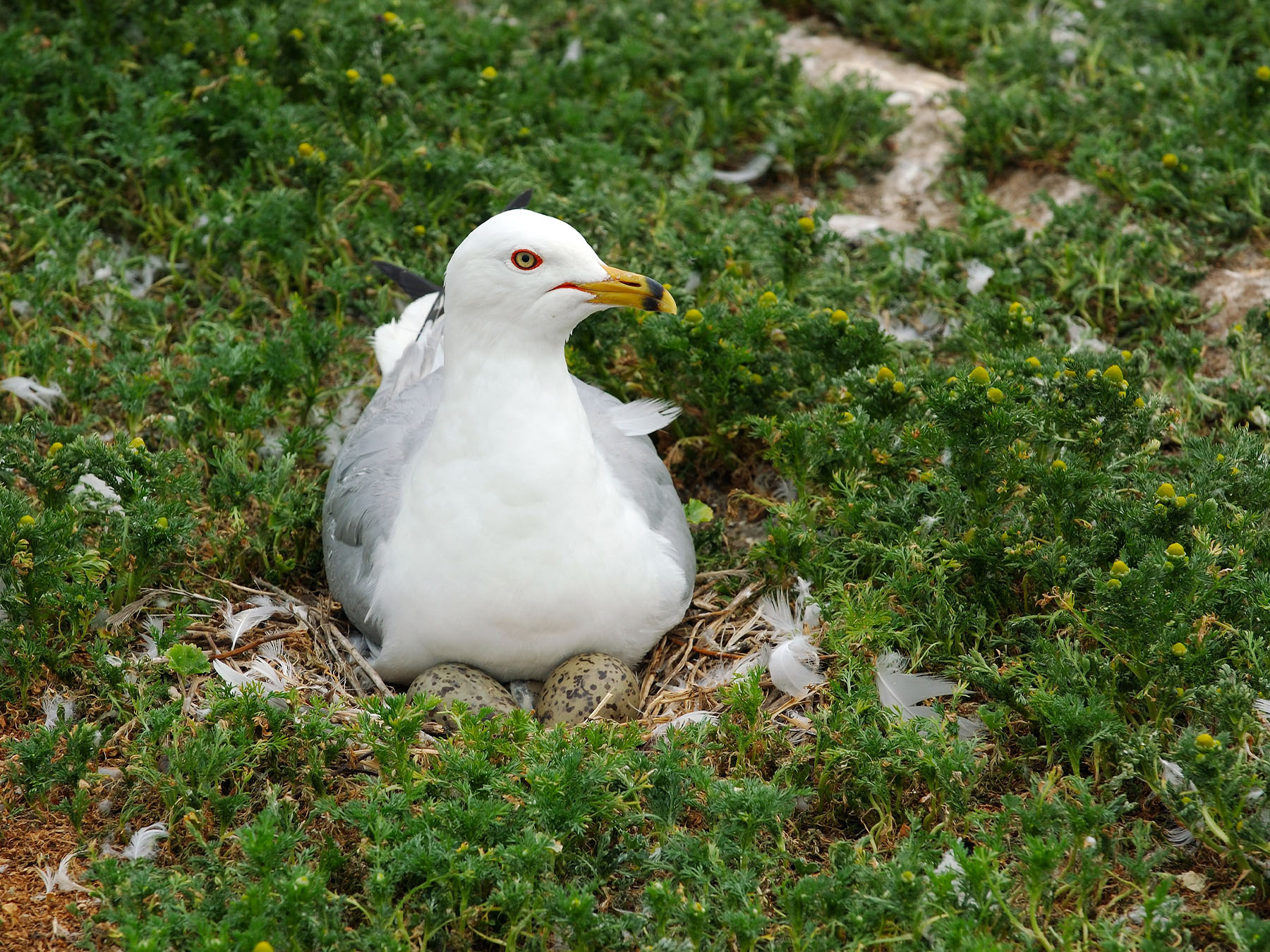
Nests are built on the ground, usually a shallow scrape lined with vegetation, feathers, and debris. Females lay 2-4 olive-brown eggs with dark splotches.
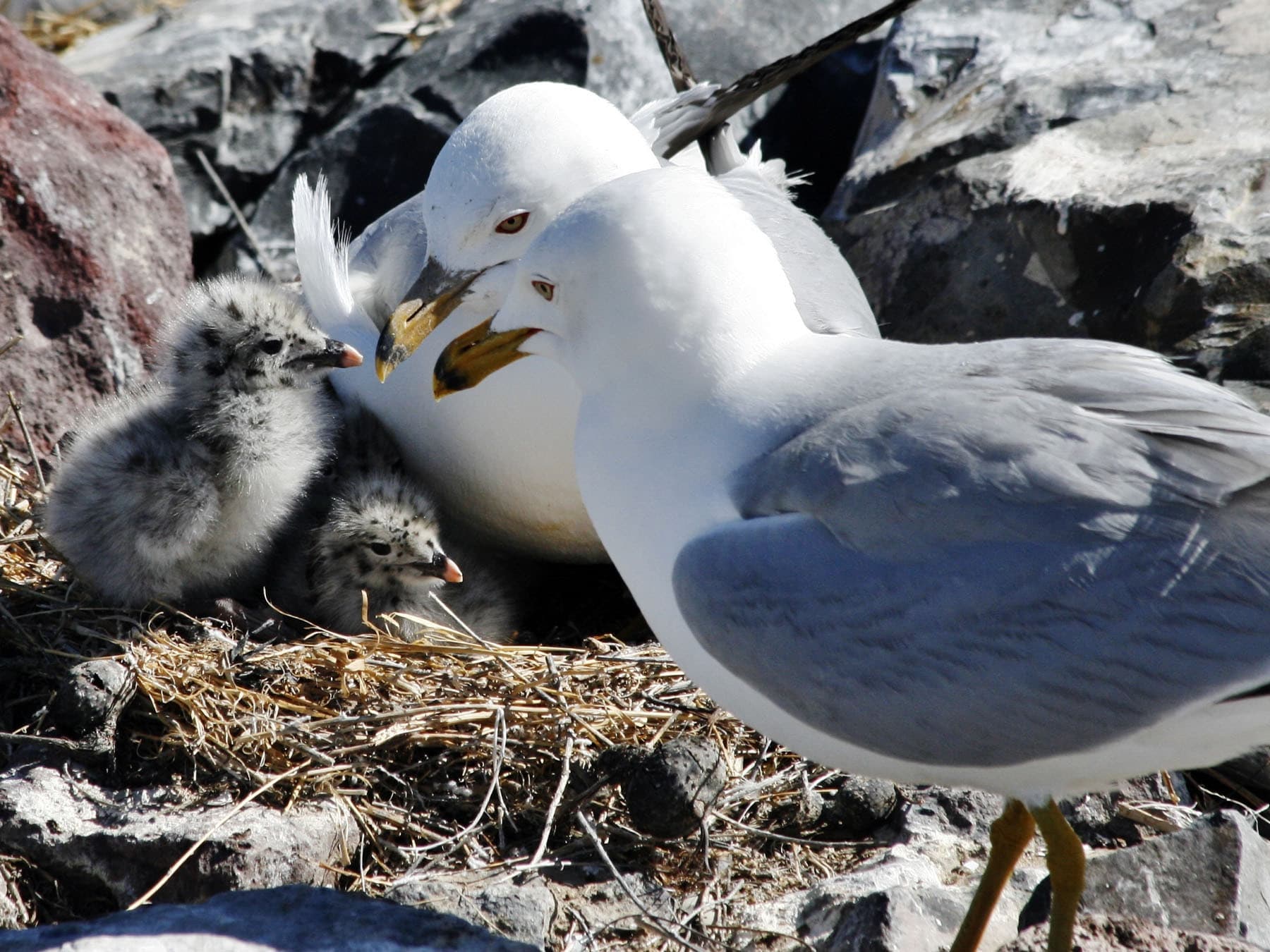
Both parents incubate the eggs for about 25 days. Chicks fledge at 5-6 weeks but may be fed by parents for several more weeks.
Behaviour
Ring-billed Gulls are highly adaptable and often seen in large, noisy flocks. They are skilled flyers, able to hover and snatch food from the water's surface.
These gulls are known for their opportunistic feeding behavior, often following plows in fields or scavenging in urban areas.
Conservation
Ring-billed Gulls are currently listed as Least Concern due to their large range and increasing population. However, they face threats from habitat loss, pollution, and climate change.
Conservation efforts focus on protecting nesting sites and managing urban interactions.
More photos
9 photos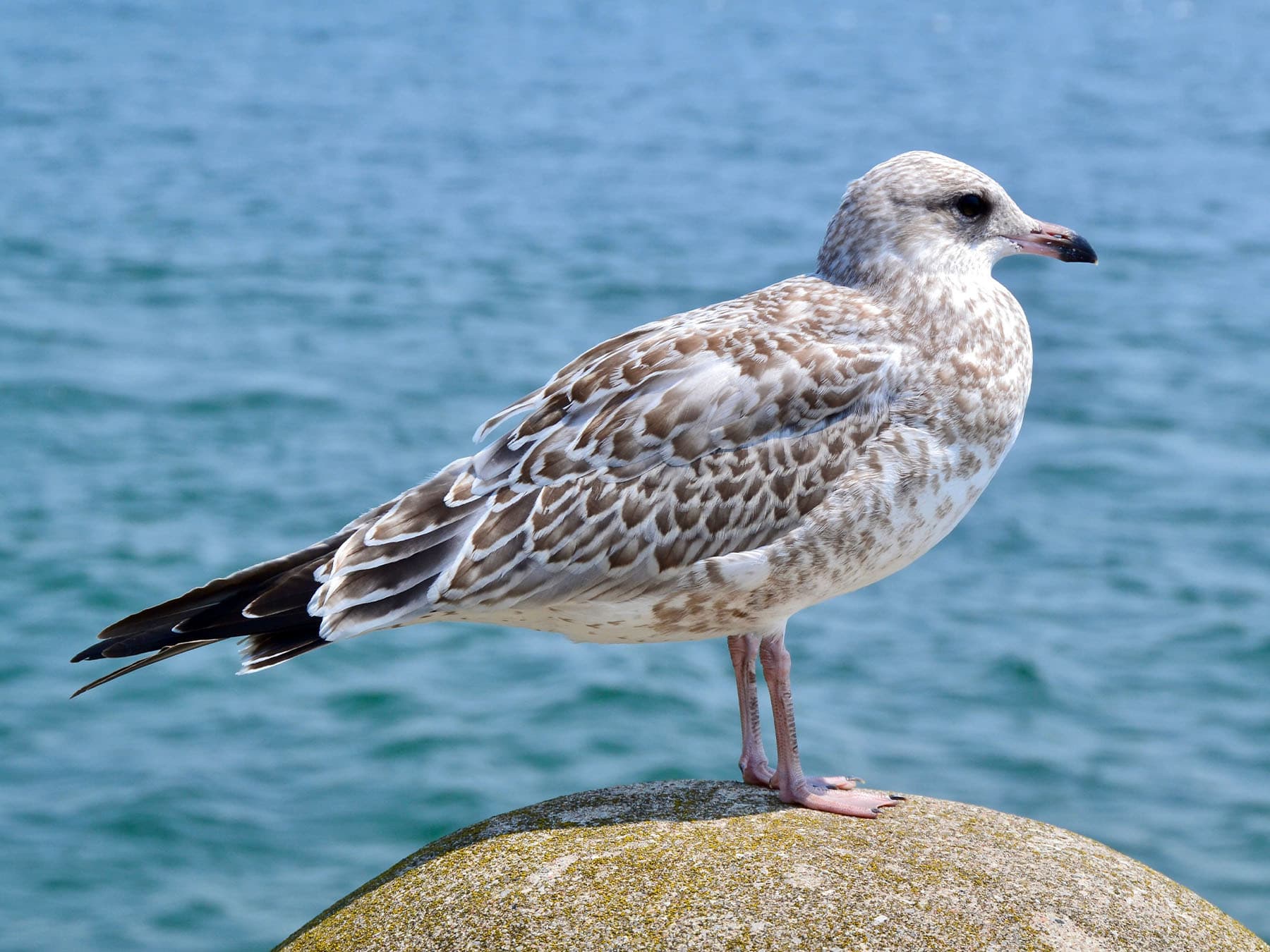 Juvenile Ring-billed Gull
 Ring-billed Gull sitting on the nest incubating eggs
 Pair of Ring-billed Gulls at the nest with their chicks
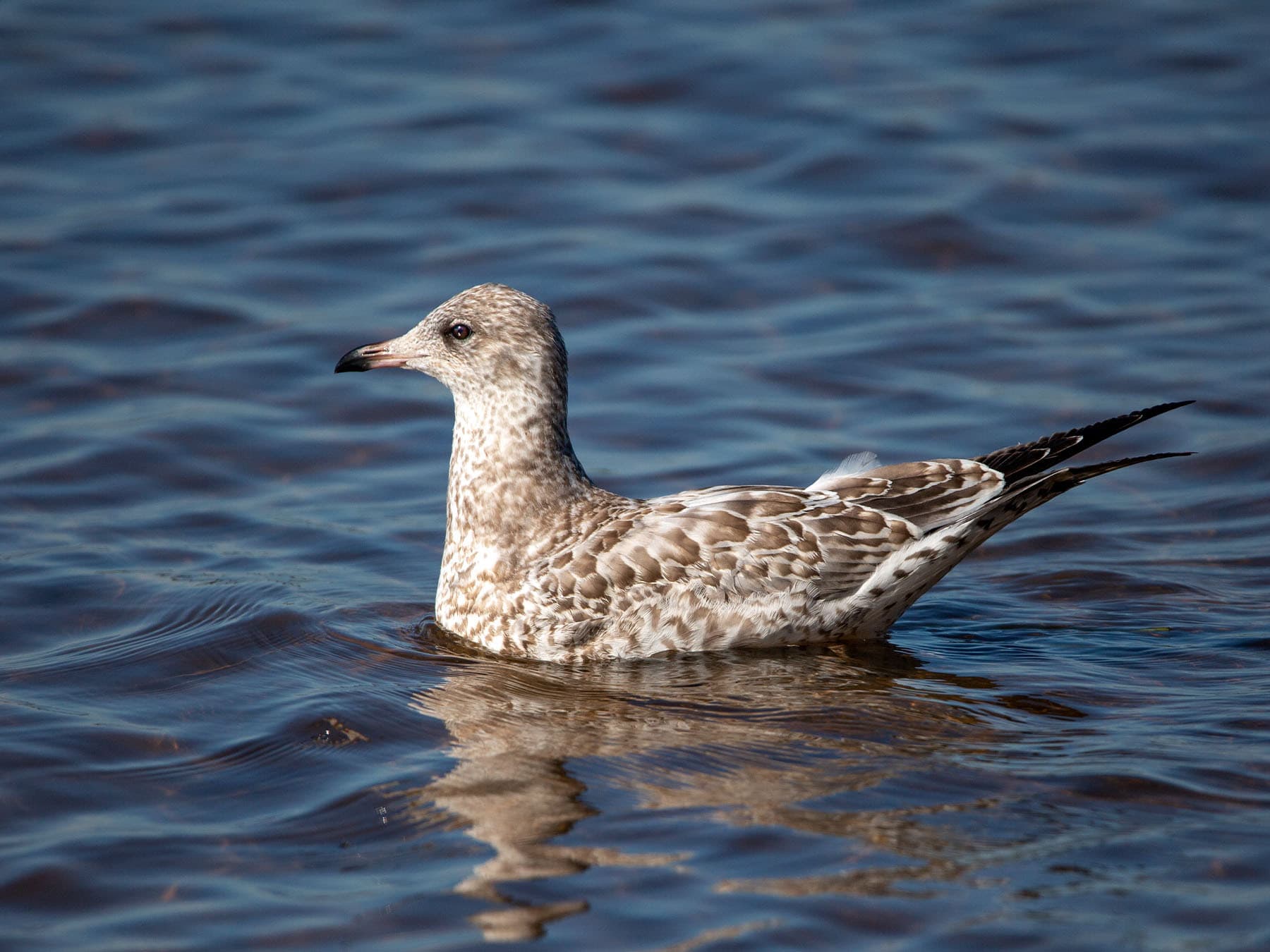 Juvenile Ring-billed Gull swimming in the sea
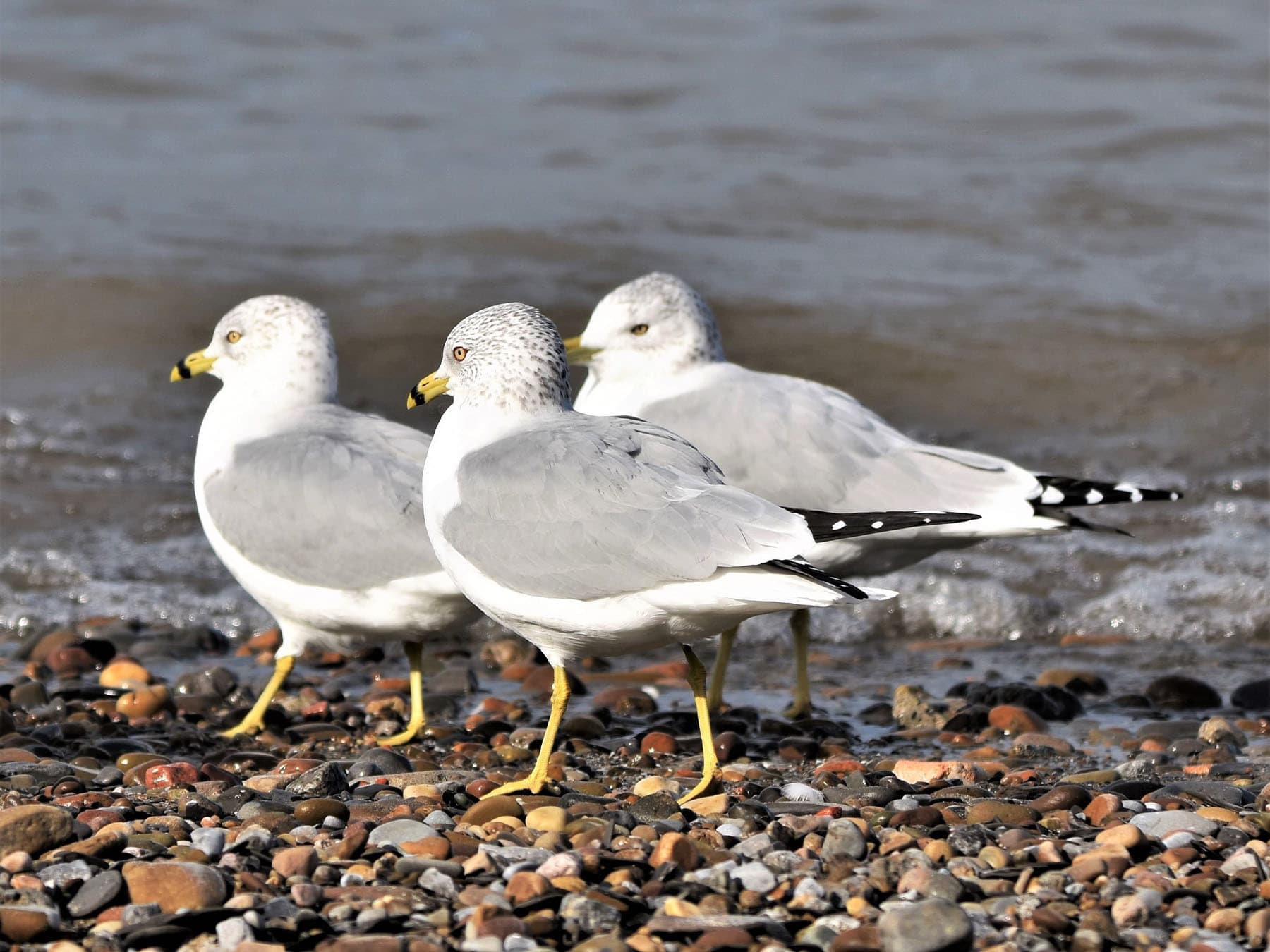 Three non-breeding Ring-billed Gulls standing by the sea
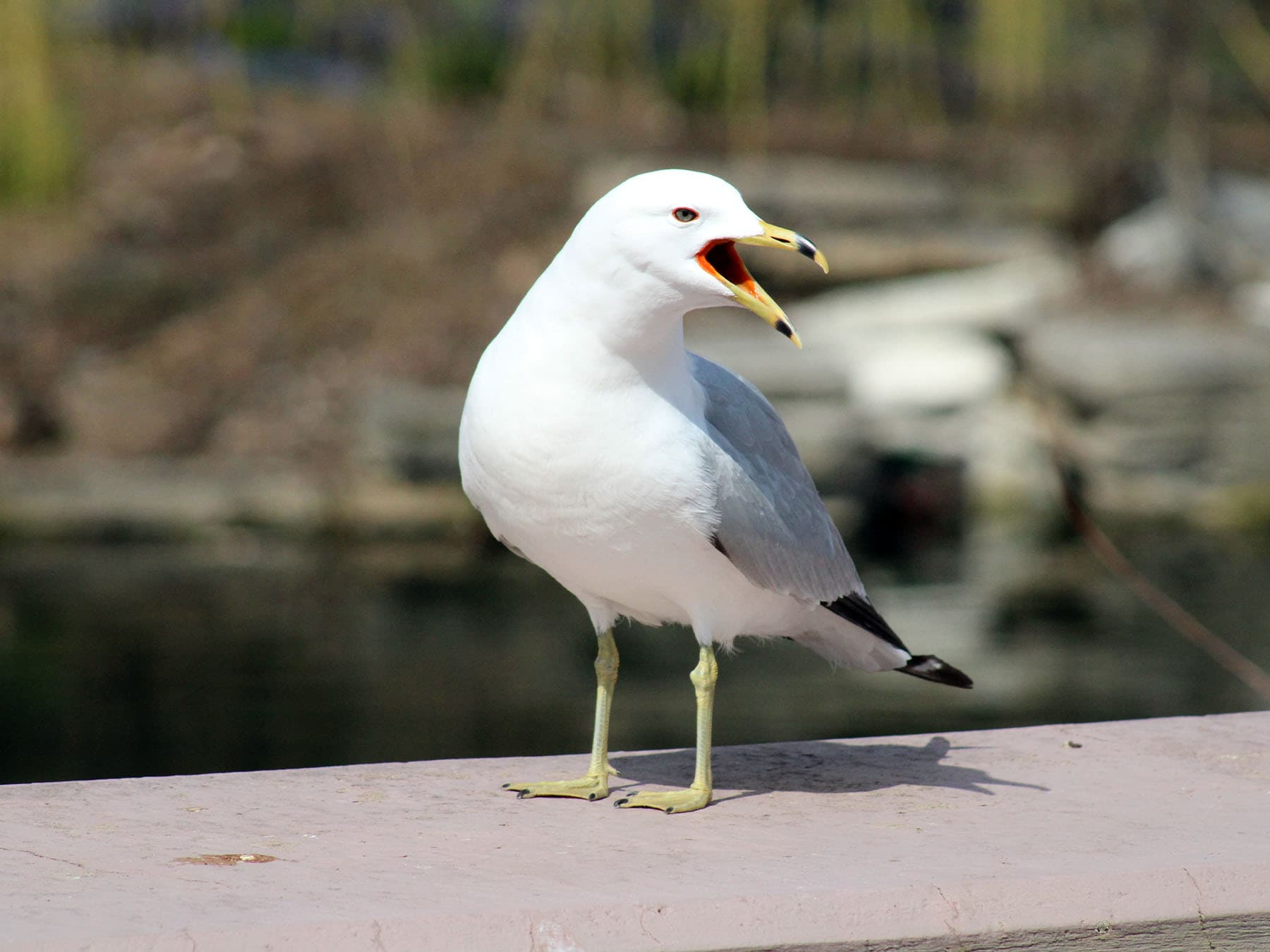 Ring-billed Gull calling
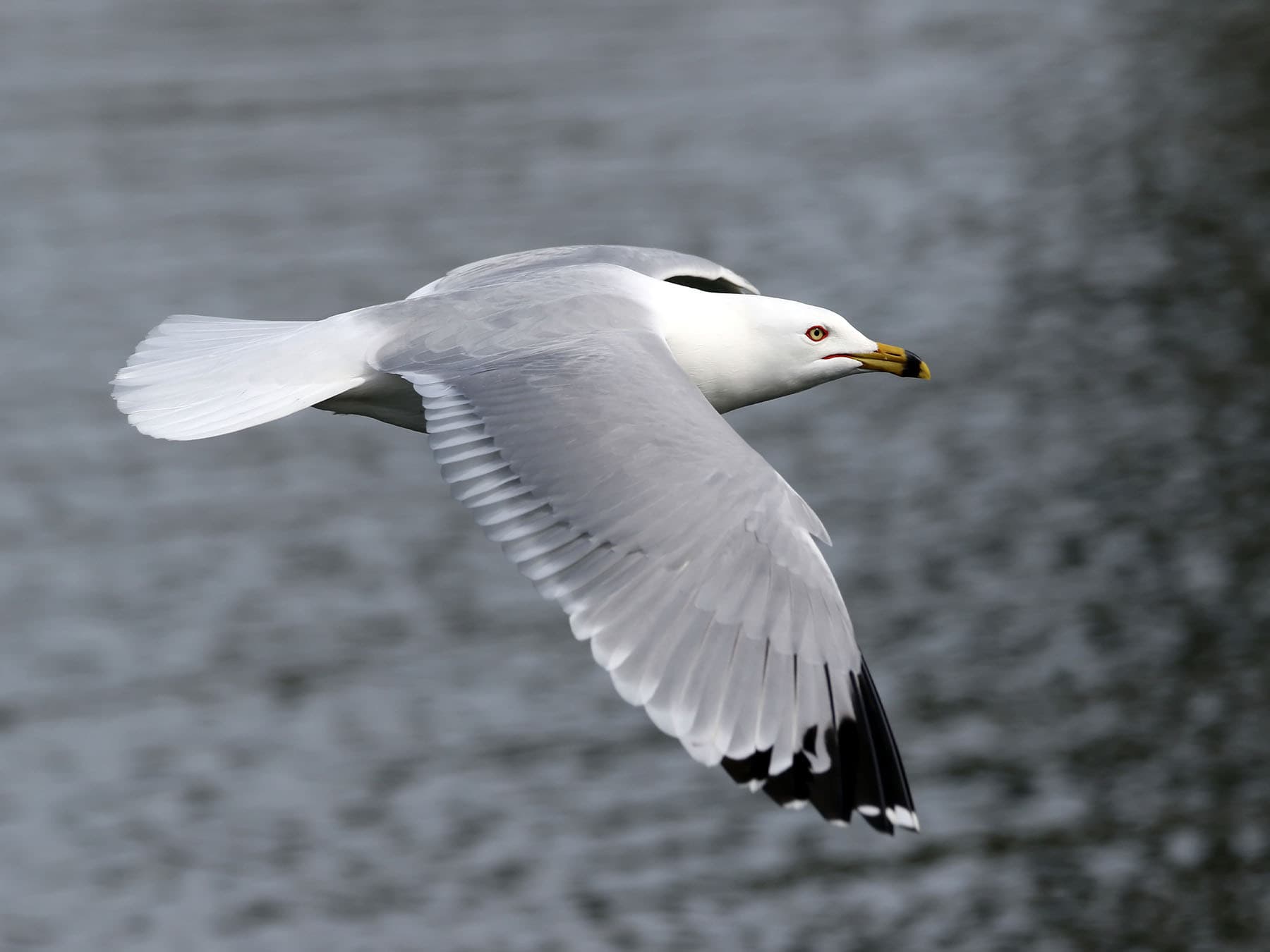 Ring-billed Gull in-flight over the sea
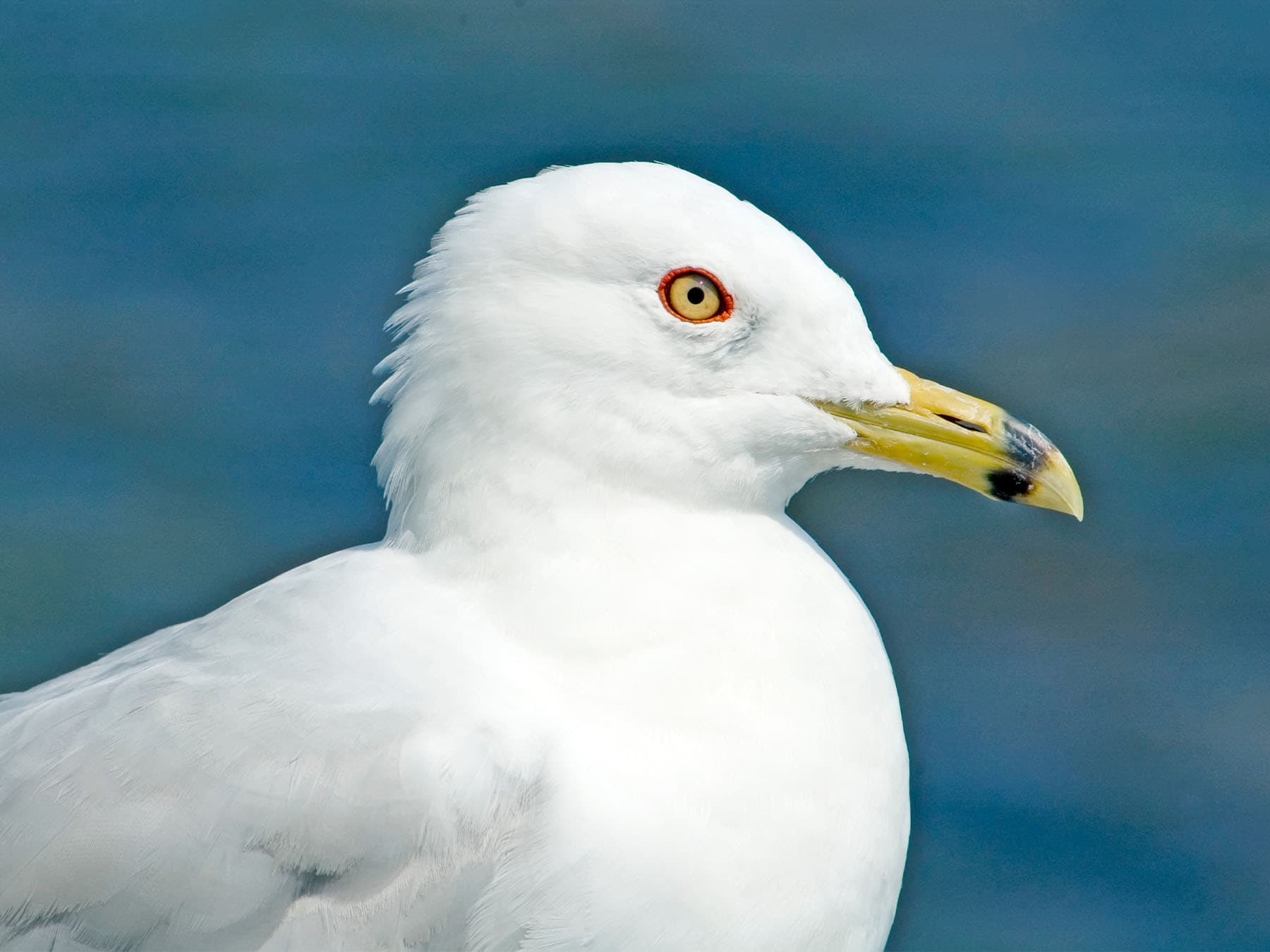 Portrait of a breeding Ring-billed Gull
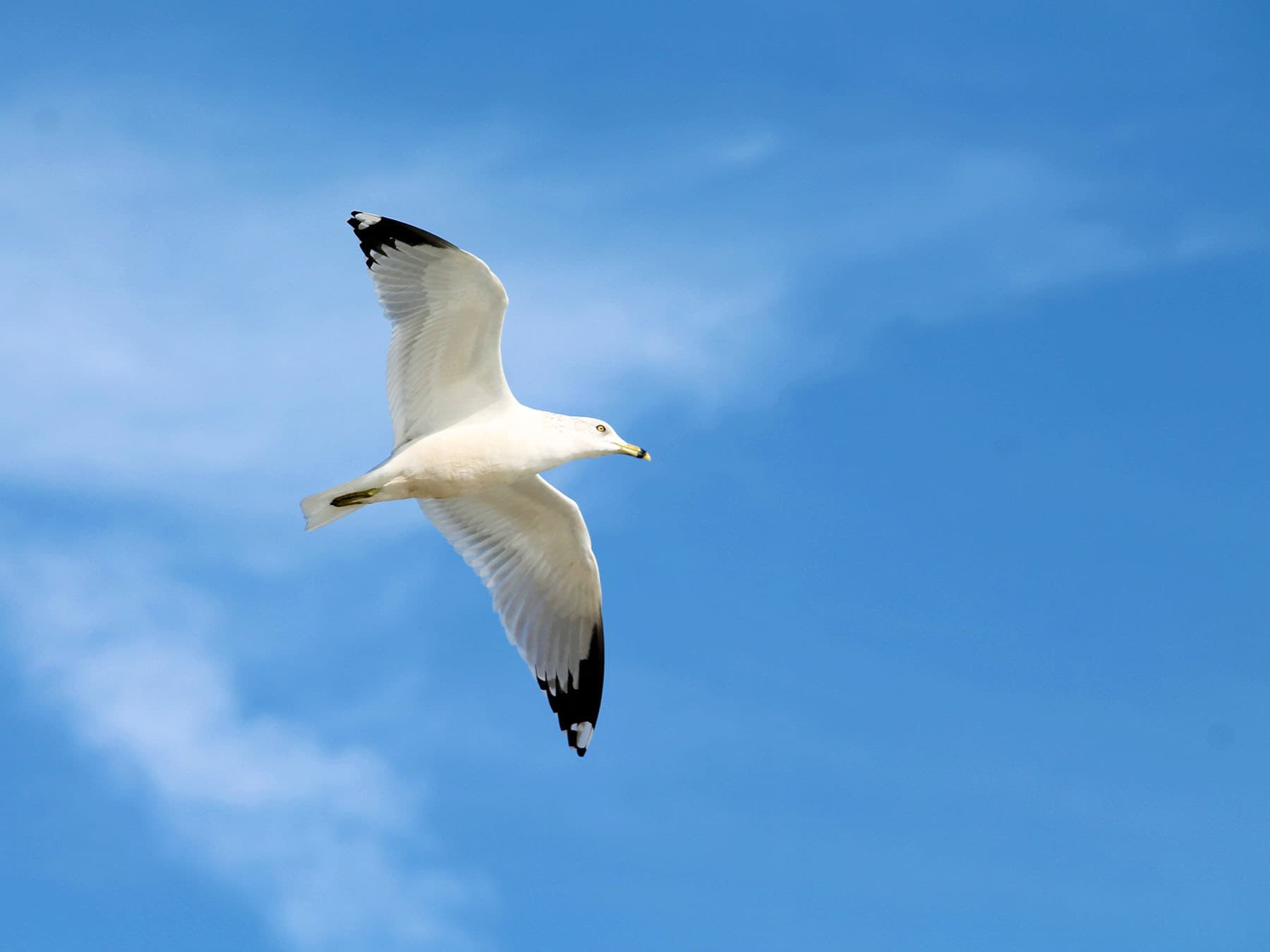 Ring-billed Gull in-flight
Quick facts
- Length
- 43–54 cm
- Wingspan
- 112–124 cm
- Weight
- 300–700 g
- Lifespan
- 10–11 years · oldest recorded 31.8 years
- Family
- Gulls & Terns
- Migration
- Partial migrant
- Global status (IUCN)
- Least Concern
- World population
- 3,800,000 mature individuals
- Population trend
- Increasing
- Scientific name
- Larus delawarensis
Sources
4- 1BirdLife International. 2018. Larus delawarensis. The IUCN Red List of Threatened Species 2018: e.T22694317A132541912. Source (opens in a new tab)
- 2data from Breeding Bird Survey and/or Christmas Bird Count: Butcher and Niven (2007)
- 3Partners in Flight (2020) Source (opens in a new tab)
- 4Carey and Judge, Longevity Records: Life Spans of Mammals, Birds, Amphibians, Reptiles, and Fish (2000) Source (opens in a new tab)

Checked by
Nathan Cope, founder and editor
Nathan founded Birdfact and leads its writers and contributors in the UK, the US and Canada. He has watched and studied birds for more than ten years, and checks every article and species guide before it’s published.