Species Profile
Red-shouldered Hawk
Buteo lineatus
Quick Facts
Conservation
LCLeast ConcernLifespan
15–19 years
Length
43–61 cm
Weight
460–930 g
Wingspan
94–107 cm
Migration
Partial migrant
Gallery
Appearance
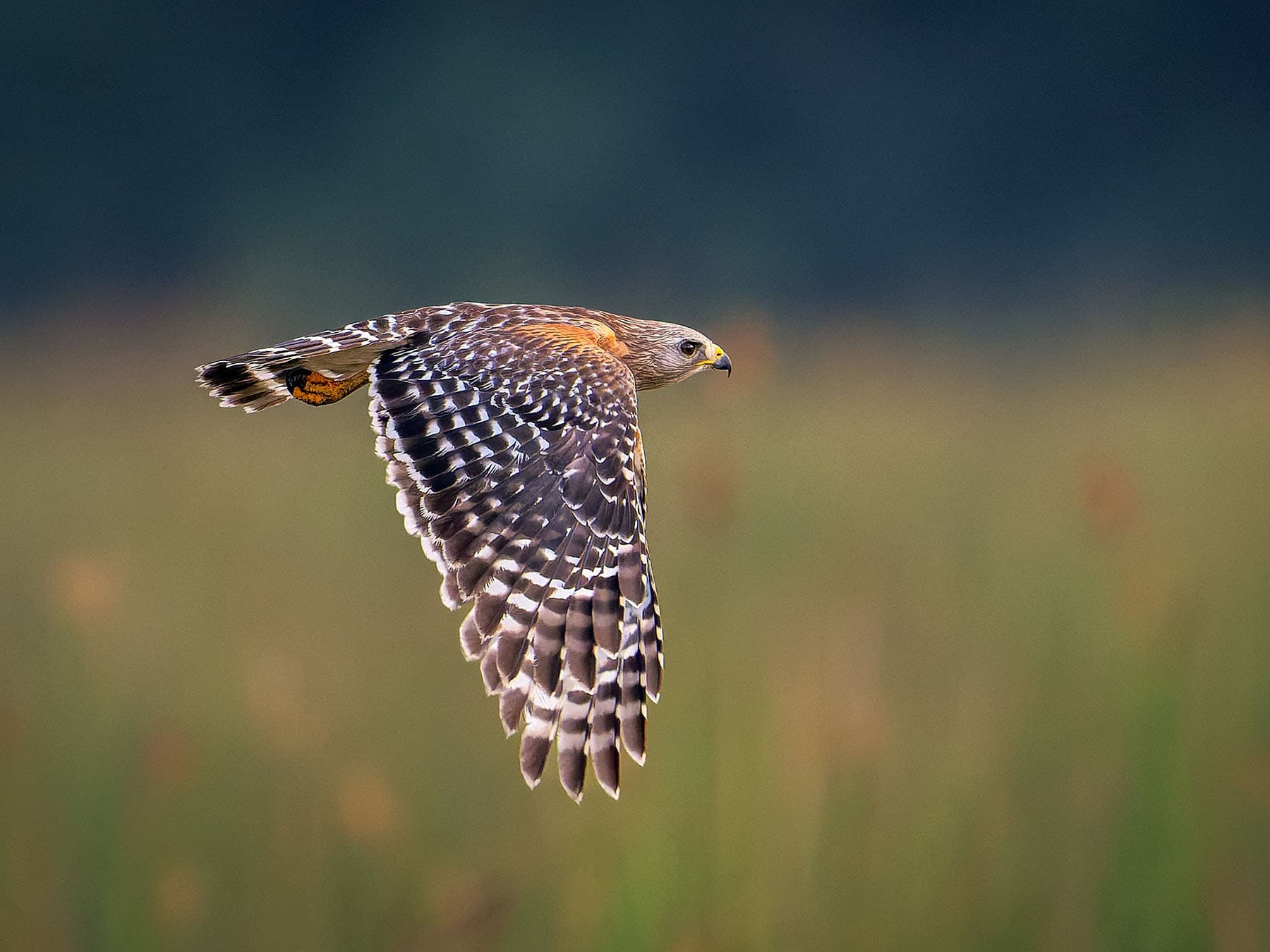
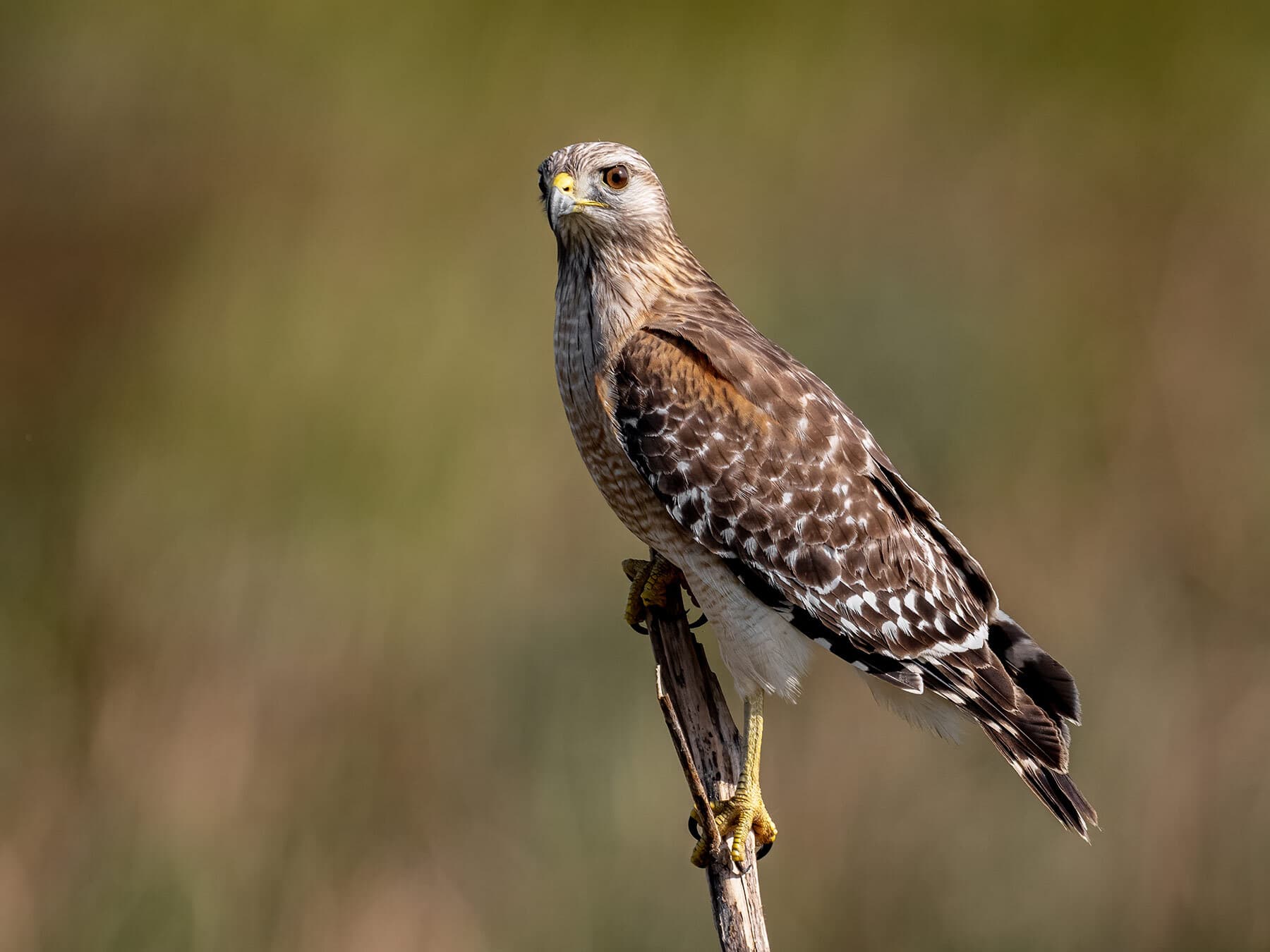
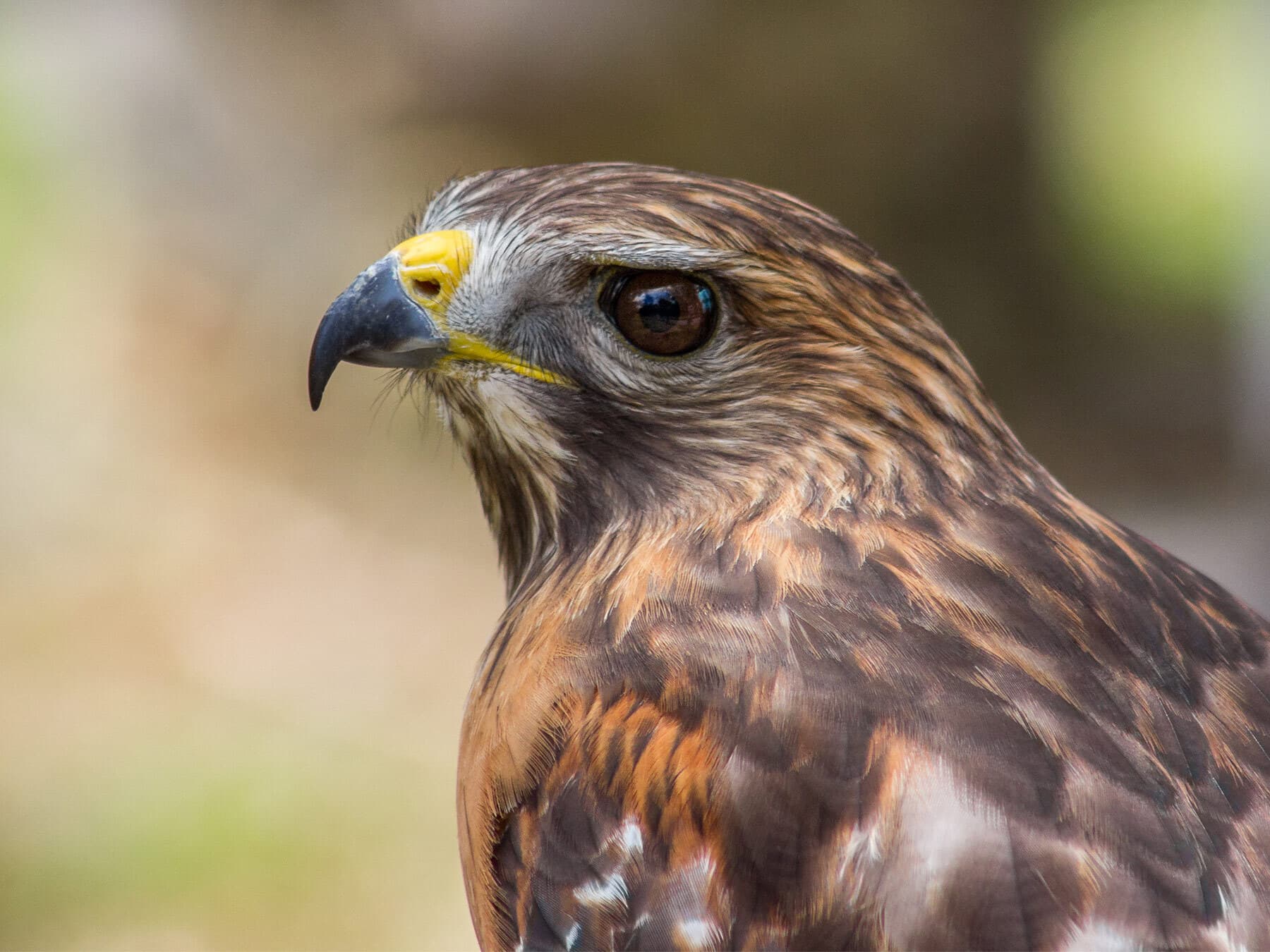
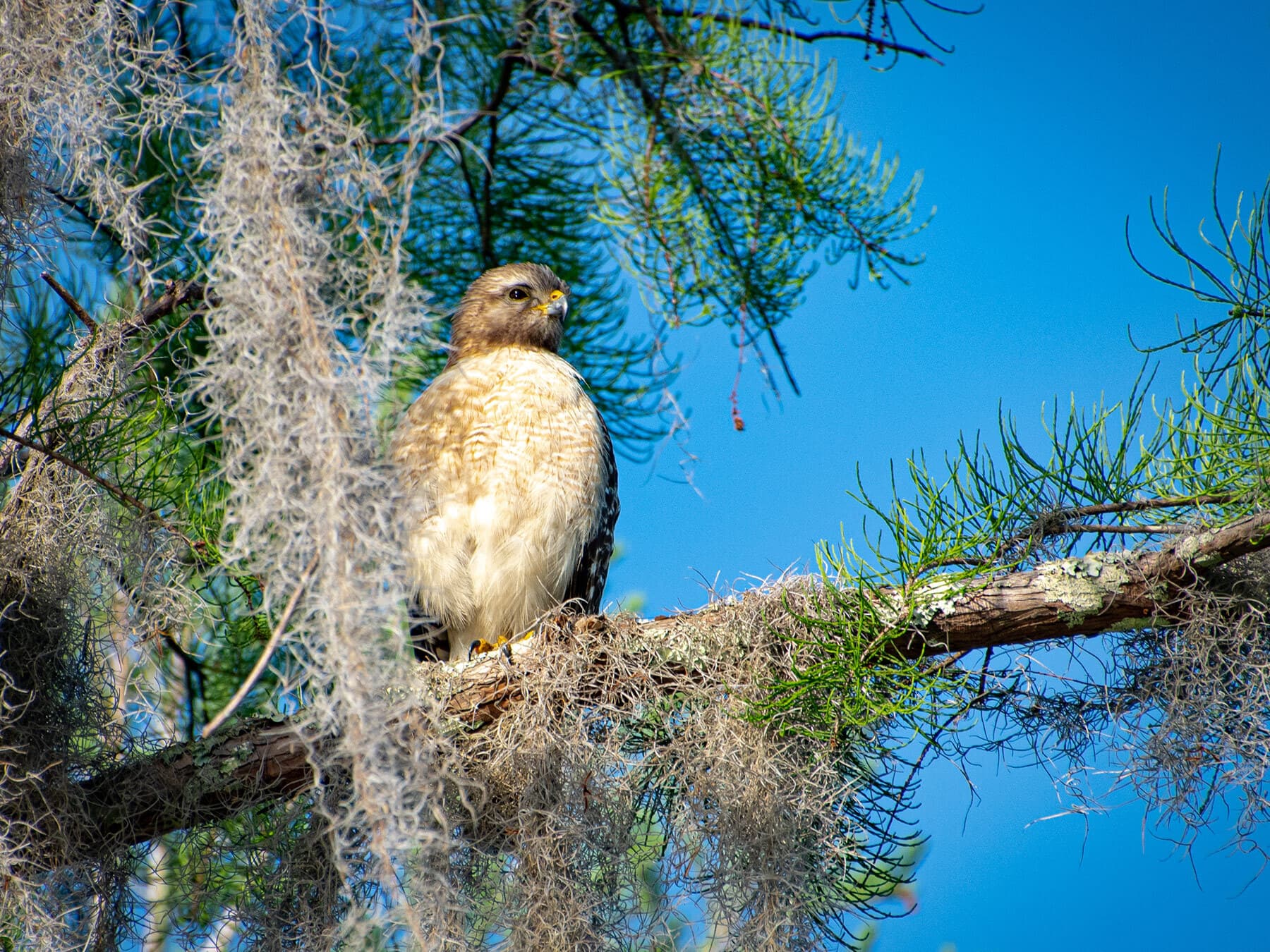
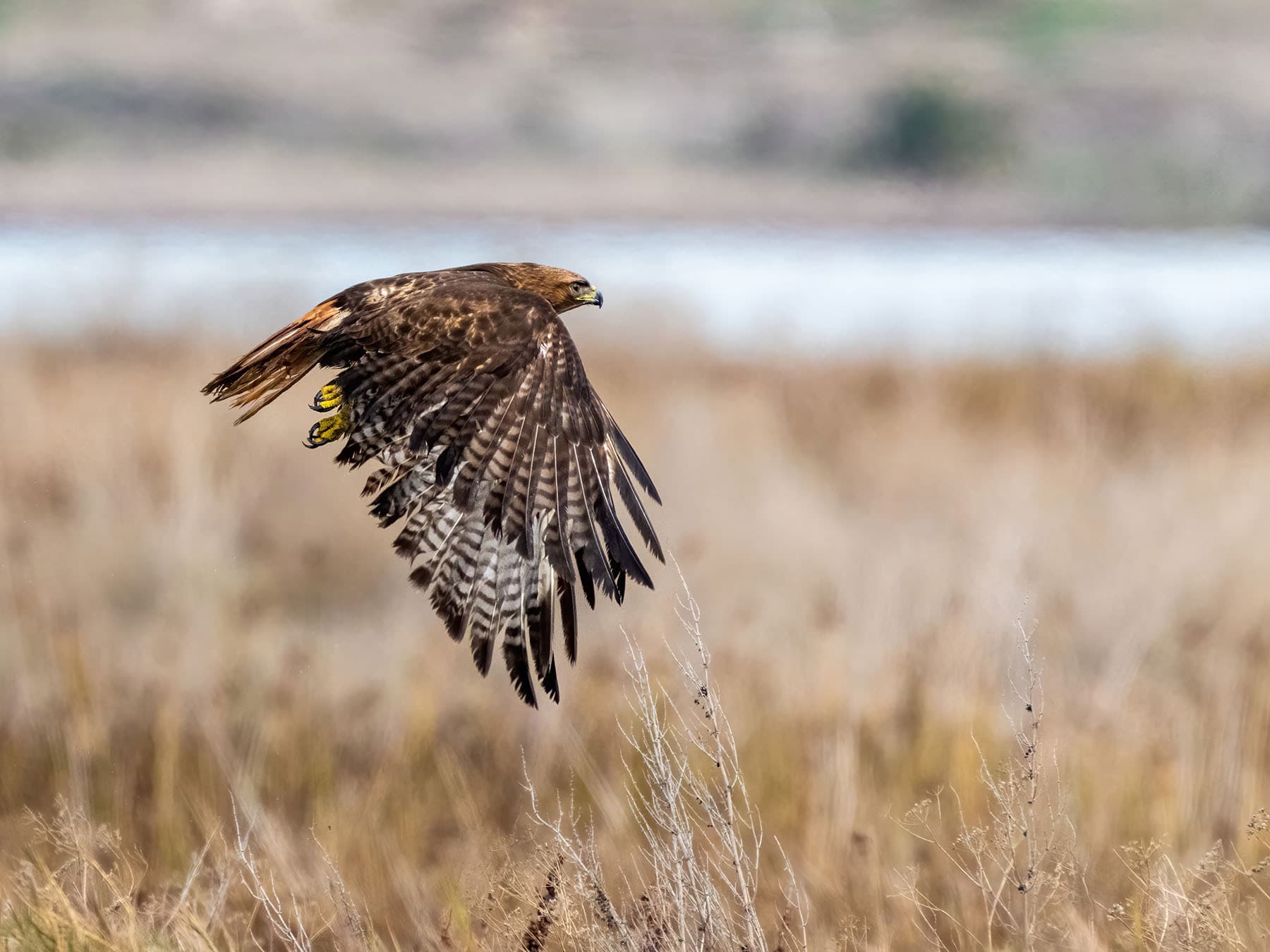
The Red-shouldered Hawk is a striking raptor with rich reddish-brown shoulders and breast, contrasting with black and white barred wings and tail. Its head is relatively small, with dark eyes and a hooked black beak.
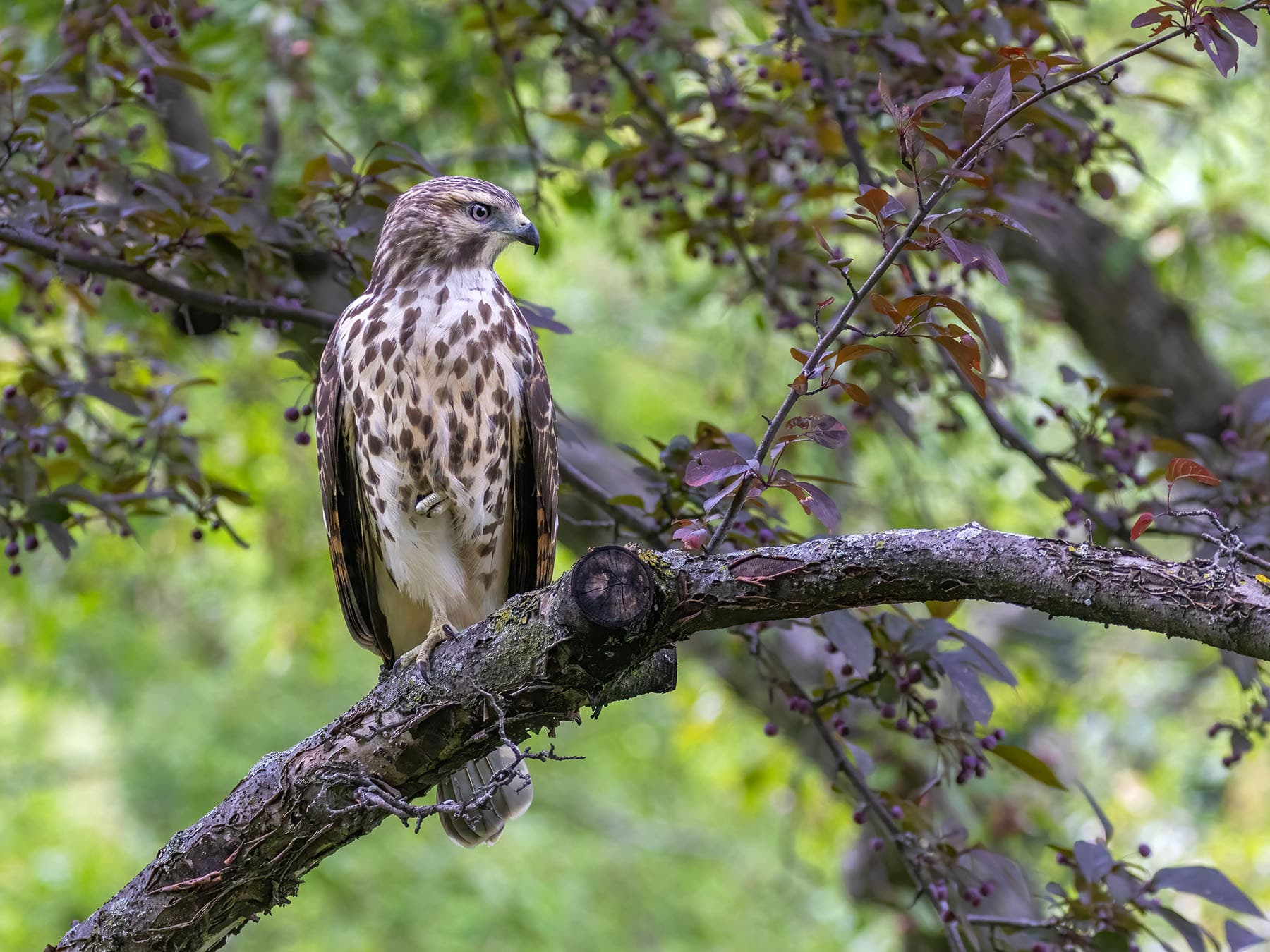
Adults display similar plumage, with females slightly larger than males. Juveniles are brown above with white spotting and have a streaked, pale underside, gradually developing adult coloration over their first year.
Identification & Characteristics
Colors
- Primary
- Brown
- Secondary
- White
- Beak
- Black
- Legs
- Yellow
Attributes
Understanding Attributes
Rated 0–100 based on research and observation. A score of 50 is average across all bird species. These attributes are relative and don't necessarily indicate superiority.
Habitat & Distribution
Red-shouldered Hawks inhabit deciduous and mixed forests, preferring areas near water such as swamps, rivers, and ponds. They are found across eastern North America, from southern Canada to Florida, and in a separate population along the west coast of the United States.
In winter, northern populations may move south, while those in milder climates tend to be year-round residents. They are particularly common in the eastern United States, adapting well to suburban areas with mature trees.
Diet
Red-shouldered Hawks are opportunistic predators, primarily feeding on small mammals, amphibians, and reptiles. They also consume insects, especially during summer months. These hawks often hunt from a perch, swooping down to capture prey on the ground or in shallow water.
Behaviour
Red-shouldered Hawks are known for their distinctive, high-pitched 'kee-aah' call, often given in a series. They hunt from perches in forest canopies, swooping down to catch prey. During breeding season, pairs perform aerial courtship displays, including spiraling flights and talon-grasping.
Calls & Sounds
The Red-shouldered Hawk's call is a distinctive, repeated 'kee-aah' that rises in pitch towards the end. This vocalization is often given in a series and can be heard from a considerable distance. During breeding season, pairs may engage in antiphonal calling, with mates responding to each other's vocalizations.
Nesting & Breeding
Red-shouldered Hawks form monogamous pairs, often returning to the same nesting territory year after year. Breeding season typically begins in March or April, with courtship displays including aerial acrobatics and vocalizations.
Nests are built high in trees, usually in a crotch near the trunk. Both partners contribute to constructing the bulky nest of sticks, lined with bark, moss, and fresh green leaves. Females lay 2-5 pale blue or white eggs with brown spots.
Incubation lasts about 33 days, primarily by the female. Chicks fledge after 5-7 weeks but remain dependent on parents for several more weeks, learning hunting skills before becoming fully independent.
Conservation
While currently listed as Least Concern, Red-shouldered Hawks face threats from habitat loss due to urbanization and deforestation. Conservation efforts focus on protecting mature forests and wetlands. Reduced use of pesticides has helped populations recover in some areas.
Population
Estimated: Unknown
Trend: Stable
Elevation
Sea level to 1500 meters
Additional Details
- Predators:
- Adult Red-shouldered Hawks have few natural predators, but Great Horned Owls and raccoons may prey on eggs and nestlings. Larger raptors occasionally target juveniles.
Birdwatching Tips
- Listen for their distinctive 'kee-aah' call in wooded areas
- Look for them perched on tree branches near forest edges or streams
- Observe their soaring flight with 'fingered' wingtips
- In the eastern US, watch for them in mixed woodlands near water
Did You Know?
- Red-shouldered Hawks can live up to 19 years in the wild.
- They sometimes hunt by dropping from perches onto fish in shallow water.
- These hawks often reuse and renovate the same nest for multiple years.
Community Photos
Be the first to share a photo of the Red-shouldered Hawk
Upload a PhotoRelated Articles
Identify Any Bird Instantly
- Upload a photo from your phone or camera
- Get an instant AI identification
- Ask follow-up questions about the bird
Monthly Birds in Your Area
- Personalised for your location
- Seasonal tips and garden advice
- Updated every month with new species