


Northern Flicker
Yellow-shafted Flicker, Red-shafted Flicker · Colaptes auratus
By the Birdfact teamChecked by Nathan Cope
On this page14 sections
How to recognise it
What do Northern Flickers look like?
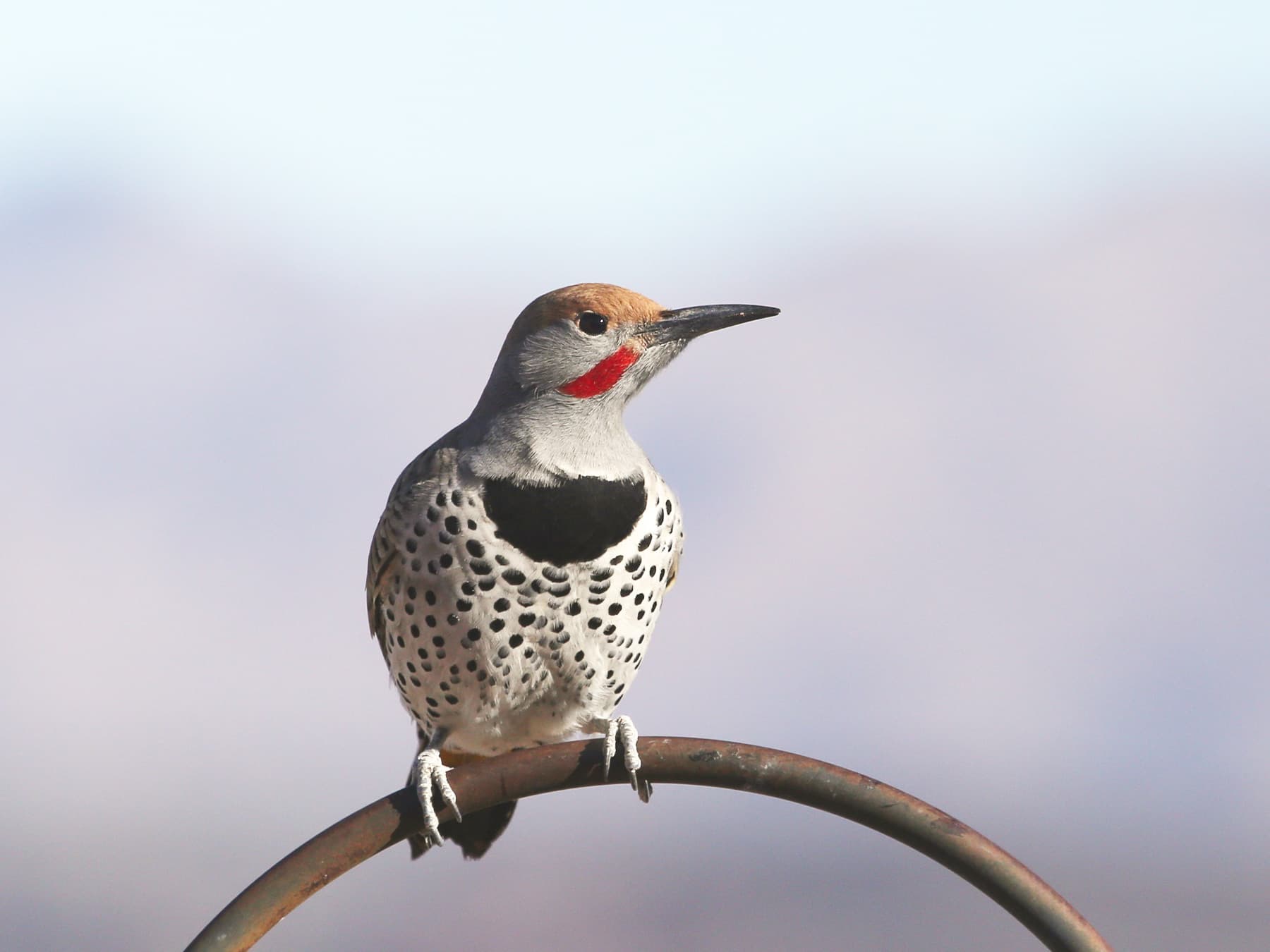
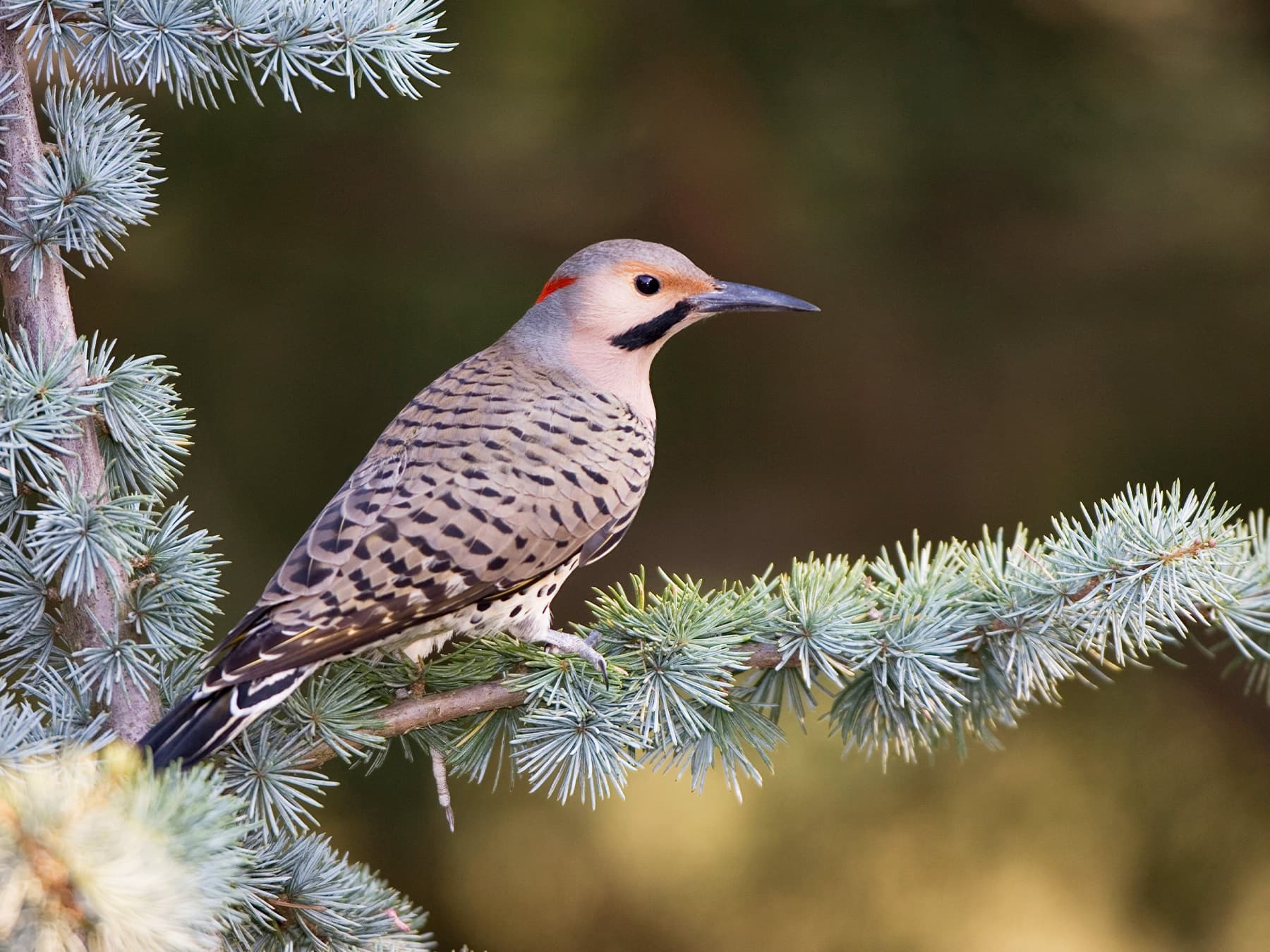
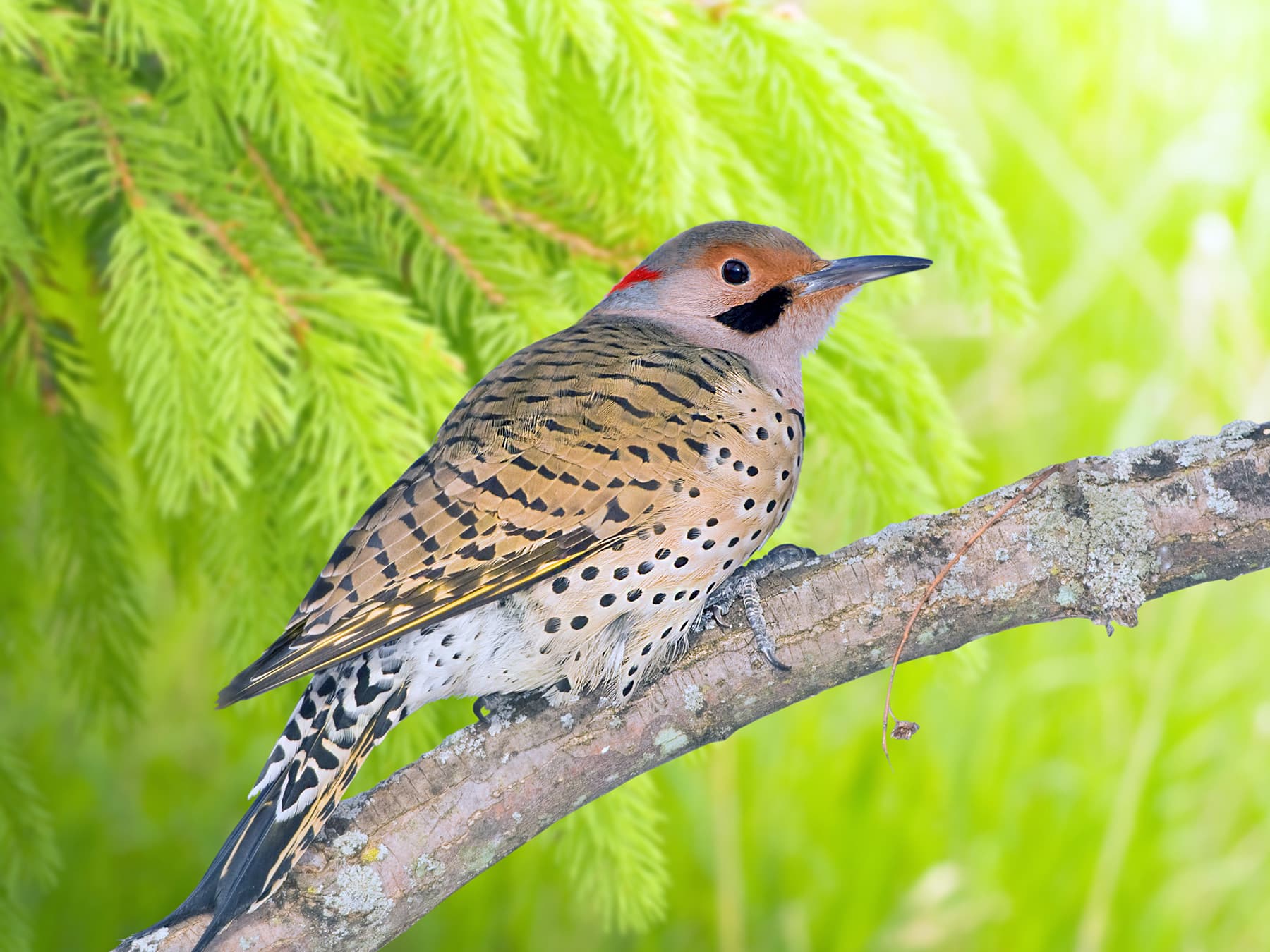
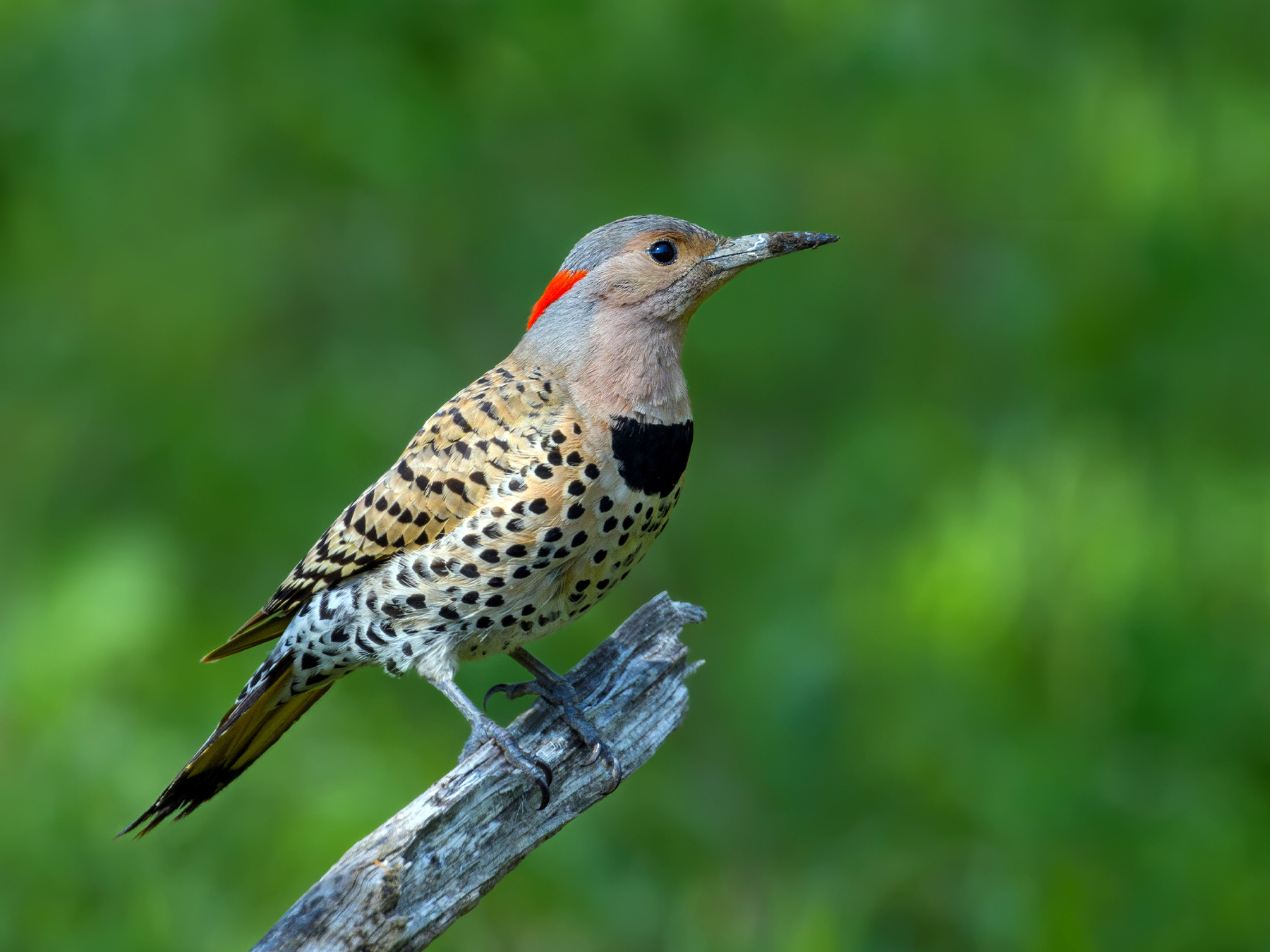
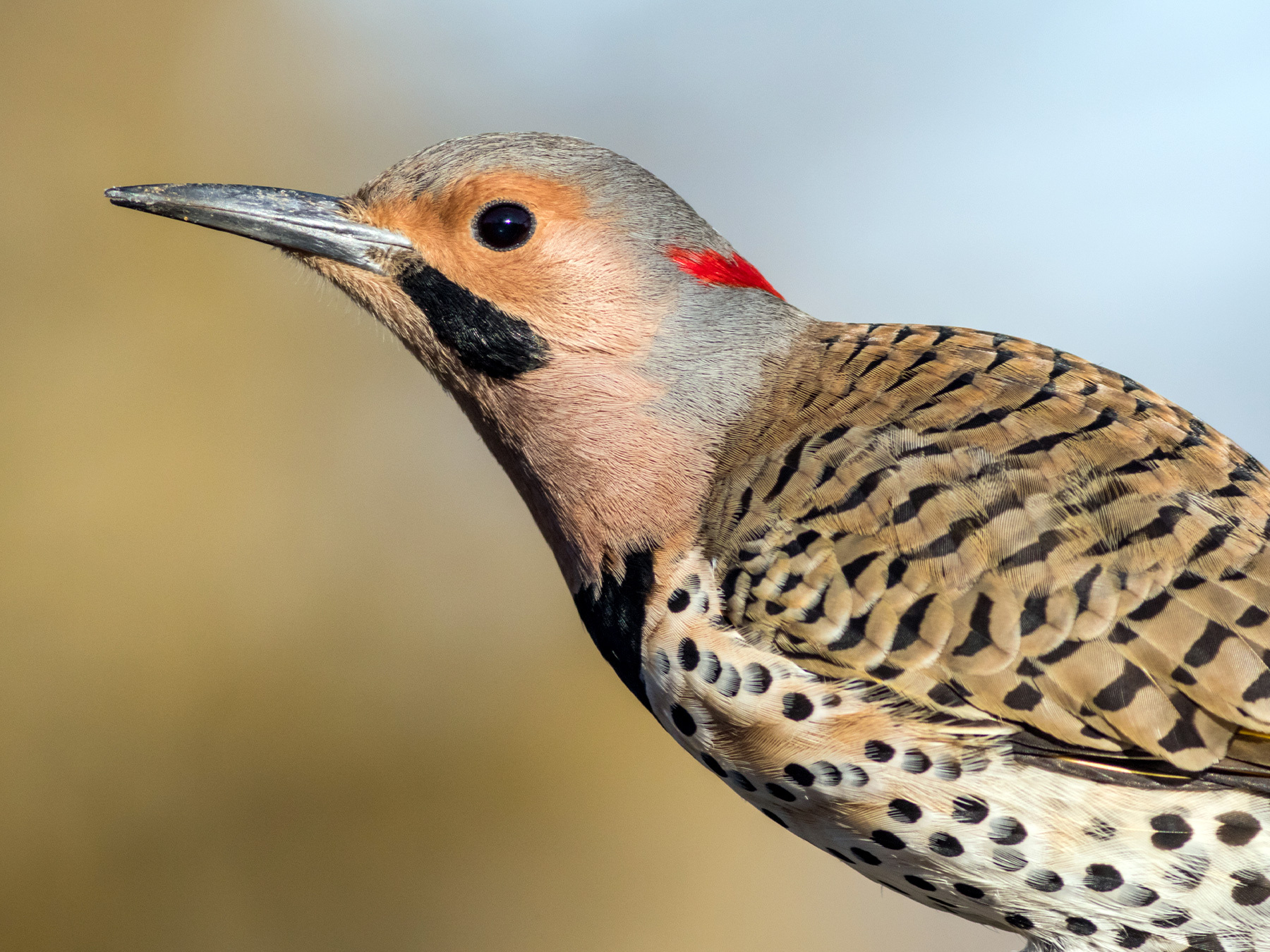
The Northern Flicker is a large brownish woodpecker with heavily spotted underparts and a bold black marking across the chest. The upper wings and back are irregularly spotted and barred, and they have a white rump. They have variable face markings, but all have a gray, slightly curved bill.
Red-shafted and Yellow-shafted forms
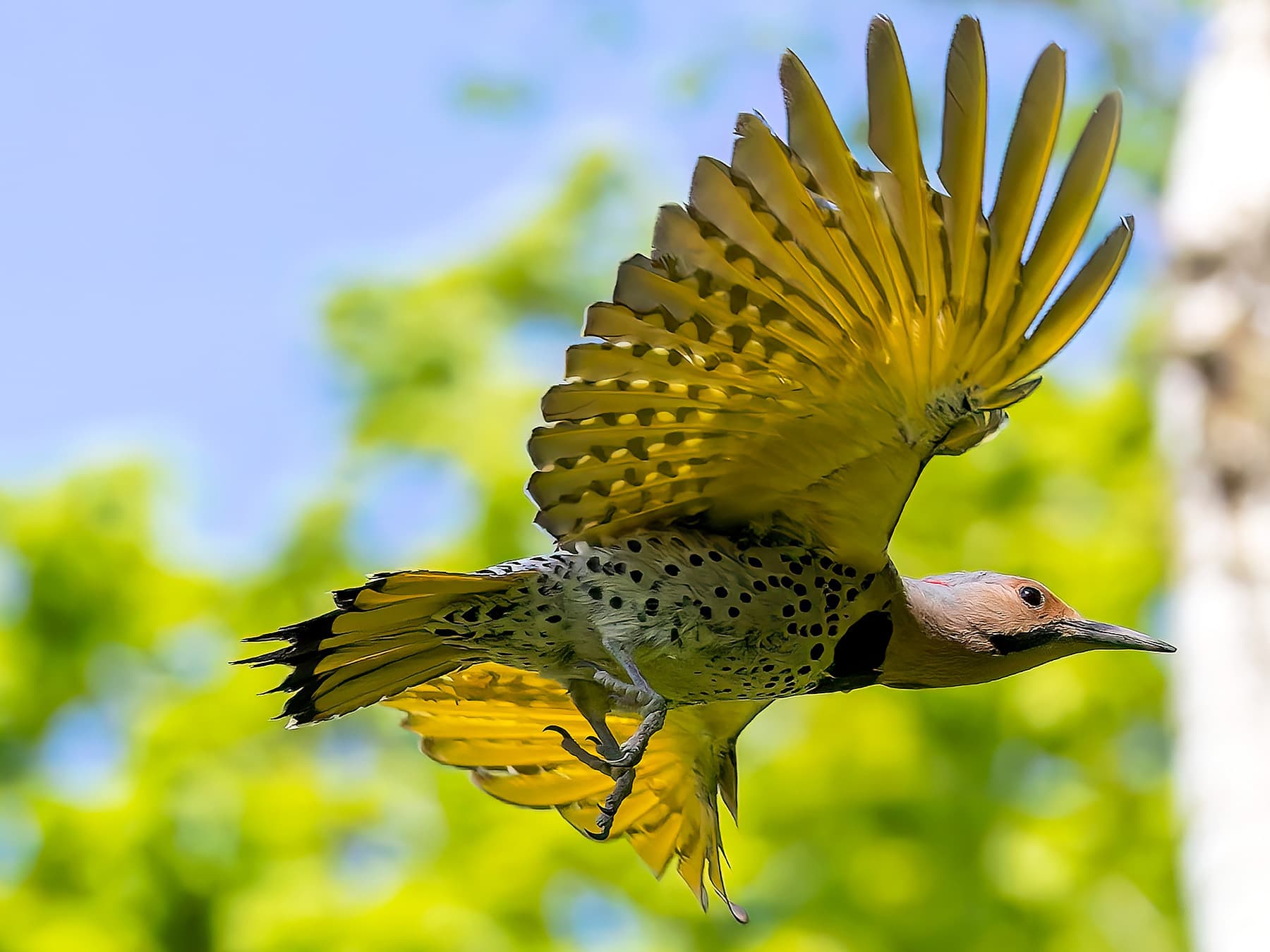
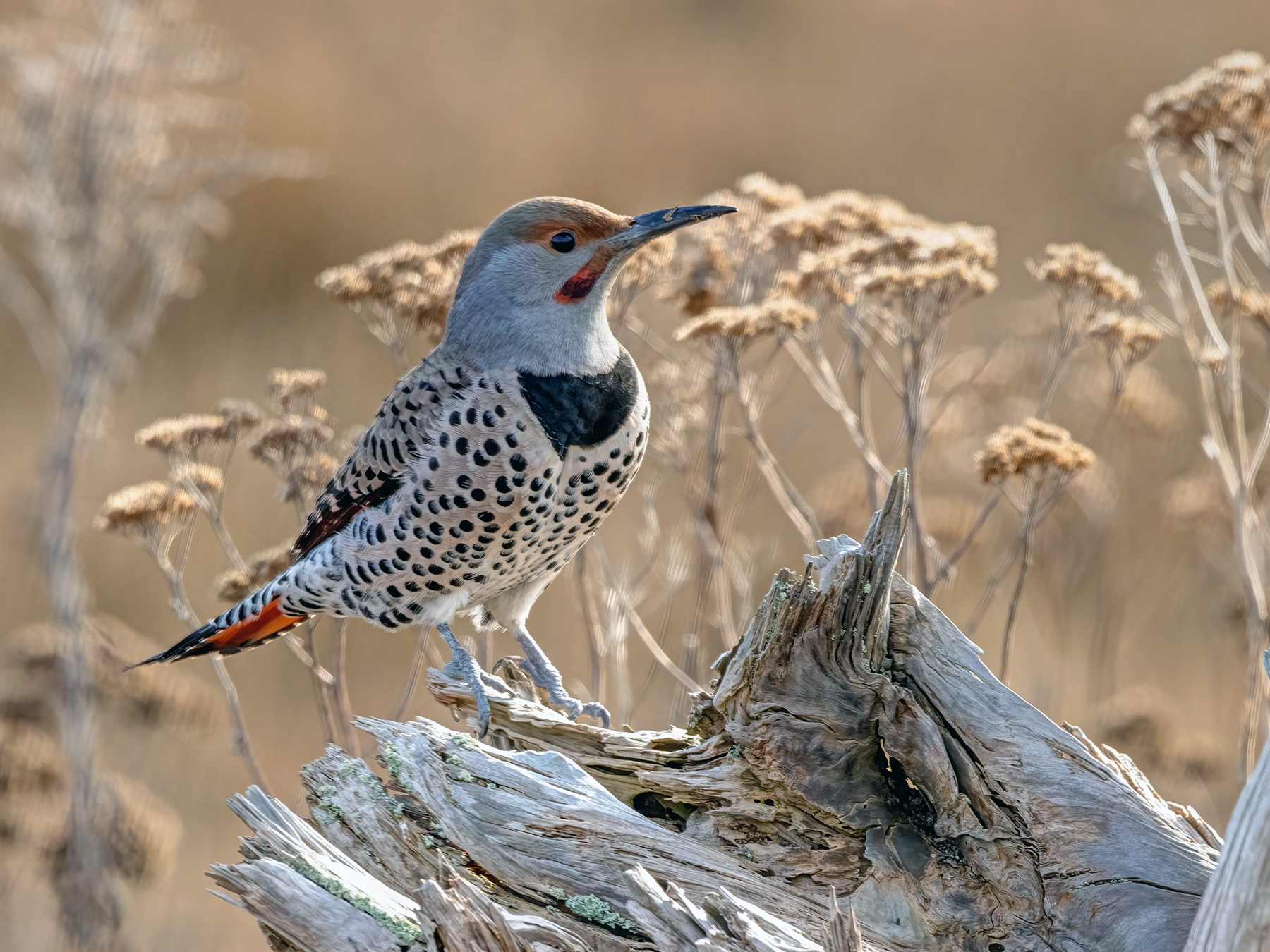
There are several subspecies of Northern Flickers, but the most distinctive difference across their range occurs between eastern and western birds. Eastern birds are called Yellow-shafted Flickers because they have yellow plumage under their wings and tail. Western birds differ by having red feathers beneath their wings and tail.
Identifying Females
Male and female Northern Flickers are easy to distinguish by their head markings, and again, there is a difference between birds from the East and West.
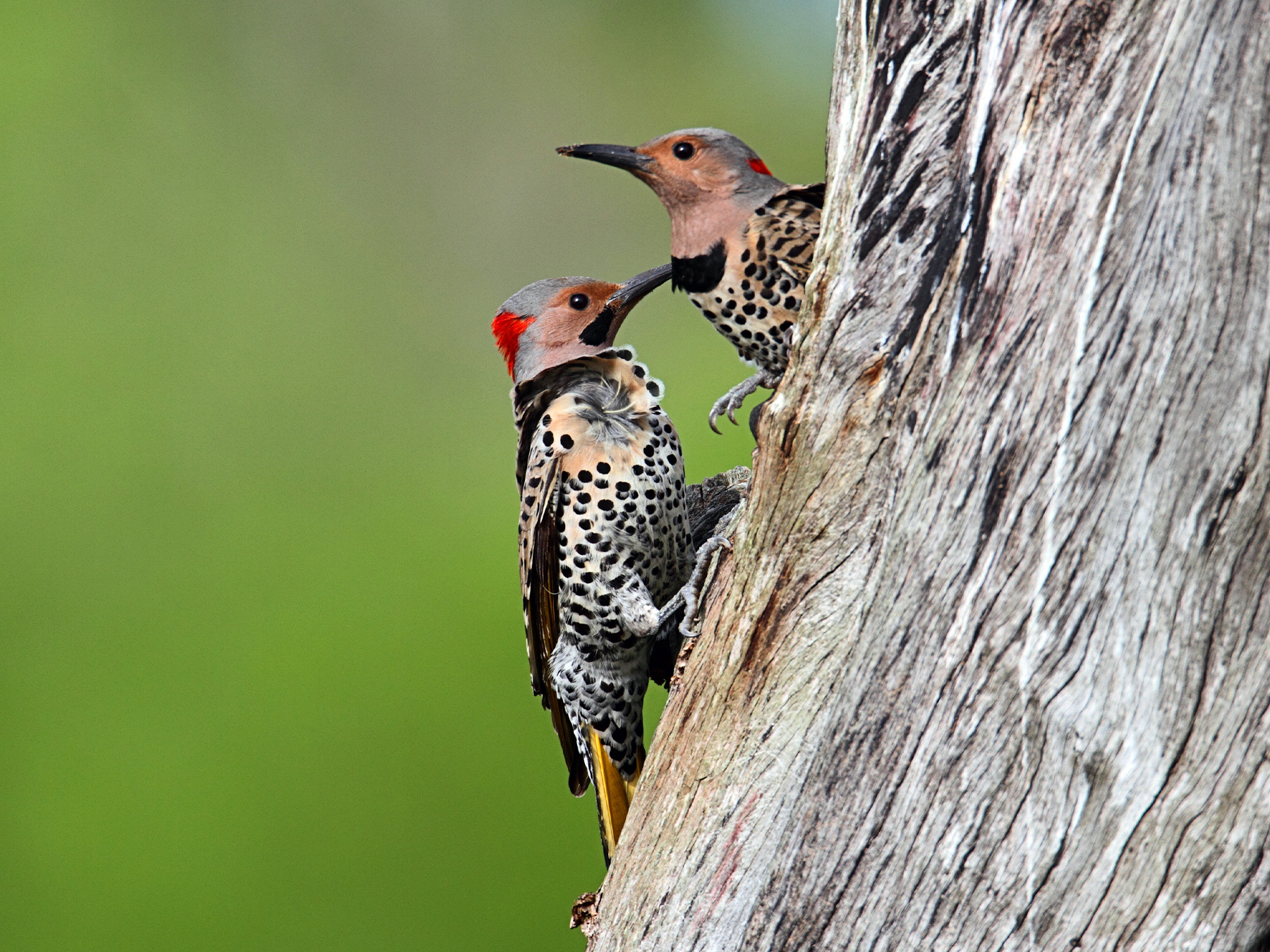
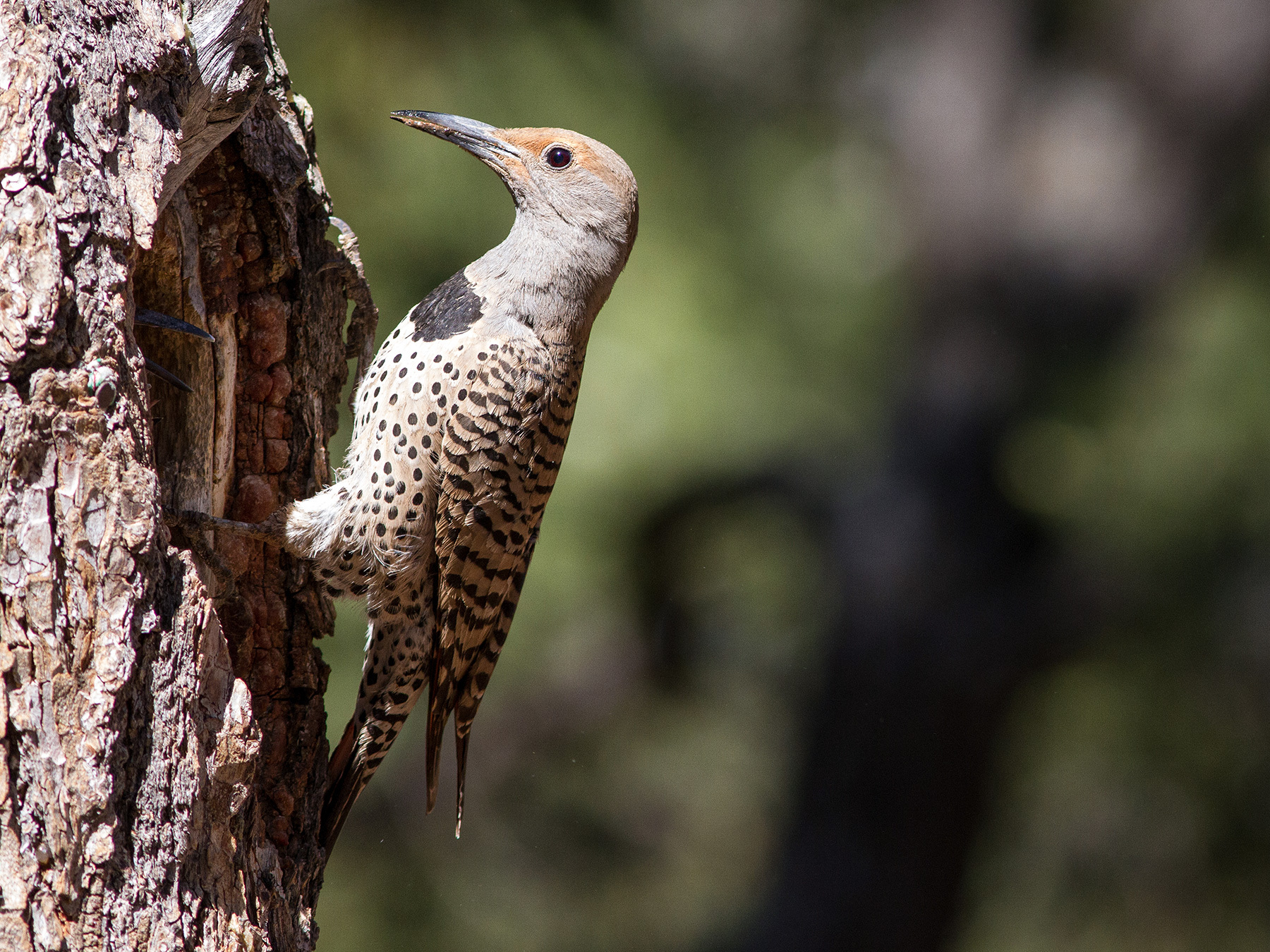
Eastern males have a brown head with a grey cap and a red spot on their nape. They also have a black mustache stripe. Females are similar but have no markings from the base of their bills. In the west, males have a gray head with a red mustache stripe, while females have all-gray heads.
Juveniles and Similar Species
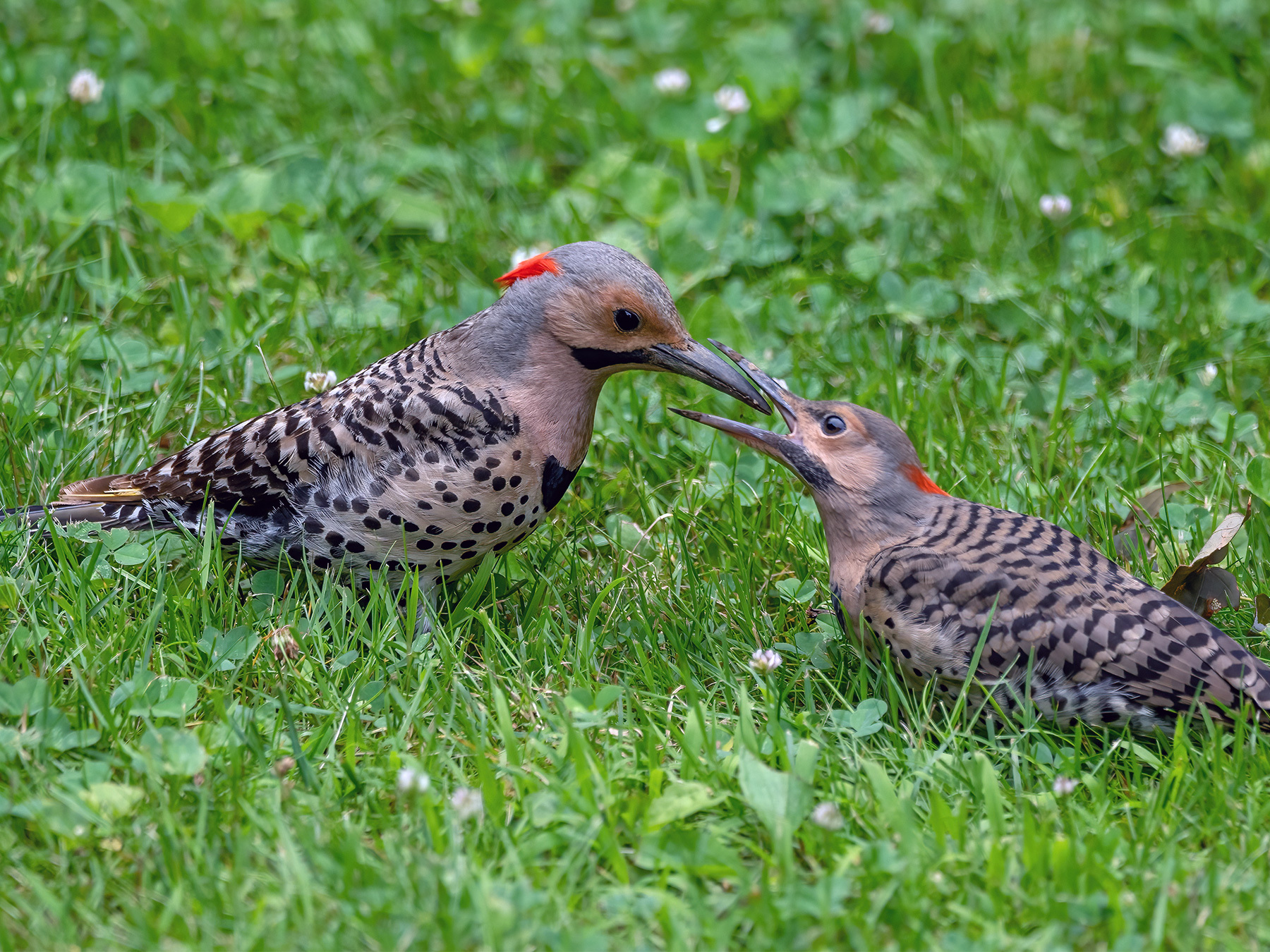
Juveniles are similar to adults, although smaller and duller in appearance. You can learn much more about Juvenile Northern Flickers in this in-depth guide.
Birdwatchers could mistake the Northern Flicker for the Gilded Flicker in the American Southwest, although that species has a brown crown and yellow underwing feathers.
How big are Northern Flickers?
Length
Northern Flickers are large woodpeckers with a typical body length of 11 to 14 inches or 28 to 35 centimeters.
Weight
Adults usually weigh about 4½ ounces or 125 grams, although their weight varies between about 4 and 5½ ounces.
Wingspan
Most Northern Flickers have a 16½ to 21 inch (42 to 53 cm) wingspan.
Its size
Adults- Length
- 28–31 cm
- Wingspan
- 42–51 cm
- Weight
- 110–160 g
Its song and calls
What sound does a Northern Flicker make?
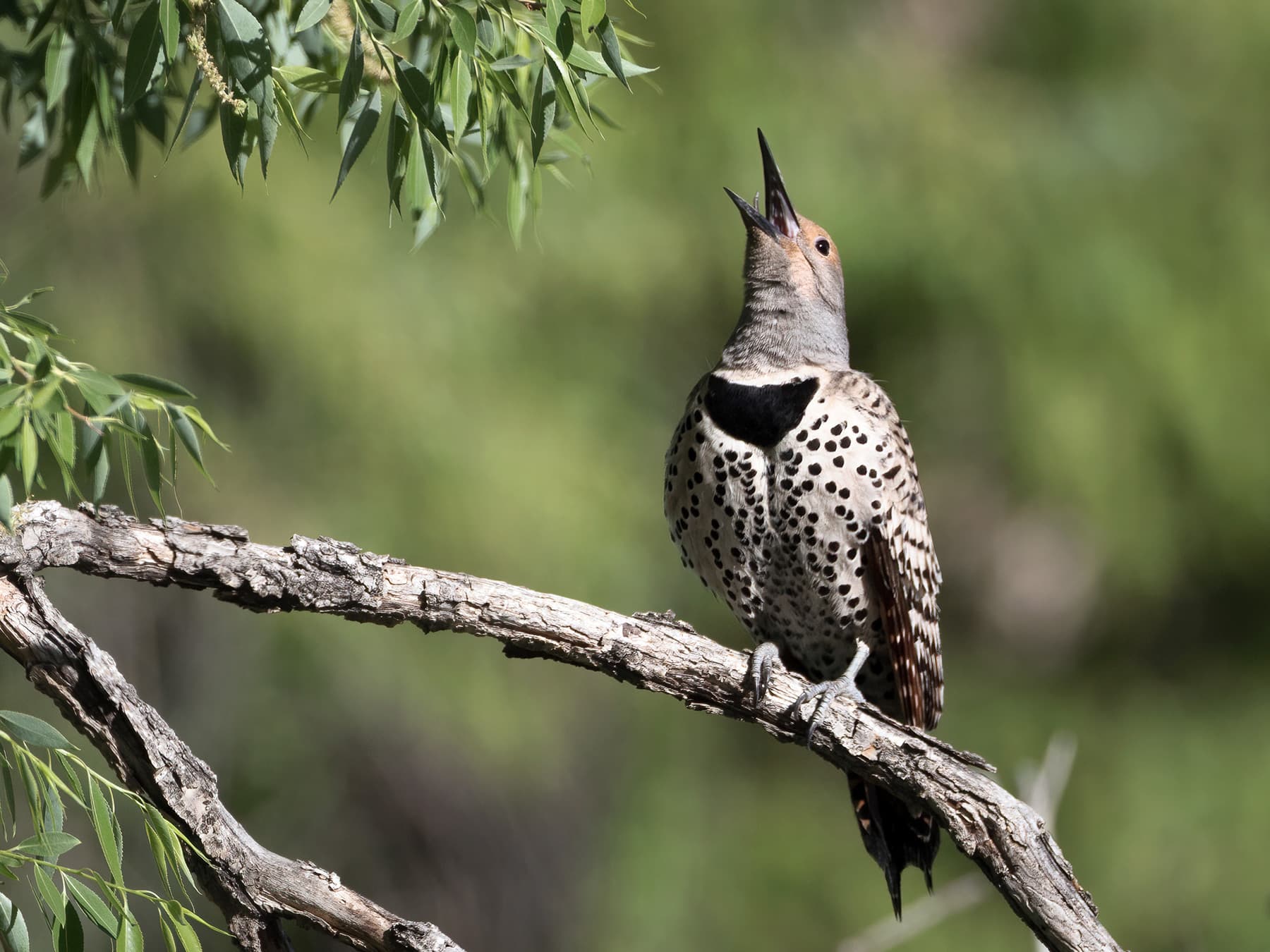
The Northern Flicker’s call is a high-pitched ‘ki ki ki’ or ‘wicker-wicker-wicker.’ They also drum loudly on wood and other resonant surfaces.
- Call0:00 / 0:47
Recorded in South Dakota, United States · June 2012
- Drumming0:00 / 1:42
Recorded in South Dakota, United States · June 2015
When and where to see it
OctoberPeak season
Most recorded in October
- 1. Colorado3.9%
- 2. Idaho3.9%
- 3. Utah3.6%
- 4. Montana3.6%
- 5. New Mexico3.5%
Each dot is a county, state or province: the bigger and darker, the larger the bird’s share of that place’s bird records that month. Grey dots: no regular records. The ringed point is the centre of the bird’s records this month; the arrow shows how it moved since last month, and the dashed loop its path through the year. “Arrivals” colours places where it becomes regular this month (orange) or is in its last regular month (grey). GBIF eBird Observation Dataset, 2019–2024. Map data: Natural Earth, US Census Bureau; place centres © OpenStreetMap contributors.
In your area
See when the Northern Flicker is recorded in your county, state or province.
How often the Northern Flicker turns up in the United States and Canada through the year, from birdwatchers' records.
United States
Resident · all year · most records in October
Canada
Resident · all year · most records in September
Show as a table
| Month | United States | Canada |
|---|---|---|
| January | 1.1% (regular) | 1.2% (regular) |
| February | 1.0% (regular) | 1.2% (regular) |
| March | 1.1% (regular) | 1.2% (regular) |
| April | 1.2% (regular) | 2.0% (regular) |
| May | 0.91% (regular) | 1.5% (regular) |
| June | 0.95% (regular) | 1.4% (regular) |
| July | 1.1% (regular) | 1.7% (regular) |
| August | 1.0% (regular) | 1.6% (regular) |
| September | 1.5% (regular) | 2.1% (regular) |
| October | 1.7% (regular) | 1.4% (regular) |
| November | 1.4% (regular) | 1.2% (regular) |
| December | 1.4% (regular) | 1.3% (regular) |
Worldwide: recorded regularly in 10 countries
Countries where it was recorded in at least 3 of the 6 years 2019–2024. Linked countries have their own bird list.
North America (10)
- Canada
- Cayman Islands
- Cuba
- El Salvador
- Guatemala
- Honduras
- Mexico
- Nicaragua
- St Pierre & Miquelon
- United States
Data: EOD – eBird Observation Dataset (Cornell Lab of Ornithology), accessed via GBIF.org, CC BY 4.0. Records from 2019–2024, aggregated and filtered by Birdfact. How these lists are made
What is the habitat of a Northern Flicker?
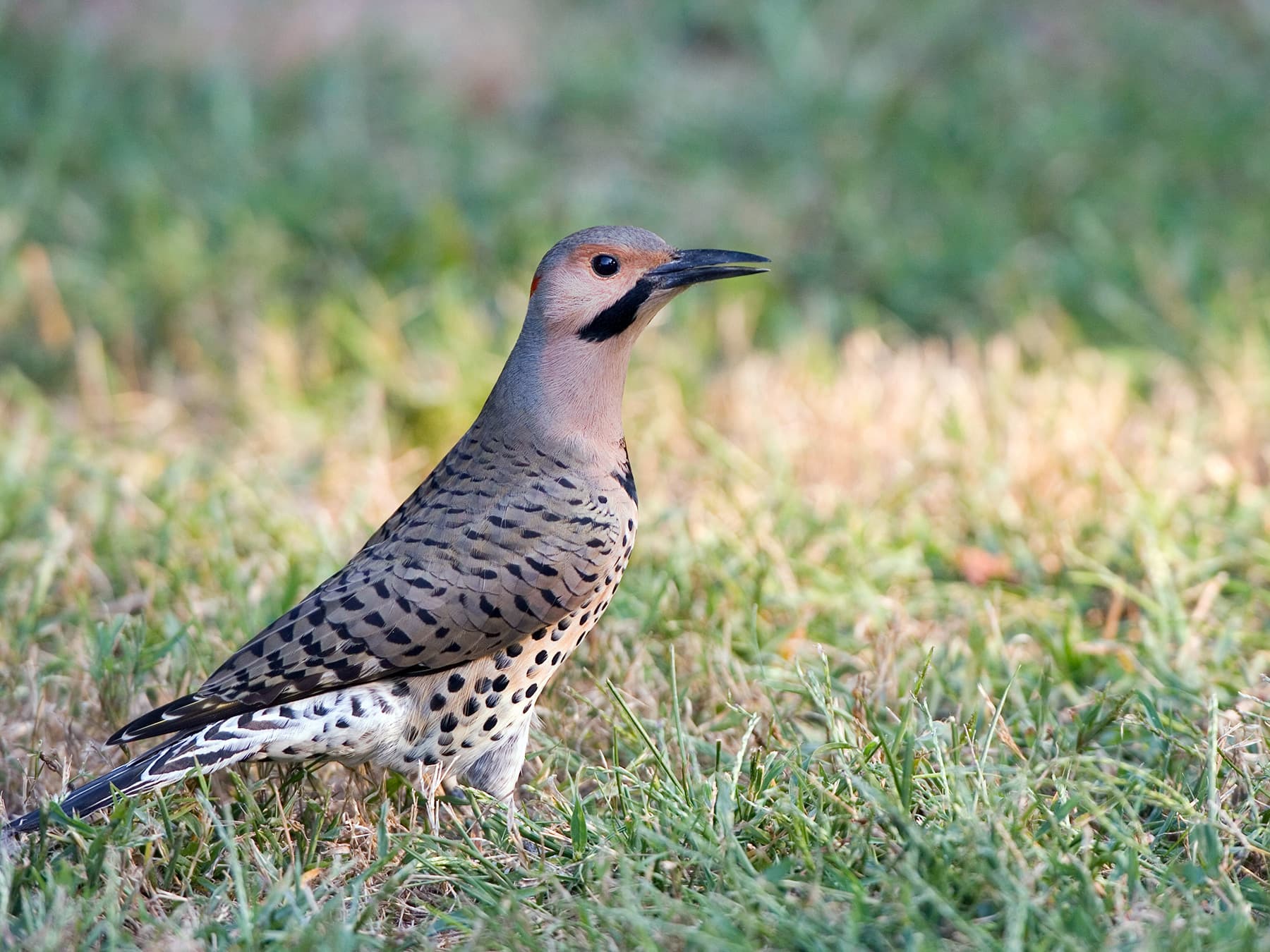
Northern Flickers inhabit a wide range of habitats, from forests to more open habitats. These birds occur from high mountains to sea level and from wilderness areas to city parks. They require trees for nesting, although they generally forage on the ground.
What is the range of a Northern Flicker?
Northern Flickers are restricted to North America, where they occur from Alaska in the north to Central America and Cuba in the south.
Where do Northern Flickers live?
Unlike most woodpeckers, Northern Flickers prefer to forage and feed down on the ground. However, they do nest, rest and call from trees.
How rare are Northern Flickers?
Northern Flickers are common birds in suitable habitats.
Where can you see Northern Flickers in the US?
Northern Flickers occur in every state of the Continental United States, including Alaska. You might not have to go very far to see these attractive birds because they frequent many towns and even some cities. Look out for them on the ground along forest edges, in parks, and in woodlands.
Where can you see Northern Flickers in Canada?
Northern Flickers are common birds in Canada’s forests, woodlands, and suburban areas. They are widespread in the country, occurring in every territory and province except Nunavut.
Migration
Do Northern Flickers migrate?
Northern Flickers are partial migrants. Breeders from Alaska and Canada head south into the United States for the winter, but birds from warmer areas can stay in the same locations throughout the year. Pairs that nest in high, mountainous terrain also head down to warmer areas to avoid deep snow.
Are Northern Flickers native to the US?
Northern Flickers are native to the United States and neighboring countries of North America.
Tips for seeing it
- Look for Northern Flickers on the ground in open areas near trees
- Listen for their loud, piercing call and rhythmic drumming
- Check for their distinctive white rump patch when in flight
- In the eastern US, watch for yellow wing and tail feathers; in the west, look for red
What it eats
What do Northern Flickers eat?
Northern Flickers are omnivores, although ants are their favorite food. They usually feed on the ground, hunting insects like beetles and ants at or below the surface. They also eat wild fruits and berries and occasionally visit bird feeders for sunflower seeds and suet.
What do Northern Flicker chicks eat?
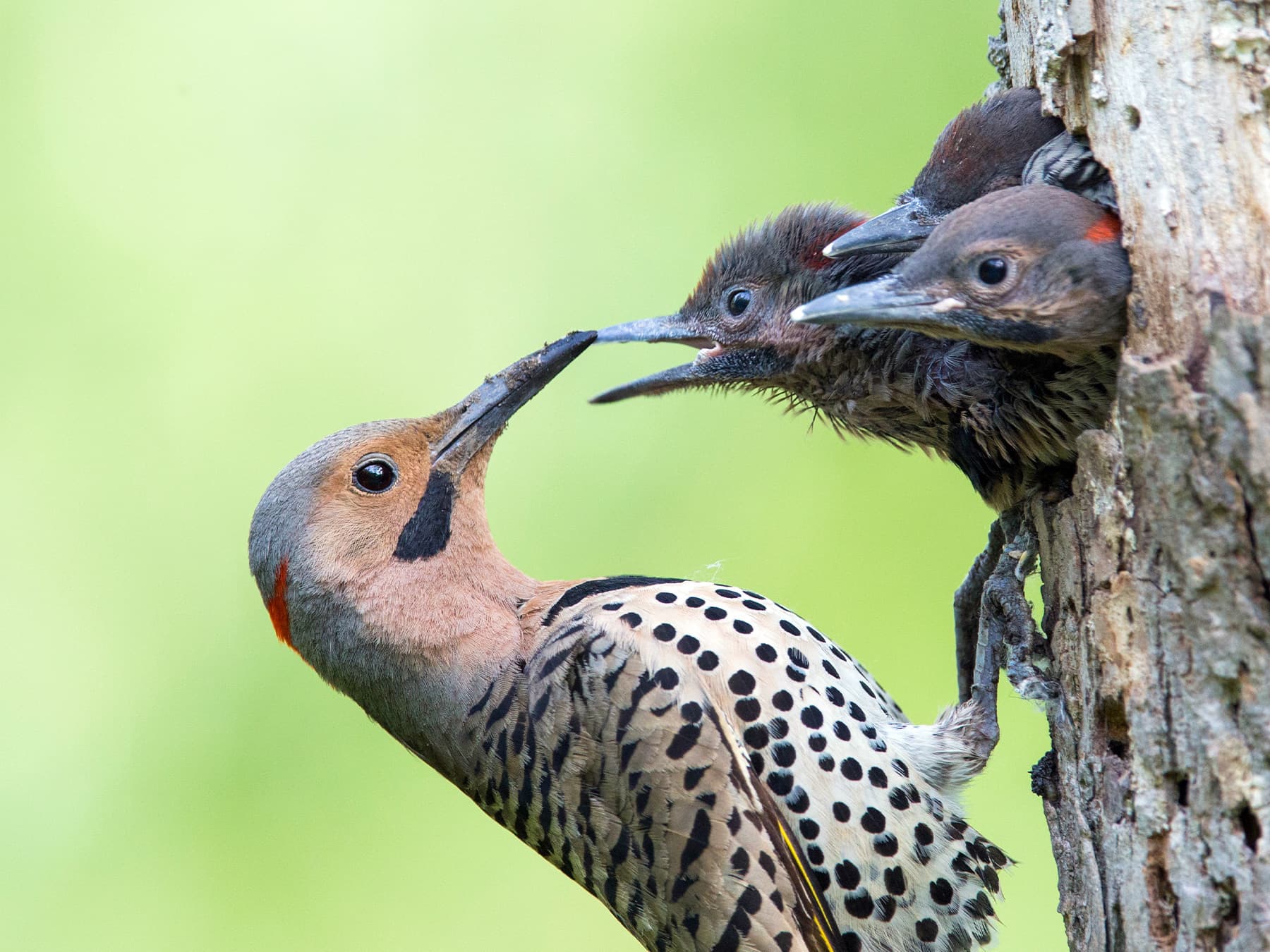
Northern Flicker chicks eat regurgitated insects and their larvae, provided by both parents.
Nesting and breeding
Where do Northern Flickers nest?
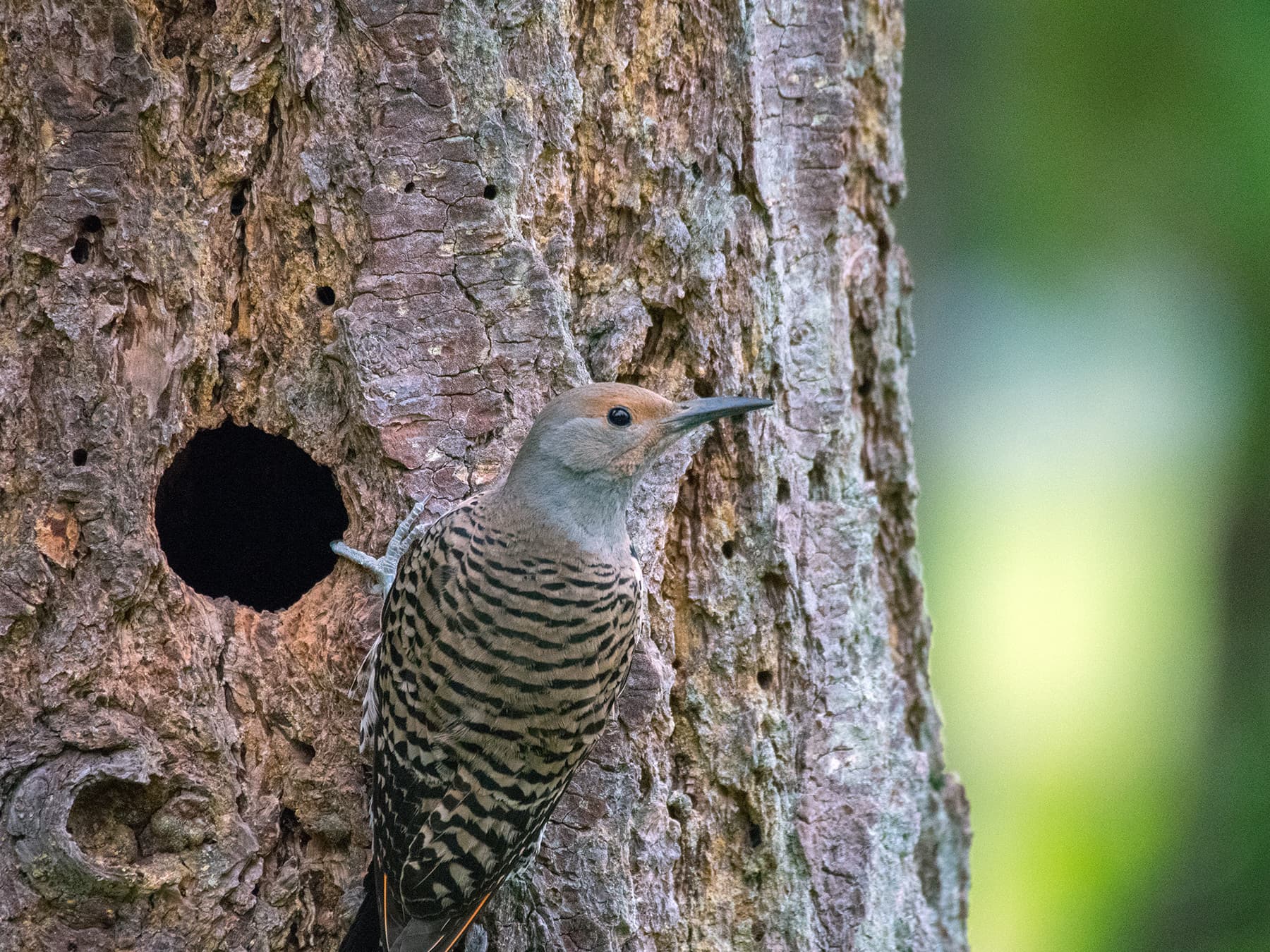
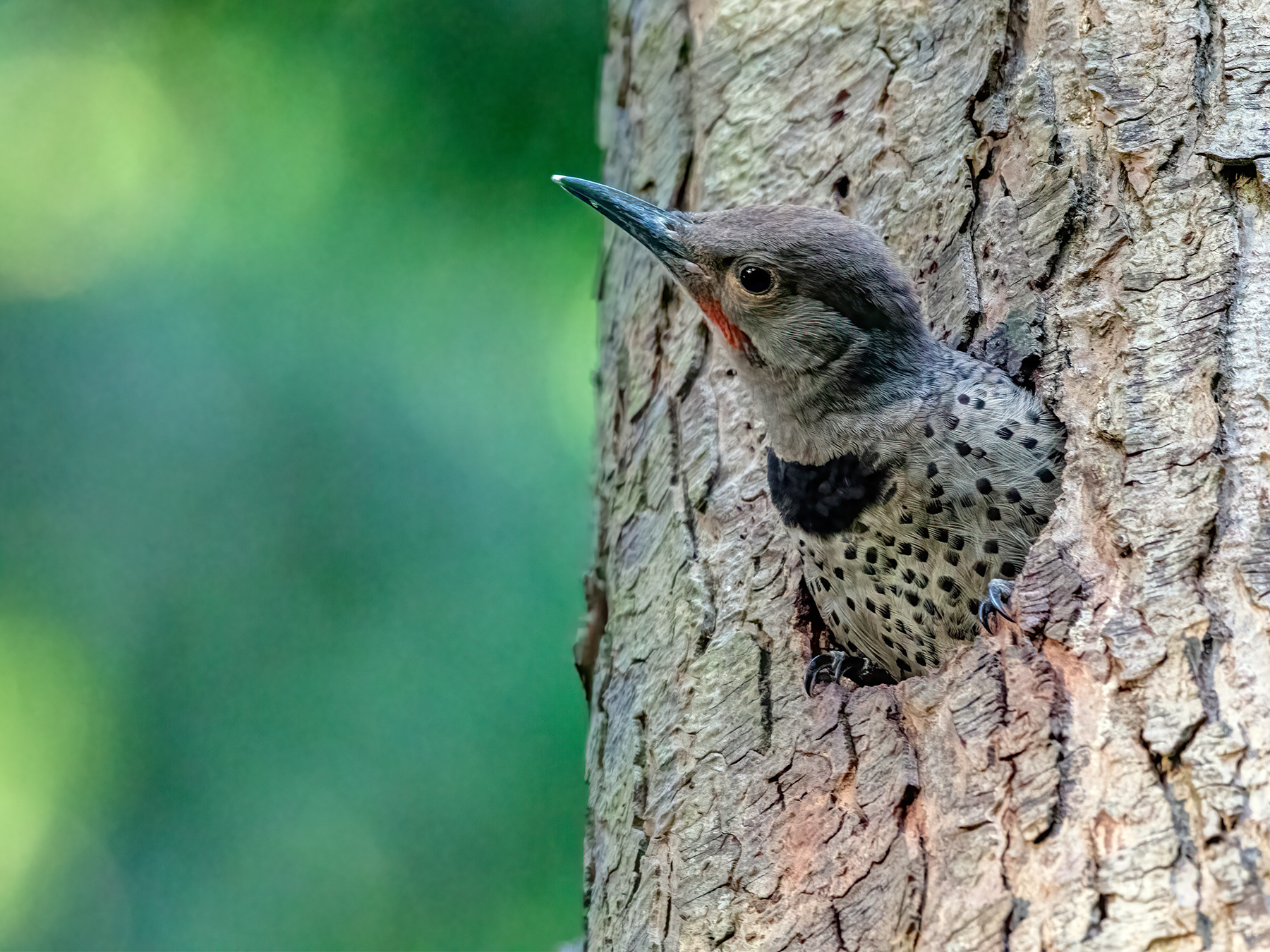
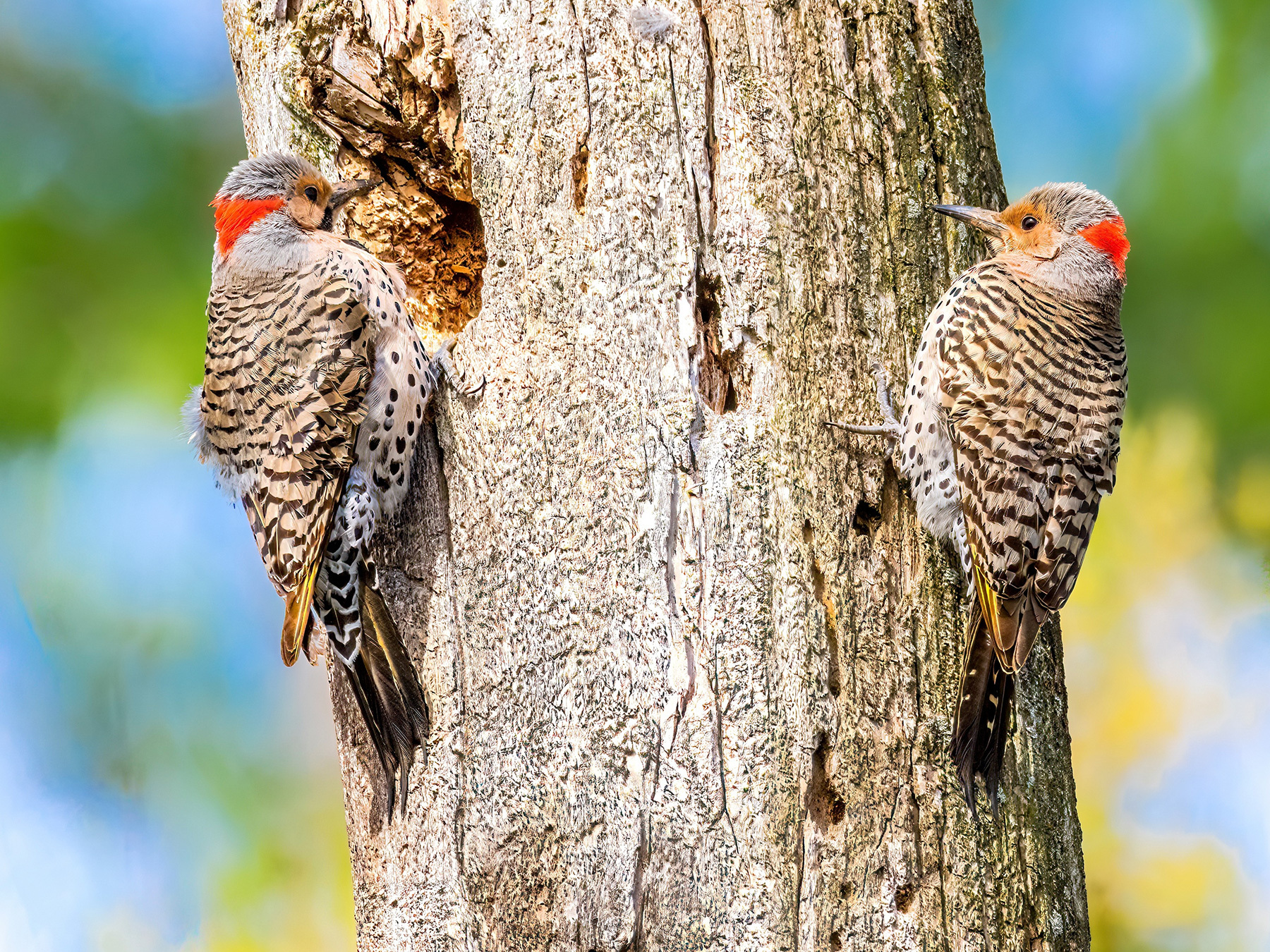
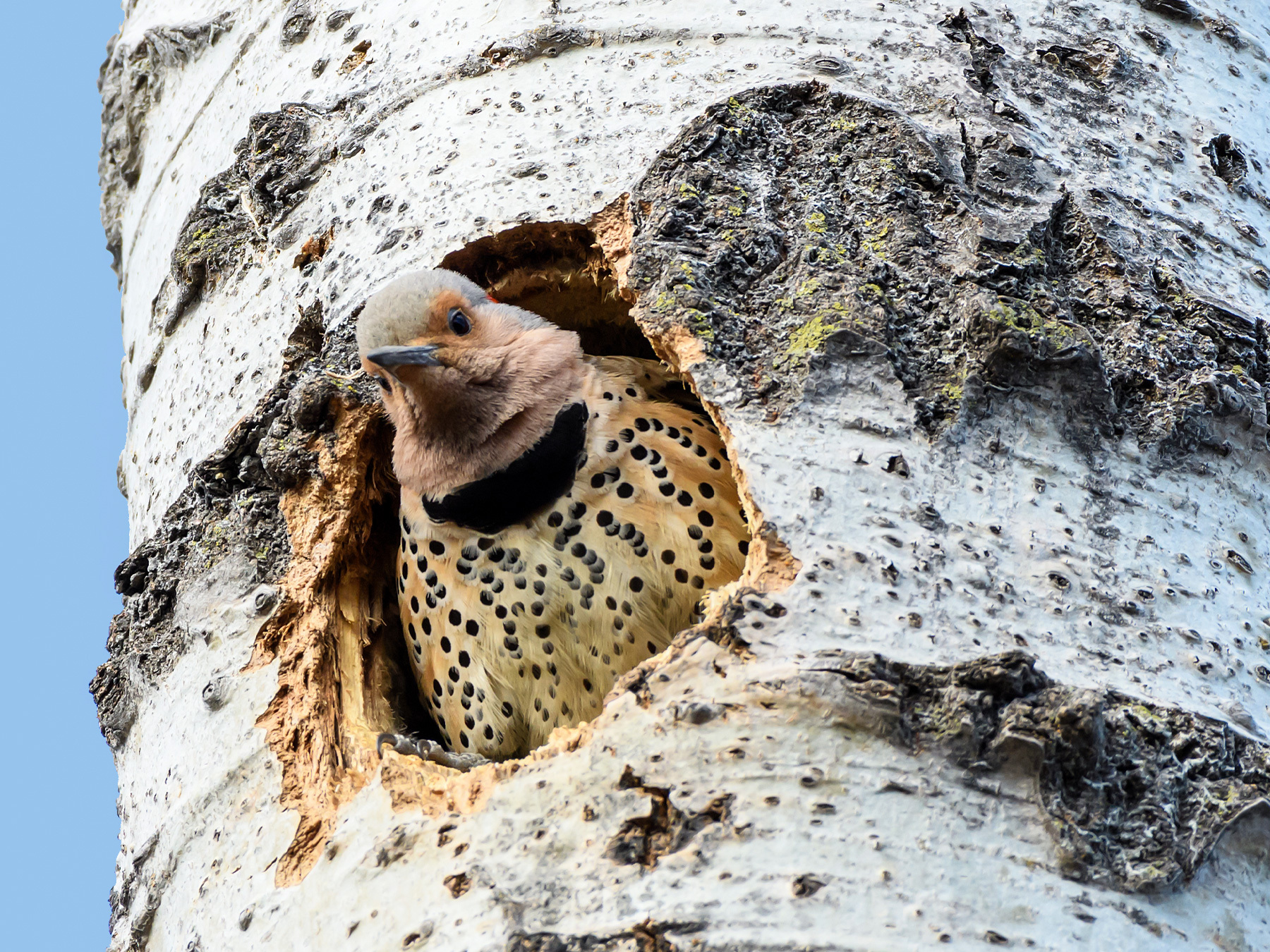
Both male and female Northern Flickers work together to drill out a nest cavity, usually in a dead tree, but sometimes in a cactus, a burrow in an earth bank, or a big enough nest box. They don’t build a nest but rather lay their eggs on the wood fragments left behind in the nest chamber.
When do Northern Flickers nest?
Northern Flickers nest between late winter and late summer, and they normally raise just one brood per year. Their eggs hatch after about 11 days, and the young birds are ready to leave the nest about four weeks later.
Learn more about Northern Flicker nesting in our in-depth guide.
What do Northern Flicker eggs look like?
Northern Flickers usually lay 6 to 8 white or pinkish-white eggs, although clutches can number 3 to 12.
Do Northern Flickers mate for life?
Northern Flickers do not necessarily mate for life, although they are usually faithful to their partners during the nesting season. However, some females will mate with more than one male.
Behaviour
Are Northern Flickers aggressive?
Northern Flickers are aggressive when defending their partners and nesting territory from other Flickers. They usually use calls, elaborate displays, and posturing to get their message across but sometimes resort to physical conflict.
Where do Northern Flickers sleep at night?
Northern Flickers roost in cozy and sheltered places like tree cavities and nest boxes. They will also sleep under the eaves of buildings and around other large structures.
Lifespan and predators
How long do Northern Flickers live?
Northern Flickers are not particularly long-lived birds, although they can live for up to nine years in some cases.
What are the predators of Northern Flickers?
Northern Flickers are vulnerable to raptors like hawks and harriers and mammals like raccoons and domestic cats. Snakes, crows, squirrels, and weasels are among the animals that eat their eggs and young.
Are Northern Flickers protected?
Northern Flickers are protected by the Migratory Bird Treaty Act in the United States and the Migratory Birds Convention Act in Canada.
Are Northern Flickers endangered?
Northern Flickers are not endangered, although their population is decreasing. These birds have a ‘Least Concern’ status on the IUCN Red List.
Conservation
While listed as Least Concern, Northern Flicker populations have declined by about 49% since 1966. Habitat loss, competition with European Starlings for nesting cavities, and pesticide use affecting their insect prey are primary concerns.
More photos
9 photos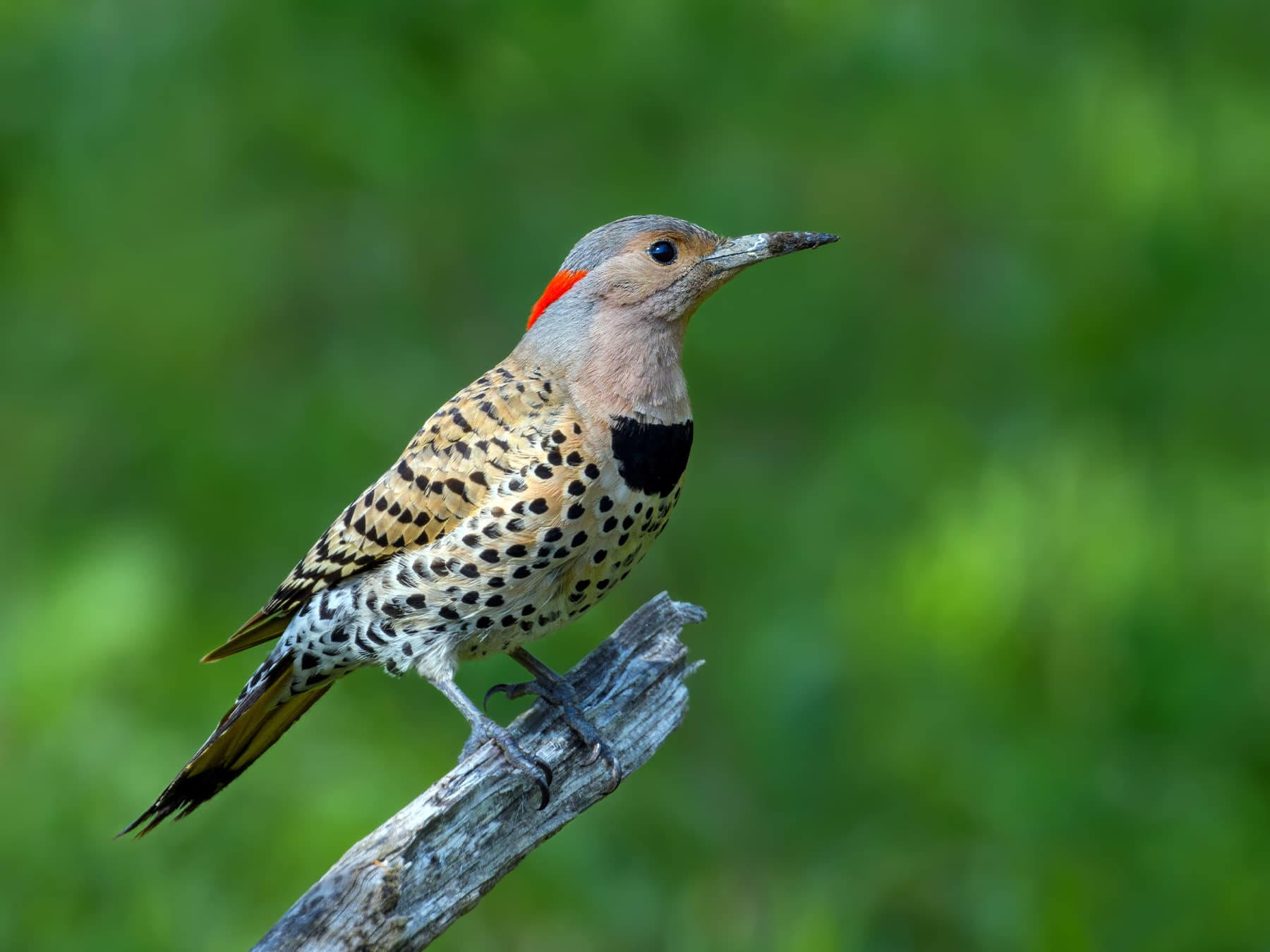 Female Northern Flicker
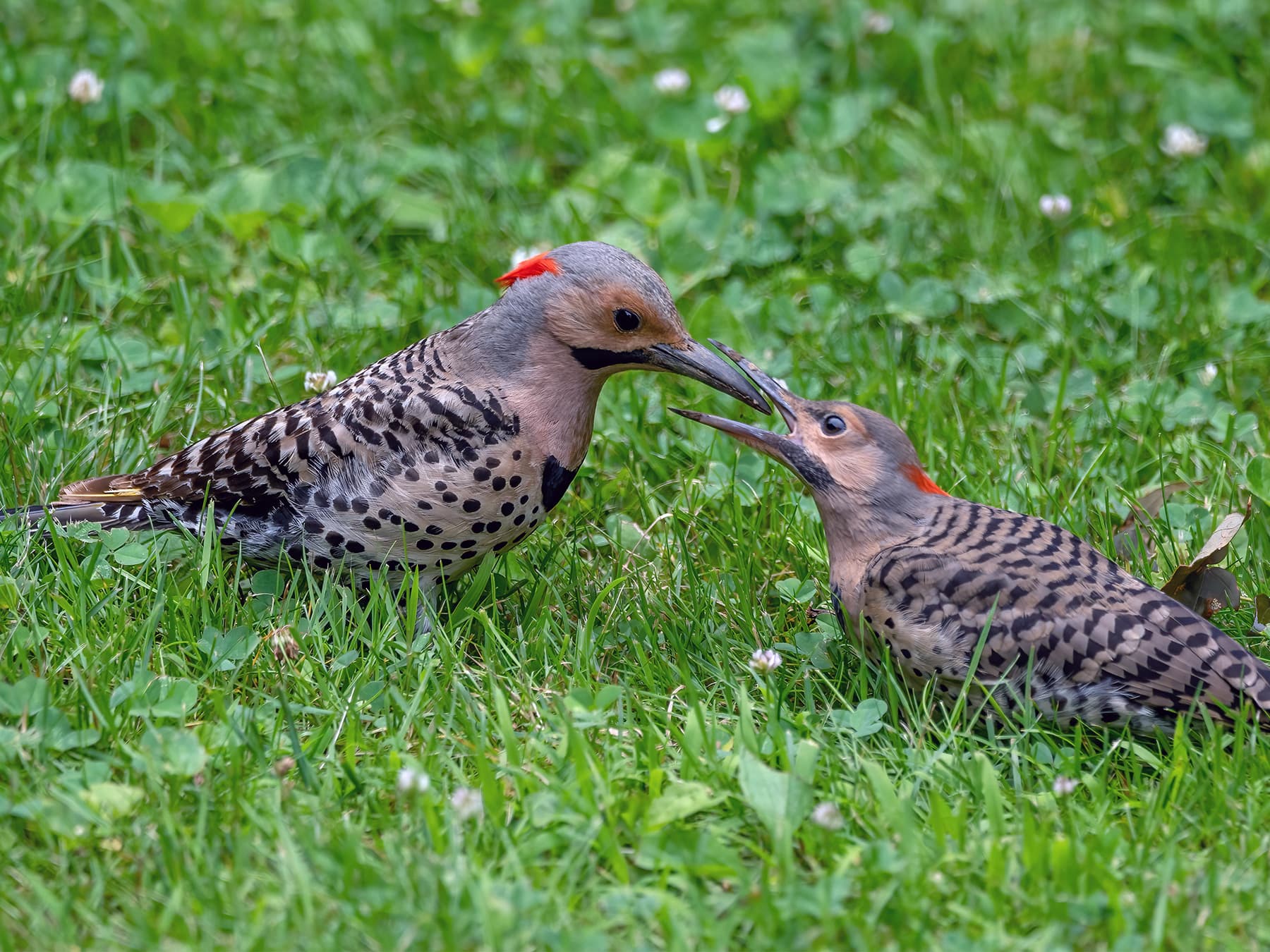 Juvenile Northern Flicker being fed by adult
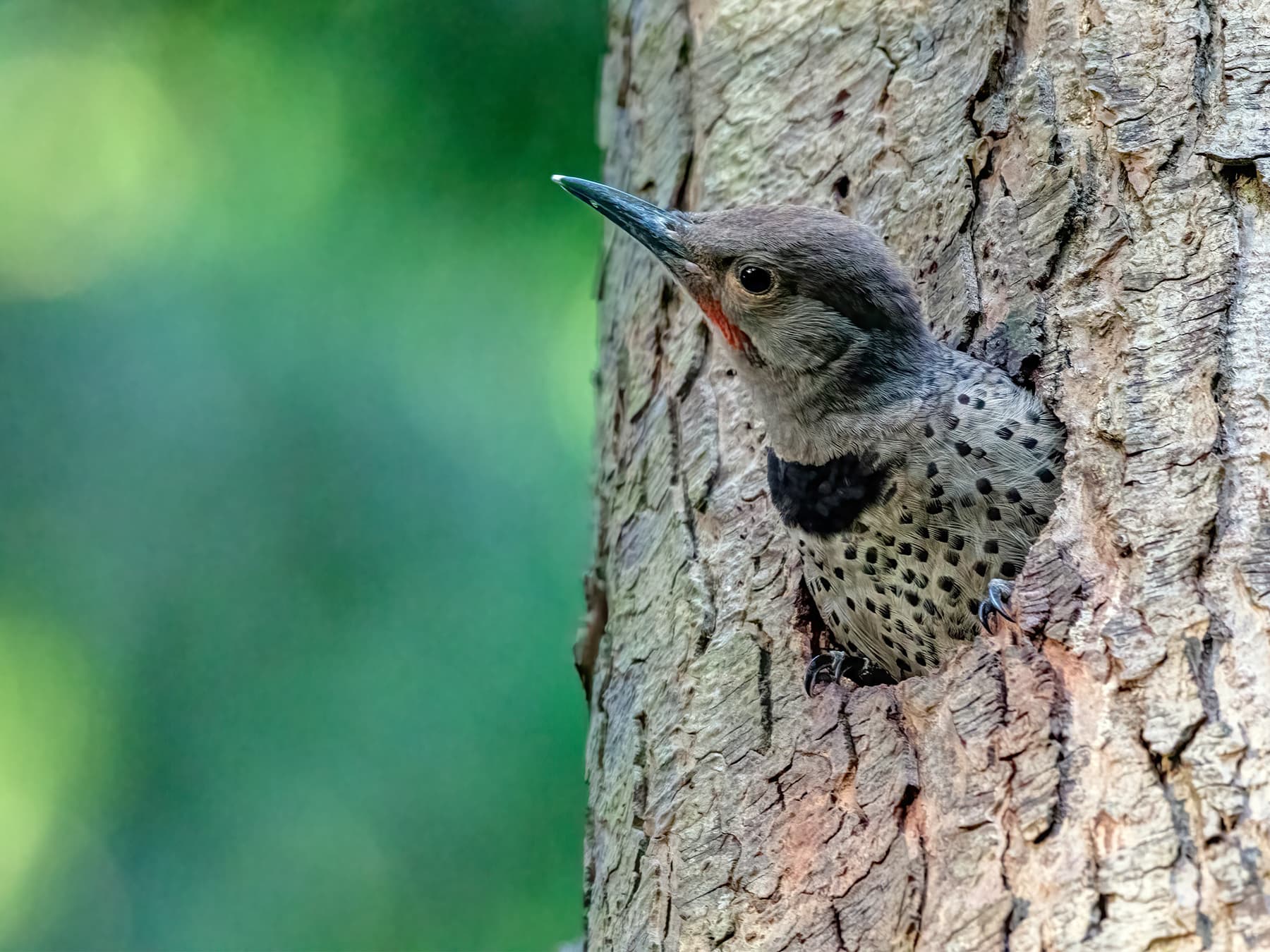 Immature Norther Flicker at nest hole
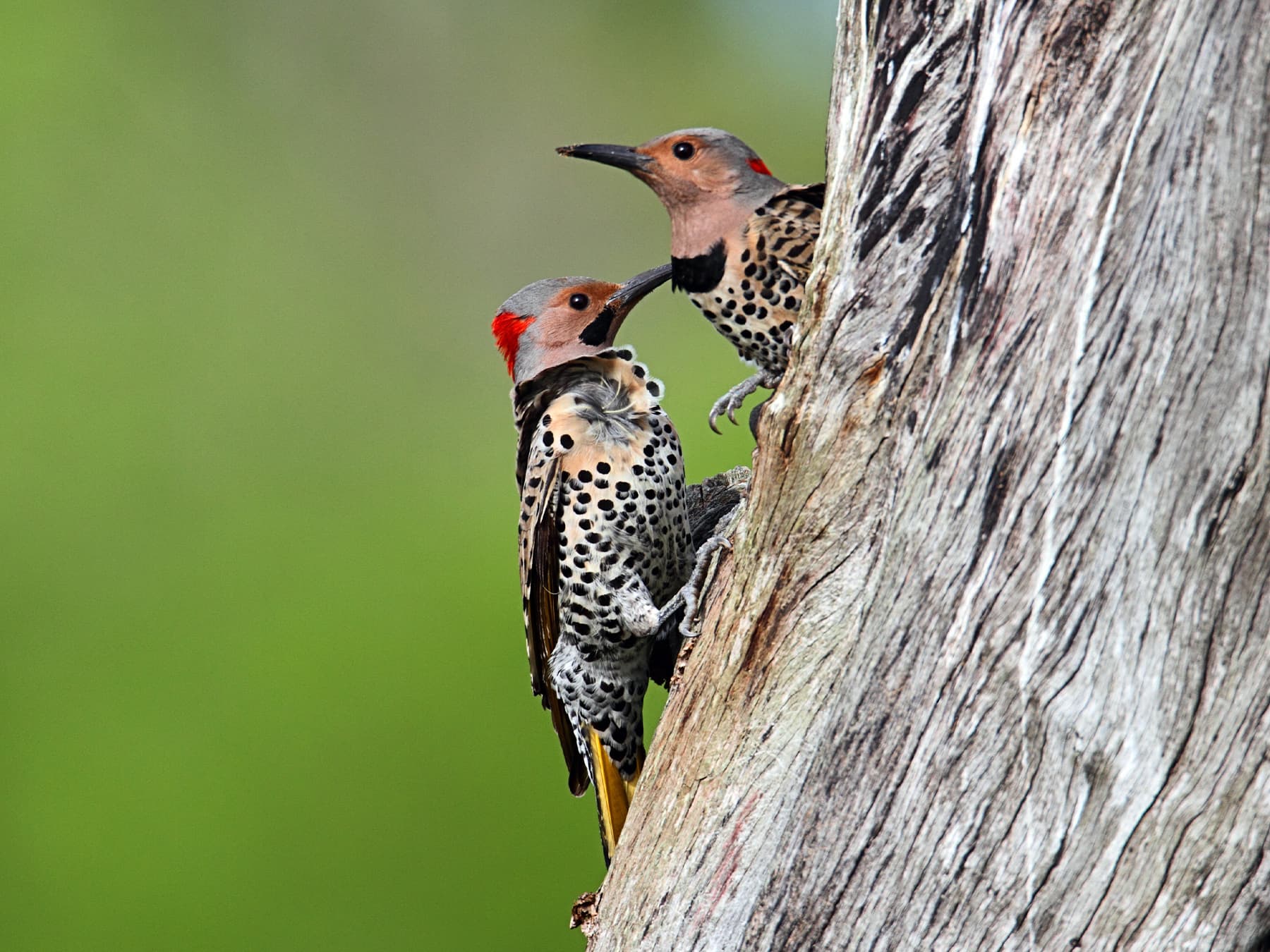 Pair of Northern Flickers cleaning out nest hole
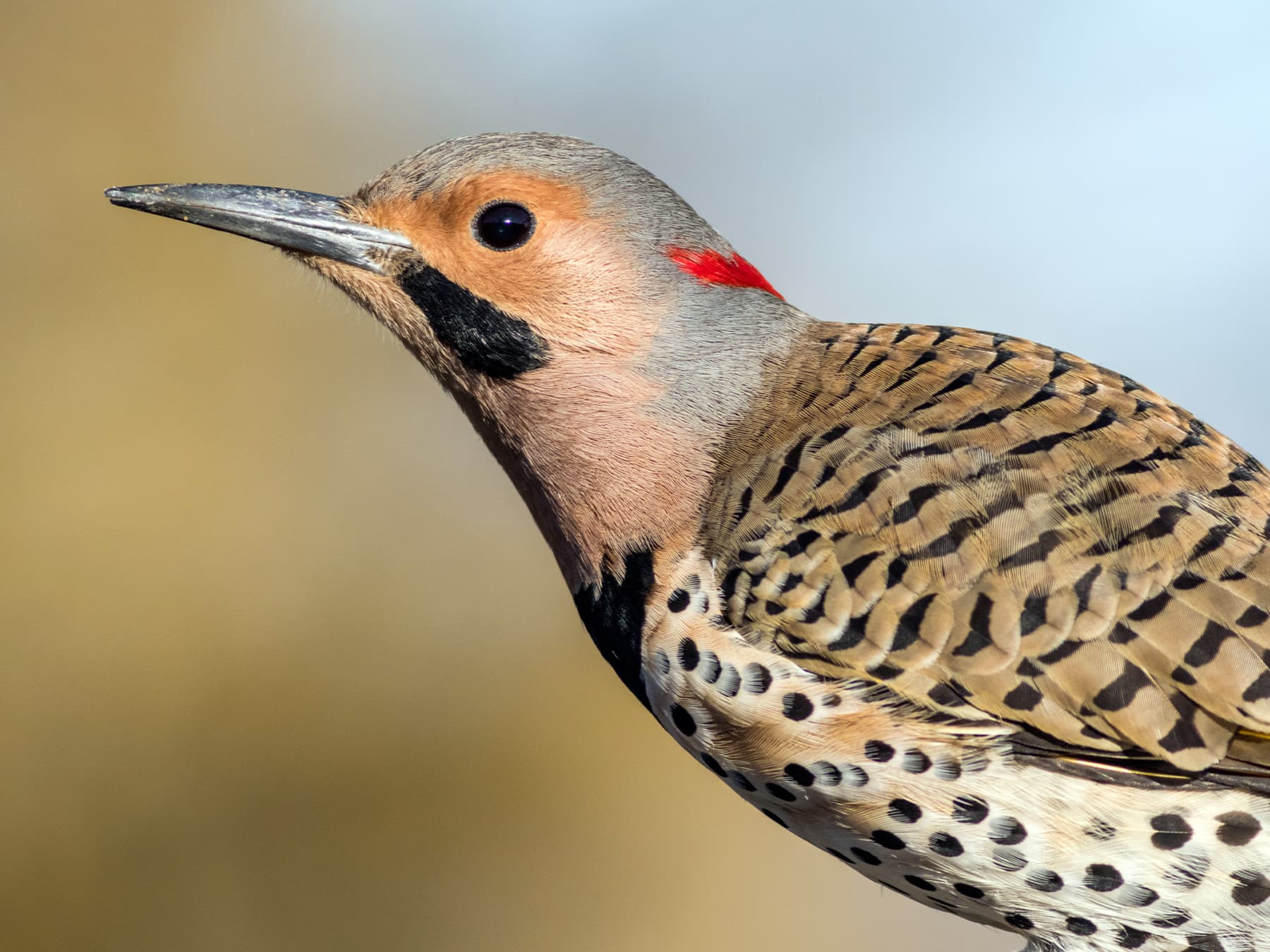 Portrait of a Norther Flicker
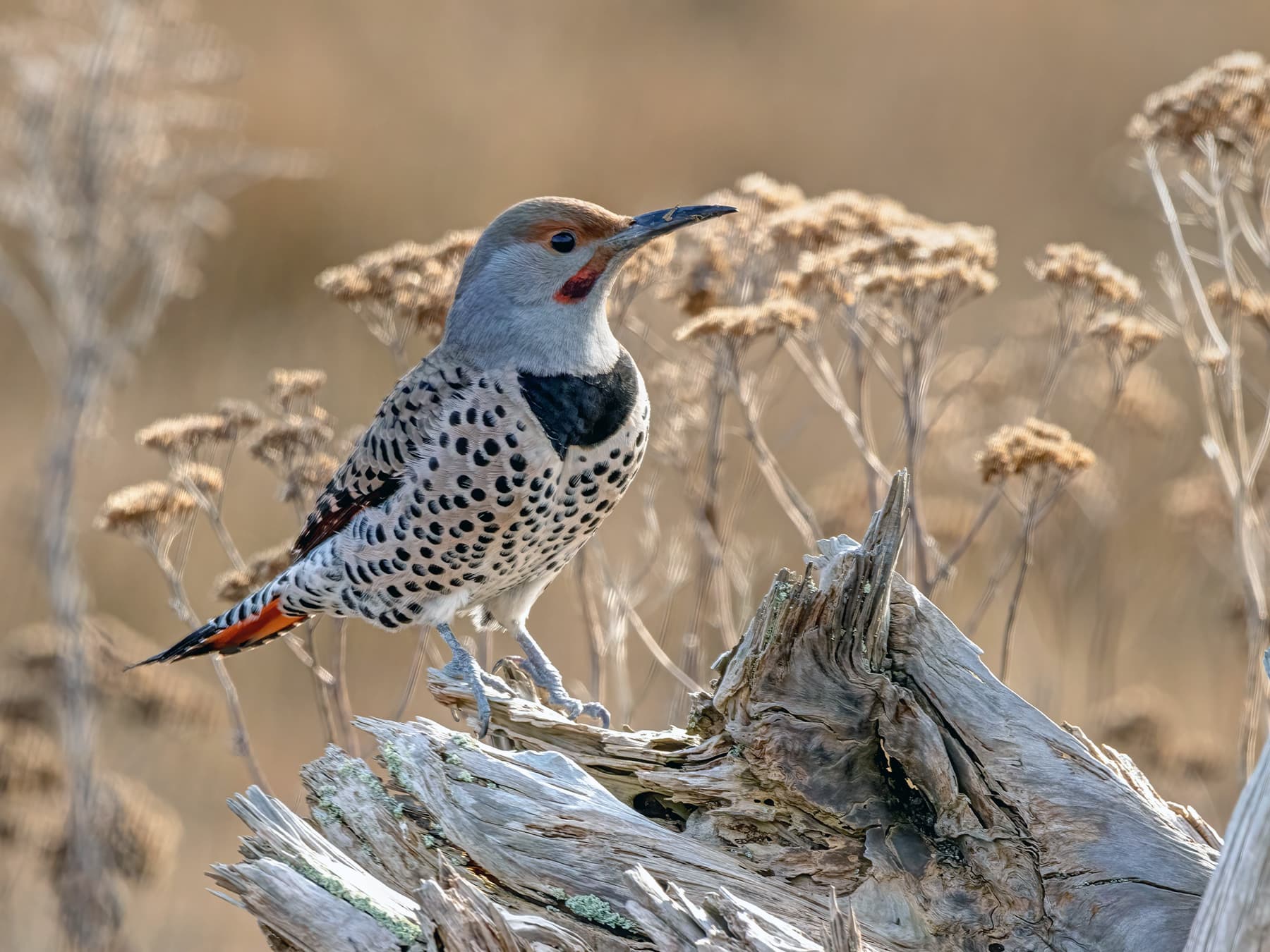 Northern Flicker Male
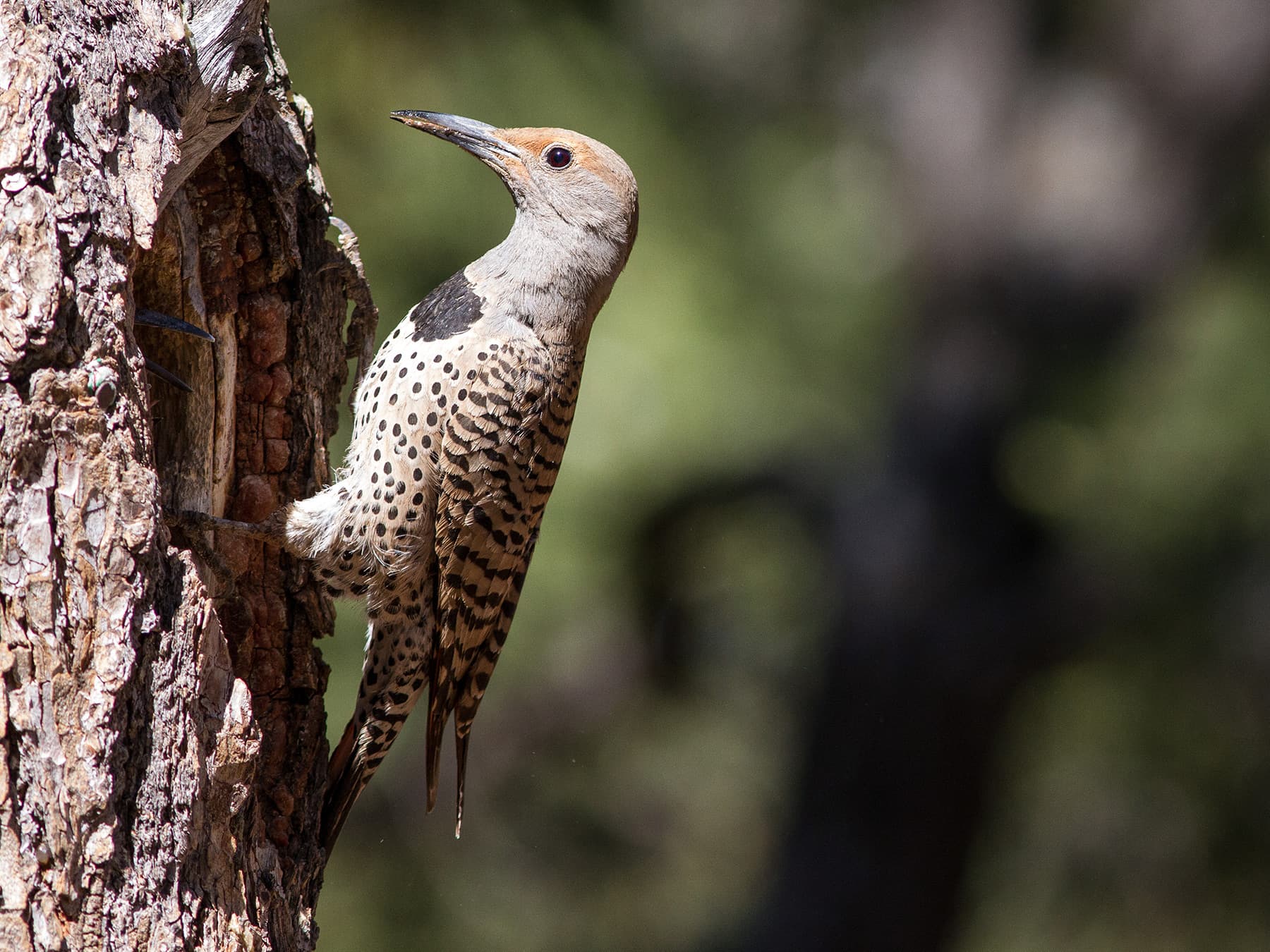 Northern Flicker Female
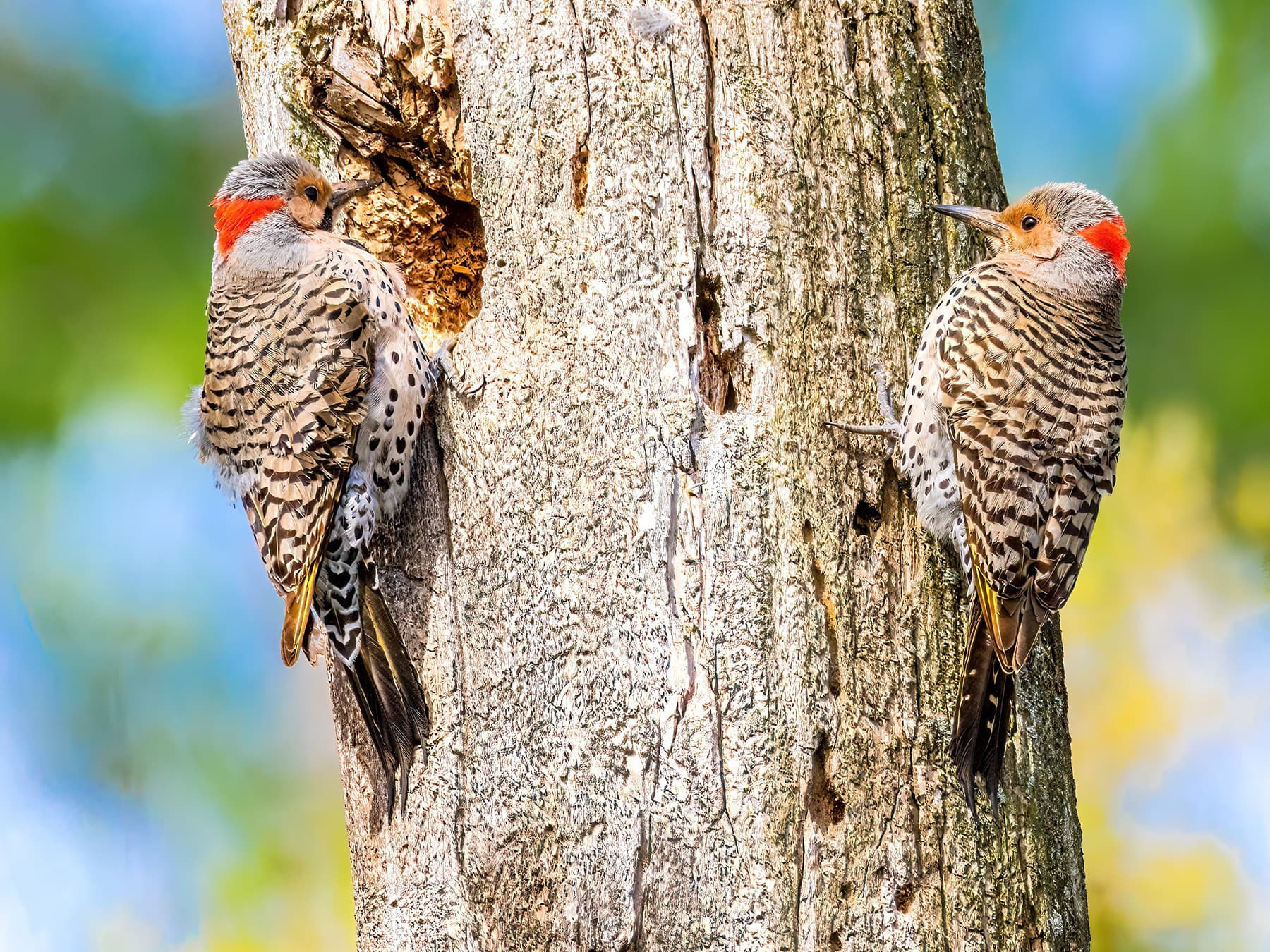 Pair of Northern Flickers clearing out their nest hole
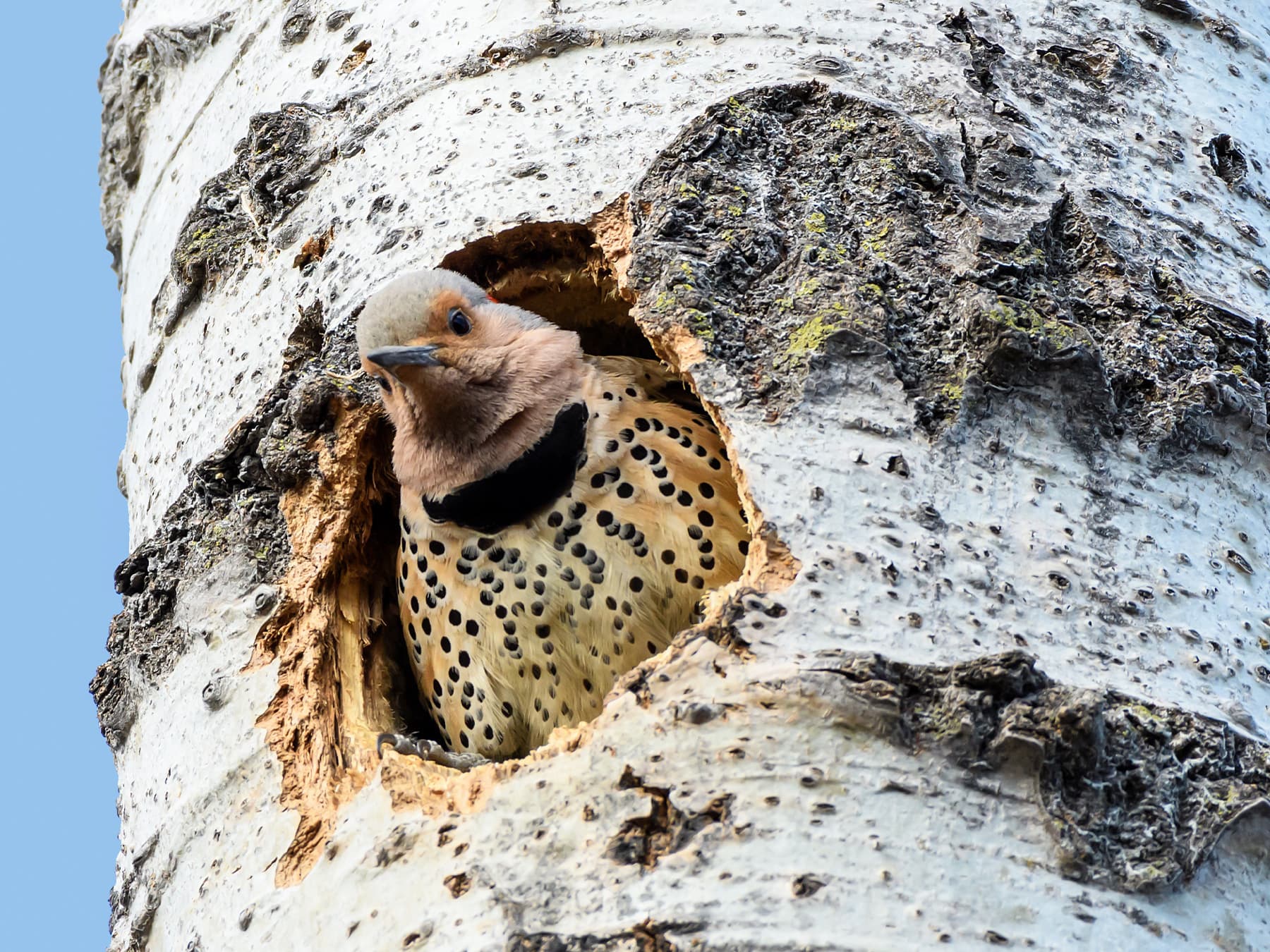 Northern Flicker looking out of the nest hole
Northern Flicker guides
5 guidesQuick facts
- Length
- 28–31 cm
- Wingspan
- 42–51 cm
- Weight
- 110–160 g
- Lifespan
- 2–5 years · oldest recorded 9.2 years
- Family
- Woodpeckers
- Migration
- Partial migrant
- Global status (IUCN)
- Least Concern
- World population
- 12,000,000 individuals
- Population trend
- Decreasing
- Also called
- Yellow-shafted Flicker, Red-shafted Flicker
- Scientific name
- Colaptes auratus
Questions
5What attracts Northern Flickers?
Bird lovers can attract Northern Flickers by maintaining a healthy natural landscape in their backyard and providing a shallow bird bath. They will also visit birdfeeders to snack on suet, and if you’re lucky, a pair might even use a nest box in your backyard.
What trees do Northern Flickers prefer?
Northern Flickers use a wide variety of trees for nesting, although they prefer dead trees or those with rotten heartwood that are easier to drill into. These birds don’t often feed in trees like other woodpeckers, although they will visit fruiting trees to forage for fruits and berries at times.
Do Northern Flickers harm trees?
Northern Flickers do not harm trees, so you have no cause for concern if you spot one of these birds in your backyard. They prefer to build their nests in trees that are already dead.
Do Northern Flickers go to bird feeders?
Northern Flickers are not the most common visitors at bird feeders, although they do enjoy suet. They will accept this tasty treat from a platform feeder on the ground or a hanging cage-style feeder.
Do Northern Flickers eat wasps?
Northern Flickers eat a variety of different insects. Ants are definitely their favorite prey, but they also eat wasps when available.
Sources
4- 1BirdLife International. 2016. Colaptes auratus. The IUCN Red List of Threatened Species 2016: e.T22726404A94921271. Source (opens in a new tab)
- 2Breeding Bird Survey and/or Christmas Bird Count (2007)
- 3Partners in Flight (2022) Source (opens in a new tab)
- 4Longevity Records Of North American Birds. Version 2023.1 Source (opens in a new tab)

Checked by
Nathan Cope, founder and editor
Nathan founded Birdfact and leads its writers and contributors in the UK, the US and Canada. He has watched and studied birds for more than ten years, and checks every article and species guide before it’s published.