
Cockatiel
Quarrion · Nymphicus hollandicus
By the Birdfact teamChecked by Nathan Cope
On this page14 sections
How to recognise it
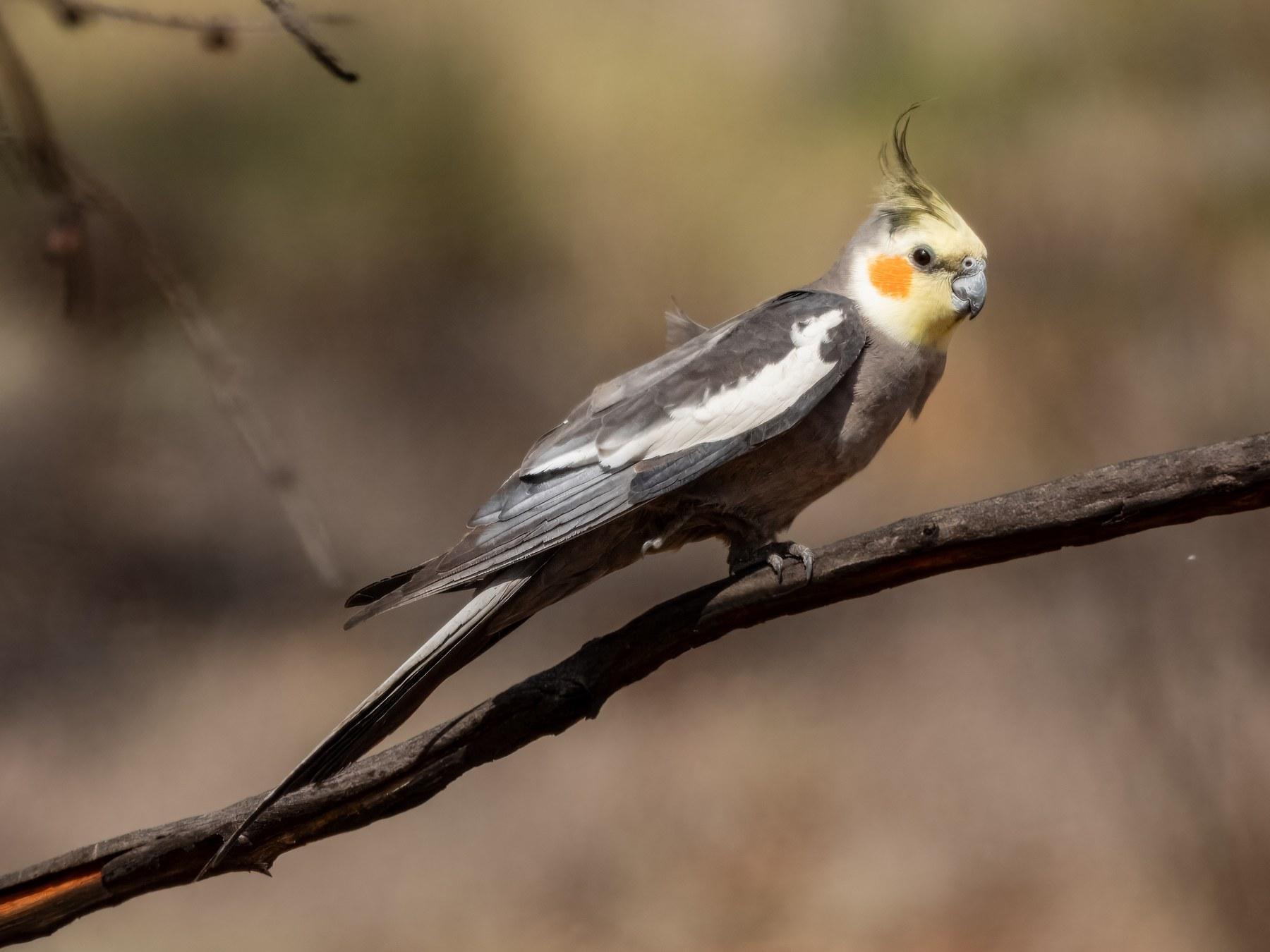
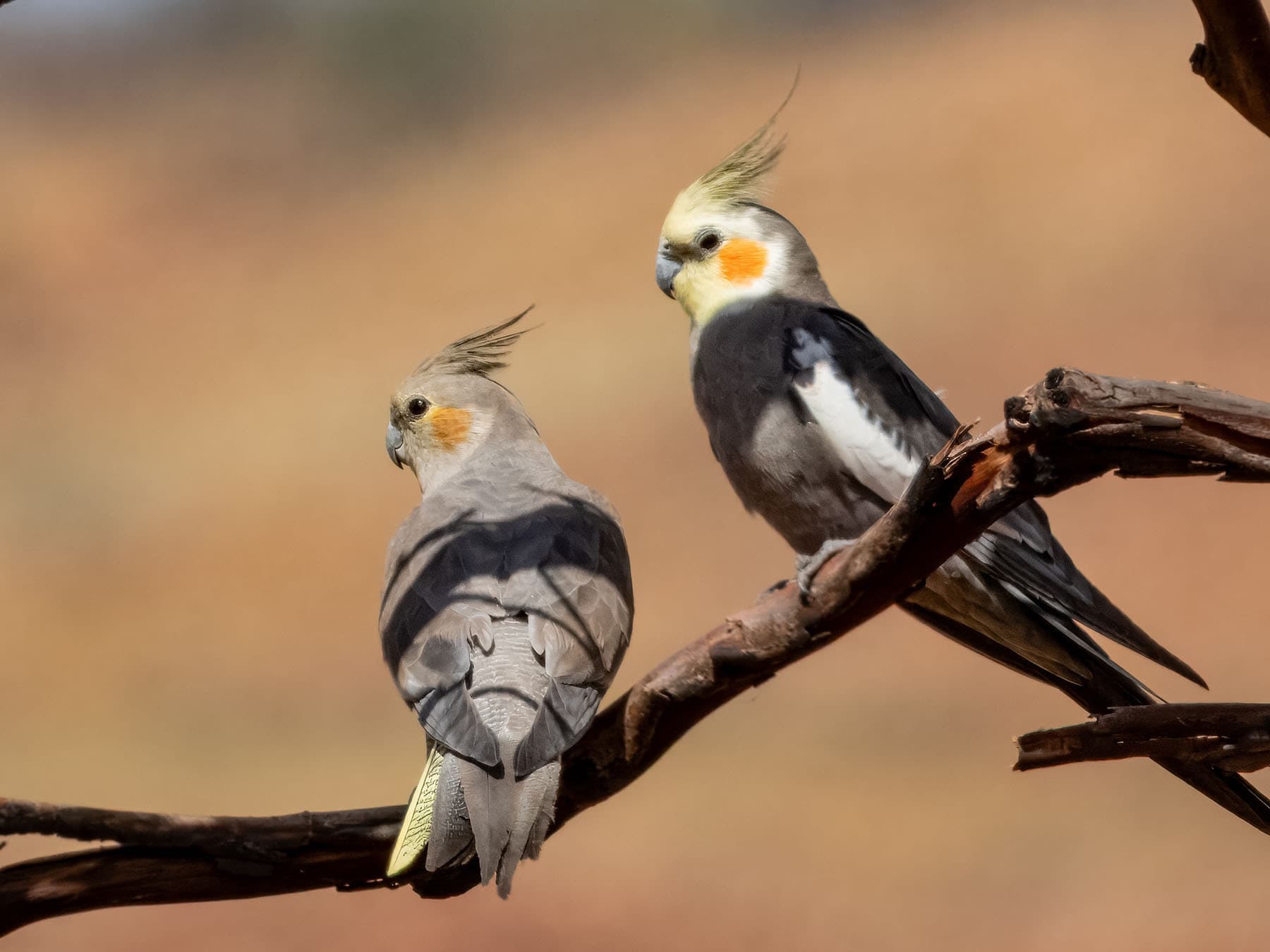
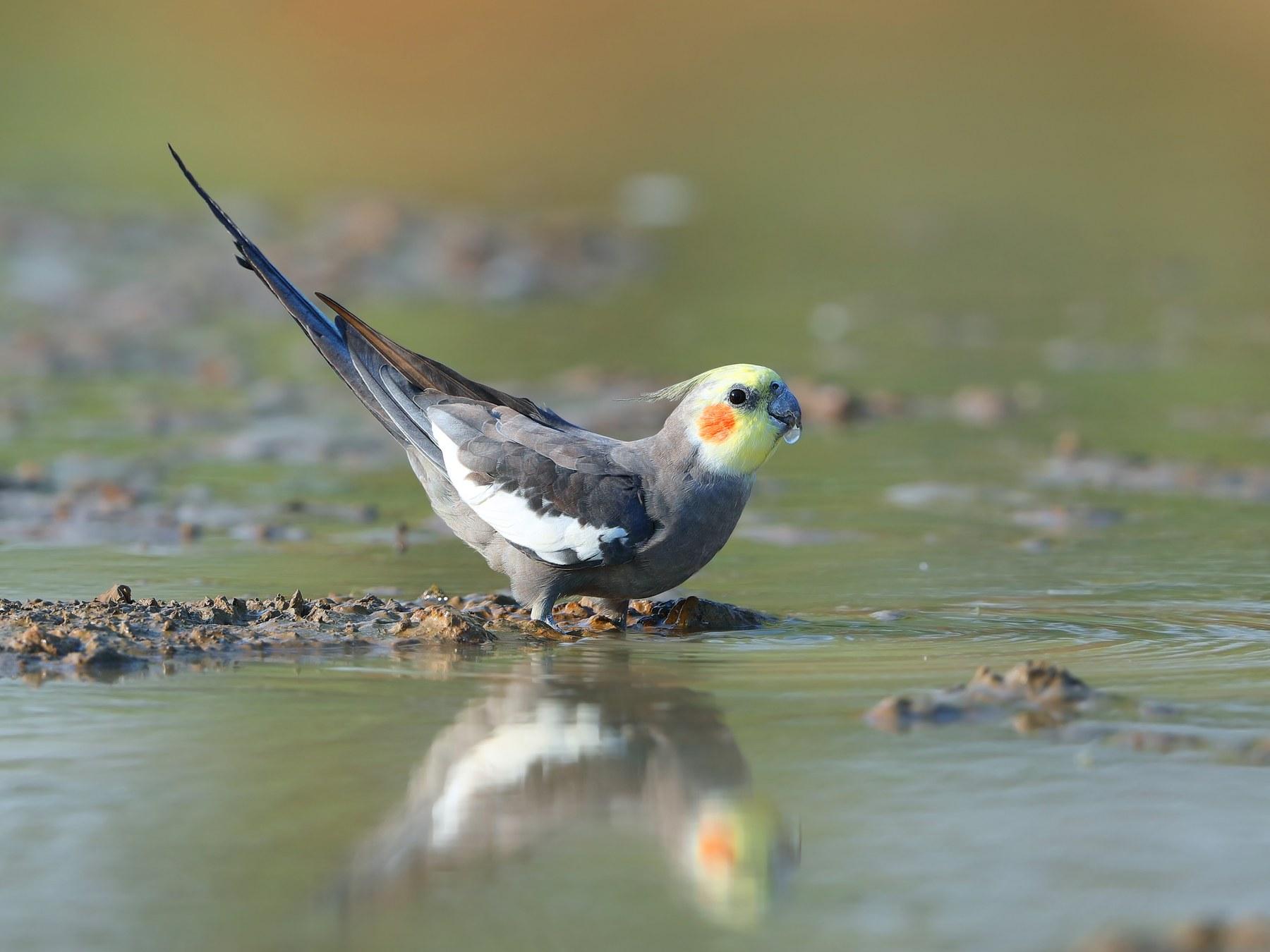
The face tells you the sex. A male has a yellow forehead, cheeks, chin and throat around a bright orange ear patch. A female's head is mainly grey, with only a faint yellow wash. Both sexes have a long, wispy crest of grey and pale yellow feathers, a long tail and a large white wing patch on brownish-grey plumage. Adults of both sexes have a grey bill and feet and a dark brown eye.
Cockatiels are found in the wild only in Australia, where small groups and large flocks feed on the ground in open inland country, usually not far from water.
Size and weight
Male, female and young
Adult males and females look different. The male has the bright yellow face and orange ear patch, and the underside of his tail is plain black. The female has a greyer head with a duller, more diffuse orange patch. The underside of her tail is barred yellow and dark grey, and her underparts are faintly barred.
Young birds look like the female but paler. Their bill is horn-grey to whitish-grey tinged brown, where an adult's is dark blue-grey to grey, and their eye is often paler and greyer than an adult's. Some young males gain the bright face at about 6 months old.
Young birds take on full adult plumage in a complete moult, at the same time as the adults moult after breeding.1
Identifying it from similar birds
A Galah is bigger, 35–36 cm, grey above with a deep pink face, neck and underparts and a pinkish-white cap. A Cockatiel shows no pink, and has a long, wispy crest.
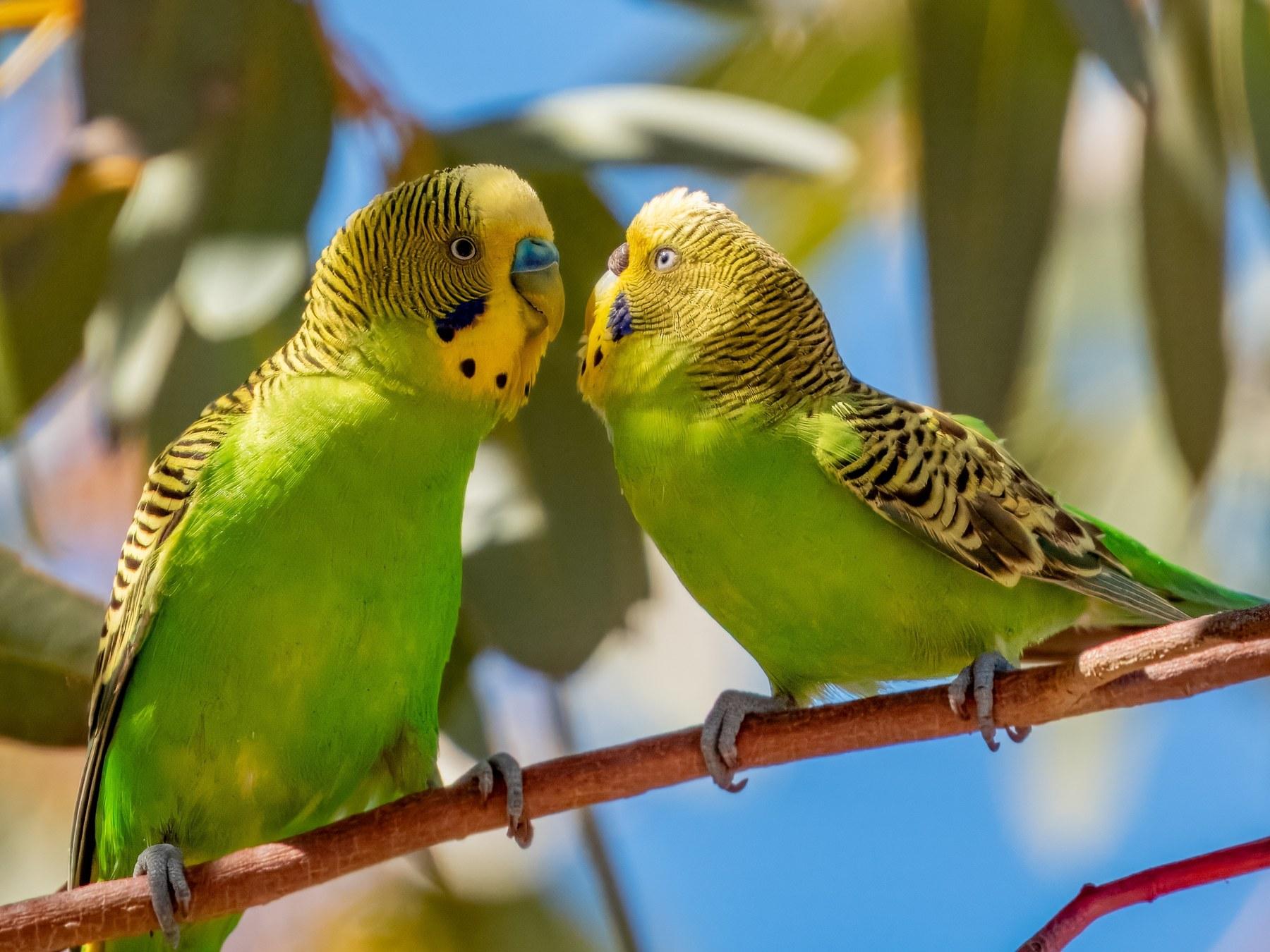
A Budgerigar is much smaller, 17–18 cm, with a pale yellow face, fine black-and-yellow barring from the crown to the nape, scalloped wings and light green underparts. The two often drink at the same waterholes.
A Crested Pigeon is grey with a long, pointed grey-black crest, but it is a pigeon, with a pink-red eye-ring and legs and glossy green, bronze or purple patches on the wing. It has no yellow on the face and no white wing patch.
The Gang-gang Cockatoo is stumpy and grey, the male with a red head and the female barred brick-red below. Both birds have a wispy crest, so look at the face and the tail. The Gang-gang lives in the forests of south-eastern Australia, not the dry inland.
Not sure it’s a Cockatiel? Check your photo: Birdfact names the bird and shows the look-alike side by side.
Its size
Adults- Length
- 29–33 cm
- Weight
- 70–102 g
Its song and calls
The call you will hear most is a plaintive 'queel, queel-queel', often given in flight. It is also written 'weero'.
We found no description of song in wild birds in the sources we read. Captive birds tell a little more: in one study, only males warbled and drummed, and only during the breeding period.3
Heard one and not sure? Let the bird song identifier listen.
When and where to see it
November
In seasonHeading west
The year across North America
Choose a place on the map to see its year, or find yours.
Most recorded in November
Up to under 0.1% of a place’s bird records that monthHere in other monthsThe way its records moved since last month
How this map is made
Each county, state or province is shaded by the Cockatiel’s share of all the bird records there that month: the darker, the larger the share. A place with only a trace of records in a month is left unshaded. The arrow follows the middle of the bird’s records from last month to this one, and the faint line its path through the year: it shows where the records move, not any one bird’s route. Shades compare places on this map with each other, not one bird with another. Records: GBIF eBird Observation Dataset, 2019–2024. Map: Natural Earth; place centres © OpenStreetMap contributors.
The Cockatiel is not recorded regularly in the UK, Ireland, the United States or Canada.
United States: recorded in 6 of the 6 years; Canada: recorded in 6 of the 6 years; United Kingdom: recorded in 5 of the 6 years; Ireland: recorded in 1 of the 6 years. Too few years to count as a regular visitor.
Worldwide: recorded regularly in 19 countries
Countries where it was recorded in at least 3 of the 6 years 2019–2024. Linked countries have their own bird list.
Data: EOD – eBird Observation Dataset (Cornell Lab of Ornithology), accessed via GBIF.org, CC BY 4.0. Records from 2019–2024, aggregated and filtered by Birdfact. How these lists are made
Cockatiels live across the dry interior of mainland Australia. They have been recorded in every mainland state and territory, though in the ACT only as a rare visitor. They are absent from Tasmania and most of Cape York Peninsula, and reach the south-east and south-west coasts only rarely.
Look for them in open country with water: lightly wooded grassland, open and acacia woodland, spinifex, and river red gum, black box or coolibah woodland along rivers. They also use partly cleared farmland, crops, orchards and grain stubble.
In the south the range reaches northern Victoria between Benalla and Horsham, the South Australian mallee and the Western Australian wheatbelt. Birds wander erratically onto the plains of southern Victoria, and are rare south-west of a line from Perth to Albany. In the west the range meets the coast between Geraldton and Dampier Land, and in Queensland it reaches the east coast between the Burdekin and Mary rivers.
Birds seen in Tasmania and around Sydney are thought to be escaped cage birds rather than wild wanderers. Around Canberra, in the year to June 2017, single birds were most probably escapes, though wild flocks are sometimes recorded in the region.4
Movements and migration
Cockatiels are nomads. Outside the breeding season they travel in large flocks, tracking wherever native grasses and crops are setting seed, which generally means following the rain. In a drought, flocks may even reach the coast.
In the south they come and go more regularly: birds arrive to breed in spring and usually leave early in the new year. There are also regular winter movements to Darwin. In broad terms, birds shift north in autumn and winter and south in spring and summer.
Tips for seeing it
What it eats
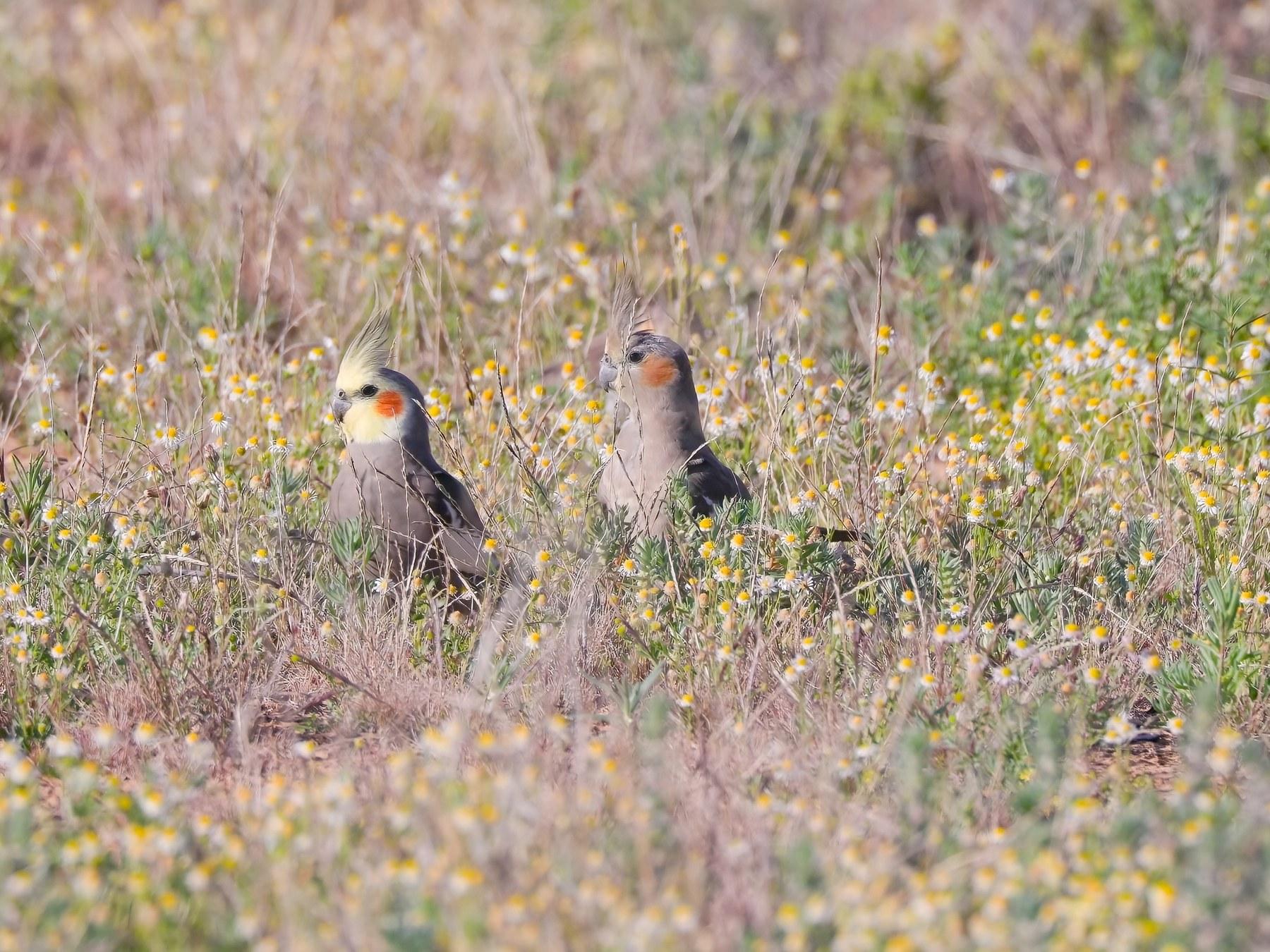
Cockatiels eat seeds, mostly small ones picked up from the ground. They take the seeds of grasses, shrubs and trees, and of crops such as sorghum and sunflower, which they also strip from the standing plants.
The sources lean different ways on crops. Birds of the World says native grass seed is eaten in preference to crops where it is plentiful, and sorghum in preference to sunflower; BirdLife Australia says Cockatiels especially favour cereals.2, 5
Like most seed-eaters they need water, and they visit waterholes every day, often alongside Budgerigars. They feed twice a day, soon after sunrise and again roughly 90 minutes before sunset, and eat more in the evening: about 4.25 g of food by dry weight, against 2.72 g in the morning, or around 7 g a day in all.2
Near Moree, in the grain-growing north of New South Wales, a study from 1980–82 found Cockatiels eating 29 kinds of seed: four grain crops, 17 grasses and eight other ground plants. Sorghum made up almost 60% of the seed in the birds' crops, grasses 19.3% and sunflower 6%. They fed on the ground on fallen seed or by pulling stems down, and perched on the heads of sorghum and sunflower to feed.6
Nesting and breeding
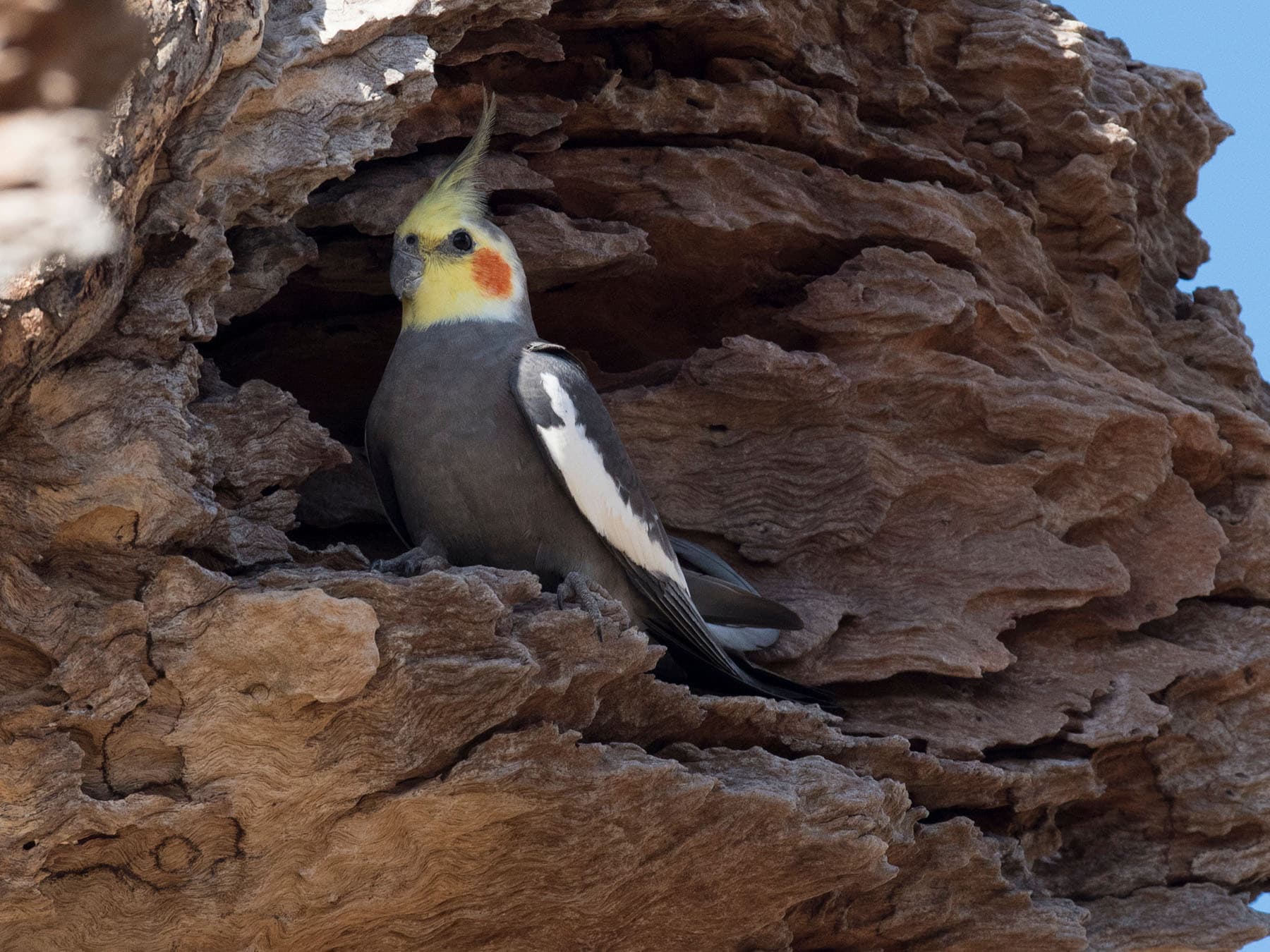
Cockatiels nest in a hollow in a tree, most often a eucalypt, and generally one near or standing in water. Now and then they use a buloke or the old nest of another parrot, and two or more pairs sometimes share a nest tree. Wild birds seldom use nest boxes.
The eggs are laid on the floor of the hollow, on a lining of wood dust, and the adults go into the hollow tail first.
Breeding is usually from August to December in southern Australia, and more often from April to July in the north. There is more in Cockatiel nesting.
Eggs and incubation
A clutch is 1–7 white eggs, about 4 on average; BirdLife Australia gives usually three to five, and up to eight.2, 5 A pair may lay more than one clutch in a season.2
Both sexes incubate, so the male sits on the eggs as well as the female. Incubation takes about 20 days. We found no source that says which sex sits by day and which by night.
Captive studies add a little. One describes both parents sharing incubation and the care of the young.7 In another, the last eggs of a clutch were smaller, and the authors note that the chicks hatch one after another when incubation starts before the clutch is complete.8
Chicks and young
The chicks hatch with plenty of yellow down, though the Australian Faunal Directory calls it cream, and both parents feed them.2, 9
In the wild, the young stay in the hollow for about a month (in captivity, about 5 weeks). Once out, they soon join the big nomadic flocks, but stay in family groups for about a month.5, 2
In one captive study the young left the hollow at 37 days; the chicks hatched blind, with poor insulation, and were brooded for roughly their first 12–13 days.10
Behaviour
Cockatiels are sociable all year, even while breeding, and pairs stay together throughout the year. Flocks roost together at night.
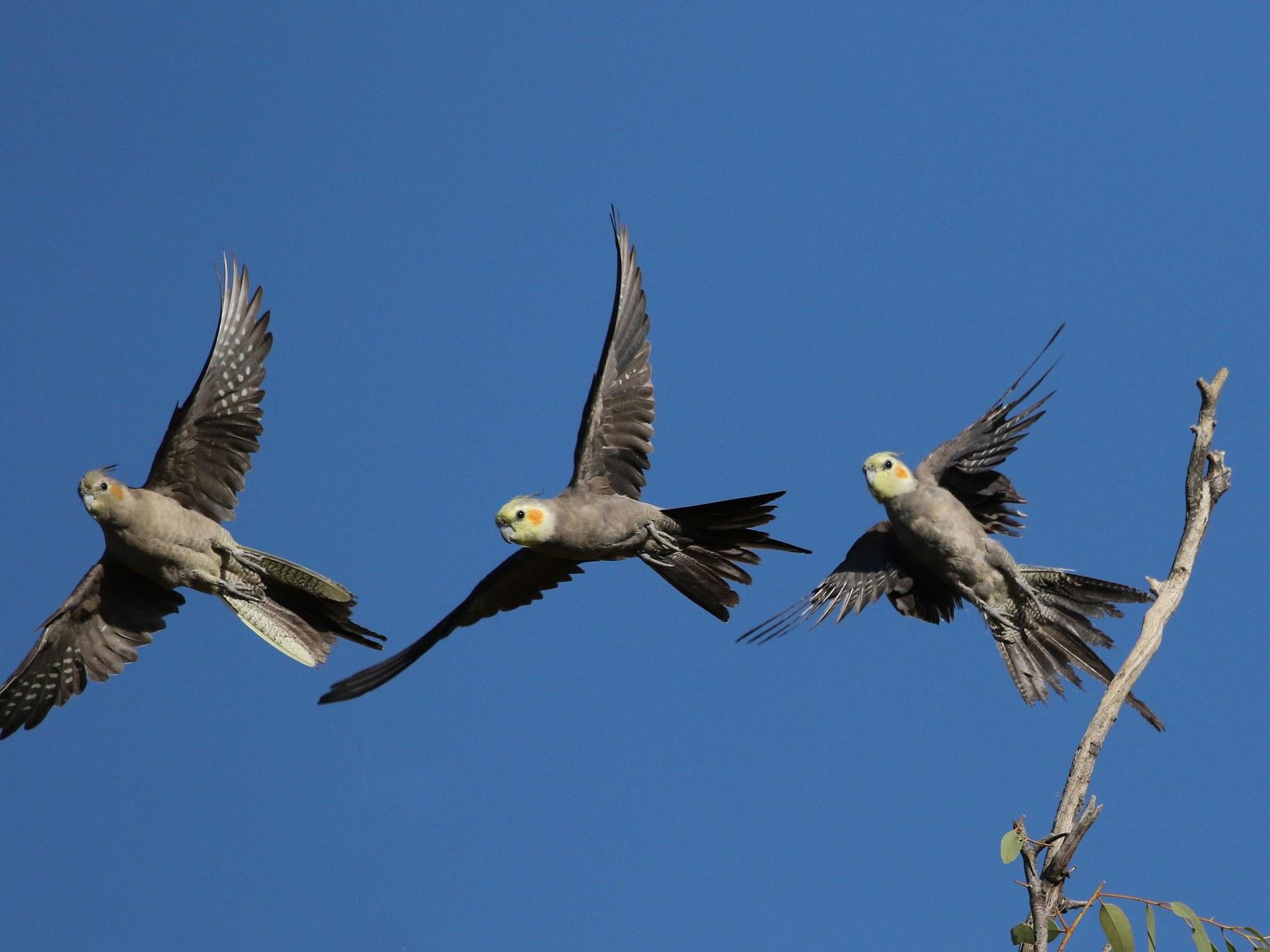
They are strong fliers. Small flocks keep a tight, coordinated formation in the air, while larger ones tend to split into smaller groups.
In a study of captive birds in a semi-natural setting, mates kept closer together and preened each other more than they did with birds of the opposite sex that were not their mates. Males, though not females, were also more aggressive to those other birds than to their own mate.11
Social behaviour and flocks
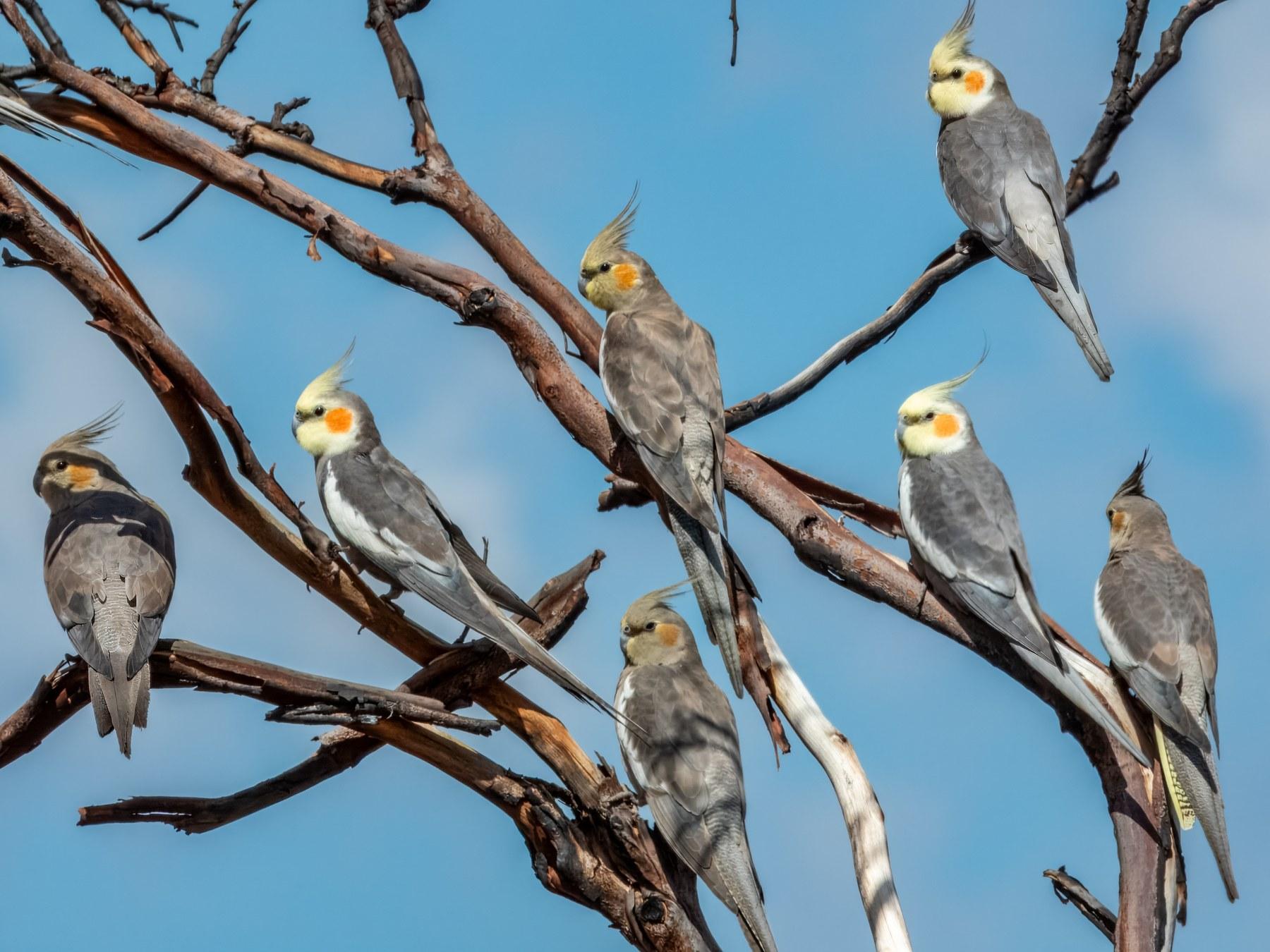
Most flocks hold up to 30 birds, but gatherings of hundreds, and occasionally a thousand or more, are seen.
Near Moree, feeding flocks averaged 27 birds, and groups above 100 birds appeared only when food ran short.6
Lifespan and predators
Captive Cockatiels have been reported to live to about 35–36 years. We found no reliable figure for wild birds: no banding record or survival study, and the one secondary account that gives a figure, 10–14 years, cites no study for it.12
Predators and disease
One secondary account names Australian birds of prey as the main predators.12 We found no study that names a predator.
In a study published in 2008, all 88 Cockatiels tested from commercial aviaries were free of beak and feather disease virus. Separately, two isolates of the virus came from diseased Cockatiel feathers and differed from other strains.13 We found no study of disease in wild Cockatiels.
Conservation
The Cockatiel was rated Least Concern on the IUCN Red List when we checked in November 2026.14 BirdLife Australia lists it as Least Concern in New South Wales, Queensland, South Australia, Victoria, Western Australia and the Northern Territory.5
Birds of the World's account, written in 2013, calls it abundant, with the world population 'postulated' at around one million birds, a figure from a 1998 parrot guide. The same account says it has perhaps benefited from the artificial waterholes that came with farming, and that no extensive field study of the species had yet been made.2
We found no survey count or population trend in the sources we read.
Similar birds
Often mistaken for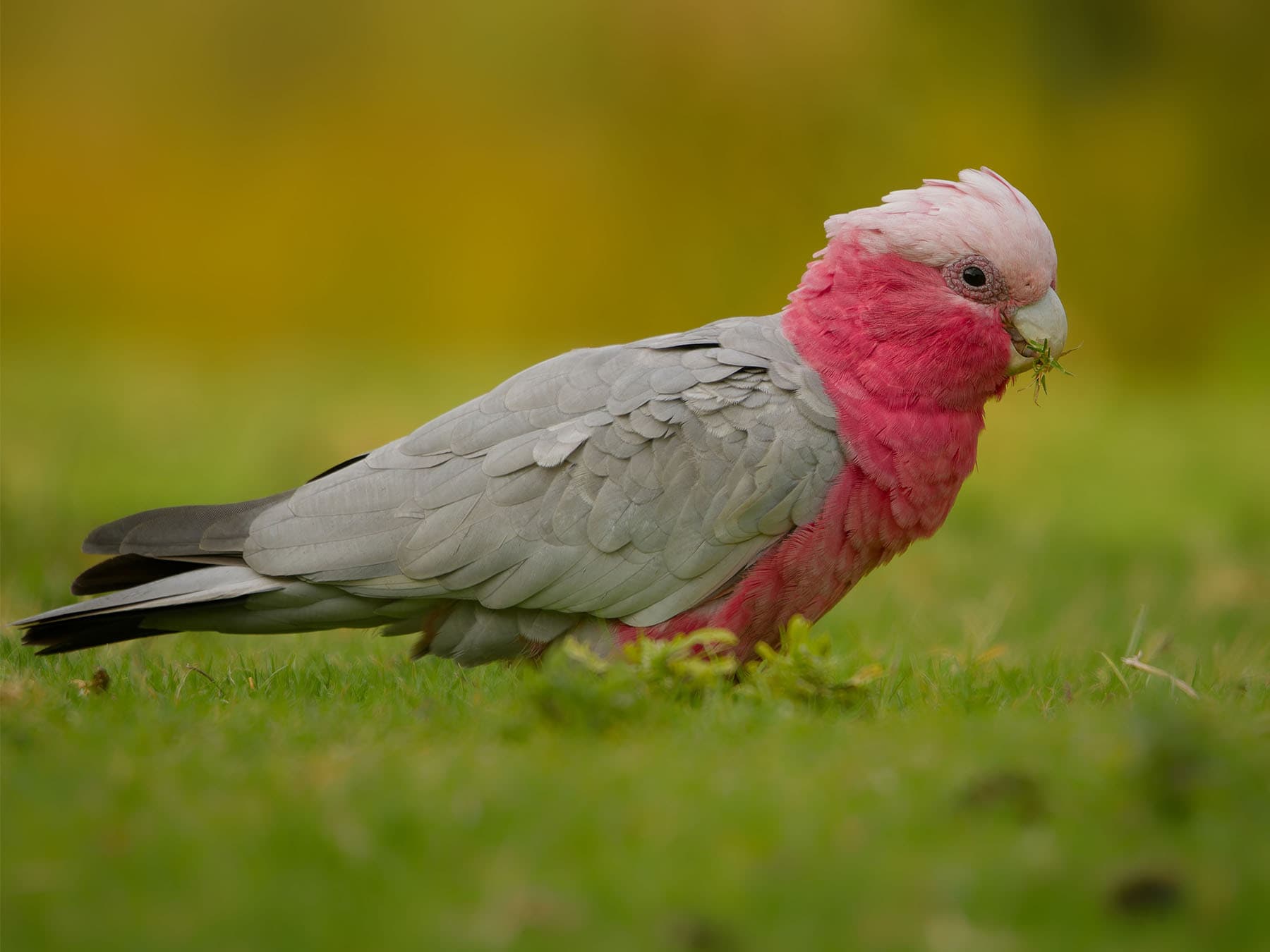
More photos
1 photos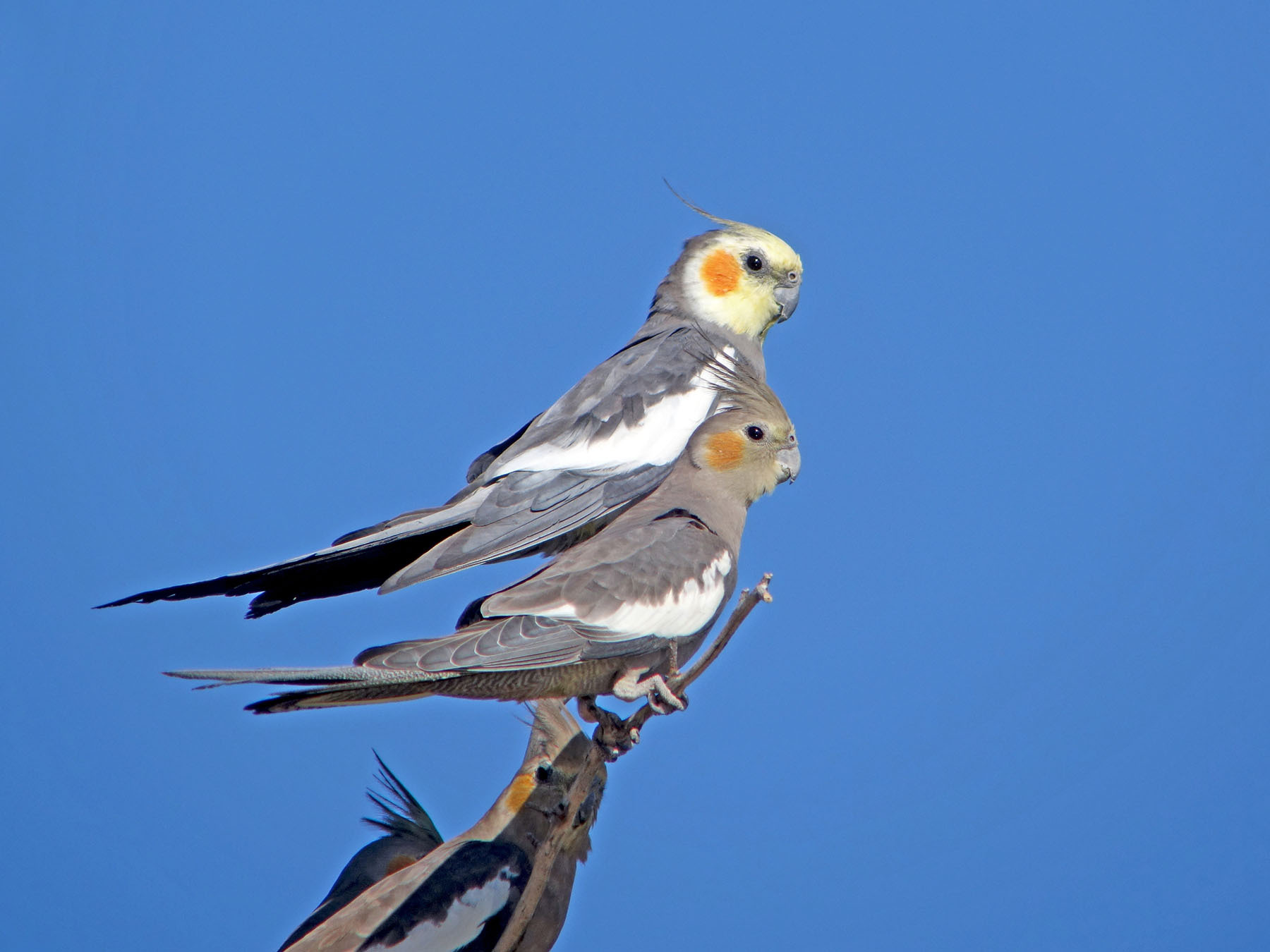
Quick facts
- Length
- 29–33 cm
- Weight
- 70–102 g
- Family
- Cockatoos
- Migration
- Nomadic
- Global status (IUCN)
- Least Concern
- Population trend
- We found no survey trend. Birds of the World's 2013 account calls it abundant.
- Also called
- Quarrion
- Scientific name
- Nymphicus hollandicus
Questions
3Is a cockatiel a parrot or a cockatoo?
Both. It is the only species in its genus, Nymphicus, in the cockatoo family, Cacatuidae, which belongs to the parrot order, Psittaciformes.15 In a 2008 study of the parrot order using several genes, the New Zealand parrots branched off first, and the cockatoo family formed a sister branch to all the remaining parrots.16 The Cockatiel was one of four birds long difficult to place within the cockatoo family, until a 2011 study using several genes settled their positions.17
Does it have other names?
In Australia it has also been called the Quarrion: a 1965 thesis on its behaviour used the name in its title. The Atlas of Living Australia lists Wiraarr and Wiyaarr among its traditional names, each tagged with an Australian language code.18
How was it first named?
Gmelin first named it Psittacus novaehollandiae in 1788, but that name was already in use for another parrot, so Kerr renamed it Psittacus hollandicus in 1792. The type locality is given as New Holland, probably Bustard Bay in Queensland, where Cook's first voyage collected.9
Sources
25- 1Hardy, J. W. (compiler). Cockatiel, Nymphicus hollandicus (Bird in the Hand, Second Edition). Australian Bird Study Association. Accessed 21 November 2026. Source (opens in a new tab)
- 2Rowley, I. and Kirwan, G. M. (2020). Cockatiel (Nymphicus hollandicus), version 1.0. Birds of the World (J. del Hoyo, A. Elliott, J. Sargatal, D. A. Christie and E. de Juana, editors). Cornell Lab of Ornithology. doi:10.2173/bow.cockat.01 (opens in a new tab)
- 3Le Covec, M., Aime, C. and Bovet, D. (2019). Combinatory sound object play in cockatiels: a forerunner of music?. Behaviour 156(5-8): 595-617. doi:10.1163/1568539x-00003551 (opens in a new tab)
- 4Canberra Ornithologists Group (2017). Cockatiel (Annual Bird Report extract, twelve months to June 2017). Canberra Ornithologists Group. Accessed 21 November 2026. Source (opens in a new tab)
- 5BirdLife Australia. Cockatiel. BirdLife Australia bird profiles. Accessed 21 November 2026. Source (opens in a new tab)
- 6Jones, D. (1987). Feeding ecology of the Cockatiel, Nymphicus hollandicus, in a grain-growing area. Wildlife Research 14(1): 105-115. doi:10.1071/wr9870105 (opens in a new tab)
- 7Myers, S. A., Millam, J. R. and El Halawani, M. E. (1989). Plasma LH and prolactin levels during the reproductive cycle of the cockatiel (Nymphicus hollandicus). General and Comparative Endocrinology 73(1): 85-91. doi:10.1016/0016-6480(89)90058-0 (opens in a new tab)
- 8Kozlowski, C. P. and Ricklefs, R. E. (2010). Egg size and yolk steroids vary across the laying order in cockatiel clutches: a strategy for reinforcing brood hierarchies?. General and Comparative Endocrinology 168(3): 460-465. doi:10.1016/j.ygcen.2010.06.006 (opens in a new tab)
- 9Australian Biological Resources Study. Nymphicus hollandicus (Cockatiel). Australian Faunal Directory. Accessed 21 November 2026. Source (opens in a new tab)
- 10Pearson, J. T. (1998). Development of thermoregulation and posthatching growth in the altricial cockatiel Nymphicus hollandicus. Physiological Zoology 71(2): 237-244. doi:10.1086/515903 (opens in a new tab)
- 11Millam, J., Spoon, T. and Owings, D. (2004). Variation in the stability of cockatiel (Nymphicus hollandicus) pair relationships: the roles of males, females, and mate compatibility. Behaviour 141(10): 1211-1234. doi:10.1163/1568539042729711 (opens in a new tab)
- 12Newmyer, B. (2011). Nymphicus hollandicus (cockatiel). Animal Diversity Web, University of Michigan Museum of Zoology. Accessed 21 November 2026. Source (opens in a new tab)
- 13Shearer, P. L. et al. (2008). Beak and feather disease virus infection in cockatiels (Nymphicus hollandicus). Avian Pathology 37(1): 75-81. doi:10.1080/03079450701802206 (opens in a new tab)
- 14IUCN (2026). The IUCN Red List of Threatened Species (GBIF checklist copy). GBIF. Accessed 21 November 2026. Source (opens in a new tab)
- 15AviList Core Team (2026). AviList: The Global Avian Checklist, v2025b. AviList. doi:10.2173/avilist.v2025b (opens in a new tab)
- 16Wright, T. F. et al. (2008). A multilocus molecular phylogeny of the parrots (Psittaciformes): support for a Gondwanan origin during the Cretaceous. Molecular Biology and Evolution 25(10): 2141-2156. doi:10.1093/molbev/msn160 (opens in a new tab)
- 17White, N. E. et al. (2011). The evolutionary history of cockatoos (Aves: Psittaciformes: Cacatuidae). Molecular Phylogenetics and Evolution 59(3): 615-622. doi:10.1016/j.ympev.2011.03.011 (opens in a new tab)
- 18Atlas of Living Australia (2026). Nymphicus hollandicus species record and occurrence count. Atlas of Living Australia (bie.ala.org.au API). Accessed 21 November 2026. Source (opens in a new tab)
- 19Myhrvold, N. P. et al. (2015). An amniote life-history database to perform comparative analyses with birds, mammals, and reptiles. Ecology 96: 3109. Accessed 21 November 2026. Source (opens in a new tab)
- 20Rowley, I. and Boesman, P. F. D. (2020). Galah (Eolophus roseicapilla), version 1.0. Birds of the World (J. del Hoyo, A. Elliott, J. Sargatal, D. A. Christie and E. de Juana, editors). Cornell Lab of Ornithology. doi:10.2173/bow.galah.01 (opens in a new tab)
- 21Collar, N. and Boesman, P. F. D. (2020). Budgerigar (Melopsittacus undulatus), version 1.0. Birds of the World (J. del Hoyo, A. Elliott, J. Sargatal, D. A. Christie and E. de Juana, editors). Cornell Lab of Ornithology. doi:10.2173/bow.budger.01 (opens in a new tab)
- 22Baptista, L. F., Trail, P. W., Horblit, H. M. and Boesman, P. F. D. (2020). Crested Pigeon (Ocyphaps lophotes), version 1.0. Birds of the World (J. del Hoyo, A. Elliott, J. Sargatal, D. A. Christie and E. de Juana, editors). Cornell Lab of Ornithology. doi:10.2173/bow.crepig1.01 (opens in a new tab)
- 23Taylor, S. and Stojanovic, D. (2026). Gang-gang Cockatoo (Callocephalon fimbriatum), version 2.0. Birds of the World (N. D. Sly, editor). Cornell Lab of Ornithology. doi:10.2173/bow.gagcoc1.02 (opens in a new tab)
- 24Bonin, J. and Homberger, D. (2012). Possible convergent evolution of yellow psittacofulvin colors in the feathers of cockatoos (Cacatuidae) and parrots (Psittacidae). The FASEB Journal 26. doi:10.1096/fasebj.26.1_supplement.722.23 (opens in a new tab)
- 25Morris, C. R., Nelson, F. E. and Askew, G. N. (2010). The metabolic power requirements of flight and estimations of flight muscle efficiency in the cockatiel (Nymphicus hollandicus). Journal of Experimental Biology 213(16): 2788-2796. doi:10.1242/jeb.035717 (opens in a new tab)

Checked by
Nathan Cope, founder and editor
Nathan founded Birdfact and leads its writers and contributors in the UK, the US and Canada. He has watched and studied birds for more than ten years, and checks every article and species guide before it’s published.