


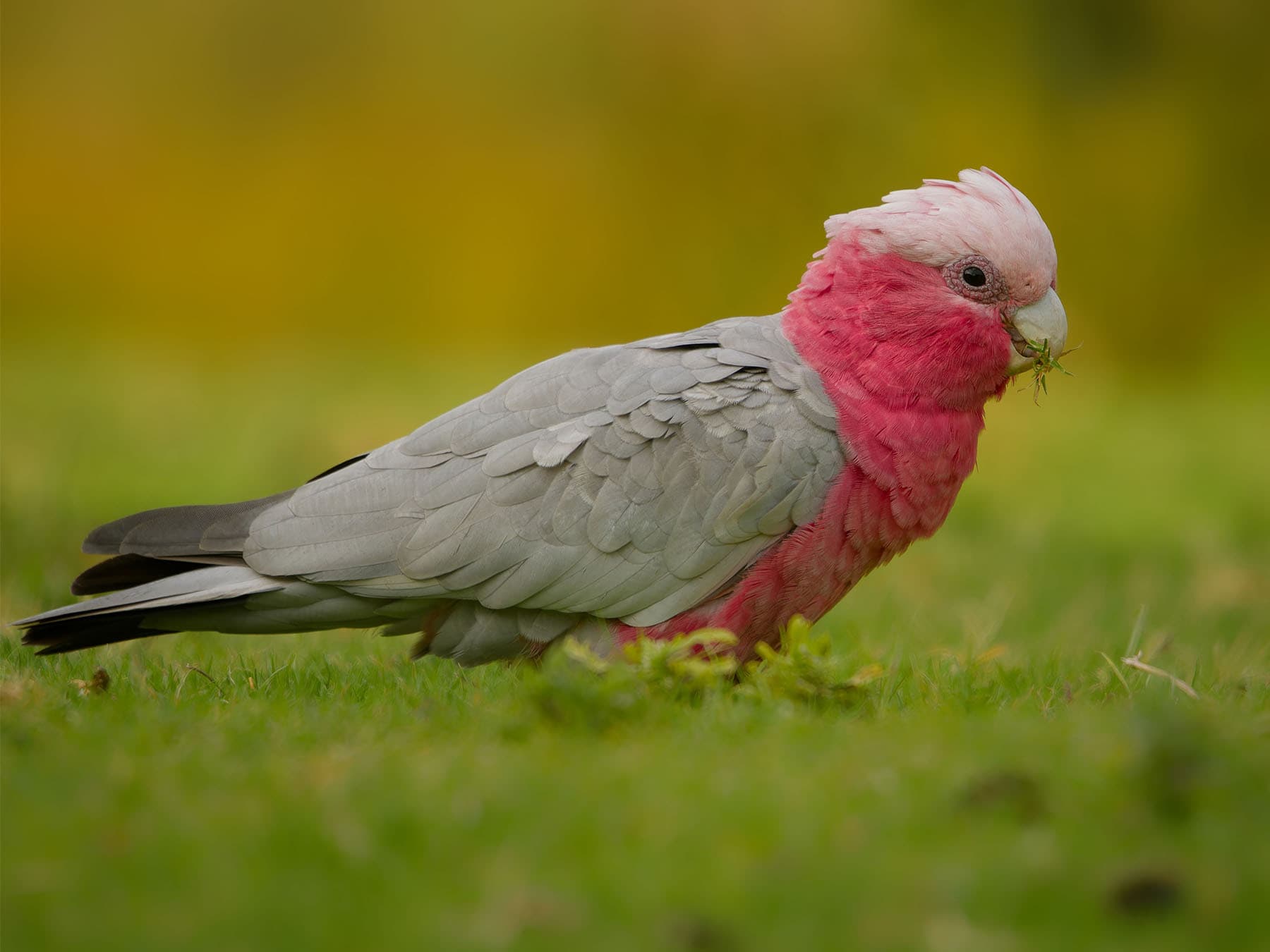
Galah
Rose-breasted Cockatoo, Pink and Grey · Eolophus roseicapilla
By the Birdfact teamChecked by Nathan Cope
On this page13 sections
How to recognise it
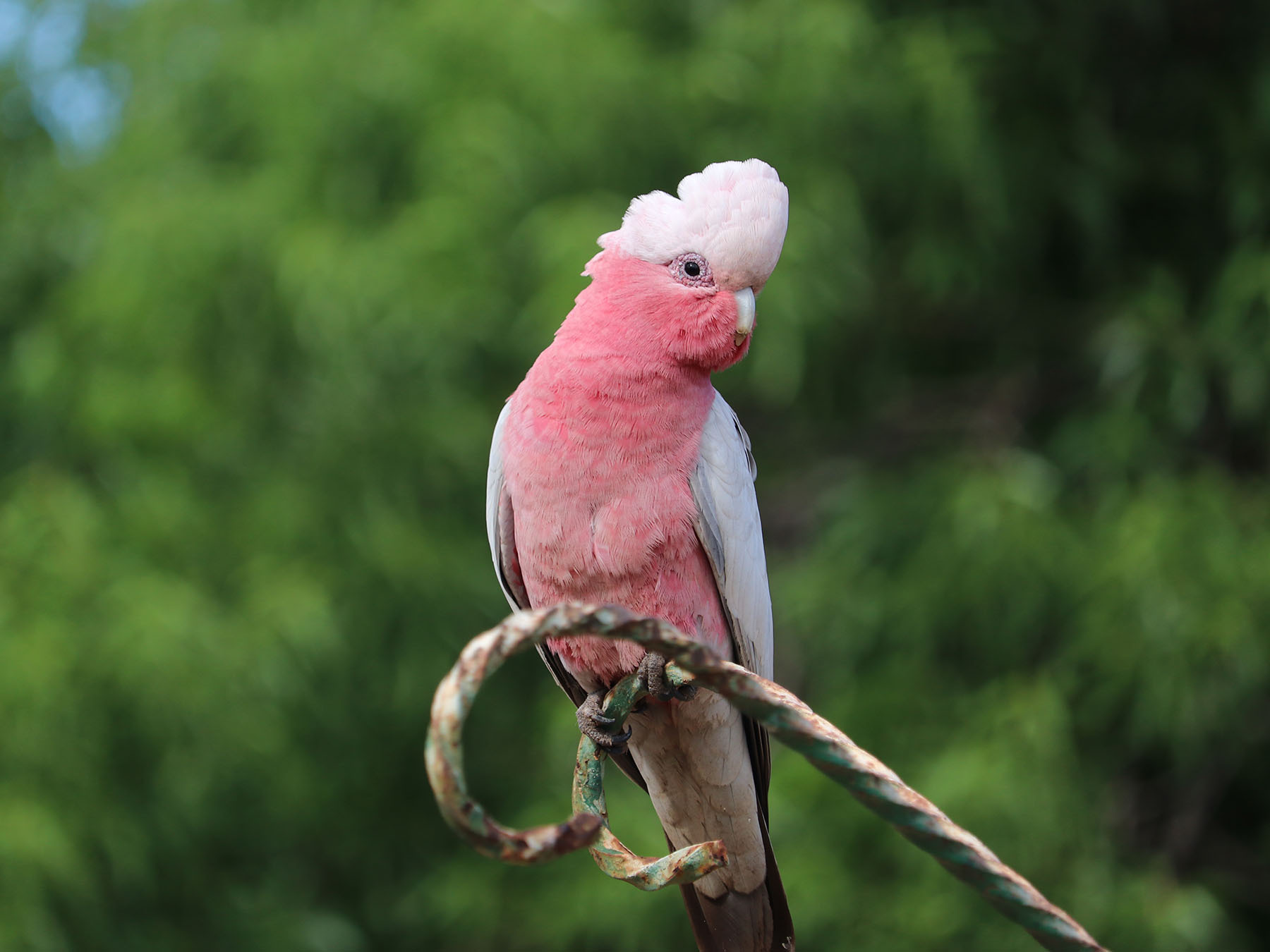
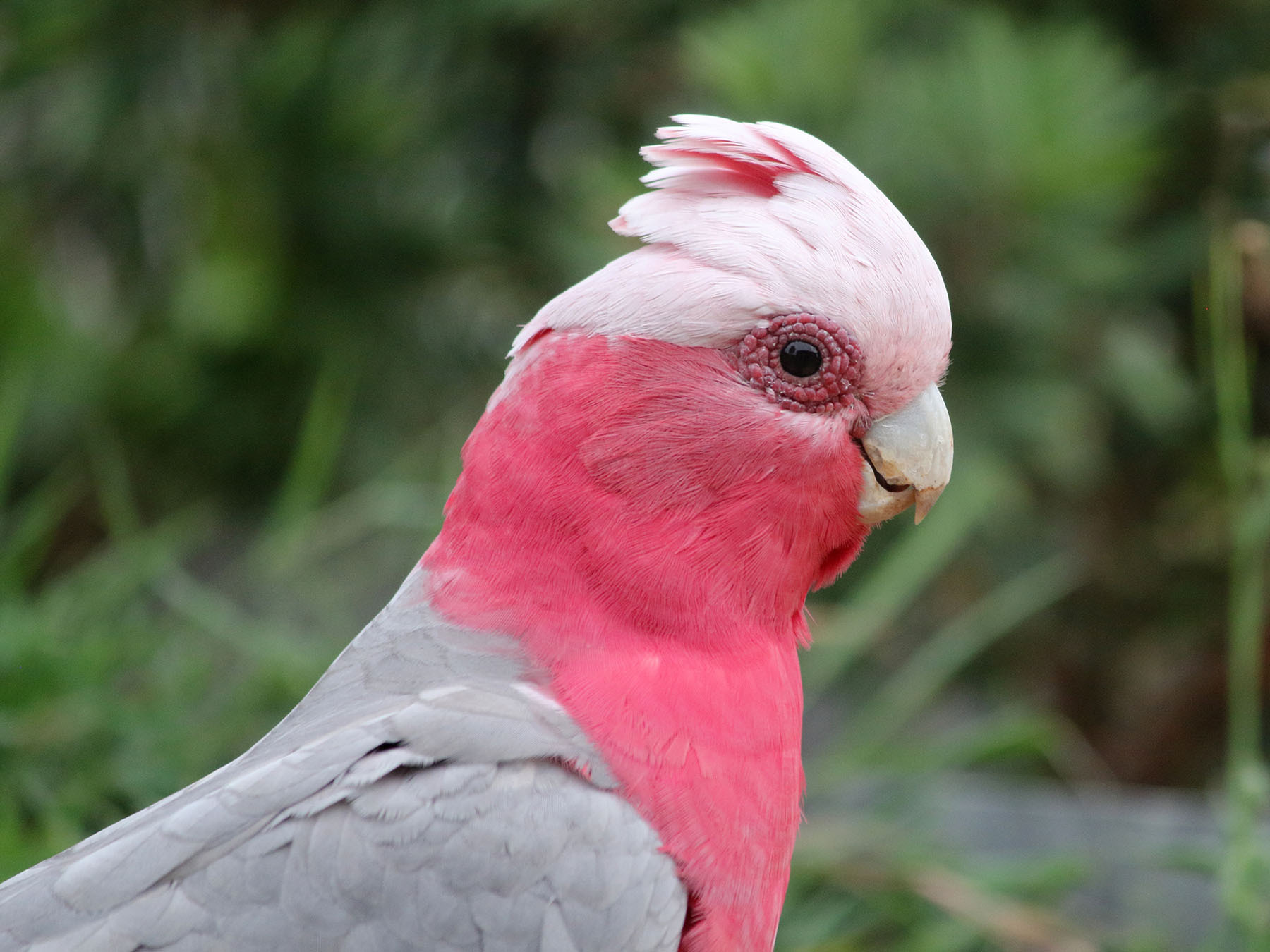
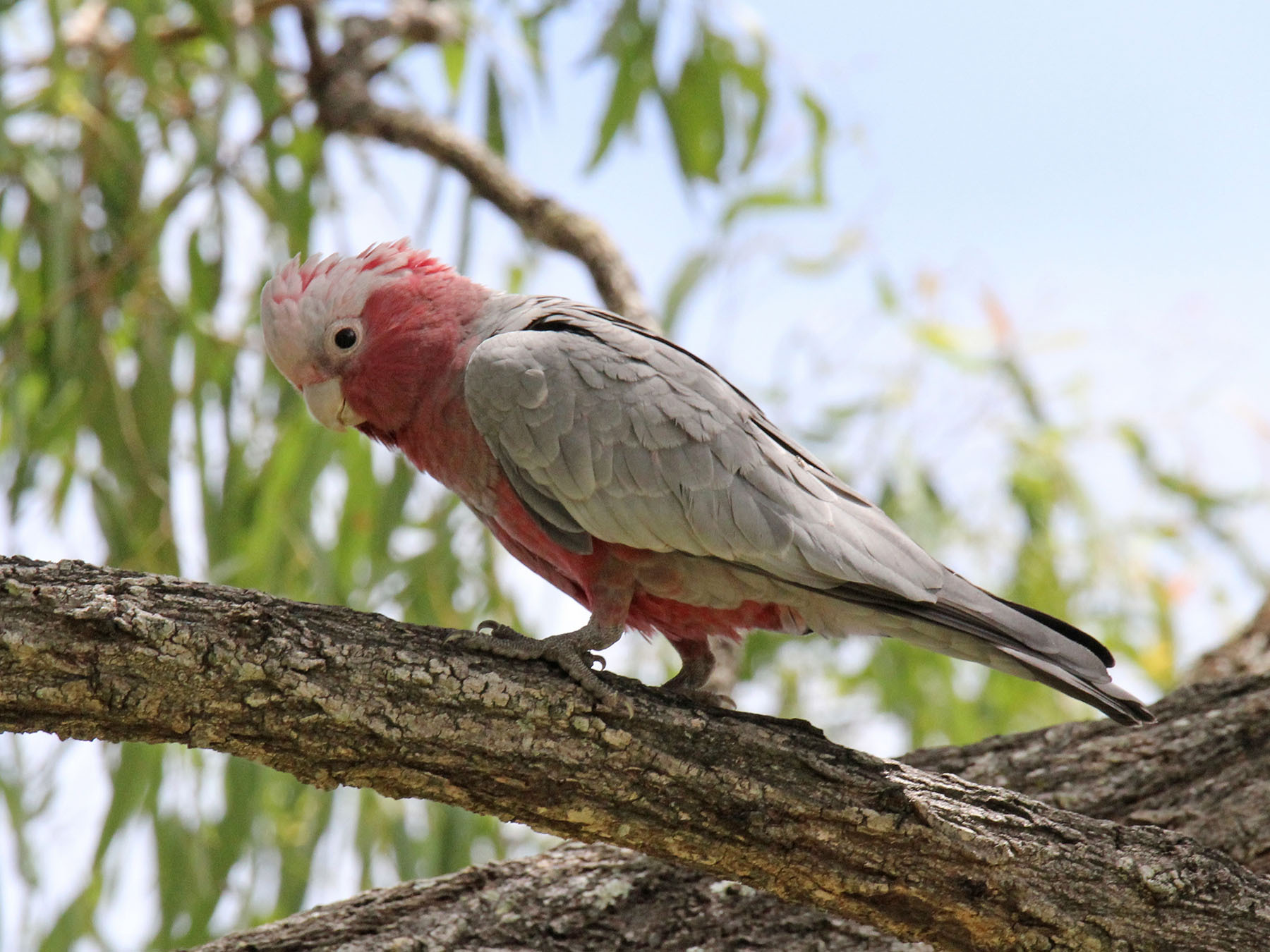
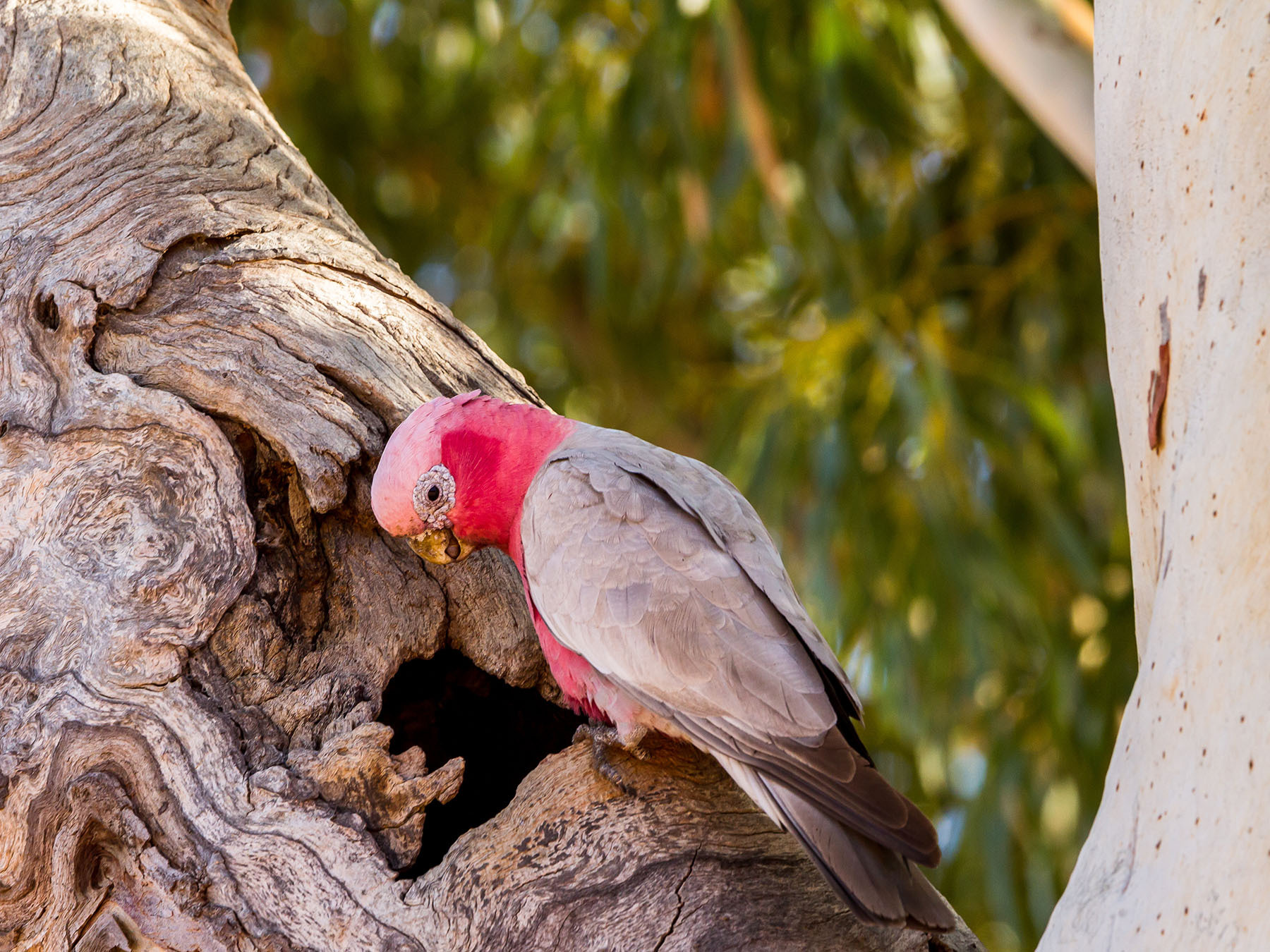
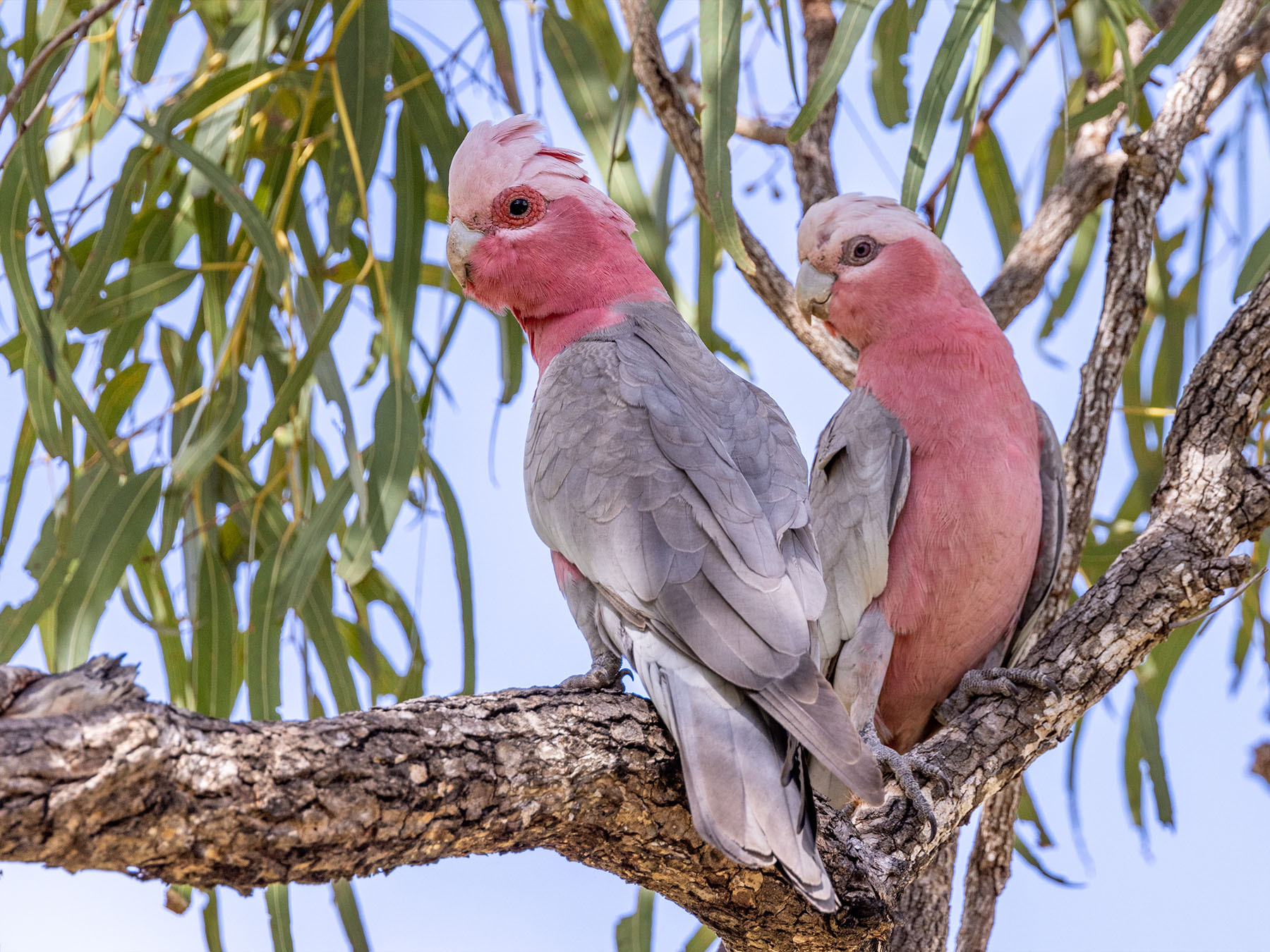
The Galah is a striking medium-sized cockatoo with distinctive pink and grey plumage. Its head, neck, and underparts are a soft pink, contrasting beautifully with the pale grey back, wings, and tail. The crest is white with a hint of pink.
Both sexes look similar, though males may have slightly darker brown eyes (sometimes black), whereas females' irises can be mid-brown or red. Juveniles are duller in colour, with a greyish breast and shorter crest.
Its size
Adults- Length
- 35–38 cm
- Wingspan
- 70–90 cm
- Weight
- 270–350 g
Its song and calls
Galahs are known for their loud, raucous calls, often described as a screeching 'chet-chet' or 'chi-chi'. They also produce a variety of softer chattering and warbling sounds when communicating within their flock.
During courtship, males may emit a soft, gurgling call.
- Call0:00 / 0:22
When and where to see it
The Galah is not recorded regularly in the UK, Ireland, the United States or Canada.
United Kingdom: recorded in 1 of the 6 years; Ireland: recorded in 1 of the 6 years. Too few years to count as a regular visitor.
Worldwide: recorded regularly in 2 countries
Countries where it was recorded in at least 3 of the 6 years 2019–2024. Linked countries have their own bird list.
Oceania (2)
Data: EOD – eBird Observation Dataset (Cornell Lab of Ornithology), accessed via GBIF.org, CC BY 4.0. Records from 2019–2024, aggregated and filtered by Birdfact. How these lists are made
Tips for seeing it
- Look for Galahs in open woodlands, grasslands, and urban parks, especially near water sources.
- Listen for their distinctive loud, screeching call, often heard during flight.
- Observe them in the early morning or late afternoon when they are most active.
- In Australia, check farmland areas where they often feed on grain.
What it eats
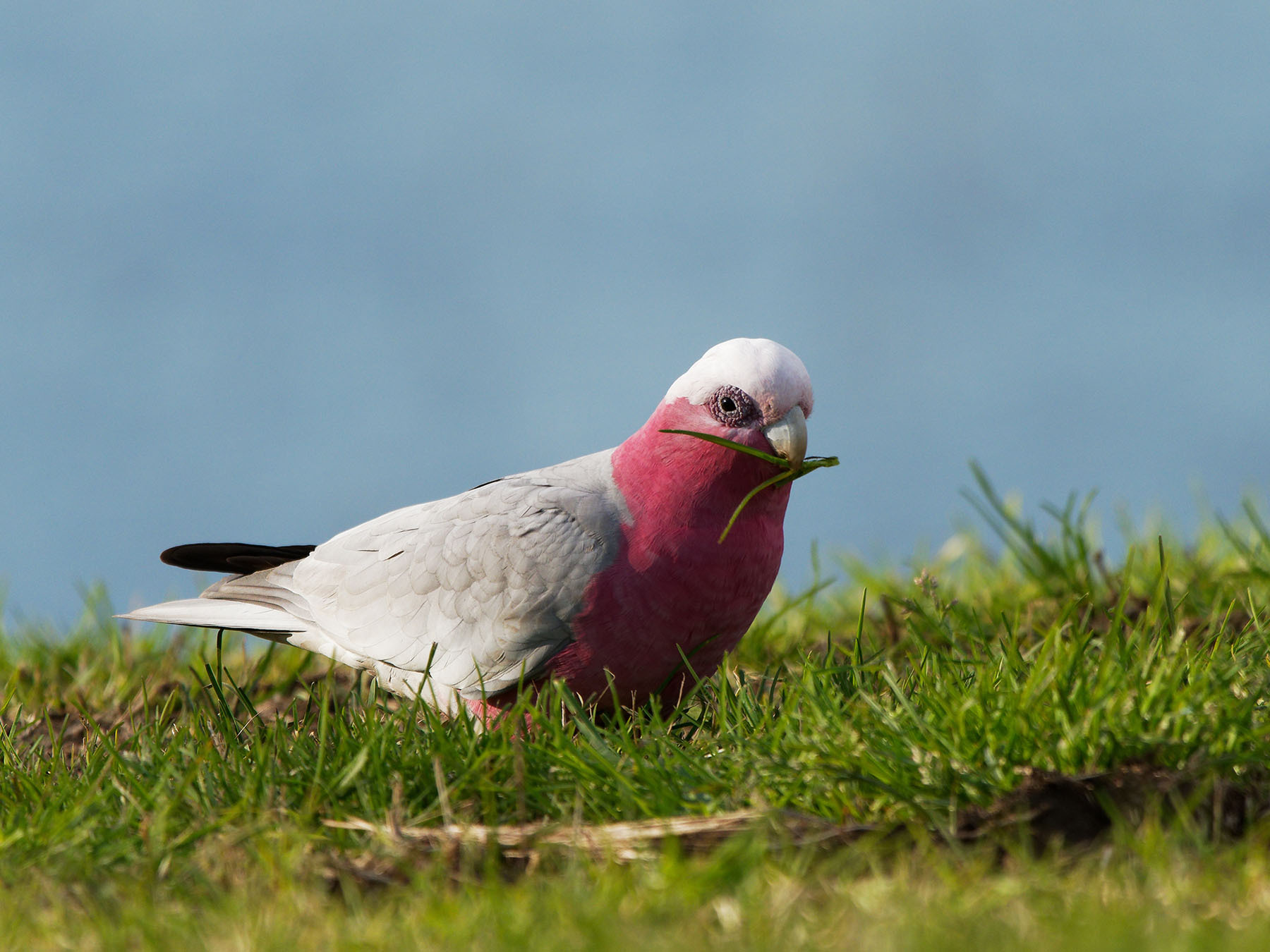
Galahs are primarily herbivorous, feeding on a variety of seeds, grains, fruits, and nuts. They forage both on the ground and in trees, using their strong beaks to crack open tough seeds and nuts.
In agricultural areas, they may feed on crops, particularly wheat and oats.
Nesting and breeding
Galahs form monogamous pairs and breed between July and December in southern Australia and February to July in the north. They typically nest in tree hollows, often in eucalyptus trees, but may also use cliff faces or even building cavities in urban areas.
The female lays 2-5 white eggs in a nest lined with eucalyptus leaves. Both parents share incubation duties, which last about 25 days.
Chicks fledge after about 6-8 weeks but may remain with their parents for several months after leaving the nest. Young Galahs reach sexual maturity at about 4 years of age.
Behaviour
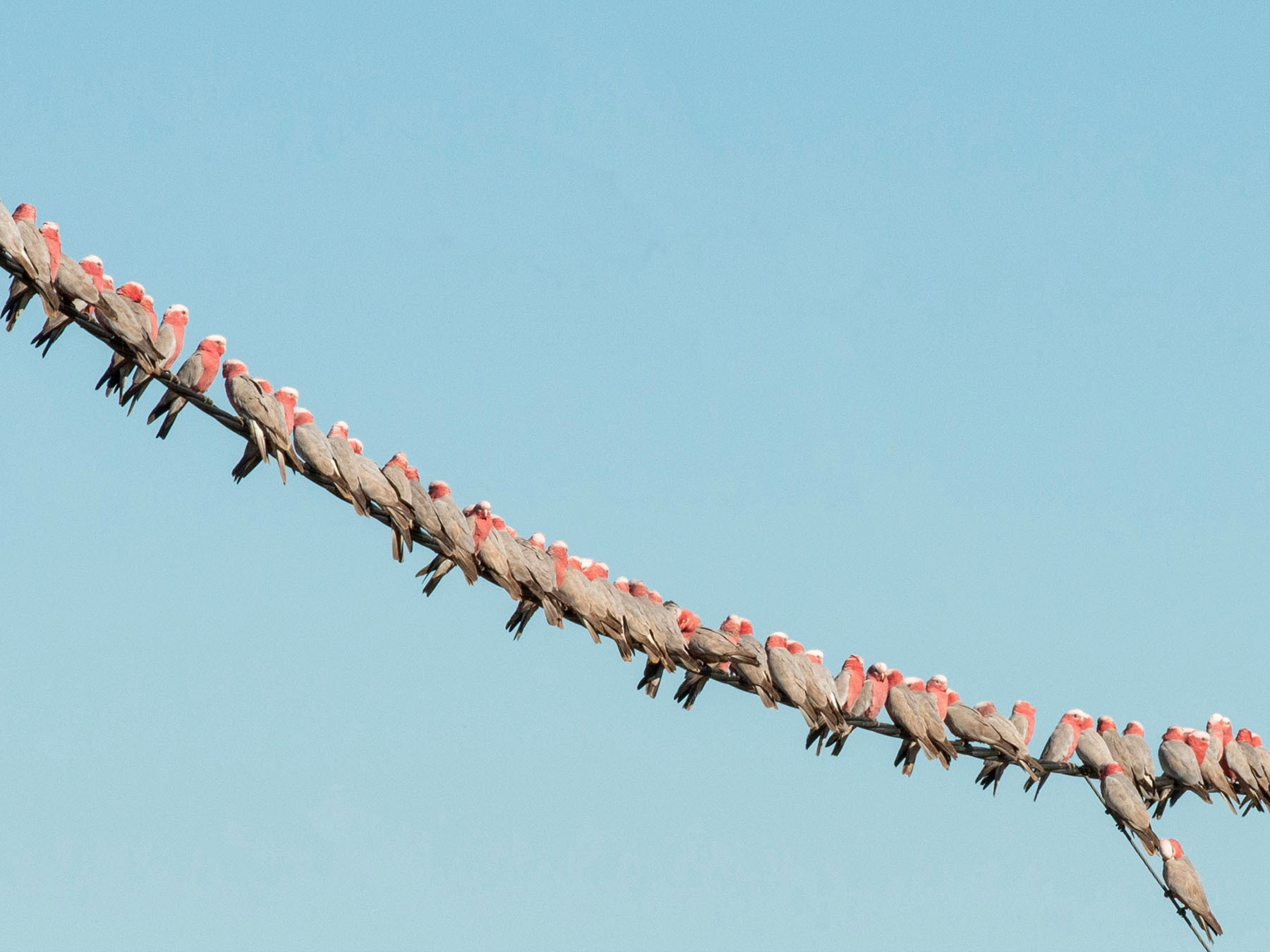
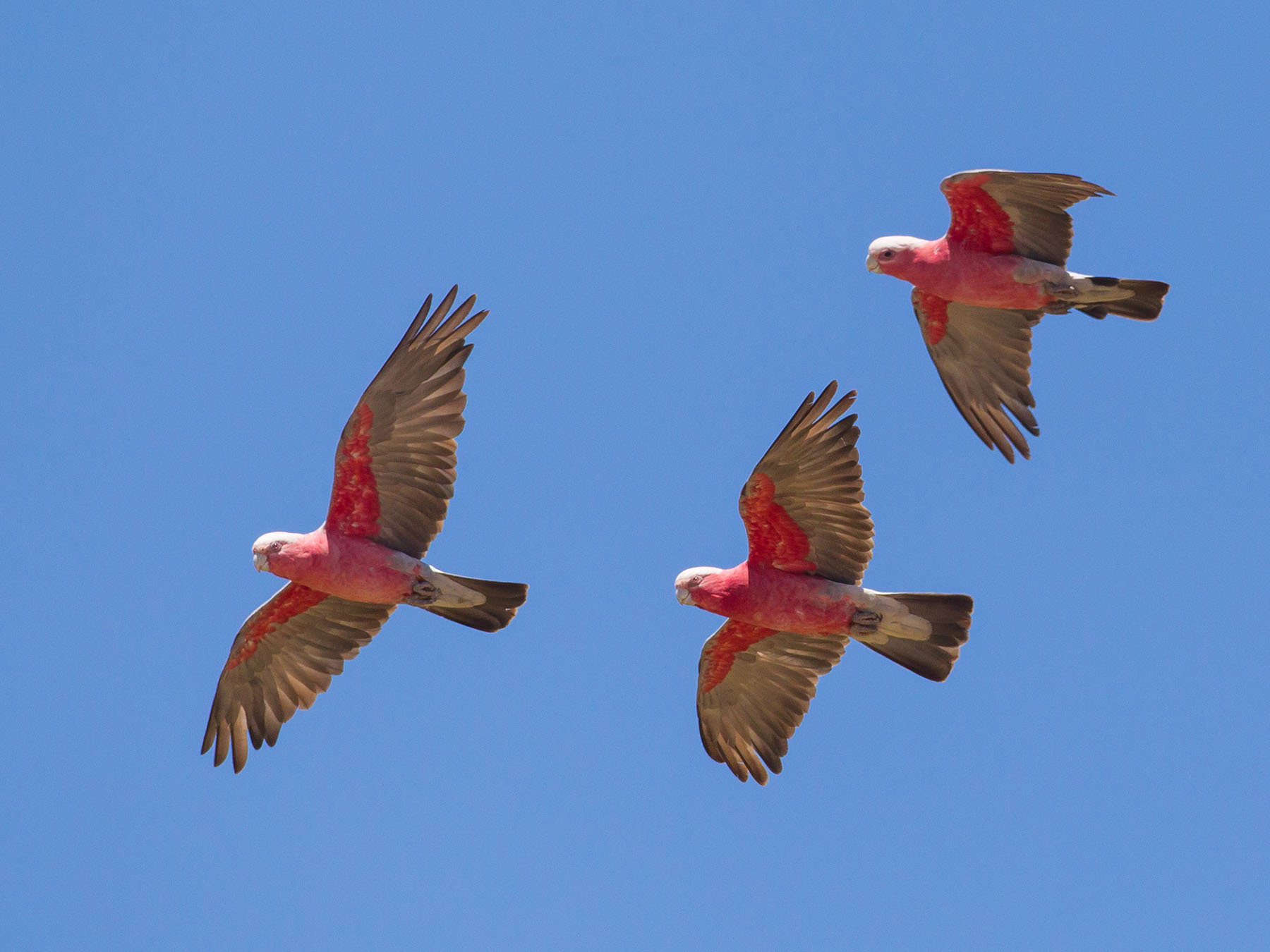
Galahs are highly social birds, often seen in large flocks, especially when feeding on the ground. They are known for their playful behaviour, often hanging upside down on branches or performing acrobatic flight displays.
During the hotter parts of the day, they often rest in the shade of trees, becoming more active in the cooler hours.
Conservation
While Galahs are listed as Least Concern due to their large range and population, they face localised threats from habitat loss and competition for nesting sites.
In some agricultural areas, they are considered pests due to crop damage, leading to control measures that may affect local populations.
Similar birds
Often mistaken for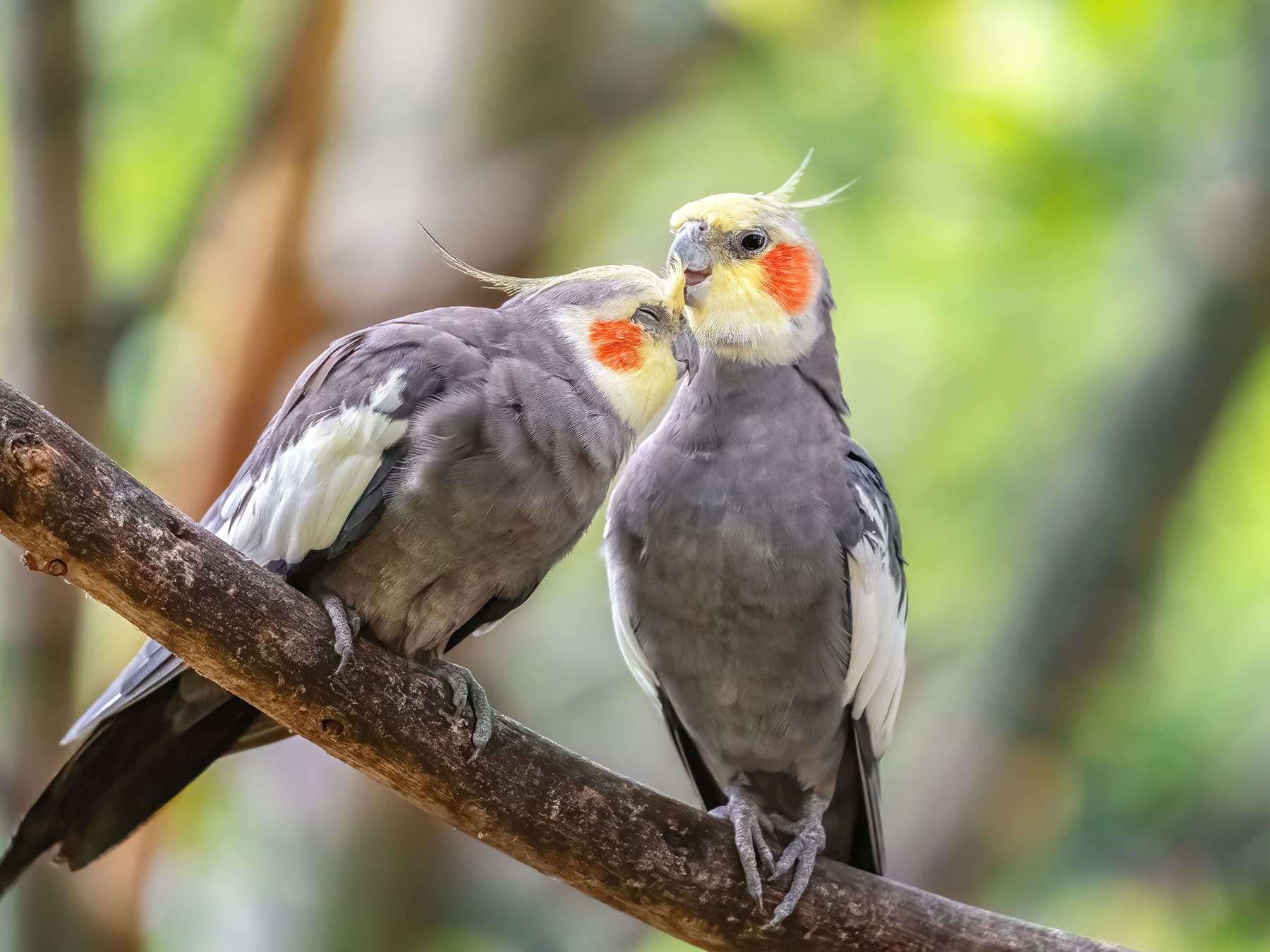
More photos
9 photos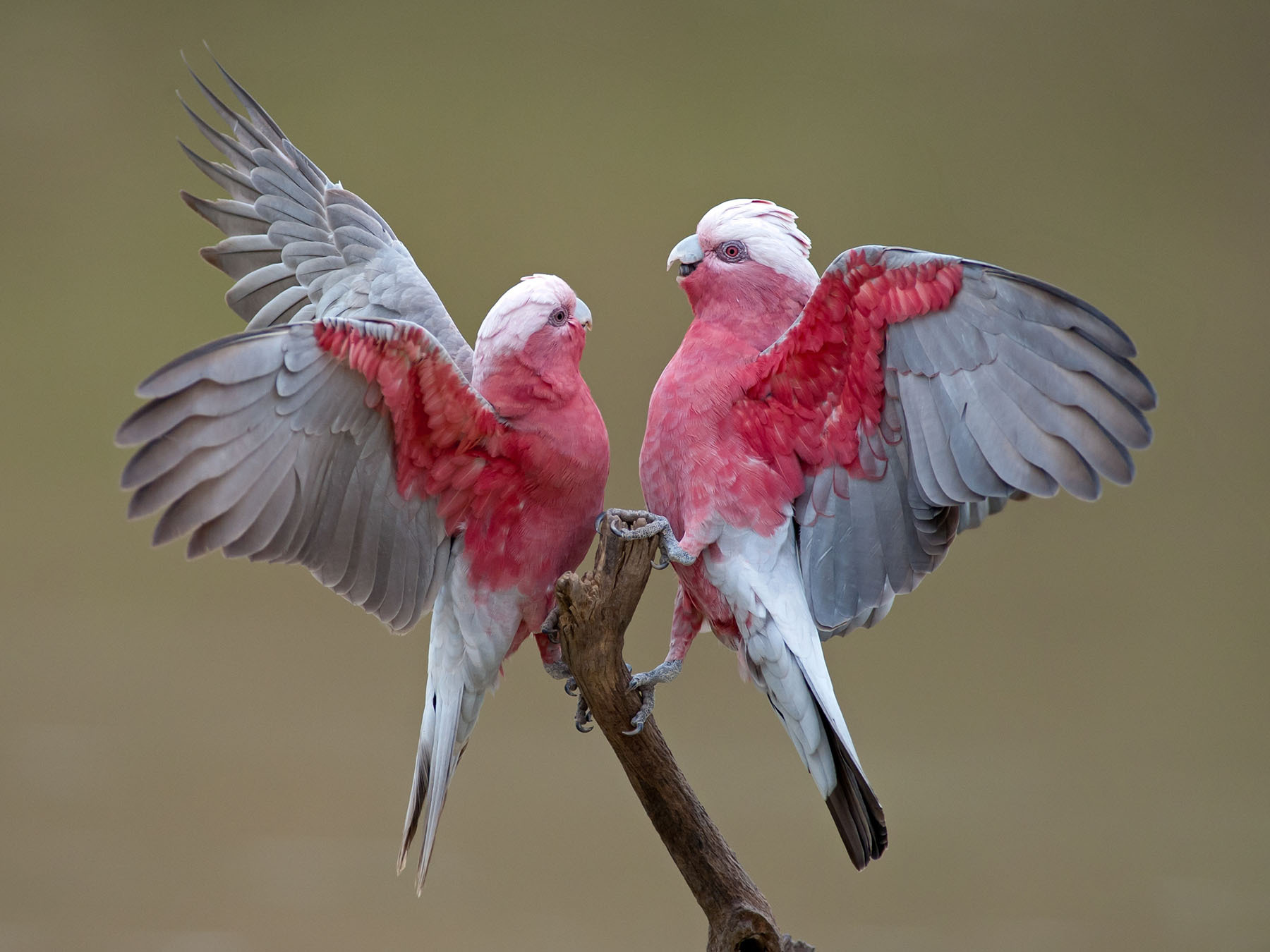
Galah guides
2 guidesQuick facts
- Length
- 35–38 cm
- Wingspan
- 70–90 cm
- Weight
- 270–350 g
- Lifespan
- 20–40 years · oldest recorded 72.8 years
- Family
- Cockatoos
- Migration
- Resident
- Global status (IUCN)
- Least Concern
- World population
- Not quantified, but common throughout its range
- Population trend
- Increasing
- Also called
- Rose-breasted Cockatoo, Pink and Grey
- Scientific name
- Eolophus roseicapilla
Sources
3- 1BirdLife International. 2018. Eolophus roseicapilla. The IUCN Red List of Threatened Species 2018: e.T22684758A131874469. Source (opens in a new tab)
- 2BirdLife International. 2018. Eolophus roseicapilla. The IUCN Red List of Threatened Species 2018: e.T22684758A131874469. Source (opens in a new tab)
- 3Young et al., Survival on the ark: life history trends in captive parrots, Anim Conserv, 15:28-53 (2012)

Checked by
Nathan Cope, founder and editor
Nathan founded Birdfact and leads its writers and contributors in the UK, the US and Canada. He has watched and studied birds for more than ten years, and checks every article and species guide before it’s published.