


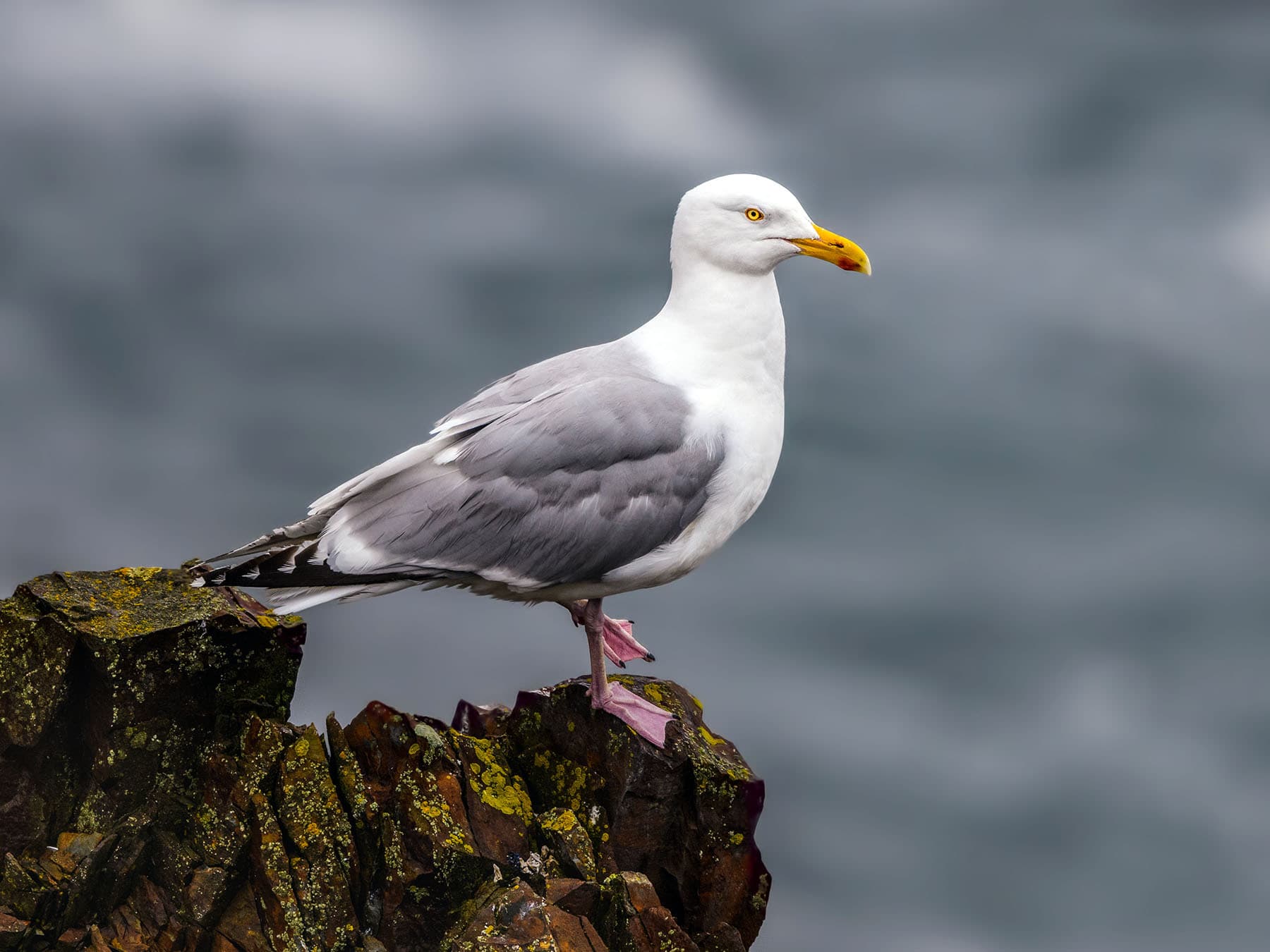
American Herring Gull
Smithsonian Gull, Arctic Herring Gull · Larus smithsonianus
By the Birdfact teamChecked by Nathan Cope
On this page12 sections
How to recognise it
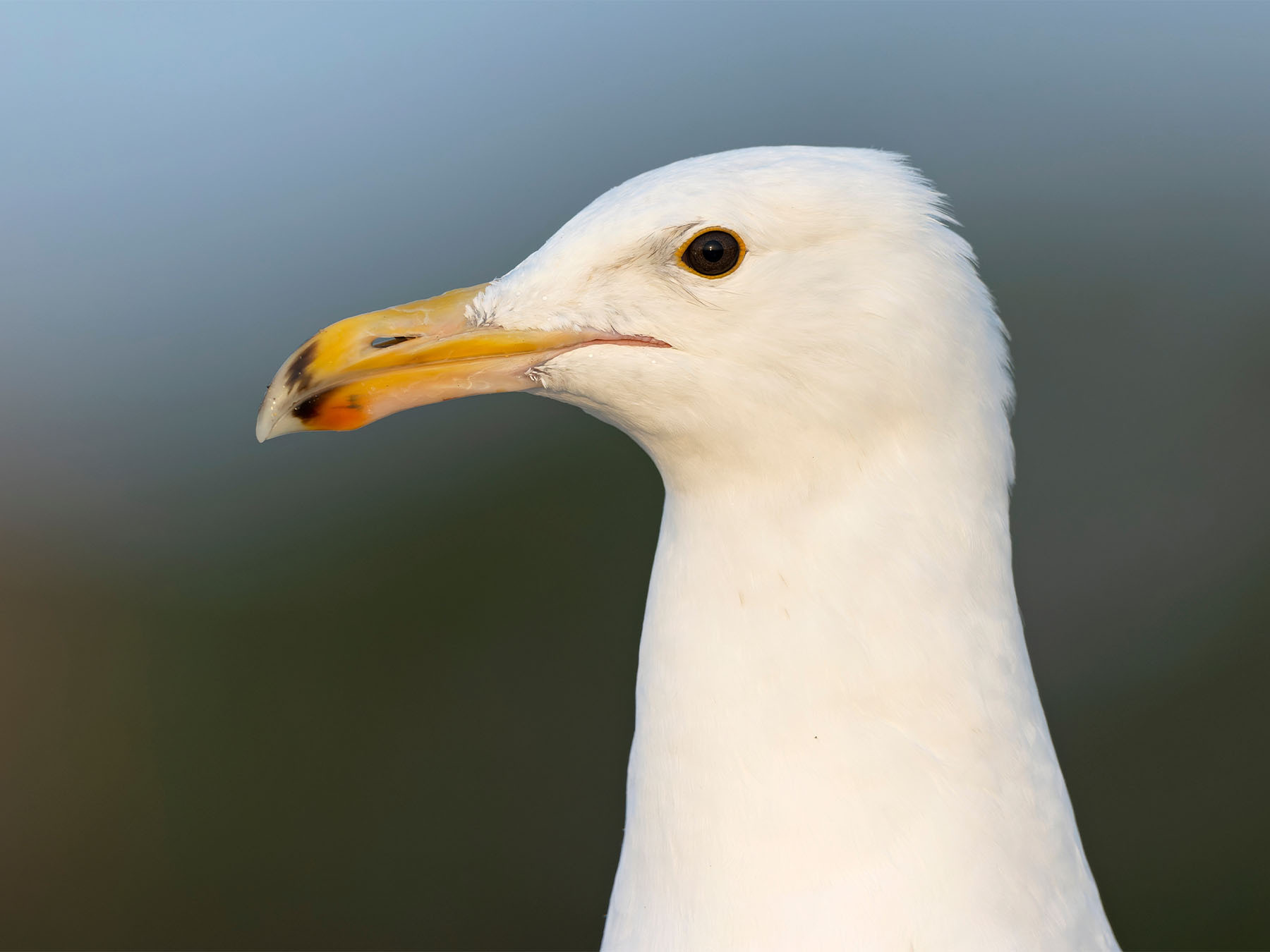
The American Herring Gull is a large, robust seabird with a distinctive white head and body, pale gray back and wings, and black wingtips. Its yellow bill features a red spot on the lower mandible, and it has pink legs.
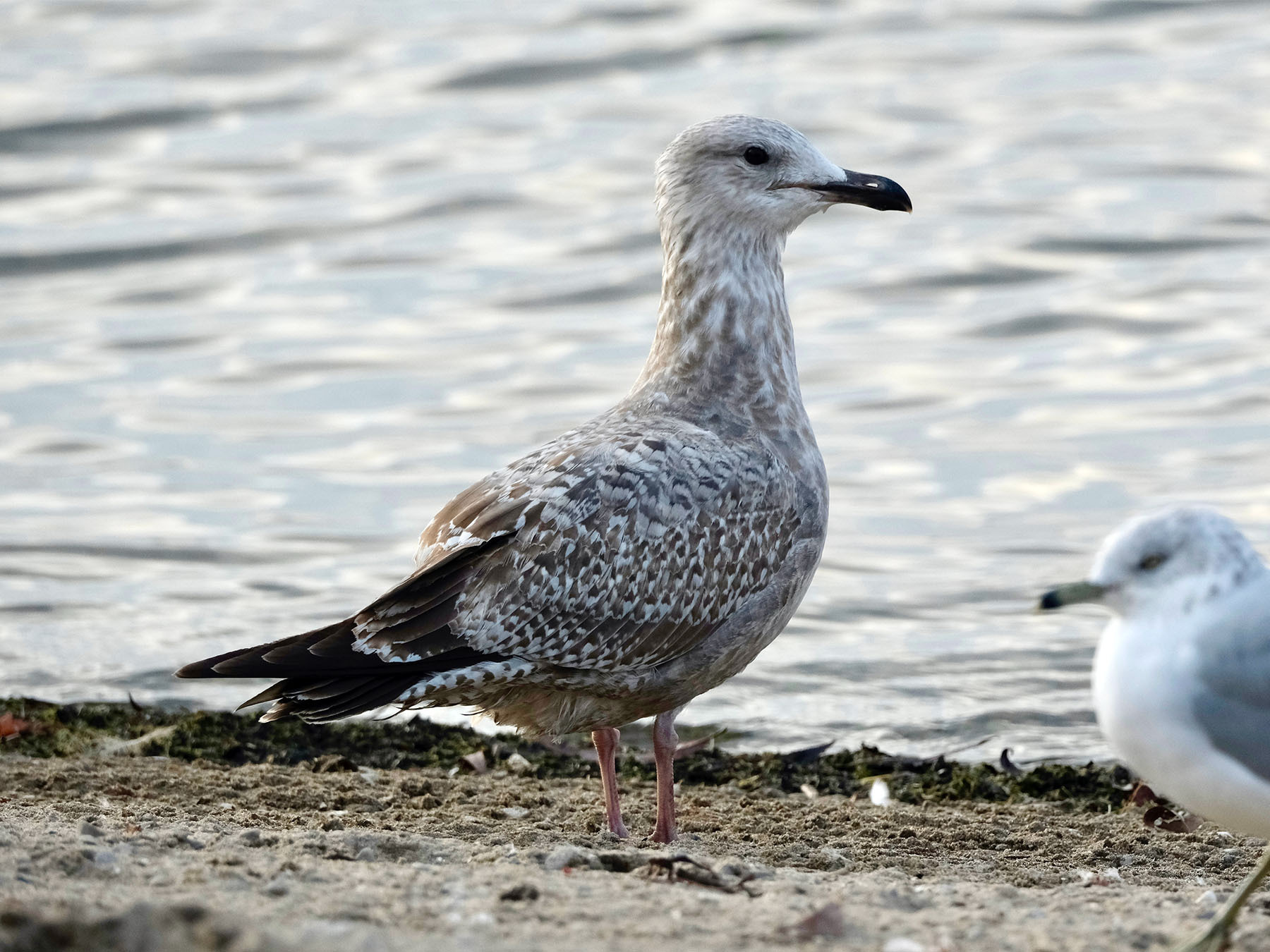
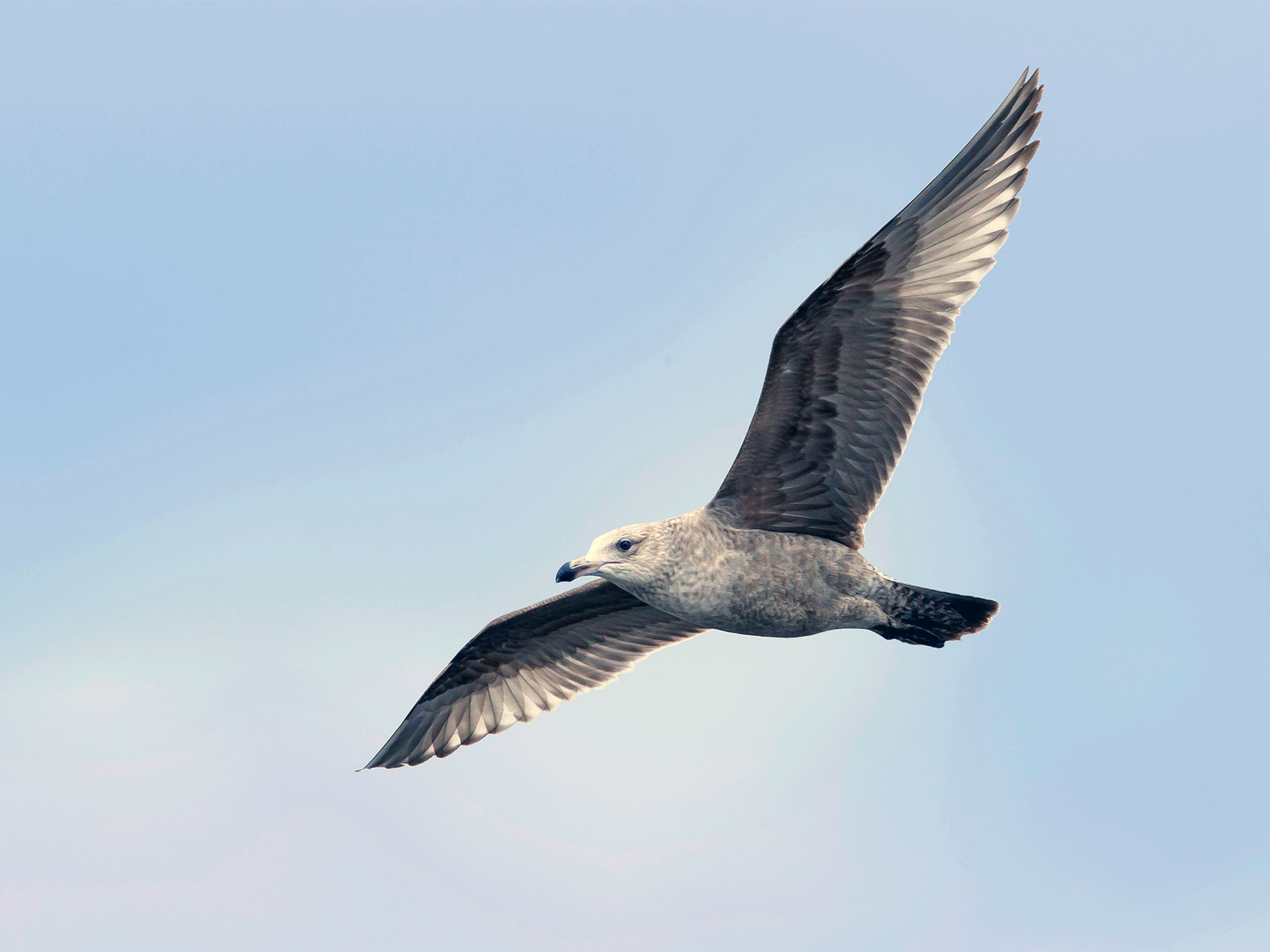
Juveniles display mottled brown plumage, gradually transitioning to adult coloration over four years. Winter adults may show faint brown streaking on the head.
Its size
Adults- Length
- 53–65 cm
- Wingspan
- 120–150 cm
- Weight
- 600–1650 g
Its song and calls
The American Herring Gull has a diverse vocal repertoire. Their most recognizable call is a loud, laughing 'ha-ha-ha' or 'kyow-kyow-kyow'.
They also produce a variety of mewing, yelping, and long-calling sounds, especially during breeding season and territorial disputes.
- Call0:00 / 0:28
Recorded in Nova Scotia, Canada · June 2023
When and where to see it
OctoberIn season
Most recorded in October
- 1. Nunavut7.5%
- 2. Newfoundland and Labrador5.5%
- 3. Nova Scotia4.1%
- 4. Prince Edward Island4.0%
- 5. Maine3.0%
Each dot is a county, state or province: the bigger and darker, the larger the bird’s share of that place’s bird records that month. Grey dots: no regular records. The ringed point is the centre of the bird’s records this month; the arrow shows how it moved since last month, and the dashed loop its path through the year. “Arrivals” colours places where it becomes regular this month (orange) or is in its last regular month (grey). GBIF eBird Observation Dataset, 2019–2024. Map data: Natural Earth, US Census Bureau; place centres © OpenStreetMap contributors.
In your area
See when the American Herring Gull is recorded in your county, state or province.
How often the American Herring Gull turns up in the United States and Canada through the year, from birdwatchers' records.
United States
Resident · all year · most records in January
Canada
Resident · all year · most records in November
Show as a table
| Month | United States | Canada |
|---|---|---|
| January | 0.73% (regular) | 1.5% (regular) |
| February | 0.60% (regular) | 1.1% (regular) |
| March | 0.48% (regular) | 1.2% (regular) |
| April | 0.28% (regular) | 0.86% (regular) |
| May | 0.25% (regular) | 0.54% (regular) |
| June | 0.27% (regular) | 0.56% (regular) |
| July | 0.35% (regular) | 0.80% (regular) |
| August | 0.46% (regular) | 1.2% (regular) |
| September | 0.43% (regular) | 1.3% (regular) |
| October | 0.49% (regular) | 1.3% (regular) |
| November | 0.64% (regular) | 1.7% (regular) |
| December | 0.66% (regular) | 1.7% (regular) |
Worldwide: recorded regularly in 23 countries
Countries where it was recorded in at least 3 of the 6 years 2019–2024. Linked countries have their own bird list.
Asia (1)
North America (19)
- Bahamas
- Belize
- Bermuda
- Canada
- Cayman Islands
- Costa Rica
- Cuba
- Dominican Republic
- El Salvador
- Greenland
- Guatemala
- Honduras
- Mexico
- Nicaragua
- Panama
- Puerto Rico
- St Pierre & Miquelon
- Turks & Caicos Islands
- United States
Data: EOD – eBird Observation Dataset (Cornell Lab of Ornithology), accessed via GBIF.org, CC BY 4.0. Records from 2019–2024, aggregated and filtered by Birdfact. How these lists are made
Tips for seeing it
- Look for large gulls with pale gray backs along coastal areas and large inland water bodies
- Observe their yellow bills with red spots to distinguish them from similar species
- Listen for their loud, laughing 'ha-ha-ha' calls
- In the US and Canada, check garbage dumps and fishing ports where they often gather in large numbers
What it eats
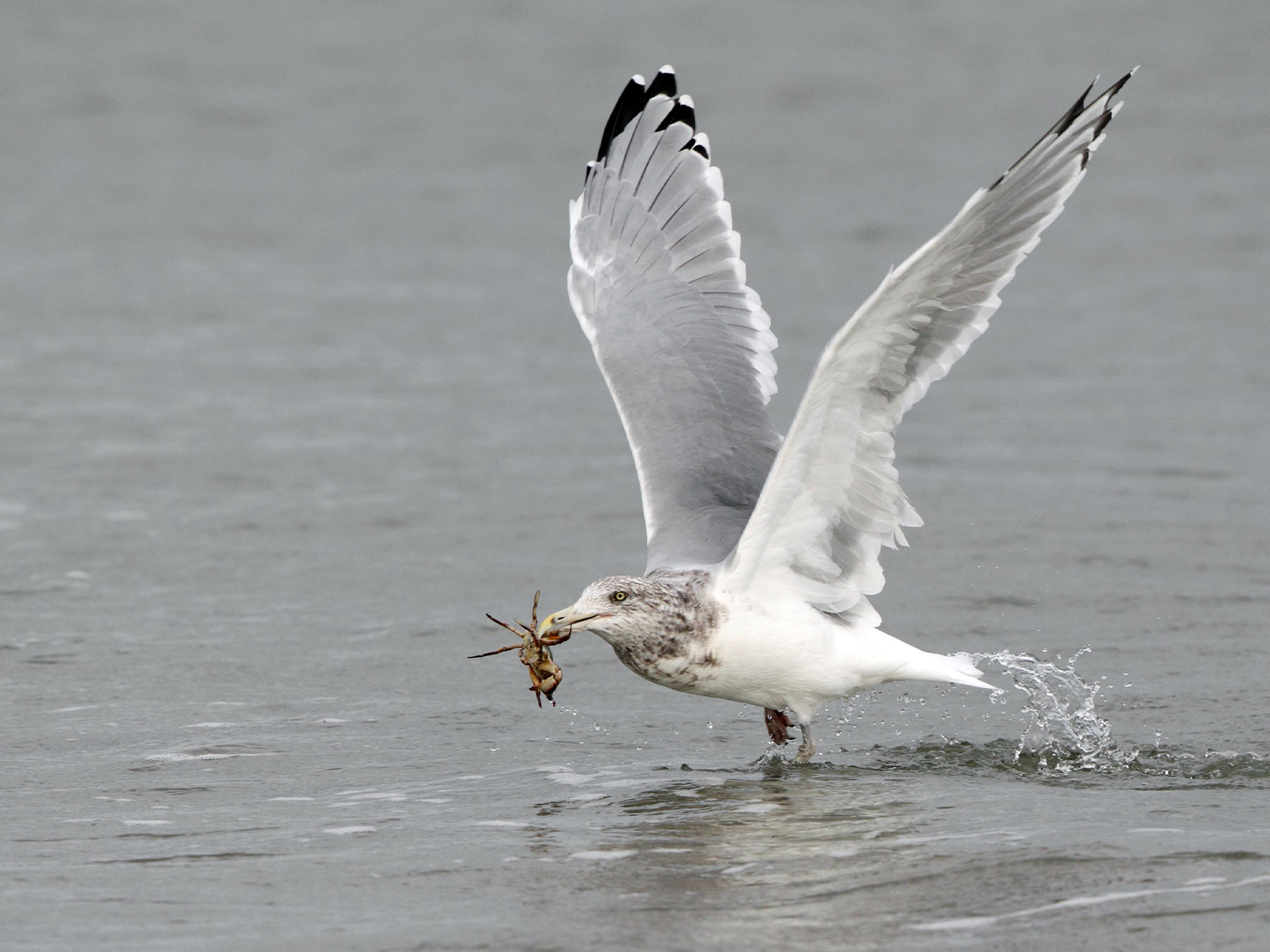
American Herring Gulls have a varied diet, including fish, mollusks, crustaceans, and insects. They also consume carrion and human food waste.
These adaptable birds are known to steal food from other birds and even small mammals, showcasing their opportunistic feeding strategy.
Nesting and breeding
American Herring Gulls form monogamous pairs and breed annually. The breeding season typically begins in April or May, with courtship involving elaborate displays and vocalizations.
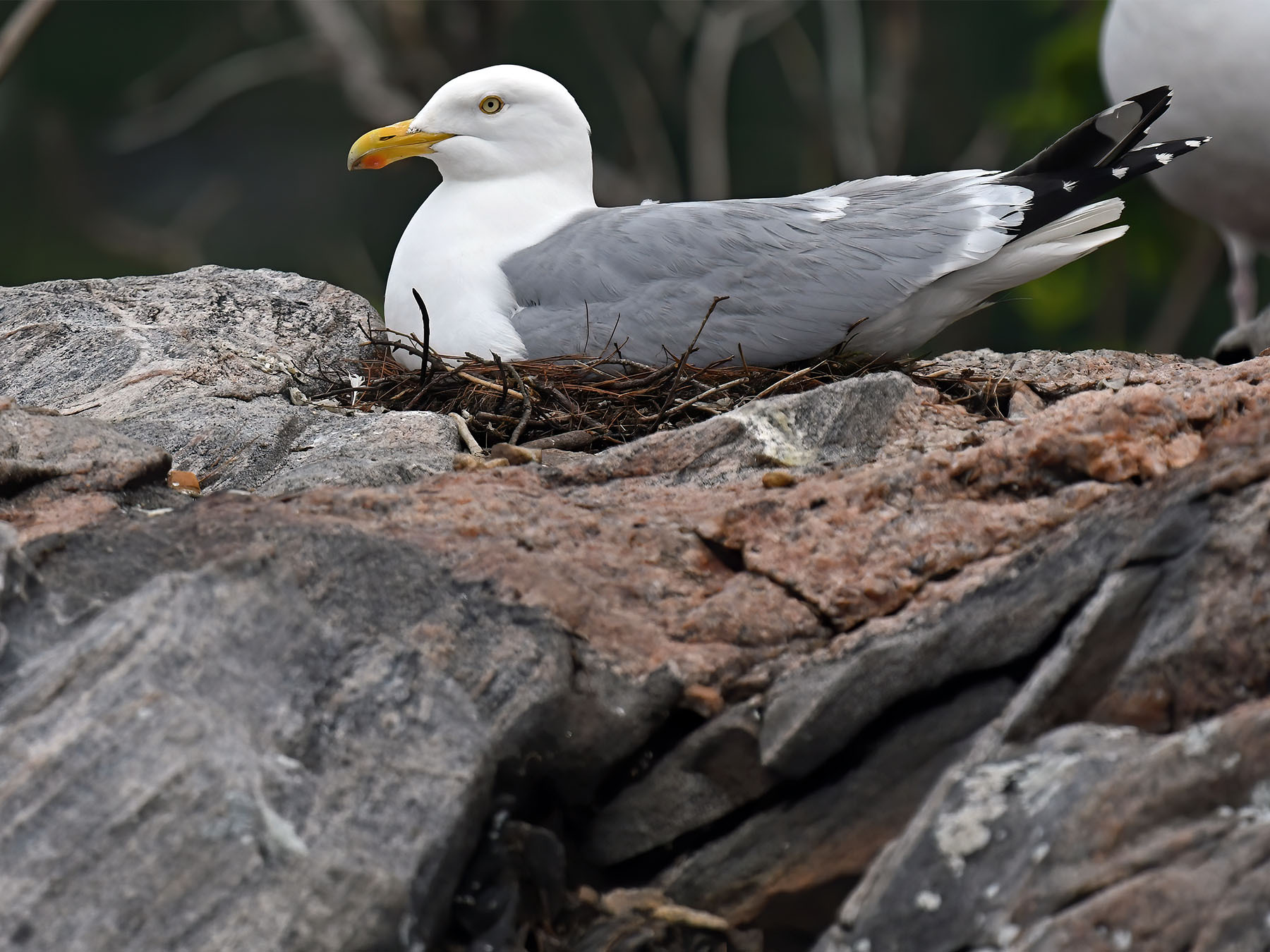
Nests are built on the ground in colonies, often on rocky shores or islands. They construct a shallow scrape lined with vegetation, feathers, and debris. Females lay 2-3 olive-colored eggs with dark splotches.
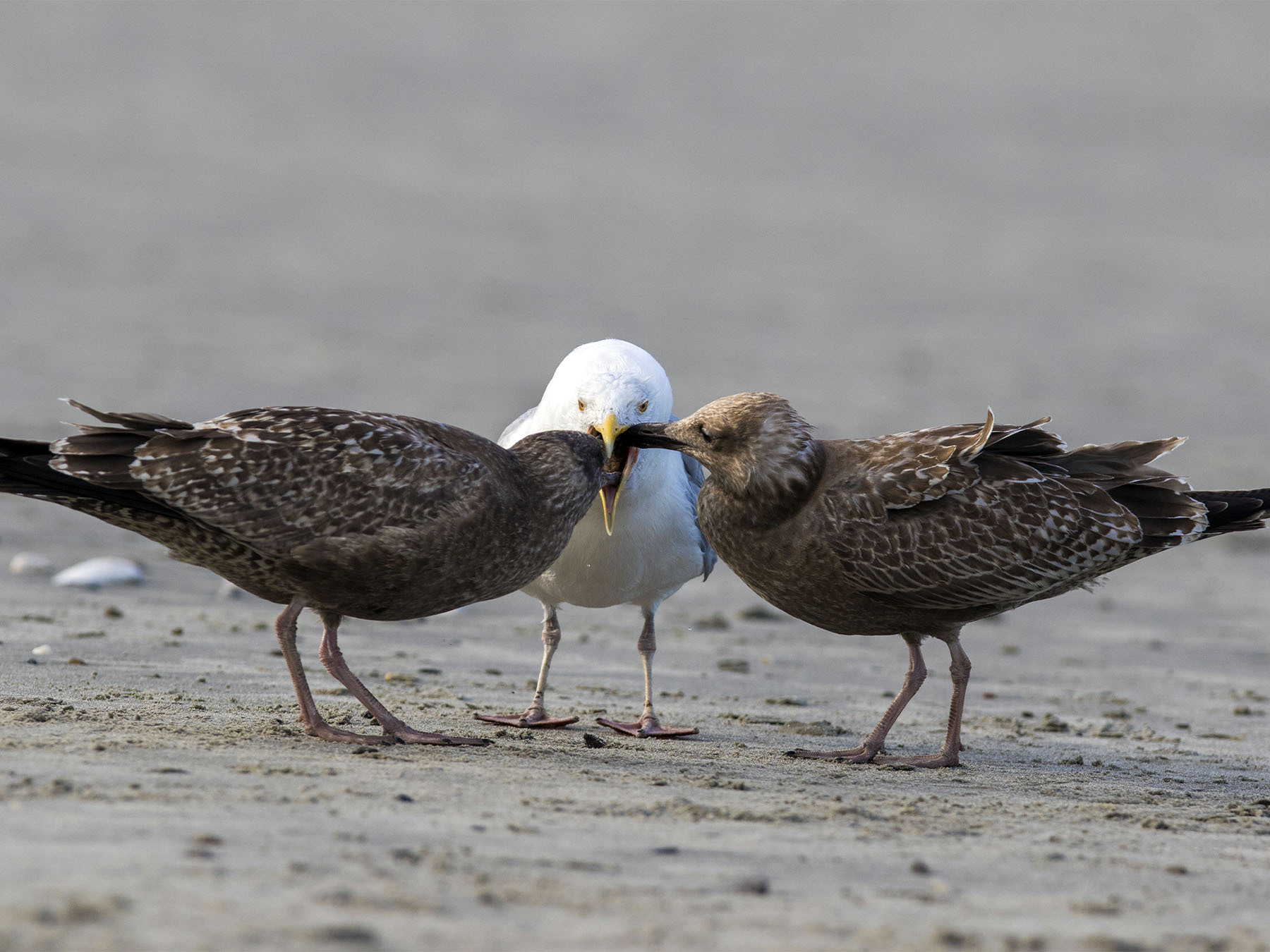
Both parents incubate the eggs for about 28 days. Chicks fledge at 6-7 weeks but may remain dependent on their parents for several more weeks.
Behaviour
American Herring Gulls are opportunistic feeders, often seen following fishing boats or scavenging in urban areas. They exhibit complex social behaviors, including elaborate courtship displays and communal roosting.
These gulls are known for their ability to drop hard-shelled prey from heights to crack them open.
Conservation
While the American Herring Gull is currently listed as Least Concern, it faces threats from habitat loss, pollution, and climate change.
Efforts to reduce plastic waste in oceans and protect coastal nesting sites are crucial for their long-term survival.
Similar birds
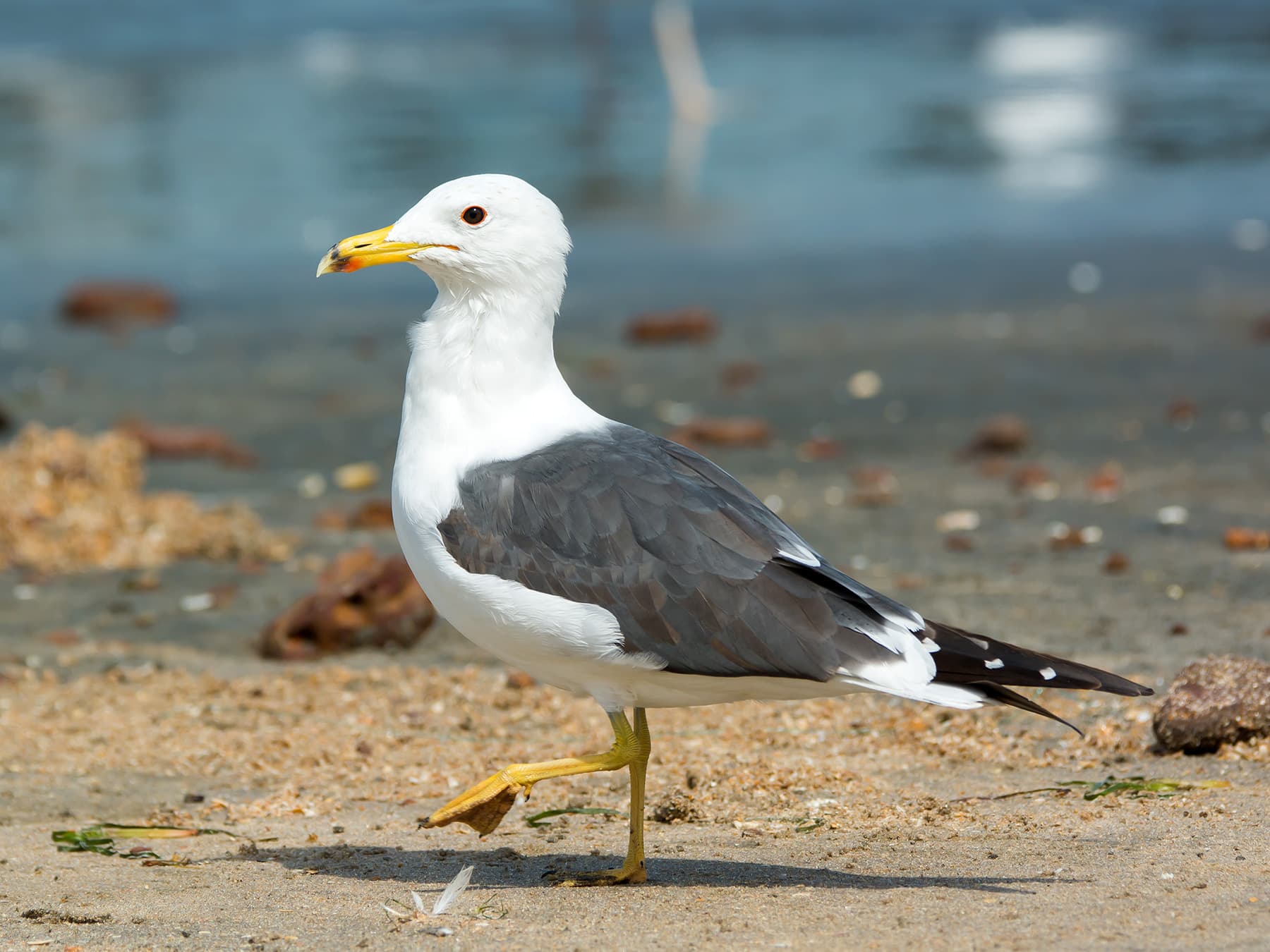
Often mistaken for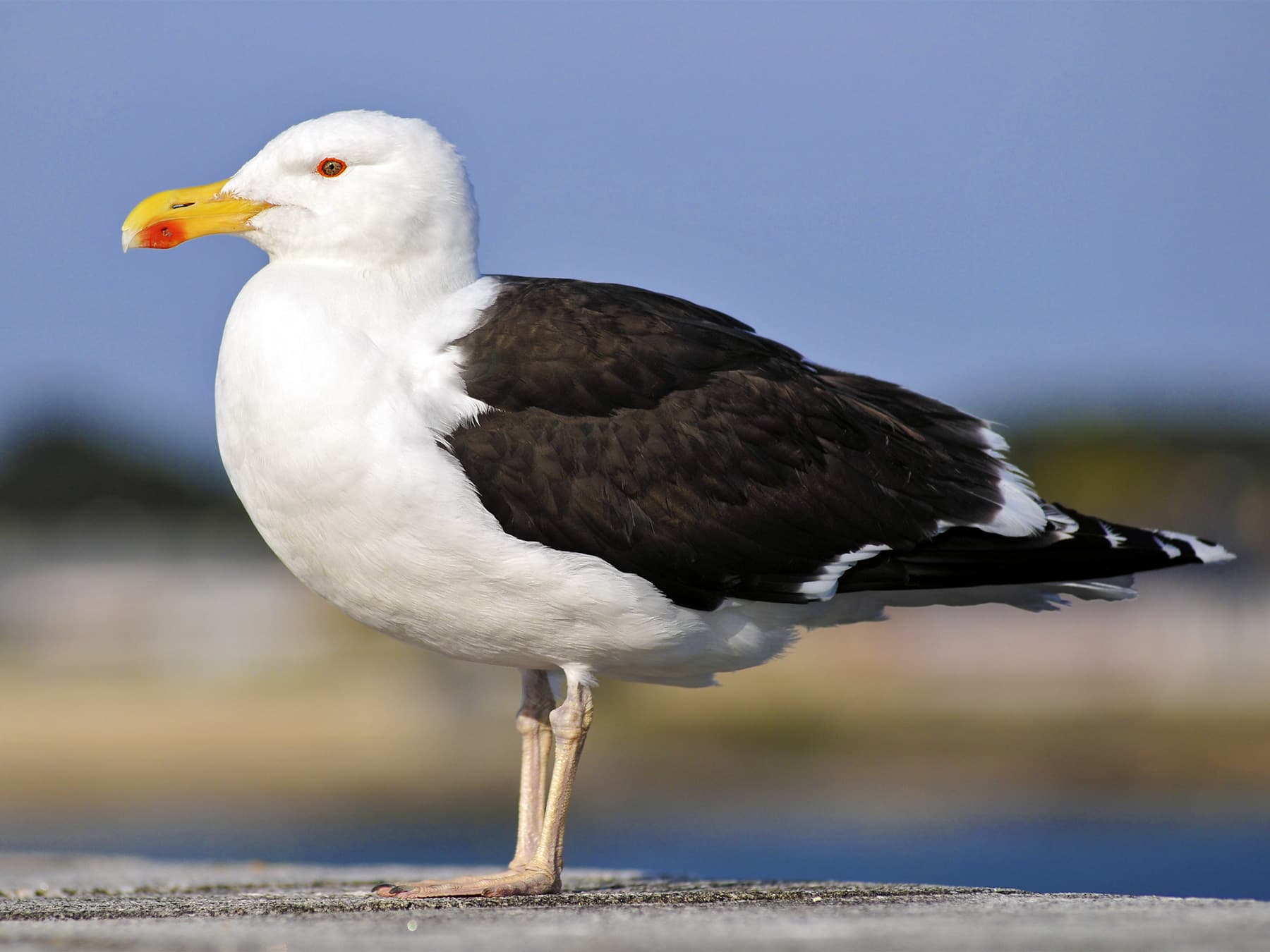
More photos
8 photos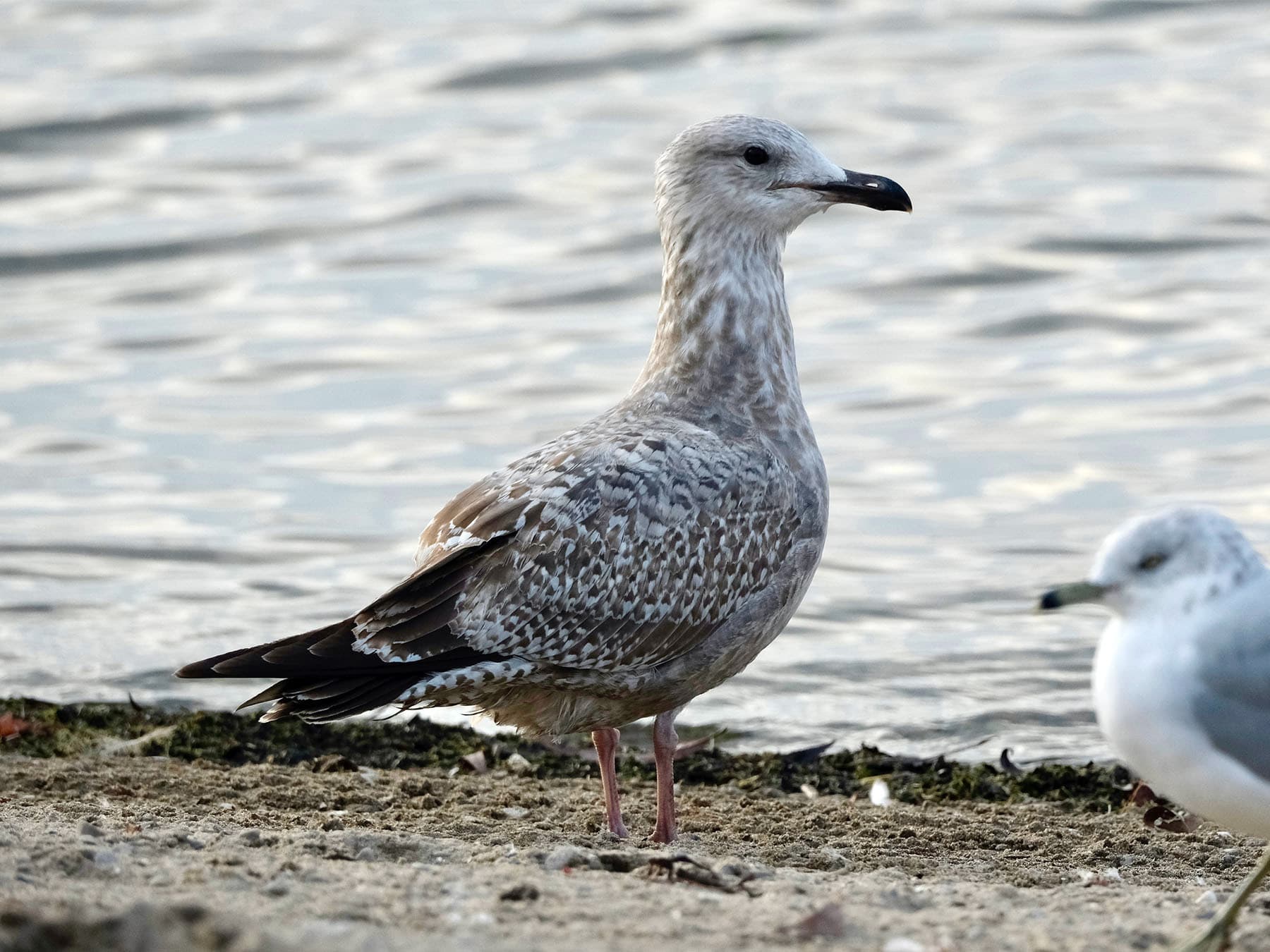 Juvenile American Herring Gull with Ring-billed Gull
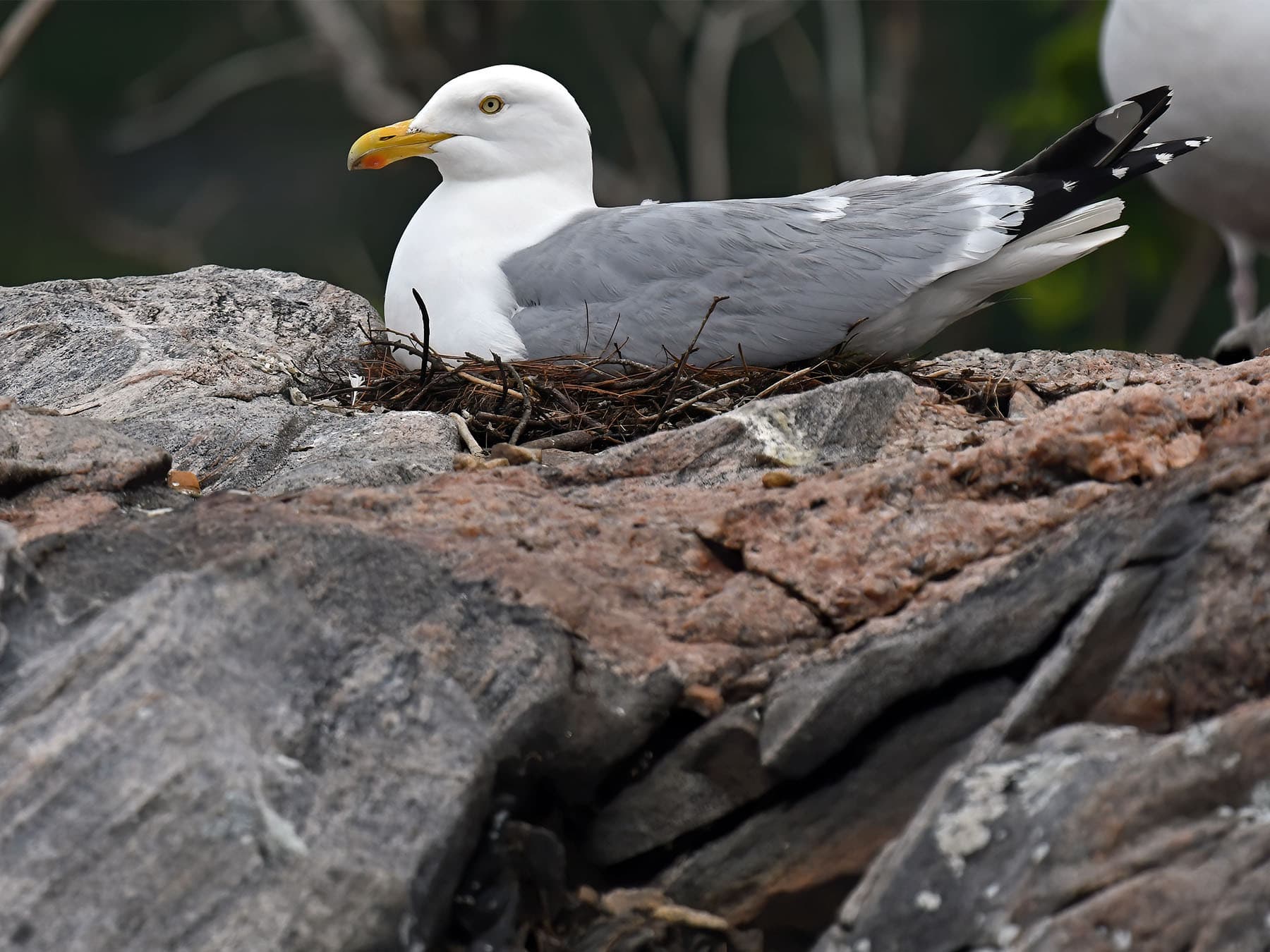 American Herring Gull sitting on the nest
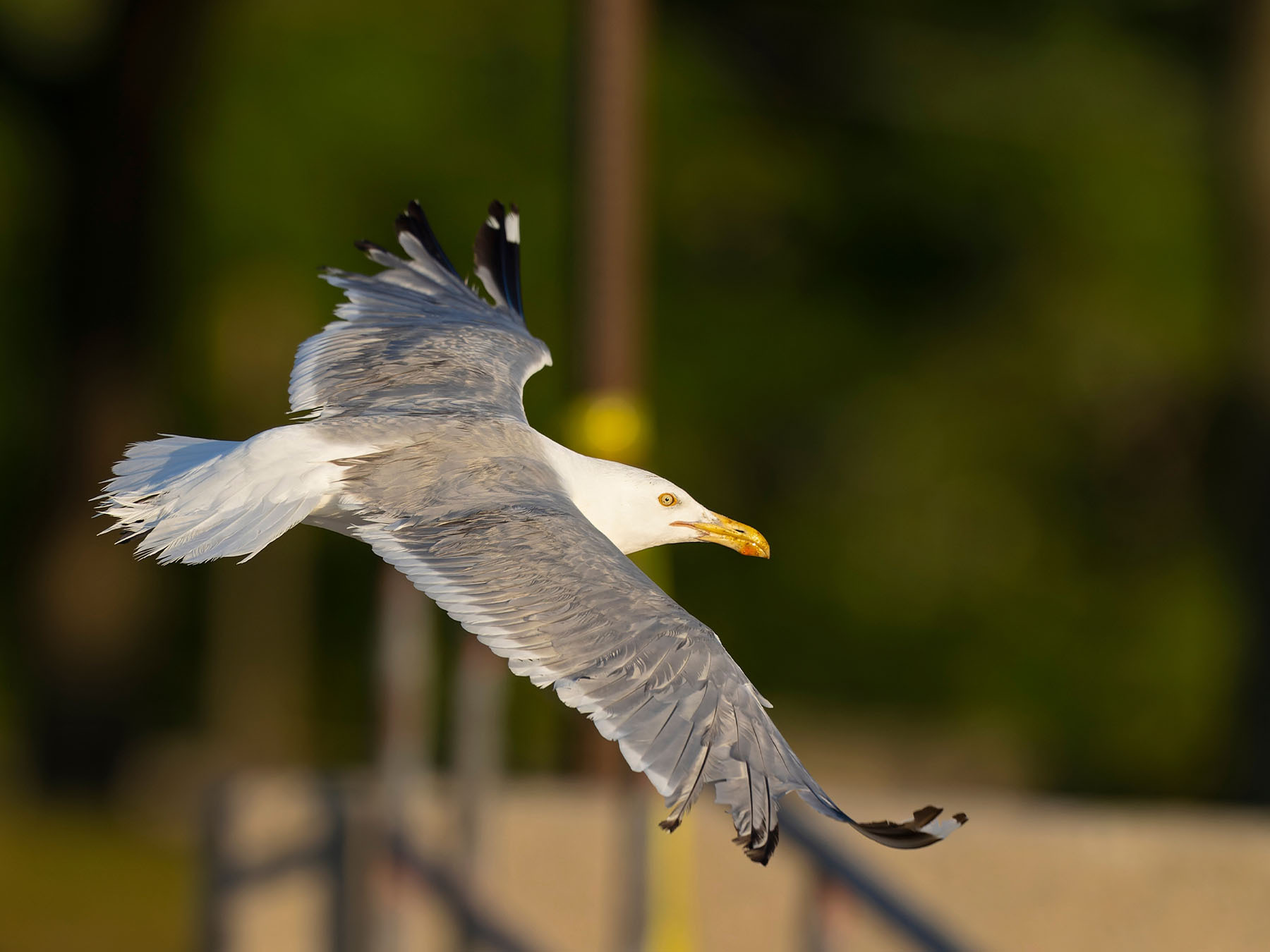
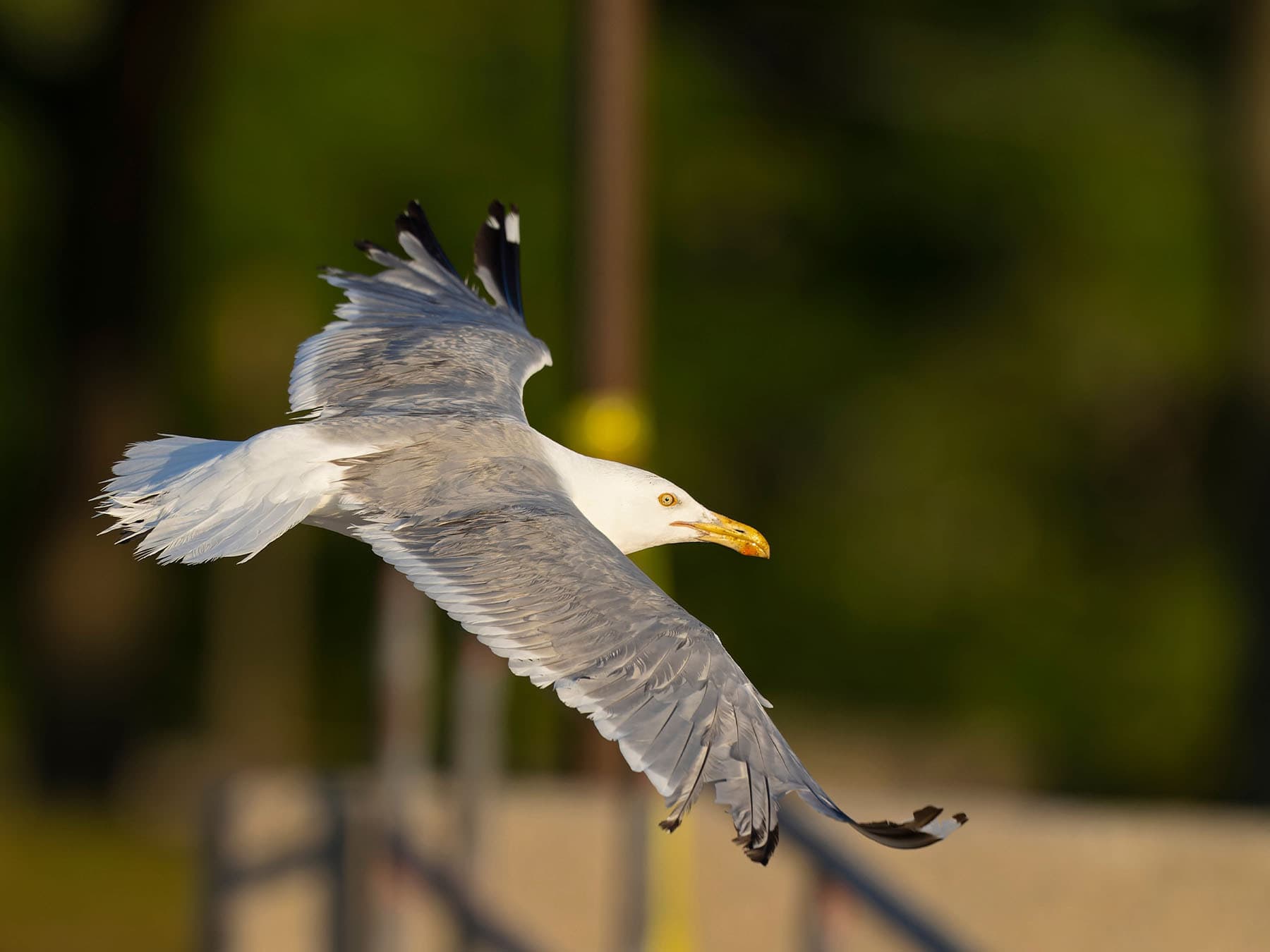 American Herring Gull in-flight
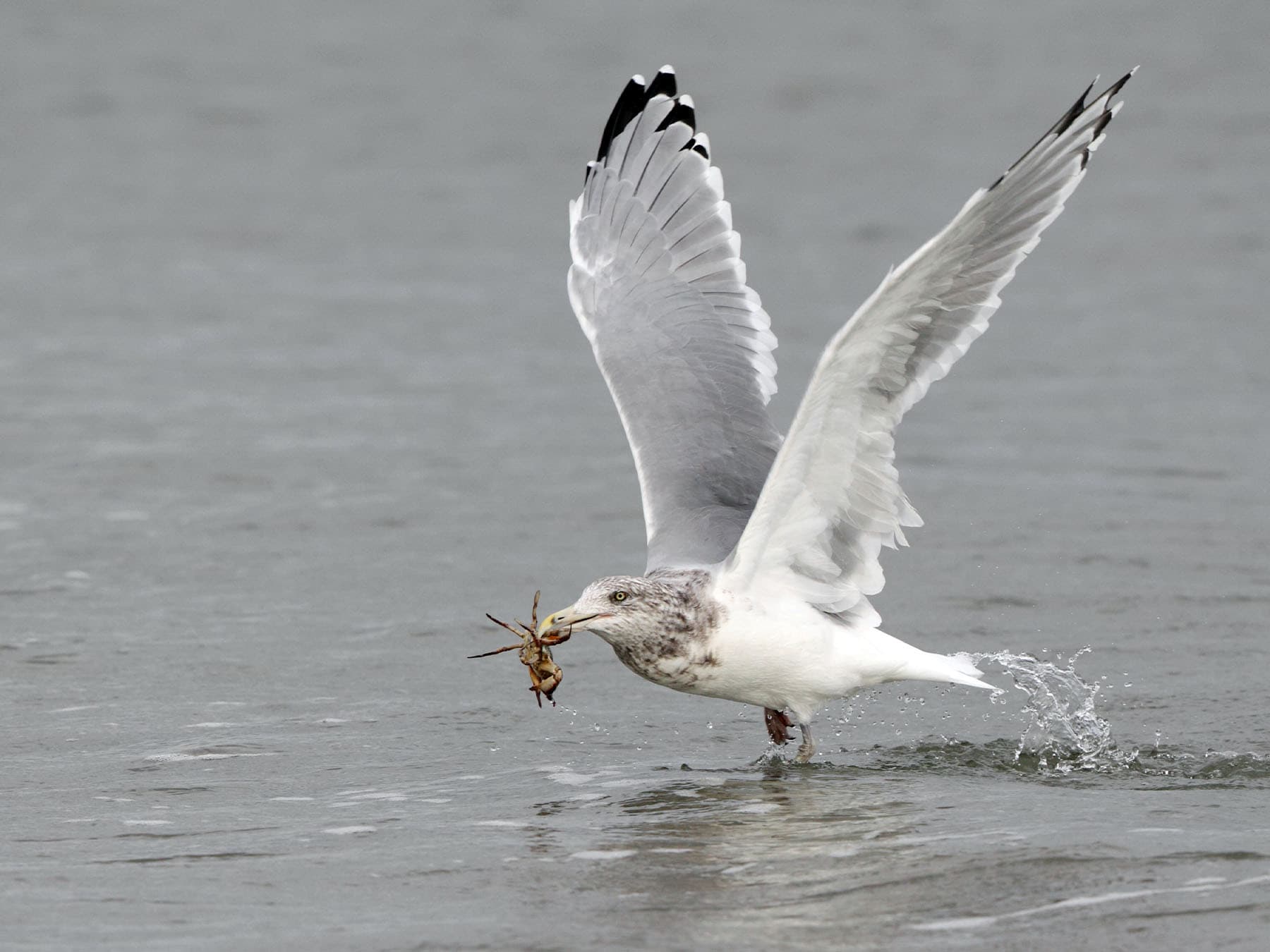 American Herring Gull in shallow water with a crab in its beak
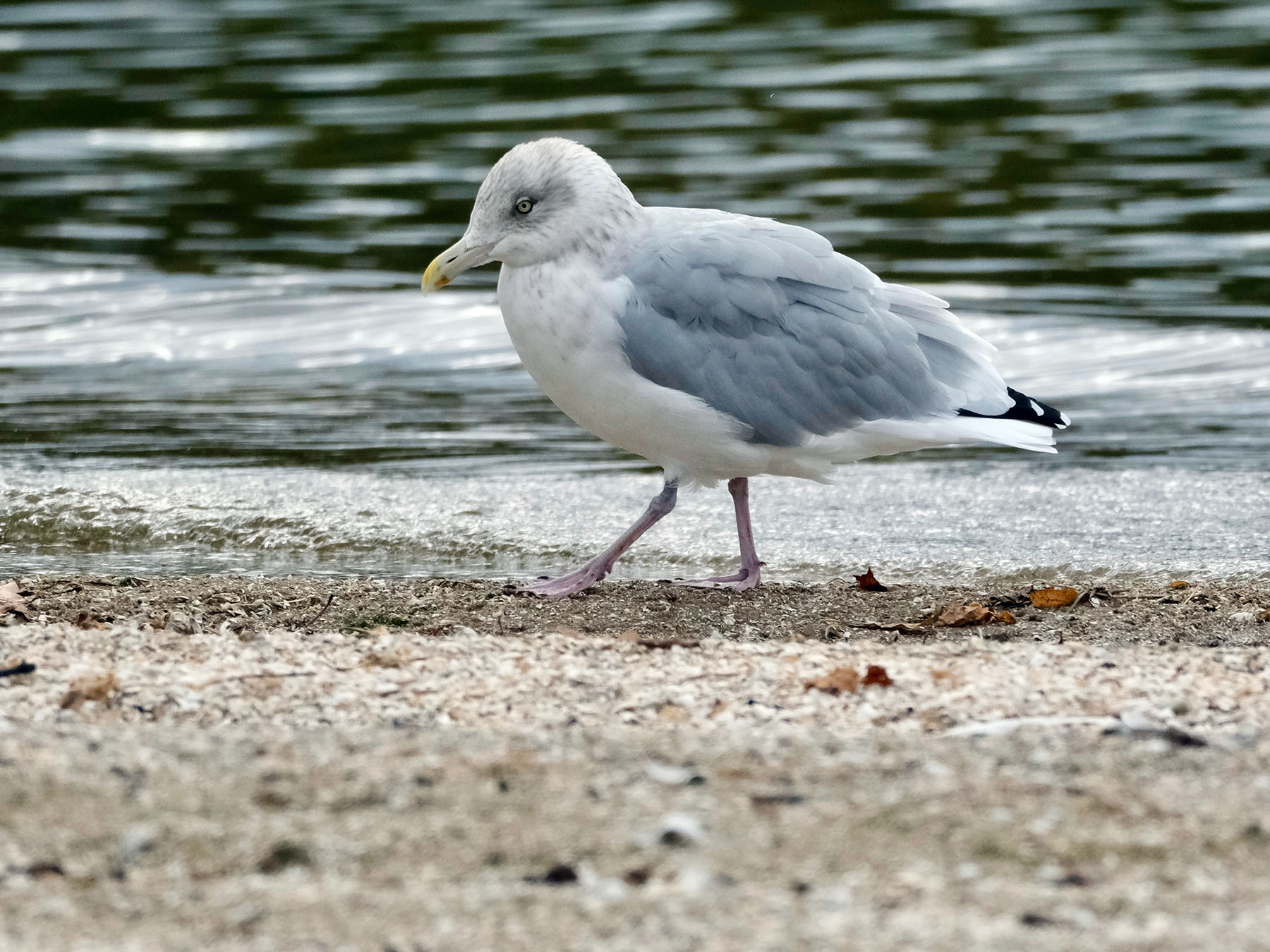
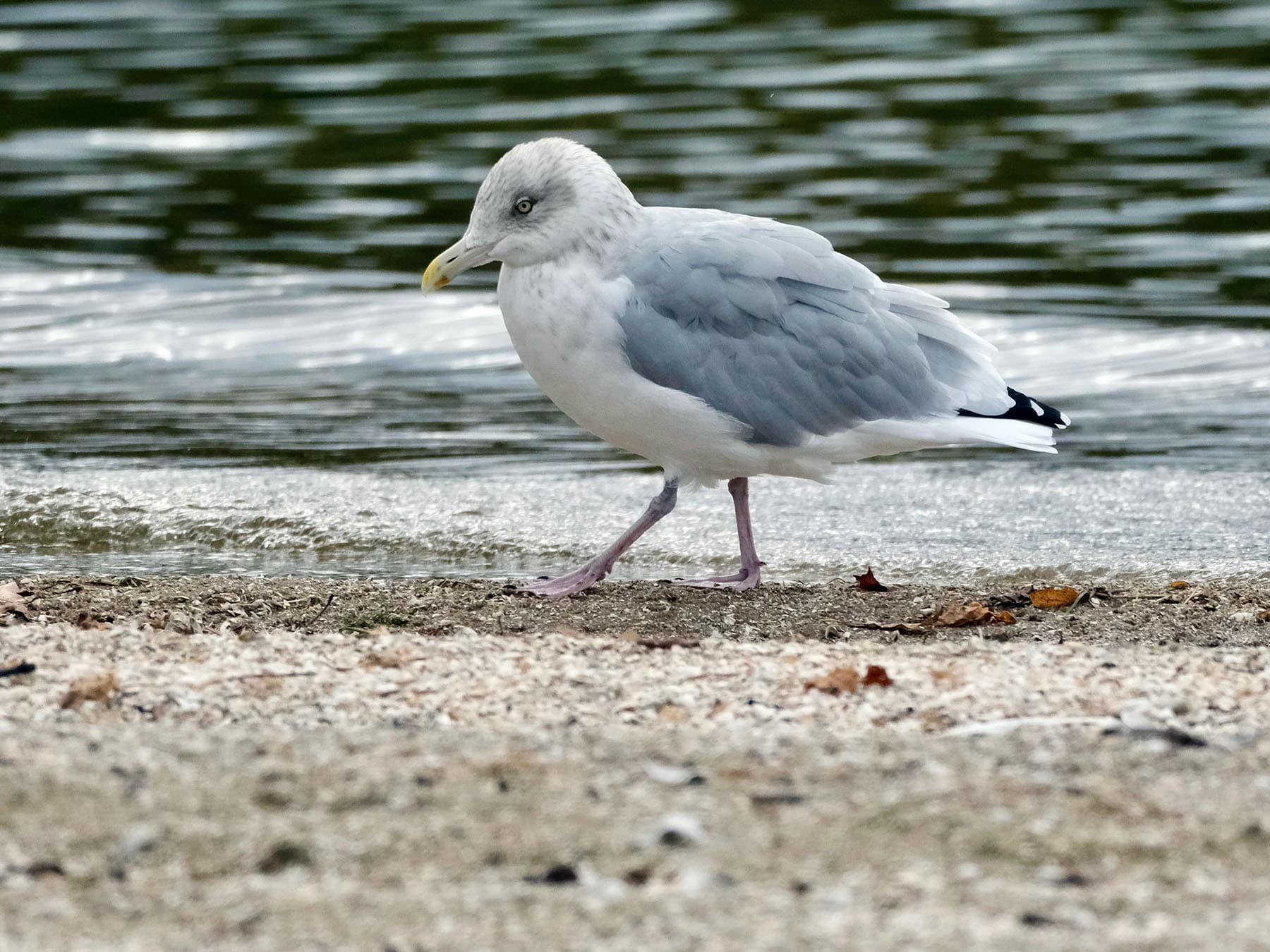 American Herring Gull walking along the beach
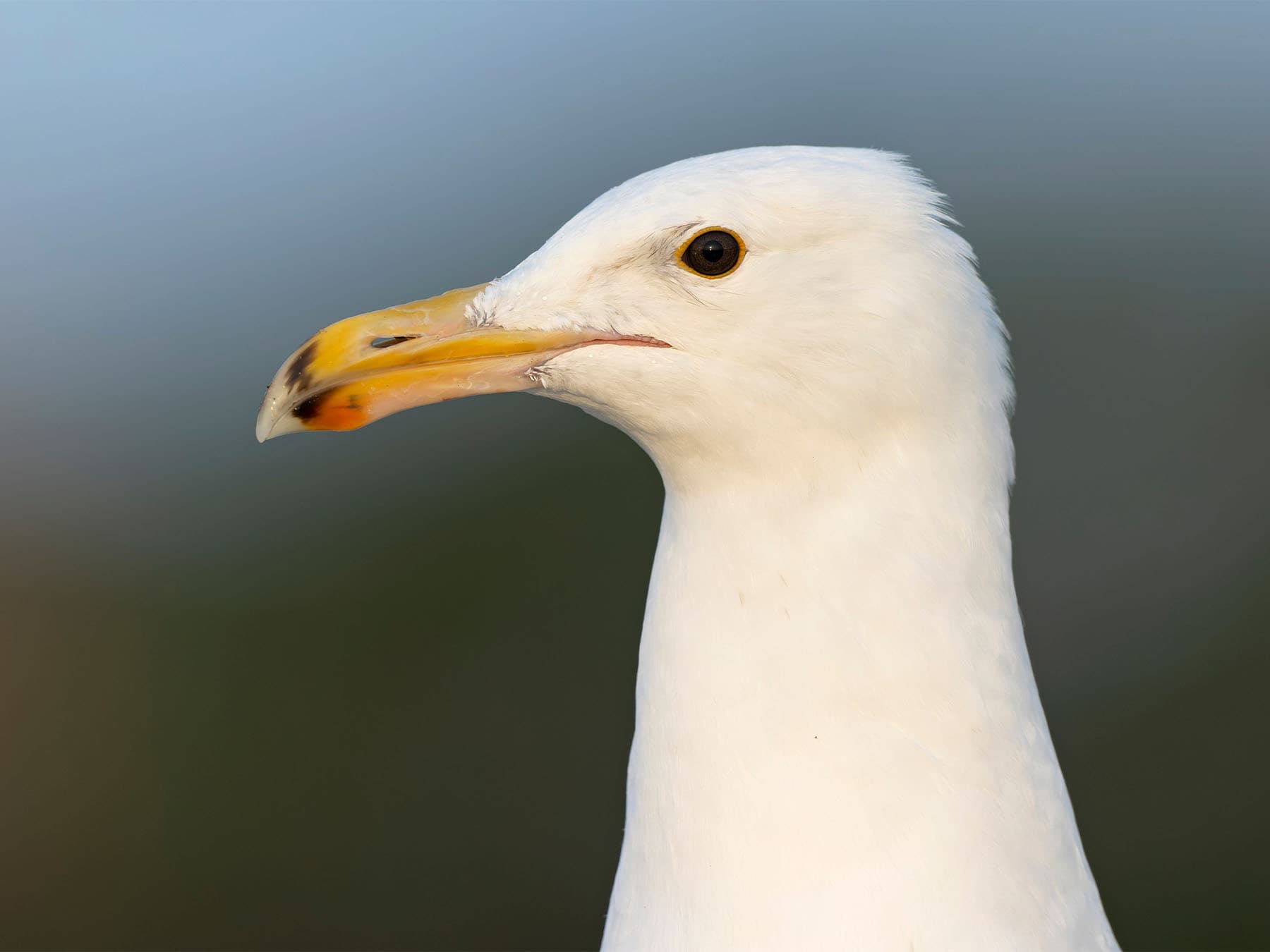 Portrait of an American Herring Gull
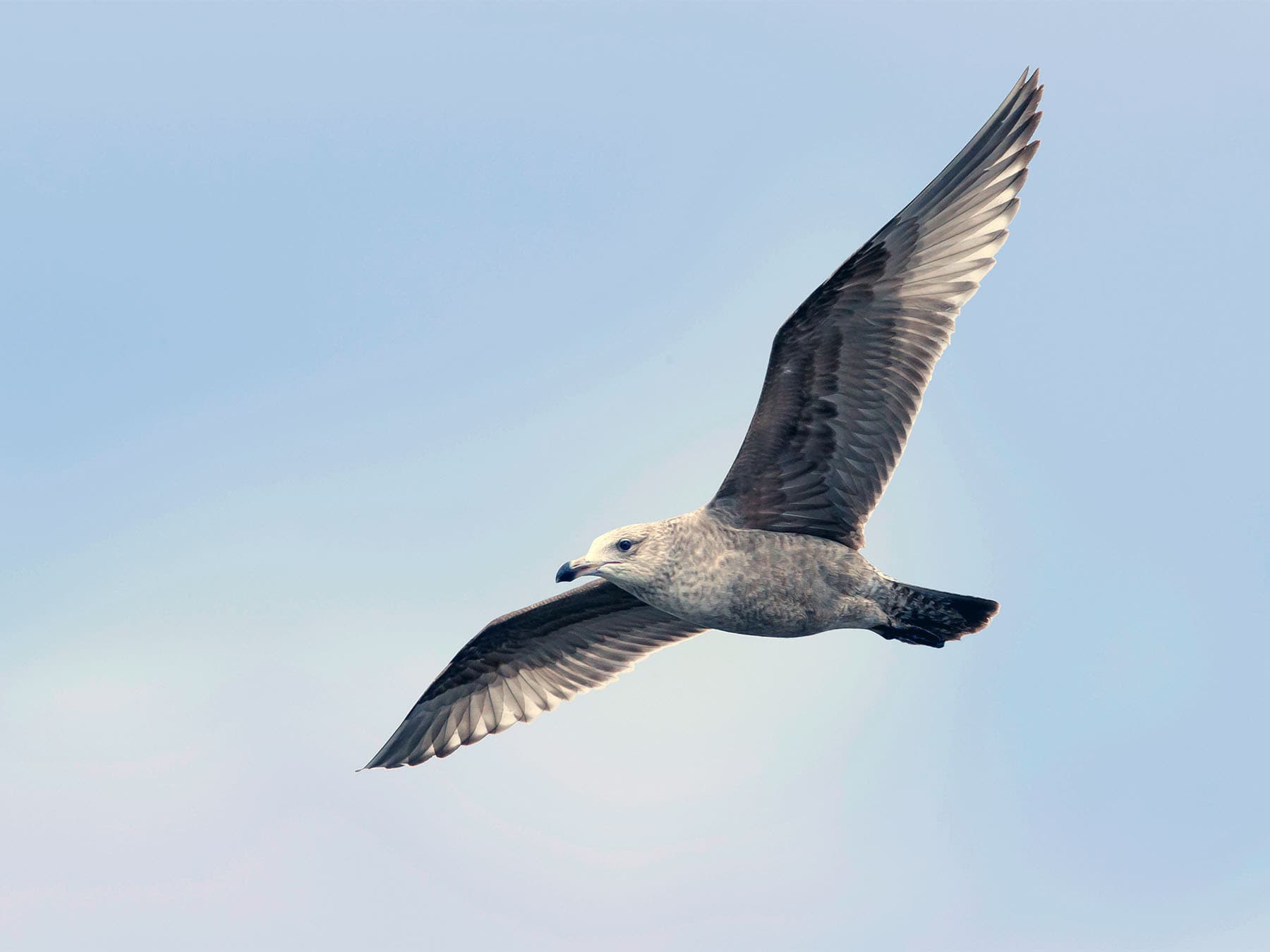 First winter American Herring Gull in-flight
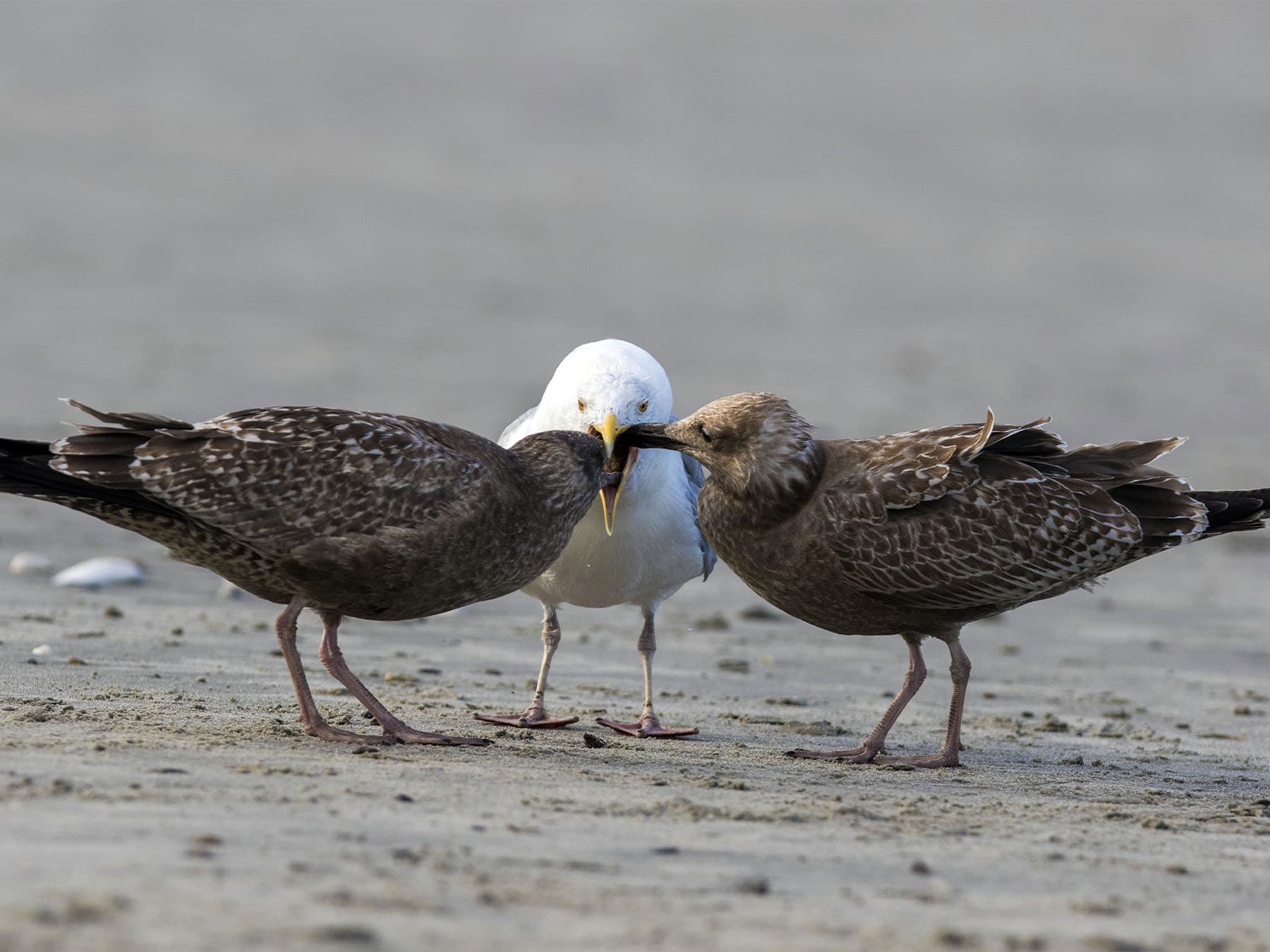 American Herring Gull adult feeding two chicks
Quick facts
- Length
- 53–65 cm
- Wingspan
- 120–150 cm
- Weight
- 600–1650 g
- Lifespan
- 20–30 years
- Family
- Gulls & Terns
- Migration
- Partial migrant
- Global status (IUCN)
- Least Concern
- World population
- 430,000 - 520,000 mature individuals
- Population trend
- Decreasing
- Also called
- Smithsonian Gull, Arctic Herring Gull
- Scientific name
- Larus smithsonianus
Sources
3- 1BirdLife International. 2019. Larus smithsonianus (amended version of 2018 assessment). The IUCN Red List of Threatened Species 2019: e.T62030590A155596462. Source (opens in a new tab)
- 2Wetlands International (2014)
- 3Wetlands International (2014)

Checked by
Nathan Cope, founder and editor
Nathan founded Birdfact and leads its writers and contributors in the UK, the US and Canada. He has watched and studied birds for more than ten years, and checks every article and species guide before it’s published.