Published 7 Oct 2026
Dunnock or House Sparrow? How to Tell Them Apart
By the Birdfact teamChecked by Nathan Cope
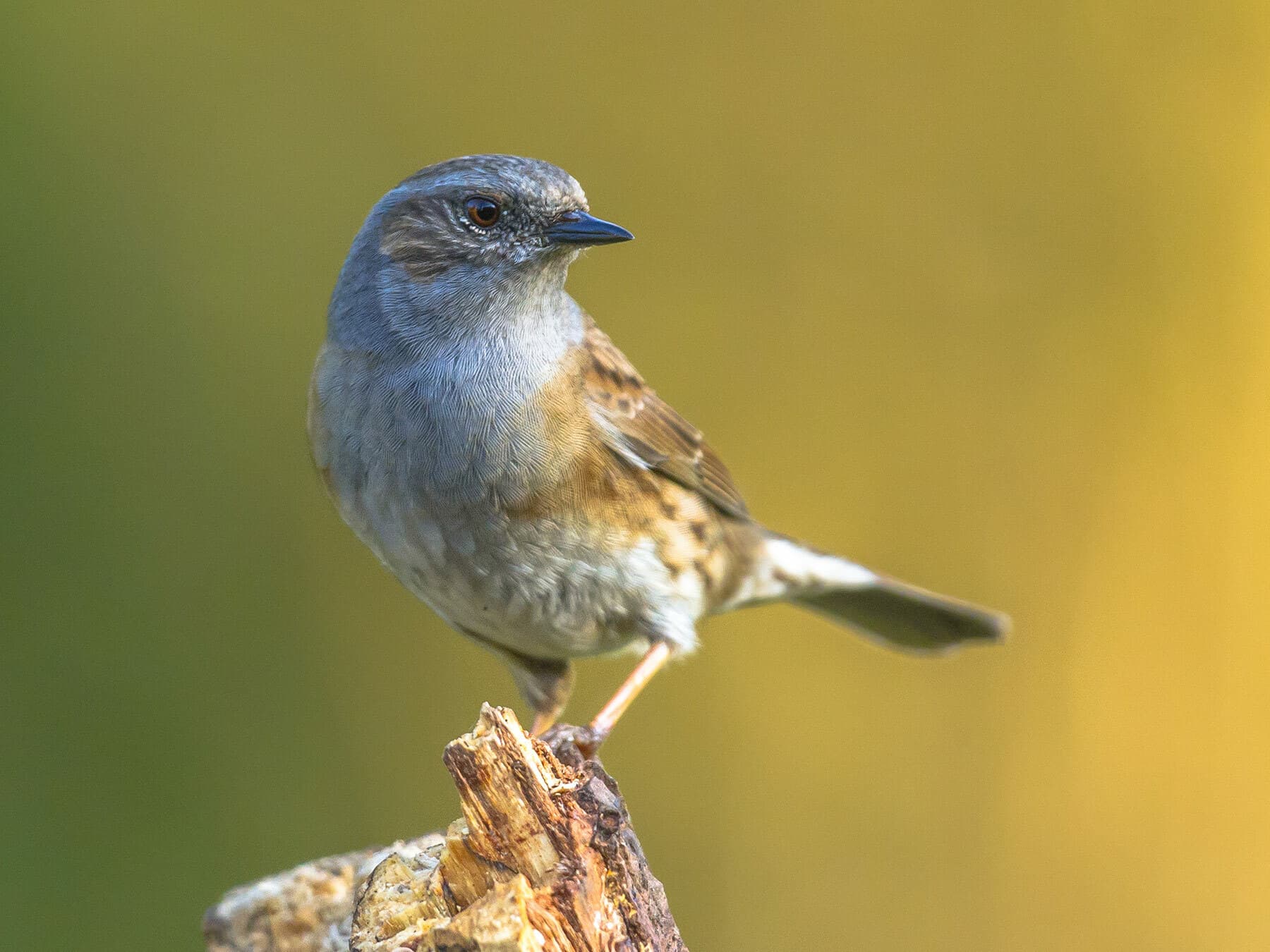
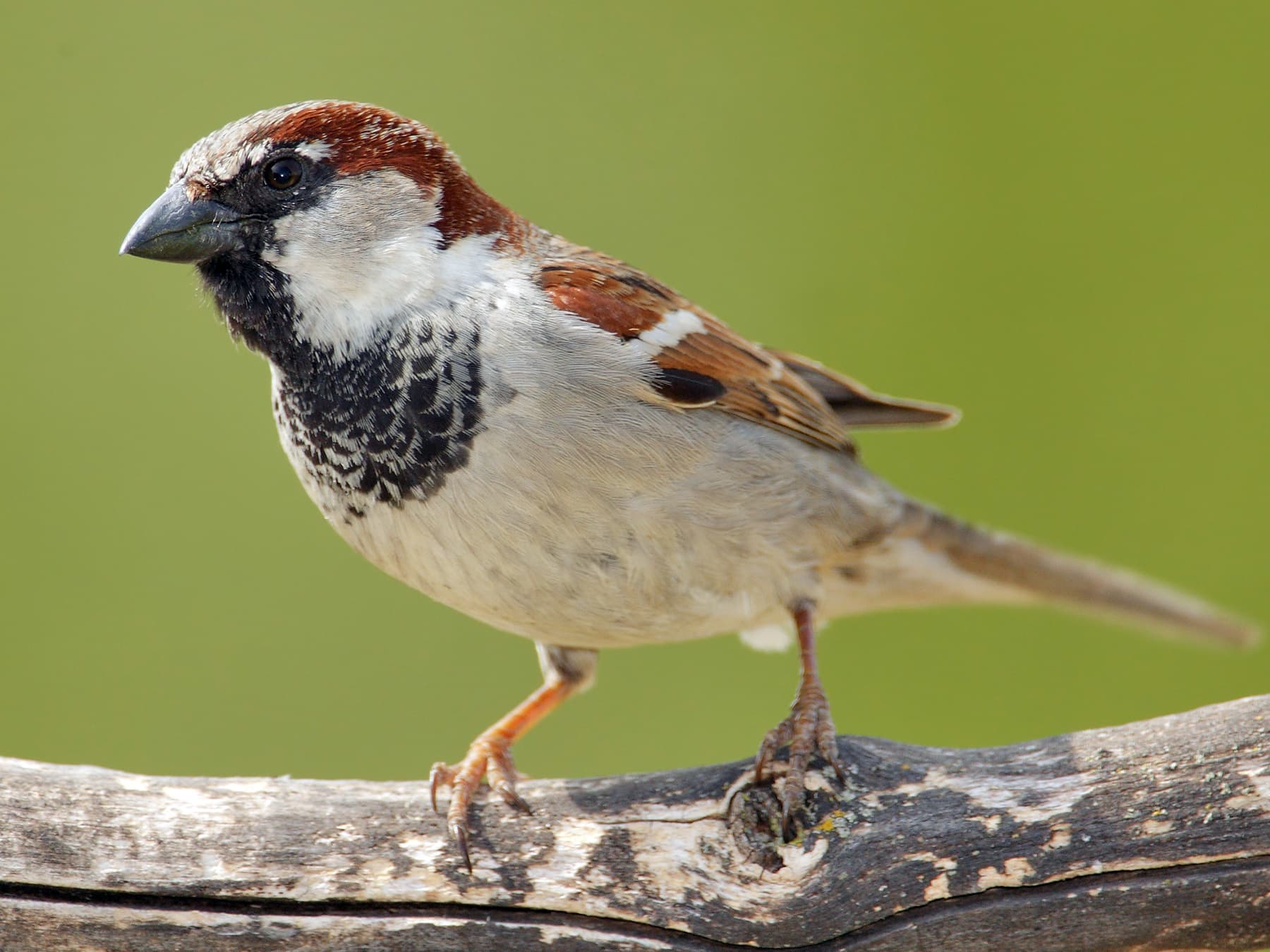
Look at the bill: a Dunnock's is thin and pointed, a House Sparrow's short and chunky. A Dunnock also has a grey head and breast and creeps about alone or in pairs, while House Sparrows go about in groups.
On this page12 sections
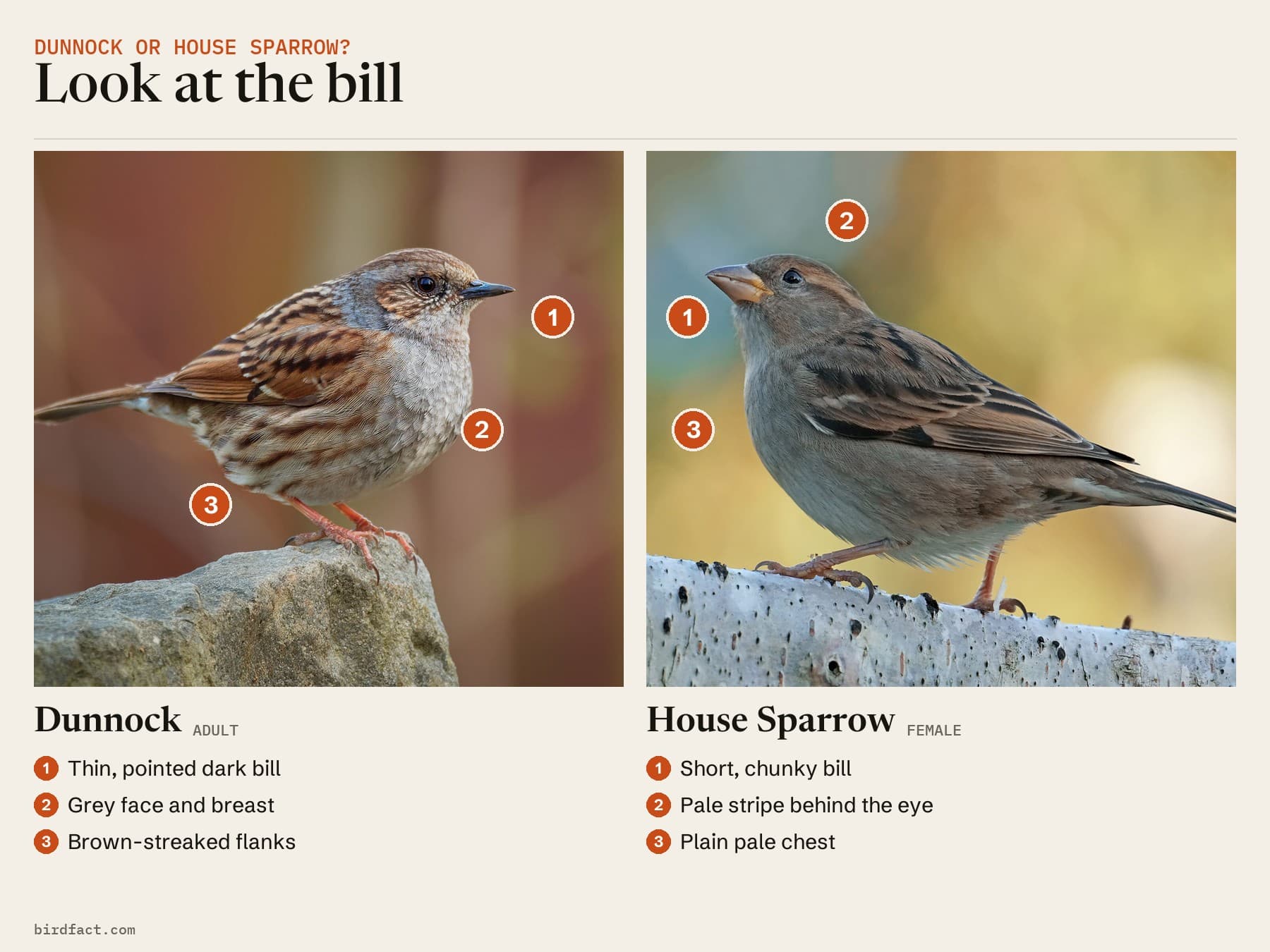
How to tell a Dunnock from a House Sparrow, especially a female House Sparrow, with photos. For each bird in full, see Dunnock and House Sparrow.
The quick answer: look at the bill
A Dunnock has a thin, pointed, dark bill. A House Sparrow has a short, chunky bill. That one difference holds for males and females alike.1
Then look at the head and breast. A Dunnock's face, throat and breast are slate grey, with brown cheeks and crown. A female House Sparrow has a plain pale chest and a pale stripe behind the eye; a male has a grey cap, a chestnut-brown head and a black bib.
Size and shape
Head and face
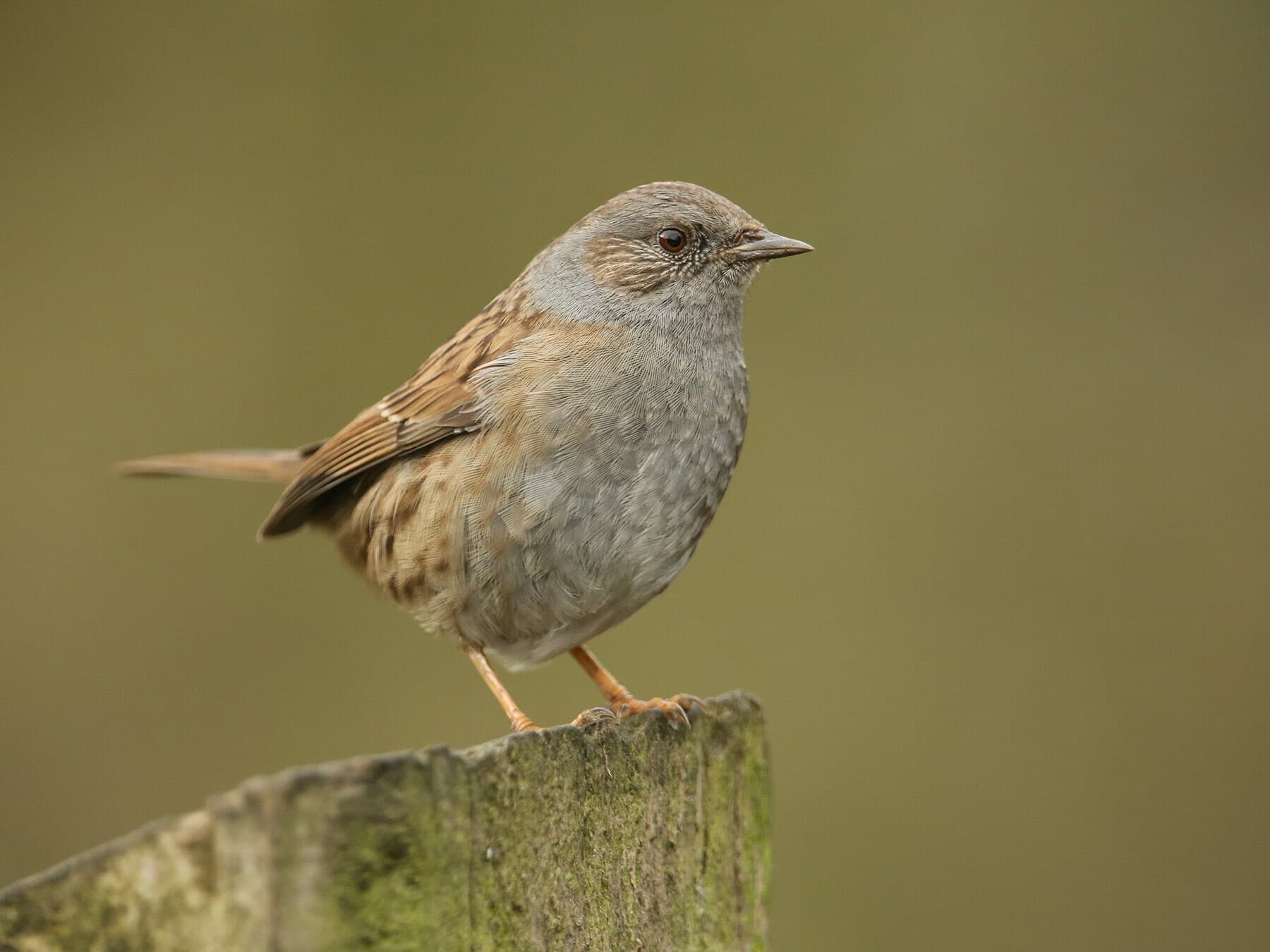
Dunnock: a slate-grey face, throat and breast, with brownish cheeks and a brown crown, and a reddish-brown eye. Males and females look the same.4
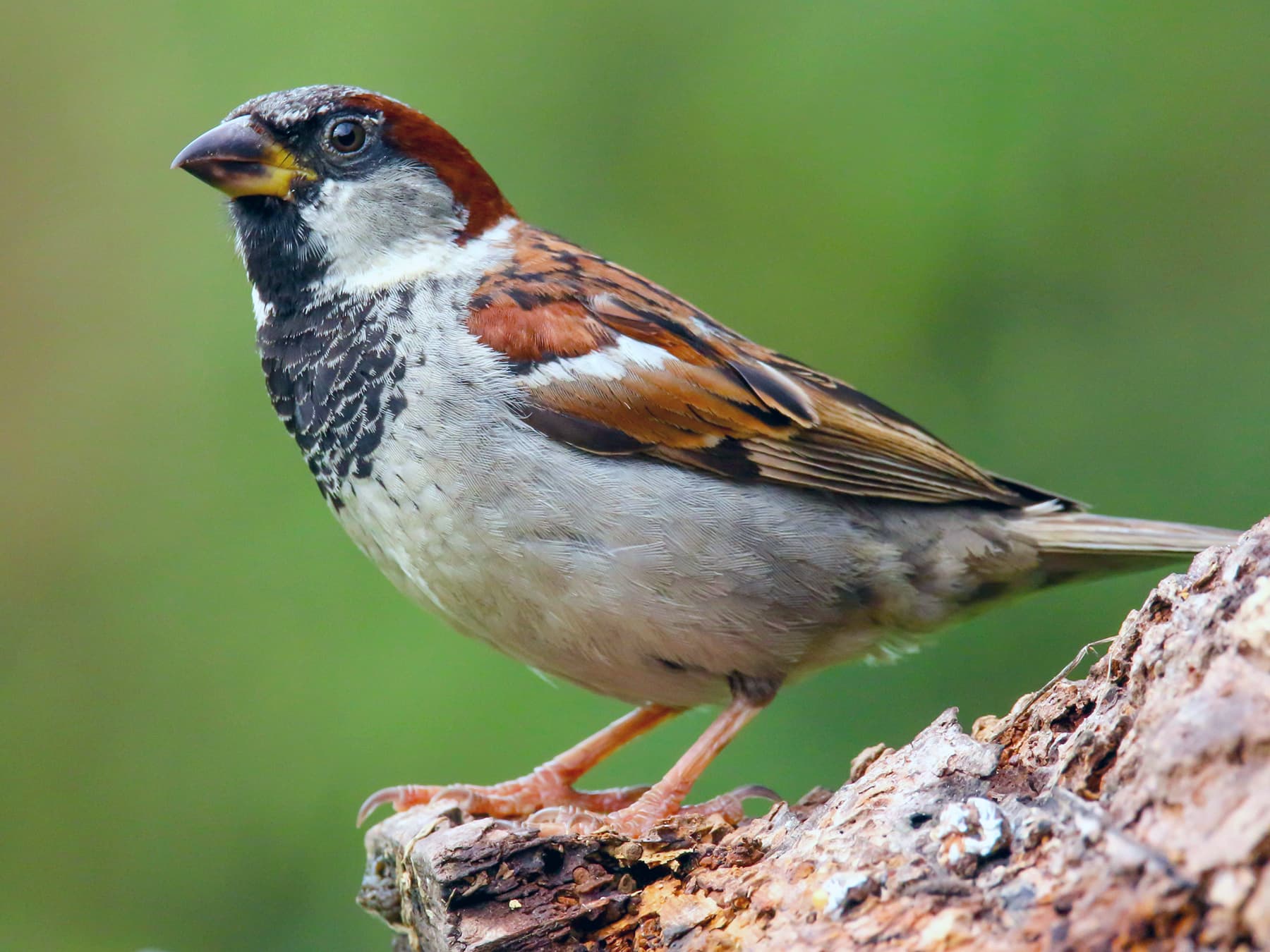
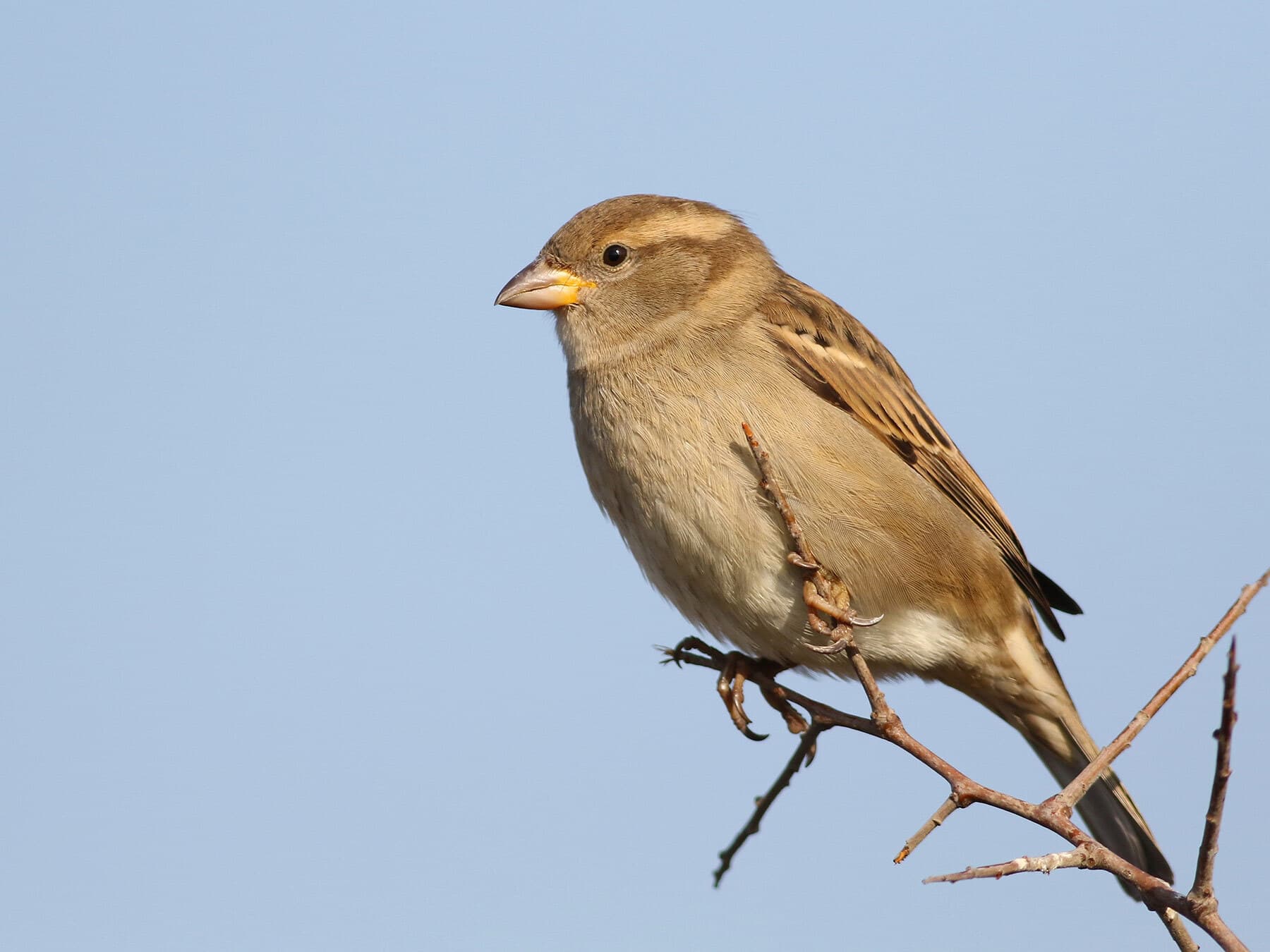
House Sparrow: males and females look different. The male has a grey cap on a chestnut-brown head, grey cheeks and a black bib. The female has a plainer head, usually with a pale stripe behind the eye, and no bib.
Back and underparts
Both have a brown back streaked with black, so the back is no help. Underneath they differ: a Dunnock is grey on the breast with brown streaks along the flanks, while a female House Sparrow has a plain, pale chest and a male a plain pale grey belly below the bib.
Why the bills are different
The bills match the food. A Dunnock's fine bill suits insects, spiders and small seeds; sparrows use their heavier bills on grain and other large seeds.
Behaviour
This is often the easiest clue. Dunnocks are usually alone or in pairs, creeping and shuffling about low down under shrubs and along flower beds, flicking their wings. They visit feeders only now and then, and are more likely to be picking up spilt seed underneath.2
House Sparrows are sociable. They live in small groups, often close to people, hop about on the ground together, bathe together and readily use feeders.
Voice
A Dunnock sings a short, high, squeaky warble and calls with a thin "tseep". A House Sparrow's commonest call is a loud "cheep", and its song is little more than that cheep repeated; in spring a group may call together from deep in a hedge. Listen: Dunnock song and calls.
Nests
Dunnocks build an open cup low in a dense shrub or hedge. House Sparrows nest mostly in holes and crevices in buildings, sometimes in hedges, and they use nest boxes. More: Dunnock nesting.
Young birds
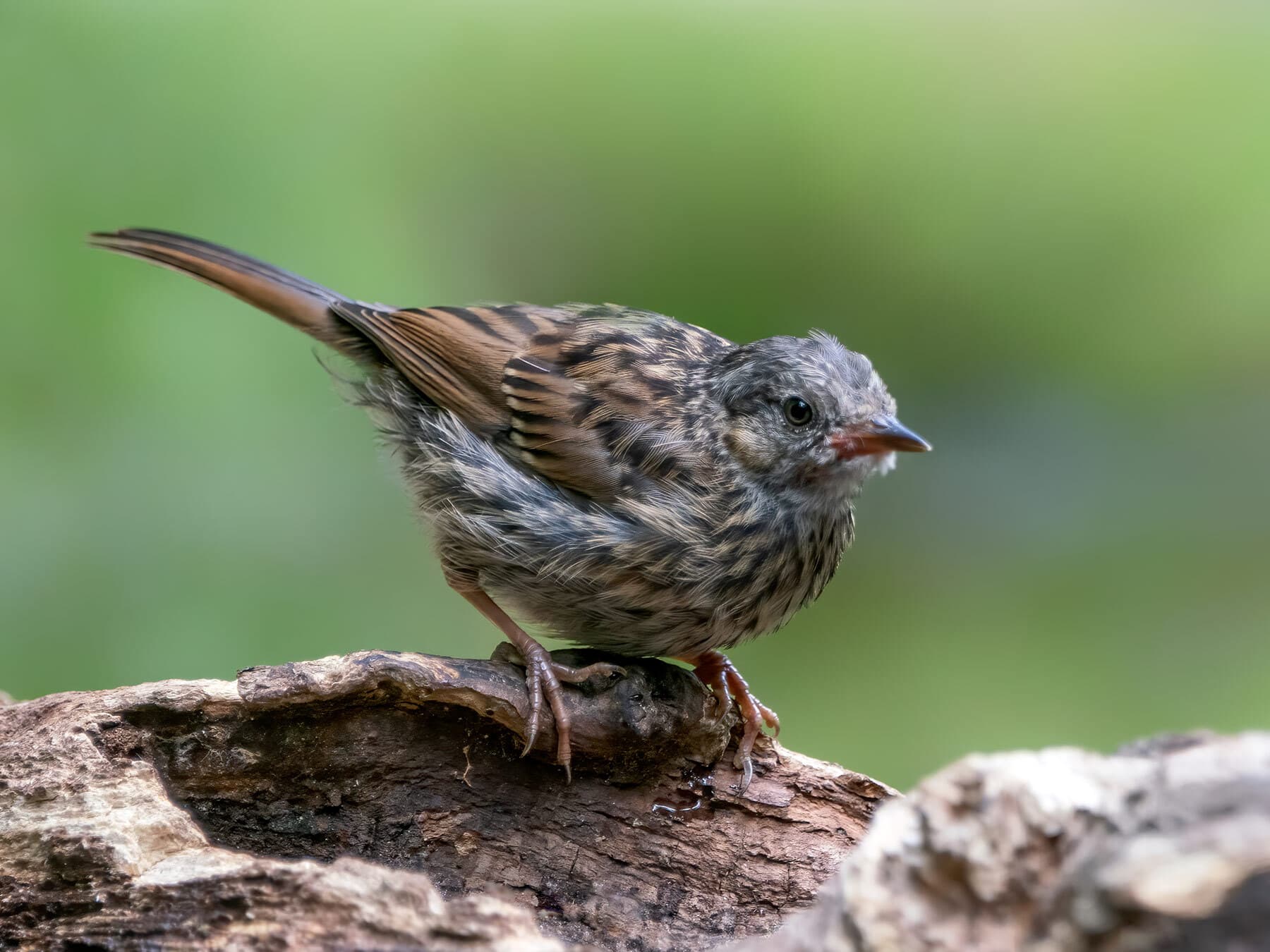
Young Dunnocks are browner than adults and heavily streaked on the head and underparts. Young House Sparrows look like the female.
What about Tree Sparrows?
A Tree Sparrow is smaller than a House Sparrow, and males and females look alike: a chestnut cap, white cheeks and collar with a dark cheek spot, and a small black bib. It rarely visits town gardens. No Dunnock has a chestnut cap or a cheek spot.
Why is the Dunnock called a hedge sparrow?
Because it looks a little like a sparrow and spends much of its time on the ground under hedges and low shrubs. But it is not a sparrow at all: it belongs to the accentor family and is the only accentor in the UK.5
Sources
- RSPB. Small brown birds and how to identify them. RSPB. Accessed 7 October 2026. Source
- RSPB. Dunnock. RSPB Birds A-Z. Accessed 7 October 2026. Source
- Toms, M. (2007). The Dunnock: sex in the shrubbery. Bird Table 50 (BTO Garden BirdWatch), pp. 9-11. Accessed 7 October 2026. Source
- Hatchwell, B., Kirwan, G. M., Goodman, D. D. (2026). Dunnock (Prunella modularis), version 1.2. Birds of the World (J. del Hoyo, A. Elliott, J. Sargatal, D. A. Christie, E. de Juana, R. Ahmed and B. K. Keeney, editors). Cornell Lab of Ornithology. doi:10.2173/bow.dunnoc1.01.2
- BTO. Dunnock (Prunella modularis). BTO BirdFacts. Accessed 7 October 2026. Source