Facts · Updated 8 Oct 2026
Dunnock Nesting: Nests, Eggs and Baby Dunnocks
By the Birdfact teamChecked by Nathan Cope
Dunnocks hide a cup of twigs and moss low in a dense shrub or hedge. The female lays usually 4 or 5 blue eggs from late April, incubates them for about two weeks, and one or two males may help her feed the chicks.
On this page12 sections
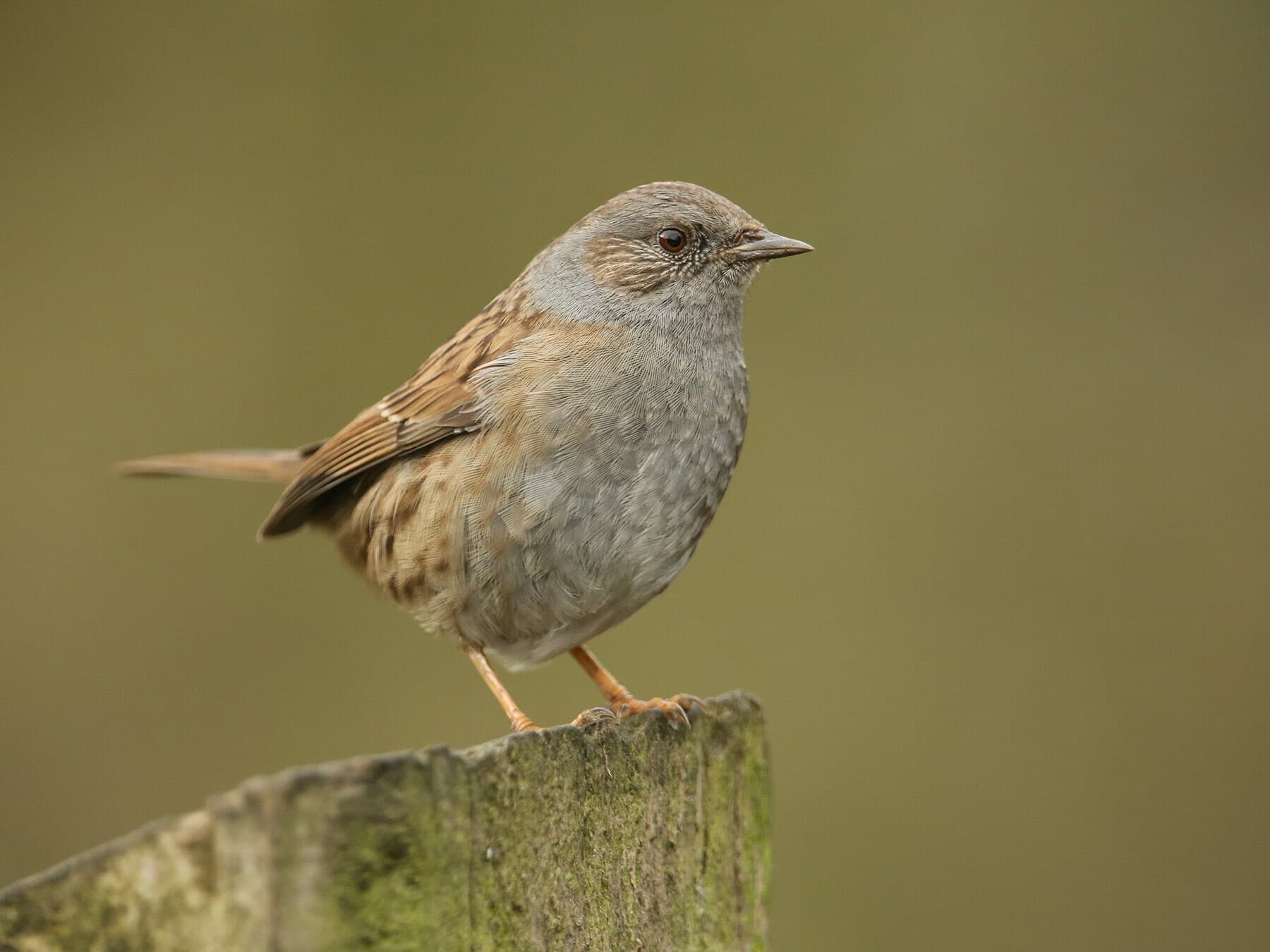
Everything about Dunnock nests: when and where they nest, the nest and eggs, the chicks, who feeds them, Cuckoos, nest boxes and the law. For the bird itself, see Dunnock identification, song and facts.
When do Dunnocks nest?
Dunnocks breed from March to July. In Britain the first clutch is laid on 27 April on average, though anywhere from 1 April to mid-June.1 Most pairs raise two broods in a season and some three, so nesting carries on into July.
Where do Dunnocks nest?
The nest
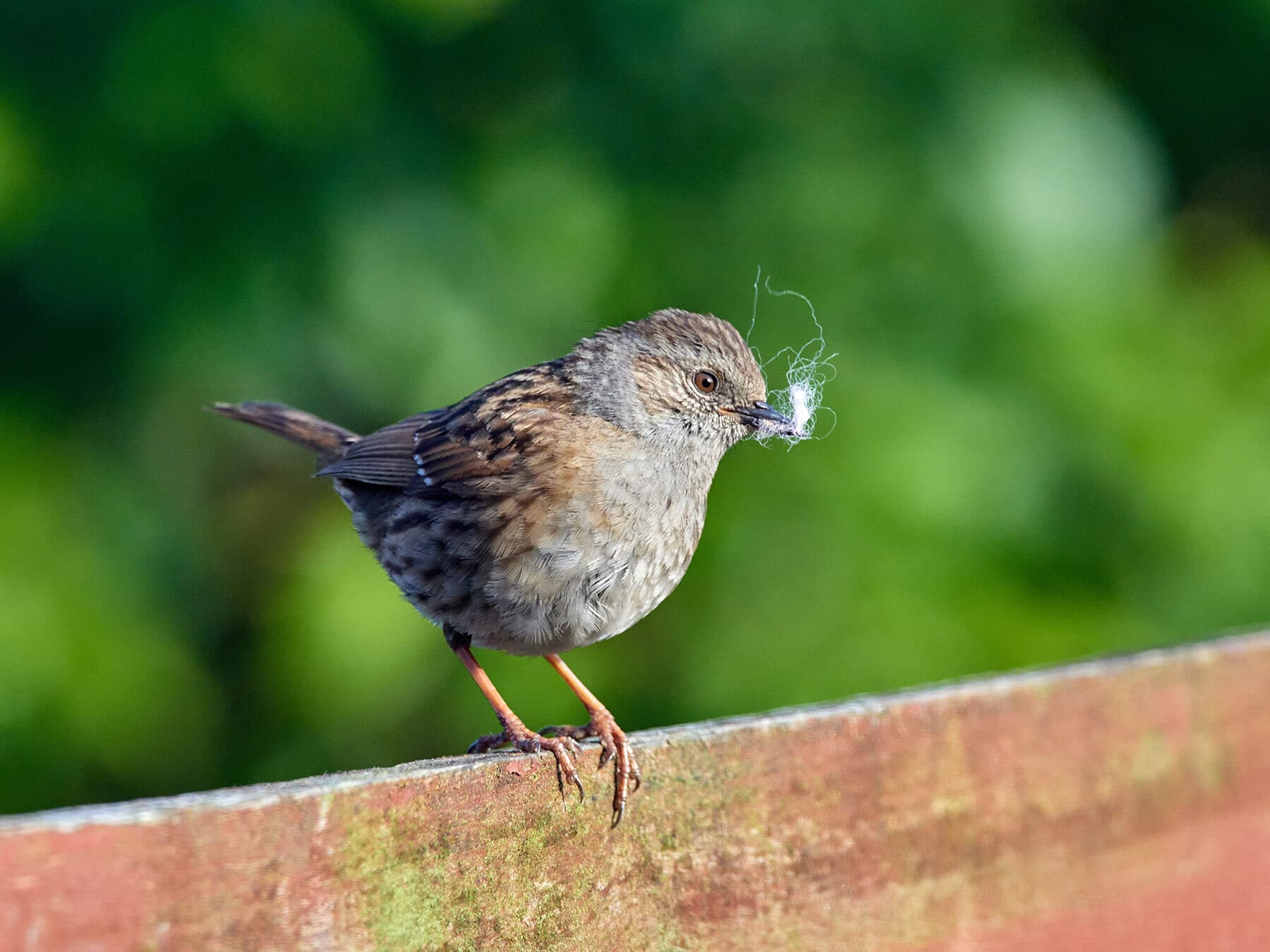
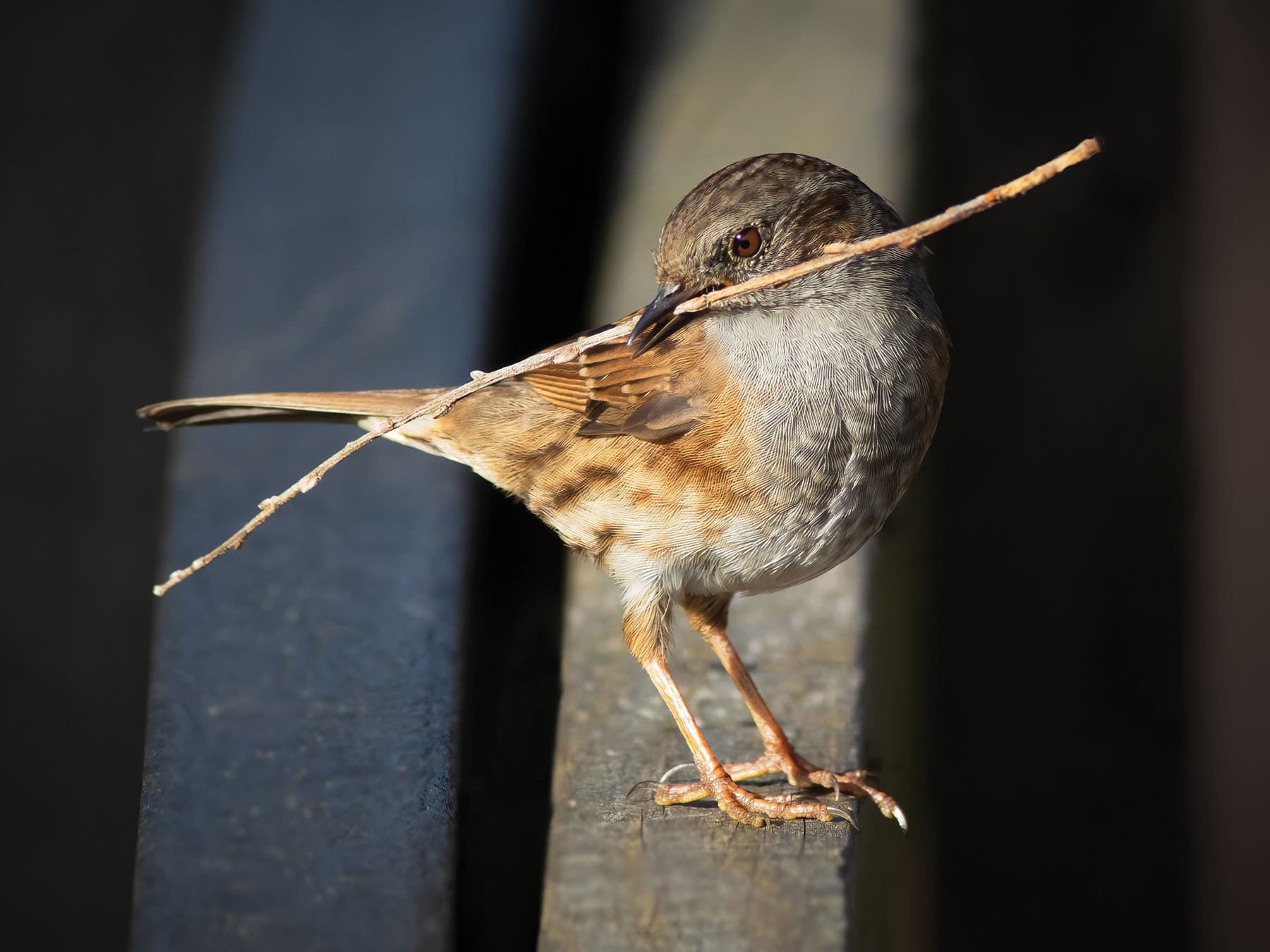
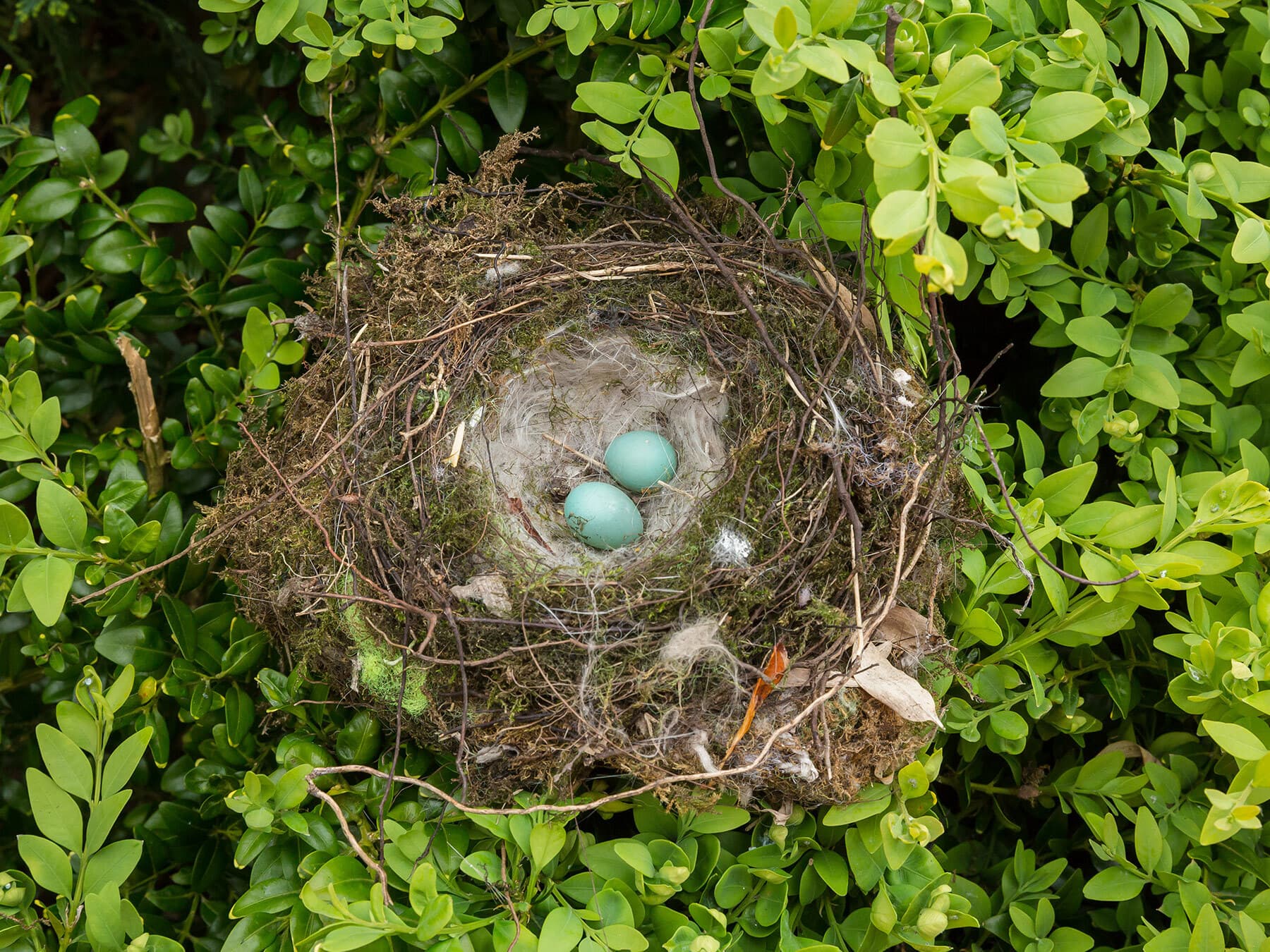
A well-hidden cup of twigs, stems, roots, grass and moss, lined with hair or wool and sometimes feathers. The female builds it on her own.
Eggs
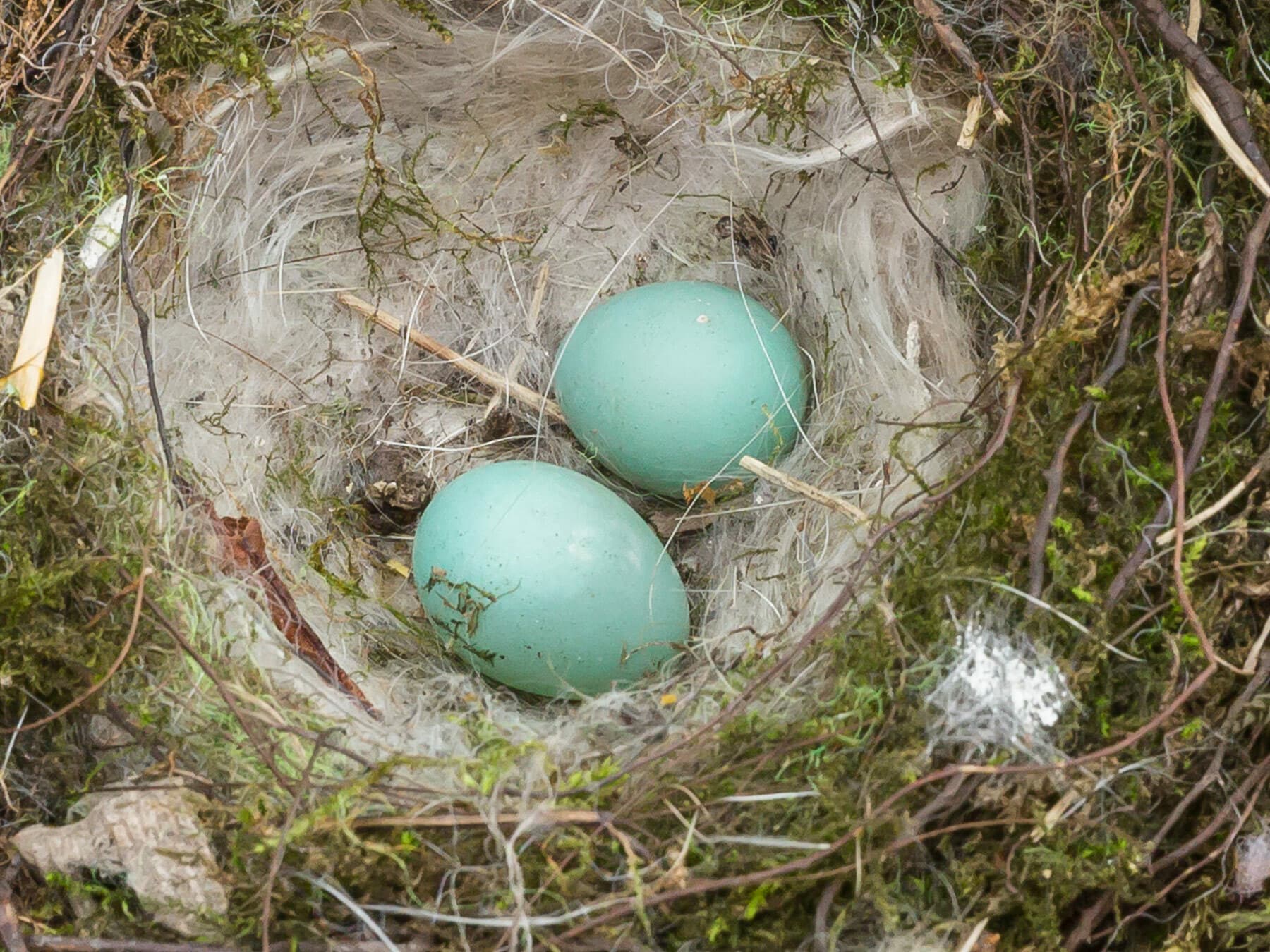
A clutch is usually 4 or 5 eggs, sometimes as few as 2 or as many as 6; the average in British nests is just over 4. The eggs are blue and small, about 19 by 14 mm and 2.1 g.
Incubation
Only the female incubates, typically for 14 to 15 days in British nests (14 days on average).
Baby Dunnocks
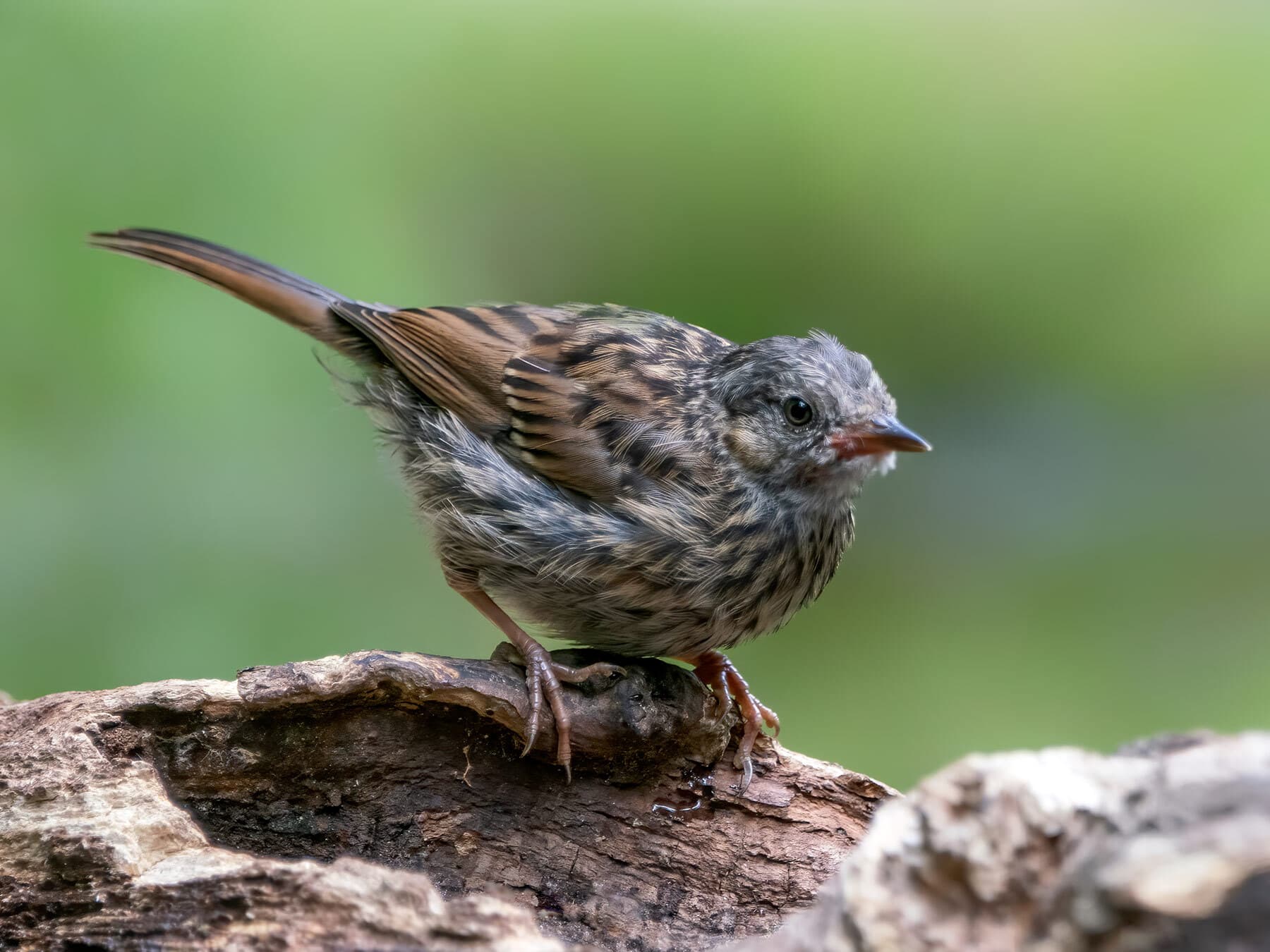
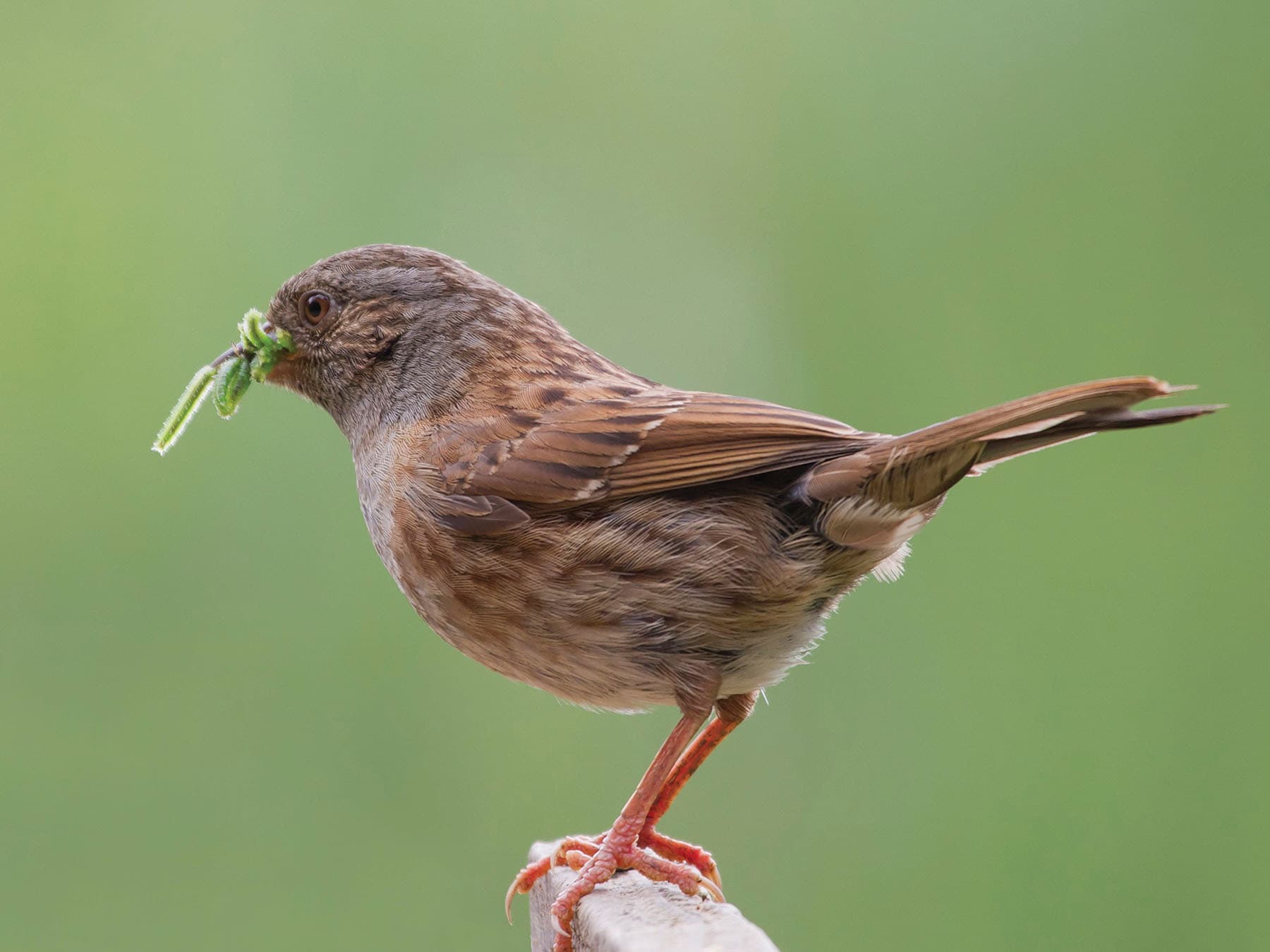
The chicks hatch helpless, with some down. They are fed insects and spiders, passed bill to bill, and seeds brought up from the throat. In Britain, beetles, flies and spiders turned up in 50 to 75% of the chicks' droppings, and caterpillars in 83% of samples in June.
The young leave the nest at 12 to 14.5 days old, 13 days on average. Like other garden-bird fledglings, they can spend a few days on the ground before they fly well, with their parents nearby. The RSPB's advice is to leave a fully feathered fledgling alone, keep people and pets away, and move it only if it is in danger, a short way into cover.4
Feeding the chicks
This is where Dunnocks get interesting. A female may have one male or two, and each male helps feed the chicks in line with his share of matings with her. In a long study in Cambridge, of 264 broods, 59% were fed by the female and one male, 33% by the female and two males, and 8% by the female alone.
Extra help pays. At 10 days old, a brood fed by a pair got about 12 feeds an hour, and a brood fed by a trio about 15. A successful brood raised by the female alone produced about 0.8 fledglings on average, with one male 2.4, and with two males about 3.
Broods
Most pairs raise two broods a year, sometimes three. Nests often fail: in the Cambridge study about 30% of breeding attempts and about 15% of hatched broods were lost to predators, including cats, crows and mustelids (the weasel family).
Cuckoos
The Dunnock is one of the Cuckoo's main hosts in Britain, along with the Robin, Meadow Pipit, Reed Warbler and Pied Wagtail; each female Cuckoo usually specialises in one. She removes one of the Dunnock's eggs and lays one of her own. Her egg looks nothing like the Dunnock's blue ones, yet Dunnocks rarely reject it, a sign that they may be a fairly recent host that has not yet evolved a defence. Once hatched, the Cuckoo chick pushes out the other eggs or chicks, and the Dunnocks feed it until it dwarfs them.
It is not common: only about 2% of UK Dunnock nests are taken over by a Cuckoo, and since a pair can raise two or three broods, it may still raise its own chicks later.
Do Dunnocks use nest boxes?
Not usually. Dunnocks build open cups in thick cover, and they are not on the BTO's lists of birds likely to use any type of nest box, open-fronted ones included.5 Dense bushes, low shrubs and ivy are what give a pair somewhere to nest.
Nests and the law
All wild birds' nests are protected. In England and Wales it is an offence intentionally to take, damage or destroy the nest of any wild bird while it is in use or being built. In Scotland the offence also covers doing so recklessly, and interfering with the nest.6 In Northern Ireland it covers doing so intentionally or recklessly.7 Dunnocks nest in garden shrubs and hedges from March to July, so check carefully before cutting them in spring and summer.
Sources
- BTO. Dunnock (Prunella modularis). BTO BirdFacts. Accessed 7 October 2026. Source
- Toms, M. (2007). The Dunnock: sex in the shrubbery. Bird Table 50 (BTO Garden BirdWatch), pp. 9-11. Accessed 7 October 2026. Source
- Hatchwell, B., Kirwan, G. M., Goodman, D. D. (2026). Dunnock (Prunella modularis), version 1.2. Birds of the World (J. del Hoyo, A. Elliott, J. Sargatal, D. A. Christie, E. de Juana, R. Ahmed and B. K. Keeney, editors). Cornell Lab of Ornithology. doi:10.2173/bow.dunnoc1.01.2
- RSPB. Injured and baby birds. RSPB advice. Accessed 7 October 2026. Source
- BTO. Nest boxes for birds. BTO, Helping birds. Accessed 7 October 2026. Source
- UK Parliament (1981). Wildlife and Countryside Act 1981, section 1. Accessed 7 October 2026. Source
- UK (1985). The Wildlife (Northern Ireland) Order 1985, article 4. Accessed 7 October 2026. Source
- RSPB. Dunnock. RSPB Birds A-Z. Accessed 7 October 2026. Source