Facts · Updated 8 Oct 2026
What Do Dunnocks Eat? Diet and Feeding Dunnocks
By the Birdfact teamChecked by Nathan Cope
Dunnocks eat mostly beetles, spiders and other small invertebrates picked from the ground, and switch to small seeds in winter. In gardens they pick up spilt seed under feeders; the RSPB advises seed only from November to April, in clean hanging feeders.
On this page10 sections
What Dunnocks eat in the wild through the year, what they feed their chicks, and how to help them in the garden. For the bird itself, see Dunnock identification, song and facts.
What do Dunnocks eat?
Mostly small invertebrates, with seeds in winter. Beetles and spiders usually make up most of the animal food, especially ground beetles, weevils and rove beetles, along with flies, bugs, springtails, caterpillars, small snails and earthworms.1
The seeds are small ones: nettle, dock, grasses, sedges, willowherb, thistles and the like, and a few berries, such as bramble, holly and elder.
Summer and winter
The diet swings with the seasons. In Britain, seeds made up 90% of Dunnock droppings by volume in February and about half over the year as a whole; by April, invertebrates take over again.1 In a two-year study of Dunnocks in Shropshire hedgerows, the diet was largely insects in summer, and seeds appeared from August to April, with nettle the main one.2
Winter is the hungry season. In January a Dunnock may spend 94% of its day feeding, against 54% in May, and on farmland Dunnocks make most use of feeding stations after mid-February, as natural food runs out.3
How they find food
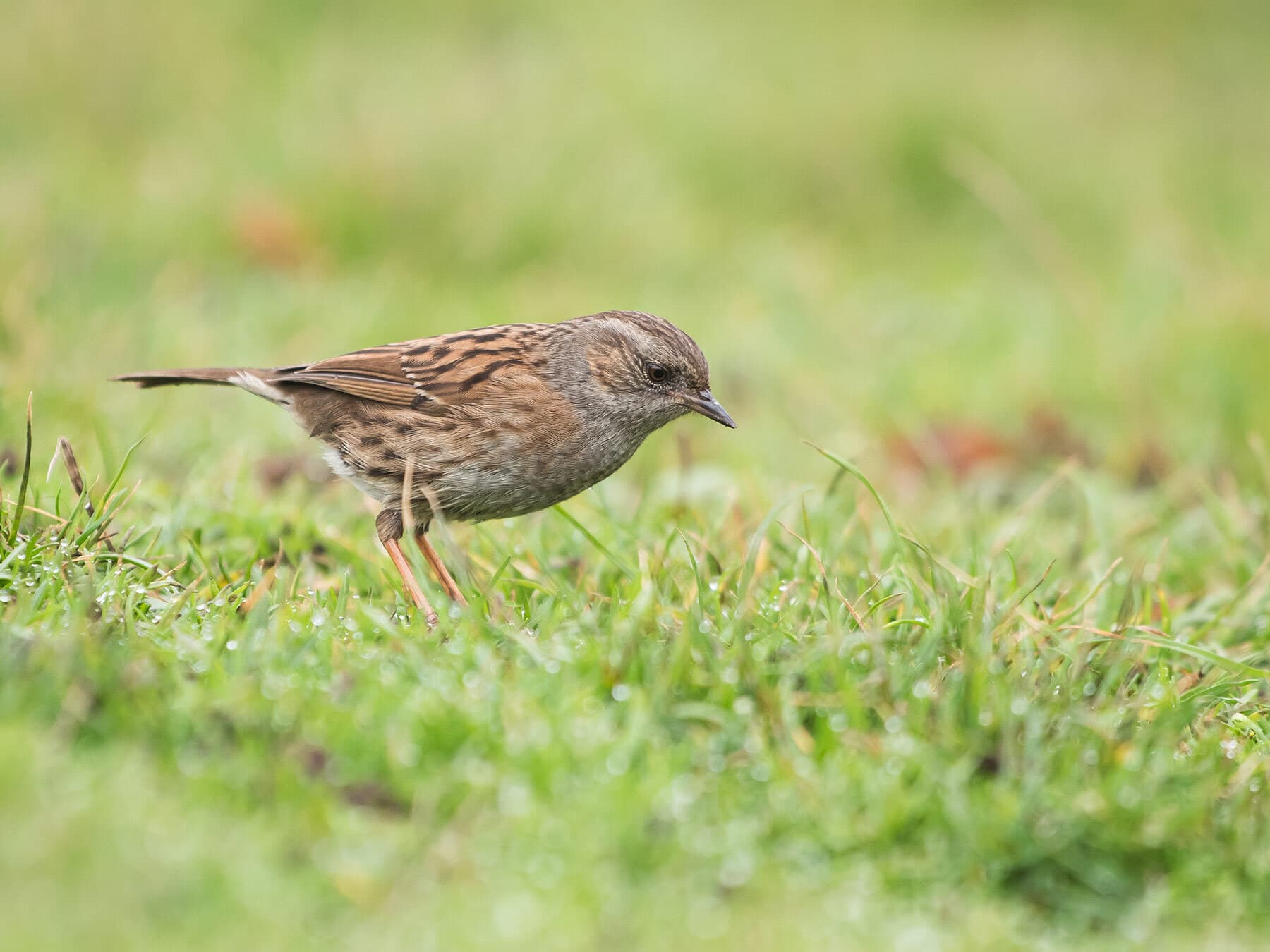
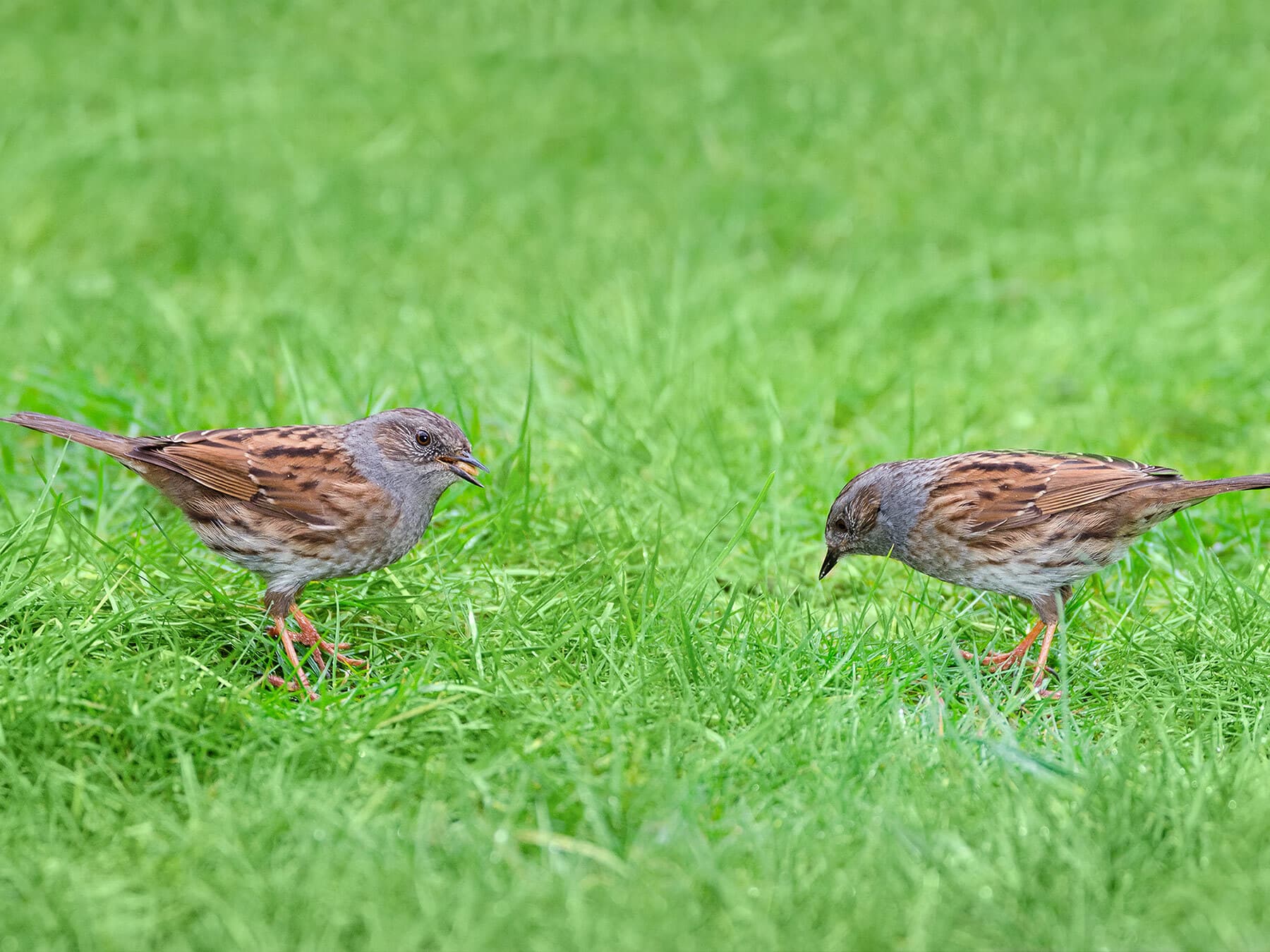
On the ground, under cover. A Dunnock hops and picks its way under bushes and hedges, gleaning from the surface and sorting through leaf litter, and now and then probing the soil; it rarely catches anything in flight. In the Shropshire study most feeding was in hedgerows, overgrown hedges were the most important, and nettle patches were a favourite feeding place.
Dunnocks usually feed alone or in pairs, and rarely with other species; in winter a few may gather where food is rich.
Food for the chicks
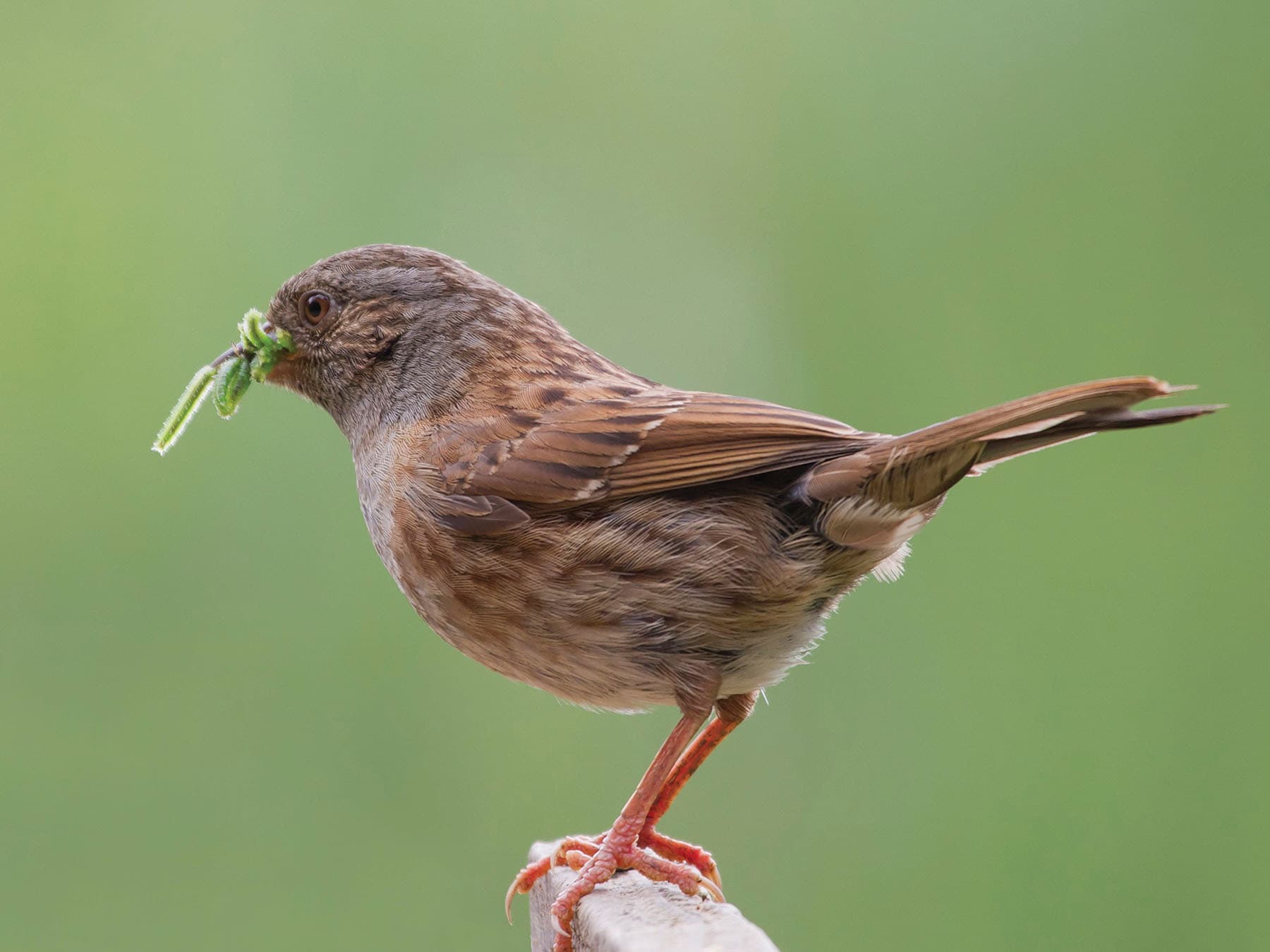
Chicks eat much the same as the adults in spring and summer: beetles, flies and spiders turned up in 50 to 75% of nestling droppings in Britain, and caterpillars peak in June. The parents carry invertebrates to the chicks in the bill and bring seeds up from the throat.
Feeding on the ground
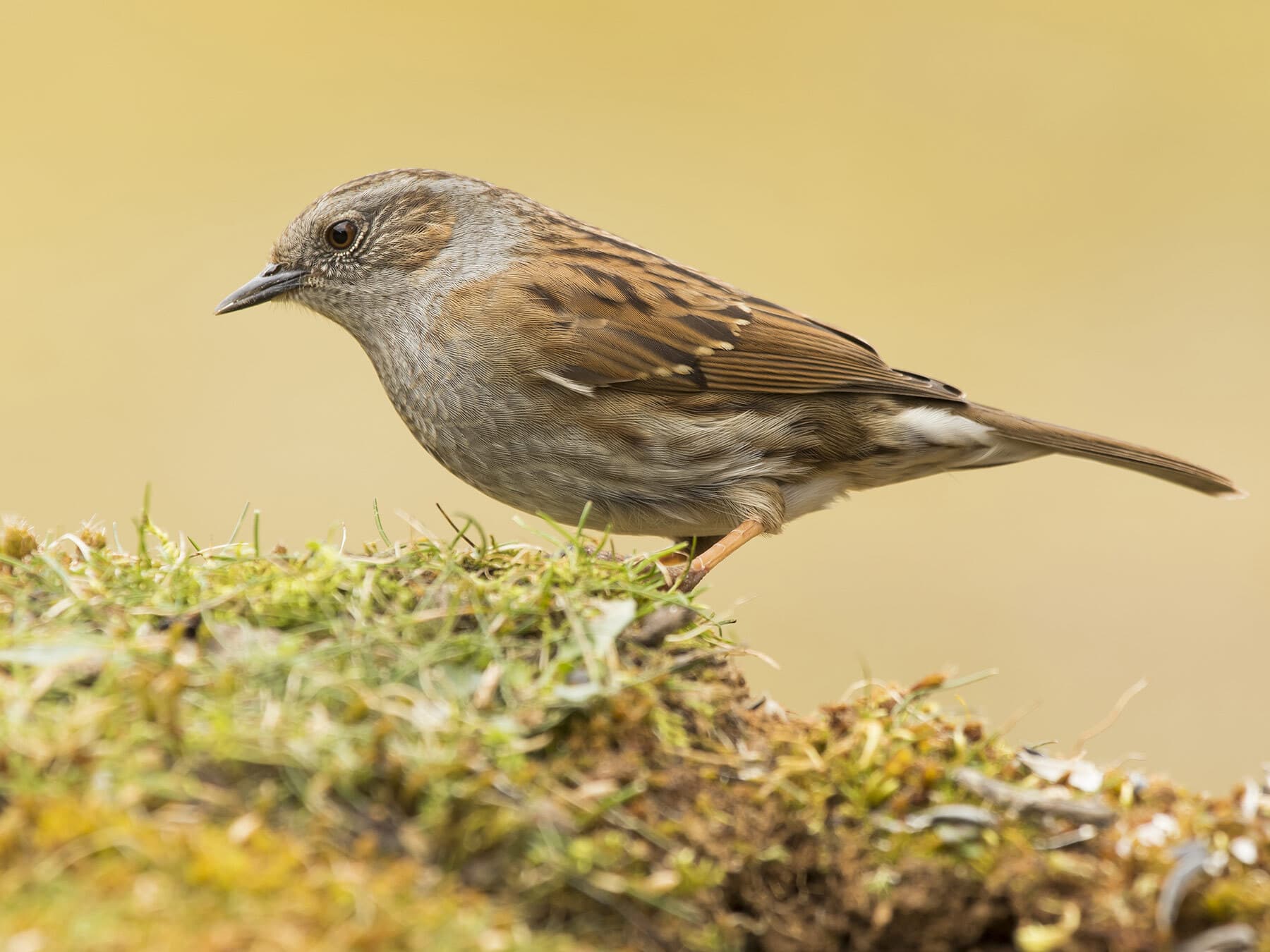
Even in gardens, Dunnocks mostly feed on the ground. They often forage under bird tables in winter but rarely on raised platforms, and they are more likely to pick up spilt food under a feeder than to use it.
Do Dunnocks use bird feeders?
Sometimes. As far back as 2007 the BTO was getting more and more reports of Dunnocks feeding from hanging seed feeders, perhaps because of the wider range of seed mixes on sale. They are timid at feeding stations, though, making brief visits rather than lingering, and they are low in the pecking order.4
What to feed Dunnocks
Small seeds. The RSPB names small seeds as a food that attracts Dunnocks, and millet in particular; choose a good mix without fillers such as dried peas, beans or whole wheat.5
Follow the RSPB's current advice (July 2026) to slow the spread of disease. Put out seed only from 1 November to 30 April. Use hanging feeders, not bird tables, trays or window feeders, clean them every week and move them every week. The disease trichomonosis has been found on food lying on the ground below feeders, so clear away old seed and droppings from underneath, where Dunnocks feed.6
Do Dunnocks eat mealworms?
Mealworms are insects, the Dunnock's main food in spring and summer, and the RSPB's advice allows small amounts of mealworms even in the months when seed feeding is paused. The RSPB does not name them as a Dunnock food, though: it recommends them mainly for Robins and Blue Tits, and says they may attract other insect-eating birds.
Helping Dunnocks in your garden
Cover matters as much as food. Dunnocks feed under shrubs and hedges and nest in dense cover, and in one Suffolk wood the density of the shrub layer was the best predictor of how many Dunnocks there were.3 A thick hedge, a few dense shrubs, some leaf litter left under them and a patch of nettles all give Dunnocks somewhere to find food.
Sources
- Hatchwell, B., Kirwan, G. M., Goodman, D. D. (2026). Dunnock (Prunella modularis), version 1.2. Birds of the World (J. del Hoyo, A. Elliott, J. Sargatal, D. A. Christie, E. de Juana, R. Ahmed and B. K. Keeney, editors). Cornell Lab of Ornithology. doi:10.2173/bow.dunnoc1.01.2
- Bishton, G. (1986). The diet and foraging behaviour of the Dunnock Prunella modularis in a hedgerow habitat. Ibis 128: 526-539. doi:10.1111/j.1474-919x.1986.tb02704.x
- BTO. Dunnock (Prunella modularis). BTO BirdFacts. Accessed 7 October 2026. Source
- Toms, M. (2007). The Dunnock: sex in the shrubbery. Bird Table 50 (BTO Garden BirdWatch), pp. 9-11. Accessed 7 October 2026. Source
- RSPB. Feeding birds near you. RSPB. Accessed 7 October 2026. Source
- RSPB (2026). Our latest guidance on feeding garden birds. RSPB news. Accessed 7 October 2026. Source
- RSPB. Dunnock. RSPB Birds A-Z. Accessed 7 October 2026. Source
- RSPB. Bird food buying guide. RSPB Shop. Accessed 7 October 2026. Source
- RSPB. How and what to feed your garden birds. RSPB. Accessed 7 October 2026. Source