Published 7 Oct 2026
Dunnock Song and Calls: What a Dunnock Sounds Like
By the Birdfact teamChecked by Nathan Cope
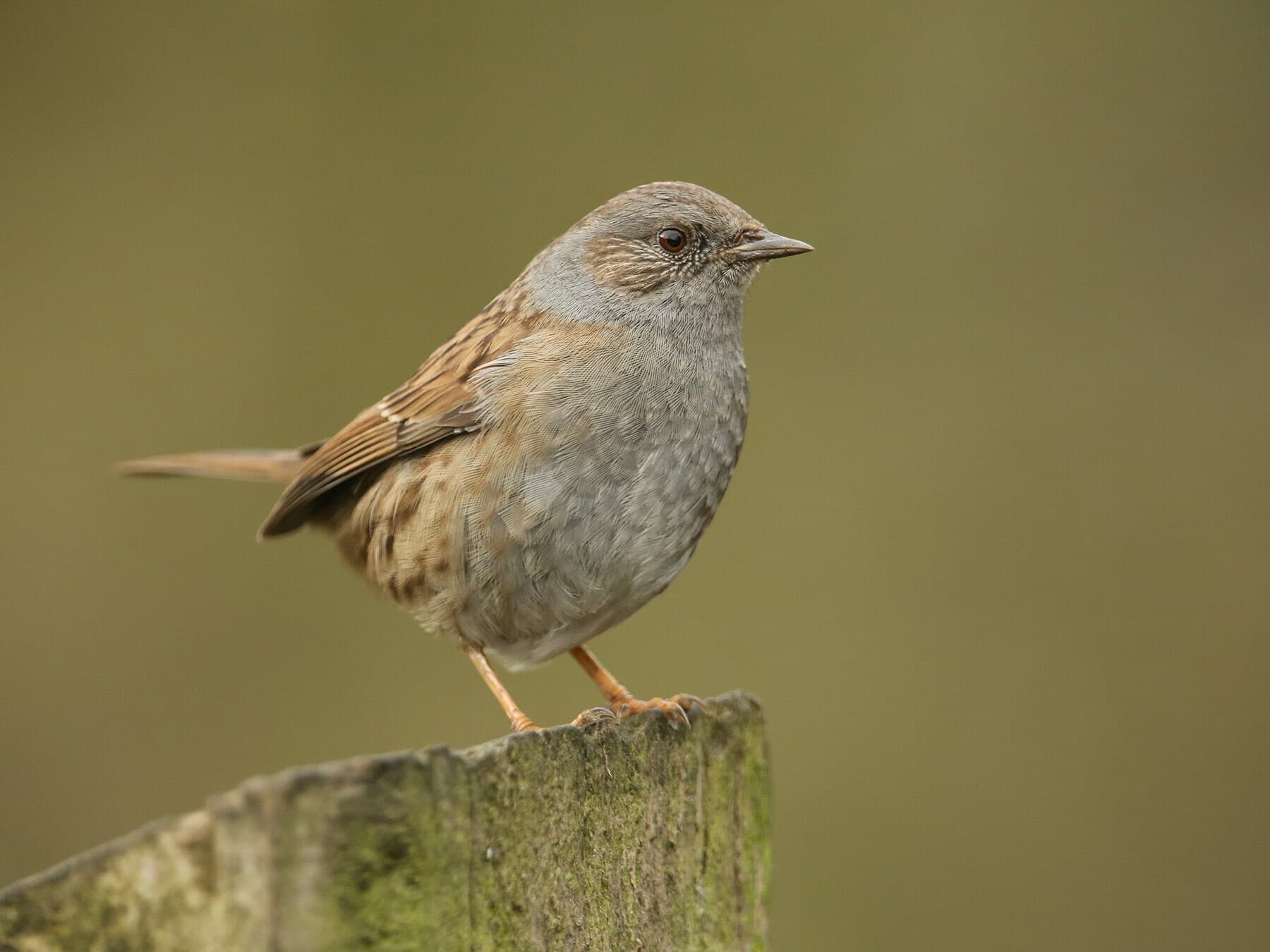
A Dunnock sings a short, high, squeaky warble of 2 to 4 seconds, mostly in the first half of the year, and calls with a thin "tseep". Listen to four checked recordings, including a 1966 British Library recording from Dartmoor.
On this page9 sections
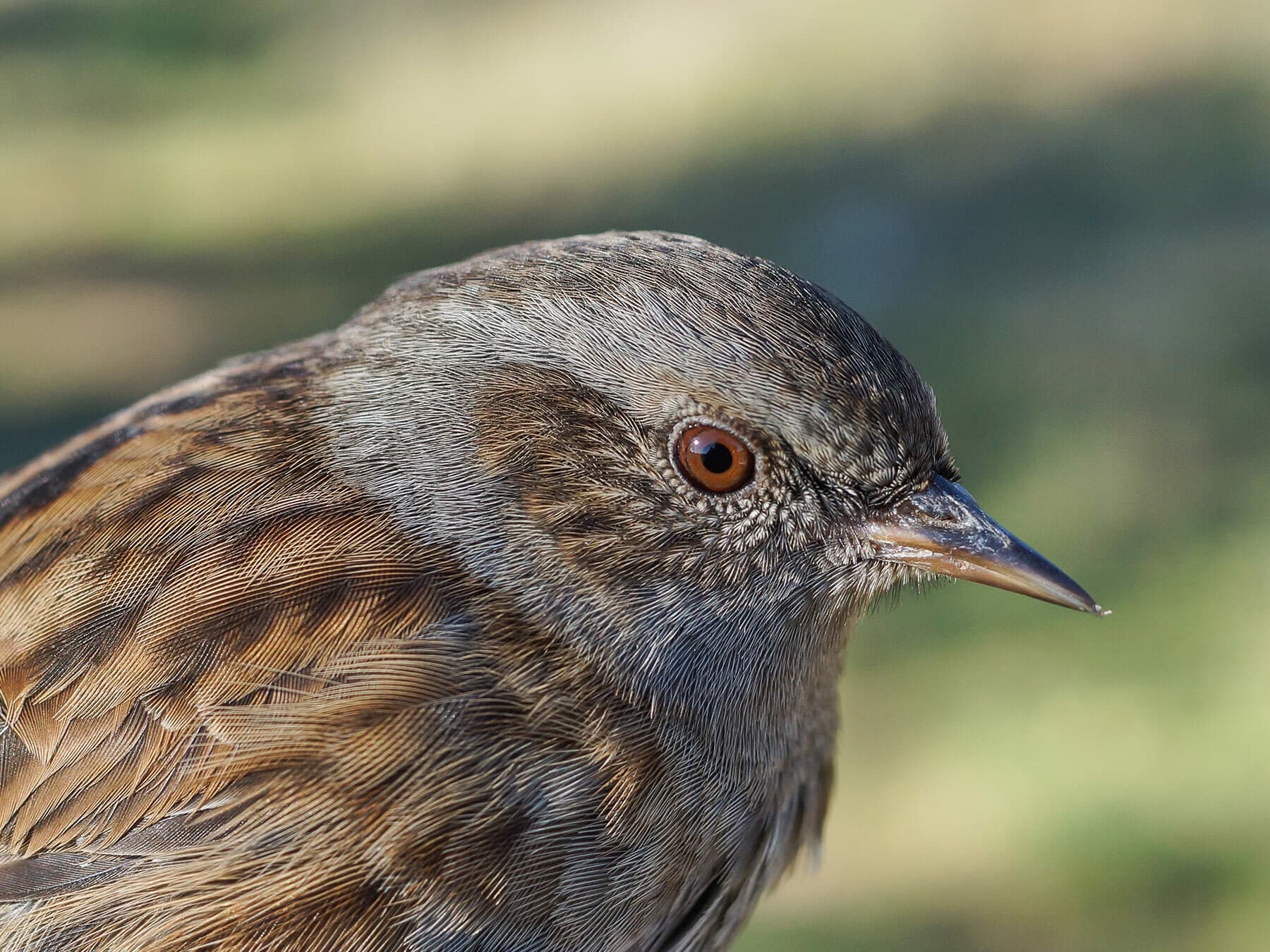
What the Dunnock sounds like: its song, its calls and how the song works, with recordings. For everything else about the bird, see Dunnock identification, song and facts.
What does a Dunnock sound like?
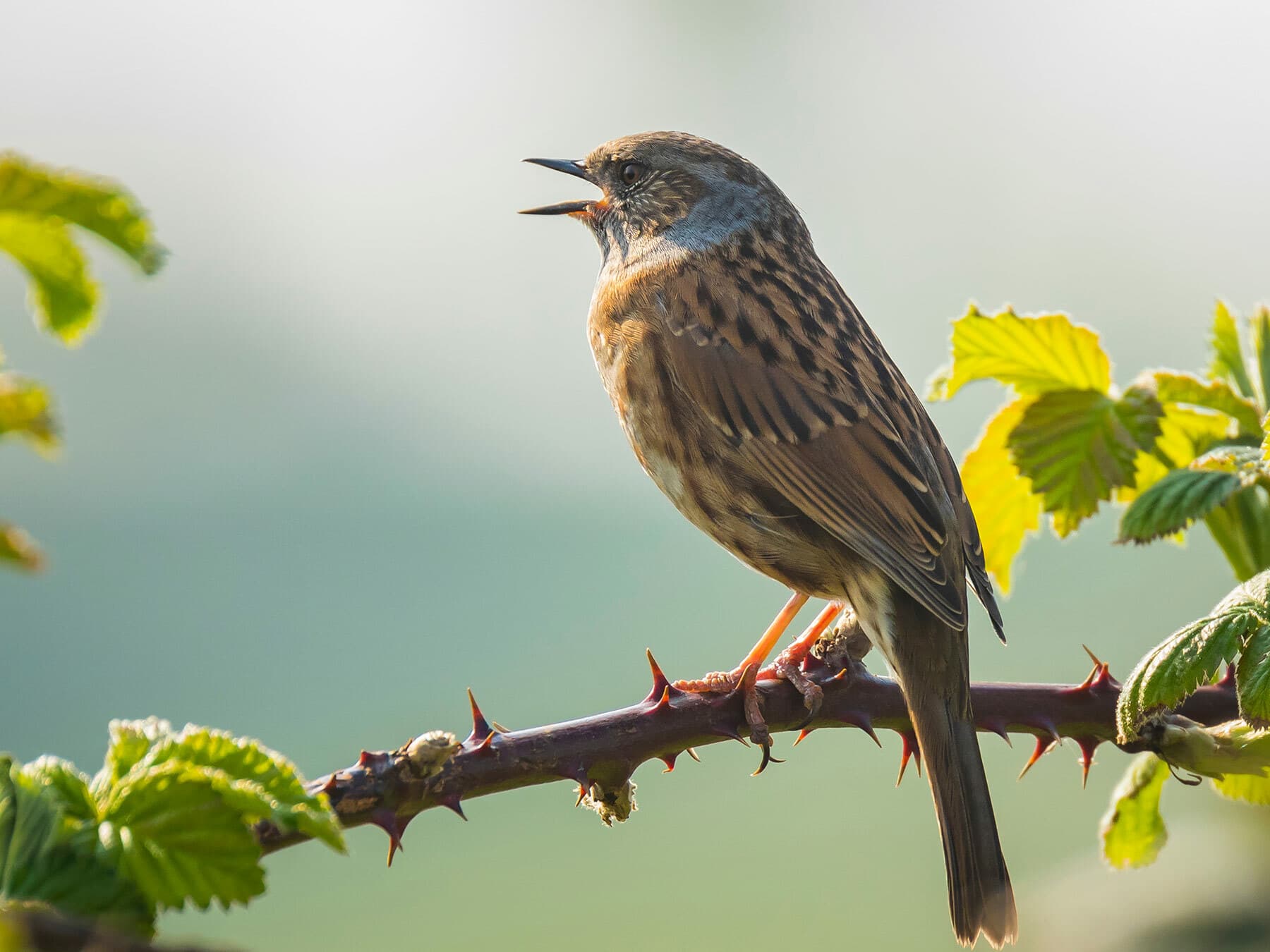
Squeaky. The song is a short warble, high and thin, full of trills and quick changes of pitch, lasting 2 to 4 seconds; it can be surprisingly loud for such a quiet bird. The male usually sings from an exposed perch, rarely in flight.1
The RSPB calls it a loud, squeaky warbling song, sung from bushes or high in trees, and the BTO describes the spring male on a high perch singing a "repetitive, squeaky song".2, 3

When do Dunnocks sing?
Mostly in the first half of the year. Dunnocks are part of the dawn chorus from March to May, and outside the breeding season they are easy to miss.2 In spring the male sings in the early morning from the top of a bush or a tree.
Young Dunnocks start to sing in their first autumn, and have their full song by the following spring.1
How Dunnock song works
Each song is built from a small kit of parts. A male has 10 to 15 phrases, which he mixes into a larger number of song types. He usually repeats one type several times before switching to another, and he switches more often when he is trying to attract a female than when he is singing against another male.
Neighbouring males share songs, so Dunnocks in one area can have their own local dialect. Males also have a quieter subsong, built differently from the full song.
Song is tied to the Dunnock's unusual mating system. Where two males share a territory, both sing to advertise it, and when rival males meet they flick their wings, call loudly and chase each other.4 Read more: Dunnock mating behaviour.
Do female Dunnocks sing?
Sometimes. Females give trills or more complex songs when attracting a mate, though the bird singing from a high perch in spring is usually a male.
Dunnock calls
The call heard most often is a thin, high "tseep" (the RSPB writes it as a squeaky "peep"). Both sexes use it to keep in touch outside the breeding season, and a louder, higher version is the alarm. Dunnocks also keep in contact with faint trills.
About these recordings
The first is a British Library recording made on Dartmoor in May 1966. The others are recent recordings of birds the recordists could see, chosen after checking each recordist's notes and the sound itself, so that what you hear is a Dunnock.5
Birds that sound like a Dunnock
Wren. Another small brown bird singing from cover, but the Wren's song is very loud, a run of high whistles ending in a trill, and its call is a hard "tic-tic-tic".
House Sparrow. A House Sparrow's song is just its loud "cheep", repeated, often from a group hidden in a hedge, nothing like a Dunnock's warble. More: Dunnock or House Sparrow?
Do Dunnock songs vary across Europe?
They do. A 2021 study found clear differences in both plumage and song between the Dunnocks of Iberia, of the Caucasus and of the rest of Europe, enough for its authors to propose splitting the Iberian and Caucasian birds as separate species.6 For now the global checklist, AviList, keeps them as one species.
Sources
- Hatchwell, B., Kirwan, G. M., Goodman, D. D. (2026). Dunnock (Prunella modularis), version 1.2. Birds of the World (J. del Hoyo, A. Elliott, J. Sargatal, D. A. Christie, E. de Juana, R. Ahmed and B. K. Keeney, editors). Cornell Lab of Ornithology. doi:10.2173/bow.dunnoc1.01.2
- RSPB. Dunnock. RSPB Birds A-Z. Accessed 7 October 2026. Source
- BTO. Dunnock (Prunella modularis). BTO BirdFacts. Accessed 7 October 2026. Source
- Toms, M. (2007). The Dunnock: sex in the shrubbery. Bird Table 50 (BTO Garden BirdWatch), pp. 9-11. Accessed 7 October 2026. Source
- British Library, xeno-canto contributors. Recordings of Prunella modularis used on the song page. Wikimedia Commons (British Library); xeno-canto. Accessed 7 October 2026. Source
- Pavia, M., Drovetski, S. V., Boano, G., Conway, K. W., Pellegrino, I., Voelker, G. (2021). Elevation of two subspecies of Dunnock Prunella modularis to species rank. Bulletin of the British Ornithologists' Club 141(2). doi:10.25226/bboc.v141i2.2021.a10
- RSPB. Small brown birds and how to identify them. RSPB. Accessed 7 October 2026. Source