Identification · Updated 9 Oct 2026
Buzzard vs Red Kite: How to Tell Them Apart
By the Birdfact teamChecked by Nathan Cope
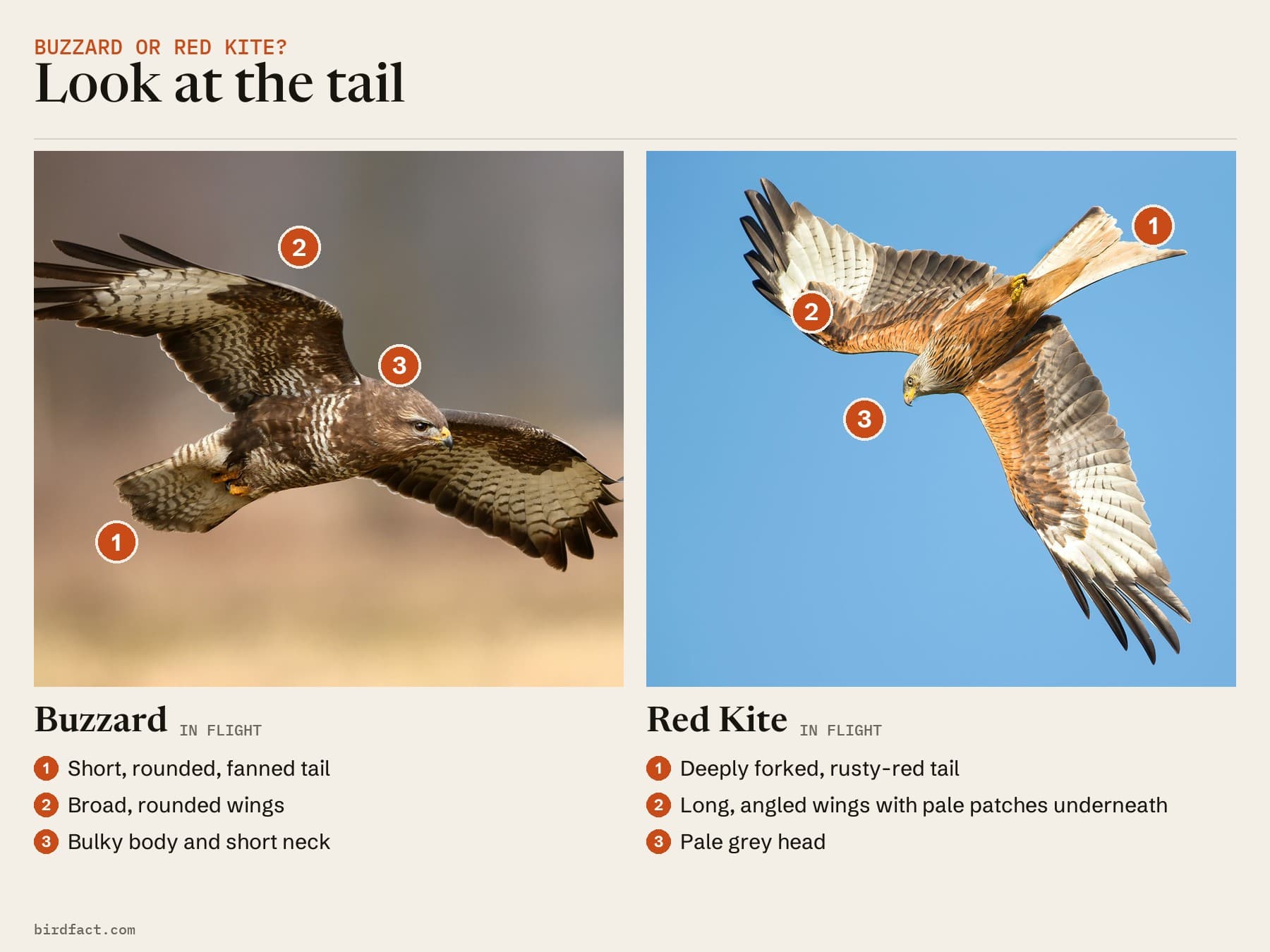
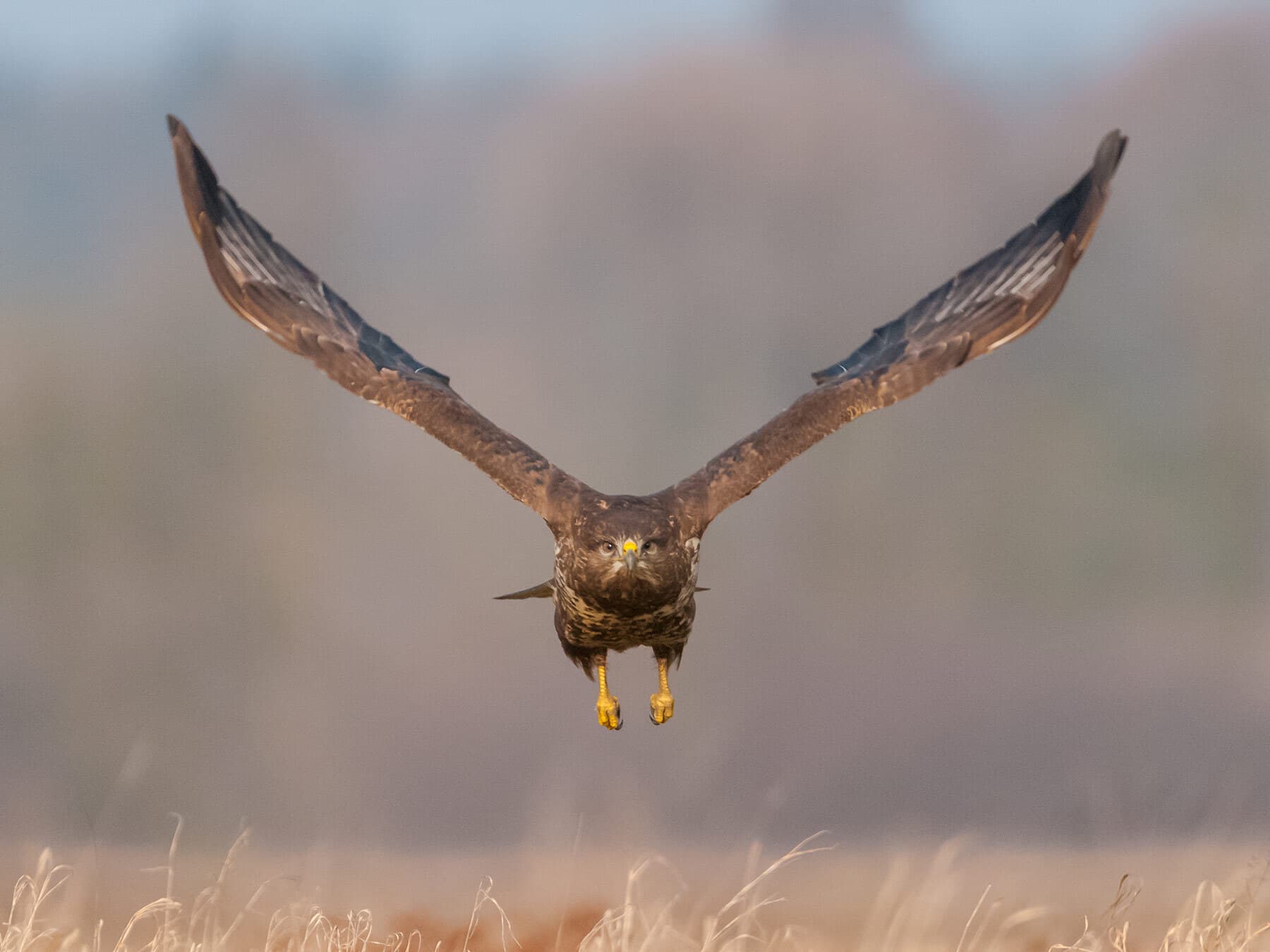
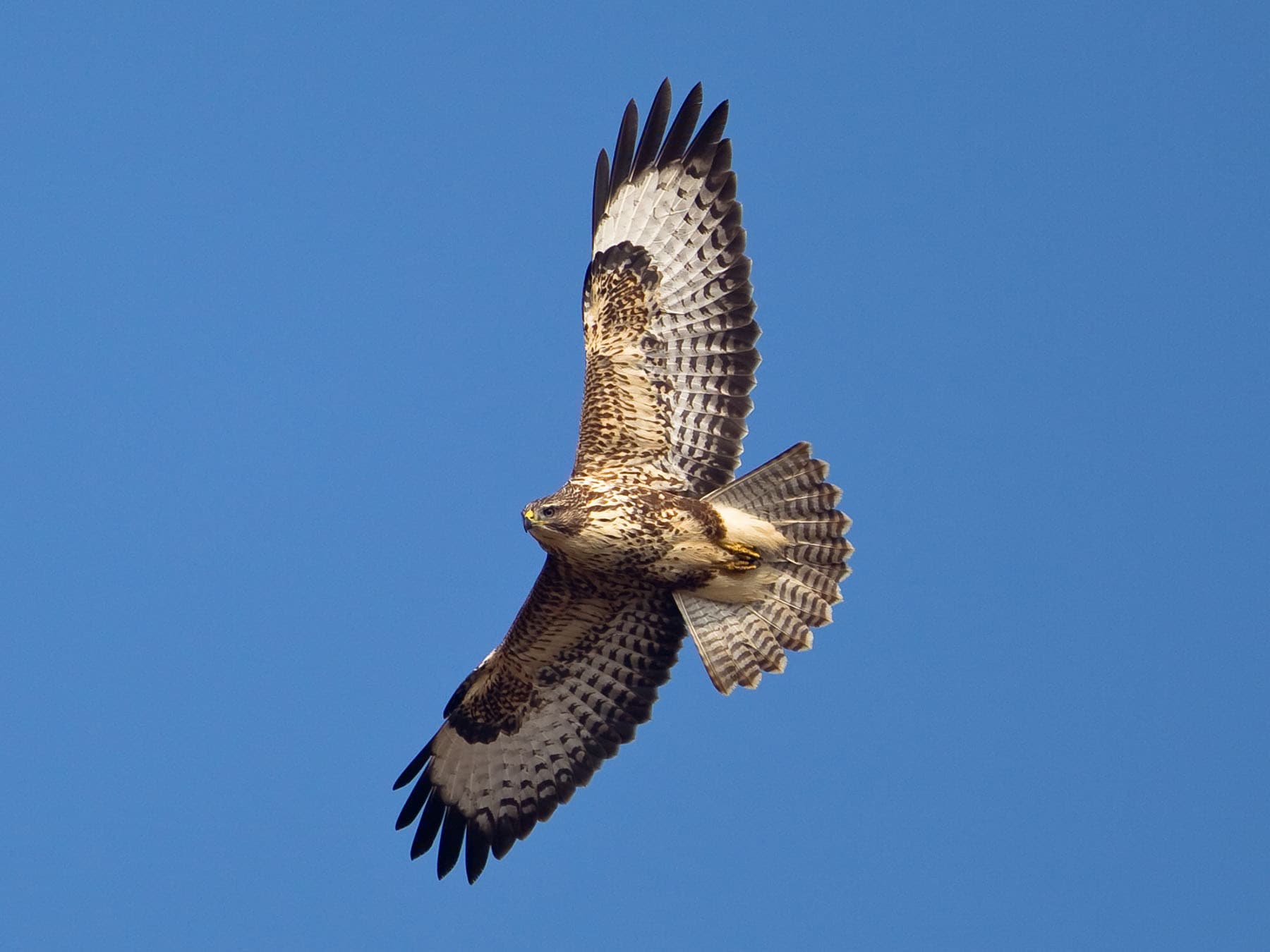
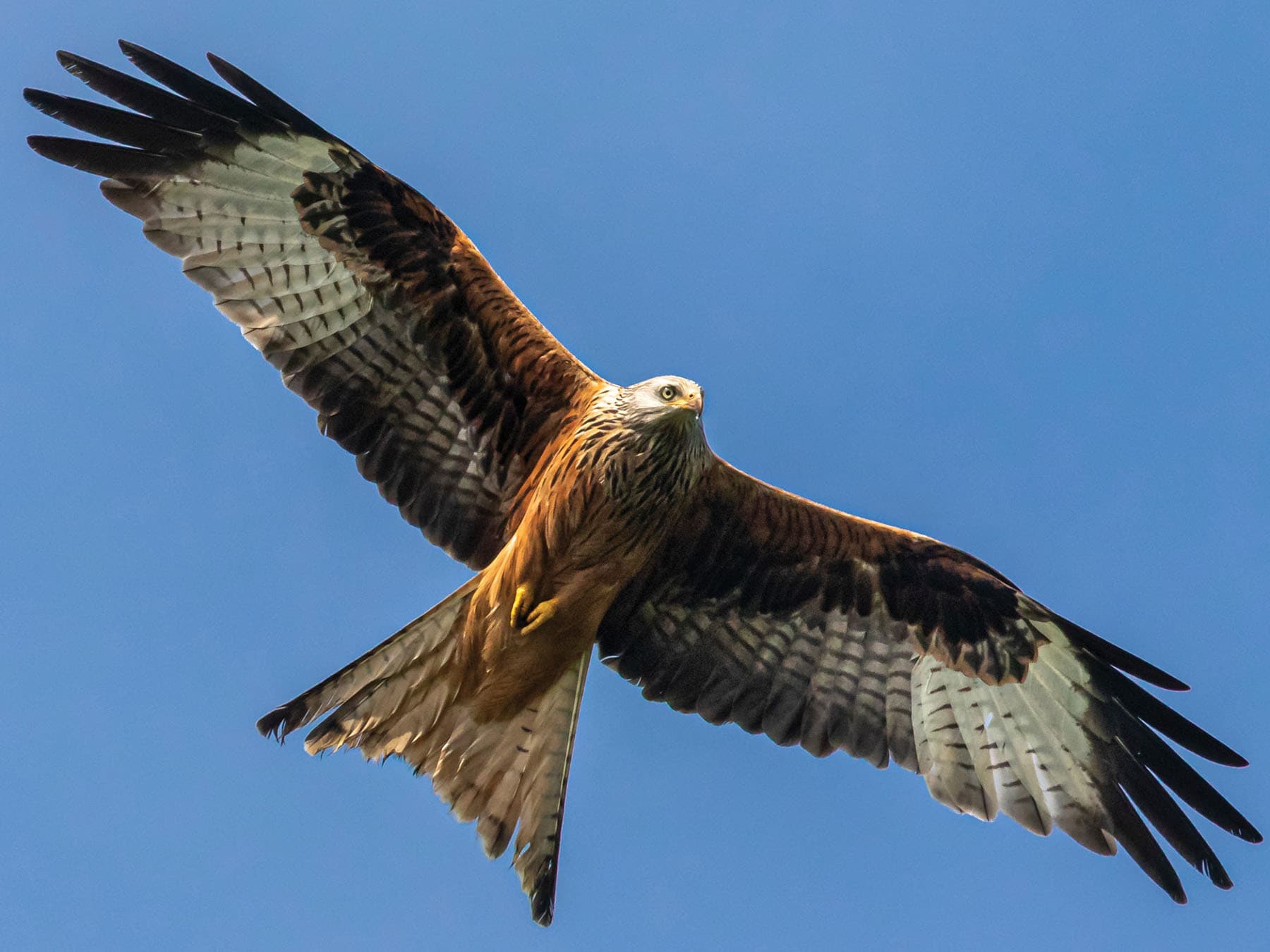
Look at the tail: a Red Kite's is long and deeply forked, a Buzzard's short and often fanned. A soaring Buzzard raises its wings in a shallow V; a kite holds them flat or slightly bowed. Kites are longer and wider-winged, and their calls differ: a whistle and wavers for the kite, a single falling mew for the Buzzard.
On this page11 sections
The quick answer
In flight
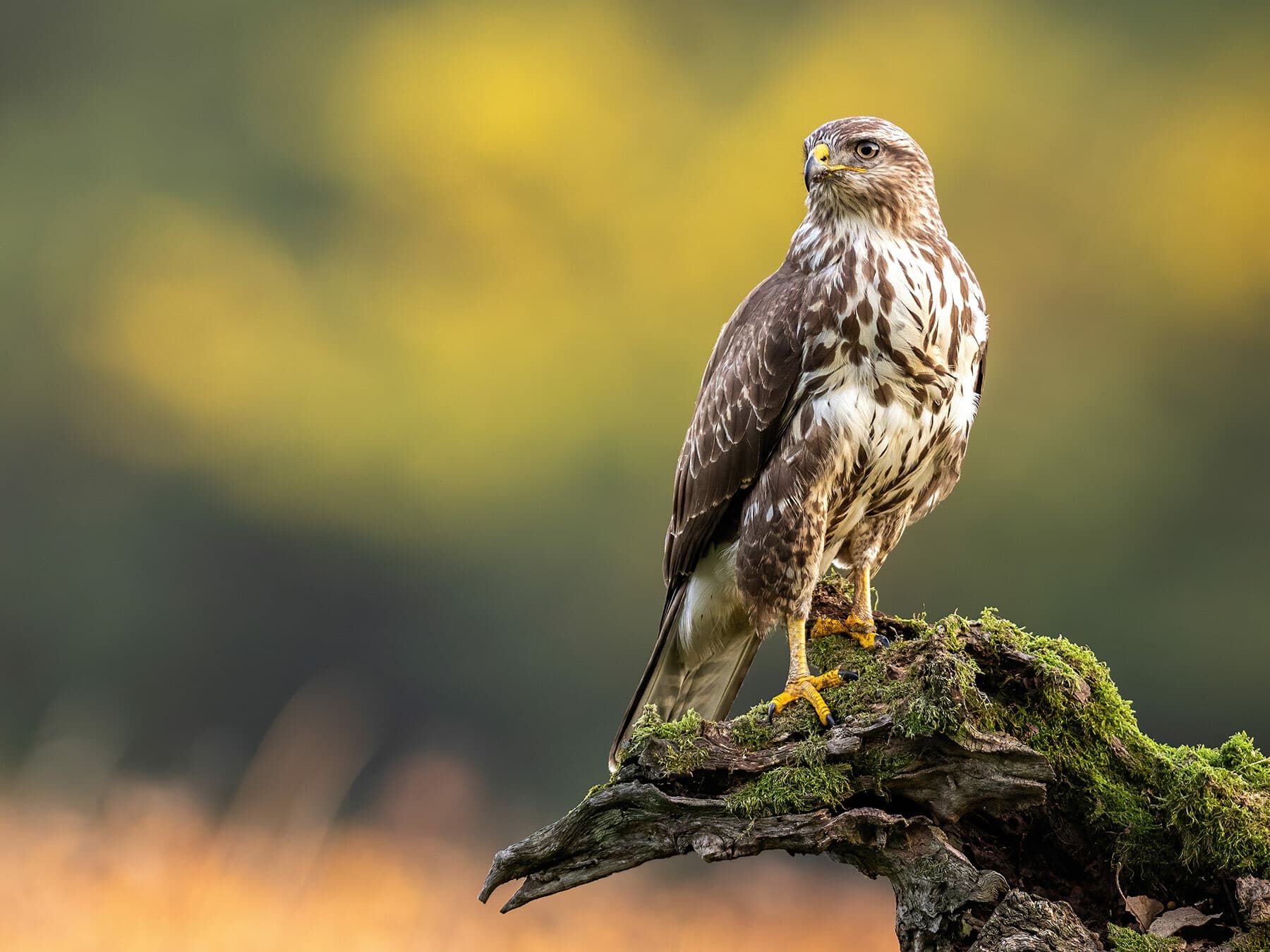
A Buzzard looks compact: a short head, a thick neck, and broad, rounded wings with a short, square-ended tail. From below, its flight feathers are barred, the wingtips and trailing edge of the wing are dark, and there is a pale area in the outer primaries.3 Many show a dark crescent at the bend of the wing.
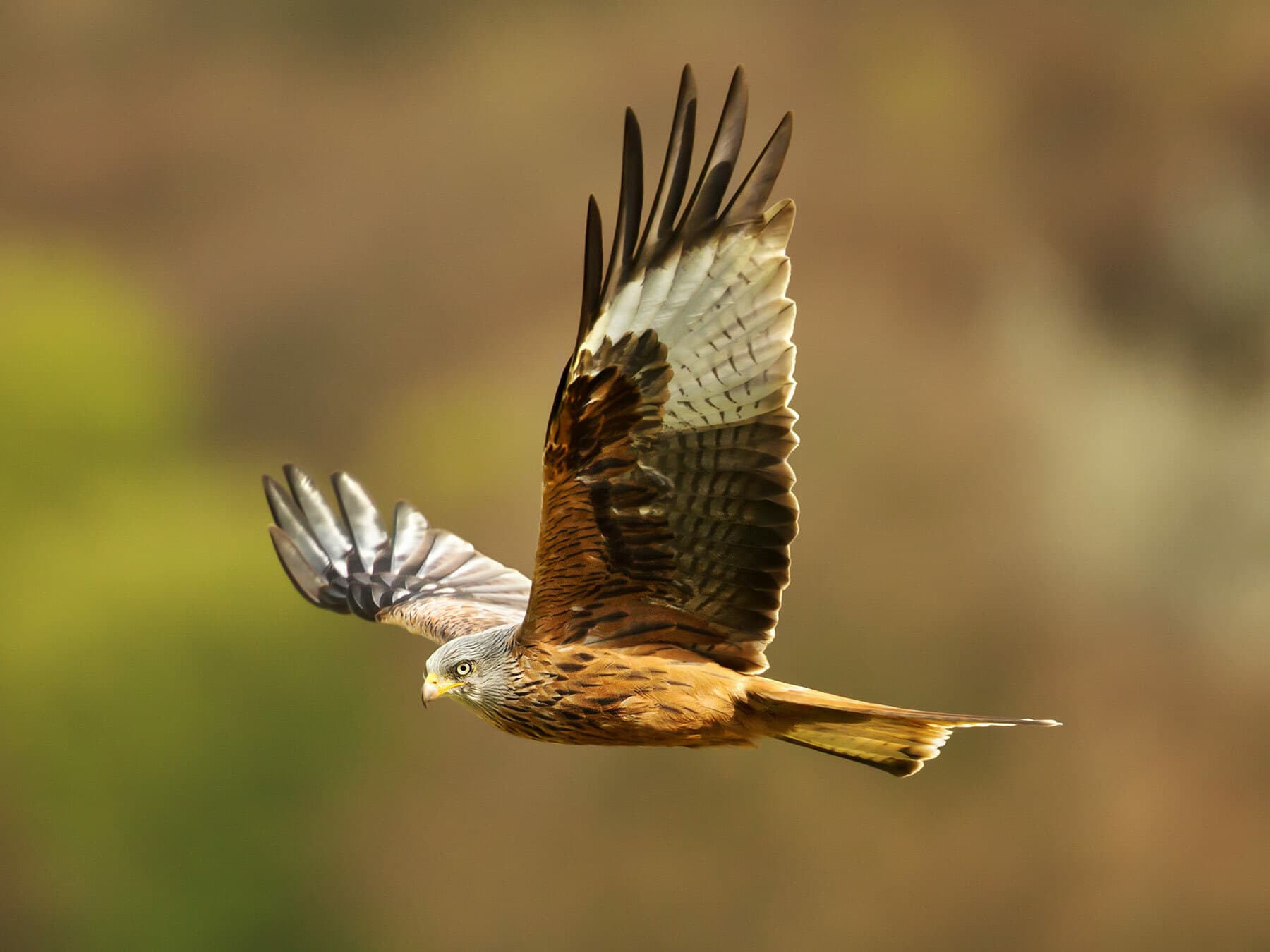
A Red Kite is longer, with long, angled wings. From below, the wings show large white patches before the dark fingered wingtips, set against a rusty body and a long, forked tail.2
Are Buzzards bigger than Red Kites?
No. A Red Kite is longer and much wider-winged, though their weights overlap. Here are the RSPB's figures and descriptions for both birds:2, 1
| Red Kite | Buzzard | |
|---|---|---|
| Length | 60-66 cm | 51-57 cm |
| Wingspan | 175-195 cm | 113-128 cm |
| Weight | 800-1,300 g | 550-1,300 g |
| Tail | Long and deeply forked | Short, often fanned |
| Wings when soaring | Flat or slightly bowed | Raised in a shallow V |
Weighed another way, the BTO gives a typical Red Kite weight of 1.1 kg,4 while adult Buzzards weighed by ringers average 828 g.5 Birds of the World, measuring across the Buzzard's whole range, puts its length at 40-52 cm.3
Plumage
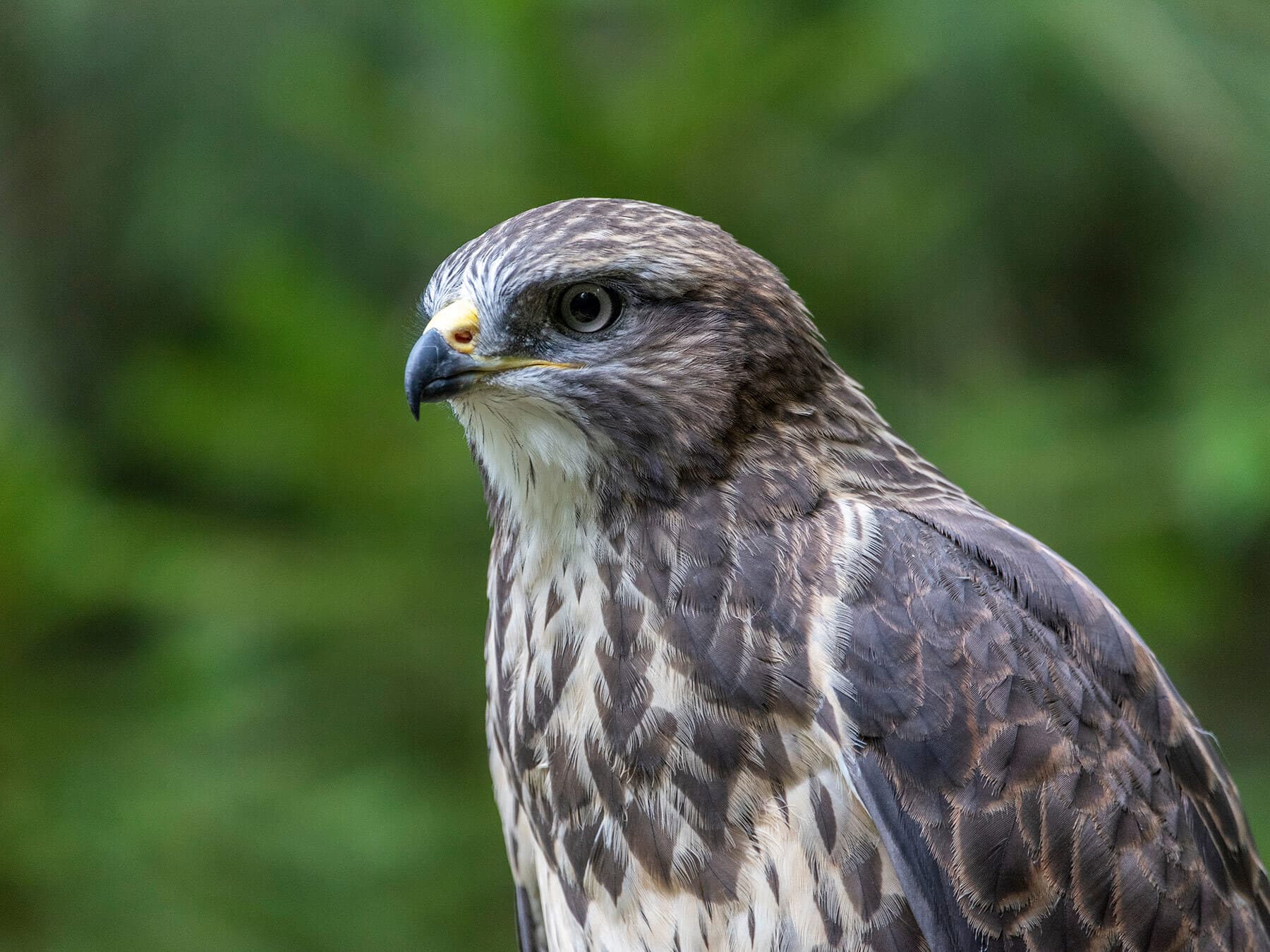
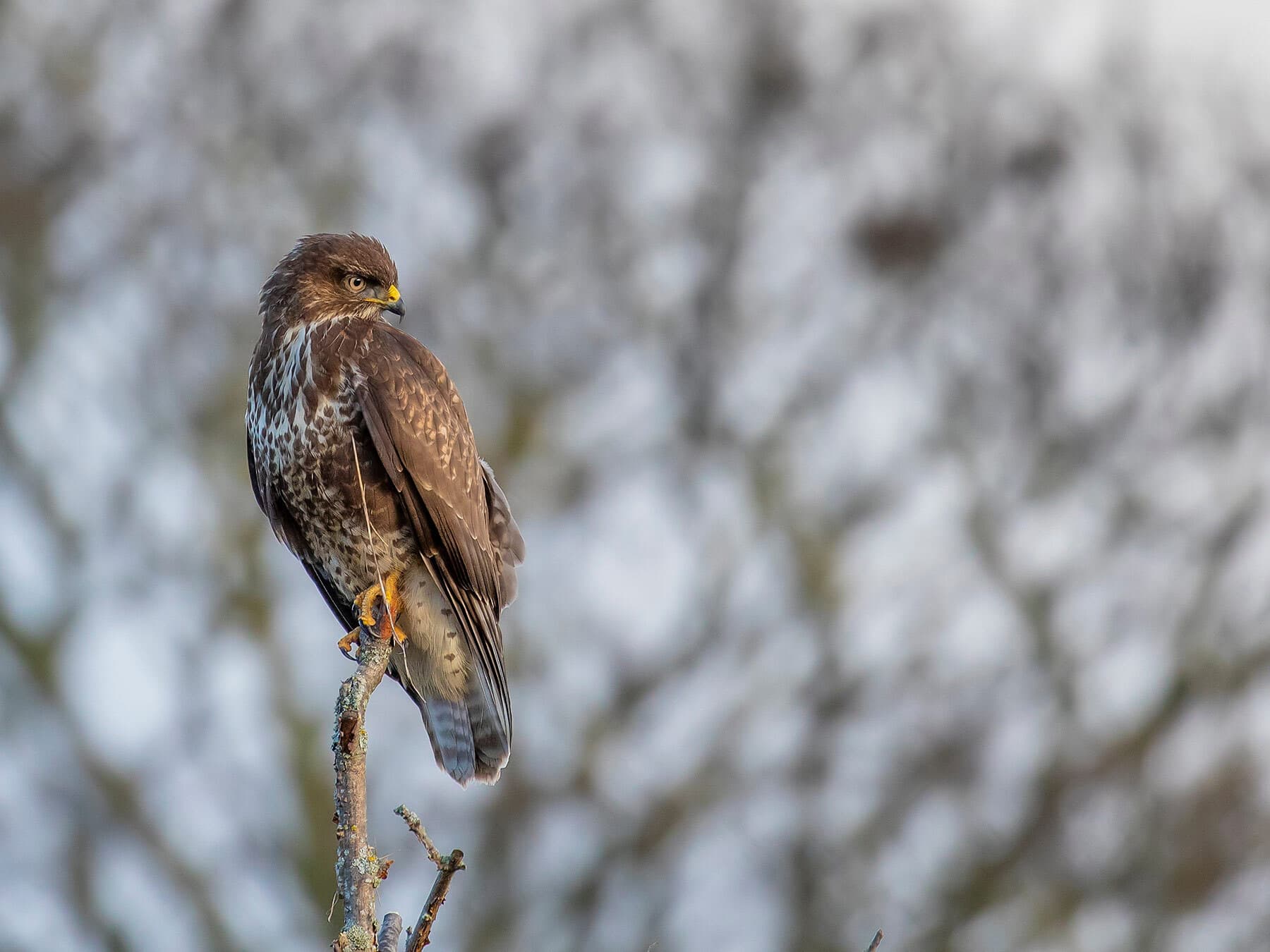
Buzzards vary enormously. Birds of the World describes pale, intermediate and dark birds, with almost every shade in between; most are dark brown above, often with a paler breast marked with drop-shaped spots, and adults have a dark band near the tip of the tail.
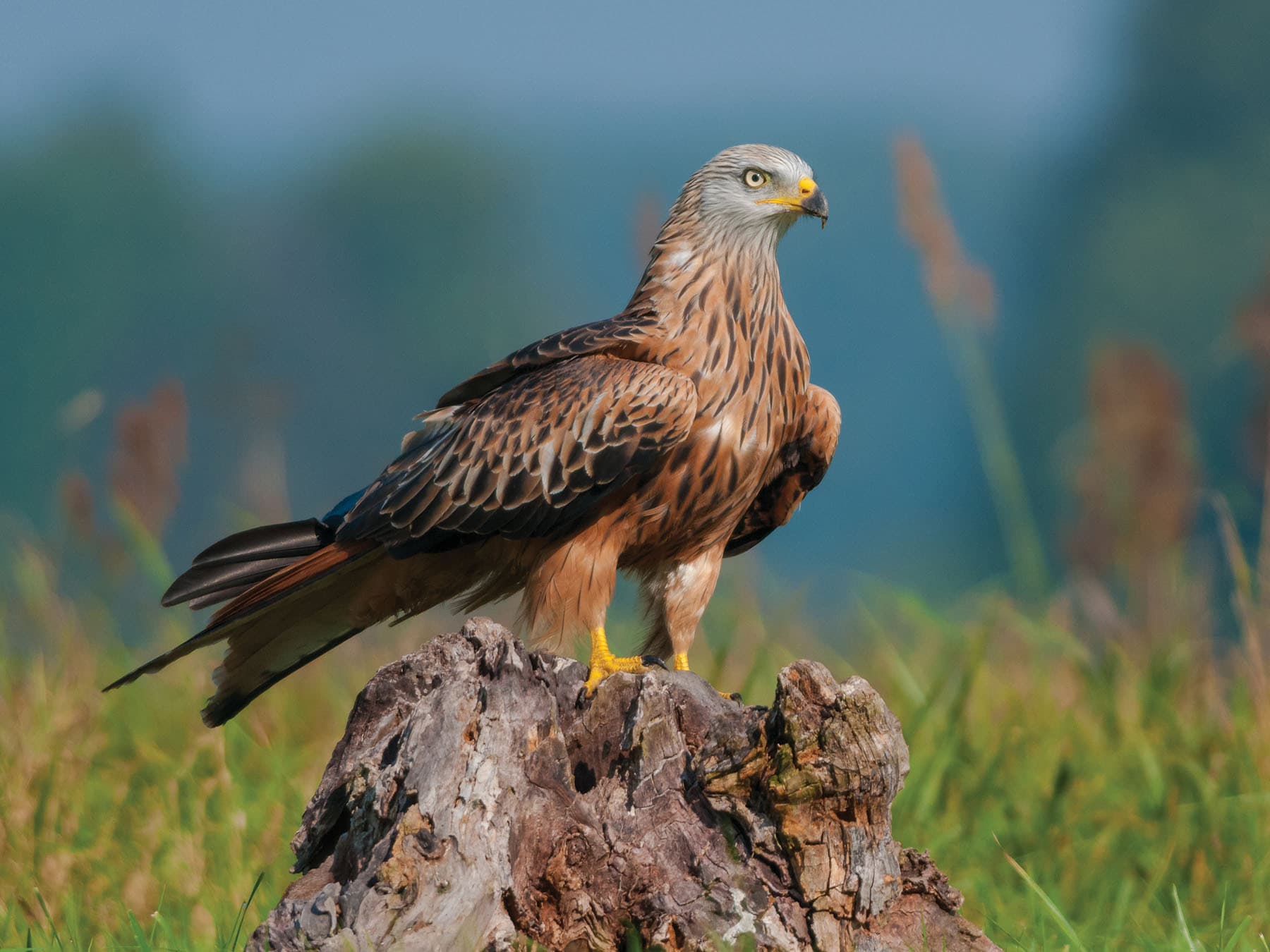
Adult Red Kites have a reddish-brown body streaked with dark, a pale grey head, a yellow bill with a dark tip and yellow legs. Young kites have a paler body, a darker head and a less rusty tail.6
Perched
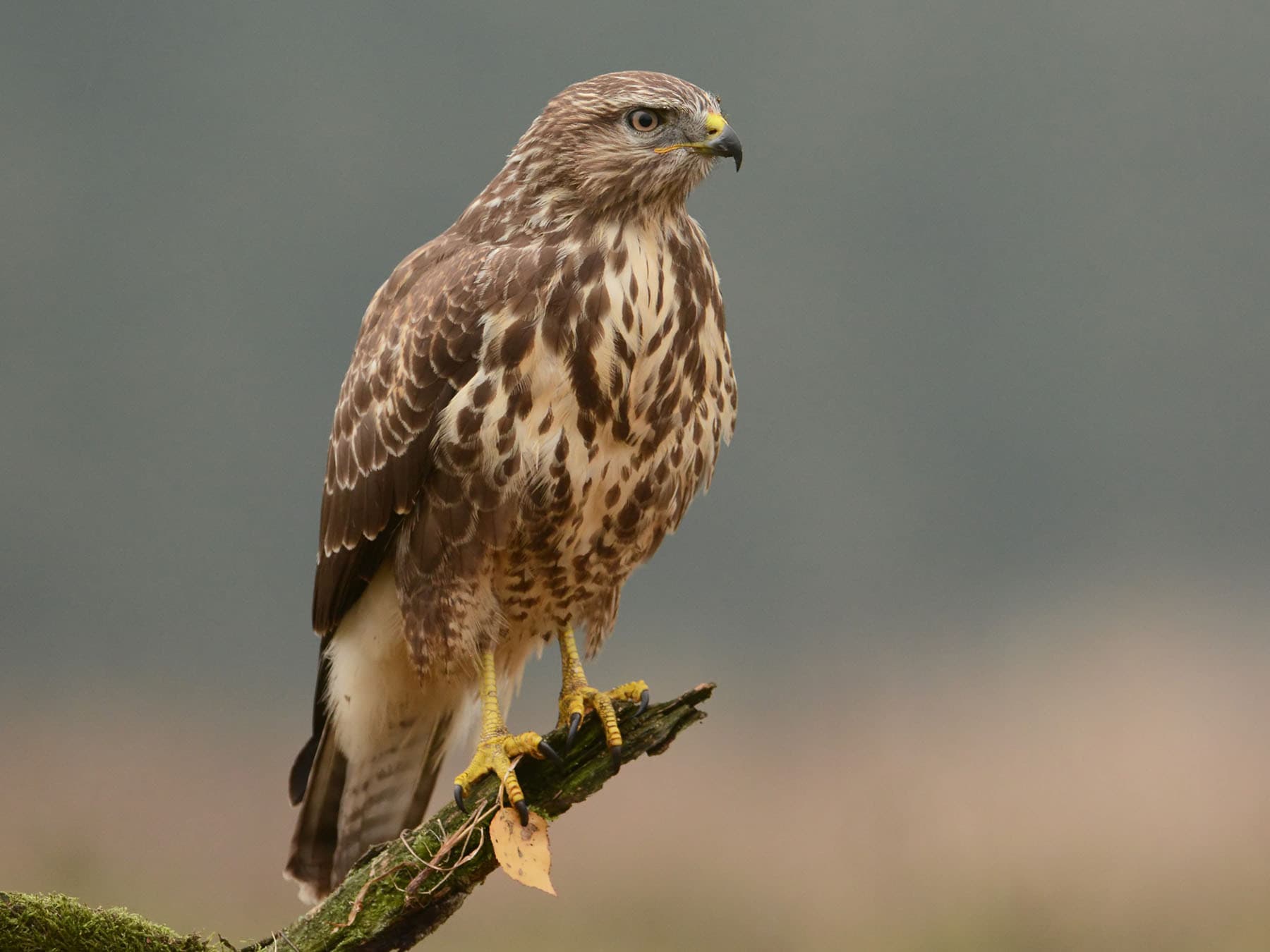
Buzzards spend a lot of time perched, often on roadside fence posts or in trees, and they tend to sit with a hunched posture. A perched Red Kite shows its long tail and its pale grey head.
Calls
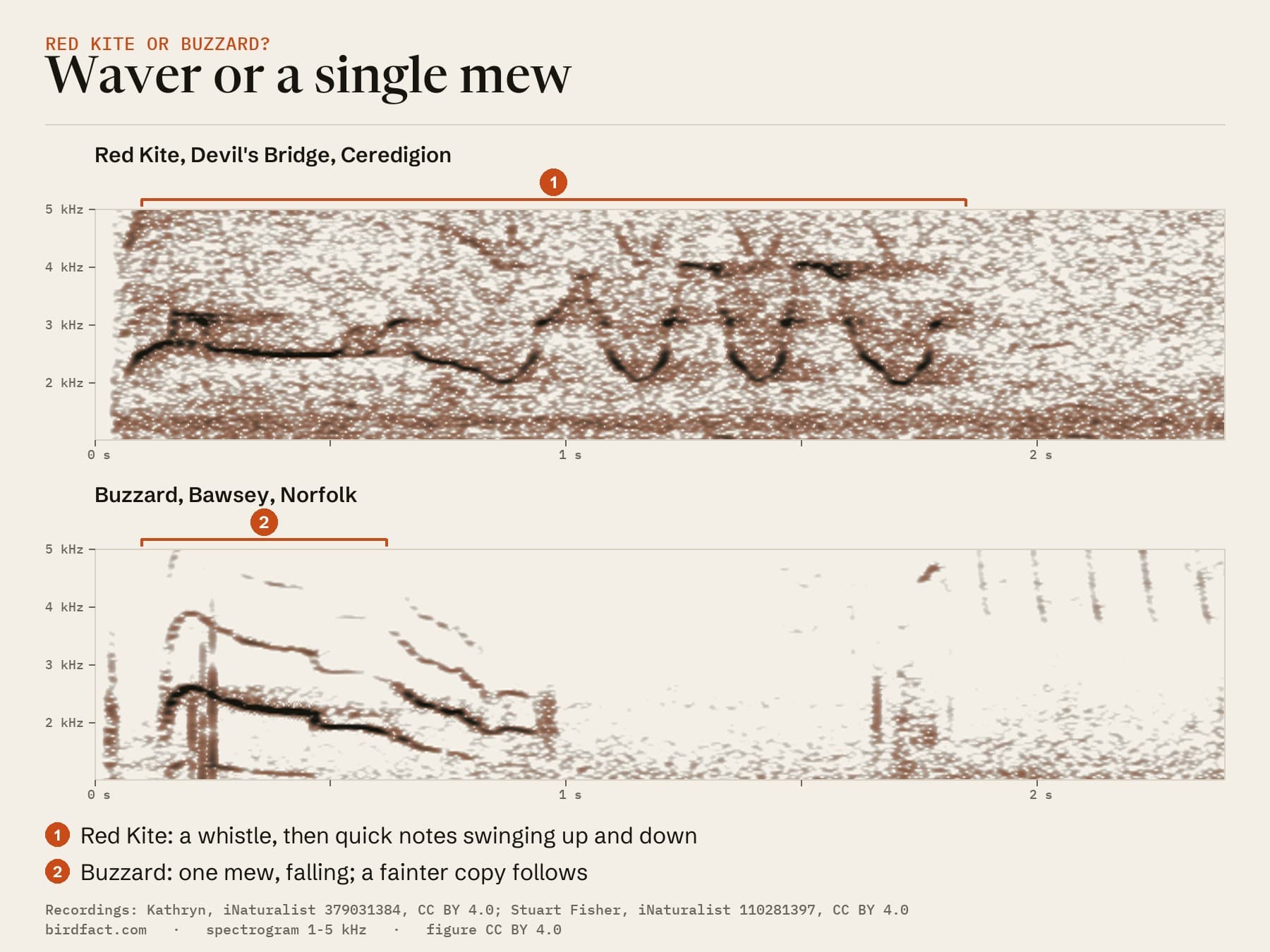
A Buzzard gives a loud, mewing "kyaaah" that drops quickly in pitch, about half a second to a second long; the RSPB says it could be mistaken for a cat. A Red Kite's call is higher and perhaps shriller, often given in a short, fast series. In the British recordings on our call page, most kite calls start with a whistle and break into quick wavers; the Buzzard's main call is a single falling mew.
Hear both, with spectrograms: Red Kite call and sounds.
Hunting and food
A Buzzard is a hunter first. Small mammals, voles above all across much of its range, often make up 90% or more of its prey, and it also takes rabbits, birds, reptiles, amphibians, insects and earthworms, and at times carrion. It watches from a perch for long spells, spots prey from the air too, sometimes hovers, and almost always catches its prey on the ground; it will walk about after worms and insects.
A Red Kite is a scavenger first, living mostly on carrion and worms, with small mammals taken now and then. Its talons are relatively weak for its size. More: what Red Kites eat.
Do Buzzards and Red Kites fight?
They can compete over food, since both will feed on carrion. A study of birds feeding at goose carcasses in winter found Red Kites among the commonest visitors and Buzzards among them too. The scavengers did not feed peaceably together: squabbles were frequent, and the larger species won out over the smaller ones.7
Numbers and where to see them
The Buzzard is by far the commoner bird. With about 63,000 pairs it has been the UK's most abundant bird of prey for more than a decade, and it breeds in 91% of the UK's 10-km squares; its numbers have climbed back from a low in the mid-20th century.
The UK had about 4,400 pairs of Red Kites in 2016,8 breeding in about a quarter of the 10-km squares, mostly in Wales and around the areas where they were reintroduced from 1989. See where Red Kites live.
Nests and lifespans
Both build a platform of sticks, usually in a tree. A Buzzard lines its nest with fresh greenery; a Red Kite's is lined with wool and often decorated with rags or plastic. Buzzards usually lay two or three eggs, incubate them for about 34 days, and the young fly at 44-52 days. Red Kites lay two or three, occasionally four, incubate for 31-32 days, and the young leave the nest at 50-60 days. More: Red Kite nesting.
Buzzards live longer on average. The BTO puts the typical life expectancy of a Buzzard that reaches breeding age at 12 years, against about 4 years for a Red Kite, and the oldest ringed Buzzard reached 30 years 5 months.
Sources
- RSPB. Buzzard. RSPB Birds A-Z. Accessed 9 October 2026. Source
- RSPB. Red Kite. RSPB Birds A-Z. Accessed 9 October 2026. Source
- Orta, J., Boesman, P. F. D., Marks, J. S., Garcia, E. (2022). Common Buzzard (Buteo buteo), version 1.1. Birds of the World (P. G. Rodewald, S. M. Billerman and P. Pyle, editors). Cornell Lab of Ornithology. doi:10.2173/bow.combuz1.01.1
- BTO. Red Kite (Milvus milvus). BTO BirdFacts. Accessed 9 October 2026. Source
- BTO. Buzzard (Buteo buteo). BTO BirdFacts. Accessed 9 October 2026. Source
- David, T. S., Orta, J., Christie, D. A., Garcia, E. (2021). Red Kite (Milvus milvus), version 1.1. Birds of the World (S. M. Billerman, editor). Cornell Lab of Ornithology. doi:10.2173/bow.redkit1.01.1
- Hiraldo, F., Blanco, J. C., Bustamante, J. (1991). Unspecialized exploitation of small carcasses by birds. Bird Study 38: 200-207. doi:10.1080/00063659109477089
- Woodward, I., Aebischer, N., Burnell, D., Eaton, M., Frost, T., Hall, C., Stroud, D., Noble, D. (2020). Population estimates of birds in Great Britain and the United Kingdom. British Birds 113: 69-104. Accessed 9 October 2026. Source
- iNaturalist contributors. Recordings of Red Kites and a Buzzard used on the call page. iNaturalist. Accessed 9 October 2026. Source