Facts · Updated 9 Oct 2026
Where Do Red Kites Live? UK Range and Where to See Them
By the Birdfact teamChecked by Nathan Cope
Red Kites live in open country with woods, and over towns. In the UK they live over most of Wales and much of central and eastern England, plus parts of Scotland, Northern Ireland and northern England, thanks to reintroductions from 1989. Feeding sites in Wales and Scotland give the closest views.
On this page10 sections
Where Red Kites live, in the UK and across Europe, how their range came back, and the best places to see them. For the bird itself, see Red Kite identification and facts.
Where do Red Kites live?
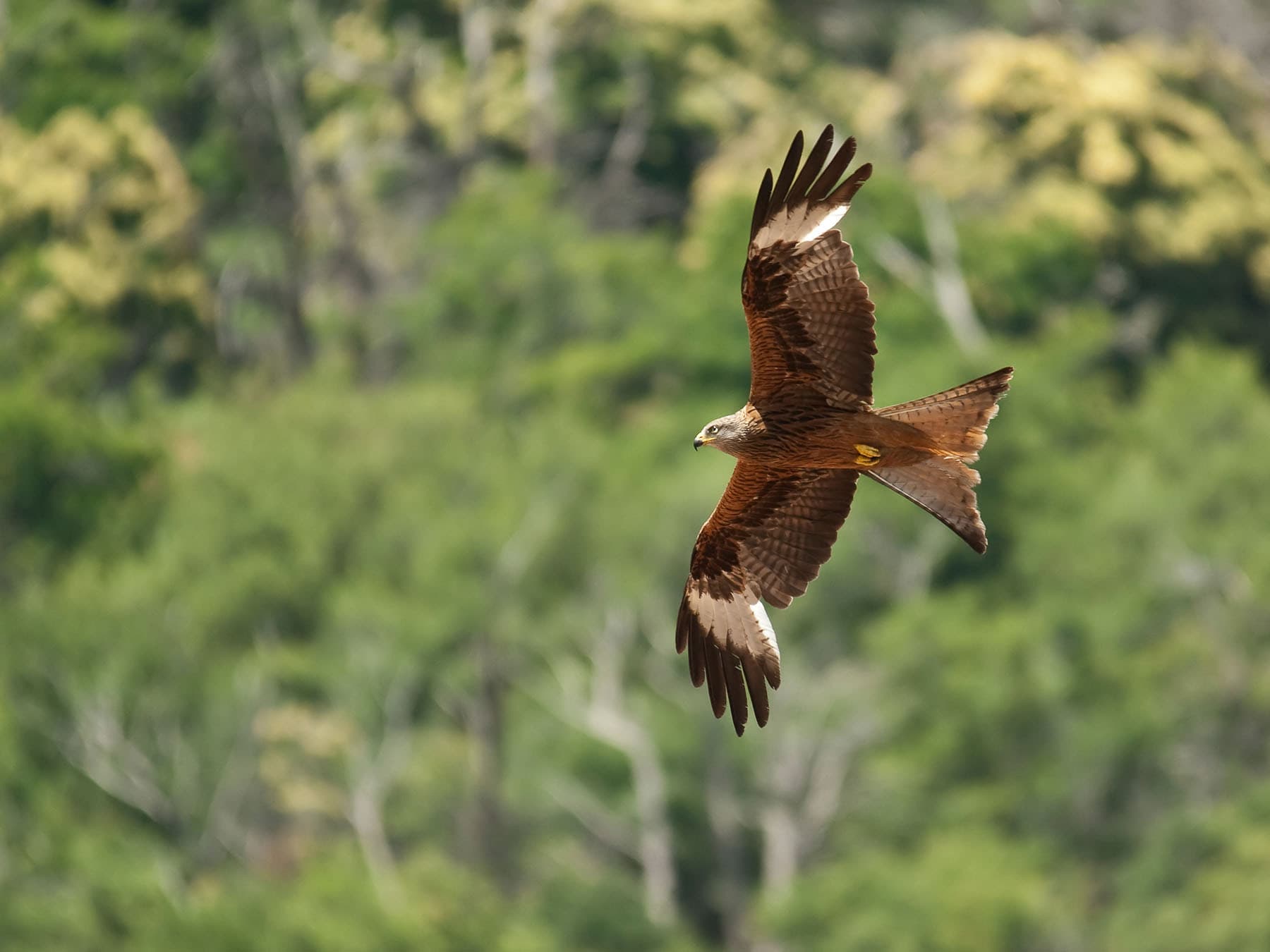
In open country with trees. Red Kites live where woods or copses mix with farmland, pasture or heath: they nest and roost in the trees and forage over the open ground. In winter they spread into more open places, such as treeless farmland, rough ground and wetlands.1
In Britain they also live close to people, over towns and suburbs as well as woodland and open countryside.2 They live mostly at low or medium altitudes, though in Switzerland they breed up to 1,600 m.3
The UK range
Over most of Wales and much of central and eastern England, plus parts of Scotland, Northern Ireland and northern England.2 The biggest concentrations are in the Chilterns, Wales, Yorkshire and eastern Scotland.4
The map follows the reintroductions. Each release area grew its own breeding group, and although released birds and their young wander widely across Britain and Ireland, pairs have been slow to settle far from where kites were let go.4 In the last national atlas, kites bred in 24% of the UK's 10-km squares and wintered in 33%, and they have kept spreading since.
Are Red Kites rare?
How the map came back
Persecution wiped kites out of England and Scotland by the end of the 19th century, leaving a few pairs in Wales. Fewer than ten pairs survived the 1930s and 1940s, in a small area of mid Wales, and careful protection brought the Welsh population to 100 pairs by 1993.
Releases began in 1989, in the Chilterns of Oxfordshire and Buckinghamshire and on the Black Isle in Easter Ross. The birds for England came from Spain, Sweden and Wales, those for Scotland from Sweden, and both groups first bred successfully in 1992.7 More release areas followed: Northamptonshire (1995), central Scotland (1996), Yorkshire (1999), Dumfries and Galloway (2001), north-east England (2004), Aberdeen (2007) and County Down (2008).4
Some kites have also moved into towns. In Reading, about 20 km from the first English release site, kites became a common sight mainly, the study concluded, because thousands of households feed them.8
Where to see them
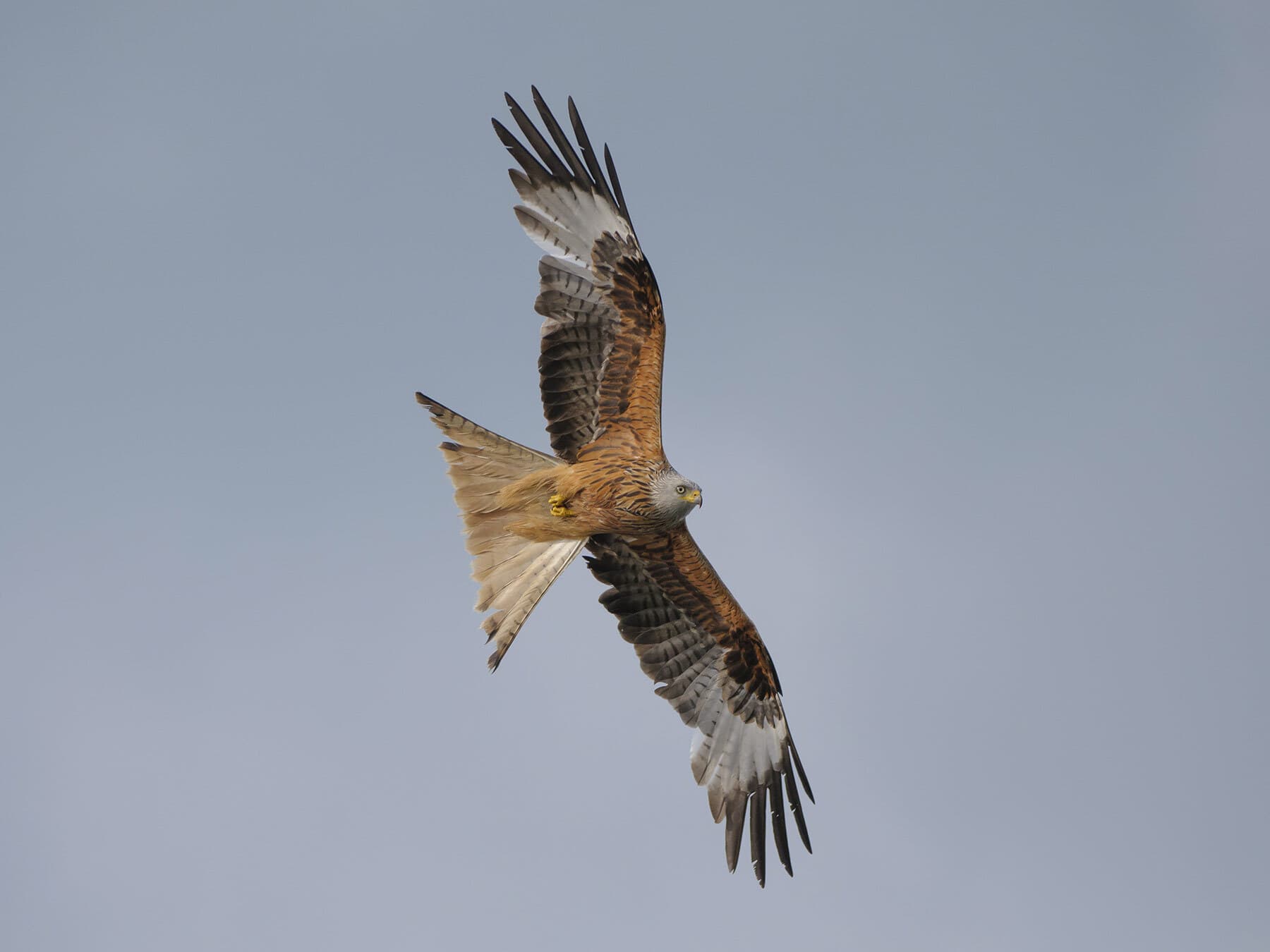
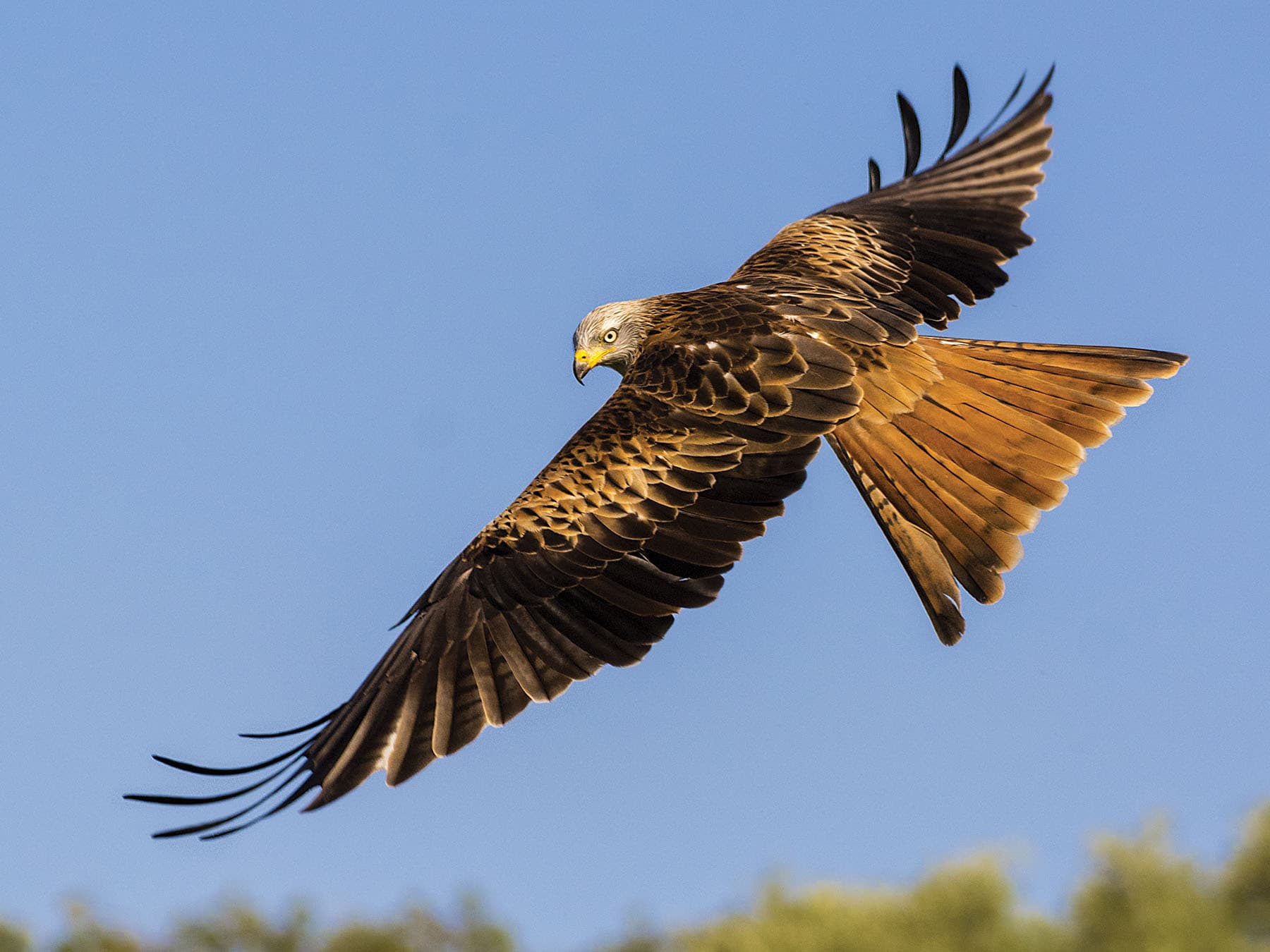
In their strongholds they are hard to miss: look up on warm, sunny days, when kites soar.9 They are easy to see in the Chilterns and central Scotland.
Feeding sites give the closest views:
- Gigrin Farm, near Rhayader in mid Wales: hundreds of wild kites are fed there each day.10
- Llanddeusant, in the Brecon Beacons: a feeding station with a hide, opened in 2002.11
- The Galloway Kite Trail, around Loch Ken in Kirkcudbrightshire.12
- Argaty, a farm in central Scotland with viewing hides.13
Check each site's own website for feeding times before you go.
Winter roosts
In winter kites gather at night in roosts, sometimes of 100 birds or more, among copses and clumps of trees, sometimes at traditional sites used year after year.
Europe
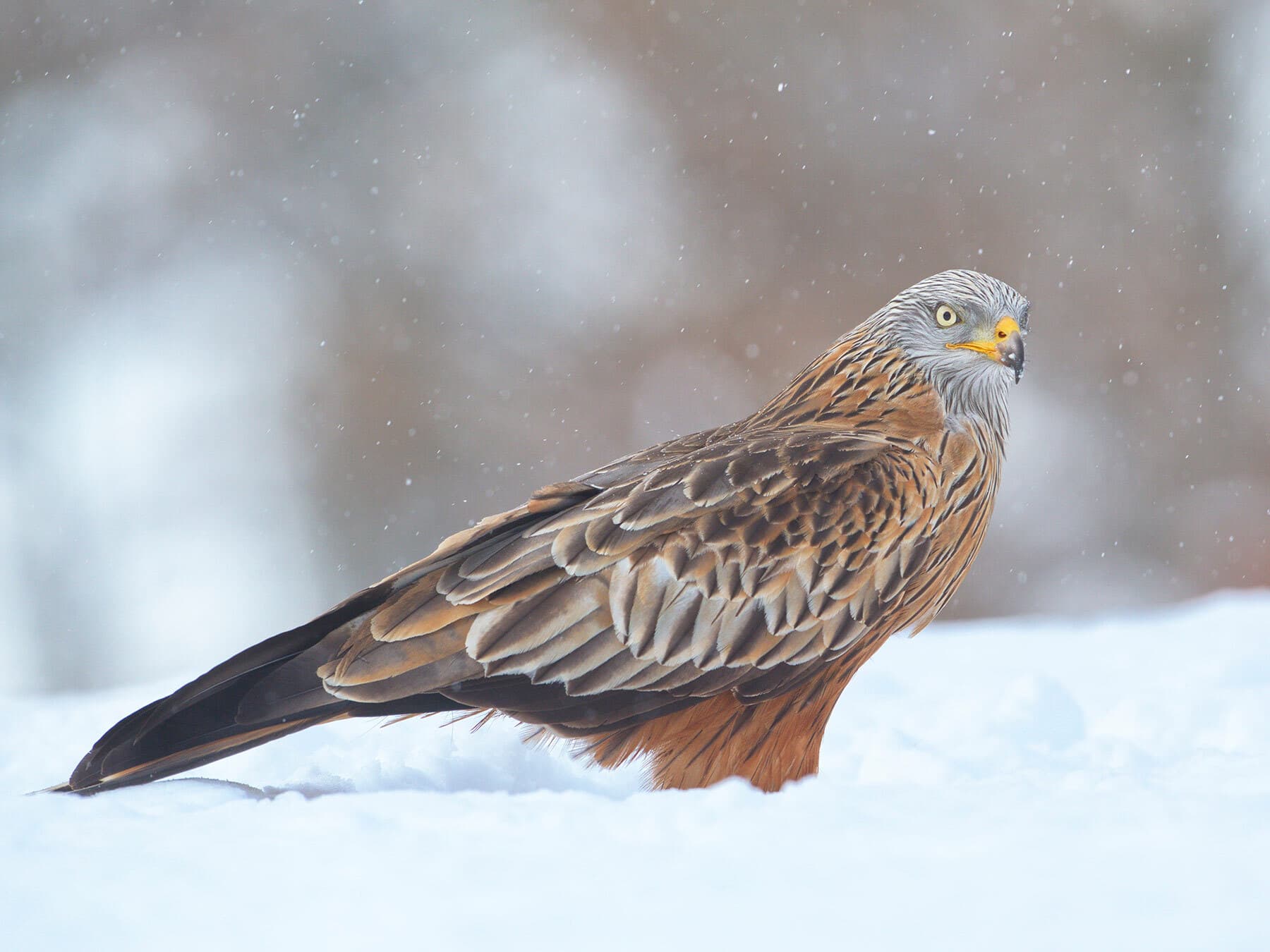
Red Kites live only in Europe and its fringes, the region ornithologists call the western Palearctic. Europe holds 32,200-37,700 pairs, more than 95% of the breeding range. Germany has the most, 14,000-16,000 pairs, then the UK (about 4,400 pairs in 2016), Sweden, France, Switzerland and Spain, which together hold more than 90% of the world's Red Kites.
The centre of gravity has moved north. Kites have declined in southern Spain and Portugal and no longer breed in Morocco, while numbers have grown further north, with reintroductions contributing.3
Do Red Kites migrate?
British kites do not. Welsh kites are sedentary, and so are the newer populations elsewhere in the British Isles, though young birds wander. The BTO has reports of British-ringed kites from France, Belgium, Spain and Iceland, and of German-ringed kites found here.14
In northern and central Europe, most kites migrate, leaving between August and November and returning between February and April. Most winter in southern France and especially Spain, though more now stay north for the winter.1
Ireland
Kites were reintroduced to Ireland from 2007, and the first breeding attempt in the Republic was recorded in 2009. Releases in County Down, Northern Ireland, began in 2008.
Sources
- David, T. S., Orta, J., Christie, D. A., Garcia, E. (2021). Red Kite (Milvus milvus), version 1.1. Birds of the World (S. M. Billerman, editor). Cornell Lab of Ornithology. doi:10.2173/bow.redkit1.01.1
- RSPB. Red Kite. RSPB Birds A-Z. Accessed 9 October 2026. Source
- BirdLife International (2020). Species factsheet: Red Kite Milvus milvus. BirdLife DataZone. Accessed 9 October 2026. Source
- BTO. Red Kite (Milvus milvus). BTO BirdFacts. Accessed 9 October 2026. Source
- Woodward, I., Aebischer, N., Burnell, D., Eaton, M., Frost, T., Hall, C., Stroud, D., Noble, D. (2020). Population estimates of birds in Great Britain and the United Kingdom. British Birds 113: 69-104. Accessed 9 October 2026. Source
- Heywood, J. J. N., Massimino, D., Baker, L., Balmer, D. E. et al. (2026). The Breeding Bird Survey 2025. BTO Research Report 802. British Trust for Ornithology, Thetford. Accessed 9 October 2026. Source
- Evans, I. M., Summers, R. W., O'Toole, L., Orr-Ewing, D. C., Evans, R., Snell, N., Smith, J. (1999). Evaluating the success of translocating Red Kites Milvus milvus to the UK. Bird Study 46: 129-144. doi:10.1080/00063659909461125
- Orros, M. E., Fellowes, M. D. E. (2015). Widespread supplementary feeding in domestic gardens explains the return of reintroduced Red Kites Milvus milvus to an urban area. Ibis 157: 230-238. doi:10.1111/ibi.12237
- Woodland Trust. Red kite (Milvus milvus). Woodland Trust, Animals. Accessed 9 October 2026. Source
- Gigrin Farm. Gigrin Farm Red Kite Feeding Centre. gigrin.co.uk. Accessed 9 October 2026. Source
- Red Kites Wales. Llanddeusant Red Kite Feeding Station. redkiteswales.co.uk. Accessed 9 October 2026. Source
- Galloway Kite Trail. Galloway Kite Trail. gallowaykitetrail.com. Accessed 9 October 2026. Source
- Argaty Red Kites. Argaty Red Kites. argatyredkites.co.uk. Accessed 9 October 2026. Source
- Robinson, R. A., Leech, D. I., Clark, J. A. (2025). Summary of all recoveries for Red Kite (Milvus milvus). The Online Demography Report: bird ringing and nest recording in Britain & Ireland in 2024 (BTO). Accessed 9 October 2026. Source