Facts · Published 6 Oct 2026
Are European Starlings Invasive? What the Evidence Says
By the Birdfact teamChecked by Nathan Cope
European Starlings are introduced and officially classed as invasive in North America, but native and declining in Britain. Here is how they came to America, why they are called invasive, what the evidence says about their effect on other birds, and where they stand in law.
On this page8 sections
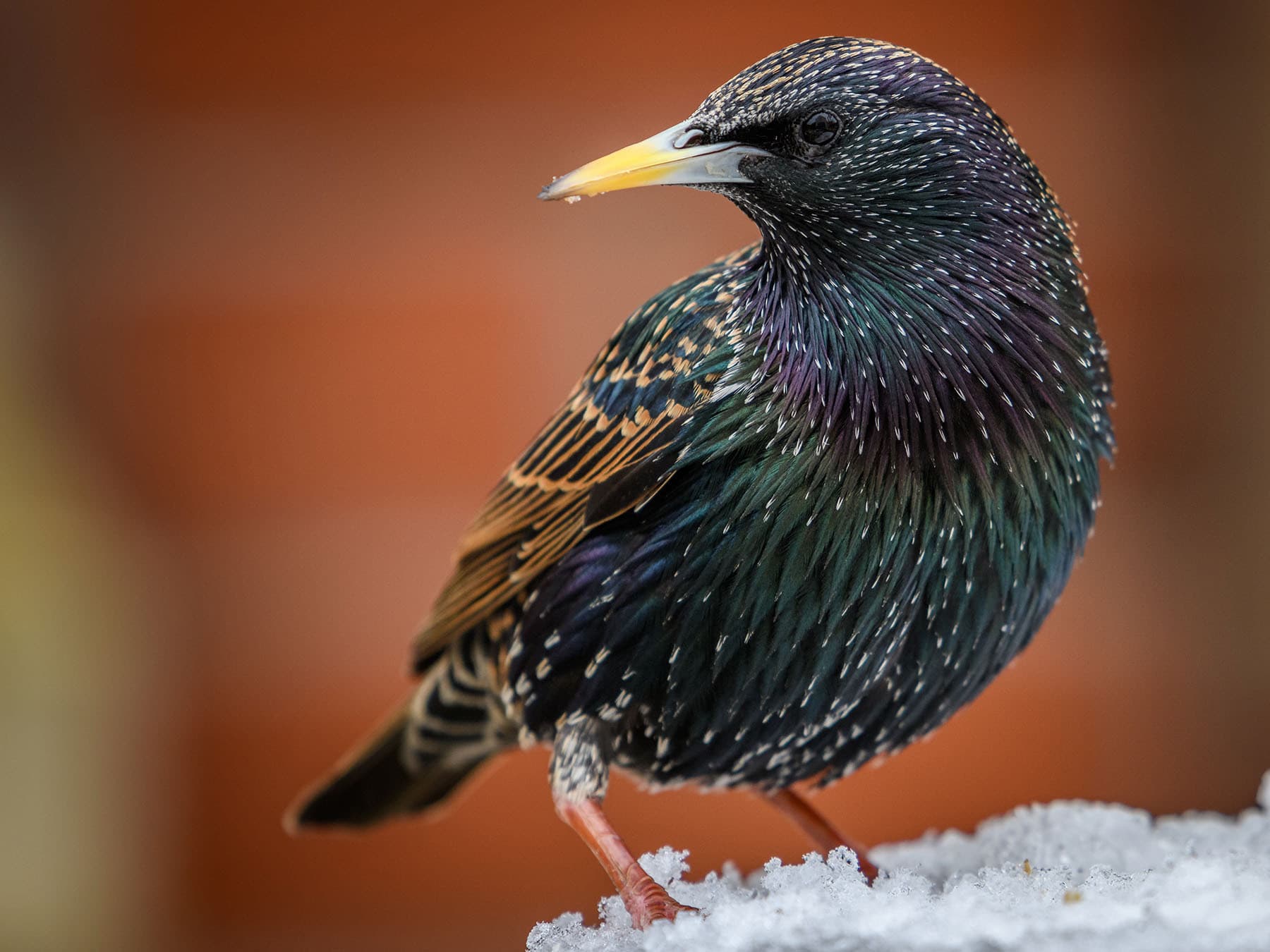
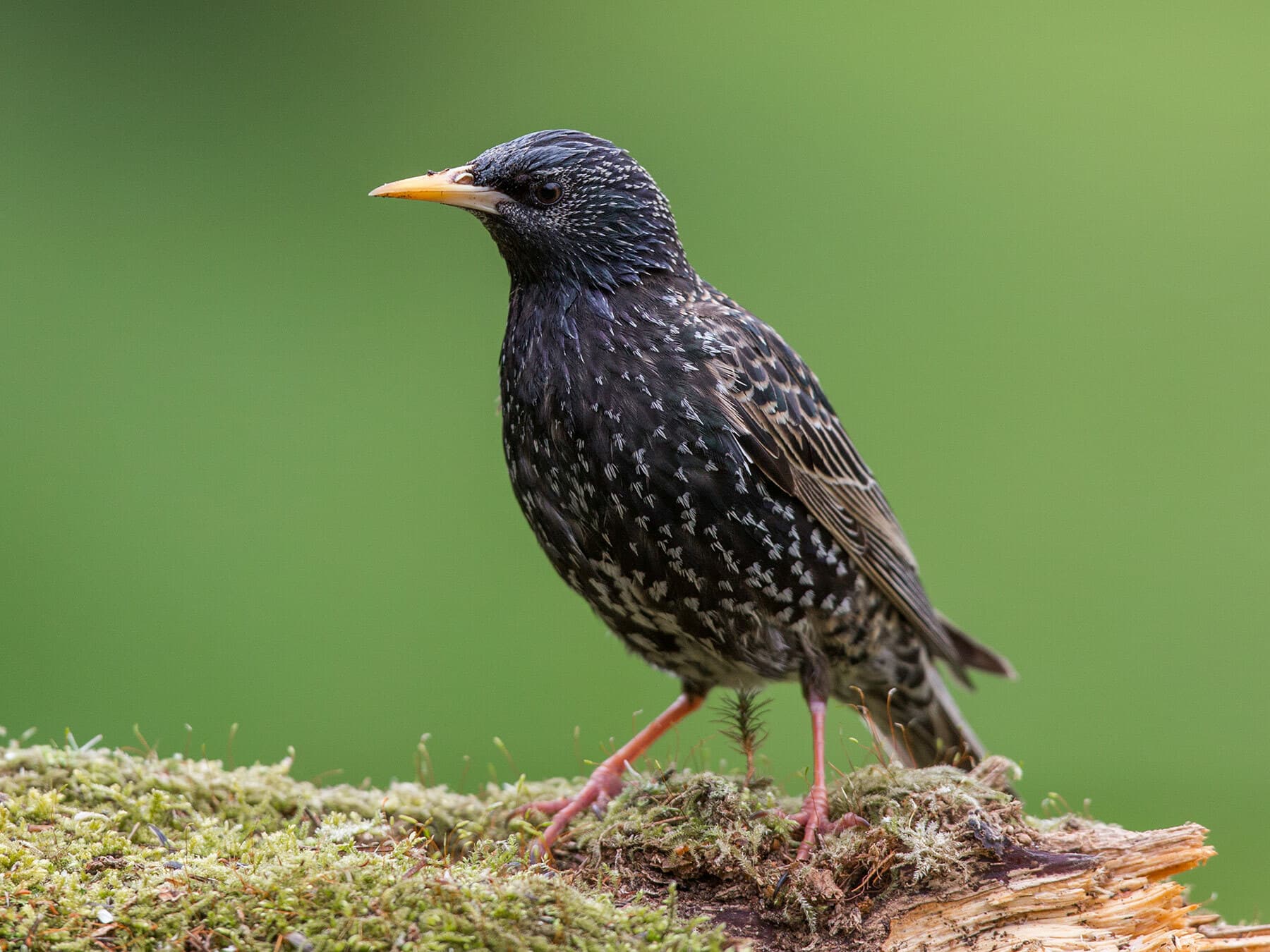
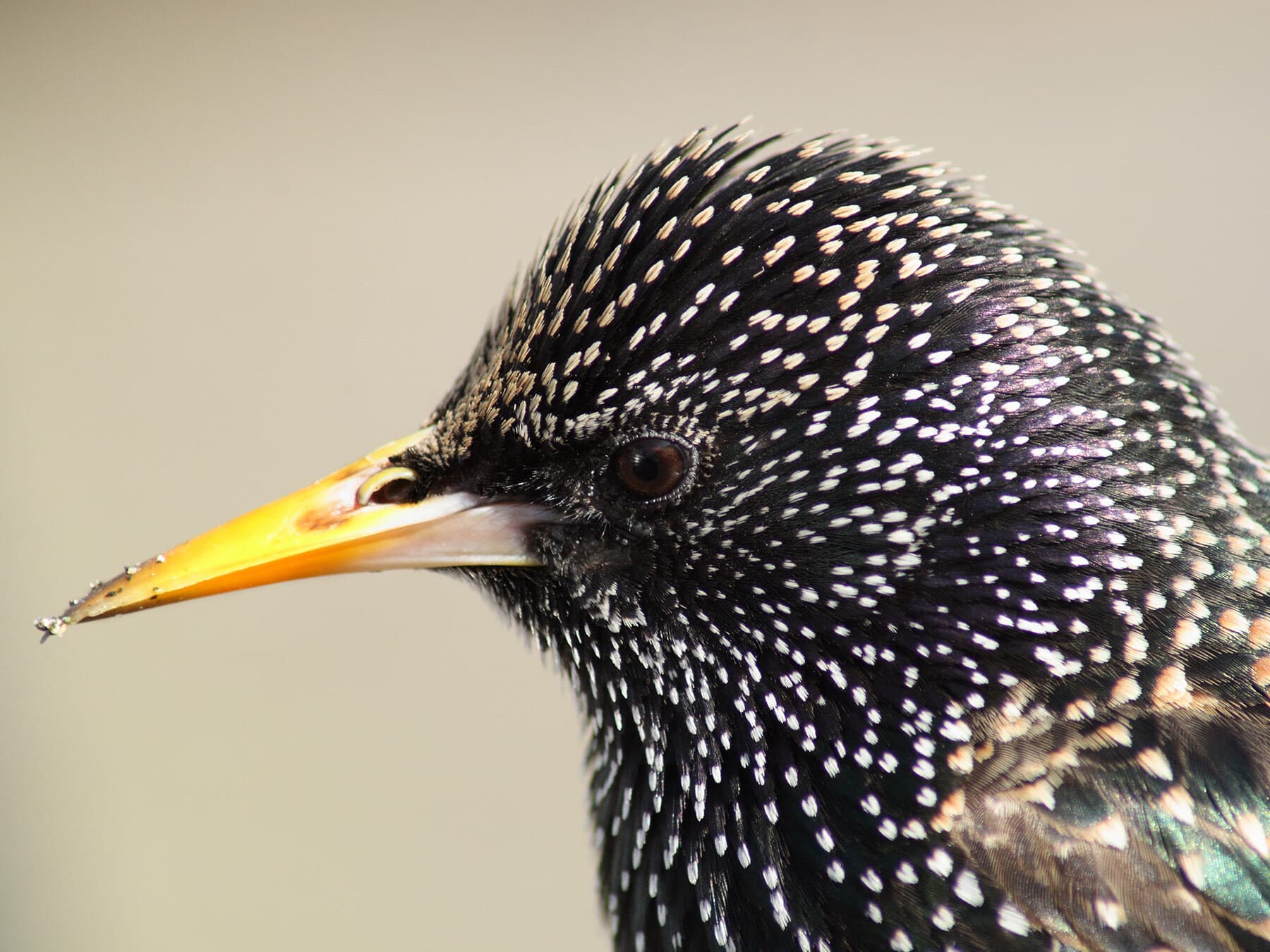
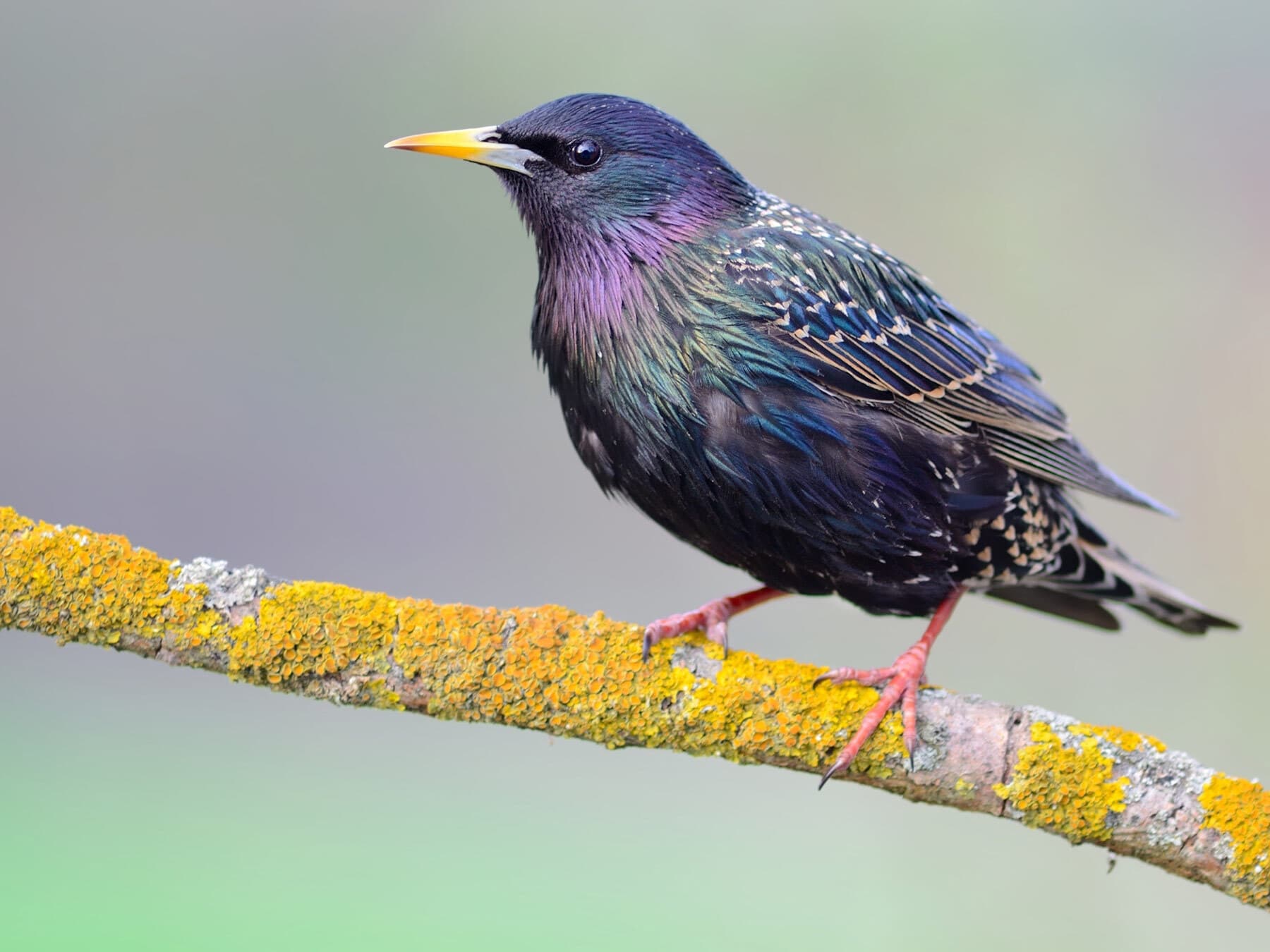
In North America, yes: the European Starling was brought over from Europe and is officially treated as an invasive species there; it was also introduced to Australia, New Zealand and South Africa. In Britain and the rest of Europe it is a native bird, declining in Britain and much of Europe. This page explains what "invasive" means for the Starling, what the evidence says about its effects on other birds, and where it stands in law. For the bird itself, see Starling identification and facts.
How Starlings came to North America
North America's Starlings are usually traced to birds released in Central Park, New York, in 1890 and 1891, after several earlier attempts elsewhere had failed. They spread slowly at first and then fast, reaching nearly every US state and Canadian province by the late 1940s. Today there are about 93 million in the United States and Canada.
The often-repeated story that the man behind the release, Eugene Schieffelin, wanted to bring every bird mentioned by Shakespeare to America turns out to be almost entirely fiction, built up in later retellings.1
Why are Starlings called invasive?
An invasive species is one that people have moved to a new region, where it thrives and spreads.2 The IUCN's Invasive Species Specialist Group included the Starling in its list of "100 of the World's Worst Invasive Alien Species", one of only three birds on it.3
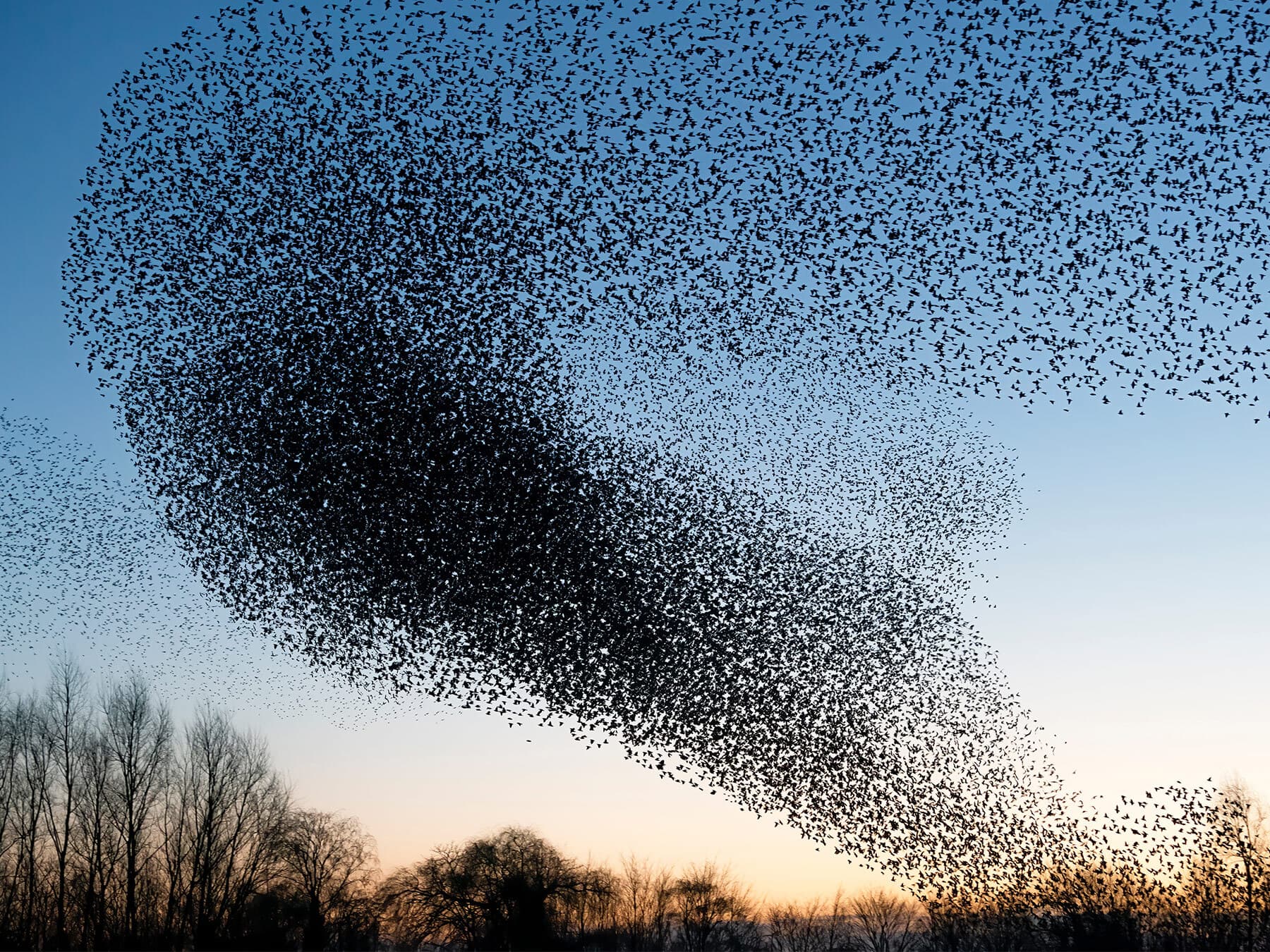
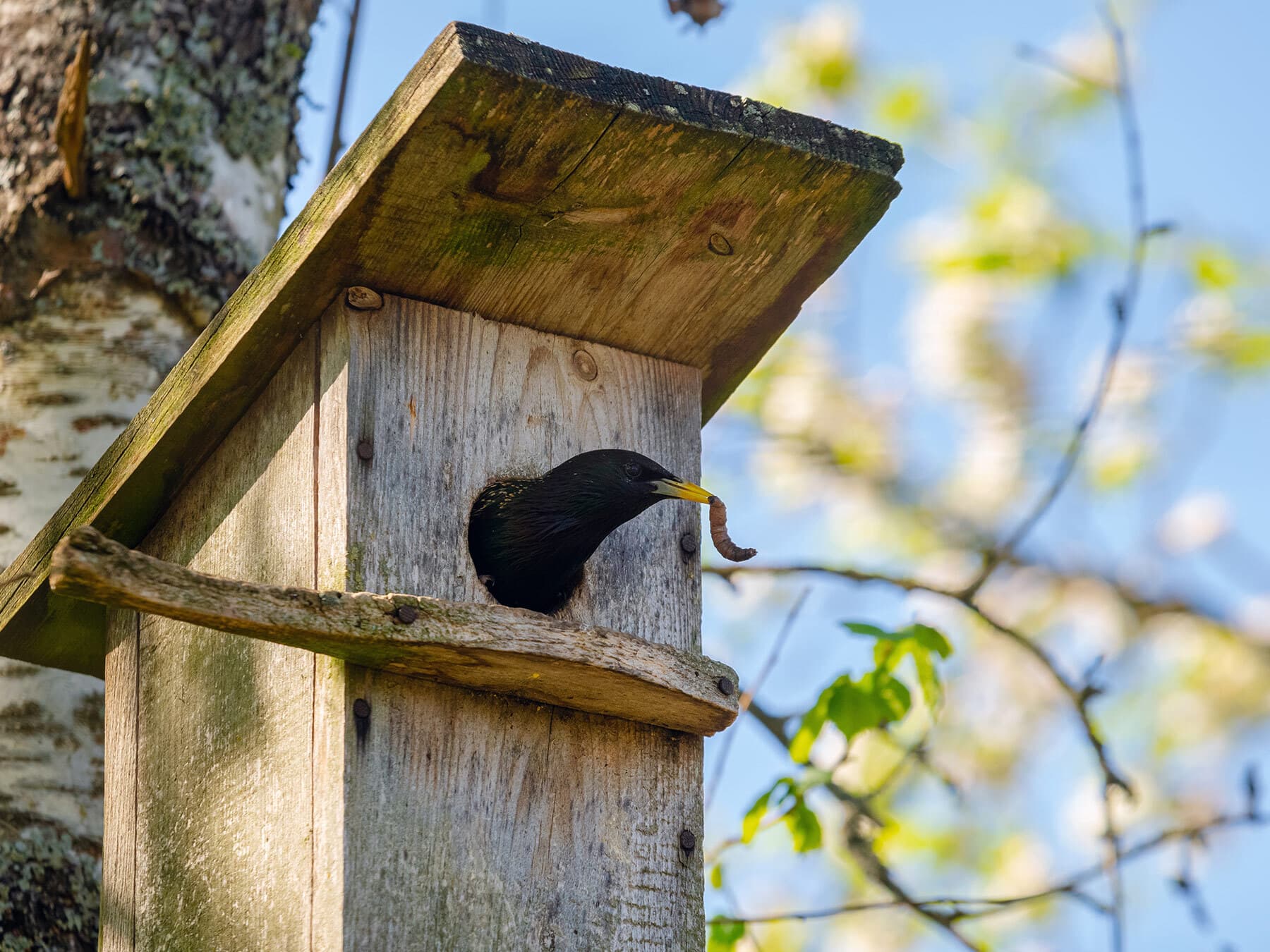
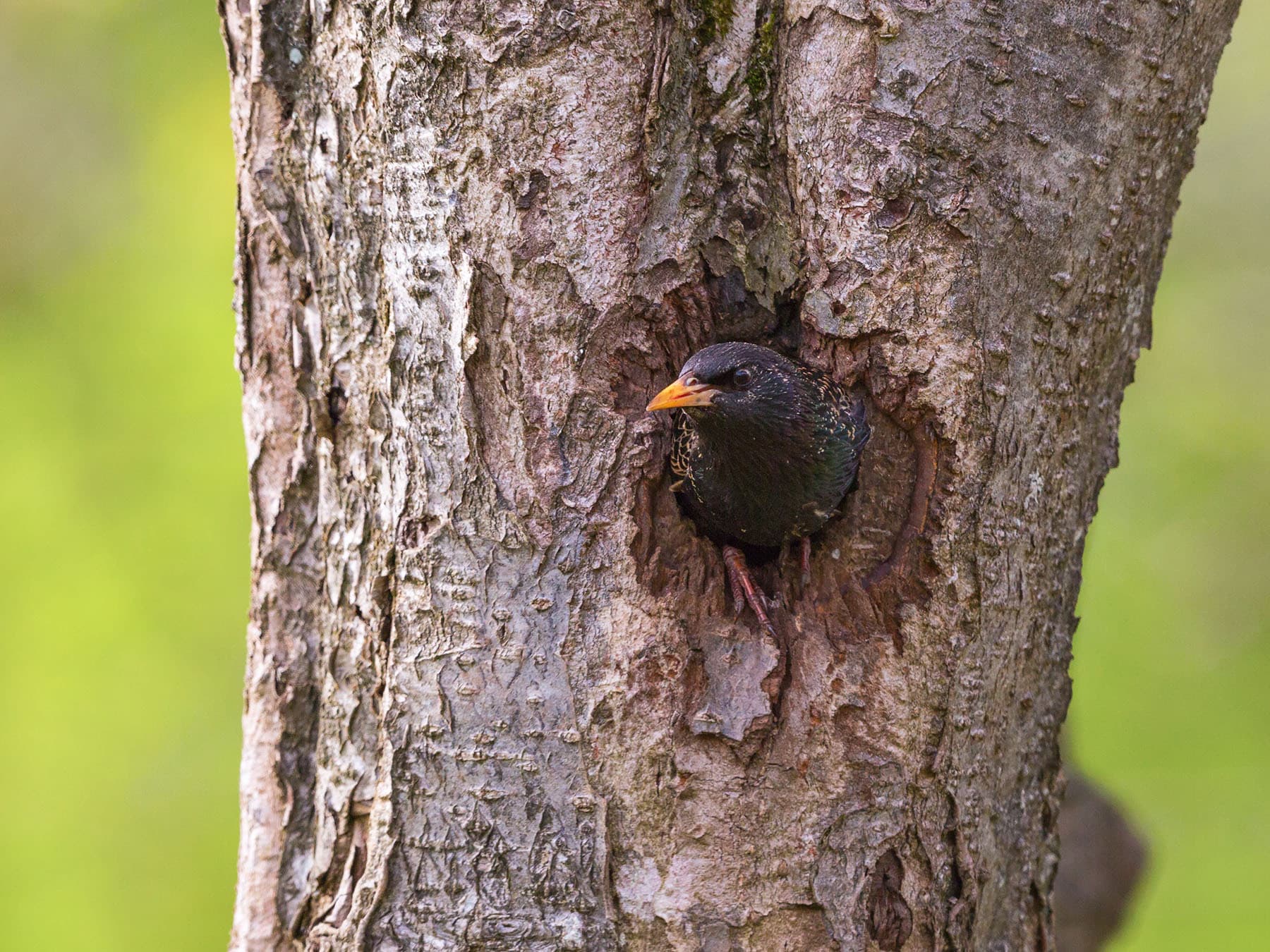
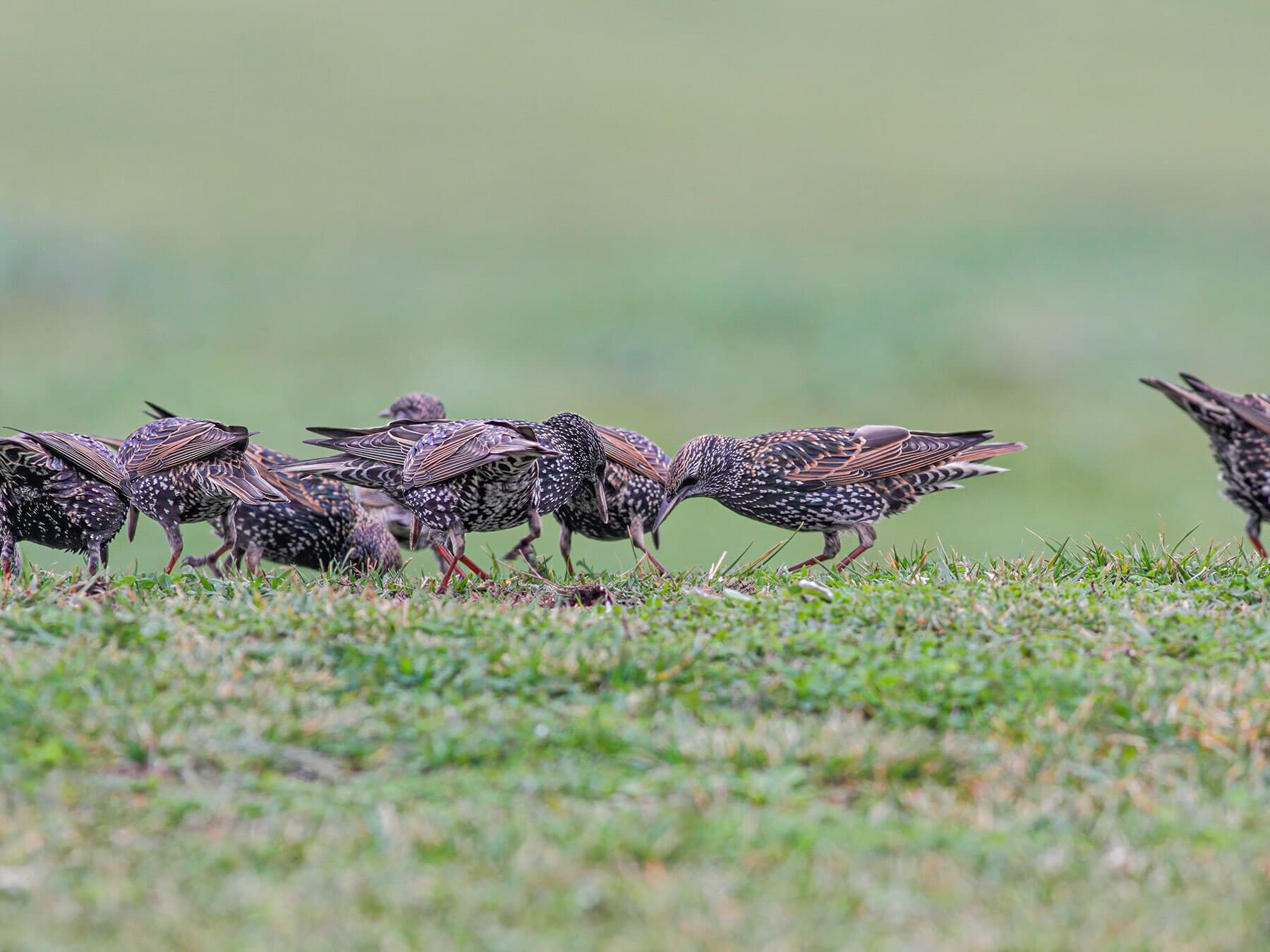
Three effects are usually given. Starlings nest in holes and compete for them with native hole-nesting birds such as bluebirds, woodpeckers, Tree Swallows and Purple Martins, sometimes evicting them. Big flocks eat grain, fruit and livestock feed: an estimate by Pimentel and colleagues in 2000 put crop damage in the United States at $800 million a year, based on $5 per hectare.3 And very large winter roosts can foul buildings and streets.
What the evidence shows
The effect on native birds has proved smaller than expected. When Walter Koenig compared 27 native hole-nesting species before and after Starlings arrived, using Christmas Bird Counts and the Breeding Bird Survey, only 10 showed effects that might be linked to Starlings, half of them partly negative, and only sapsuckers showed declines that could be put down to Starlings and were not contradicted by other data.4 A study of how the Starling story has been told also points to the lack of data behind its supposedly disastrous impacts.1
A Starling researcher writing for the Cornell Lab of Ornithology makes the same point: Starling numbers in North America have fallen steeply over recent decades, Tree Swallows appear to have changed their nesting habits in response to Starlings, and the presence of Starlings does not explain native bird declines.5 NestWatch data show North American Starlings declining too; one of its biologists describes them as "neither good nor bad".6
Are Starlings protected?
In the United States, no: the Migratory Bird Treaty Act does not protect the European Starling. The treaties behind the Act cover only a few native starlings, not this introduced one.7
In the UK, yes. The Starling is a native bird, and like all wild birds it, its eggs and its nests in use are protected by law (in Great Britain, the Wildlife and Countryside Act 1981). See Starlings nesting in your roof.
Starlings and nest boxes
If you put up boxes for bluebirds, Tree Swallows or other small hole-nesting birds, the hole size does the work. An entrance under 1½ in (38 mm) is too small for a Starling, so the box stays free of Starlings.2 In Britain, a 25 mm hole does the same for tit boxes. To help Starlings instead, put up a box with a 45 mm hole (see Starling nest boxes).
Are Starlings invasive in the UK?
No. The Starling is native to Britain and Ireland, where it has been recorded since Anglo-Saxon times, and it is Red-listed as a bird of high conservation concern: the UK breeding population fell by 61% between 1995 and 2024.8 See why Starlings have declined.
Questions
Are Starlings native to North America?
No. They are native to Europe and Asia as far east as Lake Baikal, wintering into north Africa, and were introduced to North America in 1890 and 1891.
Why were Starlings brought to America?
They were released by an acclimatization society in New York. The popular story that the aim was to introduce every bird in Shakespeare is not supported by the record.
Are Starlings bad for other birds?
They compete with native birds for nest holes and sometimes evict them, but a large study found little effect on the numbers of native hole-nesting species, sapsuckers apart.
Where else have Starlings been introduced?
Australia, New Zealand, South Africa, Jamaica and other parts of the West Indies, and more recently Argentina.
How do I tell a Starling from a Common Grackle?
Sources
- Fugate, L., Miller, J. M. (2021). Shakespeare's Starlings: Literary History and the Fictions of Invasiveness. Environmental Humanities 13(2): 301-322. doi:10.1215/22011919-9320167
- NestWatch, Cornell Lab of Ornithology. Managing House Sparrows and European Starlings. Accessed 6 October 2026. Source
- Linz, G. M., Homan, H. J., Gaulker, S. M., Penry, L. B., Bleier, W. J. (2007). European starlings: a review of an invasive species with far-reaching impacts. Managing Vertebrate Invasive Species: Proceedings of an International Symposium (Witmer, Pitt and Fagerstone, eds). USDA/APHIS/WS National Wildlife Research Center. Accessed 6 October 2026. Source
- Koenig, W. D. (2003). European Starlings and their effect on native cavity-nesting birds. Conservation Biology 17(4): 1134-1140. doi:10.1046/j.1523-1739.2003.02262.x
- Hofmeister, N. (2021). Essay: Are Starlings Really 'Invasive Aliens'?. Living Bird (Cornell Lab of Ornithology). Accessed 6 October 2026. Source
- Preston, E. (2022). The Day We Didn't Save the Starling. Audubon. Accessed 6 October 2026. Source
- U.S. Fish and Wildlife Service (2020). List of Bird Species to Which the Migratory Bird Treaty Act Does Not Apply. Federal Register 85(74): 21262-21264. Accessed 6 October 2026. Source
- BTO. Starling (Sturnus vulgaris). BTO BirdFacts. Accessed 6 October 2026. Source
- Cornell Lab of Ornithology. European Starling (overview and life history). All About Birds. Accessed 6 October 2026. Source
- Cabe, P. R. (2020). European Starling (Sturnus vulgaris), version 1.0. Birds of the World (S. M. Billerman, Editor). Cornell Lab of Ornithology. doi:10.2173/bow.eursta.01
- RSPB. Our ultimate guide to nestboxes. Accessed 6 October 2026. Source
- UK Parliament (1981). Wildlife and Countryside Act 1981, section 1. Accessed 6 October 2026. Source