Identification · Updated 8 Oct 2026
Female Starlings: How to Tell Male from Female
By the Birdfact teamChecked by Nathan Cope
Female and male Starlings look alike, but in spring and summer a female has a pinkish base to her yellow bill (blue-grey in a male) and, close up, a pale ring round the iris. Here is how to tell them apart, with photos.
On this page8 sections
Male and female Starlings look alike at first glance. This page shows the marks that tell them apart, when they work, and how both differ from young birds. For the Starling in general, see Starling identification and facts.
What does a female Starling look like?
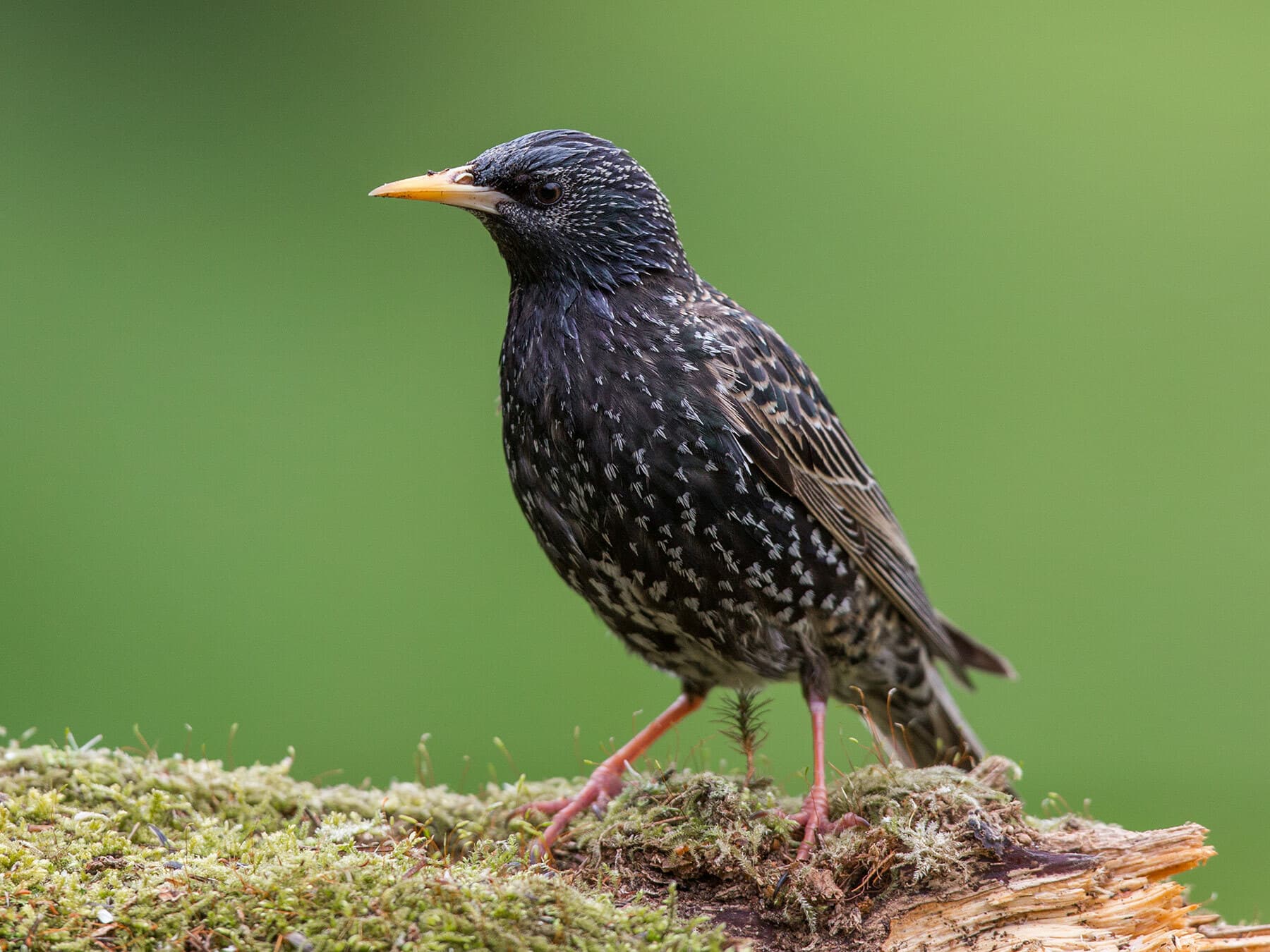
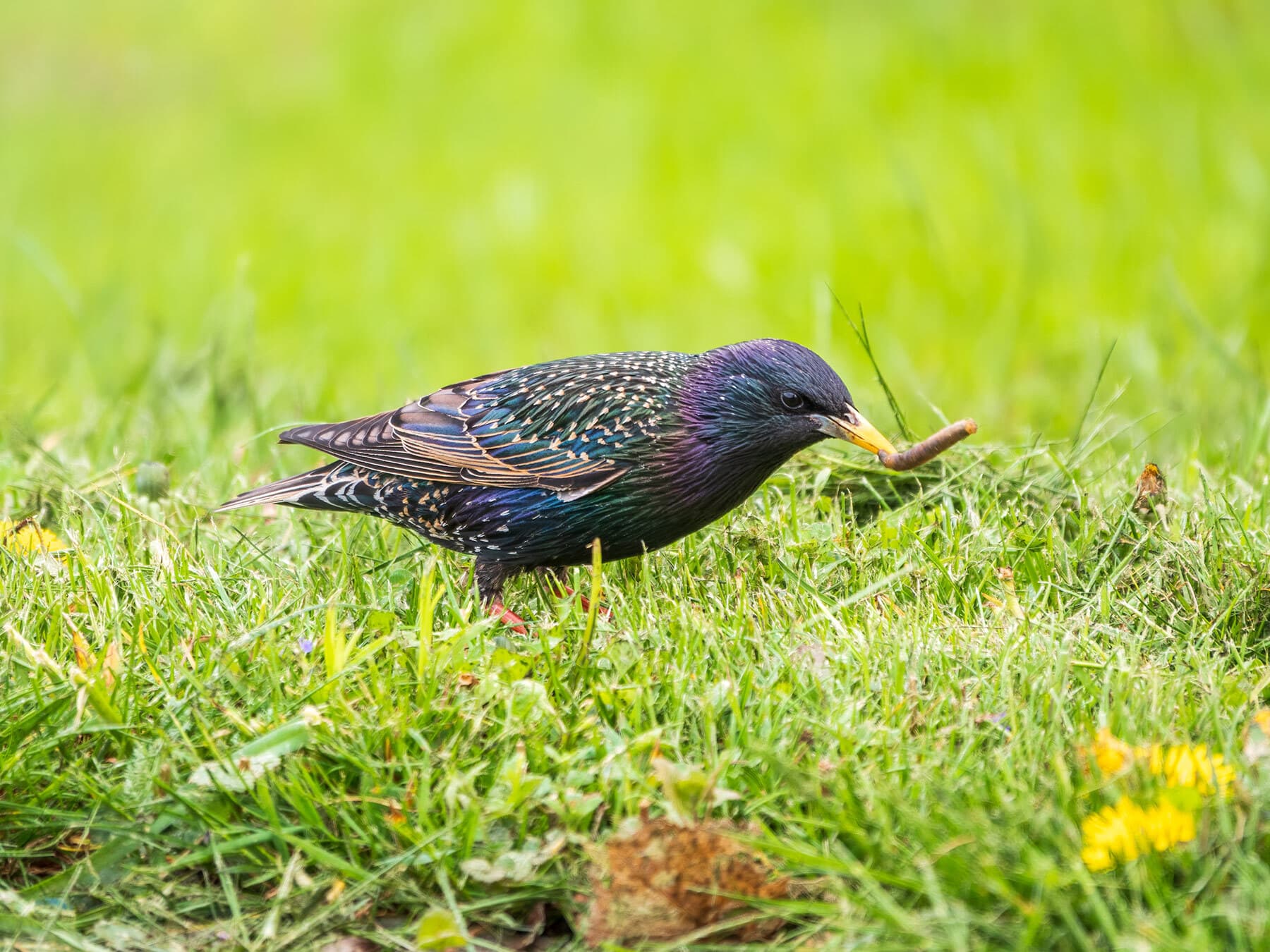
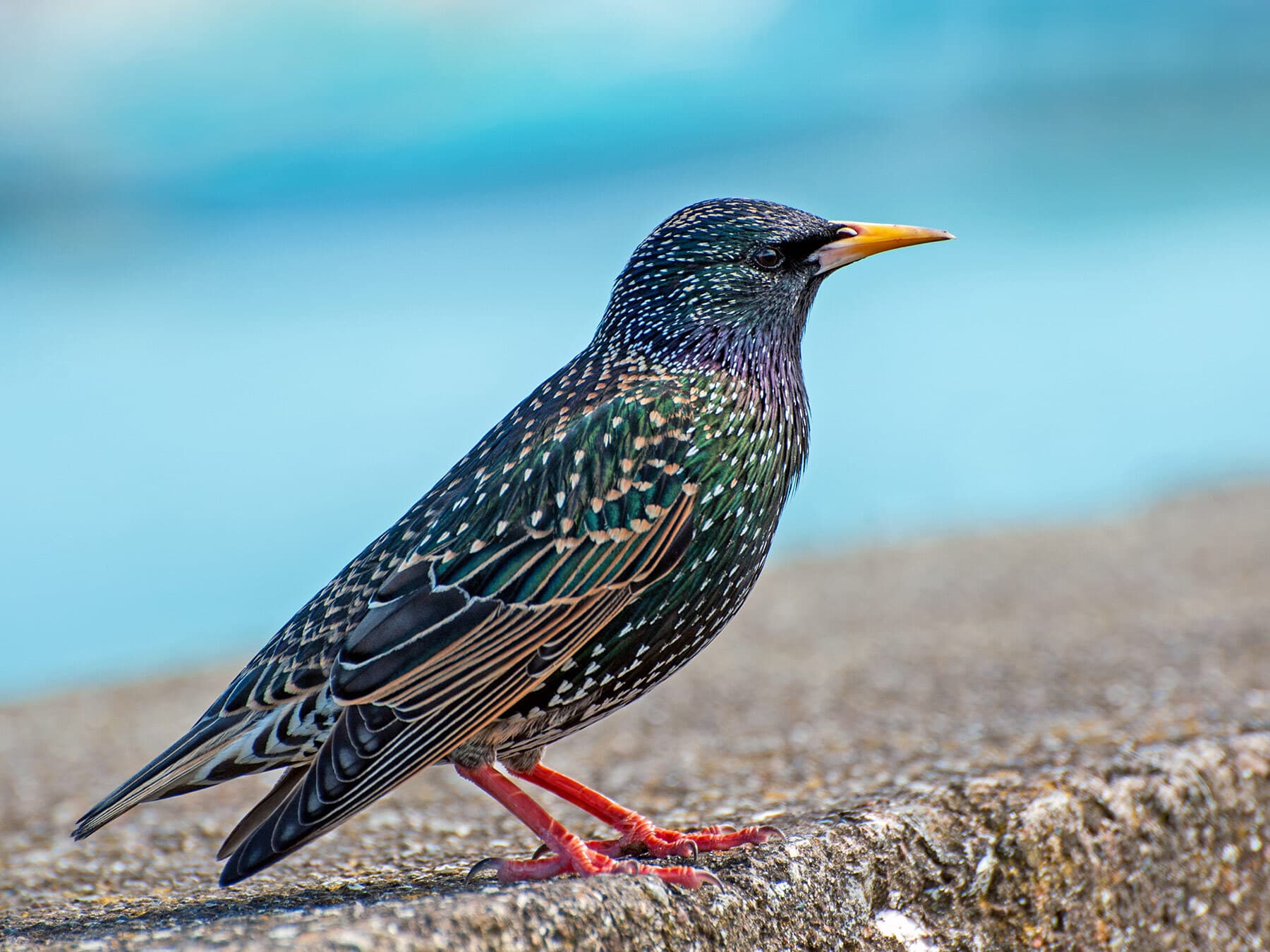
Very like the male: black with a purple and green gloss, covered in white spots in winter, glossier in spring and summer as the spots wear away. A female is somewhat duller than an adult male, with shorter throat feathers.
Male vs female Starling: look at the bill
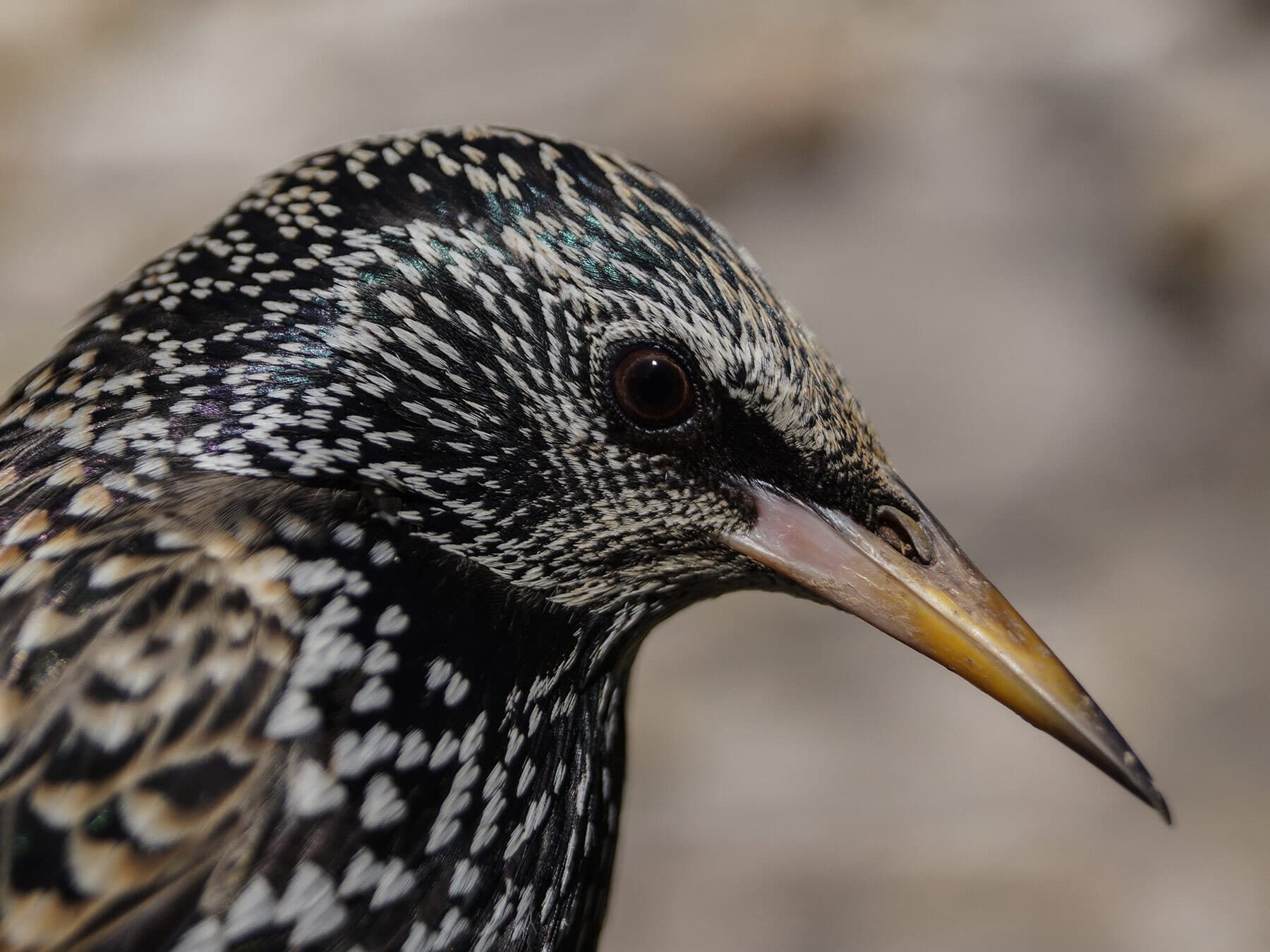
From late winter to summer both sexes have a yellow bill, and the colour at its base is the easiest clue: blue-grey in males, pinkish in females.1, 2 It is the lower half of the bill, nearest the face, that shows it.
In autumn and early winter most bills are dark, so this clue disappears: by early winter only 5 to 10% of Starlings have yellow bills in one American study.1
Male vs female Starling: look at the eye
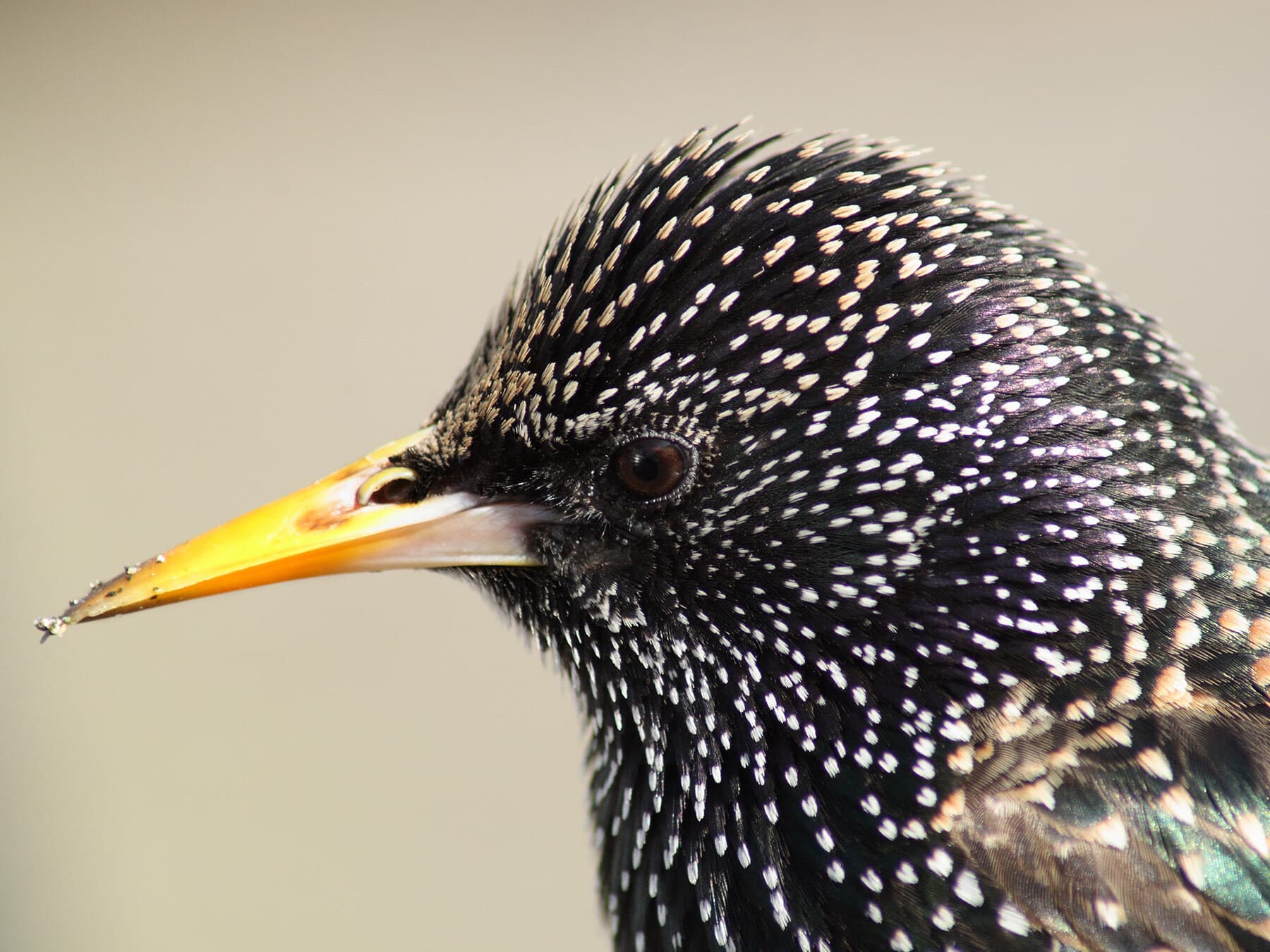
Close up, a female has a narrow, paler ring round the outer edge of the iris; a male's iris is uniformly deep brown. The difference shows from about 6 weeks of age and works in any season, though some males over about 4 years old develop a faint ring and some older females lose theirs.1
Throat feathers and size
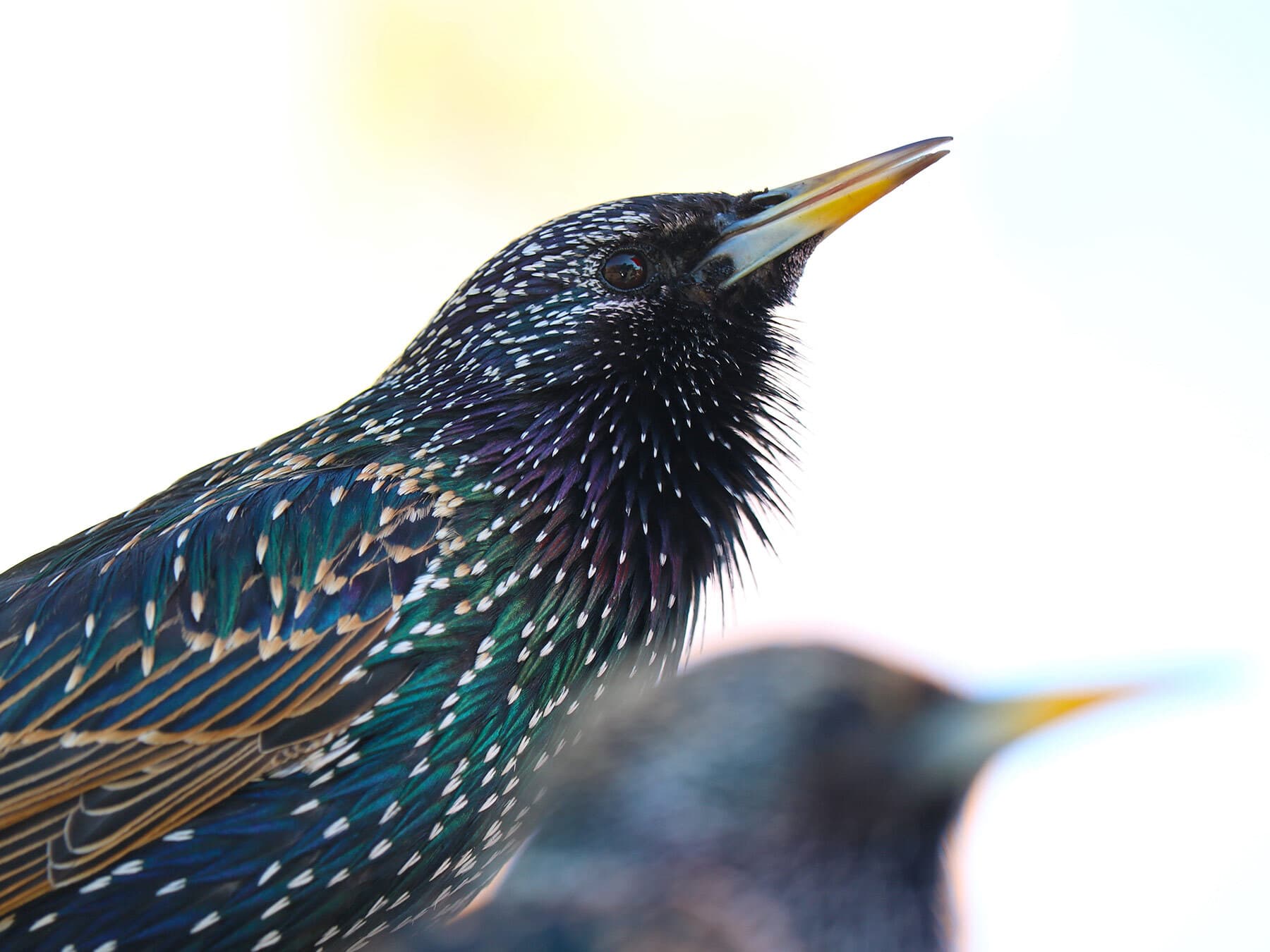
Males have longer, looser glossy feathers on the throat (hackles), but the lengths overlap, so this is a hint rather than proof.
Males are slightly bigger. Weighed by BTO ringers, live adult males averaged 87 g and females 82.5 g, and males' wings averaged 132.6 mm against 129.5 mm.3
Are female Starlings brown?
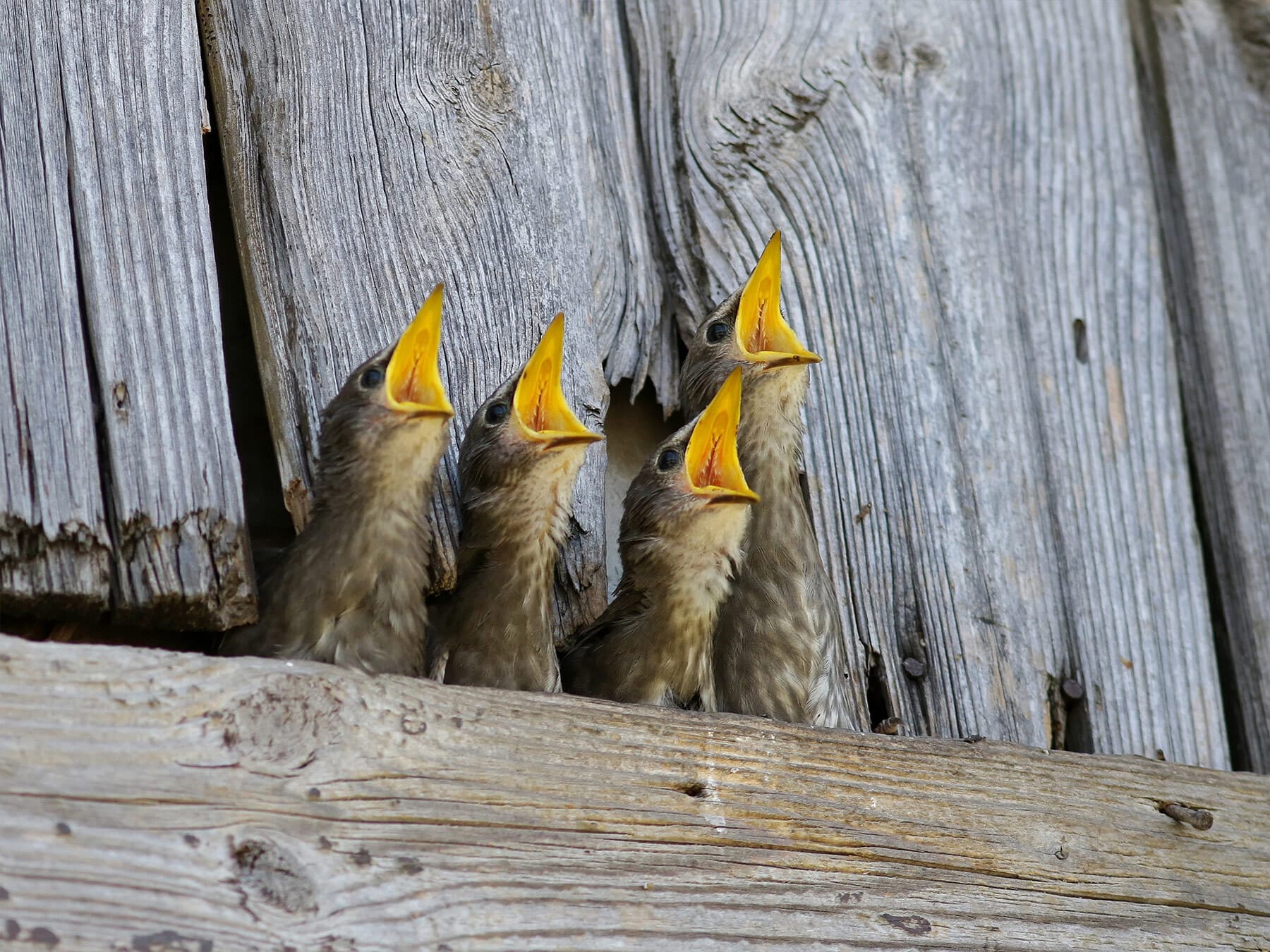
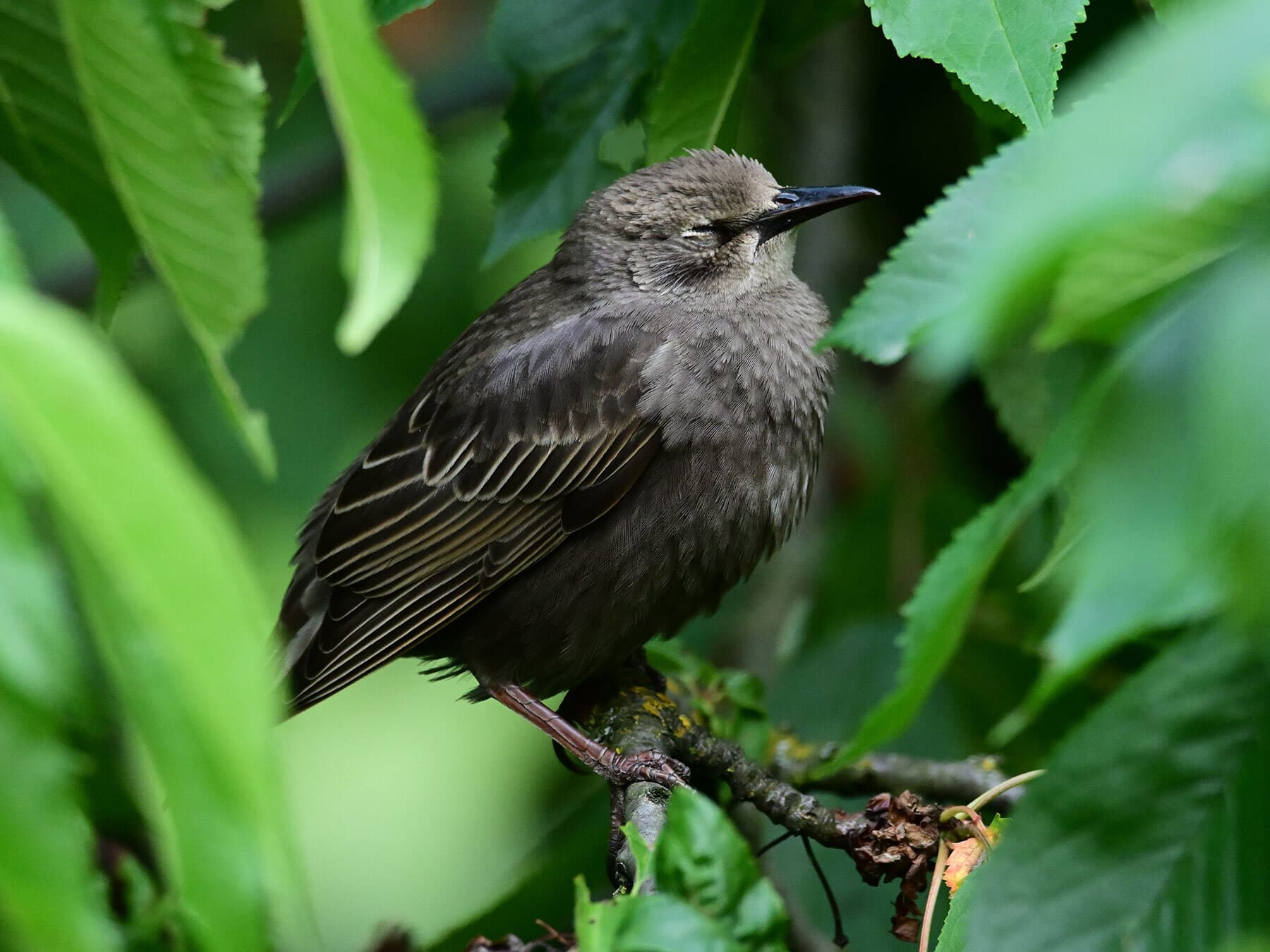
No. A plain grey-brown Starling is a juvenile, a bird a few weeks or months old. In winter adults also look browner, because of the buff tips on their fresh feathers. More: baby and juvenile Starlings.
Song
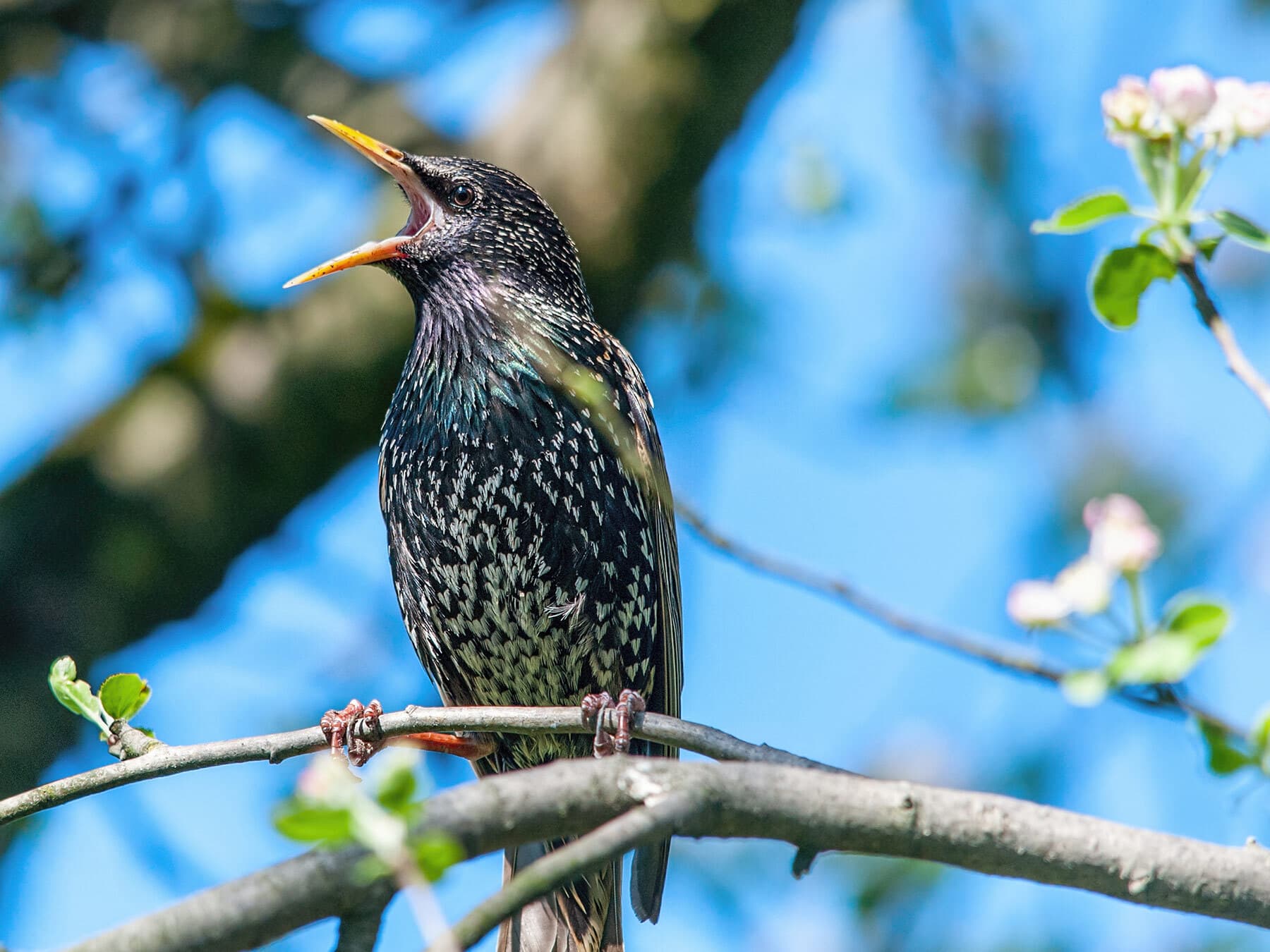
Females sing more quietly than males, with smaller repertoires, mostly in autumn, and they can mimic other sounds too. Females favour males whose songs are longer and more varied.
What female Starlings do
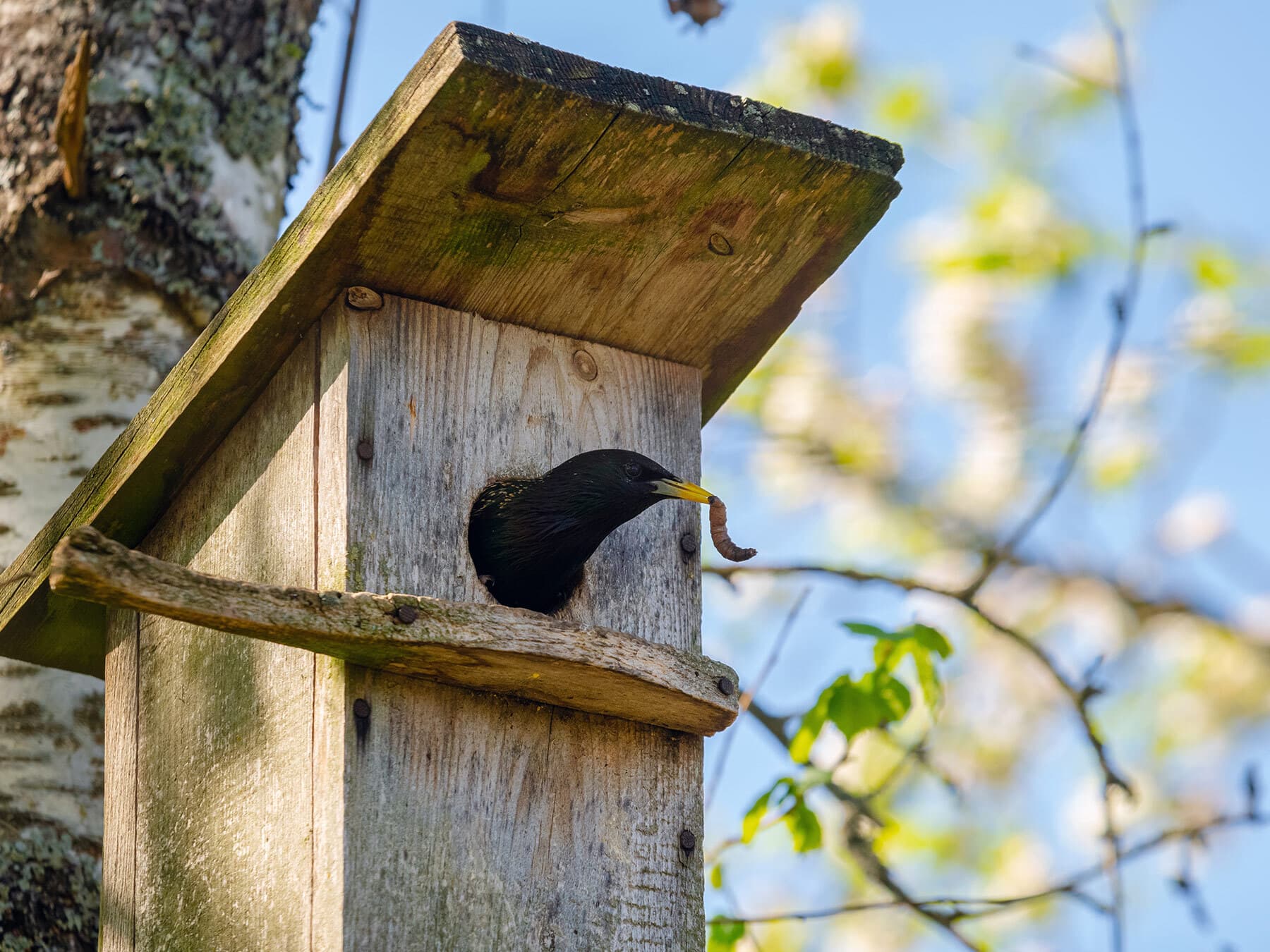
The male picks a nest hole and starts the nest; the female finishes it, and may throw out some of his material. Both parents incubate, but the female does about 70% of it by day and all of it at night, and both feed the chicks.
Some males take two mates. The second female gets little help and raises fewer young. Females also sometimes lay an egg in another Starling's nest. More: Starling nesting.
Sources
- Cabe, P. R. (2020). European Starling (Sturnus vulgaris), version 1.0. Birds of the World (S. M. Billerman, Editor). Cornell Lab of Ornithology. doi:10.2173/bow.eursta.01
- National Audubon Society (text: Kaufman, Lives of North American Birds). European Starling. Audubon Guide to North American Birds. Accessed 6 October 2026. Source
- BTO. Starling (Sturnus vulgaris). BTO BirdFacts. Accessed 6 October 2026. Source
- RSPB. Starling. Accessed 6 October 2026. Source