Facts · Updated 8 Oct 2026
Where Do Starlings Nest? Nest Sites, Eggs and Nest Boxes
By the Birdfact teamChecked by Nathan Cope
Starlings nest in holes: under roof tiles and eaves, in walls, trees and nest boxes. In Britain they lay 4 or 5 pale blue eggs from mid-April, and the young leave about five weeks after the first egg.
On this page10 sections
This page covers where and when Starlings nest, the nest and eggs, how long it all takes, nest boxes, and what to do if Starlings nest in your roof. For the chicks, see baby Starlings.
When do Starlings nest?
In spring. In Britain the first eggs are laid around 19 April on average, anywhere from 6 April to 30 May, and nesting can start from mid-March.1 Across their native range Starlings nest mainly from March to July. In a colony, egg laying is often closely synchronised.
Pairs raise one or two broods a year. A second clutch usually follows within days of the first brood leaving.
Where do Starlings nest?
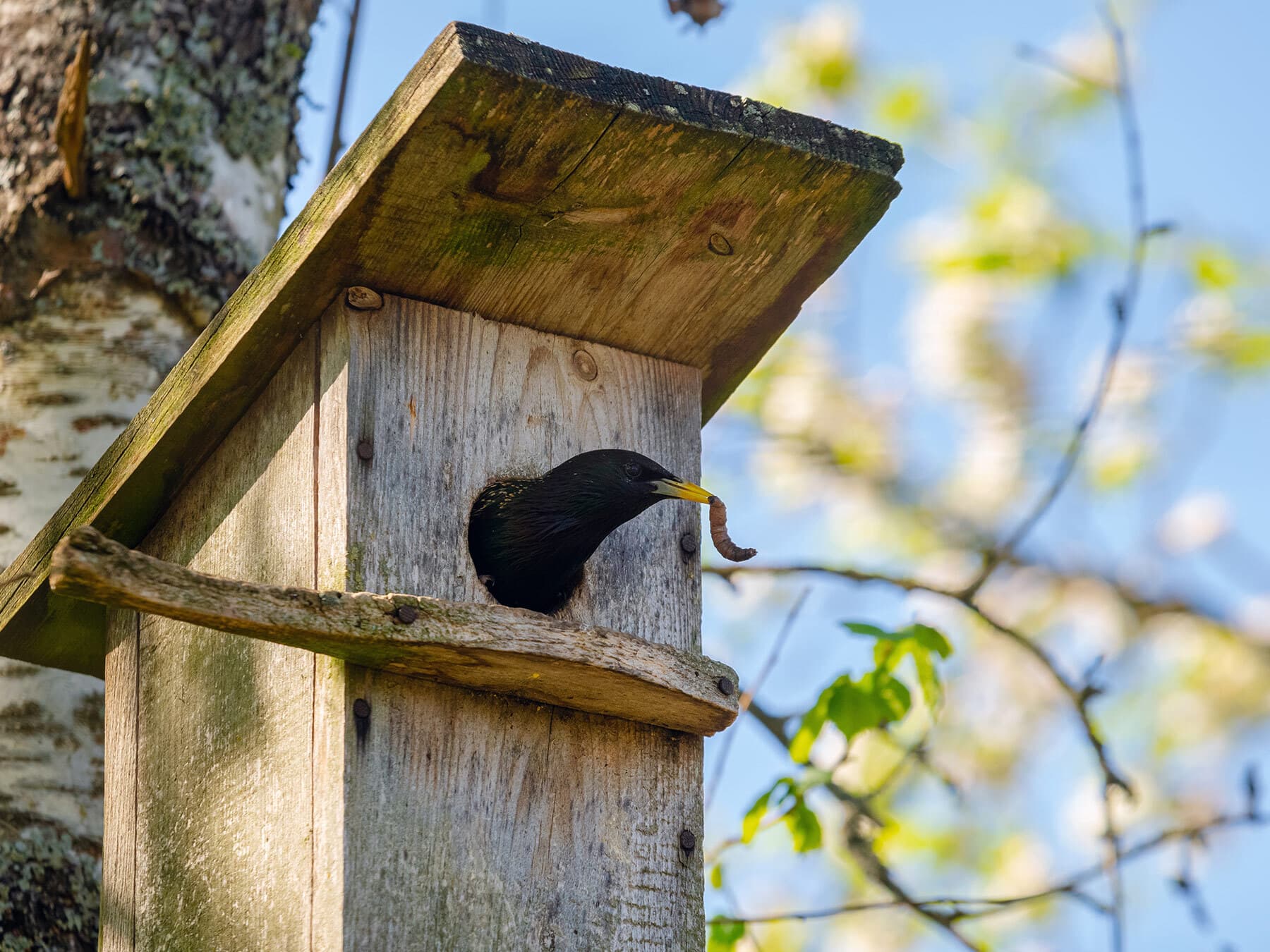
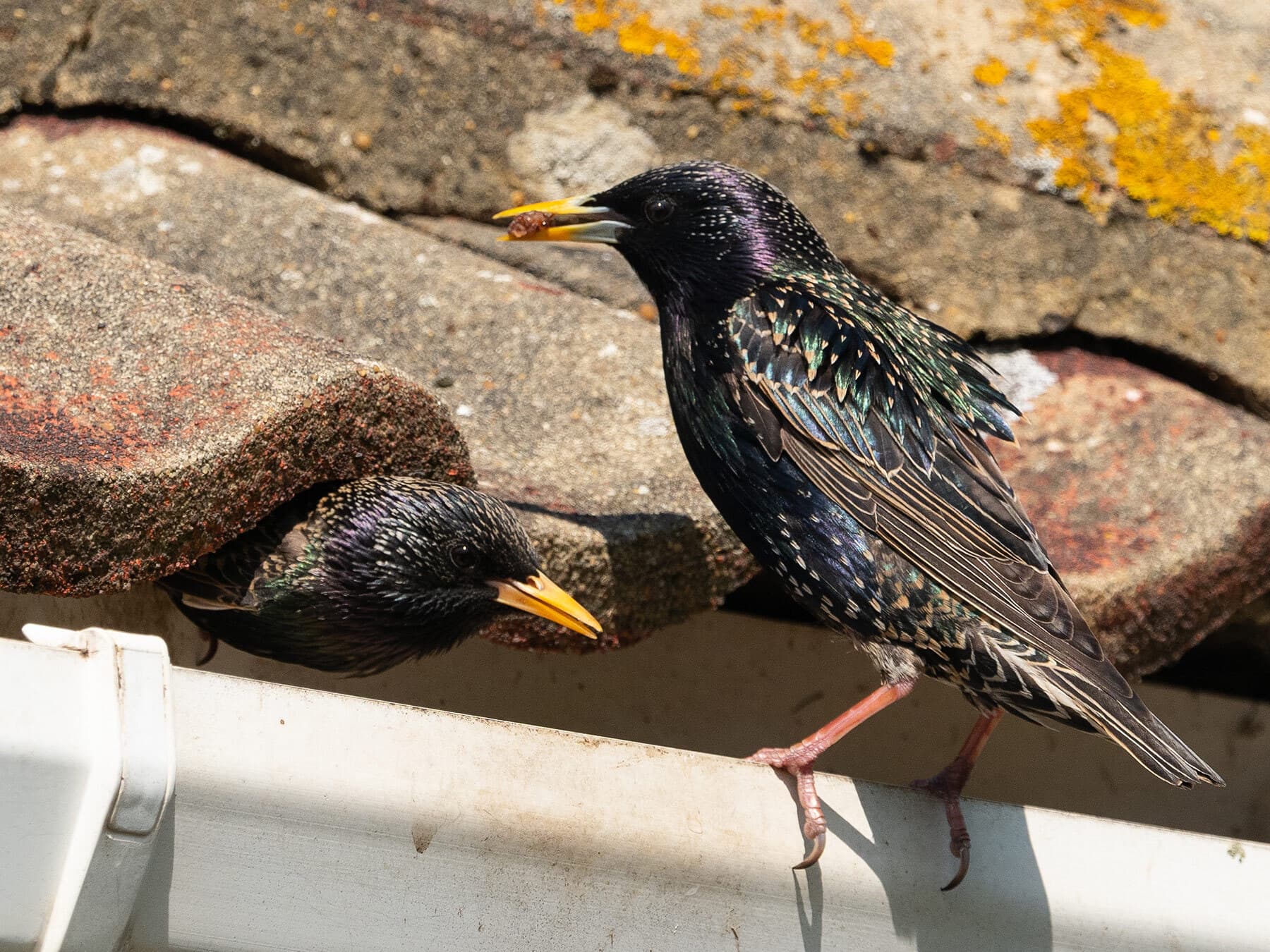
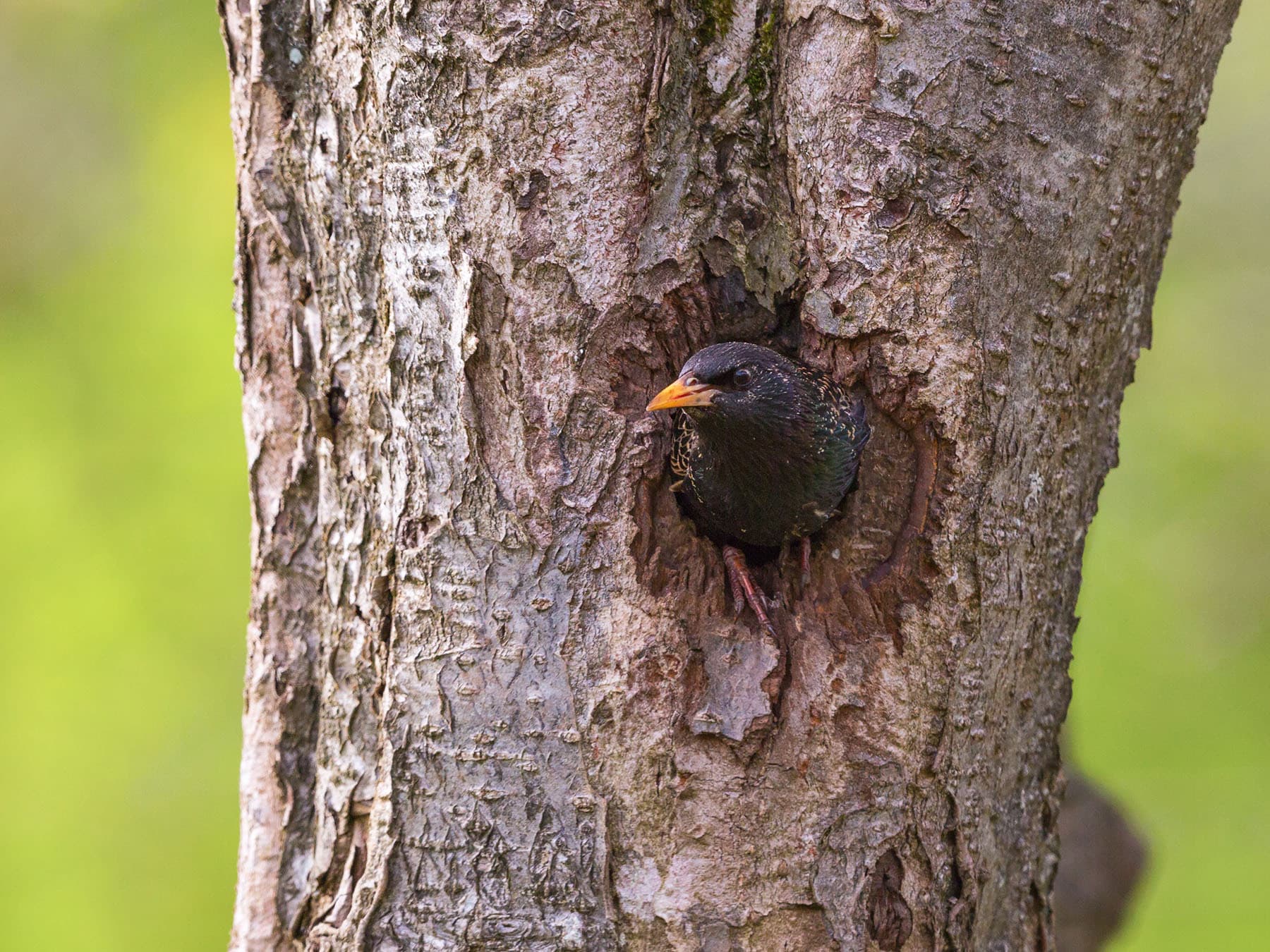
In holes: gaps under roof tiles and eaves, holes in walls, old woodpecker holes, natural holes in trees, and nest boxes. They get into roof spaces through gaps between the tiles and the gutter. Starlings will use almost any hole, from streetlights to cliffs, and in Europe several pairs often nest close together.
The nest
The male picks the hole and starts filling it, at a leisurely pace, with grass, pine needles, twigs and odds and ends: feathers, string, paper, even plastic. The female finishes the job, sometimes throwing out his material, and makes a cup at the back lined with feathers, fine grass, moss or wool. A nest can be built in one to three days.
Males keep adding fresh green leaves, such as yarrow, through egg laying and incubation. They may help keep down mites and other parasites, or play a part in courtship.

Eggs
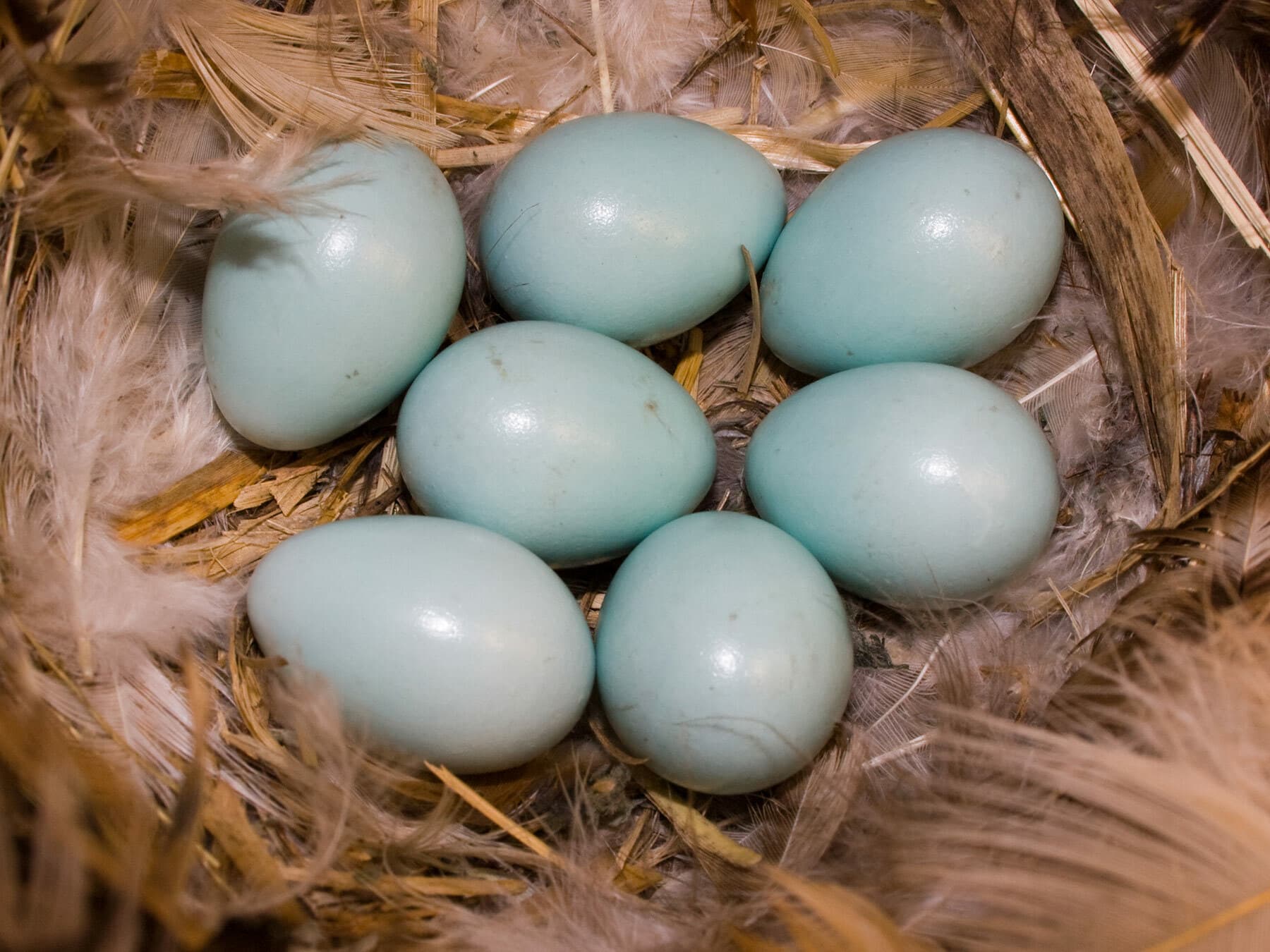
Usually 4 or 5 eggs (anything from 2 to 9 has been recorded), plain pale blue and unmarked, about 30 x 21 mm.1 The female lays one egg a day, usually in the morning. Starlings sometimes lay an egg in a neighbour's nest.
Incubation and chicks
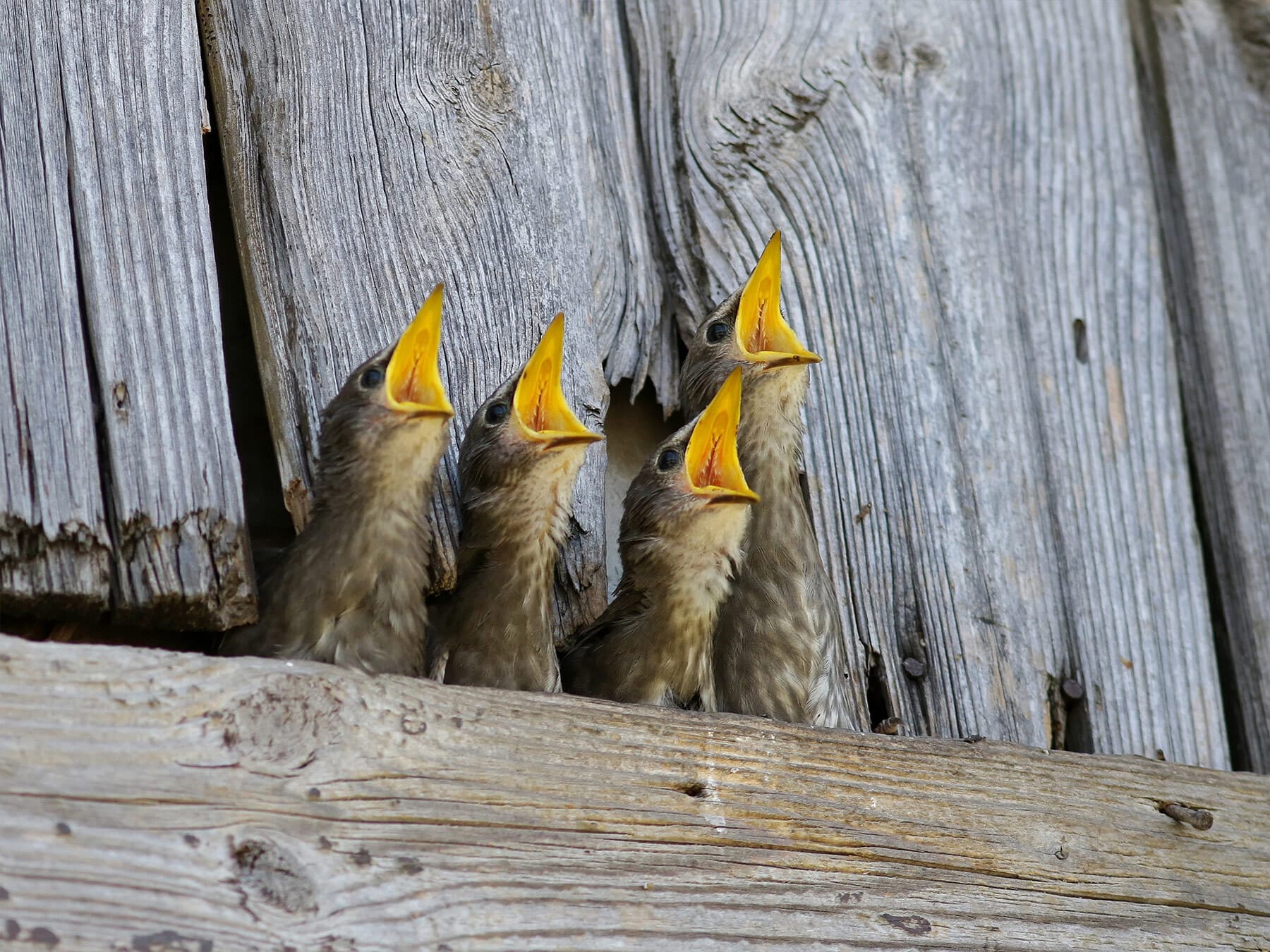
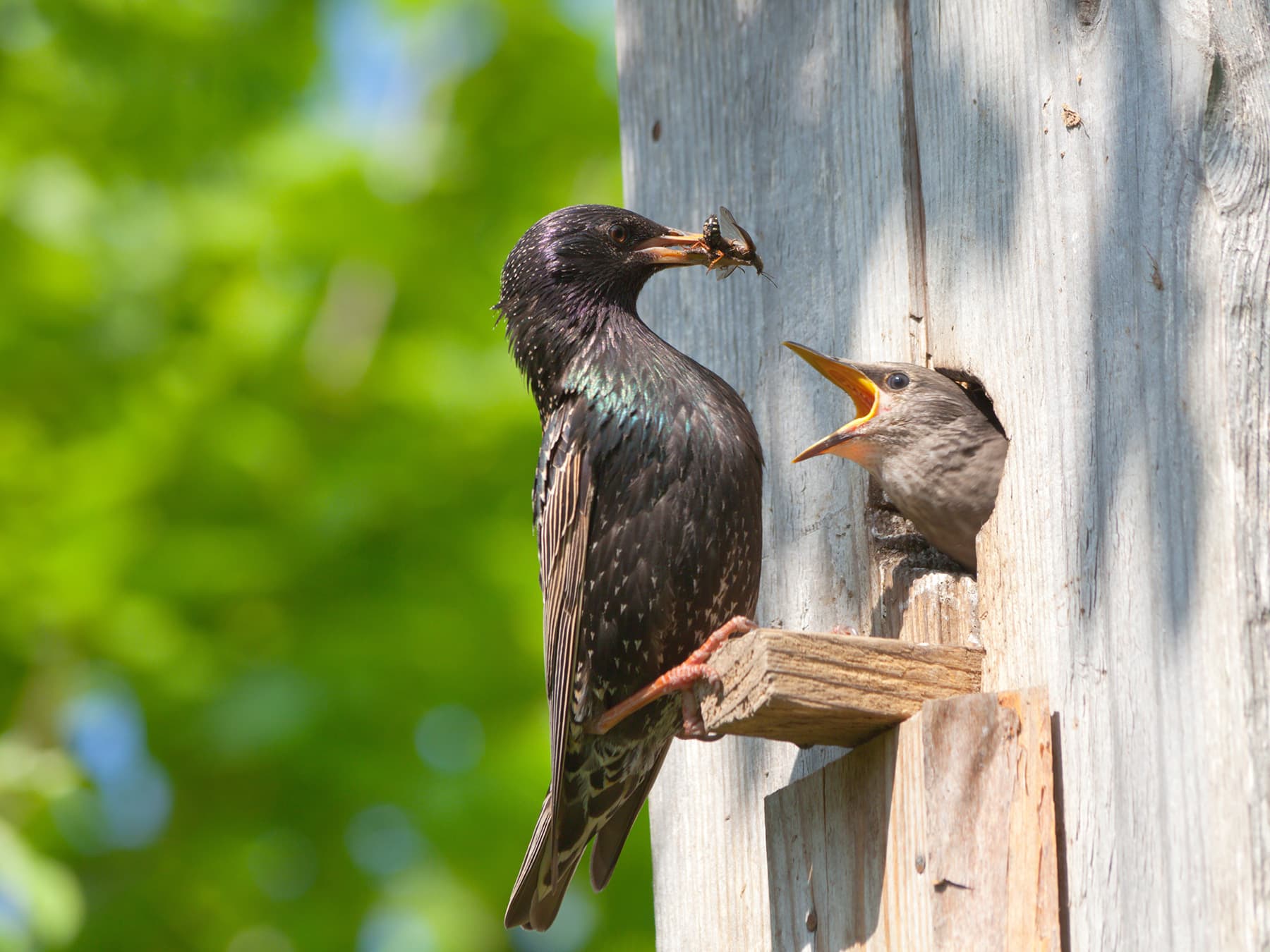
Both parents sit on the eggs, the female more by day and alone at night, for 12 to 15 days. The chicks leave the nest at 19 to 21.5 days old. Day by day: baby Starlings.
How long nesting takes
It takes about five weeks from the first egg to the young leaving: four or five days of laying, about 12 days of incubation and 19 to 21.5 days in the nest. With a second brood, a pair can be busy from April into July.
Reusing nest holes
Starlings often use the same holes for several seasons, building on top of the old nest.2 In one long study in New York, about a third of returning females nested in the same box as the year before, and about 90% nested less than 1 km away.
Nest boxes
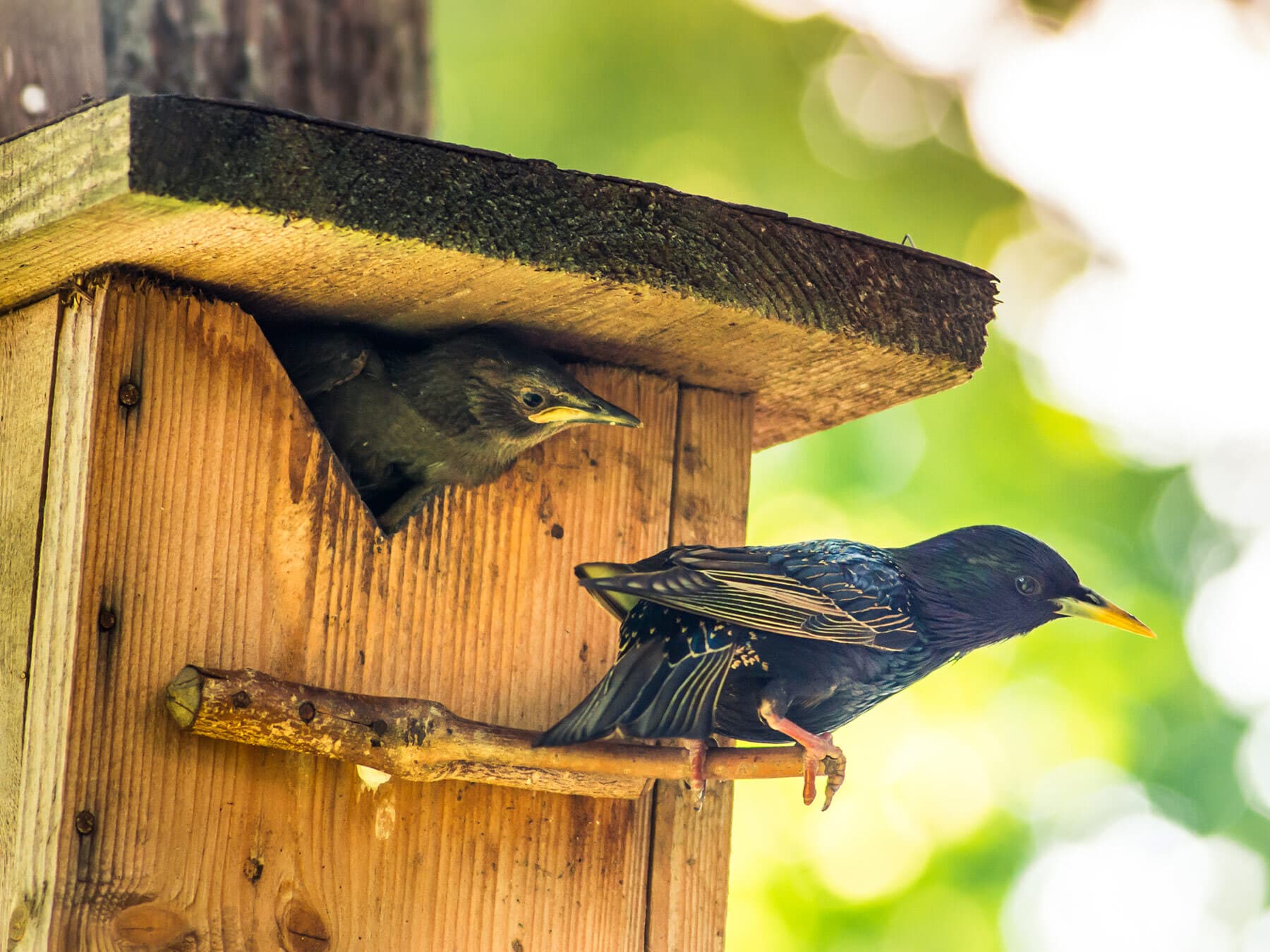
Starlings take readily to nest boxes. The RSPB's design has a 45 mm (4.5 cm) round entrance hole. Put it at least 3 m (10 ft) up, under the eaves or on a mature tree, facing north or east and out of direct sun, and not over a door, window or busy path. Starlings like having neighbours, so you could put up two. Any time of year is fine, but early spring is best.3
For tit boxes, a 25 mm hole keeps Starlings and House Sparrows out.4
Starlings nesting in your roof
In England and Wales it is an offence intentionally to take, damage or destroy the nest of any wild bird while it is being built or in use; in Scotland the offence also covers doing so recklessly, and interfering with the nest5 (in Northern Ireland, under the Wildlife (Northern Ireland) Order 1985, intentionally or recklessly), and the RSPB's advice for the whole UK is the same: an active nest must not be removed. If Starlings are nesting in your roof, let the young leave before removing the nest or blocking the gap, and do the work in winter, when they are not nesting. If building work cannot wait, ask Natural England, NatureScot, Natural Resources Wales or DAERA for advice. If the roof is not a safe place for them, put up a nest box instead.6
Sources
- BTO. Starling (Sturnus vulgaris). BTO BirdFacts. Accessed 6 October 2026. Source
- Cabe, P. R. (2020). European Starling (Sturnus vulgaris), version 1.0. Birds of the World (S. M. Billerman, Editor). Cornell Lab of Ornithology. doi:10.2173/bow.eursta.01
- RSPB. Build a Starling nestbox. Accessed 6 October 2026. Source
- RSPB. Our ultimate guide to nestboxes. Accessed 6 October 2026. Source
- UK Parliament (1981). Wildlife and Countryside Act 1981, section 1. Accessed 6 October 2026. Source
- RSPB. What to do if birds are nesting in your roof or eaves. Accessed 6 October 2026. Source
- BTO. Nest boxes for birds. Accessed 6 October 2026. Source
- National Audubon Society (text: Kaufman, Lives of North American Birds). European Starling. Audubon Guide to North American Birds. Accessed 6 October 2026. Source
- Cornell Lab of Ornithology. European Starling (overview and life history). All About Birds. Accessed 6 October 2026. Source
- UK Government (1985). The Wildlife (Northern Ireland) Order 1985, article 4. Accessed 7 October 2026. Source