Facts · Updated 8 Oct 2026
What Do Starlings Eat? Diet and Feeding Starlings
By the Birdfact teamChecked by Nathan Cope
Starlings eat insects and other small animals from the soil, especially leatherjackets and beetle grubs, plus fruit, seeds and grain in autumn and winter. Here is what they eat through the year, what they feed their chicks, and how to feed them in a garden.
On this page9 sections
This page covers what Starlings eat through the year, how they find it, what they feed their chicks, and how to feed them in a garden. For the bird in general, see Starling identification and facts.
What do Starlings eat?
Almost anything, but insects and other small animals are their first choice: beetles and their grubs, leatherjackets (cranefly larvae), caterpillars, flies, grasshoppers, earthworms, snails, millipedes and spiders. Fruit, berries, seeds and grain fill in, above all in autumn and winter.
Food in the lawn
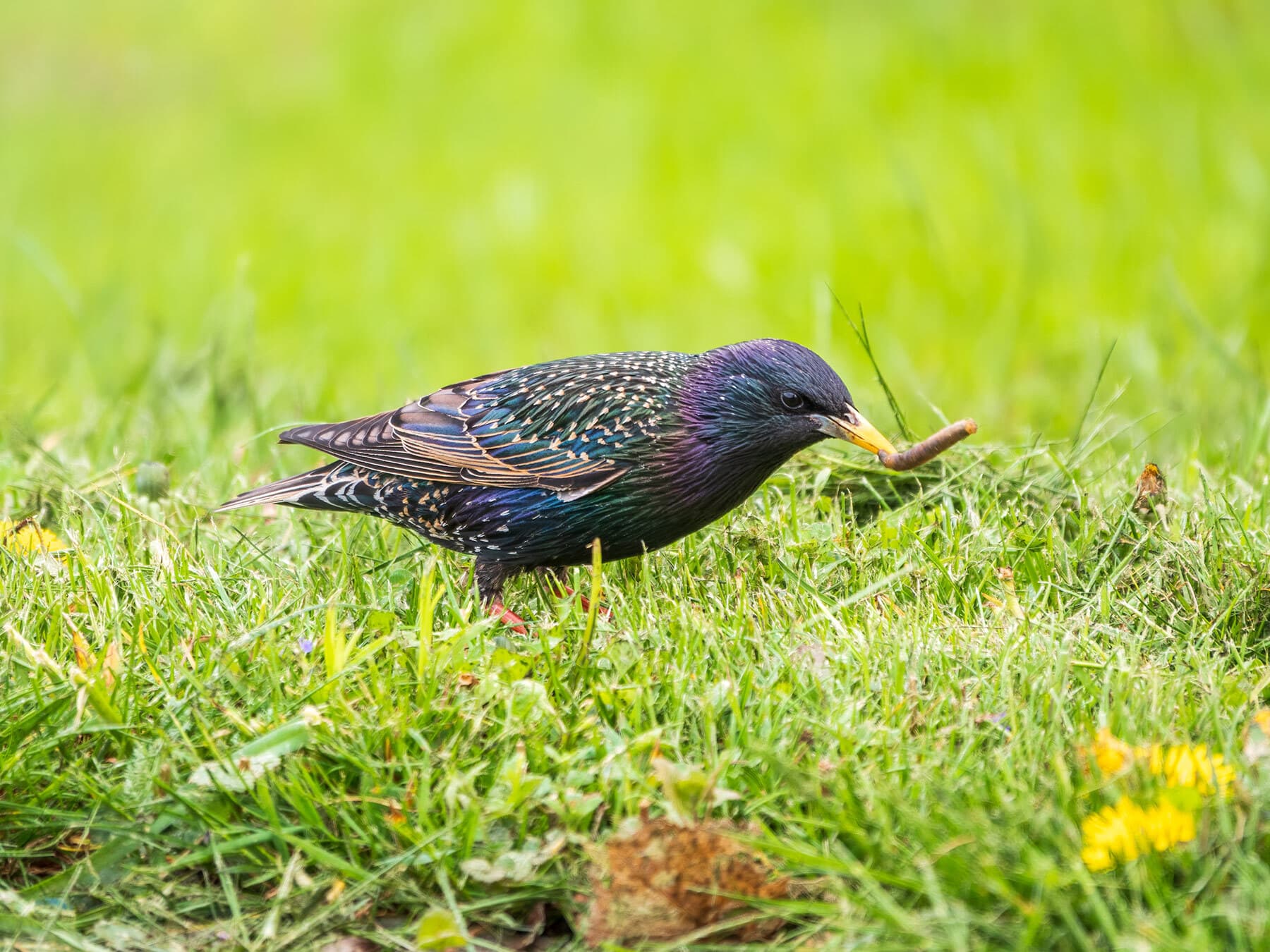
On lawns they eat mostly what lives in the soil under short turf: leatherjackets, beetle grubs and other larvae, earthworms. This is why Starlings love lawns, playing fields and grazed pasture. Leatherjackets remain an important food for Starling chicks on farmland, and the BTO thinks the loss of permanent pasture, their main feeding habitat, is one reason Starlings have declined.1
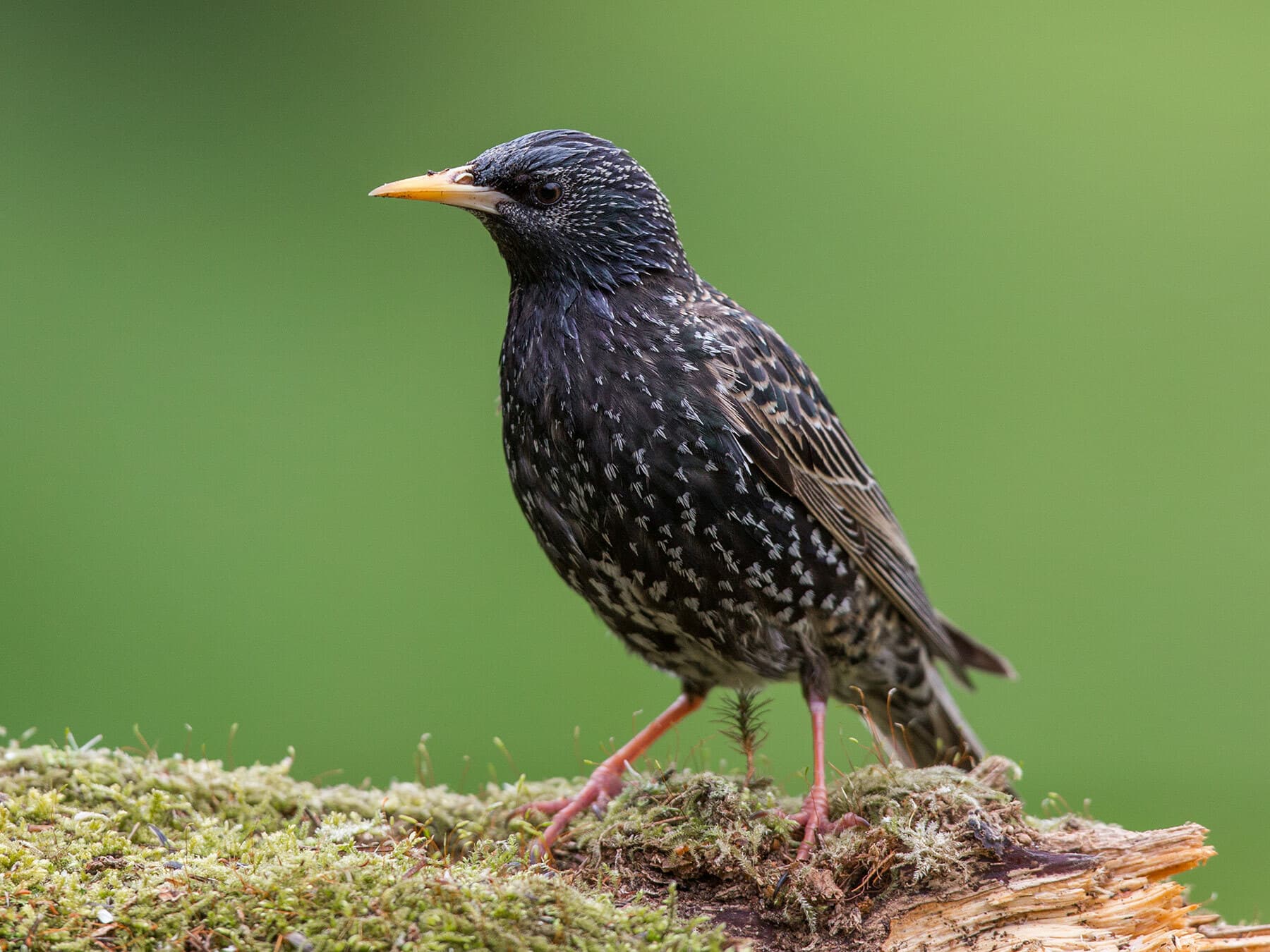
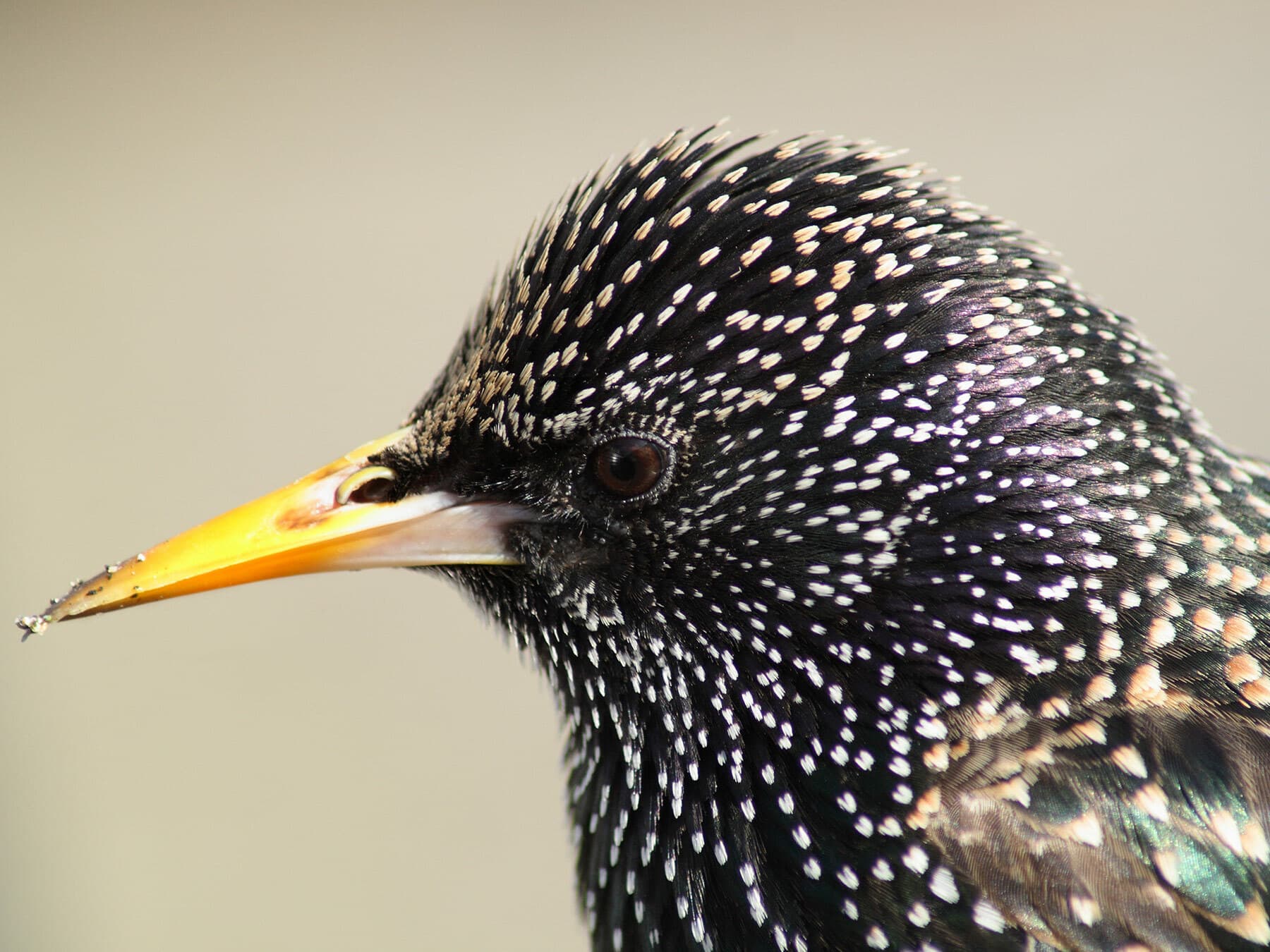
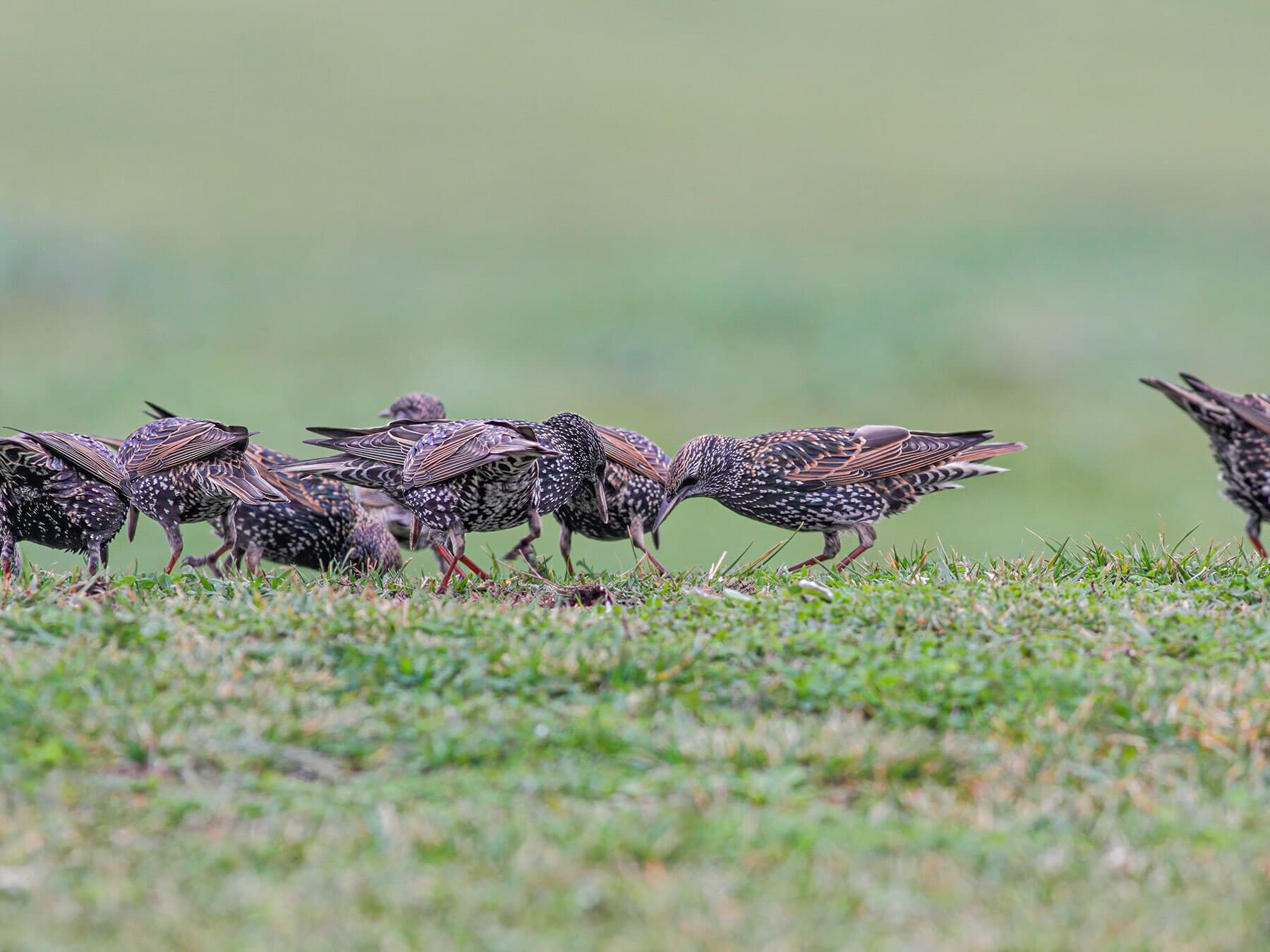
A Starling pushes its closed bill into the turf and then forces it open, prising a gap to see and seize what is underneath. Powerful muscles for opening the bill make this possible. It is why a feeding flock seems to stab at the ground at every step.
Through the year
In one study in Texas, animal food made up 97% of what Starlings ate in April and 44% in November: lots of insects in spring and summer, more fruit and seed in autumn and winter.2
| Season | Main foods |
|---|---|
| Spring and summer | Insects and other soil animals; caterpillars and grubs for the chicks |
| Late summer and autumn | Fruit and berries: cherries, elderberries, blackberries, rowan, apples, pears, grapes |
| Winter | Soil animals from short grass; berries such as holly and yew; seeds, grain and scraps |
Animal food
Much of their food is animal: insects, worms, snails and spiders. They also take the odd frog, newt or lizard, and they help themselves to kitchen scraps and pet and livestock food.
Fruit and berries
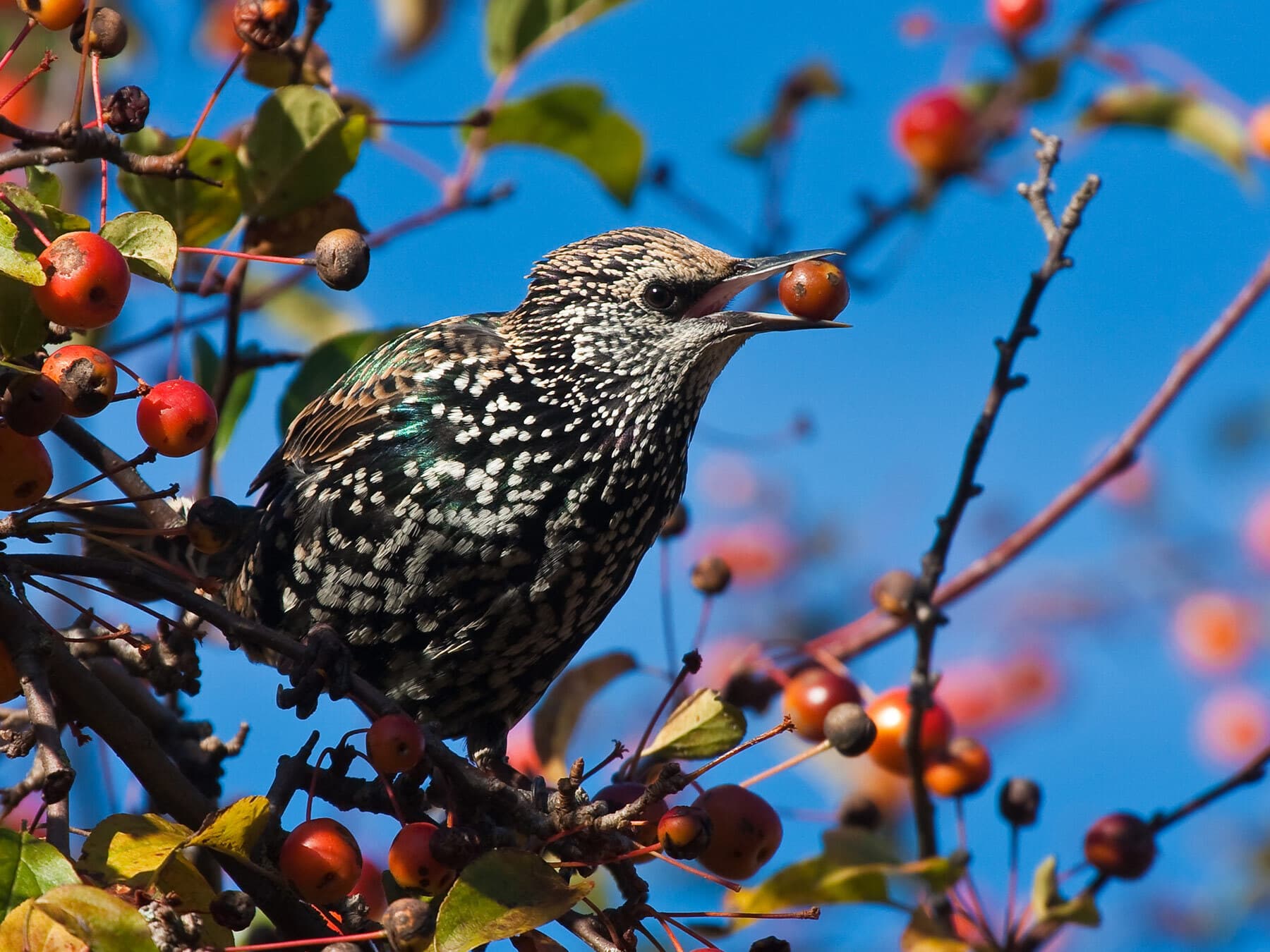
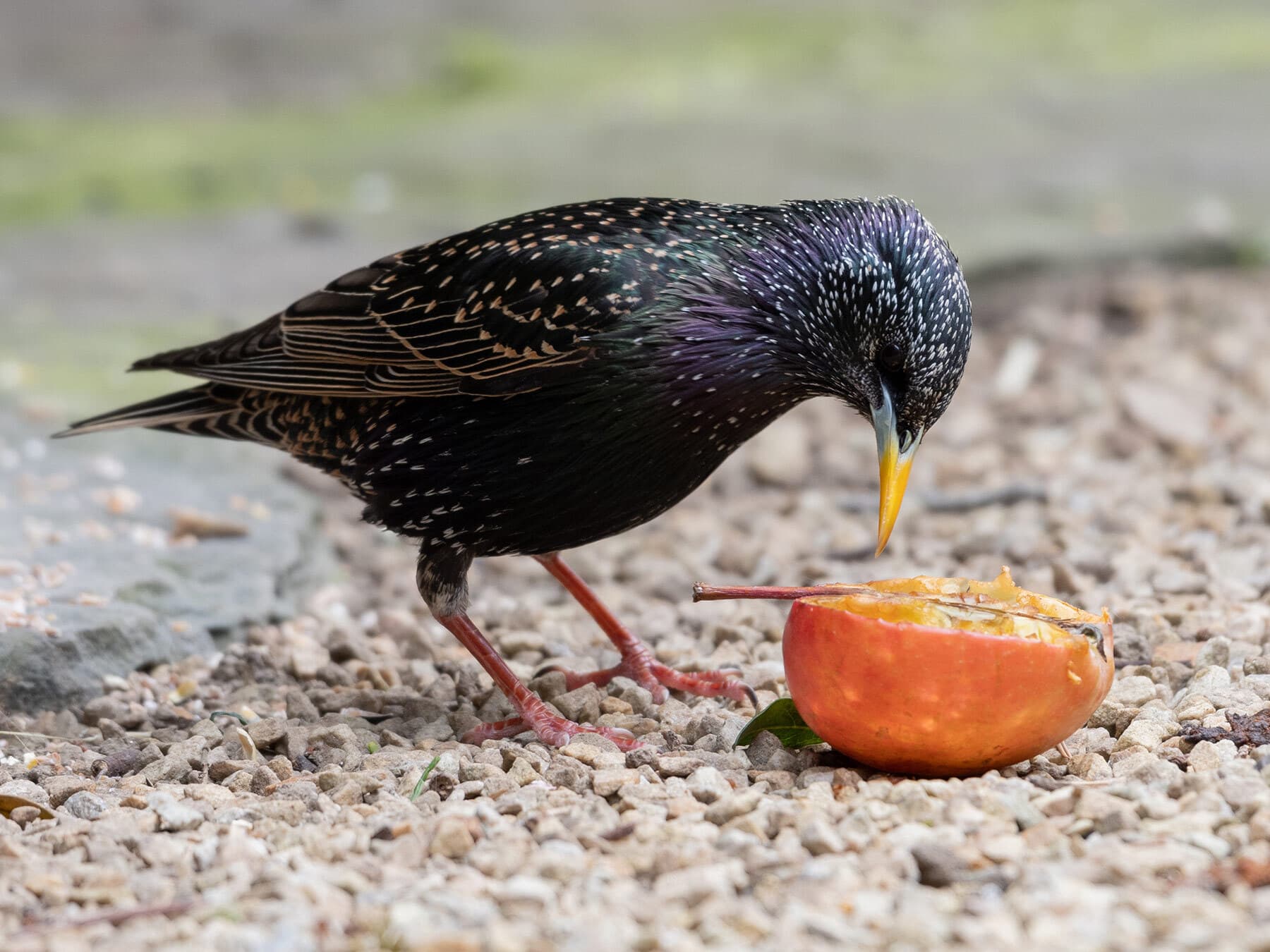
Starlings eat cherries and plums, elderberries, blackberries, mulberries and holly berries, rowan and yew, apples and pears, grapes and olives. Flocks can damage fruit crops. They also sip nectar from some flowers.
One curiosity: Starlings cannot digest sucrose, ordinary table sugar, and can tell it apart from other sugars.
Food for the chicks
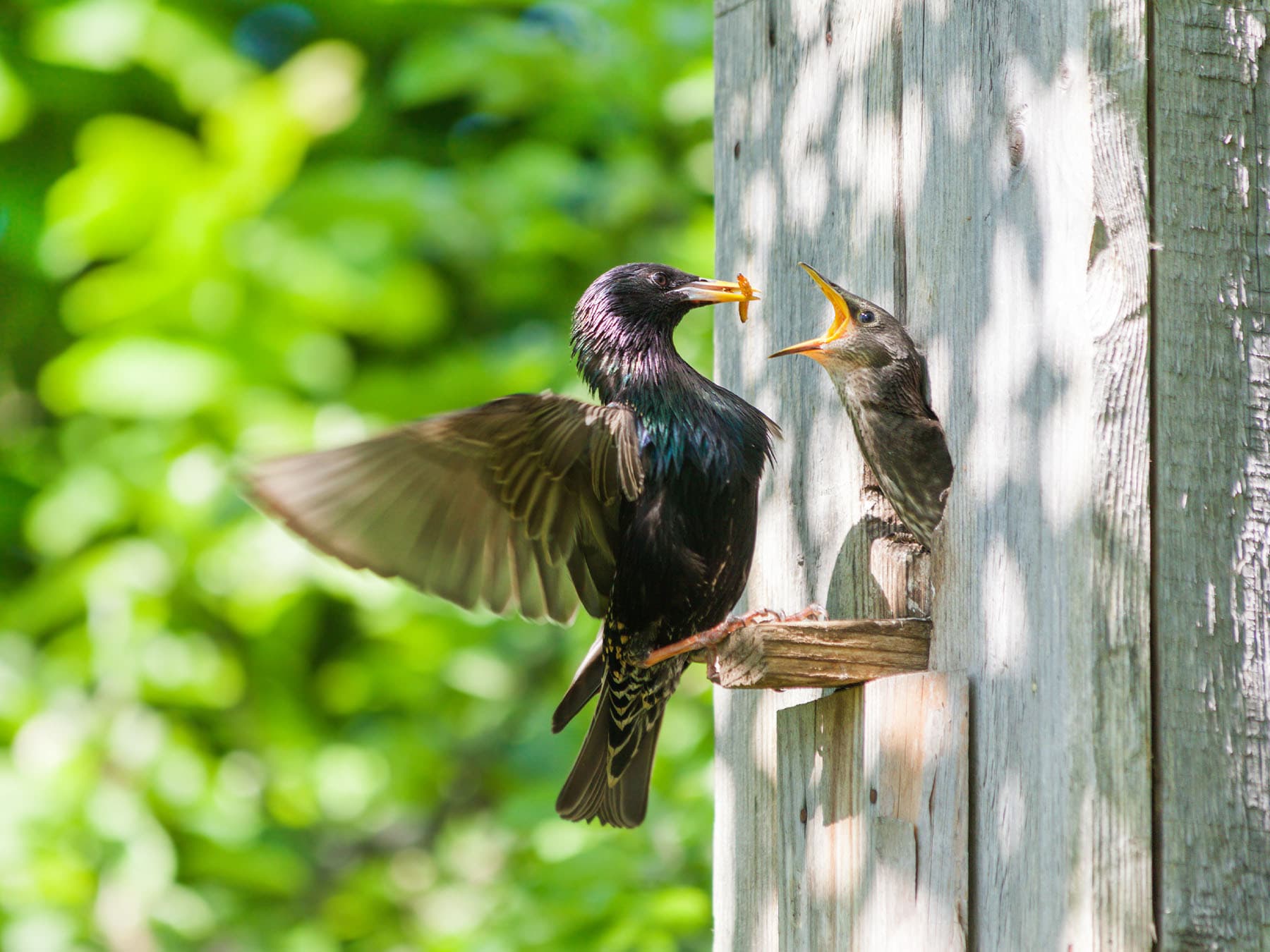
The chicks are fed small animals, especially beetle and moth larvae, leatherjackets, millipedes and grasshoppers. Both parents bring food, up to 20 times an hour at the busiest times. More: baby Starlings.
Feeding Starlings in your garden
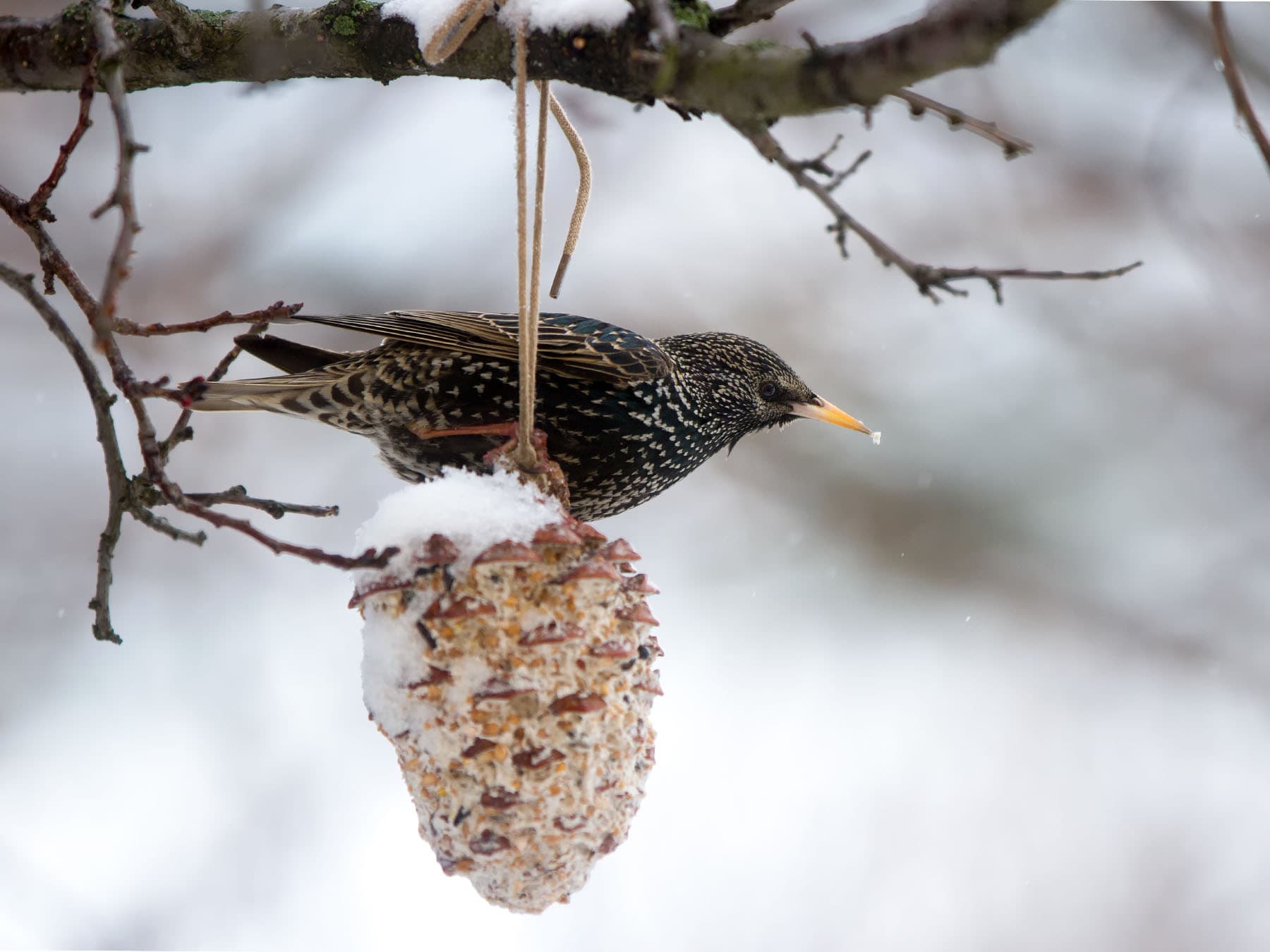
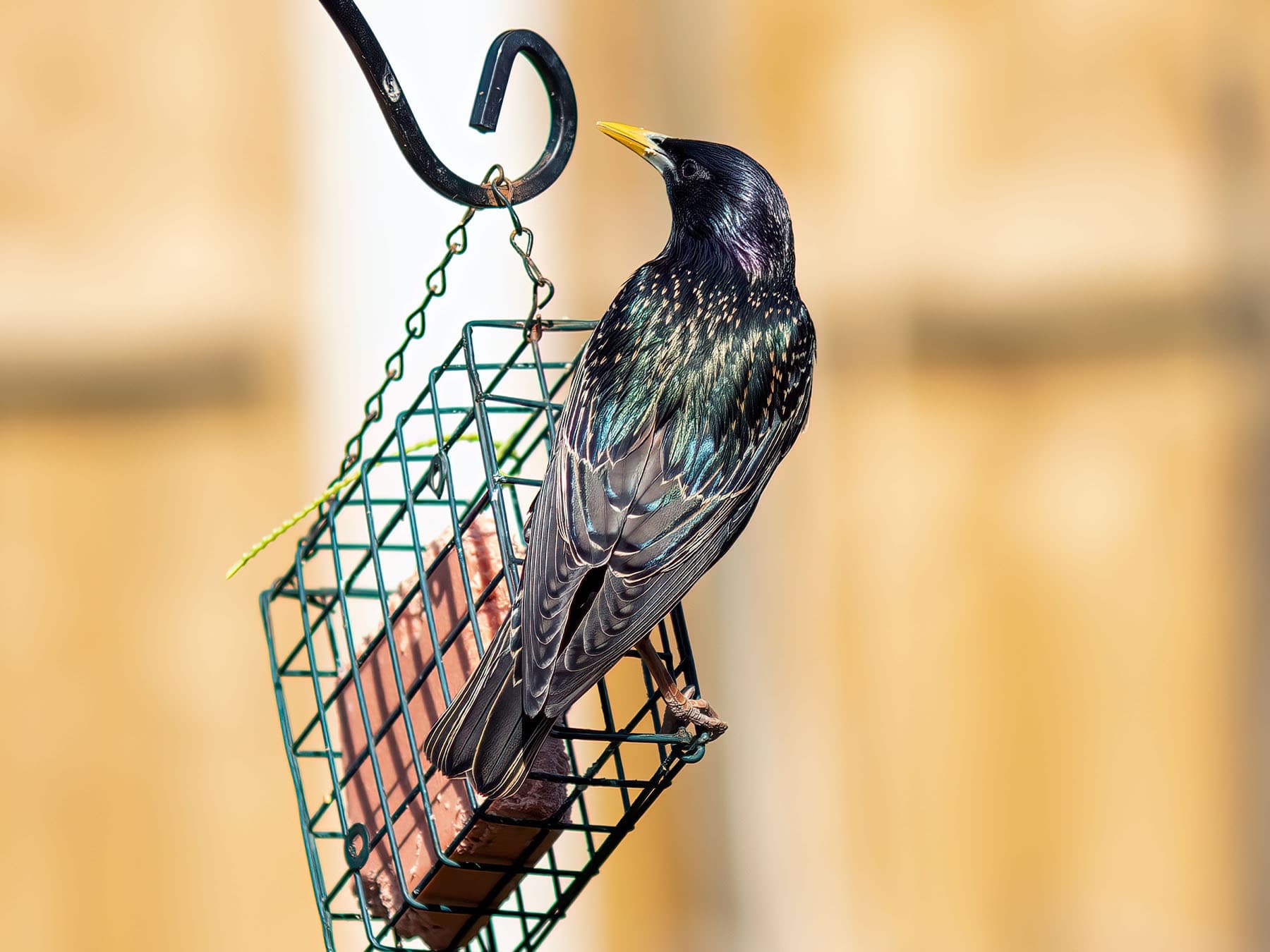
Starlings come readily to fat balls in a hanging mesh feeder.3 Follow the RSPB's July 2026 advice: from 1 May to 31 October, put out only small amounts of fat, suet or mealworms, and pause seed and peanuts; from November to April you can offer the full range. Use hanging feeders, not tables, trays or window feeders, clean feeders and bird baths every week, and change the water every day.4
Avoid bread and dry, hard food in spring and summer, when chicks can choke on it, and never put out salted or cooked food. Short grass to feed on, and a Starling nest box (see where Starlings nest), help them too.
If Starlings take over your feeders
A flock of Starlings can empty a feeder fast and crowd out smaller birds. Tube feeders help, because Starlings find them hard to use; their softer bills also struggle with peanuts in the shell and white-striped sunflower seed. Keeping food off the ground helps too.5
Sources
- BTO. Starling (Sturnus vulgaris). BTO BirdFacts. Accessed 6 October 2026. Source
- Cabe, P. R. (2020). European Starling (Sturnus vulgaris), version 1.0. Birds of the World (S. M. Billerman, Editor). Cornell Lab of Ornithology. doi:10.2173/bow.eursta.01
- RSPB. How and what to feed your garden birds. Accessed 6 October 2026. Source
- RSPB. How to help garden birds. Accessed 6 October 2026. Source
- Cornell Lab of Ornithology. My feeders are being overrun with starlings and blackbirds. What can I do?. All About Birds. Accessed 6 October 2026. Source
- National Audubon Society (text: Kaufman, Lives of North American Birds). European Starling. Audubon Guide to North American Birds. Accessed 6 October 2026. Source
- Cornell Lab of Ornithology. European Starling (overview and life history). All About Birds. Accessed 6 October 2026. Source
- RSPB. Build a Starling nestbox. Accessed 6 October 2026. Source