Facts · Updated 8 Oct 2026
How Long Do Starlings Live? Lifespan and Records
By the Birdfact teamChecked by Nathan Cope
A Starling that survives to breed typically lives about 5 years, but only about half of young Starlings survive their first year. The oldest Starling on the BTO's ringing records for Britain and Ireland lived over 17 years.
On this page7 sections
This page covers how long Starlings usually live, the oldest ever recorded, how many survive each year, and what kills them. For the bird in general, see Starling identification and facts.
How long do Starlings live?
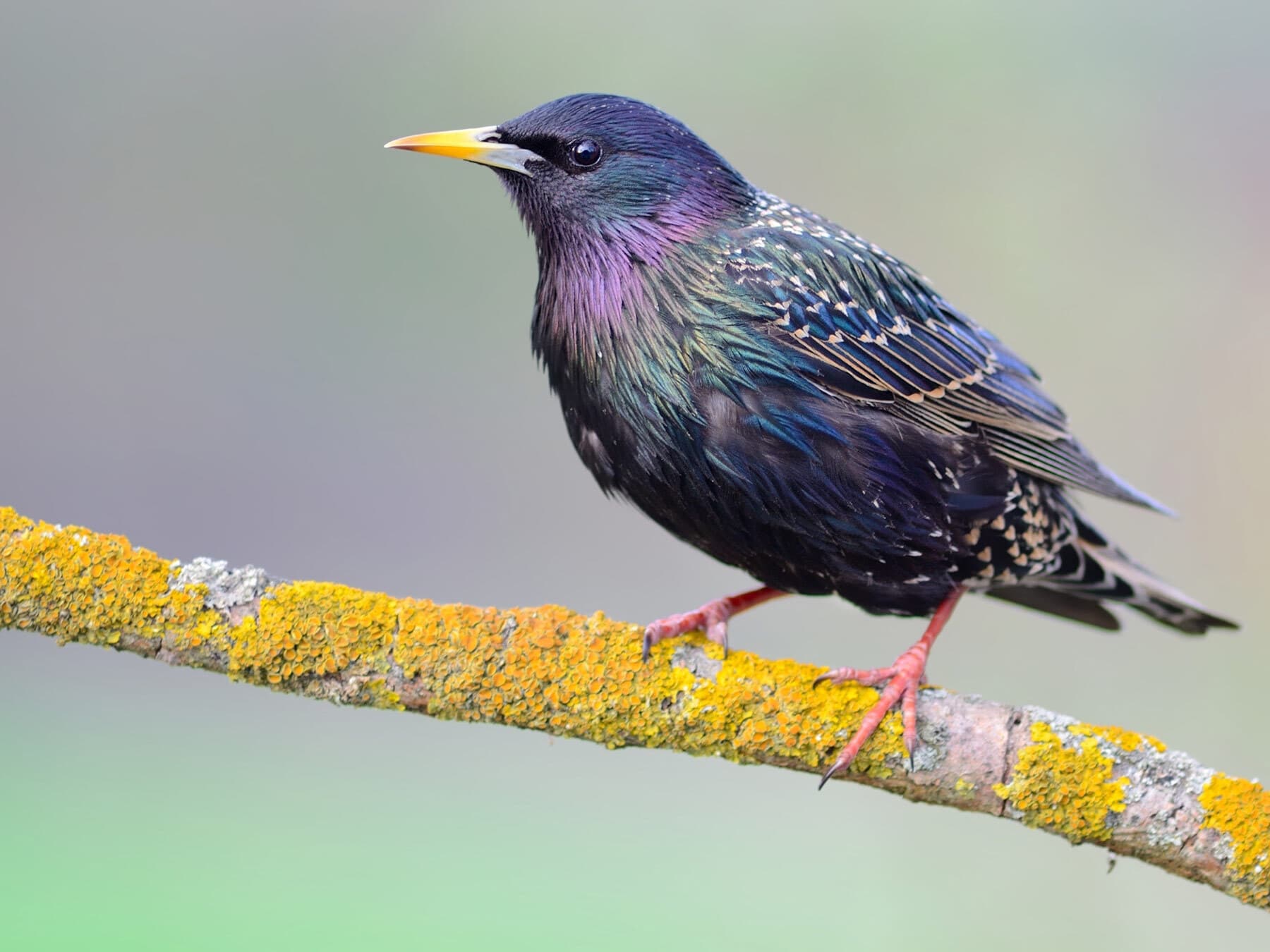
A Starling that survives to breed typically lives about 5 years, and most start breeding at about 2 years old. Each year about 69% of adults survive to the next, but only 52% of young birds survive their first year.1
So the average Starling lives much less than 5 years: many die before they ever breed. A few live far longer.
The oldest Starlings
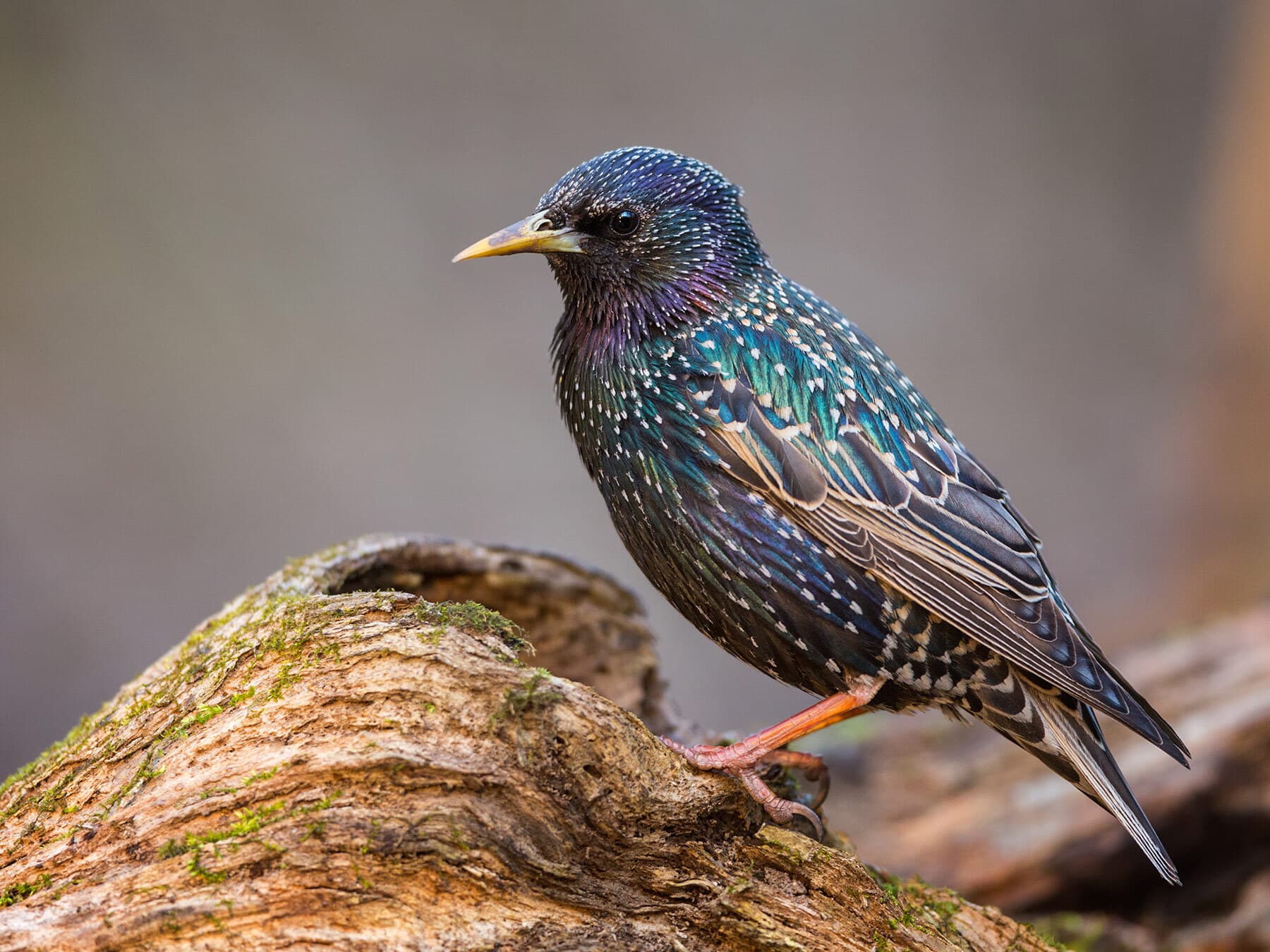
Ringing records show the longest-lived wild Starlings. The ages are minimums: each bird was at least that old when it was found.
| Record | Age | The bird |
|---|---|---|
| Britain and Ireland (BTO list) | 17 years, 7 months, 25 days | Ringed as a young female in Suffolk in November 1983; found dead in Russia, 2,122 km away, in July 20012 |
| Europe | 22 years, 11 months | Ringed in Denmark; found dead3 |
| North America | 15 years, 3 months | A male ringed in Tennessee in 1958 and found dead there in 19724 |
How long do Starlings live in captivity?
There is no reliable published figure. AnAge, the main scientific database of animal lifespans, lists only the wild record, the Danish bird of 22 years and 11 months.5 Claims online of pet Starlings living much longer could not be traced to any record we could check.
Survival in the first year
The first year is the hardest. In Britain, fewer young Starlings now survive their first winter than in the past, and BTO analyses show this is the main reason the population has fallen by 61% since 1995, even though nests do at least as well as before.1 More: why Starlings have declined.
In one long study in New York, about 20% of young that left the nest lived to breed.6
Predators and other causes of death
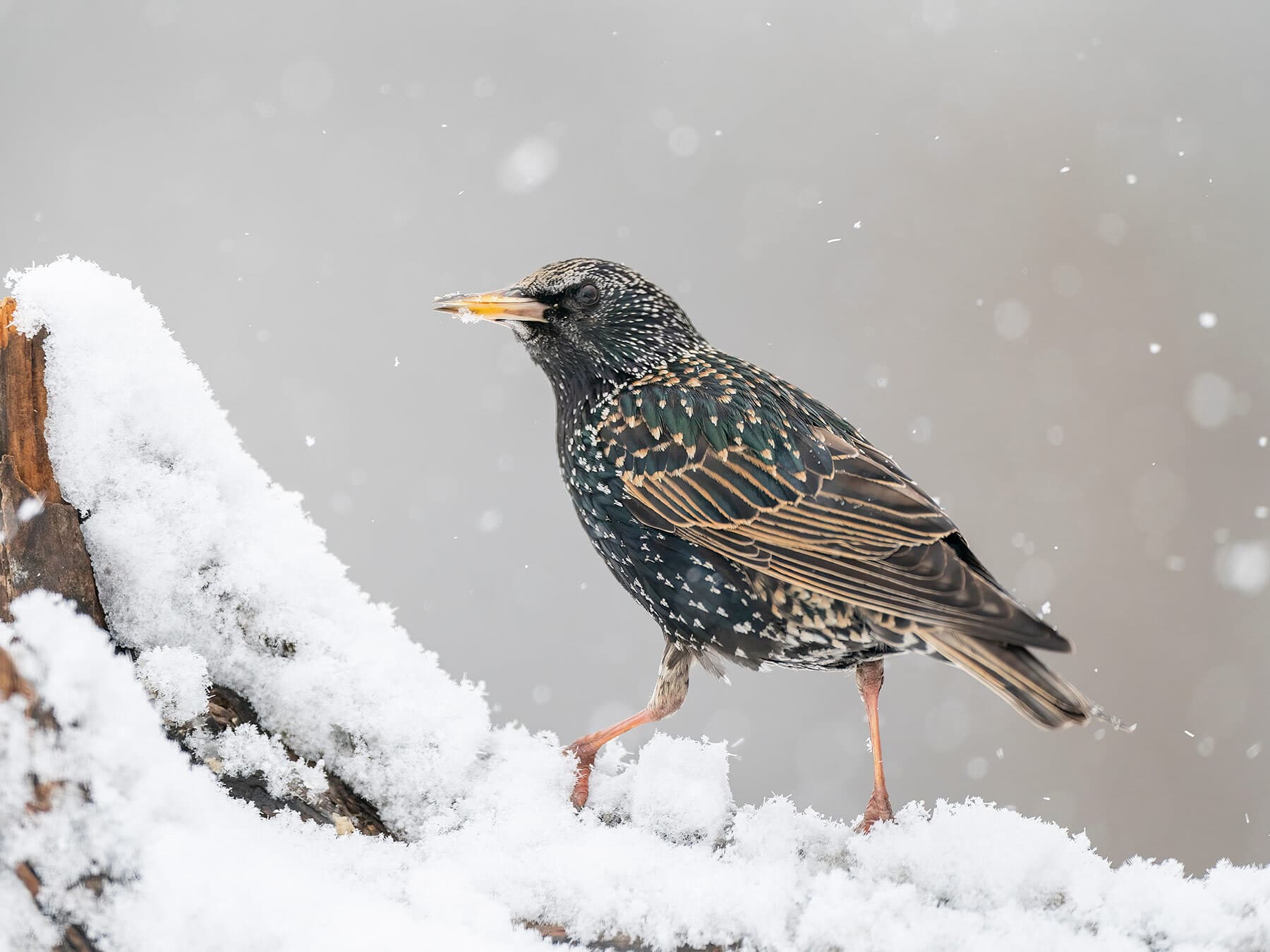
Hawks, falcons and owls take adults, and many predators visit the big roosts; cats, dogs, rats and weasels catch Starlings too, and squirrels and stoats raid nests. Starlings are not a major food of any predator, though, and predation is not thought to control their numbers.
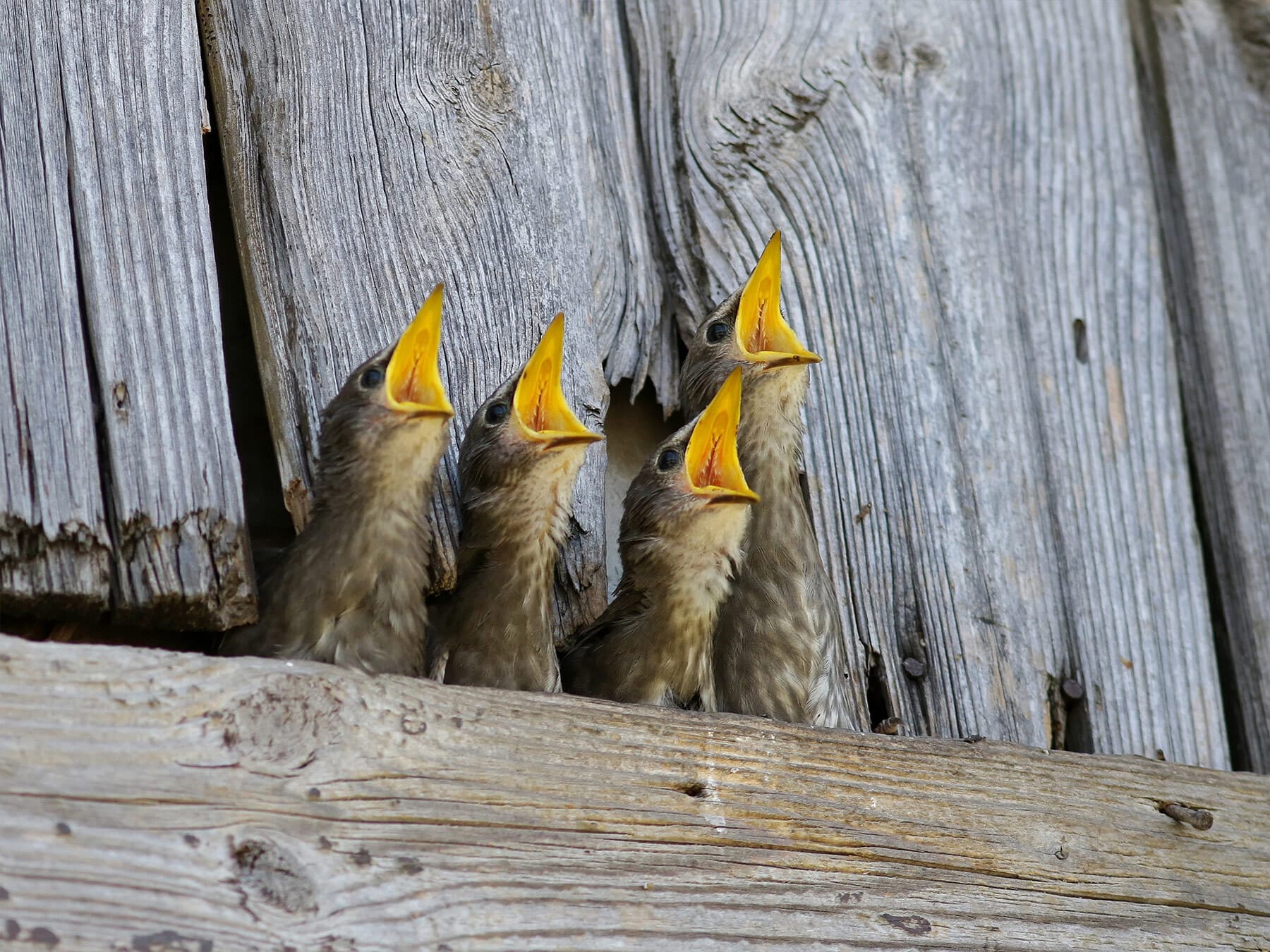
Cold, wet weather and hunger kill many chicks, especially the last to hatch, which lose out to bigger nestmates and can make up more than half of all nestling deaths. Just after leaving the nest, young Starlings are at high risk from starvation and predators; the heaviest chicks from early broods survive best.
Age at first breeding
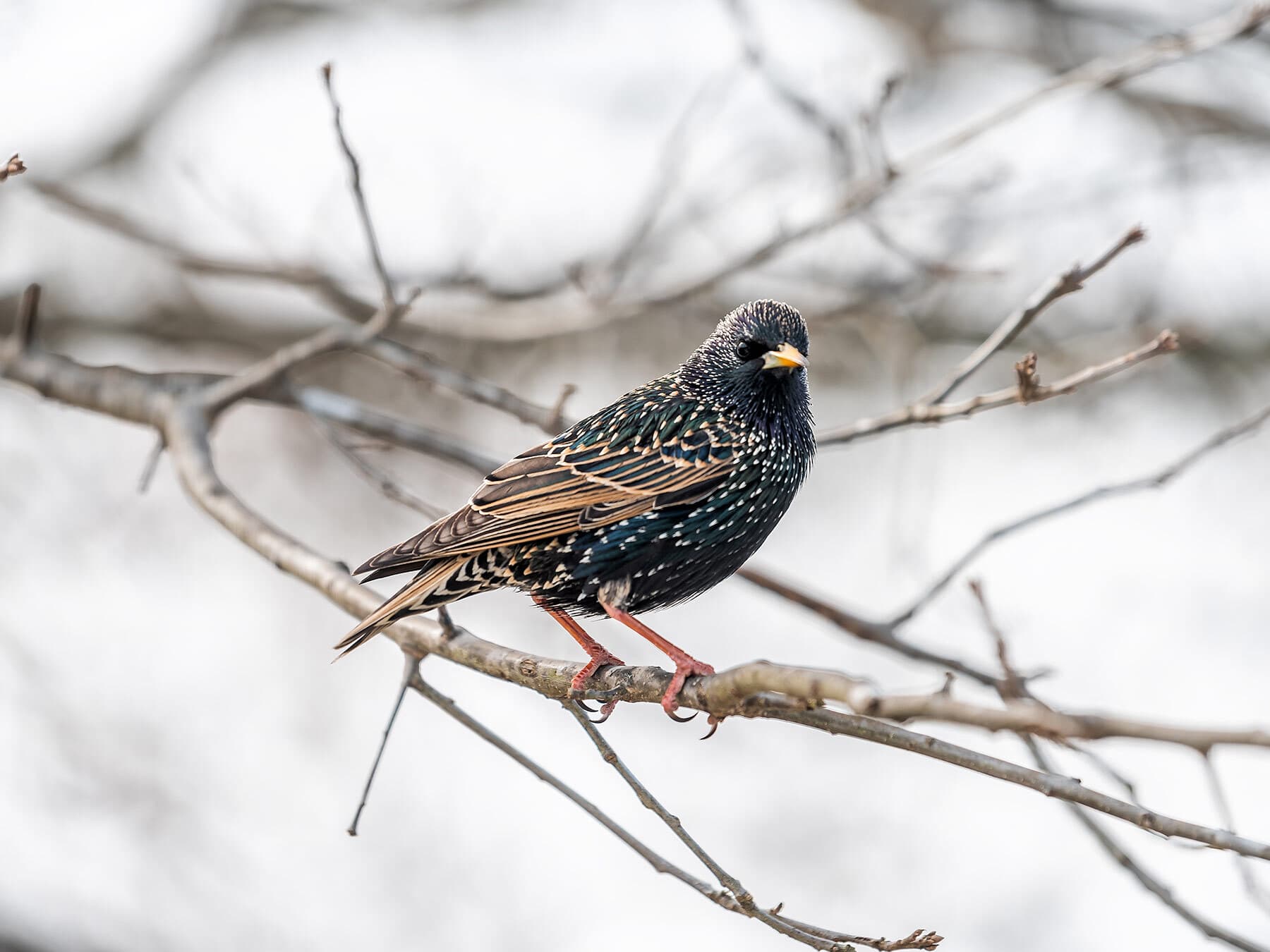
They typically first breed at 2 years old in Britain. Some females breed in their first year, especially where there are spare nest holes, but first-year males rarely do.
Sources
- BTO. Starling (Sturnus vulgaris). BTO BirdFacts. Accessed 6 October 2026. Source
- BTO. Longevity records. BTO Online Ringing Report 2024. Accessed 6 October 2026. Source
- Fransson, T., Kolehmainen, T., Moss, D., Robinson, R. (2023). EURING list of longevity records for European birds (1 September 2023). Accessed 6 October 2026. Source
- USGS Bird Banding Laboratory. Longevity records of North American birds. Accessed 6 October 2026. Source
- Tacutu, R., Thornton, D., Johnson, E. et al. (2018). AnAge: The Animal Ageing and Longevity Database (Human Ageing Genomic Resources: new and updated databases). Nucleic Acids Research. doi:10.1093/nar/gkx1042
- Cabe, P. R. (2020). European Starling (Sturnus vulgaris), version 1.0. Birds of the World (S. M. Billerman, Editor). Cornell Lab of Ornithology. doi:10.2173/bow.eursta.01
- Cornell Lab of Ornithology. European Starling (overview and life history). All About Birds. Accessed 6 October 2026. Source