Identification · Updated 6 Oct 2026
European Starling vs Common Grackle: How to Tell Them Apart
By the Birdfact teamChecked by Nathan Cope
A Common Grackle is bigger and longer-tailed than a European Starling, with a pale yellow eye and gloss all year; a Starling is short-tailed and dark-eyed, spotted in winter and yellow-billed in summer. Here is how to tell them apart, with photos.
On this page12 sections
European Starlings and Common Grackles are both glossy black birds of North American lawns, fields and feeders, and they often feed in the same flocks in autumn and winter. This page shows how to tell them apart at a glance and up close. For each bird in full, see the European Starling and the Common Grackle.
| European Starling | Common Grackle | |
|---|---|---|
| Length | 20.6-23.1 cm (8.1-9.1 in) | 28-34 cm (11-13.4 in) |
| Weight | 59.5-96.4 g (2.1-3.4 oz) | 74-142 g (2.6-5 oz) |
| Tail | Short and square | Long, keel-shaped, sometimes folded into a shallow V |
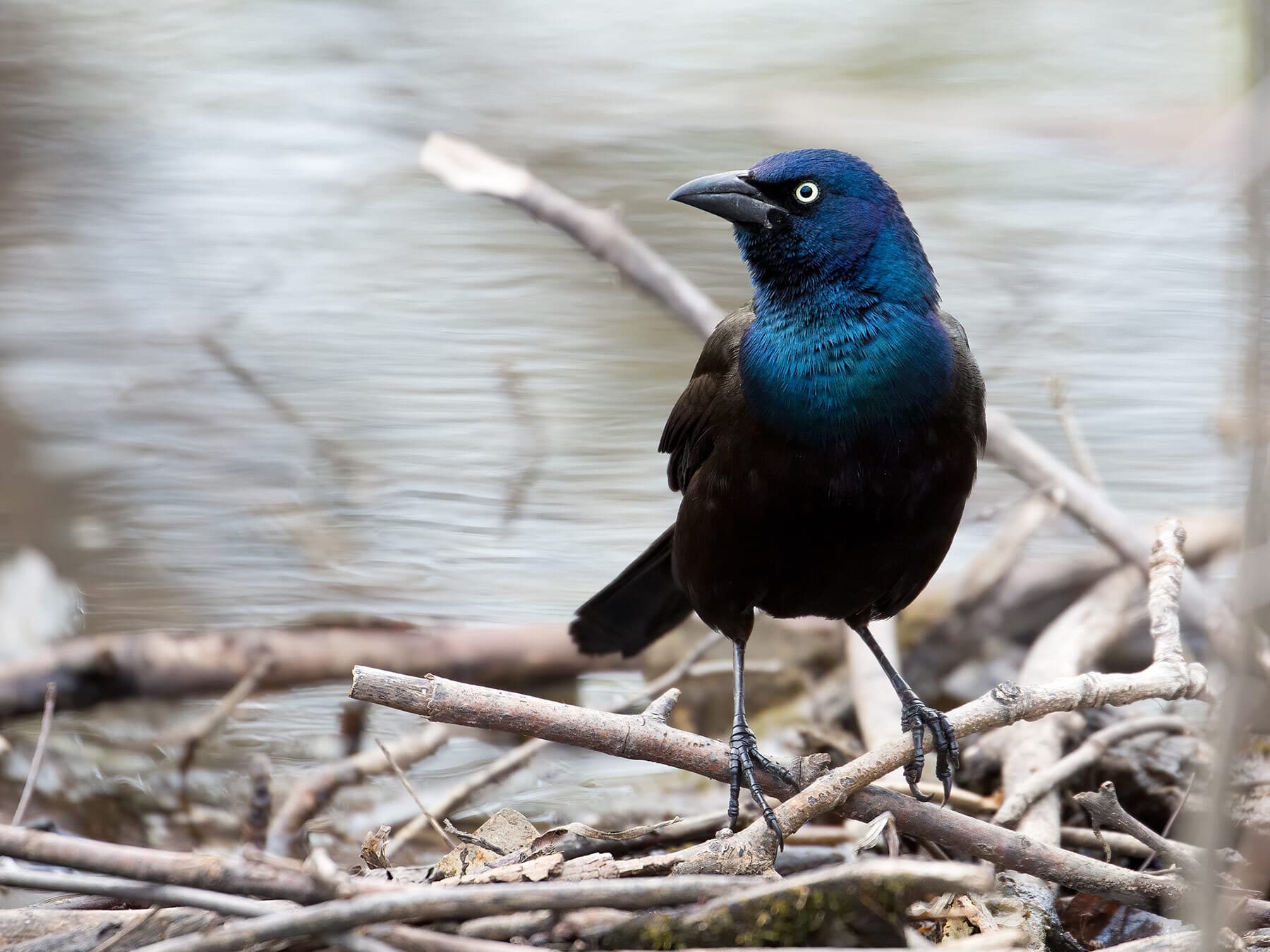
| Eye | Dark brown | Pale yellow in adults; brown in young birds |
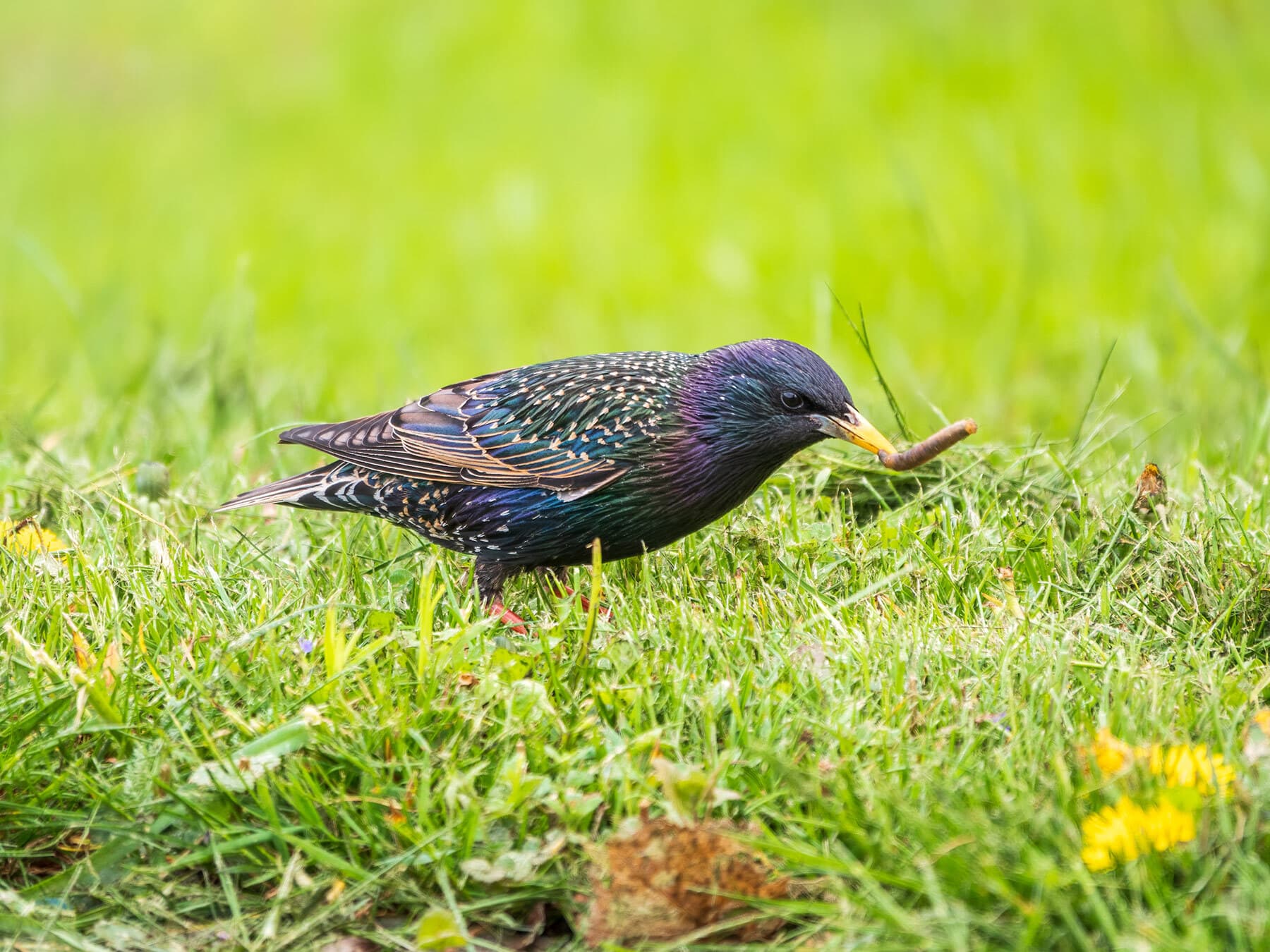
| Bill | Yellow in spring and summer, dark in winter; slender | Black; long and heavier |
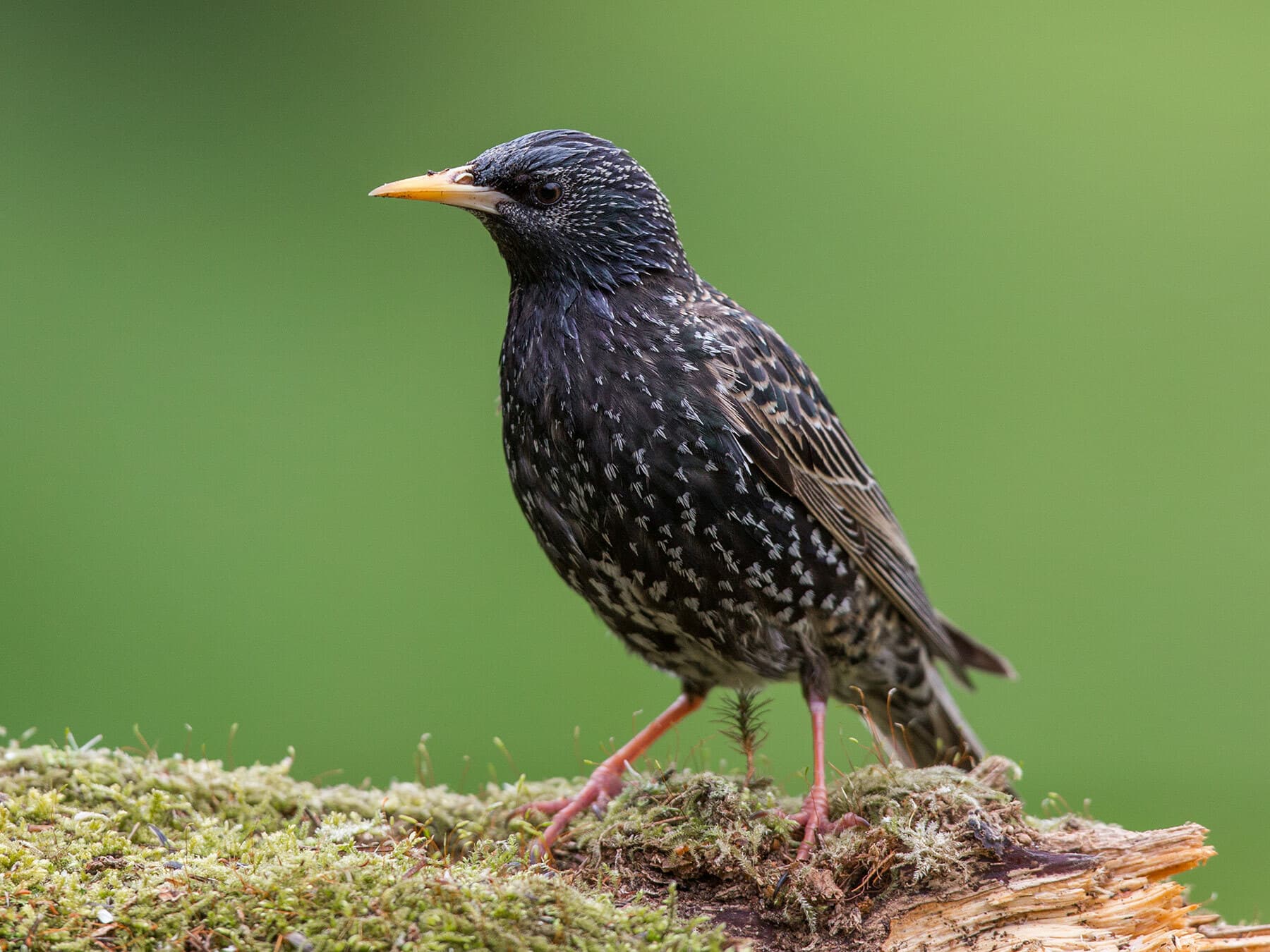
| Plumage | Covered in white spots in winter; glossy purple and green in summer | Glossy all year: blue to purple head, bronze or purple body; never spotted |
| Legs | Reddish-pink to brown | Black |
| Young birds | Plain grey-brown, dark bill | Dull brown, brown eyes |
| Voice | Whistles, clicks, rattles and mimicry | Harsh chack; a squeaky 'rusty gate' song |
| Nest | In a hole | Open cup in a dense tree, often a conifer |
| Origin | Introduced from Europe | Native |
Size and shape
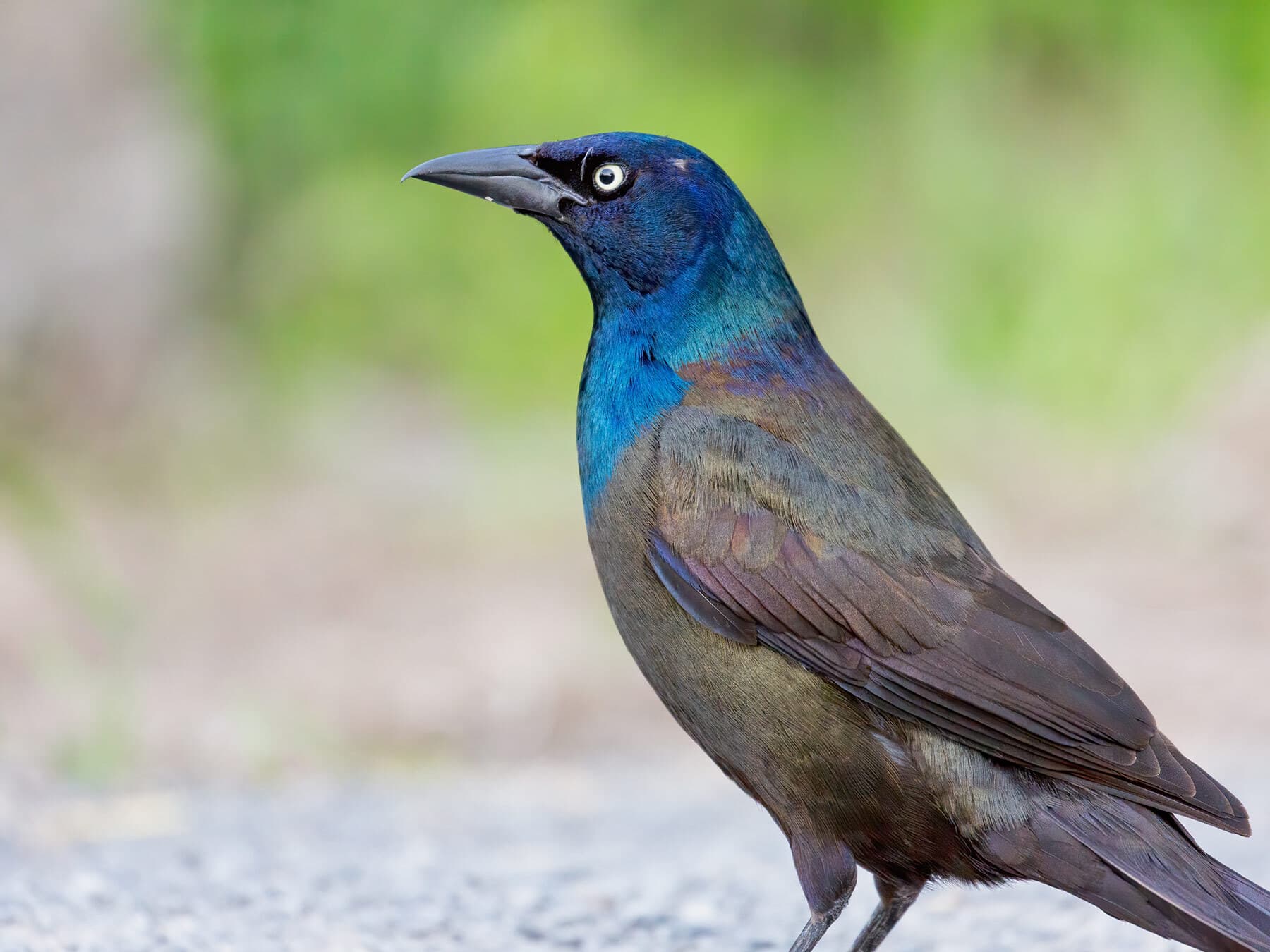
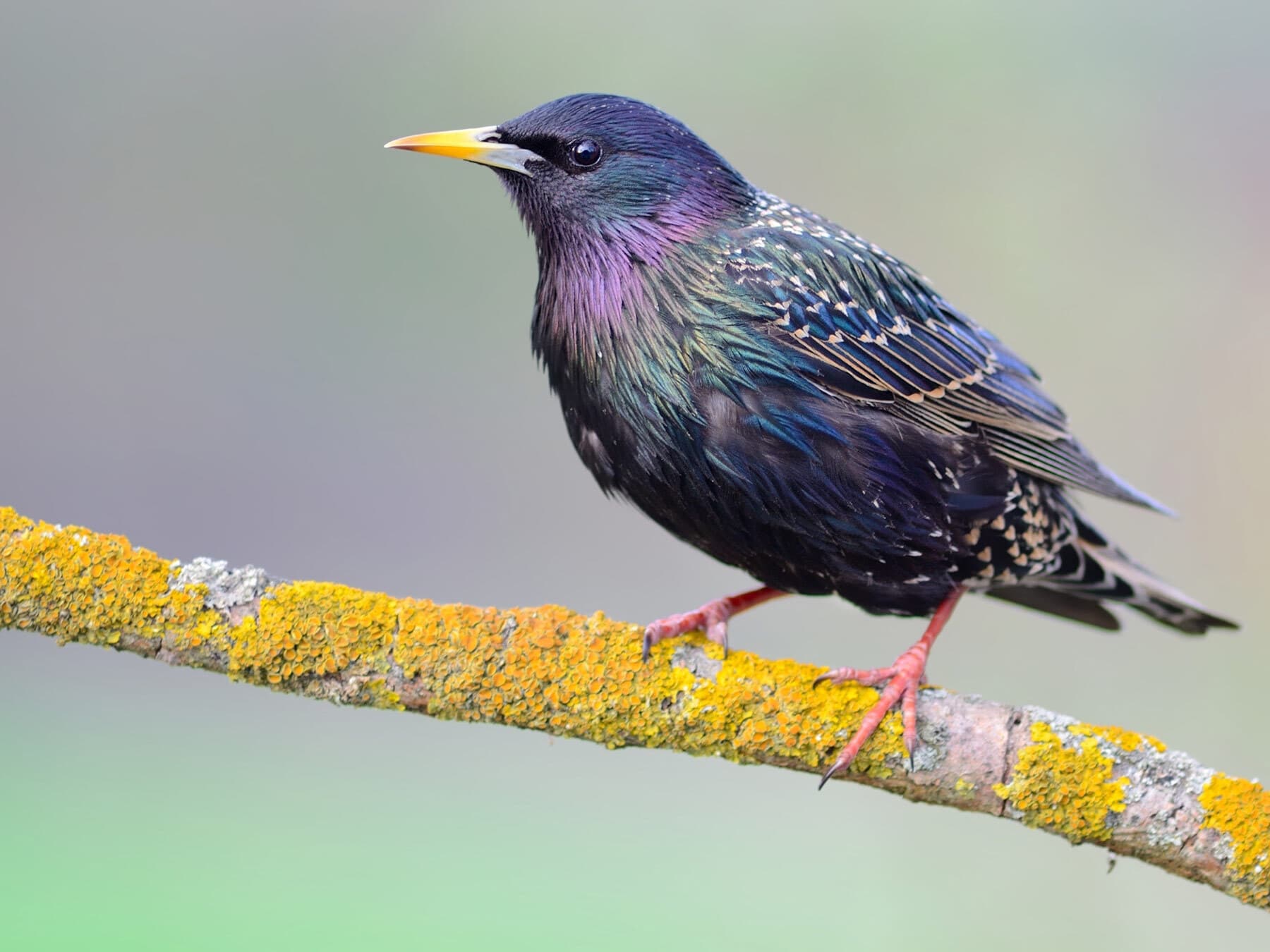
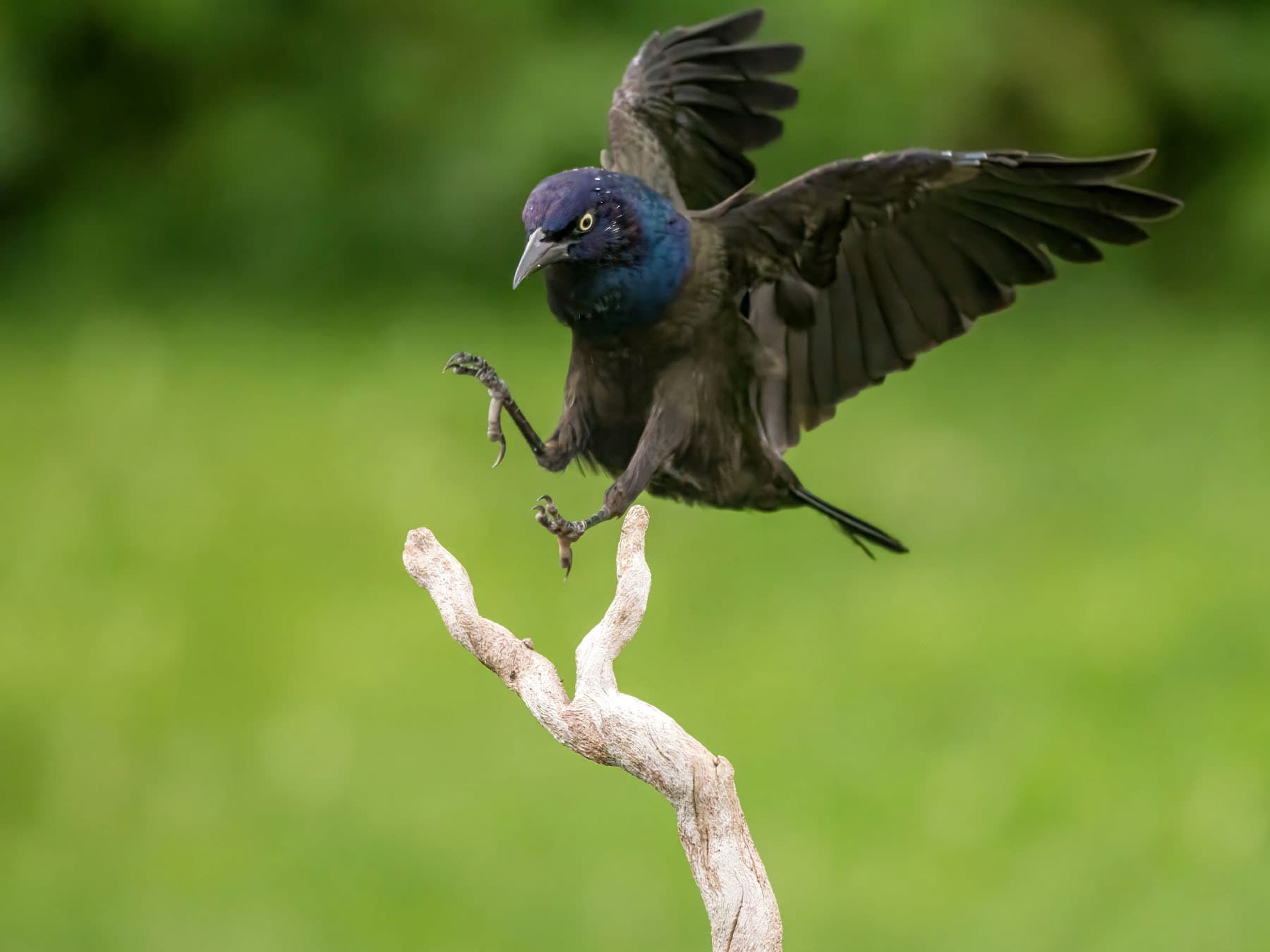
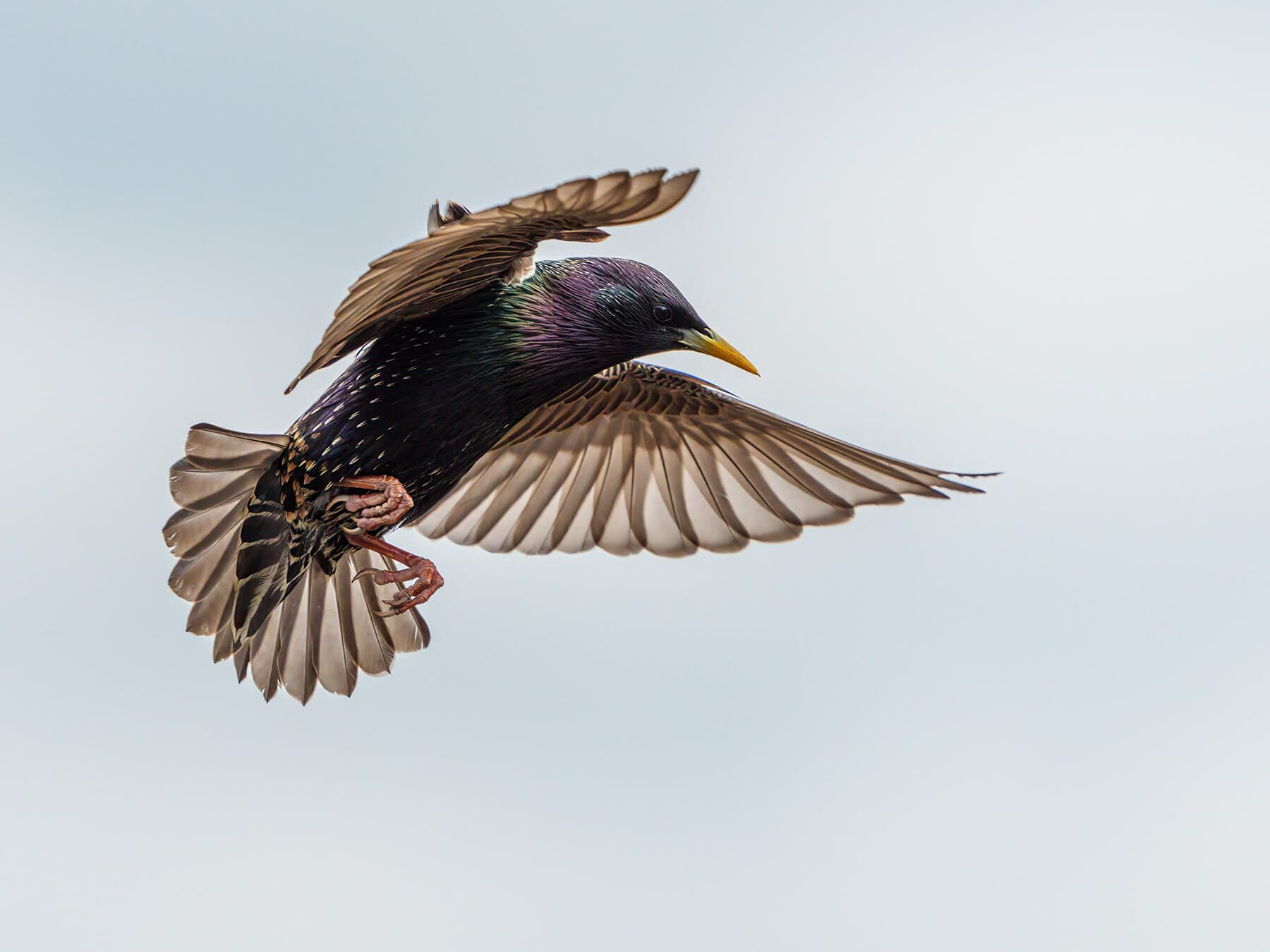
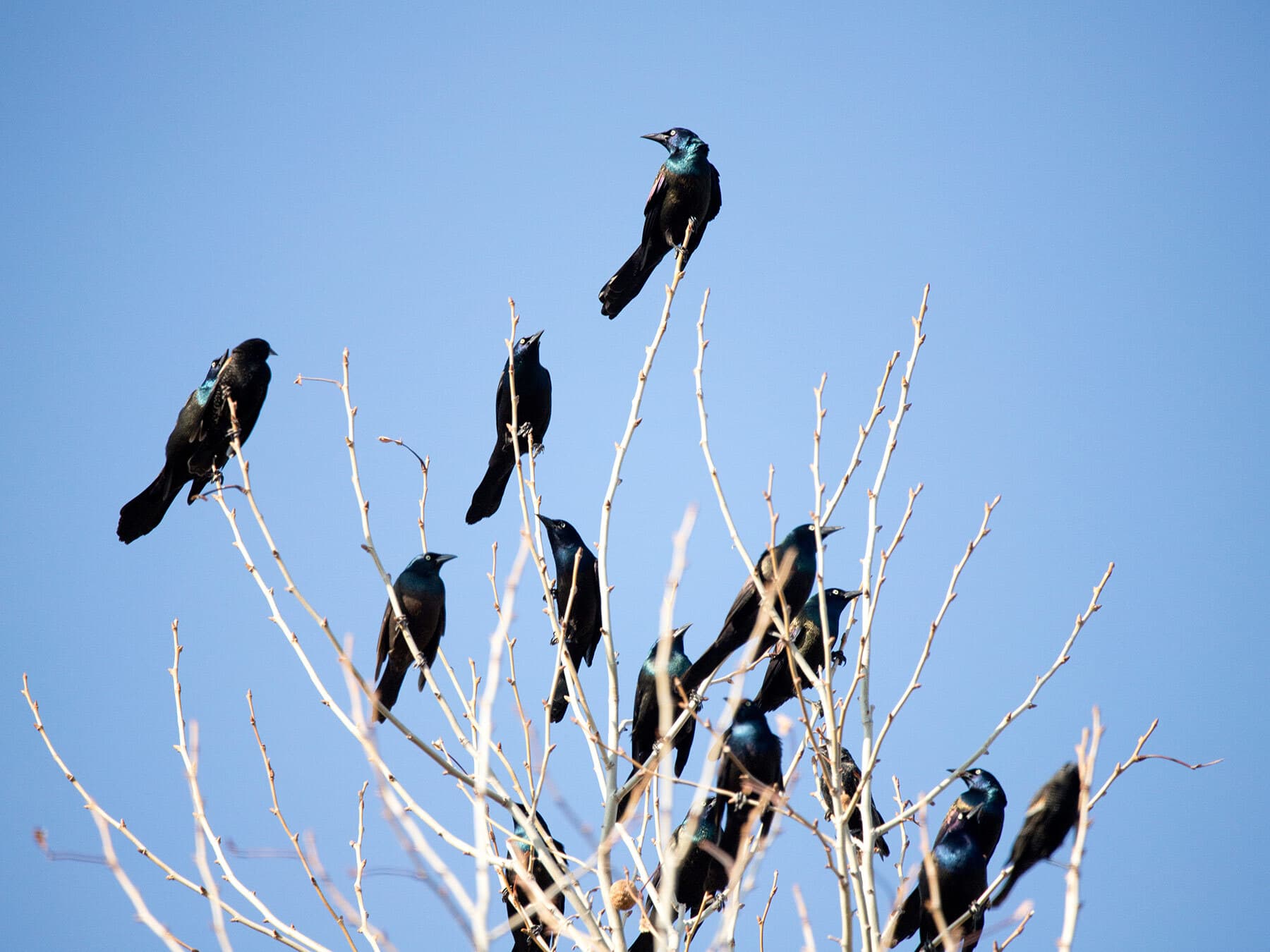
A Common Grackle is much bigger: 28 to 34 cm long against the Starling's 20.6 to 23.1 cm, and 74 to 142 g against 59.5 to 96.4 g.1, 2 It looks "stretched": taller, longer-legged and longer-tailed, with a long, tapering bill. A Starling is compact and stocky, with a short tail and pointed, triangular wings.
In a mixed flock, the tallest, longest-tailed birds are most likely grackles.
The tail
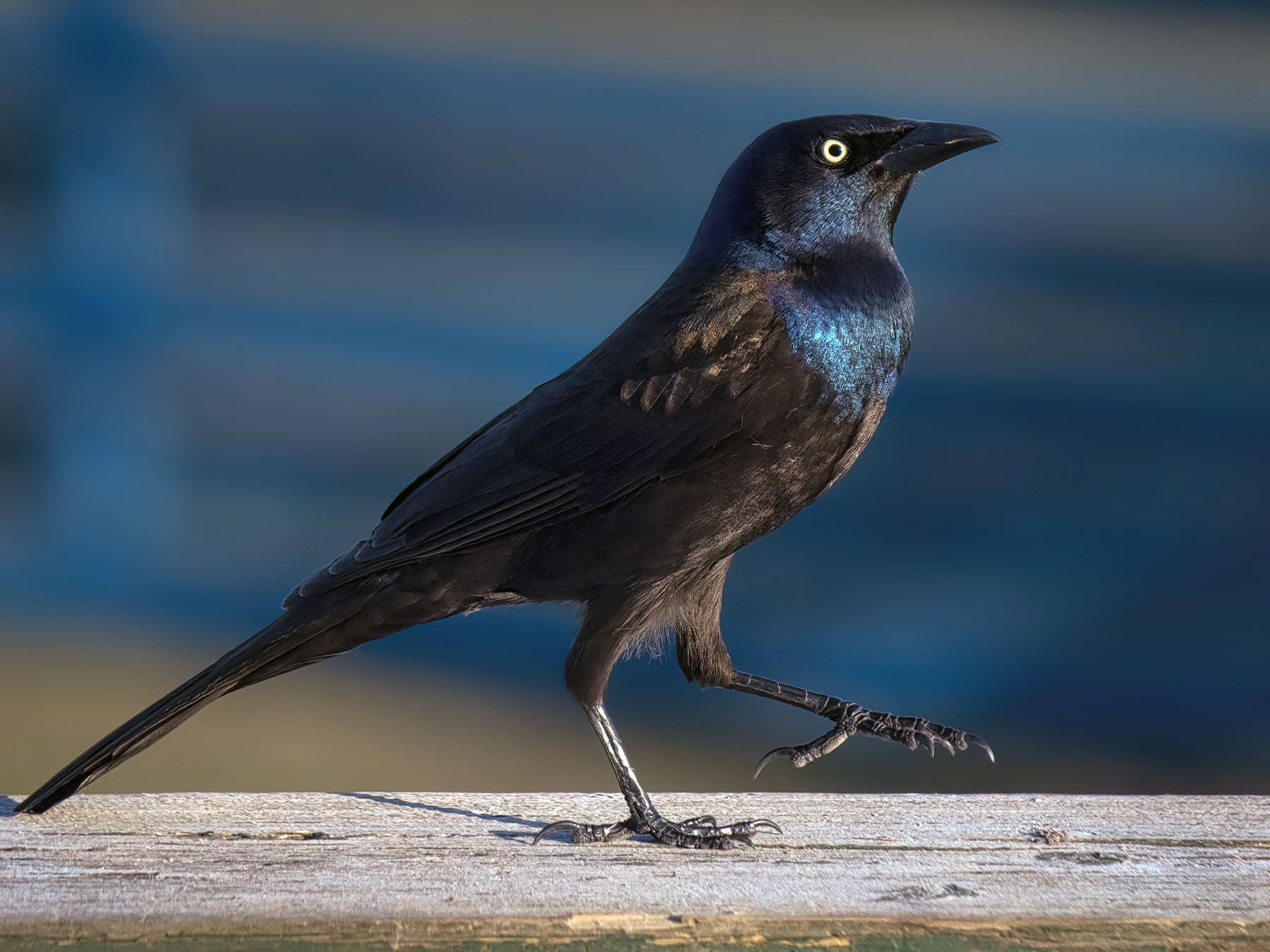
This is the quickest clue. A grackle's tail is about 40% of its length and keel-shaped, like the hull of a boat; in flight it trails behind the bird and is sometimes folded down the middle into a shallow V.3 A Starling's tail is short and square. Note that grackles moulting in late summer can look short-tailed or ragged.
Eyes and bill
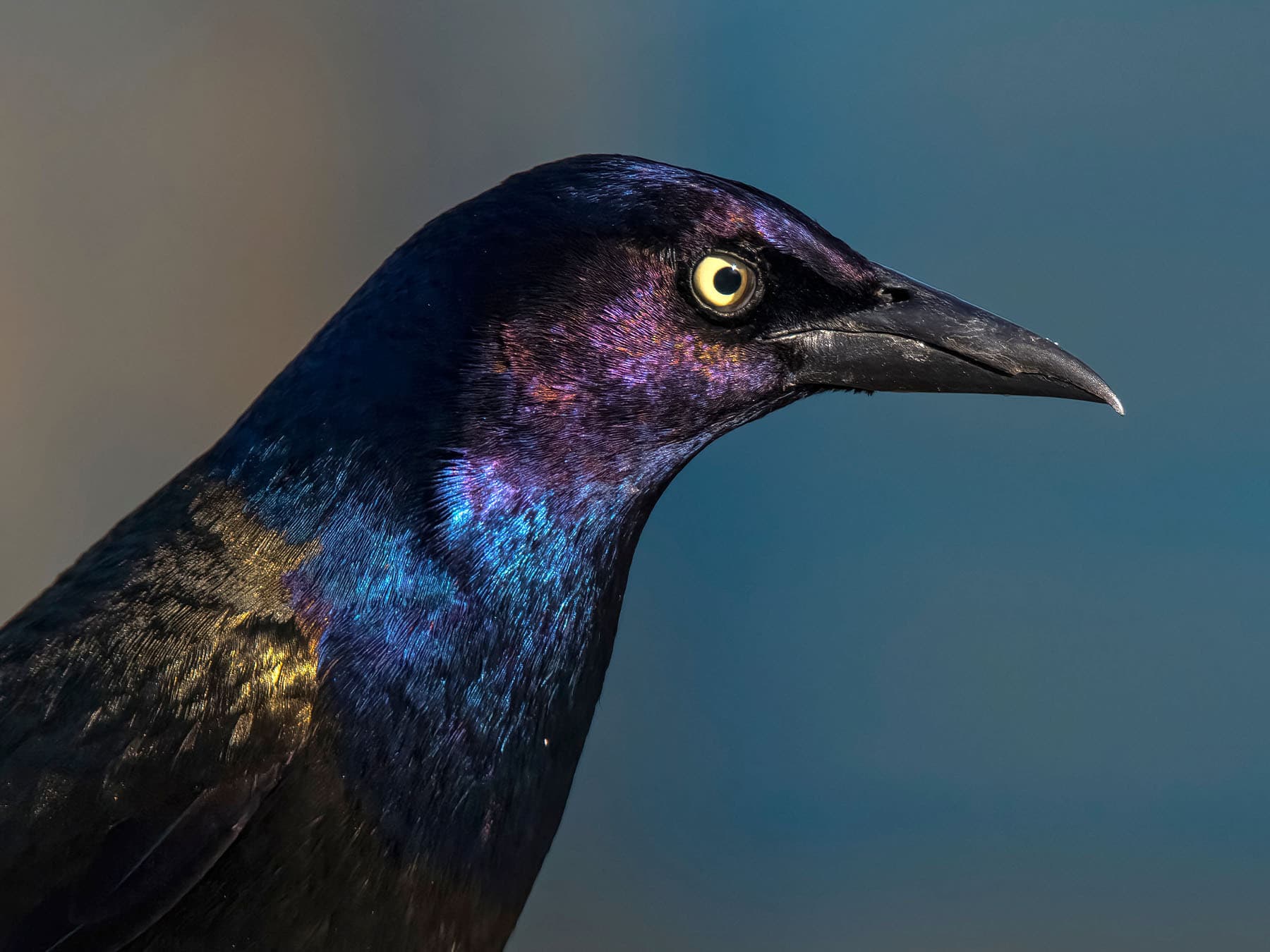
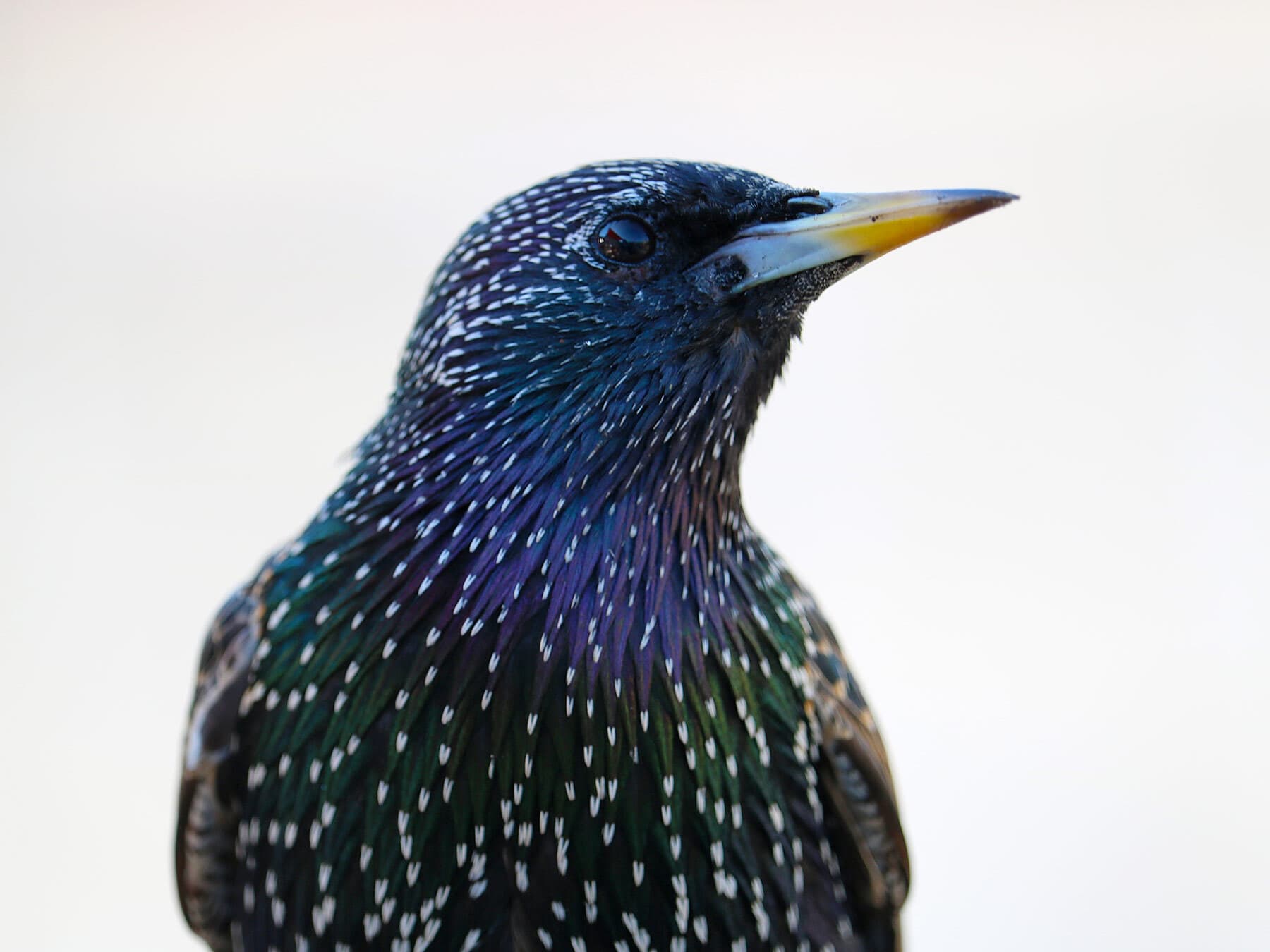
An adult grackle has a pale yellow eye that stands out against its dark head; a Starling's eye is dark brown. Young grackles have brown eyes, though, so the eye only works on adults.3
A grackle's bill is black, long and strong. A Starling's is slimmer, yellow in spring and summer and dark in winter.
Plumage through the year
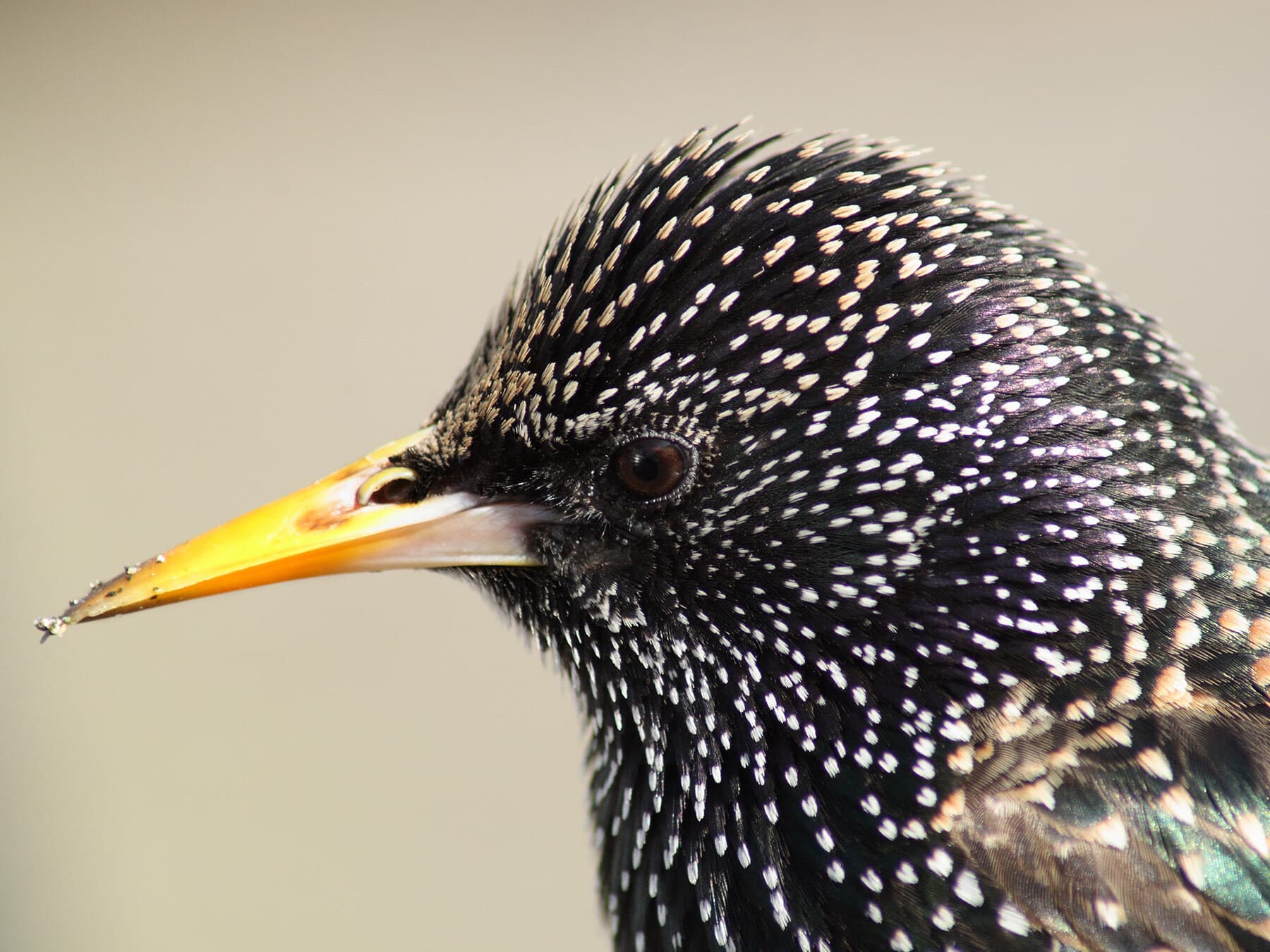
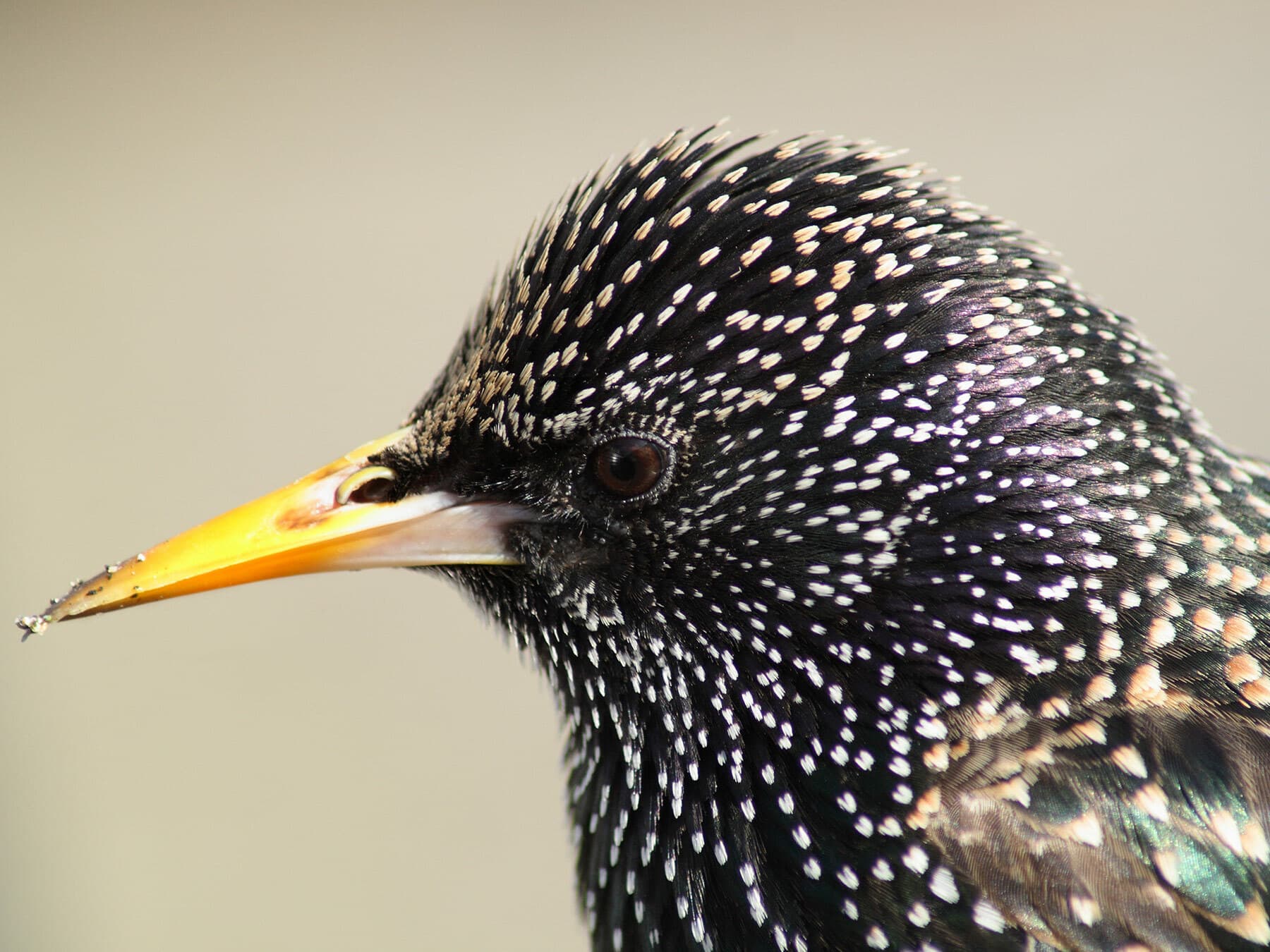
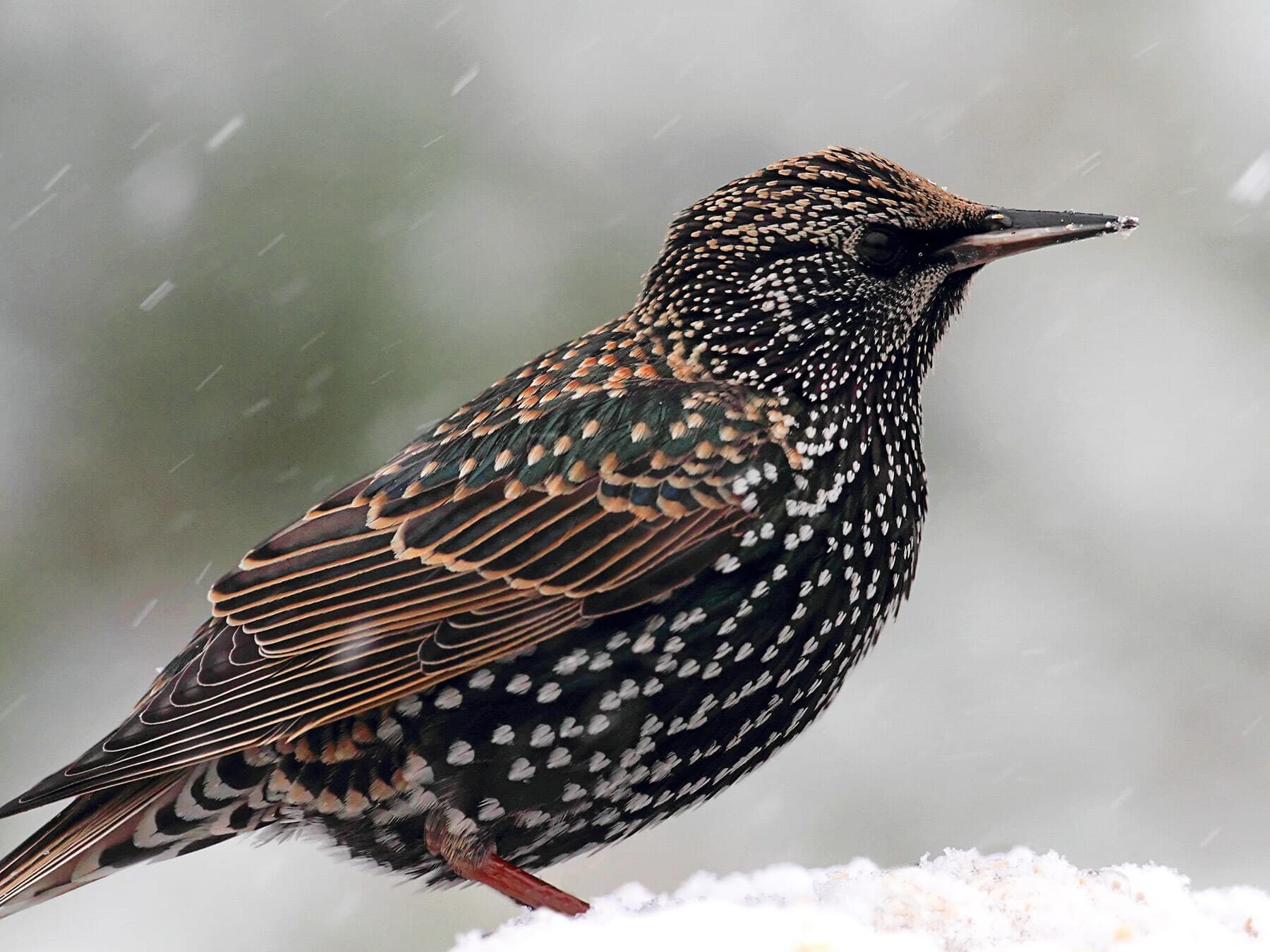
A Starling changes with the seasons: after its late-summer moult it is covered in white and buff spots, which wear away to leave glossy purple and green in spring and summer. A grackle is never spotted. It is glossy all year, with a metallic blue to purple head and, in most of its range, a bronze body.
Male and female
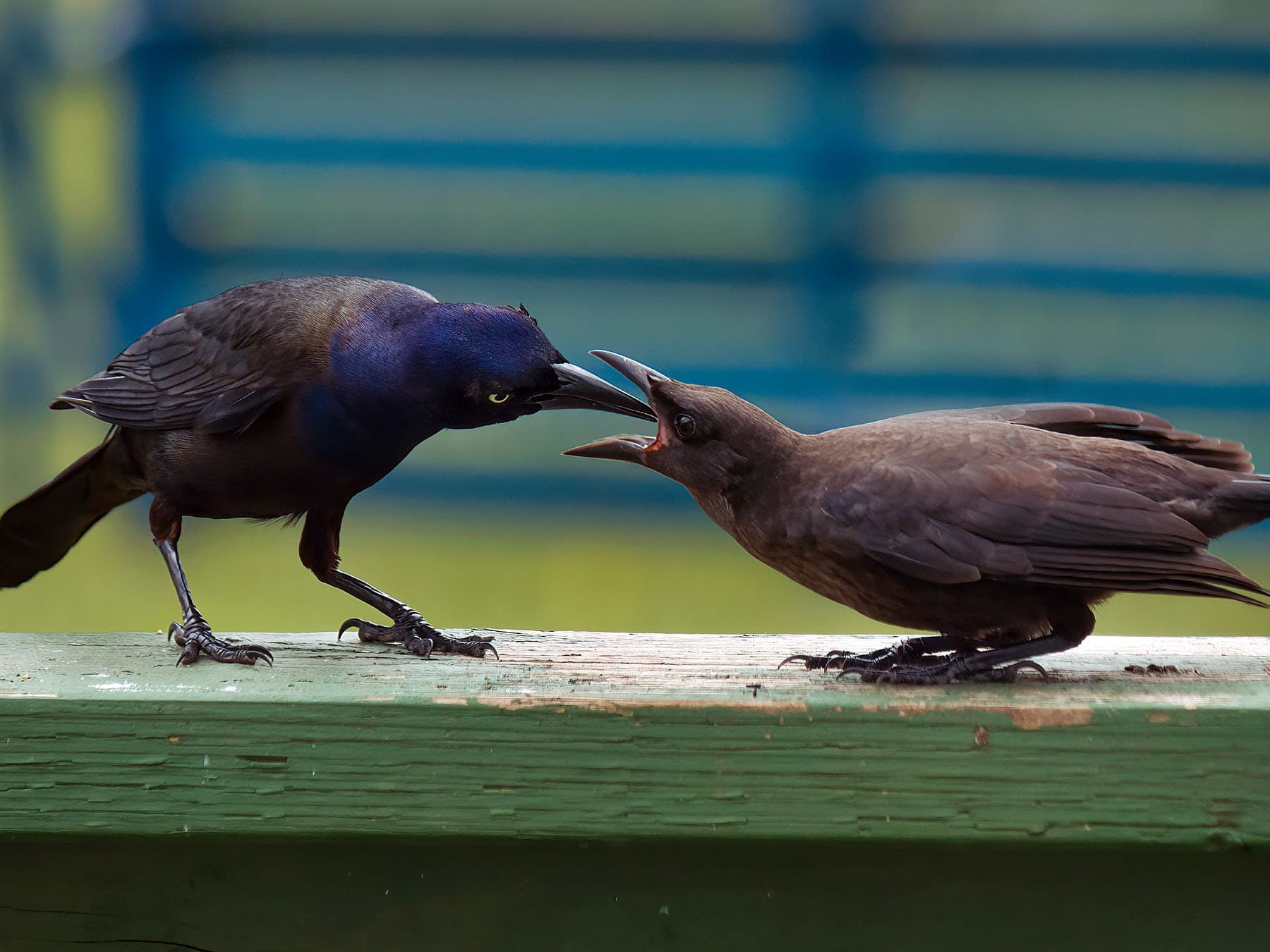
A female grackle is smaller and duller than the male, browner and less glossy, with a less strongly keeled tail, but she still has the pale eye. Male and female Starlings look alike; in spring a female has a pinkish base to her bill and a male a blue-grey one. See female Starlings.
Young birds
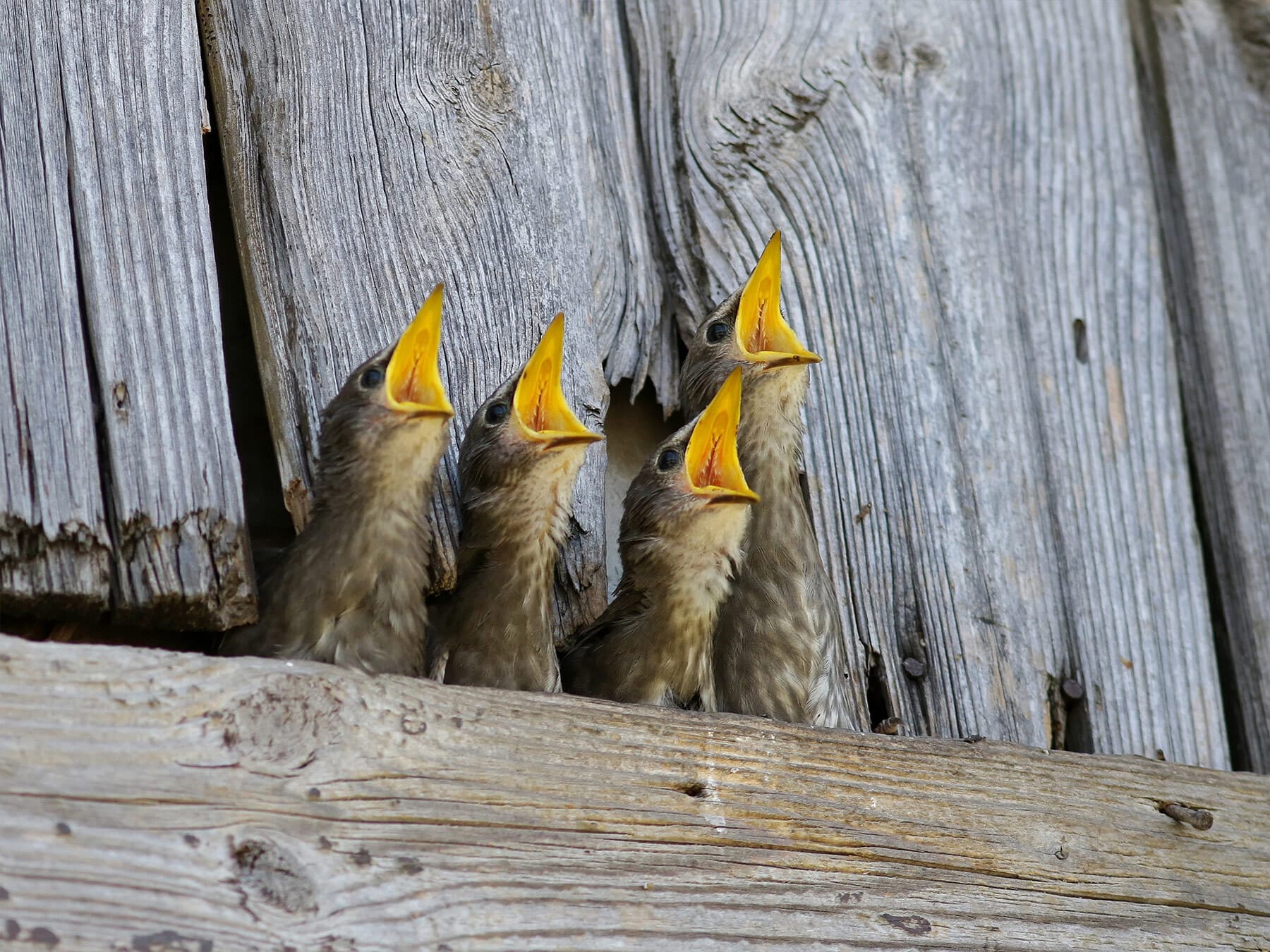
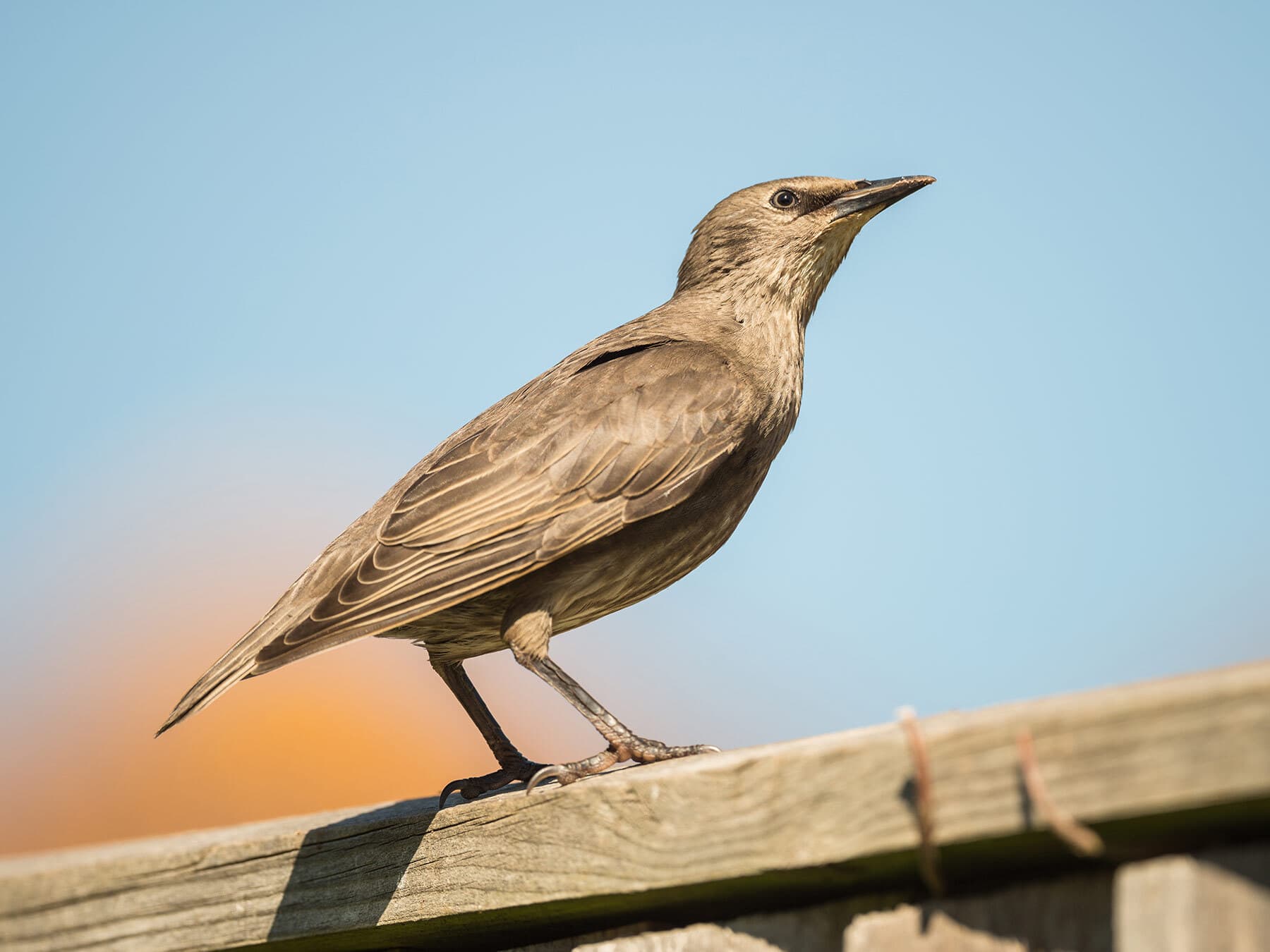
Young Starlings in summer are plain grey-brown with a dark bill, and look nothing like their parents. Young grackles are dull brown with brown eyes. Size, the long tail and the heavier bill still separate a young grackle. More: baby Starlings.
Voice
A grackle's call is a harsh chack, and its short song is a squeaky, grating readle-eak, often likened to a rusty gate. A Starling's song is a long, rambling mix of whistles, clicks and rattles, full of copied sounds. If it is mimicking other birds, it is a Starling.
Nests
Starlings nest in holes: in buildings, trees and nest boxes. Grackles build a bulky open cup of twigs, grass and mud, in a dense tree or shrub, often a conifer and often near water, usually in small colonies.1 See where Starlings nest.
Range and status
The Common Grackle is a native bird of eastern North America that has spread west in recent decades, and is present all year across much of the eastern United States; northern birds migrate. The European Starling was introduced and now lives across most of the continent (see where Starlings live).
Both have declined. The North American Breeding Bird Survey shows Common Grackles down by about 54% between 1966 and 20194, and BirdLife International now lists the species as Near Threatened.3
At the feeder
Questions
Do grackles and Starlings flock together?
Yes. From autumn into winter they often feed together, with Red-winged Blackbirds and Brown-headed Cowbirds, in flocks that can reach thousands of birds.
Are grackles and Starlings related?
No. Grackles are New World blackbirds (Icteridae), relatives of orioles and cowbirds. Starlings belong to the Old World starling family (Sturnidae).
Which bird is black with a blue head?
Most likely a male Common Grackle: a glossy blue to purple head on a bronze or purplish body, with a pale yellow eye.
Which lives longer?
The oldest Common Grackle on record lived at least 23 years and 1 month; the oldest North American Starling, 15 years and 3 months.6
Sources
- National Audubon Society. Common Grackle. Audubon Guide to North American Birds. Accessed 6 October 2026. Source
- National Audubon Society (text: Kaufman, Lives of North American Birds). European Starling. Audubon Guide to North American Birds. Accessed 6 October 2026. Source
- Peer, B. D., Bollinger, E. K. (2020). Common Grackle (Quiscalus quiscula), version 1.0. Birds of the World (A. F. Poole and F. B. Gill, Editors). Cornell Lab of Ornithology. doi:10.2173/bow.comgra.01
- Cornell Lab of Ornithology. Common Grackle (overview and life history). All About Birds. Accessed 6 October 2026. Source
- Cornell Lab of Ornithology. My feeders are being overrun with starlings and blackbirds. What can I do?. All About Birds. Accessed 6 October 2026. Source
- USGS Bird Banding Laboratory. Longevity records of North American birds. Accessed 6 October 2026. Source
- Cabe, P. R. (2020). European Starling (Sturnus vulgaris), version 1.0. Birds of the World (S. M. Billerman, Editor). Cornell Lab of Ornithology. doi:10.2173/bow.eursta.01
- Cornell Lab of Ornithology. European Starling (overview and life history). All About Birds. Accessed 6 October 2026. Source