


Common Loon
Great Northern Diver · Gavia immer
By the Birdfact teamChecked by Nathan Cope
On this page14 sections
How to recognise it
What do Common Loons look like?
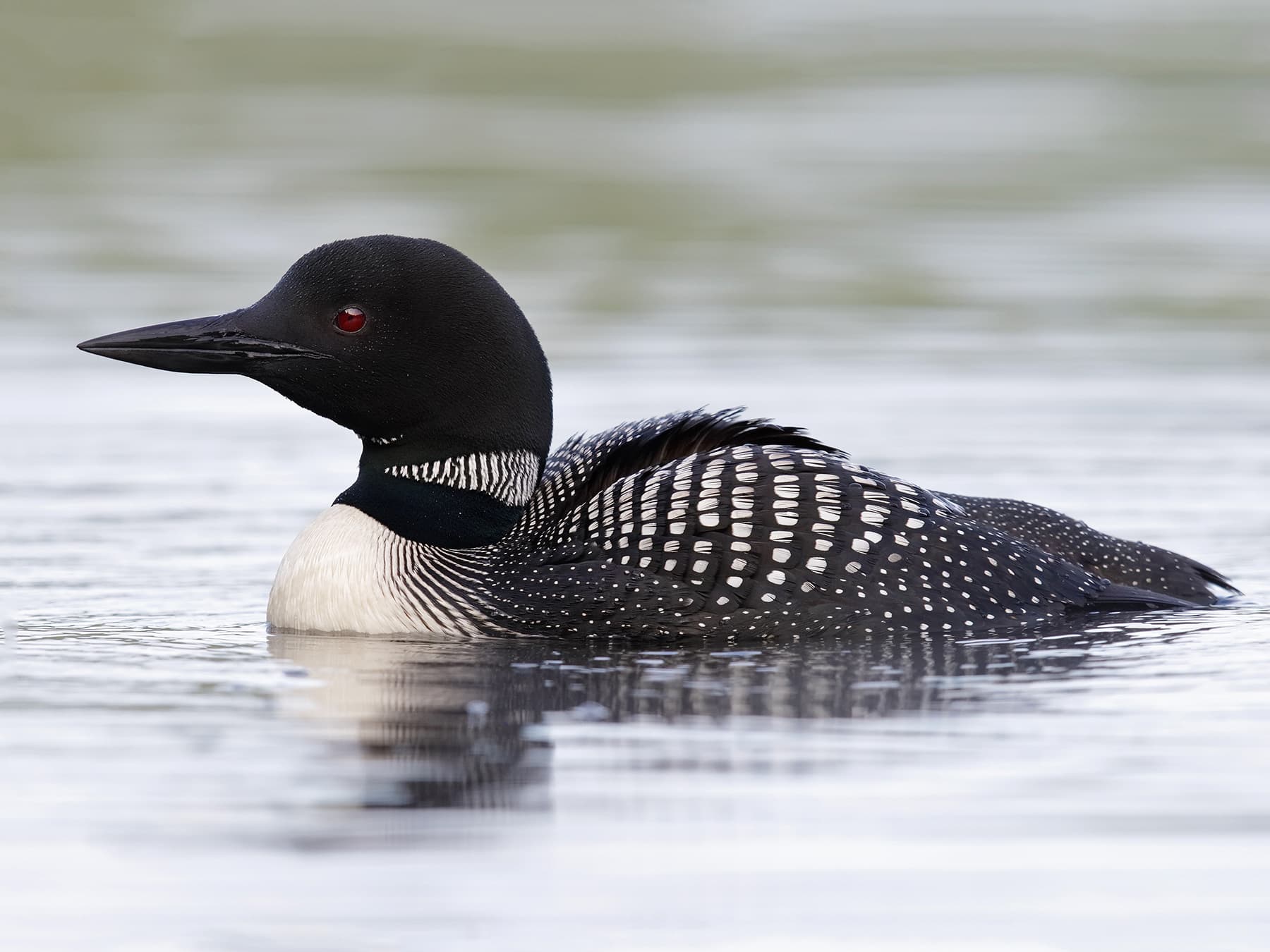
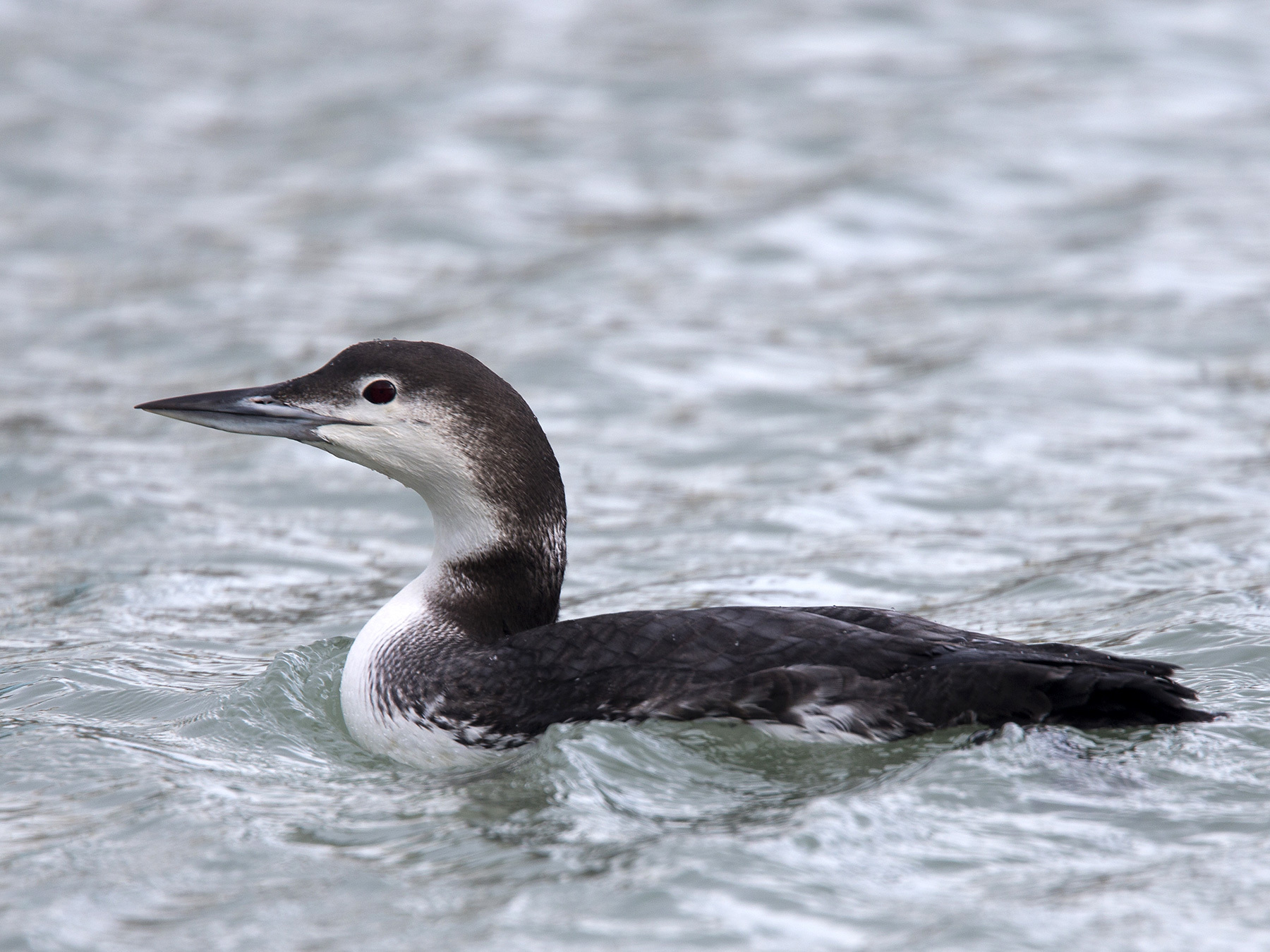
The Common Loon is a large waterbird with distinctly different breeding and non-breeding plumage. They are relatively dull in the winter, with slate-gray upperparts and a white chin, throat, and breast. Their bill also fades from black in the summer to pale gray in the winter.
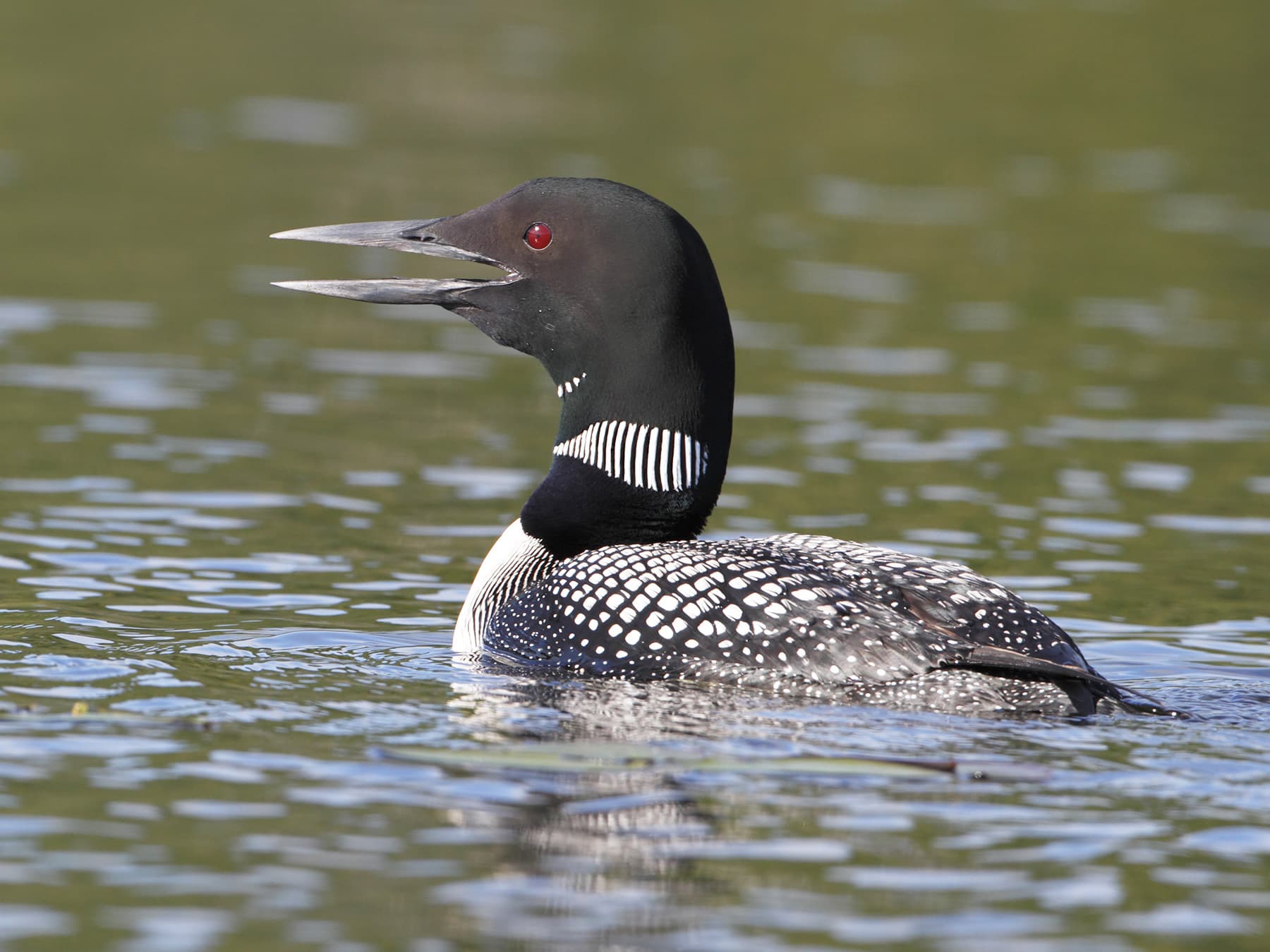
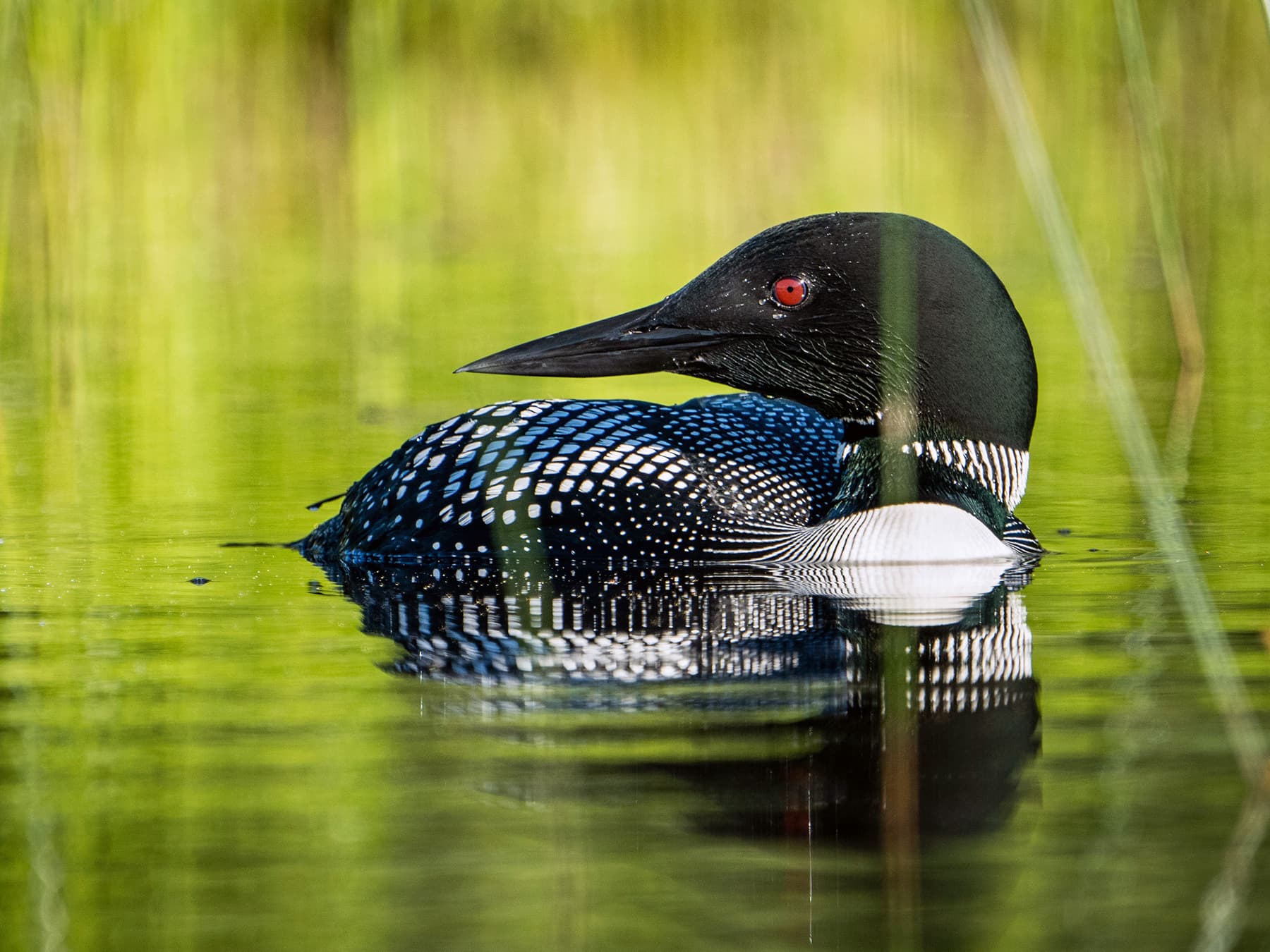
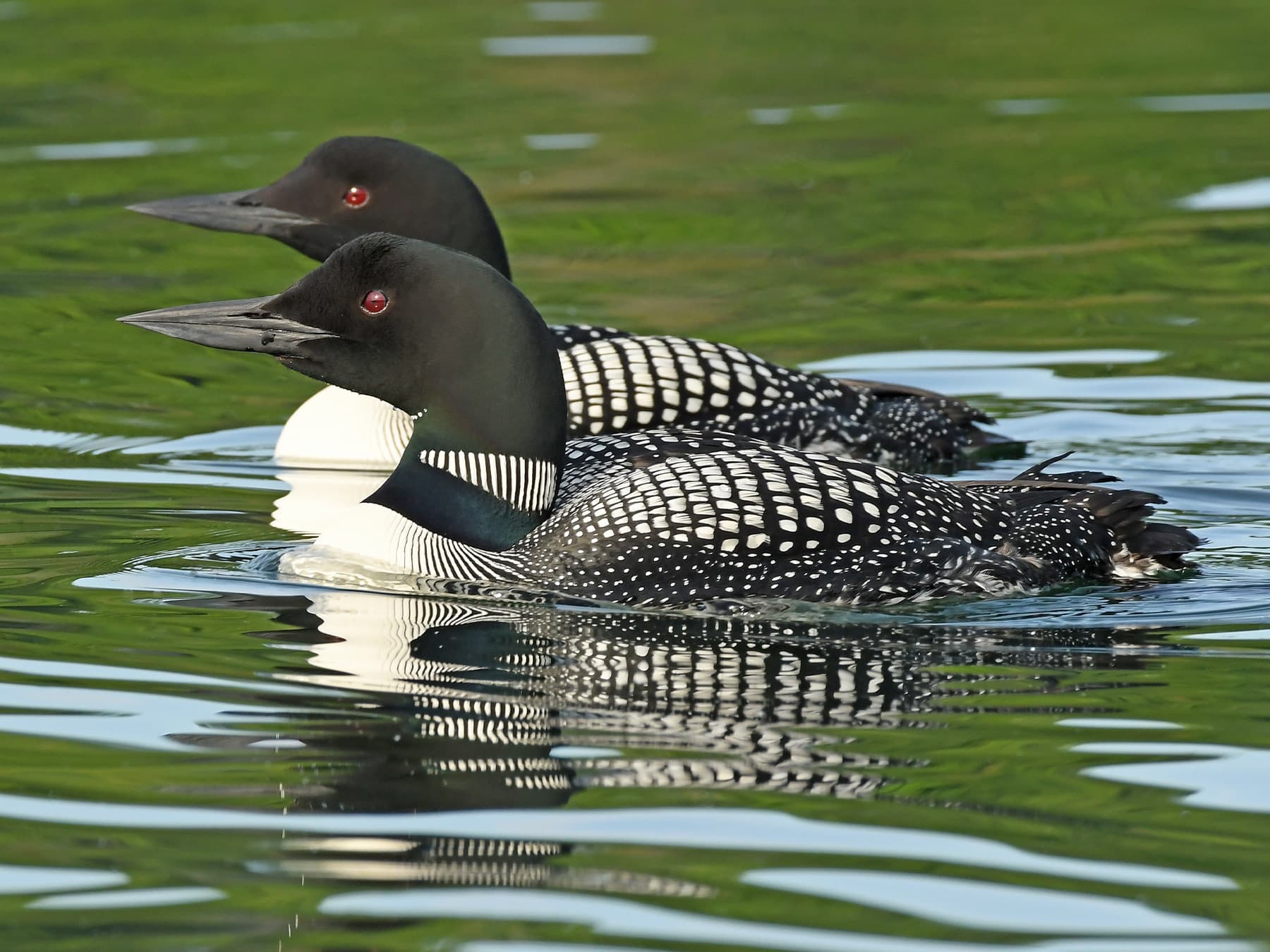
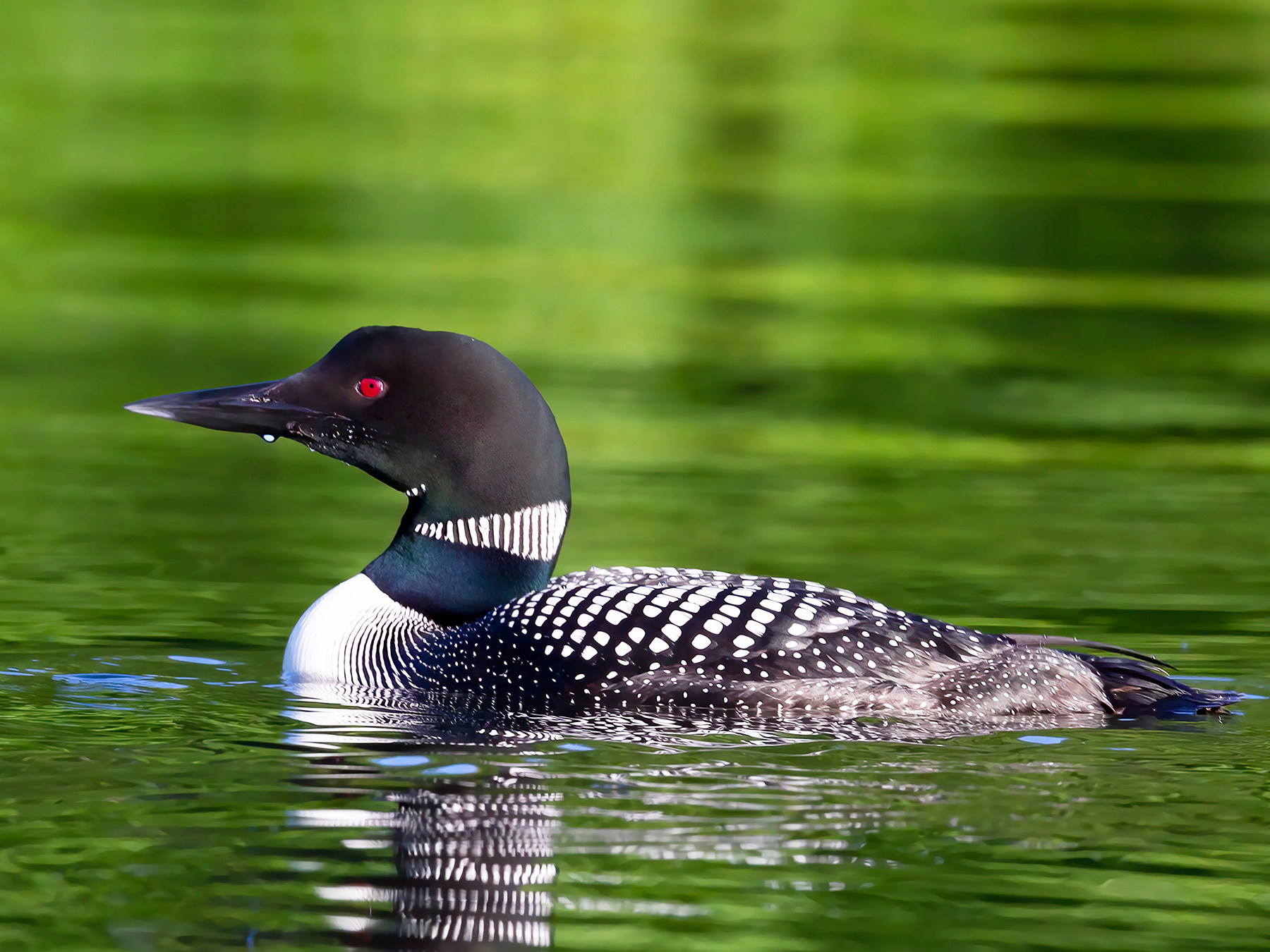
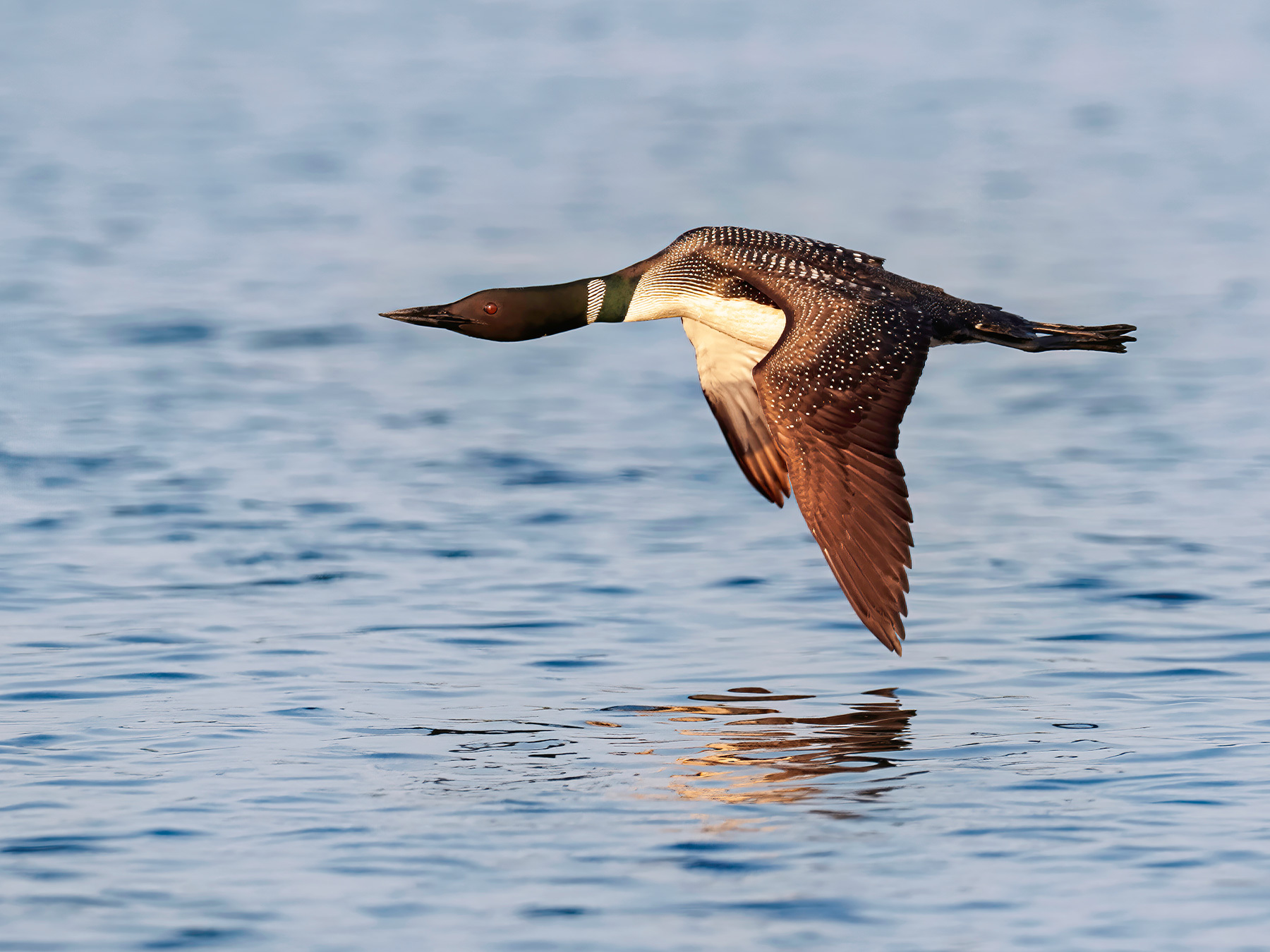
Adults are most easily identified in the breeding season when they develop an all-black head and a broad black neckband that gleams purple and green in good light. The plumage above and below this band is smartly pin-striped in black and white. These diving birds sit low in the water, but their upperparts are visible above the surface, showing white checkering on the upper back that becomes white speckling toward the tail.
Male and female Common Loons have very similar plumages, but females tend to be smaller.
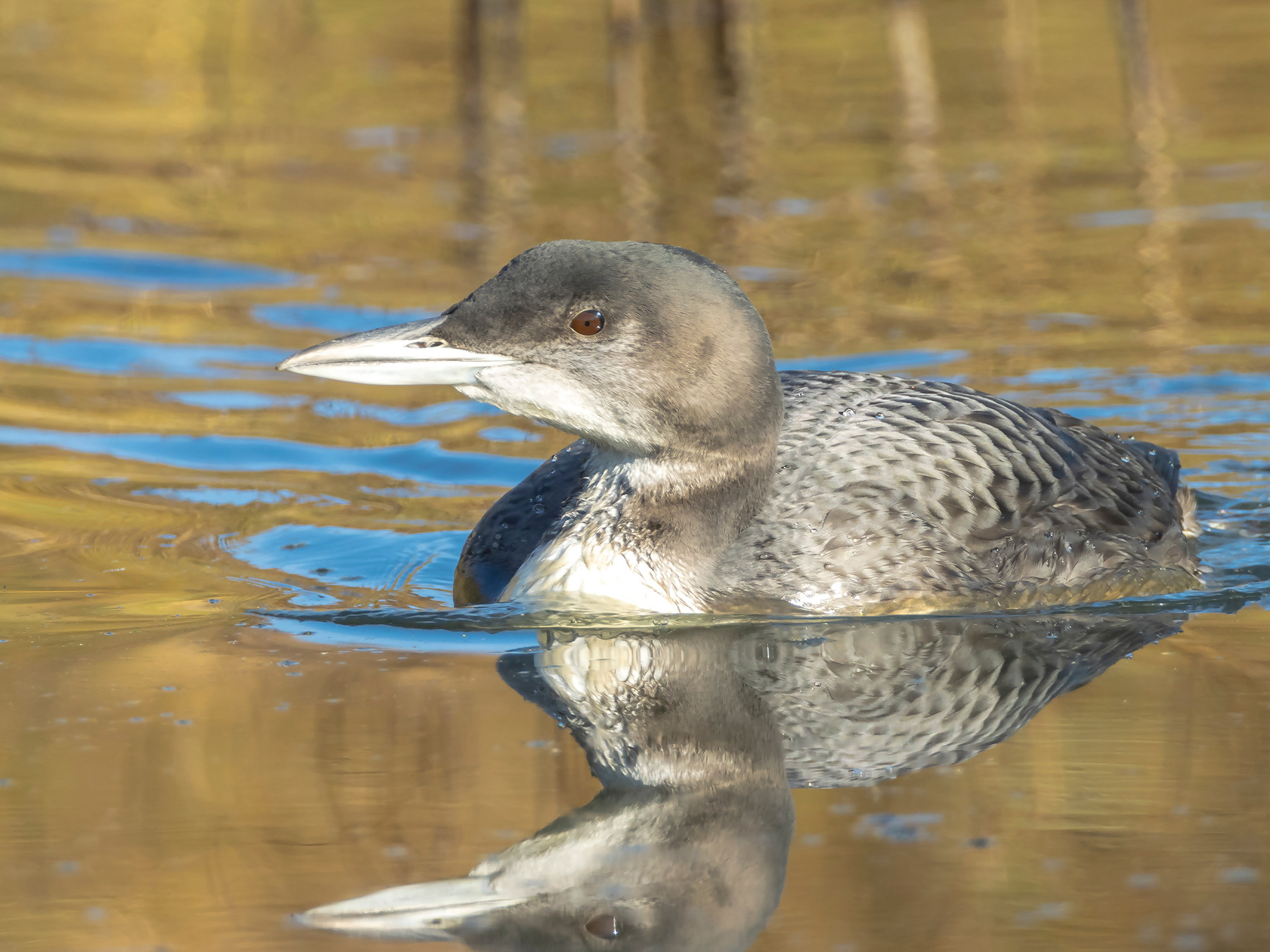
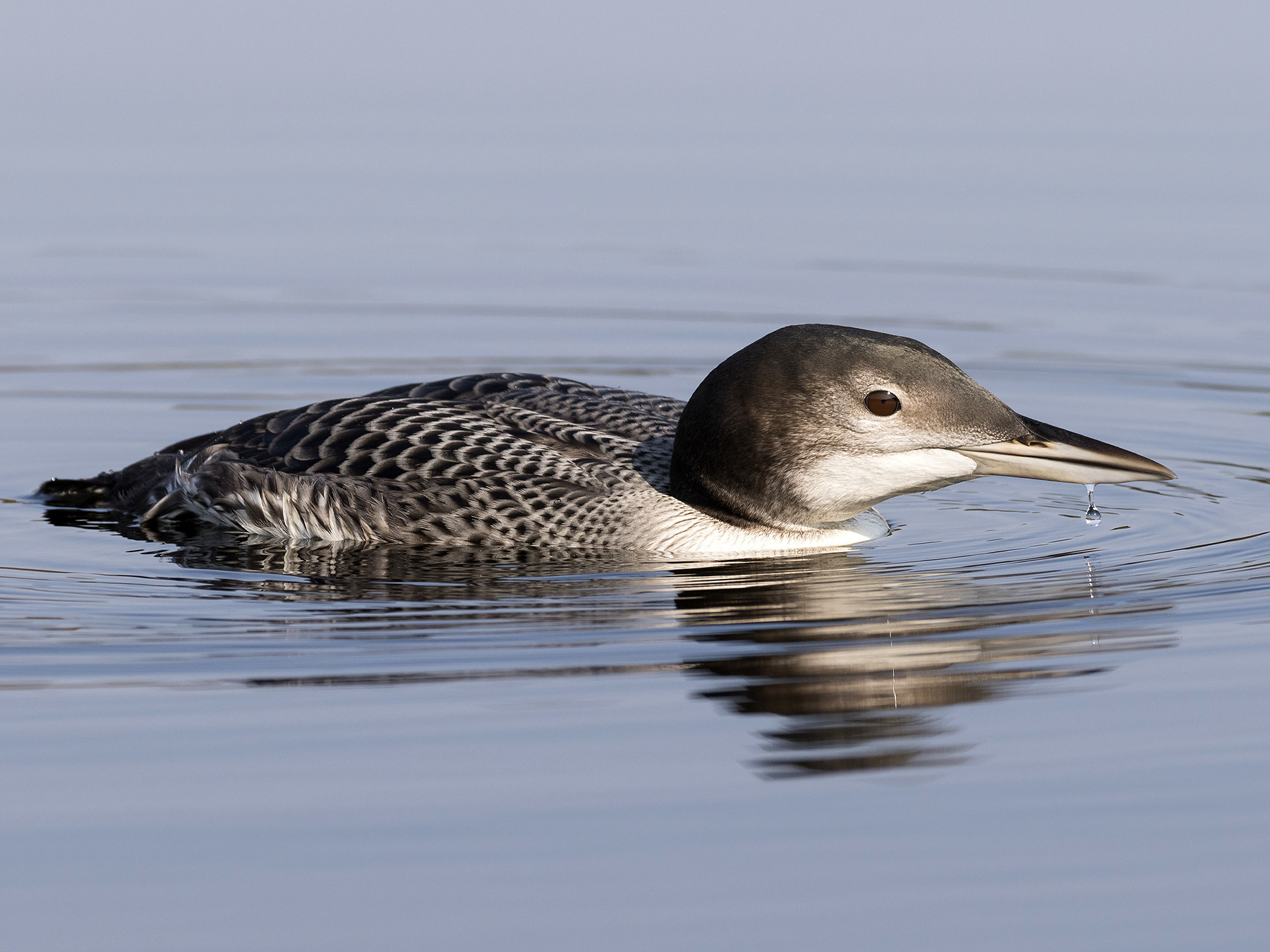
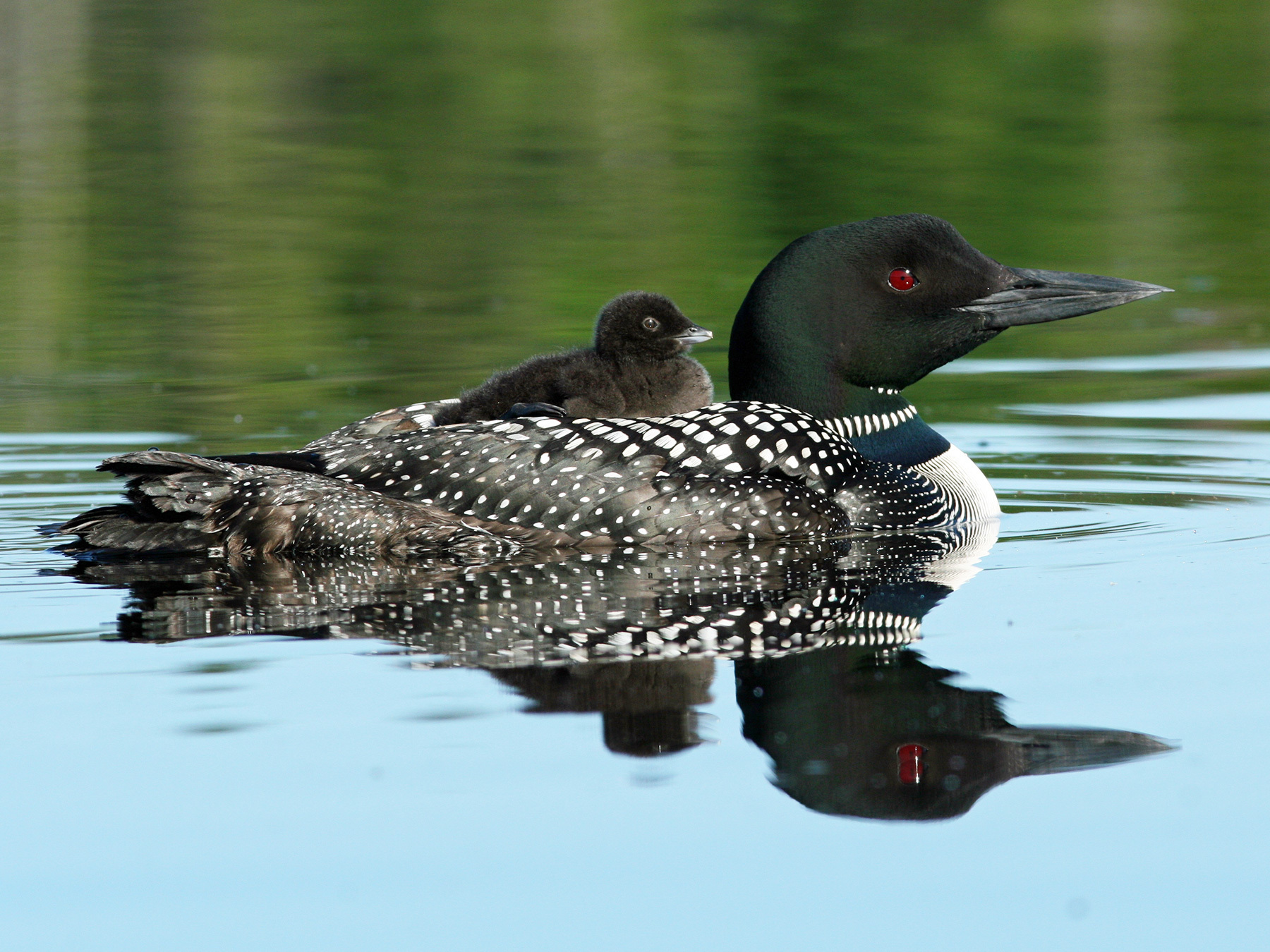
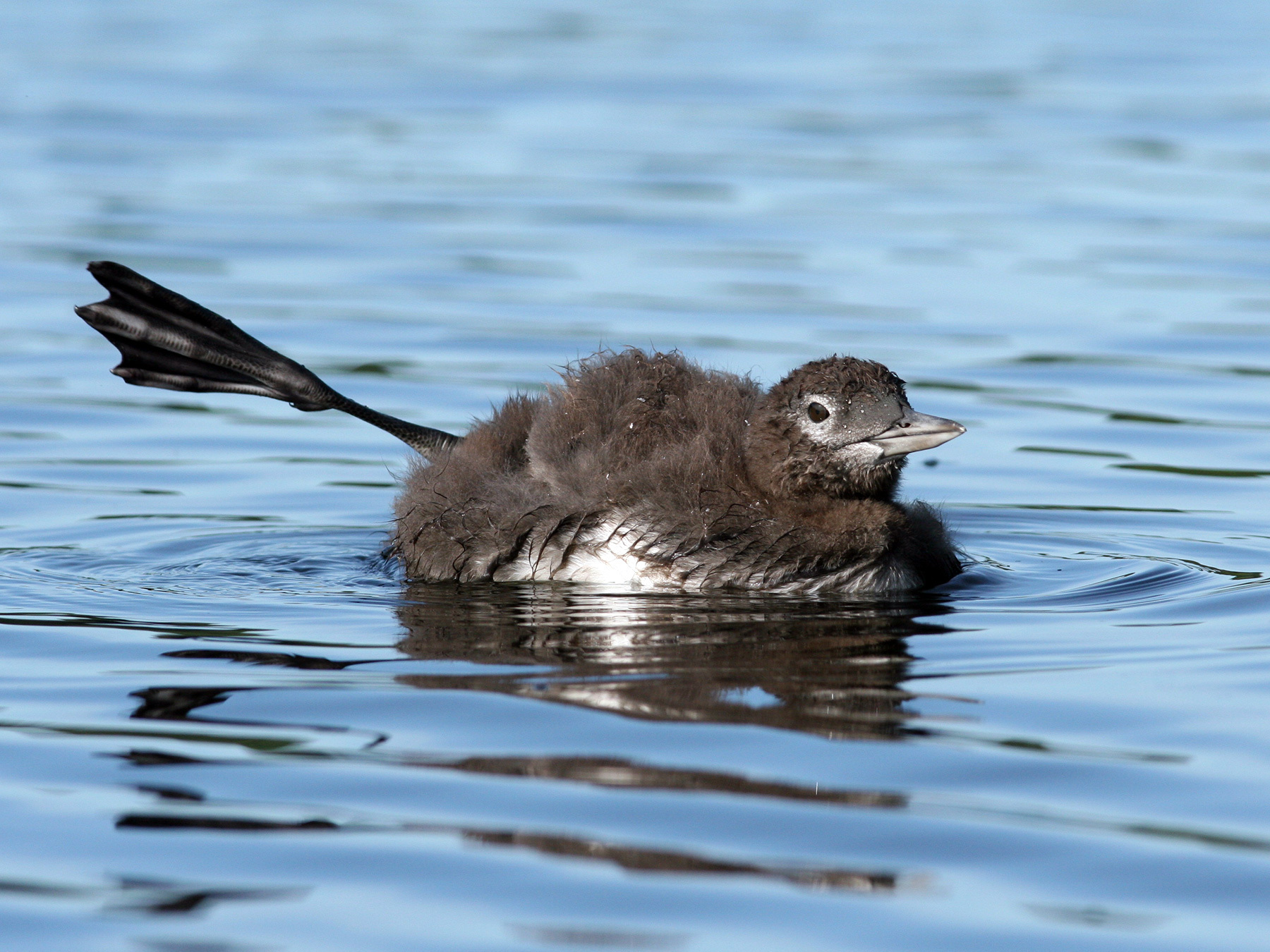
Common Loon chicks leave the nest soon after hatching and are covered in fluffy brown down before growing their juvenile plumage. Juveniles look similar to adults in non-breeding plumage, although their heads are browner.
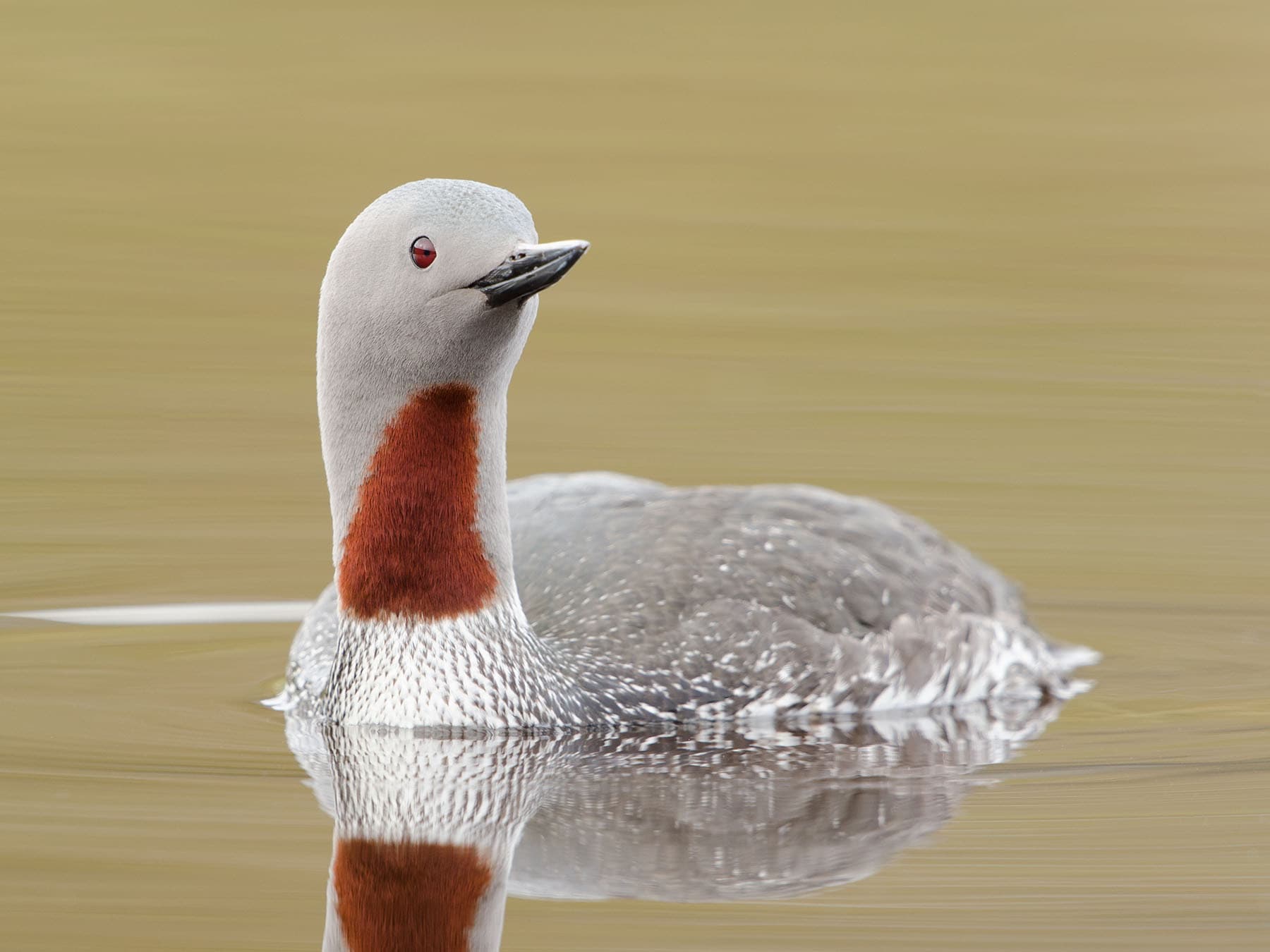
Adult Common Loons are most similar to the Yellow-billed Loon (G. adamsii) in breeding plumage, although that species has a pale (not black) bill. Non-breeding adults also resemble smaller species like the Pacific Loon, Arctic Loon, and Red-throated Loon.
How big are Common Loons?
Common Loons are one of the largest species in their family, second only to the rarer Yellow-billed Loon. Males are generally heavier and longer than females.
Length
Most adults measure 26 to 36 inches or 66 to 91 centimeters long.
Weight
They show a wide weight range, from about 5 pounds up to nearly 17 pounds (2.2 to 7.6 kilograms).
Wingspan
Common Loons have relatively small wings, with a wingspan of just 50 to 58 inches (127 to 147 centimeters).

Its size
Adults- Length
- 66–91 cm
- Wingspan
- 122–152 cm
- Weight
- 2500–6100 g
Its song and calls
What sound does a Common Loon make?
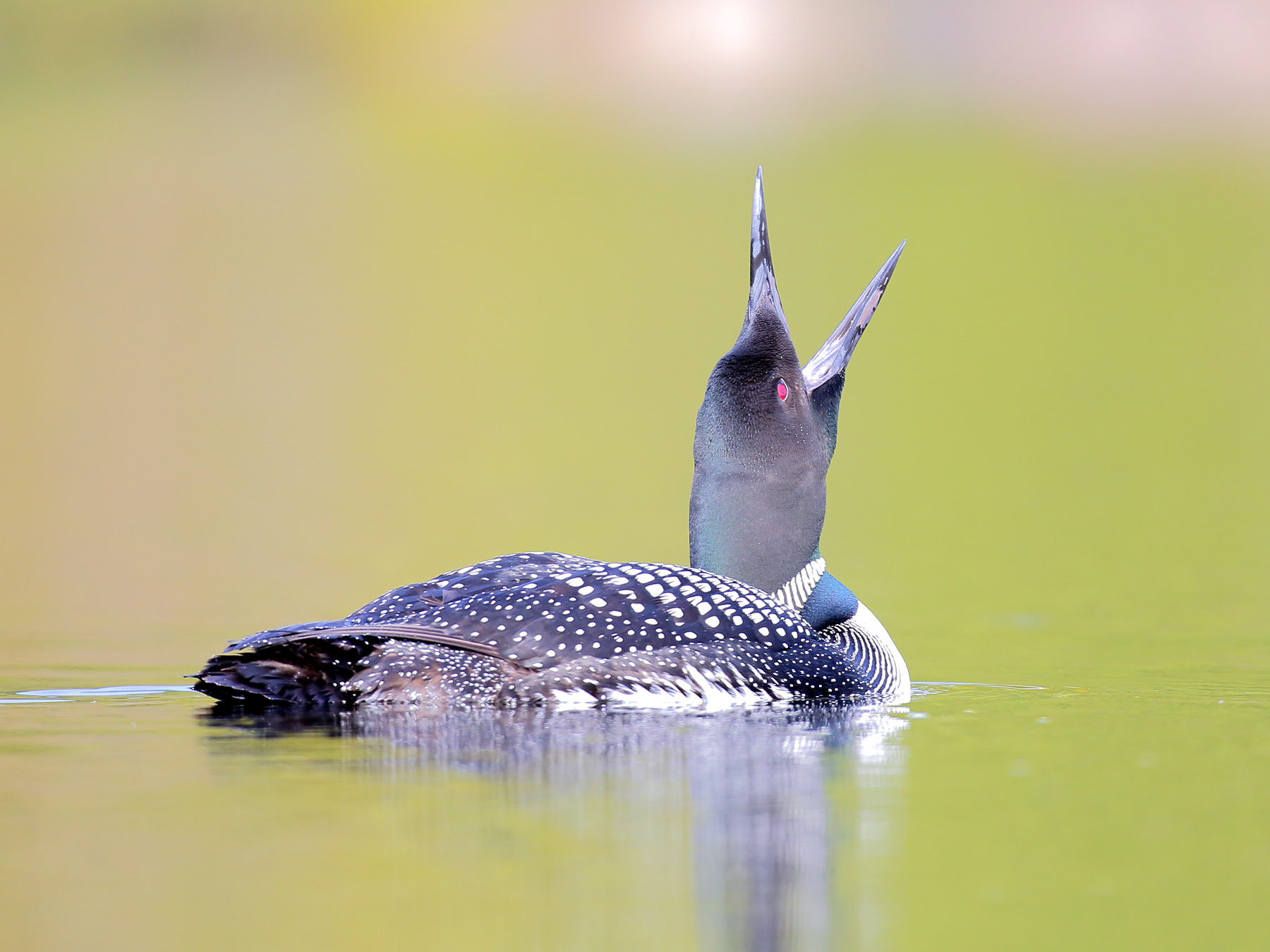
Male Common Loons produce an eerie yodeling call to mark their territory while both sexes make a low-pitched, drawn-out howl. They also make a wavering, high-pitched call in flight that sounds something like a whinnying horse.
The spooky but beautiful songs and calls of these birds have been featured in many television shows and films and will be familiar to many who have visited northern forested lakes in the spring and summer.
- Song0:00 / 1:50
Recorded in Wisconsin, United States · June 2013
- Call0:00 / 1:43
Recorded in Wisconsin, United States · June 2013
When and where to see it
OctoberArriving
Most recorded in October
- 1. Sligo0.95%
- 2. Eilean Siar0.83%
- 3. Orkney Islands0.76%
- 4. Argyll and Bute0.68%
- 5. Donegal0.62%
Each dot is a county, state or province: the bigger and darker, the larger the bird’s share of that place’s bird records that month. Grey dots: no regular records. The ringed point is the centre of the bird’s records this month; the arrow shows how it moved since last month, and the dashed loop its path through the year. “Arrivals” colours places where it becomes regular this month (orange) or is in its last regular month (grey). GBIF eBird Observation Dataset, 2019–2024. Map data: Natural Earth, US Census Bureau; place centres © OpenStreetMap contributors.
In your area
See when the Common Loon is recorded in your county, state or province.
How often the Common Loon turns up in the UK, Ireland, the United States and Canada through the year, from birdwatchers' records.
United Kingdom
Winter visitor · regularly Sep–Jul · most records in December
Ireland
Winter visitor · regularly Sep–Jun · most records in January
United States
Resident · all year · most records in November
Canada
Resident · all year · most records in November
Show as a table
| Month | United Kingdom | Ireland | United States | Canada |
|---|---|---|---|---|
| January | 0.12% (regular) | 0.75% (regular) | 0.29% (regular) | 0.36% (regular) |
| February | 0.071% (regular) | 0.72% (regular) | 0.23% (regular) | 0.27% (regular) |
| March | 0.053% (regular) | 0.59% (regular) | 0.20% (regular) | 0.21% (regular) |
| April | 0.046% (regular) | 0.43% (regular) | 0.21% (regular) | 0.38% (regular) |
| May | 0.060% (regular) | 0.34% (regular) | 0.11% (regular) | 0.34% (regular) |
| June | 0.027% (regular) | 0.054% (regular) | 0.11% (regular) | 0.40% (regular) |
| July | 0.009% (regular) | 0.036% | 0.11% (regular) | 0.52% (regular) |
| August | 0.005% | 0.033% | 0.11% (regular) | 0.55% (regular) |
| September | 0.018% (regular) | 0.072% (regular) | 0.10% (regular) | 0.51% (regular) |
| October | 0.050% (regular) | 0.22% (regular) | 0.18% (regular) | 0.63% (regular) |
| November | 0.14% (regular) | 0.54% (regular) | 0.35% (regular) | 0.68% (regular) |
| December | 0.15% (regular) | 0.72% (regular) | 0.27% (regular) | 0.41% (regular) |
Recorded regularly in
Worldwide: recorded regularly in 29 countries
Countries where it was recorded in at least 3 of the 6 years 2019–2024. Linked countries have their own bird list.
Europe (24)
- Austria
- Belgium
- Czechia
- Denmark
- Faroe Islands
- Finland
- France
- Germany
- Guernsey
- Hungary
- Iceland
- Ireland
- Isle of Man
- Italy
- Jersey
- Netherlands
- Norway
- Poland
- Portugal
- Spain
- Svalbard & Jan Mayen
- Sweden
- Switzerland
- United Kingdom
North America (5)
Data: EOD – eBird Observation Dataset (Cornell Lab of Ornithology), accessed via GBIF.org, CC BY 4.0. Records from 2019–2024, aggregated and filtered by Birdfact. How these lists are made
What is the habitat of a Common Loon?
Common Loons are diving birds that need good water visibility to pursue and catch their prey. They breed on freshwater lakes and ponds in the spring and summer but switch to marine habitats in the winter. Overwintering birds are usually seen in sheltered areas near the coast, although some forage nearly a hundred miles offshore, and others may overwinter on large freshwater bodies that remain ice-free.
What is the range of a Common Loon?
Common Loons are widespread in North America, from Alaska to Greenland in the north and to the Gulf of Mexico in the south. They also nest and overwinter around Iceland and migrate further east to overwinter in coastal areas from Finland to the United Kingdom and south to Portugal.
Where do Common Loons live?
Common Loons live in clear, fresh and saltwater habitats. They usually only leave the water to nest and migrate.
How rare are Common Loons?
Common Loons are indeed common, at least within their regular North American breeding and non-breeding range. However, these birds are migratory and have specific habitat requirements. They are relatively rare in Europe, with a small breeding population.

Where can you see Common Loons in the US?
Common Loons nest in Alaska and the far north of the Lower 48, particularly in the Northwest, Upper Midwest, and Northeast states. They could turn up just about anywhere on migration, but winter birdwatchers are most likely to spot them in coastal waters along the West, East, and Gulf Coasts.
Common Loons are the State Bird of Minnesota.
Where can you see Common Loons in Canada?
Common Loons breed in suitable habitats virtually throughout Canada south of the Arctic Archipelago, although they tend to avoid the prairies of the southwest. They also overwinter along the west and southeast coastlines.
Where can you see Great Northern Divers in the UK?
Great Northern Divers are winter visitors to the United Kingdom coastline. Although rare inland, birdwatchers might spot them in shallow coastal areas between October and April, particularly in the southwest of England and along Scotland’s northwest coast.

Migration
Do Common Loons migrate?
Common Loons are highly migratory birds that migrate in small groups, or independently. They usually migrate during the day, traveling at high altitudes and speeds as they fly between coastal overwintering grounds and inland nesting territories.
Read this guide to learn much more about Common Loon migration.
How far do Common Loons migrate?
The Common Loon migration may be an epic journey of thousands of miles or, in some cases, a quick flight of less than 100 miles. Suitable nesting lakes are close inland from their overwintering grounds in some areas, which explains why some birds migrate short distances.
Where do Common Loons migrate to?
Most Common Loons nest on northern lakes and ponds and migrate to the coast. They are rare inland in the non-breeding season, although they may be seen on some inland waters in the American Southeast during winter.
Tips for seeing it
- Look for Common Loons on large, clear lakes in northern regions during summer.
- Listen for their distinctive wailing and yodelling calls, especially at dusk and dawn.
- In winter, search for them along coastal areas in their more subdued grey plumage.
- Observe their diving behaviour; they often surface far from where they submerged.
- Use a spotting scope for better views, as loons often stay far from shore.
What it eats
What do Common Loons eat?
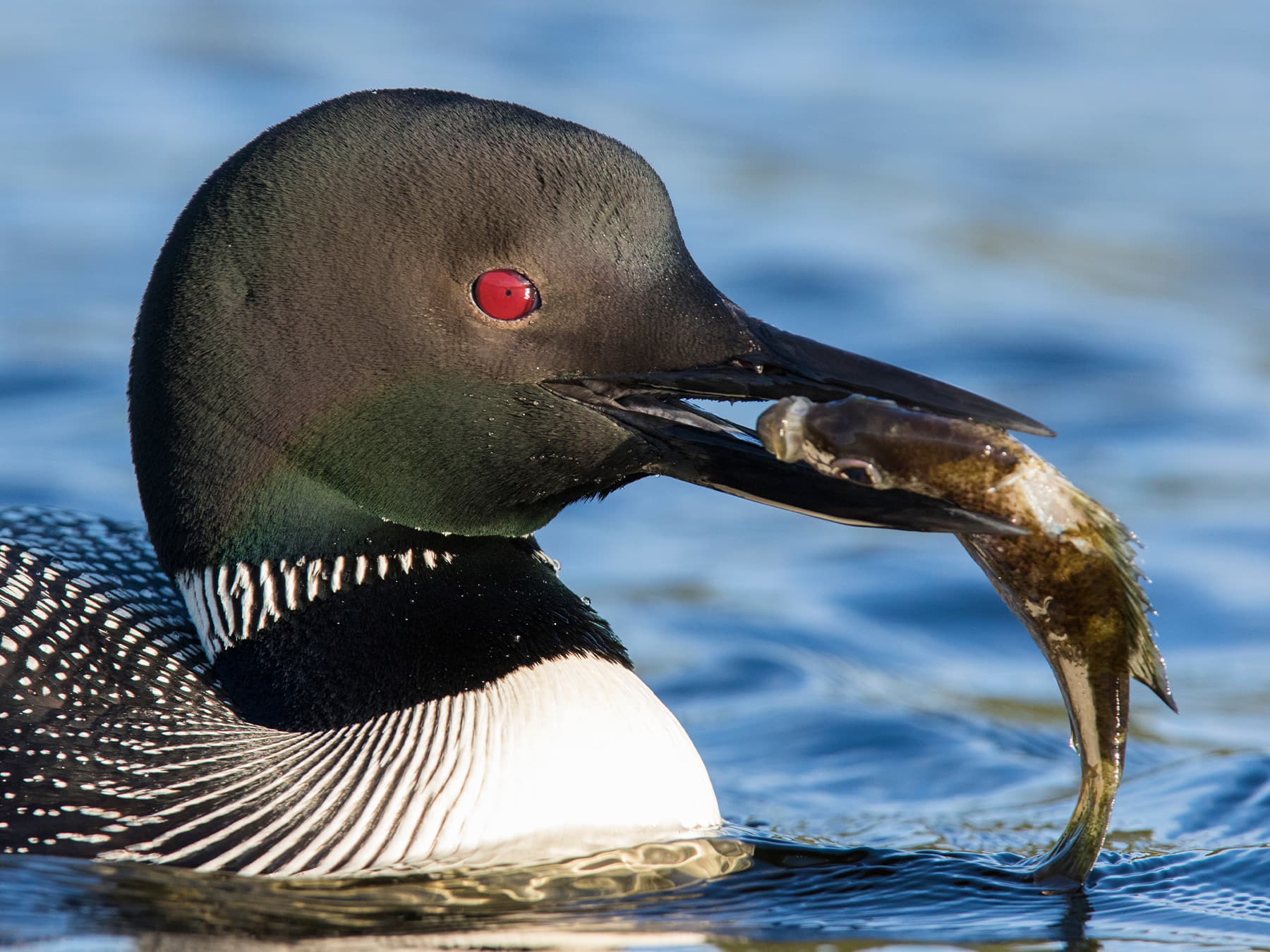
Common Loons eat fish (up to about 10 inches long), frogs, and invertebrates that they catch by diving below the surface. These birds are fast and agile below the water, using their webbed feet to chase down their prey.
Check out our in-depth guide to learn more about the Common Loon Diet.
What do Common Loon chicks eat?
Common Loon chicks eat small fish provided by both parents. The growing birds include invertebrates and some plant material in their diet as they learn to hunt for themselves.
Nesting and breeding
Where do Common Loons nest?
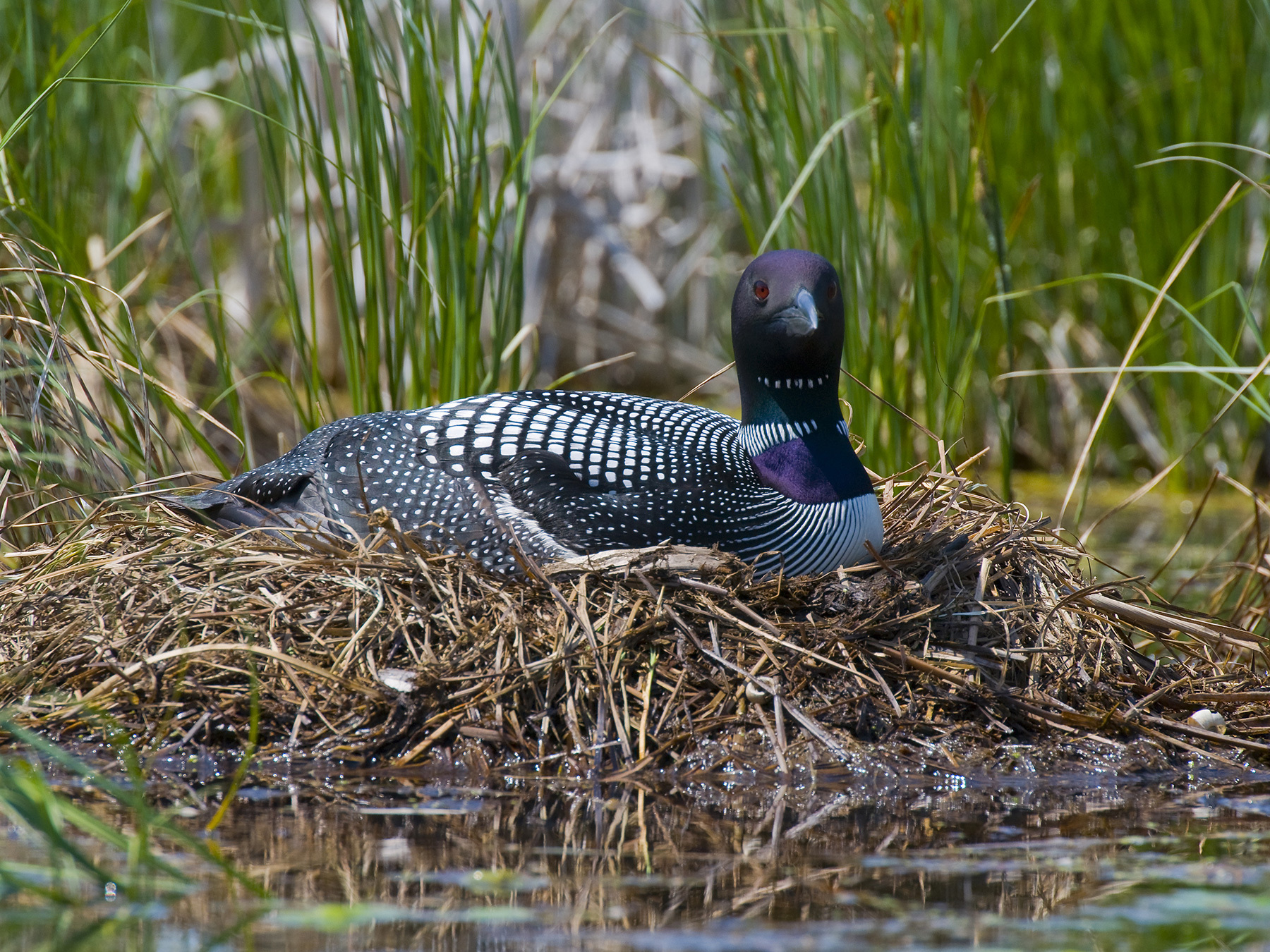
Common Loons nest on lakes, large ponds, and other still freshwater habitats. They build their nests right along the water’s edge so they can reach them without much walking. The nest itself is a mound-shaped structure built from twigs and other vegetation.
When do Common Loons nest?
Common Loons usually begin nesting in spring or early summer, although they may start earlier in the south of their breeding range than in the north. Their nest may take several days to build, and once laid, their eggs hatch after about four weeks.
What do Common Loon eggs look like?
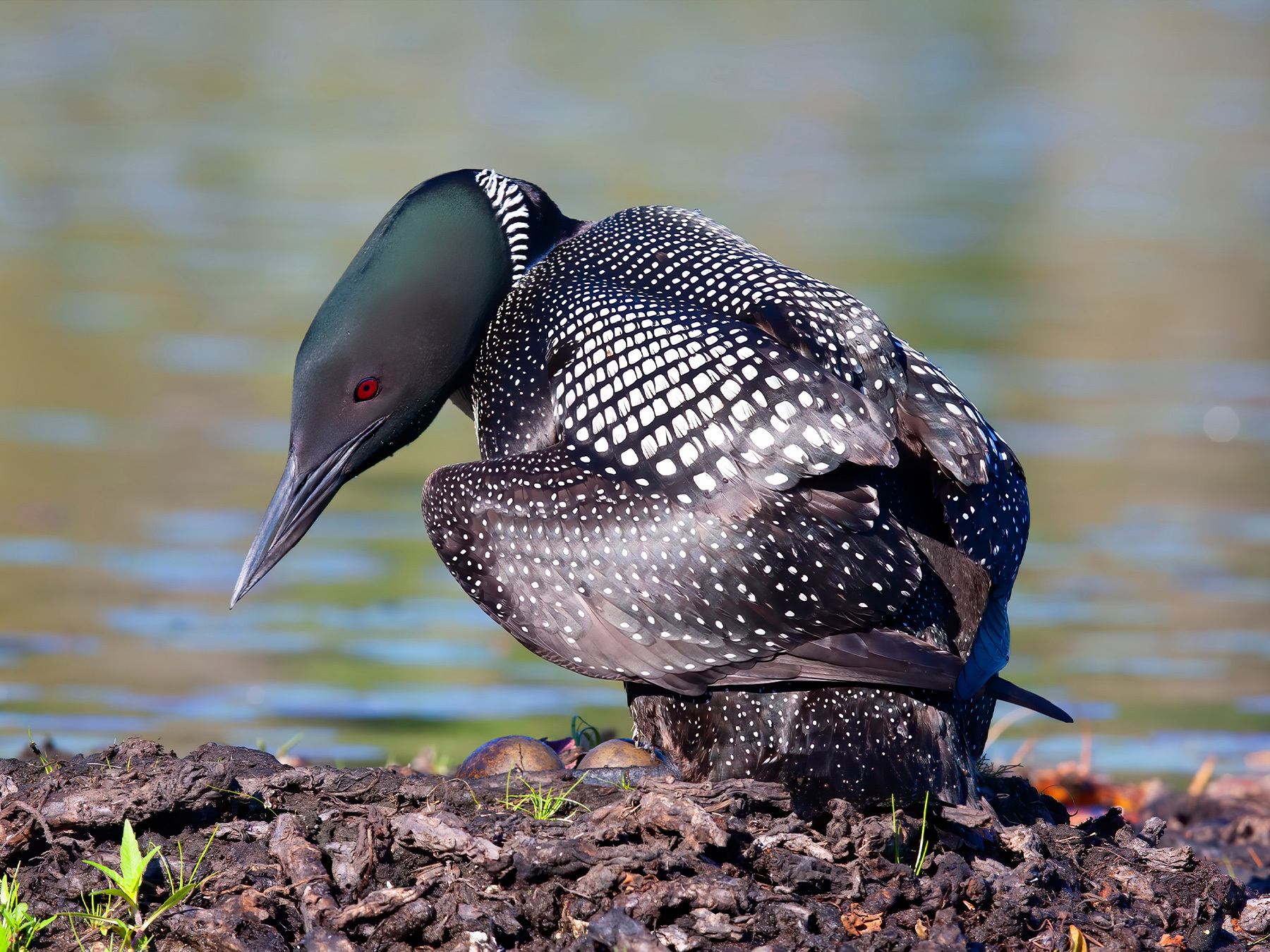
Common Loons lay a single clutch of one or two spotted eggs with a brown or olive background color.
Do Common Loons mate for life?
Common Loons form long-lasting bonds, and pairs reunite year after year. They may not always mate for life, but several consecutive years is the norm. One record-setting pair from Michigan has even returned to nest together for an impressive 25 years!
Behaviour
Are Common Loons aggressive?
Common loons are most aggressive in the breeding season when they defend nesting territories against other loons and even other species of wildfowl. These large, powerful birds will use their sharp bills to protect their young from predators, and one adult was even suspected of killing a Bald Eagle in this way!
Where do Common Loons sleep at night?
Loons usually sleep out on the water with their head turned and resting on their back. They may sleep on the nest, but only when incubating eggs.
Lifespan and predators
How long do Common Loons live?
Common Loons can live for over 30 years in the wild.
What are the predators of Common Loons?
Adult Common Loons are relatively safe from predators, although large birds of prey like Bald Eagles are a potential threat. Their eggs and chicks are vulnerable to many predators, such as foxes, otters, gulls, and even large fish like bass and pike.
Are Common Loons protected?
Common Loons are protected in the United States, Canada, and the United Kingdom.
Are Common Loons endangered?
Common Loons are not an endangered species. These widespread waterbirds are currently ranked as a ‘Least Concern’ species on the IUCN Red List.
Conservation
While currently listed as Least Concern globally, Common Loons face threats from habitat loss, water pollution, and climate change.
Conservation efforts focus on protecting nesting sites, managing water levels, and reducing mercury contamination in their aquatic habitats. In some regions, artificial nesting platforms have been introduced to support breeding populations.
Similar birds
Often mistaken for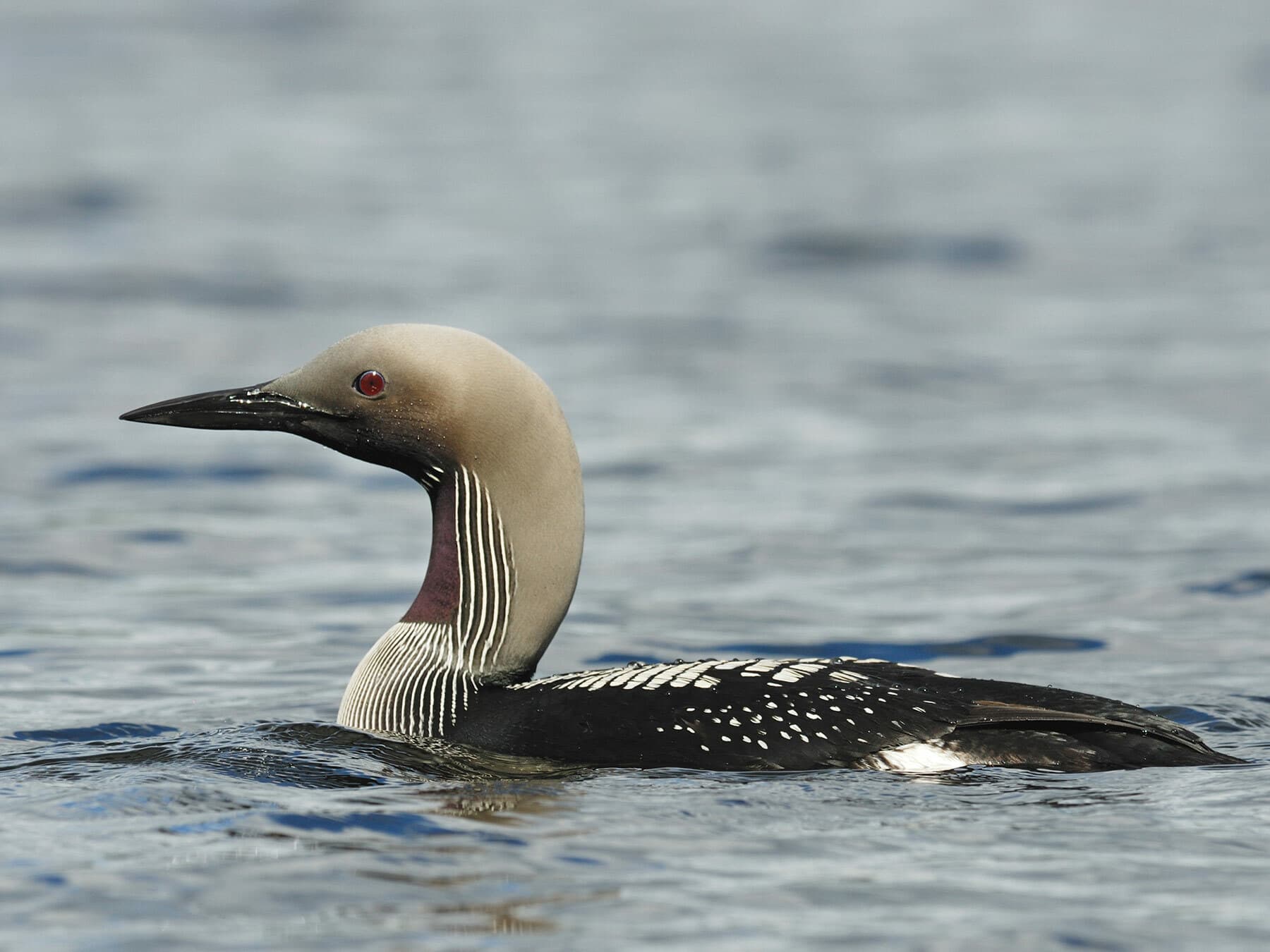
More photos
10 photos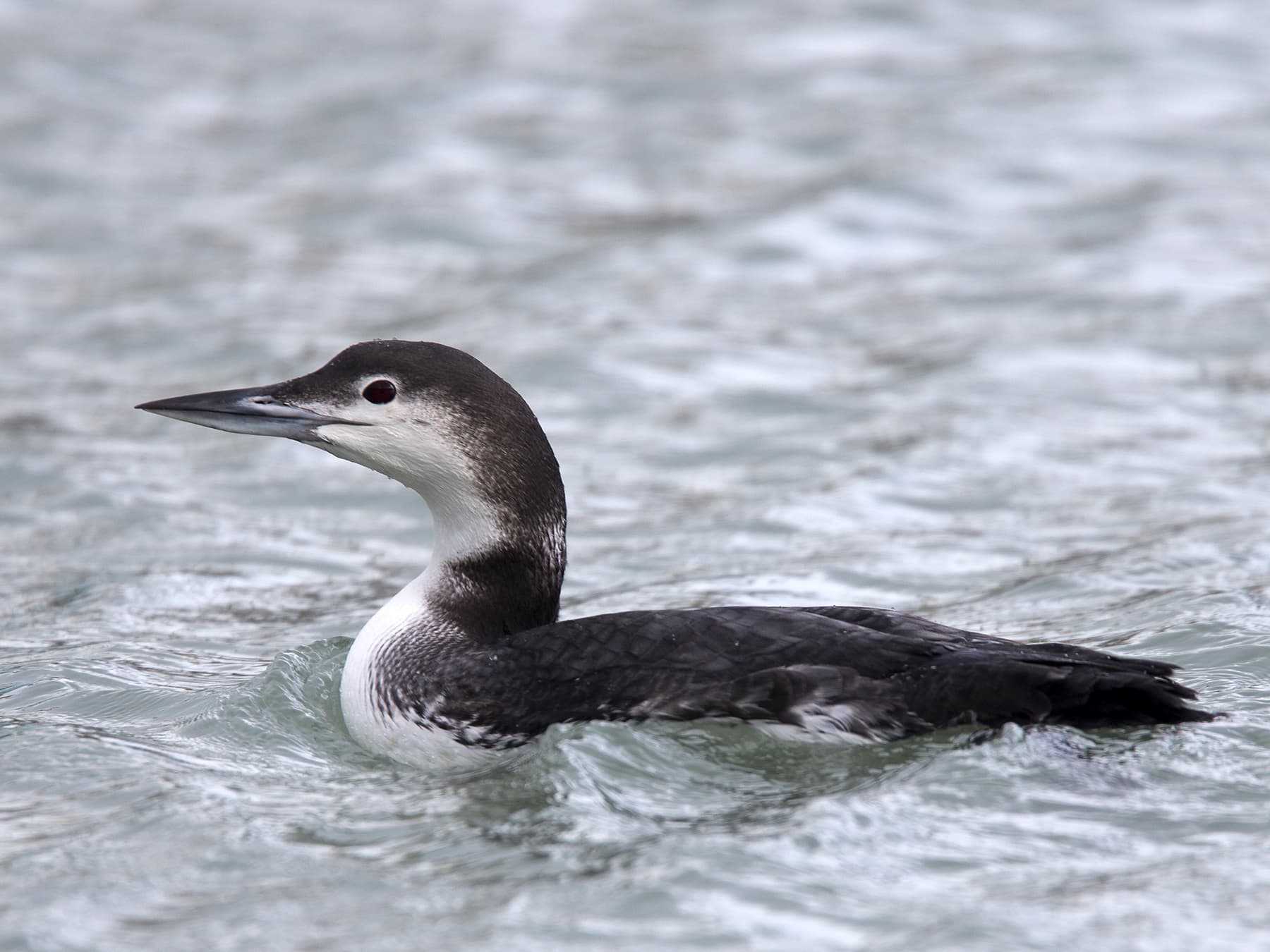 Common Loon, non-breeding plumage
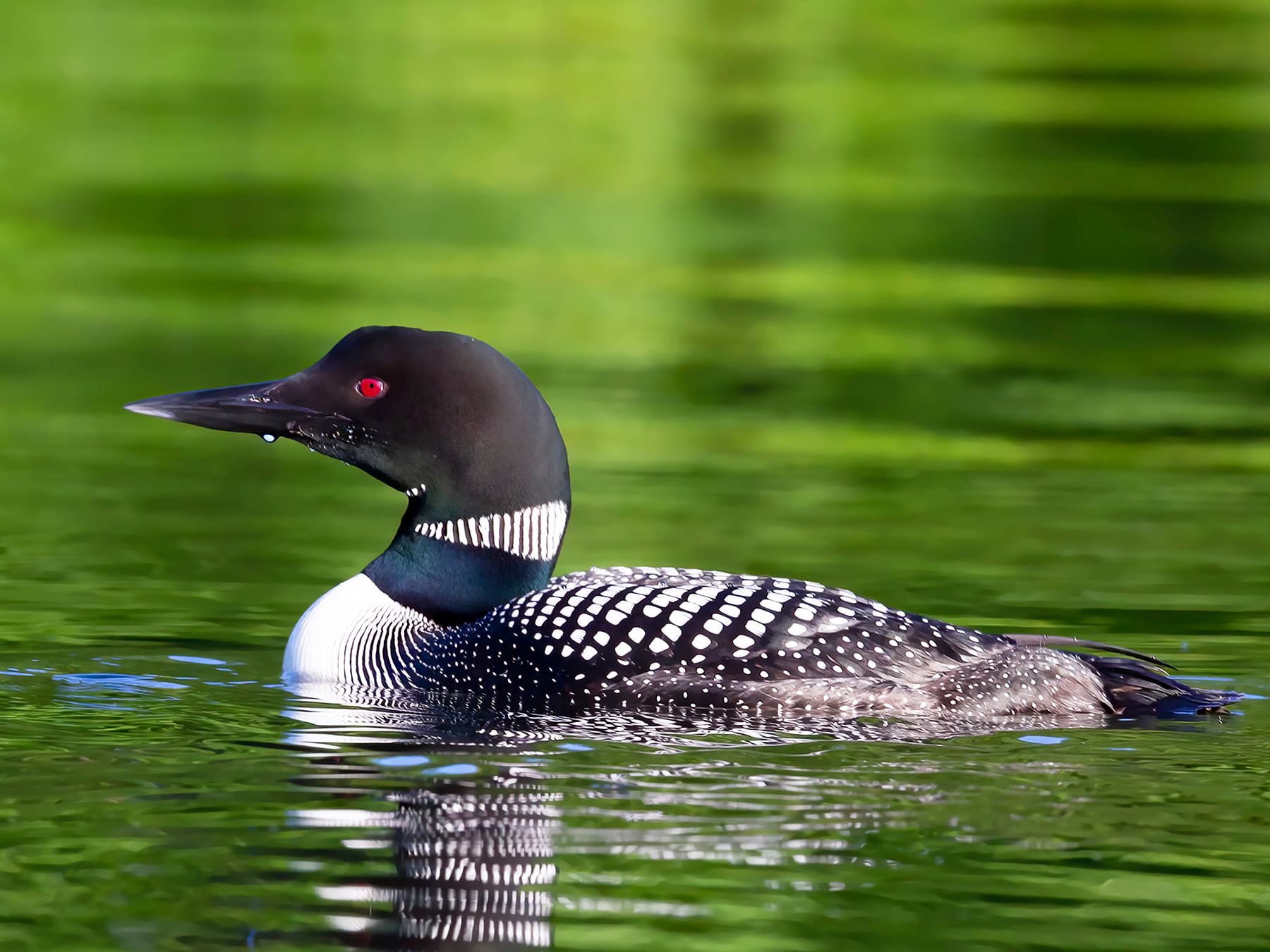 Common Loon, breeding plumage
 Common Loon, non-breeding plumage
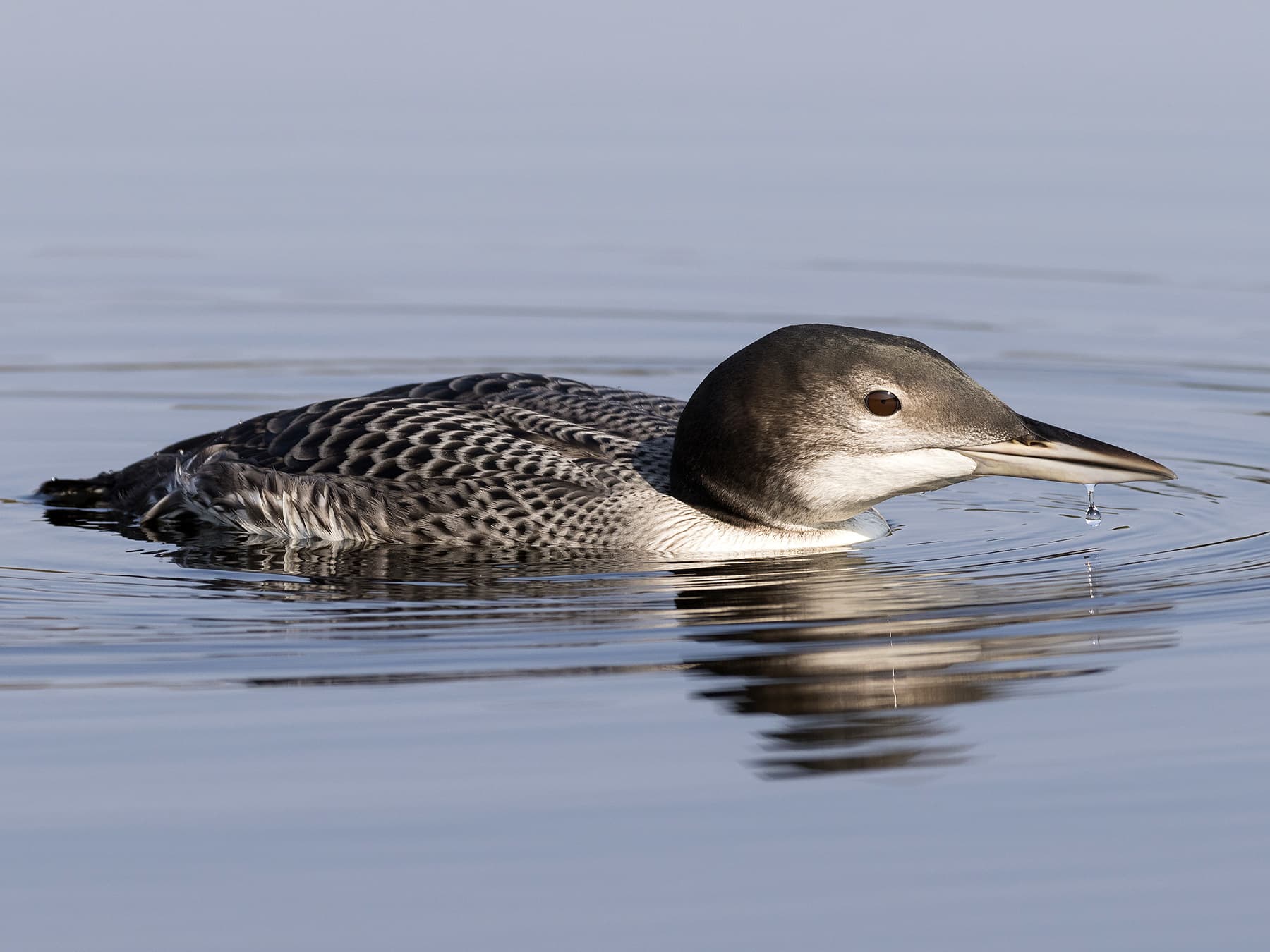 Juvenile Common Loon
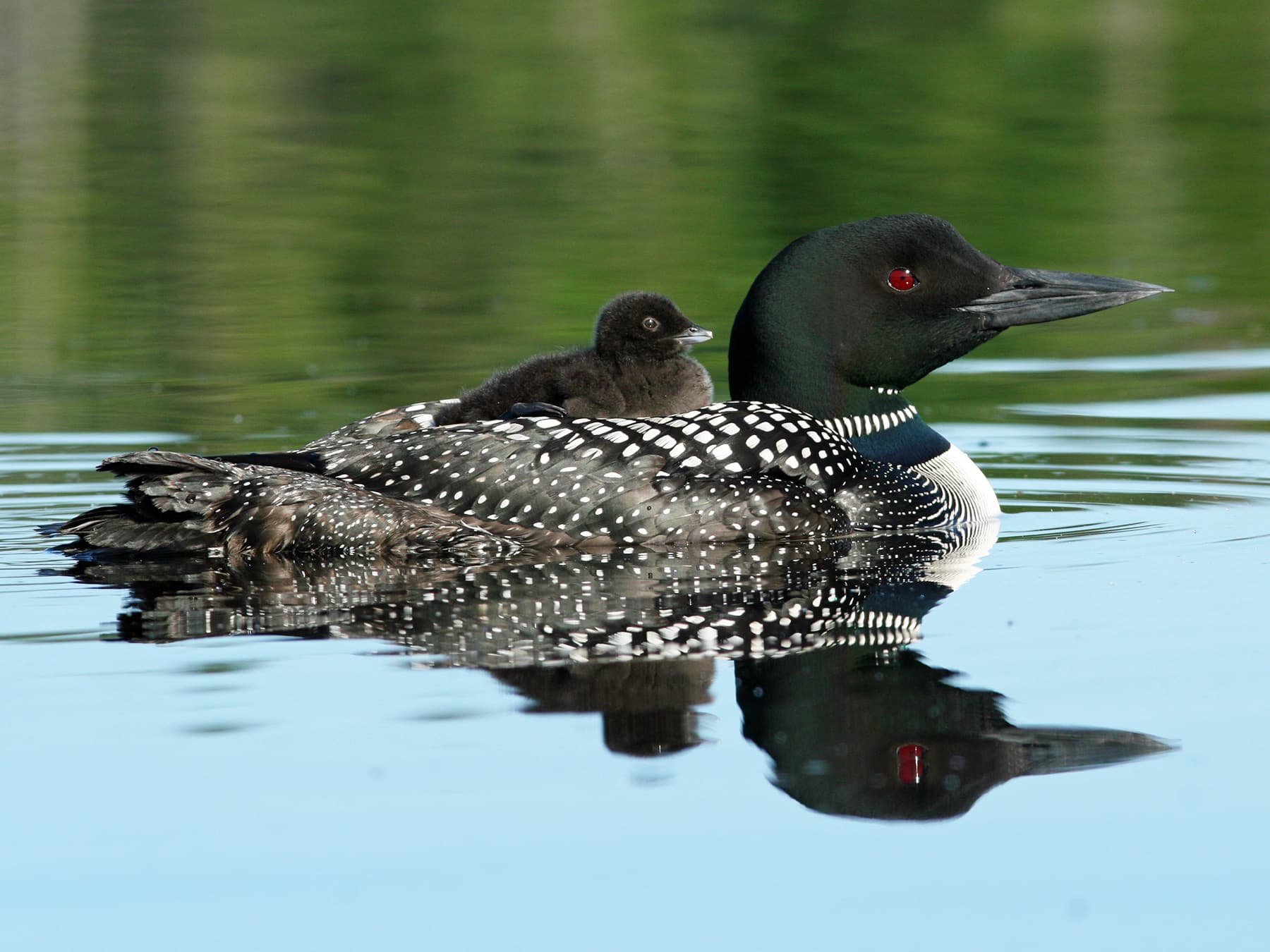 Common Loon with young riding on its back
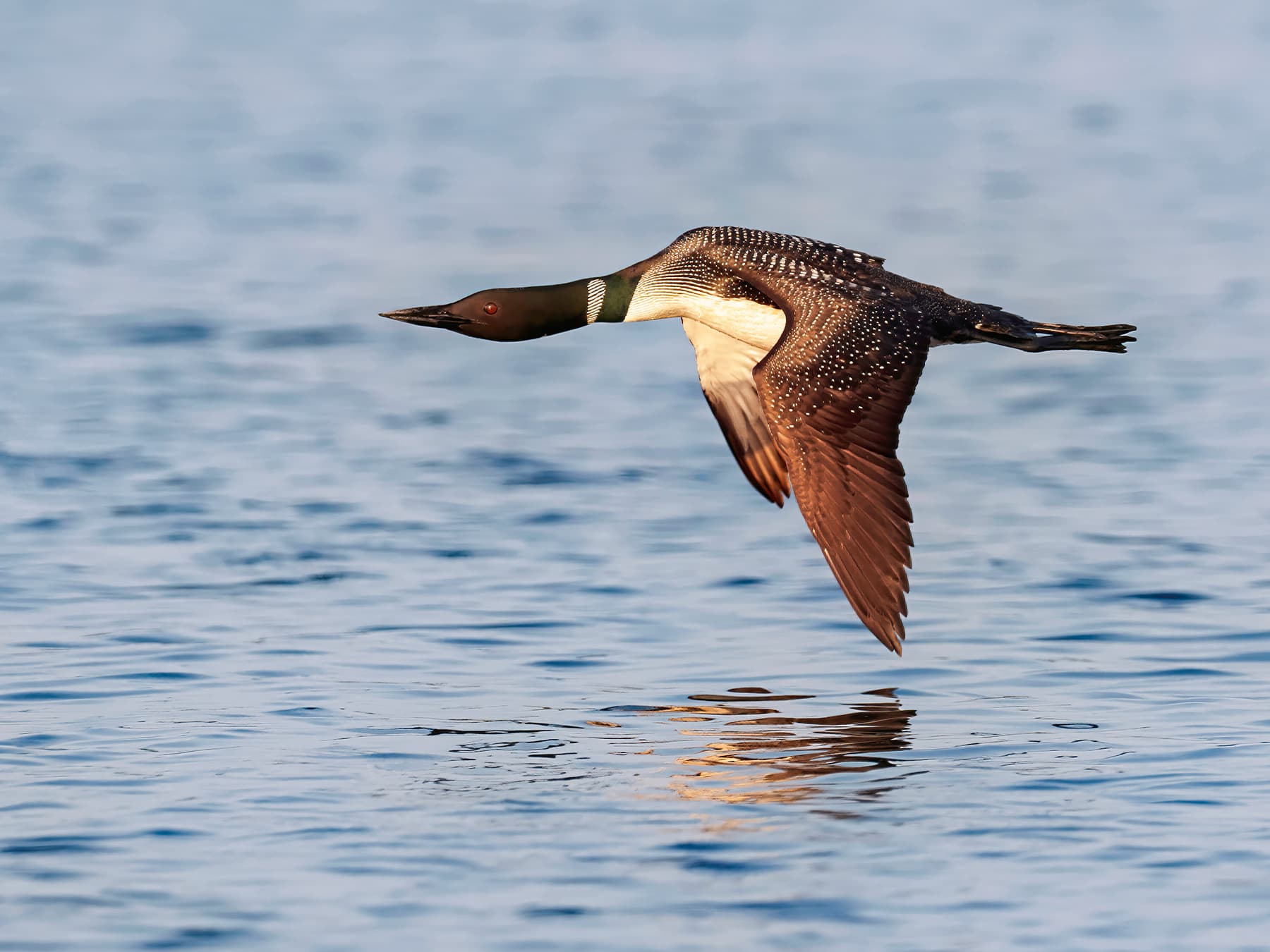 Common Loon, breeding, in-flight over a lake
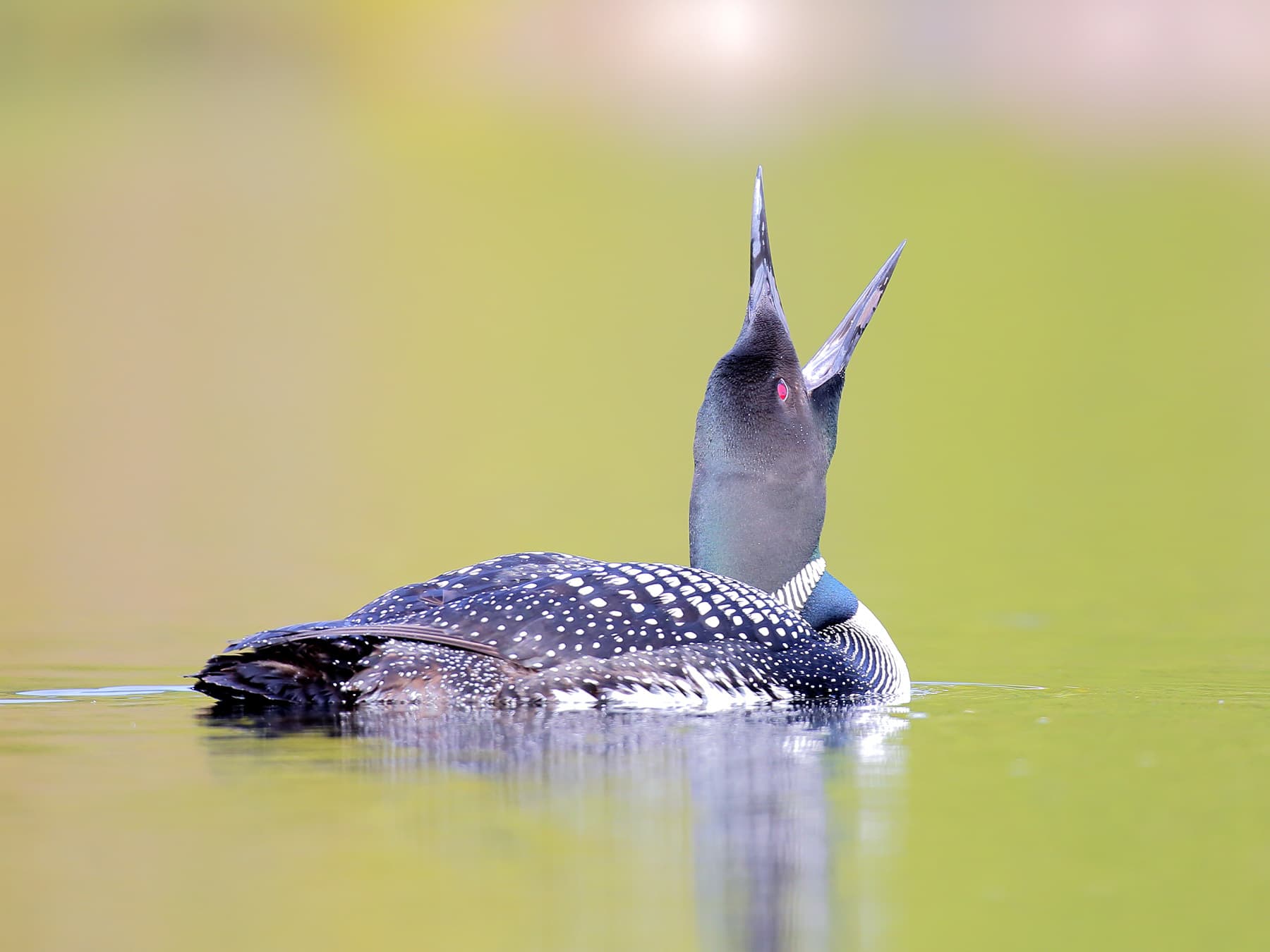 Common Loon, breeding plumage, calling out
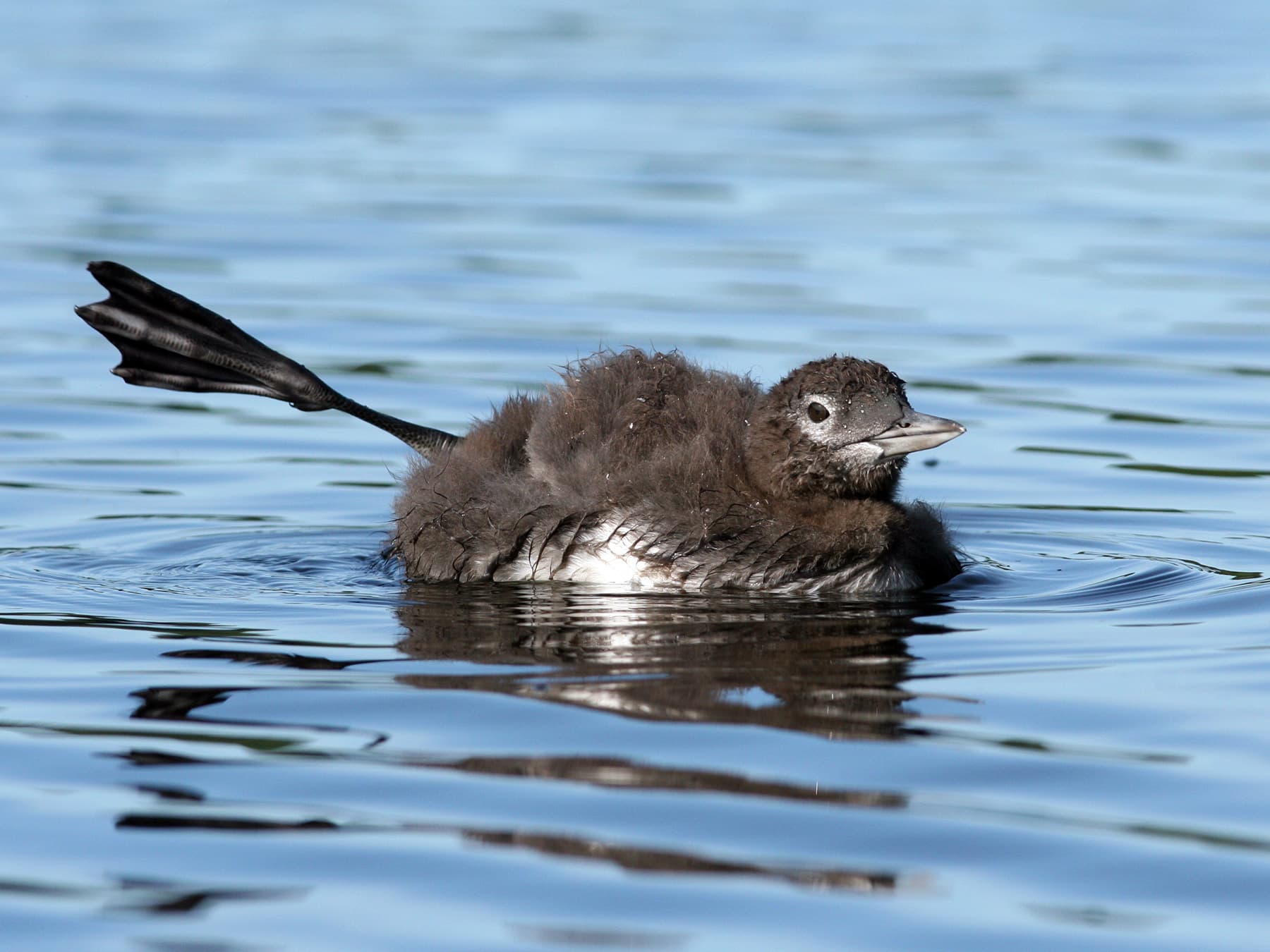 Young Common Loon stretching out its webbed foot
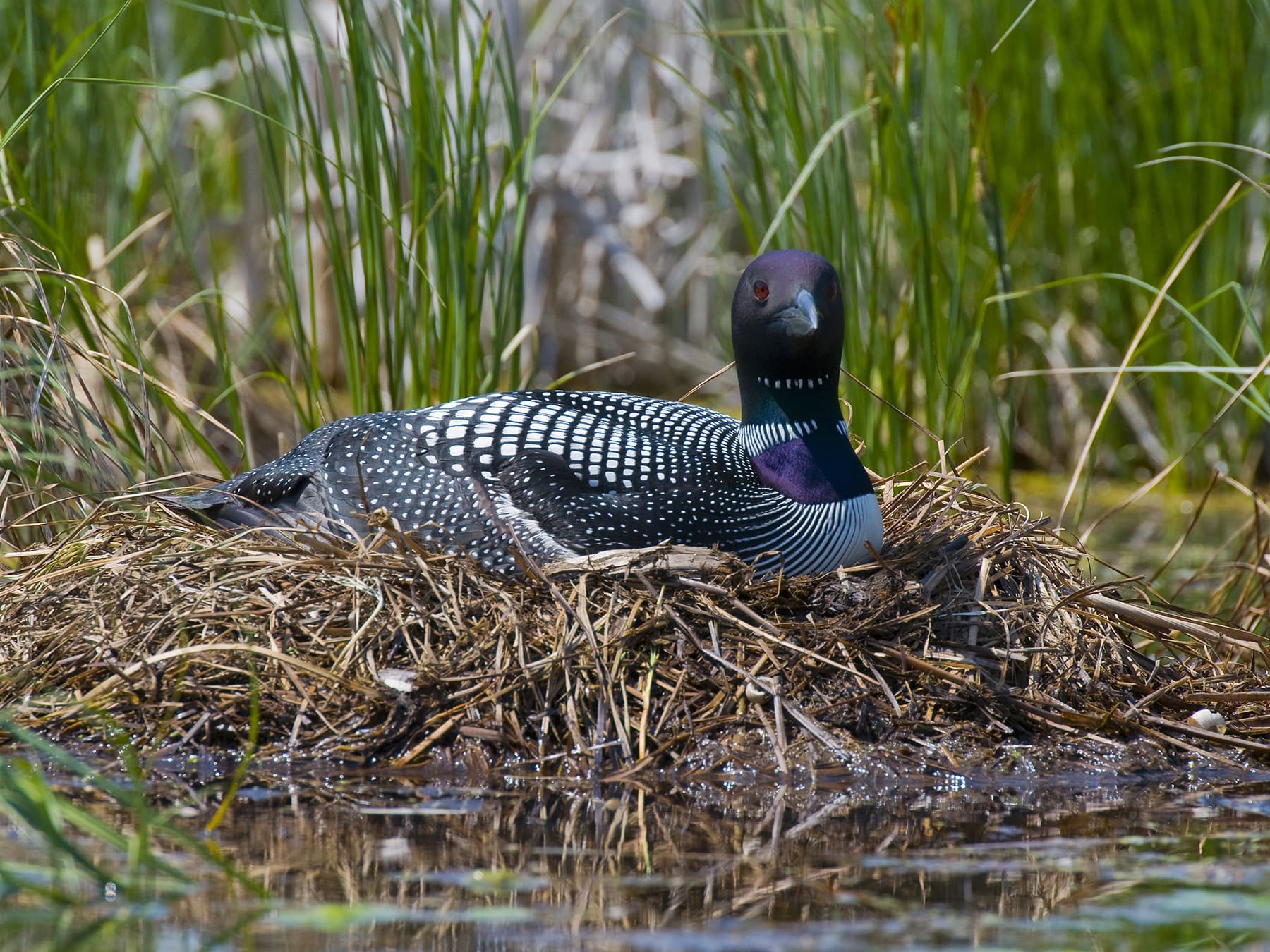 Common Loon sitting on the nest by the waters edge
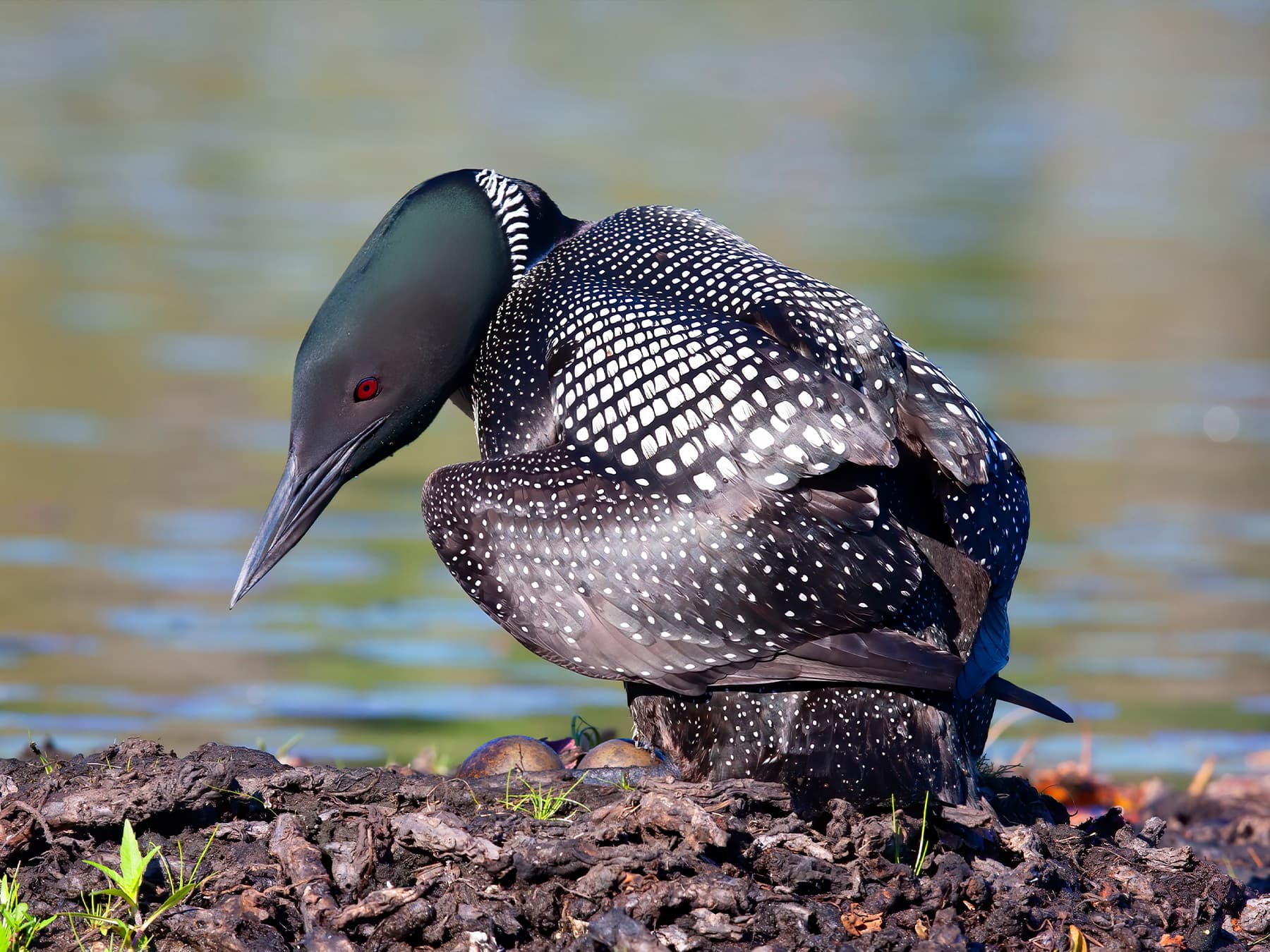 Common Loon at nest site with two eggs
Common Loon guides
2 guidesQuick facts
- Length
- 66–91 cm
- Wingspan
- 122–152 cm
- Weight
- 2500–6100 g
- Lifespan
- 20–30 years · oldest recorded 30.9 years
- Family
- Loons & Divers
- Migration
- Long-distance Migrant
- Global status (IUCN)
- Least Concern
- World population
- 612,000 - 640,000 mature individuals
- Population trend
- Stable
- Also called
- Great Northern Diver
- Scientific name
- Gavia immer
Sources
4- 1BirdLife International. 2018. Gavia immer. The IUCN Red List of Threatened Species 2018: e.T22697842A132607418. Source (opens in a new tab)
- 2Wetlands International (2016)
- 3Wetlands International (2016)
- 4Longevity Records Of North American Birds. Version 2023.1 Source (opens in a new tab)

Checked by
Nathan Cope, founder and editor
Nathan founded Birdfact and leads its writers and contributors in the UK, the US and Canada. He has watched and studied birds for more than ten years, and checks every article and species guide before it’s published.